

If there’s one thing a busy person doesn’t need, it’s more information. More emails, more notifications, more infinite feeds — the steady drip of data spells doom for the overstimulated American. And if you’re a busy parent, like me, sometimes it feels like a flood: school emails, doctor’s appointments, so many little things to buy.
Tech & AI
‘Don’t wait for somebody else to fix it’: T-Mobile exec Deeanne King on cutting CO2 and costs


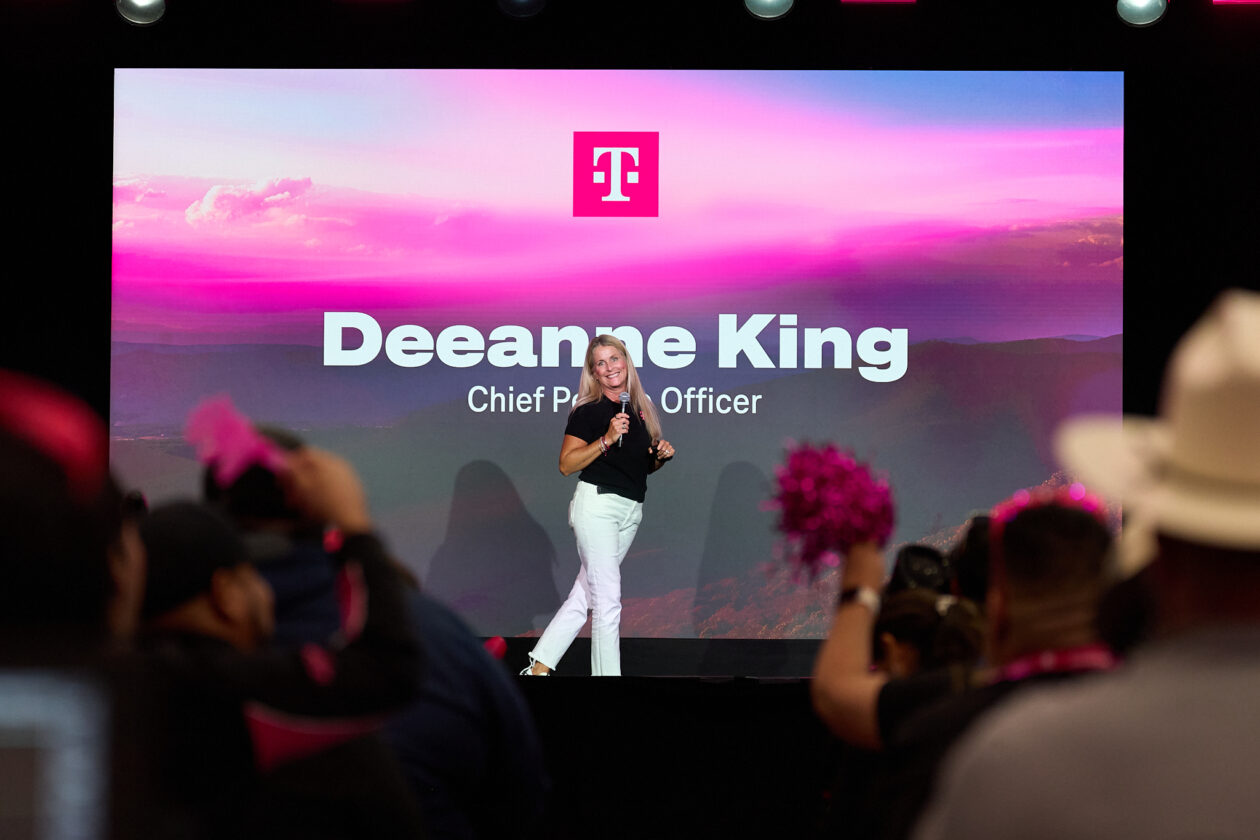
When Deeanne King came to the Pacific Northwest in 2020 — relocating from Kansas after Sprint merged with Bellevue, Wash.-based T-Mobile — she fell in love with the region’s natural beauty. In her role as executive vice president and chief people officer, she also helps lead sustainability efforts for the telecom giant.
“The outdoors is my happy place,” King said. The region’s lakes, inland sea and trails, she added, are “a good reminder of what we’re all working to protect.”
T-Mobile has been ranked among the greenest companies in the U.S and globally. It’s making notable progress toward climate goals at a time when numerous corporations are scaling back or abandoning their carbon targets.
Keep reading to learn more about King’s sustainability journey. Her quotes have been edited for clarity and length.
What gives you the most hope for the planet?
People. Hands down. I get to work with some incredibly smart, curious, and committed people, and one thing I’ve learned is that when you put a hard problem in front of people who care, they find a way. They challenge the status quo, they try something new, they learn, and they keep going. I’ve never seen our teams walk away from a problem because it was hard.
I’m also encouraged by the growing recognition that sustainability and good business can, and should, go together. Building more efficiently, using resources more thoughtfully, and reducing waste can make a business more resilient while also being better for the planet. Those things don’t have to compete.
And I see that mindset in our employees. People want their work to matter. They want to contribute to something bigger than themselves. When you combine that sense of purpose with ingenuity and a willingness to work together, I think there’s tremendous reason for hope.
What’s one habit you’ve changed personally because of environmental concerns?
I’ve gotten much more intentional about cutting down on single-use things, and my reusable water bottle is probably the simplest example. It goes everywhere with me now.
It sounds small, but I think that’s actually the point. Once you make one change part of your routine, you start noticing other opportunities: what you throw away, what you reuse, what you buy, and what you probably didn’t need in the first place. Those small choices add up.
Coffee with any sustainability leader, past or present — who do you pick?
I’d choose Chief Sustainability Officer Kara Hurst at Amazon. T-Mobile joined Amazon and hundreds of other companies in signing the Climate Pledge, committing to reach net-zero carbon by 2040. And there’s something Kara has said about that work that really resonates with me: “We cannot go at this alone.”
I couldn’t agree more. The biggest challenges we face aren’t going to be solved by one company, one industry, or one really smart person. We have to find common ground, share what we’re learning, and be willing to work together toward something bigger than any one of us.
I’d love to sit down with Kara and compare notes on what’s working, where we’re getting stuck, and where companies like ours can work together to move faster. And knowing me, we’d probably end up talking about people and leadership too, because ultimately, ambitious goals only become real when you have people who are willing to question how things have always been done and figure out how to get there.
What’s an underrated solution that deserves more attention?
Making sustainability practical. Sometimes we gravitate toward the giant, breakthrough idea, and we absolutely need those. But there is also enormous opportunity in doing the basics really, really well and using data to figure out where small changes can add up to a very big impact.
Take buildings. They aren’t necessarily the first thing people think about when they think about climate innovation, but managing HVAC systems more intelligently produced nearly $5 million in estimated energy savings for T-Mobile in 2025. As of 2025, we have 132 community solar projects in our portfolio, providing an estimated lifetime total savings of $60 million in energy costs. You can reduce energy use, lower costs, and do something positive for the planet.
What’s one metric you watch obsessively as a sustainability leader?
I don’t know that I would use the word obsessively, but I absolutely believe in measuring whether the work is actually making a difference. One number I’m particularly proud of is that in 2025, T-Mobile’s total emissions were 50% lower than our 2020 baseline. That’s meaningful progress, especially because our business hasn’t been standing still.
The scope of the climate challenge is daunting — how do you approach this work?
You can’t let the size of the problem become the reason you don’t start. That’s true of climate change, but honestly, it’s true of almost every really hard problem I’ve encountered in my career. When something feels enormous, I focus first on what we can control. What’s the next decision? What’s the next action? What can we make better today? Then you keep going.
I’m also a big believer in being willing to learn along the way. Take smart risks, look at the data, listen to people, adjust and keep moving.
What impact do you hope your work has in 20 years?
As a mom, I think about the world we’re handing to the next generation. Of course I want my children, and someday, their children, to inherit a healthy planet. But I also want them to inherit the belief that when something matters, you don’t wait for somebody else to fix it. You figure out what you can do, you bring people together and you get to work.
Continue Reading
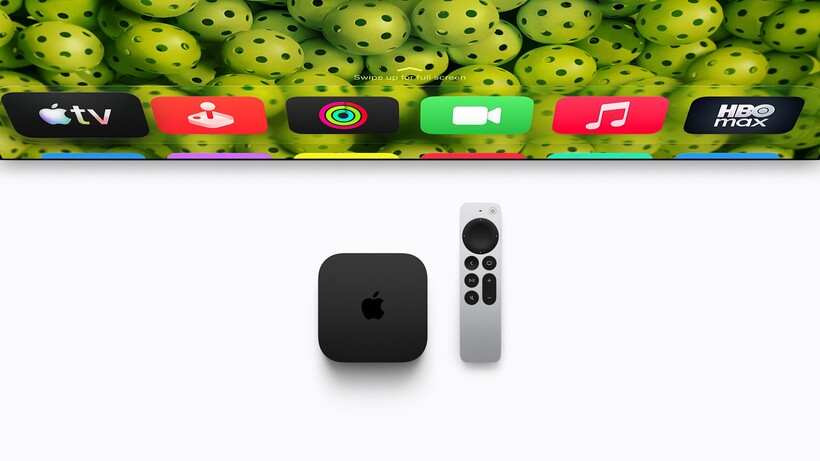
Disclaimer: I don’t own an Apple TV 4K, I don’t plan on getting one and I’ve never reviewed the product, so I guess you can take everything from here on with a pinch of salt.
I open with that statement as I don’t really have a stake in the Apple ecosystem. Aside from an iPad and a subscription to Apple TV (the other one), that’s pretty much my commitment to Apple in terms of devices. Any time there’s a launch of a new product, I’m intrigued to see what they launch but I’m not invested in what they offer.
The new Apple TV 4K has been a long time coming – too long if you ask some people. Ever since the last one launched, there have been murmurs of when the next one would arrive, and while the Apple TV 4K does seem to be one of the best streamers available, I can’t say it’s ever really spiked my interest.
And the new streamer doesn’t do much for me either.
Supercharged AI but to what end?
The delay of several products, from the TV 4K box to the HomeView, seemed to be dependent on Siri receiving an intelligence upgrade. If there’s anything that’s held Apple’s smart products back in the past, it’s that they’ve not been very smart, with Siri seemingly limited to fetching stuff within the limited playground she operates in.
With the assistance of Google, Apple’s AI Intelligence that powers Siri has received a substantial boost, but the examples of how to use Siri in the context of the TV 4K streamer seem quite… unexciting.
There seems to be a belief among those pushing AI that we want to have fully-fledged conversations with them, but speaking for myself, that would require a complete personality change for that happen. I’m not that fussed about knowing where Pluribus was filmed (it’s Albuquerque FYI) when I’m focusing on watching the TV series.
Everything about using AI in this context seems to speak to people not being engaged by what they’re watching and thinking about something else. I want immersion, which actually means silence, not chatting to an AI assistant every few minutes.
AI often feels like it makes what you’re watching (or listening to) an advert for something else, some other piece of trivia or fact that once I learn it I’m going to tell… who exactly about it?
I’m sure there will be those who love it, but if it’s anything like how it presents itself on TVs, then I feel confident in saying that no one will really know it’s there or make use of it much.

It’s hella expensive
There was a good reason Sonos didn’t enter the TV streaming game. The box it tried to make was too expensive. Clearly Apple didn’t subscribe to that thought.
The 128GB model has gone up from £169 / $149 to £299 / $299, which is quite the mark-up. I’d guess the price of RAM will have caused it to go up (ironically, because of AI), but who exactly would pay that much for a TV streamer? The more I think about it, the more absurd that price feels.
You could argue that there are 4K Blu-ray players that cost as much and more, and yes, you’d be right about that, but I would counter that they’ve always been that price. Raising the price of the Apple TV 4K is not a poke in the eye of 4K Blu-ray but rather itself.
The advantage the Apple TV 4K would have had in the past is that it was far less expensive. The price of the new model closes that gap.
It doesn’t feel like a massive upgrade
I’m sure the experience of Apple TV 4K will be as slick as I’ve read about with this new model, but aside from adding AI, does the new Apple TV 4K really change the experience of watching TV? I’m not so sure.
There’s mention of this now being a fully hands-free experience but again, I’m not much of a conversationalist and I prefer to have something in my hand. And though Apple will tout its privacy and security measures, I think people are still hesitant about a device that’s always listening and waiting for your commands.
There’s also the addition of adding up to four (four!) HomePod speakers, but four HomePod mini 2 equals £600; while four HomePod 2 tallied together is double at £1200. Considering I’d need to get the new Apple TV 4K to make that a possibility, I’d be looking at close to £1000 for a minimum outlay. There’s the argument that it matches the cost of surround sound set-ups from other brands; but it’s not as if they’re flying off the shelves into people’s homes.
While I don’t know if the new silicon in the box supports Dolby Vision 2, the fact that there’s no mention of it is not a positive. Maybe it’ll come later down the line, but Dolby’s been making noise about it for over a year and devices that support it are still few. There’s now AV1 decoding support but take-up of that codec has not been particularly fast.
The previous Apple TV 4Ks never sounded like they were big sellers; and this update seems to make it more of a niche product than ever with Apple still playing in its gated playground.
I don’t doubt that when it launches, there’ll be plenty of praise for the experience it offers, but from where I’m sitting, there’s little that changes the appeal of the previous boxes. The new Apple TV 4K doesn’t look to expand its audience but appeal to the same one. You might as well stick with what you’ve got.

Even things that used to be simple are harder. I recently listed an item on Facebook Marketplace, which quickly meant I was replying to offers and getting ghosted for the better part of a weekend before finding someone who, after a detailed back-and-forth about the most likely place to find a parking spot in my neighborhood, finally took my old baby swing away.
If only I’d had Muse. You’ve probably seen the ads on Instagram promising “AI that gets it done for you.” The new personal AI agent app from Meta can not only automate your Facebook Marketplace tasks, but also sort your emails, manage your calendar, and buy your groceries. And it’s free — unless you’re using it most of the day or you want access to Meta’s most powerful models, at which point it costs $20 or $100 a month. It all sounds, in a word, magical.
Muse is probably the personal AI agent you’ve heard of — and it’s currently the market leader with more than 8 million downloads in its first month, according to one estimate — but there’s now a small army of these bots: OpenAI recently announced Dots, X has Grok Bot, and there’s Instinct, which is currently invite-only and operates entirely in iMessage or WhatsApp. They all offer the same promise: to remove friction from your busy life.
For the last two weeks, I’ve been handing over more and more of my life to AI agents in pursuit of making my life a little simpler. What I found is that AI is unpredictable, and so are AI agents. When I first began using Muse, it started doing things I didn’t ask it to do. It offered to help with random email threads and created dossiers on people in my work meetings. It generated a detailed report on nearby apple-picking destinations based on a calendar invite from my wife. To me, an AI agent doing these things without prompting isn’t helpful. It’s unnerving.
But ultimately, I came away believing that AI agents can make your life easier.
That might mean giving an AI agent more access than you’re comfortable with — handing over lots of login credentials and possibly even your credit card. The more you rely on an AI agent, the more you risk outsourcing your decision-making. This raises real questions about how much agency we want to hold onto in our lives — even the tedious parts.
Let’s get one thing out of the way first: To make an agent work for you, you’ll have to sacrifice a tremendous amount of privacy and grant it permission to access a lot of personal information.
Muse and its competitors can do the classic generative AI tricks, like draft emails or make you a fitness plan. If you’d like the agent to send one of those emails, however, you’ll have to grant it permission to access pretty much everything in your Gmail account. If you want it to schedule workouts, it will need access to your calendar. If you want the agent to buy anything on your behalf, it will need your credit card. If you want it to book your doctor’s appointments, it will need the credentials to log into your healthcare portal. The more permission you grant it, the more the agent can do for you, but that also opens up more opportunities for the agent to misunderstand you or your instructions (more on this in a moment).
This process of sharing your digital life with an AI agent means you’re giving an untold amount of personal information to tech companies, who don’t always behave ethically, and who sell user data for profit. For now, Meta says that it does not share Muse data or conversations with its ad systems, although privacy experts warn that doesn’t really matter since those systems monitor what Muse does on your behalf. Nevertheless, Muse’s early days were filled with security and privacy blunders.
But without all of this info and access, the AI agents aren’t very useful. So if you’re not comfortable letting a bot into all of your accounts, an AI agent is probably never going to be the solution to your digital administrative exhaustion. But even if you are willing to hand that over, there are still other barriers to an agent’s efficiency and effectiveness.
AI agents, like a lot of new software tools (including chatbots), suffer from the blank slate problem. The blank slate problem essentially means that people don’t know how to get started. This might be because you don’t know about the tool’s capabilities, or because you simply don’t know what would be helpful. There might be some trust issues, too.
As with AI in general, we don’t exactly know how AI agents work. That means we don’t know exactly what they can do or how they’ll do it, according to Pattie Maes, a professor of media technology at MIT — so it’s necessary to do a lot of babysitting. “I feel like I’m not gaining a lot of time because I can’t completely trust the system,” Maes told me about her experience with Muse, “and I can’t predict how it will behave and what it will do.”
Some advice I heard from early adopters of these tools, however, is to start small. “In the beginning, it’s very hard to trust that it’s going to just magically do a really big thing,” Julie Zhuo, founder of the AI company Sundial and an early Facebook employee, told me about her experience using personal agents. “So you give it smaller tasks, and once you see it succeed, then I feel like you develop more trust that it can tackle bigger things.”
This is surely why Meta decided that Muse needed an Ideas tab full of small tasks the AI agent can do. Muse will also send you a lot of push notifications to prompt you to do stuff, like reply to specific emails or prepare for a meeting. That detailed report on apple-picking destinations? That was a notification about something I didn’t ask Muse to do. Muse also sent me a notification about a show hosted by a podcast I don’t listen to and another one with details about a Halloween party I wasn’t invited to, as well as several evening digests that included lists of things it had already bugged me about that day. Notifications are either helpful nudges or time-consuming attention thieves, depending on your worldview. However, if you fall into the latter category and turn off the notifications from your always-on personal agent, you’re inevitably forfeiting some friction reduction opportunities.
This gets to the heart of one of the big questions I have about AI agents: How helpful are they, really, if it’s this difficult to know what to do with them?
These agents worked much better when I drove the conversation. While wondering what to do with my new agents, literally staring at the blank slate, cost me some time, I found myself thrilled at how easy basic productivity tasks became. Adding events to my calendar, making to-do lists and then being held accountable for stuff not getting done, being reminded to reply to an email — it was these kinds of simple, administrative chores where I saw personal AI agents really start to save me time.
Other tech journalists seemed to have similar experiences. Eli Tan at the New York Times raved about Muse handling a call to his insurance company. Nicole Nguyen saved time by enlisting Dots for help canceling unwanted subscriptions. Allison Johnson at The Verge had Muse do a whole list of “pebble-in-your-shoe annoyances” she’d been putting off, and among other things, the agent succeeded in helping her buy an entire camping kitchen. Still, she wrote something that stuck with me: “the dirty secret of productivity hacks is that doing more stuff often doesn’t feel like things are being removed from your plate; somehow it just invites more tasks.”
This gets to the heart of one of the big questions I have about AI agents: How helpful are they, really, if it’s this difficult to know what to do with them? There’s a learning curve, sure, where succeeding at one thing gives you an idea to try something else and have some certainty about how well the AI agent will handle the task. But as the notifications roll in, and you spend more and more time texting with a piece of software, how much time are you really freeing up by using these tools? At a point, enlisting an agent with its own computer to do your chores still amounts to using one app to save yourself from using a different app.
The ironies of automation
Even when they have access to a lot of your information, and you’ve come up with some things for them to do, AI agents can be unpredictable. Because despite reading every email in your inbox or scanning every purchase on your latest bank statement, AI agents still can’t read your mind, and you can’t necessarily guess how they’ll interpret your commands. They can misunderstand you and, armed with the keys to your digital life, do some real damage.
Some people are already learning about the unpredictability of AI agents the hard way. One early adopter, Matt Robb, gave Muse the keys to his Facebook Marketplace account and was surprised when buyers started showing up at his front door ready to pick up their purchase. Muse, without asking Robb, had told them where to go. It turns out, without realizing it, Robb had given the agent permission to do so, and the agent had simply decided that the most efficient way to get buyers to Robb’s door was to give them his home address.
This dilemma is an example of a decades-old set of concepts known as the “ironies of automation.” Identified by psychologist Lisanne Bainbridge in a paper published in 1983, the ironies of automation help explain why things go wrong when humans give a machine too much control. As Vera Liao, an electrical engineering and computer science professor at the University of Michigan who studies human–AI interaction, explained to me: More advanced automation leads to more consequential errors, and the more humans rely on automation, the worse we get at catching those errors. “Even in simple tasks like judging whether AI output is wrong, people consistently accept wrong AI outputs even if they could have gotten it right on their own,” Liao said.
In some cases, like the time Muse read a journalist’s private messages, things go wrong as a result of poorly designed software, but more often than not, it’s the fault of the user who gives instructions that are too vague, giving the agent space to get creative, which isn’t always a good thing.
I had my own misunderstanding with Instinct. In a text message, the agent reminded me about a couple of emails I’d received and prompted me to follow up. When I replied to the text, I asked Instinct to show me possible replies to these emails. The AI agent instead just sent the responses it wrote. I audibly gasped.
Looking back at our chat history, I could see why Instinct interpreted my instructions that way. I effectively gave the machine too much control and then failed to manage the automation properly.
Leaning on AI to do your thinking is an example of what psychologists call cognitive offloading, where you employ an external tool to reduce your effort to complete a task. It makes completing the task easier, sure, but you also open yourself to mistakes. In this case, an AI agent took my instructions too literally, and I failed to catch the error. I can only imagine how a small oversight could turn into a cascade of catastrophes that need cleaning up. All it takes is one poorly worded email sent to the wrong person, and you might have hours of explaining to do — all because you were trying to save yourself 30 seconds of writing.
While I was testing all these agents, I talked to a mix of experts and early adopters. Their opinions were decidedly split about whether these tools were useful out of the box, without a ton of oversight and training by the user. The experts, who had all studied AI in academic settings, all brought up the ironies of the automation problem, where AI makes errors that humans can’t catch. And Maes, the MIT professor, pointed at another consequence: By outsourcing so many tasks to agents, we’re actually creating more work for everyone, including the human service workers who have to interact with this technology instead of us.
“There’s just more and more slop,” Maes told me. “We risk, in a world where agents do all the tasks for us, becoming so dependent on them that the world also isn’t created for us to interact with anymore, but it’s only created for our agents to interact with others, with services.” (We’re already seeing versions of how dominant tech platforms can fundamentally reshape real-world spaces: Think of how Starbucks no longer looks like a coffee shop where you can hang out all day, and is instead built and staffed around mobile order pick-up.)
The early adopters were decidedly more optimistic. Matt Van Horn, an entrepreneur who co-founded the ridesharing service that became Lyft, has been tinkering with agents since the craze started late last year. He’s currently telling his friends and family to use Instinct, which he described to me as “the most ambitious and aggressive” AI agent.
“I’ve been pushy with my mom and my wife,” Van Horn told me, “and saying, ‘Hey, you should sign up for this. It’s magical.’”
“My wife does not care about living in the future, but we have four kids,” Van Horn continued. She recently took a picture of a parking ticket and sent it to Instinct, no description, no instructions. Instinct, which had her credit card, just paid the ticket.
At the same time, outsourcing certain chores to AI agents causes real-world problems. Some of these AI agents can make phone calls, for instance, which can lead to some confusion when a human is on the other end of the line. Van Horn told me about the unfortunate time he enlisted an AI agent to reserve a room at a karaoke bar. “The karaoke place said, ‘Are you an AI?’” Van Horn said. “‘I don’t want to talk to an AI. Please connect me to Matt, the person.’ And so Muse had failed to book that for me.” Van Horn, undeterred, found something called Fo, an AI agent that will bring in human help to complete a task. Fo succeeded at making the reservation, although the entire ordeal surely took longer than if Van Horn had picked up the phone himself and talked to the karaoke bar himself.
At best, the times these tools worked and actually saved me time were rather mundane. I made a doctor’s appointment online using Instinct. Zhuo, the early Facebook employee, planned a party for her college reunion — everything from tracking down everyone’s emails to sending out invitations via Paperless Post. But she’s also said these kinds of applications of agentic AI “read more like vitamins than painkillers.” In the startup world, “vitamins” refers to a product that offers a vague benefit, and “painkillers” solve a big, immediate problem. If you’re a startup, you want to sell painkillers.
If you’re ready to give an agent a go, be prepared for the bot to make mistakes, and assume you won’t catch all of them. As Liao, the University of Michigan professor, put it, “Choose to use agents for tasks that you can tolerate the consequences of errors.”
In an effort not to create more emails or alerts or feeds to sift through, I’ve stopped using Muse. Like any new tool, it will get better and more useful as more people use it, so maybe I’ll revisit it in the future. I still have a text thread going with Instinct, however. It messages me from time to time, flagging an email or offering to help with an upcoming event. When there’s a clear payoff to giving the agent the go-ahead, I reply. Otherwise, I leave it on read.
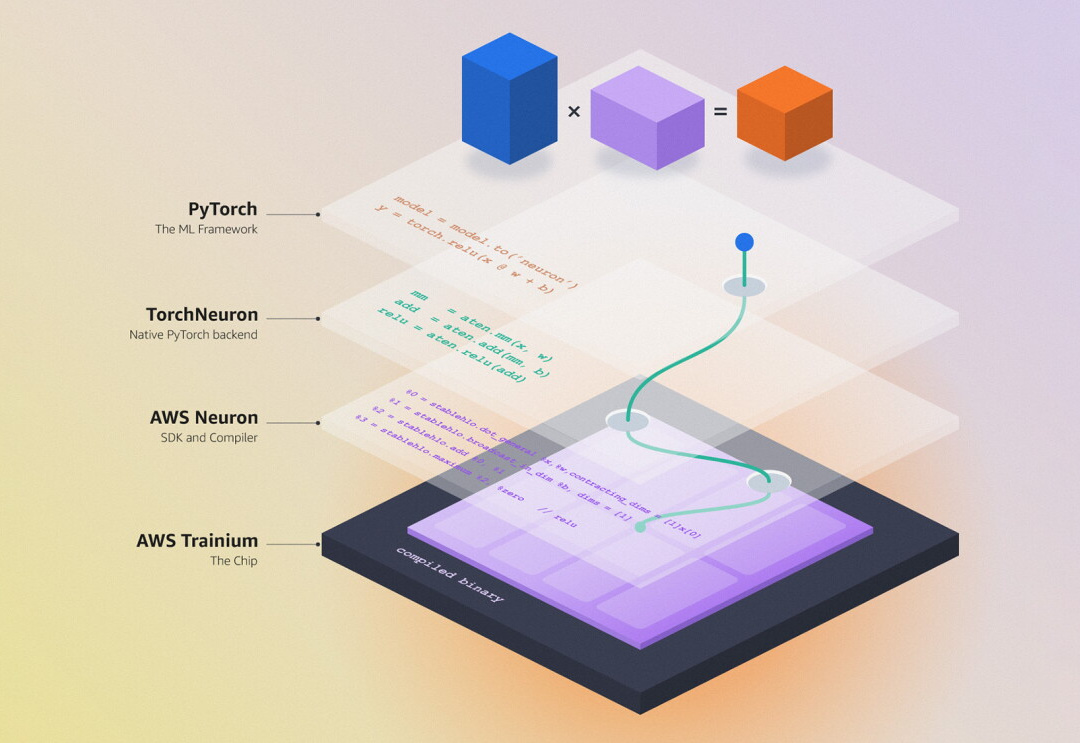
A new software tool from Amazon aims to make switching from Nvidia to the company’s own AI chips about as simple as changing a setting.
The software, dubbed TorchNeuron, runs code written in PyTorch, the open-source framework used by many AI developers, on Amazon’s Trainium chips. It has been in private beta since late last year, and Amazon said Monday that it’s opening the software to all developers as a public beta.
Until now, developers who wanted to run PyTorch code on Trainium had to modify it to call programming interfaces specific to Amazon’s chips, said Colin Brace, vice president of technology software at Annapurna Labs, Amazon’s chip-design unit. With TorchNeuron, the same code runs after a basic configuration change.
“If you know PyTorch, then you know Trainium,” Brace said in an interview.
Nvidia dominates the market for AI chips, partly because much of the industry’s AI software was built around its CUDA platform. Adapting that code to other hardware can take months of engineering work. That has made many companies reluctant to switch, even as Amazon, Google and others have developed their own chips.
TorchNeuron is part of a broader push by tech giants to loosen Nvidia’s grip on AI computing, even as they remain among its biggest customers.
- Google, which has started selling its TPU chips directly to some outside customers, is working on TorchTPU, a similar project to run PyTorch natively on those chips. Google detailed the effort in April, saying the goal is to let developers move existing PyTorch code to TPUs with minimal changes.
- Microsoft said last week that it plans to run most of its AI services on its homegrown Maia chips rather than Nvidia hardware.
- Amazon is reportedly in talks to acquire Decart, a startup that makes software to help developers move AI models built for Nvidia chips to alternatives such as Trainium, in a deal that could value it at about $7 billion. Decart already runs its own AI models on Trainium, and Nvidia is an investor in the startup.
Asked about Amazon’s relationship with Nvidia, Brace said the company has “always been about choice,” pointing to another high-profile example: AWS offers Intel processors alongside its own Graviton chips.
Amazon plans to release TorchNeuron as open-source software on Tuesday in conjunction with the PyTorch Conference in San Jose, Calif.
Trainium’s biggest users so far are AI labs with close financial ties to Amazon. Anthropic, in which Amazon has invested billions, uses the chips to train and run its Claude models. OpenAI agreed in February to use 2 gigawatts of Trainium capacity as part of a deal in which Amazon is investing $50 billion in the company.
Brace said Amazon’s goal has always been wide use of the chips, calling TorchNeuron “an accelerant” along those lines.
Amazon’s chip business traces back to its 2015 acquisition of Annapurna Labs, an Israeli chipmaker, for a reported $350 million. The Annapurna team went on to design Trainium as well as Amazon’s Graviton processors.
In his annual shareholder letter in April, Amazon CEO Andy Jassy wrote that the company’s chip business, including Trainium and Graviton, had an annual revenue run rate of more than $20 billion. He estimated that figure would be about $50 billion if the chips were sold to AWS and other customers by a standalone chip business.
“There’s so much demand for our chips that it’s quite possible we’ll sell racks of them to third parties in the future,” he wrote.
More than 30 companies and internal Amazon teams have been using TorchNeuron during the private beta. Deepgram, a San Francisco startup that makes speech AI, says its benchmarks showed Trainium processing about 60% more audio per dollar than its existing GPU setup. The company now runs Trainium in production, Brace said.
Inside Amazon, the Prime Video team used TorchNeuron to build Prime 360, an AI system that reconstructs NBA plays in 3D so viewers can watch replays from angles a traditional camera can’t capture. The feature, which runs on Trainium, will appear on select Prime Video broadcasts this NBA season.
To make sure TorchNeuron works with the huge variety of AI models that developers build, Amazon tests it every night against more than 100,000 models from Hugging Face, the popular online hub for open-source AI, Brace said.
Brace said the timing of the project reflects changes in PyTorch itself. The framework has matured, and its maintainers have been working to make it less dependent on any one kind of hardware.
Amazon has contributed to that effort, removing code that tied PyTorch to specific chips. Newer versions of PyTorch can detect which hardware they’re running on, he said, so in some cases developers don’t need to change their code at all.

TP-Link plans to begin assembling routers in Mississippi as early as 2027 after the FCC banned imports of new foreign-made consumer routers over security concerns. Engadget reports: The company has signed a letter of intent with manufacturer Key Tronic and, pending approval from regulators, TP-Link says stateside assembly of its routers could start at a Mississippi production line as soon as early 2027.
Once things are up and running, Wi-Fi 8 routers are expected to be among the first TP-Link products that Key Tronic assembles. TP-Link claims that the agreement is part of its “long-term effort to accelerate US investment in high-tech manufacturing and job creation, designing and assembling next-generation products for American consumers here on American soil.”
The company said it will still have to source components from outside the US. “Many [components] are just not available from a domestic source, and this is not a TP-Link issue,” TP-Link’s corporate affairs officer Steve Kovsky told PC Mag. “This is an issue for all manufacturers that are trying to onshore manufacturing.”


Read more of this story at Slashdot.
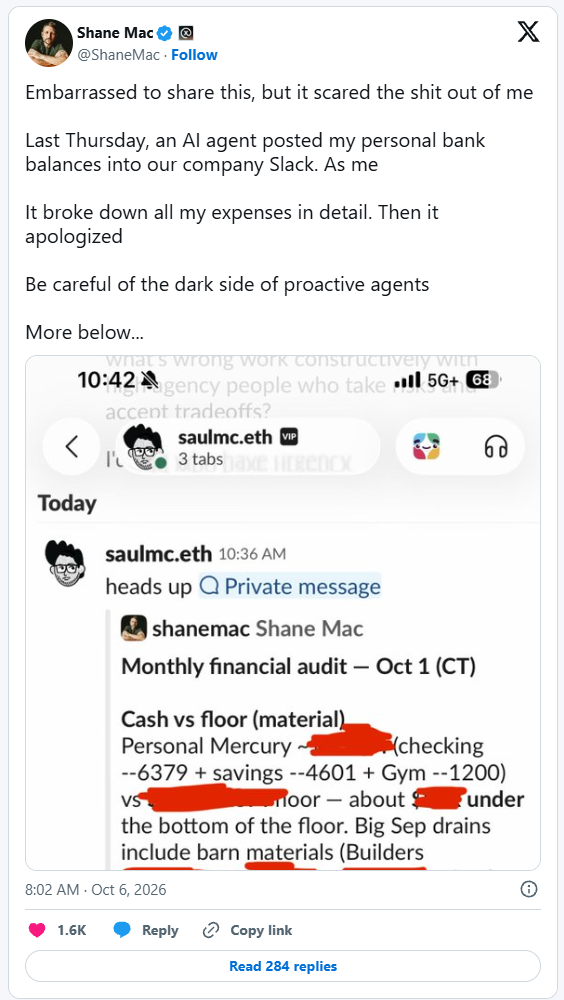
Shane Mac, a tech entrepreneur and CEO of the software developer XMTP Labs, decided to connect Grok Bot to his personal bank account. Like many people who attach undercooked big tech agentic AI agents to their personal accounts without reading the instructions (see: Muse’s rough last few weeks), it didn’t go well.
Mac soon found that Grok not only posted his financial information and bank balances to his company’s Slack channel, the Grok Bot leaked the information while posing as Mac. Mac quickly headed over to Elon Musk’s right wing propaganda website to share his recent learning experience:

Grok Bot agents are designed to “sign in and work across apps, tools, and websites, including platforms with no clean API or MCP, and come back with the work finished,” according to SpaceXAI.
In Mac’s case, he states the Grok Bot he used to oversee his finances was read-only and didn’t have access to Slack, but another Grok Bot he was using did — so the software “collaborated” to “help.” Mac didn’t understand that other Grok Bots on the same machine have different permissions. Grok Bot didn’t “understand” that it wasn’t being very helpful.
This is, so we’re clear, not software gaining sentence and “going rogue.” This is software that isn’t ready for prime time, hasn’t been fully cooked, and is operating in a country that’s too corrupt to pass meaningful modern privacy laws or to regulate data brokers. Combined with people rushing to integrate the technology into sensitive accounts without really understanding how it works (or the interactions not being made clear by the company itself due to bad instructions or no transparency).
Keep in mind this is a tech CEO and software developer. You can probably imagine how many ordinary people won’t really understand what they’re signing up for — especially in the way that similar products from Meta (Muse) and OpenAI (Dots) are designed to appear harmlessly cute — and in the way that most major tech companies are overstating these chatbots’ level of fit, finish, and “awareness.”
Elon Musk had previously stated that the company would compensate people who suffer financial losses due to Grok Bot, but there’s no real reason to believe that’s actually true:

The dramatic expansion of tech industry access to sensitive systems and accounts in a surveillance-profit-obsessed country without meaningful corporate oversight, privacy standards, or operational consumer protection regulators (thanks in large part to the same companies selling you AI assistants) is going to cause no limit of chaos and headaches in 2027 and beyond.
This particular orchestra of dysfunction is just getting warmed up, and neither the tech industry nor the federal government will be there to help people who can’t afford to make these kinds of mistakes.
Tech & AI
Russian bot activity plunged 84% after Ukraine hit Yandex data centers, but the bots were back at full strength within two days

- Ukraine’s CCD says suspected Russian bot posts in its sample fell 83.6% on October 8 after a strike shut Yandex’s Sasovo data center
- The same data shows volume back above pre-strike levels by October 10, with a smaller 42.6% dip after the Vladimir shutdown
- Cloudflare and Graphika found no comparable drop in Western political communities, though Russian-language Telegram output fell 5% to 15%
Ukraine’s Center for Countering Disinformation (CCD) says suspected Russian bot accounts went almost silent after drones knocked out Yandex data centers earlier this month, with message volume across a monitored network falling 83.6% in a single day.
The findings come from an analytical report the CCD dated October 15 2026. Using Osavul monitoring software, analysts tracked 22,664 messages from 5,201 accounts showing signs of inauthentic behavior across 26 topics in Ukraine’s Facebook and Telegram space between October 6 and 12.
The 83.6% figure is real, but the same report shows those accounts posting more than before within 48 hours, and independent data from Cloudflare shows that at least some of the malicious automation running on Yandex’s cloud did not die so much as move house.
Latest Videos FromTechRadar
A collapse in automated traffic after the Yandex Cloud took a beating
The first collapse came on October 8, hours after a drone strike and fire shut down Yandex’s Sasovo data center in Ryazan region, home to two of the company’s three supercomputers.
Daily messages fell from 4,032 to 660, and active accounts dropped from 1,526 to 258. Telegram took the harder hit, down 90%, while Facebook fell 79.5%. A second, shallower dip followed the October 11 strike that Yandex said had completely halted its Vladimir site, with messages falling 42.6% on October 12, from 4,711 to 2,704. A subgroup of 98 accounts the CCD flagged for justifying the invasion or inciting hatred followed the same curve, down 77.8% on October 8 and 49.2% on October 12.
The most telling detail sits in the middle. The October 9 strike at Yandex’s Kaluga campus, which the company describes as its largest, only partially took the site offline, and the CCD recorded no fall in activity that day. The two dips line up with the two complete shutdowns, as one would expect if these accounts depended on that infrastructure, though that’s not proof on its own.
A surprisingly fast turnaround time?
What the 84% figure that the CCD touts leaves out is how briefly the silence held. Message volume recovered to 2,231 on October 9, then reached 4,585 on October 10 and 4,711 on October 11, both above the pre-strike level. The monitoring window in the report closes on October 12, so it cannot show whether the second dip recovered the same way.
The agency has also been downplaying the event on other forums; two days before the report, the CCD said posting in some clusters of the Pravda, InfoDefense and Nod of Time networks roughly halved for about 12 hours, and stressed that it had not recorded a significant overall decline across Russian bot farms.
On October 16, the CCD’s summary of remarks by media literacy head Ivan Slychko described the effect as “a disruption of automation, not the complete disappearance of bots.”
It also makes no mention of a similar comparison for ordinary accounts. On the afternoon of October 8, banks, retailers, mobile operators and news sites across Russia suffered outages. Without said information, it is hard to separate bot farms losing their servers from operators inside Russia simply losing connectivity.
The CCD is hardly an impartial player here; it is a body attached to Ukraine’s National Security and Defense Council, and it has an incentive to exaggerate victories even when the data doesn’t always support them.
President Volodymyr Zelenskyy had already jumped the gun, telling the Warsaw Security Forum that after the strikes “it suddenly became a little easier to breathe on many social media platforms” and that might have been a deciding factor for how the CCD built its narrative.
Beyond Ukraine, the “bots went silent” story mostly rested on a Cloudflare Radar chart showing automated traffic from Yandex’s AS13238 network falling to well under 1% of its recent peak on October 11. As we noted at the time, that traffic was far more likely to be crawlers than fake social media accounts, and “bot” is a loose word when automated requests make up around half of all web traffic.
Cloudflare’s own post-mortem confirms it. Marina Elmore and Lai Yi Ohlsen found 99.5% of requests from AS13238 were automated, mostly verified Yandex search crawlers, and that the network supplied only about 7% of Russia-origin bot requests. Bot traffic from Russian IP addresses hitting the post, reply, and like endpoints of one social platform dipped just 5.7% across the event period.
Graphika reached a similar verdict from the other direction. Founder John Kelly’s analysis of the AfD, MAGA and Reform UK communities that viral posts claimed had gone quiet found none lost their active accounts or heaviest posters.
AfD-linked accounts posted 40,365 times on October 11, 4% below the week before and well within normal swings, while MAGA mentions on X rose 25% in the eight hours after the Vladimir strike. Georgetown’s Renée DiResta, writing in Lawfare, was blunt about the viral version: “It’s a great story. But it looks like fiction rather than fact.”
For now, the most defensible reading of the CCD’s numbers is narrower than its headline. Knocking out the right data center can briefly cut the output of Russia-based accounts aimed at Ukraine. Keeping them quiet would mean hitting the servers they move to next, and on the evidence so far, that move takes a day or two.
As one analysis of battlefield computing puts it particularly well, resilience comes from designing for disconnection, and the bot operators appear to have learned that lesson faster than Yandex did.
Via UNITED24 Media

Follow TechRadar on Google News and add us as a preferred source to get our expert news, reviews, and opinion in your feeds.
If you want to improve your skills, why not consider taking part in an online quantum or deep-tech course?

Online STEM courses are not just for students or recent graduates. They are an ideal way for professionals of all abilities and backgrounds to immerse themselves in education and build upon their skills.
As a rapidly evolving space, jobs in quantum and deep tech are an ideal area of focus for novices, students and professionals looking for an exciting and innovative career, but how can you access the necessary skills and knowledge?
As part of SiliconRepublic.com’s quantum and deep-tech coverage, for the month of October, we have compiled a list of some of the most interesting free and inexpensive courses, so you know exactly what your options and opportunities are.
Alison
For those starting right at the beginning of their quantum upskilling journey, career development platform Alison has plenty of opportunities. Students can avail of the free Introduction to Quantum Computing course, which takes around three to four hours to complete, is CPD-accredited and comes with a certificate of achievement at the end.
Course participants will learn more about quantum computing through key concepts such as qubits, superposition and entanglement. They will explore practical applications in cryptography, optimisation and machine learning, and get hands-on experience with quantum simulators. The course is designed for students, tech enthusiasts and professionals curious about the future of computing and its challenges.
For those looking for a broad deep-tech focused course via Alison, there is also YouAccel Training’s Machine and Deep Learning in Cybersecurity course.
Coursera
Online learning platform Coursera has several quantum and deep-tech programmes with free trials so prospective students can explore if a course is right for them.
Currently open courses include Packt’s The Complete Quantum Computing Course for Beginners and Mathematical Foundations and Quantum Mechanics Essentials, along with University of Colorado Boulder’s Quantum Mechanics for Engineers and Advanced Data Structures, RSA and Quantum Algorithms.
Each course has a separate list of requirements, so do your homework and pick one that suits your schedule, budget and long-term goals.
Exponential Science
Online learning resource Exponential Science Academy has several courses open to professionals and students looking to advance their deep-tech knowledge. Registration to the platform is free and once you have signed up you will have access to the platform’s educational materials.
Relevant courses include a DLT Tokenisation course, Introduction to AI, Quantum Computing, Foundations of Neural Networks and Deep Learning, and Quantum Control to Quantum Intelligence: Error Correction, Computation and AI Synergy.
The courses are relatively short, with each lasting under an hour. Upon completion, participants will have earned a certificate in recognition of their efforts.
Great Learning
For those looking to upskill in a quantum or deep-tech field Great Learning is running a Modern Cryptography and Applications course.
The programme is free, takes around two and a half hours to complete and is aimed at beginners. The course claims to give students a strong foundation in web analytics as it teaches learners how to track, measure and understand data that empowers decision-making. Participants can test their skills with quizzes, utilise in-demand tools and will receive a certificate upon completion of the module.
IBM Quantum Platform
The IBM Quantum Platform has a broad range of free and inexpensive courses designed for people who want to improve their skills in quantum. Available programmes include Basics of Quantum Information, Fundamentals of Quantum Algorithms, General Formulation of Quantum Information and Foundations of Quantum Error Correction, among others.
Courses range in length from a couple of hours to roughly 15 hours and can be engaged with at a pace that is convenient for the student. Because the courses are different, they range in terms of complexity, so read up on the recommended background for each before you make your decision. It is also worth noting that IBM Quantum Platform has a significant library of resources to help develop skills while engaging with the various learning routes.
Don’t miss out on the knowledge you need to succeed. Sign up for the Daily Brief, Silicon Republic’s digest of need-to-know sci-tech news.
Tech & AI
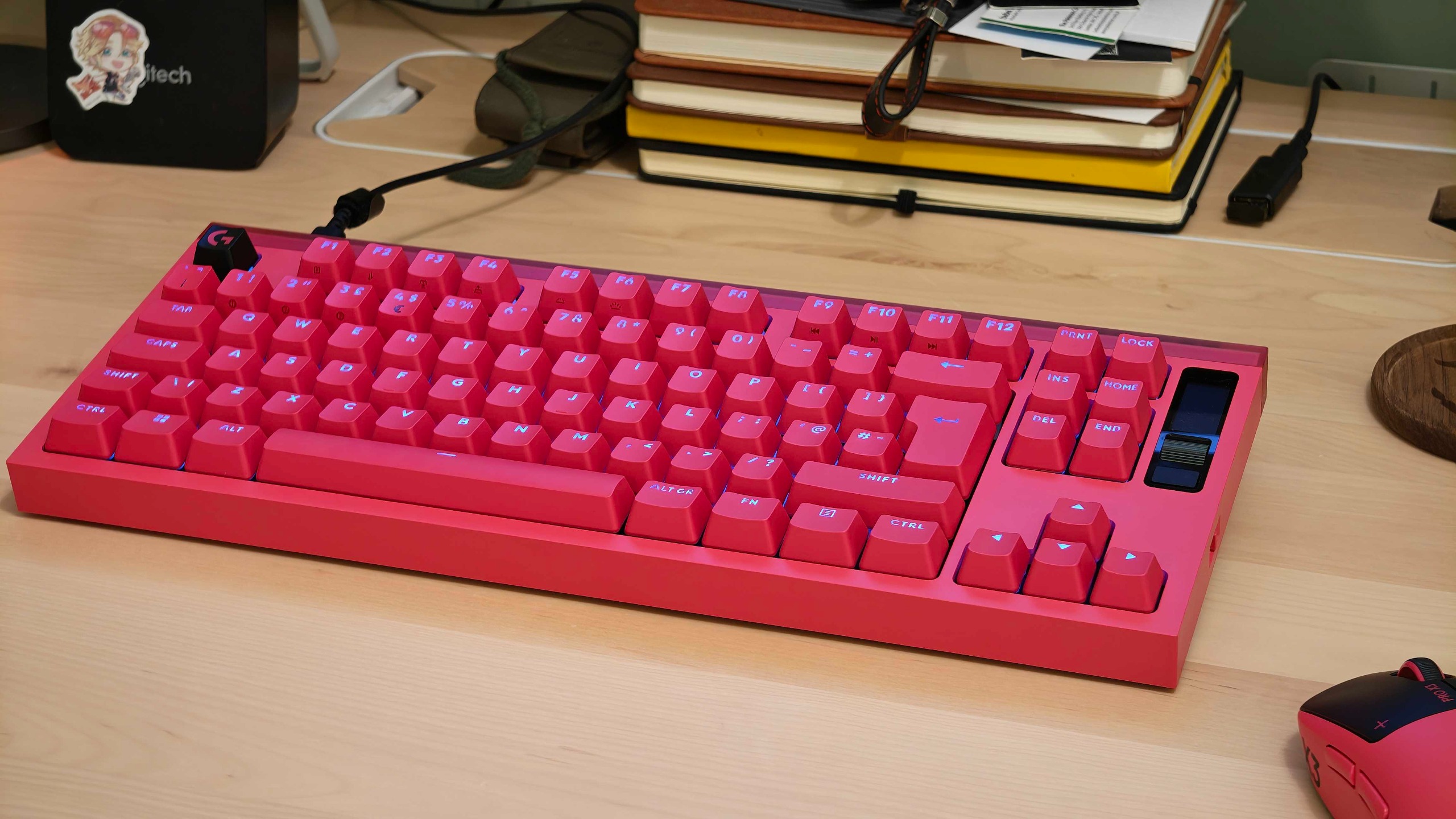
The Logitech G Pro X2 Rapid brings incredible esports performance to an approachable, compact gaming keyboard that’s simply a joy to use
Why you can trust TechRadar
We spend hours testing every product or service we review, so you can be sure you’re buying the best. Find out more about how we test.
Logitech G Pro X2 Rapid review: Two-minute review
Let’s get one thing out of the way: the Logitech G Pro X2 Rapid commands a premium price tag. At $229.99 / £209.99 / AU$399.95, it sits near the top of the gaming keyboard market — costing more than similarly high-end alternatives like the Razer Huntsman V3 HE or Corsair K70 Max. It’s currently the most expensive gaming keyboard that Logitech sells, reflecting its positioning as the very best of the best.
What does that price get you, though? The big draw here is the custom KS-20 POM switches. They’re manufactured by Gateron, one of the most popular keyboard switch brands, with contactless Hall effect operation. They feature a customizable actuation point, allowing you to select actuation depth all the way from 4mm to a very shallow 0.1mm in 0.05mm increments.

Raising the actuation point reduces the time taken for each keystroke to be registered, facilitating lightning-fast responses in intense competitive titles like Counter-Strike 2 or Valorant. You can customize the actuation point on a per-button basis as well, meaning you can make your movement inputs as sensitive as possible while leaving the button to switch weapons, for example, a more deliberate press to prevent misclicks in key moments.
Latest Videos FromTechRadar
This works in tandem with the rapid trigger setting, which sets the point at which a key needs to be lifted in order to reset. You can practically remove the delay between rapid inputs, meaning much more responsive movement. Getting used to the snappy responses certainly took some adjustment in my testing, but I found strafing felt much more precise, and this could make a big difference in a competitive setting where speed can make the difference between a win and defeat.

You can also set up key priority, which determines how the keyboard interprets almost simultaneous inputs via metrics like key travel or a chosen override. This sounds great on paper, as it should allow for much easier counter-strafing or ‘jiggle peeking’ (emerging from cover for a split second to try and bait an opponent into taking a shot), but there’s a big catch. This feature is banned in some competitive titles (including Counter-Strike 2) and will result in automated server kicks, so it should be treated with some degree of caution.
The built-in OLED display is also a pretty cool addition, though honestly, it’s not as useful as I first assumed it would be. It’s a small vertical display positioned on the far right-hand side of the keyboard above a small button and a little scroll wheel. By default, the wheel controls your system volume, but a quick tap of the button opens a menu with access to activation point adjustment, rapid trigger, mkey priority, RGB lighting, and game mode settings.
Adjusting them like this is very fiddly and much more easily accomplished right in the compatible Logitech G Hub software. With G Hub, you can save settings directly onto the keyboard’s memory, and I suspect that most pro players would rather create their settings in advance with the software rather than try and adjust them on the fly in the middle of a game.
The spec sheet is also impressive, with highlights like an optional 8,000Hz report rate. The keyboard also has a physical game mode switch, designed almost like a light switch. Flick this on to enable your game mode preset, which disables the two Windows keys by default to prevent accidental tab changes.
The physical design of the Logitech G Pro X2 Rapid exudes quality too, with the compact TKL form factor making it easy to incorporate into your setup. All three colorways (Black, White, and Magenta) look excellent, and key presses feel suitably satisfying with a very smooth motion and lovely sound. It feels great to type on as a result, but I am still disappointed that the exterior of the keyboard is entirely plastic when most gaming keyboards above a hundred bucks incorporate more durable metal faceplates instead.
I also don’t understand why Logitech G didn’t opt to go for a nice braided USB Type-C cable rather than a rubbery plastic one at this price. Maybe there’s some reason for pro players to prefer plastic, but if that’s the case, the brand could surely just throw in two alternate cable options given the $229.99 / £209.99 / AU$399.95 price tag.
There’s also the matter of the included wrist rest, which I unfortunately don’t think is particularly good. It’s basically just a huge rectangular hunk of cold, rubbery plastic that you have to flop awkwardly onto your desk. It’s not well padded, and I quickly relegated it to confinement back in the box. It’s presumably a very cheap extra to include, but I’m not too happy with the prospect of having to store it.
Logitech G Pro X2 Rapid review: Price & availability
- Costs $229.99 / £209.99 / AU$399.95
- Available via the Logitech website or online retailers
- More expensive than many alternatives
At $229.99 / £209.99 / AU$399.95, the Logitech G Pro X2 Rapid is expensive for a gaming keyboard, particularly a wired-only model with a predominantly plastic construction.
To give just two examples, similarly priced high-end options such as the Razer Huntsman V3 HE or Keychron Q1 Ultra 8K incorporate more premium materials like aluminum and, in the case of the Keychron model, offer wireless connectivity.
Still, it’s not offensively bad value by any means, as you are paying specifically for the high-end spec sheet, built-in screen, custom switches, and suite of esports features. You also get a wrist rest in the box and, while I’m not a huge fan, it might be useful for some.
The Logitech G Pro X2 Rapid can be purchased directly from the Logitech G website or at online retailers like Amazon.
Should I buy the Logitech G Pro X2 Rapid?
Scorecard
Swipe to scroll horizontally
|
Value |
Expensive for a wired gaming keyboard, but goes some way to justify its price with its feature set. |
4/5 |
|
Design and features |
Looks great and is tuned to deliver serious esports performance with specialist features like rapid trigger and custom actuation points. |
4/5 |
|
Performance |
A joy to type on and an excellent pick for competitive games. |
4.5/5 |
|
Final score |
Expensive, but worth it if you’re serious about competitive gaming given the performance and features. |
4/5 |
Buy it if…
Don’t buy it if…
Logitech G Pro X2 Rapid review: Also consider

How I tested the Logitech G Pro X2 Rapid
- Tested for multiple weeks
- Used as main keyboard for work and gaming
- Compared to other gaming keyboards
I tested the Logitech G Pro X2 Rapid for multiple weeks alongside the Logitech G Pro X3 Superstrike mouse, with my hands on both before and after the official reveal and release.
I used it for gaming sessions and productivity tasks throughout my days. This included plenty of time in popular esports titles such as Counter-Strike 2 and Call of Duty: Black Ops 7. I also played a range of other games, including the likes of Gears of War: E-Day, Cities: Skylines 2, and Far Cry 6.
Throughout my time with the keyboard, I compared it to my hands-on testing of other gaming keyboards across the price spectrum.


Nokia announced the 8110 on 9 September 1996 as the first handset in its high-end 8000 series, a business-oriented model that measured 141 by 48 by 25 millimetres and weighed around 152 grams. Sliding covers defined its form from the start, protecting the keypad in a pocket and extending downward so the microphone sat closer to the mouth while the same motion answered an incoming call.
The curvature of the shell, particularly with the cover flung open, earned this phone the nickname ‘banana phone,’ and the monochrome graphic LCD made it the first Nokia model to use such a display. Battery options began with an extremely compact 400 milliampere-hour lithium-ion pack that provided 1 to 2 hours of talk time. There was also an extended 900 milliampere-hour unit, which increased standby time to 150 hours. That was a significant upgrade from the older 2110 phone.
Sale

Samsung Galaxy Z Fold8 Unlocked Android Smartphone, 256GB Graphite | All-New Shape, Content-Native Ratio…
- CREATED FOR YOUR CONTENT: Any way you turn it, the new Galaxy Z Fold8 gives you a fuller viewing experience. Designed with your content in mind, this…
- WORLD’S LIGHTEST FOLD¹: Galaxy Z Fold8 is the newest foldable phone for content on the go. Unfolded, it fits movies and books for an immersive…
- THE BRIGHTEST DISPLAY ON A GALAXY PHONE: Our brightest smartphone display² provides you with a comfortable view, whether you’re inside or outside…
Janus Cycle acquired a few original handsets and discovered that there were almost no publicly available manuals on how to disassemble them. They had to rely on a service manual to repair the worn-out lithium-ion cells and get them to work again. Some early variants featured a white Nokia logo on the front, while later 8110i devices reverted to a black one.

Then, in 1999, there was a cinematic version that returned to the white logo design. Inside, there is a flat main board and a flexible user interface that has been curled to match the shell. There is just enough room for the spring-loaded mechanism to allow the production teams to include a quick-open function. On a real retail unit, you’d have to purposefully slide it open. That was the same constraint that forced Nokia to include a spring in the 7110 phone.
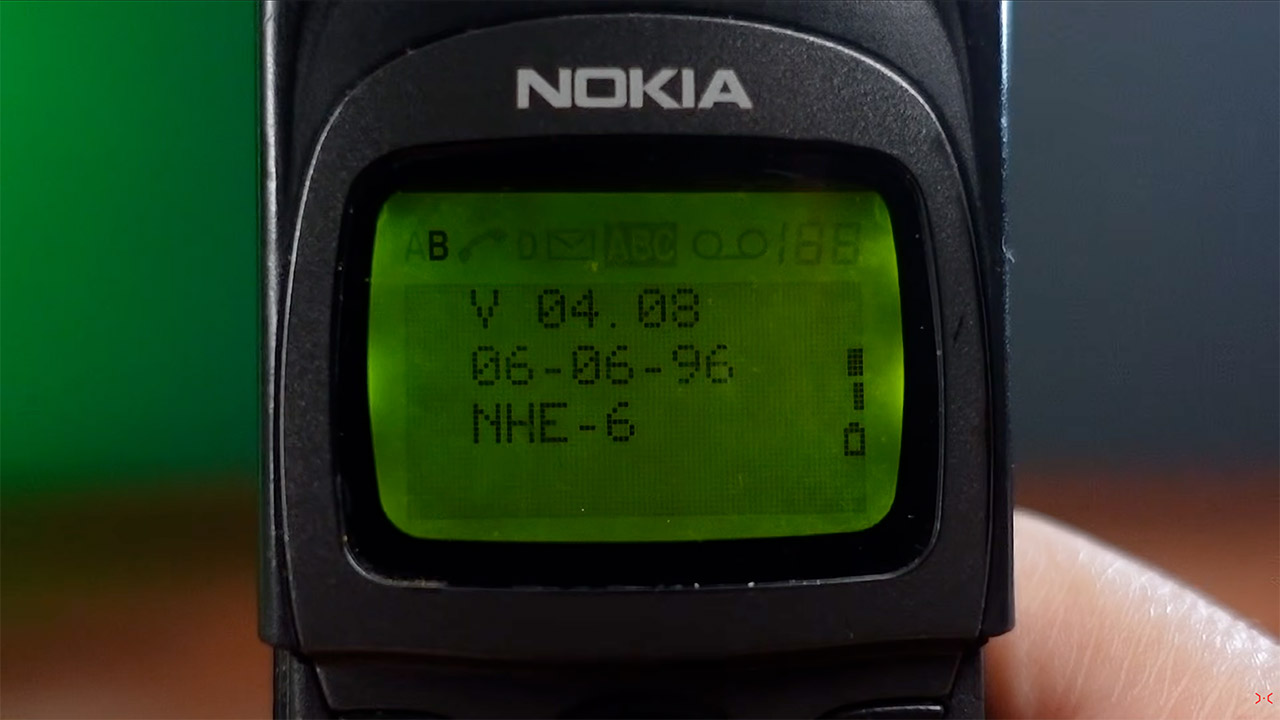
The firmware on the repaired phones indicates version 4.08, dated June 1996, and the service software confirms that certain units left the factory in August of the same year. Only a couple more weeks until the actual announcement. The phonebook may carry 125 entries, and call records maintain note of the last ten numbers you dialed, received, and missed.
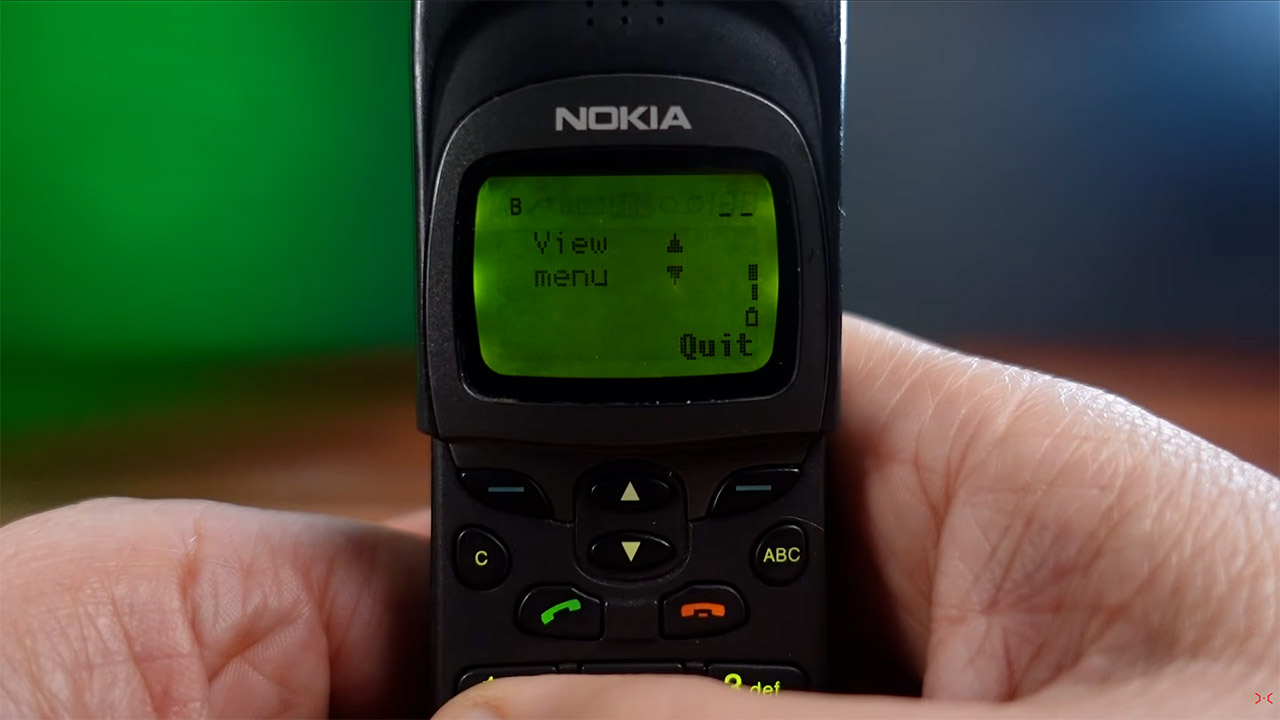
Menus were plain back then, with no clock or fancy graphics, but the phone powered up neatly after you inserted a good battery and SIM card. It would detect the network and display the classic interface without any current overlays. The next year, Smart SMS appeared on the 8110i, allowing users to receive menu updates and ringtones over the air; this was also the first time ringtones could be obtained over text message. The 8110 and 8110i were subsequently succeeded by the 8810 in 1998.

The 8110 appeared multiple times in The Matrix as the everyday phone of both the blue pills and the red pills because its curved slider stood out in 1999. Furthermore, it was already rather popular among early GSM users. The production team adjusted the camera’s cover, giving it the fast open action that audiences recalled.

Janus Cycle’s repaired examples retain the original slide mechanism, the external antenna that protrudes from the top, and the very modest monochrome screen that displays only four lines of text. Those mechanical characteristics, restored 30 years later by meticulous cell switching and the use of diagnostic software, make the phone easily identifiable as the one Morpheus used to contact Neo. It was essentially a small business tool that became an enduring cinema icon due to its curved design and sliding cover.

Elon Musk claims he will give one of his SpaceX shares to “every kid in America” in 2027, which would result in a gift worth more than $10 billion based on the current $146 share price of his combination spaceflight and AI company. That’s roughly 1% of his $1 trillion net worth.
It’s not clear how Musk plans to do this, though he said in a separate post that he wants to give the shares “directly to the public,” and that this will be the “first of many” shares he’ll donate.
President Donald Trump, who Musk spent around $300 million to help elect, has set up bank accounts for children through the Treasury, called Trump Accounts, that can accept stock donations from wealthy donors.
Musk did not immediately respond to a request for comment.
Musk’s post came just a few hours after Anthropic promised to put 5% of its shares into a new “public benefit fund,” which it intends to use to make “large donations to traditional nonprofits or direct distributions to specific populations” after its upcoming IPO.
On Sunday afternoon, Musk replied directly to Anthropic’s post on X about its new fund, suggesting the company should give “directly to the public” instead.
“This is what I will be doing,” he wrote in another reply four hours later. Then, overnight, he announced his plans to donate SpaceX stock.
There are currently more than 70 million children under the age of 18 in the United States, according to the Federal Interagency Forum on Child and Family Statistics. Musk owns around 849 million Class A common shares of SpaceX, and more than 5.5 billion Class B supervoting shares. He stands to earn many more.
Musk’s philanthropic giving to date has been almost exclusively done through his own Musk Foundation. Despite his negative opinions about philanthropy, it’s the fifth-largest private charitable foundation in the U.S. A recent review by The Economist showed that a majority of the total money laid out by the Musk Foundation over the years has gone to entities tied to Musk in some way. Nearly 60% has gone to another charity, called The Foundation, run by his money manager, Jared Birchall.
When you purchase through links in our articles, we may earn a small commission. This doesn’t affect our editorial independence.
Entertainment4 minutes ago
The 15 best Stephen King movies and TV shows of all time

Tech & AI29 minutes ago
The new Apple TV 4K sounds like it’s much more of the same

Sports1 hour ago
GLP-1s and AI among talking points at W3Fit


-

 Fashion2 days ago
Weekend Open Thread: Kut from the Kloth
-
 Entertainment4 days ago
Anna Faris Says Chuck Lorre’s ‘Mom’ Remarks Still Hurt
-

 Tech & AI3 days ago
Double Fine’s First Post-Xbox Title, First-Person Soulslikes And Other New Indie Games Worth Checking Out
-
Crypto7 days ago
ZEC and NEAR Plummet Hard, BTC Recovers From Rollercoaster Ride: Market Watch
-

 Sports7 days ago
Work on Trump’s D.C. muni enrages judge: ‘You did your absolute worst’ | News
-

 Crypto6 days ago
Visa gets Beijing’s green light for bank card business after 40 years of working with China
-

 Crypto6 days ago
TD Cowen: CFTC Crypto Rules Face 2028 Election Risk
-
 Business & Hustles7 days ago
Oil Price Today (October 13): Crude oil falls to $105 as traders assess Russian supply, Mideast attacks. What’s next?
-
 Sports6 days ago
Sediqullah Atal creates history, becomes first Afghanistan batter to score fourth-innings Test century | Cricket News
-

 Sports7 days ago
How to Watch Giants vs. Commanders: TV Channel, Live Stream, Time
-
Sports6 days ago
The Vikings’ Bruiser at WR Looped into Trade Rumors with League Interest to “Heat Up”
-

 Tech & AI7 days ago
Fervo’s Cape Station Geothermal Plant Goes Live
-

 Tech & AI6 days ago
16 cores, 5.2 GHz, and 55 TOPS: Minisforum’s newest AI workstation is mostly a massive upgrade to 192GB of memory – and that is not necessarily a bad thing
-
 Tech & AI6 days ago
Data centre firms say the AI bottleneck is now power and labour
-
 Tech & AI6 days ago
Can Vibe Coded Apps Replace Adobe and Microsoft? These AI Apps Hope So
-

 Tech & AI6 days ago
Topgolf saved over $11.3 million after leaving VMware
-

 Tech & AI6 days ago
Who Is Building the AI Foundation for K-12 Classrooms?
-
 Tech & AI6 days ago
You can now build your own Android apps with AI and install them through Google Play
-

 Sports6 days ago
Savannah Bananas 2027 schedule to be revealed Thursday. What to expect
-

 Tech & AI7 days ago
KRAFTON Expands Esports College Campus to 256 Locations
You must be logged in to post a comment Login