
Tech & AI
Musk Says It ‘Would Be an Honor’ to Hire Jensen Huang as Nvidia Sheds $427 Billion in Two Days

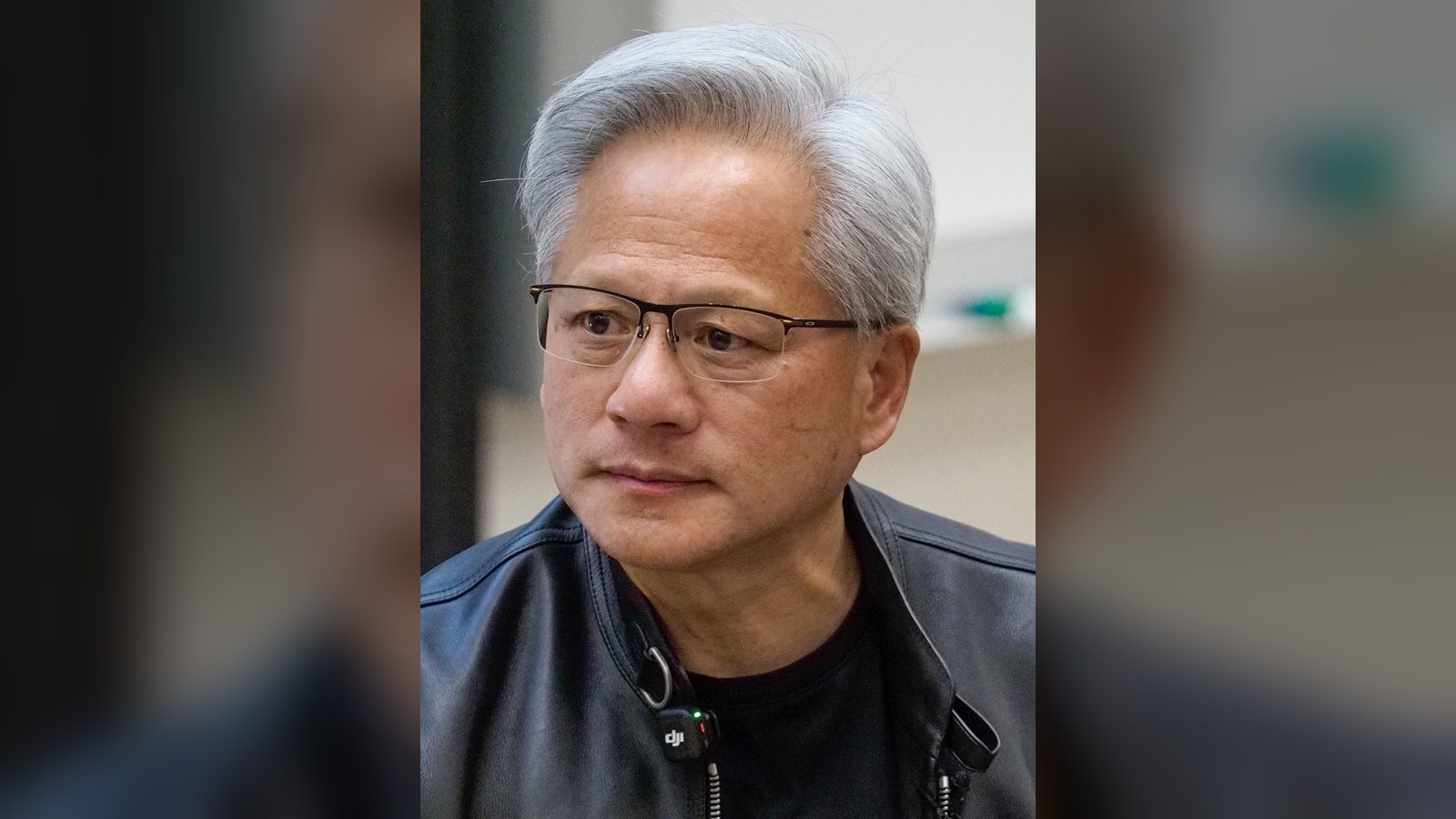
Elon Musk has said it would be “an honor” to hire Jensen Huang, a short reply on X that landed just as the future of Nvidia’s co-founder was being decided. Huang had been under pressure from his own board over an admitted affair and U.S. security concerns tied to it.
The exchange was brief. An X user wrote, “Elon please hire Jensen.” Fox Business identifies that account as the financial blog Zerohedge. Musk replied Wednesday: “That would be an honor.” Reports differ on what happened next. The Independent says Huang stepped down as CEO on Thursday morning, hours after a second affair was reported. IGN and Fox Business, published earlier in the news cycle, describe a board still weighing or preparing his removal.
How the Nvidia scandal unfolded
According to the sources, Huang acknowledged on Sunday that he had been unfaithful to his wife. The relationship was with a former executive at Singapore-based technology firm Megaspeed, whom U.S. authorities suspect of ties to Chinese intelligence. The Independent reports that U.S. intelligence warned she may have acted as a corporate espionage agent for China. Huang apologized in a memo to staff and pledged to cooperate with an independent investigation launched by Nvidia’s board. These are suspicions and allegations, not proven findings.
The story widened on Wednesday, when The New York Times reported a second relationship, with a married Nvidia executive who reports directly to Huang. That raised governance questions beyond the national security angle. The board had earlier said it had “confidence in Jensen and his leadership team” and no reason to believe company secrets or national security had been compromised.
Investors react to the Huang crisis
Markets reacted quickly. Fox Business reports Nvidia lost more than $427 billion in market value over the first two trading sessions after Huang’s disclosure and the board investigation were announced. Baird downgraded the stock to neutral, citing uncertainty over Huang’s tenure, possible softening demand and limited visibility into 2027 data center spending.
The stakes go beyond one company. Nvidia is described as the world’s second most valuable company, worth more than $4 trillion. It built that position by supplying chips that power AI data centers, having started in gaming graphics after Huang co-founded it in 1993. IGN reports that several U.S. lawmakers have called for him to resign, and that there is a reported move to tighten Nvidia’s exports to China. Beijing has warned Washington not to use the spying allegations as a pretext for new restrictions.
Why Musk would want to hire Jensen Huang
Musk’s reply was more than politeness. The two men are believed to have known each other for at least a decade. Nvidia chips have supplied Tesla vehicles and self-driving technology, and they power Musk’s xAI. The Independent also notes the pair have collaborated on space-based data centers.
Tom’s Hardware speculates on where Huang might fit in Musk’s orbit, pointing to SpaceX’s planned GPU manufacturing, a project called Terafab, and Tesla’s AI accelerators. That is the outlet’s conjecture. Nothing in the sources suggests Musk has made a formal offer or that Huang has considered one. IGN says Musk framed it as working with Huang at SpaceX, but the other sources describe the remark only as a general expression of interest.
Huang has also drawn public support from industry figures. Epic Games chief Tim Sweeney said firing him would be “an Apple firing Steve Jobs level of idiocy” and “a grievous harm to the United States of America.” IGN notes Sweeney is heavily invested in AI himself, which colors the view. Others are less forgiving: the board’s independent investigation continues, and one Republican lawmaker quoted by Fox said Huang’s resignation does not absolve Nvidia of conducting a full probe.
What to watch next
Musk’s willingness to hire Jensen Huang is a signal, not a job offer. If Huang has left Nvidia, the open questions are who succeeds him, what the investigation finds, and whether any non-compete or governance constraints affect where he goes. Any move to a rival of the company he built would be a major shift in the AI chip industry. For now, the sources document an unusual scandal, a steep loss in market value and a public vote of confidence from the world’s richest tech entrepreneur.
- Elon Musk says it ‘would be an honor’ to hire ousted Nvidia CEO Jensen Huang (Tom's Hardware)
- Elon Musk responds to calls for him to hire Nvidia CEO Jensen Huang (The Independent)
- Elon Musk Says It 'Would Be an Honor' to Hire Jensen Huang, as the Nvidia CEO's Future Hangs in the Balance (IGN)
- Musk says it would be 'an honor' to hire Nvidia's embattled Jensen Huang (foxbusiness.com)
Explore more on this topic with Vexel Search.
File photo: Jensen Huang Stanford 2026-04-30 010 (cropped).jpg by Anderseidesvik, CC BY-SA 4.0, via Wikimedia Commons.
WordUp Morning
Ten stories, both sides of each, in five minutes. Free, every weekday at 7am, plus a Saturday weekend edition.
We'll email you a link to confirm. Unsubscribe any time.

Tech & AI
Nvidia CEO Jensen Huang Resigns After 33 Years as CFO Colette Kress Takes Over as Interim Chief
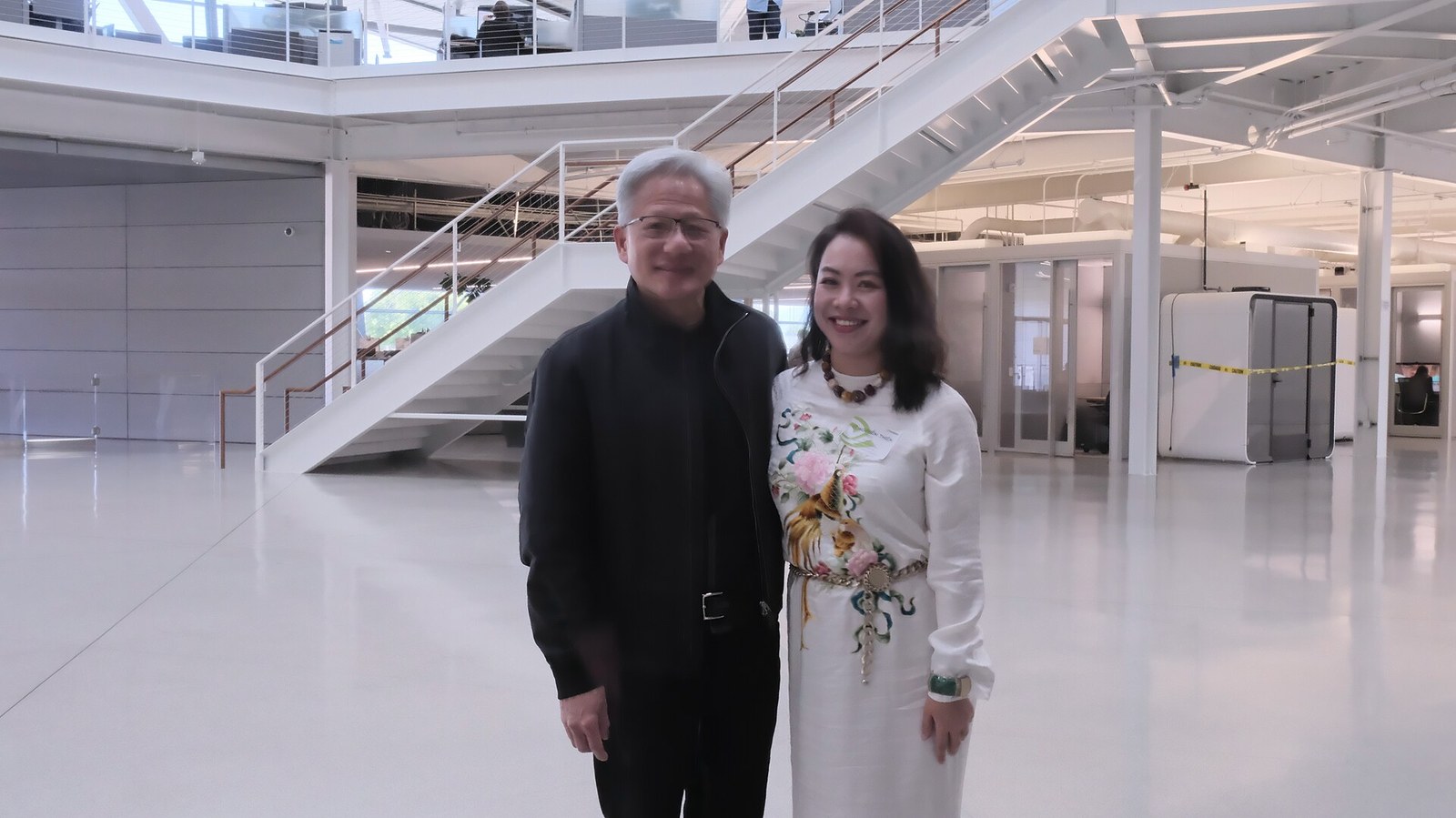
The Nvidia CEO job is open for the first time in the company’s history. Jensen Huang, who co-founded the chipmaker in 1993 and has led it ever since, has resigned, according to Fortune. The move came just days after reports that the board was preparing to push him out.
Earlier coverage from IGN, citing The Wall Street Journal, said the board would meet as soon as November 11 to discuss Huang’s future. A Tom’s Hardware headline said Nvidia’s stock had fallen about 20% since the scandals began. Fortune later reported that the company had announced Huang’s resignation and named Chief Financial Officer Colette Kress as interim CEO. The sources do not agree on every detail of the timeline. Fortune’s report calls it a Thursday announcement even though the article is dated November 11.
How the Nvidia CEO Crisis Unfolded
The trouble began with a New York Times report of an extramarital affair between Huang and a woman that U.S. intelligence officials reportedly judged to be a Chinese spy. On Sunday, Nvidia’s board announced an independent inquiry. It said it had “no reason to believe that either national security or NVIDIA secrets were compromised” but would examine “all available information.” Huang said he supported the review.
He also wrote to employees, in a letter obtained by the BBC, admitting he had been unfaithful and apologizing to his wife and children. The Times then reported a second relationship, with an executive who reported to him. The sources do not say the intelligence-related claims have been proven. Fortune attributes them to U.S. officials’ assessment, and the board’s own statement stressed that it had found no sign of a breach.
A Company Built Around One Man
The timing is awkward for Nvidia. Fortune reports first-half fiscal 2027 revenue of $96 billion, up 85% from a year earlier, and says Kress has forecast 70% growth for fiscal 2028. Shares initially dropped more than 6% on the resignation news. Huang still holds a roughly 3.6% stake, which Fortune values at about $150 billion.
The deeper worry is how the company is organized. Huang built a flat structure with about 60 direct reports and sat at the center of most decisions. Until now the board had no chair, there was no publicly stated succession plan, and the company has no chief operating officer. The board has named Harvey Jones, a managing partner at Square Wave Ventures who has been on the board since 1993, as its first chair. It says it will consider internal and external candidates for a permanent successor.
What Analysts Say Comes Next
Analysts quoted by Fortune say the question is not whether Nvidia’s engineers can keep designing chips. It is whether any one person or team can inherit Huang’s authority over what gets built and keep customers confident in the company’s next bet. Wharton management professor Michael Useem said that “if the board had been doing its job, it would already have a slate of possible successors.”
Competitors may see an opening. Bret Greenstein of West Monroe pointed to Anthropic’s recent move of inference workloads from Nvidia’s CUDA software to AMD in three days. He suggested that could “turn what has effectively been a monopoly into a horse race again.”
For now, Kress is expected to provide continuity for Wall Street and customers while the board searches. How quickly it names a permanent Nvidia CEO, and whether the intelligence-related questions are resolved, will shape how much confidence the company can win back.
- Nvidia’s Board reportedly preparing to oust CEO Jensen Huang as second extra-marital affair emerges (Tom's Hardware)
- Nvidia Board is Preparing to Potentially Oust CEO Jensen Huang (IGN)
- Report: Nvidia is preparing to oust CEO Jensen Huang after admission to affair with alleged Chinese spy (fortune.com)
Explore more on this topic with Vexel Search.
File photo: Director Lê Nguyễn Thiên Nga and NVIDIA Founder and CEO Jensen Huang.jpg by VQTCS, CC BY 4.0, via Wikimedia Commons.
WordUp Morning
Ten stories, both sides of each, in five minutes. Free, every weekday at 7am, plus a Saturday weekend edition.
We'll email you a link to confirm. Unsubscribe any time.
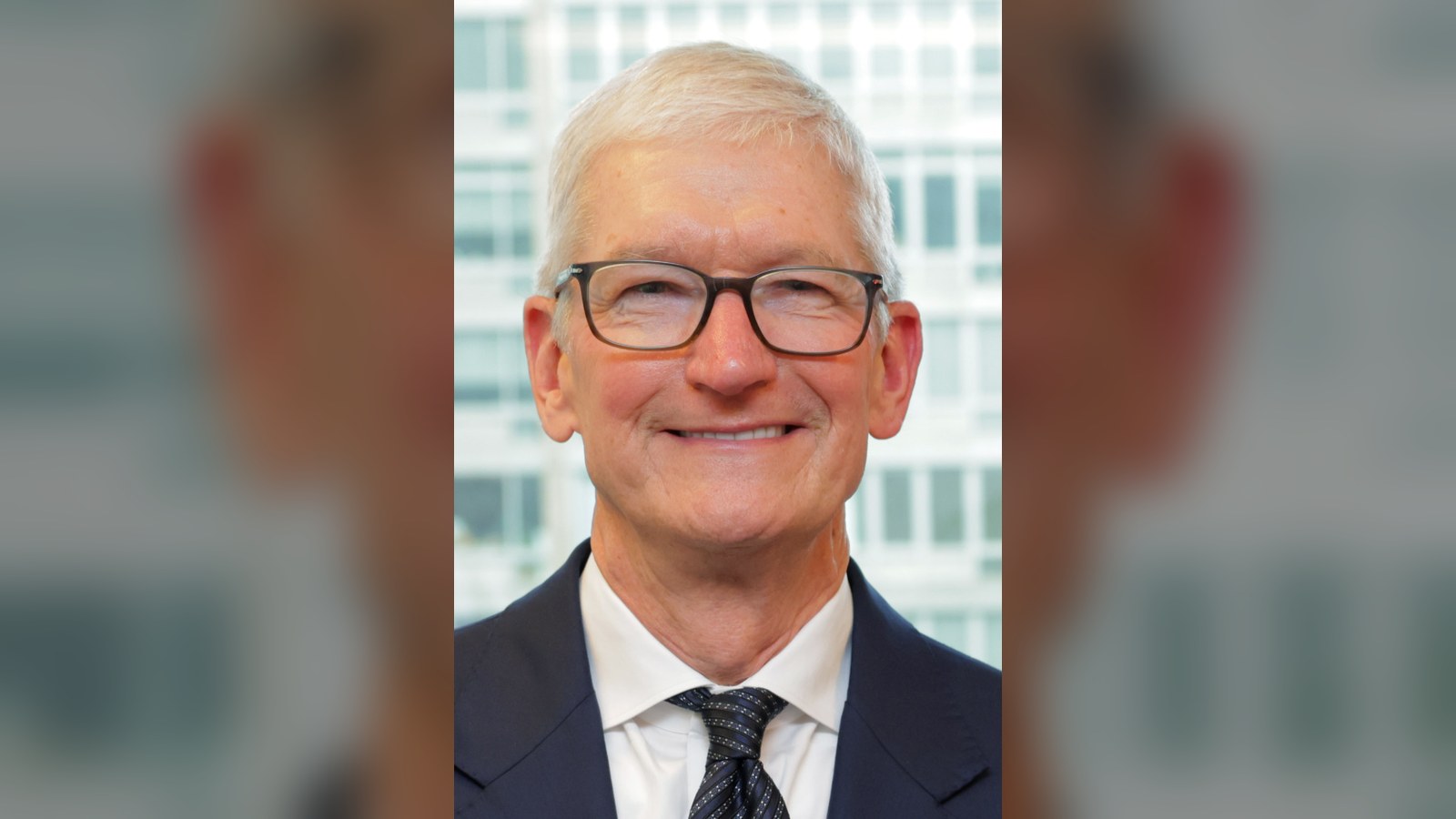
President Donald Trump has weighed in on who should be the next Nvidia CEO, and he says there is only one answer: Tim Cook. In a Truth Social post on Thursday, hours after Jensen Huang’s resignation was announced, Trump wrote that “there is only one man to take his place – TIM COOK of Apple. A Legend replaces a Legend!”
What Trump said about the next Nvidia CEO
Trump praised Huang as having “done a fantastic job” before pivoting to his preferred successor. None of the reports say whether Cook has any interest in the role, and Trump did not say he had spoken to him about it. Nvidia’s board has not publicly signaled that Cook is under consideration.
The endorsement fits a pattern. Trump has long praised Cook, calling him an “amazing manager and leader” and once crediting him for phoning the White House directly rather than hiring expensive consultants. When Apple announced Cook’s transition in April, Trump called him an “incredible guy” with an “almost incomparable” career. Cook has since stepped down after roughly 15 years as Apple’s chief executive and now serves as executive chairman of its board.
Why Huang’s departure is so unusual
Huang co-founded Nvidia in 1993 and led it for more than three decades. His exit came after a turbulent week. On Sunday, he told staff in a note that he had been “unfaithful” to his wife of more than 40 years. “There is no excuse for what I did. I am deeply sorry,” he wrote.
That admission followed a New York Times report last month about his close relationship with a former executive at Megaspeed, an Nvidia customer. The report said US intelligence officials believe she was recruited to gather information for the Chinese government. Nvidia’s board then opened an independent investigation, led by a prominent Wall Street law firm. During it, the Times reported a second affair, with a senior Nvidia executive who reported directly to Huang.
The national security angle is what raises the stakes beyond a personal scandal. Nvidia’s chips sit at the center of the AI industry and of US-China tension over advanced semiconductors. Fox Business noted that no evidence has been publicly established that Huang disclosed confidential information, or that the woman obtained Nvidia secrets. The claims about her come from reports citing US officials, and she has not been convicted of anything.
What happens next for Nvidia
Nvidia has named Chief Financial Officer Colette Kress interim CEO while the board searches for a permanent replacement. It is considering both internal and external candidates. Investors reacted with caution: Nvidia shares were down about 4.4 percent, to roughly $166, when Fox Business published its report.
For now, Trump’s post is best read as a public opinion, not a signal of what the board will do. Choosing a successor is the board’s job, and it is working through an investigation that has not yet concluded. Whether Cook, who has just handed Apple’s top job to someone else, would want to take on another, or whether Nvidia would want a leader from outside the chip world, is an open question. The next Nvidia CEO will inherit the company’s dominant position in AI hardware, along with the political and security scrutiny that now surrounds it.
- Trump says the only man who should replace ex-Nvidia CEO Jensen Huang is Tim Cook of Apple fame (PC Gamer)
- President Trump says Apple’s Tim Cook is the only man to replace Jensen Huang as Nvidia CEO (Tom's Hardware)
- Trump says 'there is only one man' to replace Jensen Huang as Nvidia CEO (foxbusiness.com)
- Trump says 'only one man' can replace Jensen Huang (businessinsider.com)
Explore more on this topic with Vexel Search.
File photo: Tim Cook in New York City – 2026 (cropped).jpg by Dati Bendo / European Union, CC BY 4.0, via Wikimedia Commons.
WordUp Morning
Ten stories, both sides of each, in five minutes. Free, every weekday at 7am, plus a Saturday weekend edition.
We'll email you a link to confirm. Unsubscribe any time.
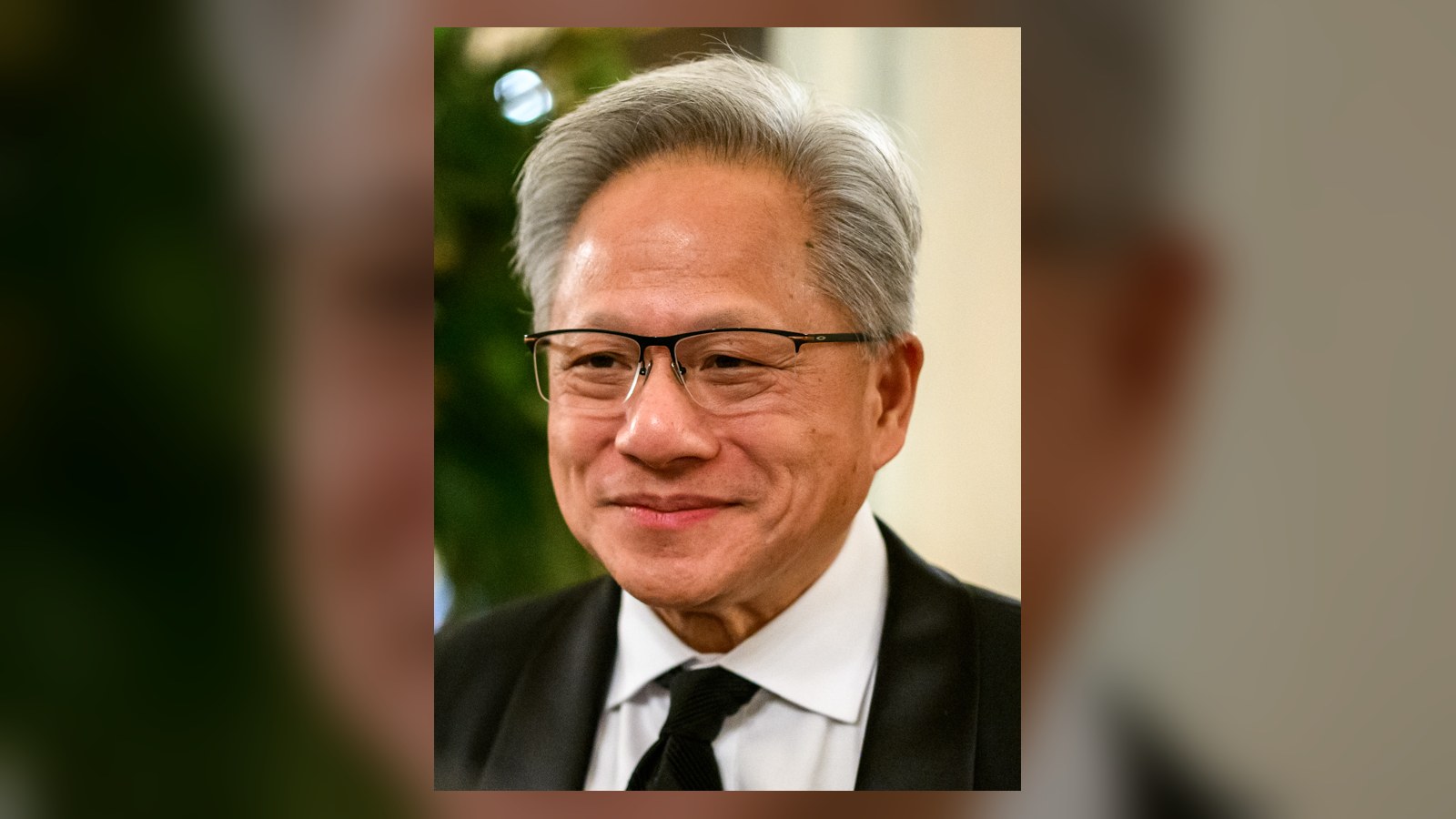
The Nvidia CEO resignation has jolted markets and left the world’s most closely watched chipmaker without the only chief executive it has ever had. Jensen Huang, who co-founded the company and steered it from a graphics-chip specialist to the centre of the AI boom, stepped down on Thursday after days of mounting pressure over his personal conduct and its possible national security implications.
At the London equity close, Nvidia shares were down 4.8%, though well above their earlier lows. The company’s market value slipped below $4 trillion for the first time since July 2025. Chief financial officer Colette Kress, in the job since September 2013, will keep her finance duties while serving as interim chief executive. The board has begun a search that will consider both internal and external candidates.
How the scandal unfolded
The sequence began about two weeks ago, when The New York Times reported that Huang had had an affair with a businesswoman from China who worked for Megaspeed, a Singapore-based Nvidia customer. US intelligence officials have reportedly identified her as a suspected Chinese intelligence asset. The reports said Megaspeed had been funnelling AI chips to China, which raised concerns about the security of sensitive information tied to US export restrictions on those chips.
On Sunday, Huang issued a statement admitting to the affair and apologising to his family, Nvidia’s employees and its shareholders. The board said the same day that it was hiring outside counsel to examine the espionage questions. It added that it had “no reason to believe that either national security or NVIDIA secrets were compromised.” Those questions are reported rather than established, and the sources do not describe any finding of wrongdoing.
On Wednesday night the Times reported a second extramarital relationship, this time with a senior Nvidia executive who reported directly to him. The board met overnight, and the resignation was announced the next morning. Board chair Harvey Jones said the directors had “full confidence” in Kress and the leadership team, and expected operations, customer commitments and the product roadmap to continue “without interruption”.
Who could replace Huang?
Speculation about a successor started almost immediately. Dan Ives of Yorkville Ives praised Kress’s credibility inside and outside the company. He said he had long expected her to run a major public tech company, though he thought she would have to leave Nvidia to do it. He also said there was a good chance the board would look outside, naming Apple’s Tim Cook, who left the iPhone maker in September, as a “dark horse”.
President Donald Trump, who had stood by Huang through the controversy, went further. He posted that “there is only one man to take his place – Tim Cook of Apple. A Legend replaces a Legend!”
Morningstar’s Brian Colello noted that prediction markets are also pointing to Rene Haas, a former Nvidia vice president who now runs Arm Holdings, as a possible external pick. The internal names he mentioned alongside Kress were Ian Buck, who leads Nvidia’s AI efforts.
Wider markets stay resilient
The Nvidia CEO resignation did not drag broader indices down. London’s FTSE 100 closed up 0.3% at 10,863.09 after drifting into the red in the early afternoon, though the FTSE 250 edged down by 8.20 points and the AIM all-share lost 1.1%. Paris and Frankfurt both rose, and the Dow, S&P 500 and Nasdaq were all higher around the London close.
The Nvidia news also competed with strong UK data. Monthly GDP rose 0.2% in September, against expectations of no growth, lifting growth in the three months to September to 0.7% from 0.5% in the second quarter. Deutsche Bank’s Sanjay Raja said that, excluding the pandemic years, the economy had not run this hot since 2017. He credited household spending, business investment, government spending and rapid growth in AI-related activity. Peel Hunt’s Kallum Pickering put annualised growth across the first three quarters of 2026 at about 2.4%, well above his 1.8% estimate of potential.
Elsewhere, sterling slipped to $1.3233 from $1.3284 a day earlier. The US 10-year Treasury yield rose to 5.08%, from 5.00% on Tuesday.
For now, the immediate market reaction to the Nvidia CEO resignation looks like a sharp but contained repricing of leadership risk. The harder questions are for the board: who can succeed the face of the AI boom, and what the outside counsel review will find. Nvidia’s central place in the AI industry means both answers will be watched well beyond its own share price.
- Volatile trade as Nvidia chief executive Jensen Huang resigns (The Independent)
- Volatile trade as Nvidia chief executive Jensen Huang resigns (standard.co.uk)
- Who is Colette Kress, Nvidia's new interim CEO? (PC Gamer)
- NVIDIA CEO Jensen Huang resigns amid mounting scandals (androidauthority.com)
Explore more on this topic with Vexel Search.
File photo: Jen-Hsun Huang 2025.jpg by The White House, Public domain, via Wikimedia Commons.
WordUp Morning
Ten stories, both sides of each, in five minutes. Free, every weekday at 7am, plus a Saturday weekend edition.
We'll email you a link to confirm. Unsubscribe any time.
Tech & AI
Nvidia investigation: Wachtell hired to probe CEO Jensen Huang’s alleged spy link after $500bn share rout
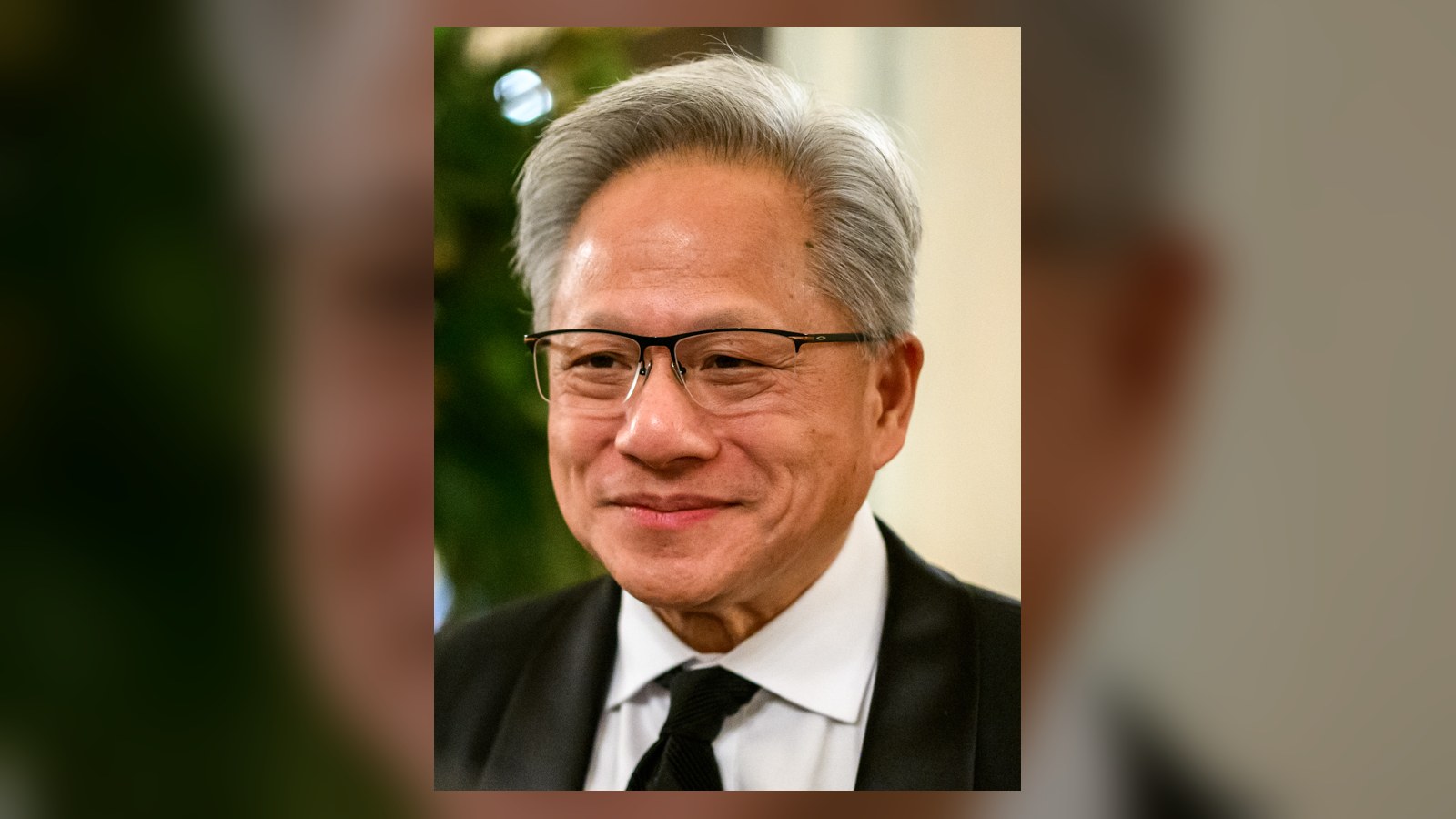
The Nvidia investigation into chief executive Jensen Huang’s relationship with an alleged Chinese spy has been handed to one of Wall Street’s most powerful law firms, as the world’s second most valuable company tries to contain a scandal that has erased hundreds of billions of dollars from its market value.
Nvidia said it had appointed New York firm Wachtell, Lipton, Rosen & Katz to carry out what it called a “thorough and independent” review. The work will be led by partner Joon Kim, a former acting US attorney for the Southern District of New York, whose practice covers internal investigations, white-collar defence and crisis management. Nvidia has given no timeline, but says Huang will keep running the company he co-founded “without interruption”.
What the Nvidia investigation is examining
At its centre is Huang’s relationship with Alice Huang, also known as Huang Le, who is not related to him. She was an executive at Singapore-based Megaspeed, a customer of Nvidia, and is alleged to be a spy for Beijing. Megaspeed had previously been suspected of helping divert Nvidia chips to China. Nvidia says it looked into that concern and found it unsupported, and that the US government never told it Megaspeed posed an intelligence risk.
The company first denied an improper relationship, then reversed course. On Sunday Huang acknowledged he had been unfaithful to his wife, although according to the Guardian he did not refer directly to Ms Huang. The same day, Nvidia’s board announced a probe into reports that he had been the target of a foreign intelligence effort. A committee of independent directors will oversee it, and the board says it has no reason to believe company secrets or national security were compromised.
The New York Times reported that Secretary of State Marco Rubio circulated a memo earlier this year warning officials about the relationship. President Donald Trump said Huang told him he had “no idea she was a spy”, and that he believed him. Beijing has dismissed the allegations as an attempt to “smear and malign China”.
Political and market pressure builds
Nvidia is not the only party asking questions. The FBI is running its own inquiry, and the House Committee on Foreign Affairs has asked Huang to attend a closed-door briefing next week. The committee can issue a subpoena if it chooses. Huang has not said whether he will attend. Nvidia declined to say whether he has hired personal lawyers, and it is unclear whether Wachtell will be able to speak to Alice Huang at all.
The stakes extend beyond one executive’s conduct. Nvidia is the sole maker of a chip used in AI tools, and US officials treat its products as a national security matter. David Perdue, the US ambassador to China, said the episode was “another reminder that we have to stay diligent”, adding that “economic security is national security”.
The market reaction has been sharp, though the figures vary with timing. The BBC reported about $500bn wiped from Nvidia’s value since Friday, leaving shares near a yearly low. By Wednesday, the Guardian said, shares had bounced 3.8% to $175.34 in early trading, narrowing the loss since Friday to $272bn. That rebound came alongside a wider lift for AI stocks after strong results from CoreWeave. Even after it, the company is valued at about $4.1tn.
Why Wachtell?
Wachtell is among the most prestigious and profitable law firms in the US. Its clients include OpenAI and Salesforce, and it advised the Treasury during the 2008 takeovers of Fannie Mae and Freddie Mac. Kim’s record as a prosecutor overseeing fraud, corruption and cybercrime cases gives the review credibility with regulators and investors. Sources told the BBC the Nvidia investigation will likely be treated as urgent, given how closely Huang’s public image is tied to the company’s.
For now, the facts are still limited to allegations and admissions. Huang has acknowledged infidelity, but no findings have been made about espionage, and Nvidia says nothing indicates its secrets were compromised. What Wachtell, the FBI and Congress each conclude is likely to determine whether Huang’s role, and investor confidence, survive intact.
Explore more on this topic with Vexel Search.
File photo: Jen-Hsun Huang 2025.jpg by The White House, Public domain, via Wikimedia Commons.
WordUp Morning
Ten stories, both sides of each, in five minutes. Free, every weekday at 7am, plus a Saturday weekend edition.
We'll email you a link to confirm. Unsubscribe any time.
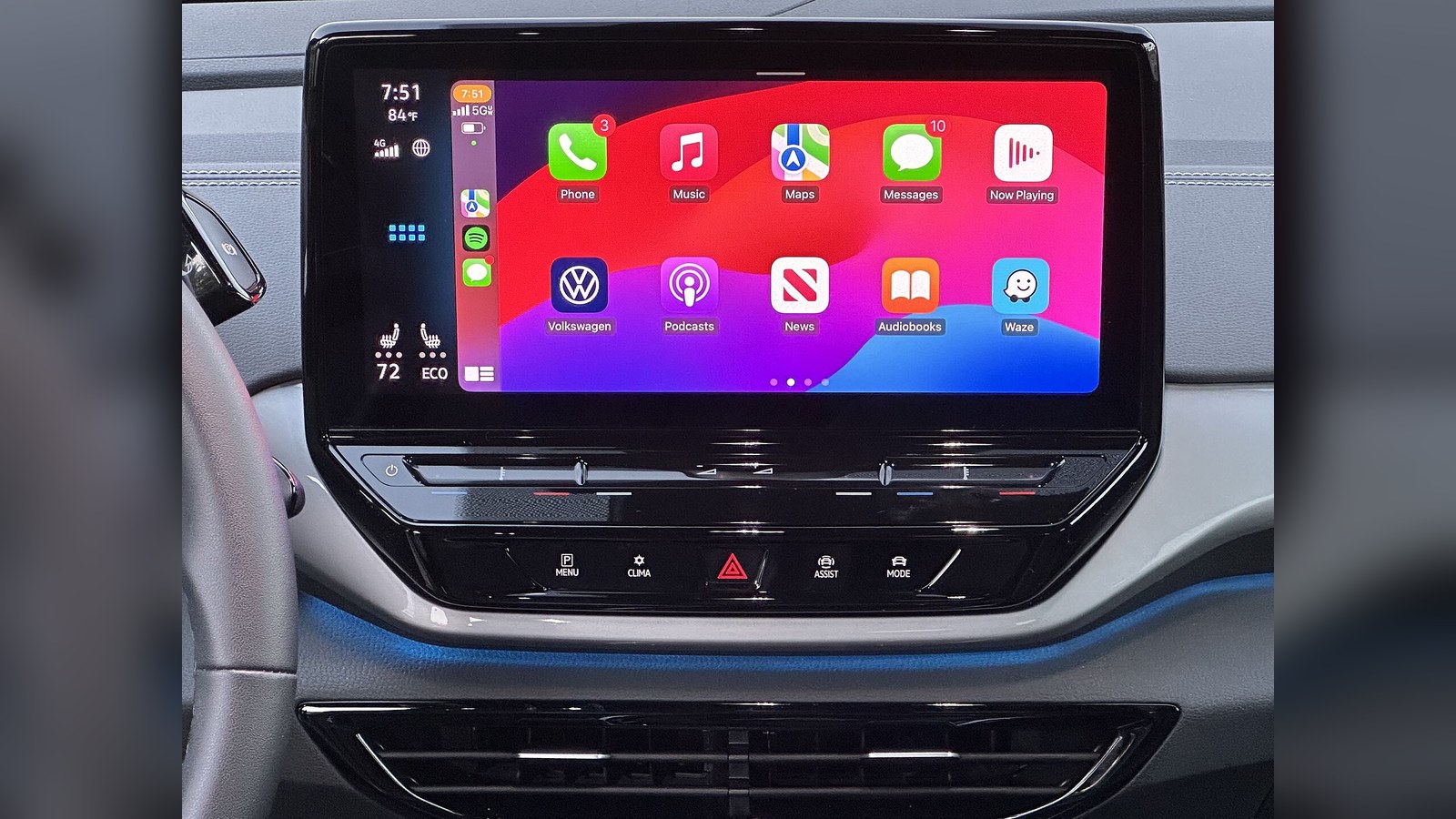
Gemini on CarPlay is officially here. Google announced on November 11 that its standalone Gemini app is rolling out to Apple’s in-car platform worldwide, bringing the full Gemini Live voice conversation experience to the dashboard. It covers all Gemini users on iOS and every language Gemini Live supports. Because the rollout is staged, the update may take a few days to show up on every phone.
What changes for drivers
CarPlay owners could already reach Gemini through Google Maps, but that integration was limited. The new app is a more complete version of the chatbot. Tap the Gemini icon on the CarPlay display and you can start a fresh conversation or continue a recent one. Conversations sync with the Gemini app on your iPhone and stay in your chat history. You could begin a chat while leaving the house, carry on during the drive, and read the thread on your phone when you arrive.
Google’s suggested uses are mostly about turning commute time into prep time. Drivers can rehearse for a meeting, go through unread emails, get summaries of long threads, or talk through a reply by voice. They can also hear their Daily Brief, which draws on Workspace tools such as Gmail and Google Calendar, or ask for recommendations for places nearby. As on the phone, the conversation is free-flowing, so you can interrupt, ask follow-ups or change topics without starting over.
What it doesn’t do
Android Authority points out a clear limit. The integration does not give Gemini deep device-level permissions, so it won’t change your music, adjust the climate controls or operate other CarPlay apps. This is a conversational assistant, not a replacement for controlling the car. Anyone expecting it to rival Siri’s system-level reach should adjust expectations.
Catching up to the competition
The launch fills a notable gap. According to 9to5Mac, Gemini was the last major AI chatbot without a CarPlay app of its own. ChatGPT, Perplexity, Claude, Copilot, Meta AI and Grok all already support the platform. 9to5Mac also notes that Siri gets a standalone app in iOS 27, which supports CarPlay as well. Android Authority’s headline says Google is “catching up to rivals, finally,” and the late arrival is hard to ignore given how many alternatives drivers already had.
Engadget describes the move as part of a broader push to put Gemini on as many screens and speakers as possible. It follows Google enabling a personalization feature on Android Auto that can use details from other Google apps. Google is also bringing that feature to cars with Google built-in. The company is clearly treating the car as a major place for its assistant, on both Apple’s and its own platforms.
How to get Gemini on CarPlay
No separate download is needed. Google’s setup steps are:
- Update the Gemini app on your iPhone to the latest version.
- Turn on microphone permissions for the app.
- Use Gemini Live on your phone at least once.
- Connect your phone to your car and tap the Gemini icon on the CarPlay display.
Early reports suggest patience may be needed. At the time of writing, Android Authority and 9to5Mac both said the update had not yet reached their devices, though Google says the rollout starts today. If the icon isn’t there yet, checking for app updates over the next few days is the best bet. Once it arrives, Gemini on CarPlay gives iPhone users a hands-free way to continue the same conversations they have on their phones, within the limits above.
- Google brings the Gemini app to Apple CarPlay (engadget.com)
- Google brings the standalone Gemini app and Gemini Live to Apple CarPlay (androidauthority.com)
- Google confirms Gemini app coming to Apple CarPlay (9to5mac.com)
Explore more on this topic with Vexel Search.
File photo: 2023 Volkswagen ID.4 running wireless CarPlay.jpg by Sunnyboy122, CC0, via Wikimedia Commons.
WordUp Morning
Ten stories, both sides of each, in five minutes. Free, every weekday at 7am, plus a Saturday weekend edition.
We'll email you a link to confirm. Unsubscribe any time.
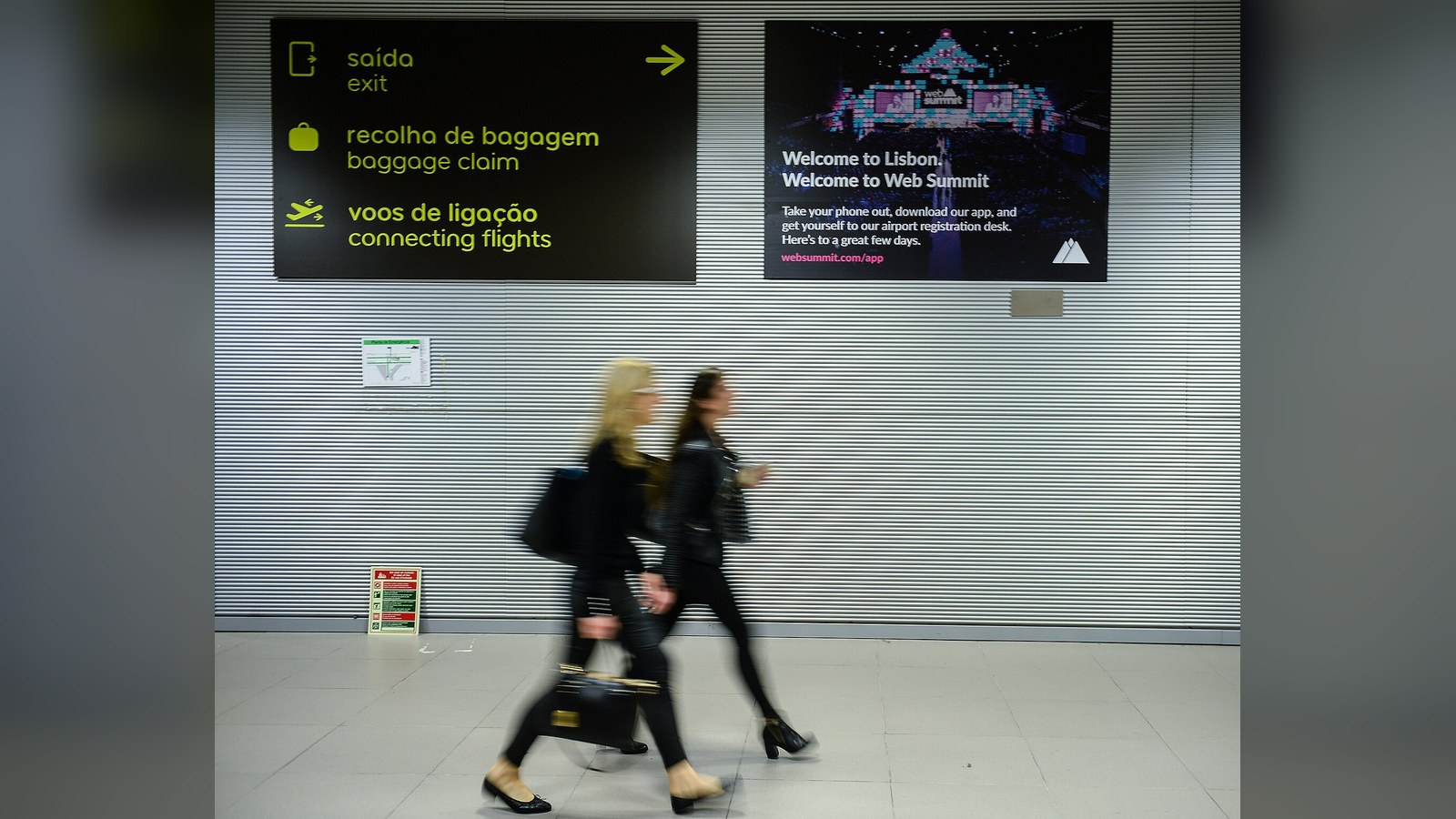
The cancellation of Web Summit Day 2 leaves tens of thousands of tech professionals with an unexpected gap in their week, after Portugal’s government advised organisers that Wednesday’s programme in Lisbon should not go ahead because of Storm Charles.
The conference, one of the largest technology gatherings in the world, is scheduled to run from 9 to 12 November. Business Insider puts its attendance at more than 70,000 people from over 150 countries. Organisers informed attendees by email on Tuesday evening that Wednesday 11 November would not take place.
Why the government stepped in
According to the organisers’ message, the government’s advice cited three concerns: tidal flooding, severe disruption to public transport, and the effect of high winds on external structures. That last point matters for an event that relies on large temporary installations. The advice followed discussions with the national civil protection authority, ANEPC, and the Public Security Police, known as the PSP.
Web Summit said it would respect the government’s direction. “The safety and security of our attendees, staff and contractors is always our absolute priority,” the team wrote.
A wider state of alert across Portugal
The decision did not come out of nowhere. Earlier on Tuesday, Lisbon mayor Carlos Moedas said “everything indicates” the event could not run on Wednesday, according to The Irish Times, as relayed by The Next Web. He reportedly put the number of people at the venue in Parque das Nações at more than 60,000.
The Portugal News reported that the government declared a state of alert across mainland Portugal for Wednesday. Schools and non-essential public services are due to close. Lisbon plans to shut its tunnels, parks, gardens and cultural venues from midnight. The national weather service, IPMA, forecast gusts of up to 120km/h. Against that backdrop, holding a mass-attendance conference would have meant moving huge crowds through a city whose transport network was expected to be struggling.
What happens on Thursday
Organisers say they aim to proceed with Day 3 on Thursday 12 November as planned, once Storm Charles has passed. That is an intention rather than a guarantee. The company said it will keep working with the authorities and emergency services, monitor conditions, and issue further updates as confirmed information becomes available. It added that it will contact affected people directly.
Several questions remain open in the sources. Neither says whether any Wednesday sessions will be rescheduled or moved online, or how the loss of a full day will affect exhibitors, startups and investors who built their schedules around it. Attendees will have to wait for those details from the organisers.
For now, the practical message is simple. Web Summit Day 2 will not happen, Thursday is the target for resuming, and anyone in Lisbon should expect disruption while the state of alert is in force and follow official guidance as the storm passes.
- Web Summit cancels day 2 due to Storm Charles and risks of tidal flood (businessinsider.com)
- Web Summit cancels Day 2 in Lisbon as Storm Charles hits Portugal (thenextweb.com)
File photo: Web Summit 2017 – Registration and Arrival COD 1309 (24341345918).jpg by Web Summit, CC BY 2.0, via Wikimedia Commons.
WordUp Morning
Ten stories, both sides of each, in five minutes. Free, every weekday at 7am, plus a Saturday weekend edition.
We'll email you a link to confirm. Unsubscribe any time.
The Spotify AI DJ is getting its biggest personalization update since it debuted in 2023: nine new voices with distinct personalities, and a setting that strips out most of the talking. The changes began rolling out on November 10 to Premium subscribers in every market where the feature is already available.
Nine voices, each with its own attitude
Spotify is adding seven English-language voices and two in Spanish. The English lineup covers British, American, Irish, Australian and Indian accents, and each host gets a name and a temperament. Among the three American options, Casey is laid-back and warm, Tess is direct with “a bit of an edge,” and Lane brings a Southern accent and youthful energy. Australian host Sam is described as gregarious and not-so-serious.
The Spanish additions are Nico, who is down-to-earth, and Fabi, who is witty and friendly. Engadget and CNET both describe the two as Mexican-accented. They replace the earlier Spanish voice, Livi, so Spanish-speaking listeners lose that option. The original English voice, known as “X” and based on recordings of a real Spotify employee, stays.
Turning down the talk
The second change may matter more to some listeners. Until now, the defining trait of the Spotify AI DJ was its running commentary: explaining why it picked a set of songs and what ties them together. A new toggle limits that to brief acknowledgments. According to the reports, you will still hear a short line when the session starts, and when you ask the DJ to change direction or turn it off.
Spotify frames this as a way to win back moments when people would normally pick a static playlist, such as a dinner party or a gathering where music should stay in the background. CNET’s reviewer was less convinced, noting that without the announcer it could be hard to tell a DJ mix from a plain shuffled one.
Why the update matters
The timing reflects how popular the feature has become. TechCrunch reports that more than 94 million Premium listeners use the DJ, which makes it one of Spotify’s most successful AI products. Since launch, the company has layered on conversational AI chat, prompt-based recommendation tuning, AI playlist creation and integrations with third-party assistants like ChatGPT and Claude. Letting users choose a voice and a talkativeness level borrows from the personalization options common in AI assistants, and it is a sign Spotify sees the DJ as a product to refine rather than a finished novelty.
The DJ is supported in more than 95 markets, in English, Spanish, French, German, Italian and Brazilian Portuguese. The new voices cover only English and Spanish for now.
How to find the new settings
To change your host, search for “DJ” in the Spotify mobile app, then tap the three-dot menu to pick a voice and set the commentary level. While the DJ is playing, tapping the DJ button again lets you shift the genre, artist, mood or recommendations. Premium plans start at about $13 a month, according to CNET.
For listeners who found the original patter either charming or grating, the Spotify AI DJ now offers a choice between a character with opinions and something close to a quiet radio station.
Explore more on this topic with Vexel Search.
File photo: Spotify, King’s Cross Railway Station.JPG by Philafrenzy, CC BY-SA 4.0, via Wikimedia Commons.
WordUp Morning
Ten stories, both sides of each, in five minutes. Free, every weekday at 7am, plus a Saturday weekend edition.
We'll email you a link to confirm. Unsubscribe any time.
Tech & AI
Paramount Skydance CEO Calls AI the “Biggest Creative Unlock” in Modern History as $6 Billion in Savings Loom

Header image: AI-generated illustration by WordUp News.
David Ellison, chief executive of Paramount Skydance, told investors this week that artificial intelligence “really has the potential to be the biggest creative unlock in modern history.” The remark came during his first earnings call leading a combined Paramount and Warner Bros., and it set out how the new studio giant plans to use the technology while courting an industry wary of it.
Ellison’s CGI comparison
Ellison placed AI in the lineage of the early-1990s shift to CGI and digital compositing. That era, he said, produced films such as Jurassic Park and Terminator 2, and he finds it “hard to imagine” AI won’t have a bigger effect. His argument is mostly about economics. The original Terminator, he noted, was made in 1983 for about $4 million, while a shot-for-shot remake today would cost $60 to $70 million.
That gap, in his telling, is why studios take so few risks on original ideas. If AI tools make budgets “more digestible,” he said, studios can afford to bet on new stories. It is a pitch aimed at creative anxiety as much as at spreadsheets, though it is a claim about the future, not a result anyone has yet demonstrated.
A tech pitch with a hand-crafted caveat
Ellison also tried to reassure artists. He said “in a world of AI slop” there will always be a premium for truly hand-crafted storytelling, and that AI is “a tool for artists” that “will never be a replacement for them.” The Hollywood Reporter called this a “two-step” that isn’t easy to pull off, since AI is widely viewed as a threat to traditional production workflows even as it is increasingly adopted. It pointed to Ben Affleck’s VFX firm, which has reportedly helped Netflix use AI on more than 300 titles.
Ellison argued that premium franchise IP and live events become more valuable, not less, in an age of cheap synthetic content. He described a portfolio of roughly 40 billion-dollar franchises as a moat, serving more than 203 million subscribers across a soon-to-be-merged Paramount+ and HBO Max. The Verge reported that the bundle is slated for “early 2027.”
The cost-cutting subtext
The enthusiasm for the biggest creative unlock in modern history sits alongside hard financial targets. The company plans to spend about $30 billion a year on content, from HBO dramas to CBS procedurals, MTV reality shows and NFL rights. It is also looking for roughly $6 billion in cost synergies from the merger. Those savings are expected to come from overlapping corporate overhead, real estate and facilities, consolidated back-office functions, and AI workflows scaled across the combined company.
Ellison called merging the two streaming services within a year an “ambitious target” that is “possible because of the latest tools in artificial intelligence.” He said the company has been developing its own AI tools and that, as a result, “content will be easier to produce, projects across the organization will speed up, and how we work will transform.”
Ellison is also the heir to Oracle’s AI-linked fortune, a background the Hollywood Reporter said is central to his effort to rebrand legacy studios as technology-driven businesses. He has an ally in Terminator director James Cameron, whose Lightstorm company bought an AI-driven 3D post-production firm in September.
What to watch
Related coverage notes that James Gunn is out as DC movie leader and that Skydance’s games division is laying off staff, so the studio is already restructuring. How much of the promised savings come from automation, and what that means for the people who build sets, work as extras and finish visual effects, is the open question. Ellison’s claim that AI will be the biggest creative unlock in modern history is a bet. The first evidence will be whether cheaper production produces the bolder original films he describes, or simply a leaner cost base.
Explore more on this topic with Vexel Search.
WordUp Morning
Ten stories, both sides of each, in five minutes. Free, every weekday at 7am, plus a Saturday weekend edition.
We'll email you a link to confirm. Unsubscribe any time.

Meta is extending its AI age checks to Instagram users around the world, using automated estimation to find teenagers who signed up with an adult birthdate and move them into restricted Teen Accounts. The expansion, announced on November 9, widens a system that until now covered a limited set of markets.
How the AI age checks work
The technology looks for signals that an account belongs to someone aged 13 to 17. If it concludes that is likely, the account is moved into a Teen Account regardless of the age the user entered. Those accounts make profiles and posts private by default, block strangers from messaging teens, apply daily time limits and offer parental controls. Teen Accounts also exist on Facebook and Messenger.
The rollout has been gradual. The sources differ slightly on the earliest markets: one lists the US, UK, Canada and Australia, the other the US, EU and Brazil. They agree on the broad pattern of staged expansion, with the EU’s 27 member states and Brazil added in May. Facebook is still being rolled out, and Threads is due to follow later this year.
Engadget also corrected its original report. Methods such as analyzing bone structure in photos, or scanning for mentions of school grades and birthday celebrations, are used to find and remove children under 13, Meta told the outlet. They are not part of the process for placing teens in Teen Accounts.
Apple’s signal and the push on app stores
In Australia, Meta has begun using Apple’s age-range signal as an extra check. Parents can ask the App Store to verify a child’s age, and Apple then shares an age range with apps such as Instagram when a teenager downloads them. In the US, parents will also start seeing a video in their Instagram feeds explaining how teens are placed into age-appropriate settings and how they can help confirm a child’s age.
The Apple integration fits Meta’s long-running lobbying position. The company supports laws that would require app stores to verify ages and obtain parental consent, arguing that one verified signal shared across all apps is more effective and more private than every platform running its own checks. It has urged TikTok and YouTube to take the same approach. The position also shifts some responsibility for age verification onto Apple and Google.
The legal backdrop
The timing is hard to separate from the litigation. In August, Meta agreed to settlements worth up to $18bn with 52 attorneys general. As part of that deal it said it would invest in stronger technology to catch accounts that may belong to children under 13 and to identify 13- to 17-year-olds. Last month it settled a teenager’s case in a Los Angeles trial over claims that Instagram and Facebook were designed to be addictive. Earlier this year, a New Mexico jury found Meta liable for failing to protect children from predators on its platforms and ordered it to pay $375m.
The sources do not say how accurate the system is, how many accounts it has moved, or whether users can easily contest a wrong estimate. Those questions will probably decide whether the AI age checks satisfy regulators, parents and the courts, or simply invite the next round of scrutiny.
Explore more on this topic with Vexel Search.
File photo: Meta (Facebook) campus in Bellevue, Washington.jpg by Exilexi, CC BY 4.0, via Wikimedia Commons.
WordUp Morning
Ten stories, both sides of each, in five minutes. Free, every weekday at 7am, plus a Saturday weekend edition.
We'll email you a link to confirm. Unsubscribe any time.
Tech & AI
Nvidia Shares Drop 8% at One Point, Erasing Over $300 Billion, as Board Probes Jensen Huang Scandal
Nvidia shares tumbled on Wall Street on Monday, falling about 8% at one point and shedding more than $300 billion (£222 billion) in market value, after the company’s board opened an investigation into reports that chief executive Jensen Huang was the target of a foreign intelligence effort.
The stock recovered some ground during the session and settled about 4% lower. Even so, the sell-off was a stark reminder of how much of the market now rests on a single company.
What triggered the sell-off in Nvidia shares
Nvidia announced the board investigation on Sunday, after Mr Huang admitted to having an affair with a business executive. In an open letter posted on the company’s website, he apologised to his wife and to Nvidia.
The New York Times reported that US intelligence had concluded the woman, a former executive at Singapore-based data centre firm Megaspeed International, was gathering information on behalf of Beijing. Those claims are allegations, and the sources do not say the US government or Nvidia has confirmed them. Nor do they say Mr Huang himself is accused of wrongdoing beyond the affair he has admitted. The board’s inquiry is focused on reports that he was targeted.
China rejected the claims on Monday, calling them unsubstantiated and part of a smear campaign against Beijing.
Why the stakes are higher than one executive
The timing is awkward for the chipmaker. Its stock reached an all-time high only last month, driven by the AI boom, and it ranks alongside Apple and Microsoft among the world’s most valuable listed companies. Its chips power many of the data centres and systems used to train and run AI models.
China adds another sensitivity. Nvidia’s chip sales there have at times drawn the attention of US regulators trying to limit Beijing’s access to advanced technology. A story that links the company’s leader to alleged Chinese intelligence activity lands in an already politically charged area.
Analysts split on what comes next
Market commentators disagreed over how far the damage could spread. Neil Wilson, investor strategist at Saxo UK, said Nvidia sits so close to the heart of the AI supply chain that its fortunes matter to the wider market. He warned the story could hit sentiment that is “already pretty fragile”. Tech stocks fell sharply at the end of last week before rallying on Friday, and Mr Wilson said he did not think the lows had been found yet. He described the situation as “a bubble deflating” over many months rather than a bursting.
Amish Patel, head of equity research at Raymond James, took a more measured view. He said underlying demand for AI computing power remains “exceptionally strong”, and that limits on power and data-centre capacity are not going away. But he acknowledged that risks have risen, pointing to a tougher political debate in the US over data-centre development and the “additional uncertainty” now surrounding Nvidia.
For investors, the key questions are what the board’s investigation finds and whether any US authorities respond. Until then, Nvidia shares are likely to stay sensitive to each new development, and so, given the company’s weight in the AI trade, may the sector as a whole.
- Nvidia shares plunge after boss embroiled in alleged Chinese spy scandal (The Independent)
- Nvidia shares plunge after boss embroiled in alleged Chinese spy scandal (standard.co.uk)
Explore more on this topic with Vexel Search.
File photo: Director Lê Nguyễn Thiên Nga and NVIDIA Founder and CEO Jensen Huang.jpg by VQTCS, CC BY 4.0, via Wikimedia Commons.
WordUp Morning
Ten stories, both sides of each, in five minutes. Free, every weekday at 7am, plus a Saturday weekend edition.
We'll email you a link to confirm. Unsubscribe any time.

Carrick sacked by Manchester United after one league win in 10 games, with Pochettino lined up

Barbara Broccoli Becomes First Female Film School President in NFTS History

Musk Says It ‘Would Be an Honor’ to Hire Jensen Huang as Nvidia Sheds $427 Billion in Two Days


-
 Tech & AI5 days ago
Nvidia investigation into Jensen Huang: board probes alleged Chinese intelligence effort targeting its CEO
-

 Tech & AI3 days ago
Nvidia Shares Drop 8% at One Point, Erasing Over $300 Billion, as Board Probes Jensen Huang Scandal
-
 Tech & AI4 days ago
Nvidia investigation into CEO Jensen Huang: shares fall 6% as board weighs a $4.5 trillion question
-

 Business & Hustles3 days ago
Whitbread Board Seat Bid Fails With At Least 83% of Votes Against Activist Corvex
-

 Fashion6 days ago
Women of the Year 2026: Eleven Honours, From Glenn Close’s Icon Award to Winkleman’s Deadpan Triumph
-
 Crypto6 days ago
Gopax Hacking Threat Freezes Trading and Withdrawals, With No Reopening Date Set
-
 Fashion6 days ago
Balenciaga Creative Director Martine Rose Starts November 16 as First Woman to Lead the House in 109 Years
-

 Fashion6 days ago
Iowa’s Next Governor Walked for Prada in 2002: Inside Rob Sand’s Modeling Career
-
 Business & Hustles7 days ago
Letterboxd Acquisition Talks: NYT Company Reportedly Offers $330 Million, Over 20x Revenue
-

 Tech & AI6 days ago
Cybertruck Production to Wind Down by Mid-2027, Far Short of Musk’s 250,000-a-Year Goal
-
 Gaming5 days ago
Bit Reactor layoffs hit Star Wars Zero Company team a month after rehiring, despite 1 million sales
-
 Crime5 days ago
Thomas Markle court appearance: 82-year-old tagged and held at home, no plea entered, over child abuse material charge
-

 Crypto6 days ago
US Hits 8 Canadian Money Exchange Firms With Iran Sanctions, Cutting Them Off From the Dollar
-

 Crypto5 days ago
MEXC FinCEN Order Cites $16 Billion in Illicit Flows, With a 30-Day Fuse to Come
-

 Entertainment5 days ago
James Bond Screen Tests Reportedly Included Pattinson and Hoult, With a Decision Due by Year’s End
-

 Tech & AI5 days ago
New Apple Music Classical Icon Goes Black and White, Signaling Apple Is Sticking With the Look
-

 Business & Hustles6 days ago
Salaries in job adverts to become compulsory, with 94% backing the change in consultation
-

 Tech & AI7 days ago
Data Center Protests Hit 15 European Countries as Activists Break Into Microsoft’s Amsterdam Site
-
 Tech & AI5 days ago
100,000 iPhone Duo Apps Are Live, Apple Says, but Not All Fit the Screen Yet
-

 Fashion4 days ago
LACMA Gala Best Dressed: Kidman’s Degas-Inspired Chanel Leads 43 Standout Looks
You must be logged in to post a comment Login