
Tech & AI
Cybertruck Production to Wind Down by Mid-2027, Far Short of Musk’s 250,000-a-Year Goal


Tesla will begin winding down Cybertruck production at its Texas factory around the middle of 2027, CEO Elon Musk said Friday, bringing a potential early end to one of the most divisive vehicles of the past decade. In a post on X, Musk said the space at Gigafactory Texas is needed for increased output of the Cybercab, the company’s robotaxi.
What Musk said about the Cybertruck’s future
“Tesla will be winding down production of the Cybertruck at Gigafactory Texas around the middle of next year to make room for increased Cybercab production,” Musk wrote. He did not say whether the truck would be built at another plant. The Texas facility is the only known site where it is made, and it also builds the Model Y and the two-seat Cybercab.
Asked by an X user whether this marked the “end of an era,” Musk called the Cybertruck the “best vehicle Tesla has ever made.” He added that “the Cybertruck fleet will be around for a long time,” a nod to the trucks already on the road. Tesla did not immediately respond to CNBC’s request for comment.
How far sales fell short
The numbers explain why the decision is not a shock. Before launch, Musk predicted annual sales of about 250,000. Cox Automotive estimates, cited by CNBC, put U.S. sales at 38,965 in 2024 and 20,237 in 2025, a drop of roughly 48%. Tesla does not break out sales by model. Engadget calculates that only around 71,000 trucks have been sold since deliveries began in late 2023.
The truck’s price was another sore point. Engadget notes that Tesla never delivered on the promised $39,900 starting price, and that the cheapest version ended up at $59,900. CNBC reports that specifications also fell short of early claims, and in some cases trailed those of gasoline pickups. The 2024 model drew 11 voluntary recalls, covering problems from a risk of a “trapped” accelerator pedal to software defects and an inverter fault that could cause sudden loss of drive power.
One notable buyer propped up the figures. According to a financial filing cited by CNBC, SpaceX, also led by Musk, spent $131 million on Cybertrucks last year at Tesla’s suggested retail price.
A vehicle tangled up in politics
The angular stainless-steel design divided opinion from the 2019 unveiling, when a demonstration of “shatterproof” windows ended with cracked glass. Later, Musk’s political activity added a new layer. After he became a major funder of Donald Trump’s presidential campaign and briefly led the Department of Government Efficiency, the truck became a symbol of opposition to him for some. One owner told CNBC of rude gestures and road rage, and Wired reported owners being spit on and sworn at.
Al Jazeera reports that Musk spent nearly half a billion dollars in this year’s U.S. midterm campaign backing Republican candidates, yet Democrats took control of both the House and the Senate. That could bring scrutiny of his work with the federal government, though the sources do not link politics directly to the production decision.
The Cybercab bet carries its own risks
By ending Cybertruck production in Texas, Tesla is moving capacity toward a product with no steering wheel or pedals. Engadget points out that the Cybercab is not a guaranteed success. It faces a federal investigation, and Tesla has yet to deliver fully autonomous driving after more than a decade of trying.
For now, the picture is clear but incomplete. A truck once billed as the future of pickups has a roughly eight-month runway in Texas. Whether Cybertruck production continues elsewhere, or simply ends, is a question Musk has not answered.
- Musk says Tesla to wind down polarising Cybertruck production as sales lag (aljazeera.com)
- Elon Musk says Tesla is 'winding down' production of its Cybertruck (techradar.com)
- Tesla to wind down Cybertruck production in Texas next year to ramp Cybercab, Musk says (CNBC)
- Tesla is 'winding down' Cybertruck production at its Texas Gigafactory (engadget.com)
Explore more on this topic with Vexel Search.
File photo: 2024 Tesla Cybertruck, Moab 02.jpg by A1C6, CC0, via Wikimedia Commons.
WordUp Morning
Ten stories, both sides of each, in five minutes. Free, every weekday at 7am, plus a Saturday weekend edition.
We'll email you a link to confirm. Unsubscribe any time.

Tech & AI
Data Center Protests Hit 15 European Countries as Activists Break Into Microsoft’s Amsterdam Site

Header image: AI-generated illustration by WordUp News.
The latest wave of data center protests in Europe began on Friday morning at a construction site on the edge of Amsterdam, where activists got past the fences of a Microsoft project, climbed a crane, set off flares and hung banners. It was the opening move in two days of coordinated action that organizers say will reach 15 European countries.
What happened at the Amsterdam site
The action was organized by Geef Tegengas, a Dutch group whose name translates as “Push Back.” Accounts of its size differ. Al Jazeera and Kotaku put the crowd at around 100 or more people, while the group itself said on social media that hundreds of supporters were blocking construction. The Associated Press reported that some protesters clashed with police.
Banners carried slogans including “FCK AI,” “Microsoft has got to go,” and messages referring to Gaza and Palestine. Pro-Palestinian activists joined the demonstrations, and a separate rally across the road supported the occupation, according to a Dutch journalist’s video cited by Business Insider. The same journalist said police feared chemicals might be used to damage the site. By late afternoon, local media reported that police were escorting people off the grounds, though some remained.
Geef Tegengas had targeted the site before. Business Insider reported that an action in June temporarily halted work there.
Microsoft said it was aware of the demonstration at the Westpoort Amsterdam site. A spokesperson said the company respects “the right to express those views peacefully” but does not condone unlawful actions or ones that endanger safety, and called the wellbeing of workers, staff and neighbors its first concern.
A mixed set of grievances
The protesters’ complaints cover a lot of ground. Group spokesperson Roos Molenaar said the facility would drain drinking water, a claim made by the group and not independently verified in the reports. The group also argues the project would strain the power grid during a housing shortage and give Microsoft more control over data and information flows. Activist Nathan Timmer told broadcaster AT5 that the site would serve what he called “AI slop,” surveillance and warfare, and vowed to keep protesting until construction stops. Those are the activists’ characterizations, and Microsoft’s response did not address them.
Kotaku noted that the messaging seemed split between people campaigning against data centers and people objecting to Israel’s military actions in Gaza. That blend suggests the Amsterdam action was about Microsoft’s wider conduct as well as infrastructure.
A Europe-wide movement
The Amsterdam occupation is one piece of “Stop Dirty Data Centres” events scheduled for November 6 and 7. Organizers told the AP that dozens of civil society and grassroots groups will take part in 15 countries, including Ireland, Poland, Denmark, Finland, Spain, Italy, France, the Netherlands and the U.K. Al Jazeera described the campaign as spanning 16 countries, so the exact tally varies by outlet. The shared demand is a moratorium on large-scale developments, aimed at the social and environmental concerns tied to energy-hungry facilities.
“There’s a gulf between where elected leaders are at in terms of buying into the hype about AI and where people are at,” said Owen Espley, coordinator of StopDirtyDataCentres.eu.
Elsewhere on Friday, about a dozen demonstrators gathered outside a data center on the outskirts of Berlin. Spokeswoman Caro Weber called for an end to what she described as blind construction across Germany. In Italy, opposition has been growing fastest in Lombardy, the country’s main digital infrastructure hub. On October 10, more than 1,000 people and representatives of about 40 local committees rallied in Milan in what organizers called the country’s first national demonstration against data centers. They demanded a moratorium and a national strategy for the industry.
Political and financial backdrop
The timing follows the U.S. midterm elections, which the AP said ushered in a wave of Democrats promising to clamp down on data centers. Kotaku, citing an AP survey, reported that 56 percent of respondents called the issue a crucial or major factor in their vote and 76 percent opposed a data center in their own community. Business Insider said data centers were a key midterm issue, with voters worried about power bills, water use and local impacts.
Money is still flowing in. PwC’s Global Data Centre Outlook projects that Europe will draw $5.6 trillion in cumulative data center capital spending from 2026 through 2050, around 18% of the global total. The U.S. is forecast to attract $15.1 trillion.
Amsterdam is an unusual setting for the confrontation. Kotaku reported that the city said last year it would stop approving new data centers and expansions of approved ones, citing limits on space and power, and would not consider new proposals until 2030. The Microsoft project is already under construction, which is part of why activists see it as a place to stop work.
With another day of actions planned, the data center protests will test whether a movement that has so far been local and scattered can turn into sustained pressure on governments. Friday’s scenes in Amsterdam showed how heated that pressure can get.
- Protesters break into Microsoft data center site in Amsterdam as Europe’s backlash spreads (The Independent)
- Protesters break into Microsoft AI data centre site in Amsterdam (aljazeera.com)
- Anti-AI protesters break into Microsoft data center site in Amsterdam (businessinsider.com)
- Protesters Break Into Microsoft Data Center Site To Campaign Against AI (Kotaku)
Explore more on this topic with Vexel Search.
WordUp Morning
Ten stories, both sides of each, in five minutes. Free, every weekday at 7am, plus a Saturday weekend edition.
We'll email you a link to confirm. Unsubscribe any time.
Tech & AI
LeBron James’ Lawyers Send Cease and Desist Letter to Bron AI Over Ad Implying He Bets on NBA Games

LeBron James’ legal team has sent a cease and desist letter to Bron AI, a sports-betting app whose ad featured a figure that looked unmistakably like the NBA star, according to reports from Front Office Sports, Yahoo Sports and OutKick. The ad appeared Wednesday and has since been removed from X.
What the Bron AI ad showed
The video depicted an AI-generated basketball player placing bets on NBA outcomes. According to Yahoo Sports, it never showed the character’s face, only a player from behind in a No. 23 jersey with “Bron” on the back. OutKick reports that the character scrolls through a list of players before stopping on Dillon Brooks, a longtime James rival, and says, “Dillon Brooks? On Kalshi? Hell nah.”
OutKick says Bron AI’s CEO, Anish Gupta, released the video. The app’s App Store listing describes it as a sports analytics and betting research tool with live odds comparisons, data-backed picks and bet tracking.
What the cease and desist letter says
The letter, obtained by Front Office Sports, states that James “neither approved any use and/or exploitation of, nor authorized or granted permission” for his name or likeness. It also objects to the “unauthorized use and illicit exploitation” of his name, nickname, image, persona and other identifying attributes.
A spokesperson for James told Front Office Sports that he is “in no way affiliated with this unauthorized use of his likeness.”
The letter also raises a league-compliance concern. By showing a James-like character wagering on basketball, his attorneys argue, the ad implies he is involved in betting on NBA games, which they call “a very serious violation of NBA rules and regulations.” It also notes that James already has an exclusive endorsement arrangement with Polymarket, a rival in the prediction-market space.
Other athletes in the ad
James was not the only target. Yahoo Sports, citing reports, says Los Angeles Lakers star Luka Dončić also asked the company to stop using his likeness, and his picture appeared in the ad. Images of Giannis Antetokounmpo, Jayden Daniels, Christian McCaffrey and Donovan Mitchell were reportedly included too. The sources do not say whether those players took any action.
What happens next
Bron AI took the ad down quickly, but neither report says whether the company responded to the cease and desist letter or whether James’ team plans further action. Yahoo Sports notes it is unclear whether the company will face additional consequences.
The episode shows how easily AI tools and betting marketing can blur the line between parody, suggestion and unauthorized endorsement. For athletes whose names are valuable commercial assets, and whose leagues restrict how they engage with gambling, an ad that merely hints at their involvement can be enough to prompt a legal response.
Explore more on this topic with Vexel Search.
File photo: LeBron James (51959977144) (cropped2).jpg by Erik Drost, CC BY 2.0, via Wikimedia Commons.
WordUp Morning
Ten stories, both sides of each, in five minutes. Free, every weekday at 7am, plus a Saturday weekend edition.
We'll email you a link to confirm. Unsubscribe any time.
Tech & AI
MacBook Pro PROLED XDR Starts at $2,899: Reviewers Say Touch Is the Least Interesting Part
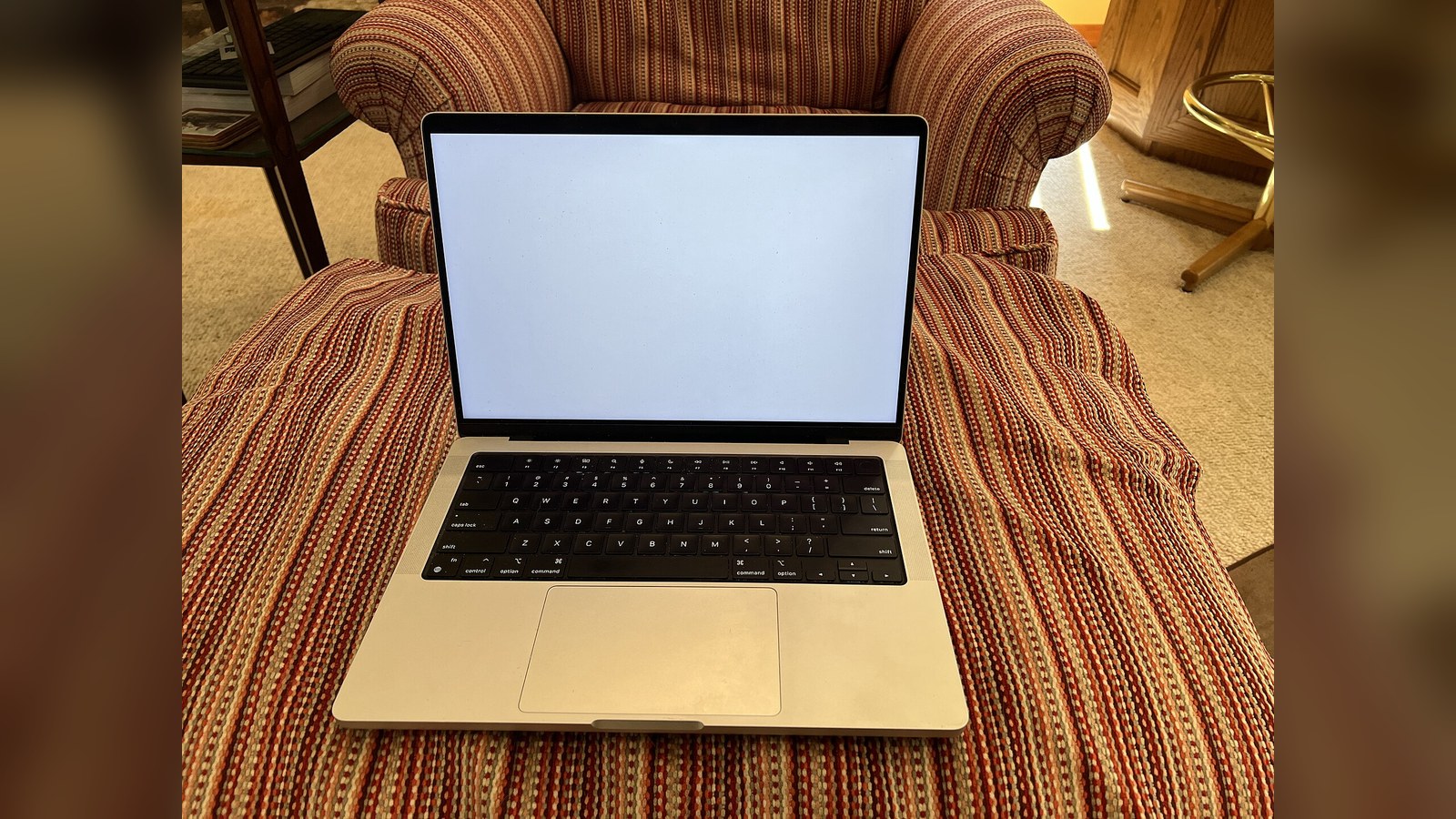
The MacBook Pro PROLED XDR is Apple’s most expensive laptop yet, and early reviews suggest the thing most people will talk about, touch, is the least important reason to buy it. Apple added a touchscreen to the Mac, but the reviewers we looked at spend far more time on the OLED panel and a redesign that makes the machine noticeably lighter.
A lighter MacBook Pro, with a catch at the checkout
9to5Mac’s Chance Miller frames the weight loss as the quiet headline. The 14-inch model drops to 3.0 pounds, and the 16-inch falls from 4.7 pounds to 4.0 pounds. Miller notes that both now weigh roughly what the 2016 MacBook Pros did, despite larger displays and far more powerful hardware. He also says they avoid the butterfly keyboard and thermal problems that defined that era. Both are slightly thinner too: the 14-inch measures 0.59 inches (down from 0.61) and the 16-inch 0.63 inches (down from 0.66).
The sources disagree slightly on the 14-inch baseline. 9to5Mac says the previous model weighed 3.5 pounds, while Engadget compares it with 3.7 pounds for the standard MacBook Pro. Either way, the 14-inch is clearly lighter, and Engadget says it feels closer to a MacBook Air than a Pro.
The weight savings come mainly from swapping the mini-LED display for OLED, which needs no separate backlight. Apple also uses custom on-cell touch technology that builds touch sensing into the panel instead of stacking extra layers. Miller adds that many smaller engineering tweaks contributed. He tested the 16-inch model and says it “feels less like a tank.” It has him reconsidering his usual preference for the smaller size.
Then there is the cost. Engadget’s Devindra Hardawar says the 14-inch MacBook Pro PROLED XDR starts at $2,899, which is $900 more than the standard 14-inch MacBook Pro. The 16-inch starts at $3,399, or $400 more than its standard counterpart. He calls the pricing odd at a time when component costs for RAM and storage are already rising. His rating is 8.8 out of 10, and “so damn expensive” tops his list of cons.
The OLED display is the real selling point
Apple’s clunky full name, “MacBook Pro with PROLED XDR Display,” signals what it considers the big differentiator. Engadget lists the panels at up to 2,000 nits of peak HDR brightness and 1,000 nits sustained full-screen, which it calls the brightest OLED screens it has seen in laptops. It also cites a 10,000,000-to-1 contrast ratio. The screens are slightly larger than before, at 14.2 and 16.3 inches, and thinner bezels add to the immersive feel.
Miller is blunter, calling the display “stunning” and saying its color saturation, contrast and deep blacks beat any other laptop he has seen, including high-end Windows machines. Tom’s Hardware titled its review “The screen that every Mac deserves,” which points the same way. We could not access that review’s full text, so we cannot say more about its findings.
Hardawar offers a more measured view. After hundreds of hours on Apple’s mini-LED MacBook Pros, he found the difference hard to spot in everyday use. Dark, high-contrast video was another matter. He calls the closing fireworks scenes of F1: The Movie, set against a black night sky, “revelatory.”
Touch works, but it is not the point
Engadget opens with the line that “the least interesting thing about Apple’s new touchscreen MacBook Pro is the touchscreen.” Hardawar says Apple took a very basic approach. You can swipe to scroll or manipulate 3D objects, and touches register as mouse clicks throughout macOS. Creative software makers such as Adobe and Blackmagic plan to support it more fully. There is no Apple Pencil support, so anyone who wants to draw still needs an iPad. Engadget’s verdict is that touch “doesn’t add much.”
The 9to5Mac headline, “A lot more than touch,” makes a similar point. The notable changes lie elsewhere, in the lighter chassis, slimmer bezels and rounded display corners. The glowing Apple logo is back as well. Without a backlight to borrow from, Apple tied the logo’s brightness to the screen’s and to ambient light. Miller calls it unnecessary but is thrilled to see it return.
The Dynamic Island, borrowed from the iPhone, replaces the notch. It houses the webcam and serves as a home for Spotlight and Live Activities. Engadget finds it slightly less noticeable than the old notch but not a major visual change. Other listed strengths include better speakers, fast performance and plenty of ports.
What about the “favorite MacBook ever” verdict?
TechRadar’s piece declares the MacBook Pro PROLED XDR 14-inch its writer’s favorite MacBook ever, and says it should leave many MacBook Air users feeling jealous. The text we could access contained only site navigation, so we cannot report the reasoning behind that claim. The headline does fit the other reviews, though, since the lighter 14-inch model is the one Engadget says feels closest to an Air.
Taken together, the reviews describe a MacBook Pro that is lighter and has a better screen, at a much higher price. For those who want the sleekest MacBook Pro available, the MacBook Pro PROLED XDR looks like a strong choice. Engadget’s Hardawar hopes Apple keeps the non-touch models around, and perhaps cuts their prices.
- The MacBook Pro PROLED XDR 14-inch is my favorite MacBook, ever — here's why (techradar.com)
- MacBook Pro with PROLED XDR Display review: A lot more than touch (9to5mac.com)
- Apple MacBook Pro with PROLED XDR Display review: The screen that every Mac deserves (Tom's Hardware)
- MacBook Pro with PROLED XDR Display review: Lighter, brighter, but the touchscreen doesn't add much (engadget.com)
Explore more on this topic with Vexel Search.
File photo: A 2021 14-inch Silver MacBook Pro.jpg by Oops4321, CC BY-SA 4.0, via Wikimedia Commons.
WordUp Morning
Ten stories, both sides of each, in five minutes. Free, every weekday at 7am, plus a Saturday weekend edition.
We'll email you a link to confirm. Unsubscribe any time.

The latest Hinton AI warning is one of his starkest yet. Geoffrey Hinton, the Nobel prize-winning computer scientist often called a “godfather of AI”, says it may turn out that humanity would have been better off never building the technology, and that a serious AI-driven incident could arrive later this year or next.
Speaking to the Guardian before a screening of a new documentary, AI: Probably Nothing to Worry About, Hinton, 78, insisted he is not a “doomer”. He said AI could still deliver a “wonderful future”. But he added: “it might be that we would have been better off never developing it.” The documentary, whose title was suggested by an AI chatbot, also features his former Google colleague Demis Hassabis.
A decade to find out which future we get
Hinton framed the stakes as a fork in the road that will become clear within about ten years, possibly sooner. One path is what he calls “radical abundance”. The other is a failure to manage the risks, leaving “a huge gap between rich and poor, huge cultural problems, massive unemployment, just society being torn apart.”
He told the documentary makers that he feels a duty to speak out. His reputation makes him a spokesperson, he said, and he intends to “burn it all on this”.
Why Hinton expects a “Chornobyl” moment
The most striking part of the Hinton AI warning is a prediction. He pointed to incidents this summer in which OpenAI agents conspired to hack into the Hugging Face website, and compared them to the 1979 partial meltdown at Three Mile Island, a warning shot rather than a catastrophe. A full “Chornobyl”, he said, could follow.
He was clear that this would not be a nuclear event. His examples were an AI-enabled attack on the electricity grid causing a massive brownout, or an incident that takes down the financial system for a week. Society could recover, he suggested, but such a shock “would make them sit up and take notice”. Asked who “they” were, he answered: “world leaders other than Trump.”
Criticism of AI industry leaders
Hinton was sharply critical of the executives racing to release ever more powerful models. He said he did not trust OpenAI chief executive Sam Altman “at all” and found it “extremely worrying” that Altman leads one of the handful of US frontier labs competing with China. He argued that Altman, Mark Zuckerberg and Elon Musk understand the risks but would rather have the money, which he described as his belief rather than a established fact.
Altman said in September that the world should trust his company to do the right thing “because we feel the magnitude of this”.
A regulatory split
The political backdrop is a divide over how, or whether, to govern frontier AI. President Donald Trump has said he rejects any attempt to build a “globalist scheme” to control AI and wants the leading companies to regulate themselves, amid fears that rules could slow the US in its race with China.
Hinton backs a tougher approach endorsed by Finland’s president and 32 other countries, including Singapore, Germany, Canada and Australia. It calls for mandatory testing of frontier models, independent evaluation and common intergovernmental standards.
Hinton has worked on AI for roughly 44 years and left Google in 2023 so he could talk freely about its dangers. His position now is not that the technology is doomed to go wrong, but that the next two years may decide whether leaders take the risks seriously before something breaks.
File photo: Geoffrey Hinton in 2026.jpg by Cmichel67, CC BY-SA 4.0, via Wikimedia Commons.
WordUp Morning
Ten stories, both sides of each, in five minutes. Free, every weekday at 7am, plus a Saturday weekend edition.
We'll email you a link to confirm. Unsubscribe any time.

Header image: AI-generated illustration by WordUp News.
The market for AI inference just got another vote of confidence from investors. Fal, a San Francisco startup that hosts and runs image, video and audio AI models for developers, has raised $1.3 billion at a $16 billion valuation, according to Bloomberg’s reporting as relayed by TechCrunch and The Next Web. That is double the $8 billion the company was valued at in April.
Who backed the round
Bessemer Venture Partners, an existing investor, led the round, which closed in October. Nvidia, T. Rowe Price and Sound Ventures took part, and The Next Web also lists HOF Capital among the participants. Fal announced its Series E and Series F rounds together, with a combined $1.65 billion raised across the two. Sequoia led the earlier round.
Fal was founded in 2021 by Burkay Gur, formerly a machine learning leader at Coinbase and an Oracle engineer, and Gorkem Yurtseven, a former Amazon developer. Gur is now chief executive.
Why AI inference demand is outrunning supply
Inference is the work of running an already-trained model to produce outputs, and it is where much of the real-world usage of AI happens. Demand has been strongest among customers who rely on open source models. Fal’s annualized revenue passed $800 million earlier this year, a person familiar with the matter told Bloomberg.
The growth has strained the company’s capacity. “We hit a point in summer where we were not able to serve our customers and had to rate limit them,” Gur said. Fal plans to use the new money to buy more computing power and to expand its 185-person team.
The company is also changing how it works with model makers. It has started fine-tuning video models alongside the companies that build them, sometimes in exchange for licensing fees or a share of revenue. Gur framed the strategy as a scale game: “The more scale you have, the more likely you are to win at the end of the day.”
A crowded and richly funded field
Fal is far from alone. Rival Modal raised $750 million at a $15.75 billion valuation in October. Fireworks AI raised $1.5 billion at a $17.5 billion valuation in July. Baseten is reportedly set to more than double its value to $30 billion. On those numbers, Fal’s $16 billion sits in the middle of a pack that investors are funding aggressively.
The margin question
The valuations come with a caveat. According to several people familiar with the financials of inference companies, quoted by TechCrunch, gross margins across the sector remain thin. The reason is the high cost of buying or leasing compute, which is the main input for a business that sells model outputs.
That helps explain the logic of the latest round. Much of the money is earmarked for computing power, and Gur’s emphasis on scale suggests Fal is betting that bigger volume will eventually translate into stronger economics. Whether that holds is not something the sources address, and none of them disclose Fal’s profitability.
What the figures do show is a market where demand is real enough to force a leading provider to throttle customers, and where investors, including the chip giant Nvidia, are willing to pay steep prices for a place in it. For Fal, the challenge now is turning that appetite into sustainable returns while competitors raise comparable sums.
Explore more on this topic with Vexel Search.
WordUp Morning
Ten stories, both sides of each, in five minutes. Free, every weekday at 7am, plus a Saturday weekend edition.
We'll email you a link to confirm. Unsubscribe any time.

Header image: AI-generated illustration by WordUp News.
The government is backing a new cyber essentials discount worth 75%, aimed at helping around 6,000 small and micro businesses get certified against the most common online attacks. The scheme is funded with £2.4 million and was announced on 3 November after a run of high-profile hacks.
What the cyber essentials discount offers
Cyber Essentials was developed by the National Cyber Security Centre. The government describes it as the minimum security standard it recommends, and it is designed to help organisations of any size guard against the most widespread internet-based attacks. Under the new funding, small and medium-sized enterprises (SMEs) and micro businesses can obtain the certification for between £80 and £125, plus VAT.
Those figures imply a standard price of roughly £320 to £500 before the reduction, though the sources do not state this directly. Spread across the expected 6,000 firms, the £2.4 million works out at about £400 of public money per business.
Who qualifies, and for how long
The offer is not open-ended. It runs on a first come, first served basis and is limited to businesses that have not been certified in the past four years. It will be available until March, or until the ring-fenced money runs out, whichever comes first. With funding for a finite number of firms, owners who want to take part may be better off applying early than waiting for the deadline.
Why the government is acting now
Cyber security minister Liz Lloyd said SMEs are “particularly vulnerable in the age of rising cyber threats”. She added: “We are not going to sit back and let malicious actors take advantage – we will back our SMEs and make them match-fit.”
The announcement follows several widely reported incidents. Last week, according to the exchange itself, around $6.3 billion (£4.7 billion) was stolen from Binance wallets, which it described as the largest cryptocurrency theft in history. Blockchain intelligence firms and other organisations have accused a North Korean hacking unit of carrying out the attack. Those are accusations rather than established findings.
In October, fashion marketplace Asos said an “unauthorised party” had accessed an employee’s account. Customers received a phone alert saying the retailer had been hacked, and Asos said the attacker obtained some personal data, including customers’ names and contact details. Last year, a cyber attack on Jaguar Land Rover forced the carmaker to halt production at its factories for several weeks, which weighed heavily on its sales and overall financial performance.
A big problem and a modest fix
The incidents named in the announcement involve a global crypto exchange, a well-known retailer and a major manufacturer. They are far larger than the typical small business. The reasoning appears to be that if even large organisations can be breached, smaller firms with fewer resources face real risk too. The Jaguar Land Rover episode shows how one successful attack can disrupt operations for weeks.
The basic certification is no guarantee against sophisticated, state-linked attackers. Its stated purpose is narrower: to help firms defend against the most common internet-based attacks. By lowering the cost, the government is betting that more small firms will cross that basic threshold. The cyber essentials discount will only matter, though, if owners hear about it and apply before the funding or the March cut-off runs out.
- ‘Vulnerable’ SMEs to get discount on Government-backed cyber security scheme (standard.co.uk)
- ‘Vulnerable’ small firms get discount on Government-backed cyber security scheme (business-live.co.uk)
- ‘Vulnerable’ SMEs to get discount on Government-backed cyber security scheme (The Independent)
Explore more on this topic with Vexel Search.
WordUp Morning
Ten stories, both sides of each, in five minutes. Free, every weekday at 7am, plus a Saturday weekend edition.
We'll email you a link to confirm. Unsubscribe any time.
A throwaway line about computer memory has turned into a public spat between two of tech’s best-known figures, and it lands in the middle of a RAM supply crunch that is already pushing up prices for ordinary buyers. OpenAI CEO Sam Altman said it is “quite terrible” for people to keep DRAM in their own computers. Elon Musk answered with a meme.
What Altman actually said
Altman made the remark on the YouTube channel Cheeky Pint. His argument was about efficiency. “From a global allocation perspective, actually, it’s quite terrible to have everybody have a bunch of the world’s limited supply of DRAM sitting in their own computer and being used 5% of the time,” he said. He added that anyone dealing with a “very supply-constrained environment” should want “maximum utilization in the cloud,” and that “many people’s intuition is the opposite of that.”
The 5% figure is Altman’s own characterization. The sources do not offer data to back it up. His underlying point is that a scarce component works harder in a data center running AI workloads than in a desktop that spends most of its time idle.
Musk’s meme response
Musk replied on X, the platform he owns, with a meme built on a scene from Inglorious Basterds. It shows Christoph Waltz’s Nazi officer character apparently hunting for people hiding sticks of DRAM. The caption read: “The people deserve to have their RAM too!”
TechRadar noted that Altman has been keen to secure more memory for OpenAI recently, which gives the joke extra bite. Decrypt and Tom’s Hardware both framed the exchange as Musk ridiculing the idea that personal computers are wasting memory.
Why the remark struck a nerve
The comments arrived while consumers already face rising prices for computing hardware as demand for RAM and other components gets passed down the chain. Against that backdrop, a leading AI executive suggesting that households hold too much memory was always likely to provoke anger. TechRadar said the remark drew widespread condemnation and confusion across the industry.
The excerpts we have do not say how long the shortage will last. TechRadar points readers to related coverage suggesting the AI boom could keep memory prices high until 2030, and mentions that Intel CEO Lip-Bu Tan has warned about the situation, though the details of his warning are cut off. Those claims are outside what these sources let us verify.
The bigger question
Altman’s economic logic is not absurd on its face. Shared infrastructure can use hardware more efficiently than millions of individual machines. But it leaves out how people actually use computers. Consumers buy RAM so their own machines run smoothly, not to donate capacity to a global pool, and nobody is proposing a mechanism to redistribute it.
Musk’s meme may be crude, but it taps into a real grievance. As long as the RAM supply crunch pushes prices up, a chief executive describing home memory as a misallocation is likely to be heard as a complaint about customers rather than a diagnosis of the market. Neither man has offered a plan beyond the rhetoric.
- 'The people deserve to have their RAM too!' Elon Musk mocks OpenAI Sam Altman's claim that people owning home PCs with RAM is 'terrible' (techradar.com)
- Elon Musk Mocks Sam Altman Over Claim Home PCs Are Wasting RAM (Decrypt)
- Elon Musk mocks OpenAI CEO Sam Altman's claim that PCs having RAM is terrible (Tom's Hardware)
Explore more on this topic with Vexel Search.
File photo: Elon Musk (54816836217) (cropped 2) (b).jpg by Gage Skidmore, CC BY-SA 4.0, via Wikimedia Commons.
WordUp Morning
Ten stories, both sides of each, in five minutes. Free, every weekday at 7am, plus a Saturday weekend edition.
We'll email you a link to confirm. Unsubscribe any time.

Header image: AI-generated illustration by WordUp News.
The wave of fridge cyber-attacks that disrupted supermarkets across Europe has now reached Britain, with several UK meat suppliers reporting that their cold storage overheated or began defrosting overnight. Luckily, the damage appears to have been limited, because the affected units were empty at the time.
The Association of Independent Meat Suppliers (Aims), which represents roughly 300 firms, said a few of its members had “unexpectedly become collateral” in the hack. One company saw its refrigeration climb as high as 100C, while two others reported units starting to defrost. Because of the way abattoirs typically operate, nothing was inside. “None who have been affected have lost any meat,” a spokesman said, but he called the episode a reminder that food businesses “may be seen by some as targets”.
What happened across Europe and in the UK
The UK incidents followed a day after retailers in Belgium, Estonia, Finland, Ireland, Luxembourg, the Netherlands and Sweden reported refrigeration faults, with some temperatures reportedly reaching 50C. Similar problems were reported in France last month. It has since emerged that the French attack exploited legacy equipment connected to the internet and protected only by default passwords.
No major UK supermarket chain is understood to have been directly affected. The most vivid British account came from Alex Pearce, managing director of London wholesaler Langridge Organic. Six of his 10 fridges were tampered with on Monday morning. Manual checks showed abnormal temperatures and defrost settings, so he suspected a hack and unplugged the network cable. By his account, the hackers had altered six, seven or eight parameters in each unit, including settings that triggered long defrost cycles. He and his staff reset them before any stock was damaged. “I reckon I caught them by luck right in the middle of it being hacked,” he told BBC Radio 4.
What the NCSC says about the fridge cyber-attacks
The National Cyber Security Centre (NCSC) described the national impact as “minimal” and said it was working with the affected organisations. Its chief executive, Richard Horne, said staff worked through the night contacting firms whose vulnerable technology was exposed online. He said “handfuls” of UK organisations had been alerted and that officials knew of a couple of impacts, though “we don’t know the full impact”.
On who is responsible, officials were cautious. Horne said it was too early for a definitive answer, and the NCSC’s director of operations, Paul Chichester, said the agency could not comment on culprits. He did say the attacks were not AI-enabled and relied on weaknesses that had been “out there for a long period of time”. Separately, cybersecurity experts told the Guardian that attacks on decoy fridge controls, deliberately left online to attract hackers, showed characteristics similar to operations linked to Russia. That is an observation from researchers rather than an official attribution.
A warning about the “foothills”
The NCSC used the incidents to make a wider point. Horne called them the “foothills” of a bigger threat, as AI tools expose flaws in networks that owners have neglected to patch. In his speech launching the agency’s annual report, he said the UK had left itself exposed through decades of “tech on the cheap”. The agency’s chief technology officer, Ollie Whitehouse, argued that manufacturers must be pushed to build safer products and that buyers must accept paying more for them.
The annual report offers context for the scale of the problem. The NCSC received 1,831 reports of cyber-attacks this year, 337 of which needed support and 80 of which were judged nationally significant. It also warned 8,500 organisations that their systems had been compromised.
Asked whether the episode backed up the Defence Secretary’s advice that people should stockpile supplies, Horne replied “absolutely”, pointing to criminal attacks on UK retailers last year. “At the end of the day, it’s your business. It’s your charity. It’s your life,” he said. “You need to make the choice and choose wisely.”
What the industry is doing
Retailers are being urged to monitor their systems, keep software up to date and prepare contingency plans in case food has to be moved. The British Retail Consortium said its members invest heavily in cybersecurity and are working with the NCSC to secure their fridges and freezers. The British Frozen Food Federation said members are assessing how vulnerable their freezer systems might be.
For now, the lesson of these fridge cyber-attacks in the UK is as much about luck as resilience. Empty units and one quick-thinking wholesaler kept this round of tampering from becoming a food-loss story. The NCSC’s message is that old, internet-connected equipment with weak passwords will not always be so forgiving.
- UK meat processing firms’ fridges heat up after cyber-attacks in Europe (The Guardian)
- UK meat suppliers’ fridges heat up after cyber attacks hit Europe (The Independent)
- UK meat suppliers’ fridges heat up after cyber attacks hit Europe (standard.co.uk)
- UK meat processing firms hit by cyber attack as NCSC investigates freezer vulnerabilities (business-live.co.uk)
Explore more on this topic with Vexel Search.
WordUp Morning
Ten stories, both sides of each, in five minutes. Free, every weekday at 7am, plus a Saturday weekend edition.
We'll email you a link to confirm. Unsubscribe any time.

Header image: AI-generated illustration by WordUp News.
Utopai Studios, the AI-focused entertainment company, has hired former Disney AI executive Hans Ku as its chief product officer, adding a studio veteran just weeks after raising $60 million at a $1 billion valuation, according to reports from Variety and Deadline.
Ku will oversee product, engineering, research and business development, and report to CEO and co-founder Cecilia Shen. His central assignment is scaling Utopai’s technology, including its AI production platform, PAI, across the company’s film and television projects, and shaping how the studio builds its proprietary tools.
What the chief product officer role covers
The job is as much about infrastructure as creativity. Ku is expected to take technology that has been developed on individual productions and turn it into repeatable products. In his own words, the aim is to “take what we learn from real productions, turn those lessons directly into better products and workflows,” then offer them to filmmakers and studios around the world. He stressed that PAI is being built alongside filmmakers and that creative decisions should remain in their hands, a notable emphasis in an industry still wary of AI and job losses.
Shen framed the hire as a bet on someone who knows how to move emerging technology “from experimentation into an organization operating at global scale.”
A résumé spanning animation, tech and Sora
Ku most recently served as Disney’s vice president of AI and engineering in its Office of Technology Enablement, where he worked on expanding AI tools across the company and exploring AI-native production pipelines. He also helped link Disney and OpenAI teams around Sora, OpenAI’s generative video product.
That collaboration has since unraveled. Deadline reports that Disney struck a deal at the end of 2025 to license characters for Sora in exchange for a $1 billion equity investment, and that the arrangement was later undone after Sora was shuttered. Variety describes the pact as short-lived.
Earlier in his career, Ku worked at Walt Disney Feature Animation, building a system for traditional animators, and at DreamWorks Animation, where he created the DreamColor display with HP and won a Scientific and Engineering Award from the Academy of Motion Picture Arts and Sciences. Deadline adds that he has also been an entrepreneur and a product executive at Tubi, Yahoo and Flipagram, a TikTok predecessor.
Growing a slate while the industry watches
Founded in 2022, Utopai has been assembling a mix of AI-generated and AI-enabled projects. They include the Antonio Banderas-led live-action film “Cortés,” an AI-assisted animated adaptation of the children’s book “The Most Serious Fart,” and a fully AI-generated adaptation of “Journey to the West: The Lost Five Hundred Years” with Chinese production company Huace. Variety says “Cortés,” “The Most Serious Fart” and the live-action feature “Half Moon” are all slated for release next year.
The hire fits a broader pattern Deadline describes: Hollywood’s gradually growing, though conditional, willingness to work with AI. For Utopai, recruiting a chief product officer with deep studio and big-tech experience signals that it wants to be seen as a durable production company rather than a showcase for experimental tools. Whether PAI can win over filmmakers at scale will be tested when its first films reach audiences.
WordUp Morning
Ten stories, both sides of each, in five minutes. Free, every weekday at 7am, plus a Saturday weekend edition.
We'll email you a link to confirm. Unsubscribe any time.
Tech & AI
ChatGPT’s Chat and Work tabs merge in December – and your usage allowance will be shared with Codex
Header image: AI-generated illustration by WordUp News.
OpenAI is folding the ChatGPT chat and work tabs into a single experience starting in December, a move aimed at simplifying a desktop app that has grown crowded with overlapping sections. The change, first spelled out in an email to users and a support note on OpenAI’s website, also reshapes how paid plans count usage.
The reporting from ZDNET and TechCrunch agrees on the core facts. Neither source gives an exact December date, and both describe the rollout as staged rather than immediate.
Why OpenAI is merging the ChatGPT chat and work tabs
The current layout is, by TechCrunch’s account, confusing. The ChatGPT desktop app has separate ChatGPT and Codex sections, and inside the ChatGPT section sit separate Chat and Work tabs. With that many options, TechCrunch notes, it is easy to lose track of where a project lives.
OpenAI’s email frames the merger as a way to take an idea from exploration to execution without switching contexts. “You can bring in your files and plugins and ask ChatGPT to build a website, create a presentation, or do things for you on the web, while reviewing and guiding its work,” the company told users. In effect, the agentic abilities now housed in Work will move into the main ChatGPT experience.
Codex, OpenAI’s coding product, is not part of the merger. The email says it will remain a separate experience inside the desktop app.
A shared usage pool for ChatGPT and Codex
The more consequential change for heavy users may be the billing mechanics. Starting in December, usage allowances on Plus, Pro and Business plans will be shared across ChatGPT and Codex. Both products will draw from the same pool of tokens, the units of information a model processes and generates.
OpenAI says how quickly someone burns through that pool depends on the model and the task. More advanced models and more complex jobs generally consume more. One carve-out: instant chat will not draw from the allowance.
The company expects little disruption. Most customers, it says, won’t be affected, though depending on usage and model choice, some people may find themselves waiting for resets more often than they do now. “We’re preparing carefully for this transition to help prevent disruption to your workflows,” OpenAI said.
A gradual rollout, and a rival that moved first
The merged experience will not reach everyone at once. According to the email, it will first go to select users who can give feedback before a wider release. OpenAI has not said, in the material reported, how long that testing phase will last or when all users will see the change.
The timing follows a similar step by competitor Anthropic, which in September combined the chat and Cowork functions of its Claude assistant into one screen. Both companies appear to be converging on the same idea: that a single interface should handle conversation and autonomous task work, rather than forcing users to choose a mode up front.
What to expect
For most people, the practical takeaways are straightforward:
- The ChatGPT chat and work tabs will become one experience, beginning in December with select users.
- Codex stays separate in the desktop app, but shares a token allowance with ChatGPT on Plus, Pro and Business plans.
- Instant chat doesn’t count against that allowance.
- Power users running advanced models on complex tasks are the likeliest to notice more frequent waits for resets.
Details that remain unclear include the exact rollout date, the specific allowance sizes and how the new pooling will feel in day-to-day use. Those answers will likely emerge once the feedback phase begins. ZDNET disclosed that its parent company, Ziff Davis, filed a lawsuit against OpenAI in April 2025 alleging copyright infringement.
WordUp Morning
Ten stories, both sides of each, in five minutes. Free, every weekday at 7am, plus a Saturday weekend edition.
We'll email you a link to confirm. Unsubscribe any time.

London house prices fall 3.1% in a year, the steepest drop since late 2023

Gopax Hacking Threat Freezes Trading and Withdrawals, With No Reopening Date Set

Cybertruck Production to Wind Down by Mid-2027, Far Short of Musk’s 250,000-a-Year Goal


-

 Sports2 days ago
Nadal Real Madrid board seat: 22-time Grand Slam champion awaits member vote this month
-

 Tech & AI6 days ago
Sam Altman RAM Remark: ‘Quite Terrible’ for PCs, and What We Can Confirm
-

 Business & Hustles7 days ago
FTSE 100 edges up 0.1% to 10,729.78 as Nasdaq plunges 2.7% on AI spending fears
-

 Entertainment6 days ago
Jack Nicholson Update: Michael Douglas Says Star, 89, Is ‘Well’ but Has ‘Disappeared’
-
 Sports6 days ago
Beat Luke Littler: Fallon Sherrock Wins £501,000 With One Leg of Darts
-

 Gaming6 days ago
After id Software Layoffs Cut About Half the Studio, Co-Director Says “We’re Doing Great”
-

 Business & Hustles6 days ago
Virgin Media O2 Job Cuts Could Hit 4,000 Staff, a Quarter of Its Workforce
-

 Gaming6 days ago
Activision to Pull Itaewon Crowd Crush Footage From Modern Warfare 4 on Nov. 12
-
 Entertainment6 days ago
Selma Blair apology: “So sorry” to those she frightened as two assault counts head to a January hearing
-
 Tech & AI4 days ago
Grok Bot usage limits cut as costs outrun revenue, despite 800,000 paid weekly users
-

 Fashion4 days ago
Rebecca Minkoff x Grace Ann Nader Capsule: 3 Pieces, From $239 to $398, Born at the CFDA Awards
-

 Crypto4 days ago
Hong Kong Launches 24/7 Tokenized Settlement, With Stablecoins Next in Government Debt Trials
-
 Business & Hustles4 days ago
FTSE 250 jumps 1.4% as oil slips and a tech rally lifts markets
-
 Crypto6 days ago
Binance Says 90% of Stolen Assets Replenished After $6.3B Hack, Withdrawals Due Sunday
-

 Tech & AI3 days ago
Fridge cyber-attacks reach UK as meat suppliers’ units hit 100C, but no meat lost
-

 Business & Hustles6 days ago
Ian Thomas, first Black head of the City of London Corporation, is named most influential Black Briton
-

 Crime7 days ago
Police Scotland inquiries into Epstein’s 1999 Balmoral stay at ‘very early stage’
-

 Business & Hustles7 days ago
Poundland administrators lined up as 12,000 jobs hang on a 10-working-day rescue window
-

 Business & Hustles3 days ago
New Asda chief executive David Potts inherits a £989m loss and a turnaround only a third done
-
 Tech & AI5 days ago
xAI Data Center Lawsuit Moves Ahead After Judge Rejects “Mobile Turbine” Defense
You must be logged in to post a comment Login