For years, owning a sports team sat somewhere between indulgence and identity. It signalled wealth, access, sometimes legacy, but it did not, in the traditional disciplined financial sense, signal an asset class.
On March 24,
Rajasthan Royals (RR) was sold at a valuation of $1.6 billion (around ₹15,032 crore), backed by global investors. On the same day, another deal pushed valuations even higher with a definitive agreement to acquire 100 per cent of Royal Challengers Bengaluru (RCB) from United Spirits at $1.78 billion (about ₹16,660 crore).
At the league level, the IPL’s overall business value has climbed to about $18.5 billion in 2025, while its 2023-27 media rights cycle fetched roughly $6.2 billion, among the richest deals in global sport.
The question is sharper now: are these valuations backed by financial fundamentals, or driven by scarcity and expectation?
Why private equity is investing in sports globally
The answer perhaps lies in how media economics has changed. Most content today is fragmented and consumed on demand. However, live sport remains one of the few formats that consistently delivers mass, real-time audiences and that predictability keeps advertiser demand intact.
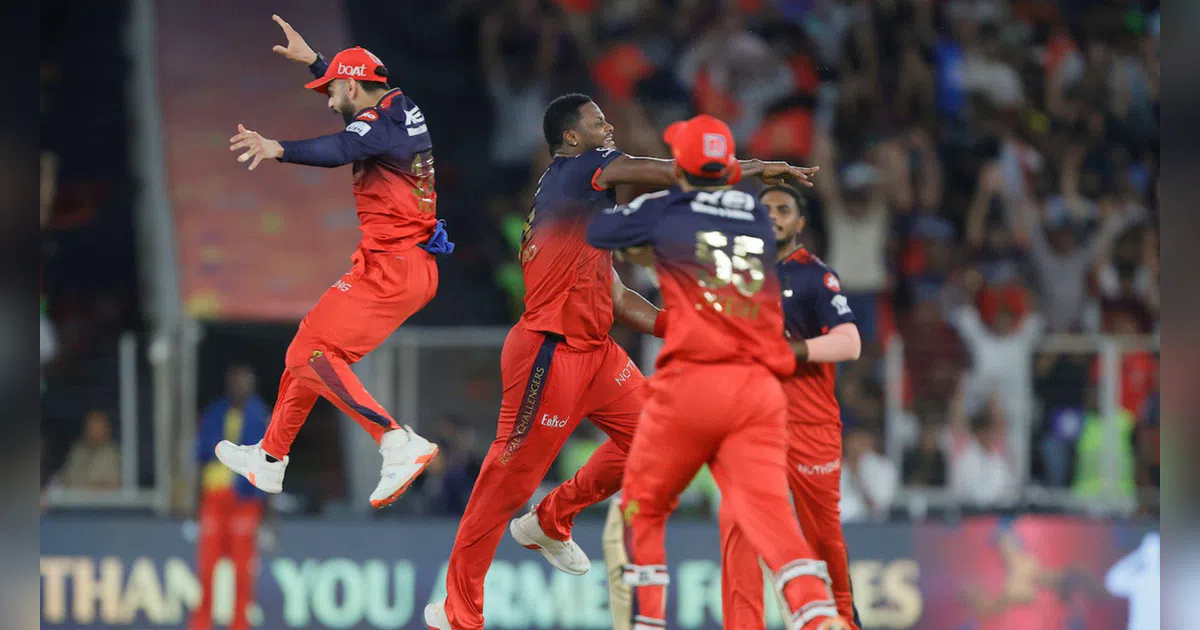
And the IPL illustrates this clearly. The 2025 season crossed 1 billion unique viewers across TV and digital platforms. The final between RCB and Punjab Kings drew 169 million TV viewers, surpassing the 166 million viewership of the 2021 India-Pakistan T20 World Cup match. On digital, JioHotstar recorded 892 million video views, a peak concurrency of 55 million, and 16.74 billion minutes of watch-time for the final alone.
“Investors today are not buying a conventional sports team; they are acquiring a hybrid asset combining media rights, brand equity, and long-term monetisation optionality,” said Sourav Choudhary, managing director at Raghunath Capital.
There are only so many premium sports franchises globally, and leagues tightly control expansion. As more capital chases a fixed pool of assets, valuations rise.
This has already played out across football, Formula One and US sports leagues. The IPL fits this global template, but with an added advantage: centralised revenues.
Broadcast and central sponsorship income are pooled and distributed across franchises, providing predictable baseline earnings. “While central revenue pools provide some visibility on cash flows, this is not yet a mature yield-generating asset. It is best understood as a media-led platform with embedded brand upside,” Choudhary said.
What makes IPL teams attractive to investors
Even within global sport, the IPL stands out for scale and structure. It routinely draws over a billion viewers, while its per-match revenues rank just behind the NFL. And the most important lure to the league is in how the revenues are organised.
The BCCI centralises key income streams, primarily media rights and sponsorships, retains 50 per cent, and distributes the rest across franchises. This ensures a stable base.
The latest media cycle translates into $50-55 million annually per franchise from central pools, before local revenues are added.
That base has lifted average team revenues to ₹300-400 crore annually, with central distributions forming the largest share. Additional income comes from sponsorships, ticketing, hospitality and licensing. And beyond current revenues, investors are betting on expansion.
“Three structural shifts have altered the investment case — the sharp escalation in media rights values, the expansion of digital distribution, and a more mature franchise model with clearer revenue sharing,” Choudhary said.
Together, these have turned the IPL into a scalable, institutionally investable platform.
The bull case: scarcity, scale and long-term upside
The recent Rajasthan Royals and Royal Challengers Bengaluru deals reflect a clear investment logic that scarcity comes first. There are only 10 IPL teams, and entry is tightly controlled. Additionally, any opportunity to buy into a franchise is rare, and that alone supports premium pricing.
Then follows the scale part of IPL. “Digital distribution has expanded reach significantly, bringing in younger and more geographically diverse audiences,” Choudhary noted. The IPL sits at the centre of that ecosystem, commanding premium ad rates and consistent demand.
And what builds on this expanding reach is the monetisation potential. Investors see room in direct fan engagement, global expansion and brand licensing.
“At implied valuations of $1-1.5 billion per franchise, investors are pricing in multi-year compounding. A key assumption is continued growth in media rights, with expectations of double-digit expansion in future cycles. There is also a belief that franchises will evolve into global sports brands, extending into other leagues and geographies,” Choudhary said.
In other words, current prices reflect what the IPL could become, not what it is today, he added.
IPL valuation concerns: do the numbers justify the hype?
However, the challenge emerges when expectations meet financial reality. Top IPL teams are now valued at $1.5-2 billion, while annual revenues remain a fraction of that, typically in the low hundreds of crores. This creates valuation multiples that are difficult to justify using conventional metrics.
“The most critical risk lies in a potential plateau in media rights growth, which forms the backbone of franchise valuations. Any moderation in bidding intensity could directly impact perceived value,” Choudhary noted.
There is another potential risk of valuation inflation, as increasing pools of capital chase a limited number of assets, he said, adding that any disruption involving the BCCI could also affect investor confidence.
The result is a market where pricing reflects future potential as much as present earnings.
The bear case: risks beneath the surface
And the investment thesis is not without fault lines. A Brand Finance report in December last year estimated the IPL’s brand value at $9.6 billion in 2025, down 20 per cent from $12 billion a year earlier, citing geopolitical risks, a reminder that momentum is not linear.
Media rights remain the biggest variable. The last cycle jumped to ₹48,390 crore from ₹16,347 crore (2018–22), but any slowdown feeds directly into franchise revenues.
Sponsorships, the second pillar, are cyclical. Advertising spends tend to contract in weaker economic conditions.
Revenue concentration adds further risk. A large share of income comes from central distributions, tying franchises to league-level decisions. Within sponsorships, the skew is evident: in 2025-26, total team sponsorship revenue crossed ₹1,000 crore, with nearly 45 per cent coming from Mumbai Indians, RCB and Chennai Super Kings.
Lower-tier franchises are attempting to close the gap through diversification. Gujarat Titans has built a 1 million-plus fan app. Lucknow Super Giants generates ₹20–30 crore annually through e-commerce merchandising. Punjab Kings earns ₹10–15 crore from overseas academies. Non-matchday venue monetisation is also being explored.
These efforts can add 10-20 per cent to local revenues and target 15-25 per cent growth, but remain incremental relative to central income.
“Evolving consumption patterns — particularly the shift towards short-form and non-sport digital content — could dilute long-term audience engagement. Investors must contend with limited control, as key economic levers such as media rights remain centrally managed,” Choudhary said.
What are the exit risks for investors
For private equity, exit risk is the final constraint. At elevated valuations, the buyer universe narrows, complicating returns.
“Exit pathways in sports are evolving and differ from traditional private equity models. One route is a strategic sale to global media companies, technology platforms, or large family offices seeking trophy assets. Another is a secondary transaction, where larger funds acquire stakes from early investors,” Choudhary said.
How cricket and PE investments will play out in the long run
IPL teams are no longer being valued as cricket franchises. They are being treated as financial assets, and the attraction is clear: scarcity, scale, media relevance and brand power.
“The durability of this thesis will hinge on whether growth in media rights and fan engagement can keep pace with already elevated valuations,” Choudhary said.



















































You must be logged in to post a comment Login