

Politics
James Starkie: What lesson can be learnt from the Canadian right?

James Starkie is Founding Partner at communications consultancy 5654 & Co. He worked on Vote Leave in 2016 and was a Special Adviser in Government during Theresa May’s and Boris Johnson’s premierships.
Over the past few months more than one person has brought up the story of the Canadian right to me, specifically the rise of a party in the 90’s called Reform and the demise of their more longstanding party of the right, the Progressive Conservative’s.
It has been cited in various conversations, particularly ahead of the last Canadian election when the leader of the party created out of the merger of these two parties, Pierre Poilievre, went into the election as favourite but ended up losing, the election and his seat.
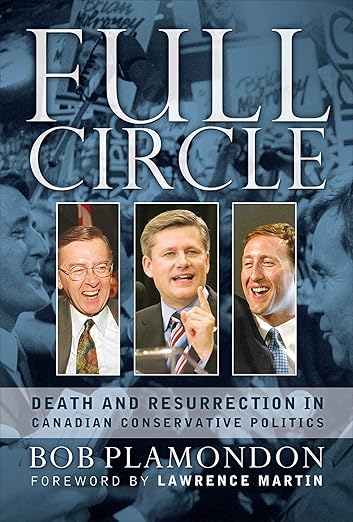
I was therefore interested to understand more about the history of the Canadian right, as well as what are the similarities and differences when it comes to UK politics given the rise of our own Reform Party. As well as speaking to several people who have worked in Canadian politics I found the book Full Circle: Death and Resurrection In Canadian Conservative Politics by Bob Plamondon incredibly insightful and a very good overview of the Canadian right and would highly recommend this book.
At this point I would also like to caveat this and set out my own view.
One of the differences, as a quick glance at Canadian politics will tell you, is that the history of the Canadian right is one of division and a terminal life in opposition. Whereas the British Conservatives can call themselves the party of Government in our sceptered Isle that role in Canada is occupied by the Liberal Party, which is a party of the centre left and one much more practical than our own Labour Party.
This is an important difference to me.
The Tories here in the UK have weathered many a storm and I personally believe they will endure, furthermore I do not therefore see a merger as inevitable, as some may do. This is not to ignore the challenges they face, nor ignore the reasons why some traditional Conservative voters may be unhappy or angry but rather to believe that trust can be rebuilt.
Division on the right is relatively new in the UK and historically the Tories have had to build out election winning coalitions from this point with little opposition to their right, combining traditional centre right voters with a broader coalition more often than not through hard economic competence and pragmatism.
In Canada meanwhile this has not been the case.
The rise of Reform in Canada arose around the end of a period of government for the Progressive Conservative’s [PC’s] although this was more in response to an anger over economic handling. Specifically the failure, in the eyes of Reform Canada founder, Preston Manning, to tackle the national debt.
Manning, seen as a charismatic populist leader, rode a wave of discontent among parts of the Canadian right hungry for real economic reform at a time when Mulroney’s PC government was failing to replicate major economic reforms of Reagan and Thatcher in the USA and UK respectively.
This was seen as a real missed opportunity and blew open a division in the PCs among the more economical liberal wing of the party, blue Conservatives, and those with a more social democratic bent, the red Conservatives.
This had been simmering for some time and as with any insurgent political movement, had hit upon the right time. Manning wrote in a thesis that ‘present national party leaders and federal politicians, especially those affiliated with the PC’s, should recognise that if the Canadian political situation continued to degenerate, and if the cause of conservatism continues to suffer and decline, not for the lack of merit or a willingness on the part of the Canadian people to support modern Conservative principles or policies, but rather because of unnecessary dissension among politicians and parties, the idea of establishing a wholly new political party committed to the social conservative positions will find an ever increasing number of advocates and supporters amongst concerned and aroused Canadian public.’
Written before the creation of the party, this is insightful as it lays the argument that Manning didn’t see the creation of a new party of the right desirable but rather necessary because of a lack of one in existence. That is the PC’s had become too much like the existing Liberal Party and therefore leaving a vacancy.
What’s more, and to some degree contradictory, according to the author of Full Circle: Death and Resurrection In Canadian Conservative Politics, Bob Plamadon, Manning though ‘did not accept that Reform was really another Conservative party, because he did not want to debate an inherent and obvious strategic floor flaw: that the Reform party was splitting voters with the Tories and thereby electing Liberals. This was to be a tension and live issue for the next decade.’
The Reform breakthrough came in the 1992 Canadian election, when from nowhere, they won 52 out of 295 seats leaving the Tories, who had been in Government, on just 2 seats. However while they improved on this performance in the subsequent election, gaining 60 seats and becoming the official opposition, the PCs came back winning 18 seats while also nearly matching the Reform vote share [19.3 per cent to 18.8 ]. The 2000 Federal elections saw this division repeat itself and, ultimately, led to the events under which the new Reform party, now called the Alliance, and the PC’s would join under Alliance leader Stephen Harper. Harper is the man who would go on to lead the right back into Government after more than a decade of Liberal power in 2006.
There are clear similarities to me in terms of the split on the right the Canadian’s experienced during this period and that which the UK is seeing now. Reform Canada picked up disaffected traditional Conservative voters, though these were very specifically located geographically in the west of the country. The PC’s struggled to cut through during this period and failed to recover from the 1992 election drubbing. However, even this party of the right that had experienced far more opposition than government historically could not be completely quashed. The ‘thin blue line’ of staunch PC voters refused to desert the party, and it was by no means inevitable that they had to join with Reform.
They also, largely, lacked quality leadership. Kim Campbel, who fought the disastrous 1992 election was ill-suited to leading a national party and almost certainly hastened the collapse in support. Meanwhile one of the last PC leaders was Joe Clark, who had failed at leading the party in the 80’s and likely didn’t demonstrate a party with fresh ideas by turning to a leader from two decades prior. Indeed this is where the admirable Stephen Harper stood out, the man who would eventually lead the right back into power. At heart a true Conservative, a deep thinker and man of principle he alone shows the importance of strong, principled and very clear leadership.
There are clearly reasons why you can compare the two situations however my own view is that there are fundamental differences in the situations. Many of the big issues in Canada differ from our own, the issue of free trade, particularly with the United States, how provinces with very specific identities are treated by the federal government as well as things like gun laws don’t apply here. Indeed geographic differences loom large and are crucial to gaining a majority in Canadian elections. What’s more, the Canadian Conservatives had nothing like the history their British counterparts do, and the Canadian right has been split far more often than it has been divided.
I would though recommend this book to anyone who is thinking about how the next few years of the British right might play out. It is a reminder that events and personalities often dictate what happens – making predictions a fools game.

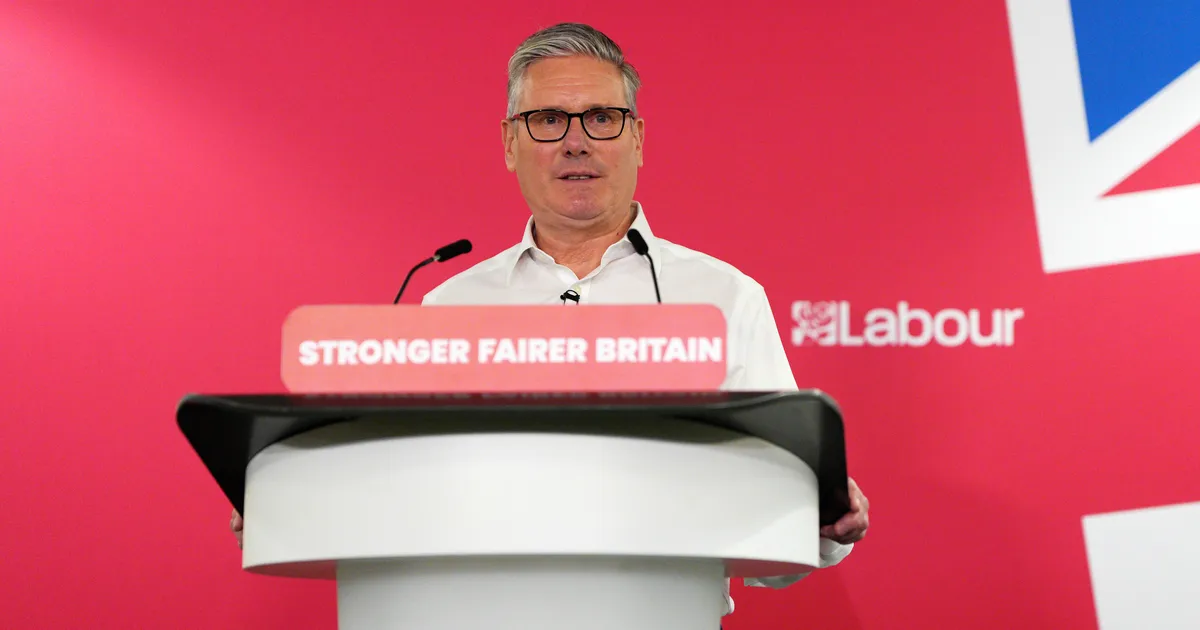
Keir Starmer has vowed to prove his doubters “wrong” in a major speech as he tries to win back the Labour MPs calling for him to quit.
The prime minister has been blamed for Labour’s shocking losses in the local elections last week, as well as the party’s poor performance in the devolved elections for the Welsh and Scottish parliaments.
But Starmer has doubled down and even insisted over the weekend he wanted to stay in the job for a decade.
In a party political speech on Monday, Starmer admitted the election results “very tough”, saying it “hurt” to lose so many Labour representatives.
He added: “I take responsibility. But it’s not just about taking responsibility for the results.
“It’s about taking responsibility to explain how, as a political and electoral force, we will do better and be better in the months and years ahead.
“We are not just facing dangerous times, but dangerous opponents, very dangerous opponents.”
He warned if “we don’t get this right”, the UK will “go down a very dark path”, alluding to the rising popularity of the rival parties.
The prime minister said he takes responsibility for building a “stronger and fairer” Britain, while navigating a world that is increasingly dangerous.
“I take responsibility for not walking away [and] plunging our country into chaos,” he said, with a nod to the high turnover of Conservative prime ministers.
“A Labour government would never be forgiven for inflicting that on our country again.
“I know people are frustrated by the state of Britain, frustrated by politics, and some people, frustrated by me.
“I know I have my doubters and I know I need to prove them wrong, and I will.”
He claimed he will focus on growth, defence, Europe and energy next, while adding: “Stories beat spreadsheets, people need hope.”
“Like every government, we’ve made mistakes. But we got the big political choices right,” he said, pointing to Labour’s decision not to join Donald Trump’s war against Iran.
He pointed to success by bringing down NHS waiting lists, child poverty and immigration rates, while claiming, “we stabilised the economy”.
“But that’s not enough clearly,” the prime minister said. “For the British people, tired of a status quo which has failed them, change cannot come quickly enough.
“I’m sure they believe we care, I’m not sure they believe that we see their lives.
“That’s tough to say when you come from a working class background like me. because I do know what it’s like to struggle and to strive.”
The prime minister insisted neither Reform UK’s Nigel Farage nor Green Party’s Zack Polanski hold the answers to the country’s problems.
He also targeted Farage’s previous promises on Brexit, saying: “He took Britain for a ride.”
“Now he’ll talk about almost everything other than the consequences of the one policy he actually delivered, because he’s not just a grifter – he is a chancer.”
“I want to remind you what Nigel Farage said about Brexit.
“He said it would make us richer. Wrong. It made us poorer.
“He said it would reduce migration. Wrong. Migration went through the roof.
“He said it would make us more secure. Wrong again.
“He just fled the scene and now he will talk about almost anything other the consequences of what they delivered.
“He is not just a grifter, he’s a chancer.”
Starmer said: “This Labour government will be defined by rebuilding our relationship with Europe, by putting Britain at the heart of Europe, so that we are stronger on the economy, stronger on trade, stronger on defence, you name it” he adds, to applause in the room.”
He also insisted he would offer “something more” for the country’s youth, and declared “full national ownership of British steel”.
Starmer repeatedly attacked his political rivals, saying: “They want more grievance politics, more pointing at Britain’s problems not for solutions but someone to blame.”
“I don’t think that’s British. That is not the decency and respect we are known for,” he added. “This is nothing less than a battle for the soul of our nation and I want to be crystal clear about how we will win.”
He said they cannot win as a weaker version of Reform or the Greens, but as a “stronger version of Labour”.
Starmer also claimed he had overcome doubters many times in the past, including with Labour’s victory in 2024.
“I proved them wrong. I’m going to prove them wrong again,” he insisted.
Subscribe to Commons People, the podcast that makes politics easy. Every week, Kevin Schofield and Kate Nicholson unpack the week’s biggest stories to keep you informed. Join us for straightforward analysis of what’s going on at Westminster.

Israel’s delegation at the Eurovision Song Contest has been issued a formal warning in the lead-up to this year’s event.
The continued presence of Israel at Eurovision despite the ongoing conflict in the Middle East remains a contentious issue, with many calling for a boycott of the competition this year.
Moreover, the Israeli delegation at the last few contests has raised eyebrows due to concerns about voting and the behaviour of its members behind the scenes.
Over the weekend, it was announced that Israel’s national broadcaster Kan had been rebuked by Eurovision bosses over a campaign video encouraging viewers to vote 10 times for Israel during the upcoming live event.
Viewers cannot vote for their own country in the Eurovision televoting, meaning this video will have been targeted towards those outside of Israel ahead of the first live semi-final on Tuesday.
“On Friday 8 May it was brought to our attention that videos with an on-screen instruction to ‘vote 10 times for Israel’ had been published and released by the artist representing Kan,” a Eurovision spokesperson said.
“Within 20 minutes we had contacted the Kan delegation to ask them to immediately stop any distribution of the videos and remove them from any platforms where they had been published. They immediately acted to do this.”

Christian Bruna via Getty Images
The statement continued: “The Voting Instructions of the Eurovision Song Contest that cover promotion are predominantly directed at discouraging large scale funded third-party campaigns, and we are satisfied that this video did not form part of such a campaign.
“However, employing a direct call to action to vote 10 times for one artist or song is also not in line with our rules nor the spirit of the competition. The scale of our vote means that such activity cannot affect the overall result and 50% of all votes this year are supplied through professional juries.”
Eurovision then confirmed that a “formal warning letter” had been issued to Kan, with producers continuing “to monitor any promotional activities carefully and take appropriate action where needed”.
Last year, a vote took place among competing national broadcasters about whether Israel should remain part of Eurovision.
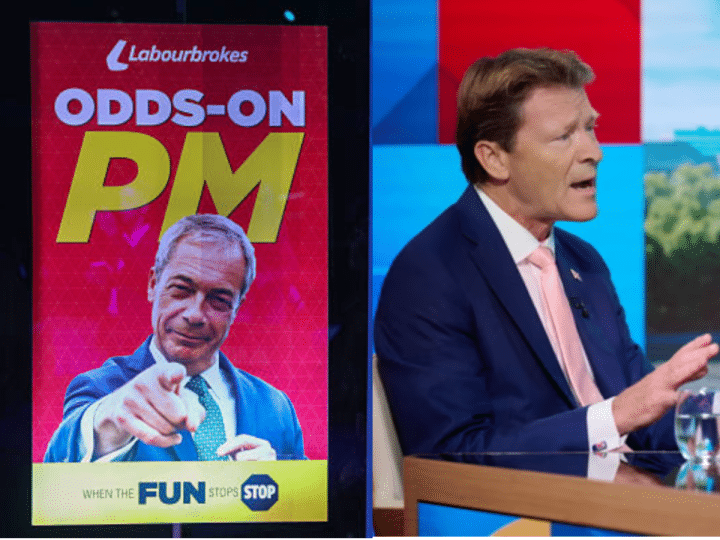

In the recent local elections, Reform UK undeniably made huge gains. Around 1,400 Faragist councillors were elected, and the party subsequently took control of 14 councils. Labour lost control of 35 councils, and the Hackney mayoralty, which was won by Zack Polanski’s Green Party.
Nonetheless, mainstream media coverage would have people believing that the UK ‘chose Reform.’ In reality, Farage’s billionaire-funded, bigotry-fuelled party remains a marginal force in British politics But, that doesn’t change the fact that corporate media are pussyfooting around the rich racist and the threats his party poses. The broader trend points to the growing convergence between establishment figures and the corporate class, often at the expense of national interests.
As a result, billionaire-owned media outfits are using racism to fuel division and infighting. Meanwhile, the super-rich (not-so-quietly) grow wealthier while ordinary people grow steadily poorer.
Before Nigel Farage and Reform UK tell you he is now Prime Minister, note there are 650 MPs in Parliament and 20,000 councillors in the UK.
Today’s results will likely end with Reform UK having 2500-3000/20,000 councillors and still just 8/650 MPs.
GBNews, the Express,…
— Reform Party UK Exposed
 (@reformexposed) May 8, 2026
Kaur: “The media has us believing that Reform took over the country”
As social commentator Narinder Kaur pointed out on X, far-right pundits would have you believe that Reform leader Nigel Farage is inches away from the corridors of power in Number 10. At best, that’s a stretch. And with ongoing defections and suspensions, Reform is likely to cost the public purse than help bring it out of the red.
After all, self-interested profiteers tend to have that effect — tighter budgets and increasingly empty bank accounts.
Britain voted Reform. — Reform UK (@reformparty_uk) May 8, 2026
 pic.twitter.com/pvQjh7gzwL
Nevertheless, the phenomenon should not be ignored. The agenda of the super-rich is on show for us to see — weaponising racism to demonise minoritised communities . It’s serves as a convenient scapegoat for a greedy minority — the millionaires and billionaires, unwilling to distribute wealth fairly across society. Because it would cost them.
The American political scientist, Cedric Robinson, spoke in great depth about racial capitalism and how the ultra-wealthy instrumentalise, and profit from racism.
Historian Robin D. G. Kelley discussed Robinson’s work on the subject for the Boston Review, writing:
Capitalism and racism, in other words, did not break from the old order but rather evolved from it to produce a modern world system of “racial capitalism” dependent on slavery, violence, imperialism, and genocide.
The MSM and super-rich, in this view, aim to weaken protections for working-class people to boost profits, using media influence to shape public perception and steer political outcomes.
The media has us believing that Reform took over the country.
But the reality is this. How embarrassing pic.twitter.com/MrDKrnN8YI
— Narinder Kaur (@narindertweets) May 10, 2026
Reform UK: Just the latest manifestation of greed
Reform UK might actually implode before 2029, judging by their behaviour. They are now getting the opportunity to prove their worthlessness to the electorate. But another will take its place, billionaires have plenty of money to go around, like we have seen with UKIP and BNP members elected for Farage’s nationalist, populist party.
They have also proven that whilst appealing to a small minority of hateful Britons, that they can gain wider traction by other-ing minorities and blaming them for economic shortcomings.
Therefore, it is crucial to hold the mainstream media, and political opportunists, accountable and expose these smear campaigns.
Election expert explains why Reform UK’s support may have peaked despite local election gainshttps://t.co/GPdot0gzDK
— Reform Party UK Exposed
(@reformexposed) May 9, 2026
If you look at who they attract, it’s not hard to understand why Reform appeals to some. The councillor below owes £46k to HMRC. Some may even believe in the prospect of upward mobility, and perhaps this is why they’re less inclined to challenge the wealthy.
However, they need to recognise that politics rooted in greed rarely pays dividends to the ordinary masses or the economically disadvantaged. That’s the myth of trickle-down economics.
To all the Reform UK Ltd supporters. What happened to get Starmer out? He's still PM and you have councillors like this. https://t.co/a1PMhta6eL
— The Receipts UK
 (@david_hollas) May 9, 2026
Expose the real enemy
The agenda at play in parts of the mainstream media, applies a soft-touch approach when it comes to scrutiny of the super-rich, while sensationalising narratives that undermine the freedoms and rights of the working class. This is society we find ourselves in today.
If working-class people truly want to see improvements in their living standards, opportunities, and hopes for the future, they must stand in solidarity with ordinary people and put the super-rich in their place.
After all, we cannot forget that securing our freedoms did not come easily — the elite class made that achievement bloody hard too.
Since Thatcher, the richest are decades into a push to claw back their supremacy over ordinary people.
The public must finally wake up to what is happening and fight back. Reform are a party of billionaires who only care for themselves.
Featured image via the Canary
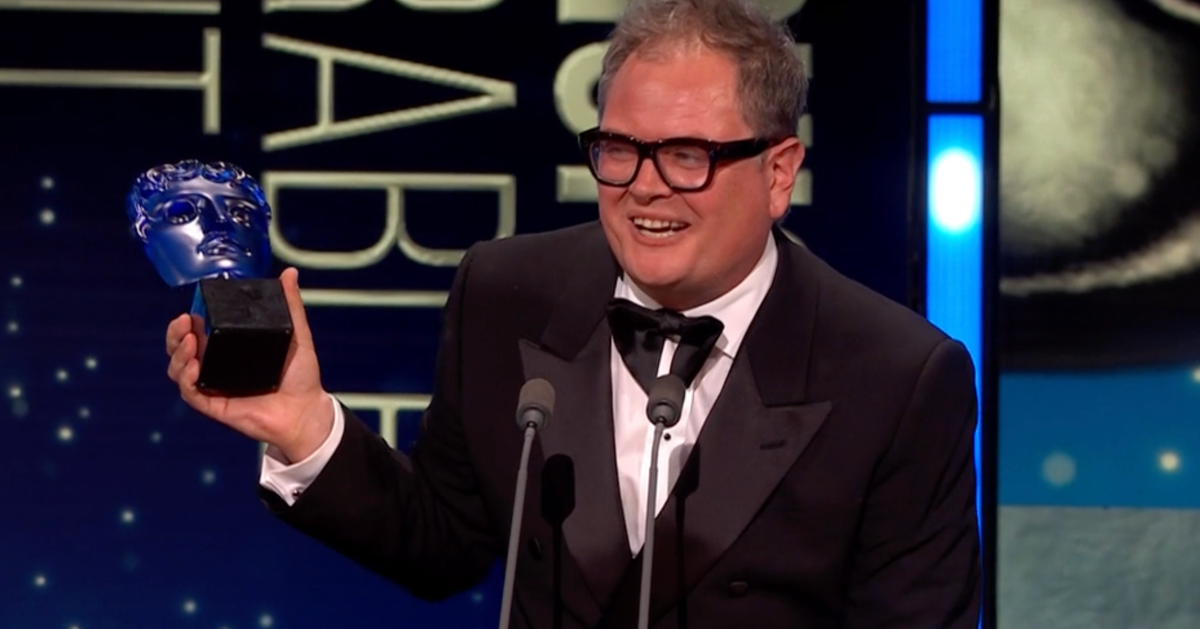
Alan Carr delivered one of the stand-out moments at this year’s TV Baftas, where he picked up the coveted Memorable Moment prize.
The Memorable Moment award is the only category at the TV Baftas voted for by viewers, with this year’s title going to Alan for his dramatic win during last year’s Celebrity Traitors finale.
Collecting the award on Sunday night, the stand-up quipped: “Was I good? Was I really? Or were the other celebrities just thick?”
Recalling his time in the castle, Alan continued: “I had the best time ever – and I’m so jealous of all the celebrities up [in Scotland] that are doing [season two]. I wish I could do it all again.
“You know, sometimes when I’m a little bit sad I’ll sit there and I’ll remember the laughter. I can even smell Celia [Imrie]’s fart.”
He wrapped up his speech by dedicating his win to his friend, Paloma Faith, who he famously “murdered” on their first day on the show.
“I’ve got to dedicate this to Paloma – there’s no one else I would rather murder more than you,” he joked. “I love you!”
The Celebrity Traitors picked up two awards on Sunday night, also triumphing in the Best Reality category, with Last One Laughing also winning the same number.
However, it was Netflix’s Adolescence that – perhaps unsurprisingly – proved to be the night’s biggest winner, smashing the previously-held record for the most wins at the TV Baftas by one show in a single night.
Production on the second season of The Celebrity Traitors is now underway, with the cast having been unveiled earlier this month.
Take a look at the full line-up here, and our round-up of winners from the 2026 TV Baftas here.
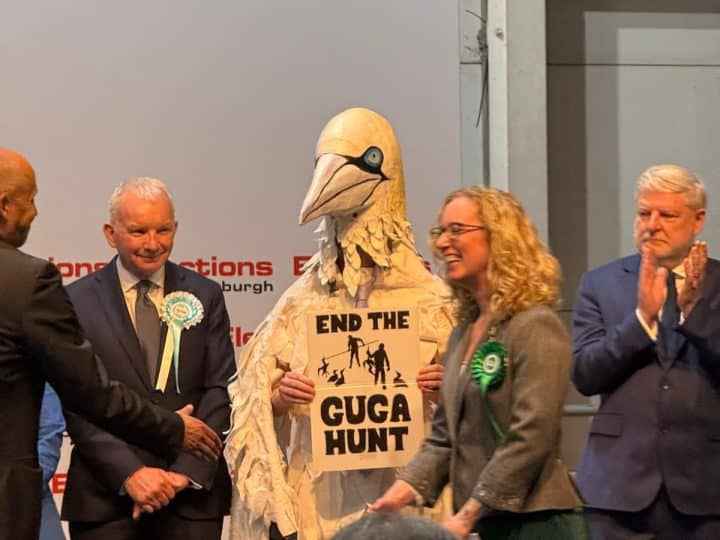

It was the face-off of the night: SNP veteran and former cabinet minister Angus Robertson lost his seat in Edinburgh Central to Scottish Greens candidate Lorna Slater. This marked the first time the Scottish Greens have ever won a constituency seat at Holyrood.
But it was the giant seabird onstage that stole the show.
As the Edinburgh Central result was announced live, viewers across the UK watched a six foot gannet, standing beside the night’s two political heavyweights, unfurl a placard reading “END THE GUGA HUNT.” The image went out on the evening’s peak BBC and ITV news slots, and splashed across newspapers, websites and social media the following morning.
The Edinburgh Central gannet
By that point, one question was on everyone’s lips: who was inside the bird costume?
The answer is Robert Pownall, founder of the wildlife campaigning organisation Protect the Wild, who stood as an independent candidate in Edinburgh Central on a single-issue platform – to end the guga hunt, the last legal seabird hunt in the UK. He said:
I stood in this election for one reason: to get people talking about the guga hunt.
For years, this has remained a hidden issue that most people had never even heard of. But when they find out, they are horrified.
The guga hunt is an annual tradition on the remote island of Sula Sgeir in northern Scotland, where ten men travel each summer to kill young gannet chicks.
While the hunt originated centuries ago during times of food scarcity and survival, campaigners argue it now continues primarily as a cultural delicacy, with birds reportedly sold for profit on the Isle of Lewis.
Although gannets normally have legal protection, a special exemption within the Wildlife and Countryside Act allows the hunt to continue. Pownall is campaigning to remove this exemption.
Following the Edinburgh Central coverage, Protect the Wild says searches relating to the Guga hunt surged online, while its petition calling on NatureScot not to issue this year’s licence is rapidly approaching 200,000 signatures.
A separate petition asking the Scottish government to change the law reached 100,000 and the new parliament will consider it in due course.
Protect the Wild also welcomed the victory of Scottish Greens candidate Lorna Slater.
Pownall said:
This campaign was never about getting votes. It was about putting the Guga hunt into the public eye and onto the political agenda.
We’re delighted that Lorna Slater won the seat, with the Scottish Greens currently the only mainstream political party to have publicly committed to ending the Guga hunt.
We hope to work with Lorna and other MSPs on this issue in the coming months, and finally put an end to this cruel activity that has no place in a modern Scotland.
Featured image via Protect the Wild
By The Canary

And a modified version of the approach, called the Mediterranean-DASH Diet Intervention for Neurodegenerative Delay or MIND diet, is designed to slow brain ageing in particular.
It’s been linked to a 53% lower risk of dementia among its strongest adherents, and a 35% reduced likelihood among moderate adherents.
It combines the Mediterranean diet, which focuses on heart-healthy foods like olive oil, fruits, vegetables, and fish, with the blood-pressure-friendly DASH diet (high in lean proteins, lower in salt, and also rich in fresh produce).
Generally, the MIND diet focuses on leafy greens, berries over other fruits, nuts, legumes, whole grains, fish, and olive oil.
Politics
Ryanair Greece Flight Cuts 2026: The Full List Of 12 Affected Routes And 700,000 Cancelled Seats

Budget airline Ryanair has announced that it will no longer run journeys from its three-aircraft Greek Thessaloniki base.
It will also reduce its capacity for another Greek hotspot, Athens Airport, during the upcoming winter season (2026).
Overall, the site reads, these changes will result in the loss of about 700,000 inbound and outbound flights and the loss of 12 routes.
They will also suspend operations at Crete airports, Chania and Heraklion, during off-peak seasons.
The company’s chief commercial officer, Jason McGuinness, claimed that Ryanair had been responsible fo 90% of international capacity to Thessaloniki.
He added that they will be reallocating the airport no longer used for these locations to Albania, regional Italy and Sweden.
Why are Ryanair cutting so many seats in these airports?
Though jet fuel costs have ballooned since the US-Iran conflict, Ryanair cited another price hike here.
The company said on their site that “This devastating loss in off-peak winter connectivity is the direct result of the hopelessly uncompetitive costs charged at the German-run Fraport Greece monopoly and Athens Airport”.
They stated that the Greek government reduced Airport Development Fees from €12 (£10.40) to €3 (£2.60) in 2024. Ryanair called this change “wise”.
But they said these savings haven’t been passed on to consumers and alleged that some Greek airports have “continued to increase charges, which are now +66% above their pre-Covid levels”.
They added that Athens airport will see fee hikes this winter, too.
In response, Fraport Greece has said, “Any claims linking this decision to airport charges or the airport development fee imposed by the Greek state are entirely unfounded”.
They added that it has invested millions to upgrade its Thessaloniki airport.
Which Ryanair routes are affected?
will be shut entirely during the off-season of 2026 (winter), per Ryanair.
And Ryanair said the following routes have also been canned entirely for now:
- Thessaloniki to Berlin,
- Thessaloniki to Frankfurt-H,
- Thessaloniki to Gothenburg,
- Thessaloniki to Niederrhein,
- Thessaloniki to Poznan,
- Thessaloniki to Stockholm,
- Thessaloniki to Venice-T,
- Thessaloniki to Zagreb,
- Athens to Milan-M,
- Chania to Paphos,
- Thessaloniki to Heraklion,
- Thessaloniki to Chania.
Will these routes be shut forever?
We don’t know for sure.
Fraport Greece has called Ryanair an “important partner”.
And Ryanair said that the flight and aircraft losses were “preventable” and have only shared these updates for winter 2026 so far.
They shared, “Regrettably, Greece will continue to miss out on investment opportunities, tourism and traffic development until Fraport Greece and Athens abandon their shameless practice of pocketing this tax cut.”
And McGuinness added, “There is an opportunity for Greece to secure significant year-round traffic growth; however, this investment can only be realised once the German-run Fraport Greece monopoly fully passes through the Greek Govt.’s sensible tax cut from November’24”.
He continued to say that the aircraft lost to other countries as a result of this process will be moving to areas “where airports have passed on their Govt’s aviation tax savings”.
Sunday night’s TV Baftas ceremony featured a musical performance from the Norwegian singer Aurora, accompanying a tribute to those in the industry who have died over the course of the last year.
However, after the BBC aired its coverage of the event, some viewers were surprised to see that Catherine O’Hara was among those who were not included in Bafta’s “in memoriam” tributes.
To many fans, the Canadian star is best remembered for her performance as the incomparable Moira Rose in the sitcom Schitt’s Creek, for which she won her second Emmy back in 2020.
In response to this, a Bafta rep pointed out to HuffPost UK that Catherine had already been featured in the tributes showcased during the organisation’s movie awards show earlier this year, which is why she was not included in the TV counterpart’s.
She is also included in a more wide-ranging section of Bafta’s website devoted to tributes.
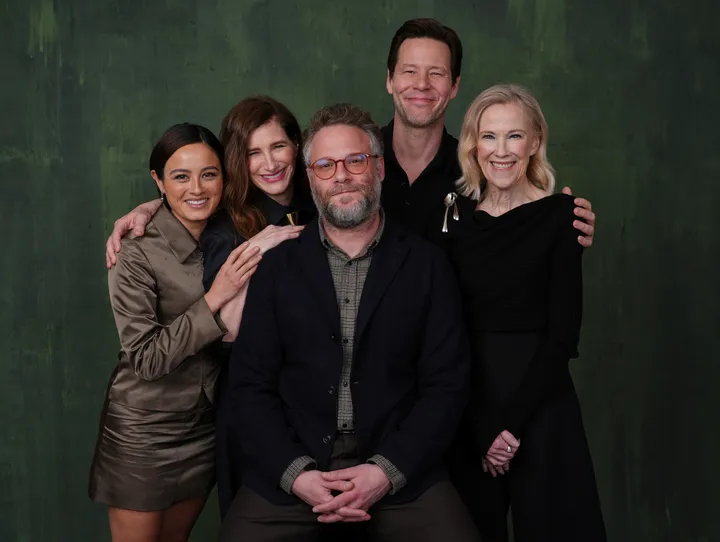
Earlier in the ceremony, Seth Rogen took a moment to remember Catherine while accepting an award for his show The Studio, which marked one of her final on-screen appearances.

“I’d be remiss not to mention one of the key parts of this show, Catherine O’Hara. She meant so much to all of us,” Seth said during his Best International Programme acceptance speech.
He added: “I assume her work was as important to you all over here as it was to us. So this is for Catherine. Thank you all very, very much.”
Speaking to Radio Times last week, Seth admitted it had been “very hard” to return to work on The Comeback earlier this year in the wake of Catherine’s death.
“Being with this group of people every day and getting to work with them and getting to make each other laugh has been, I think, very therapeutic, in many ways,” he noted.
“And it kind of allowed us to move through it all together.”
He added: “I think, as far as dealing with things like this go, it’s been one of the better versions of it.”

On 11 May 2026 newly elected Reform UK councillor Stuart Prior resigned from his post after less than a week in office. Prior gained notoriety after campaign group Hope Not Hate exposed his history of deeply racist social media posts.
Voters elected 53 Reformer candidates to Essex County Council, giving the far right majority control. Among these 53, Prior beat off the Lib Dem candidate Rayleigh West with a majority of 796 votes. Likewise, he also took a seat on Rochford District Council.
Reform have a history of racist bile
As a very brief recap of his abhorrent comments, Prior:
- called white people the “master race” and stated that they have “larger brains”.
- celebrated the rape of two Sikh women in 2025, posting the comment “good, reap it”.
- described a video of a Palestinian man searching through rubble for his child as “hilarious”.
- responded “No one cares. Die” to a post about people using plastic bags instead of nappies in Gaza.
- said “Muslims are dirt”.
- claimed “There cannot be a genocide against Muslims. It’s only ever self defence against those rats”.
- stated that Black people like to ‘play the victim’ and complain about the slave trade.
A Mirror journalist confronted Prior with his own statements days before the local elections. However, he denied having any memory of them, and even had the nerve to suggest that someone had faked the comments.
In return, the Mirror highlighted that the social media account had also posted images from Prior’s own house.
Reform stated that it was “looking into these posts” several times over the last week. Now, a party spokesperson told the BBC that Prior had resigned from both council roles, and added that “he’s had his membership revoked”.
It’s now likely that both councils will need to hold by-elections for their newly vacant seats.
A ‘thorough professional job’
Back in April, BBC Essex asked Nigel Farage if his party had vetted its local election candidates. The Reform leader stated that:
I know that our candidates will be held to a higher standard than any of the other parties.
That’s because we are the challengers. We are the ones taking on the establishment. Yet we have done a good, thorough professional job.
That “thorough professional job” raises an important question. That is, did Reform know about Prior’s disgusting comments and not care, or was Farage simply lying? As the Canary has previously reported, the far-right party doesn’t exactly lack for dodgy councillors or candidates:
- Another Reform candidate praises Oswald Moseley — A rite of party initiation?
- Reform activist said ‘Hitler was right’.
- Reform have put a suspended racist in charge of campaign finances.
- Another Reform candidate has praised Enoch Powell.
- Reform welcomes ‘shoot the p*kis’ scandal ex-Tory.
- Reform UK accused of ‘nil vetting’ as another racist candidate exposed.
- Video emerges of Reform’s ‘Nazi salute’ candidate drink driving.
Even when this information was pointed out to Reform, it still failed to suspend many of the candidates. Likewise, as in the case of Matt Goodwin’s racist campaign manager Adam Mitula, even the party’s ‘suspended’ minions sometimes go on working for it.
Reform UK know full well that it employs and stands low-down, racist scum as candidates. Obviously, the party doesn’t give a shit about that fact – it’s only exposure and negative publicity that can force it to rescind membership.
Let’s put that another way. Reform UK is happy to harbor the lowest bigots among us, provided it doesn’t believe they’ll do too much damage to the party’s brand.
Scum and chancers, the whole fucking lot of them.
Featured image via the Canary
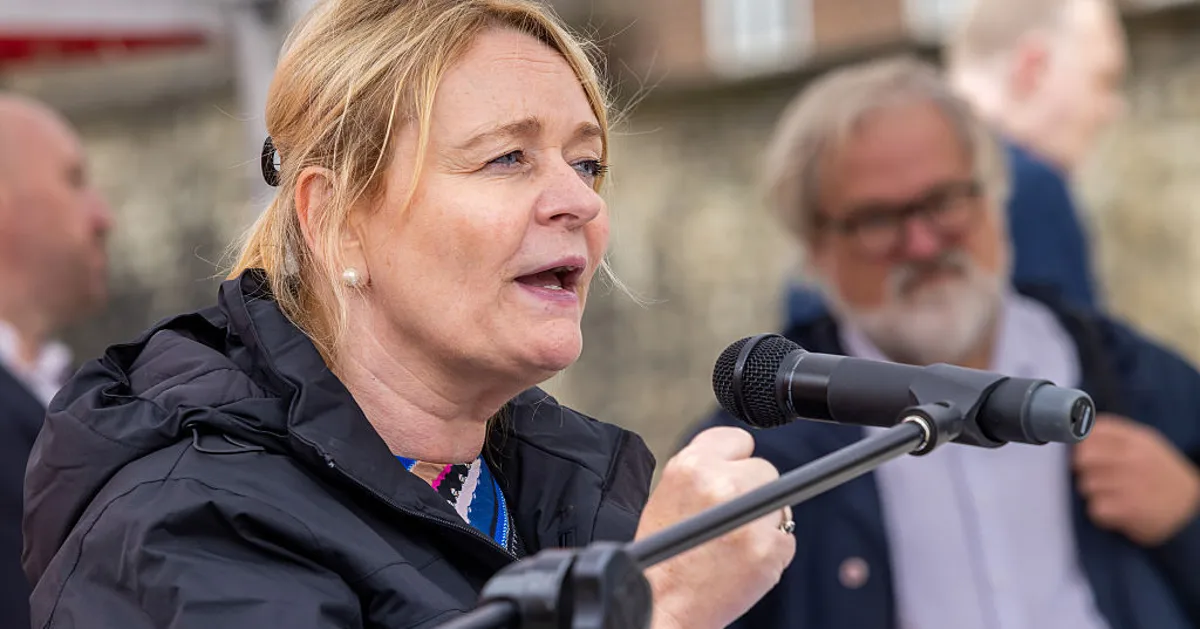
The boss of a Labour-backing union has said Keir Starmer’s make-or-break speech did not “cut the mustard” and called for him to be replaced as prime minister.
Sharon Graham, general secretary of Unite, told HuffPost UK that it would be the “death knell” for Labour if he led them into the next election.
Starmer has been criticised for the “utterly inadequate” speech, which was supposed to set out how he plans to turn around his party’s fortunes after last week’s disastrous election results.
The PM confirmed the government is nationalising British Steel and vowed to put the UK “at the heart of Europe”, but failed to announce any major new policies.
Graham, a frequent critic of the prime minister, said: “I don’t think it cut the mustard. The difficulty here is that the size of the problem is not being grasped.
“Obviously they inherited something that is quite difficult, there’s no doubt about that. The 2008 financial crash is still the most significant thing that has happened.
“Workers have paid the price over and over again. What Labour needs to do now to shift the dial is they’ve got to change direction and they have got to put in economic policy that is going to make the lives of working people better.”
She said the government should bring in a wealth tax on the super-rich and loosen the Treasury’s fiscal rules so the government can “borrow to invest”.
“Those were the sorts of things I wanted to hear in the speech today,” she said. “Unless they do that, then of course people are going to go to other places because they want some hope, they want to know that people are listening to them. They’re not getting that with Labour at the moment.”
Graham also rejected the claim that a Labour leadership contest would be bad for the country.
She said: “This is the point Keir Starmer was making – I’m going to stay put because I don’t want to put the country into chaos. The country is in chaos.
“We’ve got the worst growth, the amount of money that we owe has gone up because we are seen as a risk and so therefore you have to look at how we are going to deal with those things.
“So for me, I don’t think it’s going to happen tomorrow, but there isn’t a cat in hell’s chance that Keir Starmer’s going to lead us into the next election. It would be the death knell if that happened.”
However, she refused to say who she would back in any leadership race.
She said: “I don’t know at the moment because I don’t know what they stand for.
“What we have to understand is what people stand for. Are any of them for the renationalisation of energy, for example, which is going to have to be a long-term goal.
“We have to look at reindustrialisation. They’re talking about not drilling in the North Sea without any plan whatsoever about how any of those jobs are going to have to be replaced and how we move towards jobs within the renewable industry.
“Until we see some of those polices, I don’t think it’s easy to say who would replace him. But replace is the answer, with somebody with good policies.”
Subscribe to Commons People, the podcast that makes politics easy. Every week, Kevin Schofield and Kate Nicholson unpack the week’s biggest stories to keep you informed. Join us for straightforward analysis of what’s going on at Westminster.

IPL 2026 | ‘Won’t beat around the bush’: Shreyas Iyer fumes after Punjab Kings’ defeat to Delhi Capitals | Cricket News

Innovative Y-Zipper With Three Sides Just Solved a Decades-Old Puzzle in Robotics

William Gallas tells Chelsea to snub Cesc Fabregas and appoint La Liga manager instead | Football

Manchester United reach agreement with Casemiro over contract clause amid transfer speculation

US brings back mandatory military draft registration

Steven Gerrard disagrees with Gary Neville over ‘shock’ Chelsea and Arsenal claim | Football


![Samson Mow Just Said The UNTHINKABLE About Bitcoin & Ethereum! ["It's a Fake Crash"]](https://wordupnews.com/wp-content/uploads/2026/05/1778531899_maxresdefault-80x80.jpg)
-
 Crypto World3 days ago
HarrisX Poll Found 52% of Registered Voters Support the CLARITY Act
-

 Fashion3 days ago
Weekend Open Thread: Marianne Dress
-

 Crypto World5 days ago
Upbit adds B3 Korean won pair as Base token gains Korea access
-
 NewsBeat5 days ago
NCP car park operator enters administration putting 340 UK sites at risk of closure
-

 Tech2 days ago
Auto Enthusiast Carves Functional Two-Stroke Engine from Solid Metal
-

 Politics3 days ago
Politics Home Article | Starmer Enters The Danger Zone
-
 Business2 days ago
Ignore market noise, India’s long-term story intact, say D-Street bulls Ramesh Damani and Sunil Singhania
-

 Crypto World6 days ago
UAE Free Zone Deploys Blockchain IDs to Verify Registered Firms
-

 Tech15 hours ago
GM Agrees To Pay $12.75 Million To Settle California Lawsuit Over Misuse Of Customers’ Driving Data
-

 Crypto World5 days ago
BlackRock CEO Larry Fink Discusses a New Asset Class
-

 Crypto World5 days ago
Robinhood says Wall Street is building onchain
-

 Entertainment5 days ago
Sarah Paulson Called Out For Met Gala ‘Hypocrisy’
-
Entertainment7 days ago
Serena Williams hits Met Gala in metallic dress after GLP-1 reveal
-

 Tech6 days ago
Apple and Samsung are dominating smartphone sales so thoroughly that only one other company makes the top 10
-

 Tech6 days ago
I tested the Xiaomi 17 Ultra’s camera and I don’t think I’ll ever go back to an iPhone
-

 Fashion5 days ago
The Best Work Pants for Women in 2026
-
 Tech4 days ago
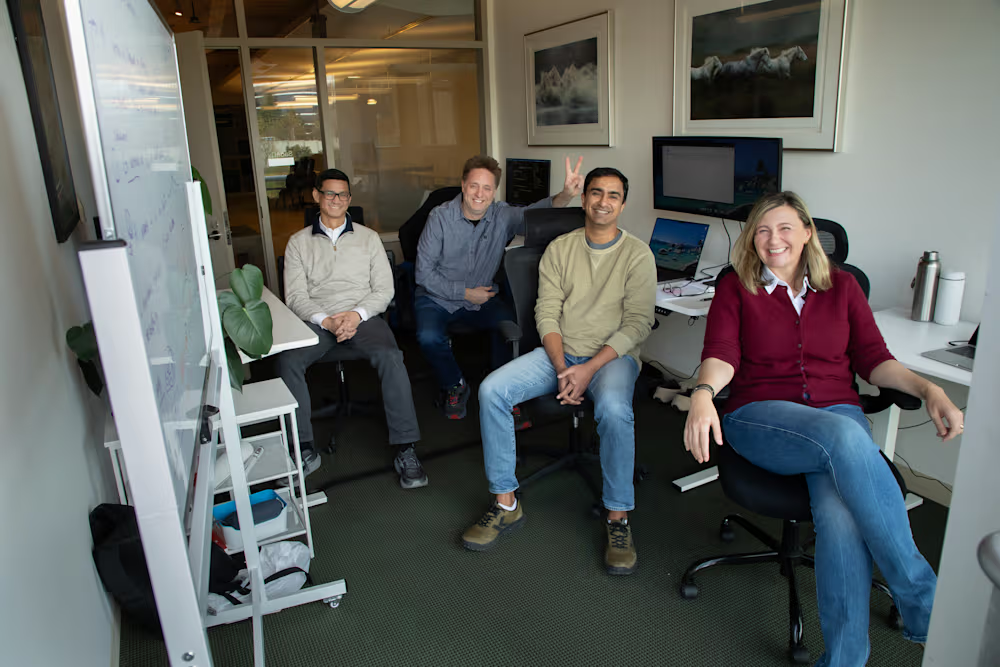
AI agents are missing all the discussions your team is having. SageOX has an answer: agentic context infrastructure
-
 Sports7 days ago
Everton v Man City LIVE: Haaland’s two-word response as visitors collapse to hand Arsenal advantage in Premier League title race
-
 Sports5 days ago
NBA playoff winners and losers: Austin Reaves is not loving Lakers vs. Thunder matchup, but Chet Holmgren is
-

 Entertainment5 days ago
Bold and Beautiful Early Spoilers May 11-15: Steffy Revolted & Liam Overjoyed!
You must be logged in to post a comment Login