





Connect with us
DAPA Banner

Business

Perenti’s profit rises but dollar clips guidance

Published

on

Perenti’s profit rises but dollar clips guidance

Perenti shares slumped on Monday after the mining services firm cut the top end of its full-year guidance, despite a jump in first-half profit.

Continue Reading
Click to comment

You must be logged in to post a comment Login

Leave a Reply

Business

Work begins on nuclear power station that promises 8,000 jobs

Published

on

Work begins on nuclear power station that promises 8,000 jobs

Rolls-Royce has said the project will create 8,000 jobs across Britain.

Continue Reading

Business

Even After Shedding Some Weight, Eli Lilly and Company Isn’t Prime For Upgrade (NYSE:LLY)

Published

on

Even After Shedding Some Weight, Eli Lilly and Company Isn't Prime For Upgrade (NYSE:LLY)

This article was written by

Daniel is an avid and active professional investor.
He runs Crude Value Insights, a value-oriented newsletter aimed at analyzing the cash flows and assessing the value of companies in the oil and gas space. His primary focus is on finding businesses that are trading at a significant discount to their intrinsic value by employing a combination of Benjamin Graham’s investment philosophy and a contrarian approach to the market and the securities therein. Learn more.

Analyst’s Disclosure: I/we have no stock, option or similar derivative position in any of the companies mentioned, and no plans to initiate any such positions within the next 72 hours. I wrote this article myself, and it expresses my own opinions. I am not receiving compensation for it (other than from Seeking Alpha). I have no business relationship with any company whose stock is mentioned in this article.

Seeking Alpha’s Disclosure: Past performance is no guarantee of future results. No recommendation or advice is being given as to whether any investment is suitable for a particular investor. Any views or opinions expressed above may not reflect those of Seeking Alpha as a whole. Seeking Alpha is not a licensed securities dealer, broker or US investment adviser or investment bank. Our analysts are third party authors that include both professional investors and individual investors who may not be licensed or certified by any institute or regulatory body.

Advertisement
Continue Reading

Business

Farmers ask Stormont for financial help with fuel costs

Published

on

Farmers ask Stormont for financial help with fuel costs

Fuel costs have soared globally as a result of the US-Israel war with Iran.

Continue Reading

Business

Penarth firm EKF Diagnostics boosted with sport training tech acquisition

Published

on

Business Live

The Alternative Investment Market firm has acquired technology from Swedish firm Beep Insights AB

Penarth headquartered global diagnostics firm, EKF Diagnostics, has acquired technology that tracks in real time glucose and lactate aimed at improving sport training performances.

The Alternative Investment Market listed firm has struck a deal with Sweden-based Beep Insights AB for its Beep Insights technology. The IOS and android software application combines data from sports performance wearables connected via Bluetooth with real-time glucose and lactate tracking to give personalised metrics to improve sport’s performance training.

The deal bolsters EKF’s sports performance product range, specifically its lactate scout sport, which is already compatible with the Beep Insights application – a hand-held lactate analyser.

Advertisement

READ MORE: Work under way on the UK’s first nuclear small modular reactors in North WalesREAD MORE: Empty building in the centre of Newport to be transformed with 750 staff moving in

EKF has been working with Peter Alex, chief executive of Beep Insights, and his team to integrate the Beep Insights tech from their software application to better determine lactate threshold in a more accessible way and improve sports training outcomes.

Following the acquisition, the value of which has no been disclosed, Mr Alex will join the EKF team and will look into developing the use of AI within performance training and how this can be integrated into the technology

Gavin Jones, chief executive of EKF said: “Whilst working with Beep Insights we have been highly impressed with how well their data handling application seamlessly connects with our handheld Lactate Scout Sport device, enabling, fast and accurate lactate threshold testing for sports performance athletes at all levels.

Advertisement

“The acquisition of this technology is an exciting step forward for EKF’s Sports Performance division as we look to enable athletes of all abilities access to data to drive improved training outcomes.”

Brokers Singer Capital Markets said of the deal: “Whilst we do not expect any material impact on financials in the short-term, we view this as opening an additional incremental growth driver and a positive signal of intent from management. The shares remain highly attractive with strong cash generation and a robust balance sheet.”

The broker has maintained a share price outlook of 35p.

For its 2025 financial year EKF posted revenues of £51.6m, up from £50.2m a year earlier. Its pre-tax profit of £7.1m was up from £6.3m in 2024.

Advertisement

Mr Jones said: “The 2025 results establish a strong foundation for the five-year strategic Development plan, providing EKF a positive base from which to push further into new markets with a simplified product offering and greater commercial focus on the areas of strategic importance.

“The trajectory for EKF has been clearly mapped to deliver further improvements in margin, revenue and Ebitda. Operational cash generation remains at a high level, and this shall be utilised to thoughtfully invest in those areas that will further build on the requirements of the strategy, and deliver long term shareholder value.

“We remain committed to establishing EKF as a true leader in Hemoglobin point-of-care testing and life sciences, further developing the business through organic growth with a strong focus on profitability improvement and sustainable investment.”

Advertisement
Continue Reading

Business

Virgin StartUp launches Momentum 2.0 accelerator for dyslexic entrepreneurs

Published

on

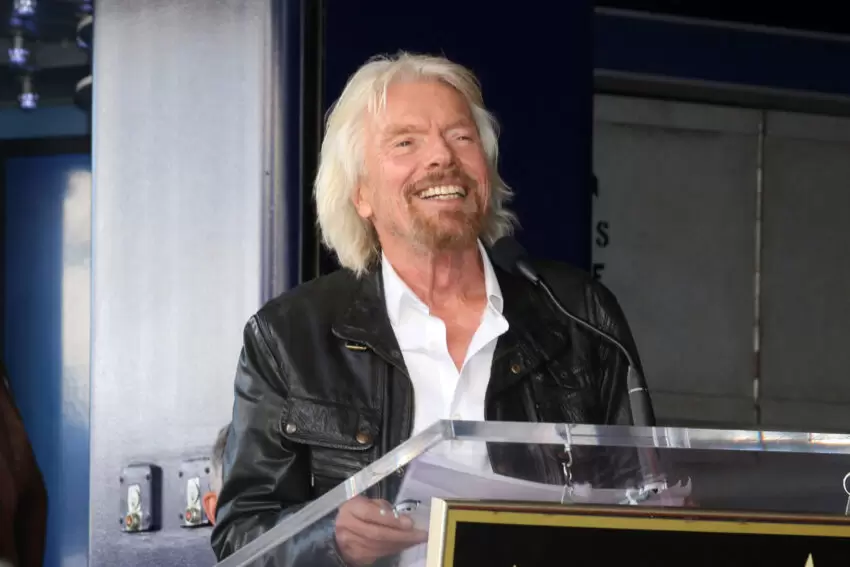
Richard Branson has foregone more than £100 million he stood to receive from Nationwide for the right to use the Virgin Money brand

Virgin StartUp has launched applications for the second round of Momentum, its free eight-week accelerator programme built specifically to help dyslexic entrepreneurs grow their businesses.

Momentum 2.0, which runs from 26 May to 14 July 2026, returns after what Virgin StartUp described as the most applied-for programme in its history. The inaugural cohort supported 30 founders last year, with nine in ten participants saying they came to view their dyslexic thinking as a strength by the time they finished. The programme is backed by Virgin Unite and run in collaboration with Made By Dyslexia, the global charity founded by Kate Griggs.

The accelerator is aimed at early-stage founders and offers a combination of tailored workshops, one-to-one mentoring and practical resources designed around the way dyslexic thinkers naturally operate. Virgin StartUp has also introduced a dedicated “Dyslexic Thinking” space within its online community for business founders, extending the programme’s reach beyond the cohort itself.

The commercial case for backing dyslexic entrepreneurs is well documented. Analysis from Made By Dyslexia suggests that dyslexic business owners contribute at least £4.6 billion to UK GDP annually and support more than 60,000 jobs. The charity estimates that one in three entrepreneurs is dyslexic, a statistic that underlines how closely entrepreneurial instinct tracks with the pattern recognition, creative problem-solving and big-picture thinking commonly associated with dyslexia.

Elle Upshall, scale up lead at Virgin StartUp, said the response to the first cohort had exceeded expectations and that the programme had demonstrated what happens when business support is designed around different ways of thinking rather than in spite of them.

Advertisement

Among the alumni of the first Momentum cohort is Alex Molokwu, founder of Loujo, an initiative that uses educational songs to help dyslexic children with reading and writing. Molokwu credited his mentor with helping him turn instinctive thinking into structured strategy. Aylin Abdullah, founder of Fractionals Match, an AI-powered marketplace for scaling businesses, said the programme gave her the space to articulate and lean into how she thinks, rather than treating it as something to work around.

Griggs, herself a dyslexic social entrepreneur, framed the initiative in broader economic terms, arguing that the UK has never needed dyslexic thinking more if it wants to unlock growth and innovation.

Momentum sits within a wider push across the Virgin Group to champion neurodivergent talent, inspired in large part by Richard Branson’s own experience with dyslexia. The ambition extends beyond the cohort: by helping dyslexic founders scale, the programme aims to drive job creation and inspire the next generation of entrepreneurs.

Applications for Momentum 2.0 close on 8 May 2026. Full details are available at virginstartup.org/momentum.

Advertisement

Continue Reading

Business

Government Launches $20M Campaign Urging Aussies to Cut Fuel Use

Published

on

Oil Prices Plunge Below $95 as US-Iran Ceasefire Sparks Relief

CANBERRA, Australia — The federal government on Monday rolled out a $20 million national advertising campaign urging Australians to reduce fuel consumption and adopt more efficient driving habits as global oil supply disruptions from the Iran conflict continue to push prices higher. Titled “Every Little Bit Helps,” the multi-channel blitz aims to stretch limited supplies for essential services such as trucking, farming and emergency response amid ongoing volatility in the Strait of Hormuz.

Oil Prices Plunge Below $95 as US-Iran Ceasefire Sparks Relief
Oil Prices Plunge Below $95 as US-Iran Ceasefire Sparks Relief Rally in Volatile Energy Markets (Petrol Price)

Infrastructure Minister Catherine King said the campaign forms part of the government’s four-stage National Fuel Security Plan, announced after a national cabinet meeting in late March. It encourages motorists to drive less where possible, switch to public transport or active travel, maintain proper tyre pressure, remove unnecessary roof racks and avoid aggressive acceleration. The ads will appear on television, online platforms, radio and outdoor billboards over the coming weeks.

The initiative comes as Brent crude hovers near or above $100 per barrel following President Donald Trump’s announcement of a U.S. naval blockade in the Strait of Hormuz on Sunday. The narrow waterway, which normally carries about one-fifth of global oil supplies, has seen severely restricted traffic since Iran limited movements in early March in response to U.S. and Israeli strikes. Even after a fragile ceasefire took effect around April 8, full restoration of flows could take months due to damaged infrastructure and lingering tensions.

Prime Minister Anthony Albanese defended the spending, saying the campaign provides practical advice to households facing higher petrol and diesel prices. “We’re not lecturing people — we’re giving them simple steps that can make a real difference in stretching supplies,” Albanese told reporters ahead of a four-day trip to Asia to secure additional fuel imports. He noted the government had already halved fuel excise until the end of June and paused some road user charges for trucks to ease cost-of-living pressures.

Opposition politicians and some motorists quickly criticized the $20 million outlay as wasteful taxpayer-funded propaganda. Coalition senators accused the Albanese government of treating Australians like children while failing to address root causes of the supply crunch. Social media reactions ranged from mockery — with users joking about “inflating your tyres to save the economy” — to anger over the perceived lack of tangible relief at the pump. One viral post questioned why the money wasn’t used to subsidize fuel directly or accelerate domestic refining capacity.

Advertisement

Transport industry groups offered mixed responses. The Australian Trucking Association welcomed efforts to preserve diesel for freight but warned that reduced consumer driving alone would not solve shortages affecting supply chains. Farmers in regional areas expressed frustration, noting that many have no viable alternative to personal vehicles for essential travel. Urban commuters in Sydney, Melbourne and Brisbane, where public transport options exist, may find the advice more practical, though rising fares have drawn their own complaints.

The campaign highlights specific behaviours backed by government research. Maintaining correct tyre pressure can improve fuel efficiency by up to 3%, while removing excess weight and avoiding idling are among low-cost measures promoted. The government also encourages combining trips, carpooling and using apps to find the cheapest fuel. Officials estimate that widespread adoption could save millions of litres annually, helping redirect supplies to critical sectors.

This is not the first time Australia has turned to public appeals during energy crunches. Similar conservation messages appeared during past global oil shocks, though the current situation — triggered by geopolitical conflict rather than purely market forces — has created unique challenges. Panic buying in early March exacerbated local shortages, prompting temporary measures such as relaxed fuel quality standards to release nearly 100 million extra litres per month.

Economists warn that sustained high fuel prices will feed into broader inflation, particularly through higher transport and grocery costs. Diesel, vital for agriculture and freight, has seen particularly sharp increases, threatening to push up food prices in coming months. The Reserve Bank of Australia is closely monitoring the situation as it weighs future interest rate decisions.

Advertisement

The government’s four-stage National Fuel Security Plan includes preparation, keeping Australia moving, securing supplies and long-term resilience. Stage two focuses on demand management and public communication — the role the new campaign is designed to fill. Albanese’s upcoming trip to key Asian partners aims to diversify import sources and fast-track alternative shipping routes bypassing disrupted Gulf flows.

Critics argue the $20 million could have been better spent on expanding fuel reserves, incentivizing electric vehicle uptake or investing in domestic refining upgrades. Some regional MPs called for targeted support for rural communities where alternatives to driving are limited. Consumer advocates questioned the effectiveness of advertising when many households are already cutting back due to price pain at the bowser.

Supporters counter that clear public messaging can shift behaviours at scale and build community resilience during crises. Similar conservation campaigns in other countries during past energy shortages have shown modest but measurable reductions in demand. The government insists the spend represents value by empowering individuals to contribute to national efforts.

As the campaign launches nationwide, motorists will encounter the “Every Little Bit Helps” slogan across media. Early feedback suggests a divide between urban residents open to the advice and regional drivers feeling unfairly targeted. Fuel retailers report continued high demand despite the appeals, with some stations implementing informal rationing or extended hours to manage queues.

Advertisement

The broader context remains fluid. While the U.S.-Iran ceasefire provided temporary market relief, Trump’s blockade announcement has reignited volatility. Full normalization of Hormuz traffic, if it occurs, could still take months, keeping global prices elevated and forcing Australia — a net fuel importer despite its resource wealth — to navigate tight supplies.

For ordinary Australians, the campaign arrives amid cost-of-living strains already stretched by housing, groceries and energy bills. Whether practical tips on tyre pressure and smoother driving will resonate or simply fuel resentment remains to be seen. The government hopes the message lands as helpful guidance rather than finger-wagging.

As Monday’s trading on the ASX showed mixed energy sector responses to oil movements, households face the daily reality of higher pump prices. The $20 million campaign represents one tool in a broader toolkit that includes diplomatic efforts, tax relief and supply diversification. Its success will ultimately be measured not in advertising reach but in whether collective small actions help ease pressure on Australia’s fuel security during an uncertain period.

In the end, officials say every litre saved today helps keep essential services running tomorrow. Whether the public embraces the call to “use less where possible” will test both individual habits and the government’s ability to communicate effectively in a time of global energy strain.

Advertisement
Continue Reading

Business

GTA-maker Rockstar Games hacked again but downplays impact

Published

on

GTA-maker Rockstar Games hacked again but downplays impact

The incident marks the second time the games giant has been hacked by young, English-speaking hackers.

Continue Reading

Business

Abu Dhabi Airport Open Today but Operating on Reduced Schedule Amid Iran Tensions

Published

on

Is Abu Dhabi Airport Open? Zayed International Airport Resumes Limited

ABU DHABI, United Arab Emirates — Zayed International Airport (AUH) in Abu Dhabi remained open Monday with limited commercial flights operating under managed corridors, even as fresh uncertainty from the U.S. naval blockade in the Strait of Hormuz raised concerns about longer-term aviation disruptions in the Gulf. Travelers checking whether “Abu Dhabi airport closed today” received a nuanced answer: the facility is not fully shut but continues to function at significantly reduced capacity more than six weeks after the Iran conflict first triggered widespread airspace restrictions across the region.

Is Abu Dhabi Airport Open? Zayed International Airport Resumes Limited
Is Abu Dhabi Airport Open?

As of April 13, 2026, Etihad Airways — the primary carrier at Abu Dhabi’s main gateway — was running approximately 80-85 daily departures to around 80 destinations, representing roughly 60% of pre-conflict levels. The General Civil Aviation Authority (GCAA) confirmed UAE airspace remains open with controlled entry and exit points, allowing cautious resumption of passenger, cargo and repatriation flights. However, schedules stay fluid, with many routes subject to last-minute changes or cancellations due to ongoing security assessments.

The airport has not experienced a full closure since early March, when initial U.S. and Israeli strikes on Iran prompted temporary airspace shutdowns and mass flight suspensions. Brief precautionary closures occurred in subsequent weeks, including after reported drone incidents near Dubai, but operations have gradually recovered through phased reopenings coordinated with the Abu Dhabi Emergency, Crisis and Disaster Management Center. Terminal access remains restricted to passengers with confirmed tickets, and authorities continue to advise against traveling to the airport without airline confirmation.

Etihad has maintained a limited commercial schedule since early March, prioritizing essential routes to Asia, Europe, Africa, North America and Australia while adding incremental services as conditions allow. The airline has waived change fees for affected bookings and offered rebooking or refund options for tickets issued before late February. Other carriers, including some European and Asian airlines, have resumed select flights but with reduced frequencies or rerouted paths avoiding high-risk airspace.

The broader context stems from the Iran conflict that erupted in late February 2026. Missile and drone exchanges, combined with Iranian restrictions on the Strait of Hormuz, forced multiple temporary airspace closures across the Gulf. Abu Dhabi and neighboring Dubai International (DXB) bore the brunt, with thousands of flights cancelled or diverted in the opening weeks. Even after a fragile two-week ceasefire took effect around April 8, full normalization has proved elusive. President Donald Trump’s Sunday announcement of a U.S. naval blockade targeting Iranian ports has reignited volatility, though it has not yet triggered new airspace closures in the UAE.

Advertisement

Aviation experts note that jet fuel supplies could face pressure if Hormuz disruptions persist, with some airport operators warning of potential systemic shortages within weeks. Abu Dhabi Airports has not reported fuel constraints so far, but contingency planning includes diversified sourcing and conservation measures. Passenger numbers at Zayed International remain well below the record growth seen in 2025, when the airport handled over 33 million travelers annually before the crisis.

For stranded or affected passengers, the situation has improved since the darkest days of early March but remains challenging. Repatriation and exceptional flights helped clear backlogs, yet many long-haul routes still operate on limited rotations. Travelers are urged to check flight status directly with airlines, monitor the Abu Dhabi Airports website and GCAA advisories, and avoid heading to the terminal without explicit confirmation. Rebooking flexibility remains in place for most carriers through at least mid-May.

The economic ripple effects extend beyond aviation. Abu Dhabi, a key global transit hub, has seen reduced connectivity impact business travel, tourism and logistics. The emirate’s diversification efforts, including tourism and non-oil sectors, have faced headwinds, though government support for airlines and airports has helped maintain core operations. Similar challenges affect neighboring hubs in Dubai, Sharjah and Doha, where schedules also remain constrained.

International reactions vary. Some governments have issued updated travel advisories urging caution for non-essential trips to the UAE, while others note improved stability since the ceasefire. Embassies recommend checking real-time flight information and having contingency plans, including alternative routing through less-affected airports or overland options where feasible.

Advertisement

Inside the terminal, operations reflect heightened security protocols. Enhanced screening, restricted access and real-time coordination with military and civil authorities help maintain safety. Staff continue assisting passengers with rebookings, accommodations and information, though frustration remains high among those facing repeated delays or cancellations.

Looking ahead, full recovery depends on de-escalation in the Iran conflict and stabilization of regional airspace. The current two-week ceasefire window expires around April 22, adding urgency to diplomatic efforts. Should the Hormuz blockade lead to renewed tensions or fuel supply strains, further disruptions cannot be ruled out. Airlines and airports continue scenario planning for both optimistic reopening and prolonged caution.

For now, Zayed International Airport answers the question “Is Abu Dhabi airport closed today?” with a qualified no. It is open and handling flights — but not business as usual. Passengers are experiencing a new normal of managed, reduced-capacity operations in one of the world’s busiest aviation regions.

The situation serves as a reminder of how quickly geopolitical events can ground dreams of travel. While resilience has been shown through phased recoveries and coordinated responses, the shadow of the Iran conflict continues to loom over Gulf skies. Travelers planning journeys involving Abu Dhabi are advised to build flexibility into their plans and stay informed through official channels as developments unfold rapidly.

Advertisement

As Monday progressed with no immediate new closures reported, the airport’s lights remained on and runways active — a symbol of cautious continuity amid uncertainty in a strategically vital part of the world.

Continue Reading

Business

“You Better Not Lose to LeBron at 41” Perkins Puts Heavy Pressure on Durant

Published

on

Kevin Durant #7 of Team United States reacts against Team Australia during the first half of a Men's Basketball quarterfinals game on day thirteen of the Tokyo 2020 Olympic Games at Saitama Super Arena on August 05, 2021 in Saitama, Japan.

LOS ANGELES — ESPN analyst and former NBA champion Kendrick Perkins issued a blunt warning to Kevin Durant on Monday, declaring that the Houston Rockets superstar “better not lose” to a 41-year-old LeBron James in the first round of the 2026 NBA playoffs. Perkins’ fiery comments, made on “The Road Trippin’ Show,” quickly went viral as the Rockets prepare to face James and the Los Angeles Lakers in what promises to be one of the most intriguing opening-round matchups of the postseason.

Kevin Durant

Perkins, who played alongside Durant during his time with the Oklahoma City Thunder and later the Brooklyn Nets, did not mince words. “KD ass better not lose this series,” he said. “When you talk about pressure in the first round, Kevin Durant is under the most pressure. You better not f—ing lose to that Lakers team… You better not lose to LeBron at 41. You better not f—ing lose. It’s going to be a different conversation. That sh—t shouldn’t go past five games.”

The remarks come as the Western Conference standings set up a potential first-round series between the surging Rockets — featuring Durant, Alperen Şengün and a young, athletic supporting cast — and the veteran-laden Lakers. James, turning 42 in December, continues to defy age, averaging strong numbers while mentoring his son Bronny James, who made the Lakers roster as a rookie. The prospect of Durant, still one of the league’s most lethal scorers at age 37, facing off against a 41-year-old LeBron has ignited intense debate about legacy, pressure and generational respect.

Advertisement

Perkins argued that anything beyond a quick Rockets victory — ideally in five games or fewer — would tarnish Durant’s standing. He emphasized the age disparity, suggesting that losing or even extending the series significantly against an aging Lakers squad would shift the narrative around Durant’s career in uncomfortable ways. “You better not lose more than one game to 41-year-old LeBron and Bronny,” Perkins added in the clip that has circulated widely on social media.

The comments reflect Perkins’ long-standing reputation for candid, sometimes controversial analysis. A 2008 NBA champion with the Boston Celtics, Perkins has carved out a second career as a television personality known for his unfiltered takes on players, matchups and legacies. His history with Durant adds personal weight to the criticism, as the two have maintained a respectful but occasionally pointed relationship in public forums.

Durant has yet to respond directly to Perkins’ remarks, but the broader NBA community reacted swiftly. Social media platforms lit up with divided opinions. Some fans and analysts praised Perkins for holding Durant accountable, noting the Rockets’ youth and talent should translate to dominance against a Lakers team relying heavily on James’ longevity. Others defended Durant, pointing to his scoring prowess, playoff pedigree and the challenges of facing a motivated LeBron in a win-or-go-home environment.

The potential series carries significant narrative layers. Durant joined the Rockets in free agency after stints with the Golden State Warriors, Brooklyn Nets and Phoenix Suns, seeking a fresh start and a chance to lead a contender built around his elite scoring. The Rockets have emerged as one of the Western Conference’s most exciting young teams, blending Durant’s experience with athletic wings and a strong interior presence. A deep playoff run would validate that move.

Advertisement

For James, the matchup represents another chapter in a career filled with historic resilience. At 41, he continues to produce at an All-NBA level, drawing double-teams and creating opportunities for younger teammates including Bronny. Lakers fans and neutrals alike see the series as a test of whether James can still elevate a roster past a more athletic, younger opponent in the postseason’s early stages. A Lakers upset would further cement his legacy as one of the greatest to ever play.

Basketball analysts note the psychological stakes for Durant. Throughout his career, he has faced questions about “ring-chasing” after joining the Warriors and navigating superteam dynamics. A loss to the Lakers — especially one that extends beyond five games — could reignite debates about his ability to carry a team as the undisputed leader. Perkins’ comments tap directly into that sensitivity, framing the series as a legacy-defining moment for the Slim Reaper.

The Rockets enter the playoffs with momentum after a strong regular-season finish, bolstered by improved defense and chemistry. Houston’s roster depth and versatility could prove challenging for the Lakers, who have leaned on James’ brilliance and strategic adjustments throughout the year. Coaching battles between Rockets head coach Ime Udoka and Lakers coach JJ Redick will add another tactical layer to the matchup.

Perkins’ warning also highlights broader themes in today’s NBA: the tension between aging superstars and rising talents, the weight of expectations on high-profile veterans and the relentless scrutiny of playoff performance. LeBron James has long thrived under such pressure, turning doubters into fuel for legendary performances. Durant, known for his scoring efficiency and length, now faces similar examination as he enters the later stages of his prime.

Advertisement

Social media reaction has been swift and polarized. Clips of Perkins’ rant have garnered hundreds of thousands of views, with hashtags related to the potential series trending. Some users echoed Perkins, arguing the Rockets have “no excuses” given their roster construction. Others pushed back, noting injuries, matchups and LeBron’s proven ability to elevate teammates regardless of age.

As the NBA playoffs approach, the Rockets-Lakers storyline has emerged as one of the most compelling subplots. Whether the series materializes depends on final seeding, but the buzz surrounding Perkins’ comments has already amplified anticipation. For Durant, the message is clear from his former teammate: the margin for error is slim, and falling short against a 41-year-old LeBron would invite a harsher spotlight.

Perkins concluded his take with characteristic bluntness, underscoring that he expects the Rockets to handle business efficiently. His comments serve as both motivation and cautionary tale — a reminder that in the NBA postseason, narratives shift quickly based on results, especially when legends like LeBron James are involved.

The basketball world will be watching closely if and when these two franchises meet. For now, Kendrick Perkins has set the tone: Kevin Durant better not lose to LeBron at 41.

Advertisement
Continue Reading

Business

Harlan Goode or Kalani Artis? Top 3 Battle for $100K Prize

Published

on

Kalani Artis

SYDNEY — With just days until the live performances, Australian Idol 2026 has narrowed to a gripping top three: 18-year-old vocal powerhouse Harlan Goode from Brisbane, 23-year-old heartfelt landscaper Kalani Artis from the NSW Central Coast, and 21-year-old Kesha Oayda from Jindabyne.

Kalani Artis
Kalani Artis

The two-night grand finale kicks off Monday, April 13, at 7:30 p.m. on Channel 7 and 7plus, with the winner revealed Tuesday, April 14. Public votes alone will crown Australia’s next Idol, offering the victor $100,000, a recording deal, a songwriting camp with Sony Music Publishing and other career-launching perks.

Harlan Goode and Kalani Artis have emerged as the clear frontrunners in fan discussions and social media buzz, though all three finalists delivered standout moments in the top-six show that eliminated John Standley, Jacinta Guirguis and Trè Samuels. The top six united for an emotional group rendition of Adele’s “Set Fire to the Rain” before solo performances sealed the verdicts.

Harlan Goode
Harlan Goode

Goode, from Redlands in Brisbane’s bayside area, has been described as an “unstoppable force” who consistently raises the bar with effortless delivery and powerhouse ballads. The 18-year-old, who balanced Year 12 exams early in the season, impressed with a strong take on “Scared to Be Lonely” in recent weeks and earned praise for his versatile showmanship.

Fans and local supporters have rallied behind the Queenslander. A special message of encouragement ahead of the finale highlighted industry legends backing him, with comments calling his voice “phenomenal” and predicting he could follow in the footsteps of Australian music icons. Goode recently shared powerful advice he received from guest mentor Josh Groban, describing the American singer as “a genuinely beautiful human being” whose words helped him prepare for the high-stakes finale.

“He’s raised the bar with every performance, delivering a voice that truly connects with people,” Australian Idol’s official channels noted in a video tribute. Goode’s consistency and stage presence have made him a favorite among viewers who appreciate technical precision and big vocal moments.

Advertisement

Kalani Artis, a landscaper from Bensville on the Central Coast, brings a deeply personal story that has resonated strongly with audiences. His journey began when his nan gifted him his first guitar as a teenager, transforming his life through music. The 23-year-old shy tradie has opened up about mental health challenges and credited the show with significant personal growth.

“From when I walked into the audition room, so much has changed — my whole world is different,” Artis said in an official profile. “Australian Idol has helped me grow so much.” His emotional, breath-taking performances, including a heartfelt “Breakeven” in the top eight, have drawn tears and massive support from fans who call him a “true blue Aussie” and predict he will take the crown.

Artis’s nan, Sue, has been a constant emotional anchor, becoming “a mess” of happy tears when he made the top three. He has teased having “a lot of music in the works and lots of shows booked” regardless of the outcome, signaling his determination to build a career beyond the competition.

The season, which premiered Feb. 2 on Seven, marks the 11th overall and the fourth under the network after it acquired the rights. Hosts Ricki-Lee Coulter — herself a former Idol contestant from 2004 — and Scott Tweedie have guided the live shows, while judges Kyle Sandilands, Marcia Hines and Amy Shark provided feedback without voting power in the finale. Guest judges including Jessica Mauboy and Anastacia added star power earlier in the season.

Advertisement

Social media has lit up with divided but passionate opinions. Instagram and Facebook reels from the official Australian Idol account highlight both Goode’s effortless consistency and Artis’s ability to “take our breath away at every opportunity.” Local communities have mobilized: Redlands residents are pushing for Goode, while Central Coast supporters emphasize Artis’s authenticity and family-driven passion.

One fan blog analyzing the top three gave Goode a slight edge with a predicted 45% chance of victory due to his consistency and fan base, placing Artis at around 30% for his emotional edge. Kesha Oayda is viewed as a strong underdog capable of a surprise. Yet the competition remains wide open, as public voting can shift dramatically in the final hours.

The finalists performed live at Westfield Hurstville on April 9, giving fans a preview of the energy they will bring to the grand finale stage. Tickets for the live audience at the Coliseum in Rooty Hill were reportedly in demand for the Monday and Tuesday nights.

For Goode, the finale represents a chance to “unleash” fully after navigating the pressures of balancing school and national television. He has spoken about plans to continue developing as an artist, potentially touring and releasing original material.

Advertisement

Artis, meanwhile, views the experience as validation of his lifelong dream. “This is your Australian Idol!” one supporter wrote, capturing the sentiment of many who see the tradie-turned-singer as a relatable success story.

Judges have repeatedly praised the depth of talent this season, with Amy Shark and Marcia Hines noting the emotional authenticity across the top three. Kyle Sandilands, known for his direct style, has highlighted the vocal fireworks that have defined 2026 performances.

As voting opens ahead of the Monday performance show, fans are urged to support their favorites through official channels on 7plus and the Australian Idol app or website. The format relies entirely on public votes, heightening the drama for what producers call one of the show’s most competitive finales.

The grand finale week promises a mix of solo performances, possible duets or group numbers, and emotional tributes as the contestants reflect on their journeys from auditions to this point. Past winners have leveraged the title into recording contracts, tours and media careers, making the stakes personal as well as professional.

Advertisement

Whether Goode’s big-voice versatility or Artis’s heartfelt connection — or an unexpected surge for Oayda — prevails, one thing is certain: Australian Idol 2026 has delivered memorable talent and stories that have captivated viewers since February.

Tune in Monday at 7:30 p.m. for the performances that could decide Australia’s next singing sensation, followed by the results show Tuesday. In a season defined by growth, resilience and vocal excellence, the public will have the final say on who becomes Australian Idol 2026.

Continue Reading

Trending

Copyright © 2025