The 2024 Paris Games revitalized what those five recognizable Olympic rings mean as a symbol of athletic competition, global community, ambition and achievement on the world’s stage. As soon as the most recent Summer Games concluded, the reviews were near-universal in agreement. The Olympics were officially back, with Paris’ moment widely recognized as one of the best Games in history for a bevy of irresistible reasons: the jaw-dropping backdrops and unique stages for competition; the record-setting performances; the star power drawn in by one of the most famous cities in the world; and, crucially, the return of a normal Olympics after COVID had severe impacts on the previous two.
The just-concluded Milan Cortina Games couldn’t hit the same highs or have quite the same worldwide reach of the Paris Games — the Summer Olympics will always out-rate Winter — but all medals and moments considered, what we just watched over the past 16 days immediately vaults this fortnight competition near the top of the list of the best Winter Games of all time.
What’s more, for the first time since Vancouver in 2010, the world’s best cold-weather athletes competed in a place that was both visually stimulating for TV watchers and viewership-friendly in the United States.
As for the U.S. delegation, this has to be regarded as the country’s greatest go on snow and ice ever. Those in red, white and blue put on an epic showing, with Americans bringing home 12 gold medals, the most in any Winter Olympics. The 33 total medals were four off their best haul during those Vancouver Games 16 years ago.
Advertisement
My primary gig for CBS Sports is to write and talk about men’s college basketball, but longtime readers know all too well how much I love the Olympics. And even in the midst of what I think will wind up being an all-time season in college hoops, I had my attention split for two weeks between American hardwood and Italian ice due to the gorgeous vistas, powerful storylines, emerging star power and ever-reliable drama that came across my TV screen with 16 disciplines in eight sports taking place an ocean and a continent away.
The redemption stories and breakout stars and anguishing images of failure that developed over two-plus weeks in the mountains of Northern Italy produced enough narratives to fill a 500-page novel. I’ll go much shorter than that, but please join me on a look back at the stars and moments that made the Milan Cortina Games one of the best Winter Olympics ever.
Team USA sweeps hockey gold
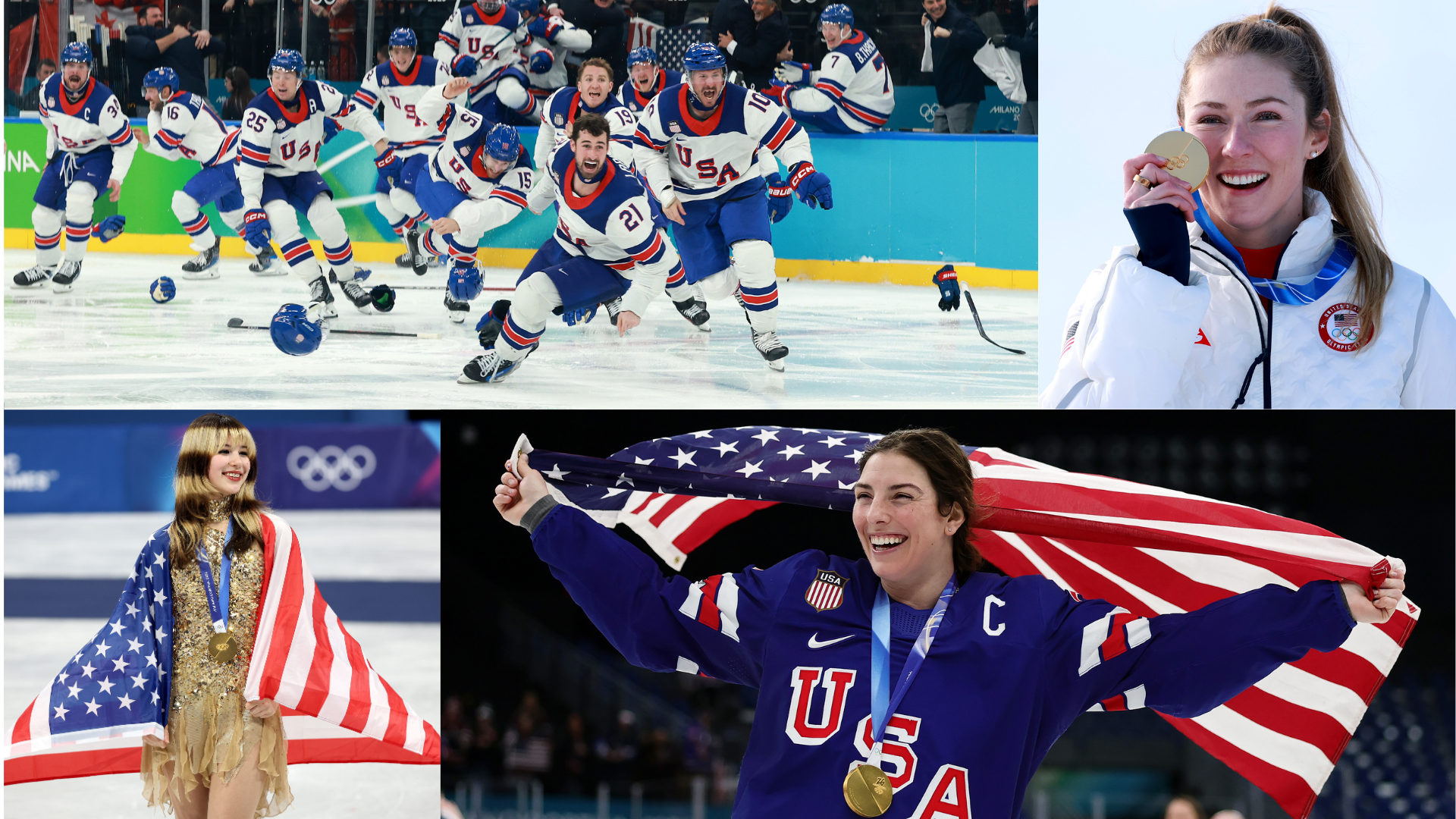
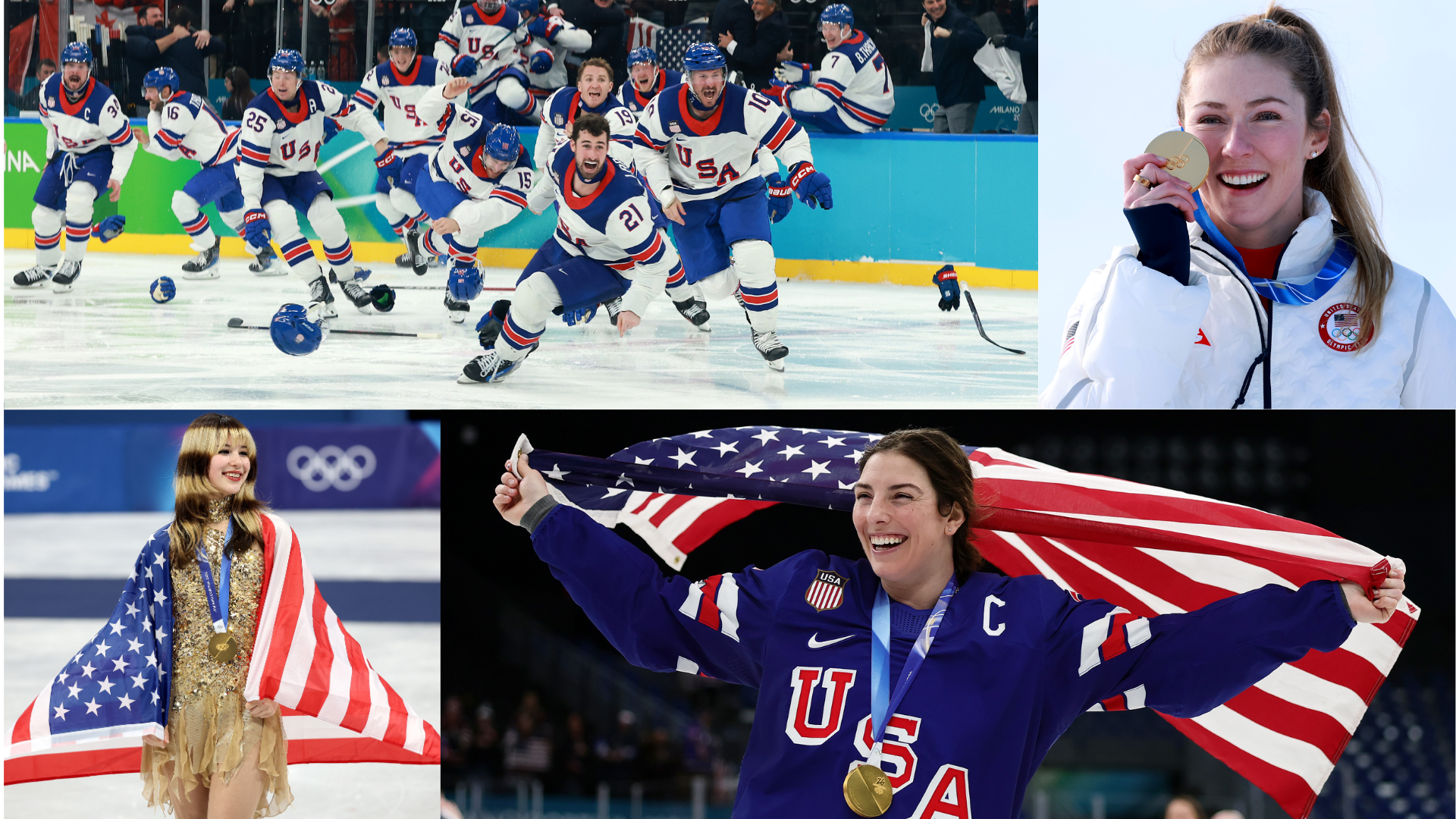
We start with ice hockey. The United States men’s and women’s teams won gold in the same Olympics for the first time, which is a monumental achievement in its own right. But then consider the details: The two teams did it three days apart in games, in games that that both ended 2-1, in games that both reached overtime, in games that both downed a perfect rival, Canada.
It’s only the third time men’s hockey has won the Olympic tournament; 1960 being the first. The 1980 team has been subject to documentaries. Both of these champions will be as well.
Mikaela Shiffrin’s redemption arc
Mikaela Shiffrin, 30 years old and far from finished in her one-of-a-kind career, has become one of my favorite athletes. Shiffrin got the third Olympic gold medal of her career on Feb. 18, but it was the only one of these Games. It came in her best discipline, the slalom, and in staggering fashion. Shiffrin exorcised her previous eight non-podium skis in the Olympics by winning her two slalom races by 1.50 seconds, marking the largest margin of victory in an Alpine Olympic event since 1998. The gap in her win was so large, it was actually a longer amount of time than the advantage of the six previous Olympic slalom winners — COMBINED!
She entered Milan as the only two-time slalom gold medalist in U.S. history. And now Shiffrin is the first Team USA skier to ever win three gold medals, too. She was already the youngest (18 in 2014) to win the women’s slalom event at the Olympics, and with last week’s gold she’s also now the oldest to ever do it as well. One barrier after another, broken.
Advertisement
She did it after failing to medal in giant slalom and also shockingly blowing a first-place lead in the Olympics debut of the team combined event with teammate Breezy Johnson — whose downhill gold was one of the United States’ 12. Shiffrin responded with one of the best races of her life. She earned it not because of the hard work, but because of how she so willingly put herself out there, time and again, with her struggles.
Every time I heard Shiffrin talk, or saw one of her social posts, it was nothing but positivity, affirmation of teammates and competitors and transparency over accepting the challenges of these moments, of living through them instead of going against them. When she won gold last week, cameras caught her expression, goggles still over the eyes, and the first word out of her mouth?
Dad.
I almost cried when I watched it live.
Advertisement
Shiffrin unexpectedly lost her father to an accident in 2020. She’d won races since then, and had high-profile failures too. But winning a medal on the Olympic stage hadn’t happened since he passed. Her honesty at her medal-winning press conference about processing grief is something everyone should watch.
Women provided so many inspirational performances
Johnson, not only won gold here, she did so on the course that was the stage of a pre-Olympics crash in 2022 that caused her to miss the Beijing Games. And so not only did she make a grand comeback at 30, she also got engaged after her final race.
The Netherlands’ speedskating duo of Femke Kok and Jutta Leerdam each won a gold and a silver and they have flipped a niche sport into must-see competition. They are bona fide uber celebrities in their home country, where speedskating is treated there like football is in the States. Italian Arianna Fontana made history by competing in her final Olympics at 35 and winning a gold and two silvers in short track speedskating, and finishing with a medal at six straight Olympics. No one else has ever done that! She’s got 14 medals to her name, second most ever to Norways Marit Bjøgen’s 15.
Speaking of peaking at the end: Elana Meyers Taylor competed in her fifth Olympics and finally, as a 41-year-old mom of two, won her first gold in the monobob. Imagine hitting the peak of your athletic life after the age of 40? Lindsey Vonn tried to do that, only to see it end in disaster. But Vonn’s tragic final Olympic race — which has required three surgeries already and will need at least one more — served as a scary reminder of the very real stakes of competition in the Winter Olympics. Nothing compares.
Men who seemed to be immortal, and a ‘God’ who proved to be human
American speedskater Jordan Stolz hoped for four medals, perhaps even four golds, but came away with two and a silver. His pair of individual first-place finishes represented the only American to pull off the feat in Italy. Stolz was a breakout star, though his failure to medal in Saturday’s mass start means he’ll likely enter 2030 as the male face of Team USA while also having all the motivational storylines to set up what could be his grand Olympic moment.
The same can be said of the Quad God, Ilia Malinin, whose failed routine in the men’s free skate goes as the biggest stunner of them all at these Games. A shocking reminder that, although there is so much storytelling attached to the Olympics, the Games can never be scripted.
Advertisement
But they sure are sculpted. Norwegian cross-country skier Johannes Høsflot Klæbo might be one of the 10 most fit humans on the planet. Cross-country skiing isn’t a sport so much as it is an action in pain tolerance. Klæbo has done the impossible and become a global star. His six gold medals over a two-week span are a Winter Olympics record. He skied almost 62 miles in Italy. The 29-year-old joins Michael Phelps as the only Olympians ever to have double-digit gold medals (Klæbo now has 11; Phelps is untouchable with 23). Klæbo’s six helped get Norway to the top of medal table; the country finished with 18 golds and 41 overall, both records.
Klæbo wasn’t the only cross-country skier to earn big headlines. The weirdest story of the Games goes to his countryman, Norway’s Sturla Holm Laegreid, who decided to cry and admit to being a cheater on television, only to see the story go global. To date, there is no indication he’s won back his ex-girlfriend. (Seriously, man. What was the plan here? Yikes!)
There was the glory of Brazil’s Lucas Pinheiro Braathen, who won the first medal (a gold, nonetheless) for a South American country in a Winter Olympics ever, and then celebrated with an instantly iconic gesture atop the podium after winning the freestyle skiing competition.
The bravest moment of the Games didn’t happen on any course, ice, snow or field of competition. Ukraine’s Vladyslav Heraskevych was not allowed to compete in skeleton after he refused to compete in anything other than the helmet that bore the images of his fellow Ukranian athletes who were killed in the Russian invasion in recent years. By trying not to make a political statement, the IOC wound up making one anyway and Heraskevych emerged as a disappointed but principled and proud hero who was as clear-eyed in his pursuits as any of the 2,800-plus Olympians who earned invites to Italy.
Advertisement
I loved American snowboarder Nick Baumgartner, a 44-year-old with the spirit of a happy kid. He’s still going for medals in snowboard cross, and he very much intends to be back in four years. If he can do it, so can Austrian Benjamin Karl, who won gold as a 40-year-old and celebrated by going topless.
Why next two Winter Games will likely top 2026
Here’s one major reason I’ve long loved the Winter Olympics: the skill it takes to be the greatest in the world in the toughest of settings. For the most part, no sports are tougher on mind and body. The big rule of these Games is that all competition must take place on the surface of snow or ice. And so there they went on those slippery surfaces every day. Downhill skiers barreling down an icy mountain piste at 80-plus miles per hour. Snowboarders and freestyle skiers scooping themselves dozens of feet in the air above a halfpipe. Balancing on the thinnest of edges while skating on ice, or uncorking acrobatics wonders before gracefully landing on a slim slab of riveted silver, those who put blades below their feet continued to push the boundaries of what is physically possible.
Luge, skeleton and bobsleigh athletes throw themselves down verglas slides on sleds at speeds going faster than the legal limit on most American highways. Others endure organ-bursting snow pursuits in cross-country skiing, or take on heart-stopping flight risks in a variety of ski and snowboard aerial competitions.
It’s truly some of the most thrilling athletic competition known to man.
Advertisement
And I think we just witnessed an all-timer of an Olympics.
Now scroll back up and look at the names of the athletes that medaled. So many of them will be back, as will the likes of Eileen Gu, Chloe Kim and more. The United States outperformed expectations here in 2026. In four years, Stolz, Malinin, Shiffrin, Liu and more to come onto the scene will have gold medal expectations. In ice hockey, the American rivalries with Canada are sure to hit all-time highs.
The Winter Olympics are in the midst of a revival, and this is merely Phase 1. The next will hit big in France in 2030, and then just wait. In 2034, Salt Lake City will again play host after 32 years, and with it, the culmination of a renaissance on ice and snow both for the United States and the world.
Super Eagles striker Akor Adams continued his fine scoring form in La Liga, netting his eighth goal of the season in Sevilla’s 2-1 win over Atletico Madrid on Saturday night.
The match, played at the Ramón Sánchez Pizjuán Stadium, saw Sevilla take full advantage of a heavily rotated Atletico side to secure three vital points in their fight to avoid relegation.
Adams opened the scoring early in the 10th minute after calmly converting a penalty. The spot-kick was awarded when Álex Baena brought down a Sevilla player inside the box, leaving the referee with no choice but to point to the spot. The Nigerian forward showed great composure to send the goalkeeper the wrong way and give his side the lead.
Advertisement
Atletico Madrid manager Diego Simeone made several changes to his starting line-up, resting key players ahead of their crucial Champions League clash with FC Barcelona. Among those left out was Nigerian star Ademola Lookman.
Despite fielding a youthful team, Atletico managed to respond in the 35th minute. Javier Boñar marked his early senior appearances with a well-taken header, connecting with a cross from Julio Díaz to level the score at 1-1.
However, Sevilla regained the advantage just before half-time when Nemanja Gudelj struck in added time of the first half to make it 2-1.
Advertisement
The victory is a major boost for Sevilla as they continue their battle to stay in the top flight, while Atletico will now turn their attention back to European competition.
For Adams, the goal further underlines his importance to Sevilla, as the Nigerian striker continues to deliver when it matters most.
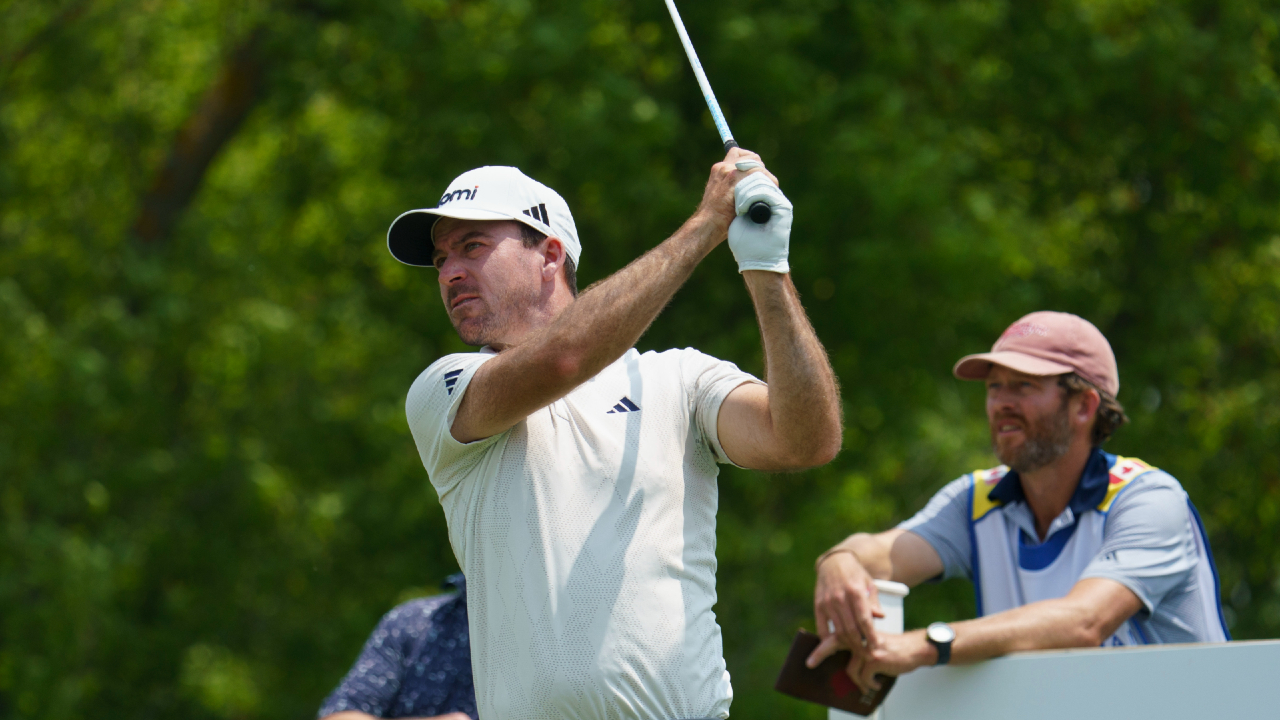
AUGUSTA, Ga. — The theme of the week for Nick Taylor has been staying steady. Saturday at the Masters was another perfect example of that.
And now he’s trending toward recording his best career finish at a major championship.
Taylor, who shot a 2-under 70 in the third round, made four birdies Saturday, including a solid one on the par-4 18th. He also hit his wedge approach on the par-5 15th to just a foot and rolled in an awfully slippery birdie effort on No. 9 from the back of the green towards the front.
“They’re all slippery out here,” Taylor said with a smile.
Advertisement
Taylor made two bogeys in the third round, the first coming on the par-3 12th after he was stymied in the front bunker, but said that was a great save.
“Honestly, I really had no chance to hit the green. I was trying to bank it in the hill and pop it up. If it went through, it would be okay. If I left it in the bunker, I thought it was all right. You know, that was a big putt to kind of keep some momentum going to salvage a four, but just not a great 9-iron, and I guess not a great break, but it was more so a poor shot,” Taylor said.
Much has been made about Taylor’s poor results in majors up until last year after he missed eight straight cuts, but he’s steadied himself on the game’s biggest stages of late — and now he’ll be playing in the late afternoon for the second time in the last three majors.
The Masters is unique with everyone being present and engaged with the goings on — and of course, the Masters roars are iconic — and Taylor said, being in a late group, meant that he heard the moans when Rory McIlroy made a bogey on the first hole, and the huge ovation when Shane Lowry aced the par-3 6th.
Advertisement
“It’s just fun being out there hearing that stuff. Happy to be up close to the lead to kind of experience all that,” Taylor said. “I think last year on the weekend at the U.S. Open (where Taylor recorded his best result at a major), I was in one of the final groups there, and I have enough to draw back on that, so today wasn’t anything overwhelming that way.
“I think tomorrow will be exciting.”
Taylor is tied for 21st heading into the final round at Augusta National.
Corey Conners, meanwhile, will need a big final day if he wants to get into red figures for the week. The good news is that on Saturday, he proved he can still score his way around Augusta National — he’ll just need to minimize his mistakes for Sunday.
Advertisement
Conners, who is tied for 44th, made six birdies in the third round but gave most of them back, with five bogeys sprinkled throughout the day.
“I did a good job. On some of the holes I’ve given myself good looks — just too many mistakes to not have the round that I wanted,” Conners said.
Conners hit his drive on No. 2 into the forest and then hit his approach on the par-5 13th into the creek in front of the green — both mishits leading to bogeys. He also missed a five-footer for par on his closing hole.
“Felt like I played a lot of holes exactly how I wanted to and gave myself good chances that I was able to convert; few holes where not quite as planned,” Conners said.
Advertisement
“I did roll in some nice putts. Couple tough misses on two and 11 that hit way too the left with the driver. Other than that, was really solid. And then, yeah, a lot of good putts. Just wasn’t really able to put a good round together.”
Conners, emotionally, is ever steady. But he admitted he wasn’t thrilled with such an up-and-down scorecard in the third round. For Sunday, Conners said he simply wanted to build off “the good stuff.”
“You can’t really force things around here, so (for Sunday) just try and play my game hopefully (be a) little more consistent and be steady and have some fun and they’ll result in some birdies,” Conners said.
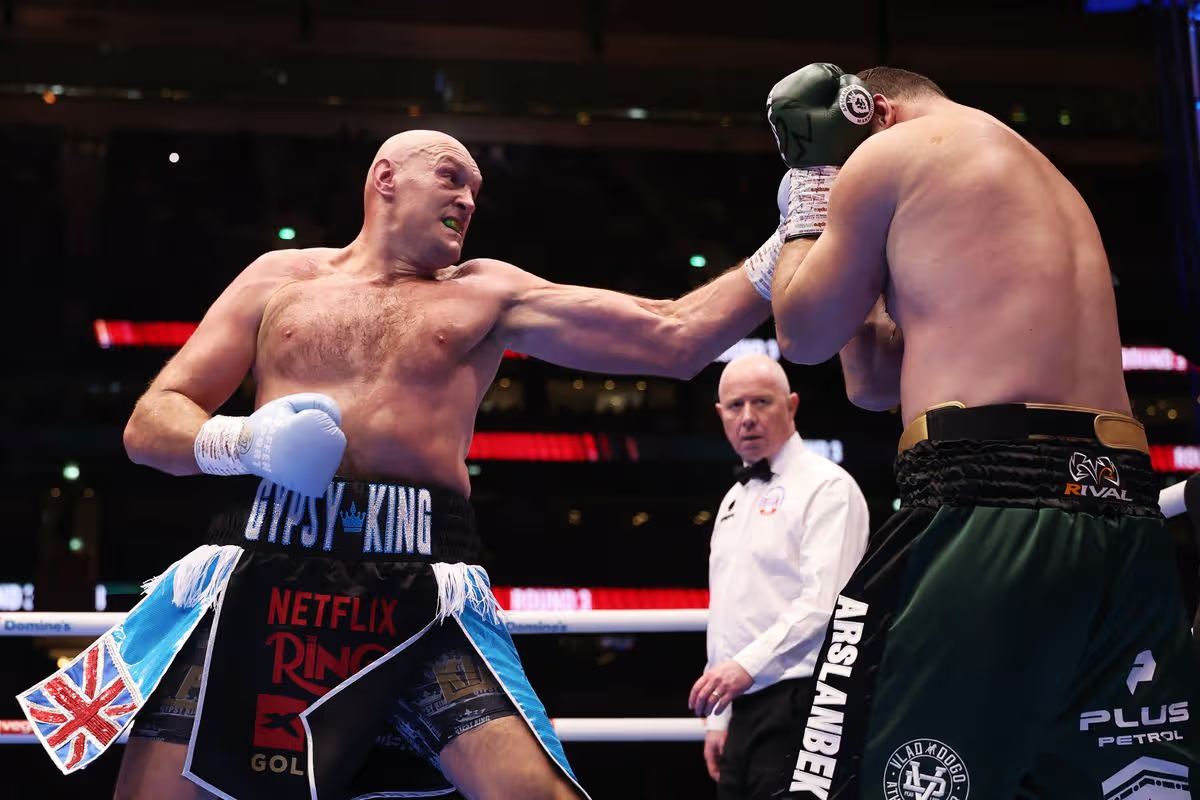
Arslanbek Makhmudov recently caught the attention of the boxing world by wrestling a bear in Dagestan. And from the first round on Saturday night, he seemed to realise that wrestling Tyson Fury was a better option than boxing him. Yet on this occasion, that’s no comment on the wizardry that Fury can produce in the ring, but rather on Makhmudov’s flaws. The story of this fight was that, luckily for Fury, those flaws eclipsed the Briton’s own, increasingly apparent faults.
This wasn’t the triumphant return of the “Gypsy King”, see, but an underwhelming – perhaps even concerning – return to the ring from the former world heavyweight champion, as he emerged from his fifth retirement.
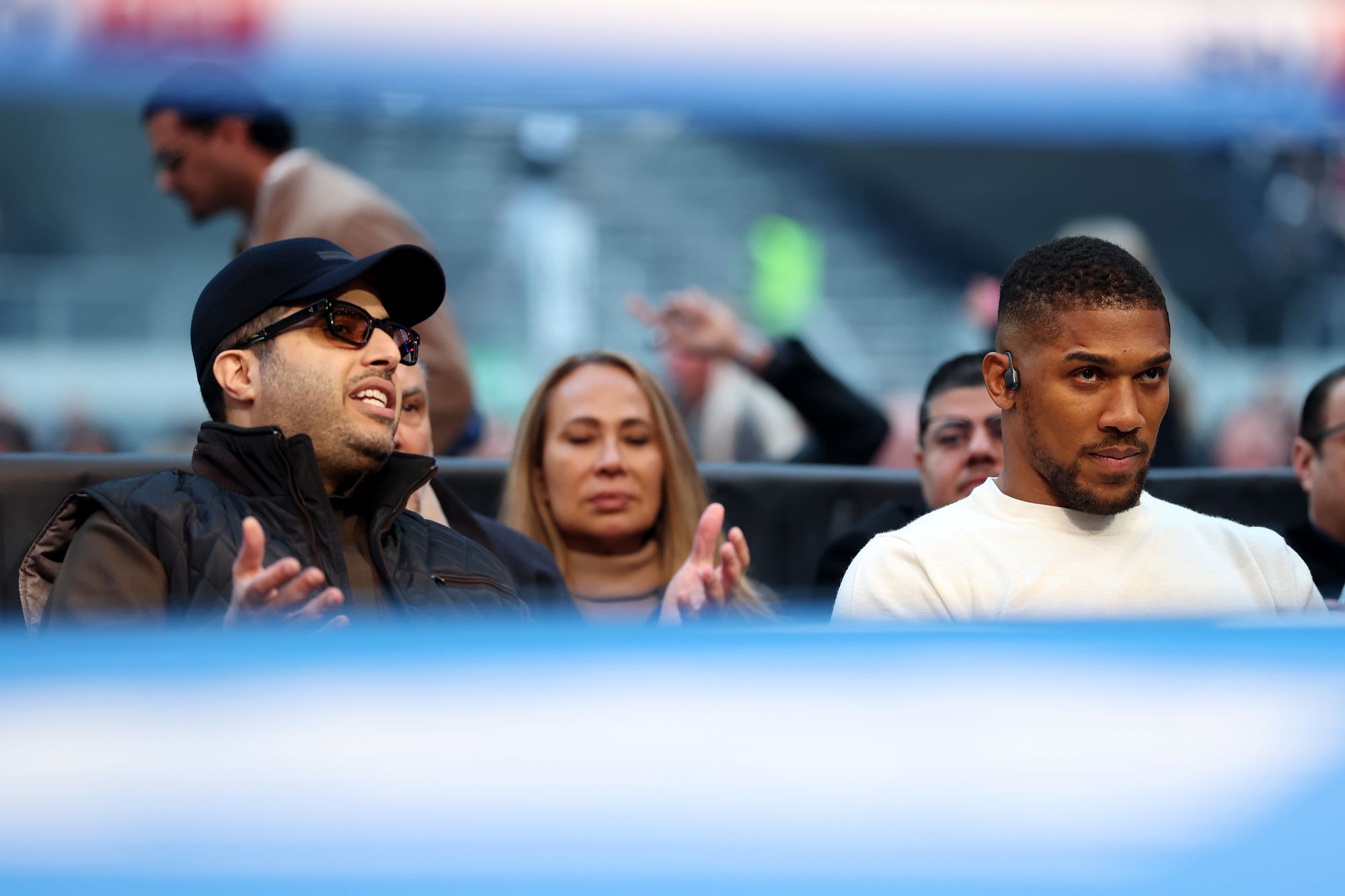
Sixteen months on from his second defeat by Oleksandr Usyk, Fury was back; three-and-a-half years after his last fight on home soil, he was back in Britain. The goal of this points win over Makhmudov was to set up a long-overdue duel with compatriot Anthony Joshua, who watched on from the front row, and while that contest still gets the juices flowing (just), Fury’s performance here did not.
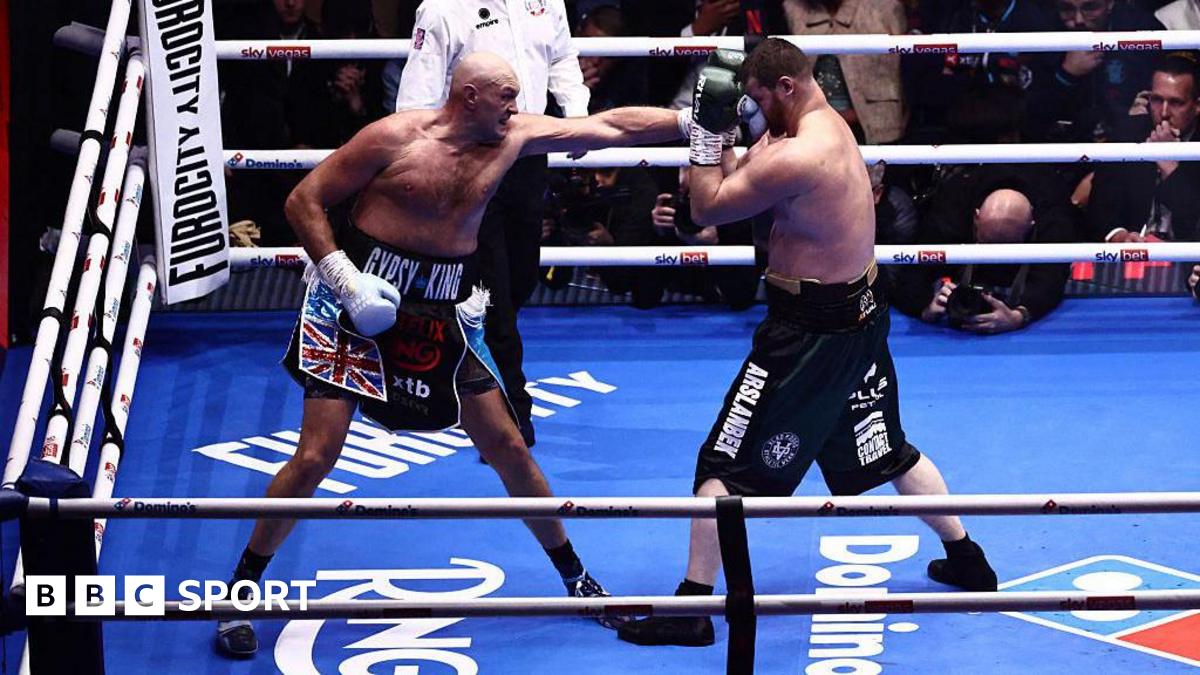
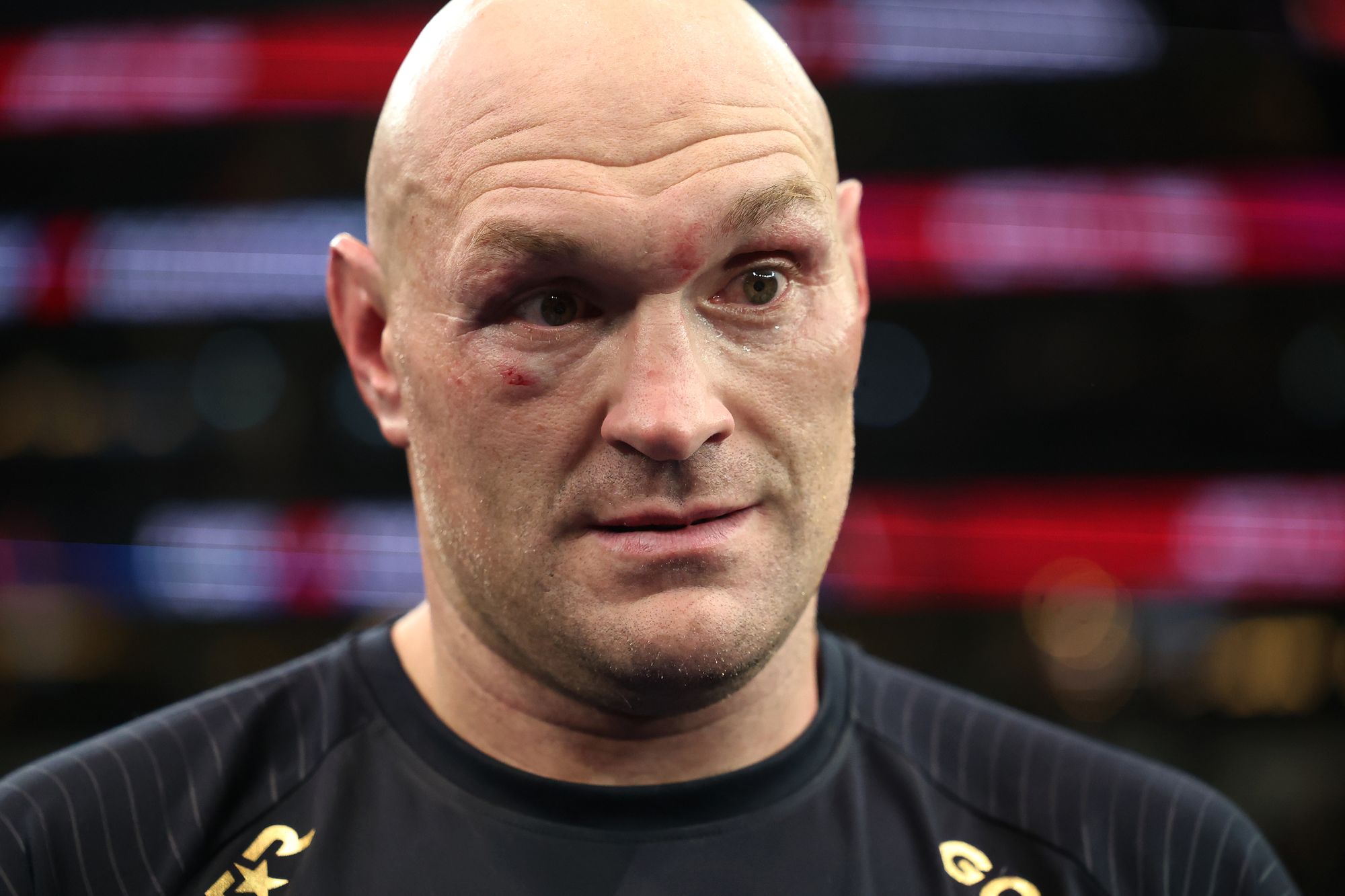
Tyson Fury after beating Arslanbek Makhmudov on points (Getty Images for Netflix)
In the cold shell of Tottenham Hotspur Stadium, before a smattering of empty seats, Makhmudov came forward in laboured movements, hurling overhands that Fury could see coming before his opponent had even dreamed them up.
Yet one early entry did trouble Fury enough to elicit an echoing “ooh!” from the stands, as a right hand connected over the top. Early in the second round, there was also a nervy movement for Fury, who was arguably backing up too frequently in a passive start. Maybe there was an element of the 37-year-old simply wishing to stay mobile and remote from Makhmudov in the earliest rounds, in which the Russian is at his most dangerous, but Fury was doing little besides throwing sporadic jabs to the body.
Perhaps they were an investment for the later rounds, though, and in any case, it didn’t take long for him to shift gears. But are there as many gears as before?
Advertisement
Fury began to let his hands go as round two neared its conclusion, and anticipation rose when he sidestepped Makhmudov and attacked with the 36-year-old trapped against the ropes. By the third round, a trend had emerged, with Fury able to slingshot himself off the ropes at just the right moment, getting close enough to force Makhmudov to overshoot with his right hand.
Still, after continually allowing the Russian to steer him towards the ropes, Fury was caught flush by a left hook, again stirring up some nervousness in round four. However, Makhmudov’s efforts to build on the attack were messy, and although he landed another left before long, Fury again turned him against the ropes and slid a cross onto his chin – which was slack amid another deep breath.
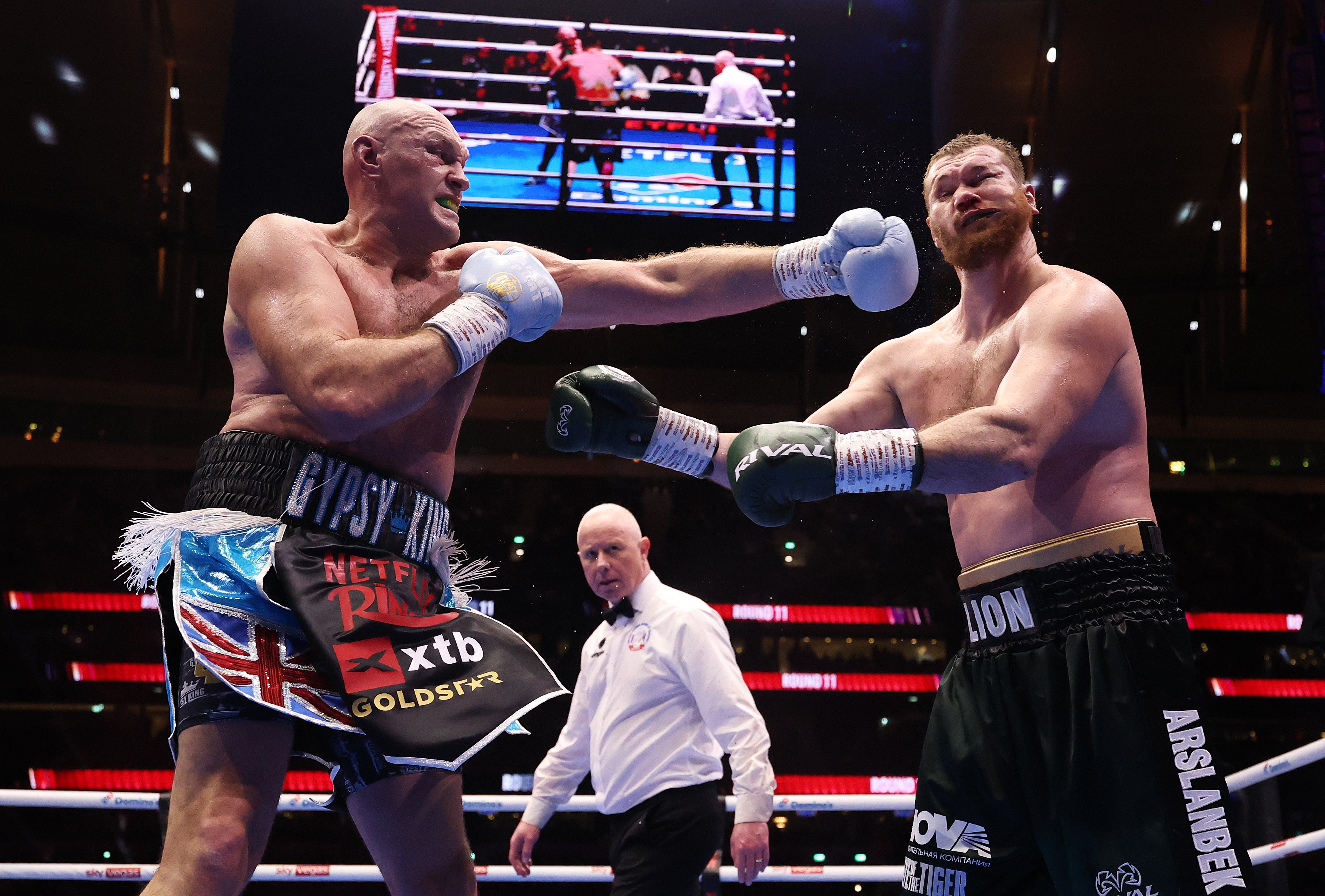
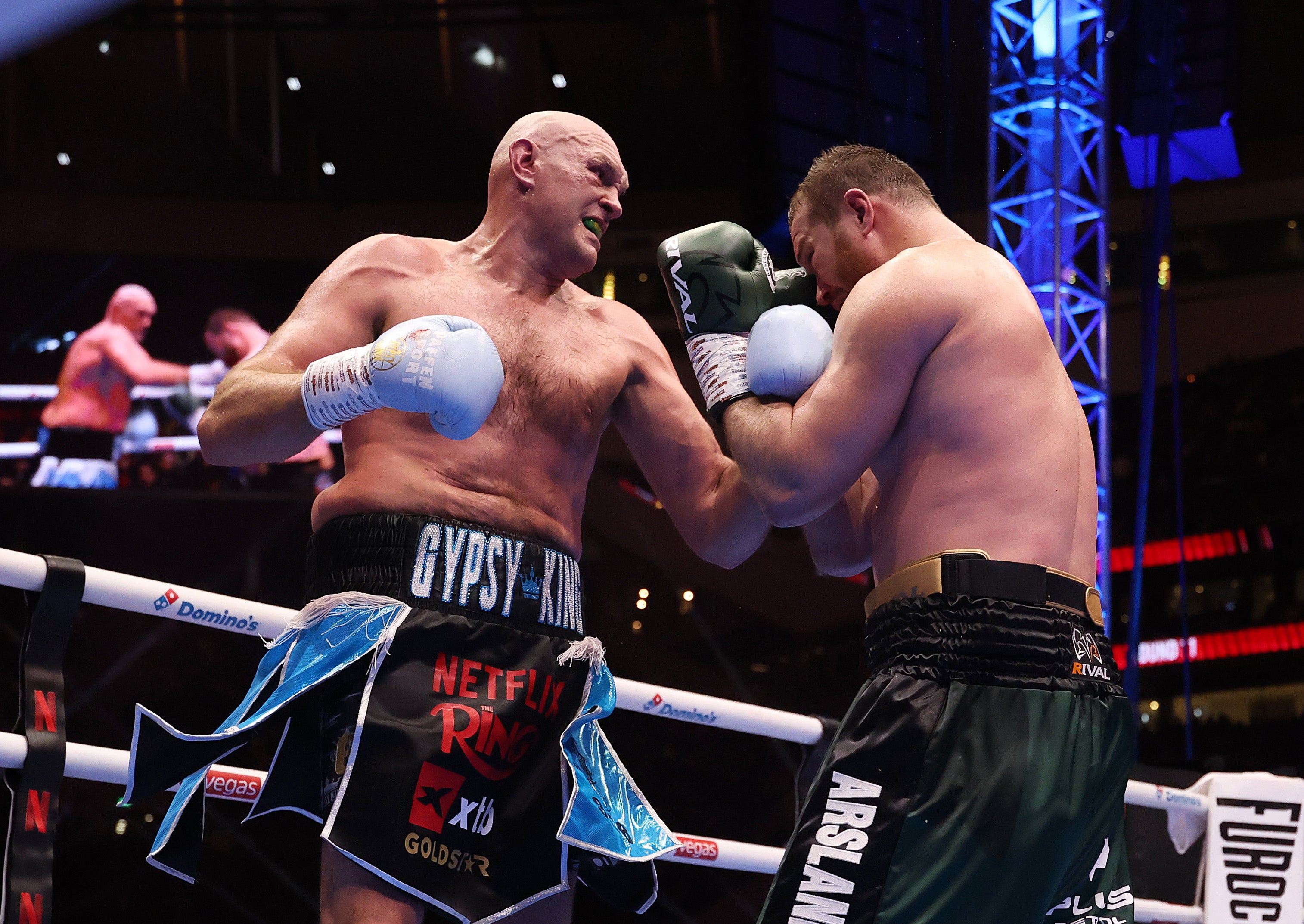
Fury went the distance with Makhmudov but was always a step or two ahead (Getty Images for Netflix)
Enjoy 185+ fights a year on DAZN, the Global Home of Boxing
Never miss a fight from top promoters. Watch on your devices anywhere, anytime.
ADVERTISEMENT. If you sign up to this service we will earn commission. This revenue helps to fund journalism across The Independent.
Advertisement
The rest of the round was back and forth, with both men taking a punch to land one, while a grappling-heavy round five sucked the atmosphere out of the stadium – a common feeling in Tottenham this season, courtesy of their Premier League travails. In round six, the most-interesting action was in the crowd, as a fight was broken up by security, though Fury did his best to put a dent in Makhmudov with hooks to the body.
The constant chatter in the stands was proof of a disinterested audience at this point, although two clean overhands from Makhmudov brought the fans to attention. Perhaps it was becoming clear, even this early, that Fury was not going to find a finish, despite trainer SugarHill Steward’s desperate pleas between rounds.
For as slow and one-dimensional as Makhmudov looked, Fury was off the pace as well. Two-dimensional, sure, with the occasional southpaw switch and the eventual, effective introduction of uppercuts, but not inventive enough to assert himself in the captivating manner of old – or not sprightly enough to act fully on his inventive impulses.
Fury looked somewhat close to finishing Makhmudov in the final rounds (Getty Images for Netflix)
At one point in the ninth, Makhmudov was a sitting duck against the ropes, and rather than fire off shots at the Russian, Fury simply leaned on him. And while Fury’s uppercut started to serve him well in the later rounds, when he finally did look capable of a finish in the 11th, it appeared as much a result of Makhmudov’s tiredness as Fury’s power – or what’s left of it.
Of course, these faults in Fury could be down to ring rust. Yet they could be down to age and degradation.
Advertisement
The quirk is that this is okay, as long as he is paired with Joshua next. What Fury vs Joshua has always needed, as a match-up, is a sense of equality, or something close to it. Fury’s current form might just balance out with Joshua’s struggles in and out of the ring; as much as one feels guilty to factor “AJ”’s recent car crash into an evaluation of his chances in a super-fight, one also cannot ignore the grief of losing two of his teammates.
Joshua, 36, has had to reckon with the passings of Sina Ghami and Latif Ayodele in recent months, while his last three results read as such: a stoppage of a YouTuber-turned-boxer, a devastating defeat, and a KO of a mixed martial artist. Meanwhile, Fury laboured to victory here, after twice being outdone by Usyk.
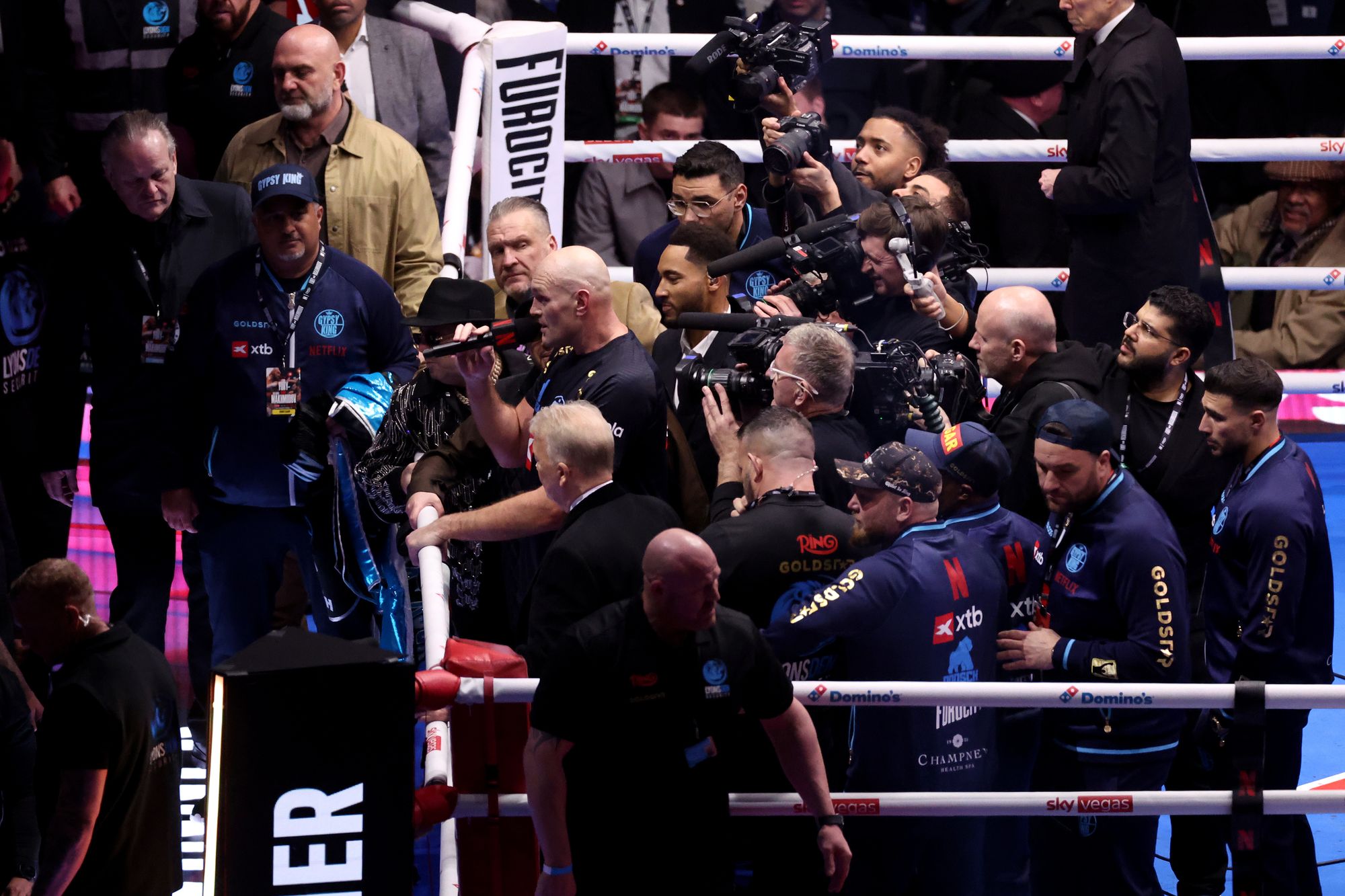
Fury calling out Anthony Joshua after beating Makhmudov (Getty Images for Netflix)
Joshua (right) with Saudi boxing matchmaker Turki Alalshikh (Getty Images for Netflix)
Go back further, in Fury’s case, and he was lucky to outpoint the same mixed martial artist that Joshua destroyed, after beating Derek Chisora in an uneven fight the year before. So, in pursuit of Fury’s last clear win, you have to venture back to 2022, and even then it was not an especially impressive result.
At least Fury’s boxing tools worked better than the microphone that was handed to Joshua, after Fury had formally called him out. But even when AJ was given a working mic and hinted that he would face Fury next, there was some room for doubt. It was telling that, when boxing supremo Turki Alalshikh beckoned Joshua’s promoter into the ring, Eddie Hearn would not budge.
Fury vs Joshua is not a done deal, but it must be made immediately, before both boxers are done. Deal?
Randers will entertain FC Copenhagen at Cepheus Park in the Danish Superliga on Sunday. Both teams are fighting to beat the drop and must finish in the top four of the relegation round to make it.
Randers vs FC Copenhagen Preview
Thanks for the submission!
Advertisement
Randers finished ninth in the regular season to qualify for the relegation round. Out of 22 matches, they won only seven, drew five times, and lost 10 matches, to end the regular season with 26 points. It was not an impressive campaign, but the hosts will be looking to conserve their place in the top flight.
Hestene had a better campaign last season, finishing fourth out of 12 teams and earning qualification to the championship round. However, they finished fourth on 48 points, 15 points shy of Copenhagen, who won the league. It has been rocky for the hosts, but they still have the chance to save their season.
Advertisement
FC Copenhagen are battling an underwhelming trend. More was expected from them than what they have shown so far this season, considering their impressive form last term. They finished seventh in the regular season, just below the qualification zone for the championship round.
ByensHold are the most successful team in the league, having won the title a record 16 times, including their accolade last season. However, they will miss the opportunity to defend their title this time. Randers prevailed over FC Copenhagen 2-1 on the road in the sides’ last meeting.
Randers vs FC Copenhagen Head-to-Head and Key Numbers
Randers have won once and lost four times in their last five matches against Copenhagen.
Randers have won once and lost four times in their last five matches at home against Copenhagen.
Randers have won thrice and lost twice in their last five matches at home in all competitions.
FC Copenhagen have won once, drawn once, and lost thrice in their last five matches on the road.
Randers have won twice, drawn once, and lost twice in their last five matches, while FC Copenhagen have won twice and lost thrice. Form Guide: Randers D-L-W-W-L, FC Copenhagen -W-L-L-W-L.
Randers vs FC Copenhagen Prediction
Randers will be fighting to avoid dropping to the bottom two spots, which is synonymous with relegation to the First Division.
FC Copenhagen are eying a ticket to a European competition. If they finish atop the table, they could qualify for the European play-off match.
Advertisement
FC Copenhagen are the favorites to win this match based on experience and individuality.
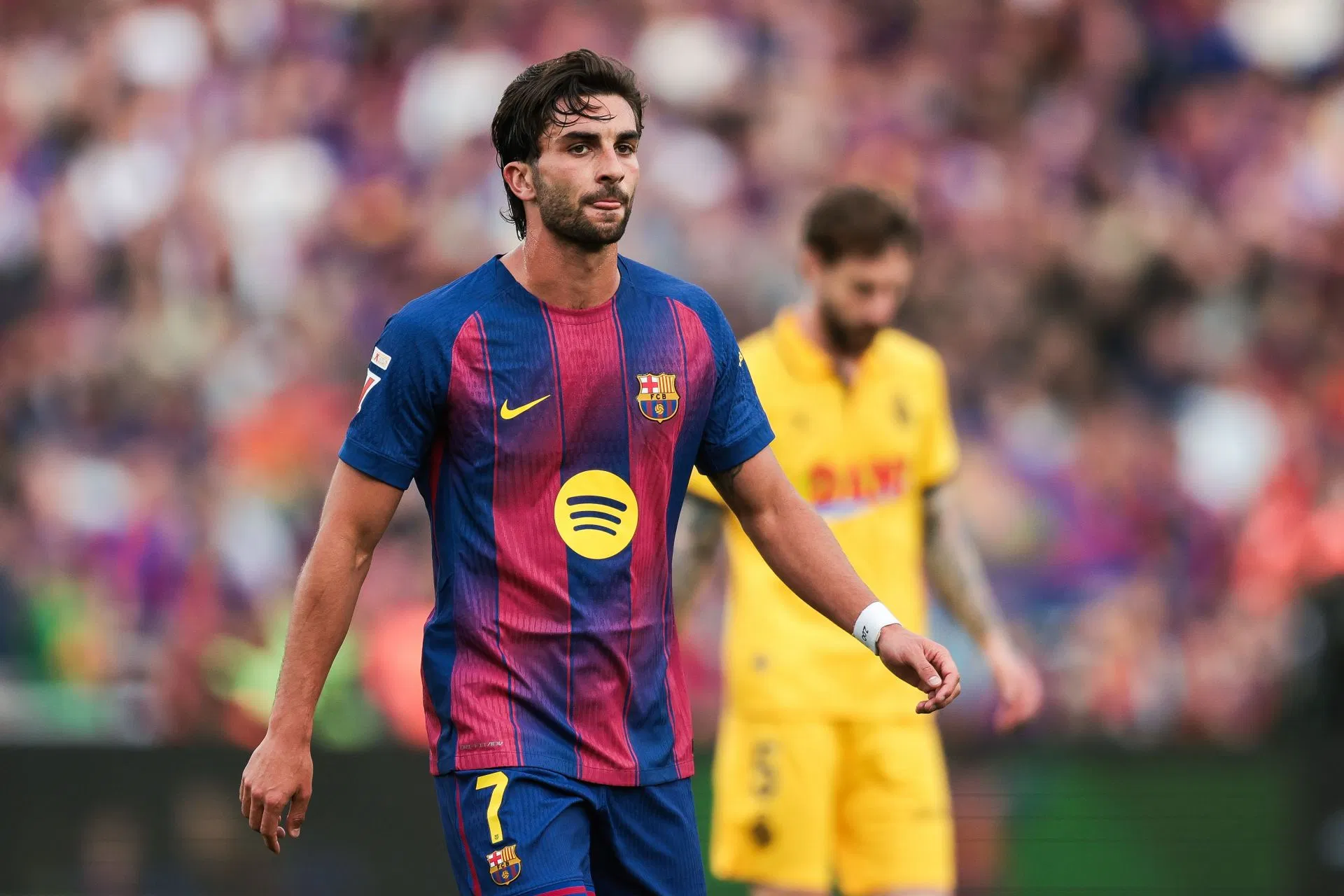
Barcelona fans online were left surprised by Ferran Torres’ performance in their 4-1 win over Espanyol in LaLiga on Saturday (April 11). Torres scored a brace in the game, marking his first time scoring since January.
Ferran Torres was in the starting XI for Espanyol as the main striker and scored a brace in the first 25 minutes (9′ and 25′), both assisted by Lamine Yamal. Things did not slow down for Barcelona in the second half, with Yamal (87′) and Marcus Rashford (89′) finding the back of the net. Pol Lozano (56′) denied the Catalans a clean sheet.
Thanks for the submission!
Advertisement
Ferran Torres delivered an excellent performance in 74 minutes of gameplay, scoring twice from two shots on target. He was offside once, which denied him a hat-trick, delivered two key passes, and had a 100% passing accuracy in his own half.
Advertisement
Fans took to X to react to Ferran Torres’ performance, with many being surprised by his showing after a goal drought for almost three months. One Culer wrote:
“Better than Vini and Mbappe in my books.”
Many Culers agreed and shared their takes online:
Barcelona fans continued to share their thoughts on the matter:
Following tonight’s brace, Ferran Torres has scored 18 times in 43 outings across competitions. The Spaniard is not a regular starter, with Robert Lewandowski being preferred for important games. However, Torres will be expected to maintain this form for the upcoming Champions League quarter-final second leg vs Atletico Madrid, as Barcelona will look to overcome a two-goal deficit.
Advertisement
Ferran Torres opens up after ending three-month goal drought for Barcelona in 4-1 win vs Espanyol
Ferran Torres – Source: Getty
Speaking to reporters after the 4-1 win vs Espanyol (h/t Barca Universal), Ferran Torres shared his thoughts after scoring a brace in the game. The goals marked an end to Torres’ goal drought for the Catalans for the last three months. He said:
“I know that strikers are measured by their goals, and I hadn’t scored in a while. I knew that I would eventually return to scoring form if I had patience.”
Torres also spoke about his celebration after scoring, dedicated to his naysayers.
“My celebration? There’s always some external noise about me, and pretty much always negative. It f*cks them up to see me score, so that message is for them,” he said.
With tonight’s win, Barcelona are nine points clear of second-placed Real Madrid at the top of the LaLiga table. There’s a fair chance of them winning the league this season if they continue this momentum.
However, the Catalans have a big challenge ahead of overcoming their two-goal deficit in the UCL quarter-final second leg away from home vs Atletico Madrid. Flick’s side will focus on continuing such form in the Champions League to make the comeback possible.
Tyson Fury shook off the ring rust to make a successful comeback by registering an emphatic points victory over Arslanbek Makhmudov at Tottenham Hotspur Stadium.
Anthony Joshua watched from ringside ahead of a potential all-British showdown later this year as Fury secured his first win since defeating Francis Ngannou in October 2023.
A dominant display after coming out of retirement for the fifth time was rewarded with scores of 120-108 120-108 119-109 from the judges.
Makhmudov was outclassed by Fury’s footwork, hand speed and ringcraft and the Canada-based Makhmudov’s plodding, upright style was tailor made for the former two-time world champion.
The rugged Makhmudov was tiring as early as the fourth round and his limitations made him an ideal opponent for Fury after 16 months of inactivity, providing tough rounds without ever threatening an upset.
Advertisement
There was no pomp and ceremony from the bear-wrestling Makhmudov as he marched straight into the ring to the sound of an air raid siren.
In contrast, Fury’s entrance for his Netflix debut began with ‘Blue Moon’ being played as a tribute to his late friend Ricky Hatton before he put on a show by dancing on stage while fireworks and flames went off around him.
The pyrotechnics ended there as once the action got under way Makhmudov advanced with crude, one dimensional attacks that were easily evaded.
Makhmudov is at his most dangerous in the early stages and while he continued to stalk Fury around the ring, shots were piercing his defence by the end of the second round.
Advertisement
His pace had already slowed and Fury was beginning to find his rhythm, showing far better footwork and hand speed.
There were warning signs in the fourth as Makhmudov landed, although Fury showed a flash of class when he punished one lunging attack and he finished the round strongly.
There was a gulf in class in their skill levels with the one-paced Makhmudov showing strength in the clinches while proving an easy target, although he was absorbing the blows without being hurt.
There was plenty of respect between the rivals as they touched gloves at the end of each round and even during the rounds, but as the halfway stage came it was becoming increasingly one-sided.
Advertisement
The eighth was Fury’s strongest round yet as he landed telling blows that troubled Makhmudov, including sharp right uppercuts.
Makhmudov had completely run out of ideas beyond wrestling the taller man and in the 10th he was beginning to wobble as crisp shots found their mark when he was pinned against the ropes.
There could be no disputing Makhmudov’s bravery as he plodded back to his corner in exhaustion at the end of the 11th and a round later it was all over with the 12th ending with a wild exchange of blows.
Fury and Joshua exchanged words after the fight with ‘The Gypsy King’ calling out his rival from the ring upon grabbing the microphone, with Joshua replying “I’ll tell you when I’m ready”.
Tyson Fury marked his return to the heavyweight mix with a composed points win over Arslanbek Makhmudov at the Tottenham Hotspur Stadium, before immediately turning ringside to call out long-time rival Anthony Joshua.
The 37-year-old Briton – out of his latest retirement after 15 months away – was not at his sharpest and it was far from vintage Fury, but he had enough ring IQ and technical control to outbox Makhmudov across 12 largely one-sided rounds.
Advertisement
Fury had to be watchful at times as Makhmudov did land occasional overhand rights, but the Russian was largely one-dimensional as Fury took a wide decision with scorecards of 120-108, 120-108 and 119-109.
Advertisement
But before the scores were read out, Fury crossed the ring to speak to Joshua, who was talking to him from the other side of the apron but refusing to get into the ring.
“I challenge you, Anthony Joshua, to fight me next. Do you accept?” he said.
Joshua initially seemed reluctant to engage, before replying: “I punched you up when we were kids and I’ll punch you up again. You aren’t going to tell me what to do, I’ve been chasing you for 10 years.
Advertisement
Advertisement
“I’m the boss, you work for me. I’m the landlord. You work for me.”
Fury responded: “You [Anthony Joshua] are next. You are getting knocked out. Believe it.”
A bout that should have happened in both men’s primes, it now lingers as boxing’s great what-if – but it appears it may finally be made a reality.
In his first fight since successive defeats to unified champion Oleksandr Usyk, Fury moves to 35 wins, two losses and one draw. For Makhmudov, 36, it was a third defeat in 24 fights.
Advertisement
A comfortable comeback – how did Fury look?
A poignant and emotional start to Fury’s ring walk saw a tribute to boxing legend Ricky Hatton, with Blue Moon playing in his honour following his death in September.
Advertisement
The atmosphere in north London was then charged by the familiar Fury theatre – swagger, showmanship and singing – with fireworks erupting over the stadium as he danced to a medley before sprinting to the ring.
The bout was broadcast globally on Netflix to its 325 million subscribers, landing just hours before the release of At Home with the Furys season two.
Advertisement
Fury – who briefly retired after the Usyk losses – had not fought in Britain since December 2022, when he stopped Derek Chisora at this venue to retain the WBC title.
With 16 of his 19 knockouts inside three rounds, Makhmudov carried early danger on paper and landed an overhand right on Tyson Fury’s ear in the opening round.
Advertisement
But Fury quickly found rhythm, picking apart Makhmudov’s high guard and limited movement with counters, switching between southpaw and orthodox.
Advertisement
“He’s tiring already. Take your time,” Fury’s trainer SugarHill Steward told him.
One pre-fight concern had been complacency – Fury has previously struggled with awkward underdogs – but despite Makhmudov connecting again with a looping right in the fourth, Fury’s ring savviness, while a bit rusty, was proving too much.
Makhmudov’s corner urged him to beat Fury to the jab, while Fury’s team praised him for boxing “smart”.
Advertisement
Advertisement
Despite pre-fight talk of sluggish ticket sales, the 62,000-capacity stadium looked close to full, though whether through strong sales or late complimentary distribution was unclear.
Fury upped the tempo in the latter rounds, varying his attack and threading in several uppercuts, but Makhmudov absorbed them without ever really being shaken.
Whether the power that once dropped Deontay Wilder multiple times has waned, or Makhmudov simply showed a stubborn chin under sustained pressure, Fury couldn’t find the breakthrough.
Sensing that a stoppage was unlikely, sections of the crowd began drifting out before the final bell. Fury closed strongly, finishing the fight firmly on top.
Advertisement
Advertisement
After the long lay-off, his corner appeared content simply to bank the rounds and re-establish rhythm rather than chase the finish.
MULLANPUR: In a game dominated by big hits and rapid shifts in momentum, it was a quieter moment of trust that stood out. Shreyas Iyer, reading the situation rather than the script, turned to part-timer Shashank Singh for an over at a time when Sunrisers openers Abhishek Sharma and Travis Head were taking apart the frontline Punjab bowlers with ease.
It wasn’t the most obvious move in a high-scoring contest, but it reflected a captain willing to back instinct and a player ready to take responsibility. That brief exchange in the middle overs, as Iyer would later explain, ended up shaping the course of the game.
“All of us came together, and Shashank approached me and said, ‘give me an over’. Ricky Ponting came and asked me, ‘what’s your thoughts? I said, ‘I’ll go with Shashank.’ I needed someone to take the pace off,” Iyer said, recalling the moment that shifted momentum.
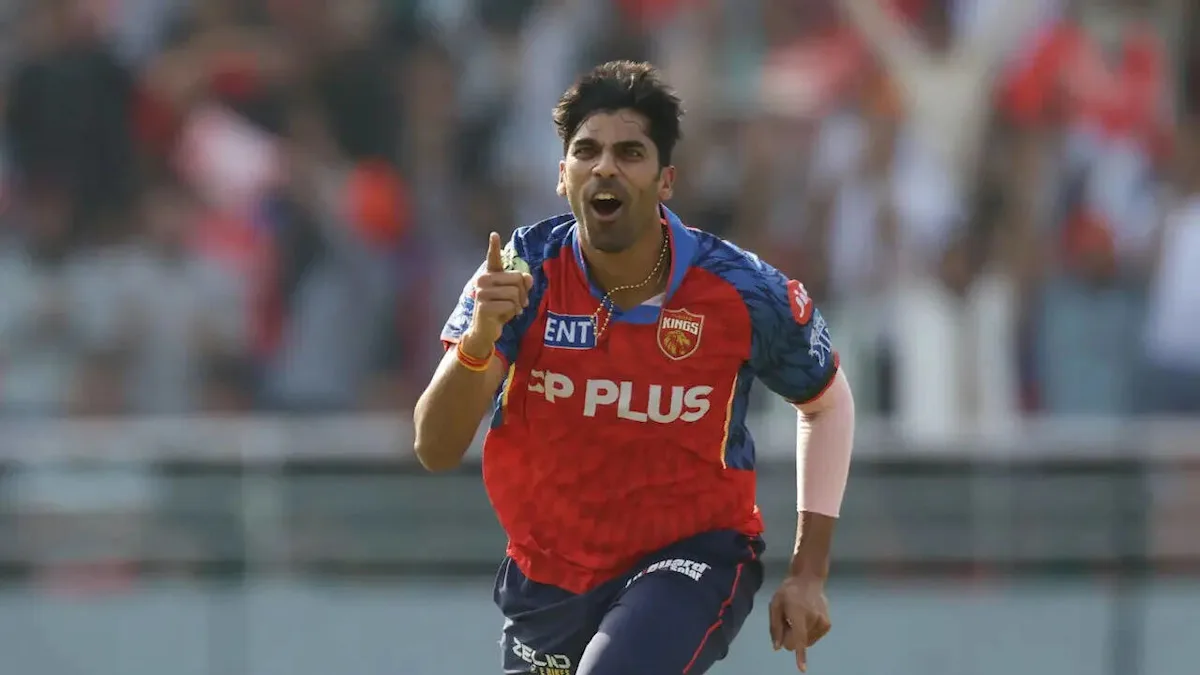
That faith was rewarded instantly as Shashank sent back both the Sunrisers openers. “He lived up to my expectations; he lived up to what he said, kudos to him. At the end of the day, we all know we’ve got the skills. All we need is a strong mindset,” Iyer added.
Advertisement
We’re missing Cummins: Aaron
Sunrisers Hyderabad bowling coach Varun Aaron struck a measured tone as he addressed the twin realities that shaped his side’s outing against Punjab Kings. One, the absence of regular captain and premier fast bowler Pat Cummins; the other, an innings that promised more than it ultimately delivered.
“There’s no two ways that we’re missing Pat (Cummins),” Aaron said, underlining the void left by the Australian quick. “We’re obviously missing him because he is one of the best fast bowlers in the world. He’s been on top of his game for a while now. And he’s somebody who can get us wickets with the new ball, in the middle, and even at the death.”
“I’m sure he is going to be back soon and join the team,” Aaron added.
Advertisement
If that was one part of the story, the other lay in how Sunrisers’ innings tapered after a flying start. “The way we started, we thought we would get a few more runs. There’s no two ways about it that we were some runs short,” Aaron admitted. “But you have to understand that even the opponents have come to play. They bowled really well through that middle phase, hit their lengths well and didn’t make it easy for our batsmen.”
Tyson Fury cruised to a unanimous decision win over Arslanbek Makhmudov on Saturday evening at the Tottenham Hotspur Stadium, with Anthony Joshua having a front-row seat for the dominant display
Tyson Fury secured a unanimous decision win over Arslanbek Makhmudov on Saturday night, following a truly dominant display at the Tottenham Hotspur Stadium.
There will be more to follow. We’ll bring you the very latest updates on this breaking news story.



















































You must be logged in to post a comment Login