My heart remains at Riviera Country Club, but my body is in a middle seat en route home. What better time to reflect on the PGA Tour’s West Coast Swing — the good, the bad, the rumored, the mysterious.
Here are some winners, losers and questions from the opening stretch of the 2026 PGA Tour season.
WINNER: The 26-year-olds
Chris Gotterup won two of the first four events on this year’s calendar (given unusual circumstances, we’re treating the Sony as a half member of this year’s West Coast Swing), playing his best when things got most chaotic at the WM Phoenix Open and establishing himself as a fan favorite, a proven winner and arguably the best player on Tour 26 years old or below.
His current competition for that extremely unofficial title includes the guy who just won at Riviera; Jacob Bridgeman, like Gotterup, is 26. And while Gotterup took the weekend off (he missed the Genesis cut) Bridgeman beat everyone’s doors off for three days and hung on on Sunday to establish that he, too, has what it takes.
Is the PGA Tour headed back to Hawaii? Next year? Ever? It skipped Kapalua this year under controversial circumstances. Its Sony sponsorship just ran out. As the powers that be continue to reimagine the Tour’s optimal schedule, Hawaii remains a logistical challenge lacking a “big market.” How highly will Rolapp and Co. value continuity, tradition and nostalgia? We’ll see.
QUESTION: Where are the 25-year-olds?
Speaking of age, it’s jarring to browse whichever version of the world rankings you’d prefer and marvel at the lack of young stars. The 26-year-olds may be having a moment, but we’re still waiting for the emergence of the next young wave. There’s no reason to despair: Akshay Bhatia (24), the Hojgaard twins (also 24) and the Michaels (Brennan and Thorbjornsen, each 24) could all be on the brink of a breakthrough. But with Tom Kim in a bit of a rut, it feels like we’re searching for Who’s Next. (Shoutout also to Blades Brown, who stole the show for much of the week in Palm Springs.)
WINNER: The 45-year-olds
OK, I promise this whole list won’t be about age. In fact, lemme start with some hypocrisy: I wish when we talk about Justin Rose and Adam Scott that we’d focus less on their age. But it’s a useful way to pair two particularly impressive West Coast showings; Rose’s blowout win at Torrey Pines is worth extra points, of course, but Scott’s Sunday 63 to finish fourth at Riviera was nothing to scoff at, either. These guys are remarkably similar ages, they’ve had remarkably similar careers and they’re performing at remarkably similar levels at the moment. Let’s get ’em on a remarkable leaderboard at the Masters.
Advertisement
LOSER: The Scandinavians
While athletes from Norway and Sweden were dominating the Winter Olympics, their PGA Tour counterparts were having a slightly tougher time on the West Coast. Viktor Hovland and Ludvig Aberg are among the Tour’s biggest talents and fan favorites — but neither has had his best thus far this year.
Hovland had a strong start at the WM Phoenix Open (T10) but less so at Pebble Beach (T58) and Riviera (T41), where talk turned more to his training aids than his scores.
And Aberg got severely ill for a second consecutive West Coast Swing — though if there’s good news, it’s that he seems to be trending up. Going WD-MC-T37-T20 means I guess he’s headed for a Masters victory?
(In other Scandinavian news, Alex Noren went MC-MC in Palm Springs and San Diego, but his T12 at Riviera was encouraging, too. And representing Denmark, the Hojgaard twins have each showed encouraging signs; Nicolai finished T3 at the WM and was one blowup hole from contending to win.)
Advertisement
QUESTION: Will Tiger Woods play the Masters?
Tiger Woods hinted that he’ll try. Then he hinted that he’ll try a second time. I don’t know if he will, but I think he’s told us the truth — if he can, he’ll do it.
LOSER: Scottie Scheffler’s Thursdays
Scottie Scheffler’s first Thursday of the season was a 63 at the American Express. So it’s particularly jarring that he’s just No. 116 on Tour in Round 1 Scoring Average. And it was strange to see him in last place when play was halted this past Thursday. Still …
WINNER: Scottie Scheffler’s other days
Considering he was in last place on Friday morning and needed to make a seven-foot curler on 18 just to stay inside the cut line, Scheffler’s T12 was another remarkable display of skill and determination. Sure, it snapped his streak of 18 consecutive Tour top-10s. But it only reinforced the idea that if you play enough rounds of golf, eventually Scheffler will rise to the top. Four tournaments in, here’s how his scoring average looks by round:
Round 1: 70.50 (116th)
Advertisement
Round 2: 65.75 (2nd)
Round 3: 67.00 (7th)
Round 4: 64.50 (2nd)
(If you were wondering who could possibly beat that 64.5, Will Zalatoris has played one fourth round this year and shot 64.)
Advertisement
QUESTION: So what the heck is going on with Scheffler on Thursdays?
My best guess is still some version of “nothing, really; this has just been a weird blip on the radar.” He led the Tour in first-round scoring last year, after all, and has had some funky starts in strange conditions. Let’s wait for a bigger sample size before we get panicky here.
WINNER: California kids
I’m thinking of two in particular: Collin Morikawa, who won for the first time in too long at Pebble Beach, and Jake Knapp, who just quietly put together the best stretch of golf of his life. Knapp hasn’t finished worse than T11 in five starts this year. Morikawa’s win was meaningful on several levels — because of how long it had been, because of where it took place, because of everything that went into it, because he and his wife have a baby on the way. It’s good to see West Coast kids eat up the West Coast Swing. And then of course there was another California sensation in the winner’s circle …
LOSER: Anthony Kim’s haters and doubters
I write this tongue in cheek; I think Anthony Kim‘s win showed just how many people have been on his side this entire time, rooting for something special. But he’s used a chip on his shoulder to get this far, and his shot at the haters showed he’ll keep drawing on that. Mostly it’s worth acknowledging that one of golf’s biggest moments this month happened on LIV Golf, with a one-of-a-kind comeback story capped off with an electric finish to a story a dozen years in the making.
QUESTION: What’s next for Jon Rahm, LIV and the DP World Tour?
Big picture, this is one of pro golf’s most compelling questions moving forward; LIV and the DP World Tour still seem in an uneasy coexistence and I’m curious how that will resolve. For now the DPWT has reached a temporary truce with several of its LIV members, allowing them to play both circuits and maintain Ryder Cup eligibility. But why isn’t Jon Rahm one of the players taking that deal, and is there any chance in the world he doesn’t play on next year’s European Ryder Cup team?
Advertisement
WINNER: CBS golf coverage
These courses look awesome in person, they look incredible on television and CBS continues to innovate in order to dial in their coverage.
CBS is done until Augusta.
So they’ll go Pebble-Riviera-Augusta-Hilton Head. Might be the last time it happens.
Also, the little stuff continues to go a long way.
With Justin Rose up 6, shoutout to CBS going into commercial with ‘Ramble on Rose’ by the Grateful Dead. Good stuff on a few levels. The little things go a long way
There’s been plenty of discussion about moving these marquee West Coast stops to later in the PGA Tour schedule. A cold, soggy Pebble Beach followed by a cold, soggy Riviera made that case much more appealing, with fans shivering on the rope lines and golf balls plugging in greens. Two perfect weekend days capped the Genesis off in style, and wet and windy can be entertaining at Pebble, but each was still missing some of the firm, fast character it has at its best.
QUESTION: So are we doing the August West Coast thing?
I leave California more confused than I arrived. On paper it seems smart to have the best courses in the biggest spots on the PGA Tour calendar; what could be cooler than Pebble and Riviera as playoff venues? But there are issues with both sites that time of year. Pebble has a car show and a full tee sheet and it’s not near enough of a population center to draw a playoff-worthy crowd. In L.A., locals suggested that the golf-going crowd would be out of town in August and that its current spot on the calendar is actually optimal for getting people to actually attend.
Advertisement
If I was in charge, my top priority would be to remove the playoff events from the hellish August humidity of Atlanta and Memphis. I don’t need them in California, though — Boston, Chicago and Seattle are calling, as are a dozen other medium-to-large cities with ideal summer days. I’m curious where they’ll land, though.
And what the West Coast Swing will look like next year, and the year after that, and when we’ll be gazing at golf’s glorious coastlines again.
Manchester City are away at Chelsea in the Premier League today as they battle Arsenal for the Premier League title.
Manchester City return to Premier League action this weekend with a trip to Stamford Bridge as they seek to keep pace with Arsenal at the top of the table.
City impressed in brushing Liverpool aside 4-0 in the FA Cup quarter-finals last time out and will hope to maintain that momentum when they travel to Chelsea.
Advertisement
The Blues know they need a win to keep alive their chances of overhauling league leaders Arsenal, who visit the Etihad next week.
Get MEN Premium now for just £1 HERE – or get involved in our City WhatsApp group by clicking HERE. You can also join our City Facebook page by clicking HERE and don’t miss out on our brilliant selection of newsletters HERE.
Pep Guardiola confirmed Ruben Dias and John Stones are not yet fit to feature with the defensive duo having missed the win over Liverpool. That means Marc Guehi and Abdukodir Khusanov will continue in the centre of defence. Nico O’Reilly has produced back-to-back starring performances from left back, while Matheus Nunes is established as first choice on the right.
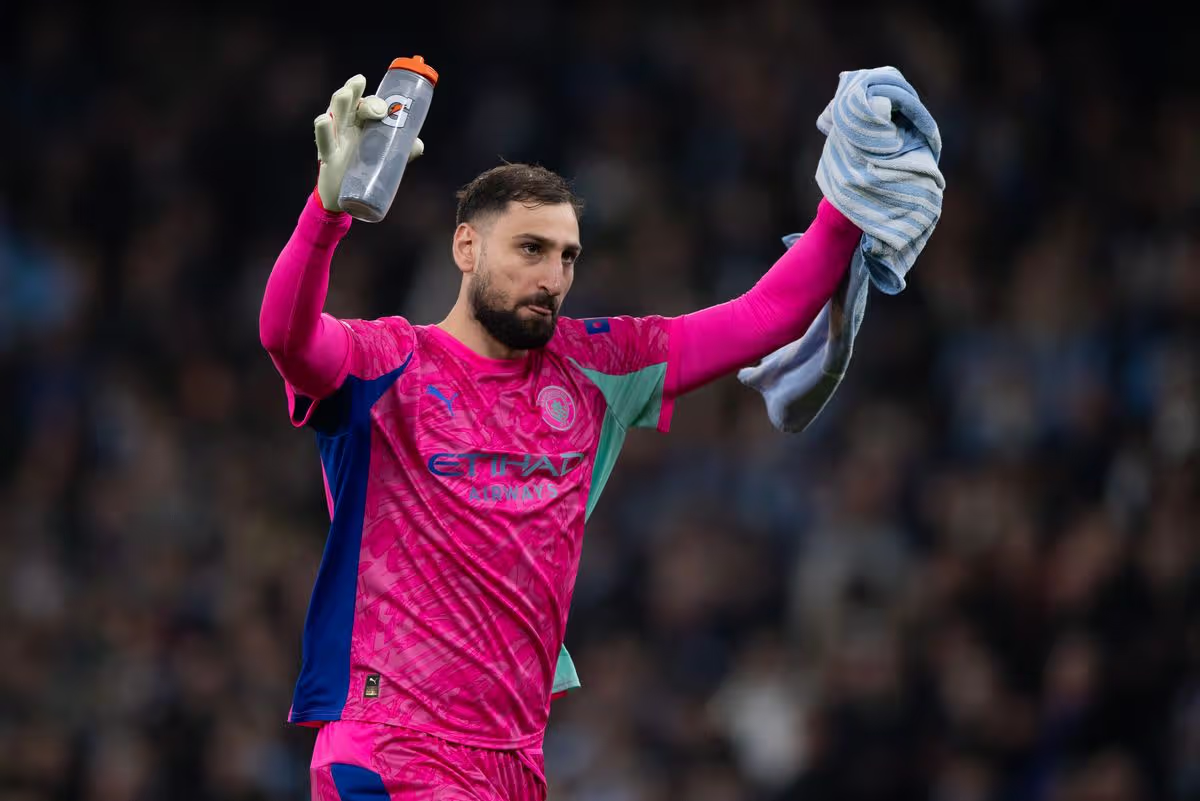
Gianluigi Donnarumma is set to return in goal despite James Trafford keeping successive clean sheets and impressing against Arsenal at Wembley and Liverpool at the Etihad.
Advertisement
Man City vs Southampton VIP and hospitality tickets
This article contains affiliate links, we will receive a commission on any sales we generate from it. Learn more
Seat Unique offers hospitality packages for Manchester City’s FA Cup semi-final clash with Southampton, including ‘premium’ seats at Wembley and complimentary food and drink.
In midfield, Rodri and Bernardo Silva look set to partner each other in the middle of the park, allowing Rayan Cherki the chance to hurt Chelsea from an attacking role. Antoine Semenyo has been a consistent performer since arriving at the Etihad in January while Jeremy Doku gets the nod on the other flank. Erling Haaland, fresh from a hat-trick last time out, will lead the line.
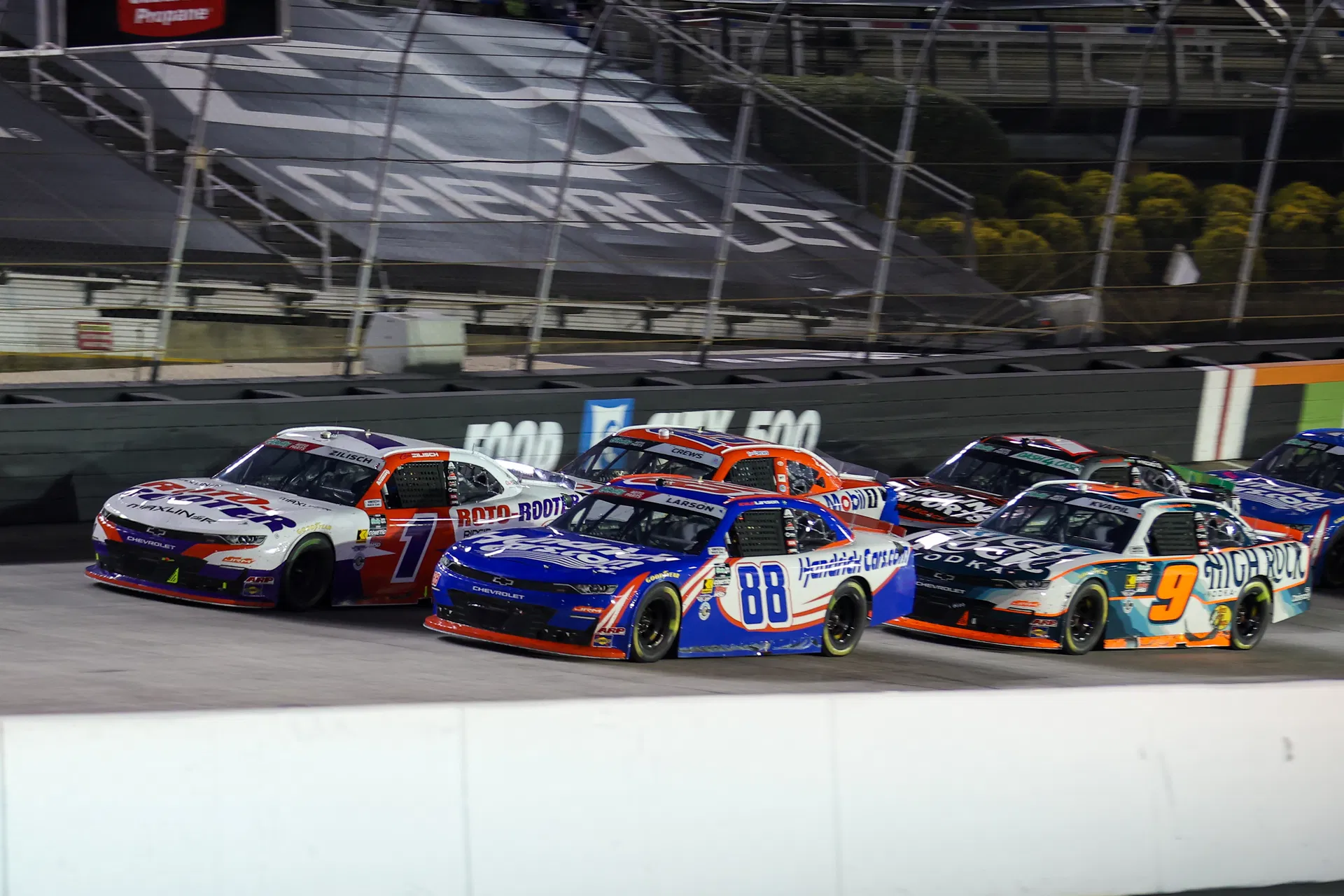
Hendrick Motorsports driver Kyle Larson recently competed in the Suburban Propane 300 held on April 11, 2026, at Bristol Motor Speedway. Later, during the post-race interview, Larson opened up about a heartbreaking finish despite dominating the race.
Larson piloted the #88 Chevy Camaro SS for JR Motorsports and qualified third for the main event. Meanwhile, Joe Gibbs Racing driver William Sawalich secured the pole position. Later, the 2025 Cup Series champion took command of the pack and won both stage one and two of the 300-lap race.
Thanks for the submission!
Advertisement
Kyle Larson dominated the Bristol Motor Speedway race, leading 230 laps, but a late-race error changed the outcome for him. After the white flag was waved, Larson was chasing Connor Zilisch and lost control of his #88 Chevy. This gave Zilisch enough time to extend the gap between them and take his first win of the season.
Advertisement
Speaking on the same, the Hendrick Motorsports driver told the press the following:
“I needed Connor around the bottom, like one more corner maybe. And I could have gotten control of his outside, but, yeah, he moved up at the right time. I tried to move around a little bit for your lap and a half behind him, and it was just not going to work.”
“So needed him to make a mistake, but I made the mistake behind him, not that it probably would matter anyways, but I had fun, so I mean, obviously I wish I would have gotten the win, but oh no, it’s another fun Bristol race, and I got to work through traffic, a lot. Connor kept me really honest, you know, that last run too, so I had to pick through it really good,” he added.
Connor Zilisch crossed the finish line 0.703 seconds ahead of Kyle Larson at Bristol Motor Speedway. Meanwhile, Brent Crews secured the last podium place, followed by two more JRM drivers, Justin Allgaier and Carson Kvapil in P4 and P5.
“I was just a average mid-pack guy”: Kyle Larson got candid about his season’s first O’Reilly Series victory
Two-time NASCAR Cup Series champion Kyle Larson won his season’s first triumph at the Las Vegas Motor Speedway in the O’Reilly Series. Later, during the post-race interview, Larson shared his racing experience at the 1.5-mile tri-oval track.
The Hendrick Motorsports driver had a dominant qualifying session and began the race from the front row alongside pole sitter Sam Mayer. Later, Larson struggled a bit in the race but was able to lock in a P4 and P5 finish in stages one and two.
Advertisement
Later, in the final stage of the race, Kyle Larson took the lead and won the first race of the 2026 season. The #88 Chevy Camaro SS driver celebrated his triumph with his son. Following that, Larson told the press:
“Well, I was seeing a lot of racing on a windshield because I was just an average mid-pack guy for most of it. and it was good. It was really good racing.”
Kyle Larson crossed the finish line with a margin of 2.55 seconds over fellow Cup Series driver Christopher Bell. Meanwhile, Sheldon Creed secured the last podium finish, followed by Justin Allgaier and Sammy Smith in fourth and fifth place.
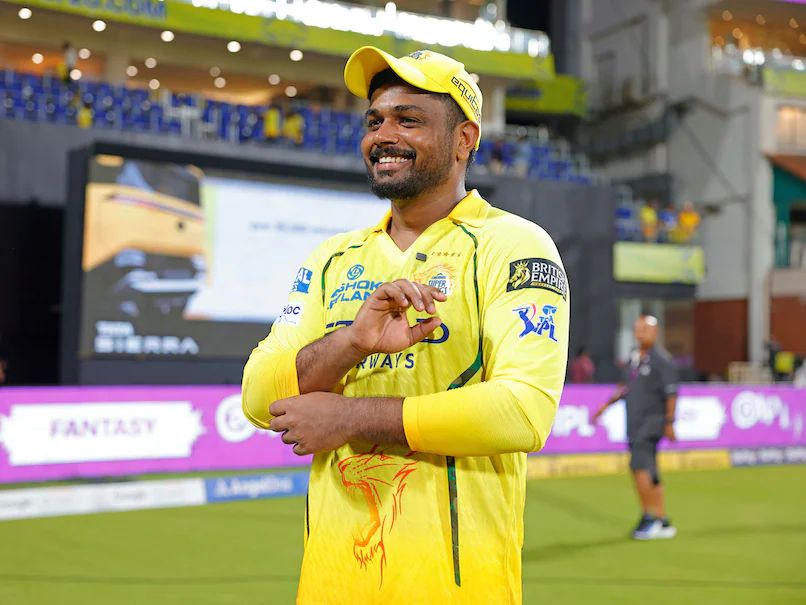
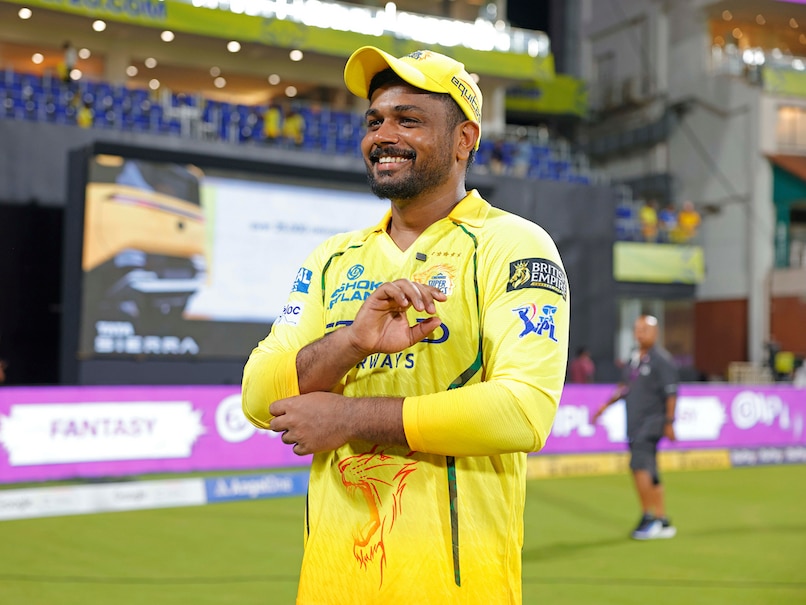
Chennai Super Kings (CSK) bowling coach Eric Simons praised both MS Dhoni and Sanju Samson for their composure and deep understanding of the game. He described Dhoni as one of the calmest players he’s ever worked with, and noted that Samson shows a very similar mindset, remaining unflustered, confident, and not overdoing preparation. “I’ve had the privilege to spend many years playing, being involved with Dhoni, he’s one of the calmest cricketers I’ve ever come across. And Sanju Samson’s not far behind that, he just understands the game from that perspective, I’ve seen no panic, no sense of practising more, doing more, maybe even less,” Simons said in the post-match press conference.
After three failures for his new Indian Premier League (IPL) team, Samson announced his arrival with a majestic hundred against the Delhi Capitals (DC) on Saturday in Chennai.
Simons emphasised that a player of Samson’s class will inevitably bounce back from poor form. Simons stressed there was never any doubt about Samson’s ability, highlighting that top players must trust their skills, stay confident, and remain patient, as success will follow.
Advertisement
“When you’ve got the class of a player like him, you know it’s just temporary if you have a bad run of form and sometimes it’s about luck, he got a great delivery from (Nandre) Burger at one game, it’s just the way it goes, one ball goes for four to the boundary, he edges one, he gets caught, so there was never any doubt that this was coming and I think the mindset of a cricketer of his stature is important, you’ve just got to keep trusting him, believing in your quality and certainly he’s got that sort of an abundance,” Simons added.
Samson made history on Saturday, becoming the first batter in the history of the IPL to score centuries for three different franchises after he brought up his maiden century in CSK.
Samson, after three bad outings, roared back into form with an unbeaten 115* in 56 balls, with 11 fours and four sixes, at a strike rate of 205.36. Out of his four IPL hundreds, Samson has scored two for Rajasthan Royals (in the 2019 and 2021 seasons) and Delhi Capitals (in the 2017 season).
Samson also completed 400 sixes in T20S, becoming the fourth Indian to reach the milestone following Rohit Sharma (554), Virat Kohli (441), and Suryakumar Yadav (442). He now has 401 sixes in the shortest format of the game.
Advertisement
(Except for the headline, this story has not been edited by NDTV staff and is published from a syndicated feed.)
Featured Video Of The Day
Tushar Deshpande’s Brilliant Final Act Ensures Thrilling Win For RR Over Gujarat Titans
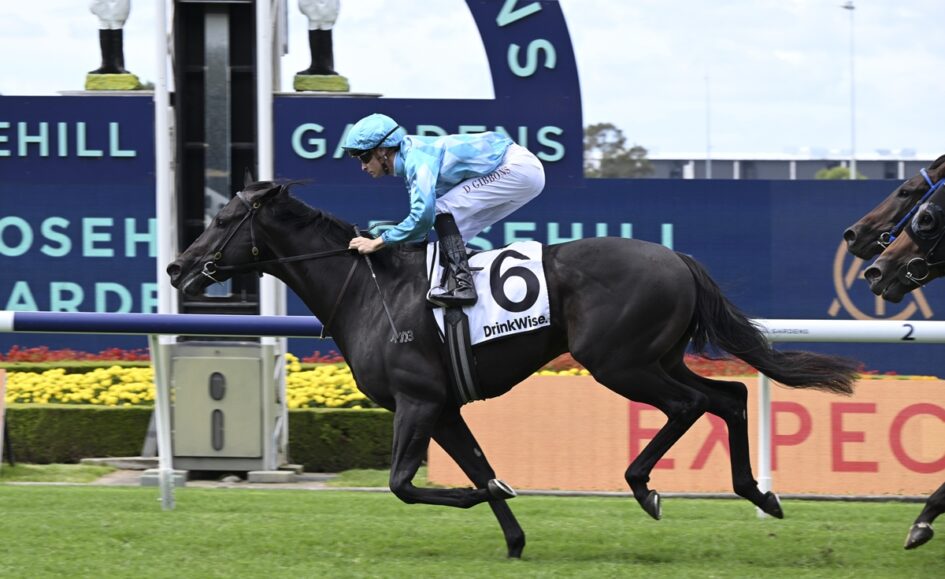
Gerald Ryan possesses extensive involvement across various iterations of the Champagne Stakes minus a triumph, though the flawless colt Southend convinces him of impending success.
Williamsburg notched his peak placing third to She’s Extreme in 2022, as Flying Snitzel earned a gritty fourth behind Pierro during 2012.
Victories in the Baillieu (1400m) preceded their Group 1 efforts for both, a blueprint Southend follows having just captured that race ahead of Saturday’s Randwick showcase.
In partnership with Sterling Alexiou these days, Ryan confesses to being enchanted by the colt upon viewing him as a yearling, rendering his initial racing signs wholly unsurprising.
Advertisement
“I have been excited about him ever since we bought him at the sales,” Ryan said.
“He has been so straightforward, great natured, easy to get on with. And he’s a lovely horse to look at. He reminds me of Lonhro.
“There’s a photo when he won (the Baillieu) going past the post and he dead-set looks like Lonhro. Just his colour and his action and his ears.”
Southend’s Baillieu conquest established him as the first Australian stakes winner from Darley’s premier miler Palace Pier, who boasts dual championship honours.
Advertisement
It built on a winning bow in the Paul Perry (1300m) at Newcastle back on March 6, with the trainer noting ongoing improvement as the long-range plan crystallises.
“This horse was never going to go to the Sires’ (Produce Stakes) He was always going to those two runs and if he was alright, to the Champagne,” he said.
“He has come out of his last win terrific. He looks well. He’s enjoying life, and he’s a straightforward little horse.”
The ride stays with Dylan Gibbons, successful aboard Southend for his two victories, heading to Randwick next Saturday.
Advertisement
The Champagne Stakes (1600m) joins the All Aged Stakes (1400m) as Group 1 highlights, the latter signalling Fangirl’s anticipated reappearance.
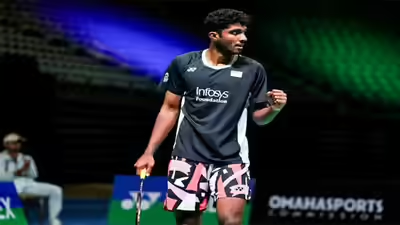
India’s emerging badminton talent Ayush Shetty is on the cusp of a historic achievement as he gears up to face China’s Shi Yu Qi in the men’s singles final of the Badminton Asia Championships on Sunday.The 20-year-old has been the breakout star of the tournament, putting together an impressive run against some of the world’s best. Now, just one victory separates him from a landmark title that would mark a defining moment in his young career and a significant milestone for Indian badminton.
Semifinal heroics: Shetty stuns world No. 1
Shetty delivered a performance of immense character in the semifinal, overcoming reigning world No. 1 Kunlavut Vitidsarn in a gripping three-game encounter. After a one-sided opening game, the Indian showed resilience and tactical maturity to fight back, turning the match around with aggressive shot-making and improved control in the rallies.
Shi Yu Qi cruises into final
In contrast, Shi Yu Qi had a far more straightforward passage to the final. The Chinese star produced a dominant display in his semifinal, winning in straight games with authority. His control over rallies, sharp net play, and ability to dictate tempo ensured he rarely allowed his opponent any foothold in the match.On Saturday, the 20-year-old Ayush dethroned Kunvalut 10-21, 21-19, 21-17, while world No.2 Shi outclassed Chou Tien Chen of Chinese Taipei 21-9, 21-13 in the semifinals of Badminton Asia Championships.
Advertisement
When and where to watch live
Date: Sunday, April 12, 2026
Time: 1:00 PM IST
Live Streaming: Available on Badminton Asia’s official Facebook and YouTube channels
TV Broadcast: No live telecast in India
China’s Shi Yu Qi leads the head-to-head record against India’s Ayush Shetty 2-0 . The two shuttlers are scheduled to meet for the third time today. While Shi Yu Qi has won both previous encounters, their last meeting at the Malaysia Open in January was a closely contested three-game battle, suggesting Shetty is closing the gap.
AUGUSTA, Ga. — Scottie Scheffler had a memorable Saturday at Augusta National. He eagled the par-5 2nd, made five birdies and no bogeys and signed for his lowest-ever Masters round, a sublime seven-under 65 that propelled him into contention in this 90th playing of the tournament; at day’s end he was seven under for the week, just four back of Rory McIlroy and Cameron Young. It would surprise no one if Scheffler cards another 65 Sunday and slips on his third green jacket in five years.
When Scheffler had tended to his post-third-round scoring duties on what was a warm, still day at Augusta, he met with a small scrum of reporters in the interview pen by the clubhouse.
“That was a 65 today,” a reporter said. “What did it feel like it could have or should have been?”
As Scheffler processed the inquiry, he scratched his neck and shook his head. Then he dropped the hammer.
Advertisement
“That’s just a terrible question,” he said. “Next question. Awful.”
It wasn’ta terrible question. Minutes earlier, in an interview with CBS Sports reporter Amanda Balionis, Scheffler himself had said he had “left a few shots out there.” And he had. For one, for the third straight round he’d failed to birdie either of the back-nine par-5s. Scheffler also acknowledged as much later in the session with reporters when he said of his round, “it definitely could have been lower.”
But this is this thing with Scheffler. He can be thoughtful and introspective; he can be fun and goofy; but he also can be bracingly direct and even a bit dismissive. If a media member’s query is not to his liking, he’ll say so. At the BMW Championship last year, after months of sharing his opinions about the Ryder Cup in the lead-up to the event, Scheffler told a reporter: “I love answering questions about the Ryder Cup, but this is ridiculous. We’re at the BMW Championship.” A couple of months later, after the third round of the Hero World Challenge, Scheffler fielded a question about a couple of loose tee shots he’d hit earlier in the event. “So you’re asking me about two drives I’ve hit in the last three days?” Scheffler said. “Next question. That’s ridiculous.”
And that was before questions and analyses started coming about his decline in form. When Scheffler, after opening his 2026 season with a win and two top-five finishes, finished — gasp! — outside the top 10 at Riviera and Bay Hill and then opened with a ho-hum 72 at the Players Championship last month, Golf Channel analyst Brandel Chamblee said, “I don’t even recognize this golf swing from Scottie Scheffler. It’s a foot and a half shorter than it was last year and the face is wide open.”
Advertisement
Scheffler, you could sense, wasn’t wild about the armchair autopsies. When early in the week at the Players a reporter teed up a question to Scheffler with the phrase “this season probably hasn’t gone as well as you would like,” Scheffler called the question “funny,” and he didn’t mean in the ha-ha sense.
We’re not critiquing Scheffler’s impatience with questions he deems inadequate so much as merely making note of it. But on Saturday, he was objectively edgy. When asked how he would describe the color of Augusta’s unusually brown greens, he said, “Grass.” He added, playfully, “I already ripped on one question that wasn’t that bad, so I’m not going to rip on another one.” Scheffler, it should be noted, is generally for more expansive with his answers than he is short or judgmental. He was at times unfairly curt on Saturday, but maybe he was just tired or irritated that he’d pushed a seven-footer for birdie on 17 or had to punch out of the left pine straw on 18. When a reporter asked Scheffler whether he thought he’d be able to play with the same aggressiveness in the fourth round that he had in the third round, the world No. 1 provided great insight.
“It depends on what the leadership here wants to do,” he said. “It was crazy firm Thursday afternoon when we were coming in. There were virtually no birdie opportunities. If you look at the scores from late in the day on Thursday, there were not many birdies made in fairly similar conditions. A little less wind, and the greens were fairly soft yesterday, so you saw a lot of scoring late in the day. Then today there was a little bit of opportunity early. You saw my front nine. There was definitely some opportunity going out. Not much wind. Softer greens, but they firmed up a little quicker. It really depends on what they decide to do with the greens.
Advertisement
“If they want to see some lower scores, they can make them softer if they want. I mean, they’re already pretty firm, so they can just go full Bay Hill and just let them die. It’s Augusta. They’ll figure it out.”
Win or lose Sunday, Scheffler will face yet more questions. Here’s hoping his answers are all as generous and nuanced as that one.
AUGUSTA, Ga. — Is that Dwyane Wade watching his uncle?
Sure is, Brent Holtz told his son, Bryson.
Should he say something?
Sure should, Brent said.
Advertisement
Then he did.
“Yeah, so he went up to Dwyane Wade,” Brent said, “and said, ‘Thank you for coming out to watch my uncle play in the Masters.’”
What a collection of words. What a week. Bryson’s uncle, Brandon Holtz, did play the Masters, shooting an 81 in round one on Thursday and a 78 in round two on Friday. And folks did come out to watch at Augusta National, just as Holtz used to do, as late as just last year, through the badges his dad won 22 years ago.
But what about Saturday?
Advertisement
Would the 39-year-old family man and real estate agent, who once played Division I college basketball and mini-tour pro golf before winning last year’s U.S. Mid-Am, still come back after missing the cut? Would he replace golf pants for shorts and walk among the patrons again, albeit as someone who just played what they are going to watch? Would he go back to how he does the Masters, including proudly making closest-to-the-pin bets from just behind the green on the par-3 6th, with losers walking over to concessions and springing for beers? Holtz and his wife, Liz, had promised they would. You text. The thought was that if you believed it was rare that a patron got to play the Masters, then returning to be a patron in the same tournament is a unicorn, akin to finding a weed at ANGC.
The Holtzes text back.
Sure are.
See you at 6 green at 11.
Advertisement
Bring money.
“WHO DO YOU GOT?! WHO DO YOU GOT?! SERGIO? MCNEALY? SERGIO? MCNEALY? WHO’S IN?” You find about a dozen members of the Holtz squad at 6. Brandon and Liz. His brother, Brent. Other family members. High school and college friends. Members of his club back in Bloomington, Ill. Others are coming later. All found tickets. All are in on the bet. Sergio Garcia hits first on the 180-yard par-3, then Maverick McNealy. You pick McNealy. Holtz takes Garcia. You lose. Garcia’s closer. The gang heads over for beers, though not before Holtz sees former NBA star Richard Hamilton, goes over to him and thanks him for his alma mater, the University of Connecticut, beating the University of Illinois in the college basketball Final Four, as Illinois is unloved by Holtz’s school, Illinois State University.
You, of course, didn’t play 6, and Brandon did. How’d that go? Depends on the day. On Thursday and Friday, he made par. He says you can’t go long, and he didn’t. But you shouldn’t shank right, either. During his practice round on Monday, Holtz’s ball darted through the trees and over the water to the left of the adjacent 16 green. Tommy Fleetwood, Holtz’s playing partner, begged him to hit it, but Holtz begged for him to stop. Helluva story. And just name-dropping the fourth-ranked golfer in the world like he’s Tommy from down the street.
“It’s funny that we sit here and say Tommy, like they’re my best buddies,” Holtz said. “And that’s how I was like, Tommy. I played with Jordan [Spieth]. I’m calling him Tommy. I’m calling him Bubba [Watson].
Advertisement
“These guys are the best players in the world and I’m sitting here calling them by their first name.”
What about the ball?
“Oh, hell no,” Holtz said. “I wasn’t going to get that.”
You, the patron, have more patron questions as you drink your Crow’s Nest wheat beer. The biggest surprise? The speed — in the fairways, around the greens, on the greens. And the idea that a 160-yard shot is a 160-yard shot; “if you hit it 161 or 159, you’re in trouble,” Holtz said. No course he’s played, he said, has demanded more. His most intimidating moment? A sequence on the par-4 7th on Thursday. He was short and right after two shots. His third went 50 yards and onto the green, but “I needed to hit it 52.” From there, he had a choice with his ball about 50 feet to the right of the hole. He talked it over with his dad, Jeff, whom he picked as his caddie. “If you look at that green, literally you’re putting up a hill,” Holtz said. “And then after that hill, it is straight down the hill. I said, ‘Dad, I think I’m gonna leave this like 10 feet short because if I try to go after it, it’s an instant 6. So putted up there to 10 feet for my par, and then I missed my 10-footer for bogey.
Advertisement
“Easy 6, I guess. But if I tried to go after it, it would have been a hard 7, right?”
What he and others can’t forget came on the par-5 15th.
But who are the others?
Those were the patrons seated past the green and to the right of it. Holtz was there in 2. He had 35 yards left. He was on an upslope, and the green feeds back down to a pond. Holtz talked with his dad again.
Advertisement
“These guys were just dying laughing,” Holtz said.
“Because I’m over there, I’m like, Dad, do I putt it? Do I like hook it? Do I hit an 8-iron? Do I throw it in the air? These guys — and then I asked them, I said, what would you guys do? And they’re just dying laughing. And I’m just like, you know what, at the end of the day, there’s a lot of points in this golf course where you have to just commit and hit the perfect shot.
“I hit the perfect shot.”
Birdie.
Advertisement
Another group comes to the 6th tee.
Another bet is placed.
Tommy Fleetwood and Brandon Holtz on Monday at Augusta National.
Getty Images
“BRIDGEMAN OR RAI? I’LL TAKE BRIDGEMAN. YOU LIKE RAI? RAI. CAN’T BEAT A GUY WHO WEARS TWO GLOVES. WAIT, WHO’S UP ON THE TEE? BRIDGEMAN. OK, READY. ” Aaron Rai is closer than Jacob Bridgeman. You win this one. But you buy beers for everyone for their time, though you get the feeling that Holtz wouldn’t have to pay for much on Saturday.
Advertisement
There are several interactions between patrons and the patron-player-patron again. Near the concession stand, Mason Howell, the U.S. Amateur winner who also played during the first two rounds, stops to talk. Along the rope line to the right of the seventh fairway, a man taps him on the shoulder, says he went to high school with him and says he and his wife have been watching him since last September, when he earned his Masters spot through the Mid-Am win. A volunteer on 7 remembered him from Thursday and Friday, too. “I was his favorite golfer,” Holtz joked. Then another volunteer comes over and says he’s an agent at State Farm, which sponsored Holtz.
Holtz looks out and sees Adam Scott and Sam Stevens walk past. He’s just a few hours removed from that spot. He’s got another story. Three kids were standing to the right of the tee on 16 on Friday, and they’re hollering at Holtz’s playing partners: Watson, the two-time Masters winner, and Nico Echavarria. They ask for a ball. Holtz said maybe.
“And that’s when we started chatting, right?” Holtz said. “So we all hit our shots. And kid comes up to me after Bubba hit, comes up to me and says, ‘Play rock, paper, scissors for a ball.’ I say, ‘That’s not good for you, though.’ He says, ‘Why?’ I say, ‘Because I don’t lose rock paper scissors.’
“So we all hit our shots, and I’m like, all right, I grab three balls. So I go down there and I’m playing rock, paper, scissors. She throws the paper, I throw the scissors. I say, ‘Boom, I told you I don’t get beat.’ And I’m walking away, and as I’m walking away, I throw the three balls behind me.
Advertisement
“And the crowd went wild. So, just moments like that, experiences like that, you just remember for the rest of your life. It made those kids’ days. Made my day.”
At this point, you’re standing in line with Liz. She watched him on Thursday and Friday, after watching with him for 10-plus years at the Masters. What was that like? There’s layers to that, she said. She knew the days were coming. She’d helped with arrangements. And there Brandon just was, with her at the Masters, though sometimes hundreds of yards away.
“I don’t know that I’ve processed that as I’m walking as a patron and I’m instinctively looking like, ‘Oh, where’d B go?’” she said.
“And I look out in the fairway and I’m like, ‘Oh yeah, he’s out there with Bubba.’”
Advertisement
There’s about a half-cup of beer left.
Brandon Holtz on Wednesday at the Par-3 Contest.
Getty Images
TO THE RIGHT OF THE SECOND FAIRWAY, AN AUGUSTA NATIONAL MEMBER’S FAMILY MEETS THE HOLTZES. They’d been following Brandon’s story all week. You don’t hear that he missed the cut; instead, they tell him he ranks as one of their favorite invites. They tell him not to forget to go back to the members’ pro shop, and when Brandon says he has, they tell him to go back again.
On Friday, everyone went to sleep at 2 a.m., and Brandon and Liz were up around 5. He’s processed some of the rounds, but won’t fully for a while. He’s texted some people back. On Saturday, they drove friends and family to the course, made their way in, then planned to stay the full day. They also dropped off his 6-year-old son, Baker, and his 2-year-old daughter, Millie, at a daycare. Earlier in the week, they were part of the gang during the Par-3 Contest. They’re maybe too young to be awestruck by dad or Dwyane Wade, and you’re curious what they made of the week.
Advertisement
“Well, Baker put some pressure on me, my son. He’s like, ‘Dad, can we go do that putting thing again?’” Holtz said. “I’m like, ‘Oh, s—, OK.’ So, yeah, they love it. Millie, I mean, she’s 2, she doesn’t really know what’s going on, but she was really loving it, and then we had a little meltdown. Gave her to my aunt and my cousin, so they went and got her a snack, and she was fine with it. She’s a big snack girl. And then we met her again on 9, and I’m just looking at her, and I’m like, ‘Here we are.’’
“And I got Jason Day back there, you know, recording it. And I’m like, ‘What the hell? Jason Day recording my wife and my son hit golf balls. Like, who am I? What the hell is this?”
Here, you let Brandon go. He’s revealed enough. He walks away.
Oregon defensive back Dillon Thieneman (DB52) takes part in drills during the NFL Scouting Combine, with Feb 27, 2026 at Lucas Oil Stadium in Indianapolis, Indiana highlighting his movement and coverage skills in front of scouts and evaluators ahead of the upcoming draft. Mandatory Credit: Kirby Lee-Imagn Images
The Minnesota Vikings aren’t far from the NFL Draft — 12 days — where they have nine picks on the menu and a new general manager, interim boss Rob Brzezinski, running the show. So, it’s time to look at the Vikings’ shopping list.
Minnesota’s 2026 draft menu is wide, with multiple roster spots in play.
Here’s what the club needs roster-wise and who’s available.
Advertisement
Six Positions Stand Out on Minnesota’s Pre-Draft To-Do List
Auburn Tigers offensive lineman Connor Lew (75) lines up and prepares the snap on Sep 27, 2025, at Kyle Field in College Station, Texas, during a matchup against the Texas A&M Aggies. Lew anchored the offensive front, helping Auburn manage pressure in a challenging road environment against a physical SEC defense. Mandatory Credit: Maria Lysaker-Imagn Images.
Center
Minnesota lost 2025 starter Ryan Kelly to retirement last month after the poor guy sustained three concussions in one season alone.
Now they need a new center, assuming Blake Brandel isn’t the long-term solution. Rounds 2 through 4 are likely the sweet spot.
The Options: Jake Slaughter (Florida) Logan Jones (Iowa) Connor Lew (Auburn) Sam Hecht (Kansas State)
Advertisement
Cornerback
The Vikings didn’t particularly “care” about cornerback depth last year, and they got away with it, as Byron Murphy Jr. and Isaiah Rodgers stayed upright and healthy for all 17 games. That may not happen again.
Needing a credible youth fix at CB, Brzezinski probably needs a corner before the end of Round 4 to avoid a lottery ticket from Round 5, 6, or 7.
The Options: Jermod McCoy (Tennessee) Avieon Terrell (Clemson) Colton Hood (Tennessee) Brandon Cisse (South Carolina) Chris Johnson (San Diego State) D’Angelo Ponds (Indiana) Keith Abney II (Arizona State) Keionte Scott (Miami) Treyden Stukes (Arizona) Davison Igbinosun (Ohio State) Julian Neal (Arkansas) Malik Muhammad (Texas) Chandler Rivers (Duke) Devin Moore (Florida) Will Lee III (Texas A&M) Daylen Everette (Georgia) Tacario Davis (Washington) Ephesians Prysock (Washington) Hezekiah Masses (California)
Defensive Tackle
Minnesota said goodbye to starting defensive tackles in March: Jonathan Allen and Javon Hargrave. That’s a smoking-gun sign that they plan to draft a rookie.
Advertisement
The Vikings haven’t used 1st-Round draft capital on a DT in 13 years. For this section, they likely need one before the end of Round 3 for that man to trend as a promising starter.
The Options: Peter Woods (Clemson) Kayden McDonald (Ohio State) Caleb Banks (Florida) Christen Miller (Georgia) Lee Hunter (Texas Tech) Domonique Orange (Iowa State) Gracen Halton (Oklahoma) Darrell Jackson Jr. (Florida State)
Running Back
Speaking of draft droughts, Minnesota hasn’t drafted a productive running back early since 2019, when Alexander Mattison was selected. Before that, Dalvin Cook worked out pretty damn well.
Notre Dame running back Jadarian Price (24) carries the ball on Nov 8, 2025, at Notre Dame Stadium in South Bend, Indiana, during the second half against the Navy Midshipmen. Price showed burst and vision as he pushed through defenders, contributing to the Fighting Irish ground attack in a key late-season contest. Mandatory Credit: Michael Caterina-Imagn Images.
This go-round, the Vikings need a running back who can perhaps watch and learn in 2026 behind Aaron Jones and Jordan Mason but be ready for the RB1 job in 2027. That leaves about a half-dozen options.
The Options: Jadarian Price (Notre Dame) Mike Washington Jr. (Arkansas) Jonah Coleman (Washington) Emmett Johnson (Nebraska) Nick Singleton (Penn State) Kaytron Allen (Penn State) Demond Claiborne (Wake Forest)
Advertisement
Safety
The safety spot is different than many positions. Startable safeties can be easier to find. That is — if the Vikings draft one in Round 4, well, that guy could be the starter before too long. It’s a long way of saying safety isn’t considered a premium position.
For example, in free agency, a team can sign a good safety for $8 million. The same caliber EDGE rusher might cost $20 million.
Before the end of Round 4, these are Minnesota’s rookie safety avenues.
The Options: Dillon Thieneman (Oregon) Emmanuel McNeil-Warren (Toledo) A.J. Haulcy (LSU) Kamari Ramsey (USC) Bud Clark (TCU) Zakee Wheatley (Penn State) Jalon Kilgore (South Carolina) Genesis Smith (Arizona) VJ Payne (Kansas State)
Advertisement
Wide Receiver
There’s no more Jalen Nailor on the Vikings’ depth chart; he’s a Las Vegas Raider, who might even hold the WR1 job on Klint Kubiak’s team.
Without Nailor, Minnesota will be forced to turn to Tai Felton, a 2025 rookie, who played about as much on offense as a house cat takes baths in the tub. It’s unclear if the Vikings trust Felton as the WR3 in 2026. If they do, this section of the article may be moot.
Georgia State wide receiver Ted Hurst (16) secures a touchdown catch on Nov 1, 2024, at Rentschler Field in East Hartford, Connecticut, during the second quarter against the UConn Huskies. Hurst’s play highlighted his scoring ability, finishing the drive with a clean reception in the end zone during the Panthers’ road matchup. Mandatory Credit: David Butler II-Imagn Images.
Still, O’Connell and Co. are doing their homework on WRs, meeting with several that possess Round 2 and 3 draft stock. A new receiver is probably on the way.
The Options: Jordyn Tyson (Arizona State) Omar Cooper Jr. (Indiana) Kevin Concepcion (Texas A&M) Denzel Boston (Washington) Chris Bell (Louisville) Chris Brazzell (Tennessee) Germie Bernard (Alabama) Zachariah Branch (Georgia) Malachi Fields (Notre Dame) Antonio Williams (Clemson) Ted Hurst (Georgia State) Elijah Sarratt (Indiana) Skyler Bell (UConn) Bryce Lance (North Dakota State) Deion Burks (Oklahoma) Ja’Kobi Lane (USC) Brenen Thompson (Mississippi State) De’Zhaun Stribling (Mississippi) Jeff Caldwell (Cincinnati)
It’s also worth noting that Minnesota hasn’t drafted a wide receiver in Round 2 since Sidney Rice in 2007. Maybe it’s time to take the plunge.
The UFC’s promotional rollout for its upcoming White House event has drawn a strong negative reaction from fans.
The promotion is preparing for a landmark card scheduled for June 14 on the South Lawn of the White House. The event is positioned as a major moment for the organization, tied to a national celebration and headlined by a lightweight title fight between Ilia Topuria and Justin Gaethje.
Despite the scale of the announcement, the initial promo release has shifted attention toward production quality.
Check out the video below:
Advertisement
Get the latest updates on One Championship Rankings at Sportskeeda and more
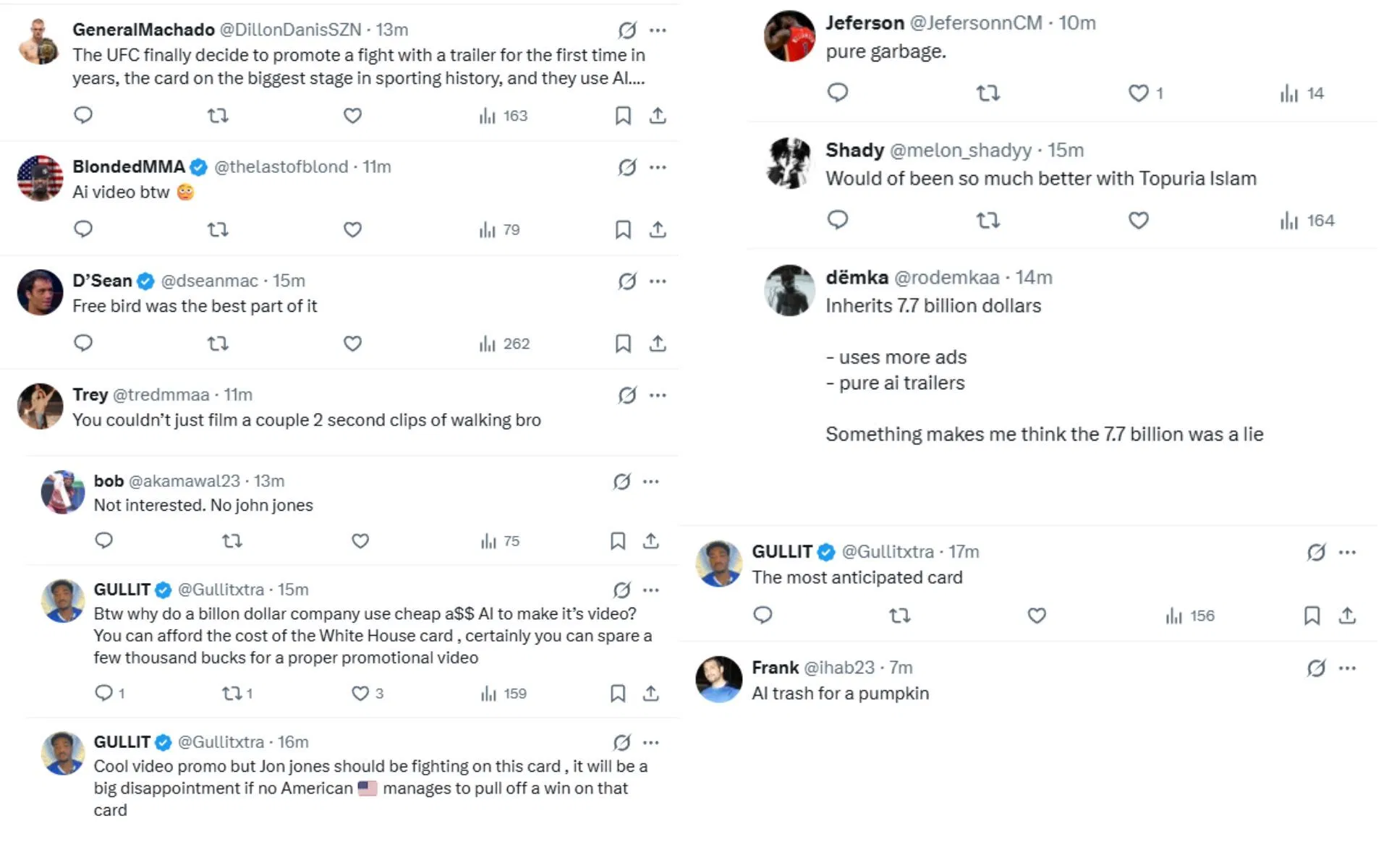
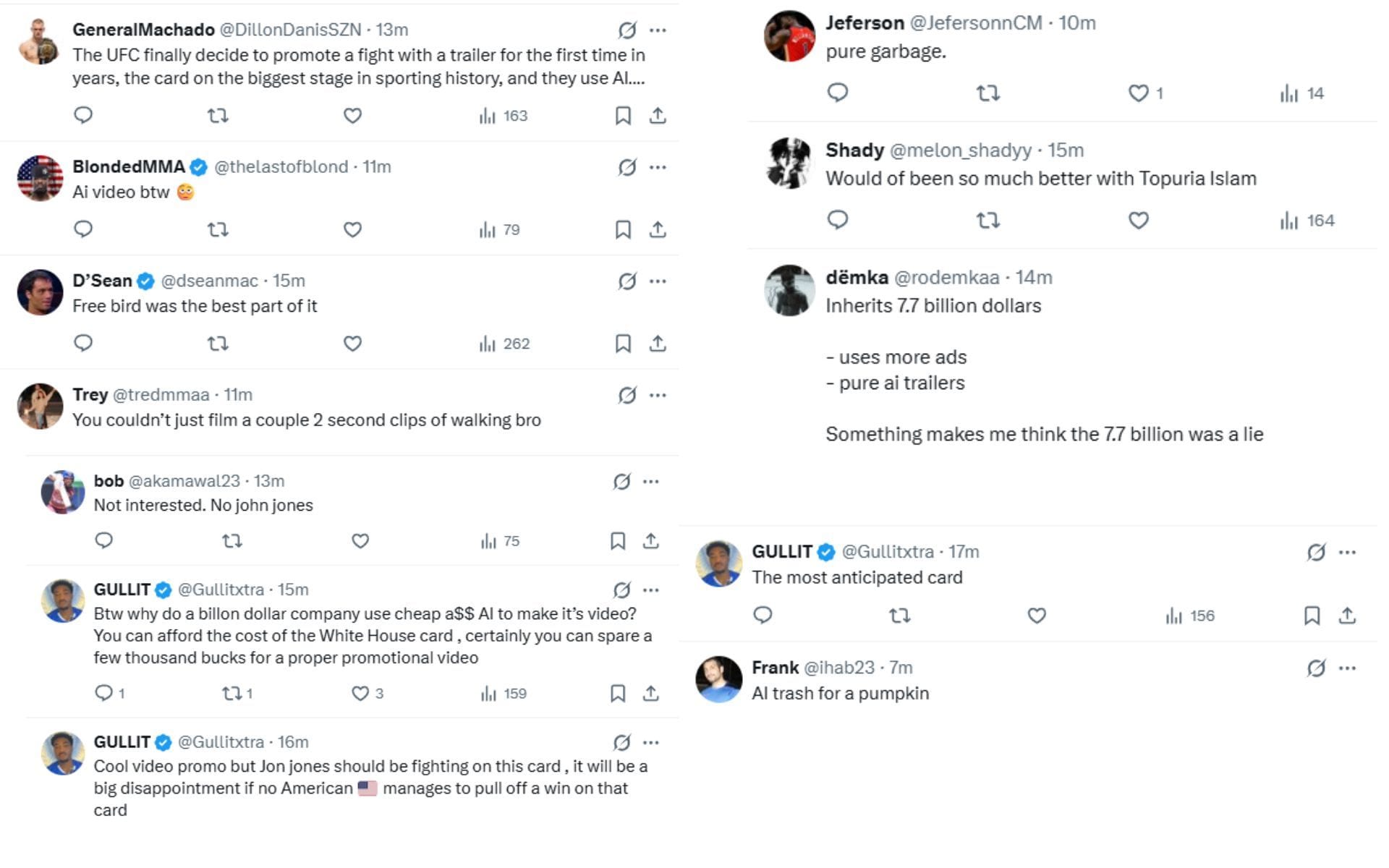
Several viewers described the visuals as low-effort and disconnected from the standards expected of a global promotion. One fan wrote:
Advertisement
“Pure garbage.”
Meanwhile, other fans wrote:
“The UFC finally decide to promote a fight with a trailer for the first time in years, the card on the biggest stage in sporting history, and they use AI.”
“You couldn’t just film a couple 2 second clips of walking bro?”
“Inherits 7.7 billion dollars. Uses more ads. Pure ai trailers. Something makes me think the 7.7 billion was a lie.”
“Btw why do a billon dollar company use cheap a** AI to make it’s video? You can afford the cost of the White House card, certainly you can spare a few thousand bucks for a proper promotional video.”
Check out some of the fan reactions below:Fans criticize UFC White House promo and call out heavy AI use. (Screenshots courtesy: @ChampRDS on X)
The criticism follows a broader pattern that began earlier this year when similar visuals appeared during UFC broadcasts. Viewers pointed to inconsistencies in design elements and presentation.
UFC CEO Dana White has maintained that production decisions remain internal and has downplayed the backlash. He called the use of AI part of a wider industry shift.
The UFC White House card features a show down between Topuria and Gaethje for the undisputed lightweight title. In the co-main event, Alex Pereira and Ciryl Gae will square off for the interim heavyweight title.
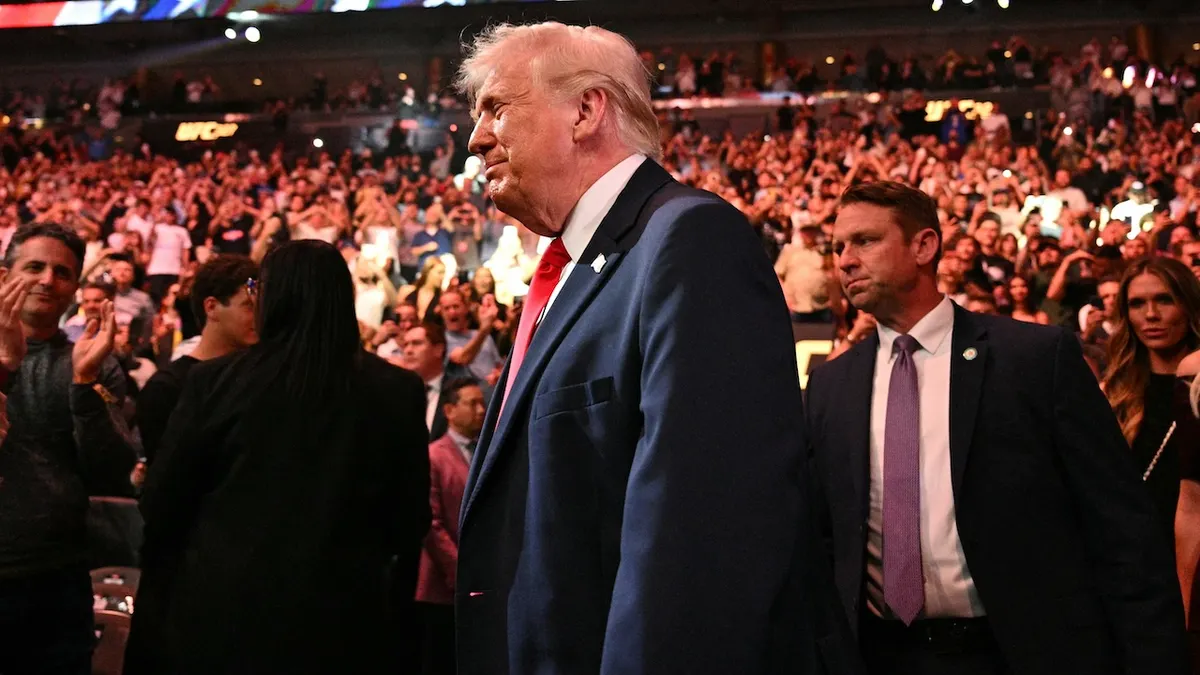
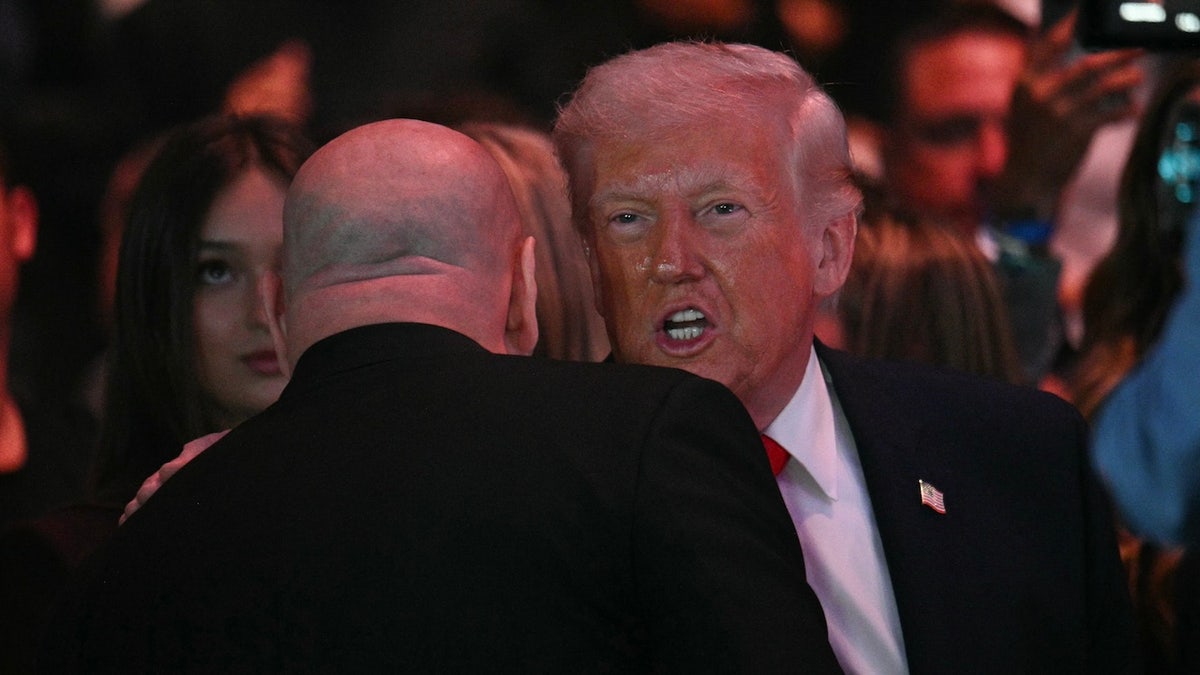
President Donald Trump was greeted by a packed crowd at UFC 327 in Miami Saturday night during the president’s first appearance at a sporting event since the start of the Iran war. Fans in attendance erupted into raucous applause as Trump walked into the venue.
Trump made his way out with UFC CEO and president Dana White and went around to the announcers and had an exchange with Joe Rogan, who was sitting at the announcers’ table.
Secretary of State Marco Rubio was standing nearby the seats right before Trump walked out, then leaned in to Trump and started whispering very closely to the president, cupping his hands over his mouth and they each exchanged a few words. Trump then turned around, pumping his fist to those sitting behind him, smiling and waving, then pointed a few times to the crowd.
US President Donald Trump arrives at UFC 327: Jiri Prochazka vs Carlos Ulberg at Kaseya Center in Miami, on April 11, 2026.(Jim WATSON / AFP)
Trump has been a frequent fixture at UFC and other combat sports events during his presidency, during his 2024 campaign and even dating back to his first term.
In 2025, Trump attended UFC 316 and Miami fight night. In 2024, he attended UFC 302 in June and UFC 309 in November.
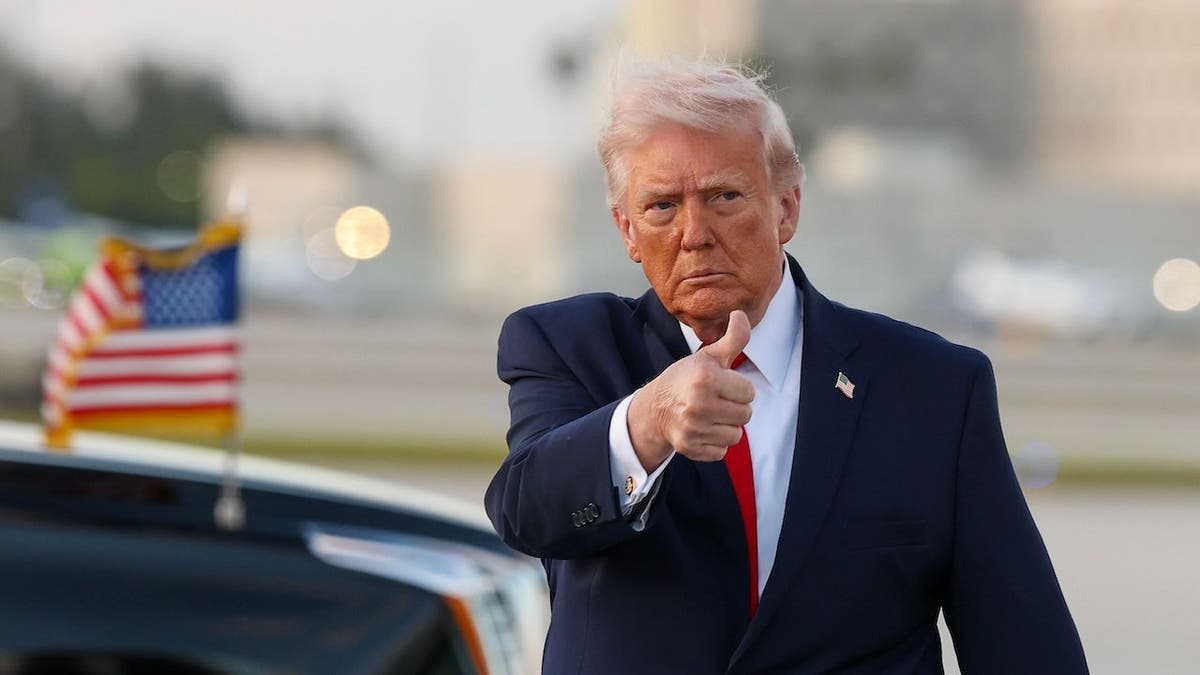
President Donald Trump waves to the media after walking off Air Force One at Miami International Airport in Miami, Fla., on April 11, 2026. Trump was in town to attend a UFC fight.(Tasos Katopodis/Getty Images)
In 2019, he attended UFC 244.
Advertisement
Before Saturday, the last major sporting event Trump attended was the College Football Playoff national championship game between Indiana and Miami at Hard Rock Stadium Jan. 19.
US President Donald Trump chats with UFC CEO and president Dana White before UFC 327: Jiri Prochazka vs Carlos Ulberg at Kaseya Center in Miami, on April 11, 2026.(Jim Watson / AFP)
Trump was notably absent from this year’s Super Bowl and the Winter Olympics in Italy and didn’t attend any other events after the Iran war broke out.
But after Tuesday’s ceasefire agreement, Trump has returned to sport. Trump addressed the ongoing situation with Iran at the White House before departing for Joint Base Andrews to travel to Miami for the UFC event.
“We’re in very deep negotiations with Iran. We win regardless. We’ve defeated them militarily,” Trump told reporters. “Whether we make a deal or not makes no difference to me. And the reason is because we’ve won, whether you listen to the fake news or not.”
Jackson Thompson is a sports reporter for Fox News Digital covering critical political and cultural issues in sports, with an investigative lens. Jackson’s reporting has been cited in federal government actions related to the enforcement of Title IX, and in legacy media outlets including The New York Times, The Los Angeles Times, The Philadelphia Inquirer, The Associated Press and ESPN.com.


;)



;)
;)
;)











































You must be logged in to post a comment Login