

Connect with us
DAPA Banner

Tech

These Deals Can Have You Zipping Around on a New E-Scooter This Spring

Published

on

The snow is melting, the days are getting longer, and I can almost smell the springtime ahead. Soon, we’ll be cruising around town on ebikes and electric scooters instead of burning fossil fuels. For now, the weather hasn’t quite caught up, which is great for markdowns. Many of the best electric scooters are still seeing significant discounts. If you’ve been thinking about buying one, now’s the best time: prices are low, and sunny commuting days are just ahead.

Gear editor Julian Chokkattu has spent five years testing more than 45 electric scooters. These are his top picks that are also on sale right now.

Apollo Go for $849 ($450 Off)

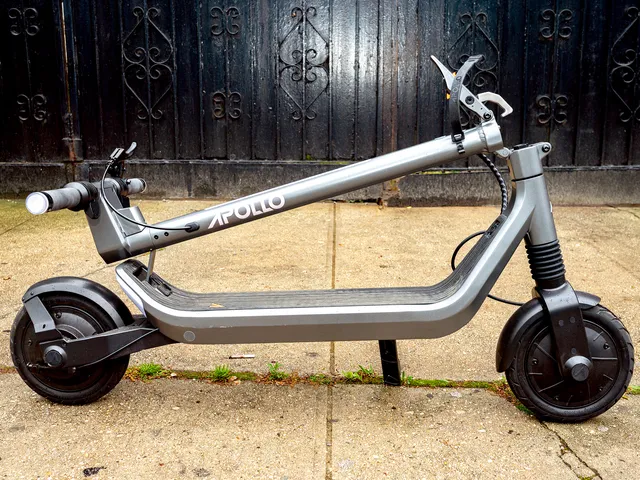
Side view of Apollo Go electric scooter with the handle bar folded down

Photograph: Julian Chokkattu

This is Gear editor Julian Chokkattu’s favorite scooter. The riding experience is powerful and smooth, thanks to its dual 350-watt motors and solid front and rear suspensions. The speed maxes out at 28 miles per hour (mph), which doesn’t make it the fastest scooter on the market, but it has a good range. (Chokkattu is a very tall man and was able to travel 15 miles on a single charge at 15 mph.) Other Apollo features he appreciates: turn signals, a dot display, a bell, along with a headlight and an LED strip for extra visibility.

Apollo Phantom 2.0 for $2099 ($900 Off)

  • Photograph: Julian Chokkattu

  • Photograph: Julian Chokkattu

  • Photograph: Julian Chokkattu

The Apollo Phantom 2.0 maxes out at 44 mph, with plenty of power from its dual 1,750-watt motors. It’s a gorgeous scooter, designed with 11-inch self-healing tubeless tires and a dual-spring suspension system for a smooth riding experience. But with great power comes great weight. At 102 pounds, the Phantom 2.0 is the heaviest electric scooter Chokkattu has tested, so I would only recommend this purchase if you don’t live in a walkup and/or have a garage.

Advertisement

More Discounted Electric Scooters

Segway

Max G3

This is the best commuter scooter, with more power and range than the Apollo Go and a fast 3.5-hour recharge time.

Segway

Advertisement

Ninebot F3 Electric Scooter

The Segway F3 is designed with turn signals, a bell, a bright display, and a feature-rich app experience.

Niu KQi 300X

This is the best all-terrain scooter, with reliable suspension, dual disc brakes, and thick 10.5-inch tubeless tires.

Advertisement

Segway

E2 Pro

This is the best budget scooter, designed with a decent 350-watt motor, a max speed of 15 mph, a front drum brake, and a rear electronic brake.

Source link

Advertisement
Continue Reading
Click to comment

You must be logged in to post a comment Login

Leave a Reply

Tech

Cisco tells Webex users to patch critical security flaws immediately, as experts find its Wi-Fi boxes may be filling their disks with undeletable data every day

Published

on


  • Cisco patches four critical flaws in Webex Services, including SSO and Identity Services Engine RCE bugs
  • No exploitation reported before fixes; users must update SAML certificates in Control Hub
  • Separate IOS XE bug causes Wi‑Fi access points to bloat logs and fail updates, affecting 230+ models

Cisco has pushed a new patch to address four critical-severity vulnerabilities plaguing its cloud-based Webex Services platform – and has also warned Wi-Fi access points users of a bug in certain versions of IOS XE that could result in a device bootloop.

Webex Services is a platform for communication and collaboration, letting people hold video meetings, send messages, make calls, and share files, all from one place.

Source link

Continue Reading

Tech

Microsoft Finally Ups FAT32 Size Limit

Published

on

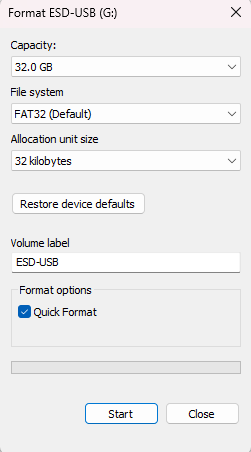
You probably don’t spend a lot of time using the FAT32 file system anymore, since it’s thoroughly been superseded many times over. Even so, Microsoft has seen fit to deliver an upgrade for FAT32 for the latest Windows 11 Insider Preview build. Finally, the stock Windows tools will let you format a FAT32 drive up to 2 TB instead of locking you to a 32 GB maximum!

The size limit was never baked into the FAT32 spec itself. With a 32-bit field for counting sectors, the file system supports up to 2 TB volumes with 512-byte sectors. However, as explained by former Microsoft developer [Dave Plummer], it just so happened that the 32 GB limit came about because of a random decision made when slapping together the Format dialogue box over 30 years ago.

The pending change was first announced in 2024, affecting the command line format tool as well. It’s actually been possible to create larger FAT32 volumes for some time, you just couldn’t easily do it with Microsoft’s standard formatting tools.

FAT32 is still a terrible file system to use in 2026, mostly because it has a hard limit on file size that tops out at 4 GB. It’ll ruin your life if you’re shooting HD or 4K video. We often don’t spend a lot of time musing over file systems in detail, but they’re right at the heart of everything we do on our computers on a daily basis. Sometimes, it bears thinking about!

Advertisement

Source link

Advertisement
Continue Reading

Tech

TCL’s RGB-Mini LED TVs will start at $8,000

Published

on

TCL introduced its new flagship X11L SQD-Mini LED TV at CES 2026, and now a few months later, the company is ready to expand its lineup with more SQD-Mini LED models and its first RGB-Mini LED TV. All sizes of the TCL QM8L SQD-Mini LED TV are available now. Meanwhile, both the TCL QM7L SQD-Mini LED TVs and the RM9L RGB-Mini LED TVs are available to pre-order.

SQD-Mini LED panels are TCL’s latest iteration of its Mini LED display technology, where “SQD” stands for “Super Quantum Dot,” a layer of tiny crystal dots that help filter the light from the LEDs in the company’s panels. TCL claims its SQD-Mini LED screens are more color accurate than its previous models without losing out on HDR contrast. The TCL QM8L has an anti-reflective SQD-Mini LED panel, up to 4,000 discrete dimming zones, up to 6,000 nits of peak brightness and support for Dolby Vision 2 Max after a software update. The TCL QM7L also has an anti-reflective SQD-Mini LED panel, up to 2,100 discrete dimming zones, up to 3,000 nights of peak brightness and support for Dolby Vision IQ. Both TVs feature Audio by Bang & Olufsen and run the latest version of Google TV with support for Gemini.

A TCL RM9L RGB-Mini LED TV angled to the left on a white background.

TCL

Like other TV makers at CES 2026, TCL also capitalized on the growing trend of Micro RGB or RGB Mini LED panels. Rather than use a layer of white or blue LEDs that are transformed with quantum dots and color filters, TCL’s RGB-Mini LED starts with discrete red, green and blue LEDs to produce richer color. The TCL RM9L features the company’s new RGB-Mini LED display with an anti-reflective layer, over 3,800 discrete local dimming zones, up to 6,000 nits of peak brightness and support for Dolby Vision 2 after a software update. The TV also features Bang & Olufsen audio and Google TV with Gemini support.

TCL says the QM8L is available to order now starting at $2,500 for the 65-inch model, $3,000 for the 75-inch model, $4,000 for the 85-inch model and $6,000 for the 98-inch model. The TCL QM7L, meanwhile, is available to pre-order starting at $1,200 for the 55-inch model and goes as high as $4,000 for the 98-inch model. If you’re curious about TCL’s new RGB-Mini LED displays, the TCL RM9L is available to pre-order starting at $8,000 for the 85-inch model and up to an eye-popping $30,000 for a 115-inch model.

Advertisement

Source link

Continue Reading

Tech

Major gap between leaders’ traits and employee expectations, finds report

Published

on

Hogan Assessments explored the role of the leader in the workplace and the importance of aligning goals with the expectations of the modern workforce.

New global research from HR consulting platform Hogan Assessments has shown that the characteristics and behaviours often displayed by leaders in the workplace are out of touch with the qualities many employees say they want and expect from those in a leadership role. 

The ‘Leadership Divide: Global Insights on Who Leads versus Who Should’ report gathered data from more than 21,000 executives and 9,794 full-time employees, across 25 countries. What was discovered is that there is a “clear misalignment between what organisations reward and what employees value”.

To that point, it was found in the report that there is zero overlap between the top five competencies frequently demonstrated by executives and the five characteristics that employees said they wanted for their organisations’ leaders. 

Advertisement

Participating executives were found to better stand out in their company by inspiring others, competing with their peers, presenting their ideas publicly, taking initiative and driving innovation. By comparison, the employees who took part in the research explained that they prioritise an entirely different set of qualities in a leader: communication, integrity, accountability, sound decision-making and the ability to lead effectively.

“Organisations have long tended to reward visibility, confidence and ambition in leaders,” said Allison Howell, the CEO of Hogan Assessments. “But employees are telling us they want something more fundamental: leaders they can trust, leaders who communicate clearly, and leaders who create the conditions for teams to succeed.”

Growing divide

According to Hogan Assessments’ research, and indeed the stance many organisations take, leadership is a resource for teams and should be treated as such. However, the data finds that often executives come in with their own agendas that may not be in line with the viewpoints of the wider workforce. 

The report said, “Today’s leaders often focus on their own individual vision, ambition and careers. These behaviours and characteristics tend to get people promoted. But, in contrast, our survey respondents told us they want leaders who focus on accountability, team achievement and other behaviours that support the team.”

Advertisement

By modelling the competencies most appreciated by employees, the report suggested that those in leadership can create a culture of trust. Because leadership is the ability to build and maintain a high-performing team, trust is foundational to leadership effectiveness; in turn, the report found that “leaders who earn trust create the conditions for teams to perform at their best, giving the organisation a sustainable competitive advantage”. 

Of those who participated, 72pc of respondents confidently said emotional volatility and unpredictability have a negative impact, while passive aggression (62pc), arrogance and entitlement (59pc), and extreme caution (56pc) were also identified as qualities that damage trust, increase disengagement and weaken team performance.

Despite this, executives often stood out for assertiveness and self-assurance, with the report noting that the confidence that can help leaders advance “may, when overused or left unchecked, be experienced by teams as arrogance, weakening trust and contributing to disengagement”.

Ultimately, Hogan Assessments’ report found that many of the behaviours that enable leaders to step out in front have the potential to alienate the wider workforce and create a culture of mistrust. With that in mind, organisations may benefit from looking beyond the more obvious, visible, charismatic attributes that denote leadership ability and instead place a greater emphasis on behaviours that build confidence. 

Advertisement

“That shift should be reflected in how leaders are selected and developed, with greater emphasis on coaching, feedback and performance systems that reward accountability, transparency and follow-through.”

Howell said, “Leadership pipelines are strongest when organisations align how they identify and develop leaders with what employees actually value. These findings show that trust, accountability and sound judgment are not secondary qualities. They are central to team effectiveness and long-term performance.”

Don’t miss out on the knowledge you need to succeed. Sign up for the Daily Brief, Silicon Republic’s digest of need-to-know sci-tech news.

Advertisement

Source link

Continue Reading

Tech

Bluesky confirms DDoS attack is cause of continued app outages

Published

on

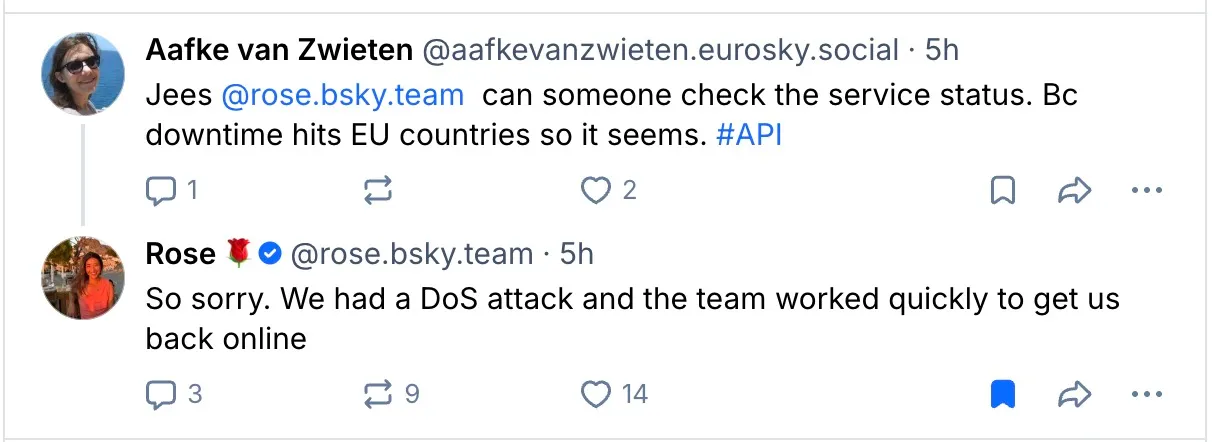
Bluesky’s website and app are still struggling on Friday after experiencing service interruptions that chief operating officer Rose Wang attributed to an ongoing cyberattack.

On Thursday evening, the social media company confirmed that a “sophisticated Distributed Denial-of-Service (DDoS) attack” was to blame for the issues, which had originally started on April 15 at around 8:40 p.m. ET.

Distributed denial-of-service attacks often involve pummelling apps or websites with large amounts of junk web traffic aimed at overloading and knocking its servers offline. While these kinds of cyberattacks do not involve intrusions into a company’s systems, these incidents can still be disruptive to both the company and its users.

Our team received a report of intermittent app outages at about 11:40pm PDT on April 15, 2026. They worked through the night to mitigate a sophisticated Distributed Denial-of-Service (DDoS) attack, which intensified throughout the day.

Bluesky (@bsky.app) 2026-04-16T23:47:25.963Z

Advertisement

In a post on the Bluesky account, the company shared the cause of the problem and noted that the attack was “impacting our operations, with users experiencing intermittent interruptions in service for their feeds, notifications, threads, and search.”

Bluesky said that it has not seen any evidence of unauthorized access to private data, however.

The network’s status page is also currently not working.

When originally reached for comment on Thursday, Bluesky only pointed us to the status.bsky.app page and account (@status.bsky.app) for updates. The company did not provide an estimated time for a fix.

Advertisement

Bluesky said it will provide another update on the status of the attack and its mitigation by 1 p.m. ET on Friday.

Image Credits:screenshot of Bluesky

Because the outages are intermittent, the Bluesky site and app will load at times, slowly, and other times will display error messages.

For instance, switching to a particular feed within the app could display a message that says, “This feed is currently receiving high traffic and is temporarily unavailable. Please try again later. Message from server: Rate Limit Exceeded.”

Image Credits:screenshot of Bluesky

Popular feeds like Discover or the official Bluesky Team’s feed often see this problem, even as users’ own personal feeds are functional. Other times, like when trying to visit a user’s profile, the site will display an error message, forcing you to refresh and try again.

Image Credits:screenshot of Bluesky

Bluesky protocol engineer Bryan Newbold remarked around 3:46 a.m. ET on Wednesday, “oof, our services are getting pretty hard tonight.”

Notably, the service disruptions are impacting Bluesky, but other communities running their own infrastructure on the underlying protocol that powers the decentralized social network appear to be functioning for the time being.

ScreenshotImage Credits:screenshot of Bluesky

It was clear that Bluesky’s team was in a hectic state this week while facing these issues, as one message on its status page had a typo: ” investigating an incident with service in one of our reginos [sic].”

Image Credits:Bluesky screenshot

Source link

Advertisement
Continue Reading

Tech

Brendan Carr Cooking Up New Sham Investigation Of Jimmy Kimmel

Published

on

from the a-comedian-made-me-cry dept

As the boss of the country’s media and telecom regulators, there’s plenty of corporate malfeasance and corrupt shenanigans Brendan Carr could be targeting on any given day at the country’s biggest media and telecom companies. But because Carr’s never been all that interested in the public interest, he’s once again spending his time trying to hurt a comedian who made fun of our unpopular president.

After an embarrassing failure at his attempt to censor Jimmy Kimmel for criticizing Donald Trump last year, Policyband notes that Carr is cooking up a new inquiry to ensnare Kimmel. This time, Carr is pretending he cares about financial conflict of interests, and is looking to “revisit” long‑standing conflict‑of‑interest rules for broadcasters (and Kimmel):

“A lot of people don’t know this, but there’s conflict‑of‑interest rules that apply to broadcasters, both personal financial, but also personal political,” he said. Carr — who had a blow up with Kimmel last September over the comic’s comments about Charlie Kirk’s assassination — did not mention Kimmel by name. But he really did not need to because of the existence of a conflict of interest complaint pending against the host of Jimmy Kimmel Live! (via an ABC station) at the FCC.”

It’s been abundantly clear that the Trump administration is one giant, lumbering financial conflict of interest, though obviously Carr’s not actually interested in any equal application of financial conflict of interest rules. Instead, he’s leveraging FCC rules to single out Kimmel and a $23,000 payment Kimmel made to Democrat Adam Schiff’s campaign a year before Schiff appeared on Jimmy Kimmel Live!

Trump’s friend Larry Ellison has already taken out one late night TV host, Stephen Colbert, who was abruptly fired by CBS. Now Trump continues to try and leverage his lapdog at the FCC to find new and creative ways to make life difficult for any remaining late night hosts, tramping the First Amendment at every and any opportunity.

Advertisement

Carr is the same guy who recently (and illegally) ignored any remaining media consolidation limits to help his friends at right wing TV broadcasters merge, something only scuttled after court intervention. Whether it’s a conflict of interest inquiry, a free speech complaint, or cybersecurity “reforms,” absolutely nothing Carr does is in good faith; something our press struggles to make evident.

The exception has been outlets like Wired, which recently reported that a right wing activism group, the Center for American Rights (CAR), had direct access to Carr, bypassing all standard staff interactions. CAR was integral in helping Carr shape some of his hollow complaints against Kimmel and ABC in relation to his abuse of the antiquated FCC “equal time” rule.

With that bogus censorship effort thwarted, Carr has moved on to creatively crapping all over the First Amendment in equally creative, but likely equally fruitless ways.

Filed Under: 1st amendment, abc, brendan carr, censorship, fcc, financial conflict of interest, free speech, jimmy kimmel, sham investigation, trump

Companies: abc, disney

Advertisement

Source link

Continue Reading

Tech

Recent advances push Big Tech closer to the Q-Day danger zone

Published

on

Sometime around 2010, sophisticated malware known as Flame hijacked the mechanism that Microsoft used to distribute updates to millions of Windows computers around the world. The malware—reportedly jointly developed by the US and Israel—pushed a malicious update throughout an infected network belonging to the Iranian government.

The lynchpin of the “collision” attack was an exploit of MD5, a cryptographic hash function Microsoft was using to authenticate digital certificates. By minting a cryptographically perfect digital signature based on MD5, the attackers forged a certificate that authenticated their malicious update server. Had the attack been used more broadly, it would have had catastrophic consequences worldwide.

Getting uncomfortably close to the danger zone

The event, which came to light in 2012, now serves as a cautionary tale for cryptography engineers as they contemplate the downfall of two crucial cryptography algorithms used everywhere. Since 2004, MD5 has been known to be vulnerable to “collisions,” a fatal flaw that allows adversaries to generate two distinct inputs that produce identical outputs.

Read full article

Advertisement

Comments

Source link

Continue Reading

Tech

‘TotalRecall Reloaded’ Tool Finds a Side Entrance To Windows 11 Recall Database

Published

on

An anonymous reader quotes a report from Ars Technica: Two years ago, Microsoft launched its first wave of “Copilot+” Windows PCs with a handful of exclusive features that could take advantage of the neural processing unit (NPU) hardware being built into newer laptop processors. These NPUs could enable AI and machine learning features that could run locally rather than in someone’s cloud, theoretically enhancing security and privacy. One of the first Copilot+ features was Recall, a feature that promised to track all your PC usage via screenshot to help you remember your past activity. But as originally implemented, Recall was neither private nor secure; the feature stored its screenshots plus a giant database of all user activity in totally unencrypted files on the user’s disk, making it trivial for anyone with remote or local access to grab days, weeks, or even months of sensitive data, depending on the age of the user’s Recall database.

After journalists and security researchers discovered and detailed these flaws, Microsoft delayed the Recall rollout by almost a year and substantially overhauled its security. All locally stored data would now be encrypted and viewable only with Windows Hello authentication; the feature now did a better job detecting and excluding sensitive information, including financial information, from its database; and Recall would be turned off by default, rather than enabled on every PC that supported it. The reconstituted Recall was a big improvement, but having a feature that records the vast majority of your PC usage is still a security and privacy risk. Security researcher Alexander Hagenah was the author of the original “TotalRecall” tool that made it trivially simple to grab the Recall information on any Windows PC, and an updated “TotalRecall Reloaded” version exposes what Hagenah believes are additional vulnerabilities.

The problem, as detailed by Hagenah on the TotalRecall GitHub page, isn’t with the security around the Recall database, which he calls “rock solid.” The problem is that, once the user has authenticated, the system passes Recall data to another system process called AIXHost.exe, and that process doesn’t benefit from the same security protections as the rest of Recall. “The vault is solid,” Hagenah writes. “The delivery truck is not.” The TotalRecall Reloaded tool uses an executable file to inject a DLL file into AIXHost.exe, something that can be done without administrator privileges. It then waits in the background for the user to open Recall and authenticate using Windows Hello. Once this is done, the tool can intercept screenshots, OCR’d text, and other metadata that Recall sends to the AIXHost.exe process, which can continue even after the user closes their Recall session.

“The VBS enclave won’t decrypt anything without Windows Hello,” Hagenah writes. “The tool doesn’t bypass that. It makes the user do it, silently rides along when the user does it, or waits for the user to do it.” A handful of tasks, including grabbing the most recent Recall screenshot, capturing select metadata about the Recall database, and deleting the user’s entire Recall database, can be done with no Windows Hello authentication. Once authenticated, Hagenah says the TotalRecall Reloaded tool can access both new information recorded to the Recall database as well as data Recall has previously recorded. “We appreciate Alexander Hagenah for identifying and responsibly reporting this issue. After careful investigation, we determined that the access patterns demonstrated are consistent with intended protections and existing controls, and do not represent a bypass of a security boundary or unauthorized access to data,” a Microsoft spokesperson told Ars. “The authorization period has a timeout and anti-hammering protection that limit the impact of malicious queries.”

Advertisement

Source link

Continue Reading

Tech

‘Codex can now operate your computer alongside you’ OpenAI takes major shot at Claude Code with major workplace updates

Published

on

OpenAI has released “a major update” to Codex which it says will help make the platform a more effective workplace tool for users.

Codex will now be able to go “beyond coding” and access other parts of your computer, as well as operating desktop apps by itself, running in the background so it doesn’t interfere with your current work.

Source link

Continue Reading

Tech

Metro 2039 is going darker than ever, launching this winter on PC and consoles

Published

on


The follow up to 2020’s Metro Exodus returns to the subway tunnels beneath post apocalyptic Moscow. Although most of the trailer is pre rendered CGI, a brief segment at the end shows real time gameplay with visuals that appear far more detailed than those in Exodus.
Read Entire Article
Source link

Continue Reading

Trending

Copyright © 2025