
Politics
The House Opinion Article | Inside The Race To Mine The UK’s Critical Minerals

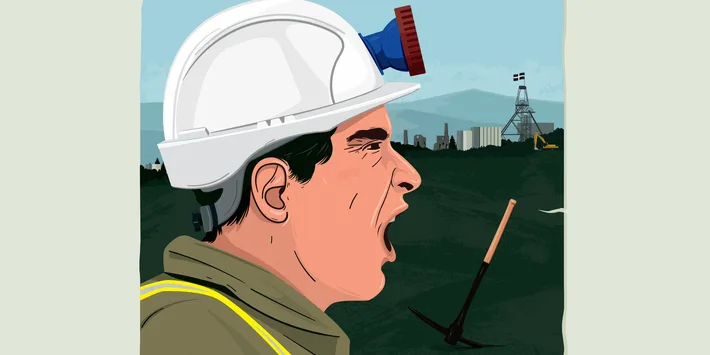

Illustration: Tracy Worrall

10 min read
The UK has deposits of critical minerals but has stopped mining them. Sophie Church hears that, if we don’t take advantage of our assets, others are waiting
Cornish lads are fishermen, and Cornish lads are miners too. But when the fish and tin are gone what are the Cornish boys to do?
In 1994, Cornish shanty singer Roger Bryant wrote Cornish Boys, an ode to Cornwall’s dying mining industry. The price of tin was falling, and the mines that had supported Cornish communities for hundreds of years could not afford to stay open. Four years after Bryant wrote his shanty, the UK’s last remaining tin mine, South Crofty, closed.
Yet pockets of critical minerals remain nestled across our Isles, from County Tyrone to the Highlands and down to Cornwall. The UK has some of the largest reserves of lithium in Europe, while Hemerdon Mine in Devon boasts the second-largest deposit of tungsten in the world.
Used in many of the technologies we see today, from solar panels to mobile phones to jet engines, China has invested heavily in critical minerals and held prices low. China now produces more than 50 per cent of 17 of the top 27 critical mineral groups, and refines 90 per cent of the world’s rare earths. Xi Jinping’s ‘Belt and Road’ initiative has seen China control critical mineral extraction on five different continents.
South Crofty and other critical minerals mines around the world have been unable to compete.
But as the world wakes up to its over-reliance on China for critical minerals, the UK is finally recognising its own value. In July, Rachel Reeves visited South Crofty, which has now reopened thanks to government funding. After speaking a few words in Cornish, in her hard hat and high-vis, the Chancellor went on to say that the £28.6m grant from the National Wealth Fund (NWF) could lead to the creation of 1,300 jobs. The team at South Crofty now hope to start commercial extraction of tin by mid-2028.
Chris understands the opportunity, but he also understands the requirement for investment in processing
In September, the NWF invested another £31m into Cornish Lithium alongside increased funding from Techmet, a critical minerals investor. Then-communities secretary Angela Rayner designated Cornish Lithium’s Trelavour Hard Rock plant a ‘Nationally Significant Infrastructure Project’.
“It’s really hard to articulate this groundswell of hope that is coming back to communities that for decades have been deprived,” says Perran Moon, Labour’s MP for Camborne and Redruth.
“We’re seeing record numbers of apprenticeships in some of our businesses. We’re seeing young people really engaging with geology. And we’re seeing our further education college maxed out in its number of construction workers and engineers.”
The UK’s mining industry is also revelling in the government’s support.
“What projects internationally are competing for is capital, and that’s where, for instance, the NWF investment in Cornish Lithium – which was instrumental in attracting other funding from the private sector into the project – was so important,” says Mike King, business development and government relations vice president of Cornish Lithium.
Being made a ‘Nationally Significant Infrastructure Project’ helped “tremendously” in giving certainty to investors, King adds.
Strategic Minerals, which is exploring the Redmoor Tungsten-Tin-Copper project in Cornwall, has now unlocked over £750,000 in grant funding. The company matched this via its parent company to access a further £1.5m.
“We’ve significantly increased our market cap through that positive news flow and showing how good a project we have here,” says Dennis Rowland, managing director at Cornwall Resources Limited, which is working on the project.
But financial support and photo opps for the Chancellor may be the simpler of government’s tasks. Now, all eyes are on its Critical Minerals Strategy (CMS), which, delayed since the spring, is expected to be published this month.
Chris McDonald, industry minister in the Department for Energy Security and Net Zero (Desnz) and the Department for Business and Trade (DBT), is driving the strategy. Previously the chief executive officer of the Materials Processing Institute, McDonald is a welcoming face to those supporting UK critical minerals.
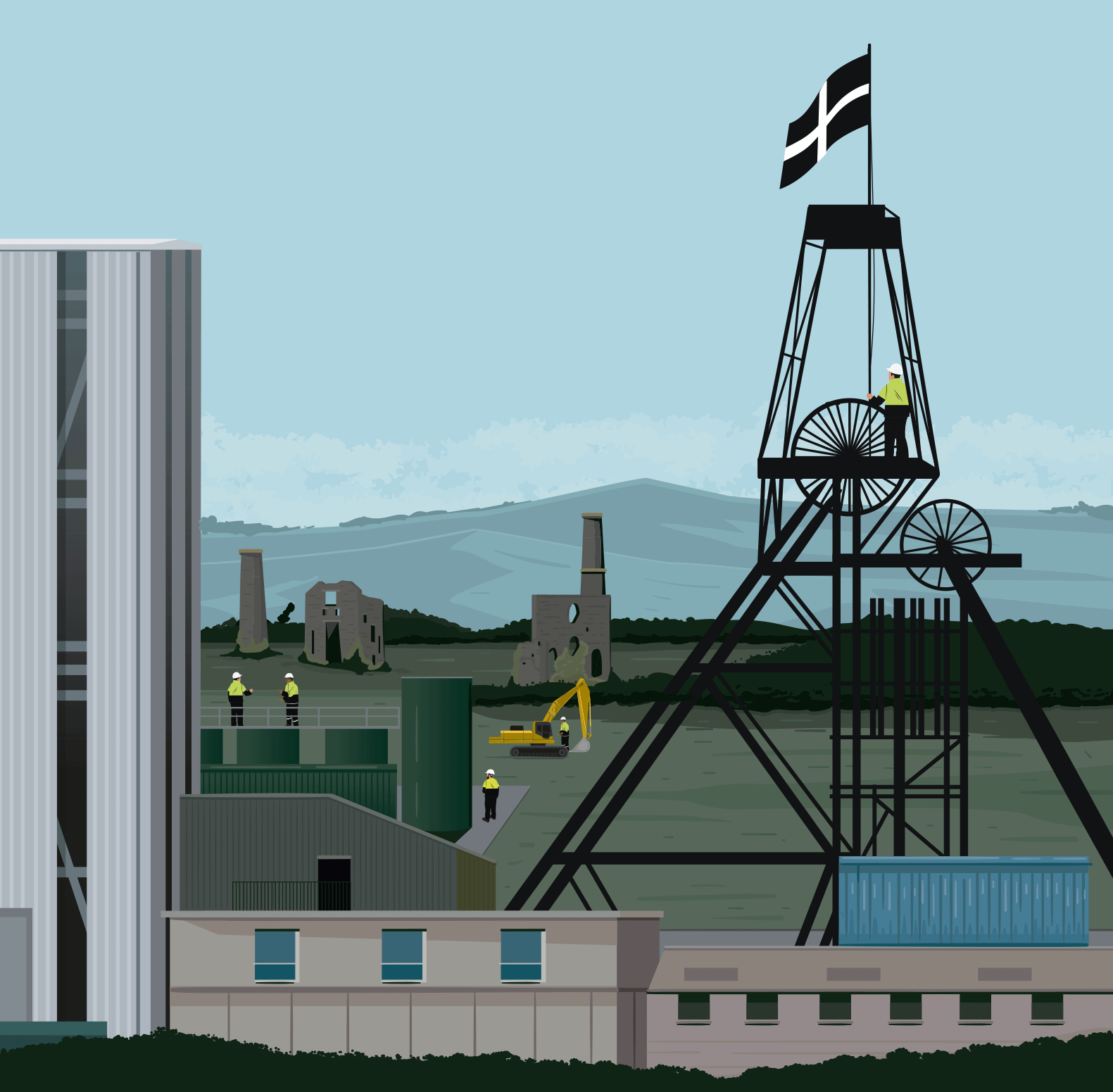
“Chris has got a lot of experience in this sector,” says Moon. “That really helps because he understands the opportunity, but he also understands the requirement for investment in processing. He’s in Stockton North; he understands the importance of the community side, of making sure there’s the right housing and social care.”
“We need the government to be ambitious and forward looking, and back the Cornish-Celtic Tiger – because we will roar if we’re given a chance,” he adds.
McDonald recently attended an event in No 11 hosted by Reeves, to which SMEs from the South West and North East were invited. Nick Pople, the managing director of Northern Lithium, who was also there, said McDonald showed he understands the UK must move at pace to secure its supply chain.
“He agrees that we need – and I would hope that the government and Rachel would agree – to be producing as much lithium as we can domestically in the UK as quickly as we can,” Pople says, “to ensure that we’ve got security of supply within the UK for the UK industry.”
Working together, Northern Lithium and Cornish Lithium could produce 50 per cent of the UK’s demand for lithium – essential for electric vehicle batteries – by 2035, he adds.
The previous Conservative government published a critical minerals strategy in 2022, which was updated in 2023. But King says the Labour government – and Moon’s dogged Cornish MP colleagues, working from their shared Westminster office – have been more “politically active” in raising awareness of critical minerals.
However, Labour has prevaricated over the CMS – drafting the document, then drafting again – leaving a strategic vacuum for the sector.
“The critical mineral strategy suffers and benefits from a lot of the same things that have been there with other strategies with this government,” says Dan Marks, research fellow for energy security at think tank Rusi.
“They are thinking about it quite carefully, and have been moving in the right direction, making some sensible changes and putting some money behind it, but moving incredibly slowly and lacking the more radical changes or strategic thinking that would really move the dial.”
Whitehall’s sluggishness is proving harmful. In October, UK-based mining company Pensana scrapped its £250m critical minerals processing plant beside the Humber – a project that promised to create 126 jobs – to move its refining operations to the US.
Either UK PLC takes advantage of the Cornish opportunity, or international investors will
“Europe and the UK have been talking about critical minerals for ages,” Pensana’s chairman, Paul Atherley said. “But when the Americans do it, they go big and hard, and make it happen. We don’t; we mostly just talk about it.”
For European countries firing up their defence industries, accessing secure sources of critical minerals has become vital. In July, the European Commission’s first ever stockpiling strategy concerned plans for food reserves and medical equipment – but also critical minerals.
Yet the UK defence industry has been left rudderless while it waits for the CMS. Last week, The i reported that the UK risks falling behind in the race to access critical minerals used in F-35 fighter jets.
Marks thinks there has been a “massive oversight” in Keir Starmer’s government to incentivise the UK defence industry to secure its own critical minerals supply chains. “I don’t get the sense that defence industries are expecting to have to do anything about this any time soon,” he says. “If they’re not, then that’s a massive vulnerability.”
Of the drones currently being made in the UK, for instance, around 90 per cent of their flight controllers – the core electronic boards managing flight stability, sensors, and controls – are made in China, The House has found.
As the UK slowly wakes up to the potential of mining its own underground stores of lithium, tin and copper, so too has China.
While official Chinese delegations have previously visited the UK to learn about our critical minerals sector, China is now sending a delegation from its Sichuan Provincial Natural Resources Investment Group (SPNRIG) – a capital investment company focusing on the energy industry – to the UK, The House has learned.
The delegation comprises 11 senior representatives primarily responsible for investment and strategic development at the company.
Bonjoe Education, a London-based company that specialises in such exchanges between the UK and China, will be hosting the group. Bonjoe Education’s programmes have fostered an “understanding of different cultures” and have had “great influence” on communities at home and abroad, its website reads. Bonjoe Education declined to comment.
SPNRIG has also been reaching out to specialist critical mineral organisations in the UK, The House understands.
While the aims of the visit remain unclear, industry figures have reason to fear. Earlier this year, British-based Anglo American sold its Brazilian ferronickel operations in Brazil to MMG Singapore, whose largest shareholder is China Minmetals, a Chinese state-controlled company. Critics warned this would leave Beijing with greater control over critical minerals vital to the UK’s defence, clean energy and industrial sectors.
“Ultimately, either UK PLC takes advantage of the Cornish opportunity, or international investors will,” says Moon.
“We have international visitors who come and look and talk to our businesses all the time. I’m very, very hopeful that the government is not going to take their eye onto other things and allow those international investors to dominate the Cornish critical minerals opportunity.”
Moon lists international investors from Singapore, China, America and Canada as those, “as sure as eggs is eggs”, who would raid our assets.
“There’s not a massive appetite within Cornwall to sell out to Chinese investors. But ultimately, this is an area that has been deprived for a very long time, there is an opportunity to create jobs to make sure that we get some economic stability within Cornwall. It would be a mistake, in my view, to not be taking advantage of that and letting international players dominate.”
“There is no western stage one processing capacity for tungsten from concentrate into the first stage of refined product,” says Mark Burnett, chief executive officer of Strategic Minerals.
“[I’d be lying if I said] we hadn’t been contacted by a corporate party that is related in some way to China – but it’s rather inescapable. But to be clear, from a board, a company and a management and team perspective, we don’t want to take that route. We want to develop a tungsten mine in the UK that’s the highest-grade tungsten mine in Europe, and largely in the world.”
History has shown that when foreign investors buy domestic critical minerals assets, local communities can suffer.
Swiss mining company Xstrata took full control of the Windimurra Vanadium plant in Western Australia, for example, only to shut the mine down just months later in 2004. Hundreds of people were left jobless.
“They were protecting the South African market, the South African mines, so they didn’t want a new entrant into the market,” says Gavin Mudd, director of the Critical Minerals Intelligence Centre at the British Geological Survey.
“There was an extension from the gas pipeline built for that, so it could actually have a gas fired power station and therefore, in theory, cheaper electricity. That was subsidised by something like $100m or $200m by the West Australian government. To have that facility mothballed was a huge waste of taxpayers’ money.”
For now, momentum is on the side of British miners. But while the UK may be seeing its own ‘gold rush’, the danger is that government funding “freezes up and dries up”, says Burnett.
As world powers race to secure their own critical minerals, Labour faces a choice: continue to invest in our own critical minerals and support our ‘Cornish boys’ or watch as others reap the rewards.
A government spokesperson said: “Securing our supply of critical minerals, including nickel, is vital for our industrial strategy, economic growth and clean energy transition.
“We’re working with UK industry and G7 partners to develop plans that will reinforce our supply chains for the long term, increase the resilience of our economy and drive forward our Plan for Change.”


Israel says it will invade Lebanon and enforce a ‘defensive buffer’ zone up to the Litani river. Or, in plain English, the settler-colonial state means to colonise Lebanon’s south – probably permanently.
In theory, Hezbollah breached a US-brokered ‘ceasefire’ with Israel in early March which had held up since their last war in 2024. In practice, the US gave Israel carte blanche to strike Lebanon, which it has done constantly since the deal was struck. During the intervening period, Israel attacked southern Lebanon about 15,400 times.
Now senior Israeli officials say they have destroyed many of the bridges on the Litani river, largely cutting off the south from the rest of the country.
The Guardian reported on 25 March:
During a meeting with the military chief of staff, Israel defence minister Israel Katz said Israeli forces would “control the remaining bridges and the security zone up to the Litani”, a river in Lebanon that meets the Mediterranean about 30km (20 miles) north of Israel’s border.
Adding:
Katz added all bridges over the Litani river, which he said had been used by Hezbollah to move operatives and weapons into southern Lebanon, “have been blown up and the IDF will control the remaining bridges”.
Far-right minister Bezalel Smotrich said on 23 March that the war:
needs to end with a different reality entirely, both with the Hezbollah decision but also with the change of Israel’s borders.
I say here definitively…in every room and in every discussion, too: the new Israeli border must be the Litani.
However:
He nevertheless represents a widely and deeply-held expansionist desire at the heart of Israel’s settler colonial polity. In Zionism’s ethno-nationalist fever-dream, Lebanon—and even lands far beyond it—are already part of Israel.
Israel aggression gathers steam
Israel attacked 92 villages in the south in 24 March:
The Israeli military attacked 92 villages and towns across Lebanon on Tuesday. A journalist on the ground recorded a new strike today while reporting from the town of Al-Burghuliyah, a coastal municipality in the Tyre district of southern Lebanon, near the Mediterranean. https://t.co/9Uun7KDNwG
— Drop Site (@DropSiteNews) March 25, 2026
Channel 4 News attended the funeral of another two paramedics killed by Israeli strikes on 25 March. the youngest was 16 years old:
Awful, heartbreaking, unacceptable
We’ve just been at the funeral of two young volunteer paramedics in southern Lebanon – killed in a direct Israeli strike… one was only 16 years old
They were killed whilst wearing their full kit according to witnesses – returning from the… pic.twitter.com/K5rtw0WwHO
— Secunder Kermani (@SecKermani) March 25, 2026
The Israeli assault has displaced one in five Lebanese people. The World Health Organisation (WHO) reported that massive surges of displacement were placing pressure on hospitals:
A #WHO team visited Siblin Governmental Hospital to assess capacity amid a surge in displacement. Over 130,000 people in the area are placing growing pressure on health services. pic.twitter.com/CeuYpAKKOa
— WHO Lebanon (@WHOLebanon) March 25, 2026
Al Jazeera reported that the war had caused food prices to inflate. While Hezbollah – a Shia political party and paramilitary force in the south – called for unity.
Hezbollah chief Naim Qassem said:
Negotiating with the Israeli enemy under fire amounts to imposing surrender and stripping Lebanon of its capabilities, especially since negotiations are fundamentally rejected with an enemy that occupies land and continues daily aggression.
We call for national unity against the Israeli-American enemy under one title at this stage: stopping the aggression to liberate the land and the people. All other issues can be discussed afterward.
Israel has had its sights on southern Lebanon for years. It’s desire to drive all the way through to the Litani has nothing to do with ‘defence’ or establishing ‘buffers’. This new outrage is driven by the same nakedly colonialist ambition which has driven Israel’s genocide against Palestinians, its attack on Iran, and its sundry other atrocities in the region.
Featured image via the Canary
Politics
The House | Parliament must lead by example in creating a Commons more open, effective and accessible for all



3 min read
Since being appointed Leader of the House last September, I’ve enjoyed chairing the cross-party Modernisation Committee.
It’s been rewarding to act on testimony from MPs, Peers, staff, academics and members of the public on how we can make the Commons more accessible, effective and open.
During the last Labour government, Modernisation Committee reports led to key changes that are now established parts of our parliamentary week, including Westminster Hall debates, topical questions and expanded educational and visitor facilities.
At the end of last year, we published our report into accessibility in the Commons. This year, we are examining the key topics in today’s parliamentary landscape.
Following our inquiry into accessibility, during which the committee heard from disabled MPs, Peers, House and Members’ staff as well as academics and senior officials, it was made clear that accessibility needs to become a major priority for the Commons, and be woven into the fabric of what it does.
Our report made a series of recommendations, including:
• Where reasonable adjustments are required for disabled MPs to contribute in the Chamber and committees, it should be made as clear as possible how they can be accessed.
• Visitors should be asked upon entry if they have a disability or access need and offered support accordingly.
• Senior leaders should establish an External Accessibility Advisory Group, allowing organisations representing disabled people the opportunity to provide feedback on accessibility challenges in Parliament.
• The Commons should lead by example and inspire other public sector bodies by ensuring as much as possible of its communication and engagement activities are delivered in accessible formats such as British Sign Language, Easy Read and audio file.
• Line managers should receive mandatory training on how to support disabled and neurodiverse individuals.
If you haven’t yet read our report, I would encourage you to do so, and we’ll continue following up on this important issue to ensure our recommendations are implemented and progress towards making the Commons more accessible continues at pace.
As a committee, we’re committed to regular engagement with the wider parliamentary community, including smaller parties, the Speaker and his deputies and all those who work here as well as the public.
So far this year, we’ve been working closely with the Liaison Committee on remote access to committee hearings to ensure the resilience of parliamentary proceedings, and we’ve discussed the recommendations from the independent review into Parliament’s Independent Complaints and Grievance Scheme (ICGS).
We’re also interested in how Parliament can use time as effectively as possible, enabling MPs to scrutinise legislation and raise issues of importance to their constituents.
This is a topic that came up in our call for views at the beginning of the parliament and one we will return to this year. We’ll explore practical ways to provide MPs with more certainty about upcoming business and on-the-day changes, ensuring the Commons remains the crucible of national debate.
There is still much to do if we’re to make Parliament a more accessible and open institution which best serves the interests of our constituents. I’m committed to continuing to work with all MPs to achieve consensus in this important work.

Hundreds of frontline social workers are regularly stepping in to personally support people in crisis. New research by the Social Workers Union (SWU) suggests that the Government’s new Crisis and Resilience Fund may not be enough to prevent this.
Crisis support
Following a survey of the SWU’s members, many felt compelled to step in and personally fund basic items for people they support – from food to energy prepayment meter top-ups.
The Crisis and Resilience Fund, which is due to begin on 1 April, is intended to provide faster emergency support for households in hardship. It comes after reports of a looming social care crisis in 2024.
However, the SWU warns that the Fund may not go far enough to prevent social workers continuing to plug gaps themselves, particularly when crises arise suddenly or where systems remain slow and bureaucratic.
Survey findings
More than 380 social workers affected by the issue took part in the research last summer, with three in four (75%) saying they were unable to claim back the costs they incurred on behalf of service users.
The overwhelming majority had to buy food (87%), while others were compelled to pay for public transport (36%), clothing (26%), cleaning supplies (24%), and top-up energy prepayment meters (19%) to keep people warm.
Though over half of social workers affected (58%) described such payments as rare, more than a quarter (27%) said they were dipping into their own pockets every month, with nearly one in ten (9%) doing so even more regularly. Most contributions were under £25, but one in twenty social workers spent more than £100.
Over a third (36%) said helping clients put their own finances at risk, highlighting how the cost-of-living crisis is now affecting not just vulnerable families, but the very workers tasked with protecting them.
Despite 86% of social workers trying to secure support via foodbanks, council-run household support funds and local charities, seven in ten times (70%) they were faced with an emergency that left no time to navigate complex or slow bureaucratic systems.
A system in crisis
John McGowan, general secretary of the SWU, has warned the findings expose a “broken support system”:
It cannot be right that social workers are left to plug the gaps in a broken support system with their own money. While the new Crisis and Resilience Fund is a welcome step, it will not solve the problem on its own if support remains slow, complex or hard to access in an emergency.
The data paints a stark picture of a safety net riddled with delays and gaps. The true test of the new Fund moving forward will be to see if it means that local and national governments act urgently to ensure help is there when it is needed.
It is a claim backed up by the stories told by social workers themselves. Asked why they had resorted to providing direct financial support to service users, one social worker told researchers:
There are often several real forms to fill out to request financial support, which are declined anyhow by managers. To save time – something we don’t often have – I’ve paid for items myself.
Another claimed that their local authority “has restricted food bank vouchers to 3 per year”. Another stated that their “service user was unable to access the internet or navigate lengthy online forms.” One went so far as to say that there just was no longer any support left to apply for.
Featured image via the Canary

If ever you’ve found yourself with one of Phoebe from Friends’ oddball musical numbers stuck in your head, it turns out that you have Lisa Kudrow herself to thank.
The Emmy winner recently reflected on her performance as Phoebe Buffay during a video interview with Vanity Fair, where she also discussed some of her character’s infamous musical performances.
“With Phoebe and the songs, at first, I took a guitar lesson or two,” she recalled. “And then, I realised I don’t like playing guitar.
“My brother is a phenomenal guitar player, and there’s real musical talent in my family, but not with me. And I also just felt like the point of this character is that she thinks she’s great, and she loves doing it. It doesn’t mean that she’s talented and I think it’s even funnier and more worthwhile if she just sort of knows some chords and doesn’t really play them well.”
With that in mind, it was decided that while Friends’ writers would come up with Phoebe’s melodies, Lisa would work on the melodies, after reasoning that they should sound as amateur-ish as possible.
“I would then have to work on the songs during the week,” Lisa continued. “On a multi-camera show, you rehearse all week, and then you shoot it on one night. And I thought it would be easier if I can come up with the tune of the ditty, because I thought, ‘they can’t be too good’.”
By far, Phoebe’s most famous Friends number is Smelly Cat, which the character performed on multiple occasions during the show’s 10-season run.
In the two decades that Friends has been off the air, Lisa has also performed Smelly Cat with Taylor Swift on her 1989 world tour and Lady Gaga on the show’s 2021 reunion special.
However, she’s admitted that Smelly Cat isn’t even her favourite offering from Phoebe’s oeuvre.
“I thought some of the other Phoebe songs were so much funnier,” she revealed. “When she’s at this nursery school or this kids’ programme, and singing these songs that are so inappropriate – your dog is dead, grandma is, too – those things are really funny. They’re so inappropriate!”
Lisa previously claimed that she’d never actually enjoyed Friends as a viewer, but decided to revisit the show in the wake of Matthew Perry’s death.
During a recent interview, the Romy & Michele’s High School Reunion star admitted she’d been crying with laughter while watching one particular sequence from the sitcom’s hey-day.

A US court has found that Meta and YouTube are deliberately getting kids addicted to their sites and causing them harm in the process. It’s the latest sign that the tide is turning against the sick US tech sector, which has enjoyed an ability to act without impunity for decades now.
A Los Angeles jury has ordered YouTube and Meta to pay $3 million to a woman who sued them, alleging that the negligence of both tech giants led her to get addicted to their platforms at a young age.
— More Perfect Union (@MorePerfectUS) March 25, 2026
Meta is the parent company of Facebook, Instagram, and WhatsApp; YouTube, meanwhile, is owned by Google.
Meta and YouTube causing harm
Variety summarised the case as follows:
A jury has ordered Meta and Google to pay $3M to a 20-year-old woman who alleged that she became addicted to Instagram and YouTube as a child:
- Jurors found the companies liable for product design features that harmed her mental health
- The plaintiff, Kaley G.M., testified that the apps replaced her hobbies and contributed to anxiety, depression and body dysmorphia
- The case is the first of thousands targeting Big Tech over addiction to reach trial, a “bellwether” to assess how other claims could be resolved
- Meta was ordered to pay 70% of the damages, with Google responsible for the remaining 30%
The trial took place in Los Angeles over a period of six weeks, with jurors hearing testimony from executives, whistleblowers, and expert witnesses. As the Guardian reported, the plaintiff:
testified that she became addicted to YouTube at age six and Instagram at nine, which she said had deleterious effects on her wellbeing. By age 10, she said, she had become depressed and was engaging in self-harm as a result. Her social media use allegedly caused her to have strained relationships with her family and in school. When she was 13, KGM’s therapist diagnosed her with body dysmorphic disorder and social phobia, which KGM attributes to her use of Instagram and YouTube.
The Guardian compared the case to the 1990s legal action against cigarette manufacturers. Then, like now, it was argued that executives understood the harms caused by their products, but they chose to prioritise profits over public health.
Counters
It’s clear that social media is having a negative impact, but there’s also a simultaneous push to restrict certain freedoms online. According to groups like Reclaim the Net, this latest case could be used to further inhibit freedoms in a similar fashion to what we’ve seen in the UK via the Online Safety Act.
In their summary of the above case, Reclaim the Net write:
The chain from these verdicts to surveillance architecture runs through a single word: “addiction.” Public health emergency follows from that classification. Emergency powers follow from the emergency. Age verification follows from emergency powers. OS-level ID checks follow from age verification. Each step is presented as protecting children. What gets built is a surveillance system for everyone unless we can get more people to wake up to it.
There’s obviously a line to be walked, but the grave harms caused by these companies cannot be ignored or pushed to one side. As the Guardian reported:
The jury’s verdict comes just one day after Meta was ordered to pay $375m in civil penalties in a separate lawsuit in New Mexico. In that case, the jury found the company misled consumers about the safety of its platforms and enabled harm, including child sexual exploitation, against its users. The back-to-back verdicts are the first ever to find Meta liable for how its products affect young people.
The problem activists have is that the loss of online anonymity will feel like a lesser evil to many than the sexual exploitation of children. This is why any successful campaign needs to be clear that the status quo does need to change, and that greedy tech companies cannot be the ones in charge of our digital spaces due to the clear and evident harm to children.
Floodgates
As people have highlighted, this case could open the floodgates for more legal action:
Welp, it sounds like a lot of people can sue Meta and Google and make some good money 😂 https://t.co/0U1uXZ8Juz
— DeepHumor (@DeepHumor) March 25, 2026
The governor of California Gavin Newsom also spoke out following the verdict:
Big Tech is finally answering for the harm it has caused our children — after years of fighting against common sense regulations, today’s verdict shows that they can’t escape accountability.
California isn’t backing down. We’ve enacted the nation’s strongest protections, and… https://t.co/SqY3PtW3Ls
— Governor Gavin Newsom (@CAgovernor) March 25, 2026
Newsom is very much a weather vane politician; he’s also eyeing up a run at the presidency. The fact that he’s speaking out against big tech and Israel shows that some of the US’s biggest political excesses have become unviable for an ambitious politician:
The Democrats’ ranking political weather vane has spoken. California Gov. Gavin Newsom ventured onto what was for him new terrain, invoking the A-word—“apartheid”—to describe a nation that had once been the cynosure of American liberals’ eyes. https://t.co/EuLQompHJA pic.twitter.com/KyrwtkTg2Q
— The American Prospect (@TheProspect) March 4, 2026
Of course, politicians like Newsom are also flip-floppers, so they can’t be trusted to enact the crucial change that needs to happen:
Governor Gavin Newsom: “I revere the state of Israel. I’m proud to support the state of Israel.
I deeply, deeply oppose Benjamin Netanyahu’s leadership, his opposition to the two-state solution, and deeply oppose how he is indulging the far right…”
pic.twitter.com/q2kl7s2GNu— Republicans against Trump (@RpsAgainstTrump) March 24, 2026
Featured image via Wikimedia

With all the grace of a sulky teenager, Girlguiding finally issued a statement this week, announcing that it will comply with the law on single-sex spaces. ‘Trans girls’ (aka boys) will have to leave the organisation by 6 September. It might as well have read: ‘The nasty judges made us do it.’ Naturally, there was also a link to mental-health support for those upset by the discovery that boys aren’t allowed in.
Girlguides should always be prepared. But it seems the leadership have been shocked by the mess in which they now find themselves. For most of its existence, Girlguiding didn’t have any policies on trans members or volunteers. That’s because the concept of ‘trans children’ had not been invented. Kids who didn’t conform with sex stereotypes were not thought to have some sort of mismatch between their bodies and their minds, and adults knew better than to pander to childhood fantasies. Meanwhile, cross-dressing men weren’t so bold as to assume they’d be welcome in a role volunteering with teenage girls. In short, there was no ‘trans inclusion’ policy because institutional lying hadn’t been normalised.
Then, in 2017, Girlguiding met with Stonewall and Gendered Intelligence to develop policies to accommodate boys and men who identified as trans. Rank-and-file members were not consulted. Those who raised legitimate concerns were not simply silenced, but publicly smeared and shamed.
In 2018, long-serving guide leaders Katie Alcock and Helen Watts were forced out after being investigated for social-media posts in which they raised safeguarding concerns. Their crime was to have questioned the newly developed trans-inclusion policy, which admitted men and boys on the basis of a self-declared female identity. Watts, a volunteer of 15 years, saw her Rainbows Unit for girls aged five to seven closed. Alcock later reached a financial settlement, telling the Daily Mail that the process was akin to interrogation by ‘the secret police in some totalitarian state’. She claimed to have been ‘treated no differently from a child abuser. Yet all I’d done was say safeguarding should come before anything else.’
By 2022, what had been waved away as hypothetical risk had become embarrassingly concrete. Girlguiding was forced to investigate one of its commissioners, Nottinghamshire bus driver Monica Sulley, who oversaw multiple units, after he posted Instagram images in fetish gear, posing with what appeared to be a replica firearm, a holstered handgun and a sword, with captions including: ‘Now behave yourselves or Mistress will have to punish you #mistress.’
But Girlguiding’s disastrous trans-inclusion policies did more than open the tent flap to creepy men and confused boys: they effectively groomed girls to give up their rights. Last week, Janet Murray, writing in the Telegraph, uncovered a splinter group, Guiders Against Trans Exclusion (GATE), which has provided advice on how leaders can campaign for boys to remain, from lobbying politicians to attending protests. A publicly available briefing directs leaders to buy political badges and introduce ‘trans rights’ materials into their units.
This has been successful. A video from Thatcham Rangers shows girls holding placards reading ‘Trans girls are girls’ and ‘Our story includes trans girls’, while reciting the Girlguiding promise.
We are told children should get off their phones, join clubs and do something wholesome, away from adult concerns. Girlguiding is perfectly placed to offer that. But it is understandable that parents, and girls themselves, want the reassurance that they will be safe, that there will be no horny teenage boys pretending to be teenage girls who are tagging along on camping trips, and that their daughters won’t be accompanied to the loo by adult male volunteers. They also need to be sure that their children won’t be subjected to extremist ideological views, and this includes the fiction that boys are really girls if they say so.
The promise each Girlguiding member makes is schmaltzy but based on decent principles: Do your best, be true to yourself, develop your beliefs, serve the king, your community, and help other people. But in Girlguiding’s pitiful statement, there is no sign of these values. There is neither contrition nor shame from the leaders – not for the women they drove out, not for the families they alienated, and not for the girls they put at risk. They have not done their best, developed their beliefs or served anyone but themselves. It seems the professionals at the top of Girlguiding were too busy polishing their rainbow badges to remember their duty to the girls they were meant to protect.
Jo Bartosch is co-author of Pornocracy. Order it here.

2025 was all about “swicy” (sweet and spicy) flavours. Think: the seemingly never-ending reign of hot honey.
But in 2026, it seems, we’ve moved on to “fricy”, a trend the BBC said is blowing up this year.
What is “fricy” food?
It’s a combination of fruity and spicy flavours.
It might include hot and salty spice mix Tajín sprinkled over some mango or melon (a personal fave), or foods that are naturally a combination of the two, like some sweeter chilli peppers.

What “swicy” foods can I try?
- Thai papaya salads,
- Sri Lankan mango curry “amba maluwa”,
- Mango salsa,
- Tagines containing apricot,
- Scotch bonnet peppers,
- Yuzu Kosho,
- Tajín with fruit,
- Aji amarillo pepper,
- Spicy pork and pineapple kebabs,
- Chilli and lime combos.
But really, there’s no end to the mixes you can make.
Generally, citrus fruits pair well with chilli, and the combination of both is brilliant with seafood.
Bright, strong flavours like pineapple and mango are also delicious with piquant chilli (they’ve historically been paired with Tajín).
Don’t try to limit yourself too much, though: cucumber, which is technically a fruit, is delicious with papaya and chilli, for instance.
There’s some science behind it
Sweet and spicy flavours have long been combined in cooking.
And it turns out there’s a scientific reason something as sweet as a mango can sit beautifully in a curry: “With sweet and spicy, our body processes spice through receptors in our taste buds and the capsaicin in peppers binds to our taste buds,” food scientist Brittany Towers told Business Insider.
Sugar helps to take away some of the sting of that hot sensation, which itself brightens the flavour of the fruit.
No wonder I can’t stop eating Tajín and mango…


1935: Winston Churchill (left) in the grounds of Chartwell with Ralph Wigram / Image by: Fremantle / Alamy

4 min read
A valiant attempt at understanding why accurate predictions so often fail to cut through
“One inch ahead is total darkness”: so goes the Japanese proverb. In times like now of global uncertainty, it seems a suitably appropriate dictum to caution the army of prophets, forecasters and poll interpreters, all ready to fire off a take, their visions of the future hedged in a string of qualifications and suitably Delphic in style.
The interesting question is whether any of this kind of activity, from the white-bearded biblical type or the hard-nosed corporate analyst (self-proclaimed or otherwise) in the internet age of total and instant connectivity, has any market or appeal at all.
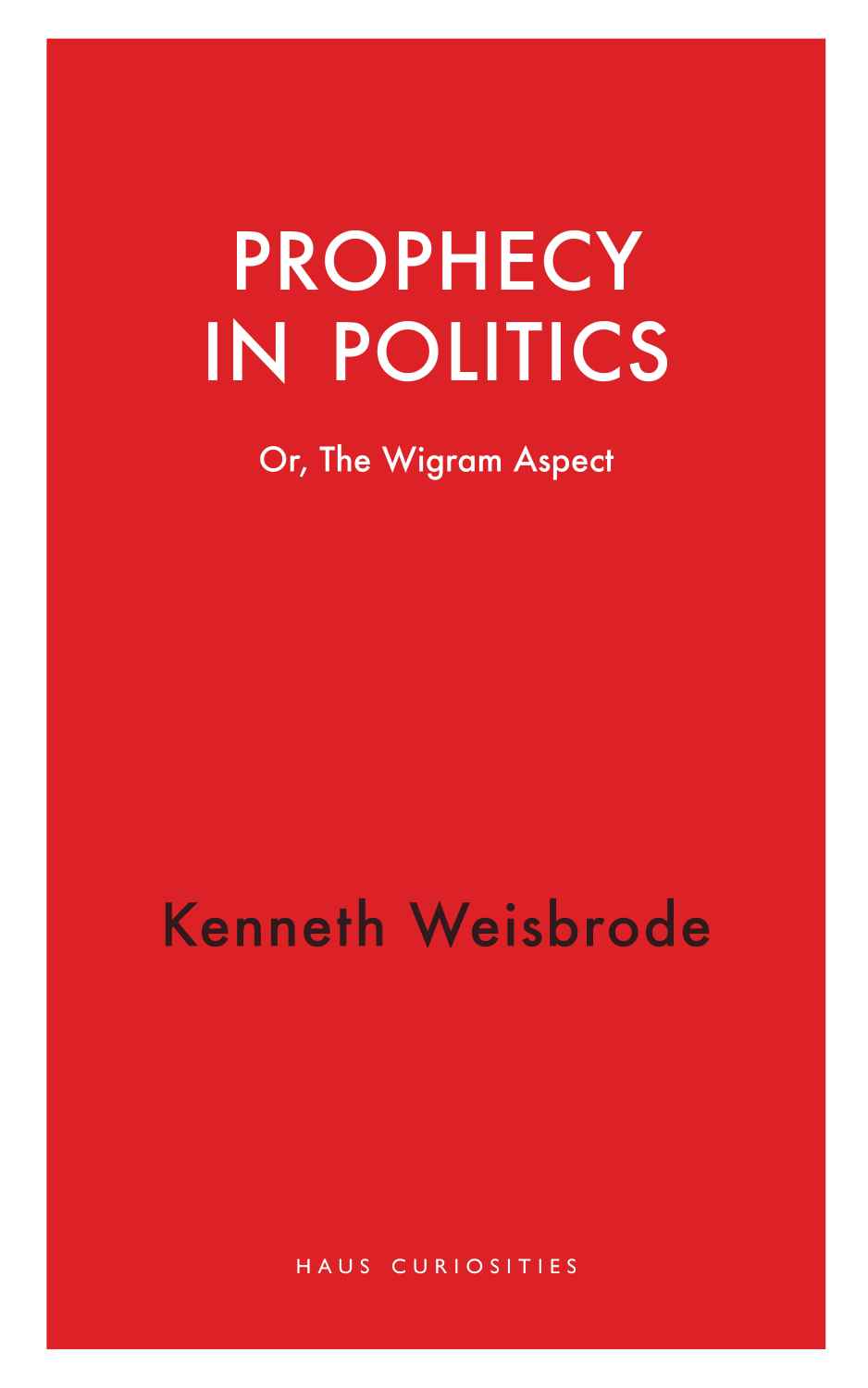
A thought-provoking booklet appears, published by Haus Curiosities, which makes a valiant attempt to disentangle all the different types of futurology which surround us. From the lofty certainties to the entertaining guesses, and how on earth to evaluate them.
The author of this little volume, an academic and former defence analyst, Kenneth Weisbrode, employs the clever device of focusing on one very memorable instance when a person warned about oncoming world events in the 20th century – and one which, with hindsight, proved to be deadly and tragically right.
The name of this brave character was Ralph Wigram, a middle-ranking Foreign Office official who could see the huge conflagration ahead as Germany re-armed in the 1930s under the belligerent Nazi leaders, but with a generally complacent bien pensant outside world looking on and broadly assuming that it just could not happen again.
The information streams have all become avalanches
How and why did he, among the growing noise of opinions, get heard? Answer: by supplying a flow of detailed and reliable facts (he had been in Berlin and had plenty of German friends and contacts) to a few carefully selected and influential individuals – who in turn had the ear of the public. Top of his list was none other than Winston Churchill.
To me, this makes Churchill as well as Wigram the real prophets in this classic 20th century compound of forecast and prophecy – eventually borne out in the full horror of a Second World War. Wigram peered ahead and saw the facts. Churchill was the magician with language, had the courage to speak out endlessly against prevailing wisdom (or worse, disinterest).
Could any of this most celebrated saga have occurred in today’s information-soaked world?
I reckon not. The information streams have all become avalanches. The iPad and the mobile have connected billions and turned most people into mini-authors and home-made prophets. The cult of transparency, lauded by accountability crusaders, has left little in free societies to expose. The hunters after the truth have found their paths blocked by crowds of truth-seekers with their own different truths. Uncertainty is everywhere and there is talk of people turning back en masse to mysteries larger than the human mind and akin to new religions.
Are eye-catching prophesies and predictions therefore now to be left to who will win the 3.30 at Cheltenham or to financial stock pickers?
No, I think there will always be a market for the most plausible and original analysis – the cautious wisdom that sees just a few inches ahead, even if the message from the future is not a cheerful one, or all that clear.
 The overwhelming message which Britain needs today is for a new national story, a sense of direction, articulated with colour, humour and history, but also with deep-rooted awareness and wisdom about the way power on the planet is shifting. That is the kind of prophecy realism which reassures, not a rehash of old ideologies which frighten. Its articulation must reach all, be noticed by all and unify all – or anyway, most.
Is the individual who can lead in performing this miracle of rallying and purpose – who can perceive the world trends and give them a prophet’s coherence and momentum – already in the political forum, or at least just there in the wings? Who knows? It is, after all, an age of deep uncertainty. Radio gurus are telling us every morning that the digital and AI age has rewired our brains as well as our emotions. It looks as though today’s prophets need to do some rewiring, too.
Lord Howell of Guildford is a Conservative peer
Prophecy in Politics: Or, the Wigram Aspect
By: Kenneth Weisbrode
Publisher: Haus Publishing

Medical drama fans can finally hit pause on their 500th rewatch of their old favourite in favour of something new, as buzzy series The Pitt has finally landed in the UK.
Despite the vast TV landscape of shows like Grey’s Anatomy, ER and House over the last few decades, it’s been a while since we’ve had a decent fresh addition to the genre – until now.
In The Pitt – which was developed by the team behind ER – viewers are planted directly into a fictional Pittsburgh hospital emergency department.
The hit show follows staff in real-time over the course of a 15-hour shift, spread out over 15 episodes, as they frantically navigate the influx of medical emergencies, as well as wider issues like their personal trauma caused by Covid and the American healthcare system.
Sounds like a hoot, right? Perhaps not, but if the piles of awards and critical praise are anything to go by, you’re going to want to make this your next watch.
The Pitt premiered in the US over a year ago in January 2025, and has already picked up five Emmy Awards, including Outstanding Drama Series and a Lead Actor win for lead Noah Wyle, as well as a Golden Globe and three Critics’ Choice Awards.
Katherine LaNasa and Shawn Hatosy have also picked up Emmy Awards for their performances as Nurse Dana Evans and Dr. Jack Abbot, respectively.
Despite all the hype, there hasn’t been a way for UK fans to get in on the action until today. Thankfully, as of Thursday 26 March, viewers can stream the show on the newly-launched streaming platform HBO Max.

Those who already have a Now subscription will be given immediate access to an ad-supported version of HBO Max, while new viewers will have four different payment options to use the service.
Reviews on this side of the pond are already lauding The Pitt as a “punchy, gory and totally addictive series” and “well worth the wait”.
You’ll also be able to watch Friends star Lisa Kudrow as she reprises her role as anti-heroine Valerie Cherish for the third and final iteration of The Comeback.
Completing the line-up are HBO classics like Sex And The City, The Sopranos, Succession and Game Of Thrones.

Donald Trump’s war in Iran will deliver a hammer blow to the UK economy, experts have warned.
The OECD think-tank has dramatically downgraded its forecast for Britain’s economic growth in the year ahead, with inflation also set to be far higher than previously thought.
It means Brits will have to brace themselves for higher prices in the shops, a jump in energy bills and soaring mortgage costs.
The findings will pile pressure on chancellor Rachel Reeves to either hike taxes or slash public spending in the next Budget to balance the nation’s books.
Just three months ago, the OECD forecast the UK economy would grow by 1.2% in 2026.
But the Paris-based body has now downgraded that to just 0.7% due to the global uncertainty caused by Trump and Israel’s decision to bomb Iran.
They also said “a prolonged period of disruption could also result in the emergence of significant energy shortages that would lower growth further”.
Meanwhile, the UK rate of inflation is set to hit 4% this year – double the Bank of England’s 2% target and well up on the 2.5% the OECD forecast in December.
It means the UK is set to have the second-highest inflation rate this year in the G7 group of advanced economies, behind only the US.
Reeves said: “The war in the Middle East is not one that we started, nor is it a war that we have joined. But it is a war that will have an impact on our country.”
The OECD report also warned of a sharp increase in fertiliser prices since the war began a month aga, with countries in the Middle East big producers of things like urea and ammonia.
Supply shortages “could increase global food prices, with potentially serious impacts to household finances and inflation expectations”, they said.
Reeves insisted that “in an uncertain world we have the right economic plan”.
But Tory shadow chancellor Mel Stride said: “This downgrade from the OECD is a damning verdict on how vulnerable our economy is thanks to Labour.
“Rachel Reeves has ramped up borrowing, spending and taxes. As a result, we have stagnant growth, while inflation, unemployment, the deficit and debt interest costs have all shot up.
“At the same time, Ed Miliband’s net zero obsession has left us reliant on imported energy instead of using our own supplies in the North Sea.
“Rachel Reeves can blame the world all she wants, but it’s her choices that have weakened our economy at the worst possible moment.”
Daisy Cooper, the Liberal Democrats’ Treasury spokesperson, said: “This dire OECD forecast is a wake-up call that the Government’s anti-growth agenda is leaving families to pick up the tab through soaring food and energy bills.
“The fastest way to break this cycle of stagnation is to get an EU-UK customs union to lower costs, secure our energy future, and finally kickstart real growth.”

Comedy Legends Cheech & Chong Set the Date for Their Riotous “Last Movie” on Streaming [Exclusive]

The Simpsons Was ‘Almost Cancelled’ Due To ‘Catastrophic’ Episode
IB Acquisition stockholders approve extension of business combination deadline


-
 Crypto World6 days ago
NIO (NIO) Stock Plunges 6.5% as Shelf Registration Sparks Dilution Worries
-

 Fashion6 days ago
Weekend Open Thread: Adidas – Corporette.com
-
 NewsBeat1 day ago
Manchester United reach agreement with Casemiro over contract clause amid transfer speculation
-

 Politics6 days ago
Jenni Murray, Long-Serving Woman’s Hour Presenter, Dies Aged 75
-

 Crypto World5 days ago
Best Crypto to Buy Now: Strategy Just Spent $1.57 Billion on Bitcoin During Fear While Early Investors Quietly Enter Pepeto for 150x Potential
-

 Crypto World5 days ago
Bitcoin Price News: Bhutan Sells $72 Million in BTC Under Fiscal Pressure, but the Smart Money Entering Pepeto Sees What the Market Does Not
-

 Tech6 days ago
inKONBINI Lets You Spend Summer Days Behind the Register
-

 News Videos11 hours ago
Parliament publishes latest register of MPs’ financial interests
-

 Sports3 days ago
Remo Stars and Kano Pillars Strengthen Survival Hopes in NPFL
-

 Politics7 days ago
Gender equality discussions at UN face pushbacks and US resistance
-

 Business4 days ago
No Winner in March 21 Drawing as Prize Rolls to $133 Million for Next
-

 Sports3 days ago
Gary Kirsten Accuses Pakistan Cricket Board Of ‘Interference’, Mohsin Naqvi Responds
-

 Tech4 days ago
Give Your Phone a Huge (and Free) Upgrade by Switching to Another Keyboard
-

 Sports6 days ago
2026 Kentucky Derby horses, odds, futures, preview, date: Expert who nailed 12 Derby-Oaks Doubles enters picks
-

 Tech4 days ago
AI enters the chat: New Seattle dating app relies on tech to facilitate meaningful human connections
-

 Politics7 days ago
Scotland’s rejection of assisted dying is a victory for humanity
-

 Business7 days ago
DLocal: Entering 2026 At Escape Velocity
-
Business6 days ago
Columbia Sportswear enters $500 million credit agreement with JPMorgan Chase
-

 NewsBeat7 days ago
Missile lands next to presenter during live report
-

 Tech5 days ago
Today’s NYT Connections Hints, Answers for March 22 #1015
You must be logged in to post a comment Login