
Politics
The House Opinion Article | Inside The Race To Mine The UK’s Critical Minerals

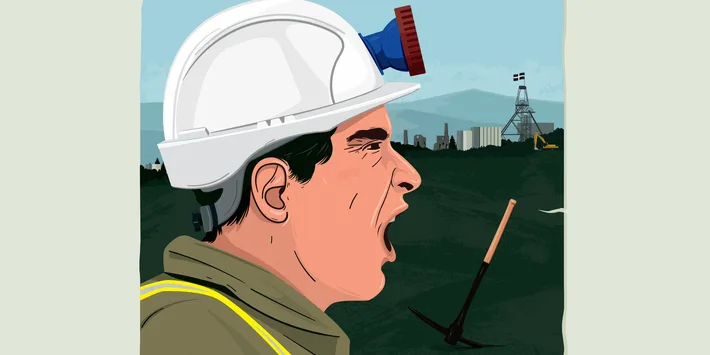

Illustration: Tracy Worrall

10 min read
The UK has deposits of critical minerals but has stopped mining them. Sophie Church hears that, if we don’t take advantage of our assets, others are waiting
Cornish lads are fishermen, and Cornish lads are miners too. But when the fish and tin are gone what are the Cornish boys to do?
In 1994, Cornish shanty singer Roger Bryant wrote Cornish Boys, an ode to Cornwall’s dying mining industry. The price of tin was falling, and the mines that had supported Cornish communities for hundreds of years could not afford to stay open. Four years after Bryant wrote his shanty, the UK’s last remaining tin mine, South Crofty, closed.
Yet pockets of critical minerals remain nestled across our Isles, from County Tyrone to the Highlands and down to Cornwall. The UK has some of the largest reserves of lithium in Europe, while Hemerdon Mine in Devon boasts the second-largest deposit of tungsten in the world.
Used in many of the technologies we see today, from solar panels to mobile phones to jet engines, China has invested heavily in critical minerals and held prices low. China now produces more than 50 per cent of 17 of the top 27 critical mineral groups, and refines 90 per cent of the world’s rare earths. Xi Jinping’s ‘Belt and Road’ initiative has seen China control critical mineral extraction on five different continents.
South Crofty and other critical minerals mines around the world have been unable to compete.
But as the world wakes up to its over-reliance on China for critical minerals, the UK is finally recognising its own value. In July, Rachel Reeves visited South Crofty, which has now reopened thanks to government funding. After speaking a few words in Cornish, in her hard hat and high-vis, the Chancellor went on to say that the £28.6m grant from the National Wealth Fund (NWF) could lead to the creation of 1,300 jobs. The team at South Crofty now hope to start commercial extraction of tin by mid-2028.
Chris understands the opportunity, but he also understands the requirement for investment in processing
In September, the NWF invested another £31m into Cornish Lithium alongside increased funding from Techmet, a critical minerals investor. Then-communities secretary Angela Rayner designated Cornish Lithium’s Trelavour Hard Rock plant a ‘Nationally Significant Infrastructure Project’.
“It’s really hard to articulate this groundswell of hope that is coming back to communities that for decades have been deprived,” says Perran Moon, Labour’s MP for Camborne and Redruth.
“We’re seeing record numbers of apprenticeships in some of our businesses. We’re seeing young people really engaging with geology. And we’re seeing our further education college maxed out in its number of construction workers and engineers.”
The UK’s mining industry is also revelling in the government’s support.
“What projects internationally are competing for is capital, and that’s where, for instance, the NWF investment in Cornish Lithium – which was instrumental in attracting other funding from the private sector into the project – was so important,” says Mike King, business development and government relations vice president of Cornish Lithium.
Being made a ‘Nationally Significant Infrastructure Project’ helped “tremendously” in giving certainty to investors, King adds.
Strategic Minerals, which is exploring the Redmoor Tungsten-Tin-Copper project in Cornwall, has now unlocked over £750,000 in grant funding. The company matched this via its parent company to access a further £1.5m.
“We’ve significantly increased our market cap through that positive news flow and showing how good a project we have here,” says Dennis Rowland, managing director at Cornwall Resources Limited, which is working on the project.
But financial support and photo opps for the Chancellor may be the simpler of government’s tasks. Now, all eyes are on its Critical Minerals Strategy (CMS), which, delayed since the spring, is expected to be published this month.
Chris McDonald, industry minister in the Department for Energy Security and Net Zero (Desnz) and the Department for Business and Trade (DBT), is driving the strategy. Previously the chief executive officer of the Materials Processing Institute, McDonald is a welcoming face to those supporting UK critical minerals.
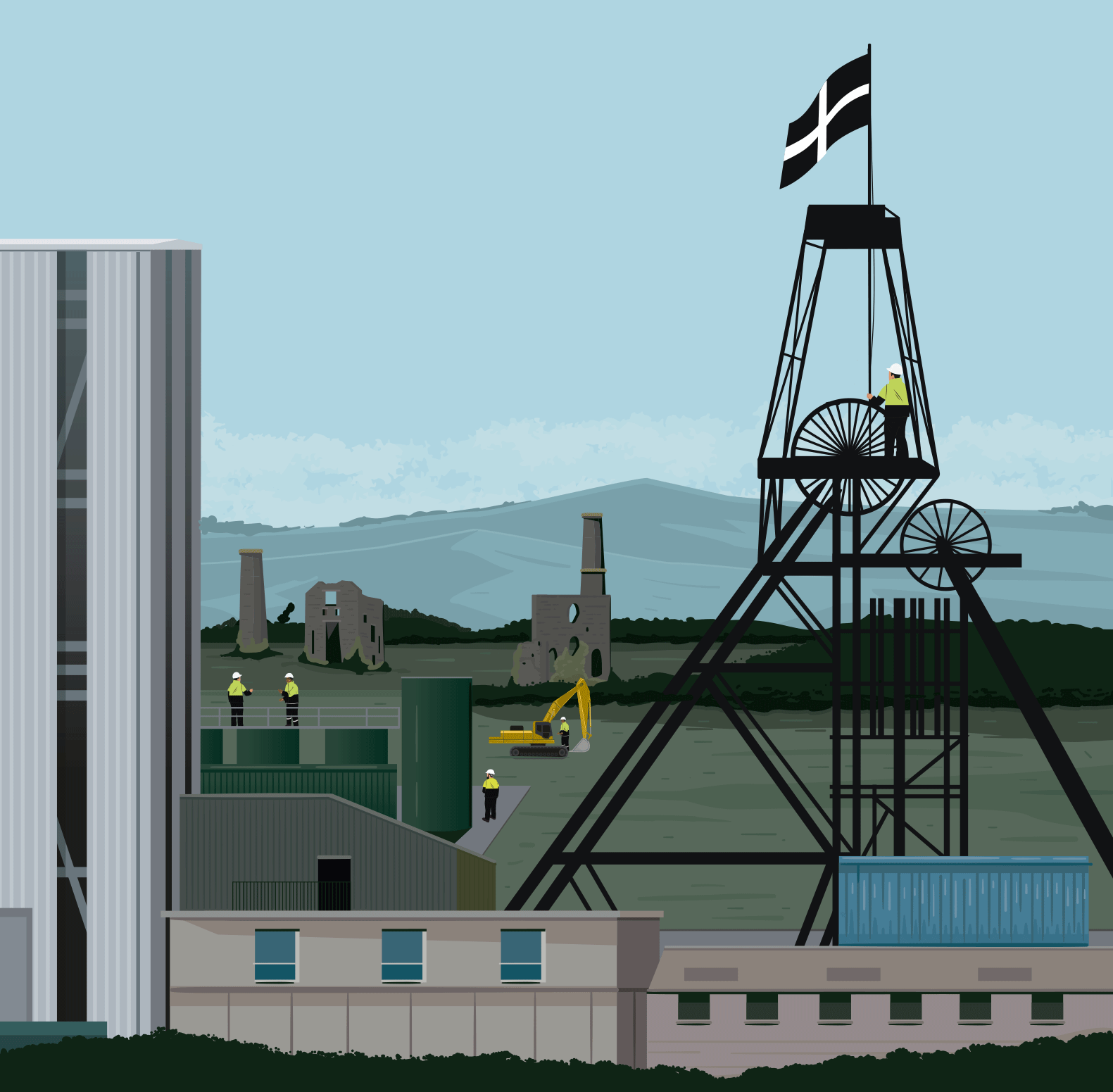
“Chris has got a lot of experience in this sector,” says Moon. “That really helps because he understands the opportunity, but he also understands the requirement for investment in processing. He’s in Stockton North; he understands the importance of the community side, of making sure there’s the right housing and social care.”
“We need the government to be ambitious and forward looking, and back the Cornish-Celtic Tiger – because we will roar if we’re given a chance,” he adds.
McDonald recently attended an event in No 11 hosted by Reeves, to which SMEs from the South West and North East were invited. Nick Pople, the managing director of Northern Lithium, who was also there, said McDonald showed he understands the UK must move at pace to secure its supply chain.
“He agrees that we need – and I would hope that the government and Rachel would agree – to be producing as much lithium as we can domestically in the UK as quickly as we can,” Pople says, “to ensure that we’ve got security of supply within the UK for the UK industry.”
Working together, Northern Lithium and Cornish Lithium could produce 50 per cent of the UK’s demand for lithium – essential for electric vehicle batteries – by 2035, he adds.
The previous Conservative government published a critical minerals strategy in 2022, which was updated in 2023. But King says the Labour government – and Moon’s dogged Cornish MP colleagues, working from their shared Westminster office – have been more “politically active” in raising awareness of critical minerals.
However, Labour has prevaricated over the CMS – drafting the document, then drafting again – leaving a strategic vacuum for the sector.
“The critical mineral strategy suffers and benefits from a lot of the same things that have been there with other strategies with this government,” says Dan Marks, research fellow for energy security at think tank Rusi.
“They are thinking about it quite carefully, and have been moving in the right direction, making some sensible changes and putting some money behind it, but moving incredibly slowly and lacking the more radical changes or strategic thinking that would really move the dial.”
Whitehall’s sluggishness is proving harmful. In October, UK-based mining company Pensana scrapped its £250m critical minerals processing plant beside the Humber – a project that promised to create 126 jobs – to move its refining operations to the US.
Either UK PLC takes advantage of the Cornish opportunity, or international investors will
“Europe and the UK have been talking about critical minerals for ages,” Pensana’s chairman, Paul Atherley said. “But when the Americans do it, they go big and hard, and make it happen. We don’t; we mostly just talk about it.”
For European countries firing up their defence industries, accessing secure sources of critical minerals has become vital. In July, the European Commission’s first ever stockpiling strategy concerned plans for food reserves and medical equipment – but also critical minerals.
Yet the UK defence industry has been left rudderless while it waits for the CMS. Last week, The i reported that the UK risks falling behind in the race to access critical minerals used in F-35 fighter jets.
Marks thinks there has been a “massive oversight” in Keir Starmer’s government to incentivise the UK defence industry to secure its own critical minerals supply chains. “I don’t get the sense that defence industries are expecting to have to do anything about this any time soon,” he says. “If they’re not, then that’s a massive vulnerability.”
Of the drones currently being made in the UK, for instance, around 90 per cent of their flight controllers – the core electronic boards managing flight stability, sensors, and controls – are made in China, The House has found.
As the UK slowly wakes up to the potential of mining its own underground stores of lithium, tin and copper, so too has China.
While official Chinese delegations have previously visited the UK to learn about our critical minerals sector, China is now sending a delegation from its Sichuan Provincial Natural Resources Investment Group (SPNRIG) – a capital investment company focusing on the energy industry – to the UK, The House has learned.
The delegation comprises 11 senior representatives primarily responsible for investment and strategic development at the company.
Bonjoe Education, a London-based company that specialises in such exchanges between the UK and China, will be hosting the group. Bonjoe Education’s programmes have fostered an “understanding of different cultures” and have had “great influence” on communities at home and abroad, its website reads. Bonjoe Education declined to comment.
SPNRIG has also been reaching out to specialist critical mineral organisations in the UK, The House understands.
While the aims of the visit remain unclear, industry figures have reason to fear. Earlier this year, British-based Anglo American sold its Brazilian ferronickel operations in Brazil to MMG Singapore, whose largest shareholder is China Minmetals, a Chinese state-controlled company. Critics warned this would leave Beijing with greater control over critical minerals vital to the UK’s defence, clean energy and industrial sectors.
“Ultimately, either UK PLC takes advantage of the Cornish opportunity, or international investors will,” says Moon.
“We have international visitors who come and look and talk to our businesses all the time. I’m very, very hopeful that the government is not going to take their eye onto other things and allow those international investors to dominate the Cornish critical minerals opportunity.”
Moon lists international investors from Singapore, China, America and Canada as those, “as sure as eggs is eggs”, who would raid our assets.
“There’s not a massive appetite within Cornwall to sell out to Chinese investors. But ultimately, this is an area that has been deprived for a very long time, there is an opportunity to create jobs to make sure that we get some economic stability within Cornwall. It would be a mistake, in my view, to not be taking advantage of that and letting international players dominate.”
“There is no western stage one processing capacity for tungsten from concentrate into the first stage of refined product,” says Mark Burnett, chief executive officer of Strategic Minerals.
“[I’d be lying if I said] we hadn’t been contacted by a corporate party that is related in some way to China – but it’s rather inescapable. But to be clear, from a board, a company and a management and team perspective, we don’t want to take that route. We want to develop a tungsten mine in the UK that’s the highest-grade tungsten mine in Europe, and largely in the world.”
History has shown that when foreign investors buy domestic critical minerals assets, local communities can suffer.
Swiss mining company Xstrata took full control of the Windimurra Vanadium plant in Western Australia, for example, only to shut the mine down just months later in 2004. Hundreds of people were left jobless.
“They were protecting the South African market, the South African mines, so they didn’t want a new entrant into the market,” says Gavin Mudd, director of the Critical Minerals Intelligence Centre at the British Geological Survey.
“There was an extension from the gas pipeline built for that, so it could actually have a gas fired power station and therefore, in theory, cheaper electricity. That was subsidised by something like $100m or $200m by the West Australian government. To have that facility mothballed was a huge waste of taxpayers’ money.”
For now, momentum is on the side of British miners. But while the UK may be seeing its own ‘gold rush’, the danger is that government funding “freezes up and dries up”, says Burnett.
As world powers race to secure their own critical minerals, Labour faces a choice: continue to invest in our own critical minerals and support our ‘Cornish boys’ or watch as others reap the rewards.
A government spokesperson said: “Securing our supply of critical minerals, including nickel, is vital for our industrial strategy, economic growth and clean energy transition.
“We’re working with UK industry and G7 partners to develop plans that will reinforce our supply chains for the long term, increase the resilience of our economy and drive forward our Plan for Change.”

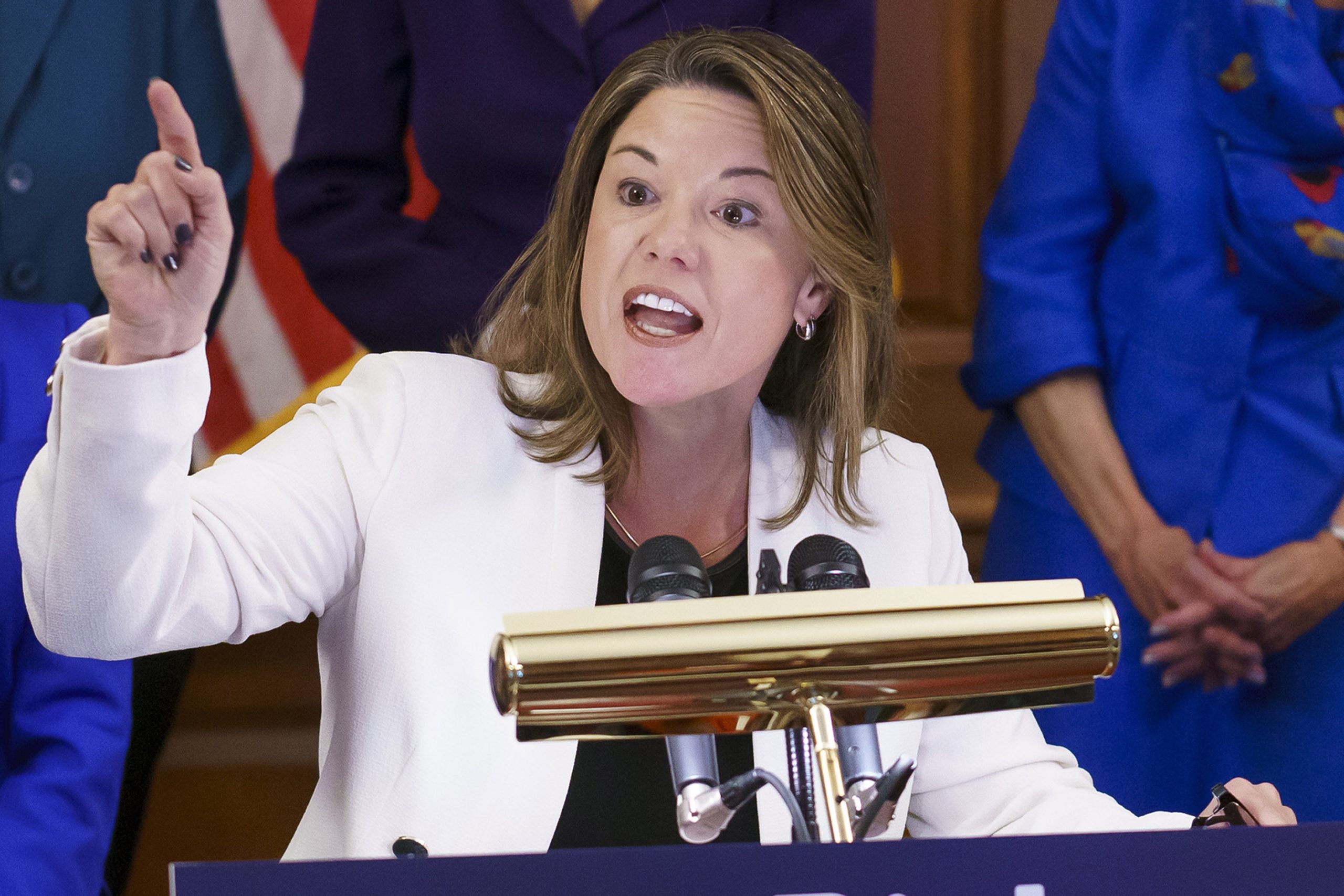

Rep. Angie Craig (D-Minn.) holds an edge over Minnesota Lt. Gov. Peggy Flanagan in fundraising, well ahead of the state’s Democratic primary in August.
Craig raised $2.5 million in the first quarter of the year, according to Federal Elections Commission filings, besting Flanagan’s haul of $1.3 million. That sets up Craig with $4.8 million in cash on hand, more than the $1.1 million Flanagan has in the bank.
Flanagan’s filing also shows her burning money at a rapid rate: Her campaign spent more than $1 million in the first quarter, nearly as much as it raised.
Campaign contributions are poised to become a wedge issue in the competitive Democratic primary. Flanagan has attacked Craig for accepting contributions from corporate PACs and has pledged not to take their money.


Former Democratic Sen. Sherrod Brown’s fundraising haul is dwarfing his opponent’s, keeping Democrats’ hopes of flipping the Ohio Senate seat alive.
Brown raised $10.1 million in the first quarter of the year compared with GOP Sen. Jon Husted’s $2.9 million, according to Federal Elections Commission filings. Brown carries $16.5 million in cash on hand, more than doubling Husted’s $8.2 million in cash reserves heading into both parties’ uncontested primaries in May.
Senate Republicans are planning major investments to help Husted win his first election after he was appointed to Vice President JD Vance’s former seat last year. Senate Leadership Fund, the top Senate GOP super PAC, pledged to spend $79 million in Ohio.
Democrats are hoping Brown, who served in Congress for over 30 years before he lost reelection to Sen. Bernie Moreno in 2024, can put the red-leaning state back within reach.
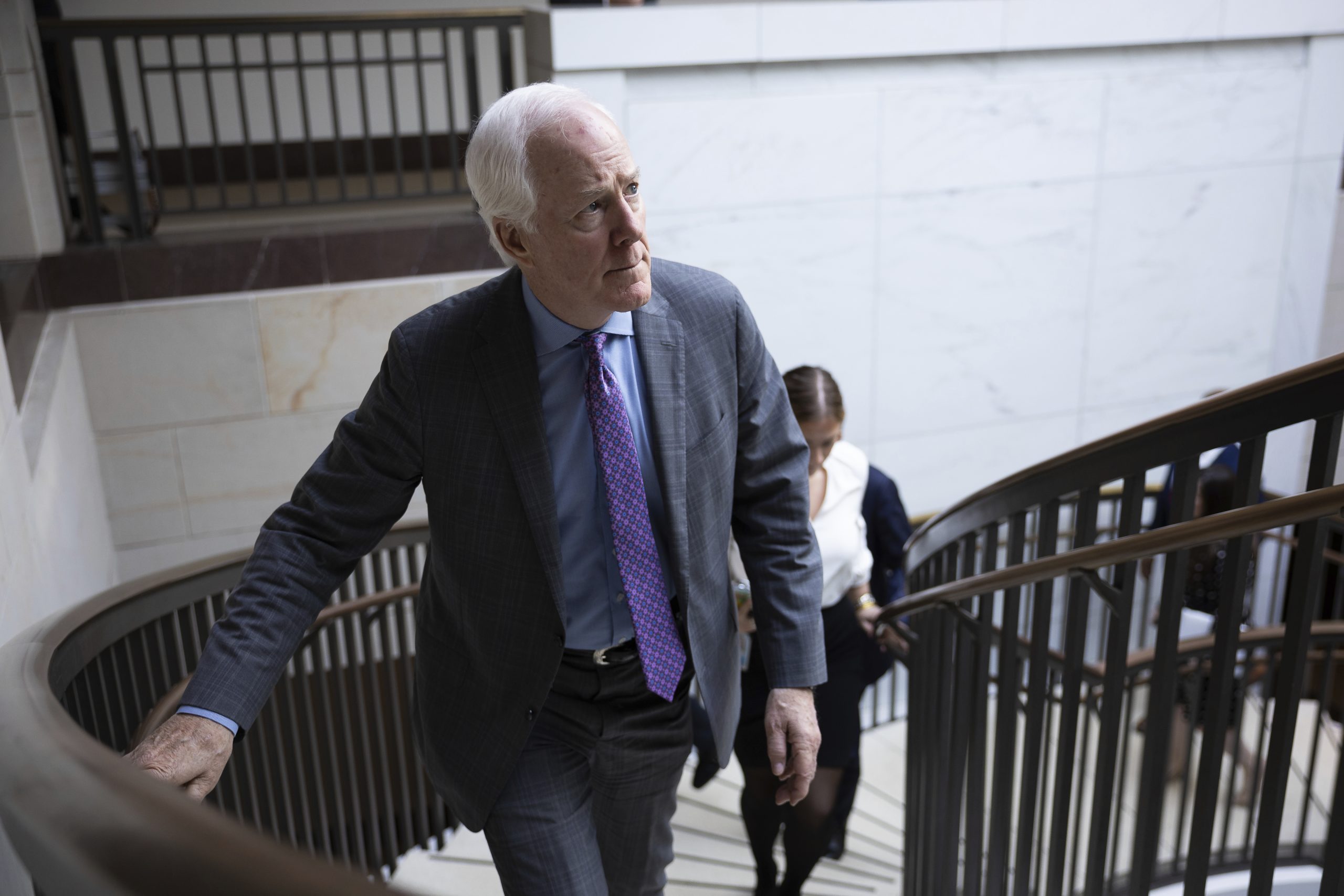

Texas GOP Sen. John Cornyn boasts a significantly larger war chest than his primary opponent, putting the embattled incumbent in a stronger financial position ahead of the May runoff.
Cornyn ended the first quarter of the year with more than $8 million in cash on hand, compared with Texas Attorney General Ken Paxton’s $2.6 million in the bank, according to disclosures filed with the Federal Election Commission.
The Cornyn-Paxton face-off has grown nasty and highly personal as Republicans grow uneasy about beating James Talarico, the Democratic Senate nominee who raised an extraordinary $27 million last quarter and has about $9.9 million cash on hand. President Donald Trump has so far declined to endorse in the race, despite teasing a pick for several weeks.
Cornyn’s joint fundraising committees comprised the vast majority of his roughly $9 million fundraising haul. Paxton reported raising $2.2 million.
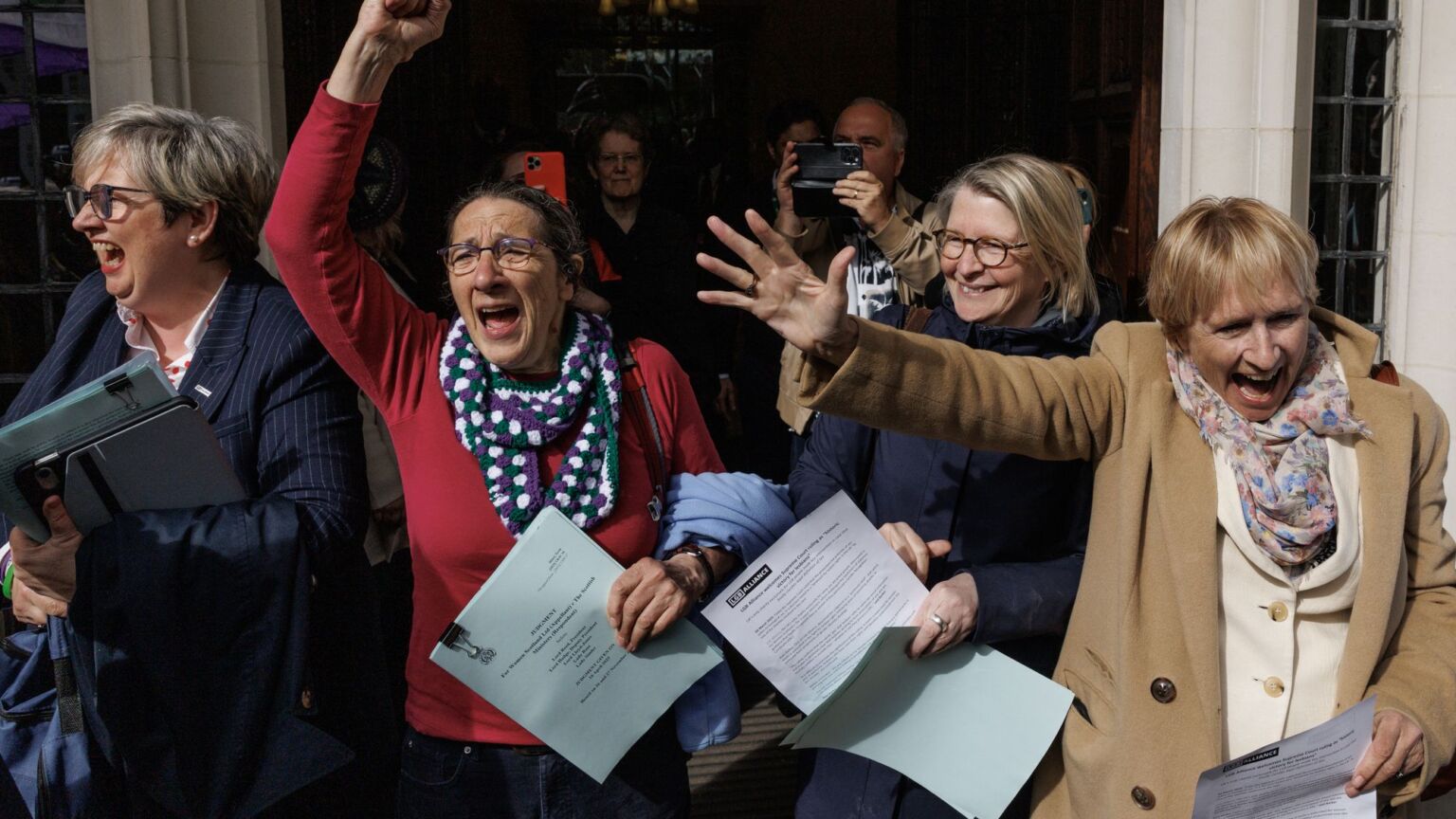
I was in the courtroom when the UK Supreme Court judgment on gender was handed down a year ago today. It felt like witnessing a pivotal moment in history.
After years of politicians, institutions and a vocal minority of the public insisting we go along with the pretence that men could be women, the judges stated something that should never have been in doubt: that in equality law, the term ‘sex’ means biological sex.
Like many people, I assumed that the ruling would settle things – that people would stop pretending not to know what a woman is, and that sanity would return to public life. I imagined the NHS would quietly drop its talk of ‘chest feeding’ and ‘cervix havers’, and that women could object to the intrusion of a bearded man in a dress into their changing room without fear of being labelled a bigot. Having lost my own livelihood for taking issue with the phrase ‘pregnant people’, I also hoped the ruling might mark the end of language policing. Soon, I thought, we’d all be laughing about those absurd times when ‘misgendering’ could get you into trouble at work. Families and friends might even stop falling out over whether humans can or cannot change sex. When some of my own relationships had fractured due to my gender-critical views, it had been a painful affair.
But I was naive. A year on, very little seems to have changed. Britain might have achieved legal clarity on sex, but what it doesn’t yet have is the will to enforce it.
Don’t get me wrong, there have been a few positive developments: puberty blockers have been restricted. The International Olympic Committee has moved to protect female sporting categories. Further to that, a number of high-profile women’s rights violations have cut through. The stories of Sandie Peggie and the Darlington Nurses, who were forced to take legal action over a man using their workplace changing rooms, have appeared in the press and on TV. The experience of nurse Jennifer Melle, who was suspended for ‘misgendering’ a male patient (a convicted paedophile who had racially abused her, no less), went viral. But the pattern has been depressingly similar in every case: the women who raise concerns are routinely accused of being unkind, exclusionary and treated as the problem. All in an era when we’re told we ought to ‘believe women’.
I was reminded of how little the ruling actually registered on a freezing January morning, when I covered a protest outside a gym in Southwark. A woman had been banned from the premises for raising complaints about a man in the women’s changing room. A counter-protest of masked trans activists was present, who shouted and swore at us female journalists for having the audacity to cover the event.
Even some apparent victories have not felt as such. When Girlguiding and the Women’s Institute announced last December, just one day apart, that they would no longer accept males into their ranks, it seemed like progress. But having covered what happened next for the Telegraph, it soon became clear that both organisations were more focussed on managing their own public image than in implementing the ruling – or protecting the girls and women they exist to serve.
Astonishingly, Girlguiding set up a 500-strong ‘taskforce’ to support the biological men and boys who were no longer able to take part. At the same time, dissatisfied activists within its own ranks have created a splinter group, Guiders Against Trans Exclusion (GATE), and have encouraged children to attend its protests. Several such protests took place across the UK at the weekend, with photos emerging of very young children holding political placards and chalking ‘Trans girls are girls’ on pavements.
The Women’s Institute is not much different. It continues to push ‘sisterhood’ groups – open to biological men as well as women – while CEO Melissa Green openly insists that ‘transwomen are women’. This position, of course, sits rather awkwardly with the organisation’s own constitution.
But what exactly is holding these institutions back from implementing what is now the law? Officially, it’s a lack of guidance. The long-awaited update from the Equality and Human Rights Commission has left organisations in a convenient holding pattern. Though the equalities minister, Bridget Phillipson, is on record saying the government intends to uphold the Supreme Court ruling (including that organisations need not wait for the updated guidance to do so), many continue to take their sweet time.
It seems that admitting gender ideology went too far is profoundly difficult for those who played along. More than just a policy shift, this is a reckoning. It will mean acknowledging ideas once presented as ‘progressive’ now seem confused at best, and deeply harmful at worst.
For individuals – parents, friends, family – it means holding their hands up and saying they got it wrong. For institutions, the road will be far more difficult. Hence the stalemate we now find ourselves in. While we may have legal clarity on the surface, denial still pervades everywhere else.
Janet Murray is a journalist writing on women, culture and public policy. Follow her on X: @jan_murray.


In North Carolina, former Democratic Gov. Roy Cooper continues to far outraise Republican Michael Whatley, growing a massive cash disparity in one of the most closely watched Senate races this year.
Cooper raised $13.8 million to Whatley’s $5 million in the first quarter of the year, according to disclosures filed with the Federal Election Commission. That encompasses both the run-up to and aftermath of their effectively uncontested primaries in early March.
Cooper entered the second quarter with $18.5 million in cash on hand while Whatley reported having more than $2.5 million in the bank.
North Carolina is a top target for Democrats. Cooper, the swing state’s most recent governor, draws on his broad name ID to pull in a sizable fundraising haul. Most polling shows him with a double-digit lead over Whatley.
National Republicans are planning to give Whatley, the former RNC chair, a major boost. Senate Leadership Fund has pledged $71 million to the Senate race.


Protestors have blocked numerous major roads across the north of Ireland in response to fuel price increases resulting from the illegal US-Israeli led war on Iran. The highly effective disruptive actions mirror those that have taken place in the south of the island over the past week. Slow moving tractors held up traffic on the Sydenham bypass and West Link in the Belfast area. The Belfast Telegraph reported protests still ongoing in County Tyrone well into Tuesday evening. There were at least eight sites of protest in total.
The Police Service of Northern Ireland (PSNI) responded by issuing fines. In a statement, they said:
…a number of other persons were cautioned for public order offences.
People Before Profit (PBP) MLA Gerry Carroll said the police had behaved “disgracefully”. The West Belfast Assembly member also highlighted how the:
Irish Government’s majority has been shrunk by the cost of living protests.
Taoiseach Martin hit by backlash on cost of living failures
This is in reference to the fallout following a confidence vote on Taoiseach Micheál Martin’s regime that resulted in two TDs leaving the government for the opposition benches. Leading licker-of-the-US boot Martin now has 92 TDs backing him. 87 are needed for a majority in the Dáil. The government ultimately won the confidence vote by a margin of 92 to 78.
The Irish government responded in brutish fashion at the weekend to fuel protests. They brought in the army, while the Garda needlessly deployed pepper spray, including against a 14 year old boy.
Martin has faced intense criticism, both for the response to the blockades, and for allowing things to escalate to that point. Sinn Féin’s leader Mary Lou McDonald described the government as:
Arrogant and incompetent. Half measures don’t cut it. We need to see the maximum reduction in fuel prices at the pumps. The people have no confidence in this useless government. They should back their bags and go.
Martin ultimately said the government would provide €505 million in funds to tackle the fuel price crisis his government helped to generate.
Carroll concluded his X post by saying all the above showed:
…a simple truth: a cost of living movement can rattle our failed status-quo. Workers & unions can lead the charge!
In a longer statement, People Before Profit called on those groups to step forward:
We must demand that our unions enter the fight. Workers did not cause this crisis. Energy companies, war-makers and a government that serves corporate interests did. The unions have the membership, the resources and the leverage to force real change on the cost of living. It is time to use them. Every trade union branch, every shop steward, every community organisation should be discussing what action can be taken and building for it now.
Belfast — Far right hijacking protests fuel protests
They criticised unions for failing to lead thus far on the cost of living crisis, leaving a vacuum for the far right to exploit::
Some of the loudest figures attaching themselves to these protests are cheerleaders for Trump, for racism, and in some cases for Israel. They want to blame migrants, LGBT people or whoever else is convenient, instead of the profiteers, war-makers and politicians actually responsible.
Failed presidential aspirant Conor McGregor is one such clown. The washed-up ex-MMA fighter has previously voiced anti-immigrant ‘Ireland for the Irish’ views. In an X post, McGregor gave his support to protestors, while attempting to push immigration as a central woe alongside the cost of living. He railed against:
[The government’s] complete failure on housing, their refusal to ease the crushing cost of living crisis, the disastrous handling of immigration that has overwhelmed their communities and services and the shocking way that they have treated ordinary Irish people in recent days.
A farmer protesting near Belfast was quoted by the BBC offering a similar formulation:
We have money for everything else – we can spend overseas, we can help people coming to this country, we can’t help our own people.
As we’ve recognised before, the class configuration of the protests is complex. PBP suggest that the movement is currently:
…led by people who own companies, employ workers and have access to expensive machinery.
Nonetheless, they correctly point to:
…a real mix of people in and around this movement, including many working class people looking on sympathetically.
The imperfect politics of those involved shouldn’t be a reason for the left not to seize low hanging fruit for progressive organisers – the cost of living crisis exacerbated by illegal wars abroad.
Pro-Palestine group BDS Belfast had an idea along those lines, showing the similar treatment Palestine protestors and fuel protestors received, even if the latter were granted slightly more leeway by the state. In an Instagram post, they said:
We’re all bearing the costs of illegal US and Israeli violence. The Irish government must end its support for these crimes NOW!
One struggle, against those in power harming us all.
Solidarity

Featured image via the BelfastTelegraph


A file released by the ‘Israeli’ government shows the notorious Zionist terror group Lehi, also known as the Stern Gang, attempted to partner with the Nazis to fight Britain during World War 2.
The Haganah, a larger and more organised Zionist terror force, created the documents in 1941 while spying on Lehi. The Haganah largely cooperated with Britain during the war against the Axis powers. They were later involved a series of murderous attacks against British forces in Palestine, and gave their approval for the bombing of the King David Hotel.
Haaretz say the file was:
…kept in the IDF [sic] archives and later transferred to the State Archives. About three years ago, Haaretz requested that it be declassified. It was recently scanned and uploaded.
In it, the Haganah’s founder Eliyahu Golomb reports discovering that Lehi leader Avraham Stern had connections with the Nazi regime. A document in the file lays out Stern’s strategy:
With the outbreak of World War II… Stern argued that there is no better time for a war of independence than during wartime. Britain’s forces are tied down… and it would be possible to overcome them. The question of orientation seemed simple to him.The Jews are a party in the war and therefore cannot be neutral. Britain betrayed the Jewish people and will never allow the establishment of a Jewish state. On the other hand, Germany has no special interest in Palestine, and since the Nazis want to cleanse Europe of Jews, nothing is simpler than transferring them to their own state.
Stern: attempted Nazi pact to counter British conniving
Stern’s notion of British betrayal likely relates to the switch in stance Britain adopted towards Jewish groups in Palestine in the late 1930s. Concerned that Arab support was ebbing away due to their backing of a Jewish homeland in this part of West Asia, Britain began to change its policies.
Most notably, the then-hegemon produced the White Paper of 1939, which restricted Jewish immigration to Palestine and made it harder to sell land to non-Arab peoples. This callous imperial manoeuvring that varyingly produced resentment on all sides was key to Palestine’s grim fate that worsens to this day.
Stern’s views were far from novel. Years earlier in 1933, Zionists had signed the Transfer or Haavara Agreement. This was a deal with:
…the Nazi government that allowed some wealthy German Jews to immigrate to Palestine in exchange for purchasing German goods that were then exported to the Jewish community in Palestine.
At the time, Jewish groups worldwide had set up a boycott of German goods in response to the Nazis’ racist policies. The agreement suited both signatories. The Nazis would take a step towards the ethnic cleansing of Germany and gain much needed capital. The Zionists would get equipment to aid the development of their proto-state, and an influx of new people who could assist in their ultimate goal of ethnically cleansing Palestine.
To this day, the Zionist settler-colony is happy to partner with anti-semites if it suits the narrow interests of its fanatical, expansionist land theft project. Stern’s wartime plans were along much the same lines, looking to “reach a practical agreement with the Germans” in a belief that the:
…Jews of Europe should be recruited into a special army that would fight its way to Palestine and conquer it from the British.
Lehi foresaw:
…shared interests between German policy and Jewish national aspirations.
However, Haaretz claim:
Lehi’s contacts with the Nazis ultimately came to nothing.
Vicious Zionist terror legacy continues
Post-war, the Stern Gang played an infamous role in the Nakba. This was the ethnic cleansing of Palestine in which Zionist terrorists killed 15,000 Palestinians and drove around 750,000 from their homes. The Gang helped carry out the Deir Yassin massacre, where Zionist murderers slaughtered over 100 Palestinians. Those killed “were tied to trees and burned to death”. Others were “lined up against a wall and shot by submachine guns” including “women, children and the elderly”. Ex-Lehi member Yitzhak Shamir went on to serve twice as prime minister of so-called ‘Israel’.
The terror group dissolved after World War 2, but its vicious, racist mentality lives on in contemporary ‘Israel’. Stern may not have got his wish to partner with the Nazis, but the Zionist entity has gone one better — it has become the closest modern equivalent to the Third Reich, as it continues its holocaust in Gaza.
Featured image via the Canary
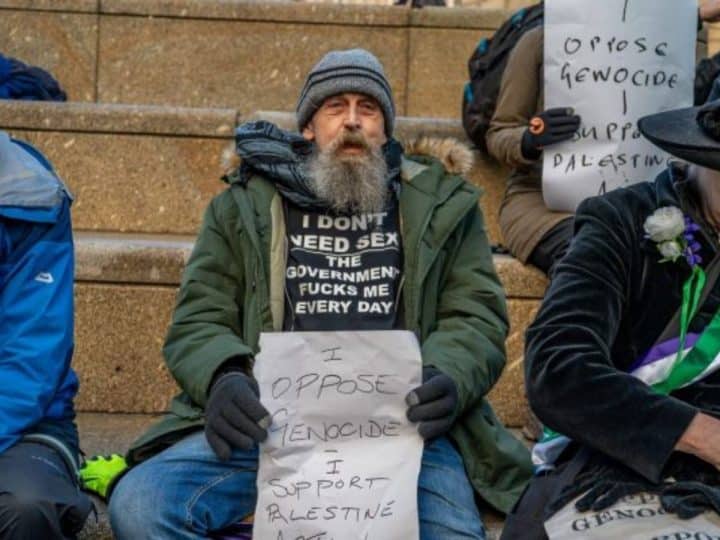

A group of three anti-genocide protesters have been imprisoned without bail until at least 1 May, after appearing at Westminster magistrates’ court on the morning of 14 April. The three, members of People Against Genocide, have been charged over a direct action protest against Keysight Technologies. A supporter explained why they took the action:
View this post on Instagram
People Against Genocide reports that the US-owned company makes radar and electronic systems that it supplies to Israeli murder-drone makers Elbit Systems. The group shared footage of the action, which was featured on Channel 4 News:
People Against Action has targeted other locations belonging to Keysight Technologies have been targeted in the UK over the past year.

The three people charged are Steven Davies, 57 (pictured above), Ian Roberts, 51, and Dolores Gnapi, 34. The firm claims that they caused more than £2m of damage to its facility during the protest.
The refusal of bail fits the Starmer government’s pattern of attempting to “make the process itself the punishment.” This is part of the government’s ‘lawfare’ war on anti-genocide and pro-Palestine journalism, speech and protest.
Featured image via Barold
By Skwawkbox


A day of family fun, unity and heritage is coming to Wearside this May Day Weekend. On Saturday 2 May, Sunderland Left Alliance will host Sunderland May Day Fest in the heart of the city centre.
The event, running across two locations in Sunniside, will celebrate Sunderland’s May Day heritage.
From 11am – 2pm Port Independent will be filled with family friendly heritage crafts such as rosette and placard making, Hope Stars, and talks on the history of May Day. There will also be an Indy book sale from PM Press and a book swap with Sunderland Literacy Aid.
Then from 2pm onwards, Diego’s Joint will be host to live music, theatre and speeches from some of the city’s brightest talents. Forum Theatre will present an interactive piece on how to talk to your right wing family.
There will be music from Slalom D, James Thoroughgood and many others, with poetry and speeches from organisations across the region.
The event will come just days before all 75 seats in Sunderland Council are up for re-election. In this turbulent political climate, Sunderland Left Alliance aims to remind residents of not only our heritage, but how much the city can thrive when we come together for good.
Founder of Sunderland Left Alliance Auburn Langley said:
Politics is more than just elections. To build the world we want, we not only need to relearn how to work together, but have some fun with it!
Sunderland May Day Festival will take place on Saturday 2nd May from 11 am. To find out more visit the Facebook page.
Featured image supplied
By The Canary


The Labour peer now running right-wing, Zionist sabotage outfit ‘Labour Together’ has been revealed to be a former IOF soldier and ‘religious Zionist’. Activist journalist Jody McIntyre uncovered financier Jonathan Kestenbaum’s record, which has not been mentioned by Labour or Labour Together.
McIntyre believes Kestenbaum’s military history has been mostly ‘scrubbed’ from the web. However, he found one remaining mention of Kestenbaum’s training in the use of clubs and tear gas on Palestinians and his participation in a “brutal” curfew imposed to “break the spirit” of a Palestinian town in the occupied West Bank:
Kestenbaum was national secretary of the [religious Zionist] Bnei Akiva movement in his native England, and studied at the London School of Economics and at Cambridge University. He settled in Israel three years ago, is married, and has recently become a father.
He was called to serve a stint in the IDF reserves in August, and found an outlet for his frustrations in the diary below, a record of his day-to-day anguish. Kestenbaum says the very thing he and his colleagues were not prepared for were the moral questions posed by service in the administered territories, although they were taught how to use clubs and tear.
Coloniser in uniform
Kestenbaum’s unit was ordered to bring the town “to heel”, isolating it and cutting off power:

McIntyre noted that Kestenbaum’s Wikipedia page was updated minutes after his revelations went public, to include a mention of his period in the IOF:
View this post on Instagram
Kestenbaum’s activities were also mentioned in a 1998 US article, which quotes him recording his “shame”:
The hatred [for the IDF] is not surprising, considering that during the last 17 months, the army has shot and killed about 400 Palestinians, wounded thousands of others, thrown more than 6000 of them into prison, blown up more than 200 of their homes, and kicked 45 of them out of the country.
It is not only that, as the reservist Jonathan Kestenbaum wrote in a diary he kept of his time in the West Bank town of Qabatiya last year, ‘When a child of 3 looks at me with hatred, I feel ashamed of what I am doing.’
Kestenbaum appears to have recovered from his “shame”, however. He went on to hold a directorship of pro-Israel propaganda outfit BICOM for seven years.
Labour Together at the centre of it again
Labour Together was exposed as a key player in the anti-Labour sabotage campaign to lose the 2019 general election in order to oust then-leader Jeremy Corbyn. Morgan McSweeney, who admitted using the ‘Labour antisemitism’ scam as a primary tool of this sabotage, went on to become Keir Starmer’s leadership campaign manager and then his chief of staff. However, McSweeney resigned in disgrace in February 2026 over his part in plush senior jobs Starmer gave to corrupt pal of child-rapist Jeffrey Epstein, Peter Mandelson.
Before McSweeney’s resignation, while Labour Together was being managed by Josh Simons, another Starmer front-bencher, the organisation paid a US firm to spy on and attempt to discredit journalists who were investigating Labour Together’s funding and activities. Simons resigned from the front bench after being outed. Front-benchers Steve Reed and Lisa Nandy continue to be closely linked to the group.
Labour Together declined to comment.
Featured image via the Canary
By Skwawkbox

Man arrested near Hull Road Park in Tang Hall, York

Nico Hoerner drives in 5 as Cubs blitz Phillies to win series

Carrier Global Stock Drops 8% on Residential HVAC Weakness as Data Center Boom Offers 2026 Hope


-

 Politics5 days ago
US brings back mandatory military draft registration
-
 Sports5 days ago
Man United discover Nico Schlotterbeck transfer fee as defender reaches Dortmund agreement
-

 Fashion5 days ago
Weekend Open Thread: Veronica Beard
-

 Politics6 days ago
Malcolm In The Middle OG Turned Down ‘Buckets Of Money’ To Appear In Reboot
-

 Politics4 days ago
World Cup exit makes Italy enter crisis mode
-

 Crypto World7 days ago
Canary Capital Files SEC Registration for PEPE ETF
-

 Business5 days ago
Tesla Model Y Tops China Auto Sales in March 2026 With 39,827 Registrations, Beating Cheaper EVs and Gas Cars
-

 Crypto World2 days ago
The SEC Conditionalises DeFi Platforms to Be Avoided for Broker Registration
-

 Crypto World2 days ago
SEC Signals Exemption for Crypto Interfaces From Broker Registration
-

 News Videos19 hours ago
Secure crypto trading starts with an FIU-registered
-
 NewsBeat3 days ago
Pep Guardiola and Gary Neville agree over Arsenal title problem that benefits Man City
-

 Business6 days ago
OpenAI Halts Stargate UK Data Centre Project Over Energy Costs and Copyright Row
-

 Business4 days ago
Ireland Fuel Protests Enter Day 5 as Blockades Spark Shortages and Government Prepares Support Package
-

 Crypto World5 days ago
Federal judge blocks Arizona from bringing criminal charges against Kalshi
-

 Politics6 days ago
LBC Presenter Mocks Trump Over Iran War Failures
-
 NewsBeat4 days ago
JD Vance announces ‘no agreement’ with Iran over nuclear weapons fear
-

 Crypto World2 days ago
SEC Proposes Certain Crypto Interfaces Don’t Need to Register as Brokers
-

 NewsBeat2 days ago
Trump and Pope Leo: Behind their disagreement over Iran war
-

 Tech6 days ago
A version of Windows 10 released a decade ago is now eligible for additional security patches
-

 Business5 days ago
IMF retains floor for precautionary balances at SDR 20 billion
You must be logged in to post a comment Login