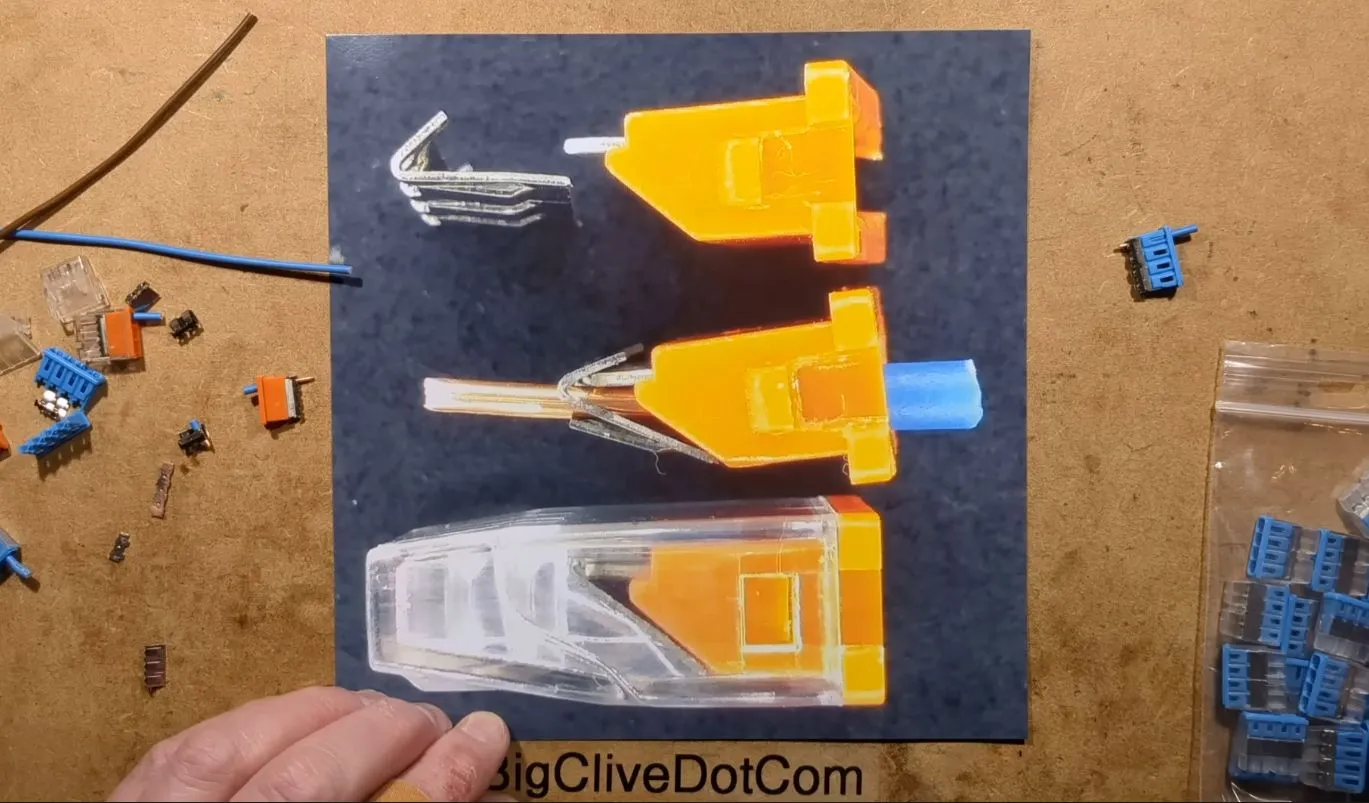
Everyone loves Wago connectors for how versatile and effective they are for quickly and securely connecting conductors, but it can be tempting to buy a bag of the significantly cheaper knock-offs. The reason why this can be a terrible idea is explained by [Big Clive] who tore down a few bags of them to ogle at their internals.
The main problem with some of these knock-offs is the way that they use the plastic molding as part of the structure that holds the conductors in place. Over time this plastic will develop larger tolerances, with heat developed from passing large currents speeding up the process. As the examined type of connector relies on metal clamps that securely push the conductor onto the busbar, having the plastic weaken, and the clamp correspondingly loosen up, is clearly not a desirable scenario.
As [Clive] says in the video, you’re probably okay using these cheapo knock-offs for a quick test on the bench, but you should never put them in a permanent installation. Not just due to potential fiery scenarios, but also for insurance claims should the worst come to pass, and the insurance company finds dodgy connectors everywhere in the electrical wiring. This isn’t the first we’ve heard of knock-off Wago problems.
I’ve been steeling myself for a coming wave of AI-infused wearables that could be worn all over the place, based on reports on gadget plans at Meta, Google and Apple — a halo of connected tech with cameras onboard, streaming to AI services. Qualcomm’s latest chip, announced Monday at Mobile World Congress in Barcelona, is built for it, and the first devices using it are coming this summer. Samsung, Google and Motorola are already building hardware with it.
I sat down with John Kehrli, senior director of product management for Qualcomm, to discuss the newest wearable chip push, and it caught my attention on several levels. The reason you should care is that this is a clear preview of tech products to come: Qualcomm’s chips power almost all of the non-Apple watches, VR headsets and smart glasses out there.
While Qualcomm has had separate chip lines for smartwatches and for smart glasses and VR headsets, the new Snapdragon Wear Elite chip aims to bridge across categories. It’s a higher-powered watch chip filled with different wireless connection capabilities, but it is also made to support video input and streaming for AI, even 1080p video output to displays. That could include AI-infused smart glasses.
Advertisement
“It’s not just the watch: for sure that’s a focus for us, but the portfolio [of devices] has expanded dramatically,” Kehrli says.
Here’s the news about Snapdragon Wear Elite that stood out for me.
Qualcomm’s new chip design is meant to be flexible in form. It could end up many places.
Advertisement
Qualcomm
A lot more onboard processing for offline AI
A big part of Qualcomm’s push on these chips is to do more generative AI and LLM work on device, a trend I expect to grow. The Snapdragon Wear Elite looks a lot more powerful than previous Qualcomm watch chips. Some of the offline, on-device functions could be voice-based AI, for fitness or, according to Qualcomm, for “life logging.”
I’m not sure I need life logging, but I’d be interested in having more AI-based controls for wearables. The extra power looks to also drive video on displays and run onboard cameras, including video streaming. The whole idea behind next-wave multimodal AI is to have AI services be aware of what you’re doing — that’ll mostly happen via camera access.
Kehrli says the processing cores for the neural processing unit on the Snapdragon Wear Elite could support AI models of up to 2 billion parameters on device, at about 10 tokens per second to process. He sees that being good enough for a lot of offline needs, with cloud-connected AI kicking in when needed otherwise.
Kehrli sees a lot of local AI needs for the extra sensors, including cameras, that are going to be on these wearables. “There’s so many exciting inputs coming in [to the devices]. Location, sound, voice, text, all the sensors — we’re really seeing a lot of medical-grade sensors come into the retail space. What do I do with that data?”
Advertisement
Qualcomm’s concept for a wearable pendant is like a smartwatch, but with outward-facing camera.
Qualcomm
Cameras everywhere?
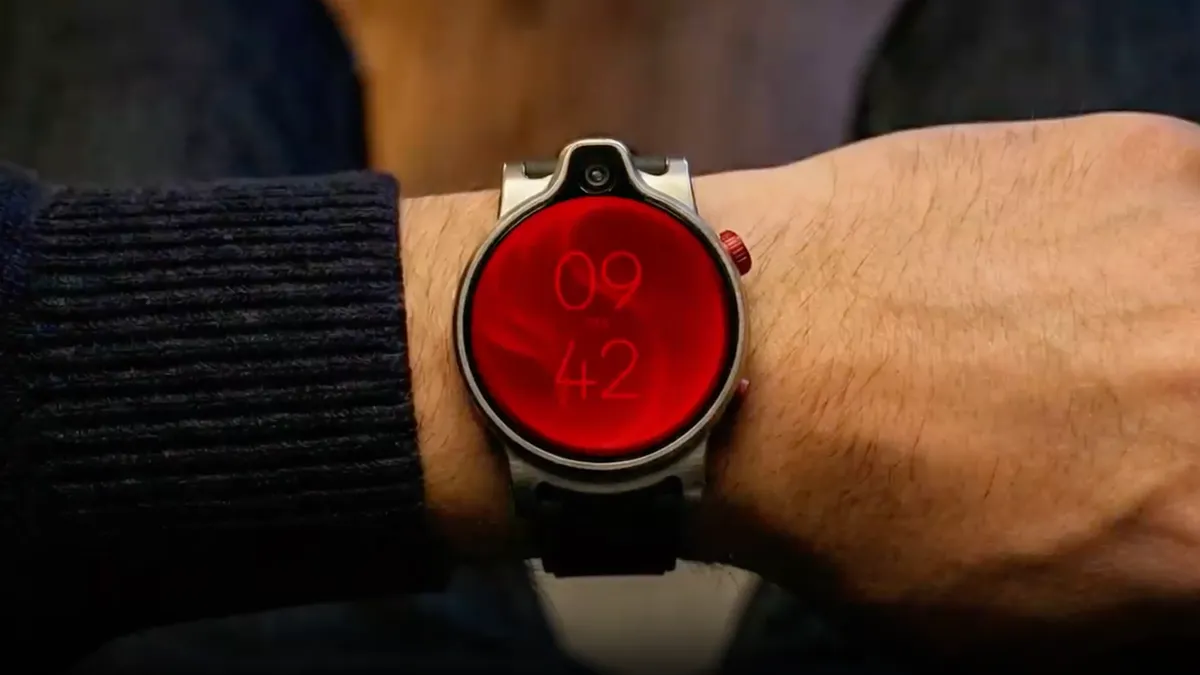
In Qualcomm’s sizzle video for the new chip, we can see a glimpse of a watch with a camera on its top edge. Most smartwatches don’t have cameras right now, but that could be changing soon. While it’s not necessarily a great way to take photos, the onboard cameras are likely more an additional way to tap into AI, like for face recognition biometrics for tap-to-pay, using a watch like a smart key for cars or other connected things, or maybe to use for other AI-based controls.
Another concept shot of a pendant, which looks basically like a neck-worn smartwatch, has its camera facing out. All the AI pins and pendants that have been trickling in these last few months are showing similar ideas. Like smart glasses, the outer-facing cameras could be another way to see things without putting something on your face. But you’d have to wear some pin or pendant.
It also sounds like devices with these new chips will last longer on a charge. Qualcomm’s promising 30% better battery life than with its previous watch chip — potentially “days” of use. I’d still expect more or less a full day, considering these chips might also be supercharging more camera-based and AI features.
The faster charging sounds promising, though. The chips could charge devices up to 50% on 10 minutes of charging. That’s key because a lot of these wearables are being designed to be worn all the time, and some while you’re sleeping. It’s like companies are trying to find ways to do a quick recharge pit stop without spending too much time off your body.
Advertisement
The most interesting part could be the boosted wireless features. Qualcomm’s got six different protocols on-chip: support for Redcap 5G (a protocol to support high-speed and low-power connected tech), Bluetooth 6.0, ultra wideband, GPS, satellite-connected NB-NTN for messaging, and micropower Wi-Fi 802.11ax.
The micropower Wi-Fi support could allow these new wearables to stay Wi-Fi connected continuously, says Kehrli, letting them work in the background longer. On Meta’s Ray-Ban glasses, for instance, right now, they’re mainly Bluetooth-connected and don’t stream video by default; switching to that mode kills battery life fast. Streaming always-on AI modes could last longer on Elite-powered devices.
Qualcomm’s plans for this chip extends to nearly every wearable territory.
Advertisement
Qualcomm
Where they could show up: Watches, glasses, headphones, pendants, more
Qualcomm’s aiming to put its new chip across a wide range of wearables, from camera-enabled headphones and earbuds like Razer’s Motoko concept (which I tried at CES in January) to next-gen smartwatches and AI pendants, to smart glasses, and even sensor-connected bands. Devices like Meta’s neural band, which uses EMG (electromyography, using skin contact sensors) for hand gestures that control its smart glasses, could see upgrades with this chip. Maybe that’s exactly the sort of territory Meta could be exploring with its reported smartwatch debut this year.
It’s also clear that everyone, Qualcomm included, isn’t entirely sure where people prefer to wear these future AI gadgets. Is it glasses? Pendant? Watch? Headphones? All of the above? Kehrli feels people will have different preferences and will choose what works. Will that sort of redundancy make sense or settle itself down into clearer categories in another year or two?
Glasses, Kehrli adds, could be a landing spot for this chip because of the cellular-connecting possibilities, saying he expects adoption of wearables with their own data connections will keep rising, especially with AI services. “We’re seeing, on-wrist, up to 50% of customers taking connected [wearables] with a service plan. We’re seeing that dramatically increase, especially with this AI on device/off device type of experience in the cloud.”
It’s clear that halos of wearables are on deck from several big companies. How it all shakes out and works, though, is still unclear. And while these new wearables should be a lot more powerful, the focus right now isn’t on improving how they could stay connected and communicate with each other, something I got a glimpse of in a demo of a personal mesh network made by startup Ixana at CES. Maybe that’s next on deck.
Advertisement
For now, wearables are trying to be better extensions of your phone, first, and act better as standalone devices too.
We’ll start this week off with a bit of controversy from Linux Land. Anyone who’s ever used the sudo command knows that you don’t see any kind of visual feedback while entering your password. This was intended as a security feature, as it was believed that an on-screen indicator of how many characters had been entered would allow somebody snooping over your shoulder to figure out the length of your password. But in Ubuntu 26.04, that’s no longer the case. The traditional sudo binary has been replaced with a one written in Rust, which Canonical has recently patched to follow the modern convention of showing asterisks on the password prompt.
As you might expect, this prompted an immediate reaction from Linux greybeards. A bug report was filed just a few days ago demanding that the change be reverted, arguing that breaking a decades-old expectation with no warning could be confusing for users. The official response from a Canonical dev was that they see it the other way around, and that the change was made to improve the user experience. It was also pointed out that those who want to revert to the old style of prompt can do so with a config change. The issue was immediately marked as “Won’t Fix”, but the discussion is ongoing.
Speaking of unexpected changes, multiple reports are coming in that the February security update for Samsung Galaxy devices, which is currently rolling out, removes several functions from the Android recovery menu. After the update is applied to phones such as the S25 and Fold 7, long-standing features, such as the ability to wipe the device’s cache partition or install updates via Android Debug Bridge (ADB), disappear.
Just like with the change to sudo, this is the sort of thing that will aggravate veteran users the most. There’s been no official explanation for these changes, and it’s not immediately obvious why Samsung would fiddle with the recovery menu that’s remain largely unchanged since Android’s introduction. As 9to5Google mentions, it could be an attempt to prevent users from installing leaked firmware builds — a practice that’s gotten the attention of the electronic giant’s legal department.
Advertisement
These days, software updates are just one of the things you need to keep track of. Add in emails, RSS feeds, and incoming chat messages, and keeping up with the notifications on your computer or smartphone can be a challenge. But that’s nothing compared to the 800,000 alerts fired off earlier this week by the Vera Rubin Observatory. The observatory uses a 3.2 gigapixel camera to take long exposure images of the night sky, which are then compared with earlier shots to detect visual changes. Astronomers create filters to narrow down what they’re after, and can be notified when the automated system detects a match. A preview image is available in just seconds, while the full-resolution imagery takes around 80 hours to process. It’s still early days, but once the VRO gets up to speed, it’s expected that as many as seven million alerts will be generated each night.
While on the subject of large-scale engineering projects, this week, Google announced that its new data center in Minnesota will be hooked up to the world’s largest battery. The 300 megawatt array built by Form Energy will use iron-air technology, which essentially uses a reversible rusting process to store energy produced by renewable sources such as wind and solar. When those sources aren’t available, the data center can run off of battery power for up to 100 hours.
While heavier and less efficient than lithium-ion, iron-air batteries have the advantage of being substantially cheaper to produce. So while it’s unlikely you’ll see the technology in smartphones anytime soon, it’s perfect for static installations like this.
Finally, some sad news from the world of retro computing/games: a very rare copy of Tsukihime Trial Edition was apparently destroyed while in transit from one collector to another. It might not look like much — the game was distributed by the indie developers on unbranded floppies at a Japanese convention in 1999 — but it represents one of only 50 copies known to exist. While the occasional damaged package is all but unavoidable, this one is particularly egregious as it appears that someone at US Customs intentionally ripped the disk to pieces. The purchaser has filed a complaint with Customs, and we’re interested in hearing what their version of the story sounds like.
See something interesting that you think would be a good fit for our weekly Links column? Drop us a line, we’d love to hear about it.
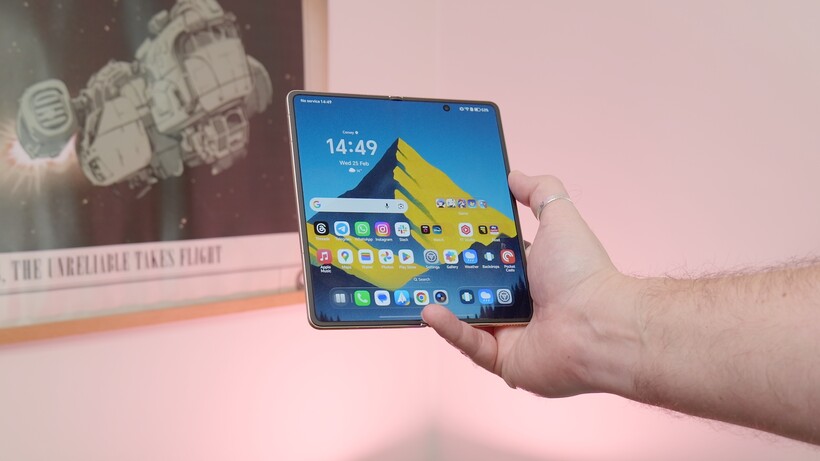
Honor isn’t reinventing its book-style foldable this year, but with the Magic V6, it doesn’t really need to.
Instead, the company has delivered what feels like a careful refinement of an already accomplished formula. It is thinner in places and tougher where it matters. Moreover, it packs meaningful internal upgrades without upsetting the balance that made its predecessor so compelling.
On paper, the Magic V6 looks familiar. It retains the slim, symmetrical profile that has become a hallmark of Honor’s foldables. It measures 8.75mm when folded on the White model and just 4.0mm when unfolded. Even the heavier colourways tip the scales at a very reasonable 224g. Meanwhile, the White model comes in at 219g.
For a device with a near eight-inch internal display, that’s impressive engineering restraint, especially one with a huge 6600mAh battery that would shame many conventional flagships.
Advertisement
Advertisement
Durability has been pushed further this time around. The handset carries IP68 and IP69 ratings, offering resistance to dust and water under controlled conditions, which is still a rarity in the foldable space.
Honor also doubles down on display protection, pairing its Super Armored Inner Screen with an anti-reflective coating, while the outer display sports an Anti-scratch NanoCrystal Shield. It’s clear the company is targeting everyday usability, not just spec-sheet bragging rights.
Image Credit (Trusted Reviews)
Open the device and you’re greeted by a 7.95-inch LTPO 2.0 internal panel with a variable 1–120Hz refresh rate and a peak brightness rated at up to 5000 nits. Resolution lands at 2352 x 2172, with 1.07 billion colours and full DCI-P3 coverage.
The external 6.52-inch screen mirrors much of that ambition. It stretches to an even higher quoted peak brightness of 6000 nits and a sharp 2420 x 1080 resolution. Both displays support stylus input, but you’ll need to buy the Magic Pen separately.
Advertisement
Honor continues to make a strong play around eye comfort too. The Magic V6 supports 4320Hz PWM dimming on both screens. It also has features such as AI Defocus Eyecare 2.0, Circadian Night Display and hardware-level low blue light. These aren’t headline-grabbing upgrades, but they reinforce the brand’s focus on long-term usability. This is important on a device designed for extended reading, streaming and multitasking sessions.
Advertisement
Powering the show is Qualcomm’s Snapdragon 8 Elite Gen 5 Mobile Platform, paired with 16GB of RAM and 512GB of storage. That’s flagship territory by any metric, and it’s backed by a substantial 6660mAh silicon-carbon battery. Fast charging remains a strength, with support for 80W wired SuperCharge and 66W wireless charging using compatible chargers. There is also wireless reverse charging.
Image Credit (Trusted Reviews)
Cameras are led by the Honor AI Falcon system, headlined by a 50MP ultra-light-sensitive main sensor with OIS, a 64MP periscope telephoto (also with OIS) and a 50MP ultra-wide. Honor quotes up to 6.5 stops of CIPA-rated image stabilisation.
Around the front, there are dual 20MP cameras – one on each display – ensuring consistent selfie and video call quality whether folded or unfolded. Video capture tops out at 4K across both rear and front cameras.
Advertisement
Artificial intelligence plays a prominent role, but it feels more integrated than ornamental. The AI Image Engine includes tools such as AI Super Zoom, AI Enhanced Portrait and Harcourt Portrait. Editing features span AI Eraser, AI Upscale and AI Outpainting. Beyond imaging, users get AI Writing, Call Translation, AI Meeting Agent and even AI Deepfake Detection. Google Gemini support is also baked in, signalling Honor’s intent to compete not just on hardware, but on smart software experiences too.
Image Credit (Trusted Reviews)
Advertisement
Connectivity is equally modern. The Magic V6 supports Wi-Fi 7, Bluetooth 6.0 and USB-C with USB 3.2 Gen 1 speeds. It also includes features such as Mac Screen Sharing and file transfer compatibility with iOS devices. This is a nod to cross-platform users who may not live entirely within Android ecosystems.
In truth, the Magic V6 isn’t a radical reinvention. But that’s precisely the point. Honor has taken one of the most well-rounded foldables on the market and tightened the screws. They have trimmed millimetres, boosted brightness, increased battery capacity and layered in more AI functionality. It’s an evolutionary update, not a revolution. Yet in a maturing foldable category, refinement may well be the smarter move.
If the previous generation proved Honor could build one of the best foldables around, the Magic V6 is about proving it can sustain that position.
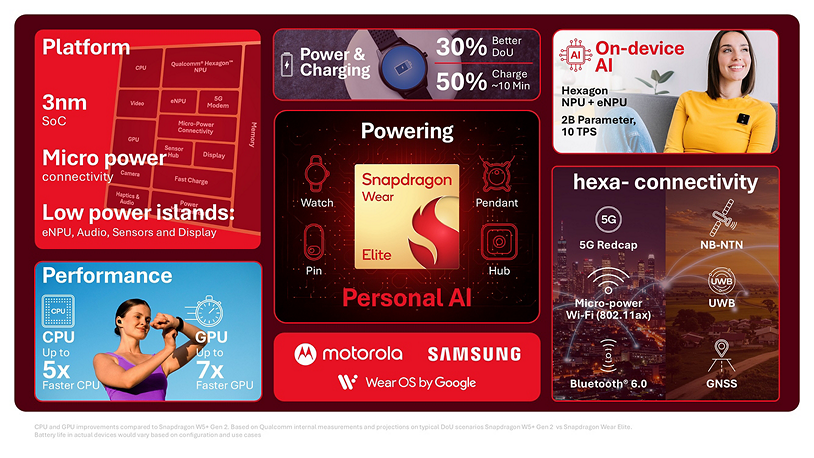
Qualcomm’s Snapdragon Elite chips are reserved for the best Android phones and laptops, and now the company has introduced the first in the Elite series for wearables. The Snapdragon Wear Elite processor is designed for smartwatches and AI devices like pendants and promises up to a fivefold increase in single-thread CPU performance, Qualcomm announced.
The new processor is built on a 3nm process to improve speed and efficiency over previous models, while boosting the number of cores to five (one big core at 2.1GHz and 4 little cores at 1.9GHz). With those changes, the company is promising up to five times faster single-threaded performance, with GPU speeds boosted up to seven times.
Qualcomm
The Snapdragon Wear Elite is also equipped with a new NPU that allows low-power AI use cases like keyword recognition along with noise cancellation. It’s also the first Snapdragon wearable processor with a dedicated Hexagon NPU supporting AI models with two billion parameters. That will allow new “personal AI experiences,” the company said, like context-aware recommendations, natural voice interactions, life logging and AI agents that can orchestrate tasks on your behalf.
Wear OS devices with the chip should see up to 30 percent improved battery life and charging speeds of up to 50 percent in ten minutes. It also allows for more types of connectivity, including 5G reduced capability, micro-power Wi-Fi, NB-NTN for satellites, Bluetooth 6.0, GNSS and UWB. However, manufacturers will be able to source versions of the chip without some of those wireless features.
Advertisement
Whether the Snapdragon Wear Elite will give Wear OS watch manufacturers a better chance to chip into the 50-plus percent market share of Apple’s Watch remains to be seen. The first devices using the chip will start to ship in the “next few months,” Qualcomm said. “Leading global partners are supporting the platform including Google, Motorola and Samsung.”
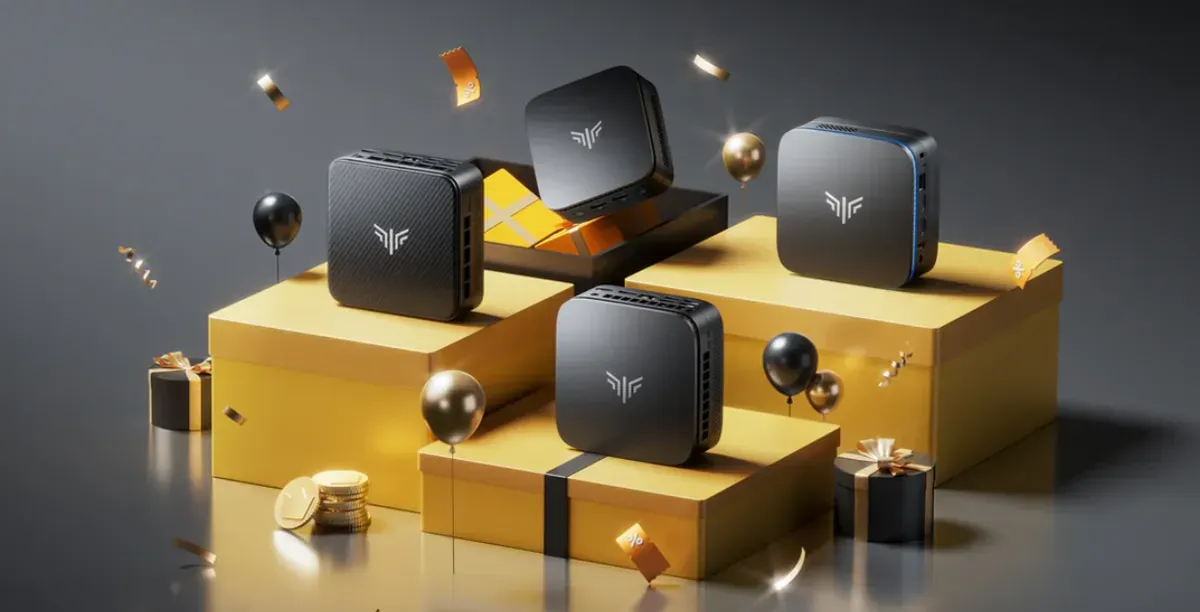
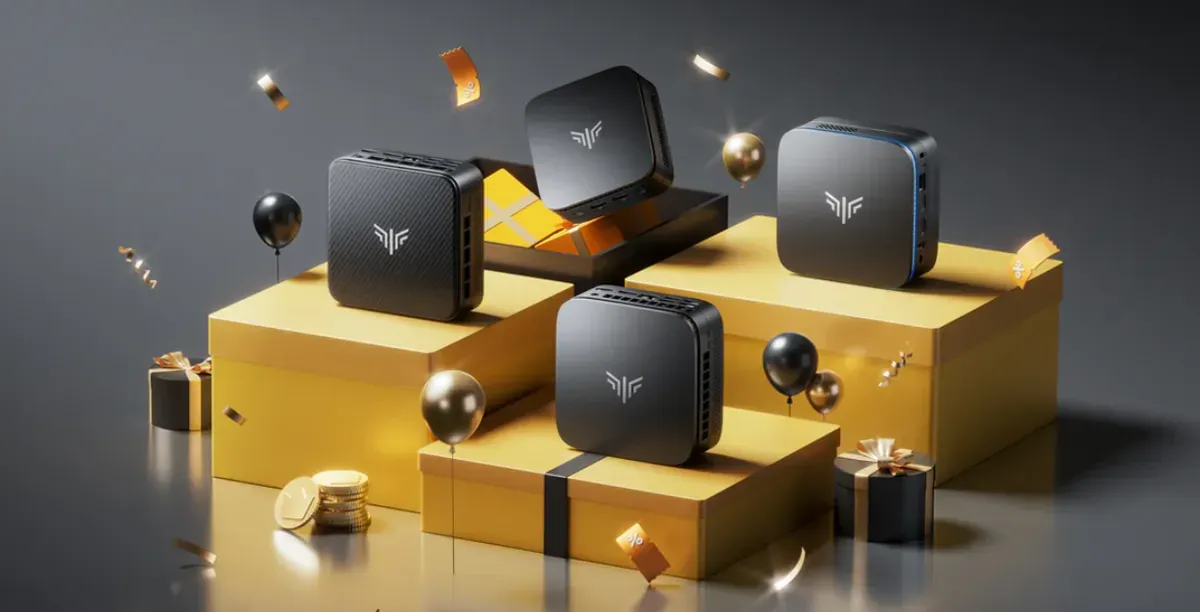
I’m a big fan of my Mac Mini, but it’s not the only option when it comes to buying one of the best mini PCs. Sure, it looks fantastic and boasts powerful hardware, but you have to pay for the privilege, and not everyone has that kind of budget.
To take advantage of the 42% discount, you’ll just need to enter the code R6VSNOOY at checkout. The deal expires March 31, though so don’t hang around.
With this spec you’ll be covered for office tasks, remote working, light content creation, gaming, and more. It’s not the only deal at Kamrui, though. Check out their Kamrui Amazon Shop, where you’re sure to find a mini PC that suits you.
Advertisement
Today’s best KAMRUI deal
The Hyper H2 Mini PC is powered by an Intel Core 14450HX with 10 cores and 16 threads (up to 4.8GHz). This delivers fantastic stability and sustained multi-core performance under heavy workloads and is the superior choice compared to Ryzen 7 alternatives, perfect for high-intensity scenarios, such as 3A gaming, 3D rendering, and video editing.
The CPU is backed up by 32GB of RAM, which Kamrui claims is 50-70% faster than 16GB RAM. It’s also equipped with a 1TB NVMe PCIe4.0×4 SSD, which significantly improves loading times. This can also be expanded to 4TB if you run out of space.
Advertisement
One of the best things about the Hyper H2 is that the integrated Intel UHD Graphics supports up to three 4K displays simultaneously. This is ideal for multitasking, data analysis, or multi-window design workflows.
This is the mini PC that just keeps on giving, and at just $478.39 at Amazon, we recommend it highly.
If you’re going to give your vehicle a good clean inside and out, it’s generally agreed that microfiber towels are the way to go. They’re gentle yet effective and, as long as you’re washing your microfiber towels properly, they can be used repeatedly. However, not all microfiber towels are fit for all surfaces, as different car materials call for different towel types. When cleaning glass, for instance, you want to use low-pile towels with shorter, more tightly-woven fibers. Unfortunately, what makes these good for glass makes them risky to use on paint.
Low-pile towels have more fibers, which means more points of contact with a surface. This can help remove fingerprints effectively and reduce the likelihood of streaks. However, this strong point can become a weakness when used on paint. More points of contact mean a stronger possibility of grabbing and dragging dirt particles across paint, thus creating scratches. This is an even bigger concern if the car hasn’t been effectively cleaned beforehand and there’s excess dirt on the paint. Thus, plush, high-pile towels are better suited for paint cleaning.
Of course, the matter of pile size is just one element of microfiber cloth selection. Material blend and weave types are key too; much like pile size, glass and paint cleaning don’t call for the same varieties.
Advertisement
Material blend and weave type are also important
Vasyl Mykhailenko/Getty Images
When looking for microfiber towels, you’ll likely see material ratios indicating the towel’s blend of polyester and polyamide, also known as nylon. Polyester is for scrubbing, while polyamide covers absorption. An 80/20 polyester-polyamide split is typically recommended for cleaning glass, prioritizing the removal of smudges, grime, and dirt while still being able to suck up residual water and cleaning products. However, a 70/30 blend is typically recommended for potentially scratch-prone vehicle paint jobs, as this composition reduces abrasion and increases absorption and softness.
Aside from the cloth’s blend, you should also pay attention to the type of microfiber towel you’re using. The material’s weave will affect the towel’s cleaning attributes, making some towels better for specific surfaces than others. For glass, common popular weave types include pearl, diamond, and waffle, for their blend of cleaning ability and softness. Meanwhile, plush and twist cloths, for example, are more paint-friendly. These offer increased softness, reduced friction, and high absorption.
If U.S. automakers turn their backs on electric vehicles, “their sales outside the U.S. will shrivel,” warns Bloomberg. [Alternate URL.]
They’re already falling behind on the technology, relying on a 100% U.S. tariff on Chinese EVs to keep surging rivals like BYD Co. at bay…. While the American automakers “mostly understand the challenge in front of them, they don’t have full plans” to confront it [said Mark Wakefield, head of the global automotive practice at consultant AlixPartners]…
“Now is a great time for the V-8 engine,” said Ryan Shaughnessy, the Mustang’s brand manager. “We’ve done extensive customer research in multiple cities, looking at a variety of powertrains, and the V-8 is always the number-one choice.” It isn’t just customers. U.S. automakers have long been run by “car guys:” enthusiasts who live for the bone-shaking rumble of a big engine. For them, quiet and smooth EVs — even the absurdly fast ones — can’t satisfy that craving. They’re convinced many American car buyers share the same enthusiasm for what Shaughnessy described as “the sound and roar of the V-8.”
Wall Street couldn’t be happier with the new direction… Ford’s fortunes are also on the rise, as it’s predicting operating profits could grow by as much as 47% this year to $10 billion. Ford’s stock has risen nearly 50% over the last 12 months. Under the previous environmental rules, automakers effectively had to sell zero-emission vehicles in growing numbers to offset their gas-guzzlers. When they fell short, they had to buy regulatory credits from EV companies such as Tesla Inc. or face penalties. GM spent $3.5 billion on credits from 2022 to the middle of 2025. Now, according to JPMorgan Chase & Co. analyst Ryan Brinkman, GM and Ford each have “billion dollar tailwinds”…
Advertisement
[T]he hangover from all that new horsepower could leave US automakers lagging their Chinese rivals who already build the world’s most advanced — and lowest priced — electric cars. Indeed, there is much talk in Detroit about the competitive tsunami that will be unleashed on American automakers once Chinese car companies find a way to break through trade barriers now protecting the US market. [Ford Chief Executive Officer Jim] Farley even calls it an “existential threat”… “They’re going to build as many V-8 engines and big trucks as they can get out the factory doors,” said Sam Fiorani, vice president of vehicle forecasting for consultant Auto Forecast Solutions. “And as the rest of the world develops modern drivetrains, newer batteries and better electric vehicles, GM and Ford in particular are going to find themselves falling even further behind.” The article notes GM “continues to develop battery-powered vehicles, and CEO Mary Barra said the automaker would begin offering a ‘handful’ of hybrids soon,” while Ford and Stellantis “have plans to launch extended-range electric vehicles, or EREVs, a new kind of plug-in hybrid with an internal combustion engine that recharges the battery as the vehicle drives down the road.” But while automakers may be investing in future EV vehicles, they’re also “leaning into the lucre that comes from selling millions of fossil-fuel vehicles in a rare moment of loosened regulation.”
Most people have by now accumulated a collection of USB drives over the years. However, no digital storage medium lasts forever. Once a USB drive is three to five years old, it is a mature drive, and it should be put to use for less intensive tasks after it ages out of that band. The total lifespan of a USB flash drive is about a decade. Of course, there are gradients of quality to consider.
An expensive, ruggedized SSD is likely to use higher-quality flash memory than a thumb drive from the bargain bin at Walgreens and should last far longer before experiencing any issues. But many people still hold onto flash memory well beyond its prime, regardless of quality. Even tech aficionados aren’t immune. There may be many reasons why you can’t bring yourself to part with your old jump drives, portable hard drives, and SSDs, but you should be aware that they are no longer safe to use for certain purposes.
There are a number of things you should never trust an old USB drive to handle; instead, use a new, fast, and reliable USB-C flash drive or SSD. That ancient USB drive you stored your old tax records on and left in a drawer? It might already have corrupted those crucial documents beyond recovery. The SSD with that video of your firstborn child’s first steps? The passage of time will render both the video and its subject unrecognizable. So, here are five ways we would never reuse old USB drives and why you shouldn’t, either.
Advertisement
Never use old USB flash sticks to store important data
Max Miller/SlashGear
You should, in general, abstain from keeping only a single copy of your important data regardless of where it’s stored, but that advice is even more important in the context of an old USB storage drive. Even a brand new, top-of-the-line SSD can potentially fail or become corrupted, but the odds of failure increase dramatically as a storage drive ages. The older a drive is, the more write cycles (files stored and deleted) it is likely to have endured. You can think of this like wear and tear. The more write cycles, the greater the potential for instability. Files like your wedding album or important tax documents should never live on a flash drive alone. You should always make sure they’re stored in at least one other place.
Redundant copies may require a bit of extra work, but if one of your storage solutions suffers an outage or gets lost, you’ll be grateful you spent a few minutes copying your irreplaceable data. However, you should also be aware of the trade-off between preservation and security. For data that’s valuable to you but not sensitive (for instance, that wedding album), it can be a good idea to keep three copies: one on your computer or phone, one on an external drive, and one in the cloud using a service like Dropbox or Google Drive. However, if the data is sensitive (for instance, a passport, ID, or financial data), you may want to eschew the cloud in favor of physical drives you can keep an eye on personally.
Advertisement
Never use old USB drives for long-term storage
Bin Kontan/Getty Images
Along the same lines, you should never use an old flash drive or hard drive for long-term data archival. On average, the lifespan of an HDD is about three to five years, while that of a flash storage device is about the same. That’s because flash storage of the kind used in thumb drives, SSDs, SD cards, and so on stores data by holding a small electrical charge in the transistors. Since all computers rely on binary code — ones and zeros — the relative positions of the trapped electrons are what tell a computer whether it should read a one or a zero. The electrons remain trapped regardless of whether the drive has external power, but no charge can hold forever. Over time, some of those cells lose their electron memory, which can lead to data corruption. This is often referred to as bit rot or data rot.
A drive that is already experiencing degradation or data rot will lose data more quickly when it is not connected to a computer. Immediately after writing a file, that file will be accessible. But stick the USB drive in a drawer for a few weeks, and you may find that same file unrecoverable when you plug it back into your computer. So, if you were planning to store your critical documents or media on an ancient USB drive and throw that drive in the safe, you’re much better off copying them onto a brand new storage device instead. Even so, you should still make sure the drive works by checking it every so often and replacing it every three years at a minimum.
Advertisement
Don’t live boot an operating system from an old USB
Max Miller/SlashGear
One of the niftiest uses for a USB drive is live booting an operating system. Every computer stores its operating system on a storage drive, which means you can BYOOS — bring your own operating system — by writing it to a flash drive or SSD and plugging that storage device into an existing computer. You can then turn nearly any computer you come across into “your” computer by booting the OS off of your USB drive. This is also a handy method for testing whether a PC is functional, repairing an OS installation, or quickly installing your OS of choice on a new PC. A drive with a bootable operating system installed on it is referred to as a “live USB.”
However, it’s a bad idea to use an old USB drive for live booting, especially if you rely on it as your main computing environment. This is because of the same issues we discussed above. Whether you’re storing files or booting an OS, older USB drives are prone to data rot. Your entire OS could become corrupted without warning. But you’ll also run into another issue: storage speed.
Advertisement
USB 3.0 SuperSpeed at its base data transfer rate of 5 Gbps can create a bit of a bottleneck when live booting on newer hardware, but many old USB drives use even older USB 2.0 specifications that will significantly slow performance. Lastly, old USBs tend to have smaller storage sizes — often less than 1 GB if they were released much more than a decade ago. Depending on the operating system, you might be able to scoot by with 8 GB, but 16 is really preferred in order to ensure you have some storage headroom for optimal performance.
Advertisement
Live file editing is a job for newer SSDs
Max Miller/SlashGear
If you’re often working with files, such as editing documents across multiple computers or editing video shot with a professional-grade camera, you may be accustomed to live file editing from a USB drive. That means you’re editing the files while they’re still stored on the drive without first moving them onto your computer. However, live file editing is an easy way to stress out your USB drive, and you should therefore abstain from using an old drive for that purpose.
A few edits on a Word document may not be too problematic, but over time, the risk compounds. It’s a bit like going outside without sunscreen, in that the more you do it, the bigger the risk you run. One reason you shouldn’t buy used USB drives is that you don’t know how heavily they were used.
Video editors in particular may choose to live edit from a USB drive for two reasons. First, video files are often extremely large, so there isn’t enough space on the computer’s internal drive for multiple projects. Second, video editing wears out a drive more quickly than editing lightweight files, so using external SSDs prevents the internal drive from wearing out. These are valid justifications, but only when editing from newer drives. When you’re using an old USB drive that may already be nearing the end of its lifespan, heavy write cycles from video editing could be the nail in its coffin.
Advertisement
Don’t use old USB drives for console or PC storage
Max Miller/SlashGear
It’s tempting to give an old USB drive a second life as extra storage for your computer or gaming console, especially if it’s a high-quality drive that you can’t bring yourself to part with. However, it is a bad idea to do so for many of the same reasons we’ve discussed in other contexts. Old USB storage devices are more likely to fail, and they are more likely to use older, slower standards that will become major bottlenecks in your workflow. But there are other issues with using an old USB thumb drive or SSD as a working drive.
For flash drives in particular, which are designed for quick file transfers and semi-infrequent use, you are upping the chances of failure when you leave them plugged into a computer for days, let alone months or years. Voltage issues and overheating can happen when a flash drive is used as long-term computer or console storage, and that’s all the more true the older your drive is. Constant writes cause flash memory to heat up, which is why so many professional-grade portable SSDs include a heat sink. High-intensity tasks like video game storage put even more stress on a drive.
SSDs can often be used as computer or console storage, provided they are using a newer generation of USB — preferably at least USB 3.2 Gen 2 for 10 gigabits per second (Gbps) transfer speeds on modern hardware while maintaining broad compatibility. Older SSDs should be used with caution, and you should make sure there is an intact heat sink attached. Test it using a benchmarking suite like CrystalDiskMark on Windows before use, and don’t rely on it for intensive tasks if possible.
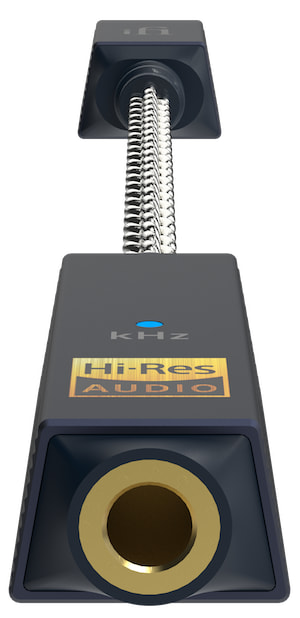
The portable USB dongle DAC market is no longer niche. It is overflowing with options and not in a good way. There are dozens of sub-$200 models promising better sound than your phone or laptop, and most of them look nearly identical on paper. More power. Smaller chassis. Higher sample rate support. Rinse and repeat. Differentiation in 2026 isn’t easy. That’s the reality facing the new iFi GO link 2.
When you strip away the marketing copy, what matters with any dongle DAC comes down to practical questions: How portable is it really? Does it deliver enough output for demanding headphones or just efficient IEMs? What Hi-Res formats are supported — and do you even need them? Does it drain your phone’s battery? Do you need Bluetooth with aptX Lossless or LDAC, or is a wired-only solution the smarter move?
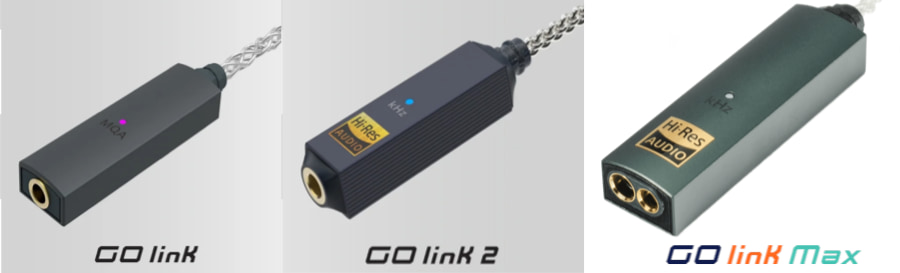
The iFi GO link 2 enters that conversation at $59, which replaces the previous iFi GO link (2023 model) that we quite liked from our testing for the same price. Although the $79 iFi GO link MAX (2025 model) adds a 4.4mm input, the GO link 2 is positioned as a wired, ultra-portable upgrade for listeners who want better sound from their smartphone, tablet or laptop without any bulk. In a segment this crowded, clarity of purpose matters. Most dongle DACs will outperform the internal audio circuitry in a smartphone or tablet, but being physically tethered to a small device that hangs off your charging port isn’t always the most elegant or practical solution.
iFi GO link 2 Key Features
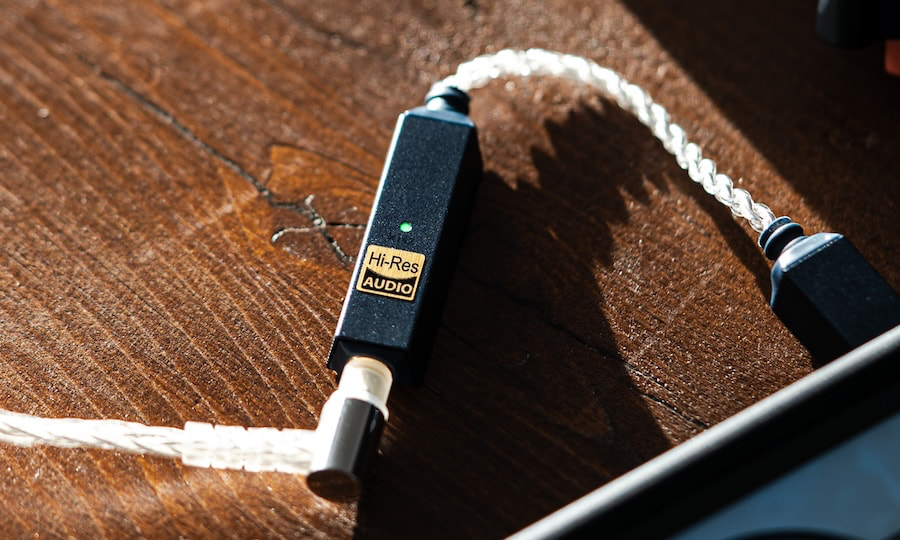
The GO link 2 is built around an ESS Sabre DAC chipset with support for PCM up to 384kHz and native DSD256, ensuring compatibility with high-resolution downloads and major streaming platforms. It is a fully wired USB-C dongle DAC with no internal battery and no Bluetooth functionality. Power is drawn directly from the connected source device, whether that’s a smartphone, tablet, or laptop.
The iFi GO link 2 features a 3.5mm S-Balanced headphone output. Rated output is ≥1.59V/79mW into 32Ω and ≥2.0V/14mW into 300Ω, with an output impedance below 0.4Ω. That level of voltage and current is well suited to efficient IEMs and most portable headphones, while the low output impedance helps maintain stable frequency response with sensitive multi-driver earphones. iFi’s S-Balanced design applies balanced circuit principles to a single-ended 3.5mm output to reduce channel crosstalk, though it is not a true balanced configuration.
Advertisement
According to the published specifications, the GO link 2 offers a dynamic range of ≥125dBA, signal-to-noise ratio of ≥125dBA, THD+N of ≤0.0015% (at 1.27V into 32Ω), and a frequency response of 10Hz-80kHz (-0.5dB). These figures place it squarely within the competitive range for sub-$100 USB dongle DACs and suggest low distortion and wide bandwidth performance within its intended use case.
Power consumption is rated at approximately 0.2W with no signal and up to roughly 1W at maximum signal, meaning it will draw modest but noticeable battery power from a connected mobile device. Physically, the unit measures 137 x 12 x 7.6mm (5.4 x 0.47 x 0.31 inches) and weighs just 7.8g (0.30oz). Its compact dimensions and minimal weight make it one of the smallest DACs in its category, designed to remain unobtrusive when connected to a phone or laptop.
The GO link 2 is the first model in the series to support the iFi Nexis app, allowing over-the-air firmware updates and access to two selectable digital filters (Hybrid and Linear). App-based features, including firmware updates and filter selection, are currently exclusive to Android devices. There is no word yet on when it will be available for Apple OS or iOS.
100mW @ 32Ω; 2V @ 300Ω via 3.5mm 241mW @ 32Ω; 4V @ 300Ω via 4.4mm
SNR
≥125dBA (2.05V)
≥125dBA (2.05V)
≥125dBA via 3.5mm ≥130dBA via 4.4mm
THD+N
≤0.004% (1.27V @ 32Ω)
≤0.0015% (1.27V @ 32Ω)
≤0.0015% @ 32Ω 1.27V via 3.5mm ≤0.0016% @ 32Ω 2.4V via 4.4mm
Nexis App Support
–
Yes
–
iFi GO link 2
The Bottom Line
The iFi GO link 2 is a focused, wired-only USB dongle DAC for listeners who simply want better sound than their phone or laptop’s internal audio without adding bulk, batteries, or wireless complexity. It supports PCM up to 384kHz and DSD256, offers a low output impedance suitable for sensitive IEMs, and keeps power draw modest. Its S-Balanced 3.5mm output and Android app support for firmware updates and filter selection add some differentiation in a crowded sub-$100 category. What makes it stand out isn’t feature overload — it’s size, simplicity, and a clean wired signal path in an extremely lightweight form factor.
What it lacks is just as clear. There’s no Bluetooth, no LDAC or aptX Lossless, no balanced 4.4mm output, and limited power for demanding headphones. If you want wireless flexibility and broader codec support, the iFi GO Blu Air makes more sense. The GO link 2 is for wired-first listeners using efficient headphones or IEMs who value portability and straightforward Hi-Res decoding over extra features.
Apple is reportedly working on a gigantic iPad Fold, but if it launches at all, it won’t be until the end of the 2020s.
What a large folding iPad could look like – Image Credit: AppleInsider
Backing up some previous claims that Apple is planning a foldable iPad, and others that it has been delayed until 2029, Bloomberg’s “Power On”newsletter adds that it might never be released. Once again repeating previous claims, the new report says that development of the iPad Fold has hit problems. Those reportedly include design issues to do with the simple practicality of how a user might type on one. Continue Reading on AppleInsider | Discuss on our Forums