AUSTIN, Texas — Authorities have identified the gunman in a deadly mass shooting early Sunday outside Buford’s Backyard Beer Garden on West Sixth Street as 53-year-old Ndiaga Diagne, a naturalized U.S. citizen originally from Senegal, as the FBI investigates possible ties to terrorism amid reports the suspect wore clothing featuring an Iranian flag and phrases like “Property of Allah.”
Austin Texas Shooting: Suspect Identified in Austin Bar Shooting That Killed 2, Injured 14
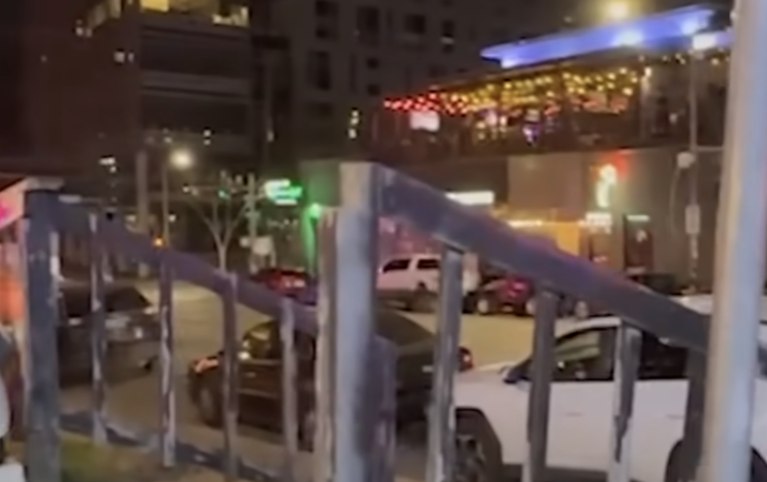
Diagne, who lived in Pflugerville, a suburb north of Austin, opened fire just before 2 a.m. local time on March 1, 2026, using both a pistol and a rifle, according to Austin Police Chief Lisa Davis. He drove past the popular beer garden multiple times in an SUV before stopping, firing shots from the vehicle window at people on the patio and sidewalk, then exiting to continue the attack. Responding officers, already positioned nearby in the bustling nightlife district, confronted him at an intersection and fatally shot him, ending the rampage.
The incident left two civilians dead at the scene and 14 others wounded, three of whom were in critical condition Sunday morning, per Austin-Travis County EMS Chief Robert Luckritz. Paramedics arrived within 57 seconds of the initial 1:59 a.m. call, treating 17 patients total. Three were pronounced dead on site, including Diagne.
The FBI has joined the investigation, citing “indicators of potential ties to terrorism,” though officials stressed it remains too early for a definitive motive determination. A law enforcement source told The Associated Press that Diagne’s clothing included an Iranian flag emblem and declarations of “Property of Allah,” raising questions about ideological motivations amid heightened U.S.-Iran tensions following recent military escalations in the Middle East.
Diagne immigrated to the U.S. in 2006 and became a naturalized citizen in 2012, according to federal sources and media reports. Austin police officially confirmed his identity Sunday evening and released a photo of the suspect. No criminal history or prior law enforcement interactions were immediately detailed.
Advertisement
Witnesses described chaos and “pandemonium” as gunfire erupted in the crowded entertainment district, a vibrant strip of bars, music venues and restaurants near the University of Texas campus. One bystander captured video of the final moments, showing officers engaging the armed suspect as he approached with his weapon raised. People fled in panic, with some hiding behind vehicles or inside nearby establishments.
University of Texas President Jim Davis confirmed students were among those affected, though specific details on their conditions were not released. The campus community expressed grief and support for victims.
Texas Gov. Greg Abbott ordered increased patrols and surveillance statewide in response. “We will not be intimidated, and we will not be terrorized,” he said in a statement. Local leaders, including U.S. Rep. Greg Casar, D-Austin, condemned the violence and called for swift justice.
The rapid police response drew praise from Austin Mayor Kirk Watson, who credited officers and first responders with saving lives. Officers transitioned quickly from routine patrols to confront the active shooter, firing after Diagne refused to drop his weapon.
Advertisement
The shooting occurred outside Buford’s, not inside, sparing patrons from direct entry by the gunman. The bar, a roadhouse-style spot known for its outdoor space, was packed with weekend crowds typical of Sixth Street’s lively scene.
Blood donations surged in response, with South Texas Blood & Tissue rushing 20 units from San Antonio to Austin hospitals. Community leaders urged continued support for victims and families.
The incident adds to a string of gun violence tragedies in Texas and nationwide, renewing debates over public safety in nightlife areas and access to firearms. No immediate legislative proposals emerged Sunday, but officials promised a thorough review.
The FBI’s terrorism probe will examine Diagne’s background, online activity, travel history and potential connections to extremist ideologies or foreign influences. Investigators recovered the suspect’s weapons and vehicle for forensic analysis.
Advertisement
As of Monday afternoon local time, three victims remained in critical condition, while others stabilized. Identities of the deceased civilians have not been released pending family notifications.
Authorities continue to urge anyone with information or video footage to contact the Austin Police Department or FBI tip lines. The scene on West Sixth Street remained cordoned off for evidence collection into Sunday evening.
The tragedy has shocked Austin, a city often ranked among the safest large U.S. metros, and highlighted vulnerabilities in crowded public spaces amid global geopolitical strains.
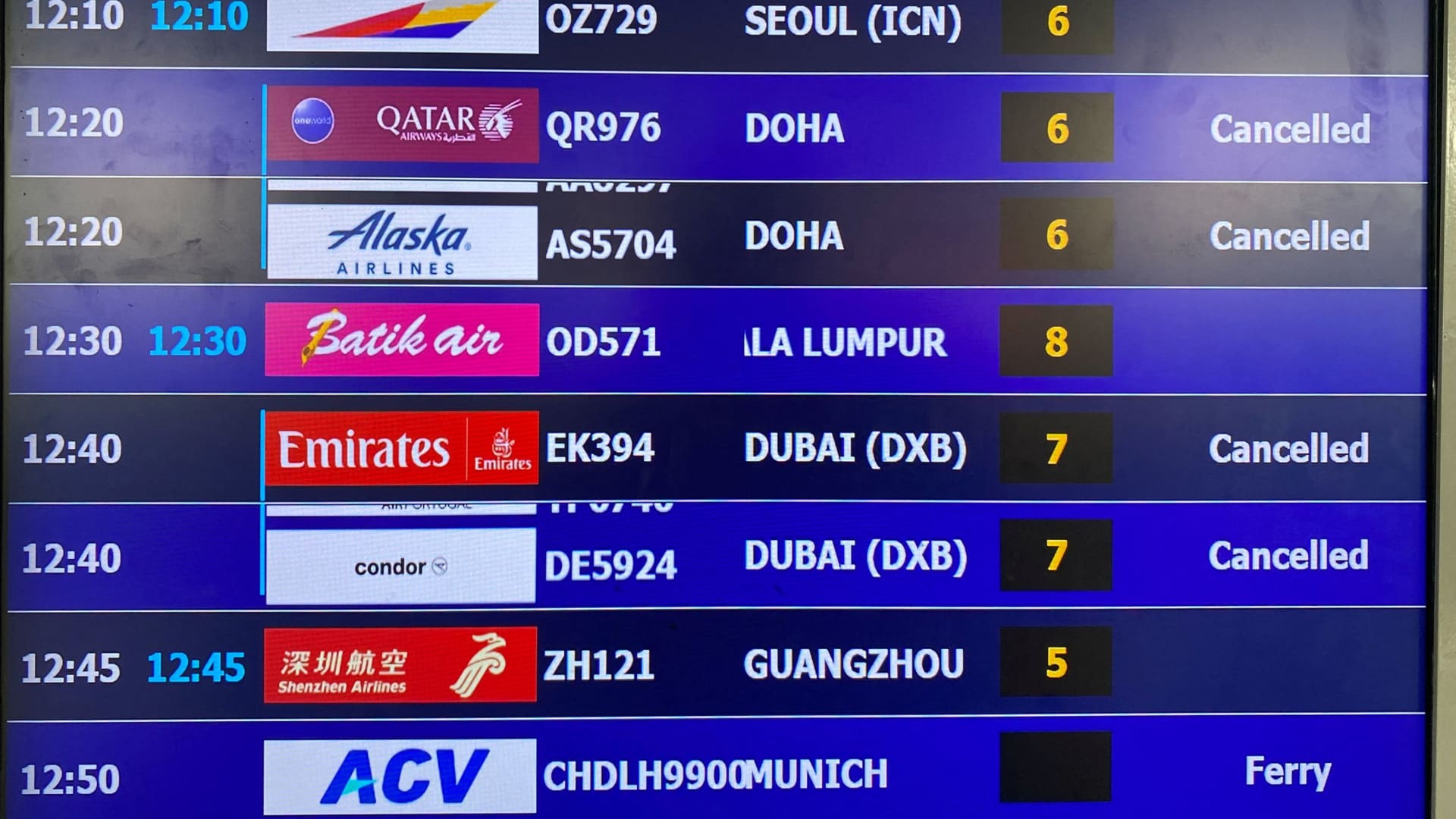
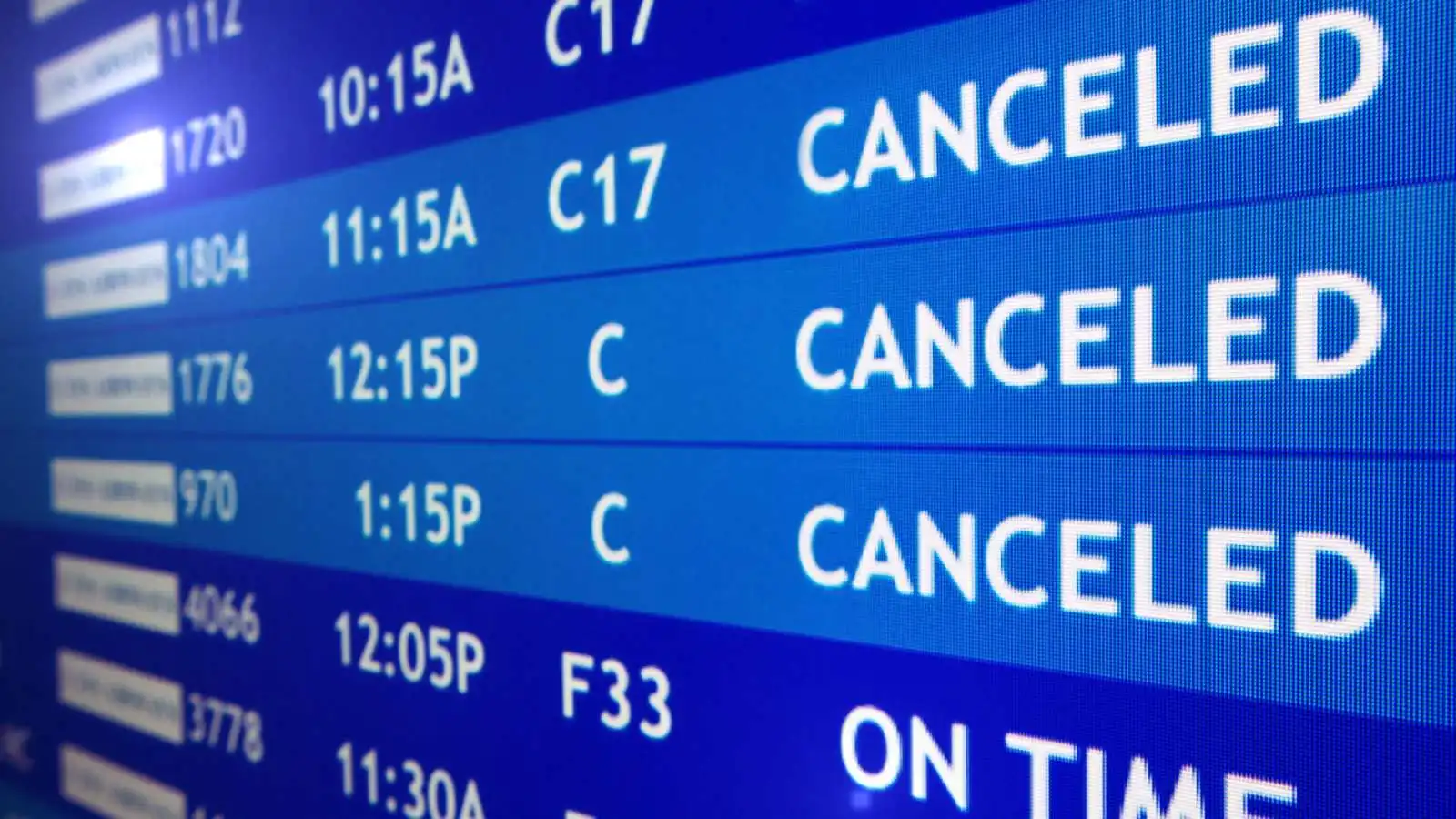
A display board shows canceled flights to Dubai and Doha amid regional airspace closures at Noi Bai International Airport, amid the U.S.-Israel conflict with Iran, in Hanoi, Vietnam, March 2, 2026. Picture taken with a mobile phone.
Thinh Nguyen | Reuters
Airline and travel stocks fell Monday after airspace closures throughout the Middle East forced carriers to cancel thousands of flights, disrupting trips as far as Brazil and the Philippines.
Advertisement
United Airlines, which has the most international exposure of the U.S. carriers, was down 6% in premarket trading. Service to Tel Aviv, Israel, is one of the airline’s most profitable routes, but airlines were also was forced to pause flights to Dubai, in the United Arab Emirates, one of the busiest airport hubs in the world.
Dubai is a home base for airline Emirates.
Shares of Delta Air Lines and American Airlines were also each off about 6%. Flights through the Middle East were grounded including to destinations like Tel Aviv.
Other carriers like Southwest Airlines, which is more U.S.-focused, had smaller stock moves but shares still fell as investors assessed a possible run-up in oil prices. Fuel is generally airlines’ biggest cost after labor.
International travel has been a bright spot in the travel sector. In January, international air travel demand jumped 5.9% from a year ago while domestic flight demand was nearly flat, the International Air Transport Association, an airline industry group, said in a report on Monday.
Read more about military conflicts’ impact on commercial flights
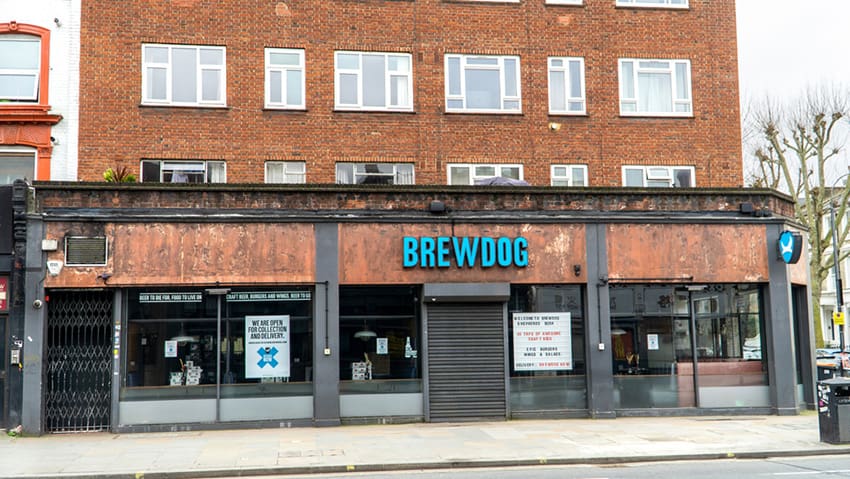
Scottish craft beer group BrewDog has closed all of its bars for a day as it seeks to finalise the sale of the business, marking a pivotal moment for one of Britain’s most high-profile independent brewers.
The Aberdeenshire-founded company confirmed that none of its sites would open on Monday to allow staff to attend company-wide meetings and to comply with licensing requirements linked to an anticipated change of ownership.
Chief executive James Taylor told employees in an internal email that the temporary shutdown was necessary to ensure colleagues across the global business could be briefed directly on the next phase of the process.
“We appreciate this is an unsettling time for everyone, and we want to ensure that all colleagues have the opportunity to hear directly from us about what happens next,” he wrote.
“To enable everyone to attend, and to comply with licensing issues arising from an anticipated change of ownership, we have taken the decision that none of our bars will open tomorrow.”
Advertisement
Food and beer deliveries were also cancelled, along with customer bookings for the day.
The development follows BrewDog’s announcement earlier this month that consultants AlixPartners had been appointed to oversee a structured and competitive process to evaluate strategic options, including a potential sale. The move came after the company reported sustained losses in recent years, most recently a £37 million loss in 2024.
Founded in 2007 by James Watt and Martin Dickie, BrewDog grew rapidly from a rebellious challenger brand into a global operator with around 60 bars in the UK and a presence in the US, Australia and Germany. At its peak, the group was valued at more than £1 billion and became a symbol of the craft beer revolution.
However, the company has faced mounting financial and reputational challenges. In October last year it announced job cuts across the business. Earlier this year it confirmed the closure of 10 UK bars, including its flagship Aberdeen site, and halted production of its gin and vodka lines at its Ellon distillery to focus on core beer operations.
Advertisement
BrewDog currently employs approximately 1,400 staff worldwide, with the majority based in the UK.
Corporate law specialists say the bar closures signal that the sale process is entering a more advanced and formal phase.
James Howell, managing director at Rubric Law, said the situation reflects a shift from exploratory talks to a tightly managed M&A campaign.
“What’s happening at BrewDog is a clear example of what unfolds when performance hasn’t met expectations,” he said. “After several years of losses and continued cost pressure, the decision to appoint advisers and run a competitive process is about value discovery and deal certainty, not just finding a buyer.”
Advertisement
“In practice, advisers will structure bidder rounds, control information flow and drive comparable offers. That framework matters even more when profitability is under scrutiny, because it protects value and prevents opportunistic pricing from early bidders.”
He added that buyers are likely to focus heavily on margins, lease exposure and operational efficiency rather than simply brand strength.
“Brand alone cannot bridge gaps in fundamentals,” Howell said. “One of the biggest legal risks in a process like this is weak readiness. If issues surface in due diligence — contracts, governance or shareholder rights — they can quickly affect valuation or derail momentum.”
The company’s ownership structure may also complicate proceedings. BrewDog previously raised capital through its “Equity for Punks” crowdfunding scheme, resulting in a broad base of minority shareholders. Alignment and drag-along provisions will be key to executing any transaction smoothly.
Advertisement
BrewDog’s trajectory has also been shaped by leadership changes. James Watt stepped down as chief executive in 2024, moving to the role of “captain and co-founder”, while Martin Dickie exited the business last year for personal reasons. Watt had faced scrutiny following allegations about workplace culture, highlighted in a BBC documentary, though a subsequent complaint to Ofcom was rejected.
The group’s shift from aggressive expansion to retrenchment mirrors broader pressures in hospitality, with rising costs, softer consumer spending and higher borrowing rates squeezing margins across the sector.
For now, BrewDog insists operations will resume as normal following the one-day closure. But the coordinated shutdown of all bars underscores the seriousness of the moment.
Whether the outcome is a full sale, break-up or recapitalisation, the process marks the end of an era for a brand that once defined Britain’s craft beer insurgency, and now finds itself navigating the realities of scale, profitability and investor expectations.
Advertisement
Jamie Young
Jamie is Senior Reporter at Business Matters, bringing over a decade of experience in UK SME business reporting.
Jamie holds a degree in Business Administration and regularly participates in industry conferences and workshops.
When not reporting on the latest business developments, Jamie is passionate about mentoring up-and-coming journalists and entrepreneurs to inspire the next generation of business leaders.
The former director-general of the Confederation of British Industry set to succeed Dame Clara Furse
Henry Saker-Clark Press Association Deputy Business Editor
12:43, 02 Mar 2026
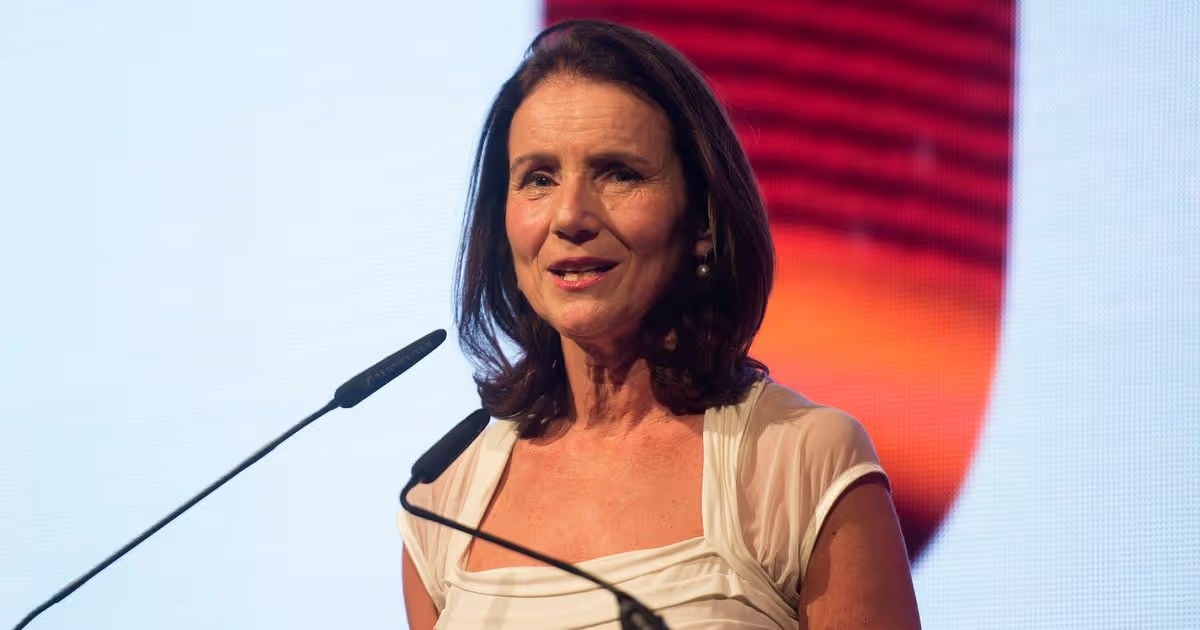
The former director-general of the CBI, Carolyn Fairbairn(Image: PA)
The former director general of the Confederation of British Industry (CBI) has been named as the incoming chair of HSBC UK.
Advertisement
The banking giant said Dame Carolyn Fairbairn would assume the role at the end of the current half-year period. The existing chair, Dame Clara Furse, is preparing to step down from the non-executive position in the months ahead following nine years of service.
Dame Carolyn, who headed the CBI until 2020, currently serves as chair of HSBC’s group remuneration committee and will move to the new role subject to regulatory clearance.
HSBC said the appointment follows a “robust succession process which considered both internal and external candidates”.
The announcement comes just three months after Brendan Nelson was appointed as chairman of the broader HSBC group.
Advertisement
Mr Nelson said: “I would like to thank Dame Clara for her dedication, commitment and the significant contribution she has made to HSBC during her time as chair of HSBC UK.
“I believe that Dame Carolyn’s deep understanding of the UK business and regulatory landscape will be invaluable in the next phase of delivery of HSBC UK Bank’s growth strategy and as we deliver for our investors, customers, communities and employees.”
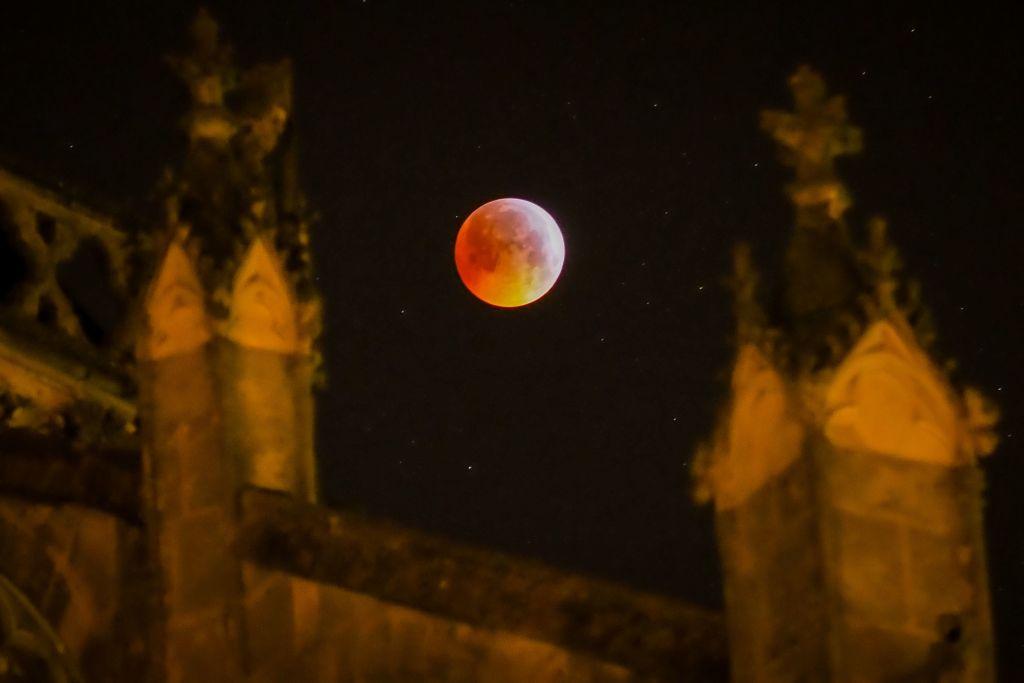
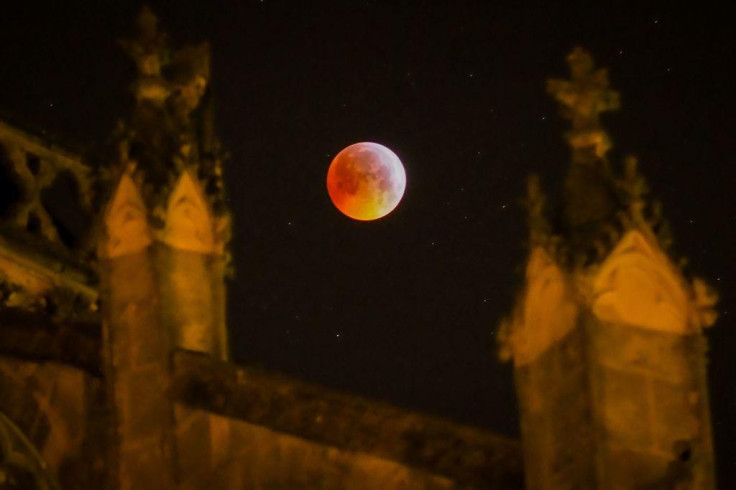
Skywatchers across much of the world prepared for a striking celestial event early Tuesday, March 3, 2026: a total lunar eclipse that turned the full Worm Moon a dramatic copper-red hue, often called a “blood moon.” This was the only total lunar eclipse visible anywhere in 2026, marking the third in a near-tetrad sequence and the last until late 2028.
The eclipse unfolded over the night of March 2-3 depending on time zones, with the Moon passing fully into Earth’s umbral shadow. Unlike solar eclipses, lunar ones are visible from the entire night side of Earth where the Moon is above the horizon, making this one accessible to millions in North America, Central America, parts of South America, Asia, Australia and the Pacific.
Key times were given in Coordinated Universal Time (UTC) and major zones:
– **Penumbral eclipse begins** — 8:44 UTC (March 3) / 3:44 a.m. EST / 12:44 a.m. PST / 8:44 p.m. KST (March 3 in Korea) / 7:44 p.m. AEST (March 3 in eastern Australia). The Moon entered Earth’s faint outer shadow, causing subtle dimming.
– **Partial eclipse begins** — 9:50 UTC / 4:50 a.m. EST / 1:50 a.m. PST.
Advertisement
– **Totality begins** — 11:04 UTC / 6:04 a.m. EST / 3:04 a.m. PST / 8:04 p.m. KST / 9:04 p.m. AEST. The entire Moon immersed in the dark umbra, appearing reddish due to sunlight refracted through Earth’s atmosphere.
– **Greatest eclipse (maximum totality)** — 11:33 UTC / 6:33 a.m. EST / 3:33 a.m. PST. The peak moment, with the Moon at its deepest in shadow.
– **Totality ends** — 12:03 UTC (approximately) / 7:03 a.m. EST / 4:03 a.m. PST. The Moon began exiting the umbra.
– **Partial ends** — 13:17 UTC / 8:17 a.m. EST.
Advertisement
– **Penumbral ends** — 14:23 UTC / 9:23 a.m. EST.
Totality lasted about 58-59 minutes, with the full eclipse spanning roughly 5 hours and 38 minutes. The Moon’s apparent size was near average, occurring about a week from perigee and apogee.
Visibility varied by location. In North America, western regions enjoyed the best views of totality under dark skies. Eastern U.S. observers saw the start of totality around sunrise, with the Moon setting mid-eclipse in many places — a phenomenon where the rising Sun and setting eclipsed Moon appeared simultaneously. Central and Mountain time zones caught more of totality before dawn. NASA noted early morning viewing in North and Central America, with far western South America also in range.
In Asia and Australia, the eclipse occurred during evening hours on March 3 local time. Eastern Asia and Australia saw full totality in the evening sky, while Pacific islands had it overnight. Europe and Africa missed visibility entirely, as the Moon was below the horizon during key phases.
Advertisement
The reddish color resulted from Earth’s atmosphere scattering shorter blue wavelengths, allowing longer red ones to reach the Moon — the same process that tints sunsets. Clouds or atmospheric particles could alter the shade from deep copper to brick red or even grayish.
No special equipment was needed; the naked eye sufficed, though binoculars or small telescopes enhanced crater details and color variations. Photographers used tripods for long exposures to capture the dim scene. Safe viewing applied — unlike solar eclipses, lunar ones posed no eye risk.
Astronomers highlighted this as part of a series: following totals on March 14, 2025, and September 8, 2025, with a partial on August 28, 2026. The next total arrives December 31, 2028–January 1, 2029, dubbed a New Year’s blood moon.
The March event coincided with the Worm Moon, traditionally named for earthworm activity signaling spring in some cultures. It peaked near 6:38 a.m. EST, close to maximum eclipse.
Advertisement
Communities organized watch parties, planetariums streamed views and apps like Stellarium or Sky Tonight helped locate the Moon. Clear skies were crucial; forecasts varied regionally.
The eclipse offered a reminder of celestial mechanics: Earth’s shadow extends far into space, and the Moon’s orbit aligns perfectly twice yearly for eclipses. This alignment at the descending node produced the total phase.
As dawn broke in many viewing areas, the Moon exited shadow, returning to normal brightness. For those who missed it, recordings from NASA and observatories circulated widely.
This rare astronomical spectacle captivated observers, blending science, beauty and a moment of shared wonder across continents.