
Politics
Ramadan pause prompts racist boos

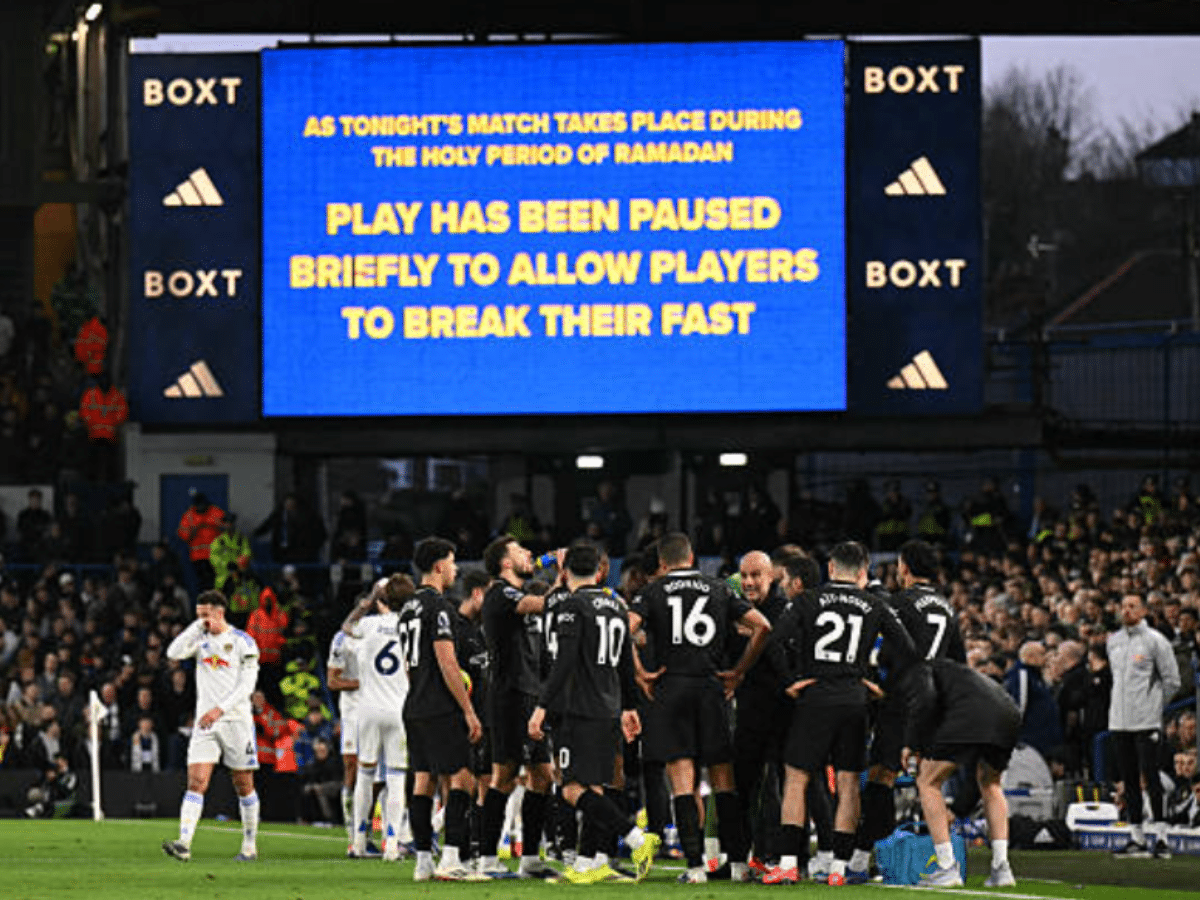
A Premier League match between Leeds United and Manchester City at Elland Road sparked widespread controversy both in England and abroad. The game was briefly paused to allow fasting players to break their fast at sunset during Ramadan.
Ramadan pause
Around the 12th minute of the first half, the referee temporarily halted play, taking advantage of a natural break in the flow of the game. This allowed several Muslim players to go to the touchline to drink water and take a quick supplement to break their fast, in accordance with the league’s protocol during Ramadan.
According to ITV News, an explanatory message was displayed on the stadium’s giant screen informing fans that the pause was brief and specifically for the players to break their fast, a practice that has become common in recent years to ensure the players’ health and safety.
Despite the explanation, some Leeds fans in the stands booed, sparking a wave of controversy across media outlets and social media platforms. Sky Sports described the scene as “disappointing,” especially since the stoppage lasted only a minute.
GB News also reported that some fans justified their reaction by saying they hadn’t understood the reason for the pause. A likely story.
Officials speak out
Manchester City manager Pep Guardiola expressed his displeasure with the fans’ reaction, pointing out that respecting religious beliefs is part of the values of the modern game. He said:
This procedure has been in place for years, and the players just need a short moment. We have to respect everyone.
And, Kick It Out, an organisation dedicated to combating discrimination in English football, issued a statement expressing its disappointment at the booing:
It’s an important and visible part of making the game welcoming for Muslim players and communities. But as tonight’s reaction shows, football still has a long way to go in terms of education and acceptance.
Racism is rife in football
It’s worth noting that the English Premier League has allowed referees to temporarily halt play during Ramadan evening matches for several seasons now, a measure implemented in previous matches without significant controversy.
However, the Elland Road incident has reignited the debate surrounding the relationship between football and its fans, particularly in light of increasing diversity within the game, and the extent to which some stadiums accept religious and cultural pluralism in European stadiums.
While the match concluded as usual, the brief stoppage remained the most significant event, reaffirming that football is no longer just 90 minutes of competition, but also a space that reflects societal transformations and challenges.
Featured image via the Canary

Politics
Politics Home | Keir Starmer Sacks Foreign Office Permanent Secretary Over Mandelson Vetting Row


2 min read
The most senior civil servant in the Foreign Office is leaving his role over the Lord Mandelson vetting row.
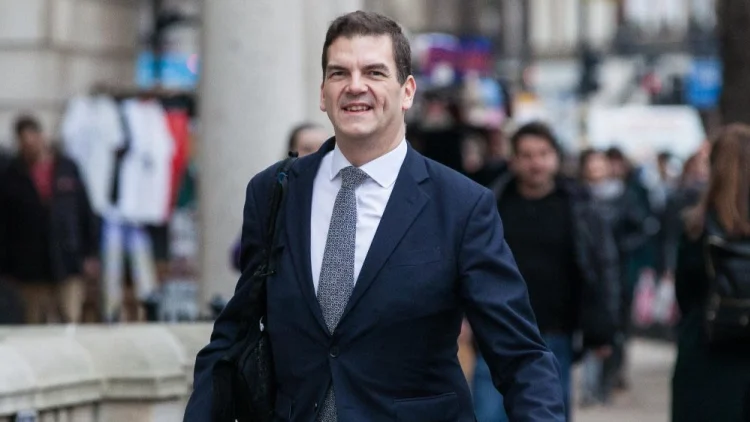
Prime Minister Keir Starmer and Foreign Secretary Yvette Cooper have lost confidence in Olly Robbins, who will be standing down as the department’s permanent secretary as a result, PoliticsHome understands.
His departure comes after The Guardian reported on Thursday that Mandelson was appointed the UK ambassador to the US in 2024 despite failing his security vetting.
No 10 later released a statement saying that the Foreign Office was responsible for the vetting process and went ahead with appointing Mandelson to the job in Washington despite the failure, without telling the Prime Minister or any other minister.
Downing Street added that Starmer had been first made aware earlier this week.
The Prime Minister is expected to make a statement to the House of Commons on Monday to correct previous statements he has made about the process by which Mandelson was appointed.
He is expected to tell MPs that he did not unknowingly mislead Parliament when he said that due process had been followed in the appointment.
Starmer sacked Mandelson as the UK ambassador to Washington in September amid controversy over his links to paedophile financier Jeffrey Epstein.
The Prime Minister’s decision to appoint the former cabinet minister to the senior diplomatic position despite being aware of his relationship with Epstein has come under intense scrutiny.
In February, Morgan McSweeney resigned as Starmer’s chief of staff over the episode.
Mandelson, who was a key figure in the New Labour governments of Tony Blair and Gordon Brown, is currently being investigated by the police over allegations that he leaked confidential government documents to Epstein while in office.
More follows…

Zionism — Since October 7, British citizens across the UK have increasingly woken up to the long-term ethnic cleansing and genocide of Palestinians at the hand of their murderous settler colonialist occupier, Zionist Israel. For many, the live-streamed mass violence and widespread terror shared on social media became a call to action. As a result, it became a call to action which I, like many others, felt deeply. This sparked a strong sense of social responsibility to act.
My journey has led me to finding a journalism career that I am thoroughly passionate about. This empowers me to hold the powerful to account without fear or favour. Let me make this clear to my critics: I have no interest in swooning over powerful people on pedestals. I fight for power in the hands of ordinary people — and I will challenge corruption in our domestic politics wherever it appears.
I am also fiercely and unapologetically anti-Zionist, and surprisingly, this appears to have put me at odds with both the Greens and Your Party. Nevertheless, I do not back down to bullies. Working to stop Zionism is more than worth taking full responsibility for.
In fact, it is political parties themselves which must be made to do better.
Zionism and the Green Party
Zionism is an undeniable issue in the Green Party. I witnessed it in my own time as a candidate in the ’24 General Election. In that election, Zionists within the ranks manipulated myself and my local party to withdraw my own candidacy. They did so by informing that I did not have support from the Green’s following an investigation into antisemitism allegations churned out by the Murdoch hate rags and right-wing press.
After that, due to no longer trusting the party, I ended my membership, started working with Assemble and became an independent.
Since then, I have learned this was a blatant lie as I had been cleared of any and all antisemitism by the party’s GPRC and GPeX. In reality, an unelected Zionist bureaucrat just didn’t like that an anti-Zionist might represent the Green Party. So they subverted process to block it.
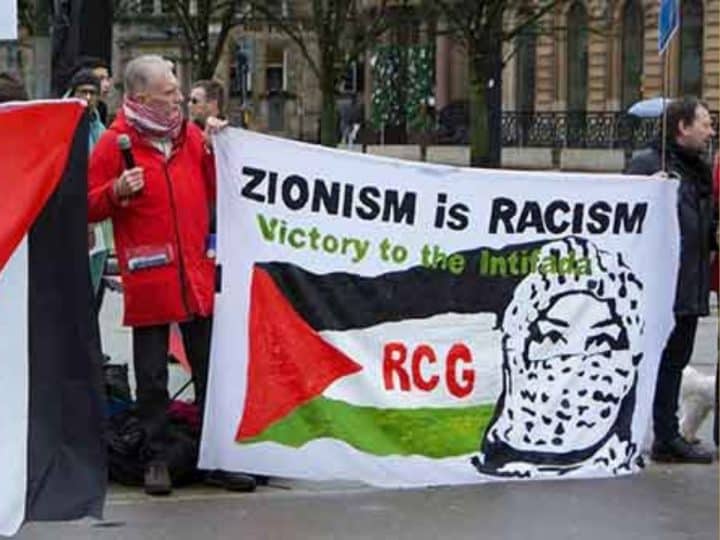
That lack of appetite for anti-Zionism is still going strong despite public appearances. Moreover, we only need to look to the filibustered “Zionism is Racism” motion at their recent spring conference. This will have undoubtedly come from pro-Zionist shills in the party.
Auschwitz survivor: “…just as the Nazis taught me in Germany”
"In Israeli schools, racism against Palestinians is taught, and students are indoctrinated about the state, blood, and soil, just as the Nazis taught me in Germany. Zionism is a nationalist, racist, and colonialist ideology…"
—An Auschwitz survivor Jew Hajo Meyer pic.twitter.com/icwKx6tkY6
— The Resonance (@Partisan_12) November 11, 2025
Justifying further the understanding that Zionism is indeed racism is the very fact that racism itself has been reported by minoritised Greens. Going further, it appears a mixture of racism and Zionism are being deployed specifically to shut down anti-Zionist members. This can only ring alarm bells for pro-Palestinian activists across the country. In particular, those who actually learned from the malicious faux-antisemitism crisis under Corbyn’s Labour.
Unlike Polanski apparently, who appears set to oversee a continuation of bogus antisemitism allegations as we reported recently on the deeply concerning letter sent by Green member, Hamza Egal. Even worse, we appear to be witnessing a mix of racism and islamophobia amidst the attacks which conveniently fall on anti-Zionist members.
Zionism is not ‘complex’ or ‘nuanced’
Deputy leader Mothin Ali has beautifully shown no difficulty in recognising the scourge of Zionism. Refreshingly, he has gone further and offered a place of safety for those affected by pro-Israel, pro-genocide smear campaigns:
Thanks for highlighting this Tony. — Mothin Ali (@MothinAli) April 14, 2026
If anyone has been affected by the unfair smears, please do reach out https://t.co/H6CMaaUq0q
This exposes a deeply concerning lack of principled leadership. It is made more evident by Polanski’s ‘nuanced take’ on the colonialist political ideology of Zionism:
Green Party leader Zack Polanski answers question on motion E3 Zionism is racism and the Green Party conference. #green #greenparty #conference #update #answer pic.twitter.com/aIZehnear1
— Ani Says (@ani_says1) April 1, 2026
Polanski should be made to take a clear and consistent stance against all forms of racism, including Zionism which must be seen as anti-Palestinian racism. Otherwise, if he fails to do so, it risks allowing these toxic and abusive attitudes to take root within the Green Party. Furthermore, it can weaken its ability to stand up to fascism.
Zionism and Your Party
Your Party has positioned itself as the anti-war, anti-imperialism, anti-Zionist party many times — after all, it was largely formed by the Independent MPs in Corbyn’s alliance in Parliament. Needless to say, most calls for a strong anti-Zionist stance have come from MP Zarah Sultana’s dogged and principled insistence. However, as is often the way with Corbyn, he has been reluctant to be as transparent about his own held position.
Instead, his supporters tout that “he will free the Palestinian people”, whilst the leader himself can’t find it within himself to answer one simple, crucial question: is he actually anti-Zionist?
The blatant discomfort on show from Corbyn at the time speaks volumes. In turn, it raises alarm bells as to whether he really can be the bulwark that we need to actually try to turn the tide of tyranny facing us all. After all, we all know how he weathers under concerted pressure from rogue forces. He capitulated and oversaw a purge of anti-Zionist socialists under the guise of antisemitism.
On the other hand, at a meeting in London in November, Corbyn seemed more than capable of saying he firmly opposed Zionism. He also appeared to recognise the scale of death, devastation and destruction that it inevitably delivers:
The whole Zionist project was about expanding Israel forevermore, which is exactly what [Israeli Prime Minister Benjamin] Netanyahu is doing with the Greater Israel project. So, yes — absolute opposition to Zionism, and absolute solidarity with the people of Palestine.
And now we have the genocide, and it is a genocide in Gaza. We in Your Party are absolutely in solidarity with the people of Palestine, and will be guided by them on the policies we develop and the direction we take going forward.
Corbyn appears to be back for another purge
Coincidentally, this ‘socialist’ party which claims to oppose all forms of oppression has been seen to purge socialist groups for supposedly not aligning with its values. In stark contrast, the ruling clique have shown far more openness to former Tories and social conservatives. Subsequently, we’ve seen emboldened bigotry on display enraging socialist members in the movement and bringing the party’s socialist credentials under further scrutiny.
That contradiction is glaring — and it’s fuelling serious doubts among socialists about whether Jeremy Corbyn can provide the clear, principled leadership they’re demanding.
Moreover, many do not appear to believe so. In fact, resignations soon followed the purge of socialists from anti-war groups like Counterfire. Corbyn even managed to entirely alienate his Scottish members. Those members have now resigned en-masse and committed to building a socialist party that they can trust.
The decision of the leadership of Your Party to exclude members of left groups who have been committed to building the organisation is a mistake which will weaken the left, but has been predictable given events of the past year, argues Michael Lavalettehttps://t.co/ci4NbKQkOV
— Counterfire (@counterfireorg) April 14, 2026
Your Party – Goodbye Scotland
Solidarity with members and former members of Your Party Scotland After months of bureaucratic provocations, the withholding of data, funds and support for the Holyrood election in May, Your Party has suffered a mass resignation in Scotland. pic.twitter.com/6dzrOJSzM6
— Democratic Socialists (@DemSocsYP) April 14, 2026
Clarify your positions and damn well be effective
This miserable debacle has certainly taught us one thing for certain. Pedestalled leaders are not the hope for the people. Clearly, the real hope for change and repair can only come from ordinary people who feel its very urgency.
This failure of leadership in YP has devastated members. Nevertheless, rather than give up, their socialist, anti-oppression resolve has only strengthened in conviction. That conviction has the power to develop into a truly historic moment for the UK. No longer looking to privileged leaders who break their promises, ordinary people are now working towards a party of their own that actually answers to its members.
Green’s should learn from the disappointing experience of YP members and demand clarification on Polanski’s ‘nuanced’ position on Zionism. After all, being hoodwinked is exactly the MO of establishment politicians, Corbyn very clearly has, Polanski may be no different.
We have to face facts: There is no time to waste in being fooled by self-interested, self-important leaders who believe their own hype.
Featured image via RevolutionaryCommunist

USA has ramped up piracy and sabotage to prop up dollar hegemony, journalist Richard Medhurst’s latest YouTube video explained.
“We are witnessing the transition of the United States from an empire into a pirate state,” Medhurst says, describing what he calls the birth of a new petrogas dollar.
The Syrian-born British journalist lists several of the US’s “criminalities” to illustrate his point.
Medhurst is not the only one trying to popularise the USA as a pirate empire.
The Empire of Piracy better pay attention to Mohsen Rezaee, the top military adviser to Ayatollah Mojtaba Khamenei and a former IRGC commander-in-chief:
“We will by no means give in on our 10 conditions in the negotiations through a naval blockade.”
“This is my personal… pic.twitter.com/wxcafczZPH
— Pepe Escobar (@RealPepeEscobar) April 16, 2026
Cradle’s journalist Pepe Escobar also calls the US “the Empire of Piracy.”
Escobar said that Iran’s top military adviser dismissed any talks of Trump becoming the policeman of the Strait of Hormuz.
The Iranian military says an announced naval blockade on vessels by the US in international waters would be illegal and amount to piracy, warning that no Gulf ports would be safe if its own were threatened https://t.co/cwf2FkAjqL pic.twitter.com/UA99a5j1rR
— Al Jazeera English (@AJEnglish) April 13, 2026
Iran has officially called the US’s move to blockade the Strait of Hormuz “piracy.”
South America and the Caribbean
Medhurst explains that under the guise of an anti-narcotics operation, the United States deployed a naval fleet to the Caribbean.
In South America, the kidnapping of President Maduro was “strategic.”
Medhurst says:
Half of Cuba’s energy grid was dependent on oil from Venezuela. Immediately after kidnapping Maduro and taking control of the oil, the United States cut Cuba off, plunging its power grid into darkness. This shows that capturing Venezuela’s oil wasn’t merely about corporate greed, but for strategic geopolitical purposes as a leverage, as a weapon to use for regime change [in Cuba]
Trump has said he could “do anything I want with it” when talking about Cuba.
Maduro’s capture, eight weeks before Trump declared war on Iran, cleared the way for Shell — and whoever said ‘it’s not about the oil’ … @ditalalmolloy reports.https://t.co/3MSFf8gPTS
— Canary (@TheCanaryUK) March 6, 2026
US oil giants like Chevron and UK oil giants like BP and Shell are crawling over Venezuela since the kidnapping of its head of state, as The Canary reported.
USA vs Russia
Medhurst demonstrates the USA and NATO attacks on the Russian fleet.
He said:
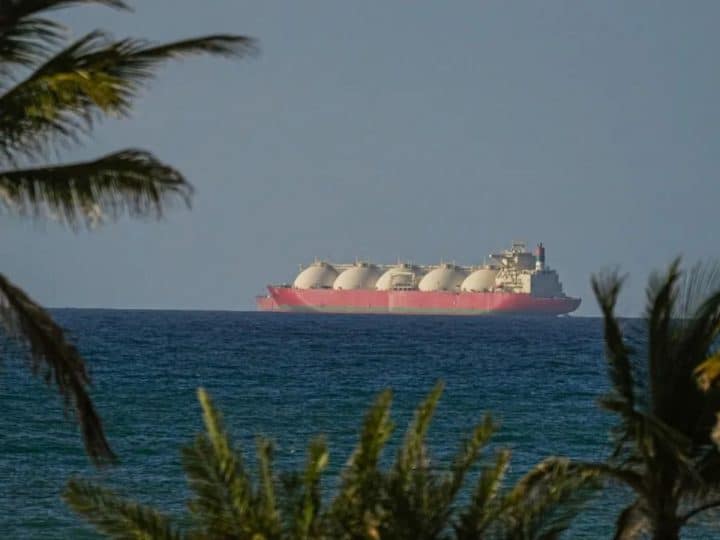
During the last months, the United States and their allies began systematically hunting down Russian oil and gas ships, not just in the North Atlantic, but across the entire planet. Particularly after the war in Iran began, we’ve seen an uptick in Russian tankers and LNG ships being blown up or pirated all the way from the Caribbean to the North Atlantic to the Mediterranean to the Black Sea, Baltic Sea

In a post on X, he said NATO’s hands were full with piracy.
Some people laugh at Europe and NATO for not helping in Hormuz, thinking they are cowards or unconvinced of the war.
Not at all.
They love piracy but have their hands full, attacking ships in the Russian sector of the blockade up North. And I’m not joking in the slightest.
— Richard Medhurst (@richimedhurst) April 13, 2026
The UK has been assisting the USA in its endeavours.
Earlier this year, British armed forces assisted US troops in seizing an oil tanker, which American officials accused of breaking sanctions by carrying oil for Venezuela, Russia and Iran.
The UK’s Ministry of Defence said on January 7:
The UK has provided enabling support to the United States at their request to interdict the vessel Bella 1 today,
This ship, with a nefarious history, is part of a Russian-Iranian axis of sanctions evasion which is fuelling terrorism, conflict, and misery from the Middle East to Ukraine
More recently, in late March, the BBC reported that the UK is now “ready to act” to board and detain Russian shadow fleet ships in its waters under the UK’s Sanctions and Money Laundering Act 2018.
West Asia & Indian Ocean
The US oil company Chevron is one of the main corporate beneficiaries of the Western campaign of destruction in West Asia, Medhurst says.
After the US-backed regime change in Syria, Medhurst said Chevron “wasted no time in moving on to Syria’s oil and gas.”

He says that the Board of Peace was “railroaded” through the United Nations Security Council to provide the legal cover for Washington’s colonial plan, giving Chevron access to Gaza’s resources. To make this point, he cites the gas deal Israel recently signed with Chevron.
Israel’s approval of the $35B Chevron natural gas agreement with Egypt marks a major win for American business and regional cooperation. This deal not only strengthens energy security, but also supports broader efforts to stabilize and rebuild Gaza.
— U.S. State Dept – Near Eastern Affairs (@StateDept_NEA) December 18, 2025
The US State Department welcomed the deal, saying it would support “broader efforts to stabilize and rebuild Gaza.”
USA pressuring China
Medhurst argues that China is the ultimate target of this global energy piracy.
He says the US is crippling Venezuela, Russia and Iran, three of China’s top oil suppliers. The goal is to force Beijing to buy expensive American energy and prevent de-dollarisation.
China has repeatedly asserted Iran’s right to sovereignty as the US is trying to blockade the Strait of Hormuz, even though there is an alleged ceasefire till Monday!
Chinese FM Wang Yi held a phone conversation with Iranian FM Seyed Abbas Araghchi.
The current situation has reached a critical stage between war and peace, and a window for peace is opening. China supports maintaining the momentum of ceasefire and peace talks. Iran’s… pic.twitter.com/J9BPBmL5cz
— Lin Jian 林剑 (@SpoxCHN_LinJian) April 16, 2026
Sovereignty is the antithesis of the Western-led hegemonic order, because with sovereignty, how can you make a country crawl with Chevron and Shell?
Featured image via MiddleEastMonitor
By The Canary
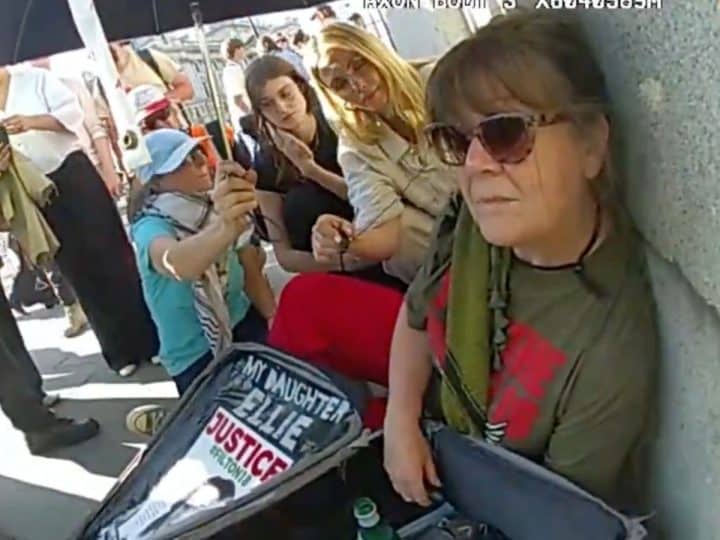

Emma Kamio, mother of ‘Filton 24’ anti-genocide activist Ellie Kamio, has been acquitted at her trial for ‘locking on’ in protest at the unlawful imprisonment without trial of her daughter and other Palestine Action members. Earlier this week, Ellie and two fellow protesters defeated attempts to convict them of ‘violent disorder’. However, they and others still face charges of criminal damage. Had they been convicted, they could have faced prison sentences of up to twenty years.
The Defend Our Juries group posted footage of her lock-on protest as it celebrated her acquittal:
BREAKING: Filton Activist’s Mother ACQUITTED after Parliament Lock-on
Emma Kamio, mother of Ellie (Leona) Kamio has today been acquitted in a one-day trial at City of London Magistrates Court.
She locked on to the gates of Parliament while the vote on proscription took place. pic.twitter.com/wqtC5lN64u
— Defend Our Juries (@DefendOurJuries) April 15, 2026
The Palestine Action ‘Filton 24’ defendants had already been acquitted in 2026. However, the Starmer government ordered a retrial in its attempt to brand them as terrorists and justify its unlawful terrorism ban on Palestine Action, which carried out ‘actions’ against Israeli weapons-makers and financial interests in the UK. The trials are underway this week in London.
Featured image via the Canary
By Skwawkbox

This article is the first in a series exploring British media’s smear campaign against the Green Party before the May 2026 elections — beginning with the Times.
Britain’s mainstream press is doubling down on a smear campaign against the Green Party in the run up to May’s local elections.
Repeated, targeted attacks against Zack Polanski’s party across legacy media can only be described as coordinated scare-mongering before polling day. Outlets including the Times, Telegraph, MEN and regional news are producing daily anti-Green Party stories pre-election, often mimicking each other’s exact framings.
As Britain’s foremost left-of-Labour party — albeit not exactly a high bar — the Greens are shaking politics up from the progressive left in a way not seen since 2017. Unsurprisingly, given the highly concentrated ownership and well-documented right-leaning biases of British media, they’re not happy about the Greens’ success.
The Greens are set to make record gains across London’s city boroughs, England’s councils, the Welsh Senedd and Scotland’s Holyrood parliament this May. It’s becoming increasingly obvious that the British political and media establishment will do whatever it takes to minimise those gains. (Remember Labour’s polling day misinformation van in Gorton and Denton?)
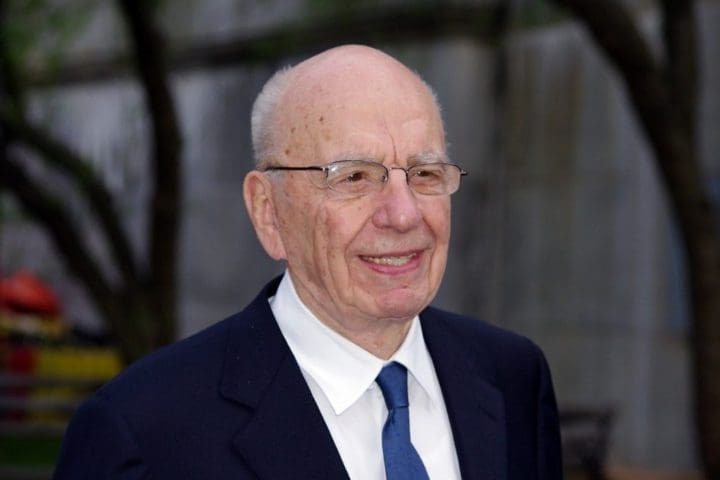
Given that it’s billed as the UK’s “paper of record,” one of the most ‘serious’ British media organisations, what’s the Rupert Murdoch-owned Times been saying?
Green Party — Sig(h)n of the Times
Well, the Times published this rather dramatic headline, with the snatch-quote attributed to — you guessed it — a Labour MP, party chair Anna Turley:
Greens investigate ‘crackpot’ candidates over social media posts
What were the offending posts? Per the Times:
… posts resurfaced calling non-white ministers “coconuts”, questioning British sovereignty over the Falklands and defending “resistance to occupation” by Hamas.
As a white man, I’m not going to adjudicate on “coconut” — but what I will say is that the Times spinning this word as being “racist” and “divisive” entirely misses the point.
Sensible journalism, in my view, should focus on actual, material racism and division inflicted overwhelmingly on black or brown people first and foremost. This includes ‘hostile environment’ immigration policies of successive right-wing government ministers, from Patel to Braverman to Lammy, and the adjacent rhetoric. Yet rather than take such a meaningful approach, the Times spuriously equates words with actions. Symbolism is foregrounded over material reality.
The word “coconut” is intended to mean this: people of colour who gain positions of political power and authority, but use them to uphold rather than challenge systems of dominance, like racial marginalisation and/or hierarchy.
Again, examples include the racist immigration system or a foreign policy doctrine which enables unchecked war crimes and genocide. (Think: the first black US President Barack “Really Good at Killing People” O-bomber and his knack for unprecedented covert drone strikes on brown people in West Asia.)
Indeed, as is stated in the original (now deleted) post the Times cited, by Lewisham Green councillor Hau-Yu Tam:
It’s reminiscent of Priti Patel admitting her family wouldn’t get in [to the UK] under her own immigration rules, but somehow even more callous. These coconuts.
To criticise this language and paint it as derogatory, rather than critiquing the harmful and degrading policy itself, is both old and misguided.
It’s exactly the same playbook as Zionists shunning people on university campuses for saying “from the river to the sea,” screaming “antisemitism” at them and making unfalsifiable hypotheses about what words could mean — rather than condemning the actual inhumane genocidal crimes committed against Palestinians.
Times and Times again…
Relatedly, the Times also criticised Tam for saying that students at the London School of Economics “were correct to defend the Hamas book.” So much for context!
This followed a coordinated Zionist attempt to shut down a lecture by the author of Understanding Hamas: And Why That Matters, which students physically defended.
This, frankly, is absurd. For one thing, whatever you might think of them, Hamas are a resistance movement against the longest-standing and deadliest illegal military occupation in history, namely the IOF.
Tam included this in the post:
Resistance to occupation is permitted in international law.
Yet the Times frames this without any acknowledgement that it’s actually true! Instead, the Times intends to leave readers with the startling impression that only a Green “crackpot” could believe in such things as resistance to structural violence.
International law?
Furthermore, even if you entirely disagreed with the movement’s legitimacy — which would put you at odds with international law — can anyone really criticise students for wanting to understand the world around them? Should history students be condemned for studying Nazi ideology, too, since most of us disagree with Nazism as a movement?
Clearly not. Even the most Hamas-hating Zionist should surely admit that there’s nothing wrong with anyone — let alone students — wanting to understand political phenomena, especially one of the most significant political movements of our era.
That is, of course, unless learning to understand Hamas exposes students to an independence movement analogous to African National Congress, Algeria’s National Liberation Front, the National Front for the Liberation of Angola, and countless other such movements throughout history.
Lastly, they stuck it to half-Argentinian Green candidate Jo Dowbor — somehow also a “crackpot” — for having a clearly nuanced opinion on the Malvinas (Falkland) Islands.
If that’s the barrel-scraping the Times have to do to score political points, maybe they’re right to be worried after all. Perhaps the Times aims only to mount a resistance to the surging Greens “by any means necessary” — and this is what it takes.
Green Party’s Zack hits back
Reactionary press is nothing new — but the scale and rate of anti-Green sentiment across the British press has become quite pronounced ahead of the local elections on 7 May.
What’s novel, however, is that Zack Polanski has not held off from punching right back at the low-standards journalism spouted by the likes of Murdoch’s Sun and Viscount Rothermere’s Daily Mail (whose wife donated to Reform).
One Green source close to the party leadership told the Canary:
The right-wing press are throwing everything they’ve got at us, but it’s just not working. Our membership is up, poll ratings are up, and we’re on course for a record-breaking set of local election results.
According to Polanski, the scare tactics deployed by Britain’s mainstream media are evidence that they’re scared of what Greens can achieve.
As he wrote in one X post: “The Murdoch empire is terrified.”
Featured image provided via author
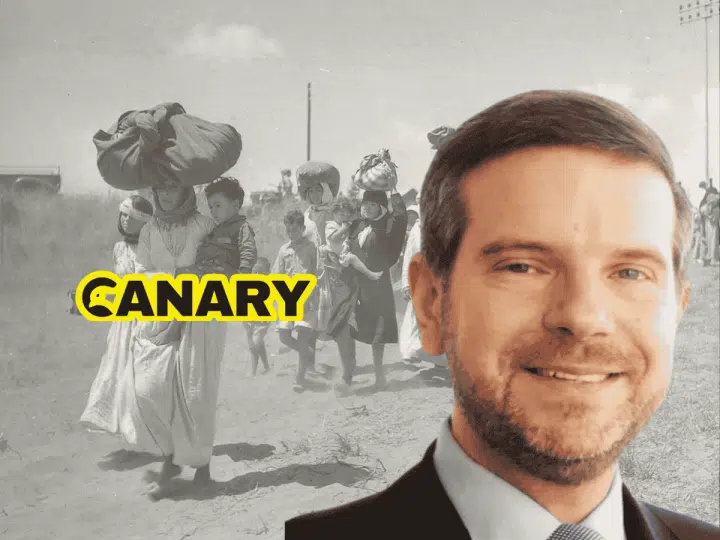

Dr. Alan Mendoza is the new Reform UK candidate for Abbey Road ward in Westminster who is quietly stealing our money to destroy Palestinian villages. The local elections on Thursday 7 May will see Mendoza beg for votes in London, but his primary loyalty seems to lie with Israel. Whilst he presents himself as ‘anti-establishment’, his career reveals a man deeply ingrained in the darkest wings of the British and Israeli establishments. And with him being Chief Advisor on Global Affairs for Reform UK, to which one does his allegiance lie?
Alan Mendoza — His original sin
In April 2011, Mendoza’s Henry Jackson Society (HJS) of which he is executive director, absorbed the Centre for Social Cohesion. The HJS is a Westminster think-tank that promotes “liberal interventionism” and a dark ‘transatlantic’ foreign policy. Basically, it’s a shill for Zionists to break into the heart of our politics. It was originally founded as a group for people from different political parties. Since then, it has been warped into a base for people who push for war. And they use hateful rhetoric against Muslim people in the UK.
The CSC merger was a massive moment for radicalisation. It opened the doors for notorious anti-Muslim wankers such as Douglas Murray to step into the heart of the organisation. This shift was so radical that it tore the society apart. Co-founder Matthew Jamison eventually tore into the HJS, denouncing it as a “far-right, deeply anti-Muslim racist propaganda outfit” that demonised Muslim people and Islam.
Another senior member to resign from the project in 2012 was Marko Attila Hoare. Citing the HJS’s obsession with “anti-Muslim and anti-immigration views” following the takeover as the final straw. This vile takeover ensured the HJS ceased being a foreign policy group and started being a Zionist weapon against Black, Brown and Muslim communities.
Planting trees over a genocidal crime scene
Mendoza’s disgusting reach extends way beyond that racist little think-tank in London. As the President of the Jewish National Fund UK (JNF), he leads a charity that literally erases Palestinians and their history, just to fund illegal occupation. And they’re using our fucking money to do it. One of their most disgusting projects is Britannia Park, a leisure facility in Israel.
This park covers 10,000 acres. And it was built directly over the ruins of seven Palestinian villages, including Ajjur. These communities were ruthlessly ethnically cleansed in 1948 to make way for Israeli expansion. The JNF is planting forests over the bones of innocent Palestinians to make sure displaced people can never return to their homes.
This is a systematic process of erase and deny. It physically blocks the Right of Return for refugees. And why Mendoza preaches about ‘British values’, he heads an organisation that shreds international law and builds on the remains of stolen homes.
And it gets worse.
The stolen land that WE foot the bill for
This isn’t just a devastating issue on the other side of the world. It is our fucking money they are using to commit these disgusting crimes. Through its subsidiary, KKL Charitable Accounts (operating as SmartGiving), Mendoza’s network moved an astounding £9,683,167 in the last financial year. And because it has charitable status, this theft of stolen land is subsidised by us. The British taxpayer is footing the bill through Gift Aid.
This vile little loophole allows wealthy wankers to get a 25% top-up from the government to fund projects that international law deems to be presumptive war crimes. To put it simply, our money is being used to erase Palestinian land and hand it over to settlers in Israel. And that fills me with rage. So whilst Reform UK says it wants to ‘stop the waste’ of public money, it’s own chief advisor is funnelling tax-payer money into illegal settlements behind the scenes.
In 2021, the KKL-JNF board even voted to officially facilitate land purchases in the occupied West Bank. So every quid they reclaim through Gift Aid by Mendoza’s Zionist charities, is a quid that we could use to heal our broken NHS and feed our hungry children. But no, our government is effectively giving it to the ethnic cleansing of Palestinians.
Alan Mendoza — Foreign agents are infiltrating our politics
Mendoza is now the Chief Advisor on Global Affairs for Reform UK. This is the man who is writing Nigel Farage’s foreign policy. A man who is deeply invested in Zionist expansion is definitely not going to be interested in fixing any broken system we have in the UK. The party’s ‘anti-establishment’ bullshit is nothing but a smoke screen designed to support and uphold racist ideologies fed to us by Israel’s far-right.
This corruption of the UK political landscape is a family affair for the Mendozas it seems. Alan is married to Claudia Mendoza, who is the Chief Executive of the Jewish Leadership Council. So whilst her husband appears to be Israel’s infiltrator into our politics, she seems to be reinforcing their control quietly behind the scenes.
As the head of the JLC, Claudia lobbies our government to protect these Zionist entities. Her organisations orchestrate the crack downs on anti-Zionist activism and the pro-Palestine movement.
If we allow Alan Mendoza to be elected to the Abbey Road ward, we are effectively allowing a Zionist takeover of our own democracy. Mendoza doesn’t give a flying fuck about saving the public’s money. While our society is crumbling, our NHS failing and our kids are hungry, Mendoza diverts OUR money away from those issues. He is funnelling our cash into paving over the bones of massacred Palestinians.
Mendoza is a Zionist shill, and we have to do everything we can to stop him getting into power. Time to dig out these parasites that have latched on to Reform UK. We need to do it now before it’s too late.
Featured image provided via author
By Antifabot


Donald Trump’s racist immigration forces deported over 440,000 people in the US fiscal year for 2025. His jackbooted Immigration and Customs Enforcement (ICE) agents have been terrorising American cities — and even killing US citizens — virtually since he came back to power in 2025.
US outlet Axios reported:
The top U.S. immigration enforcement agency deported 442,637 people between October 2024 and September 2025, according to newly-released statistics.
Adding:
The top-line figure is about 171,000 people more than the fiscal year before, but far short of Trump’s campaign promise to deport one million people a year.
Clearly Trump’s racist immigration regime is not hitting its grotesque targets:
The figure is the first official deportation statistic released under the Trump administration and was included in a congressional budget justification report.
Axios reported:
The Office of Homeland Security Statistics hasn’t updated its data since November of 2024. Homeland Security’s much-hyped “self deportation” figure is not included in the report. The agency has claimed in press releases that more than two million have “self-deported” but hasn’t shared regular data.
MAGA sad about Trump’s mere 400k deportations
Meanwhile Trump’s fascistic Make America Great Again (MAGA) allies have said the president has gone soft on deportations. Nigh-on half a million people ejected not enough for them then…
The grim-sounding Mass Deportation Coalition is chief among the complainers. Its leader, Mike Howell, told Axios:
The truth is the first year was not a year of mass deportation
Adding:
A conscious decision was made to go after the worst first, which was, we’ll call it a deviation from the central campaign promise of mass deportations.
A White House spokesperson told the outlet:
Nobody is changing the Administration’s immigration enforcement agenda and the President’s entire team is on the same page when it comes to implementing his policies.
Budgetary changes
And MAGA’s white supremacist weirdos might have more discomfort in store for them. A new report by Homeland Security, which control ICE, says that it has actually asked for less money for the next financial year:
The ICE report shows that the goal for next year is to deport 1 million people. But the agency has asked for less money in fiscal year 2027 than it did in fiscal year 2026.
ICE recently lost its boss after Trump fired nativist horror Kristi Noem and replaced her with another fascist tool, the preposterously named Markwayne Mullin. As the Canary wrote at the time:
Turns out that using a masked secret police to murder and kidnap people to concentration camps makes you unpopular, even in America.
As such, Noem has made a convenient sacrifice to make Trump look like he’s relenting. Meanwhile, nothing will change under Markwayne Mullin, save maybe that ICE will get a little more cautious, a little more covert in their actions.
There is no number of deportations which will sate American fascism’s thirst for human suffering. Trump may be distracted by his failed war against Iran, but sooner or later his Sauron gaze will turn back to the US and his attention will return to the ignoble task of kicking out immigrants left, right and centre. We hope the American people will continue to fight back, as they have in Minnesota and elsewhere.
Featured image via the Canary
By Joe Glenton


The Palestinian national beach soccer team has arrived in Sanya, China, to participate in the 2026 Asian Beach Games, but this time their arrival is unlike any previous appearance.
The team’s roster is incomplete. The coaching staff is absent. The international stadium is open to a team exhausted by years of inactivity.
Their progress has been halted by war, reduced to mere survival rather than competition.
Trapped in Gaza
The team enters the tournament with only 11 players. This includes five players from the Gaza Strip currently in Cairo, and six players from the West Bank, who are participating for the first time simply to fill the roster.
This lineup seems more like an attempt to fill space than to build a complete team. In reality, it is all that remains of a team that was once close to the top of the sport.
The most heartbreaking aspect is the absences: the entire coaching staff is not traveling, and key players are trapped by the war in Gaza. They will be absent from the fields, along with the very essence of the game itself.
The long years of inactivity, stretching back to the outbreak of war, have left Palestinian beach soccer with nothing but a dormant memory – a sport barely surviving.
Sports eroded by war
Beach soccer in Palestine didn’t suddenly collapse; rather, it gradually eroded over nearly three years of inactivity.
Training camps ceased, travel opportunities vanished, and international participation dwindled to almost nothing – a stark reflection of the direct impact of war on sports at all levels.
This sport wasn’t alone in its isolation; the beach volleyball team was also unable to travel to the same tournament, completing the picture of Palestinian absence from the competitions. It was as if participation this time wasn’t measured by the number of teams present, but by the number that couldn’t make it.
Despite all this, participation carries a dimension that transcends the result and the tournament itself. It’s an attempt to keep Palestine’s name present on the international stage, even if the presence is incomplete and burdened by circumstances. It’s a determination not to completely sever ties with the world.
The Palestinian national team’s memories harken back to a different time. When he was competing fiercely in Arab and Asian championships, coming close more than once to the World Cup dream, and even reaching the podium to win bronze at the 2012 Asian Beach Games in China.
That win is a distant image that seems today to belong to another life, before war redrew the boundaries of the game, the field, and the opportunity.
By Alaa Shamali


Disabled Shetland pensioner Don Whittle has accused Reform UK leader Nigel Farage‘s ‘heavies’ of ‘manhandling’ him – assault, in other words – after Farage’s car took a disabled parking bay.
Incident caught on camera
75-year-old Whittle has rheumatoid arthritis, heart failure, a pacemaker and a spinal condition that weakens his arms and legs. He says that the thugs grabbed him after he tried to take photos of Farage’s car in a disabled spot he needed to drop his wife off. The incident was caught on camera:

‘Lucky’ henchmen
An unfazed Whittle quipped that the henchmen were “lucky – I could have used my martial arts training”. He went on:
I’m disabled and I take offence to people that park in disabled spots who are not disabled. I went down to take photographs of them parked there and so they started to move off and decided to park on a corner on double yellow lines. I photographed them there.
This clown wouldn’t let me through. And I couldn’t go through on the pavement because of the protesters. I just wanted to get through to the front to take pictures of them blocking the street. [After Farage got in the car] I walked past them and went and stood in front of his car, thinking, ‘Well, if you can stand and block me, I can stand and block you.’
So I stood there. And two of his henchmen came out and manhandled me across the road out of the way. They weren’t considerate. They didn’t say, ‘Would you mind moving out of the way?’ They didn’t even ask. They just grabbed me. I said, ‘I’m disabled.’ And they didn’t care.

Shetland Greens intervene
Shetland Greens mounted a protest against Farage’s visit. Party candidate said:
We are here to oppose the toxic Trumpian politics of Nigel Farage. We stand against hate, our politics are guided by kindness, and we support the human rights of all people including migrants, ethnic minorities, and all marginalised people.
The Reform grifter could easily have afforded to pay for a parking space. He has been identified as having the second-biggest non-parliamentary earnings among all UK MPs after spending more than 1,100 hours outside Parliament working for fourteen outside employers. Clacton voters have complained that he is rarely in the constituency.
A sign spotted on a fence alongside one of Shetland’s main roads described Farage as a “frog-faced wanker”.
By Skwawkbox
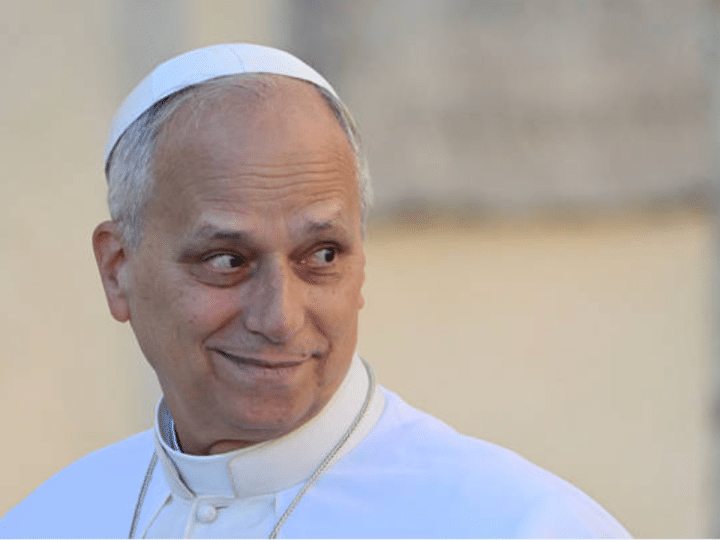

The Pope has criticised world leaders who spend billions on wars. This comes just days after US president and all-around fucking dickhead Donald Trump depicted himself as Jesus on Truth Social.
Trump vs Pope
American-born Pope Leo has been critical of Trump and the genocide he and Israel are committing. He rightly made Trump look like an absolute cock with the most grace by saying:
War divides; hope unites. Arrogance tramples upon others; love lifts up. Idolatry blinds us; the living God enlightens. All it takes is a little faith, a mere “crumb” of faith, in order to face this dramatic hour in history together — as humanity and alongside humanity. #Peace
On 13 April, Trump attacked the Pope in a lengthy post. As Canary reporter Willem Moore said, feel free to read it all if you’ve got a spare 10 minutes and don’t respect your own time.
This will end well.
Some genius in Trumpland decided, “Hey, the best thing we can do now is to go to war with the Holy Father.” pic.twitter.com/zYG3IuNivB
— Rick Wilson (@TheRickWilson) April 13, 2026
The paedophile president followed that up by posting the now-infamous AI image:
Trump is now posting AI images of himself as Jesus Christ healing, what appears to be, a young Jeffrey Epstein. pic.twitter.com/zG2OQKbP9s
— Harry Sisson (@harryjsisson) April 13, 2026
Surreal
The Pope responded to Trump’s latest outburst with:
I don’t think that the message of the Gospel is meant to be abused in the way that some people are doing.
I will continue to speak out loudly against war, looking to promote peace, promoting dialogue and multilateral relationships among the states to look for just solutions to problems.
After much criticism from his own supporters, Trump deleted the post. He then tried to claim he was actually supposed to be a doctor, not Jesus. Because doctors typically place their hands on their patients’ foreheads and heal them with light, don’t they?
He also of course, blamed the ‘fake news’:
Reporter: Did you post that picture of yourself depicted as Jesus Christ?
Trump: It wasn’t a depiction. I did post it and I thought it was me as a doctor. And had to do with red cross as a red cross worker, which we support and only the fake news could come up with that one. pic.twitter.com/7Y1u86GjkP
— Acyn (@Acyn) April 13, 2026
As the Canary also reported, JD Vance also tried it with the Pope, but got heckled in the process. Maybe you should just go pay him a visit, JD, it worked with the last one.
Now, on his tour of Cameroon, Pope Leo is doubling down on calling out genocide.
He criticised leaders who:
turn a blind eye to the fact that billions of dollars are spent on killing and devastation, yet the resources needed for healing, education and restoration are nowhere to be found.
He continued:
The masters of war pretend not to know that it takes only a moment to destroy, yet often a lifetime is not enough to rebuild
Speaking to crowds, he said the world was ‘being ravaged by a handful of tyrants’ and that in Cameroon in particular there was ‘an endless cycle of destabilisation and death’.
Fresh off the back of his speech, the Pope tweeted another message which was blatantly aimed at Trump:
Woe to those who manipulate religion and the very name of God for their own military, economic, and political gain, dragging that which is sacred into darkness and filth
It’s clear that the Pope will not be intimidated by pathetic little men like Trump, now if only other leaders like Keir Starmer could follow in his wake.
Though it will never not be fucking ridiculous that the bloody pope subtweets the president of the United States.
Featured image via the Canary
Singer D4vd arrested on suspicion of murder after teen girl's body was found in his car

Financial Moolank Money Secrets For You! #vastu #numerology #money
Music legends among winners at Jazz FM Awards 2026


-

 Politics6 days ago
US brings back mandatory military draft registration
-
 Sports6 days ago
Man United discover Nico Schlotterbeck transfer fee as defender reaches Dortmund agreement
-

 Fashion6 days ago
Weekend Open Thread: Veronica Beard
-

 Politics7 days ago
Malcolm In The Middle OG Turned Down ‘Buckets Of Money’ To Appear In Reboot
-

 Politics4 days ago
World Cup exit makes Italy enter crisis mode
-

 Business6 days ago
Tesla Model Y Tops China Auto Sales in March 2026 With 39,827 Registrations, Beating Cheaper EVs and Gas Cars
-

 Crypto World3 days ago
The SEC Conditionalises DeFi Platforms to Be Avoided for Broker Registration
-

 Crypto World3 days ago
SEC Signals Exemption for Crypto Interfaces From Broker Registration
-

 News Videos2 days ago
Secure crypto trading starts with an FIU-registered
-
 NewsBeat4 days ago
Pep Guardiola and Gary Neville agree over Arsenal title problem that benefits Man City
-

 Business5 days ago
Ireland Fuel Protests Enter Day 5 as Blockades Spark Shortages and Government Prepares Support Package
-

 Business7 days ago
OpenAI Halts Stargate UK Data Centre Project Over Energy Costs and Copyright Row
-

 Crypto World6 days ago
Federal judge blocks Arizona from bringing criminal charges against Kalshi
-

 Politics7 days ago
LBC Presenter Mocks Trump Over Iran War Failures
-

 NewsBeat3 days ago
Trump and Pope Leo: Behind their disagreement over Iran war
-

 Crypto World3 days ago
SEC Proposes Certain Crypto Interfaces Don’t Need to Register as Brokers
-
 NewsBeat5 days ago
JD Vance announces ‘no agreement’ with Iran over nuclear weapons fear
-

 Business6 days ago
IMF retains floor for precautionary balances at SDR 20 billion
-
 Business6 days ago
Former Liverpool CEO eviscerates FIFA for World Cup ticket pricing
-
 Crypto World4 days ago
Sei Network Enters Quiet Reset Phase as On-Chain Metrics Signal a Slowdown in 2026
You must be logged in to post a comment Login