
Sports
La Liga: Real Madrid lose again as FC Barcelona get gap at top of table

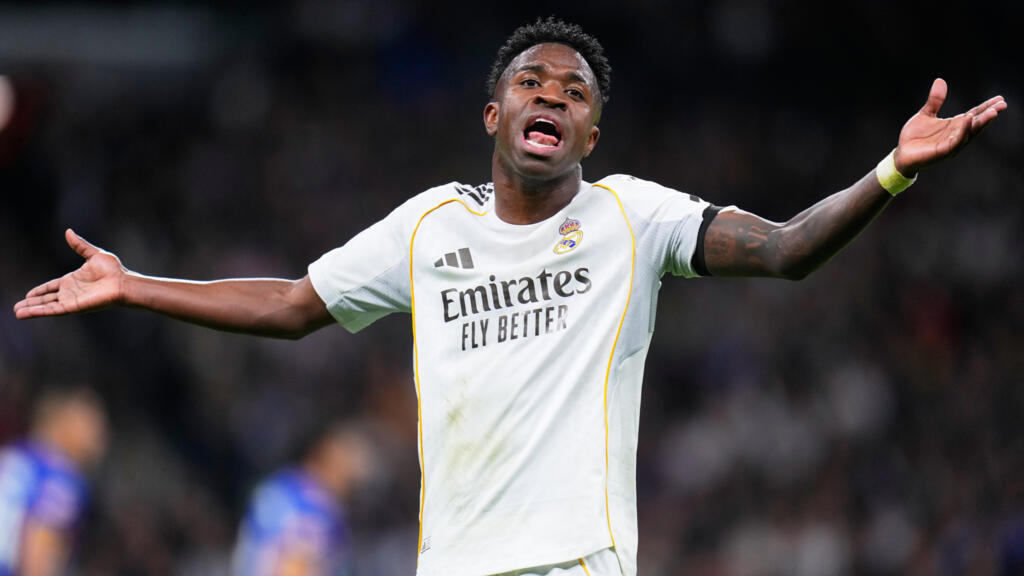

Real Madrid lost at home to Getafe. FC Barcelona now has a four-point lead over Real.

Check in every week for the unfiltered opinions of our writers and editors as they break down the hottest topics in the sport, and join the conversation by tweeting us at @golf_com. This week, we discuss LIV Golf’s chaotic week and uncertain future, Matt Fitzpatrick’s win at RBC Heritage and Rory McIlroy’s career Masters prospects.
Early last week, several news outlets reported uncertainty regarding LIV Golf’s future, indicating the Saudi PIF was on the verge of pulling its funding. LIV CEO Scott O’Neil told his staff via email on Wednesday: “Our season continues exactly as planned, uninterrupted and at full throttle. While the media landscape is often filled with speculation, our reality is defined by the work we do on the grass.” But O’Neil was more specific about the situation on Thursday, when he said in a TV interview, “The reality is you’re funded through the season, and then you work like crazy as a business to create a business and a business plan to keep us going.” (The clip was deleted but still circulated online.) On Sunday, Jon Rahm won LIV’s sixth event of the season, in Mexico City. What’s your primary takeaway from what was a wild week for the five-year-old league?
James Colgan, news and features editor (@jamescolgan26): My primary takeaway is simple: The Saudis seem to be getting out of the business of running a golf league, which is a truly momentous takeaway for the entire sport. LIV now enters a period in which it will need to work hard to find a path to survival, and as its CEO, Scott O’Neil, himself said, it seems all options are on the table.
Josh Sens (@joshsens). One takeaway is as old as capitalism: that new businesses — even the disruptive variety — are hard to grow no matter how much money you put into them. That said, for Saudi Arabia, getting out of the business of funding a professional golf tour would not have to mean getting out of golf. A new course just opened in Jura. Others are in the works. The ambition is still to grow the country’s presence in the game, but likely now as a host for golf tourism and tour events. Which, in retrospect, seems like it would have been the better path all along.
Josh Schrock, associate news editor (@Schrock_And_Awe): My main takeaway is that if the PIF pulls out, LIV Golf, as we know it, would need to reinvent itself. O’Neil said he would pursue all avenues to get more funding, but it’s hard to see one or several sponsors willing to bankroll the league at a level that would allow for more nine-figure contracts. O’Neil himself said LIV wouldn’t be profitable for five or 10 years without significant changes.
Jon Rahm won but questions about LIV Golf’s future dominated chaotic week
;)
To Schrock’s point, can LIV continue in its current form without PIF’s deep pockets? If so, what would need to change?
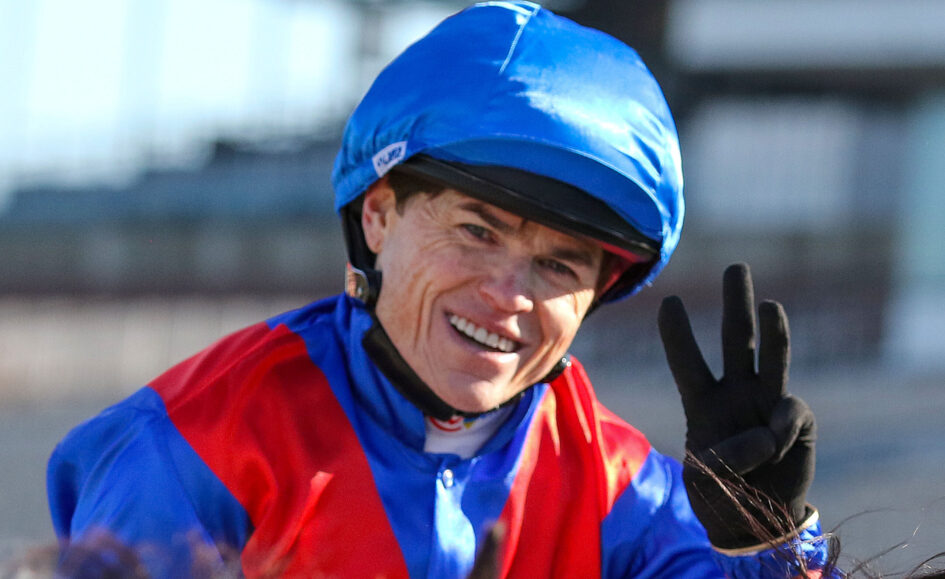
Craig Williams hopes to finish a packed weekend strongly by securing a Group 1 prize in Hong Kong, guiding 2025 Hong Kong Derby winner Cap Ferrat through the Queen Elizabeth II Cup (2000m) at Sha Tin on April 26.
Williams faces a near-full slate of rides at Adelaide’s Morphettville on Saturday before flying out for Champions Day in Hong Kong.
The 2025 Hong Kong Derby provided Cap Ferrat with his lone success so far, reinforced by robust displays in the Group 1 Champions & Chater Cup plus the Group 3 Premier Plate late last campaign.
As the $3.90 favourite, the Snitzel gelding bled in November’s Group 2 Sa Sa Ladies’ Purse (1800m), but he reappeared in fine fettle, rallying late in the Chairman’s Trophy (1600m) earlier this month.
Williams gained the riding engagement after reaching out post the Chairman’s Trophy performance.
“His first up run last preparation was enormous and then all of a sudden, he’d come through with health issues, and then subsequently to see him back, I was taken and pleased by his first-up performance,” he said.
“I touched base when I flew back from Sydney on Sunday last week, I rang up Francis and said, ‘Oh, how’s Cap Ferrat? Where’s he going?’ He said, ‘he’s going to go to the Champions Day on the 26th.’ I said, ‘I’ll be keen to ride him.’”
“The next morning, I got a message to say that I was confirmed to ride him, and I was delighted to be re-associated with him.”
Over 12 months on, Williams cherishes the emotion tied to his Hong Kong Derby conquest aboard Cap Ferrat.
“I spent three years riding in Hong Kong and the Derby is their biggest race and it’s the equivalent to the Melbourne Cup.
“To get the opportunity to ride Cap Ferrat and to win the race was really special. Because I spent so much time there, I understand the magnitude of the race and to have that prize now, so far, one Hong Kong derby is brilliant.”
Williams tops the Morphettville card Saturday with Super Smink in the Group 1 Robert Sangster Stakes (1200m) and Paltrow Miss in the Group 1 Australasian Oaks (2000m).
From there, it’s off to Hong Kong to also ride Juneau Pride and Ensued for trainer John Size with Cap Ferrat.
Visit betting sites to check the latest markets for the Queen Elizabeth II Cup.

Arsenal travel to face Manchester City at Etihad Stadium in a crucial Premier League title clash that could shape the race. A City win would close the gap to three points with a game in hand, while an Arsenal victory would stretch their lead to nine points; even a draw favors the visitors.
City come into the match in strong form, having won three straight games, including a cup final victory over Arsenal, whereas Arsenal have struggled recently with three defeats in five and issues in attack.
Pep Guardiola is dealing with defensive injuries, with Joško Gvardiol, John Stones, and Rúben Dias all sidelined, but is otherwise expected to stick with a winning lineup.
|
Premier League Man City vs Arsenal global streaming details |
|
|
Region |
Broadcaster |
|
USA |
Peacock |
|
UK |
Sky Sports |
|
Australia |
Stan Sport |
|
Canada |
Fubo Canada |
|
India |
JioStar |
|
South / Sub-Saharan Africa |
SuperSport |
|
Malaysia |
Astro |
|
Middle East |
beIN Sports MENA |
Premier League League: Manchester City vs Arsenal Live Telecast and Streaming Details
When will the Premier League match between Manchester City and Arsenal be played?
The Premier League clash between Manchester City and Arsenal will take place on April 19.
What time will the Premier League match between Manchester City and Arsenal begin on April 19?
The match is scheduled to kick off at 9 PM IST.
What will be the venue for the Premier League match between Manchester City and Arsenal?
Stamford Bridge Stadium will host the Premier League match between Manchester City and Arsenal.
Where will the live telecast of the Premier League match between Manchester City and Arsenal be available in India?
The live telecast of the match will be available on Star Sports network in India.
Where will the live streaming of the Premier League match between Manchester City and Arsenal be available in India?
Fans in India can stream the Manchester City vs Arsenal Premier League match live on JioHotstar.

The 2026 World Snooker Championship has arrived, with the 17-day marathon at the Crucible Theatre set to provide the usual array of sporting drama as the best players on the planet vie to lift the famous trophy.
Zhao Xintong heads to Sheffield as defending champion after making history as the first Chinese winner of the tournament 12 months ago and he is the bookies’ favourite to retain his crown, although he will have to break the legendary ‘Crucible Curse’ to do so – with no first-time winner having successfully defended the title.
Plenty of other contenders will fancy their chances of stopping Zhao, who opens up with a first-round clash against Liam Highfield, including Ronnie O’Sullivan, who has found some form in recent weeks and begins his quest for a record eighth world title against Crucible debutant He Guoqiang.
Four-time winners Mark Selby and John Higgins face former finalists Jak Jones and Ali Carter respectively in round one, while world No 1 Judd Trump has a tough opener against Gary Wilson, 2024 champion Kyren Wilson squares off against teenage wonderkid Stan Moody and a rejuvenated Neil Robertson takes on Pang Junxu.
Here’s everything you need to know:
How to watch the World Snooker Championship
Every session of every match at the 2026 World Snooker Championship will be live on the BBC, with BBC One, BBC Two, BBC Four, the BBC red button, BBC iPlayer and BBC Sport website all utilised for coverage across the 17 days. The tournament is also broadcast on TNT Sports in the UK, with every session shown across their channels and subscribers can also use streaming service HBO Max to watch TNT Sports.
World Snooker Championship schedule in full
(All times BST)
*denotes final session
Saturday 18 April
First round
10am
Zhao Xintong (1) vs Liam Highfield
Mark Allen (14) vs Zhang Anda
2.30pm
Xiao Guodong (9) vs Zhou Yuelong
Mark Williams (6) vs Antoni Kowalski
7pm
Zhao Xintong (1) vs Liam Highfield*
Barry Hawkins (11) vs Matthew Stevens
Sunday 19 April
First round
10am
Ding Junhui (16) vs David Gilbert
Mark Allen (14) vs Zhang Anda*
2.30pm
John Higgins (5) vs Ali Carter
Barry Hawkins (11) vs Matthew Stevens*
7pm
Xiao Guodong (9) vs Zhou Yuelong*
Mark Williams (6) vs Antoni Kowalski*
Monday 20 April
First round
10am
Ding Junhui (16) vs David Gilbert*
Kyren Wilson (3) vs Stan Moody
2.30pm
John Higgins (5) vs Ali Carter*
Wu Yize (10) vs Lei Peifan
7pm
Shaun Murphy (8) vs Fan Zhengyi
Kyren Wilson (3) vs Stan Moody*
Tuesday 21 April
First round
10am
Chris Wakelin (13) vs Liam Pullen
Judd Trump (2) vs Gary Wilson
2.30pm
Ronnie O’Sullivan (12) vs He Guoqiang
Wu Yize (10) vs Lei Peifan*
7pm
Shaun Murphy (8) vs Fan Zhengyi*
Judd Trump (2) vs Gary Wilson*
Wednesday 22 April
First round
10am
Chris Wakelin (13) vs Liam Pullen*
Mark Selby (7) vs Jak Jones
2.30pm
Ronnie O’Sullivan (12) vs He Guoqiang*
Si Jiahui (15) vs Hossein Vafaei
7pm
Neil Robertson (4) vs Pang Junxu
Mark Selby (7) vs Jak Jones*
Thursday 23 April
First round
1pm
Si Jiahui (15) vs Hossein Vafaei*
7pm
Neil Robertson (4) vs Pang Junxu*
Second round
1pm
Xiao Guodong/Zhou Yuelong vs Shaun Murphy/Fan Zhengyi
7pm
Kyren Wilson/Stan Moody vs Mark Allen/Zhang Anda
Friday 24 April
Second round
10am
Xiao Guodong/Zhou Yuelong vs Shaun Murphy/Fan Zhengyi
Barry Hawkins/Matthew Stevens vs Mark Williams/Antoni Kowalski
2.30pm
Zhao Xintong/Liam Highfield vs Ding Junhui/David Gilbert
Kyren Wilson/Stan Moody v Mark Allen/Zhang Anda
7pm
Xiao Guodong/Zhou Yuelong vs Shaun Murphy/Fan Zhengyi*
Barry Hawkins/Matthew Stevens vs Mark Williams/Antoni Kowalski
Saturday 25 April
Second round
10am
Chris Wakelin/Liam Pullen vs Neil Robertson/Pang Junxu
Kyren Wilson/Stan Moody v Mark Allen/Zhang Anda*
2.30pm
Zhao Xintong/Liam Highfield vs Ding Junhui/David Gilbert
Si Jiahui/Hossein Vafaei vs Judd Trump/Gary Wilson
7pm
John Higgins/Ali Carter vs Ronnie O’Sullivan/He Guoqiang
Barry Hawkins/Matthew Stevens vs Mark Williams/Antoni Kowalski*
Sunday 26 April
Second round
10am
Zhao Xintong/Liam Highfield vs Ding Junhui/David Gilbert*
Mark Selby /Jak Jones vs Wu Yize/Lei Peifan
2.30pm
Chris Wakelin/Liam Pullen vs Neil Robertson/Pang Junxu
Si Jiahui/Hossein Vafaei vs Judd Trump/Gary Wilson
7pm
John Higgins/Ali Carter vs Ronnie O’Sullivan/He Guoqiang
Mark Selby /Jak Jones vs Wu Yize/Lei Peifan
Monday 27 April
Second round
1pm
John Higgins/Ali Carter vs Ronnie O’Sullivan/He Guoqiang*
Mark Selby /Jak Jones vs Wu Yize/Lei Peifan*
7pm
Chris Wakelin/Liam Pullen vs Neil Robertson/Pang Junxu*
Si Jiahui/Hossein Vafaei vs Judd Trump/Gary Wilson*
Tuesday 28 April
Quarter-finals
10am
QF 1 – session 1
QF 3 – session 1
2.30pm
QF 2 – session 1
QF 4 – session 1
7pm
QF 1 – session 2
QF 3 – session 2
Wednesday 29 April
Quarter-finals
10am
QF 3 – session 3*
QF 2 – session 2
2.30pm
QF 1 – session 3*
QF 4 – session 2
7pm
QF 2 – session 3*
QF 4 – session 3*
Thursday 30 April
Semi-finals
1pm
SF 1 – session 1
7pm
SF 2 – session 1
Friday 1 May
Semi-finals
10am
SF 1 – session 2
2.30pm
SF 2 – session 2
7pm
SF 1 – session 3
Saturday 2 May
Semi-finals
10am
SF 2 – session 3
2.30pm
SF 1 – session 4*
7pm
SF 2 – session 4*
Sunday 3 May
Final
1pm
Session 1
7pm
Session 2
Monday 4 May
Final
1pm
Session 3
7pm
Session 4*
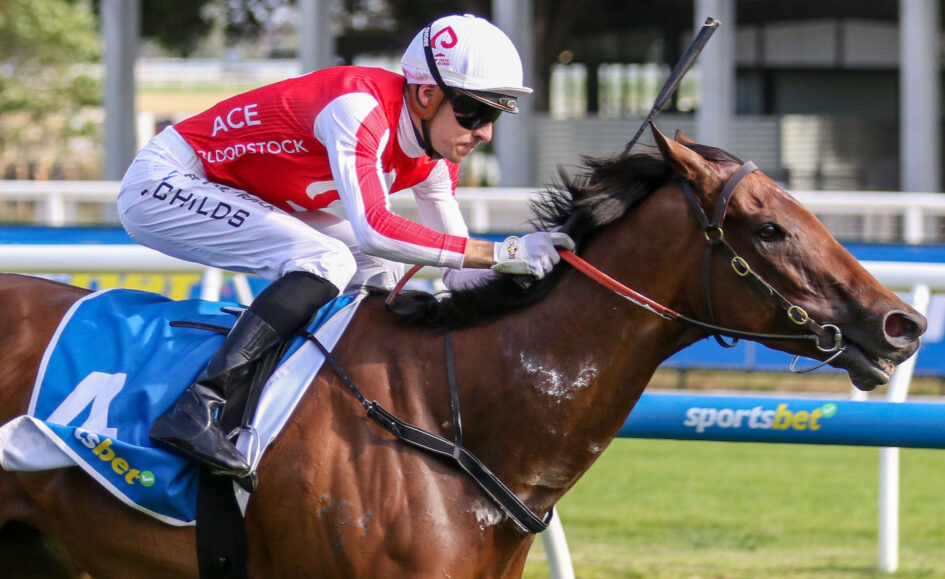
The trainer Grahame Begg plans a trip to Adelaide with his sharp mare Niance, which may set up the speedster for races in Brisbane.
Absence of ideal sprint events for Niance at Saturday’s Flemington meeting prompts Begg to target the Group 3 John Hawkes Stakes (1100m) in Morphettville.
Paradoxically, Flemington’s Anzac Day races start at a minimum of 1400m.
Niance is primed to start her campaign at 1100m, Begg indicated, coming off two runs in the previous spring.
Moreover, she managed just three starts in 2025, her most recent a third to Giga Kick and Tropicus in the Schillaci Stakes (1100m) at Caulfield last October.
“She had a little joint issue in the spring, so we had to back off her and give her time so it would all settle down,” Begg said.
“She’s had a couple of jump-outs, so she’ll go over there and I think she’s ready for the 1100 metres.
“The Sangster is on the same day and it’s a bit hard running them in a Group 1 over 1200 metres first-up.
“That would be a bit of an ask for her.”
With seven victories from 13 races, Niance will return to Cranbourne after the run, allowing Begg to plot her future direction.
Begg prefers heading north to Brisbane but keeps open the option of revisiting Adelaide for the Group 1 The Goodwood (1200m) on May 9 at Morphettville.
“The Goodwood is there, I guess, and we can always look at that, but it’s very hard making two trips with them within a couple of weeks,” Begg said.
“There’s a whole heap of races up in Brisbane that she could run in.
“We can get her up there, settle her in and have a look as there is virtually a race every week for her.”
Visit top online bookmakers for the latest John Hawkes Stakes betting markets.

Runners who took part in a half marathon have received an apology from organisers after an investigation revealed the event was too long.
Run For All, organisers of the Coventry Half Marathon, said Sunday’s event was longer than the intended 13.1 miles (21km) by 512 metres.
Advertisement
In an email seen by the BBC to competitors, the organisers said: “Whilst we don’t wish to take away from those achievements, we need to acknowledge that today’s half marathon route was longer than 13.1 miles.
“Like you, we are disappointed that this has happened and apologise unreservedly that this has occurred and we take full responsibility for the error.”
The email went on to explain that an initial investigation found that a turning point was positioned incorrectly by 256m, which resulted in the route being more than half a kilometre longer.
The organisers said those who completed the event would receive an updated finish time from the 13.1-mile point.
Advertisement
They added that runners would also receive an offer of half-price entry for the 2027 event “as a way of apology”.
Run For All’s email ended by saying: “Whilst we understand this doesn’t take away from the error made today, we hope you will join us next year to allow us to right today’s wrong.
“Again, we apologise for today’s experience, and we will be running a full internal investigation this week to ensure this doesn’t take place again at a future Run For All event.”
The BBC has contacted Run For All for further comment.
Follow BBC Coventry & Warwickshire on BBC Sounds, Facebook, X and Instagram.
Advertisement
Related internet links
Sports
High Courts Directs Center To Confirm Posthumous Padma Vibhushan For Olympian KD Jadhav By May 4
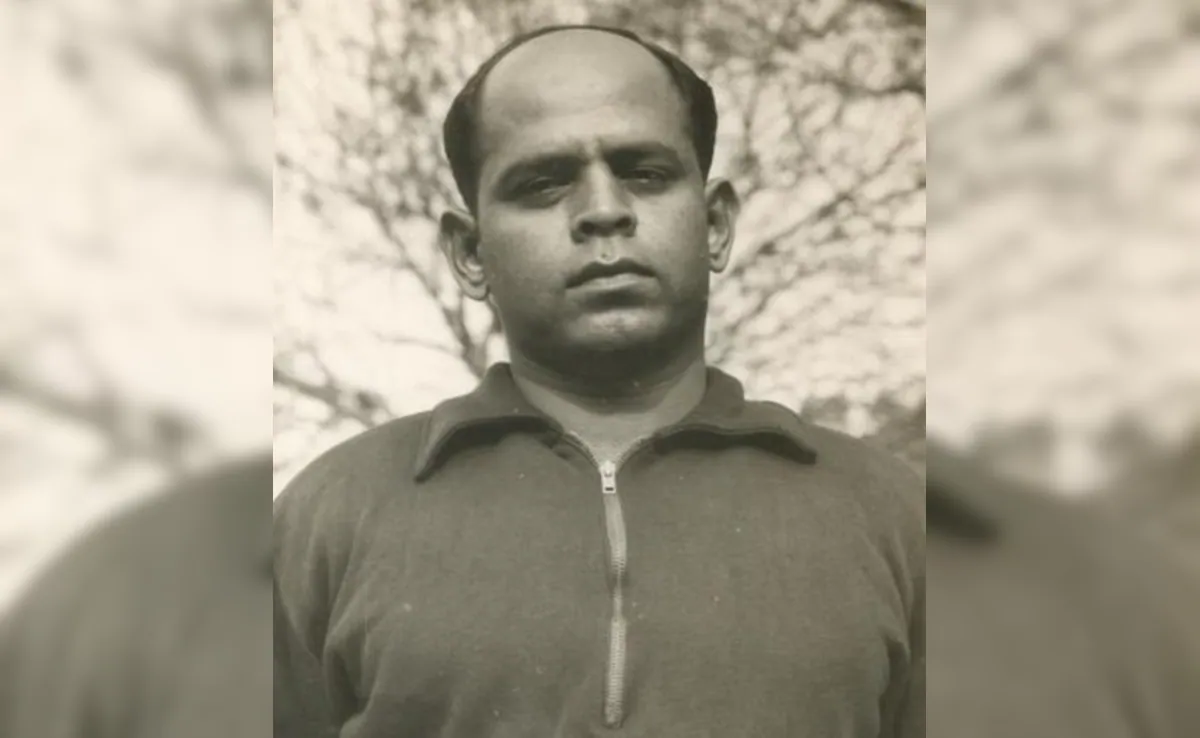
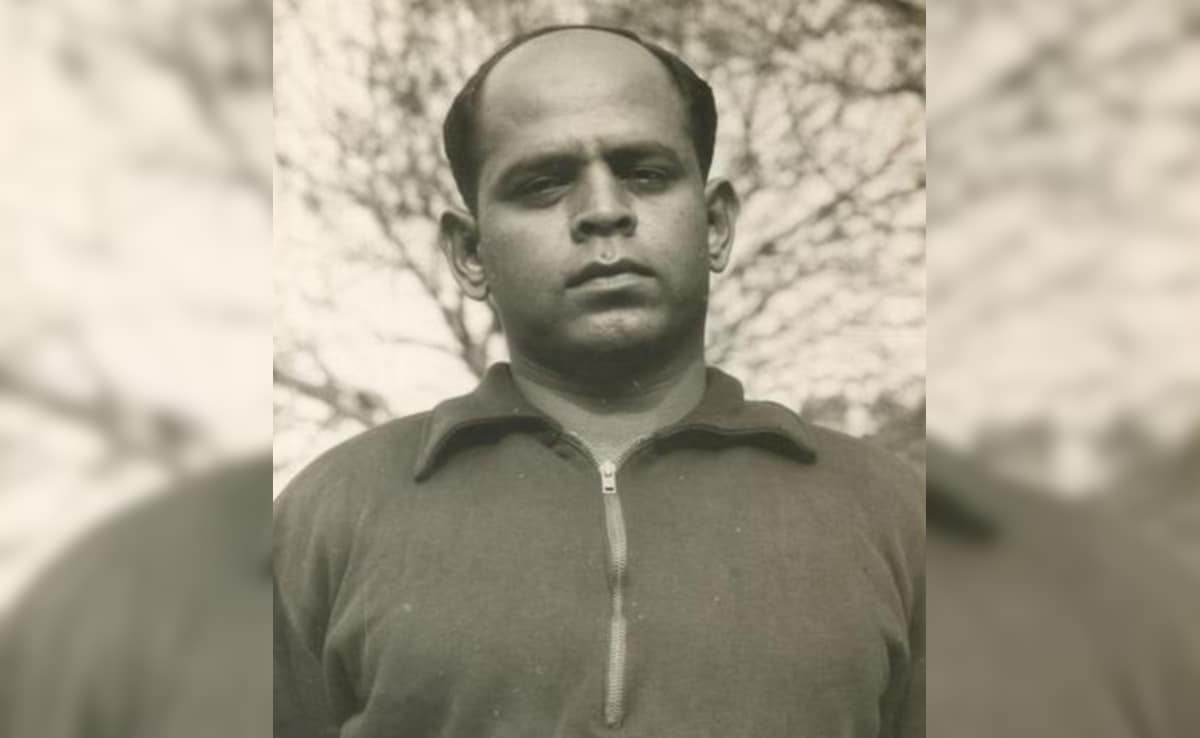
File image of late KD Jadhav
The Bombay High Court has directed the Union government to decide by May 4 on conferment of the Padma Vibhushan award posthumously to wrestler Khashaba Dadasaheb Jadhav, India’s first individual Olympic medallist. Justices Madhav Jamdar and Pravin Patil of the HC’s Kolhapur bench, in the order on April 15, said it is not disputed that Jadhav, a wrestler hailing from Maharashtra, was India’s first individual Olympic medallist. The court was hearing a Public Interest Litigation (PIL) filed by the ‘Kusteeveer Khashaba Jadhav Foundation’, founded by his son Ranjeet Jadhav.
The PIL sought a direction to the Ministry of Home Affairs (Padma Awards Cell) to consider and decide afresh their representation for posthumous conferment of Padma Vibhushan, India’s second-highest civilian award, to Khashaba Dadasaheb Jadhav.
“The Union of India is directed to take an appropriate decision on or before May 4,” the HC said, posting the matter for further hearing on May 5.
The state government, if required, shall comply with any requirements expeditiously, the court said.
Khashaba Jadhav, who passed away in 1984, had won the bronze medal in the Helsinki Olympic Games held in 1952. He was awarded the Arjuna Award posthumously in 2001.
The PIL claimed the late wrestler’s family had filed several representations before the government to get recognition for him. When there was no response, the foundation moved the high court. PTI SP GK
(This story has not been edited by NDTV staff and is auto-generated from a syndicated feed.)
Featured Video Of The Day
IPL 2026 News | RCB Outplay CSK For 2nd Win On Trot, Ruturaj Gaikwad & Co Suffer 3rd Loss
Topics mentioned in this article
NEWYou can now listen to Fox News articles!
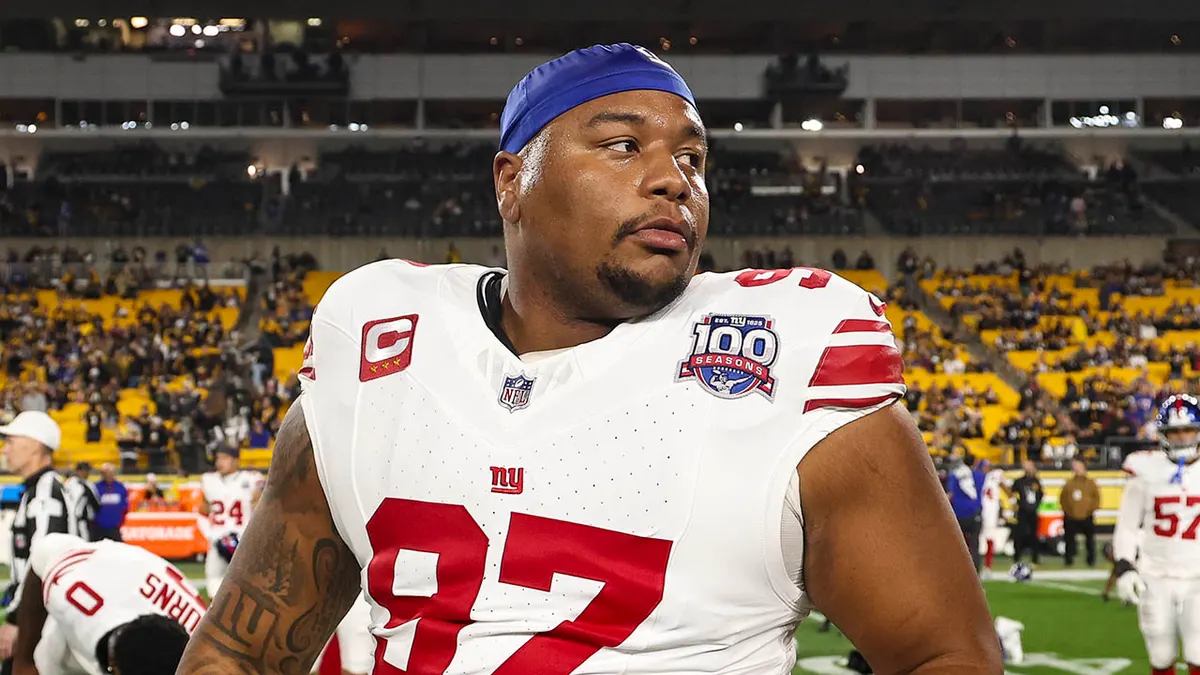
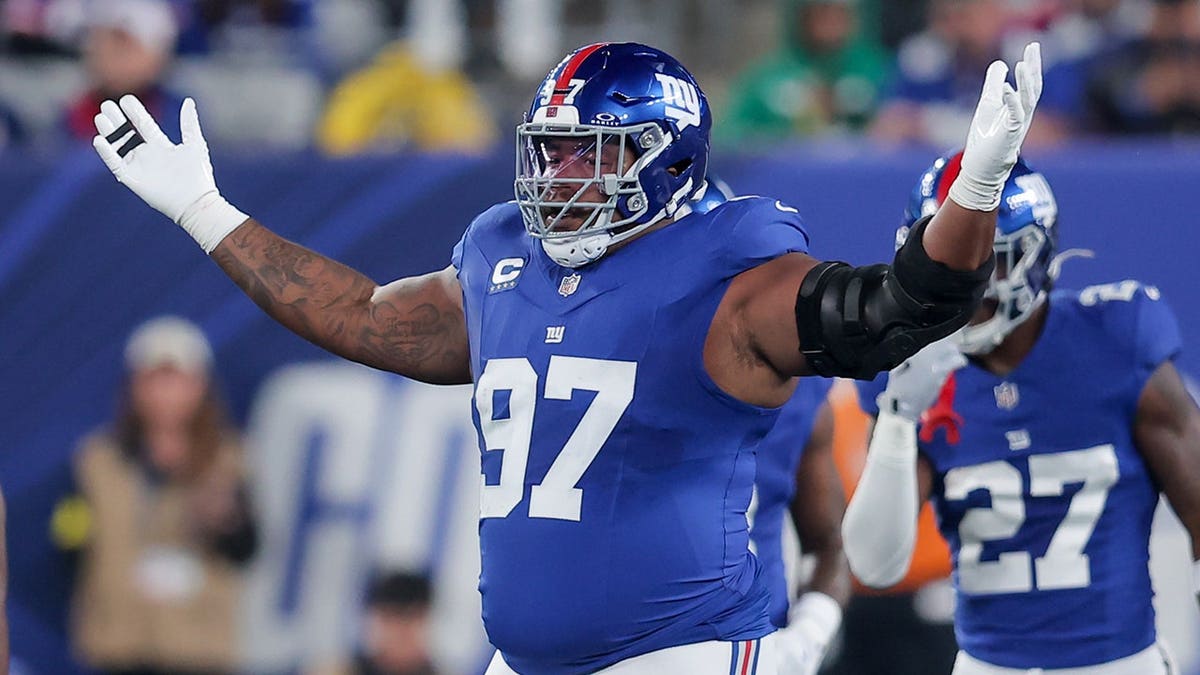
Dexter Lawrence’s new chapter in the NFL has begun, and he admitted for the first time since the New York Giants traded him to the Cincinnati Bengals that he has a “fire in me that I’ve never had before.”
The Giants fulfilled Lawrence’s trade request on Saturday, sending the three-time Pro Bowl defensive tackle to the Bengals in exchange for the No. 10 overall pick in the 2026 NFL Draft — a blockbuster deal that changes things in the first round set to kick off from Pittsburgh on Thursday night.
Lawrence was the 17th overall pick of the 2019 draft, and he quickly became a fan-favorite for the Giants as well as arguably the best interior defensive lineman in the NFL.
CLICK HERE FOR MORE SPORTS COVERAGE ON FOXNEWS.COM
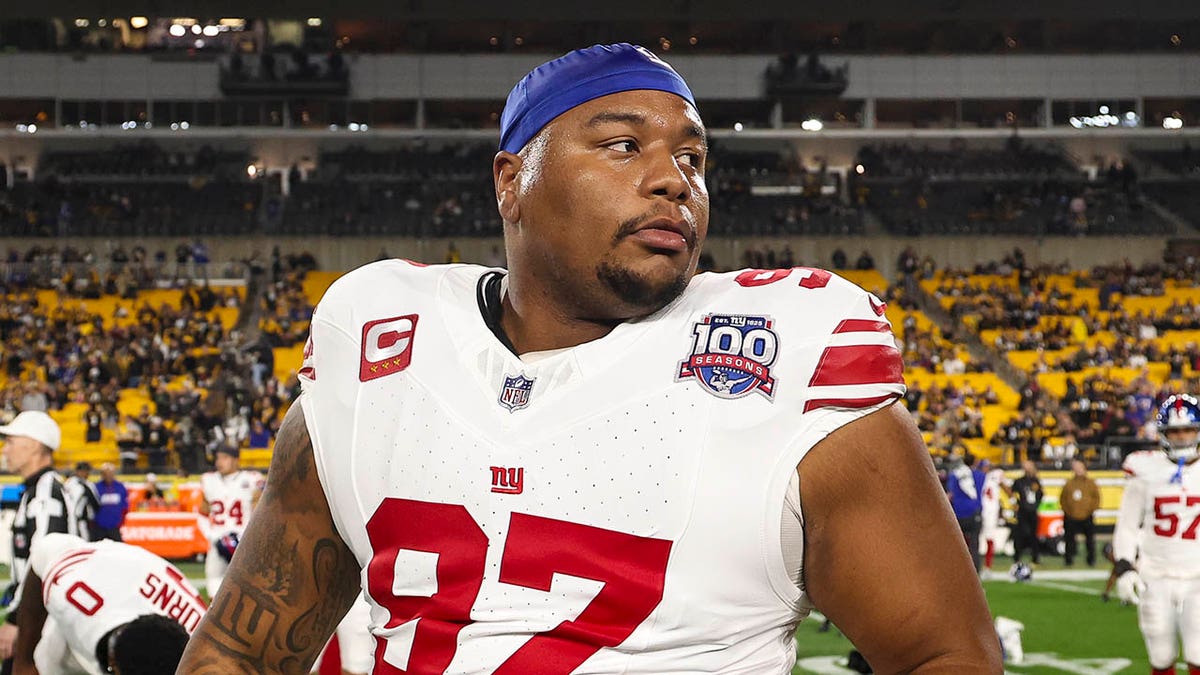
Dexter Lawrence II of the New York Giants warms up prior to an NFL football game against the Pittsburgh Steelers at Acrisure Stadium on October 28, 2024 in Pittsburgh, Pennsylvania. (Perry Knotts/Getty Images)
But, despite two more years left on his contract and a new regime with John Harbaugh in place as the Giants’ new head coach, Lawrence wanted out. In the past, players have used that as a strategic move to get a new, more lucrative extension.
This wasn’t one of those times, but Lawrence is viewing this new move to Cincinnati as a fresh start that has him more motivated than ever.
GIANTS TRADE STAR DEFENSIVE TACKLE DEXTER LAWRENCE TO BENGALS IN DRAFT WEEK BLOCKBUSTER
“They wanted me here and they appreciate the work that I’ve put in over the last seven seasons,” Lawrence told Bengals radio play-by-play announcer Dan Hoard, which was published on the official team YouTube channel. “I appreciate that and I’m going to do everything I can to show them that they didn’t waste [a top 10 pick]. I’m excited. I’ve got a fire in me that I’ve never had before, so I’m excited. I’m excited to be a Bengal.”
It was also about money at the end of the day, with the Bengals dishing out a one-year, $28 million extension, which keeps him with the team through the 2028 season for a total of three years and $70 million. He still had $42 million remaining on his previous deal with the Giants.
Lawrence added that his offseason drama in New York was a “long process,” but he felt relief and excitement when the deal was finally made between the teams.
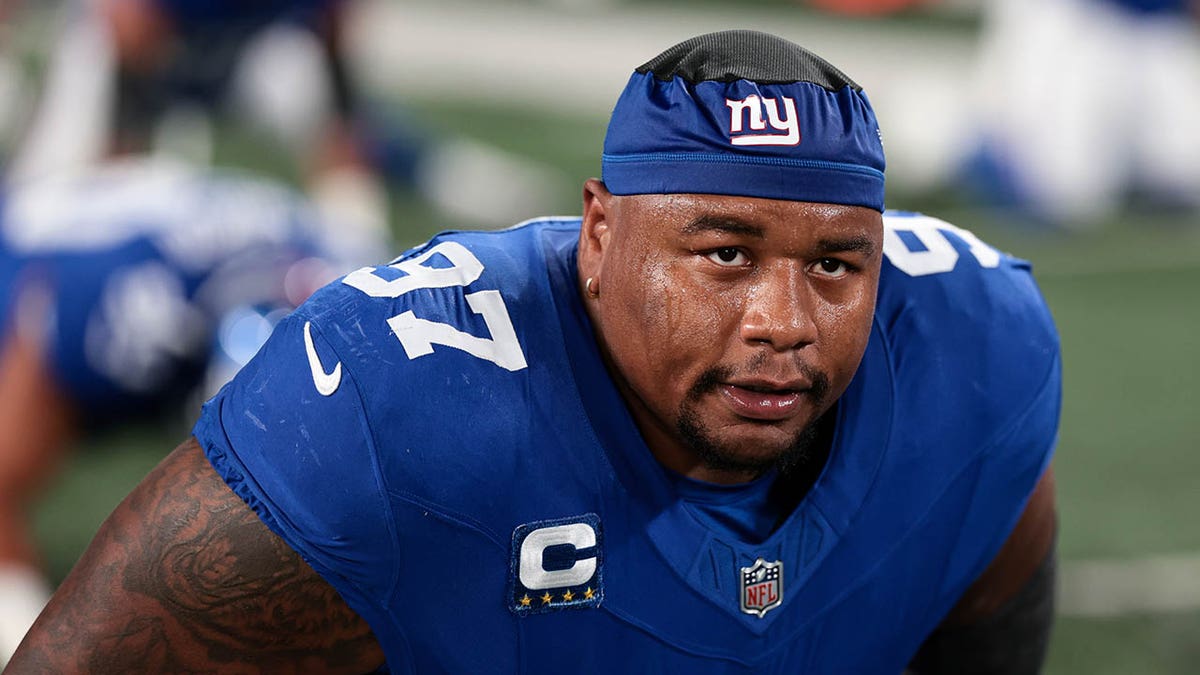
Dexter Lawrence of the New York Giants warms up prior to the game against the Kansas City Chiefs at MetLife Stadium on Sept. 21, 2025. (Kathryn Riley/Getty Images)
“God got me through it, and right now, I’m ready to let my light shine and go win some games.”
As Lawrence mentioned, he’s hoping not to be a disappointment in his new city considering the amount paid by the Bengals to acquire him. But the 340-pound defensive tackle has been quite the problem for opposing offensive lines, collecting 30.5 sacks, 15 pass breakups, and 341 combined tackles (40 for loss) in 109 career games with the Giants.
TRADES COULD SAVE NFL DRAFT LACKING FRANCHISE QBS, POLARIZING PLAYERS FROM BEING A YAWNER
Last season also marked the first time Lawrence played all 17 games of his career since they implemented the extra regular-season contest in 2021.
“I know people are going to say [there’s] pressure, but I embrace it,” Lawrence said. “I bring it in. It doesn’t affect me, the pressure. I just know who I am and I’m going to stay true to that. I’m going to be the guy to help this defense go to the next level.”
New York Giants defensive tackle Dexter Lawrence II gestures during the first quarter against the Philadelphia Eagles at MetLife Stadium in East Rutherford, N.J., on Oct. 9, 2025. (Brad Penner/Imagn Images)
CLICK HERE TO DOWNLOAD THE FOX NEWS APP
As Lawrence looks ahead to new beginnings, the Giants, armed with two picks in the top 10 of the first-round of this year’s draft — they also have No. 5 — Harbaugh and the rest of the team will look to hit big with these key rookie additions.
The Giants have made the playoffs just twice since the 2016 season.
Sports
‘Gukesh has weaknesses, Sindarov does not’: Carlsen’s bold World Championship prediction | Chess News
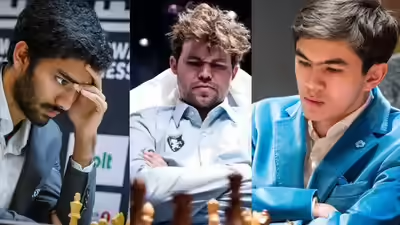
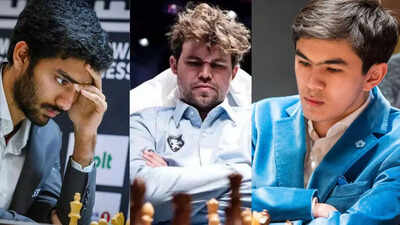
NEW DELHI: Five-time world champion Magnus Carlsen has made his stance clear ahead of the upcoming World Chess Championship, backing Javokhir Sindarov to defeat reigning champion D Gukesh in what promises to be a historic showdown later this year.Speaking at a chess event in Stockholm, Carlsen did not shy away from naming his favourite, even while acknowledging the unpredictable nature of a title match. “At the moment it’s impossible not to say Sindarov… we know anything can happen in a World Championship match,” he said.The Norwegian great went further in his assessment, pointing out a contrast in the two young stars’ games. “Gukesh has very obvious weaknesses… Sindarov does not. He is a lot more well-rounded,” Carlsen added, firmly tilting the narrative in favour of the Uzbek prodigy.ALSO READ: The making of India’s 95th GM: Aronyak Ghosh, from chasing next tournament’s fee to parents’ relief Sindarov’s historic rise turns headsSindarov’s rapid ascent has forced even the biggest names in chess to take notice. The 20-year-old arrives at the World Championship on the back of a stunning victory at the Candidates Tournament, where he dominated the field and finished unbeaten.His tally of 10/14 was the highest in the modern Candidates format, surpassing benchmarks set by elite names, including Carlsen himself. The composed draw against Wei Yi sealed a campaign that many are already calling one of the greatest in the tournament’s history.Carlsen is not alone in his view. Former world champion Garry Kasparov has also leaned towards Sindarov, calling him the “clear favourite” based on current form, though he cautioned about the unique pressure of a 14-game title match. Gukesh’s resilience still a factorDespite the growing chorus backing Sindarov, writing off Gukesh would be premature. The Indian teenager, who claimed the crown in 2024, has built a reputation for resilience and mental toughness.Kasparov highlighted this strength, noting that Gukesh is “very mentally stable… able to defend any position and find resources even in the worst situations.”The clash between Sindarov and Gukesh will be a generational duel — both players just 20 — and the youngest World Championship match in history.

Matchday 35 of the Nigeria Premier Football League delivered drama, late goals and a major upset as the race for the title and survival intensified across the country.
The biggest surprise came in Maiduguri, where Shooting Stars SC stunned El Kanemi Warriors with a 2-1 away victory. The hosts had taken the lead in the 25th minute through John Zakka, but the visitors responded immediately after the break. Qamar Adegoke levelled in the 46th minute and struck again in the 86th minute to complete a fine comeback and seal all three points.
In Umuahia, Abia Warriors FC secured a narrow 2-1 win over Ikorodu City FC. Paul Samson opened the scoring in the 20th minute, while Valentine Ugwu doubled the lead just before half-time. Aderemi Adeoye had earlier reduced the deficit for the visitors in the 35th minute.
Defending champions Remo Stars FC continued their strong form with a convincing 3-0 victory against Niger Tornadoes FC. Victor Mbaoma gave them an early lead in the 10th minute, Olamilekan Adedayo added a second in first-half stoppage time, and Samuel Anakwe sealed the win in the 78th minute.
At Ilorin, Kwara United FC defeated Barau FC 2-1. Toheeb Gidado scored in the 15th minute, while Saheed Olaniyi converted a penalty before the break. Joseph Atule pulled one back for the visitors in the 66th minute.
The Oriental derby in Enugu lived up to expectations as Rangers International FC came from behind to beat Enyimba FC 2-1. Wonah Williams had put Enyimba ahead early in the second half, but goals from Chidozie Iwundu in the 61st minute and Ifeanyi Onyebuchi seven minutes later completed a spirited turnaround for the Flying Antelopes.
Elsewhere, Nasarawa United FC recorded a comfortable 3-0 win over Warri Wolves FC. Victor Chimezie opened the scoring from the penalty spot in the 43rd minute, before Ngei Oluka-Efor and Habibu Alakija added further goals after the break.
In Kano, Kano Pillars FC left it late to edge Rivers United FC 2-1 in a thrilling finish. Abdullahi Musa broke the deadlock in the 81st minute, but Rivers United responded through Handsome Surveyor in the 89th minute. Veteran forward Ahmed Musa then struck deep into stoppage time to hand the hosts a dramatic victory.
With just a few matches left, Matchday 35 results have tightened the title race and increased pressure on teams battling relegation, setting up a tense finish to the NPFL season.

BBC Celebrity Apprentice line-up confirmed – full list

Should Every SME Have a PAT Testing Qualification on the Team in 2026?

MicroStrategy’s Saylor signals larger BTC buys amid dividend chatter

Why Israel is blocking foreign journalists from entering

Bitcoin: We’re Entering The Most Dangerous Phase

Alan Cumming Brands Baftas Ceremony A ‘Triggering S**tshow’

Financial Advisor Warns: 7 Money Lies You Still Believe (That’s Keeping You Broke In 2026!)

GOLD AND CRYPTO LIVE TRADING || 18 APRIL || Bitcoin Live Trading | Crypto Market Analysis |

THE TWO MOST IMPORTANT BITCOIN TRADE SETUPS FOR THIS WEEK
-

 Crypto World7 days ago
The SEC Conditionalises DeFi Platforms to Be Avoided for Broker Registration
-

 NewsBeat6 days ago
Trump and Pope Leo: Behind their disagreement over Iran war
-

 Fashion3 days ago
Weekend Open Thread: Theodora Dress
-

 Crypto World6 days ago
SEC Signals Exemption for Crypto Interfaces From Broker Registration
-

 News Videos5 days ago
Secure crypto trading starts with an FIU-registered
-

 Sports3 days ago
NWFL Suspends Two Players Over Post-Match Clash in Ado-Ekiti
-

 Crypto World6 days ago
SEC Proposes Certain Crypto Interfaces Don’t Need to Register as Brokers
-

 Business18 hours ago
Powerball Result April 18, 2026: No Jackpot Winner in Powerball Draw: $75 Million Rolls Over
-

 Crypto World2 days ago
Russia Pushes Bill to Criminalize Unregistered Crypto Services
-

 Politics2 days ago
Palestine barred from entering Canada for FIFA Congress
-

 Sports7 days ago
NWFL opens Pathway for new Clubs ahead of 2026 Season
-
 Business3 days ago
Creo Medical agree sale of its manufacturing operation
-
 Entertainment6 days ago
Brand New Day’ Footage Reveals the Devastating Impact of ‘Now Way Home’
-

 Politics23 hours ago
Zack Polanski demands ‘council homes not luxury flats for foreign investors’
-

 Tech5 days ago
Microsoft adds Windows protections for malicious Remote Desktop files
-
 Entertainment6 days ago
Karol G’s ‘Ultra Raunchy’ Coachella Set Gave ‘Satanic Vibes’
-
 Sports7 days ago
Aaron Judge says Yankees need to ‘simplify’ approach amid offensive slump
-
 Entertainment7 days ago
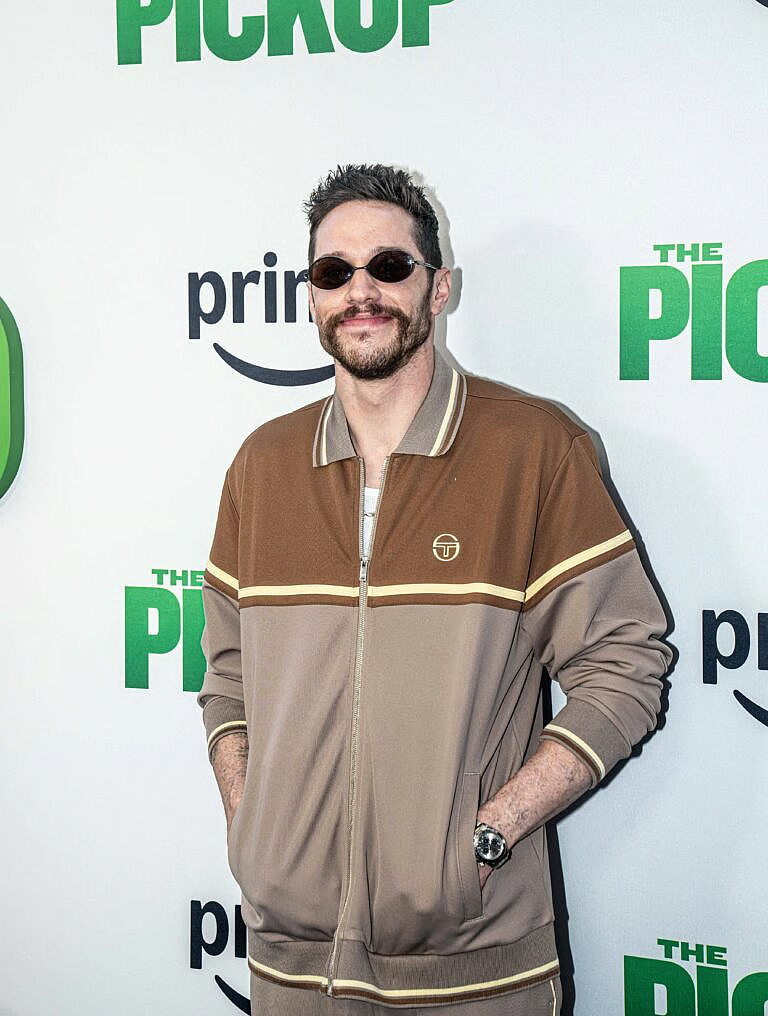
Pete Davidson Reveals ‘Brutal’ Mom Moment That Got Him Sober
-

 Entertainment6 days ago
How Babylon 5 Turned Brief Side Story Into Emotional Masterpiece
-

 Tech6 days ago
What was the first ransomware attack to demand payment in Bitcoin?
You must be logged in to post a comment Login