
Politics
The House Article | Too much information


6 min read
It’s a statistic that haunts me: one in 40.
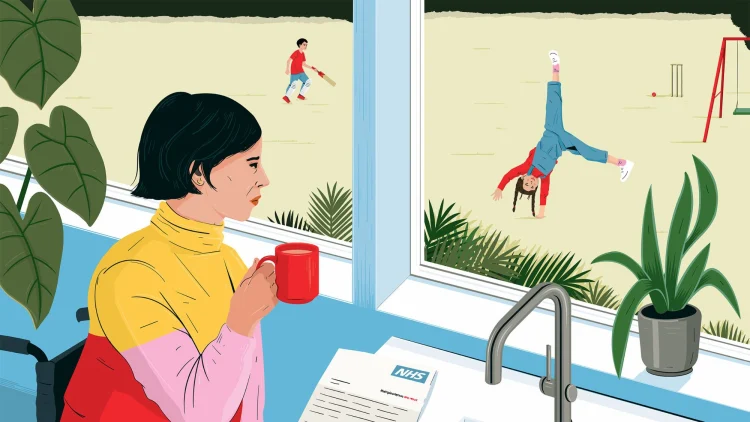
It’s a statistic that haunts me: one in 40. That’s the chance that my daughter will, like me, develop multiple sclerosis. For my son, the risk is lower, but these figures are the wrong side of negligible.
I might find them easier to push away if researchers were not making such rapid progress in being able to diagnose serious diseases early – sometimes up to a decade before the first symptoms appear. Would my children want to be tested, when they are old enough to decide? How would they cope with the prospect of a disease whose effects they have seen first hand?
These are questions that many more people will soon have to answer. AI-assisted research increasingly gives us the ability to identify the first, invisible signs of a disease. Scientists at the UK Biobank have access to half a million blood samples with which they can build metabolic profiles. Analysing data about the donors shows them which markers make a person likely to develop conditions such as dementia, cancer, diabetes and heart disease. Last year, a group of European researchers identified a test that traced how the body’s immune reaction to Epstein-Barr – a virus that infects nine in 10 of us – predicts whether it will lead to MS.
These breakthroughs are usually hailed as positive. In the case of a condition like diabetes, or certain cancers, they can prompt someone to improve their diet and activity to lower their risk. But diseases like dementia cannot be prevented with the drugs and interventions that are currently available. Where does that leave the future patient? Thanks to the internet, they can find out everything about what awaits them. Every memory lapse induces panic. Every twinge in the wrong place makes them fear that the end is beginning. It would take a sanguine personality to deal with an advance diagnosis of Alzheimer’s. According to polling for Alzheimer’s Research UK, half of Britons say it is the disease they fear most.
It is important to point out that widespread advance testing on the NHS is some way off, and the service cannot always deal promptly with patients who already have symptoms. “A third of people with dementia right now don’t actually have a diagnosis,” says David Thomas, head of policy at Alzheimer’s Research. “It is quite a big postcode lottery in terms of how long people have to wait.”
But private scans are readily available to those who can afford them. “Anyone can go for a private MRI scan of your brain, and you can get it yourself in the same way people at risk of Alzheimer’s can get a scan independent of the healthcare profession,” says Professor Gavin Giovannoni, chair of neurology at the Blizard Institute at Bart’s. “I don’t support that. I think unfiltered information that’s given in the wrong context is not helpful.” Thomas agrees: “We certainly wouldn’t be supportive of a healthy person receiving the blood tests at the moment. That’s a big challenge.”
The NHS already offers bowel and breast cancer testing to all over-50s. But last November, the National Screening Committee recommended against offering a blood test for prostate cancer. They found that although two lives would be saved out of every 1,000 men tested, up to 20 men would be overdiagnosed and undergo surgery, radiotherapy or treatment they did not need.
The difficulty is that not everyone with a biomarker will go on to develop a disease, or it may progress so slowly that they end up dying of something else. “We can see [the biological changes] 10 to 20 years before symptoms develop, but just because you’ve got those changes doesn’t mean you will go to develop Alzheimer’s disease,” says Thomas.
And treatments for Alzheimer’s are not good enough to justify giving them to people before they develop symptoms. “There are two treatments approved by the regulator, but not funded by the NHS, that have been shown to slow the progress. The benefit’s very modest.”
For MS, where treatments have advanced a great deal in the past two decades, there might be real advantages to preventative treatment. But the evidence is not yet available. Two tablets have been trialled on asymptomatic patients, but they have tough side effects and women must not get pregnant while taking them.
Still, even without treatment, says Kieran Winterburn, head of national influencing at the Alzheimer’s Society, there are advantages to early diagnosis. “For many people, not knowing is much worse than knowing. When diagnosis is done right, it actually reduces anxiety. It needs to be accompanied by a personal care plan, with people given the ability to monitor their health regularly and ensuring their carers and loved ones are able to access support.” They have the chance to put their financial affairs in order and talk to their families about what they want – although for some, these conversations will be extremely difficult.
Those who are willing to be tested will probably play a part in trials that save lives later on. We are at a “tipping point”, says Winterburn. “New treatments are coming down the line. Getting this right, seizing this opportunity we have right now, will hopefully lead us to a cure for dementia.”
Right now, I can see few advantages in encouraging my children to find out whether they are likely to develop MS. Catching the disease early would save money in the longer term because it postpones disability. “But unfortunately, NHS managers don’t think long-term,” says Giovannioni. “They work on an annual cycle.” So, the decision to implement a prevention programme is a political one. Health secretaries will base that decision on the data they have: the NHS might run a screening programme in half the country, treat cases with a worse prognosis and compare the outcomes with the other half. As patients would be part of a trial, they would not know whether they were at higher risk, and some would be given a placebo.
Thomas and Winterburn both talk about the “stigma” of an Alzheimer’s diagnosis. They hope that is changing. But as the controversy over assisted dying shows, western societies have only just begun to adapt to a world in which people will know much more about how and when they will die. In a culture where self-improvement and “wellness” is so important, dealing with that reality will be very hard.

Politics
Politics Home | Asylum Reforms Could Put More Pressure On Mental Health Services, Home Office Warned

(Alamy)
4 min read
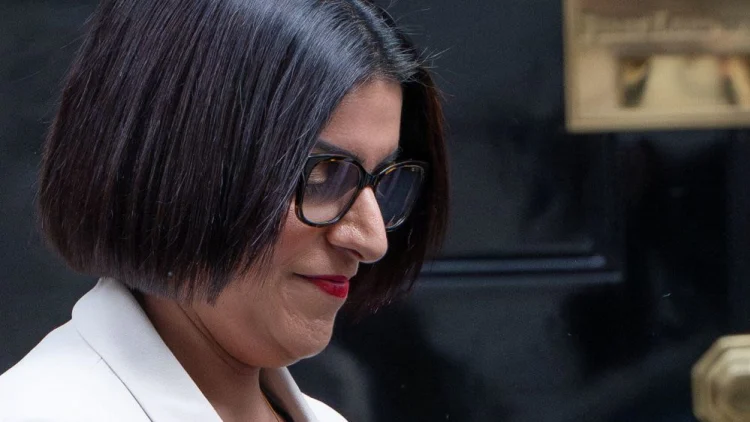
A group of charities and medical organisations has warned the Home Secretary that stricter rules for people claiming asylum in the UK could put “further pressure on over-stretched NHS mental health services”.
In a letter sent to Shabana Mahmood this week, Freedom from Torture, Médecins Sans Frontières UK, Doctors of the World UK, The Helen Bamber Foundation and the British Medical Association (BMA) warned that reducing the period of leave granted to recognised refugees in the UK would have an “unintended but undoubtedly harmful impact”.
It comes as the NHS continues to report record numbers of people contacting the service for mental health support.
The Home Office announced last year that refugee status would be temporary and subject to review every 30 months for all adults claiming asylum.
It was part of the Labour government’s broader efforts to deter illegal immigration, inspired by what Mahmood has described as the success of Denmark’s approach to reducing arrivals.
The government has also extended the automatic qualifying period for awarding Indefinite Leave to Remain (ILR) from five to 10 years.
Mahmood and supportive Labour MPs argue that reducing immigration is key to taking on Nigel Farage’s Reform UK and improving their party’s prospects at the next general election.
In a speech last month, the Home Secretary said that Britain is more attractive than other countries in Europe for those seeking refugee status, and warned her party that the system in its current form is “eroding trust” with the public.
“For those who come to this country and want to contribute to our national life, I am clear they should have a path to settlement and ultimately citizenship. But it is essential that the privilege of living in this country is earned, not automatic,” she said.
However, the changes have attracted criticism from other parts of the party, including former deputy leader Angela Rayner and shadow cabinet minister Emily Thornberry, who wrote in The House last week that reforms to IRL are “the opposite of fairness”. Over 100 Labour MPs signed a letter organised by backbencher Tony Vaughan expressing concern about the policy.
Now, a letter, sent by the coalition of organisations, seen by PoliticsHome, has warned that the proposals would “strip torture survivors and other refugees of long-term legal protection and the stability they need to recover from past traumas, leading to further, avoidable distress and mental health deterioration”.
Refugees often “fled serious trauma” and, as a result, “a sense of stability is crucial for their subsequent recovery”, it warned ministers.
“It will introduce major and prolonged uncertainty into the lives of already vulnerable and marginalised people, and cause a continual associated fear of having their status revoked and being returned to the hands of their persecutors.”
The letter also said that it is “unclear” whether the Home Office has the resources needed to implement the changes “efficiently, including conducting periodic reviews of refugees’ status”.
“For those who have lost so much during their flight from persecution, the anxiety that they will be unable to extend their leave can be terrifying, retraumatising, and can undermine progress towards recovery.”
“By introducing further instability into the lives of refugee patients, a reduced period of protection leave has the potential to increase mental health needs, which will only place further pressure on over-stretched NHS mental health and specialist trauma rehabilitation services,” it said.
A Home Office spokesperson told PoliticsHome: “Genuine refugees will find safety in Britain. Protection will be renewed for all those refugees who still face danger in their own country, but we must reduce incentives that draw people here at such scale, including those without a legitimate need for protection.
“So, once a refugee’s home is safe and they are able to return, they will be expected to do so.
“Refugees will also be able to obtain greater certainty about their future in the UK by switching into the Protection Work and Study route.”

Even if you’re not watching Euphoria, the chances are it won’t have passed you by that it recently returned for its third (and, quite probably, final) season after a four-year absence from our screens.
In the new instalments, much has already been made in the media of the fact that several of the show’s central female characters have pivoted to different forms of sex work in the time since we last saw them, most notably Sydney Sweeney’s Cassie.
Since the first episode of season three aired over the weekend, several outlets have been running pieces from viewers perturbed by scenes in episode one – and a teaser for the rest of the season – showing Cassie modelling for OnlyFans while posing in outfits intended to resemble a dog or a baby.
An opinion piece was published by Metro on Monday evening with a headline claiming that “Sydney Sweeney’s baby scene in Euphoria crosses the line”, while The Cut pondered: “Did we really need pup play on Euphoria?”
Other headlines quoted viewers who found the scenes varying levels of “disgusting”, “weird” and “disturbing”.
Euphoria creator Sam Levison teased what was in store for Sydney’s character ahead of the show’s season three premiere, telling The Hollywood Reporter: “She has got her dog house and her little dog ears and the nose, and that has its own humour.”
In his opinion, though, “what makes the scene is the fact that her housekeeper is the one filming it”.

DGP/imageSPACE/Shutterstock
“What we wanted to always find is the other layer of absurdity that we’re able to tie into it so that we’re not too inside of her fantasy or illusion,” he claimed. “The gag is to jump out, to break the wall.”
Levison added: “Some of these scenes we only lit with these ring lights that she would use
The Emmy nominee pointed out that Cassie’s ring light being the scene’s only light source had its own purpose.
“When you’re inside, it’s a beautiful, glowing front light,” he claimed. “But then you jump out of it and it’s just a pool of light and everything surrounding it is dark. It’s just gnarly and jarring.
“We wanted to capture what she’s trying to show the audience and be inside of it, but then also pull back wider and see how depressing it is.”
So far, Euphoria’s third season has received predominantly negative reviews, with many critics feeling the show has lost its way by aging up the characters we previously met as teenagers.
In between Euphoria’s second and third seasons, Sam Levison also helmed the TV series The Idol, which was similarly panned by critics.

Gemma Arterton has made a very honest admission about her stint in the James Bond universe.
The British actor played MI6 agent Strawberry Fields in 2008’s Quantum Of Solace, which marked Daniel Craig’s second outing as 007.
Critical reception for the film was a little on the muted side, with many reviews describing Quantum Of Solace as being a bit confusing – even its leading man once described the project as a “shit-show”.
During an interview on Radio X earlier this week, Gemma was asked about her time in the Bond franchise, claiming: “No one understands that film!”
When presenter Dominic Byrne pressed her on whether she “understood it while you were making it”, she admitted: “No! No, I didn’t know what was going on!”
He then joked that he’d “tried to watch it two or three times”, to which Gemma quipped: “That’s more than I have!”
Daniel went on to play James Bond on five occasions, beginning with Casino Royale and ending on 2021’s No Time To Die, the release of which was postponed numerous times due to the Covid pandemic.
It’s now been almost six years since Daniel hung up his golden gun, but a successor at the helm of the James Bond franchise is yet to be unveiled.
What we do know is that the upcoming 26th Bond movie will be directed by Denis Villeneuve – best known for his work on the Dune films – and written by Peaky Blinders and House Of Guinness creator Steven Knight.
The James Bond franchise has been undergoing some major changes behind the scenes in recent history, most notably the departure of long-serving producer Barbara Broccoli, resulting in full creative control going to production company Amazon MGM Studios.
The Chris Moyles Show airs on Radio X every weekday from 6:30am, as well as on Global Player.

Katy Perry has denied former Orange Is The New Black actor Ruby Rose’s allegation that the singer once sexually assaulted her on a night out.
On Sunday, the Australian performer responded to a social media post by Complex about the California Gurls singer, commenting on Threads: “Katy Perry sexually assaulted me at Spice Market nightclub in Melbourne. Who gives a shit what she thinks?”
Rose then wrote: “She saw me ‘resting’ on my best friend’s lap to avoid her and bent down, pulled her underwear to the side and rubbed her disgusting vagina on my face until my eyes snapped open and I projectile vomited on her.”
The Batwoman star went on to allege: “I told the story publicly but changed it to be a ‘funny little drunk story’ because I didn’t know how else to handle it.
“Later, she agreed to help me get my US visa. So I kept it a secret.”
In response, a spokesperson for Perry told BuzzFeed: “The allegations being circulated on social media by Ruby Rose about Katy Perry are not only categorically false, they are dangerous, reckless lies.
“Ms. Rose has a well-documented history of making serious public allegations on social media against various individuals, claims that have repeatedly been denied by those named.”
Rose’s international breakthrough came when she was cast in the third season of Orange Is The New Black, which began streaming on Netflix in 2015.
She later went on to play the titular superhero in Batwoman, shared the screen with Keanu Reeves in the second John Wicks movie, appeared in the third instalment in the Pitch Perfect series and had a minor role in the action film The Meg.
Her other on-screen work includes co-hosting Australia’s Next Top Model and guest judging on the reality show Ink Master.
Back in 2017, Rose spoke out against Perry around the release of her single Swish Swish, perceived by many as a “diss track” in response to Taylor Swift’s song Bad Blood.

After the corruption of Morgan McSweeney’s Labour Together operation, a new Starmer-linked ‘think tank’ has been popping up on X timelines. Introducing ‘Labour Future’: an account with only 7000 followers, but whose paid ads receive millions of views.
Those viewing figures suggest thousands of pounds in expenditure, but as with other Labour Party-affiliated lobby groups, the source of Labour Future’s funding seems unclear. But its board is broadly affiliated with the Israeli lobby, and even includes a former IOF solider.
Demanding loyalty
The X ads demand loyalty to the ailing Keir Starmer, the most unpopular Prime Minister in recorded history. They also call for an end to “anonymous briefings against your own leader”.
However, Labour Party sources have not been limited to criticising the Starmer administration off the record. After giving a fiery interview to Jody McIntyre on 26 March, Labour MP Karl Turner was summarily suspended from the party within days, despite having been a member since the age of 13.
Like Morgan McSweeney’s outfit, Labour Future operates as a limited company. ‘Labour Future Limited’, which a Labour spokesperson once claimed had no affiliation to the party, was dissolved in 2022. It was reborn as ‘Labour Future (2025) Limited’ last August. Their director is sitting Labour councillor Brendan Chilton, but their advisory council includes a key McSweeney ally.
Maurice Glasman and the Labour Together network
Maurice Glasman, who once described Morgan McSweeney as ‘one of ours’, now sits on the four-man advisory council of Labour Future.
Glasman also joined Labour Together in its early days, working alongside the former Labour MP Jon Cruddas to attract initial funding from Trevor Chinn and Martin Taylor. Now housing minister Steve Reed, a long-time parliamentary supporter of Labour Friends of Israel (LFI), was introduced to the two lobbyists through Glasman and Cruddas, who were already receiving money for their ‘Blue Labour’ project.
As well as providing financial impetus, Chinn went on to serve as a director of Labour Together alongside McSweeney. He also made a personal £50,000 contribution to Keir Starmer’s 2020 leadership campaign. Chinn admitted that he ‘had great concerns about the election of an outspoken opponent of the Jewish state as Labour leader’, and was happy to back McSweeney’s preferred successor to Jeremy Corbyn.
When McSweeney was caught concealing over £730,000 in donations to Labour Together, the decision was attributed, at least in part, to protecting Chinn’s identity as the pressure group’s ‘great benefactor’.
As well as Maurice Glasman, Labour Future’s advisory council includes MPs Graham Stringer (another parliamentary supporter of Labour Friends of Israel) and Tris Osborne.
Epstein connections
In 2024, Glasman collaborated with his old Labour Together colleagues, LFI veteran Jon Cruddas and fellow Blue Labour devotee Jonathan Rutherford, to launch a ‘Future of the Left’ project.
The project was sponsored by Policy Exchange – another think tank that refuses to identify most of its donors. At times, however, Policy Exchange has acknowledged funders within its reports. One notes the ‘generous support’ of the Bill and Melinda Gates Foundation, for example.
Bill Gates is reported to have ‘discussed the Gates Foundation and philanthropy’ with notorious paedophile Jeffrey Epstein. As with many of Epstein’s associates, Gates now says that he ‘regrets’ the relationship. Epstein’s ‘best pal’, Labour Party grandee Peter Mandelson, was a long time mentor and ally of Morgan McSweeney.
The Mandelson scandal eventually led to McSweeney’s resignation, but Labour Together continues to operate.
Former IOF solider joins board
Labour Together’s board now includes Jonathan Kestenbaum. In November 2010, a single paragraph in the Jewish Chronicle described Kestenbaum as ‘an ex-IDF soldier [and] holder of the Israel army’s “outstanding soldier award”‘, but the claim has never been repeated since.
Kestenbaum is also noted as ‘a former mazkir of Bnei Akiva’ – the international Zionist youth movement. On the website of their UK branch, Bnei Akiva define their ideology as ‘a religious Zionist worldview, actively seeking to be involved in the development of Medinat Yisrael [the State of Israel].’
Most evidence of Jonathan Kestenbaum’s time in the IDF seemed to have been scrubbed from the internet. There had been no mention of his military service on his Wikipedia page until I published my research on X on 13 April, having previously jumped straight from his time at the Hebrew University in Jerusalem to his return to the UK.
I did, however, find one source still available online: a 1989 article in the academic Journal of Palestine. The issue includes stories taken from the Israeli press, one of which is a series of ‘entries from the diary of a young Israeli soldier in the West Bank during the intifadah‘, which had been published in the September 24th 1988 international edition of the Jerusalem Post.
Jonathan Kestenbaum is described as an ‘IDF reservist’, and his diary excerpts are preceded an introduction describing how:
Kestenbaum … and his colleagues were not prepared for were the moral questions posed by service in the administered territories, although they were taught how to use clubs and tear gas.
Kestenbaum also describes ‘a policy of humiliation’ defined by ‘moments of arbitrary violence and excesses perpetrated by junior officers, enjoying unexpected power.’
‘Britain’s most active pro-Israeli lobbying organisation’
Kestenbaum was nominated to the House of Lords by the Labour Party’s leadership in 2010, following a seven-year stint as a director of the pro-Israeli lobby group BICOM.
BICOM were described in 2009 as “Britain’s most active pro-Israeli lobbying organisation”. At the time, the Guardian reported on BICOM’s approach:
Foreign reporters are bombarded with press releases and invitations to interview senior Israeli ministers and advisors at top London restaurants. Set up in 2001, it has regularly flown journalists to Tel Aviv.
BICOM was founded by billionaire Poju Zabludowicz. Zabludowic inherited much of his wealth from his father Shlomo, ‘an arms dealer who made a fortune out of his close relations with the Israeli state.’ Former BICOM employees include Labour peer Ruth Smeeth and Luke Akehurst donor Lee Petar. Convicted fraudster Gerald Ronson and Wes Streeting donor David Menton have both funded the group.
The Israeli ambassadors
Labour Together’s Jonathan Kestenbaum has a cosy relationship with former Israeli ambassador Ron Prosor; leaked correspondence between the pair revealed an email with the subject line ‘From London with love’. By 2016, Kestenbaum was attempting to secure a job at oil company BP for Prosor, who he described as an ‘exceptional asset’.
A further set of leaked diaries revealed that in September 2024, Kestenbaum visited the residence of then Israeli ambassador Tzipi Hotovely for brunch. Hotovely’s diaries also revealed meetings with Stuart Roden, another Labour Party donor. Last January, Roden gave Labour Together £100,000.
RIT Capital Partners
From 2008-22, Kestenbaum was Chief Operating Officer at RIT Capital Partners, formerly known as the Rothschild Investment Trust. RIT’s founder, Jacob Rothschild, was the chair of the family’s Israel-based Yad Hanadiv foundation from 1989 until his death in 2024.
The foundation was ‘instrumental’ in the construction of the Israeli Parliament (Knesset) and Supreme Court buildings, and more recently entered into a partnership with the Israeli government to ‘renew’ the National Library of Israel.
Genie Energy
In 2010, an ‘entity connected to Jacob Rothschild’ purchased a 5% stake in Genie Energy. Jacob was also appointed to the Genie Strategic Advisory Board, alongside media baron Rupert Murdoch and former US vice-president and Halliburton CEO Dick Cheney.
In 2013, the Israeli state awarded Genie Energy exclusive gas and oil exploration rights in a 153-square mile area in the south of the Golan Heights, a Syrian territory illegally occupied by the Israeli state. At the time, an Israeli political analyst told the Financial Times:
This action is mostly political – it’s an attempt to deepen Israeli commitment to the occupied Golan Heights.
United Jewish Israel Appeal
Kestenbaum also previously served as chief executive of the United Jewish Israel Appeal (UJIA) charity. UJIA’s website declares ‘decades of experience in sending young Jews in the UK to Israel on rite of passage programmes’, which have previously included stays in illegal settlements. Trevor Chinn is president of the UJIA.
Labour Together may be attempting a rebrand in the post-McSweeney era, but their ties to the Israel lobby endure.
Politics
Politics Home Article | Labour MP Launches ‘Summer Of Sex’ Campaign To Overhaul Sex Education


Labour MP Samantha Niblett, 46, wants to fight against societal stigma around sex (Samantha Niblett)

5 min read
Labour MP Samantha Niblett has launched a campaign to make 2026 the “summer of sex”, as she pushes for more open, inclusive lifelong sex education.
Niblett, who was elected as MP for Derbyshire South in 2024, has secured a debate in Parliament on lifelong sex education in the early autumn.
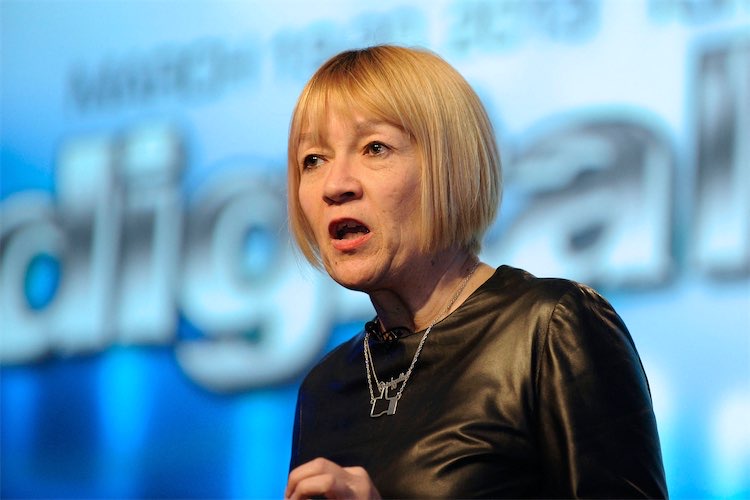
The MP is working with Cindy Gallop, a sextech entrepreneur and founder of MakeLoveNotPorn, an adult video website that aims to offer an alternative to hardcore pornography.
On Monday, Niblett and Gallop launched a campaign calling for better lifelong, inclusive sex education in the UK to help people understand consent, prevent abuse and violence, and raise awareness of how childbirth, the menopause, stress and other health conditions can impact sexual satisfaction.
In an interview with PoliticsHome, Niblett said she wants to make 2026 the “summer of sex”.
“It sounds like we’re going on a bit of a tour!” she joked.
“What I am hoping is that by the time we get to summer recess, I have got a whole bank of organisations to visit and speak with and gather information, so we can talk about sex all summer, so that I can help shape that speech for the chamber, but then also we shape our next steps.”
The campaign’s tagline – ‘Yes Sex Please, We’re British!’ – plays on No Sex Please, We’re British, a 1973 British comedy film in which a clerk in a small town bank is horrified when he receives a package containing pornography, rather than a new calculator.
Niblett said she wants the campaign to be about “taking control of our patriotism, about taking control of our Britishness, and not feeling ashamed”.
As part of the campaign, she is hoping to arrange two events before the summer recess, including one where she intends to bring sex toys into Parliament to encourage open conversation about sexual pleasure – though she is currently in conversation with parliamentary security over whether the devices will be allowed onto the estate.
The 46-year-old MP recently met with sexual product retailer Love Honey, and told PoliticsHome that she learned that “as well as making you feel good, [masturbation] is good for your health”, with some medical research showing that it is good for stress and pain relief, menstrual cramps, and reducing the risk of prostate cancer.
For Niblett, the campaign is personal, and she wants to talk more openly about sex herself to encourage others to feel comfortable doing so.
“The first time I remember seeing pornography, I was 10, I saw it on a videotape, I saw it in magazines,” she said.
“And I sometimes wonder, having seen it so young but without being able to talk about it, whether that has shaped the person that I am today. It’s funny, just because I’m doing a campaign on sex education, it’s not because I’m this massively empowered, sexually flamboyant person. I’m not. I wish I were.
“If I could rewire my brain… It’s not too late, I’m hoping that, actually, this summer of sex is also an education for me.”
She described how the sex education she had at school was “pretty medical”.
“It was all focused on what you shouldn’t do, not what you should do,” she continued.
“Pleasure certainly didn’t play a part in it. And as a girl, you’re just worried about either getting an STD or getting pregnant. I don’t remember talking about contraception much either.”
Niblett said that she has watched porn herself – “like lots of people” – and has recently watched content on Gallop’s MakeLoveNotPorn website, which she said featured “real people who are having messy, funny, intimate, sensual sex together”.
“It’s a turn on, it helps you masturbate, helps you cum,” she said.
“The sections that I always prefer the most are the intimate sections. I am not saying that anybody else’s preferences are wrong, but I think if you’re desensitised to think that some things are normal, it skews your view about what real sex is like with real people who are not acting in a porn film.”
Asked whether she would support the BBC creating and publishing more educational adult content, Niblett said she would “happily” have a conversation with the public broadcaster about the topic.
Niblett wants to involve Gallop, as well as TV presenter Davina McCall, who has advocated for more open sex education, and relationship expert and presenter Paul Bruson, and various sex education content creators to spread awareness, attend the government’s national summit on the challenges facing men and boys – expected to take place this year – and engage with ministers Alex Davies-Jones and Jess Phillips.
Davies-Jones and Phillips have both been involved in bringing forward regulations on porn in the Crime and Policing Bill, which is currently making its way through Parliament. The new laws include banning nudity apps and banning the depiction of strangulation in pornography to protect women from violence.
The Labour government has now also agreed to press ahead with a ban on certain types of online pornography, including so-called “barely legal” content depicting adults role-playing as children and some forms of step-incest pornography, following pressure from MPs and defeats in the House of Lords.
While Niblett welcomed the banning of nudification apps, she said that while you can “ban all things and come down on people with a ton of bricks legally”, she wanted to see education used as the “biggest tool”.
On the potential ban on step incest in porn, Niblett said that although she understood the rationale behind it, she could also see why it might be a challenge to implement when step incest is not illegal in the real world.
“So it’ll be interesting to see what happens with that particular piece of legislation,” she said.
Reflecting on why she wants to fight against societal stigma surrounding sex, Niblett said: “We just need to acknowledge that humans have a natural interest in sex. It’s one of the things that nearly all of us want to do, nearly all of us do.
“It just feels like there is an opportunity to remind people that it is a joyful thing.”



4 min read
Recently, the Home Secretary announced a detrimental change to refugee policy: the period of leave to remain that will be given to people with a recognised need for protection will be cut from five years to just 30 months.
Those who wish to remain in the UK will be required to reapply for leave every two and half years for a total of 20 years and their protection status could be revoked if their home country is judged to be “safe” at the point of renewal. To someone with little experience of the UK’s asylum system or the struggle that refugees face to rebuild their lives, this policy might sound reasonable. But, in reality, this ill-thought-through policy punishes people who have already suffered profound hardship, adding insecurity at precisely the moment stability is most needed.
The damage caused when lives are held in limbo by delays in asylum decision-making is already well documented. So too is the harm inflicted when survivors of trauma are forced to relive the most unimaginable horrors as they repeat their story of torture or trafficking in order to prove their need for protection. And the poor quality of asylum decisions has not only sparked much criticism but has burdened the appeal courts with an unmanageable backlog. This policy will intensify all of these failings – introducing more frequent reviews of the ongoing need for protection while placing additional strain on an already overstretched asylum system. The likely result is more delays, more backlogs, more unsafe decisions and more uncertainty.
For those who have fled torture and persecution, the fear of return is not abstract. It is deep and long-lasting. This policy risks transforming what should be a time of joy – the recognition of refugee status and the granting of protection – into the beginning of a new cycle of fear.
Specialist services working with survivors of torture across the UK, including Freedom from Torture, have warned that shorter periods of leave to remain keep alive the very real prospect of return to the place where people were harmed. Recovery depends on a sense of safety and predictability. By contrast, repeated reviews of status reinforce powerlessness and hopelessness, exacerbating conditions like Post Traumatic Stress Disorder, anxiety and depression.
The impact will not be limited to individuals. Families will be forced to live with constant instability and dread that will permeate their daily lives. Children who are beginning to settle into schools and communities will inevitably absorb their parents’ fears. The inability to plan for the future – whether in relation to housing, education or employment – undermines the very foundations of family life.
There are also significant practical consequences. Immigration status shapes access to housing, work and education. A 30-month grant of leave will make it markedly harder for refugees to secure a tenancy, find stable employment or pursue study thereby undermining the Government’s own goal of integration. This policy comes at the same time as the Government is changing its approach to providing financial support and accommodation to asylum seekers who would otherwise be destitute. The changes they are making to asylum support will increase the risk that government assistance is withdrawn from vulnerable people who, banned from working, have no other means of supporting themselves. Taken together, these policies risk pushing people further into destitution. The consequences – homelessness, exploitation and increased vulnerability – are entirely foreseeable.
There are also serious legal questions. Article 14 of the United Nations Convention Against Torture requires states to provide the means for as full rehabilitation as possible. Rehabilitation is not simply clinical; it depends on relationships, purpose and the ability to imagine a future. These are extraordinarily difficult to sustain when protection is temporary and uncertain.
More broadly, this policy signals a troubling shift away from the UK’s longstanding commitment to offering durable protection. While the 1951 UN Refugee Convention recognises that refugee status is by its nature temporary, it requires States to “as far as possible facilitate the assimilation and naturalization of refugees” and “in particular make every effort to expedite naturalization proceedings…” It outlines rights to employment, welfare, housing, education and social security – all of which are harder to realise with shorter periods of leave.
It is also deeply concerning that such a significant change has been introduced without parliamentary debate or vote. When decisions affecting people’s rights and safety are made with minimal scrutiny, Parliament is denied the opportunity to evaluate the consequences or propose safeguards. This weakens democratic oversight and creates confusion for those navigating an already complex asylum system. This is why myself and colleagues will be asking important questions regarding these changes in the House this week.
The aspirations of those seeking sanctuary are, by and large, the same as anyone else’s. They want security, the chance to work, to contribute and to build a future for themselves and their families, free from fear. We should be enabling these ambitions, not undermining them.
A humane and effective asylum system would support people to integrate and thrive. Policies that are punitive and short-sighted will do the opposite: forcing unwell, vulnerable people into destitution, or worse, back into danger. Protection, once granted, must be meaningful and it must endure.
Baroness Lister of Burtersett is a Labour peer and an officer of the all-party parliamentary groups on migration and refugees.
We hope you love the products we recommend! All of them were independently selected by our editors. Just so you know, HuffPost UK may collect a share of sales or other compensation from the links on this page if you decide to shop from them. Oh, and FYI — prices are accurate and items in stock as of time of publication.
When you’ve run a whole damn marathon, you want to show it off. It’s only natural.
But there are certain ways you want to do it; we’re guessing bloody nipples isn’t one of them.
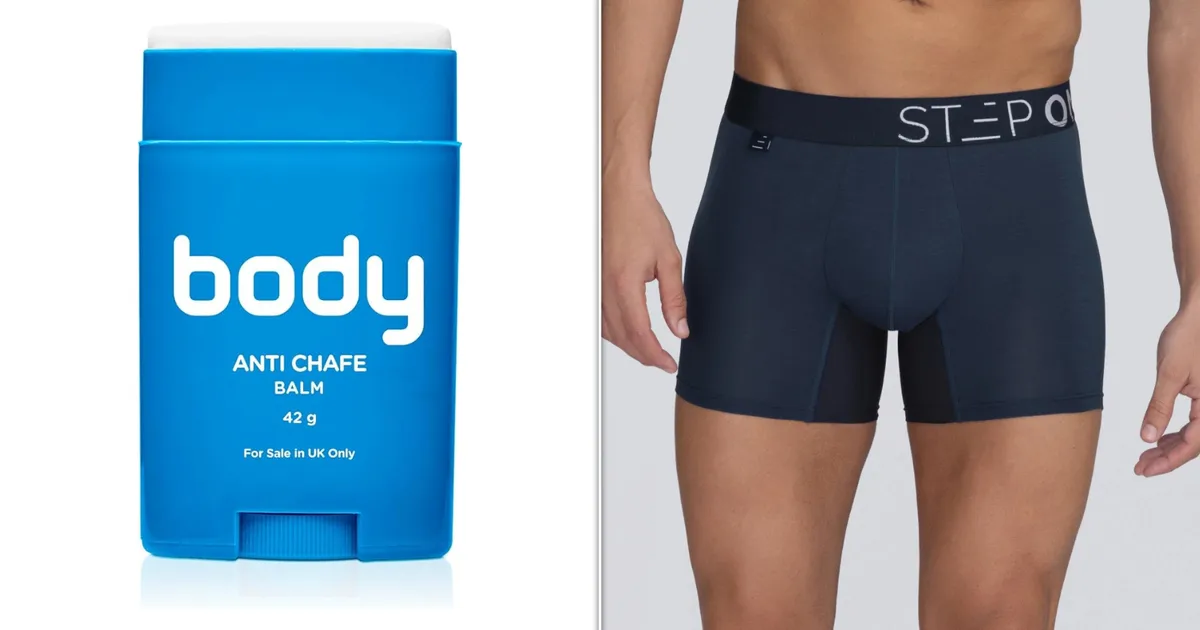
Groin, thigh, and neck chafing is also not on our wishlist of wounds (of course, ideally you’d have none, but that’s what you get for running an abnormally long distance in a few hours).
Whether you want to avoid feeling like your flesh is exposed to the elements, or your pursuits are more shallow (read: looking good in those medal-bearing pics you’re going to plaster all over your socials), here’s everything you need to avoid chafes, blisters, and wounds when running a marathon.

Expert comment provided by Dr Hariom Yadav, an associate professor of neurosurgery and brain repair, who looks at how gut health affects ageing. He is also a scientific advisory board member at WonderBiotics.
You probably already know that good gut health can make everything from your mood to your immune system better.
Some studies have suggested that changes to your gut could reveal dementia risk years before diagnosis, too.
And microbiome researcher Dr Hariom Yadav recently published some research which looked at how microbiome imbalances might affect brain ageing (neurodegeneration).
Here, we asked Dr Yadav to share why our diet might affect how our minds age, some gut health mistakes he’d never make if he wanted to keep his brain younger for longer, and what we can do to make our odds better.
Why might our gut health affect our brain ageing?
Dr Yadav said, “people always ask me about the brain – memory, focus, dementia risk – and they expect me to talk about brain exercises or supplements. But I always tell them, start with your gut.”
He said that some foods can create weaknesses in our gut lining, leading to inflammation.
“And where does that inflammation go? It goes everywhere – but the organ that suffers the most, the organ that is most sensitive to inflammation, is your brain. It slows down your neurons. It mimics sleep. That afternoon fog you feel? That is actually a punch to your brain.”
He added, “If you are eating those foods three times a day, every day, for years and years, you are throwing punch after punch at your brain. And one day, those punches add up. That is cognitive decline. That is dementia risk. That is your brain ageing faster than it should.”
What gut health mistakes would Dr Yarav never make?
Dr Yadev said “the mistakes I see people making, over and over” are:
1) Eating ultra-processed, inflammatory foods regularly
“These are the biggest gut lining destroyers. They disrupt your microbiome, they open up your gut barrier, and they flood your system with inflammation,” he said.
2) Ignoring how you feel after eating
“If you feel sleepy after lunch, do not ignore it. Do not normalise it. Your body is telling you something. Listen to it.”
3) Not feeding your good gut bacteria
“Your microbiome is like a garden. If you are not putting in fibre, fermented foods, diverse plant-based foods – you are starving the very bacteria that protect your gut lining and regulate your brain communication.”
4) Eating at the wrong time
“Timing matters enormously. Late-night eating, skipping meals, irregular eating patterns – all of these disrupt the gut-brain conversation and throw off the signalling that tells you when to start and stop eating.”
5) Chronic stress without any management
“Stress directly damages gut integrity. The gut-brain axis works both ways – a stressed brain creates a leaky gut, and a leaky gut stresses the brain. It becomes a vicious cycle.”
How can I help to ensure my brain stays healthier for longer?
Aside from not making these gut “mistakes,” Dr Yadav told us that eating healthily can make a huge difference.
“When we talk about ageing, people often feel helpless. They think, well, my genes are my genes. My age is my age. There is nothing I can do. But the gut? The microbiome? That is one of the most modifiable systems in the entire human body,” the expert told us.
“I would say conservatively, 60 to 70% of your brain ageing trajectory is modifiable through gut health strategies. Biotics – prebiotics, probiotics, postbiotics – dietary diversity, meal timing, stress management – these are not small things. These are powerful, evidence-backed levers that we can pull every single day.”

On 12 April, Donald Trump announced his latest plan to open up the Strait of Hormuz. As he said, if Iran wouldn’t un-block the strait, the US would…
…implement a blockade of its own.
So double-blocking it, essentially.
He planned to unblock it by double blocking it.
This was always a ridiculous plan, and now vice president JD Vance has made things worse:
Does he realize what he just admitted lol https://t.co/MXimzOk08k
— Prem Thakker (@prem_thakker) April 13, 2026
JD Vance announces United States of Terror
As HG reported for the Canary on 12 April:
Iran has blamed the US for the failure of the ceasefire talks in Islamabad, Pakistan. In response, and in true toddler fashion, ‘President’ Trump threatened a naval blockade if “Iran wont bend”.
How many global powers does it take to blockade the same strait?
That isn’t a joke; it’s a serious question we apparently need to ask.
The new move from trump against our country is so comical that we don’t even have a meme for it.
— Iran Embassy in Thailand ☫ (@IranInThailand) April 12, 2026
Why did the ceasefire fail?
Because it was supposed to be a ceasefire across the Middle East, including Lebanon.
Israel ignored this, however, and intensified the attacks on their northern neighbour.
In the clip above, Vance says:
When it comes to weapons of war, what they have done is engage in this act of economic terrorism against the entire world. They basically threaten any ship that’s moving through the Straits of Hormuz.
The US appears to be struggling to understand the consequences of their unprovoked attack on Iran – Iran retaliating via a blockade.
The US and Israel launched an illegal war against them, and now they’re doing what they can to prevent Iran collapsing in on itself like Libya or Syria.
Vance continued:
Well, as the President of the United States showed, two can play at that game. And if the Iranians are going to try to engage in economic terrorism, we’re going to abide by a simple principle that no Iranian ships are getting out either.
If the US can understand this logic, they can understand why Iran closed the strait in the first place.
There’s a simple pathway to ending all this, and it’s to end the hostilities now.
That includes the hostilities carried out by Israel.
What’s going on?
The allegiance between the US and Israel is coming at increasingly greater costs – a staggering amount of money sent the way of the genocidaires, unending support, and a humiliating extended defeat to Iran.
At some point, America needs to tell them no.
According to vice president JD Vance, however, that day is not today.
And we’re all going to suffer as a result.
Featured image via Fox News

Imperial Brands backs outlook as ‘robust’ pricing offsets tobacco decline

Robinhood (HOOD) Stock: Bernstein Maintains $130 Target Despite 53% Plunge

Politics Home | Asylum Reforms Could Put More Pressure On Mental Health Services, Home Office Warned


-

 Politics4 days ago
US brings back mandatory military draft registration
-
 Sports4 days ago
Man United discover Nico Schlotterbeck transfer fee as defender reaches Dortmund agreement
-

 Fashion4 days ago
Weekend Open Thread: Veronica Beard
-

 Tech7 days ago
How Long Can You Drive With Expired Registration? What Florida Law Says
-

 Politics4 days ago
Malcolm In The Middle OG Turned Down ‘Buckets Of Money’ To Appear In Reboot
-

 Politics2 days ago
World Cup exit makes Italy enter crisis mode
-

 Crypto World5 days ago
Canary Capital Files SEC Registration for PEPE ETF
-

 Business4 days ago
Tesla Model Y Tops China Auto Sales in March 2026 With 39,827 Registrations, Beating Cheaper EVs and Gas Cars
-

 Fashion7 days ago
Let’s Discuss: DEI in 2026
-

 Crypto World6 days ago
Bitcoin recovers as US and Iran Agree a Ceasefire Deal
-

 Crypto World17 hours ago
The SEC Conditionalises DeFi Platforms to Be Avoided for Broker Registration
-
 NewsBeat2 days ago
Pep Guardiola and Gary Neville agree over Arsenal title problem that benefits Man City
-

 Crypto World13 hours ago
SEC Signals Exemption for Crypto Interfaces From Broker Registration
-

 Business4 days ago
OpenAI Halts Stargate UK Data Centre Project Over Energy Costs and Copyright Row
-

 Business3 days ago
Ireland Fuel Protests Enter Day 5 as Blockades Spark Shortages and Government Prepares Support Package
-

 Politics4 days ago
LBC Presenter Mocks Trump Over Iran War Failures
-

 Crypto World3 days ago
Federal judge blocks Arizona from bringing criminal charges against Kalshi
-

 Tech5 days ago
A version of Windows 10 released a decade ago is now eligible for additional security patches
-
 NewsBeat2 days ago
JD Vance announces ‘no agreement’ with Iran over nuclear weapons fear
-

 Business3 days ago
IMF retains floor for precautionary balances at SDR 20 billion
You must be logged in to post a comment Login