

Politics
Politics Home Article | Small charity vulnerability poses threat to ‘big beasts’

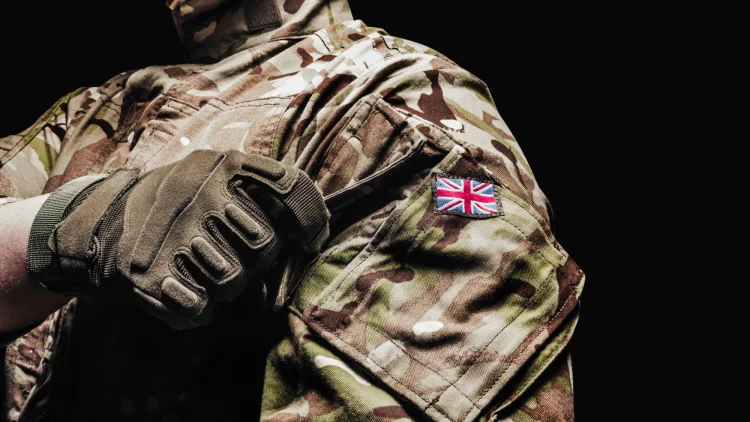

As charity closures accelerate and frontline services shrink, Veterans Aid CEO Prof Hugh Milroy sounds an urgent warning: “Smaller delivery charities are already struggling to survive – and the veterans’ sector will not be immune. If these specialist organisations disappear, the Government will lose the very partners it depends on to keep veterans from falling into crisis. Despite really good intentions by so many, I am worried that Britain is sleepwalking towards a veterans’ care crisis.”
While Whitehall sketches out long‑term reforms, the small frontline charities that actually deal with real‑time crises are vulnerable; and with them goes the State’s unofficial safety net for veteran care.
Small charities are the quiet engine of veterans’ care, and that engine is close to stalling. They’re absorbing soaring demand, complex cases, and suffering from restrictive funding models that reward appearance and brand over outcomes. They’re also carrying the heaviest burdens created by ‘client dumping’, because they are the last ones who ever say no. If these charities fall, the entire system will feel the shock. This suggested scenario will be exacerbated without the immediate introduction of an enforceable Veterans’ Charter that protects standards, responsibilities, and accountability across the system.
Signposting cannot replace expertise or actual delivery – and big reforms cannot compensate for the collapse of frontline capacity. This is not a marginal concern: it is an existential threat to veteran care.
I recently read a quote by Vincent Van Gogh who wrote that “Great things are done by a series of small things brought together”. Certainly this is true in the charity world where many of the achievements of ‘big beasts’ – i.e. the household name organisations – are underpinned by the actions of myriad smaller charity operators. The planned system will collapse without them.
Is this a reality? In its first annual Charity Sector Risk Assessment, published in September 2025, the Charity Commission highlighted financial sustainability as one of the most pressing issues facing the sector. The fact is that more charities are closing, at a time when increasing numbers of people depend on their services. Three months earlier, research published by Civil Society confirmed that nearly half of small charities feared they would have to close within the year.
So what will this mean to those at the bottom of the pile? As I write I’m mindful of a veteran who recently reached out for help. In 2013 she had been arrested by service police and released without charge over her time in Afghanistan. She said, “I still lie awake every night wondering if there will be another knock at the door”. She served for 24 years and has a chest full of medals, but now understands that if that knock comes, again she is utterly on her own. Her words were very chilling and absolutely crystalised the case for a formal Veterans’ Charter.
The belief that being a veteran qualifies individuals for a lifetime of care is a fallacy that rings hollow for her every night. What are her rights? Where is the support? As a veteran without any obvious maladies or problems, will the latest ‘OP’ care for people like her? Into which box will the ‘one size fits all’ drop-in or call centre OP-erator put her? To whom will she be ‘referred’? Who will be responsible if she is let down… again?
She is but one example and the ‘sound of silence’ from those in power is making things worse for people like her. The ongoing possibility of historic prosecutions is creating a climate of uncertainty that places significant psychological and social strain on many former service personnel, underscoring the need for a clear and protective Veterans’ Charter. This has to stop, because we are already seeing the human cost of such abandonment . These veterans are human beings with families. They served their country as part of a team, but when facing this fight they are on their own. Without defined policy boundaries or consistent safeguards, veterans find themselves living with chronic anxiety, reactivated trauma, and a persistent fear that actions taken under the rules and expectations of the time may be retrospectively judged.
The moral case for a Veterans’ Charter, which would provide the clarity, assurance, and institutional commitment necessary to mitigate these harms and ensure that those who served are treated with fairness, consistency, and respect, is utterly clear.
Hers isn’t a problem that can be solved with a grant, a badge, an offer of accommodation, a prosthetic or a holiday. It’s an unexpected plunge into a vortex of indefinite uncertainty and anxiety. Referral is the right course of action if it leads to a valid source of practical help, but when that help doesn’t exist, it’s just buck passing and can never be an effective answer. This decorated officer’s case not only illustrates serious gaps in the practical approach to future care; it also exposes the moral anomalies in government/veteran relations.
The safety net provided by the smaller charities in the Veterans’ world, once strong and flexible, is unravelling fast as, due to consistently increasing long-term costs, small charities become increasingly unable to fulfil their de facto backstop role. The language of gratitude – while knowing, privately, that the system cannot pay the bill – is the instrument that turns the looming crisis of the current charity-dependent model into an unmanaged decline‑dependent model, with the worst possible outcome being that that people will steer clear of defence (i.e. the armed forces) as a career. From a pragmatic, if not moral, perspective this should surely be an incentive to build something safer, fairer and, in the long run, more effective contributor to the defence of nation?
So what does the everyday risk look like from our perspective, as an operational charity delivering crisis support? The small, specialist frontline charities that Veterans Aid deals with – the ones that step in when no one else will – are reaching the limits of their endurance. Costs for housing, detox, and crisis support have soared; resources have not. These organisations have filled the gaps for decades, quietly absorbing risk that rightly belongs to the State. But that goodwill reservoir is almost dry. The whole issue has been exacerbated by the blatant ‘dumping’ of complex or costly cases on smaller charities by various agencies purporting to deliver services for veterans.
The smaller delivery charities cannot operate on goodwill and don’t have the capacity to wade through the labyrinthine processes involved in raising funds from government or other major funders. To make matters worse, our exposure to current funding models clearly illustrates that they do not reflect the realities of running a frontline operational charity in the 21st Century.
If this very real situation happens, there will be many who assume that the large-brand military charities (the ‘big beasts’) will step up to the plate. Many do superb work, but during my extensive exposure to the sector I have observed that they rarely get involved in real-time crises. Furthermore money ( i.e. fundraising ), which is their major activity, is often peripheral in terms of real life needs. Veterans, and their families, who increasingly press Ministers about what support is in place, are beginning to realise that the Armed Forces Covenant isn’t a guarantee of anything. This lack of foresight represents a huge risk of reputational damage to any government adhering to the myth that the Armed Forces Covenant has teeth.
Without an effective frontline, I struggle to see how the remaining top-down support will be able to cope with the sheer rapidity and complex nature of the problems that are frequently presented to it. In the case quoted above, Veterans Aid took immediate, positive action. We linked her to a therapist within the hour and are moving quickly to get appropriate legal support to explore and clarify her position. Thanks to this swift and practical intervention she will be able to continue working and contributing to society; but this support should be a basic right, not something offered serendipitously because the veteran in distress had the good fortune to find her way to an organisation prepared to help her. If the smaller delivery charities disappear, through no fault of their own, then veterans will face a hopeless abyss. I wonder what that will do for recruiting.
The CSJ’s latest Rough Sleeping Tracker figures reveal that 4,793 people were sleeping rough on a single night last autumn, the highest number ever recorded: an increase of 96 per cent since 2021 and 171 per cent since 2010. Inevitably, some of these will be veterans.
The risk of doing nothing is real; rising homelessness, spiralling costs, and a moral failure that I believe no government should be willing to tolerate. The buffer that once quietly protected Britain’s veterans is very fragile. If it goes, the chaos won’t fall on charities; it will fall on Whitehall.


Campaigners from Fossil Free London formed a human red line along the riverbank directly across from Westminster on 3 March. All dressed in red, they held a long red ribbon and signs reading ‘Hold the Line’ and ‘Stop Rosebank’.
The demonstration comes as the government prepares to decide the fate of the Rosebank oil field. It’s the largest undeveloped oil field in the North Sea. However, the Scottish courts overturned its original approval in January 2025.
The court ruling demanded that the project’s primary owner, Norwegian state oil giant Equinor, provide a fuller assessment of the project’s climate impacts before any approval could proceed. Critics argue that burning Rosebank’s total reserves would produce more carbon dioxide than the world’s 28 lowest-income countries emit in a year combined. Also, the vast majority of the oil would go for export. So it wouldn’t be lowering UK energy bills or improving energy security.
The Rosebank development would also hand substantial tax relief from the public purse to Equinor. Equinor’s profits flow largely into Norway’s sovereign wealth fund. A share of profits would also go to the Delek Group, an Israeli fuel conglomerate. The UN has flagged this company for human rights violations in Palestine.
Joanna Warrington, spokesperson for Fossil Free London, said:
Whilst people across the country are watching their bills skyrocket and extreme weather events and climate disasters fill their phone screens: our government stands at a crossroads.
At this point in climate collapse, approving any new oil and gas project is tantamount to climate denial. It is like a doctor diagnosing a patient with lung cancer and handing them a cigarette.
A red line must be drawn. Kier Starmer, stop Rosebank.
Featured image via Fossil Free London

If TikTok is anything to go by, it seems the kids are “frictionmaxxing” (and by the kids, I mean gen Z – a generation of people anywhere from 14-29 years old).
The term, which was coined by author Kathryn Jezer-Morton in an article for The Cut, has gained some fans online.
And it ties into younger people’s increasingly analogue habits, like writing letters to one another and making reading cool again.
Though the term is new, a decades-old interview with author Kurt Vonnegut seemed to echo its principles. So, I gave it a try.
What is “frictionmaxxing”?
It’s about taking away the, well, frictionless ease of digital life and deliberately replacing it with less convenient, but more “human”, options.
The author wrote, “Friction-maxxing is not simply a matter of reducing your screen time, or whatever.
“It’s the process of building up tolerance for ‘inconvenience,’” which she stresses usually isn’t actually a lack of control over the problems of living among other people.
Some examples include not sharing your location with friends, so they have to ask where you are instead, not using large language models to answer your questions, and loosening the reins on your kids.
Jazer-Morton argued that friction is different to suffering. Joy is part of the point.
“An orientation toward friction is really the only defence we have against the life-annihilating suction of technologies of escape,” she wrote.
This idea might not be entirely new
“Frixtionmaxxing” reminded me of Kurt Vonnegut’s envelopes.
Speaking to PBS, the writer spoke about the time his wife asked why he went out to buy individual envelopes instead of just buying a stack to keep on hand.
“I pretend not to hear her. And go out to get an envelope because I’m going to have a hell of a good time in the process of buying one envelope,” he said.
“I meet a lot of people. And, see some great-looking babes. And a fire engine goes by. And I give them the thumbs up.”
The inconvenience, for him, was not just the point, but the joy of the trip.
For her part, Jazer-Morton said that “frictionmaxxing” should increase our tolerance of effort that isn’t strictly necessary, “reaching even toward enjoyment”.
Years before mass AI use, Vonnegut said, “the computers will do us out of that”.

I took a small step towards “frictionmaxxing” and was instantly convinced
All of which to say, I began “frictionmaxxing” by getting bits and bobs from my local store throughout the week rather than relying on an online order.
Not only did that mean I got to enjoy some of this month’s sunshine (finally!), but it also meant I felt much more connected to the world around me than I would otherwise.
I overheard some interesting arguments on the street and saw a terrible first date. I saw some very sweet goslings (picture above), noticed some heartening blossoms, and even got inspiration for an article about chocolate theft.
Since then, I’ve got my screen time down, begun reading more, and gotten back into crochet. I’ve even penned some letters and planned more IRL meetups.
Studies tell us that spending more time outdoors, having even surface-level interactions with other people, reading, and creating everything from meals to blankets, is good for us.
But I don’t think anyone who tries “frictionmaxxing” will need all that much proof. Already, I feel my self-esteem and sense of connection growing.
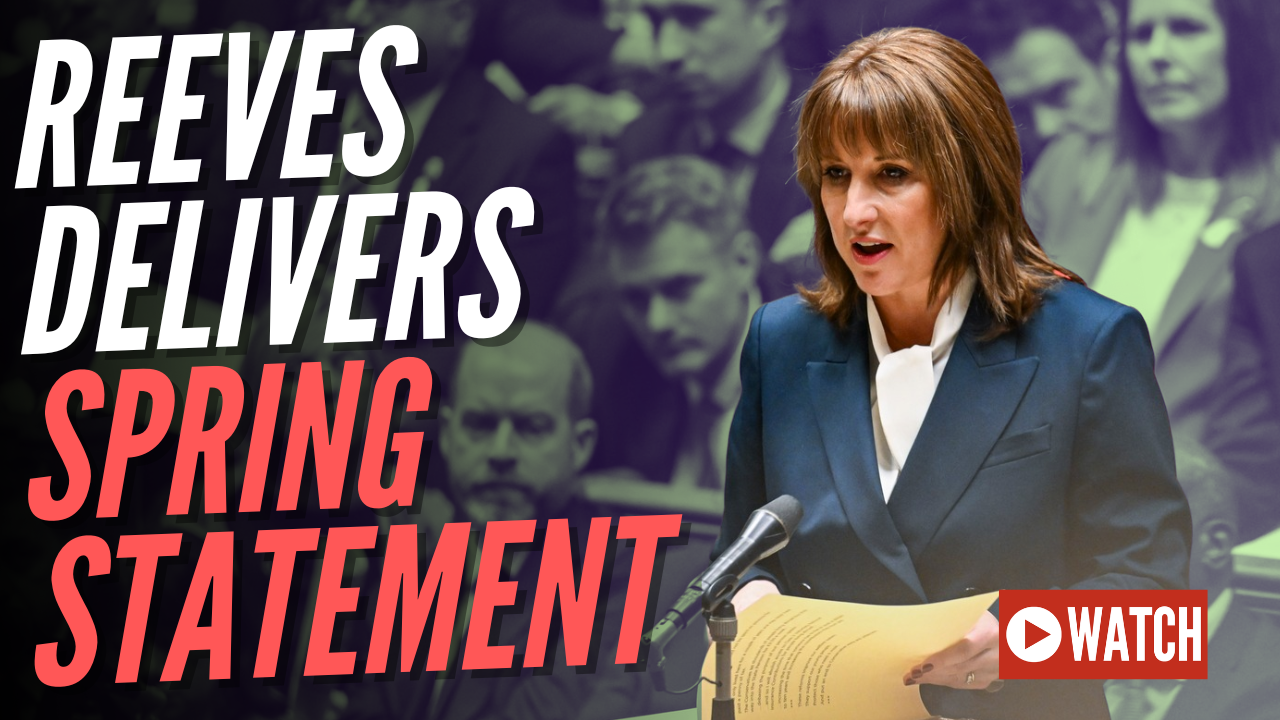
Guido will be live-blogging throughout, so refresh the page for the latest updates. Not a pretty economic picture as Reeves stands at the despatch box…

Kesha has taken aim at Donald Trump and his administration after the White House used her song in a video “to invite violence and threaten war”.
Last month, a video was uploaded to the official White House TikTok account soundtracked by Kesha’s hit Blow, depicting a jet launching a missile, which then destroys a ship.
Addressing her X followers on Monday night, the Grammy nominee wrote: “It’s come to my attention that The White House has used one of my songs on TikTok to incite violence and threaten war.
“Trying to make light of war is disgusting and inhumane. I absolutely do not approve of my music being used to promote violence of any kind.”
“Love always trumps hate,” Kesha continued. “Please love yourself and each other in times like this.
“This show of blatant disregard for human life and, quite frankly, this attack on all of our nervous systems is the opposite of what l stand for.”
She then turned her attention to the president, calling on fans not to “let this distract us” from the recent allegation that Donald Trump is mentioned in the unredacted Epstein files “more than a million times”.
The Trump administration’s director of communications Steven Cheung later reposted Kesha’s message, saying on his own X account: “All these ‘singers’ keep falling for this. This just gives us more attention and more view counts to our videos because people want to see what they’re bitching about.
“Thank you for your attention to this matter.”
Half an hour later, the Praying singer posted simply: “Stop using my music, perverts.”
Of course, Kesha is far from the first musician to call out Trump and his fellow right-wingers for using their music without permission.
Last week, Radiohead took issue with the US administration after ICE agents used a choral cover of the group’s song Let Down in a social media video.

“We demand that the amateurs in control of the ICE social media account take it down,” they wrote. “It ain’t funny, this song means a lot to us and other people, and you don’t get to appropriate it without a fight. Also, go fuck yourselves…”
Last year, chart-topper Jess Glynne and US singer-songwriter Sabrina Carpenter were irked to find their music being used in social media posts by the White House.
“This video is evil and disgusting. Do not ever involve me or my music to benefit your inhumane agenda,” Sabrina wrote, while Jess said: “This post honestly makes me sick. My music is about love, unity, and spreading positivity – never about division or hate.”
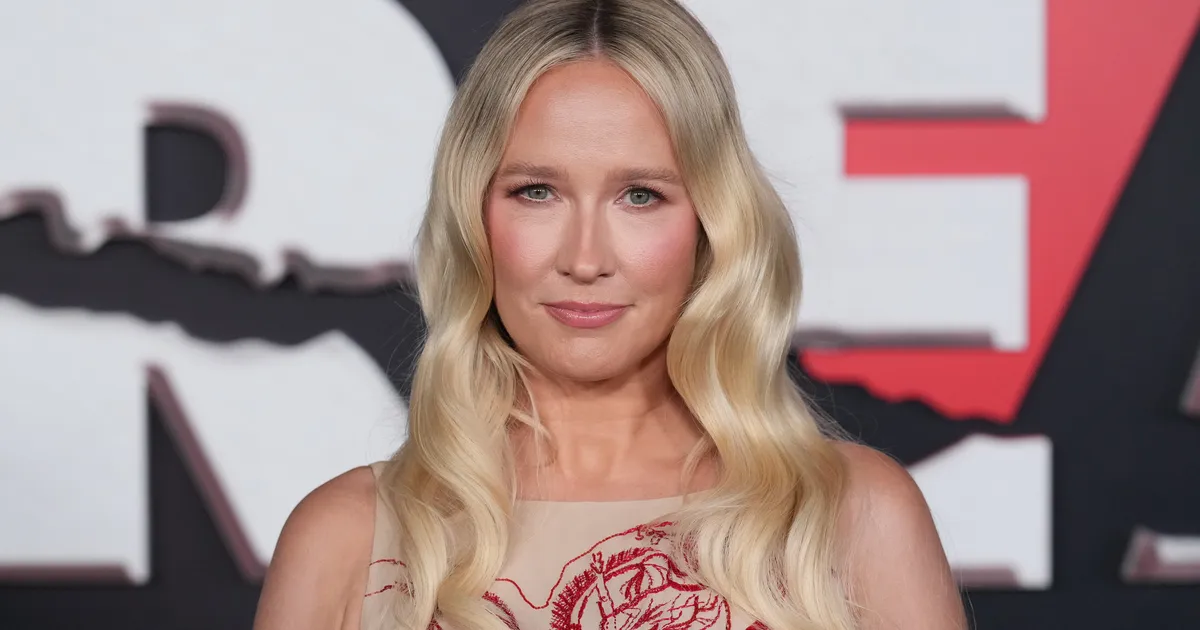
Scream 7 actor Anna Camp has apologised for resharing a post about the film’s release that she said did not “reflect” her “personal beliefs”.
Shortly after this, the film’s director parted ways with the project, as did Melissa’s co-star Jenna Ortega.
After the film hit cinemas, and it was reported to have made around $100 million in its opening weekend, cast member Anna reshared a post from X on her Instagram page, which read: “The boycott didn’t work, the critics’ hate didn’t work, the pathetic leaks didn’t work.
“What worked was audiences coming out and making the film a success.”
She accompanied this with a blast of Taylor Swift’s Karma.
However, after facing backlash, Anna removed the post and shared an apology.
“It has come to my attention that I reposted someone else’s story that does not reflect my personal beliefs,” the Pitch Perfect star told her X followers. “I have since deleted the repost because I absolutely meant no harm.”
Anna added: “I’m sorry to anyone who was affected.”

Around 250 people gathered outside Belfast’s City Hall on Monday March 2 to voice their disgust at the illegal aggression launched against Iran by US/Zionist terrorists. They were met by a much smaller crowd of around 30 people voicing their support for Reza Pahlavi. The man they are backing is the son of the Shah of Iran deposed in 1979 during the Iranian revolution.
He has bravely been willing to fight to the last drop of someone else’s blood from his home in the United States. Earlier this year he encouraged desperate young people to their death in protests met with brutal force by the theocrats in Tehran. Now he’s happy for his own people to be butchered again by the thugs in Washington and Tel Aviv. All this so he can regain the 1,648,195 km2 of Iran he sees as his personal property, along with the 90 million people within it.
Monarchists back alternate form of tyranny
Supporters of Pahlavi at times waded into the crowd of anti-war demonstrators to try and instigate confrontation. Some of the former group brandished ‘Israeli’ flags and were met with shouts of “Zionist scum, off our streets”.
A slightly larger group of monarchists gathered at the same location on Sunday after the murder of Iran’s supreme leader Ayatollah Khamenei. Many held the flag of the Zionist entity on that occasion too, indicating they are also happy for ordinary Iranian people to be treated as expendable in the name of installing the self-appointed “Shah II”.
Gerry Carroll, West Belfast MLA for People Before Profit was the first speaker, successfully able to drown out interruptions from the monarchists. He started by denouncing the massacre of school children carried out by Zionist savages.
I don’t know anybody who claims they’re for freedom and democracy and human rights, but then cheer a school in Iran being blown to bits and at least 160 children being killed. In my eyes, in most people’s eyes across the world, that is not democracy, human rights and dignity. And we’re here to stand against that quite clearly and loudly.
He also called out the hypocrisy of the US demanding an end to Iran’s nuclear program:
The International Atomic Energy Authority…have said…that Iran is compliant when it comes to nuclear weapons. Now, I don’t think there should be any nuclear weapons across the world, but [we] must remind ourselves: who is the country, the only country in the world that has used nuclear weapons? I’ll give you a clue. This, the United States government, they have used it on the people of Hiroshima and Nagasaki.
Never trust Zionists
Palestinian Mohammad Samana told the Pahlavi supporters backing so-called ‘Israel’ to beware, based on the bitter experience of his people:
For our friends, there protesting: nobody experienced ‘Israel’ as much as the Palestinians. They came to our land claiming being the victims. We welcomed them. And they took our land and created their apartheid state.
‘Israel’ told the world in 1993, that there will be a Palestinian state by 1998. But they used the agreement to steal more Palestinian land and ensured that they prevented the creation of a Palestinian state and colonised the West Bank and destroyed Gaza.
Crucially, Iranian Azedeh Sobout spoke too, saying:
I stand before you as an Iranian woman, one who opposes the men who rule my country now and the men who ruled it before. The current theocratic regime that massacred thousands of protesters in January and the monarchists backed up by U.S. standing at the other side. There is a space for people like me, [though] very little, in this current geopolitical script because we are constantly told that we must choose. Choose between a dictator and a bombing campaign. Choose between repression and destruction. Choose between submission and annihilation.
We reject that choice. This binary is false. It is coercive and it erases our political agency. It assumes that Iranians cannot imagine or build a future beyond the options imposed on us by empires and dictators. That logic is colonial. Their logic is colonial. That’s why they can only ally with the US, Israel and British colonial systems.
Regime change starts at home
She concluded:
Align your solidarity with our revolutionary philosophy: Jin, Jîyan, Azadî; woman, life, freedom. A vision rooted in Kurdish feminist struggle. A struggle [which] the monarchists are terrified of…because it’s based on feminist, working class resistance and democratic dignity.
And if you believe in regime change, begin it at home. Thank you.
Her last words are an essential message. We’re limited in the direct effect we can have on events thousands of miles away. What we can effect is that which happens right where we stand, in our own communities, town halls and parliaments. That means sweeping away any politician that shows the merest hint of sympathy towards the terrorist forces of the United States and so-called ‘Israel’.
Featured image via the Canary
A new YouGov poll has put the Green Party in second place, just two points behind Reform. This comes just after the Greens announced they have more than 200,000 members. And with Labour lagging five points behind Zack Polanski’s party, it seems voters now see the Greens as the main opposition to Reform.
Pollsters think the “seismic” Green by-election win on 27 February 2026, along with the public exposure surrounding it, has had a big influence on voter perceptions. In particular, it has shown the Green Party is a viable electoral choice which is fully capable of winning elections.
Our latest voting intention (1-2 March 2026) has the Greens on their highest figure ever recorded by YouGov, significantly ahead of Labour, who are on their lowest figure to date
Reform UK: 23% (-1 from 22-23 Feb)
Greens: 21% (+4)
Conservatives: 16% (-2)
Labour: 16% (-2)
Lib… pic.twitter.com/C7tL21tzBv— YouGov (@YouGov) March 3, 2026
The result is the Greens’ highest with YouGov, and Labour’s lowest.
Despite Labour plummeting into the dustbin of history, however, Polanski has noted that Labour leader Keir Starmer is just doubling down on his failing strategy (which has already seen 25% of 2024 Labour voters go Green). And his tactics are continuing to backfire:
On Sunday I announced on the BBC that Green Party membership is 200,000.
Keir Starmer continues to keep trying to smear us – calling us extremists.
The result? We’ve had thousands and thousands of new members in the past 48 hours alone.https://t.co/0qbagSvIYp https://t.co/gk2iB7ThOT
— Zack Polanski (@ZackPolanski) March 2, 2026
Times are changing, and the old order is dying
Sky News clarified that:
The Greens are now the most popular party in all age categories under 50.
Let’s emphasise that point again. *Every generation under the age of 50 prefers the Greens to any other party.* That includes almost 50% of 18-to-24-year-olds and 27% of people between the ages of 25 and 49.
Sky also reported that Greens are boosting their support levels in working-class communities, saying:
Those classified as doing “routine” jobs also vote Green in significant numbers.
The Green Party is now a mass party, not a niche one. And current polling already makes the potential electoral map look slightly more hopeful than it seemed a few months ago:
It’s just 1 poll (for now) – but here’s how it plays out in the Nowcast Model:
RFM: 227 (+222)
GRN: 135 (+131)
LDM: 92 (+20)
CON: 59 (-62)
SNP: 48 (+39)
LAB: 40 (-371)
PLC: 20 (+16)
Others: 10 (+5) https://t.co/C6e7Abw34H pic.twitter.com/49xhYWsezR— Election Maps UK (@ElectionMapsUK) March 3, 2026
According to that projection, a far-right coalition of Reform and Tories would still win. But a centre-left coalition of the Greens, SNP, and Plaid Cymru would be hot on their heels. And if the centre-right Liberal Democrats preferred to back a Green-led coalition to stop the far right, the Reform-led coalition would lose.
As Polanski has emphasised, there is a massive section of society that clearly wants hope. These people want to stop the far right, get investment in their communities and public services, have lower bills, and protect the planet from the billionaire warmongers intent on destroying it:
It’s becoming increasingly clear every single day that the way to stop the rise of the right in this country is to join the Green Party.
It’s also the way to invest in our communities, lower our bills and protect our planet.https://t.co/0qbagSvIYp https://t.co/uaKZd8pgB2
— Zack Polanski (@ZackPolanski) March 3, 2026
Turns out lowering bills, protecting the NHS and rebuilding our public services is really popular.
This is just the beginning – people are seeing through the attacks and demanding something better.
And we’re making hope normal again – together.https://t.co/0QUCQbH19l https://t.co/bLXPb0v7Z1
— Zack Polanski (@ZackPolanski) March 3, 2026
The old order is rapidly fading away. Times are changing. And the Greens have placed themselves at the forefront of that struggle for a better country and a better world. There’s no hiding from that fact now, and Reform’s elitist hatemongers must be shaking in their jackboots.
Featured image via the Canary
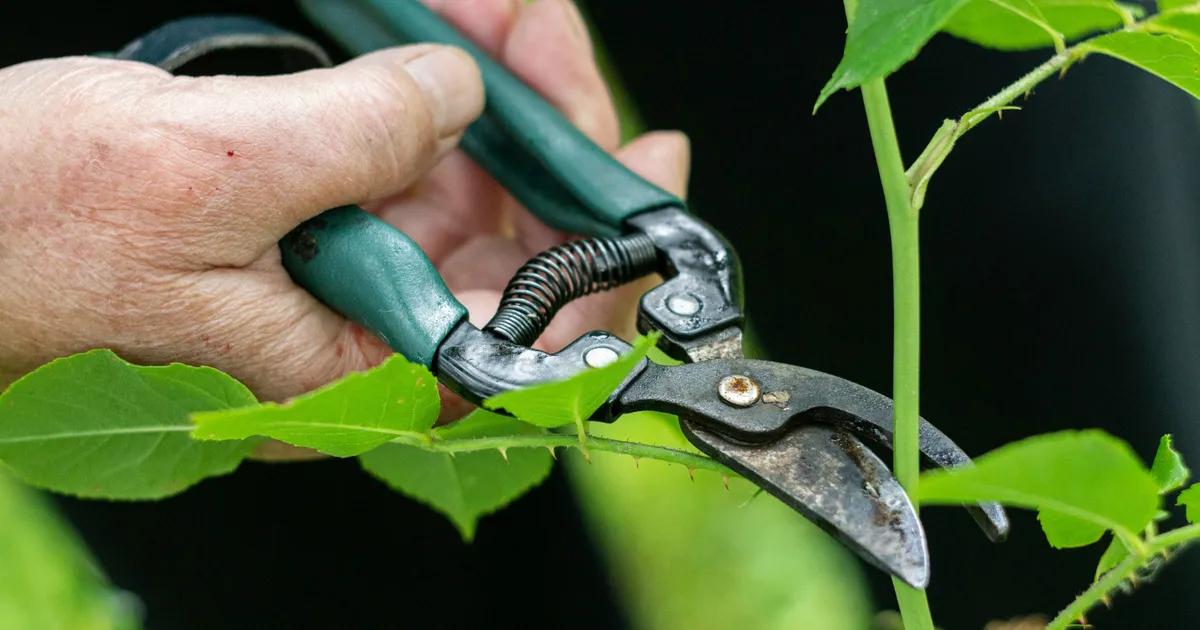
This month’s gardening checklist includes pruning roses, which can help to ensure a bright and bountiful bloom come summer.
In fact, according to gardening guru Monty Don, “The first half of March is the best time to prune any shrubs and climbers that will flower on new growth”.
That can include roses and buddleia. Some shrubs, like willow and cornus, can benefit from pruning right now, too.
It can be a little nerve-wracking to hack back plants you’ve spent ages growing. But the expert is here to help: “I know that pruning can be the cause of some anxiety but there is only one rule to follow,” Don continued.
“Always cut back to something”
The gardener said that when pruning, you should “always cut back to something, be it a side shoot or leaf bud.
“Other than that, do not worry unduly about outward-facing buds or any such finessing.”
This is in line with the Royal Horticultural Society’s (RHS) advice.
When pruning roses, they warn you not to prune more than 5mm away from a bud.
And Gardener’s World said that you should always prune just above a bud – neither so close that it damages it, nor so far away that water can gather on the stump when it rains and lead to rot.
“As a general rule, cut above the bud at a distance of about a quarter of the thickness of the stem,” they wrote.
Why should you prune back to a side shoot or bud?
Gardener’s World said these spots of growth form “nodes” on the plant.
And when you cut too far away from a period of plant growth, it might not have enough energy to regrow quickly enough. Then, you risk “dieback” and disease.
“Also, by cutting above a node, you can manipulate new stems, leaves or flowers to form in a desired direction, as nodes form on different sides of a stem,” the publication said.
They added that no matter what, you should avoid cutting more than 1cm above a node.
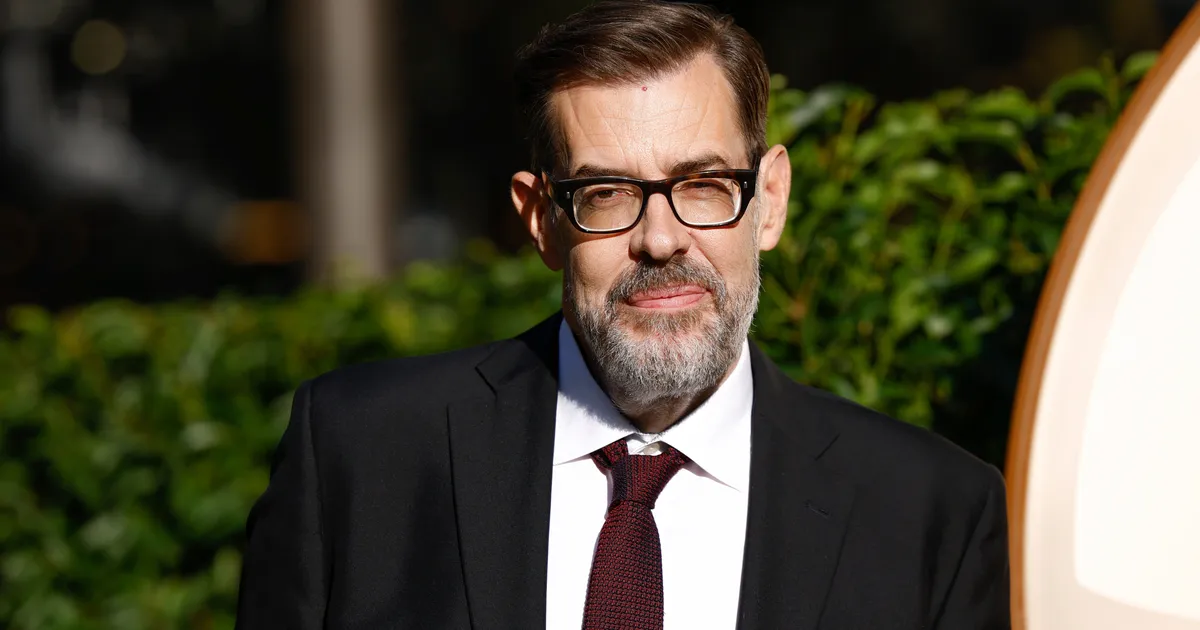
Richard Osman has announced that he is stepping down from his BBC game show House Of Games after almost a decade at the helm.
On Tuesday morning, the former Pointless host confirmed that the current season of House Of Games would be his last.
However, fans of the format needn’t worry, as he’s confirmed that it will continue to air with a new host.
Announcing the news on his podcast The Rest Is Entertainment, he confirmed: “I am leaving House Of Games. It will no longer be Richard Osman’s House Of Games – it will be somebody else’s House Of Games. I gladly hand over the keys.”
“Thank you for all your kind words as I step down from House Of Games after nine amazing years,” he later wrote on X.
“It is honestly the most fun show to work on, with the most wonderful team, but, after 800 episodes it’s time to hand over the keys to a new host.”
Richard continued: “There are plenty of new episodes still to air though, and I’ll even be filming one final handover week later in the year! It really has been a treat from start to finish.”
House Of Games sees Richard welcoming four celebrities into his studio for a week of shows which pits them against each other in a series of weird and wonderful challenges.
Launching in 2017, the show has garnered a loyal following over the years, and in 2025, spawned its first international spin-off for Australian audiences, with comedian Claire Hooper at the helm.
It is also notably where he met his now-wife, Ingrid Oliver, after she appeared as a celebrity participant back in 2021.
Outside of his TV work, Richard has become synonymous with his hugely successful Thursday Murder Club book series, the latest instalment of which hit the shelves towards the end of last year.
In 2025, the first Thursday Murder Club novel was also adapted for Netflix, with Dame Helen Mirren, Celia Imrie, Pierce Brosnan and Sir Ben Kingsley leading an all-star cast in the streaming movie.
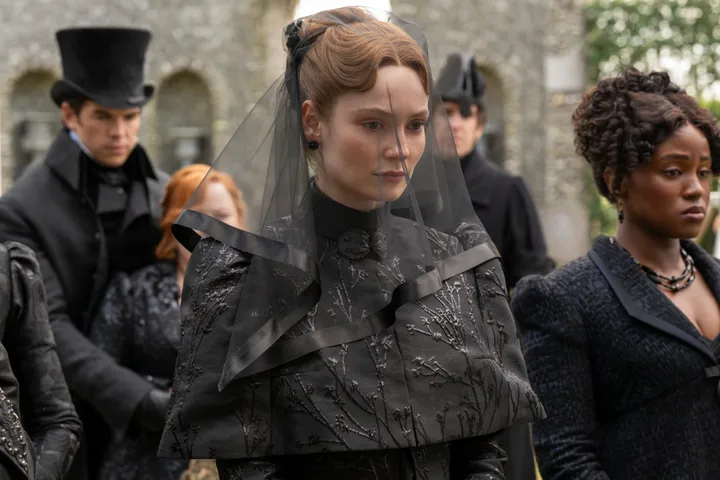
As Bridgerton fans know, the Netflix series frequently takes creative license with the Julia Quinn source novels that inspired it.
For an understandable reason, one heartbreaking moment from the book When He Was Wicked was cut from season four of the show.
During the recent season, Francesca (played by Hannah Dodd) suspected that she was pregnant with her husband John’s child after he died in his sleep as the result of a sudden cerebral aneurysm.
After undergoing an exam, the character found out that she wasn’t pregnant, while in the original book, she actually discovers that she is pregnant, and later suffers a miscarriage, which shapes Francesca’s grief and fertility throughout the story.
Speaking to Swooon, showrunner Jess Brownell explained that she and the Bridgerton writers decided to cut Francesca’s miscarriage storyline because they felt it would have made the tone of season four “too morbid”.
“Ultimately, I think John’s death and the funeral are already in so many ways such a departure from the tone of the show,” she explained.
“I think episode seven has hints of lightness, but it is a much darker version of Bridgerton in a way that I think is really interesting, and especially in the way we get to watch the family come together.”

Despite not wanting to adapt the darker miscarriage storyline from the source novels, Jess still intends to explore Francesca’s fertility journey in future seasons.
“We’re still very interested in honouring the fertility storyline… and we will continue honouring [it] in her future season,” she said.
This isn’t the only major change to Francesca’s storylines on the show, though.
Her love interest in the books, Michael Stirling, has been gender-swapped in the show, meaning Francesca’s future love story – and, indeed, fertility story – could unfold very differently on screen.
All four seasons of Bridgerton are available to stream on Netflix.

The Strange Reason Pink’s Marriage Never Looks Stable

‘Hold the Line on Rosebank’ – campaigners target parliament as oil field decision looms

Pistons vs. Cavaliers prediction, odds, line, time: 2026 NBA picks for Tuesday, March 3


-

 Politics5 days ago
ITV enters Gaza with IDF amid ongoing genocide
-

 Fashion4 days ago
Weekend Open Thread: Iris Top
-

 Tech2 days ago
Unihertz’s Titan 2 Elite Arrives Just as Physical Keyboards Refuse to Fade Away
-

 Politics5 hours ago
Alan Cumming Brands Baftas Ceremony A ‘Triggering S**tshow’
-

 Business7 days ago
True Citrus debuts functional drink mix collection
-
Sports3 days ago
The Vikings Need a Duck
-

 NewsBeat6 days ago
Cuba says its forces have killed four on US-registered speedboat | World News
-
 NewsBeat3 days ago
Dubai flights cancelled as Brit told airspace closed ’10 minutes after boarding’
-

 Tech7 days ago
Unsurprisingly, Apple's board gets what it wants in 2026 shareholder meeting
-
 NewsBeat6 days ago
Manchester Central Mosque issues statement as it imposes new measures ‘with immediate effect’ after armed men enter
-
 NewsBeat3 days ago
The empty pub on busy Cambridge road that has been boarded up for years
-

 NewsBeat2 days ago
‘Significant’ damage to boarded-up Horden house after fire
-

 NewsBeat3 days ago
Abusive parents will now be treated like sex offenders and placed on a ‘child cruelty register’ | News UK
-
 NewsBeat7 days ago
Police latest as search for missing woman enters day nine
-

 Entertainment1 day ago
Baby Gear Guide: Strollers, Car Seats
-

 Business5 days ago
Discord Pushes Implementation of Global Age Checks to Second Half of 2026
-

 Business5 days ago
Only 4% of women globally reside in countries that offer almost complete legal equality
-
 Tech4 days ago
NASA Reveals Identity of Astronaut Who Suffered Medical Incident Aboard ISS
-

 Crypto World7 days ago
Entering new markets without increasing payment costs
-
Politics2 days ago
FIFA hypocrisy after Israel murder over 400 Palestinian footballers