Connect with us

Politics

Monty Don’s Only Pruning Rule

Published

on

Monty Don's Only Pruning Rule

This month’s gardening checklist includes pruning roses, which can help to ensure a bright and bountiful bloom come summer.

In fact, according to gardening guru Monty Don, “The first half of March is the best time to prune any shrubs and climbers that will flower on new growth”.

That can include roses and buddleia. Some shrubs, like willow and cornus, can benefit from pruning right now, too.

It can be a little nerve-wracking to hack back plants you’ve spent ages growing. But the expert is here to help: “I know that pruning can be the cause of some anxiety but there is only one rule to follow,” Don continued.

Advertisement

“Always cut back to something”

The gardener said that when pruning, you should “always cut back to something, be it a side shoot or leaf bud.

“Other than that, do not worry unduly about outward-facing buds or any such finessing.”

This is in line with the Royal Horticultural Society’s (RHS) advice.

Advertisement

When pruning roses, they warn you not to prune more than 5mm away from a bud.

And Gardener’s World said that you should always prune just above a bud – neither so close that it damages it, nor so far away that water can gather on the stump when it rains and lead to rot.

“As a general rule, cut above the bud at a distance of about a quarter of the thickness of the stem,” they wrote.

Why should you prune back to a side shoot or bud?

Advertisement

Gardener’s World said these spots of growth form “nodes” on the plant.

And when you cut too far away from a period of plant growth, it might not have enough energy to regrow quickly enough. Then, you risk “dieback” and disease.

“Also, by cutting above a node, you can manipulate new stems, leaves or flowers to form in a desired direction, as nodes form on different sides of a stem,” the publication said.

They added that no matter what, you should avoid cutting more than 1cm above a node.

Advertisement

Source link

Continue Reading
Click to comment

Leave a Reply

Your email address will not be published. Required fields are marked *

Politics

You Should Cook Pasta In Cold Water, Chefs Say

Published

on

You Should Cook Pasta In Cold Water, Chefs Say

First came the news that I’m not putting enough water into my pasta pot. Then, I found out that, despite Gordon Ramsay’s advice, there really is no place for olive oil in the cooking liquid.

But those seem tame compared to a more recent revelation: it turns out some chefs, including Alton Brown, swear by starting their pasta off in cold water.

This, he claims, leads to “quicker cook times and extra-starchy pasta water that’s perfect for finishing sauces”.

In fact, Brown said, “although I may be blocked from ever entering Italy again for saying this: I have come to prefer the texture of dry pasta started in cold water”.

Advertisement

Why would cooking pasta in cold water be better?

The chef wrote that it has multiple benefits. First of all, he said, it means the pasta boils at the same time as the water does – that saves you time compared to boiling the water on its own and then letting the pasta cook in it.

As he said before, the pasta also releases more starches when it starts cooking in cold water. That can make sauces extra-creamy and ensure they stick perfectly to the carbs.

“Just be sure to remove your pasta with a spider strainer rather than draining it into the sink,” Brown said.

Advertisement

He even stated that he liked the texture of pasta cooked in cold water more.

It’d be one thing if he were alone in the preference.

But after testing five different pasta-cooking methods, the staff of The Kitchn found themselves agreeing with the cook.

“The noodles were al dente, right on schedule, after just 4 minutes and 30 seconds of simmering,” they wrote (that’s certainly inmpressive).

Advertisement

They found that the sauce was extra-starchy and that the technique “resulted in really great tasting pasta”.

And writing for Serious Eats, chef and food writer J. Kenji López-Alt said that, despite his initial trepidation, he found the method “the fastest, most energy-efficient way I know to cook dry pasta”.

A little caveat, though: that word “dry” is important. This won’t work as well for fresh pasta, which is more hydrated than its dried cousins.

Why does the cold water method work?

Advertisement

J. Kenji López-Alt wrote that “cooking pasta is actually a two-phase process: hydration and cooking.

Hydration refers to the amount of water pasta contains and/or takes on. And if pasta is overcooked, it can feel mushy and limp.

Some worry that this will happen if you start pasta off in cold water. But if it’s dry, and therefore has a lower hydration – the chef says the pasta can handle it.

After testing dry pasta cooked in both cold and boiling water, he found that both absorbed the same amount of water (75% of their dry weight). And the taste was “indistinguishable”.

Advertisement

Looks like I have some changes to make…

Source link

Advertisement
Continue Reading

Politics

Matthew Jeffery: Margaret Thatcher would never have joined Reform UK

Published

on

Matthew Jeffery: Margaret Thatcher would never have joined Reform UK

Matthew Jeffery is one of Britain’s most experienced global talent and recruitment leaders, with more than 25 years advising boards and C-suite executives on workforce strategy, skills, and productivity.

Margaret Thatcher’s legacy is now claimed by almost every strand of British politics.

Conservatives invoke her as a model for renewal after defeat, Labour selectively borrows her language of growth and national confidence, and Reform UK increasingly argues that Thatcherism survives outside the modern Conservative Party altogether. At a moment when many centre-right voters feel politically displaced, the question has become unavoidable: would Margaret Thatcher, confronted with Britain’s political and economic circumstances today, have joined Reform UK?

The conditions behind Reform’s rise are real. Britain faces sluggish growth, historically high taxation, regulatory expansion and declining confidence in governing institutions despite more than a decade of Conservative-led government. Voters shaped by Thatcher’s emphasis on enterprise, ownership and limited government increasingly see a political system that appears managerial rather than reforming. Reform presents itself not simply as protest but as correction, claiming to complete an economic project left unfinished.

Advertisement

The question, however, is not whether Reform borrows Thatcherite policies, but whether it reflects Thatcher’s understanding of how political change is achieved. This article argues that it does not. Thatcherism was never merely a policy programme. It was a philosophy of how political authority should be exercised.

For many, Margaret Thatcher remains Britain’s greatest post-war Prime Minister. Bold in conviction and decisive in execution, she reshaped the economic and political landscape of the United Kingdom at a moment of profound national decline. She confronted inflation, restored fiscal discipline, curbed union dominance and re-established Britain as a serious economic power. Privatisation broadened share ownership, revitalised stagnant industries and encouraged individual aspiration. Britain moved from being labelled the “sick man of Europe” to one of the most dynamic economies in the Western world.

As Thatcher herself understood, ideas mattered only insofar as they could be translated into governing authority. Winning arguments was inseparable from winning power.

Understanding why Thatcher would not have joined Reform requires recognising what Thatcherism actually prioritised in practice. Britain again faces conditions that make many Thatcherite principles newly relevant. Lower personal and corporate taxation to stimulate enterprise, deregulation to unlock investment, and a reduced role for the state remain powerful tools for economic renewal. Expanding privatisation, cutting bureaucratic barriers and restoring competitiveness would help stem the accelerating flow of talent and capital to lower-tax economies abroad. Strong law and order, an economically grounded immigration system and sustained investment in defence would reinforce national confidence and security. These ideas are not relics of the 1980s but responses to enduring economic realities.

Advertisement

Thatcher would likely have viewed Brexit sympathetically in principle, grounded in her belief in sovereignty and democratic self-government. Yet she was never an isolationist. A committed advocate of free trade and global markets, she would have regarded Brexit primarily as an opportunity to expand international economic relationships. She may well have been critical of its implementation, particularly the slow pace of securing new trade opportunities and the failure to communicate clear economic benefits to the public. The concept aligned with her philosophy; the execution has struggled to demonstrate its promise.

The Covid pandemic profoundly altered Britain’s fiscal landscape. Extraordinary borrowing stabilised the economy but left a legacy of debt that constrained subsequent governments. Political leadership became increasingly cautious, prioritising fiscal management over structural reform. In doing so, successive administrations drifted away from a central Thatcherite insight: economic growth, not sustained tax burden, ultimately restores public finances. The absence of growth-driven reform prolonged stagnation and contributed to today’s political frustration.

Yet the debate about Reform UK cannot be resolved through policy comparison alone. Thatcherism was defined less by policy detail than by governing instinct.

Reform’s claim to Thatcherite heritage is not purely rhetorical. Its economic positioning has evolved through 2025 and into early 2026, with greater emphasis on fiscal restraint, deregulation and supply-side reform. Senior figures such as Richard Tice increasingly reference the financial liberalisation of the 1980s, while Nigel Farage has shifted messaging toward credibility, investment confidence and state reduction.

Advertisement

Recent Conservative defections have reinforced Reform’s attempt to project governing seriousness. Commitments to respect Bank of England independence, consult investors on fiscal rules and delay tax cuts until borrowing falls reflect an effort to appear economically responsible. Yet these developments also expose a paradox. As Reform absorbs figures associated with recent Conservative governments, it risks becoming less an insurgent alternative and more a reconfiguration of the political establishment it criticises.

The deeper distinction lies elsewhere. Thatcherism sought to transform an existing governing party rather than replace it. When Thatcher became Conservative leader in 1975, she inherited a divided and intellectually exhausted party widely viewed as unelectable. She did not abandon it in favour of ideological purity. She captured it, reshaped it and used it as a vehicle for durable reform.

Her conviction was clear. Political change required institutions capable of governing, and governing required broad electoral coalitions. External insurgencies, however energetic, risked dividing supporters of reform and unintentionally strengthening political opponents.

The early 1980s provide an instructive parallel. The Social Democratic Party’s breakaway from Labour generated enormous excitement and polling momentum. Many predicted a permanent realignment of British politics. Thatcher remained focused on party unity while managing internal ideological divisions. The SDP ultimately fragmented opposition support, contributing to her 1983 landslide victory. Thatcher understood electoral arithmetic as clearly as economic theory. Dividing the centre-right rarely produces reforming government.

Advertisement

Reform’s rise risks recreating a similar dynamic. Strong polling built largely on attracting Conservative voters may weaken the broader centre-right without replacing it as a durable governing coalition. Tactical voting behaviour among Labour, Liberal Democrat and Green voters further complicates Reform’s path to parliamentary power despite headline support.

Understanding this divergence requires recognising that Reform belongs to a slightly different political tradition. What might be termed Faragism places greater emphasis on democratic sovereignty and political realignment than on classical economic liberalism. Where Thatcherism sought primarily to free markets from state direction, Faragism seeks to restore political control to voters who feel existing institutions no longer represent them adequately. The overlap in rhetoric masks a difference in diagnosis.

Another distinction is less visible but equally important. Thatcherism did not emerge suddenly in response to political frustration. It stood within a long intellectual tradition that shaped both Conservative and liberal economic thought in Britain.

Thatcher’s ideas were grounded in a lineage stretching back well before the crises of the 1970s. Conservative philosophy from Edmund Burke emphasised institutional continuity and gradual reform, while Victorian liberal thinkers such as Samuel Smiles championed self-reliance, responsibility and social mobility through individual effort. Twentieth-century figures including Winston Churchill combined national confidence with openness to markets and international engagement.

Advertisement

Economically, Thatcher drew directly from modern liberal scholarship. She maintained personal correspondence with Friedrich Hayek and Milton Friedman, whose work on monetary discipline, market competition and the limits of state planning helped shape the intellectual foundations of her programme. These ideas did not provide slogans but a coherent framework explaining why certain policies worked and others failed.

Because Thatcherism rested on an established body of thought, it possessed an internal coherence that extended beyond immediate political pressures. Policy decisions were anchored in a broader philosophy about markets, institutions and human behaviour.

Reform UK, by contrast, does not yet rest on a comparable intellectual inheritance. Its programme draws energy from political dissatisfaction rather than from a settled philosophical tradition. Without a clear intellectual lodestar, positions can appear reactive or internally inconsistent, visible in tensions between commitments to economic liberalisation and proposals that imply greater state direction or intervention.

This difference helps explain why Thatcherism prioritised predictable rules and institutional stability. It was guided by a theory of government as much as by electoral strategy. Movements built primarily around political realignment often struggle to achieve that same coherence because political energy alone cannot substitute for an underlying philosophy of government.

Advertisement

For Thatcher, ideas were valuable precisely because they enabled durable government rather than perpetual opposition. This principle shaped her reforms in practice. Privatisation dispersed ownership, monetary discipline constrained political spending, and deregulation removed barriers to competition. The financial reforms of the City of London were designed to free markets from political management rather than redirect them toward national objectives.

Reform’s programme, by contrast, combines liberalising economics with a stronger language of national economic direction. Proposals to reshape institutional mandates or prioritise domestic sectors introduce an element of political guidance that Thatcher would likely have viewed cautiously. Her nationalism rested on confidence that Britain could succeed through open competition in global markets, welcoming foreign investment and international integration. Reform’s rhetoric reflects a more defensive instinct centred on sovereignty and control.

The contrast can be summarised clearly:

Thatcherism vs Reform UK (2026)

Advertisement
Aspect Thatcherism Reform UK
Vehicle for change Transform existing party Insurgent realignment
Institutions Stabilise predictable rules Retain but reshape mandates
Economic direction Disperse power from the state Liberalisation with national objectives
National outlook Open-market confidence Sovereignty and control emphasis
Electoral strategy Broad governing coalition Risk of vote fragmentation
Political appeal Aspiration and ownership Dissatisfaction and correction


Perhaps the most overlooked difference lies in political psychology. Thatcherism appealed primarily to aspiration. Council house sales expanded ownership, privatisation created individual investment in capitalism and tax reform aligned personal ambition with national success. Voters were encouraged to see themselves as participants in renewal rather than opponents of a failing system.

Reform articulates dissatisfaction effectively, but Thatcher’s achievement was to replace one economic settlement with another capable of commanding sustained governing authority. Thatcher entered politics to exercise power responsibly, not to express discontent more forcefully.

For that reason, Margaret Thatcher would not have joined Reform UK. Nor are voters who genuinely think in Thatcherite terms likely to find their long-term political home there. Thatcherism was never defined by rhetoric alone. It rested on trust in markets over governments, stability over impulse and governing authority over permanent insurgency.

Advertisement

Thatcher did not change Britain by standing outside power demanding ideological purity. She changed it by winning authority, building institutions capable of reform and persuading a sceptical nation to accept change. Thatcherism was never the politics of protest. It was the politics of government, grounded in ideas strong enough not only to win power, but to sustain it once won.

Source link

Advertisement
Continue Reading

Politics

Opposition and think-tank reactions to the Chancellor’s Spring Statement

Published

on

Opposition and think-tank reactions to the Chancellor’s Spring Statement

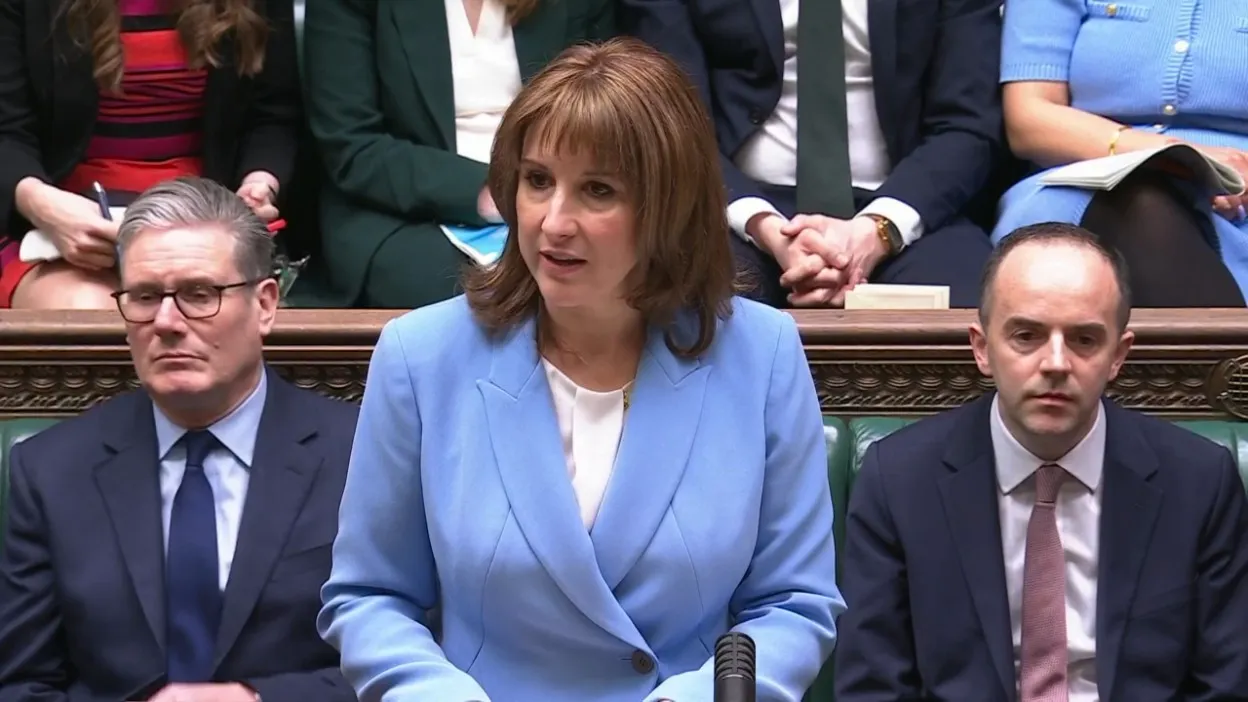
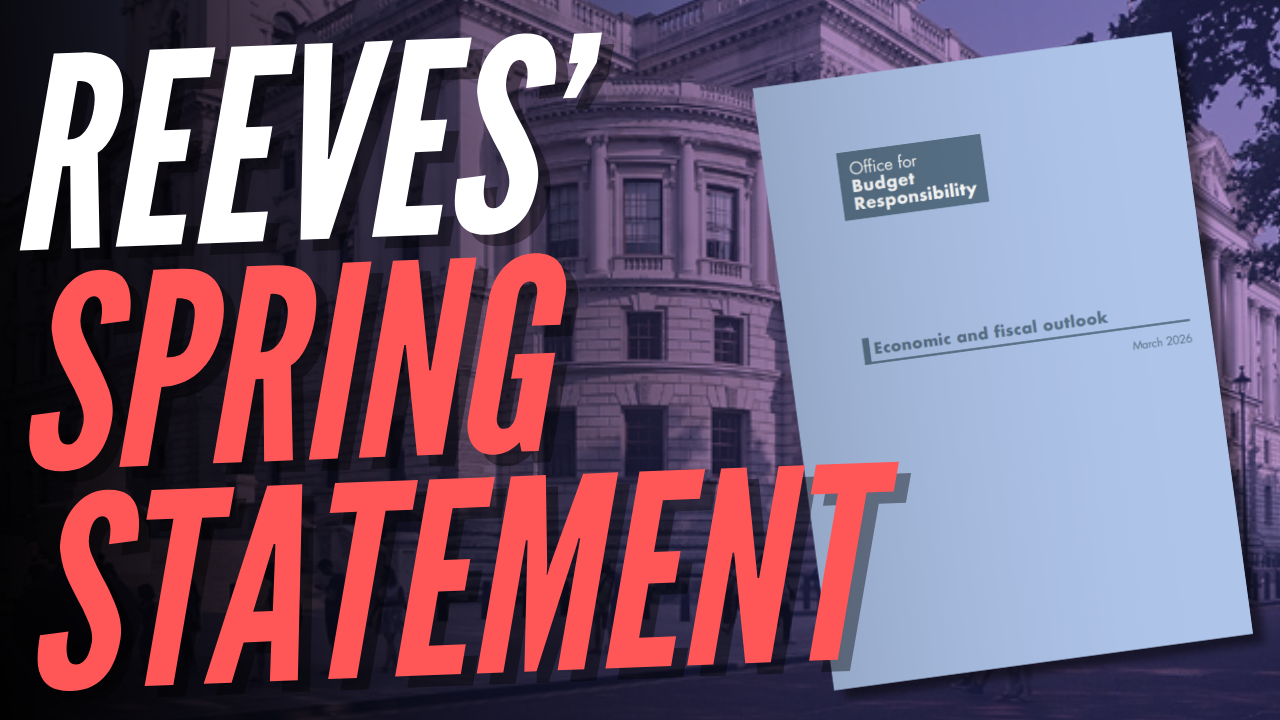
The Chancellor Rachel Reeves has delivered her Spring Statement. Here are a selection of responses from the Opposition and Think Tanks

Britain’s unemployment rate is forecast to climb to its highest level since the pandemic, according to the OBR, the budget watchdog, with their growth forecast cut for the coming year to just 1.1 per cent.

Shadow Chancellor Mel Stride attacked Reeves over her Spring Statement, warning that there is “no growth strategy at all”.

“Is that it? … What utter complacency. A Chancellor in denial. She speaks of stability. What planet is the Right Honourable lady on?… The Chancellor has the temerity to suggest that she is creating the conditions for renewed growth. She is rather like the dodgy estate agent standing in the crumbling building with the roof one, the windows gone, with the floor gone, and saying ‘just think of the potential’. But that potential has been undermined by the terrible state of our public finances.”

Shadow business secretary Andrew Griffith says:

Advertisement

“More gaslighting than Victorian London! The Chancellor is living in a fantasy world where unemployment isn’t rising and growth isn’t being downgraded.”

Joanna Marchong, head of communications and external affairs of the Adam Smith Institute, said:

“The Chancellor has convinced herself of economic stability based on deeply outdated forecasts. It is a Statement written by spin doctors, not economists. After last year’s Autumn Budget, Reeves needed to show that those sacrifices were not in vain and deliver growth. OBR forecasts, even though they don’t reflect current shocks, appear to show her rules are just about intact, but growth is lacklustre and the UK is far from credible. Markets are wobbling, and while the Spring Statement coincides with the unpredictable nature of war in the Middle East, this makes it even more vital that Reeves reforms the very anti-growth, anti-business measures she has introduced.”

Iain Mansfield, Director of Research at Policy Exchange, writes:

Advertisement

“Nothing in the Spring Statement alters the fact that Britain’s economy is in no state to weather another crisis. With growth downgraded, debt at around 95% of GDP and almost a million young people not in work or education, a prolonged spike in energy costs could push Britain to the brink. In a series of papers, Policy Exchange has set out practical measures to cut welfare, reform public sector pensions and eliminate wasteful spending across public services. Rather than continuing to grow the numbers – and wages – of those in the public sector, the Chancellor must end the self-inflicted wounds that are holding back the British economy: repealing the new Employment Rights Act, restarting drilling in the North Sea to reduce our dependence on imported oil and gas, and reversing the job-killing increase to Employer’s National Insurance.”

John O’Connell, chief executive of the TaxPayers’ Alliance, says:

“The idea that the chancellor has restored economic stability will sound like a sick joke to taxpayers suffering under this government. Try talking about pathetic growth to the publicans, mechanics, hairdressers and entrepreneurs who keep this country going. To the families struggling to put meals on the table for their children because their pay packets are so meagre, thanks to politicians and bureaucrats handing out their cash to people who refuse to work and many who have no right to be here. And for what? Everyone with a pair of eyes can see the services and infrastructure they pay for are crumbling before their eyes, and yet the chancellor has the cheek to tell them it’s all going marvellously. Enough’s enough – this country needs politicians who will put families and businesses first, and that means cutting spending and handing it back to taxpayers through big tax cuts.”

Howard Cox, Founder of FairFuelUK, writes:

Advertisement

“This was a missed economic growth opportunity for the Chancellor amid a new damaging oil crisis. With refineries, oil tankers, and the Straits of Hormuz being targeted, oil prices will continue to climb relentlessly. A barrel of crude is, at the time of writing, already over $84 (13:00 March 3rd). This will add 5-10p per litre in the next week or so. A sustained rise in Brent to $100 could add 10-20p per litre to petrol and diesel within weeks, based on historical patterns—similar to the surges seen in 2022 when oil hit $120 amid the Ukraine invasion. For over two decades, our clueless politicians have not planned to be self-sufficient in oil and gas production. They should be held to account for making the UK reliant on imports. FairFuelUK continues to call on Rachel Reeves to cut Fuel Duty, but at the very least keep it frozen for the lifetime of this parliament.”


Alan Mendoza, Executive Director of the Henry Jackson Society, says:

“The publication of the OBR’s latest forecasts alongside the Spring Statement makes the challenge unmistakable. Growth is weaker than expected, borrowing remains high and debt stays elevated. The OBR also warns of significant downside risks from global shocks – including conflict and energy volatility. In other words, geopolitical instability is now a direct fiscal risk to the UK. Yet there was no meaningful step change in defence readiness, no serious acceleration in rebuilding stockpiles and no clear plan to strengthen Britain’s defence industrial base. When growth is fragile and debt is high, strategic prioritisation becomes more important – not less. Investment in deterrence, supply chain resilience and sovereign capability is not discretionary spending; it is economic risk management.”

Advertisement

Source link

Continue Reading

Politics

Rachel Reeves Criticises Brexit Amid Rising Economic Concerns

Published

on

Rachel Reeves Criticises Brexit Amid Rising Economic Concerns

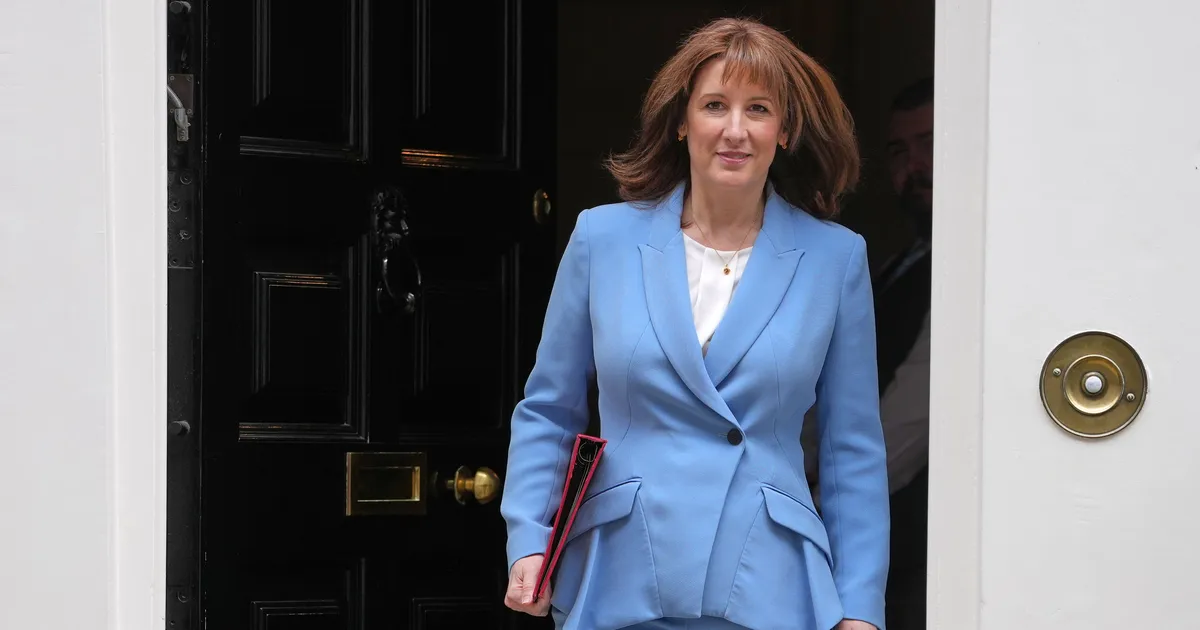
Rachel Reeves has launched her strongest attack yet on Brexit as she vowed to “break down trade barriers” with the European Union that are holding back the UK economy.

The chancellor hit out as she revealed the Office for Budget Responsibility (OBR) now believed the economic will grow more slowly this year than they previously thought.

At the time of the Budget last November, the OBR said the economy would grow by 1.4% in 2026.

But delivering the Spring Statement this afternoon, she said that had now been reduced to 1.1% in a major blow for the government.

Advertisement

The rate of unemployment is also expected to be higher than previously forecast this year, although inflation, borrowing and government debt will also be lower than the OBR previously thought.

Reeves said she will deliver a major speech later this month setting out how the government plans to boost economic growth.

She said: “I will set out three major choices that will determine the course of our economy into the future.

“To go further in strengthening our global relationships, breaking down trade barriers and deepening alliances with our European partners for a more secure and connected economy.”

Advertisement

Attacking the Tories, Reeves also pointed out that they had supported leaving the European Union.

She said: “They opposed economic responsibility and backed Liz Truss. Wrong. They opposed closer ties to Europe and backed Brexit. Wrong.

“They opposed cuts in child poverty and want to repeat austerity. Wrong values, wrong economics, they are just plain wrong.”

Her comments are significant as further evidence of Labour’s willingness to criticise Brexit, despite millions of the party’s traditional voters backing it in the 2016 referendum.

Advertisement

Dr Mike Galsworthy, chair of the pro-EU think-tank the European Movement UK, said: “This decade has seen the UK economy on life-support, with some of the worst growth in a century.

“There is an obvious treatment right on our doorstep, but the government has so far ignored it.

“Rachel Reeves’s comments today in her Spring Statement perhaps signal that they are finally ready to break down the barriers that Brexit imposed on UK businesses, and take real steps to align with our closest trading partner.”

He added: “The UK-EU reset cannot just be a summit photo, it must mean market access. The UK’s economic woes are the true cost of a bad deal. It is time to stop managing decline and start rebuilding a trading relationship that actually works for British industry.”

Advertisement

Source link

Continue Reading

Politics

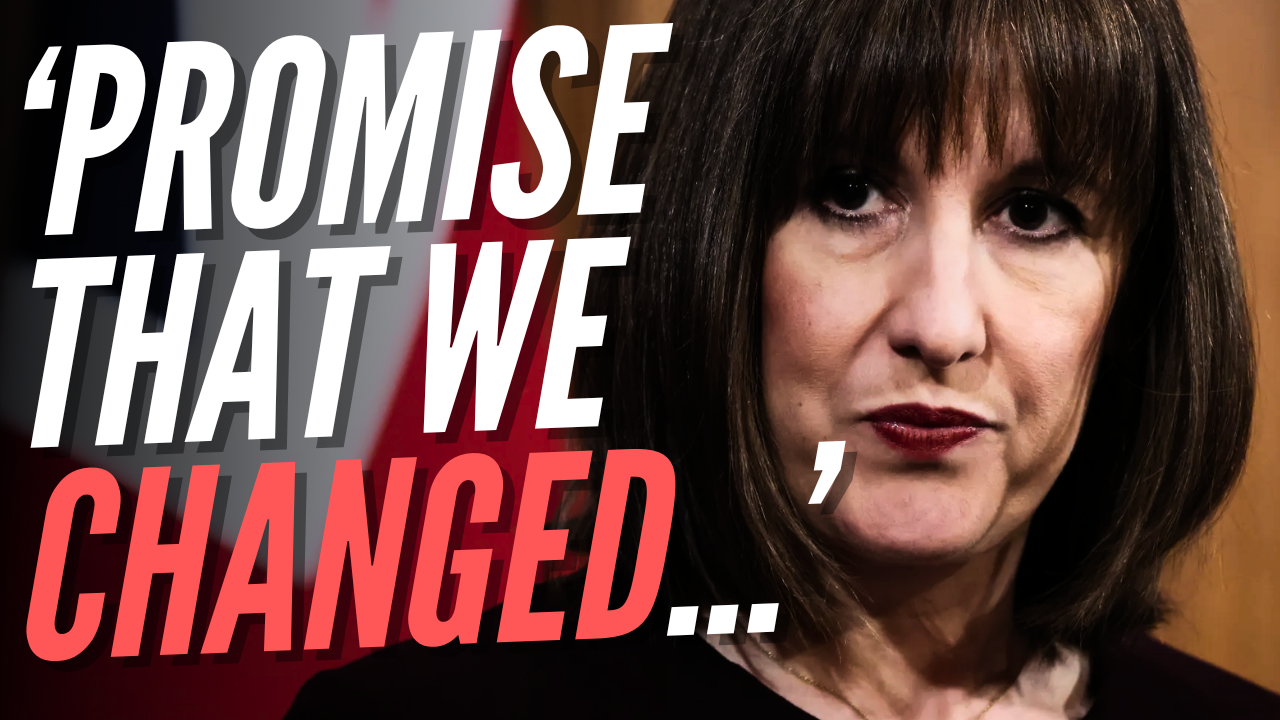
WATCH: Reeves Accidentally Celebrates “The Promise That We Changed”

Published

on

WATCH: Reeves Accidentally Celebrates “The Promise That We Changed”

No need to correct the record. Right the first time…

Source link

Continue Reading

Politics

IN FULL: OBR’s Spring Statement Forecasts

Published

on

IN FULL: OBR’s Spring Statement Forecasts

Growth downgraded…

Source link

Continue Reading

Politics

How To Add HuffPost UK To Your Google Preferred Sources

Published

on

It's very simple and can help you weed out the things you don't want to see.

Google has launched a very exciting new tool called preferred sources. It actually allows you to have control over what results you see when you’re searching for something! Finally, a way to weed out the sources that you don’t want to see. It turns out there’s a very easy way to start using it. We can show you just how to do it and why it is beneficial to you.

What is a preferred source?

Preferred sources are a set of websites that you can select in your Google settings. This helps Google prioritise what it shows you in search results. By adding us to your preferred sources, this should ensure that we appear more for you when you’re searching for something! It helps you to filter out the sources that you do not want to see.

Advertisement

Where do preferred sources now appear?

These sources will now appear in your top stories results when you search for something. For example, if you are searching for a specific news event, then you can now see your preferred sources in the top results. You can also access them from the your sources tab.

How do I add HuffPost UK to my preferred sources?

The easiest way is to follow this link, type in HuffPost UK, tick the box and then you’re good to go.

Advertisement
It's very simple and can help you weed out the things you don't want to see.
It’s very simple and can help you weed out the things you don’t want to see.

In order for this to work, you have to have a Google account and be logged in. Or, you’ll need to create one. Another way to do this is by searching something in Google. In the results page, you’ll see ‘top stories’ next to a starred icon card. Click the icon, then you can also add us that way.

Why should you update your preferred sources?

It makes Google work in your favour more. It’s a way for you to see the news from sources that actually matter to you. It means you have a search system that is catered to your needs.

For all the latest news, add us to your Google preferred stories.

Related

Advertisement

Source link

Continue Reading

Politics

Why Trump’s Iran Strikes Pose A Legal And Political Nightmare For Starmer

Published

on

Smoke rises following an Israeli airstrike in Dahiyeh, Beirut's southern suburbs, Lebanon, on Tuesday, March 3, 2026.

Donald Trump’s attempts to rope the UK into his attacks on Iran have left Keir Starmer trying to plot his way through a legal and political minefield.

The US and Israel launched joint strikes on Iran at the weekend, killing the country’s Supreme Leader Ayatollah Ali Khamenei.

Tehran retaliated by targeting US military bases in countries across the region and hitting back at Israel as the conflict escalates.

After rejecting an initial the US request, Starmer announced on Sunday night that he had granted America permission to use British military bases to target weapons storage facilities and missile launch sites.

Advertisement

The prime minister said: “The basis of our decision is the collective self-defence of longstanding friends and allies, and protecting British lives. This is in line with international law.”

However, any hope that honouring the US’s request would strength the “special relationship” was torpedoed on Monday when Trump told the Telegraph he was “very disappointed” in Starmer’s slow response.

An Iranian drone attack on the RAF’s Akrotiri base in Cyprus has also piled pressure on Starmer to green light a UK response.

The prime minister is walking a military and political tightrope as international tensions soar.

Advertisement

Fresh Tensions With Trump

The prime minister has been blasted for his hesitation over helping Trump in the UK.

Broadcaster Andrew Neil told Times Radio that the PM had handled this situation “very badly”, and accused him of putting international law ahead of the UK’s national interest.

“All America wanted from us was the use of the bases in Britain and Diego Garcia,” he said, saying that would have been “no skin off our nose”.

Advertisement

“The United States did not want us to go to war with them. They don’t need us,” Neil said. “The stupidity of that decision… allowing international lawyers of dubious providence to determine the national interest of the United Kingdom is a disaster for transatlantic relations.”

Similarly, former head of MI6 Sir Richard Dearlove told LBC: “We should have been clear cut from day one and supported the Americans and Israelis unequivocally.”

“We should have had the confidence and the moral conviction to know where our national security and defence interest best lay,” he said.

“The stupidity of that decision allowing international lawyers of a dubious provenance to determine the national interest of the United Kingdom is a disaster for transatlantic relations.”

The special relationship has reached a new low, says @AfNeil. pic.twitter.com/GzvdK8J7ag

Advertisement

— Times Radio (@TimesRadio) March 3, 2026

Domestic Frustrations

But Neil and Dearlove’s responses to the prime minister’s reactions do not appear to be supported by voters.

YouGov pollsters have found 50% of Brits oppose allowing the States to use RAF bases to attack Iran.

Advertisement

A further 45% of Brits say the government should neither praise nor condemn the US for the Iran attacks.

The PM told MPs on Monday that his government “does not believe in regime change from the skies”, a subtle dig at the Trump administration’s apparent strategy.

The Greens – which leapfrogged Labour into second place in a new opinion poll – is clear in its opposition to the US-Israeli military action.

Advertisement

The party has tabled an Armed Conflicts Requirements bill to stop the UK being dragged into war abroad.

The legislation is modelled on the prime minister’s own promises from when he was running to be Labour leader, highlighting Starmer’s own flip-flopping over the years.

The conflict could also have profound economic consequences, given the world’s reliance on Middle East oil.

If global oil and gas prices increase by 20%, British inflation could go up, stunting economic growth, which has been Labour’s main mission since getting into power.

Advertisement
Smoke rises following an Israeli airstrike in Dahiyeh, Beirut's southern suburbs, Lebanon, on Tuesday, March 3, 2026.
Smoke rises following an Israeli airstrike in Dahiyeh, Beirut’s southern suburbs, Lebanon, on Tuesday, March 3, 2026.

Legal Questions Loom

There could be further danger ahead for Starmer over his attempts to avoid falling into legal trouble over the strikes, too.

Dr Aurel Sari, international law expert from the University of Exeter, suggested Starmer’s legal defence “rests on a crucial distinction between offensive and defensive military action”.

“Iran, responding to the US-Israeli assault, exercised its own right of self-defence, a right it was entitled to invoke under the UN Charter given the scale of the attack on it,” he said.

“However, Iran’s strikes have not been limited to military targets, but also hit civilian infrastructure, including international airports, hotels and residential areas across the Gulf.”

Advertisement

Iran has launched missiles and drone attacks against targets in Israel, Bahrain, Qatar, the United Arab Emirates, Kuwait and Iraq since Saturday.

There are around 300,000 British citizens in the Gulf region.

Sari continued: “Because those attacks on civilian targets served no genuine defensive purpose, they exceeded what international law permits in self-defence.

“The government argues that this, together with Iranian drone strikes against RAF Akrotiri, entitles the UK to use force against Iran in the exercise of the right of individual and collective self-defence.”

Advertisement

However, Sari said this position is “highly precarious in practice”, because US military operations “do not neatly separate offensive from defensive activities”.

The same military bases operate both personnel and intelligence systems.

He warned: “If British bases inadvertently support the broader US-Israeli campaign to destroy Iran’s military and change its government, the UK’s carefully constructed legal position collapses.

“While the government has drawn a clear legal line, it may lack the ability to hold it.”

Advertisement

Occupying The Middle Ground In Europe

But as RUSI’s international security director, Neil Melvin, pointed out, the US’s attacks have exposed the limits of international law and a lack of enforcement – and Europe’s difficult position.

“Many have said Iran has been allowed to hide behind international law for many decades, and engage in terrorism against the United States and its allies,” Melvin said.

“So therefore it’s a slightly strange position that the Europeans have adopted – that they often seem to be upholding more the rights of regimes which are repressing their populations and conducting terrorism.

Advertisement

“So now we’ve seen the Europeans having to shift.”

He said Trump’s action has revealed inconsistency within Europe’s position, as Spain continues to call the strikes an illegal act, and have even asked the US forces to leave their bases in Spain.

But Germany “has come out quite firmly supporting President Trump while not necessarily agreeing with the legality of this”.

Meanwhile, Starmer is somewhere in between.

Advertisement

Melvin said: “The UK has been struggling to occupy a middle ground, so the longer this conflict goes on, the more these difficulties and contradictions in the European position, I think, are going to be exposed.”

The pressure is on for Starmer to hold onto the course he has set out on – no matter how convoluted it may be.

Source link

Advertisement
Continue Reading

Politics

Charlotte Salomon: The Conservatives are right to defend childhood online and draw the line at 16

Published

on

Charlotte Salomon: The Conservatives are right to defend childhood online and draw the line at 16

Charlotte Salomon has worked in political communications, and was a Conservative candidate at the 2024 Election she is now studying for the bar.

We have built a comforting story around the idea of “digital natives”.

Teenagers, we’re told, are born into technology. They understand it instinctively. They are quicker, sharper, more adaptable than the adults trying to supervise them. And so we reassure ourselves that parents can manage it at home, that the state should keep out, that young people will figure it out.

It is an attractive argument. Some say it’s a Conservative one. I disagree.

Advertisement

Being a digital native does not mean being digitally protected. It does not mean understanding how data is harvested, how algorithms profile behaviour, or how consent operates in law.

Fluency is not comprehension. And confidence is not consent.

That is where this debate really starts.

Kemi Badenoch is right to argue that under-16s should not be on social media. It is no surprise that public support is growing. But beneath the surface of this debate lies something deeper that we cannot afford to ignore. This is not just about screen time, culture, or whether teenagers spend too many hours indoors. It is about data. It is about law. And it is about whether we are prepared to keep pretending that children are giving “informed consent” to systems they do not, and cannot, truly understand.

Advertisement

When Parliament set the digital age of consent at 13 under the Data Protection Act 2018, it chose the lowest age permitted under Article 8 of the UK GDPR. Thirteen. From that birthday onwards, a child can legally consent to the processing of their personal data by online services without parental involvement.

At the time, this was presented as pragmatic. Children were already online. The law needed to reflect reality. But the digital world of 2018 is not the digital world of 2026. And even then, we were asking the wrong question.

Under UK GDPR, consent must be “freely given, specific, informed and unambiguous.” That is not a soft standard. It requires an individual to understand what data is collected, how it is used, who it is shared with, and what rights they retain.

Now ask yourself honestly: when was the last time you read a privacy policy in full? (No judgment). Consent fatigue is real, and all of us have succumbed to it at one time or another.

Advertisement

Now picture a 13-year-old inside an ecosystem engineered around infinite scroll, dopamine spikes, dark patterns, loot boxes, manufactured FOMO and relentless peer validation.

If we are going to talk seriously about social media and the online world, we have to understand the wider architecture of data-driven design. These platforms are not neutral public squares. They are commercial systems engineered to maximise engagement, harvest behavioural data and refine algorithmic targeting.

Children do not just use these platforms. They are manipulated to generate value for them.

They provide data they knowingly share: names, photos, messages. They emit data traces they never see: location metadata, device fingerprints, patterns of behaviour. And most significantly, they become the subject of inferred data created through algorithmic profiling. That is where the real power lies. Platforms do not simply observe behaviour. They model it. They predict it. They shape it. They monetize it.

Advertisement

A 13-year-old cannot meaningfully assess what it means for an AI system to construct a long-term psychological profile about them, one that influences what content they see, which products they are shown, which insecurities are targeted and which emotional triggers are most effective.

That is not informed consent. It is behavioural modelling at scale, wrapped in a tick box.

And here is where we find a deeper inconsistency in our laws.

Under contract law, minors lack full capacity. We recognise that a child should not be bound into complex commercial arrangements because they may not understand the implications.

Advertisement

In medical law, we go further still. We do not rely purely on age. We assess maturity under the principle of Gillick competence. We test whether there is real understanding.

Yet online, we allow a 13-year-old to bind themselves to opaque data processing agreements longer than most mortgage documents.

Why is digital autonomy treated as less serious than medical autonomy?

The uncomfortable answer is economic. Data is profitable. Children are valuable markets. Capture attention early and you shape habits that can last a lifetime. And the most dangerous part is that it is largely invisible. Data extraction does not look like harm. Algorithms do not arrive with warning labels. There is no obvious moment of damage, no visible bruise.

Advertisement

But after a while, the consequences begin to surface. Rising anxiety. Broken sleep. Thinning attention spans. Children who feel constantly watched, compared and judged. The NHS has opened clinics for gaming disorders. Schools report collapsing concentration. Parents describe children who simply cannot disengage.

We are getting something wrong.

It is to the Conservatives’ credit that this is now being confronted directly. Kemi Badenoch’s position recognises something simple and profoundly conservative: childhood is a protected category in British law. We draw lines around it. We set boundaries. We accept that some freedoms require maturity. So, where is everyone else?

Yes, some will call this paternalistic. But we are paternalistic in every serious area of childhood. We regulate. We set age limits. We draw lines. We do it because we understand developmental reality. We should do it here because we understand technological reality too.

Advertisement

The Conservative pledge to ban social media for under-16s is not radical. It is responsible. It is not nanny state politics. It is proportionate, measured, and in step with international peers. And it restores coherence to a legal framework that currently rests on a polite fiction.

A serious country protects its children. Not just in the physical world, but in the digital one too.

If we cannot draw a boundary around childhood online, then we have quietly decided that profit matters more than protecting children.

That is not a conservative position. And it is not one we should accept.

Advertisement

Source link

Continue Reading

Politics

DWP jobs fair presents warmongering to out of work youth

Published

on

DWP jobs fair presents warmongering to out of work youth

The Department for Work and Pensions (DWP) held its first Youth Guarantee jobs fair in Blackpool. But as always with the DWP, it’s not all it seems – as the fair was packed with military and weapons manufacturers.

DWP Youth Guarantee plows on

As the Canary has previously reported, The Youth Guarantee is the department’s scheme to force young people into work. The DWP claims this is a supportive process, but it’s clear it’s to kick people off Universal Credit into low-paid jobs.

The DWP boasted that

Thousands of young people were brought together with employers today for the first ever jobs fair for the Youth Guarantee

The fair brought 94 employers to Blackpool Winter Gardens, however the first red flag is the type of employment on offer. While there were full time jobs, the DWP highlights that many were offering  “apprenticeships, traineeships, work experience placements.” Translation: low or below minimum wage pay.

Advertisement

We also have to look at the kind of employers that the DWP were pushing on young people. While there were the Blackpool staples of the Pleasure Beach and Leyland Trucks, some were not as wholesome.

Heavy military and weapons presence

It’s almost expected that there’ll be a heavy military presence at these things by now. So naturally, the Royal Air Force and the UK Armed Forces were there to seduce working-class kids with the promise of a stable income, a roof over their heads and “duty”.

Also present were the police force, but this is the rare occasion where the police being somewhere was a good thing. It was reported by local press that the police apprehended a local man who tried to attack Blackpool South MP Chris Webb.

Even more worryingly, there were a number of companies there that have links to defence and the arms trade at the fair.

Advertisement

Arms giant BAE Systems was present at the fair. Last year they celebrated record profits of blood money from the Middle East and beyond.

Also in attendance was Composites UK, a trade association for

companies working in the UK’s fibre-reinforced polymer composite supply chain

However the trade body includes many composite suppliers to Israel’s deadly Elbit Systems. Some of whom were recruiting at the fair, Teledyne and Brookehouse Aerospace. Both also supply to arms companies Leonardo, BAE, and Raytheon.

These weren’t the only dangerous recruiters. The fair also included engineering giant Babcock International, “defence manufacturer” the WEC Group and CNC Robotics. DWP chief Pat McFadden can be seen high-fiving one of their creepy little robots at the start of the DWP’s propaganda video about the fair. The company also supplies robotics to the defence industry.

Advertisement

Also in attendance were Safran Nacelles, a subsidiary of Safran Group. They’re a major French aerospace, defence, and security company. Make UK trade association were also there, who have a defence sector offshoot. It’s “strategic partners” are a who’s who of the arms industry, with many links to Israel’s genocide including BAE, Lockheed Martin, Thales, and Pearson Engineering.

The DWP is forcing our kids into war

After the event, McFadden headed up a round-table with 16 employers from the manufacturing industry. The DWP says he “secured support” for the Youth Guarantee from these “major players”.

However of the 16 employers, 7 of them had links to war. Babcock International, Teledyne, Brookhouse Aerospace, Safran Nacelles, Make UK, WEC Group and CNC Robotics supplies were all part of the discussion.

The DWP talks a lot about wanting to “support” young people into work. However, it’s clear that their only alternative to low-paid, low-skilled work is to become a cog in a machine for war mongers and profiteers. That or be used as cannon fodder in rich men’s wars.

Advertisement

It might’ve been the Tories that wanted to bring back National Service, but it’s Labour who are coercing young people into the arms and military complex.

At least the Tories were upfront about wanting to force our kids to die in wars.

Featured image via the Canary

Advertisement

Source link

Continue Reading

Trending

Copyright © 2025