

Business
Iranian Model Hoda Niku in South Korea Condemns Regime Tyranny Amid U.S. Strikes on Iran


Hoda Niku, an Iranian-born model and influencer based in South Korea, has strongly criticized her homeland’s regime as tyrannical and violent in the wake of recent U.S. and Israeli military strikes on Iran, questioning the government’s nuclear intentions and highlighting its history of repression against its own people.

Niku, who placed third in the 2018 Miss Iran pageant and has built a significant following in Korea as a model, TV personality, Pilates instructor and social media creator with over 530,000 Instagram followers (@hoda_niku), posted her remarks on Instagram on March 3, 2026. Her comments came days after the joint U.S.-Israeli operation “Epic Fury” targeted Iranian military sites, government facilities and leadership, reportedly killing Supreme Leader Ayatollah Ali Khamenei and causing hundreds of casualties.
In her statement, Niku addressed questions from followers about Iranian reactions to the attacks. “People ask me why the Iranian people seem happy about the war and the bombing of our own country,” she wrote, according to translations from Korean media outlets including Chosun Biz and Maeil Business Newspaper. She countered that many Iranians view the regime — not the nation itself — as the true adversary.
Niku pointed to the government’s brutal crackdowns, referencing reports of around 40,000 deaths in recent protests and suppressions. “If a regime has killed 40,000 of its own people, how can we believe it would use nuclear weapons peacefully?” she asked rhetorically, challenging claims that Iran’s nuclear program serves defensive or civilian purposes. She described the regime’s actions as tyrannical, emphasizing its oppression of citizens seeking freedom and democracy.
The post aligns with Niku’s longstanding activism. In January 2026, she posted a viral video titled “For Iran’s Freedom,” speaking in Korean to urge South Koreans and the international community to support anti-government protests in Iran amid deadly crackdowns and internet blackouts. She condemned what she called a “massacre” of demonstrators and appealed for global attention, saying even symbolic support strengthens those fighting for change.
Her latest criticism reflects a broader sentiment among some in the Iranian diaspora. Reports from NPR and other outlets indicate mixed reactions among Iranians abroad and inside the country, with some anti-regime voices expressing relief or cautious hope that strikes could weaken the government, despite civilian suffering. In Los Angeles, home to a large Iranian community, some celebrated the attacks as long-overdue retaliation for decades of repression, while others expressed sorrow over civilian deaths, including reports of a girls’ school hit during the strikes.
The U.S.-Israeli campaign, launched late February 2026 after stalled nuclear talks, has escalated into ongoing exchanges. Iran retaliated with missile and drone strikes on U.S. interests and allies across the Middle East, including attacks on facilities in Saudi Arabia, Qatar and Israel. Oil prices surged, airspace closed and global markets reacted with volatility.
In South Korea, where Niku has lived and worked since studying there, her voice carries particular resonance. She has appeared on programs like KBS’s “My Neighbor, Charles” and built a career in modeling, acting and wellness content. Her bilingual posts — often in Korean and Persian — bridge her two homes, allowing her to reach diverse audiences.
Korean media amplified her March 3 statement. Chosun Biz headlined its coverage “Miss Iran model in South Korea questions Iran regime’s nuclear intent,” noting her query about peaceful nuclear use given the regime’s domestic violence record. Asia Economic and Maeil Kyungje reported her direct criticism of the regime’s oppressive nature, with one outlet quoting her reflection: “Why would we be happy about our own country being bombed?” — underscoring that joy, if present, targets the government, not fellow citizens.
Niku’s activism fits a pattern among Iranian expatriates opposing the Islamic Republic. She has consistently condemned crackdowns, including those following mass protests, and advocated for freedom and democracy. Her platform in Korea — a country with its own history of authoritarian rule transitioning to democracy — adds symbolic weight to her calls.
The Iranian Embassy in Seoul condemned the U.S.-Israeli strikes as “war crimes” and “blatant aggression” on March 3, urging international accountability. North Korea also denounced the attacks as violations of sovereignty, aligning with anti-U.S. rhetoric from allied states.
As the conflict continues into its second week, with Trump administration officials signaling prolonged operations to neutralize threats, voices like Niku’s highlight internal Iranian divisions. While regime supporters decry foreign intervention, dissidents and exiles argue it exposes the government’s vulnerabilities.
Niku has not indicated plans for further public actions but continues posting wellness and lifestyle content alongside occasional advocacy. Her March 3 message, shared amid escalating regional violence, underscores ongoing debates over Iran’s future and the role of external pressure in regime change discussions.
For many Iranians abroad, including those in Seoul’s growing expatriate community, her words serve as a reminder that opposition to the regime persists — even as bombs fall and the world watches.

China factory activity contracts further in Feb, PMI shows

Goldman CEO says markets may take ’couple of weeks’ to digest Iran war impacts

For many years, internal material handling was considered a secondary function, necessary to feed lines, clear areas and move materials between departments.
This is changing. Rising operational complexity and higher volumes are transforming internal flows into a lever for continuity, labor sustainability and reduced congestion within plants. SKU proliferation, omnichannel strategies, flexible production schedules and multi-shift operations are increasing pressure on material movements. Disruptions in these flows can slow production, increase Work-in-Progress (WIP) and create bottlenecks in critical areas. Internal logistics, once invisible, is now treated as part of the industrial system.
A more complex operating environment
Manufacturing is no longer based solely on homogeneous batches and linear sequences. Lines are supplied more frequently and with product variants. The result is a higher density of movements on wheels (carts, containers and dedicated carriers) that must reach the line regularly to sustain continuity. At the same time, several sectors are reducing the use of heavy vehicles near production. In automotive, pharma, food and packaging, forklifts are being replaced with lighter and more ergonomic solutions. Drivers include safety, congestion, space constraints and costs related to licensing, insurance and maintenance.
The workforce variable
Labor availability is another structural element. Repetitive manual handling requires physical force, increases injury risk and is difficult to sustain over three shifts. Improving ergonomics is no longer a collateral benefit but a way to protect uptime, reduce turnover and retain qualified personnel.
Not only automation: the gradual transition
The debate around automation in internal logistics is often framed as a choice between manual handling and fully autonomous systems such as AGVs, AMRs or industrial robots. Adoption, however, tends to be more incremental. Many plants are not yet prepared for full automation due to investment levels, layout implications, integration requirements and the rigidity associated with fixed automated flows. This is creating space for an intermediate category: operator-assist electric solutions that remove physical effort, support flow continuity and retain operator flexibility. These systems require no infrastructure, no software integration and no plant modifications, and typically deliver a faster ROI than full automation.
Across sectors, three priorities are shaping decisions on internal handling upgrades:
- Labor sustainability → reducing strain, injuries and turnover
- Operational continuity → regular line feeding, including multi-shift
- Flexibility → avoiding rigid systems that limit layouts and product mix
There is also growing interest in reducing heavy vehicles in high-density human areas for safety and space configuration reasons.
Renova’s proposal in the operator-assist segment
In this context, operator-assist technologies represent a strategic intermediate layer between manual processes and autonomous systems. Renova has developed a dedicated material handling range, including cart movers and electric tow tugs, designed to prioritize ergonomics, ensure continuity across multiple shifts, and provide high operational flexibility.
A range designed for operational versatility
Renova’s new material handling line covers a wide range of applications, from line-side movements in tight spaces to heavy-duty movements in aerospace, marine and waste-handling environments. With capacity to move wheeled loads up to 6 tons, these systems can be deployed in sectors that have significantly increased the density of internal movements over recent years. Globally, industries such as pharma, food & beverage, aerospace and industrial logistics are growing at annual rates of 5–7%, driven by higher volumes, SKU expansion and multi-shift production. In Europe, this trend is reinforced by the progressive reduction of forklifts near production and the rise of operator-assist solutions as a stable intermediate category.
The range includes Cart Movers and Electric Tow Tugs.The MCE 400/500 cart mover models handle up to 5-ton carts, while the MTE electric tow tug series covers 1.5 to 6-ton applications. Compact models such as MTE 1000/1500 are suited for line-side, end-of-line and machine feeding; MTE 100W is optimized for two-wheel carts often used in the textile industry; and MTE 3500, MTE 6000 and MTE 6000S address heavier towing tasks typical of waste handling, airport and marine sectors.
Integrated with ergonomic handles, the heavy-duty design enables precise maneuverability both indoors and outdoors, including irregular surfaces, tight layouts and non-linear paths. The systems easily overcome obstacles while maintaining full control and operational safety, with compliance to ISO 11228. The Plug&Play lithium battery system supports multi-shift operations without charging downtime, and no operator license is required, reducing training costs and expanding workforce eligibility. Both the device and the battery system come with a two-year warranty, ensuring operational continuity and lower lifecycle costs. For sectors with specific requirements, including chemical and pharmaceutical, ATEX configurations are available.
Balancing efficiency, continuity and flexibility
Ultimately, the shift in internal handling is being driven as much by economics as by ergonomics. Plants are seeking continuity with fewer forklift interventions, shorter integration cycles and a lower total cost of ownership, all while facing tighter layouts and more demanding labor models. Operator-assist systems respond to these constraints by offering a scalable upgrade path that does not require infrastructure, software integration or specialized licensing.
If warehouse and fulfilment operations have already been heavily automated, the open question for the coming decade is how far internal flows can evolve without compromising flexibility. Renova’s new Material Handling range moves precisely in this direction, enabling a more balanced distribution of tasks between operators, equipment and automated systems, and opening the discussion on what the next stage of internal handling might look like inside modern plants.
Sources:
- 2025 Warehouse Automation & Order Fulfillment Study – Peerless Research Group
- 2025 Warehouse Automation Industry Outlook- Modern Materials Handling
- Warehouse Automation Market Report 2025–2029-ResearchAndMarkets.com
- OSHA 2023 Work-Related Injury & Illness Summary (PDF)
- OSHA Warehousing Hazards & Safety Guidance
Goldie Ghamari, an Iranian-born human rights activist, praises President Trump’s decisiveness, equating the regime’s fall to Hitler on ‘The Evening Edit.’
Drone strikes damaged Amazon Web Services data centers in the Middle East, disrupting cloud operations and prompting the company to urge customers to move critical workloads out of the region.
AWS confirmed that two of its data center facilities in the United Arab Emirates were directly struck, while a separate strike near a site in Bahrain also caused infrastructure damage. The attacks disrupted power systems and caused structural damage, impairing two of the three data center sites that make up AWS’s UAE cloud region.
As a result, businesses that rely on AWS to run their websites, store data and process transactions experienced more error rates, slower performance and service interruptions.
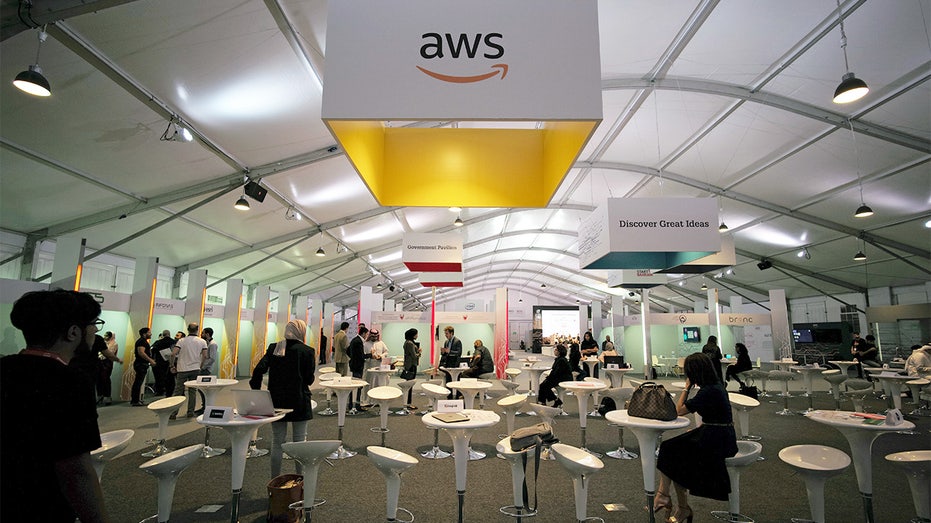
AWS confirmed that two of its data center facilities in the United Arab Emirates were directly struck and another site in Bahrain also sustained damage. (Hamad I Mohammed/Reuters)
AWS said full recovery will depend in part on repairing physical damage and restoring power and connectivity – a process that could take at least a day and potentially longer.
OIL PRICES SURGE AFTER STRIKES KILL IRAN’S SUPREME LEADER, TANKERS HIT NEAR STRAIT OF HORMUZ
The company has urged its customers in the Middle East to activate disaster recovery plans, restore data from backups in other regions and redirect traffic away from the affected facilities. Customers were advised to consider shifting operations to AWS regions in the United States, Europe or Asia-Pacific.
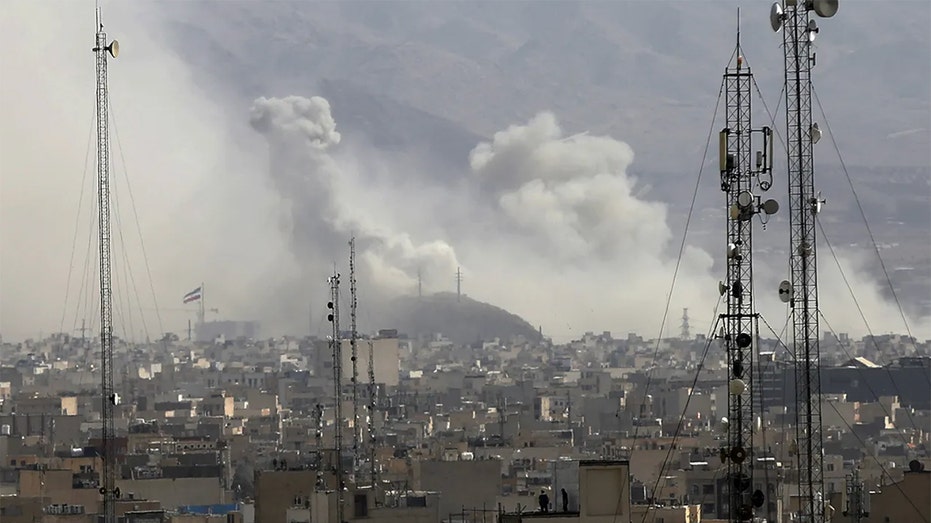
The damage comes amid unrest after Operation Epic Fury. (Fatemeh Bahrami/Anadolu via Getty Images)
While cloud providers are designed to withstand the loss of a single data center, simultaneous damage to multiple facilities has strained built-in backup systems.
AWS initially described the situation as a localized power issue before later confirming that drone strikes had caused physical damage. The company said it is working with local authorities and prioritizing employee safety as repairs continue.
The company did not say who was responsible for the strikes, but it came amid the ongoing conflict with Iran that has spilled over into the wider region, throwing businesses and economies into uncertainty.
CLICK HERE TO GET FOX BUSINESS ON THE GO
When reached for additional details, Amazon referred FOX Business to its AWS Health Dashboard.

The search for Nancy Guthrie, the 84-year-old mother of NBC “Today” show co-host Savannah Guthrie, has entered its fifth week with no major breakthroughs reported, though authorities insist the case is far from cold as investigators pursue viable leads, forensic analysis and a flood of public tips spurred by a $1 million family reward.

Nancy Guthrie was last seen at her home in the Tucson area on Jan. 31, 2026, and reported missing the following day after failing to appear at a church event. Authorities, including the Pima County Sheriff’s Department and the FBI, believe she was taken against her will, classifying the incident as a suspected abduction or kidnapping. Surveillance footage released early in the investigation shows a masked individual at her doorstep, and gloves found nearby contained unknown male DNA now being processed for database matching.
As of March 3, 2026, the investigation remains active, with detectives reviewing surveillance video, timeline inconsistencies and physical evidence. The FBI has confirmed ongoing forensic testing and tip evaluation, emphasizing that verified information continues to drive progress. A retired NYPD detective described recent footage as “a good lead — better than we’ve had so far,” highlighting its potential value despite the passage of time.
On March 2, marking Day 30 since the disappearance, Savannah Guthrie and her sister Annie made their first public visit to their mother’s home since the incident began. Aerial footage captured the siblings laying flowers and a card at a growing memorial of notes, candles and tributes outside the property, which has been returned to the family with “No Trespassing” signs posted. Savannah shared images on social media, writing, “We feel the love. Please don’t stop praying and hoping with us.”
The emotional appearance followed Savannah’s Friday Instagram post reiterating the family’s $1 million reward — announced Feb. 23 — which can be paid in cash for information leading to Nancy’s recovery. The offer has generated over 1,500 new tips, officials said, reinvigorating the lead pool after an initial surge.
Savannah has been vocal throughout, releasing gut-wrenching videos pleading for help. In one, she acknowledged the possibility that her mother “may already be gone,” yet urged the public to come forward. “We are begging you to please come forward now,” she said in late February remarks.
The case has drawn intense national and international attention, with communities near Tucson holding vigils to mark the one-month milestone. Messages of hope and support have proliferated at the memorial, reflecting widespread sympathy for the Guthrie family.
Investigative shifts have fueled speculation. The FBI relocated much of its command post from Tucson to Phoenix last week, and the Pima County Sheriff’s Department reassigned some officers, focusing resources on dedicated missing-persons detectives. Experts caution these moves indicate strategic adjustments rather than abandonment, with one former agent calling federal prosecutors’ presence at the home “great news” for potential charges.
A man named Luke Daley and his mother were briefly detained Feb. 13 under a federal search warrant but released without charges. Daley later spoke publicly, stating he has no information about the case.
Sheriff Chris Nanos cleared all Guthrie family members, including Savannah and her siblings, as suspects early on. No arrests have been made, and no suspect has been publicly identified.
The disappearance’s perplexing nature — an elderly woman vanishing from her home with limited immediate clues — has perplexed investigators and captivated media. Coverage spans outlets from CNN and The New York Times to local Arizona stations, with live updates tracking Day 30 developments.
Nancy Guthrie, a private figure before this ordeal, gained broader recognition through her daughter’s platform. Some reports note her Christian faith and family-oriented life in retirement, though details remain sparse amid the ongoing probe.
Public reaction mixes hope with concern over the case potentially cooling. Experts stress it’s too early to declare it cold, citing active leads and the reward’s impact. “They still have viable leads that need to be followed,” one analyst said, pointing to forensic opportunities and public engagement.
As the search continues, authorities urge anyone with information — no matter how small — to contact the Pima County Sheriff’s tip line or the FBI. The family maintains hope, bolstered by community support and the outpouring at the memorial.
The ordeal underscores the anguish of prolonged uncertainty for loved ones. For the Guthries, each day without resolution heightens calls for closure. Investigators vow to persist, driven by evidence, tips and the family’s unwavering pleas.


Seeking Alpha’s transcripts team is responsible for the development of all of our transcript-related projects. We currently publish thousands of quarterly earnings calls per quarter on our site and are continuing to grow and expand our coverage. The purpose of this profile is to allow us to share with our readers new transcript-related developments. Thanks, SA Transcripts Team

Cathie Wood’s ARK sells Roku stock, buys Alibaba and Biotech
Business
Is Abu Dhabi Airport Open? International Airport Partially Reopens Amid Ongoing Middle East Conflict
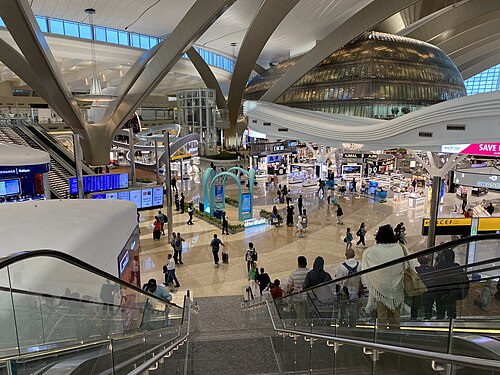
ABU DHABI — Zayed International Airport (AUH), the primary hub for Abu Dhabi and home to Etihad Airways, has partially resumed operations as of March 2, 2026, following a temporary closure triggered by escalating military conflict in the region involving U.S., Israeli and Iranian forces.
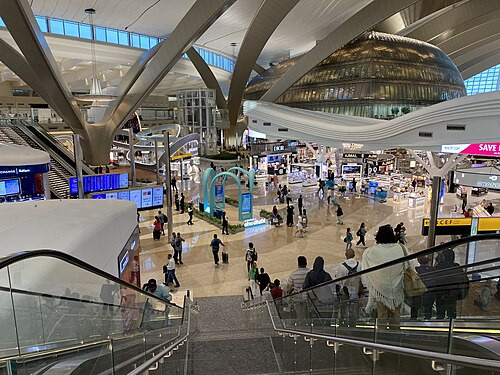
The airport, also known as Abu Dhabi International Airport, reopened in a limited capacity starting Monday evening, allowing select exceptional, repatriation, cargo and repositioning flights to operate under strict coordination with UAE authorities and airlines. However, the vast majority of scheduled commercial flights remain suspended, with Etihad Airways extending its halt on regular passenger services until 2:00 p.m. UAE time on Wednesday, March 4 (some reports indicate Thursday, March 5, reflecting fluid updates).
The partial resumption follows a full airspace closure imposed by the UAE General Civil Aviation Authority (GCAA) on March 1 amid Iranian missile and drone retaliatory strikes in response to prior U.S.-Israeli actions. Debris from intercepted projectiles reportedly caused minor damage at AUH and nearby sites, including an embassy complex, though no major structural impacts or casualties were detailed at the airport itself.
Abu Dhabi Airports, the operator, confirmed the phased reopening in statements on its website and social media, emphasizing that “passengers are advised not to travel to the airport unless they hold a confirmed ticket and have been explicitly advised by their airline to do so.” Access remains restricted to confirmed travelers only, with safety as the top priority. The official Zayed International Airport site displays prominent warnings urging travelers to check airline updates before heading to the facility.
Etihad Airways, the dominant carrier at AUH, reiterated that all scheduled commercial flights to and from Abu Dhabi are suspended through at least mid-afternoon Wednesday. The airline has operated a limited number of repatriation flights since March 2 to assist stranded passengers, with destinations including Paris, Amsterdam, Mumbai, Cairo and London Heathrow. At least 15 such flights departed Monday, per flight-tracking data, but normal schedules are not expected to resume imminently.
“Some repositioning, cargo and repatriation flights may operate in coordination with UAE authorities and subject to strict operational and safety approvals,” Etihad stated. The carrier has issued free rebooking options for affected passengers with tickets issued before February 28 for travel up to March 7, allowing changes to Etihad-operated flights through March 18.
Broader UAE aviation remains heavily disrupted. Neighboring Dubai International (DXB) and other regional hubs like Doha and Bahrain have seen similar partial resumptions, but with more than 90% of scheduled flights canceled in recent days, according to FlightAware and Cirium data. Over 12,300 cancellations across seven major Middle East airports have been recorded since late February, stranding hundreds of thousands of travelers globally.
The conflict’s impact on aviation stems from closed or restricted airspace over Iran, Iraq, Syria and parts of the Gulf, forcing rerouting and heightening risks from potential debris or miscalculation. Defense systems intercepted multiple threats over UAE territory, contributing to the initial shutdown. Flightradar24 and other trackers show sparse activity at AUH on March 3, with most boards listing cancellations.
Travelers face significant challenges. Airlines including Emirates (primarily Dubai-based) and flydubai have resumed limited services for priority repatriations, but advise against heading to airports without direct confirmation. Government advisories from various countries urge citizens to monitor alerts, with some issuing heightened warnings for the region.
The disruption ranks among the most severe for global travel since the COVID-19 pandemic, rivaling past events like the 2010 Eyjafjallajökull eruption or 2014 MH17 incident in scope. Major carriers beyond the Gulf — such as British Airways, Aegean and others — have canceled or suspended services to affected destinations through early March.
Abu Dhabi Airports and the GCAA continue coordinating with international bodies to assess when fuller operations can resume. No specific timeline for normal commercial service has been provided, with decisions tied to ongoing security evaluations and airspace clearances.
Passengers with upcoming travel to or through AUH should:
– Check flight status directly on airline websites or apps (etihad.com for Etihad).
– Contact carriers for rebooking, refunds or accommodation under passenger rights.
– Avoid traveling to the airport without explicit airline approval to prevent congestion and security issues.
– Monitor official sources like zayedinternationalairport.ae or adairports.ae for updates.
As the situation evolves rapidly amid geopolitical developments, aviation experts stress patience and flexibility. The partial reopening offers limited relief for stranded individuals, but full normalcy at Abu Dhabi International Airport depends on de-escalation and restored airspace safety.
For real-time flight information, consult tools like Flightradar24 or airline hotlines. The airport’s focus remains on safe, controlled operations during this unprecedented period.
Business
Dow Jones Futures Plunge Over 700 Points as Middle East Conflict Escalates, Oil Prices Surge

NEW YORK — Dow Jones Industrial Average futures tumbled sharply in pre-market trading on March 3, 2026, with contracts dropping as much as 772 points or 1.6%, signaling a potential open well below 49,000 as geopolitical tensions in the Middle East intensified and oil prices continued their dramatic rally.
Futures tied to the blue-chip index hovered around 48,200-48,300 levels in early Asian and European sessions before deepening losses toward the U.S. open, reflecting renewed risk aversion amid fears that the U.S.-Israel strikes on Iran could prolong regional instability and disrupt global energy supplies. The March 2026 E-mini Dow contract traded near 48,265, down about 680 points or 1.39% in one snapshot, with intraday lows dipping toward 47,950 before partial recoveries.

The sell-off erased much of Monday’s modest equity rebound, when the Dow Jones Industrial Average closed down just 0.15% at around 48,978, while the S&P 500 and Nasdaq eked out small gains. On Tuesday, broader futures followed suit: S&P 500 contracts fell 1.5-1.8% near 6,790-6,800, and Nasdaq 100 futures slid 2.0-2.3%, underscoring pressure on growth stocks sensitive to higher borrowing costs and energy inflation.
The primary driver remained the escalating conflict, now in its fourth day. U.S. and Israeli forces conducted fresh airstrikes on Iranian targets overnight, prompting Tehran to vow attacks on any vessels attempting to transit the Strait of Hormuz — the chokepoint for roughly 20% of global oil flows. Iranian state media claimed the strait was effectively closed, with threats to target ships, sending shockwaves through commodity markets.
Brent crude, the global benchmark, surged more than 6-9% in recent sessions, trading near $79-$83 per barrel — levels not seen since mid-2024 or earlier highs. West Texas Intermediate climbed toward $72-$73, up around 8-9% intraday at peaks. The spike stemmed from production halts by some Middle Eastern producers, halted tanker traffic and fears of sustained supply disruptions, even as Iran ranks as OPEC’s fourth-largest producer.
“This is a classic flight to safety amid uncertainty,” one strategist noted in a client update. “Oil’s rapid ascent is reigniting inflation concerns just as markets were pricing in potential Fed easing. If the conflict drags on, it could force higher-for-longer rates and crimp economic growth.”
Treasury yields rose in tandem, with the 10-year note climbing above 4% in spots, reflecting bets on persistent price pressures. Gold futures extended gains as a hedge, while the U.S. dollar strengthened against major currencies.
Energy and defense sectors offered relative bright spots. Stocks like Exxon Mobil, Northrop Grumman and Palantir Technologies saw pre-market strength in prior sessions, with gains of 1-6% amid bets on elevated oil demand and increased military spending. However, broader equities faced headwinds, particularly in consumer discretionary and tech, where higher fuel costs erode margins and valuations compress.
The Dow futures retreat follows a volatile stretch for the index. Year-to-date performance has been mixed, with the blue chips showing resilience earlier in 2026 through rotation into value and cyclical names. Yet the latest catalyst has accelerated a defensive posture, with the VIX fear gauge elevated and volatility spiking across asset classes.
Analysts cautioned that while the immediate reaction appears measured compared to past geopolitical shocks, prolonged escalation poses risks. Tehran’s threats to the Strait of Hormuz could sustain oil above $80, complicating the soft-landing narrative that supported stocks through much of the prior year. Federal Reserve policymakers, already navigating hotter inflation data, may face added pressure to delay rate cuts.
Investors awaited further developments, including any diplomatic breakthroughs or additional military updates. U.S. officials signaled strikes could continue for weeks, while global shipping rates surged to all-time highs on rerouting and insurance concerns.
For traders, key levels to watch include Dow futures support near 48,000 and resistance around the prior close. A de-escalation signal could spark a rebound, but sustained oil elevation keeps caution dominant.
The episode highlights markets’ sensitivity to energy geopolitics in 2026. As the conflict unfolds, Dow futures serve as a real-time barometer of risk sentiment, balancing growth optimism against immediate inflationary and supply threats.
Market participants are urged to monitor official channels for updates, with trading likely to remain choppy through the session.
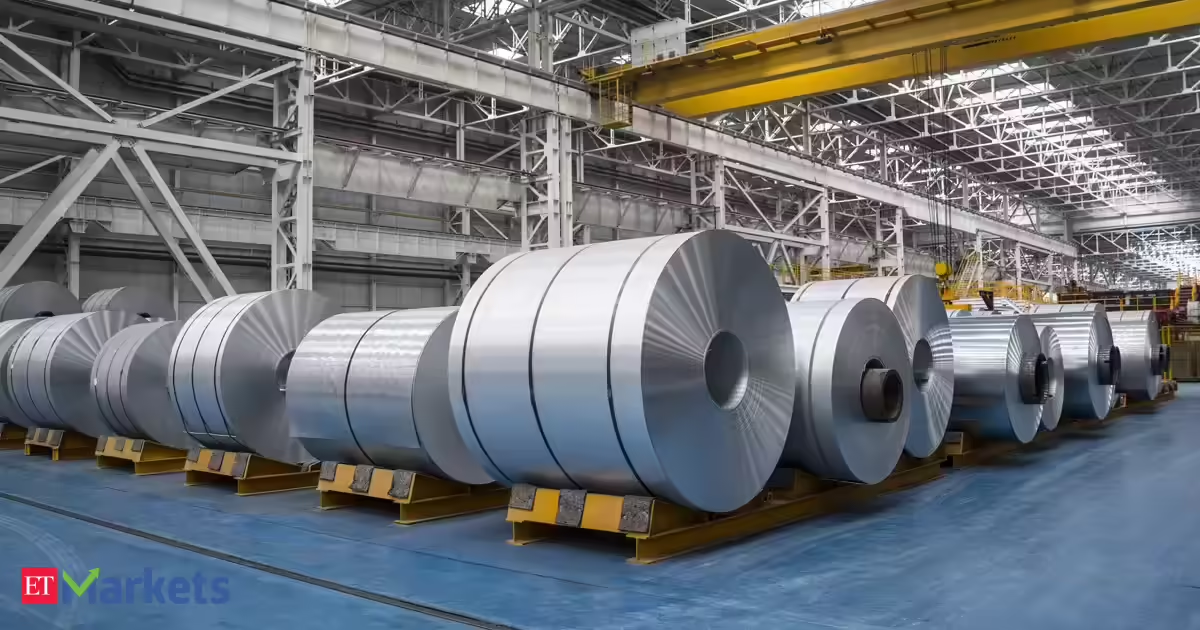
Prices rallied as much as 3.8% in London before paring some gains. QatarEnergy halted the production of aluminium and some chemicals, as it grappled with the consequences of Iranian attacks that forced the shutdown of its major liquefied natural gas plant.
QatarEnergy holds a 50% stake in Qatalum, which is a major regional producer of the metal alongside joint-venture partner Norsk Hydro ASA. Hydro subsequently said the specific implications for aluminium production at Qatalum are currently unclear and Hydro is seeking to obtain more information. Copper fell more than 2% in London.
Iran has stepped up its response to US-Israeli attacks by targeting US allies, and President Donald Trump has said there is no fixed timeline for his military action. The State Department urged Americans to leave countries across the Middle East, citing “serious safety risks” amid dangers from the war.
Qatar’s announcement adds to signs of growing stress for producers in the region and their customers in markets spanning Asia, Europe and the US. Orders to withdraw aluminum from warehouses tracked by London Metal Exchange more than doubled to 86,025 tons on Tuesday, as traders brace for widespread disruptions to supplies.

Emirates Global Aluminum — the UAE’s top producer — acknowledged delays to its exports and said it may draw on stockpiles outside the region to meet customer demands. Hydro had said on Monday that Qatalum was weighing contingencies to avoid disruptions to deliveries.
Rio Tinto Group on Monday withdrew an initial offer to supply Japanese customers for second-quarter supply, as the hostilities threatened to raise regional fees. The US Midwest premium — a key benchmark for American manufacturers — on Monday rose 1.4% to $1.055 a pound, just below the mid-February record of $1.065. Goldman Sachs Group Inc. said it sees “substantial upside” to premiums in Europe — a major market for the Gulf producers — after levels there reached the highest since 2022 last week.
 Agencies
But there’s also a risk that protracted hostilities could hurt major economies and fuel a downturn in metals demand.
“Pricing reflects the competing forces of short-term geopolitical risk premiums versus concerns that sustained energy inflation could weaken global industrial demand,” analysts from CreditSights wrote in an emailed note.
Trump said the US had planned for four to five weeks of military action, but could go longer, even as Defense Secretary Pete Hegseth dismissed the idea of an “endless war.” Any prolonged conflict could leave aluminum smelters in countries like the United Arab Emirates and Saudi Arabia starved of raw materials and unable to export metal.
The Middle East accounts for about a fifth of production outside China. Most of the metal produced in the Gulf states is exported, largely through the Strait of Hormuz that’s all but shut down as a trade route in the aftermath of the attacks. And while smelters will have stockpiles of raw materials like bauxite and alumina, production cuts may be necessary if those start to dwindle.
“Although Middle Eastern smelters may have close to one month of feedstock inventory, they may already be forced to cut production if the war drags on for around two weeks,” said Zhang Meng, an analyst with Shandong Aize Business Information Consulting Co. “They need to plan ahead, rather than waiting until all inventories are exhausted and then shutting down in a panic.”
Shipowners and insurers are already reluctant to deal with shipments to the Gulf, and many ports are closed in the region, Zhang added.
A month of fully lost production — together with spiking energy costs in Europe — could see aluminum prices shoot up to $3,600 a ton, according to Goldman Sachs. The bank’s base case is still for aluminum to average $3,150 in the first half of the year.
Aluminum buyers were already facing tight supply this year after various production curtailments and trade dislocations, and with China’s producers close to a government-imposed cap on the size of its industry. The planned mothballing of a large smelter in Mozambique has added to supply concerns in 2026, and prices are now up 22% from a year ago.
Aluminum prices were 2% higher at $3,259.00 a ton as of 12:18 p.m. local time on the LME, after earlier hitting $3,315 a ton. Copper was 2.0% lower at $12,845.50 a ton, as all metals except aluminum declined.

Today’s NYT Connections Hints, Answers for March 4 #997

Is XRP Suppression OVER?

Calls for improvements to be made to ‘hostile’ Cambridge streets as funds left unspent


-

 Politics5 days ago
ITV enters Gaza with IDF amid ongoing genocide
-

 Fashion4 days ago
Weekend Open Thread: Iris Top
-

 Politics18 hours ago
Alan Cumming Brands Baftas Ceremony A ‘Triggering S**tshow’
-

 Tech3 days ago
Unihertz’s Titan 2 Elite Arrives Just as Physical Keyboards Refuse to Fade Away
-

 NewsBeat6 days ago
Cuba says its forces have killed four on US-registered speedboat | World News
-
Sports4 days ago
The Vikings Need a Duck
-
 NewsBeat3 days ago
Dubai flights cancelled as Brit told airspace closed ’10 minutes after boarding’
-

 NewsBeat2 days ago
‘Significant’ damage to boarded-up Horden house after fire
-
 NewsBeat6 days ago
Manchester Central Mosque issues statement as it imposes new measures ‘with immediate effect’ after armed men enter
-
 NewsBeat4 days ago
The empty pub on busy Cambridge road that has been boarded up for years
-

 NewsBeat3 days ago
Abusive parents will now be treated like sex offenders and placed on a ‘child cruelty register’ | News UK
-

 Entertainment2 days ago
Baby Gear Guide: Strollers, Car Seats
-

 Business6 days ago
Discord Pushes Implementation of Global Age Checks to Second Half of 2026
-

 Business5 days ago
Only 4% of women globally reside in countries that offer almost complete legal equality
-
 Tech5 days ago
NASA Reveals Identity of Astronaut Who Suffered Medical Incident Aboard ISS
-
 NewsBeat3 days ago
Emirates confirms when flights will resume amid Dubai airport chaos
-
Politics3 days ago
FIFA hypocrisy after Israel murder over 400 Palestinian footballers
-

 Crypto World5 days ago
From Crypto Treasury to RWA: ETHZilla Retreats and Relaunches as Forum Markets on Nasdaq
-

 NewsBeat2 days ago
Is it acceptable to comment on the appearance of strangers in public? Readers discuss
-

 Tech3 days ago
Viral ad shows aged Musk, Altman, and Bezos using jobless humans to power AI