

Business
Tesla Stock Closes Near $403 Amid Geopolitical Pressures and Autonomy Focus

Tesla Inc. (NASDAQ: TSLA) shares closed at $403.32 on March 2, 2026, up 0.20% or $0.81 from the prior session, capping a resilient performance despite broader market volatility tied to Middle East tensions and surging oil prices.
The electric vehicle and AI pioneer opened at $390.60, ranged from a low of $388.25 to a high of $404.54, and traded on volume of nearly 55 million shares. After-hours trading saw a dip to around $397-$393, with pre-market indications on March 3 pointing to a lower open near $390-$394 amid risk-off sentiment in tech-heavy names.
Tesla’s market capitalization hovered near $1.51 trillion, reflecting its status as one of the world’s most valuable companies. The stock has shown volatility in early 2026, trading within a 52-week range of $214.25 to $498.83 — the peak hit in late 2025. Year-to-date, shares have gained modestly from earlier lows, supported by optimism around autonomy milestones despite softer core automotive metrics.
The latest trading session unfolded against a backdrop of geopolitical escalation, with U.S. and Israeli strikes on Iran driving oil higher and pressuring growth stocks. Tesla, sensitive to energy costs and consumer sentiment, navigated the environment with relative stability, buoyed by ongoing developments in Full Self-Driving (FSD) and robotics.
Tesla’s FSD (Supervised) system surpassed 8.4 billion cumulative miles driven worldwide, nearing CEO Elon Musk’s 10 billion-mile threshold viewed as critical for advancing toward unsupervised autonomy. The fleet added roughly 1 billion miles in the first 50 days of 2026, accelerating data collection for neural network improvements. Tesla expanded supervised FSD testing to Abu Dhabi under regulatory oversight, marking progress in global deployment.
In autonomy news, Tesla’s limited robotaxi service — launched in Austin, Texas, in January 2026 with no safety drivers in modified Model Y vehicles — continues to scale modestly. The company aims to expand unsupervised rides to additional U.S. markets in the first half of 2026, with Cybercab production starting at Giga Texas. Musk has described initial output as “agonizingly slow” before ramping, with volume targeted later in the year. Optimus humanoid robot production is expected to remain limited through 2026, though mass scaling could begin by year-end.
These initiatives underpin Tesla’s valuation premium. Trading at a forward price-to-earnings ratio exceeding 370 based on 2026 estimates, the stock reflects bets on high-margin AI and robotics revenue offsetting automotive headwinds. Analysts project 2026 vehicle deliveries around 1.77 million, an 8% increase from 2025’s 1.636 million, though consensus remains cautious on core EV margins amid competition and pricing pressures.
Tesla’s fourth-quarter 2025 results, released in late January 2026, showed production of over 434,000 vehicles and deliveries of 418,000 — up 3% sequentially but down year-over-year in some segments. Annual 2025 deliveries totaled 1.636 million, with energy storage deployments hitting a record 46.7 GWh. Revenue declined modestly to around $94.83 billion for the year, marking the first annual drop, but energy generation and storage grew robustly with higher margins.
Capital expenditures are set to surge to more than $20 billion in 2026, funding new factories, AI infrastructure and robotics. Management has shifted focus from aggressive vehicle growth targets — withdrawing prior 20 million annual delivery goals by 2030 — toward autonomy and energy as key drivers.
Analyst views remain polarized. Consensus 12-month price targets cluster around $396-$421, implying limited near-term upside from current levels, though bullish voices like Wedbush’s Dan Ives see potential to $600 on robotaxi optionality. Bears, including GLJ Research, cite declining automotive margins and competition, with targets as low as $25.
Technical analysts highlight key levels: support near $390 and resistance around $418, with some noting channel patterns on weekly charts. Prediction markets on platforms like Polymarket show active wagering on March 3 closes, reflecting trader interest in short-term moves.
Tesla’s trajectory in 2026 hinges on execution in autonomy. Robotaxi expansion to more cities, FSD adoption growth (with 1.1 million paid subscribers) and Optimus progress could catalyze rallies, while delays or regulatory hurdles pose risks. Energy storage remains a bright spot, with Megapack deployments supporting diversified revenue.
Investors monitor upcoming catalysts, including potential Q1 2026 delivery updates and earnings around late April. Amid macroeconomic uncertainty, Tesla’s blend of EV leadership, AI ambition and energy growth keeps it a focal point for market participants.
As shares hover near $400, the stock embodies the tension between near-term automotive challenges and long-term transformative potential in autonomy and robotics.


Form 4 ATI Inc For: 3 March

Acumen Pharma chief legal officer Meisner sells $28k in shares

Operator
Good day, everyone, and welcome to Cricut Fourth Quarter 2025 Earnings Conference Call. [Operator Instructions] Please note, this conference is being recorded.
Now, it’s my pleasure to turn the call over to the Senior Vice President and Head of Investor Relations, Jim Suva. Please proceed.
Jim Suva
Senior Vice President of Finance, Treasurer & Investor Relations
Thank you, operator, and good afternoon, everyone. Thank you for joining us on Cricut’s Fourth Quarter 2025 Earnings Call.
Please note that today’s call is being webcast and recorded on the Investor Relations section of the company’s website. A replay of the webcast will also be available following today’s call. For your reference, accompanying slides used on today’s call, along with a supplemental data sheet, have been posted to the Investor Relations section of the company’s website, investor.cricut.com.
Joining me on the call today are Ashish Arora, Chief Executive Officer; and Kimball Shill, Chief Financial Officer. Today’s prepared remarks have been recorded, after which Ashish and Kimball will host live Q&A.
Before we begin, we would like to remind everyone that our prepared remarks contain forward-looking statements, and management may make additional forward-looking statements, including statements regarding our strategies, business, expenses, tariffs, capital allocation and results of operations in response to your questions. These statements do not guarantee future performance, and therefore, undue reliance should not be placed upon them.
These statements are based on current expectations
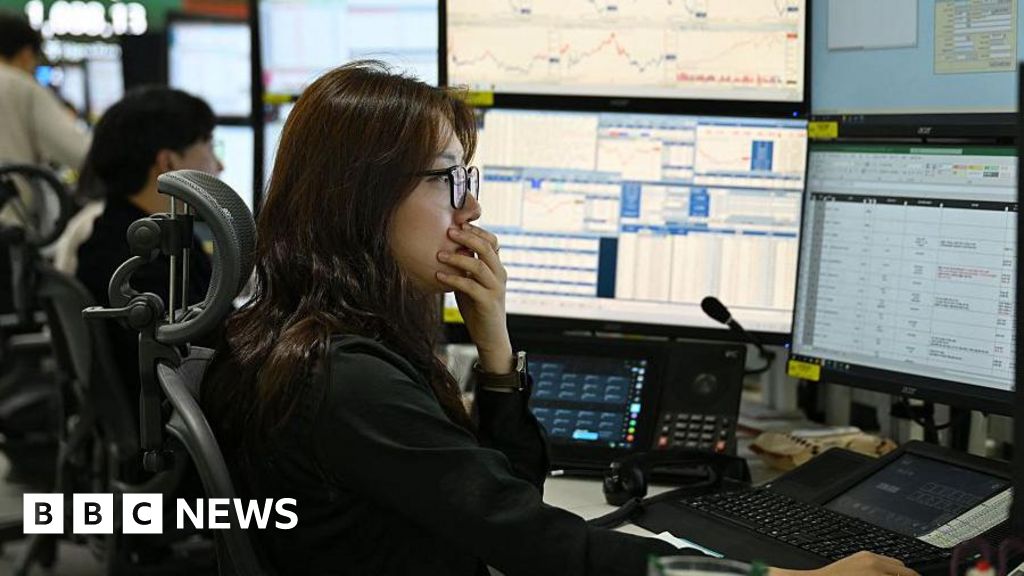
The conflict in the Middle East has rattled financial markets and global energy prices have soared.

Dow Drops 550 Points at the Open
Business
(VIDEO) Smoothie King Fires Two Employees in Ann Arbor After Refusing Service Over Pro-Trump Hoodie
Two employees at a Smoothie King franchise in Ann Arbor were terminated Monday after a viral video captured them refusing to serve a couple because the husband was wearing a hoodie bearing President Donald Trump’s name, prompting a swift corporate investigation and public backlash over alleged political discrimination.

The incident unfolded Sunday afternoon at the Smoothie King location on Jackson Road, a bustling strip in this liberal-leaning college town home to the University of Michigan. Erika Lindemyer and her husband, Jake, entered the store seeking smoothies when two young female workers behind the counter expressed discomfort with Jake’s attire and declined to take their order.
In the 90-second video filmed by Erika and posted to TikTok, the confrontation escalates as the couple accuses the employees of discrimination. “We were just wanting a smoothie, and you literally looked at us and I asked you if everything was OK and you said, ‘We don’t feel comfortable serving you’ because of my husband’s hoodie,” Erika says in the footage. “That is discrimination.”
One employee responds calmly, “Okay, well, have a great day,” while the other adds, “I said Trump discriminates [against] us.” As the argument intensifies, the second worker insists, “We have a right to refuse service,” and directs the couple to the door. Erika retorts that the refusal is “illegal” and threatens to call police before exiting, lamenting, “What’s embarrassing is that we’re American citizens and I wanted to get a smoothie.”
The video quickly spread across social media platforms, amassing hundreds of thousands of views on X (formerly Twitter) and TikTok by Monday morning. Accounts like Libs of TikTok and Leftism amplified the clip, with Leftism identifying one employee as Janiyah Mishelle Williams of Ann Arbor. “She refused to serve customers at @SmoothieKing because the husband wore a Trump hoodie,” Leftism posted, garnering widespread attention.
Smoothie King, a New Orleans-based chain with over 1,300 locations specializing in blended fruit drinks, responded swiftly. In a statement posted to X on Monday evening, the company affirmed its “zero tolerance for discrimination of any kind, including political affiliation.” It confirmed that following an investigation, the franchise owner had taken “immediate action,” and the two employees “are no longer with the business.”
“We were deeply concerned to learn of an incident involving a guest who was refused service at a franchised location in Michigan yesterday,” the statement read. “Every guest and team member deserves to feel welcomed. We remain firmly committed to upholding our brand standards and ensuring our stores are inclusive environments where everyone feels cared for and respected.” The franchise owner also apologized directly to the Lindemyers and mandated retraining for all staff on guest experience protocols.
Williams, who claims to be a minor, posted her own videos on TikTok in response, captioning one “refusing service to Trumpies gone wrong” and another “I lowkey might be cooked.. why does my job support Trump?” She doubled down in subsequent clips, framing the standoff as “good vs. evil” and urging viewers to report Erika’s video for removal, citing lack of consent and racist comments from predominantly white users.
By Monday morning, Williams launched a GoFundMe campaign seeking $700 for “support for safety after online harassment,” boasting about her refusal to serve Trump supporters and detailing threats that made returning to work unsafe. The fundraiser raised nearly $400 before being disabled later that day, following calls from critics like Leftism for the platform to intervene. In a later X post, Williams claimed Trump had legalized the right to refuse service — a misstatement, as federal law does not explicitly protect political affiliation, though local ordinances in Ann Arbor prohibit discrimination based on political beliefs in public accommodations.
Public reaction was polarized, reflecting broader national divides. Conservative commentators hailed the firings as a victory against “woke” bias, with X users like Ryan Ermanni of FOX 2 Detroit noting, “Smoothie King has FIRED two employees in Michigan.” Calls for boycotts emerged briefly before the terminations, with one X post warning, “Boycott Smoothie King” if action wasn’t taken. Others, like podcaster Jeremy from The Quartering, mocked the employees’ decision, saying it “ruined her life” over an entry-level job.
On the other side, some defended the workers’ right to feel safe, with Reddit threads in r/AnnArbor debating whether the hoodie constituted a threat in a progressive enclave. “If they felt unsafe, they shouldn’t be forced to serve someone,” one commenter wrote on Times of India. Instagram reactions included calls for lawsuits, with users tagging Smoothie King and decrying discrimination.
The episode echoes past controversies, such as 2018 incidents where Trump supporters were denied service over MAGA hats at restaurants in New York and Virginia, sparking debates on free speech versus private business rights. Legal experts note that while the Civil Rights Act protects against discrimination based on race, religion and other traits, political views fall into a gray area, often governed by state or local laws. In Michigan, Ann Arbor’s human rights ordinance explicitly bans bias in public services based on “political beliefs,” potentially exposing the franchise to complaints.
Smoothie King, founded in 1973 and now franchised globally, has emphasized inclusivity in its response, aiming to avoid the fate of brands like Bud Light, which faced boycotts over political missteps. Franchise owners operate independently but adhere to corporate standards, and this incident highlights challenges in enforcing uniform policies amid polarized times.
As of Tuesday, no police report was filed, per local sources, and the Lindemyers have not indicated plans for legal action. Williams continued posting online, unrepentant, while job hunt speculation swirled in conservative circles. The viral storm underscores how everyday encounters can ignite national debates in an election year, with Ann Arbor’s progressive vibe — where Trump garnered just 20% of the vote in 2024 — amplifying the clash.
Experts like University of Michigan political science professor Jenna Bednar told local media that such incidents reflect deepening societal rifts. “In a diverse community like ours, service refusals based on politics erode trust,” she said. Meanwhile, Smoothie King’s stock (part of parent company) dipped slightly amid the chatter, though analysts attribute it to broader market trends.
The franchise has reopened normally, with retraining underway. For the Lindemyers, what started as a quick stop ended in vindication — and a free smoothie voucher from corporate.
China factory activity contracts further in Feb, PMI shows

Goldman CEO says markets may take ’couple of weeks’ to digest Iran war impacts
For many years, internal material handling was considered a secondary function, necessary to feed lines, clear areas and move materials between departments.
This is changing. Rising operational complexity and higher volumes are transforming internal flows into a lever for continuity, labor sustainability and reduced congestion within plants. SKU proliferation, omnichannel strategies, flexible production schedules and multi-shift operations are increasing pressure on material movements. Disruptions in these flows can slow production, increase Work-in-Progress (WIP) and create bottlenecks in critical areas. Internal logistics, once invisible, is now treated as part of the industrial system.
A more complex operating environment
Manufacturing is no longer based solely on homogeneous batches and linear sequences. Lines are supplied more frequently and with product variants. The result is a higher density of movements on wheels (carts, containers and dedicated carriers) that must reach the line regularly to sustain continuity. At the same time, several sectors are reducing the use of heavy vehicles near production. In automotive, pharma, food and packaging, forklifts are being replaced with lighter and more ergonomic solutions. Drivers include safety, congestion, space constraints and costs related to licensing, insurance and maintenance.
The workforce variable
Labor availability is another structural element. Repetitive manual handling requires physical force, increases injury risk and is difficult to sustain over three shifts. Improving ergonomics is no longer a collateral benefit but a way to protect uptime, reduce turnover and retain qualified personnel.
Not only automation: the gradual transition
The debate around automation in internal logistics is often framed as a choice between manual handling and fully autonomous systems such as AGVs, AMRs or industrial robots. Adoption, however, tends to be more incremental. Many plants are not yet prepared for full automation due to investment levels, layout implications, integration requirements and the rigidity associated with fixed automated flows. This is creating space for an intermediate category: operator-assist electric solutions that remove physical effort, support flow continuity and retain operator flexibility. These systems require no infrastructure, no software integration and no plant modifications, and typically deliver a faster ROI than full automation.
Across sectors, three priorities are shaping decisions on internal handling upgrades:
- Labor sustainability → reducing strain, injuries and turnover
- Operational continuity → regular line feeding, including multi-shift
- Flexibility → avoiding rigid systems that limit layouts and product mix
There is also growing interest in reducing heavy vehicles in high-density human areas for safety and space configuration reasons.
Renova’s proposal in the operator-assist segment
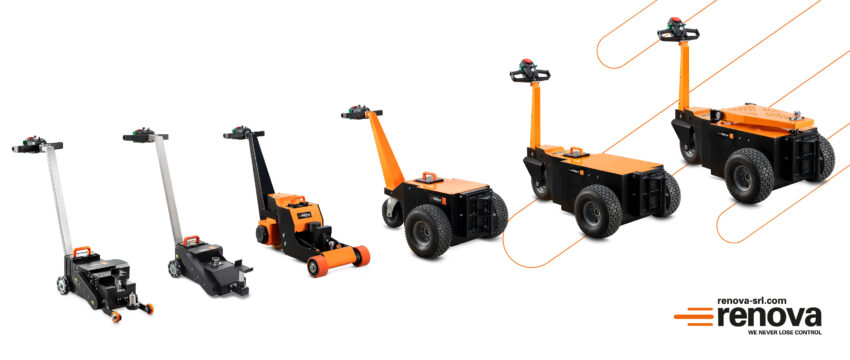
In this context, operator-assist technologies represent a strategic intermediate layer between manual processes and autonomous systems. Renova has developed a dedicated material handling range, including cart movers and electric tow tugs, designed to prioritize ergonomics, ensure continuity across multiple shifts, and provide high operational flexibility.
A range designed for operational versatility
Renova’s new material handling line covers a wide range of applications, from line-side movements in tight spaces to heavy-duty movements in aerospace, marine and waste-handling environments. With capacity to move wheeled loads up to 6 tons, these systems can be deployed in sectors that have significantly increased the density of internal movements over recent years. Globally, industries such as pharma, food & beverage, aerospace and industrial logistics are growing at annual rates of 5–7%, driven by higher volumes, SKU expansion and multi-shift production. In Europe, this trend is reinforced by the progressive reduction of forklifts near production and the rise of operator-assist solutions as a stable intermediate category.
The range includes Cart Movers and Electric Tow Tugs.The MCE 400/500 cart mover models handle up to 5-ton carts, while the MTE electric tow tug series covers 1.5 to 6-ton applications. Compact models such as MTE 1000/1500 are suited for line-side, end-of-line and machine feeding; MTE 100W is optimized for two-wheel carts often used in the textile industry; and MTE 3500, MTE 6000 and MTE 6000S address heavier towing tasks typical of waste handling, airport and marine sectors.
Integrated with ergonomic handles, the heavy-duty design enables precise maneuverability both indoors and outdoors, including irregular surfaces, tight layouts and non-linear paths. The systems easily overcome obstacles while maintaining full control and operational safety, with compliance to ISO 11228. The Plug&Play lithium battery system supports multi-shift operations without charging downtime, and no operator license is required, reducing training costs and expanding workforce eligibility. Both the device and the battery system come with a two-year warranty, ensuring operational continuity and lower lifecycle costs. For sectors with specific requirements, including chemical and pharmaceutical, ATEX configurations are available.
Balancing efficiency, continuity and flexibility
Ultimately, the shift in internal handling is being driven as much by economics as by ergonomics. Plants are seeking continuity with fewer forklift interventions, shorter integration cycles and a lower total cost of ownership, all while facing tighter layouts and more demanding labor models. Operator-assist systems respond to these constraints by offering a scalable upgrade path that does not require infrastructure, software integration or specialized licensing.
If warehouse and fulfilment operations have already been heavily automated, the open question for the coming decade is how far internal flows can evolve without compromising flexibility. Renova’s new Material Handling range moves precisely in this direction, enabling a more balanced distribution of tasks between operators, equipment and automated systems, and opening the discussion on what the next stage of internal handling might look like inside modern plants.
Sources:
- 2025 Warehouse Automation & Order Fulfillment Study – Peerless Research Group
- 2025 Warehouse Automation Industry Outlook- Modern Materials Handling
- Warehouse Automation Market Report 2025–2029-ResearchAndMarkets.com
- OSHA 2023 Work-Related Injury & Illness Summary (PDF)
- OSHA Warehousing Hazards & Safety Guidance
Goldie Ghamari, an Iranian-born human rights activist, praises President Trump’s decisiveness, equating the regime’s fall to Hitler on ‘The Evening Edit.’
Drone strikes damaged Amazon Web Services data centers in the Middle East, disrupting cloud operations and prompting the company to urge customers to move critical workloads out of the region.
AWS confirmed that two of its data center facilities in the United Arab Emirates were directly struck, while a separate strike near a site in Bahrain also caused infrastructure damage. The attacks disrupted power systems and caused structural damage, impairing two of the three data center sites that make up AWS’s UAE cloud region.
As a result, businesses that rely on AWS to run their websites, store data and process transactions experienced more error rates, slower performance and service interruptions.
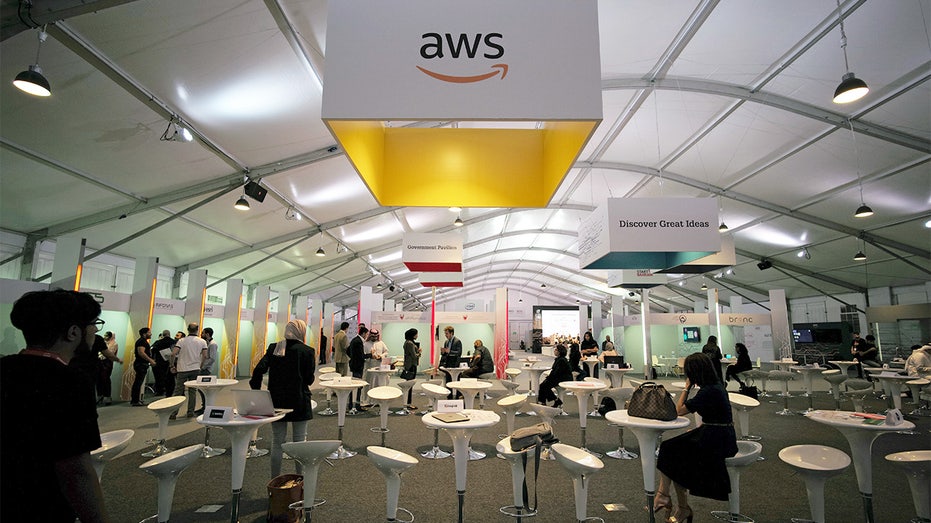
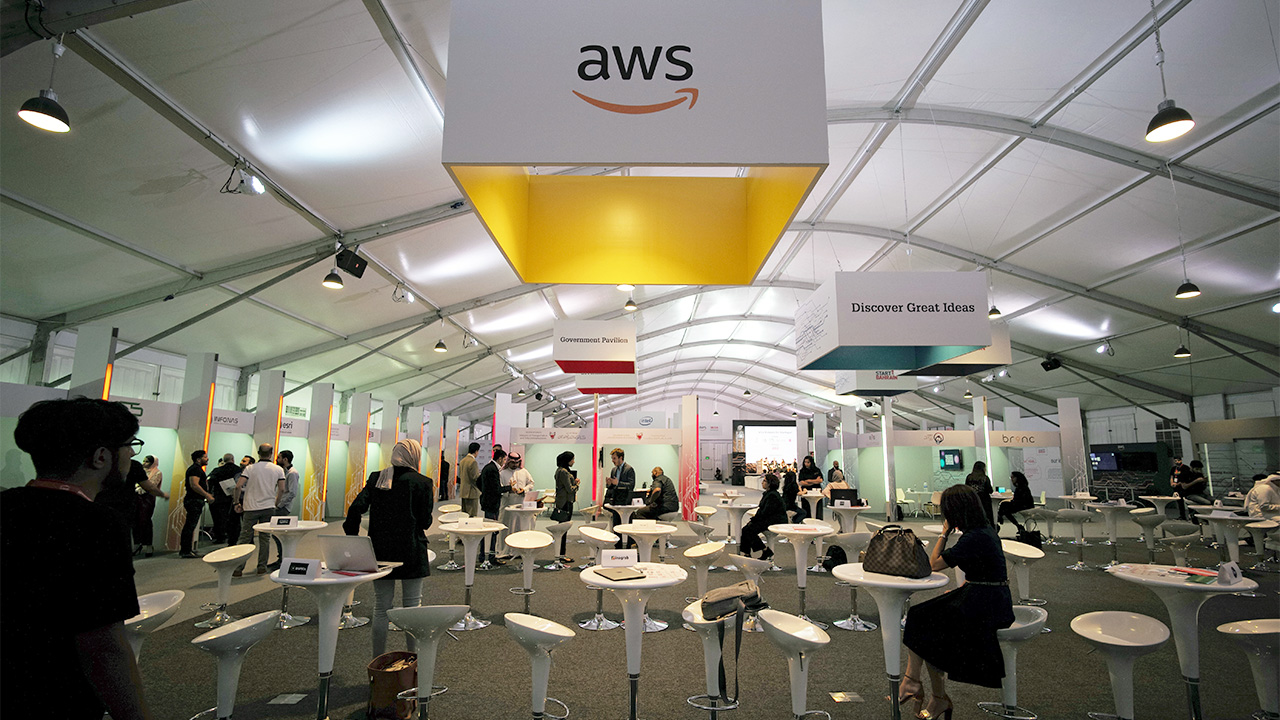
AWS confirmed that two of its data center facilities in the United Arab Emirates were directly struck and another site in Bahrain also sustained damage. (Hamad I Mohammed/Reuters)
AWS said full recovery will depend in part on repairing physical damage and restoring power and connectivity – a process that could take at least a day and potentially longer.
OIL PRICES SURGE AFTER STRIKES KILL IRAN’S SUPREME LEADER, TANKERS HIT NEAR STRAIT OF HORMUZ
The company has urged its customers in the Middle East to activate disaster recovery plans, restore data from backups in other regions and redirect traffic away from the affected facilities. Customers were advised to consider shifting operations to AWS regions in the United States, Europe or Asia-Pacific.

The damage comes amid unrest after Operation Epic Fury. (Fatemeh Bahrami/Anadolu via Getty Images)
While cloud providers are designed to withstand the loss of a single data center, simultaneous damage to multiple facilities has strained built-in backup systems.
AWS initially described the situation as a localized power issue before later confirming that drone strikes had caused physical damage. The company said it is working with local authorities and prioritizing employee safety as repairs continue.
The company did not say who was responsible for the strikes, but it came amid the ongoing conflict with Iran that has spilled over into the wider region, throwing businesses and economies into uncertainty.
CLICK HERE TO GET FOX BUSINESS ON THE GO
When reached for additional details, Amazon referred FOX Business to its AWS Health Dashboard.

MARA Loosens Bitcoin Grip: Will MicroStrategy Follow?
“Bold and the Beautiful” alums Darin Brooks and Kelly Kruger divorcing after nearly 10 years of marriage

An Oscar race that looked over might be heating up


-

 Politics5 days ago
ITV enters Gaza with IDF amid ongoing genocide
-

 Fashion4 days ago
Weekend Open Thread: Iris Top
-

 Politics19 hours ago
Alan Cumming Brands Baftas Ceremony A ‘Triggering S**tshow’
-

 Tech3 days ago
Unihertz’s Titan 2 Elite Arrives Just as Physical Keyboards Refuse to Fade Away
-

 NewsBeat6 days ago
Cuba says its forces have killed four on US-registered speedboat | World News
-
Sports4 days ago
The Vikings Need a Duck
-
 NewsBeat3 days ago
Dubai flights cancelled as Brit told airspace closed ’10 minutes after boarding’
-

 NewsBeat3 days ago
‘Significant’ damage to boarded-up Horden house after fire
-
 NewsBeat6 days ago
Manchester Central Mosque issues statement as it imposes new measures ‘with immediate effect’ after armed men enter
-
 NewsBeat4 days ago
The empty pub on busy Cambridge road that has been boarded up for years
-

 NewsBeat3 days ago
Abusive parents will now be treated like sex offenders and placed on a ‘child cruelty register’ | News UK
-

 Entertainment2 days ago
Baby Gear Guide: Strollers, Car Seats
-

 Business6 days ago
Discord Pushes Implementation of Global Age Checks to Second Half of 2026
-

 Business5 days ago
Only 4% of women globally reside in countries that offer almost complete legal equality
-
 Tech5 days ago
NASA Reveals Identity of Astronaut Who Suffered Medical Incident Aboard ISS
-
 NewsBeat3 days ago
Emirates confirms when flights will resume amid Dubai airport chaos
-
Politics3 days ago
FIFA hypocrisy after Israel murder over 400 Palestinian footballers
-

 Crypto World5 days ago
From Crypto Treasury to RWA: ETHZilla Retreats and Relaunches as Forum Markets on Nasdaq
-

 NewsBeat2 days ago
Is it acceptable to comment on the appearance of strangers in public? Readers discuss
-

 Tech3 days ago
Viral ad shows aged Musk, Altman, and Bezos using jobless humans to power AI