






Connect with us

Business

Is Dubai International Airport Open? Airport Operates on Limited Basis

Published

on

Dubai International Airport

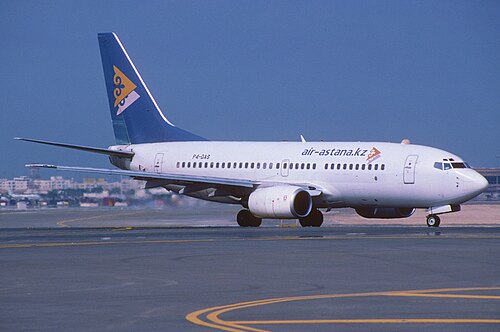
Dubai International Airport (DXB), the world’s busiest hub for international passengers, remains partially operational as of March 4, 2026, with only a restricted number of flights permitted amid ongoing airspace closures and security concerns stemming from the escalating Middle East conflict involving U.S., Israeli and Iranian military actions.

Dubai International Airport

Dubai Airports, the operator of DXB and the secondary Al Maktoum International Airport (DWC), confirmed that limited operations resumed on the evening of March 2 following a near-total suspension that began February 28. However, major carriers including flagship Emirates have extended the halt on all regular scheduled commercial flights to and from Dubai until 23:59 UAE time on March 4, prioritizing only select repatriation, cargo and repositioning services.

In its latest advisory on the official dubaiairports.ae website, Dubai Airports stated: “Limited airport operations have resumed with a small number of flights operating from DXB and DWC.” The authority urged passengers not to proceed to either airport unless directly contacted by their airline with a confirmed departure time, emphasizing that schedules remain highly fluid and subject to change based on regional airspace availability.

Emirates, which accounts for the majority of DXB traffic, reinforced the message in travel updates: “All scheduled Emirates flights to and from Dubai remain suspended until 2359hrs UAE time on 4 March, due to airspace closures across the region.” The airline noted it is operating a limited number of passenger repatriation and freighter flights on March 3 and 4, with priority given to earlier bookings. Flydubai and other carriers have aligned with similar restrictions.

The disruptions trace back to precautionary airspace measures implemented by the UAE General Civil Aviation Authority following retaliatory strikes and heightened tensions. Neighboring countries including Qatar, Bahrain, Kuwait and others imposed comparable closures, creating a broad no-fly corridor that severed typical flight paths. Flight-tracking platforms like Flightradar24 and FlightAware report over 12,300 cancellations across seven major Gulf airports from February 28 through March 3, with DXB among the most impacted. More than 80% of scheduled flights to and from Dubai have been axed in recent days, contributing to a regional total exceeding thousands of affected services and stranding tens of thousands of passengers globally.

Advertisement

Despite the constraints, some activity has returned. Limited departures and arrivals — often focused on repatriation efforts for stranded nationals — have operated since March 2 evening. Examples include select long-haul repatriation flights coordinated under strict safety protocols. However, routine commercial traffic remains heavily curtailed, with most international carriers rerouting or canceling connections through the Gulf.

The situation has ripple effects worldwide. Airlines such as Air France, KLM, Air Canada and United have suspended or adjusted services to Dubai and other regional points through early March or beyond. Governments and travel advisories urge caution, with many recommending against non-essential travel to the UAE until stability returns.

Dubai Airports continues close coordination with authorities to prioritize safety while facilitating essential movements. A prior update noted minor damage to a concourse at DXB from an earlier incident, quickly contained without broader operational impact. No major new incidents have been reported since the limited resumption.

Travelers planning to use Dubai International Airport should:

Advertisement

– Verify flight status directly via airline channels, the Emirates website or dubaiairports.ae flight information pages.
– Avoid traveling to the airport without explicit airline confirmation to prevent overcrowding and security bottlenecks.
– Monitor real-time tools like FlightAware or Flightradar24 for live updates on arrivals, departures and delays.
– Prepare for rebookings, refunds or alternative routing, as flexible waiver policies remain in effect from many carriers.
– Check government travel warnings, as evolving airspace rules could further restrict even limited operations.

Industry analysts describe the current phase as a “phased recovery” rather than full normalization, with potential for incremental increases in permitted flights if de-escalation progresses. Dubai’s position as a global transit powerhouse — handling over 90 million passengers annually pre-crisis — makes its constrained status particularly disruptive to worldwide connectivity.

As the region navigates these challenges, DXB’s partial functionality underscores efforts to maintain a lifeline for essential travel amid widespread closures elsewhere. Full resumption hinges on broader security developments, with authorities pledging ongoing updates.

For now, Dubai International Airport stands technically open but far from business as usual, processing only approved movements in a tightly controlled environment.

Advertisement
Continue Reading
Click to comment

Leave a Reply

Your email address will not be published. Required fields are marked *

Business

'I fiddled the meter for a mate and the shop burnt down'

Published

on

'I fiddled the meter for a mate and the shop burnt down'

A BBC investigation speaks to electricians and families setting up illegal meter bypasses to steal power.

Continue Reading

Business

Bath & Body Works earnings beat by $0.30, revenue topped estimates

Published

on


Bath & Body Works earnings beat by $0.30, revenue topped estimates

Continue Reading

Business

Form 4 NorthWestern Corp For: 4 March

Published

on


Form 4 NorthWestern Corp For: 4 March

Continue Reading

Business

Stevanato Group surges nearly 17% on fourth quarter earnings beat

Published

on


Stevanato Group surges nearly 17% on fourth quarter earnings beat

Continue Reading

Business

Brewdog founder admits 'many mistakes' as hundreds lose jobs in sale

Published

on

Brewdog founder admits 'many mistakes' as hundreds lose jobs in sale

James Watt apologises to staff and investors after hundreds of jobs were lost with the sale of the brewer and pub chain.

Continue Reading

Business

FCA signals potential changes to motor finance compensation scheme after industry backlash

Published

on

Business Live

UK financial watchdog considering over 1,000 responses to proposals

FCA logo in reception

The FCA has updated markets on its motor finance compensation scheme

The UK’s financial regulator is aiming to “streamline” its long-awaited motor finance compensation scheme following extensive industry backlash.

Advertisement

The Financial Conduct Authority (FCA) issued a fresh update to markets on Wednesday, stating it was reviewing over 1,000 responses to its proposals for the sector-wide redress scheme.

It added that “if” it were to proceed with a scheme, the regulator was “likely to make several changes”.

In its Wednesday update, the FCA stated it would streamline the process for consumers and firms by eliminating the opt-out options and replacing them with a three-month deadline for lenders to inform consumers what they are owed and how much.

Consumers receiving an offer would also be able to accept it immediately, rather than waiting for the final determination, as reported by City AM.

Advertisement

Firms would also no longer be required to write to customers via recorded delivery, which the regulator said would open new communication channels to best meet consumers’ needs.

The FCA stated: “If we do go ahead [with the scheme], we expect to publish final rules in late March.”

Earlier this year, Britain’s leading banks were believed to have been given some relief after the Supreme Court upheld two out of three appeals from lenders in the landmark car finance scandal.

But the latter half of the year delivered a succession of dramatic developments in the saga, with the FCA revealing proposals for a controversial redress scheme that prompted banks to substantially increase their provisions for compensation.

Advertisement

One of the principal areas of criticism regarding the FCA’s scheme centres on the determination of “unfair” – the benchmark the Supreme Court upheld in the single successful claimant’s case.

The highest Court ruled in favour of one of three claimants after determining their excessive commission of 55 per cent was “unfair”. However, the FCA has stated the threshold for its redress – where 14.2m agreements are estimated to be eligible – will be 35 per cent.

The scheme in its current form presents lenders with a bill of approximately £11bn – still a substantial sum but significantly below previous projections of £44bn once feared by the City. Roughly 14.2m agreements will qualify for the scheme, extending back to 2007 – a timeframe which has encountered fierce resistance from the industry.

The regulator was compelled to extend the deadline for submitting feedback for the motor finance redress scheme last year as opposition from both consumer and lending camps intensified.

Advertisement

Lloyds Banking Group – which owns Britain’s largest car finance provider Black Horse – was obliged to raise provisions to £2bn from £1.2bn after particulars of the scheme emerged in October. FTSE 250 lender Close Brothers nearly doubled its reserves to £300m and Barclays almost quadrupled its provisions to £325m.

Santander UK abandoned its third-quarter results in October, referencing uncertainty within the motor finance sector, as bank chief Mike Regnier urged the government to consider intervening to help mediate. He warned if the government does not intervene “the unintended consequences for the car finance market, the supply of credit and the resulting negative impact on the automotive industry and its supply chain could significantly impact jobs, growth and the broader UK economy.”

There has also been equivalent opposition on the consumer side, with the All-Party Parliamentary Group (APPG) on Fair Banking condemning the City watchdog for a “£4.4bn gap” in the proposed scheme. The group accused the regulator of being “influenced by the profit margins of the lenders”.

Advertisement
Continue Reading

Business

Bayer Aktiengesellschaft 2025 Q4 – Results – Earnings Call Presentation (OTCMKTS:BAYRY) 2026-03-04

Published

on

OneWater Marine Inc. (ONEW) Q1 2026 Earnings Call Transcript

This article was written by

Seeking Alpha’s transcripts team is responsible for the development of all of our transcript-related projects. We currently publish thousands of quarterly earnings calls per quarter on our site and are continuing to grow and expand our coverage. The purpose of this profile is to allow us to share with our readers new transcript-related developments. Thanks, SA Transcripts Team

Continue Reading

Business

Allspring Special Small Cap Value Fund Q4 2025 Portfolio Review

Published

on

Allspring Special Small Cap Value Fund Q4 2025 Portfolio Review

Allspring is a company committed to thoughtful investing, purposeful planning, and the desire to elevate investing to be worth more. Allspring is reimagining investment management to be worth more—creating an investment, distribution, and operational experience that changes the game for clients. Note: This account is not managed or monitored by Allspring, and any messages sent via Seeking Alpha will not receive a response. For inquiries or communication, please use Allspring’s official channels.

Continue Reading

Business

Janus Henderson Flexible Bond Managed Account Q4 2025 Commentary (JFLEX)

Published

on

Janus Henderson Flexible Bond Managed Account Q4 2025 Commentary (JFLEX)

Janus Henderson Investors exists to help clients achieve their long-term financial goals. Formed in 2017 from the merger between Janus Capital Group and Henderson Global Investors, we are committed to adding value through active management. For us, active is more than our investment approach – it is the way we translate ideas into action, how we communicate our views and the partnerships we build in order to create the best outcomes for clients. While our investment managers have the flexibility to follow approaches best suited to their areas of expertise, overall our people come together as a team. This is reflected in our Knowledge. Shared ethos, which informs the dialogue across the business and drives our commitment to empowering clients to make better investment and business decisions.www.janushenderson.com

Continue Reading

Business

(VIDEO) Israeli F-35 Downs Iranian Yak-130 in Historic First Dogfight Over Tehran Amid Escalating War

Published

on

James Talarico

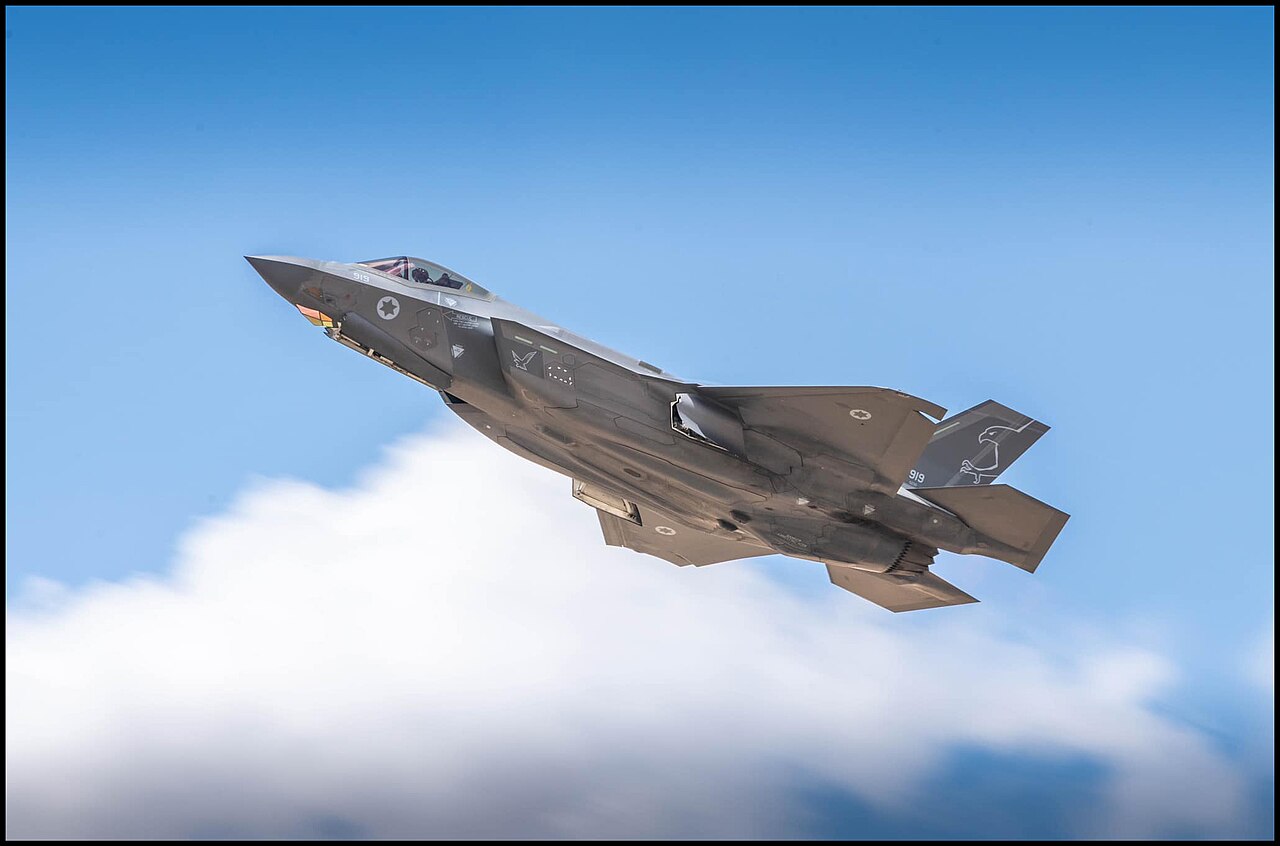
An Israeli Air Force F-35I “Adir” stealth fighter jet shot down an Iranian Air Force Yakovlev Yak-130 combat trainer over the skies of Tehran on Wednesday, the Israel Defense Forces announced, marking the first confirmed air-to-air kill of a manned aircraft by an F-35 and the Israeli military’s first fighter-on-fighter engagement in nearly four decades.

Israeli Air Force F-35I

The incident occurred shortly before 8:35 a.m. local time, the IDF said in a statement released around 10:30 a.m. Israel time. “An Israeli Air Force F-35I fighter jet (‘Adir’) shot down an Iranian Air Force YAK-130 fighter jet a short while ago over the skies of Tehran,” the military posted on social media platforms including Telegram and X. “This is the first shootdown in history of a manned fighter aircraft by an F-35 (‘Adir’) fighter jet.”

The downing came amid the fifth day of intense aerial operations in the ongoing war between Israel, supported by the United States, and Iran. Israel has conducted multiple waves of strikes on Iranian targets, including infrastructure tied to the regime’s security apparatus, missile systems, and leadership sites in and around Tehran. Explosions were reported in the Iranian capital at dawn Wednesday, with Iranian state television confirming blasts as Israeli jets maintained pressure.

The Yak-130, a Russian-designed advanced jet trainer and light combat aircraft produced since the 1990s, is used by the Islamic Republic of Iran Air Force (IRIAF) for training and limited attack roles. It lacks advanced radar capabilities compared to frontline fighters and relies primarily on visual or helmet-mounted sighting systems for close-range engagements. Analysts noted the mismatch: the F-35I, Israel’s customized variant of the Lockheed Martin stealth fighter, features superior sensors, electronic warfare systems, and beyond-visual-range missiles, allowing it to detect and engage targets from significant distances.

The IDF described the engagement as a dogfight, though details on whether it involved close-range maneuvering or a beyond-visual-range missile shot remain classified. No injuries or losses were reported on the Israeli side, with the F-35 returning undamaged. The pilot’s identity and specifics of the interception were not disclosed for operational security reasons.

Advertisement

This marks the first time since 1985 that the Israeli Air Force has downed an enemy manned aircraft in air-to-air combat. In that earlier incident, F-15s shot down two Syrian MiG-21s over Lebanon’s Bekaa Valley. The F-35’s combat debut against a manned target represents a milestone for the platform, which has seen extensive use in strike missions but had not previously recorded a confirmed air-to-air kill of a piloted plane.

The event unfolded against a backdrop of broader Israeli operations. On Wednesday, the IDF launched what it called a “broad wave of strikes” targeting Iranian internal security forces and regime infrastructure in Tehran. Defense Minister Israel Katz vowed continued action “to crush the regime’s capabilities and create the conditions for the Iranian people to overthrow it.” Israeli officials have framed the campaign as aimed at degrading Iran’s ability to threaten Israel, the United States, and regional allies.

Iran has responded with missile and drone barrages targeting Israel, with air defenses intercepting many incoming threats. Explosions were heard around Jerusalem as interceptors engaged projectiles Wednesday morning. The conflict, now in its fifth day, follows earlier joint U.S.-Israeli strikes that reportedly targeted missile launchers, nuclear-related sites, and high-value personnel.

The Yak-130’s presence over Tehran raised questions among military observers. Some speculated it was scrambled to intercept Israeli aircraft or patrol amid heightened alerts, though its limited combat capabilities made it vulnerable. Iranian media has not yet confirmed the loss or provided details on the pilot’s fate. State outlets focused instead on reporting explosions and defensive measures.

Advertisement

The incident highlights Israel’s air superiority in the theater. With dozens of F-35Is in its inventory—bolstered by ongoing deliveries—the IAF has conducted extensive operations, including what officials described as the largest aerial campaign in its history earlier in the week. Around 200 Israeli fighters, many F-35s, participated in strikes dropping thousands of munitions on Iranian targets.

Experts caution that while the shootdown demonstrates technological dominance, the war’s outcome depends on broader strategic factors, including Iran’s missile arsenal, proxy forces, and potential escalation involving other regional players. The U.S. has provided support through naval assets, intelligence sharing, and defensive assistance, though direct U.S. combat involvement remains limited to allied operations.

No independent verification of wreckage or crash site footage has emerged as of Wednesday afternoon, with Tehran airspace heavily contested and information tightly controlled. Aviation safety databases logged the Yak-130 as destroyed over Tehran, citing Israeli military sources.

Advertisement

The downing has drawn swift reactions online and in military circles. Some praised the F-35’s performance as validation of stealth technology in contested environments, while others noted the lopsided matchup against a trainer-derived aircraft. Social media posts from defense accounts highlighted the historic nature, with one analyst remarking, “Poor Iranian pilots—they send them against the most advanced fighter jet in the world in a 15-year-old training jet.”

As operations continue, the IDF emphasized its commitment to neutralizing threats. Air raid sirens sounded intermittently in Israel amid Iranian retaliatory fire, underscoring the fluid and dangerous nature of the conflict.

Military officials in Jerusalem said strikes would persist until objectives—degrading Iran’s offensive capabilities and regime infrastructure—are met. For now, the skies over Tehran remain a focal point of the war, with Israel’s F-35s asserting dominance in what may prove a pivotal chapter in modern aerial warfare.

Advertisement

Continue Reading

Trending

Copyright © 2025