Connect with us

NewsBeat

Husband finds out about wife’s 12-year affair from a note on his door

Published

on

Daily Record

James Nielson, 41, was sentenced to prison after a three-week stalking campaign that included leaving a note on his former partner’s door revealing their affair and demanding paternity tests

A 12-year-long affair ended in acrimony, culminating in a man pounding on his former mistress’s door, demanding a paternity test.

Advertisement

James Nielson, 41, pursued his ex for three weeks, insisting on DNA tests to establish the paternity of two of her three children, born during their lengthy liaison.

His relentless pursuit involved late-night visits to her home, banging on the door and leaving a note for her husband revealing their secret relationship.

At Liverpool Crown Court today, March 3, prosecutor Lahraib Iqbal stated that Nielson and the victim had known each other for 15 years. Despite marrying her husband in 2013, she maintained an intermittent affair with Nielson, blocking his number during their breaks.

On December 4 last year, the woman awoke to discover 37 messages from Nielson on her phone. As she left for work that morning, she noticed Nielson tailing her.

Advertisement

Ensure our latest stories always appear at the top of your Google Search by making us a Preferred Source. Click here to activate or add us as your Preferred Source in your Google search settings.

She instructed him to leave her be and carried on, but upon reaching her workplace at 8.40am, Nielson confronted her again, only departing when a passer-by intervened, reports the Liverpool Echo.

At 11.30pm that night, whilst at home in Liverpool with her husband and children, Nielson began hammering on her door. He slipped a note through the letterbox divulging the affair before leaving the premises – only to return in his car at 3am, honking his horn.

Ms Iqbal stated: “At 10.30am (December 5) the defendant was spotted sat outside the address, beeping his horn and waving at (the victim) from his car.”

Advertisement

Three days later, around 6.20am on December 8, the victim once more departed her home for work when Nielson confronted her. After telling him to “go away”, she climbed into her vehicle and set off towards Crosby.

However, Nielson pursued her in his black Volkswagen Golf, forcing her to pull over to prevent a collision with another motorist.

Ms Iqbal continued: “He went around to the front of her car and with his fists began to bang on the bonnet of her car.”

The woman subsequently contacted police.

Advertisement

Nielson, of Carriage Grove in Bootle, entered guilty pleas to stalking, driving whilst disqualified, and driving without a licence. He additionally admitted two violations of a 12-month suspended sentence imposed in September 2025 for involvement in cannabis supply and production.

The violations comprised the stalking and motoring offences, alongside his failure to comply with a curfew requirement between December 1 and December 8 2025.

‘Struggled to lose love of his life’

Olivia Bell, defending, told the court: “I would urge the court to accept his remorse is genuine. he regrets any distress caused to (the woman). I in no way seek to minimise his behaviour but simply provide context for his contacting the complainant. The accused and the complainant had been entangled in an intermittent relationship for 12 years, during which the complainant gave birth to three children.

The defendant, however, has raised doubts over the paternity of two of these children. Whilst his actions were unquestionably inappropriate, this context is provided to shed light on why he repeatedly reached out to the victim.”

Advertisement

She stated: “There were no threats of violence. Simply this was a man who struggled to lose what he called the love of his life following as 12-year affair and wanted to seek information about the paternity of the children.”

Nielson’s criminal record includes 11 previous convictions for 21 offences, many of which are driving-related.

In her sentencing remarks, Judge Louise Brandon observed: “It’s quite clear the fear and distress you caused has had a physical and emotional impact on (the victim). It’s affected how she conducted her day to day activities. She has incurred expenses and she has described the impact these actions have had on her life.

“I’m quite satisfied that the stalking is a high culpability offence. This was a persistent action over a long period. You followed the complainant and your behaviour was conducted in a way to maximise her fear and distress, including turning up at her family home.”

Advertisement

Nielson received an 18-week prison term for stalking and eight weeks for the driving offences. The judge also activated 39 weeks of his existing suspended sentence, resulting in a total custodial term of 65 weeks – equivalent to one year and two months.

Additionally, he was disqualified from driving for a total of 115 weeks, whilst a restraining order was imposed preventing him from contacting the victim for seven years.


Source link

Advertisement
Continue Reading
Click to comment

Leave a Reply

Your email address will not be published. Required fields are marked *

NewsBeat

Paul Mescal and Jessie Buckley under fire over ‘crazy’ anecdote about cats

Published

on

Paul Mescal and Jessie Buckley under fire over ‘crazy’ anecdote about cats
Jessie Buckley and Paul Mescal are under fire for their cat opinions (Picture: Josh Horowitz/Youtube)

Jessie Buckley and Paul Mescal have sparked outrage for their anti-cat declarations in a resurfaced interview.

The pair have come under fire for saying ‘f**k cats’, unprovoked, and no, we don’t mean that infamous 2019 film.

While promoting Hamnet on the Happy Sad Confused podcast in November, the duo slipped in the confession that they are distinctly not cat people.

‘I don’t like cats,’ Jessie, 36, admitted rather sheepishly before Paul, 30, said ‘F**k cats’ with his whole chest.

Advertisement

Host Josh Horowitz warned the stars that such a bold declaration could be career-ruining, but The Bride! actress doubled down.

She laughed and revealed: ‘My husband, when I started dating him, he had two cats. This is bad so I’m going to get cancelled. But one of the cats was like, a pedigree model b***h.

(L-R) Paul Mescal and Jessie Buckley
The pair declared they hated cats (Picture: Rich Polk/Shutterstock for The Actor Awards)

‘And she staged like a coup against me. I’d come home and there’d just be like, poo on the pillow. And I was like, “It’s me or the cats.”‘

Jessie apparently ‘won’ that battle, but her and Paul’s feline discrimination has not gone down well.

Advertisement

‘Well, Hamnet’s not winning anything at the Oscars FOR SURE now,’ declared the Reddit poster LawrenceBrolivier, with a hint of sarcasm.

Glimmhilde wrote: ‘Getting rid of your pets for someone is crazy. Asking someone to do that is even crazier.’

‘So vile making someone getting rid of their pets. and her husband is a loser for doing so,’ agreed Kate4everBae.

On X, fans voiced that disliking cats was one thing, but forcing your partner to rehome their pets was a ‘red flag’.

Advertisement
LONDON, ENGLAND - FEBRUARY 25: Jessie Buckley attends
Jessie even got her husband to get rid of their cats when she moved in (Picture: Gareth Cattermole/Getty Images)
Jessie Buckley & Paul Mescal talk HAMNET, singing, James Bond, The Beatles, The Bride, & more!
‘F**k them’ (Picture: Josh Horowitz/Youtube)

‘I like Jessie Buckley a lot as an actress, but her gleefully retelling the story of giving her husband the ultimatum of rehoming his cats when they got together… not to be dramatic, but that genuinely makes me think less of her,’ texasrozanov said.

MissLSW added: ‘Jessie Buckley admitted in an interview that she hates cats so much she made her husband get rid of his when they met. And laughed about it like it’s funny. Knew there was a reason I couldn’t warm to her.’

However, Paul and Jessie aren’t the only ones taking aim at cats recently, with American rapper Doechii clashing with fans over her feline faux pas.

‘People act like it’s a crime to dislike cats when they genuinely aren’t friendly animals,’ she boldly claimed on Threads.

Explaining her position the Alter Ego singer said: ‘They don’t wanna be domestic, just leave em alone! Like it’s not organic, I’m sorrryyy be fr it’s rare that cats are immediately lovey without years of pain and work put in.

Advertisement
Doechii also voiced dislike for cats, then doubled down (Picture: Threads)

‘Y’all be scratched and beat tf up by your own animals, I can’t lmaoooo’.

Fans pointed out that cats not wanting to be around humans is largely a misconception; it’s just that they’re not as human-focused as dogs.

One research paper found that cats are ‘quite concerned about their owners’, monitoring their actions and anticipating our next moves.

Dr Carlo Siracusa told The Guardian: ‘Cats can’t make long-term plans. Some people think that [when] they leave the house, and their cat poops on the couch, it is so that when I return I have a nasty experience.

‘But cats do not have the ability to plan ahead in this way.’

Advertisement
67th Annual GRAMMY Awards - Show
‘People act like it’s a crime to dislike cats’ (Picture: Kevin Mazur/Getty Images for The Recording Academy)

He insisted that cats do get attached to humans but we’re just not great at understanding their behaviour, as our kisses and cuddles are not their way of interacting.

‘Cats don’t do anything like that. They are much more elegant,’ he explained. ‘They approach us. They bump their heads. Then they have some contact with us and walk away.’

Doechii ended up fighting with cat owners in her comments, telling them they were ‘too worked up’ over her comments.

She teased that the ‘feeling is mutual’ when told maybe cats don’t like her, refusing to back down except to tell one fan their cat has ‘pretty eyes’.

Looks like bizarre celebrity question this month might be their feelings on cats, someone better call Taylor Swift immediately for balance.

Advertisement

Got a story?

If you’ve got a celebrity story, video or pictures get in touch with the Metro.co.uk entertainment team by emailing us celebtips@metro.co.uk, calling 020 3615 2145 or by visiting our Submit Stuff page – we’d love to hear from you.

Advertisement

Source link

Advertisement
Continue Reading

NewsBeat

Future of Freeview in the balance amid fears it will be ‘switched off’

Published

on

Daily Record

The UK Government has issued an update on the lifespan of Freeview as it moves to digital broadcasting.

The future of Freeview has been determined by the UK Government as many Brits are worrying that terrestrial television will be “switched off” in the not too distant future. While the benefits of internet-only TV are being investigated, fear has sparked for those who struggle to connect to or afford broadband.

Advertisement

While many people across the UK already use the internet to watch their favorite TV shows, there is a large portion of Brits worried about the impact axing Freeview will have on the more vulnerable in society. In fact, over recent weeks a Change.Org petition has acquired over 110,000 signatures.

This fear sparked following recent research from Sky that called upon the government to discontinue traditional broadcasting and “move fully to internet-based TV in the 2030s”. This call led to the Secretary of State for Culture, Media and Sport, Lisa Nandy, being asked what impact turning off Freeview would have on poor broadband areas.

At the moment, the shutdown on Freeview is actively being considered in the UK, reports Chronicle Live. As the government investigates how to transition into digital-only TV, terrestrial broadcasting will potentially be turned off by 2034.

It is reported that 94 per cent of UK households currently have access to the internet. This means that if changes aren’t made, hundreds of thousands of households could be left without TV, which will most likely be the more vulnerable members of society.

Advertisement

As support has risen for both sides, Minister of State for State for Media, Tourism and Creative Industries Ian Murray has issued a statement from the government.

He said: “Digital inclusion and ensuring that all households across the country have access to high-quality, reliable broadband is a priority for the Government.

“The Department for Culture, Media and Sport is working closely with the Department for Science, Innovation and Technology to ensure that all aspects of digital inclusion are considered as part of any decisions we make on the future of digital terrestrial television.”

Advertisement

He added: “The Department is leading a project to assess the future of TV distribution and we are committed to maintaining access for all. Digital Terrestrial Television (DTT) is protected until at least 2034, safeguarding access for millions of households.

“Before any decision is made close consideration will be given to how any changes would impact audiences, especially those who rely on DTT as their primary means of watching television.”

The Change.Org petition, which was started by Dennis Reed, reads: “Terrestrial television, received through an aerial, often known as Freeview, is under serious threat of being scrapped. Within months the Government will decide whether to turn off terrestrial signals and rely solely on internet-based TV (IPTV) in the future.

“This would mean that every household would be forced to take out an expensive fixed broadband contract if they wished to continue watching their favourite TV programmes. Radio reception and signals for emergency services could also be put at risk.

Advertisement

“Millions of older and disabled people, and those on low and modest incomes, would lose their essential access to TV to keep them in touch with the world and to prevent isolation and loneliness.”

Freeview currently serves 16million homes across the UK, making it the primary television platform for 40 per cent of households with a TV and the nation’s largest TV service.

Using traditional aerials to provide access to your everyday TV channels, some MPs have emphasised that these homes need to be safeguarded from losing the service they rely on.

Source link

Advertisement
Continue Reading

NewsBeat

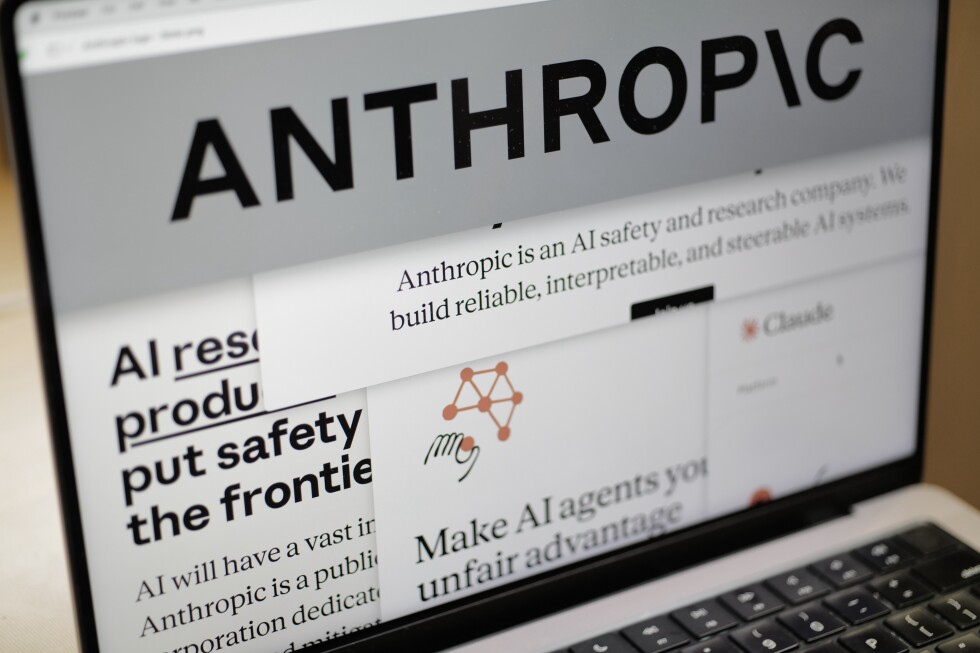
Anthropic’s moral stand against Pentagon raises questions about AI’s readiness for military use

Published

on

Anthropic's moral stand against Pentagon raises questions about AI's readiness for military use

Anthropic’s moral stand on U.S. military use of artificial intelligence is reshaping the competition between leading AI companies but also exposing a growing awareness that maybe chatbots just aren’t capable enough for acts of war.

Anthropic’s chatbot Claude, for the first time, outpaced rival ChatGPT in phone app downloads in the United States this week, a signal of growing interest from consumers siding with Anthropic in its standoff with the Pentagon, according to market research firm Sensor Tower.

The Trump administration on Friday ordered government agencies to stop using Claude and designated it a supply chain risk after Anthropic CEO Dario Amodei refused to bend his company’s ethical safeguards preventing the technology from being applied to autonomous weapons and domestic mass surveillance. Anthropic has said it will challenge the Pentagon in court once it receives formal notice of the penalties.

And while many military and human rights experts have applauded Amodei for standing up for ethical principles, some are also frustrated by years of AI industry marketing that persuaded the government to apply the technology to high-stakes tasks.

Advertisement

“He caused this mess,” said Missy Cummings, a former Navy fighter pilot who now directs the robotics and automation center at George Mason University. “They were the No. 1 company to push ridiculous hype over the capabilities of these technologies. And now, all of a sudden, they want to be for real. They want to tell people, ‘Oh, wait a minute. We really shouldn’t be using these technologies in weapons.’”

Anthropic didn’t immediately respond to a request for comment. The Defense Department declined to comment on whether it is still using Claude, including in the Iran war, citing operational security.

Cummings published a paper at a top AI conference in December arguing that government agencies should prohibit the use of generative AI “to control, direct, guide or govern any weapon.” Not because AI is so smart that it could go rogue, but because the large language models behind chatbots like Claude make too many mistakes — called hallucinations or confabulations — and are “inherently unreliable and not appropriate in environments that could result in the loss of life.”

“You’re going to kill noncombatants,” Cummings said in an interview Tuesday with The Associated Press. “You’re going to kill your own troops. I’m not clear whether the military truly understands the limitations.”

Advertisement

Amodei sought to emphasize those limitations in defending Anthropic’s ethical stance last week, arguing that “frontier AI systems are simply not reliable enough to power fully autonomous weapons. We will not knowingly provide a product that puts America’s warfighters and civilians at risk.”

Anthropic, until recently, was the only one of its peers to have approval for use in classified military systems, where it has partnered with data analysis company Palantir and other defense contractors. President Donald Trump said Friday, around the same time he was approving Saturday’s military strikes on Iran, that the Pentagon would have six months to phase out Anthropic’s military applications.

Cummings, a former Palantir adviser, said it’s possible that Claude has already been used in military strike planning.

“I just fundamentally hope that there were humans in the loop,” she said. “A human has to babysit these technologies very closely. You can use them to do these things, but you need to verify, verify, verify.”

Advertisement

She said that’s a contrast to the messaging from AI companies that have suggested that their technology is evolving to the point where it is “almost sentient.”

“If there’s culpability here, I’d say half is Anthropic’s for driving the hype and half is the Department of War’s fault for firing all the people that would have otherwise advised them against stupid uses of technology,” Cummings said.

One social media commentator this week described Anthropic’s government problems as a “Hype Tax” — a message that was reposted by President Donald Trump’s top AI adviser, David Sacks, a frequent critic of the company.

And while it has caused legal hassles that could jeopardize Anthropic’s business partnerships with other military contractors, it has also bolstered its reputation as a safety-minded AI developer.

Advertisement

“It’s applaudable that a company stood up to the government in order to maintain what it felt were its ethics and were its business choices, even in the face of these potentially crippling policy responses,” said Jennifer Huddleston, a senior fellow at the libertarian-leaning Cato Institute.

Consumers have already spoken, leading to a surge of Claude downloads that made it the most popular iPhone app starting on Saturday and for all phone systems in the U.S. on Monday, according to Sensor Tower. That’s come at the expense of OpenAI’s ChatGPT, which saw its consumer reputation damaged when it announced a Friday deal with the Pentagon to effectively replace Anthropic with ChatGPT in classified environments.

In the Apple store, the number of 1-star reviews — the worst rating — of ChatGPT grew by 775% on Saturday and continued to grow early this week, reflecting a backlash that forced OpenAI to do damage control.

“We shouldn’t have rushed to get this out on Friday,” OpenAI CEO Sam Altman said in a social media post Monday. “The issues are super complex, and demand clear communication. We were genuinely trying to de-escalate things and avoid a much worse outcome, but I think it just looked opportunistic and sloppy.”

Advertisement

Altman gathered employees for an “all-hands” meeting on Tuesday to discuss next steps.

“There are many things the technology just isn’t ready for, and many areas we don’t yet understand the tradeoffs required for safety,” Altman said on X. “We will work through these, slowly, with the (Pentagon), with technical safeguards and other methods.”

Advertisement

Source link

Continue Reading

NewsBeat

Runners, Especially Women, Are At Higher Risk Of Anaemia

Published

on

Runners, Especially Women, Are At Higher Risk Of Anaemia

Last year, I tried to get back into running – and while changes to my joints put me off the sport for a while, I’m now starting again, right from ground zero.

Things will be different this time, I reckon. First of all, I’ll start slower (more Jeffing, I reckon).

And secondly, I’ll keep an eye on my iron intake. Years ago, while training for a marathon, a blood test showed I was anaemic: facts I thought were unrelated.

But it turns out they might not have been. Some research suggests that endurance athletes, especially women, might experience something called “exercise-induced anaemia”.

Advertisement

“In female marathon runners, the prevalence is as high as 28% (compared to 11% in the general female population),” the British Journal of General Practice (BJGP) said.

Why does “exercise-induced anaemia” happen?

Experts think it could be down to a range of factors. One of them is haemolysis, or the destruction of red blood cells through high-impact sports (like pounding your feet on the ground through running).

Another is blood loss through tiny tears in your gastrointestinal and urinary tract, which the BJGP said could happen because of the decrease in blood in the area when you’re really pushing yourself.

Advertisement

Even the inflammatory response brought on by intense exercise could affect how much iron your body absorbs.

Then, there’s the fact that in general, women are more likely than men to experience iron deficiency anaemia. That’s mostly thanks to menstruation.

But working with iron supplement brand Active Iron, Andy Shepherd, performance nutrition lead at Loughborough University, found 75% of women say that they had no idea that high training volume can leave you with inadequate iron.

What are the signs of exercise-induced anaemia?

Advertisement

This has all the signs of iron-deficiency anaemia, which can include:

  • tiredness
  • heart palpitations
  • headaches
  • being paler than usual
  • shortness of breath.

Shepherd said that people with anaemia “usually have some challenges with staying well too, so they might pick up sniffles and coughs and colds much more often.”

And runners with iron deficiency anaemia, exercise-induced or not, can struggle to improve in their sport, he added.

“With moderately low iron, you might be able to train, you might not know you’re low, you might feel fine and not sleepy-tired, but you might not ever be able to push your body to a point where you can adapt and get better.”

The only definite way to diagnose iron deficiency anaemia, however, is with a blood test. This can be done through your GP.

Advertisement

“Our advice is always that you should speak to a doctor or Sports and Exercise Nutrition Register (SENR) qualified nutritionist or dietician if you are concerned,” Shepherd said.

Source link

Advertisement
Continue Reading

NewsBeat

MP hits out at airport drop-off price increase

Published

on

Ipso logo

Robin Swann said that the airport needs to compete with the likes of Dublin

South Antrim MP Robin Swann has said that the decision by Belfast International Airport to increase its drop-off charge is “regrettable.”

Advertisement

On Tuesday, Belfast International Airport confirmed that the cost of using their drop-off zone will increase from £3 to £5 from Monday, 9th March.

A spokesperson for the airport said the increase was due to “significant cost pressures” and that other drop-off options are available.

Ulster Unionist Party MP, Robin Swann, said: “This announcement reinforces my call for further and creative investment in increased public transport options, like reopening the Knockmore Railway Line, which would run from Antrim-Lisburn via Belfast International.

“This would mitigate much of the need for drop-off and short-stay parking and help save holidaymakers and commuters money.

Advertisement

“This is a regrettable decision as the aim should be for Belfast International Airport to be as attractive an offer as possible to help it compete with the likes of Dublin Airport. This price increase will not help make that case.”

“From Monday, 9th March, the tariff in our drop-off zone will increase from £3 to £5. The new pricing reflects significant cost pressures that many businesses across Northern Ireland are currently facing.

“Passengers are reminded that there is a free drop-off area within the long-stay car park. Those requiring additional time should use the short-stay car park, where blue badge holders will continue to receive 30 minutes free.

“We remain committed to transforming the airport and are progressing with our £100million investment programme that has already delivered a new terminal extension, security hall and enhanced duty-free experience.

Advertisement

“Further improvements to the exterior forecourt layout will commence shortly to support traffic flow and public transport access.”

Want to see more of the stories you love from Belfast Live? Making us your preferred source on Google means you’ll get more of our exclusives, top stories and must-read content straight away. To add Belfast Live as a preferred source, simply click here.

Source link

Advertisement
Continue Reading

NewsBeat

What is the Holi Festival of Colours and where I can celebrate it in London?

Published

on

What is the Holi Festival of Colours and where I can celebrate it in London?

Traditions do not get much more fun than Holi, the Hindu festival that celebrates spring, love, and new life.

Some families hold religious ceremonies, but others use the colourful centuries-old festival for a Joyful time – hurling paint at each other.

Source link

Advertisement
Continue Reading

NewsBeat

DUP and Sinn Fein block ’emergency’ motion in ‘NI’s worst pothole council’

Published

on

Belfast Live

One councillor said people are “filling potholes with breeze blocks”

An emergency roads motion in Downpatrick council chamber has been blocked by Sinn Fein and the DUP despite claims the district has the “worst potholes in Northern Ireland”.

A majority of elected members of Newry, Mourne and Down District Council voted against the SDLP motion being heard at the monthly meeting with 22 against and 16 in favour.

The rejection of the emergency motion comes as a deadline on a public consultation came to a close on March 3, which could see a multi-year capital budget proposed for the Department of Infrastructure at £4bn.

Advertisement

READ MORE: Isle of Man urged to reverse new visa rules for foreign crews working on Irish fishing trawlers

READ MORE: DUP councillor ‘horrified’ by Sinn Fein proposal to bulldoze United Irishmen heritage link in Co Down

Speaking to the Local Democracy Reporting Service Slieve Gullion SDLP councillor Pete Byrne said: “I wanted councillors to back me on the right for the Stormont Executive to implement the Independent Review of Road Maintenance Funding (Barton Report), including the need for a multi-year budget settlement and long-term asset management planning to prevent continued network decline.”

He added: “NMDDC is the worst council area for potholes in the Northern Ireland with the lowest amount being fixed, a multi-year budget would go a long way to fix the problem.

“We have people in Crossmaglen filling potholes with breeze blocks, there is that much concern over damage being caused to cars as well as accidents on our roads. “

“I don’t care what party has the Minister’s post, even if it was our own party, there is a duty of care to make our roads safe.

“I thought that an emergency motion on the eve before the consultation of the draft on the multi year strategy ends, which is Tuesday March 3 at 5pm, that we as a council could write in a make a representation.

Advertisement

“But [on] March 2 it was deemed that the roads are not an emergency by Sinn Fein and the DUP and I find that absolutely disturbing.”

When an emergency motion is brought before council a vote is taken to decide if a majority of councillors agree to suspend standing orders to allow the details to be read out in chambers.

A regular motion requires about a week’s notice where as an emergency motion is brought with short notice and must gain support to be heard in open chamber to gain support. A chairperson may also allow the urgent business to be read out if they deem it of urgency, but this did not happen with deputy chairperson Geraldine Kearns presiding.

In January, Finance Minister John O’Dowd said a draft multi-year budget he published for 2026 to 2029/30 was “a way forward”.

Advertisement

A multi-year budget of three years could allow Stormont departments to plan longer-term spending. But the plan has not been agreed by the other executive parties with scrutiny of the public consultation now expected in the Assembly.

Outside of chambers, Sinn Féin group leader Councillor Valerie Harte said: “Our group received this motion less than two hours before the council meeting, as councillors were travelling to Downpatrick.

“Councillor Byrne had two full council meetings since the budget consultation launched, on January 12th and February 2nd, to submit a motion in good time. “It is irresponsible to expect councillors to pass a motion without proper scrutiny. Chronic underfunding and unprecedented rainfall have left our roads in poor condition. We share the frustration of local road users.

“As Infrastructure Minister, Liz Kimmins has secured over £40 million since December in additional funding for road repairs, and is deploying all available resources to deliver urgent works as quickly as possible.

Advertisement

“Whilst the SDLP attempt to engage in political point-scoring, Sinn Féin remains focused on solutions to the problem.”

The LDRS contacted the DUP for comment.

For all the latest news, visit the Belfast Live homepage here and sign up to our daily newsletter here.

Source link

Advertisement
Continue Reading

NewsBeat

the risks of keeping and consuming human tissue

Published

on

the risks of keeping and consuming human tissue

Celebrity outfits and endorsements often dominate social media, but Elton John recently drew attention for a very different reason. The musician has been spotted wearing jewellery made from his own kneecaps.

After a double knee replacement in 2024, he asked his surgeon if he could keep his patellae, the bones at the front of the knee, and later worked with jeweller Theo Fennell to turn them into wearable pieces.

While jewellery made from kneecaps is unusual, it raises a broader question: what happens to tissue once it leaves the body, and why do some people want to keep it?

Elton is not alone in wanting to hold on to parts of the body. Many people keep baby teeth or their children’s first lost tooth as sentimental objects. Social media is also full of stories about people preserving removed tonsils, adenoids, an appendix, or a newborn’s umbilical stump. Some of these are biologically inert keepsakes. Others carry medical and safety considerations.

Advertisement

In most cases, tissue removed during surgery is handled very differently. It is usually sent to a laboratory for testing, known as pathology, to confirm a diagnosis or check for disease. After that, it must be disposed of safely as clinical waste because it can carry biological risks. It is now relatively uncommon for patients to keep surgically removed tissue.

Handling human tissue can pose risks, especially for professionals working in operating theatres or pathology labs with unfixed tissue. “Unfixed” means the tissue has not been treated with chemicals to preserve it and kill microbes. Healthcare staff who use needles or sharp instruments are particularly vulnerable to exposure to blood-borne viruses such as hepatitis or HIV. Depending on the source, other pathogens may also be present, for example respiratory microbes in lung tissue.

Some keepsakes fall somewhere between harmless and medically relevant. Parents sometimes keep the umbilical stump after a baby is born. This small piece of tissue dries up and falls off naturally, usually within the first couple of weeks. If it is not kept clean and dry, it can become infected with a condition called omphalitis, meaning inflammation and infection of the stump.

Advertisement

Placenta

The most debated example of keeping human tissue comes after childbirth. Following delivery of the baby, the placenta is also delivered. This temporary organ connects the developing foetus to the uterus and acts as an interface for exchange of oxygen, nutrients and waste products between mother and baby, while keeping their blood supplies separate to prevent immune rejection and blood incompatibility.

Some people choose not only to keep the placenta but to consume it, a practice known as placentophagy. The idea comes from the belief that because the placenta nourishes the foetus during pregnancy, it must contain nutrients that can help the mother recover after birth. During pregnancy, nutrients such as calcium are transferred to the developing baby, and mothers can lose close to 4% of their bone mineral density. However, most nutrients stored in the placenta have already been passed to the foetus before birth.

Claims about the benefits of placentophagy are not strongly supported by scientific evidence. The nutrients present in placental tissue can generally be obtained through a balanced meal. Research in animal models has shown some positive effects, and similar findings have been reported in those studies, but these results have not been reproduced in humans.

People consume the placenta in various ways. It may be blended raw into smoothies, cooked into foods such as lasagne, steeped in high-strength alcohol to create a tincture, or dried and made into capsules, which is the most common approach, known as encapsulation.

Advertisement

Health risks

But there are also potential health risks. The placenta contains elevated levels of oestrogen, and high concentrations of this hormone in the bloodstream can increase the risk of thromboembolism, a condition in which blood clots form and travel through the circulation.

The placenta also acts as a filter during pregnancy, limiting the transfer of certain substances to the baby. Studies show that some heavy metals and other ions can accumulate in placental tissue, meaning levels may be higher in the placenta than elsewhere in the body.

In 2017, the CDC reported a case in which a baby developed repeated infections with group B Streptococcus agalactiae, a bacterium commonly found in the gut or vagina. Investigators traced the source of the infection to the mother consuming placenta capsules contaminated with the same bacterium. The process used to produce capsules reduces bacterial levels but does not completely remove them in all cases. Eating the placenta raw carries even greater risks, including exposure to bacteria such as E.coli.

Many animals eat their placentas after giving birth, largely to remove evidence that could attract predators and to reclaim nutrients. For humans, those same nutrients are easily obtained from a normal diet, and the medical benefits remain uncertain. At present, more robust studies are needed to determine whether placentophagy offers any genuine health advantages.

Advertisement

Whether transformed into jewellery, kept in a memory box or blended into a smoothie, once tissue leaves the body it moves from the personal and sentimental into the medical and biological. The meanings people attach to it vary widely, but the scientific questions about safety, benefit and risk remain the same.

Source link

Advertisement
Continue Reading

NewsBeat

Econ Engineering of Ripon supplies gritters to Marlborough

Published

on

Econ Engineering of Ripon supplies gritters to Marlborough

Econ Engineering supplies 85 per cent of the UK’s gritters, instantly recognisable for their iconic yellow bodies.

However, Term Maintenance Contractor Marlborough requested bright red to emphasise its ‘we are bold’ values.

The new gritters will support winter service deliver across Havering and Southend, with further vehicles to follow for the Royal Borough of Windsor & Maidenhead ahead of next season.

Advertisement

RECOMMENDED READING:

The four new red gritters are named Snowflake, Snowblast, Snowsafe and Snowflare, following a local competition.

Steve Sinnott, Econ Sales Director, said: ““While Econ is famous for its iconic yellow gritters, we’ve genuinely loved working with Marlborough Highways to bring these striking red vehicles to life.

“They perfectly reflect Marlborough’s bold identity, and we’re proud to support them with equipment, technology and aftercare that will perform reliably throughout the winter season and beyond.”

Advertisement

Matt Hoiles, Head of Transport & Plant, Marlborough Highways, said: “We’re proud to see these new gritters join our fleet as we head into the winter season. They reflect our commitment to investing in high-quality, reliable equipment that supports our teams to deliver for our clients and communities.”

Source link

Advertisement
Continue Reading

NewsBeat

Strong progress across key educational measures in North Lanarkshire schools

Published

on

The Daily Record

The latest performance report, using 2024–25 data and national statistics published in December 2025, shows that children and young people in North Lanarkshire are performing in line with, and in some areas above, national averages.

Schools across North Lanarkshire are showing positive signs of progress, with new figures highlighting improvements in attainment, reduced exclusions and continued success in inspections.

Advertisement

The latest performance report, using 2024–25 data and national statistics published in December 2025, shows that children and young people in North Lanarkshire are performing in line with, and in some areas above, national averages.

“It’s part of a co-ordinated effort over many years by this authority to raise attainment and skills, enhance opportunities and choices, and support all young people to realise their full potential,” explains Councillor Michael McBride, convener of the council’s Education, Children and Families Committee.

In primary schools, combined P1, P4 and P7 results in literacy and numeracy remain strong overall, with numeracy continuing to be a particular strength.

Children in P1 have consistently achieved above national averages in both literacy and numeracy over the past five years.

Advertisement

While P4 results dipped slightly this year, long-term trends remain positive, and P7 literacy continues to outperform national levels.

At secondary stage, S3 attainment has reached its highest levels on record. Third level literacy is now above the national average, while fourth level literacy has increased sharply, significantly closing the gap with national performance. Fourth level numeracy has also risen strongly and is now close to the national figure.

READ MORE: North Lanarkshire councillors endorse work being undertaken to reduce pressure on hospital services

The report also shows continued progress in closing the poverty-related attainment gap. Across primary and secondary stages, gaps in literacy and numeracy remain below national levels and are now at their lowest points on record in several areas.

Advertisement

North Lanarkshire Council has also exceeded the national teacher workforce target, with pupil–teacher ratios remaining stable and favourable.

Inspection outcomes remain a key strength, with most inspections graded “Good” or better. Early years settings, in particular, have seen a clear shift towards consistently good ratings.

Councillor Michael McBride welcomed the findings, adding: “This report shows the real impact of the hard work taking place every day in our schools and early years settings. “We are seeing our strongest ever S3 results, narrowing attainment gaps and continued positive inspection outcomes.

READ MORE: North Lanarkshire Council budget sees seven per cent council tax rise

Advertisement

“We are determined to build on this success, with a particular focus on targeted support in P4 numeracy and writing, further work to tackle persistent absence, and continued action to reduce inequality.

“Overall, this a very positive picture of progress for our children and young people.”

*Don’t miss the latest headlines from around Lanarkshire. Sign up to our newsletters here.

And did you know Lanarkshire Live had its own app? Download yours for free here.

Advertisement

READ MORE: North Lanarkshire SNP group accuse Labour-run council of implementing ‘unnecessarily high council tax rise’ in budget

Source link

Continue Reading

Trending

Copyright © 2025