

Politics
Iran women’s national team refuse to sing national anthem

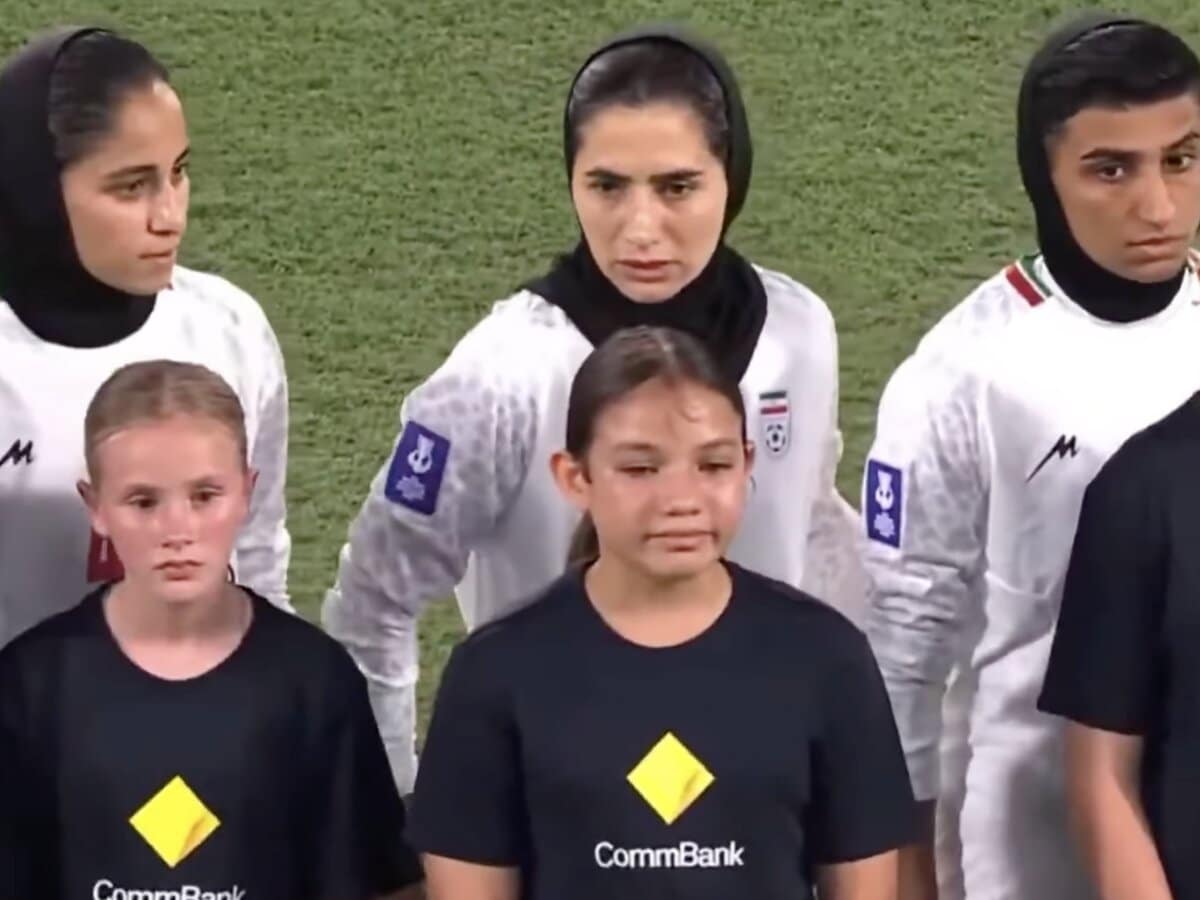
The Iran women’s national football team refused to sing the national anthem before their Asian Cup match against South Korea.
Iran’s women’s national football team refused to sing the anthem at the Asian Cup
Before the match against South Korea, the players did not perform the national anthem. The team stood in silence, while head coach Marzieh Jafari was seen smiling during its performance.
She… pic.twitter.com/KYUgFUwPyT
— NEXTA (@nexta_tv) March 3, 2026
The team are in Australia for the tournament, and stood silently as the speakers played ‘Mehr-e Khavaran’ around the stadium.
Only one day before the game, US-Israeli strikes murdered Iran’s supreme leader, Ayatollah Ali Khamenei. He had ruled the country since 1989.
Iran lost 3-0, which is no surprise, given that the US and Israel are blowing their home country to smithereens.
Iran deserve respect
After the game, journalists questioned the players at the press conference. The team coach, Marziyeh Jafari, said:
We shouldn’t be talking about these issues at all now.
Right now, the team is in a very important competition that holds great rights for women … next question.
The Asian Football Confederation (AFC) is reportedly monitoring the situation and will offer support to the players if needed.
Iran will face Australia on Thursday night, again on the Gold Coast.
Australian player Amy Sayer told journalists that the Iranian squad deserve respect for carrying on and playing, while the bombing of their nation intensifies.
Our heart goes out to them and their families, it’s a difficult situation and it’s really brave of them to be able to be here and to perform.
They played (on Monday), and they put on a really strong performance, even with the political climate that’s going on and the struggles that they might be going through.
I think we’re excited and looking forward to the game on Thursday … the best we can do to contribute is to just give them the best game of football that we’re able and to show them the respect on the field.
The Iranian national team is showing up. And given how brutally the US and Israel are bombing Iran, just that is hugely courageous.
Donald Trump and Netanyahu want the Iranians silent and compliant – yet the team showing up to play and standing together during the national anthem shows that they refuse for everything to be business as usual.
Featured image via Guardian Football/YouTube

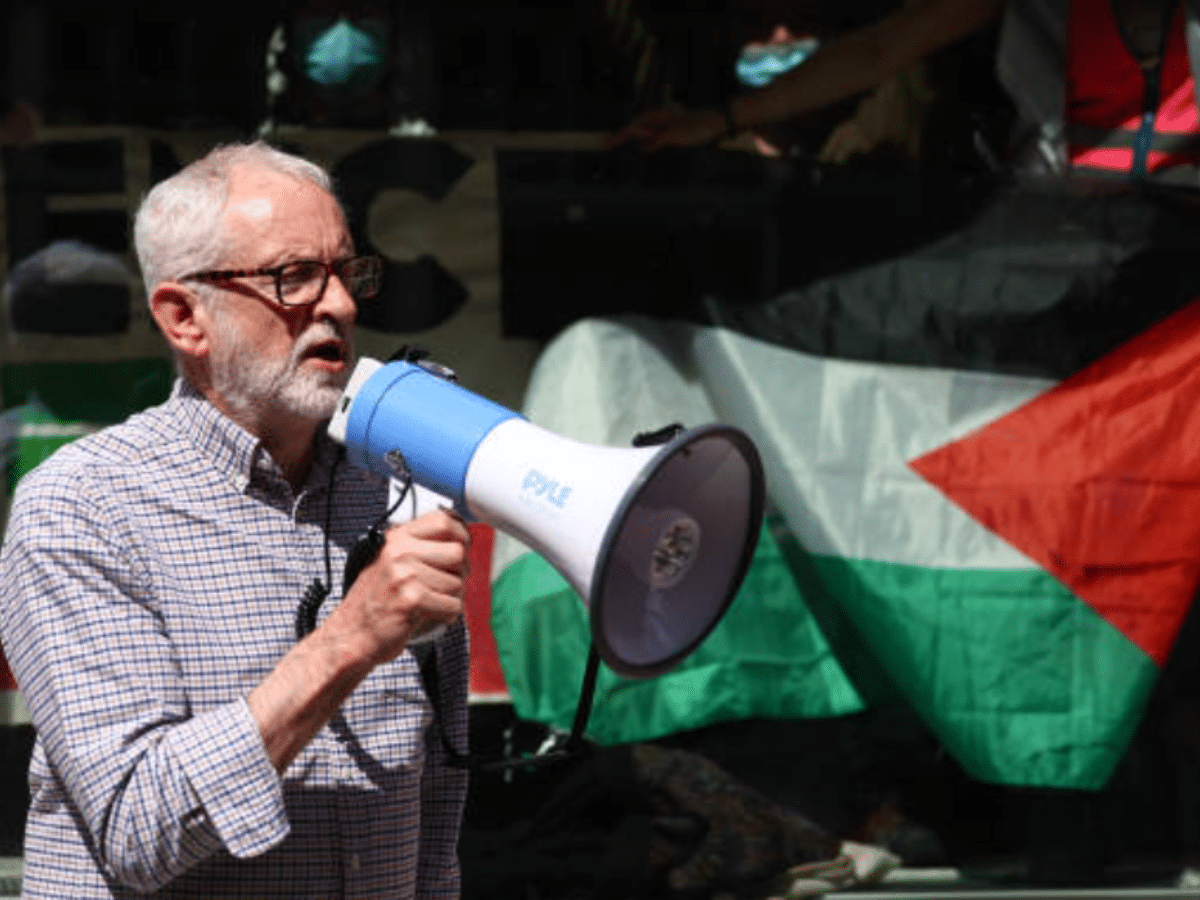
Independent MP Jeremy Corbyn has tabled a Presentation Bill today titled the Military Action (Parliamentary Approval) Bill. The bill would require MPs to exercise stronger oversight over how foreign states use UK military bases.
The MP for Islington North has spoken up against the US-Israel war since it began. He provided a damning statement on 2nd March regarding the UK PM’s inability to stand up to Trump, seen below:
Allowing British bases to be used in an illegal war of aggression is a catastrophic and historic mistake.
Britain has been dragged into another war because our Prime Minister would rather appease Donald Trump than stand up for international law.
War is not a game. This…
— Jeremy Corbyn (@jeremycorbyn) March 2, 2026
Statement in full:
Allowing British bases to be used in an illegal war of aggression is a catastrophic and historic mistake.
Britain has been dragged into another war because our Prime Minister would rather appease Donald Trump than stand up for international law.
War is not a game. This shameful decision makes Britain complicit in the devastating consequences ahead – and jeopardises the safety of us all.
Corbyn gets cross-party support from Labour and Green Party
This bill comes as we understand the US have far more presence in the UK via military bases than was previously known. This has raised concerns about the UK becoming a vassal state for Trump and the US, who are now working in tandem with Israel in its illegal bombing campaign on Iran. So far, almost 800 people have been killed in Iran, with more people murdered in Israel’s bombing of Lebanon.
Today parents in Iran buried 165 children killed in the attack on a girls’ primary school by the United States and Israel.
From Gaza to Iran, this is what “liberation” by the West looks like. pic.twitter.com/6LDE0lYkdO
— Zarah Sultana MP (@zarahsultana) March 3, 2026
Rogue states
Corbyn has tabled the bill following Keir Starmer’s clear, public commitment to allow the US to use UK military bases in US and Israel’s illegal war on Iran for ‘defence’ purposes.
Because these two rogue states break international law daily, we must apply rigorous oversight and scrutinise government decisions that make us complicit in a war of aggression on Iran.
The full title of the bill is:
Bill to require parliamentary approval for the deployment of UK armed forces and military equipment for armed conflict; to require parliamentary approval for the granting of permission by Ministers for use of UK military bases and equipment by other nations for armed conflict; to require the withdrawal of that permission in circumstances where parliamentary approval is not granted; to provide for certain exemptions from these requirements; to make provision for retrospective parliamentary approval in certain circumstances; and for connected purposes.
The bill is supported by 11 co-sponsors, from Labour, Green Party and Independents:
- Diane Abbott
- Bell Ribeiro-Addy
- Brian Leishman
- John McDonnell
- Adnan Hussain
- Ayoub Khan
- Richard Burgon
- Kim Johnson
- Apsana Begum
- Ellie Chowns
- Hannah Spencer
Your Party MP Zarah Sultana was not contacted to support the bill, hence her name is not included. However, she has also been outspoken against imperial aggression being seen to batter Iran, and the weak, spineless behaviour on show by Starmer and co:
I asked the Prime Minister how much he enjoys being Donald Trump’s poodle.
He didn’t answer. pic.twitter.com/hzBjAJ1o84
— Zarah Sultana MP (@zarahsultana) March 2, 2026
Proving it is indeed possible, Sultana referred to Spain’s principled decision to kick out the US military:
CC: @Keir_Starmer
Look, it is possible to not be Donald Trump’s poodle. https://t.co/cC3L1vtqN4
— Zarah Sultana MP (@zarahsultana) March 2, 2026
Featured image via the Canary
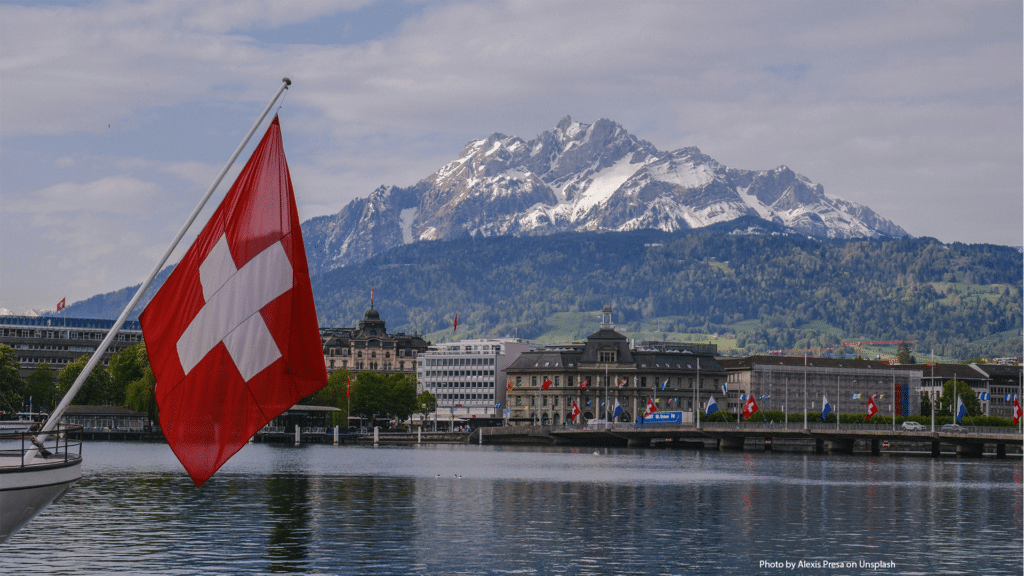
Astrid Epiney explains how the agreements that underpin Switzerland’s relationship with the European Union work, as well as the advantages and tradeoffs.
Switzerland is not a member state of the European Union. However, it is deeply connected to the Union and its member states, especially those neighbouring it. So, economically speaking, Switzerland is one of the states most “integrated” into the internal market, and the EU is by far Switzerland’s most important economic partner.
The basis for this special relationship is about 140 international treaties between Switzerland and the EU, the so-called “Bilateral Agreements” being of special importance. While the “Bilaterales I” (entered in force in 2002) mainly concern the participation of Switzerland in parts of the internal market (including free movement of persons), the “Bilaterales II” (signed in 2004) deal also with other topics, in particular the Schengen/Dublin-association on migration and police cooperation. Since these important treaties provide for participation of Switzerland in parts of the EU acquis, they also contain mechanisms for their updating when the relevant EU law is modified. However, the treaties do not contain a dispute settlement mechanism, and as far as the agreements concerning participation in the internal market are concerned, updating is possible (and has happened hundreds of times in the past around 25 years) but is not dynamic; in the sense that the parties may decide not to update an agreement.
The current package of agreements being negotiated between Switzerland and the European Union (“Bilaterales III”), signed on 2 March 2026, modifies the institutional aspects of four agreements covering trade, land and air transport and free movement of persons. These aspects are very important for the European Union, which considers that participation in parts of the internal market must be accompanied by an alignment with the concerned EU law and its developments, and by a mechanism for dispute settlement. However, these aspects are also of a certain interest for Switzerland, since there are advantages for the smaller partner if the relationship is shaped by law rather than by politics.
The new package now provides for dynamic alignment of the agreements with the development of EU law, accompanied by safeguards that reflect Swiss realities, such as labour market needs, public service obligations, special provisions for land transport or high standards in areas like animal welfare.
Specifically, every time a legal act integrated into an agreement with Switzerland is about to be modified, Switzerland is informed and Swiss experts participate in the preparation of such modification (‘decision-shaping’). After the adoption of the act at EU level, the joint committee (composed of the representatives of the parties) takes a decision to update the agreement as fast as possible in order to align it with the development of EU law. This highlights that the alignment is not ‘automatic’, since a decision of the joint committee is necessary in any case.
From the point of view of Swiss law, every decision of the joint committee is viewed as a new international treaty. So, the Swiss representative may approve such a decision only if the requirements of national law are fulfilled. This is a serious limitation: the national Parliament may have to adopt – before deciding on the alignment – a new national law which may also be subject to a referendum. But it is also possible that the government may have already decided not to allow the Swiss representative to approve a certain alignment in the joint committee, which may constitute a breach of the obligations laid down in the agreements. The agreements address this possibility explicitly: in the case that Switzerland refuses to update an agreement and an arbitral tribunal has stated that this refusal constitutes a breach of Switzerland’s relevant obligation, the European Union may take – only in the scope of the agreements on the internal market – ‘compensatory measures’, which have to be proportionate.
In addition to this principle of dynamic alignment, the agreements provide for dispute settlement by an arbitral tribunal which must refer a question to the European Court of Justice (CJEU) if the decision of the dispute depends on the interpretation of a notion of EU law integrated into one of the agreements. The CJEU, however, is competent only to interpret EU law; the final decision on the dispute has to be rendered by the arbitral tribunal (the parallels to the preliminary rulings of the ECJ are evident).
To sum up: the relationship between Switzerland and the EU is a very special one. It has not emerged overnight but is the result of more than 50 years of pragmatic cooperation, beginning with the Free Trade Agreement of 1972, and shaped afterwards following the Swiss people and cantons’ rejection of membership in the European Economic Area. The Bilateral Agreements in general and the agreements providing for integration into parts of the internal market especially have to be seen in this context. Switzerland and the European Union agreed on a package of treaties which now shall be developed and stabilised by the “Bilaterales III”, which took around ten years of negotiations.
For both sides, it has advantages and trade-offs. But in my view the most important aspect is that it shows that participation of a third country in parts of the internal market is possible but demands certain institutional arrangements. At the same time, the agreements with Switzerland also illustrate that special provisions (e.g. concerning the ‘refusal’ of dynamic alignment or the numerous safeguards) can be negotiated. The ‘Swiss model’ may be of a certain interest for other third countries, bearing always in mind the special relationship and history of the agreements and the necessity of agreeing with the European Union on the concrete setting.
But there remains a significant hurdle: will bilaterales III be accepted by the Swiss people? There will be a referendum on the agreements, and the challenge will be to explain the advantages and – given the important relationship with the EU – the necessity of adhering to the compromise found.
By Astrid Epiney, Professor of European Law and Director of the Institute for European Law, the University of Fribourg.
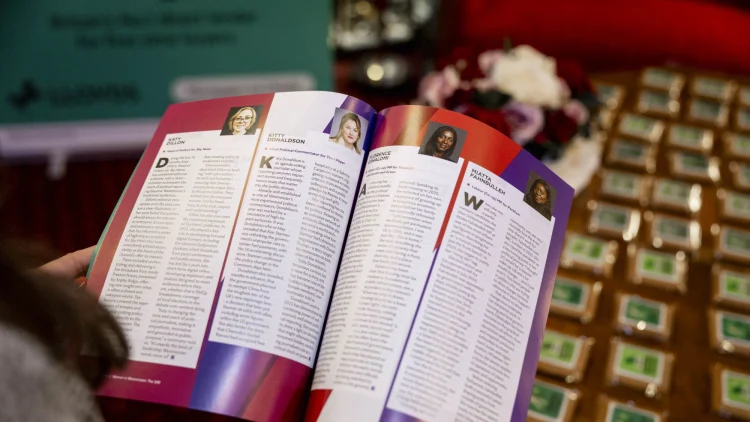

(Credit: ©Visual Eye)

It is my pleasure to introduce the seventh edition of The House magazine’s Women in Westminster: The 100.
Each year, the list provides an opportunity to reflect on the contribution women continue to make across Westminster and to recognise those whose work over the past year has had a tangible and lasting impact on public life.
The 100 brings together women from across politics and public service: parliamentarians and peers, journalists, civil servants, campaigners, think tankers and public affairs professionals. Their roles are varied, but they share a commitment to public service and a willingness to lead – often in complex, high-pressure environments and often without recognition. Women in Westminster exists to pause, take stock and acknowledge that work.
As ever, the list has been selected by our board of Patrons from a wide range of nominations. The process is rigorous and the discussions are thoughtful, reflecting not only what has been achieved over the past year, but the influence these women have had on those around them – in shaping debate, improving policy and strengthening the institutions in which they work. Narrowing such a remarkable field down to one hundred is never easy and I am hugely grateful to my fellow Patrons for the care they bring to this process. I am also pleased to welcome a new Patron this year, Jaee Samant, Director General of Business Group at the Department for Business and Trade.

While there is much to celebrate, Women in Westminster has always been about more than recognition alone. It is also about visibility and inspiration. Women’s achievements in politics and public service are too often under-acknowledged, and too many talented women still face barriers to progression and representation.
Importantly, The 100 also looks forward. Representation matters not only for those working in Westminster today, but for those who may consider it in the future. When young women see others shaping policy, leading teams and influencing national debate, politics becomes less abstract and more accessible. It becomes a place where their skills and ambitions might belong.
I hope this year’s Women in Westminster: The 100 offers both recognition and reassurance: recognition of the work done over the past year and reassurance to those following that there is space for them, too.
You can view the full The 100 on the WiW website or read our publication here.
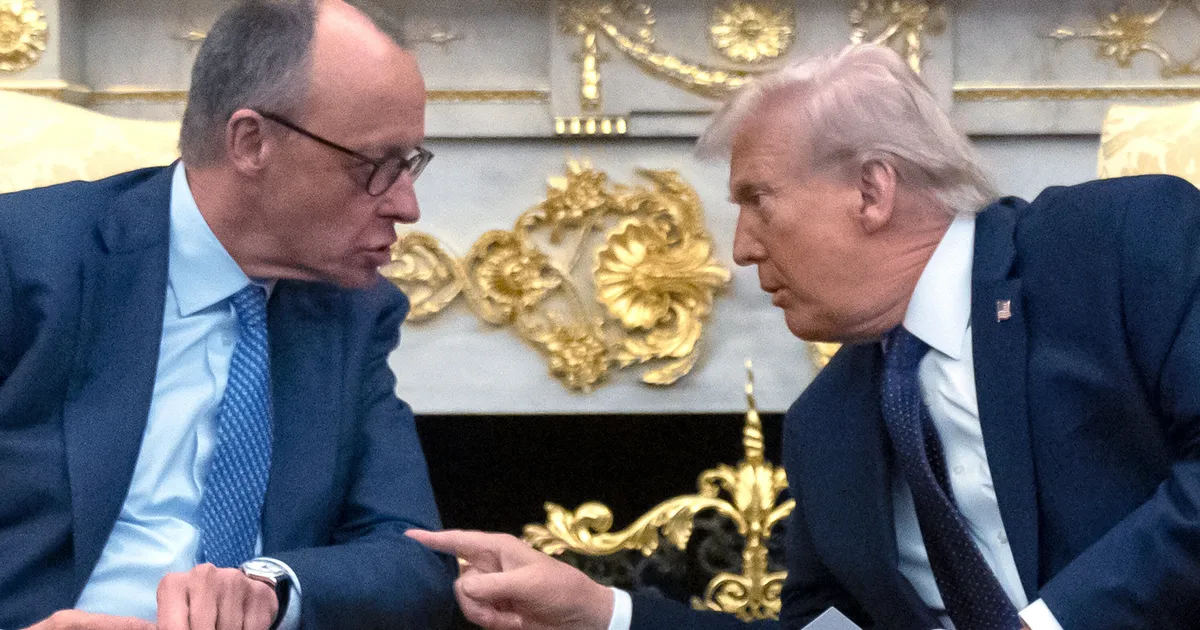
Friedrich Merz has claimed he privately defended Keir Starmer after Donald Trump attacked the UK prime minister in a joint press conference.
The US president said Starmer was “no Winston Churchill” in a scathing takedown while sat next to the German chancellor in the Oval Office on Tuesday.
He also threatened to escalate his trade war with Europe and “embargo” Spain for not spending more on defence.
The president is fuming after Starmer hesitated over a US request to use RAF military bases to target Iran, even though the PM granted the Americans access on Sunday night.
Trump is also irate after Spain flat out refused to let America use any of its military bases for the US and Iran’s joint strikes on Iran.
Amid his rants about the UK and Spain, the president warmly told the German chancellor – who does support the Iran strikes – he was a “friend” and doing a “really great job” as they chatted in front of the cameras on Tuesday.
Merz quickly came under fire for not defending his allies in the face of Trump’s criticisms and sitting in silence.
However, he later told the press that this was his strategy.
According to a translation from POLITICO, Merz said he had told Trump in private that Starmer “is making a really, very, very large, very, very valuable contribution” to joint European efforts to end the Ukraine war.
He supposedly told the president that he considers the criticism of Starmer “to be unjustified”.
He said: “I did this behind closed doors because, as I said, I did not want to play out the conflict on the open stage there.”
Merz insisted that “there is no way that Spain will be treated particularly badly” on trade, despite Trump’s threats, because Madrid remains a member of the EU.
The chancellor also claimed he had showed Trump a map of the front lines in Ukraine and believed “the president is now more understanding what is at stake for this country”.
In his hurry to secure a peace deal to end Vladimir Putin’s war in Ukraine, the president has been trying to encourage Kyiv to give up more territory to appease Russia – a red line Ukraine has so far refused to cross.

Attention deficit hyperactivity disorder (ADHD) is believed to affect 2.6 million people in the UK.
Symptoms can include struggling to stay consistently attentive and finding impulse control difficult.
But according to a brain imaging study published in JAMA Psychiatry recently, it looks like the condition, currently treated as a monolith, could have three different “biotypes” (subtypes).
These, the paper said, have “unique clinical-neural profiles”.
How did researchers find that out?
The researchers looked at both the chemical and structural patterns in the minds of children with ADHD.
After looking at hundreds of participants’ scans and neurochemical signals, they found that not all ADHD brain activity seemed to behave the same way.
Three different patterns seemed to emerge.
That could be helpful for people with ADHD, the researchers said, because it “may ultimately create a path toward developing personalised therapeutic strategies,” rather than one generalised treatment.
Which types of ADHD did they find?
- Severe-combined with emotional dysregulation
- Predominantly hyperactive/impulsive
- Predominantly inattentive.
What might that mean?
Speaking to ADHD UK, consultant psychiatrist Dr Shyamal Mashru described emotional dysregulation as “the difficulty of an individual to modulate or regulate their emotional responses to a situation… What that means is, if there is a sad situation, something that would make anyone feel sad, for example, the emotional response in an ADHD individual would appear extremely amplified.”
ADHD hyperactivity, meanwhile, can include having high energy levels, feeling restless, fidgeting, and “restlessness, even at inappropriate times, and difficulty engaging in quiet activities,” the National Institute of Mental Health said.
Impulsivity can involve “acting without thinking or having trouble with self-control,” they added.
And Dr Mashru said that ADHD inattentiveness doens’t always look like you might expect.
Instead, he said, “It’s not a deficit of attention. It’s a lack of regulation of attention. So attention is being dispersed in multiple different things”.
A person with ADHD might find it hard to control their focus on one thing, but this could be due to multiple demands on their attention rather than an absence of focus.

Lily Allen kicked off her latest tour in support of her hit album West End Girl over the weekend.
And, well, it wouldn’t be a Lily Allen venture without a bit of discourse, would it?
In the lead-up to her tour – titled Lily Allen Sings West End Girl – the chart-topping singer made it clear that she’d be singing her latest album straight through, in order.
What some fans perhaps didn’t realise, though, was that this would make up the entire show, meaning Lily’s performance clocks in at under an hour.
Admittedly, the show isn’t without its hits, with Lily’s opening act being a string orchestra dubbed the Dallas Minor Trio, who perform the likes of The Fear, Smile and Fuck You before the main event, with karaoke lyrics flashing up on screen, inviting fans to sing along.
But Lily’s on-stage runtime has led to a lot of debate online in the last few days…
What are the reviews for Lily Allen’s West End Girl shows like?
Well, those who loved the show really loved it.
The Independent gave it four stars, enthusing: “It is absolutely no surprise that Allen is currently in talks to modify West End Girl into a proper stage play.
“Her tour shows it’s almost there already, a blend of concert and play, in which Allen plays the starring role.”
Similarly effusive was The Times’ four-star take, which praised Lily for “defy[ing] expectations of a 40-year-old mother-of-two who until six months ago was a former pop star who had pivoted to podcasting”, and even ended by pondering: “Hey, who needs a regular gig?”
The Standard gave Lily three stars and wrote that her latest show shows her “doing things wholly her way”, while noting it was “less a gig than a piece of cathartic performance art”.
“With music delivered in playback, and only a fridge, two beds, some lamps and the contents of that infamous plastic bag on stage, Allen’s show is a compact and bijou offering,” said The Observer, whose reporter suggested that for Lily’s upcoming festival and arena tours, the show would “undoubtedly see the show increase in scale”.
However, some critics were left a little cold by Lily’s latest concert.
The Sun offered three stars and pointed to the fact that, on stage, she did “nothing more than sing the album as it was recorded”, while The Guardian’s two-star take suggested it was “dull to watch her go through the motions to a backing track”.
“It’s undeniable that the audience are into the second half,” the review said, before questioning “how much of that comes from existing goodwill – and, undoubtedly for some, the desire to perform catharsis to this material”.
The Telegraph, meanwhile, also gave the West End Girl show two stars, claiming it was a “set of two halves”, which is “not ideal when her segment lasted just shy of an hour”.
What are fans saying about Lily Allen’s West End Girl tour?
This is where things get a bit more interesting.
You see, among fans who have actually been to the show so far, reviews on X have been unanimously glowing.
However, when word spread about Lily’s performance lasting between just 45 minutes and an hour, many people were left a little puzzled by the whole thing.
This, in turn, led to a lot of debate on social media on both sides of the argument – with some backing Lily and pointing out the show does exactly what it says on the tin, and others questioning the price of a ticket for such a short set.
Where is Lily Allen performing on her West End Girl tour next?
The tour resumes on Thursday night in Birmingham, with shows scheduled at intimate venues around the UK for the rest of March, culminating in two nights at the iconic London Palladium.
She’ll then take the show overseas, before returning in June for a string of arena shows across the UK and Ireland.
At the end of May, she’ll also headline Mighty Hoopla in London, her only UK festival appearance this year.
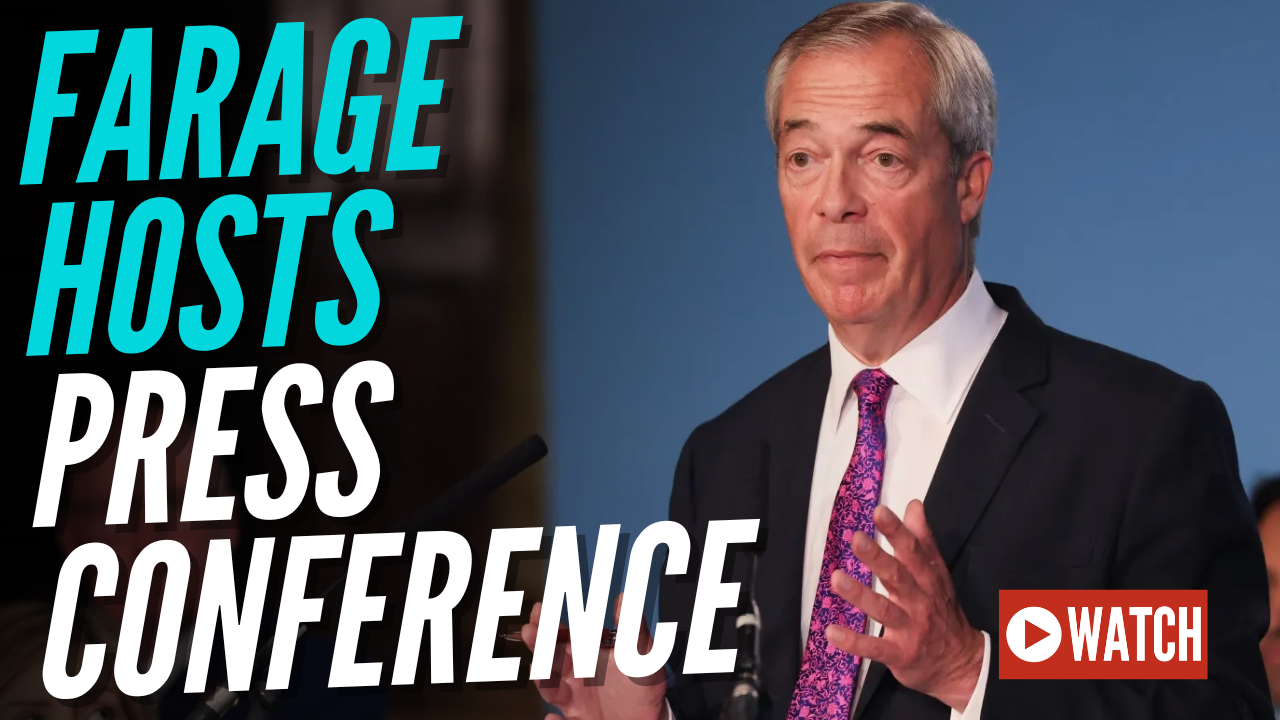
Sir Robin Wales, Labour mayor of Newham from 2002 to 2018, will become Reform’s London director of local government. Wales’ close aide Clive Furness will be Reform’s mayoral candidate in Newham. Watch along above…
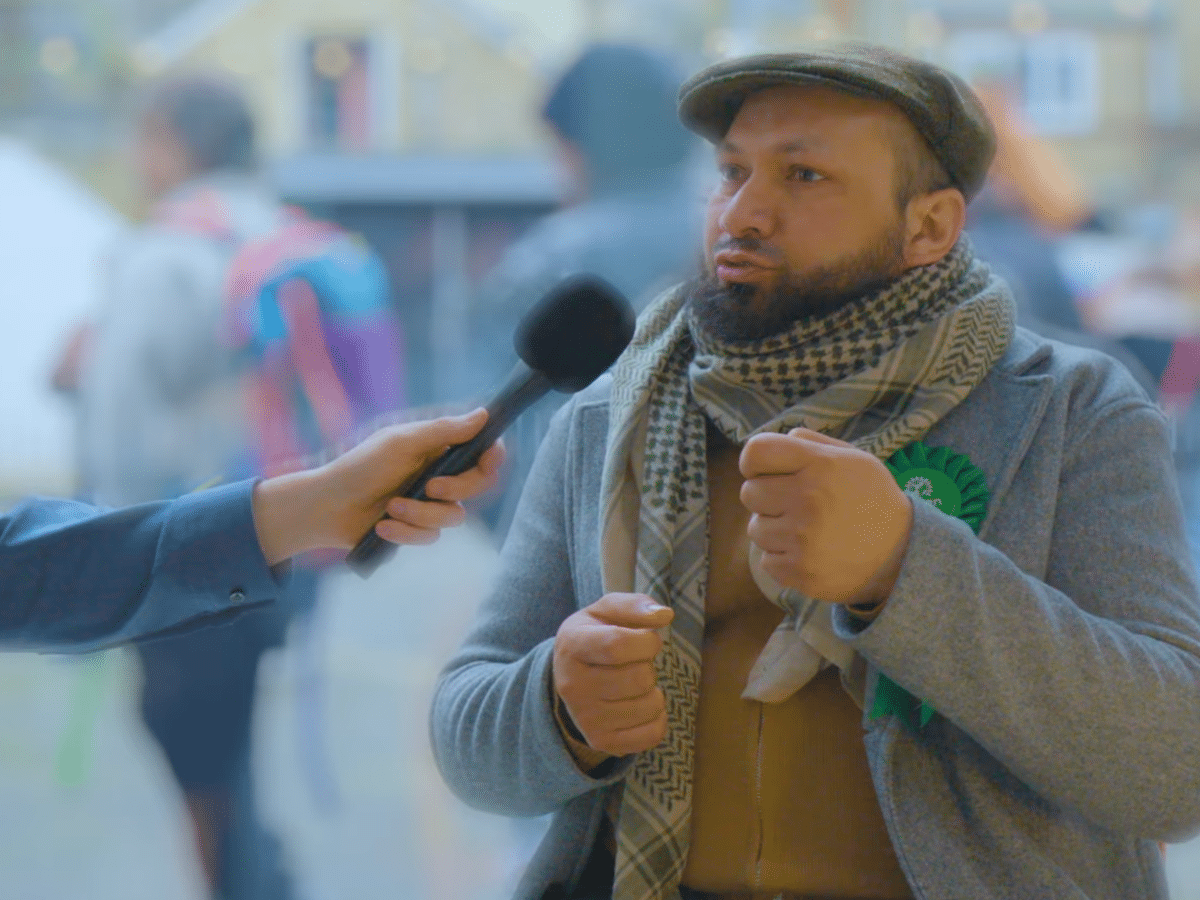
Green party deputy leader Mothin Ali has said the lies of Keir Starmer and Tory MP Alec Shelbrooke could get him killed. He has already received death threats as a result of the smears, made by the two MPs under ‘parliamentary privilege’ that protects them from legal action.
Shelbrooke claimed on Monday 2 March that Ali had been “protesting in support of the ayatollah”. This was a reference to Iranian cleric Ali Khamenei, deliberately murdered along with his family by Israeli bombs. Ali had done no such thing. Instead he had participated in an anti-war protest against the ongoing illegal US-Israeli attacks on Iran.
Shelbrooke claimed to be:
appalled – not shocked, I am afraid to say – as I am sure the PM was, to see at the weekend the deputy leader of the Green Party once again protesting in support of the ayatollah.
The hatred and fear that runs through Leeds now, which has been whipped up at times by Councillor Mothin, is a disgrace.
Rather than correct this disgraceful lie, Starmer chose to try to excuse Labour’s disastrous by-election defeat last week by giving the claim his racist endorsement:
I think we were all shocked by the actions of the deputy leader of the Green Party – although perhaps not surprised, given that party’s recent turn of direction.
Mothin Ali isn’t taking this lying down
Ali pointed out the spinelessness of using privilege to smear him, telling Middle East Eye that:
He can say what he wants in there and get away with it. I want to see how brave he is. Will he repeat this outside parliament?
The PM is just another coward and allied with the Tories. He’s let down the British public and he needs to resign. The Green Party has been accused of sectarianism. This is why that’s wrong.
They will get me killed…over the last couple of days I’ve received about 20 death threats.
Ali went on to say that he is not a supporter of Iran’s government but was outraged by the US-Israel murder of more than 160 schoolgirls by bombing their school:
A whole load of little girls had just been blown to bits. I’m not supposed to feel anything about that?
When black and brown kids get blown up no one cares. If I left politics and went for a job interview, this is the first thing people would see online.
Party leader Zack Polanski said Starmer showed “blatant Islamophobia” and had smeared “a caring man of principle standing up for peace”. He added that the comments show the establishment’s fear of peace activists, especially Muslims:
There’s nothing the establishment is more scared of than a calm, kind, thoughtful gardener who happens to be a Muslim man in politics.
How low can they go?
Like Starmer, Shelbrooke is an ardent supporter of Israeli murder and apartheid. In June 2025, as Israel illegally attacked Iran and murdered civilians before getting its arse handed to it in the so-called ’12-day war’, Shelbrooke told MPs that:
I want to put it on the record that Israel has my absolute full support in the action that it is taking.
Starmer, of course, does not have the spine to stand outside number 10 and repeat his smears, as he knows the response his heinous remarks will get. Not even an anonymous ‘Number 10 spokesperson’ would answer requests to clarify or correct Starmer’s lie.
Based on this episode and much more, he and Shelbrooke are racist, genocide-enabling scum pandering to the worst instincts of the foul, pea-brain right. And that’s not under parliamentary privilege.
Featured image via YouTube screenshot/Hugo Harvey
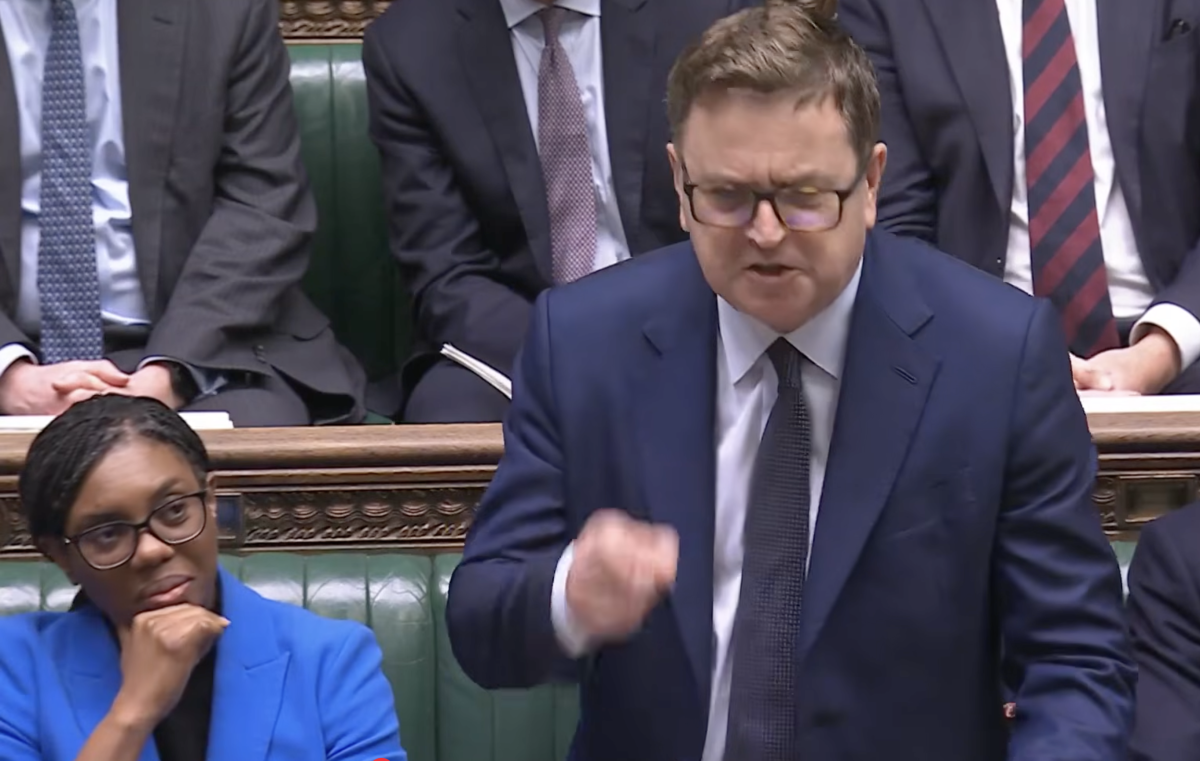
The post Shadow Chancellor Mel Stride responds to the Spring Statement appeared first on Conservative Home.
Rafe Fletcher is the founder of CWG.
My memories of Japan are coloured by British triumphalism. In 2019, I was in Oita to see England thrash Australia in the Rugby World Cup. And last November, I saw Oasis play to a sell-out crowd in Tokyo.
Touring acts are more welcome than those putting down permanent roots. Japan’s foreign resident population is growing and, at four million, now constitutes around three percent of the population. They are readily identifiable in such an ethnically homogeneous country.
Japan’s new Prime Minister Sanae Takaichi, who models herself on Britain’s own Iron Lady, won a landslide victory last month. She is pro-market and firm on immigration. But, as yet, her latter stance is heavier on rhetoric than policy. Because Japan is in a precarious position. How does it balance public demand to retain a clear national identity with the structural challenges of the world’s oldest population? Barring a sudden reproductive resurgence or a robotics revolution, foreign workers have to fix lopsided demographics.
Japan is an outlier because national identity is so intertwined with ethnicity. But the subject is nonetheless getting a bit more mainstream in Britain. Elon Musk recently swung behind Rupert Lowe’s splinter group Restore, because it takes predictions of a white British minority seriously. Nigel Farage’s caution about who that conversation encourages seemingly lost him the prospect of Musk’s backing.
Polite conversation avoids the topic because Britain’s demographic transformation was unplanned.
In 1945, Britain was almost as ethnically uniform as contemporary Japan. Politicians did not anticipate that post-war immigration from the Caribbean and South Asia would change that. It was then imagined as a temporary response to acute labour shortages. In 1956, debates in the House of Lords still referred to Commonwealth arrivals as “visitors”. The historian Colin Holmes notes that migrants largely shared that impression, writing in John Bull’s Island that they viewed themselves as “temporary labourers or sojourners…hoping to return home with needed capital.”
Social change was an unintended consequence of addressing economic needs. That does not make it inherently good or bad. But it suggests the country never really confronted what British identity meant once it could no longer be assumed. The familiarity of language and looks is easier to grasp than values when it comes to creating a sense of belonging.
That search for shared values is made harder by what Suella Braverman condemns as the “casual, anything-goes approach to culture and identity”. Nebulous catch-all appeals to “tolerance”, or worse, “diversity”, are flimsily ascribed as defining national characteristics. It lacks any active sense of participation. It undervalues Britain by negating any real commitment to it.
It’s here, of course, that I must go back to Asia to suggest a different way of doing things. In Singapore, my immigration status is made very apparent. There is little sensitivity in designating Employment Pass (EP) holders like me as “foreigner” in official correspondence. Singapore’s foreign population is substantial – constituting almost two million of its six million population – but clearly delineated. We are not part of the civic realm and have no access to state-funded services.
There is a route to deeper integration through Permanent Residency (PR). But there are strict qualifying criteria and even successful applicants do not gain permanent rights. PR holders must renew their status every five years. It can be revoked for criminal misconduct or a deemed lack of economic contribution. Increased civic status also comes with accompanying responsibilities. Most notably, your male offspring will be subject to compulsory National Service at 18.
Every year, around 25,000 PRs go one step further and obtain citizenship. There is no explicitly ethnic aspect to this. But it’s generally recognised that it follows founding Prime Minister Lee Kuan Yew’s strategy of pursuing a certain demographic equilibrium. He pledged that Singapore would always be majority Chinese with smaller Malay and Indian minorities. New citizenships broadly preserve that balance.
Speaking at Imperial College in 2002, Lee argued that Britain’s lack of similar micromanagement breeds an ailing society. He said that importing workers without any plan for uniting races or cultures led to ghettoisation. Something that was evident only last week as the Greens won in Gorton and Denton by appealing to extranational affiliations in the Middle East.
But such technocratic planning is not possible in Britain. The Home Secretary Shabana Mahmood revealed in November that the previous government’s attempt to fill between 6,000 and 40,000 jobs in the health and care sector led to the arrival of 616,000 individuals between 2022 and 2024. If Britain is overshooting those targets by 1,400 percent, it is unlikely to fare too well with strategically planned quotas.
The more pertinent lesson lies in what Lee observes Britain has lost since 1945: “that quiet pride and self-confidence, that national cohesiveness that marked out the British people after victory in World War Two.”
It stems from insecurity in what being British really means. It is no longer something simply inherited nor is it anything easily articulated. Restoring confidence instead requires a sense of reciprocity. Singapore does this well in its prohibition of dual citizenship and enforcement of National Service. It forces citizens to actively participate and forego any other national loyalties.
Britain, by contrast, asks very little of its people. Even though it’s to my advantage, I’m always astonished at the treatment of Brits abroad. As Dubai expats discover now, we retain full access to state services without any of the onerous tax implications. Similarly, it allows its passport to be part of an international portfolio – somewhere to hedge your bets rather than commit.
And it offers few binding experiences to really bring an increasingly diverse population together. Unfortunately it came towards the back end of his premiership but a similar national service scheme was one of Sunak’s brighter ideas, particularly when university increasingly looks an imprudent bet.
Britain needs a more muscular vision of identity rooted in commitment. Pride cannot reside only in the vestiges of cultural triumphs abroad. It must inspire loyalty at home too.

Metro Bank profit hits 15-year high as SME lending surges

What KOSPI’s Decline Means for South Korea’s Crypto Markets

Christian Bale and Michael Mann’s Last Movie Together Shows Why ‘Heat 2’ Makes Sense


-

 Politics6 days ago
ITV enters Gaza with IDF amid ongoing genocide
-

 Politics1 day ago
Alan Cumming Brands Baftas Ceremony A ‘Triggering S**tshow’
-

 Fashion5 days ago
Weekend Open Thread: Iris Top
-

 Tech3 days ago
Unihertz’s Titan 2 Elite Arrives Just as Physical Keyboards Refuse to Fade Away
-

 NewsBeat6 days ago
Cuba says its forces have killed four on US-registered speedboat | World News
-
Sports4 days ago
The Vikings Need a Duck
-
 NewsBeat4 days ago
Dubai flights cancelled as Brit told airspace closed ’10 minutes after boarding’
-
 NewsBeat7 days ago
Manchester Central Mosque issues statement as it imposes new measures ‘with immediate effect’ after armed men enter
-

 NewsBeat3 days ago
‘Significant’ damage to boarded-up Horden house after fire
-
 NewsBeat4 days ago
The empty pub on busy Cambridge road that has been boarded up for years
-

 NewsBeat4 days ago
Abusive parents will now be treated like sex offenders and placed on a ‘child cruelty register’ | News UK
-

 Business6 days ago
Discord Pushes Implementation of Global Age Checks to Second Half of 2026
-

 Entertainment2 days ago
Baby Gear Guide: Strollers, Car Seats
-

 Business6 days ago
Only 4% of women globally reside in countries that offer almost complete legal equality
-
 Tech5 days ago
NASA Reveals Identity of Astronaut Who Suffered Medical Incident Aboard ISS
-
Politics3 days ago
FIFA hypocrisy after Israel murder over 400 Palestinian footballers
-
 NewsBeat3 days ago
Emirates confirms when flights will resume amid Dubai airport chaos
-

 Crypto World6 days ago
From Crypto Treasury to RWA: ETHZilla Retreats and Relaunches as Forum Markets on Nasdaq
-

 NewsBeat2 days ago
Is it acceptable to comment on the appearance of strangers in public? Readers discuss
-
 Tech3 days ago
Viral ad shows aged Musk, Altman, and Bezos using jobless humans to power AI