








Connect with us

Tech

LexisNexis confirms data breach as hackers leak stolen files

Published

on

LexisNexis confirms data breach as hackers leak stolen files

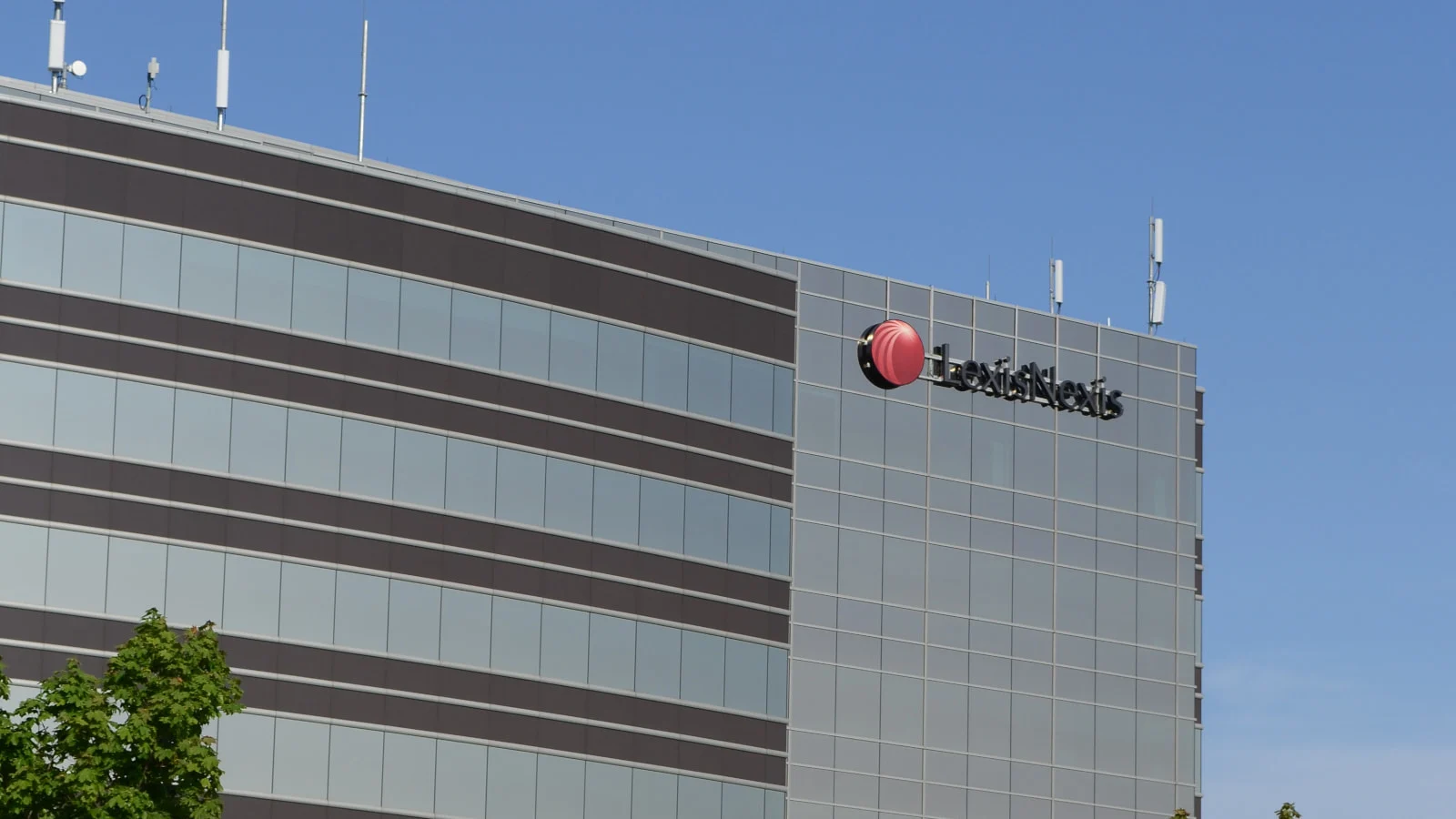
American data analytics company LexisNexis Legal & Professional has confirmed to BleepingComputer that hackers breached its servers and accessed some customer and business information.

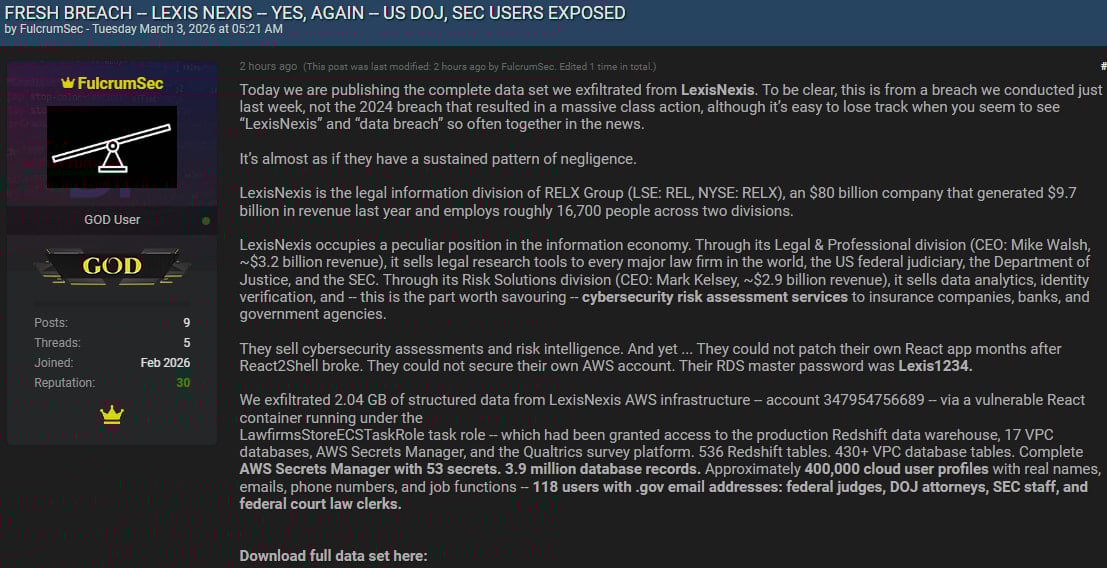
The company’s data breach confirmation comes as a threat actor named FulcrumSec leaked 2GB of files on various underground forums and sites.

LexisNexis L&P is a global provider of legal, regulatory, and business information, research tools, and analytics used by lawyers, corporations, governments, and academic institutions in more than 150 countries worldwide.

Cloud breach via unpatched React app

The threat actor says that on February 24 they gained access to the company’s AWS infrastructure by exploiting the React2Shell vulnerability in an unpatched React frontend app.

Advertisement

LexisNexis L&P admitted that hackers breached its network, noting that the stolen information was old and consisted mostly of non-critical details.

“Our investigation has confirmed that an unauthorized party accessed a limited number of servers,” the company told BleepingComputer.

“These servers contained mostly legacy, deprecated data from prior to 2020, including information such as customer names, user IDs, business contact information, products used, customer surveys with respondent IP addresses, and support tickets,” a spokesperson said.

“The impacted information did not contain Social Security numbers, driver’s license numbers, or any other sensitive personally identifiable information; credit card, bank accounts, or any other financial information; active passwords; or customer search queries, customer client or matter information, or customer contracts.”

Advertisement

Based on its investigation, LexisNexis believes that the intrusion has been contained and found no evidence that products or services were impacted by the intrusion.

In a public post detailing the hack, FulcrumSec claims that they stole information related to more than 100 users with .gov email addresses, which included U.S. government employees, federal judges and law clerks, U.S. Department of Justice attorneys, and U.S. SEC staff.

The threat actor detailed the intrusion, saying that they “exfiltrated 2.04 GB of structured data from LexisNexis AWS infrastructure” via a vulnerable React container with access to:

  • 536 Redshift tables
  • 430+ VPC database tables
  • 53 AWS Secrets Manager secrets in plaintext
  • 3.9M database records
  • 21,042 customer accounts
  • 5,582 attorney survey respondents
  • 45 employee password hashes
  • Complete VPC infrastructure mapping

FulcrumSec said that they also had access to around 400,000 cloud user profiles that included real names, emails, phone numbers, and job functions. According to the hackers, 118 users had .gov addresses belonging to U.S. government employees, federal judges and law clerks, U.S. Department of Justice attorneys, and U.S. SEC staff.

FulcrumSec's post for LexisNexis data leak
FulcrumSec’s post for LexisNexis data leak
Source: BleepingComputer

FulcrumSec said that they contacted LexisNexis, but the company “decided not to work with us on this.” They also criticized the company’s security practices that permitted a single ECS task role “read access to every secret in the account, including the production Redshift master credential.”

LexisNexis has notified law enforcement and contracted an external cybersecurity expert to assist with the investigation and implementation of containment measures.

Advertisement

The company has taken responsibility for the breach and informed current and previous customers of the intrusion.

Last year, the company disclosed another breach after hackers compromised a corporate account and accessed sensitive information belonging to 364,000 customers.

Malware is getting smarter. The Red Report 2026 reveals how new threats use math to detect sandboxes and hide in plain sight.

Download our analysis of 1.1 million malicious samples to uncover the top 10 techniques and see if your security stack is blinded.

Source link

Advertisement
Continue Reading
Click to comment

Leave a Reply

Your email address will not be published. Required fields are marked *

Tech

Google Pixel 10a Review: Sensible Value

Published

on

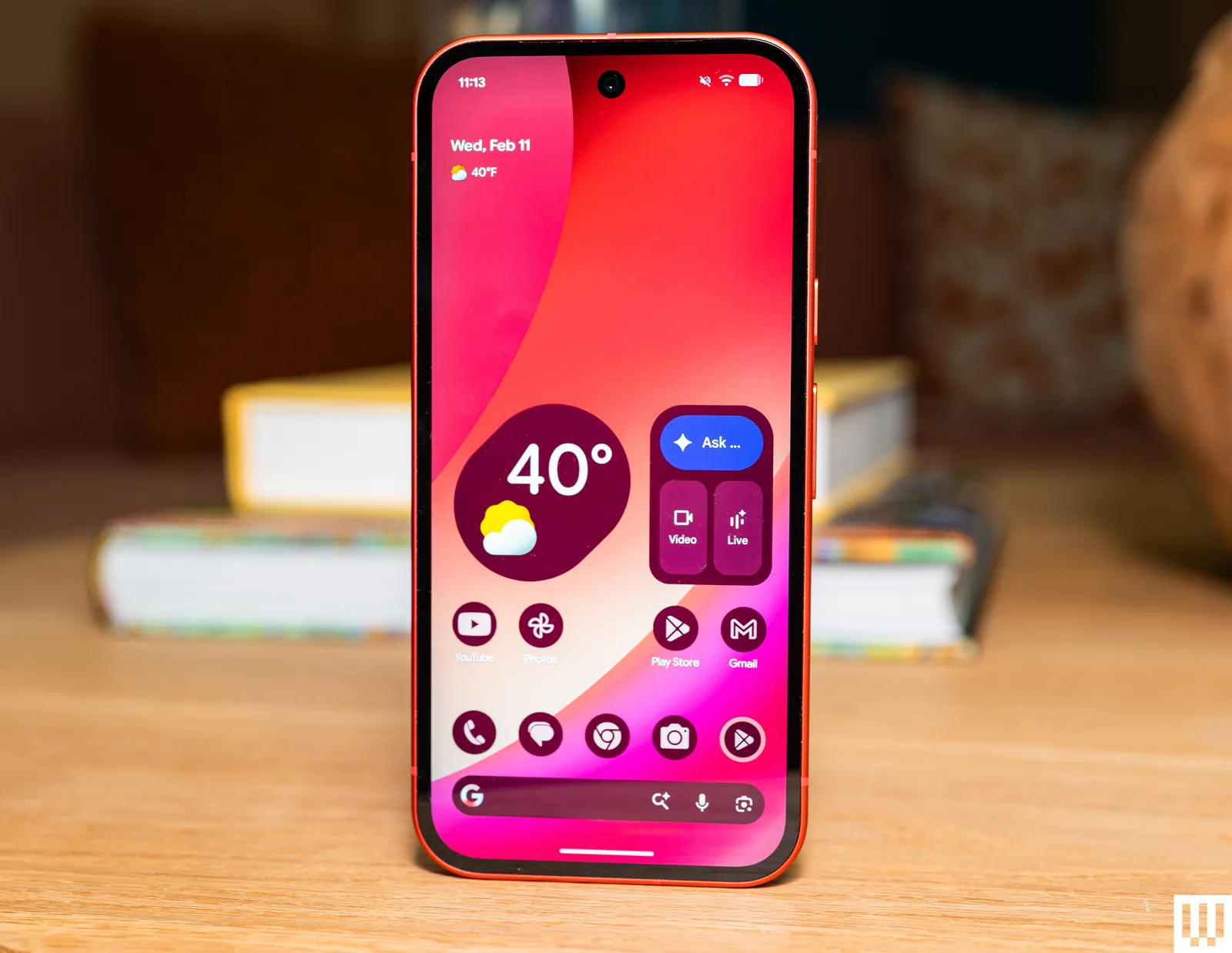
The screen is brighter now, reaching a peak brightness of 3,000 nits, and I haven’t had any trouble reading it in sunny conditions (though it hasn’t been as sunny as I’d like it to be these past few weeks). I appreciate the glass upgrade from Gorilla Glass 3 to Gorilla Glass 7i. It should be more protective, and anecdotally, I don’t see a single scratch on the Pixel 10a’s screen after two weeks of use. (I’d still snag a screen protector to be safe.)

Image may contain Electronics Phone and Mobile Phone

Photograph: Julian Chokkattu

Another notable upgrade is in charging speeds—30-watt wired charging and 10-watt wireless charging. I’ll admit I haven’t noticed the benefits of this yet, since I’m often recharging the phone overnight. You can get up to 50 percent in 30 minutes of charging with a compatible adapter, and that has lined up with my testing.

My biggest gripe? Google should have taken this opportunity to add its Pixelsnap wireless charging magnets to the back of this phone. That would help align the Pixel 10a even more with the Pixel 10 series and bring Qi2 wireless charging into a more affordable realm—actually raising the bar, which wouldn’t be a first for the A-series. After all, Apple did exactly that with the new iPhone 17e, adding MagSafe to the table. Or heck, at least make the Pixel 10a Qi2 Ready like Samsung’s smartphones, so people who use a magnetic case can take advantage of faster wireless charging speeds.

Advertisement

Battery life has been OK. With average use, the Pixel 10a comfortably lasts me a full day, but it still requires daily charging. With heavier use, like when I’m traveling, I’ve had to charge the phone in the afternoon a few times to make sure it didn’t die before I got into bed. This is a fairly big battery for its size, but I think there’s more Google could do to extend juice, akin to Motorola’s Moto G Power 2026.

Source link

Continue Reading

Tech

Apple's M5 Pro and M5 Max pack 18 CPU cores, up to 40 GPU cores, and faster unified memory

Published

on


While the base Apple M5 chip retains a conventional single-die design, the M5 Pro and M5 Max move to Apple’s new Fusion architecture. The approach relies on advanced packaging to combine two dies into a single SoC, integrating the CPU, GPU, media engine, unified memory controller, neural engine, and Thunderbolt…
Read Entire Article
Source link

Continue Reading

Tech

Washington state’s data center regulation bill fails following pushback from tech industry

Published

on

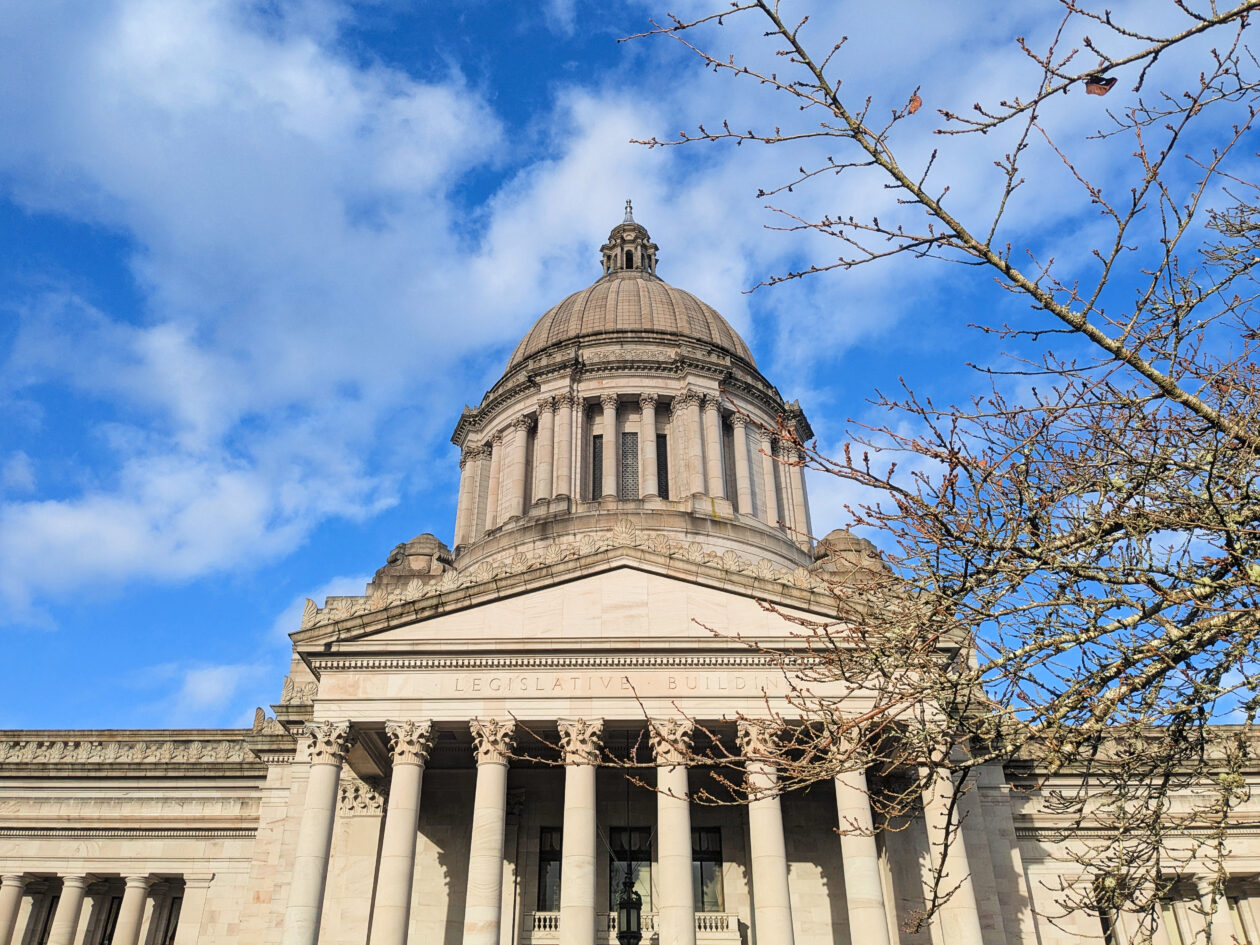
The Legislative Building in Olympia, Wash. (GeekWire Photo / Lisa Stiffler)

A Washington state bill requiring utilities and data center companies to create agreements that protect rate payers from increased power costs and brings transparency to the environmental impacts of the facilities has failed.

After weeks of wending its way through Olympia, the Senate Committee on Ways & Means did not take a vote on House Bill 2515, causing it to miss a legislative deadline.

HB 2515 had garnered support among Democratic lawmakers, while Microsoft and Amazon lobbied behind the scenes, the Seattle Times reported. The tide turned on Friday when Microsoft — which has roughly 30 data centers in the state — publicly came out in opposition to the bill.

“We respectfully urge the committee not to advance the bill without significant changes,” Lauren McDonald, Microsoft’s senior director of Washington state government affairs, said in testimony before the Senate committee. She described the legislation as “uniquely anti-competitive.”

HB 2515 garnered support from environmental groups, tribal nations, and ratepayer advocates warning that the rapid expansion of data centers risked driving up utility bills and straining limited water supplies.

Advertisement

“This bill is about fairness, grid reliability, transparency, and protecting our clean energy commitments. It’s easy for big tech to make big promises in a press release. But when states ask for accountability to those promises, their commitment evaporates,” said Rep. Beth Doglio, D-Olympia.

Opponents from the tech sector, labor and local municipalities that have benefited financially from the facilities said the developments support essential computing infrastructure, creates jobs and provides increased property tax revenue.

Across the U.S., leaders and communities at every level are worried about the harms posed by the surge in data centers that power the internet and AI — pushback that has reached the White House, where President Trump this week is convening major tech companies to pledge they would not drive up electric bills.

Microsoft in January launched a community-focused initiative pledging to be a good neighbor in the communities where it had data centers.

Advertisement

“We support the bill’s intent and will continue to work with lawmakers in the future on detailed policies that ensure accountability and transparency while expanding job opportunities and community development,” said a Microsoft spokesperson via email.

Proponents of the measure said that HB 2515 aligns with many of the climate pledges that big tech companies have made, vowing to use clean energy and offset their carbon emissions. They called the bill a necessary step to put rules in place for the booming data center sector.

“Lobbying by the tech companies killed the bill. And unfortunately, the Legislature let it happen, passing on a critical opportunity to put common sense guardrails in place,” said Zach Baker, policy director for the nonprofit NW Energy Coalition, via email.

Dan Diorio, vice president of state policy for the Data Center Coalition, on Tuesday highlighted the role played by the facilities, calling them the “essential digital infrastructure.”

Advertisement

“The data center industry will continue to partner with utilities, grid operators, and policymakers,” he said via email, “to advance the infrastructure needed for a reliable, affordable grid that supports economic growth for all customers.”

Doglio indicated she wasn’t giving up on the issue.

“The impacts of these facilities are real — on our power grid, our water resources, our greenhouse gas emissions and people’s utility bills,” she said. “The longer we wait, the greater those impacts will be. I remain committed to continuing this work.”

RELATED:

Advertisement

Editor’s note: Story updated with comments from Rep. Beth Doglio and a Microsoft spokesperson.

Source link

Continue Reading

Tech

iPhone 18: What We Know About Apple’s Next Mobile Flagship

Published

on

Key takeaways:

  • Features: Dynamic Island might shrink, cameras could have a variable aperture and a bigger battery could be on the way.
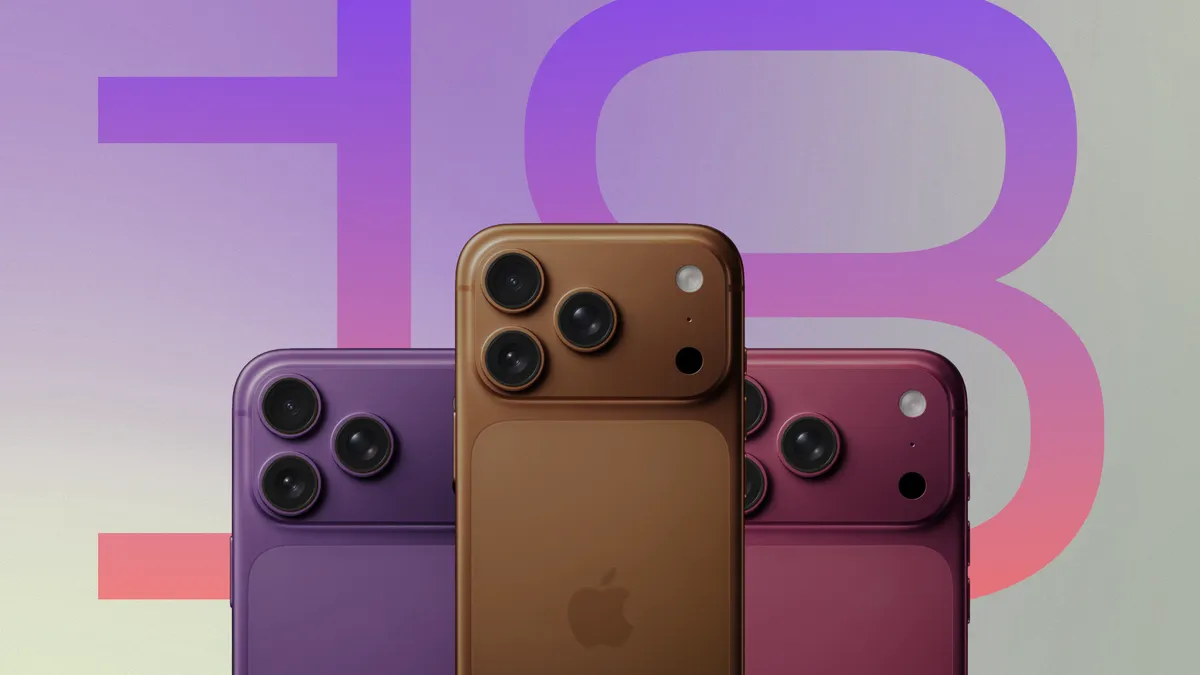
  • Colors: Apple could launch red, burgundy, purple and brown versions.
  • Price: There have been no leaks about price increases, which is good news at this point.
  • Release date: Apple might split the iPhone 18 launch between September 2026 and February to March 2027.

2026 has barely begun and there are already plenty of rumors brewing about Apple’s iPhone 18 lineup. The iPhone 17 series impressed us with its surprisingly feature-packed base model, the incredibly slender iPhone Air, the boldly redesigned iPhone 17 Pro and 17 Pro Max and the entry-level iPhone 17E. We’re hoping this year’s lineup will surprise us too. 

Apple is only a year or so away from the 20th anniversary of the original iPhone’s launch. While the company sells more phones in the US than rival Android phones, Apple is consistently behind Samsung for global sales and just ahead of Chinese phone makers like Xiaomi. There is a lot at stake for Apple with the next iPhone, as well as building interest in a possible foldable device, such as the rumored iPhone Fold.

Already, some of the hottest rumors include Dynamic Island shrinking along with the possibility that the iPhone 18 and 18 Pro will have the same RAM as the iPhone 17 Pro and Pro Max. There’s also word that Apple could split the launch of its iPhone 18 lineup with the premium models coming out this year and more entry-level models releasing next year. Here’s a look at all the rumors and leaks we’ve uncovered about the potential iPhone 18 series.

Latest rumors

iPhone 18 design differences

Advertisement
Two hands holding a coffee-colored iPhone 17 Pro. The back of the phone is facing up.

We had CNET’s creative director show us what a coffee-colored iPhone Pro might look like.

Viva Tung/Celso Bulgatti/CNET

We’re hearing there likely will be three models: the base iPhone 18, the iPhone 18 Pro and the iPhone 18 Pro Max. There also may be iPhone models not in this series, like a second-generation Air or the much-rumored folding iPhone. That could mean a total of six iPhone models that are in the works if you include the also-rumored 18E.

Designs for the iPhone tend to remain the same year after year and current rumors suggest this trend will continue. The screen sizes of the three handsets look to be the same as before — 6.3 and 6.9 inches, respectively — with minor design differences in the camera bumps on the back. A Weibo tipster also appears to hint that Apple’s brightness requirements are incredibly demanding, which might result in OLED supply issues. This leads some to suspect it has a much brighter screen. 

Advertisement

The base iPhone 18 is rumored to have a smaller camera bump compared to its predecessor, while the Pro and Pro Max will retain the wider “plateau” to accommodate their three rear cameras. 

According to a leak from the Chinese social media site Weibo, the Pro model could get a “subtle transparent finish” on the rear glass panel. A Chinese leaker reportedly said that the iPhone 18 Pro could have a more unified design versus the two-tone look it has now. Some rumors also suggest that it could have a heavier, thicker build.

It might also come in three new colors: coffee, purple and burgundy. Coffee brown might seem like an odd choice for a phone color, but our own Patrick Holland is open to the concept. Bloomberg’s Mark Gurman notes that Apple could also be considering a deep red color for its iPhone 18 lineup. As he points out, however, it’s likely that deep red, burgundy, purple and coffee brown are all variations of the same red idea. It could just be one of these colors that makes it through production. 

Other rumors suggest that changes may be coming to the iPhone’s Dynamic Island. Gurman and Weibo user Digital Chat Station suggest that Apple may reduce the size of the Dynamic Island on the iPhone 18 models. This could result in a small pinhole cutout for the camera, as the Face ID sensors may be located beneath the display.

Advertisement

The Information also recently reported that the iPhone 18 Pro and iPhone 18 Pro Max will feature under-screen Face ID, confirming the Bloomberg rumor. Additionally, the outlet also said that the front camera would be moved to the top left corner of the screen and, as a result, would be missing the Dynamic Island cutout. 

Contradicting that claim, the account Ice Universe alleges that the Dynamic Island cutout on the iPhone 18 Pro models will remain, but would instead be “approximately 35% narrower” than it is on current iPhone 17 Pro models. This is in relation to how the Dynamic Island looks by default; the area enlarges depending on Live Activities or other information, just like the existing Dynamic Island. MacRumors suggests that the new iPhone will only have partial under-screen Face ID, which still requires the existence of a Dynamic Island. 

We’ve tested under-display cameras on several phones over the years. The part of the display in front of the camera features fewer screen elements and translucent wiring, allowing the selfie camera to “see through” the screen, much like looking out a window with open blinds. While the idea of having a display with minimal or no cutouts is a worthy one, under-display cameras typically result in photos with poor image quality. However, maybe Apple is the company that will finally figure out how to integrate a camera under the display that captures high-quality images.

Otherwise, Bloomberg’s Gurman also warns that the 18 Pro could be “underwhelming,” stating that it could just have very minor tweaks. This is a bit of departure from prior iPhone Pros, as the Pro has usually been the more premium version of the iPhone lineup. 

Advertisement

A bigger battery for iPhone 18 Pro

After years of customers asking, Apple finally chose battery over case slimness in the iPhone 17 Pro. And that model continues to surprise us, coming out on top of Patrick Holland’s recent comparison of the battery life in 35 phones. We’re especially curious about whether Apple will adopt new silicone carbon battery technology.

Based on a post on the Chinese social media site Weibo, spotted by 9to5Mac, the iPhone 18 Pro could include a battery in excess of 5,000 mAh — specifcally, 5,000 mAh for models with a physical SIM card slot (as required in some countries) and 5,200 mAh for models that rely solely on eSIM (which give up more internal space that can be filled with more battery).

New cameras on iPhone 18

iPhone 17 Pro's camera plateau

The iPhone 17 Pro had three rear cameras: a wide-angle lens, an ultrawide and a 4x telephoto.

Advertisement

CNET

The iPhone’s cameras are another feature that may receive a significant upgrade in 2026. Macworld reports that Weibo leaker Digital Chat Station said the iPhone 18 Pro Max could get a camera with a variable aperture, similar to how the lenses on DSLR and mirrorless cameras work. This allows people greater control over depth of field and image brightness. The Information also reported that at least one rear camera on the 18 Pro would have a mechanical iris, another name for a lens’ aperture. 

We’ve seen variable aperture phone cameras before. The Galaxy S9 launched in 2018 with a mechanical dual-aperture lens on its main camera that could switch between f/1.5, allowing more light to enter and creating a shallower depth of field, and f/2.4, which sharpened the subject more. But the S9’s image sensor was tiny and photos from it were just OK. Xiaomi had a variable aperture, between f/1.9 and f/4.0, on the 2023 13 Ultra and 2024 14 Ultra, but each had a large 1-inch-type sensor that could take advantage of it. Sadly, to the frustration of CNET’s Andrew Lanxon, the company removed the variable aperture on the Xiaomi 15 Ultra.

Macworld also says the telephoto lenses on the iPhone 18 Pro and Pro Max could get a faster aperture, letting more light hit the sensor for better low-light shots. Additionally, MacRumors reports that all iPhone 18 models (except the 18E) would get upgraded 24-megapixel front-facing cameras for improved selfies. We should note that the iPhone 17 series and Air all have Apple’s new Center Stage selfie camera, which has a square 18-megapixel sensor and can take either horizontal or vertical photos, no matter which way you’re holding the phones.

There is also some speculation that the iPhone’s Camera Control button could be simplified. Instead of capacitive and pressure sensors, it might just be pressure-sensing for all of the Camera Control’s functions. 

Advertisement

Updated A20 chip and iPhone 18 specs

From left: iPhone 17, iPhone Air, iPhone 17 Pro Max and iPhone 17 Pro

The new iPhone models run iOS 26 and have either an A19 or A19 Pro chip: (left to right) iPhone 17, iPhone Air, iPhone 17 Pro Max and iPhone 17 Pro.

Patrick Holland/CNET

As the iPhone 17 lineup uses the A19 and A19 Pro chips, it makes sense that the upcoming iPhone 18 would use Apple’s new A20 processor. The rumored chips are said to use a new process called Wafer-Level Multi-Chip Module, which incorporates the RAM directly into the same wafer as the CPU, GPU and neural engine. This apparently results in better efficiency and faster performance because everything would be located on the same chip. 

We’re also hearing that the iPhone 18 lineup could use Apple’s next-gen C2 modem chip for improved wireless connectivity. Additionally, The Information reports that Apple is preparing to support 5G networks from satellites, potentially giving iPhone 18 models full satellite phone capabilities, not just for emergencies and texting

Advertisement

MacRumors recently reported that the iPhone 18 could have 12GB of RAM, according to a research note by analyst Jeff Pu.

Although this is not exclusive to the iPhone 18, Apple also recently announced that Google’s Gemini will be running its AI-powered Siri later this year. 

iPhone 18 and iPhone 18 Pro release date

The logo for Apple’s fall 2026 event invitation is interactive: a heat signature stays where you touch or click and hold.

Advertisement

Screenshot by Jeff Carlson/CNET

For years, Apple has held its annual iPhone launch event in the fall. But according to multiple reports, Apple’s smartphone release schedule could look different in the coming years.

Bloomberg has reported that Apple plans to release the more expensive iPhone 18 Pro, the iPhone 18 Pro Max and its new foldable in fall 2026 while the more inexpensive iPhone 18 and the iPhone 18E (and maybe a potential iPhone Air 2) could debut six months later in February or March 2027.

Seeing as Apple has released the iPhone 16E and 17E in the Springs of 2025 and 2026, that’s not a surprising development. It does mean, however, that if you’re holding out for a more affordable iPhone, you could have to wait until next year to plan your purchase. 

Advertisement

Watch this: The iPhone 17’s Unexpectedly Satisfying Tips and Accessories

Source link

Continue Reading

Tech

Washington state bill allowing direct sales of Rivian and Lucid is speeding toward finish line

Published

on

Rivian vehicles. (Amazon Photo)

Washington lawmakers are racing to pass legislation to let Rivian and Lucid sell their EVs directly to consumers. The push follows years of dealership opposition — and Rivian’s threat to bypass legislators entirely with a November ballot initiative.

The Senate on Tuesday approved Senate Bill 6354 with 46 yeas and three Democrats voting no. The bill has a House hearing Thursday.

Twelve years ago, Tesla won a hard-fought battle giving it alone the right to do direct sales in an era when electric vehicles were a new technology.

For years, EV makers have battled to level the sales playing field with Tesla. Because Rivian and Lucid have not sold through dealerships, their Washington customers have had to purchase their vehicles online or out-of-state and have not been able to easily test drive the EVs.

The bill provides a narrow exemption for the two additional EV automakers, meaning that other manufacturers and EV newcomers are still banned from direct sales. SB 6354 includes a $10,000 penalty for automakers that break the law and conduct direct sales or leases.

Advertisement

The legislation also increases the vehicle dealer documentary service fee from $200 to $250 for a decade, allocating some of those funds to state accounts supporting EV purchases for low-income shoppers and public transit.

SB 6354 has budget impacts and is therefore exempt from most legislative deadlines. The session is scheduled to end March 12.

RELATED: Washington state is primed to let Rivian and Lucid sell EVs directly to consumers

Source link

Advertisement
Continue Reading

Tech

The Texas Senate Primary Was a Preview of Creator Wars to Come

Published

on

On Tuesday, James Talarico, On Tuesday, James Talarico, a 36-year-old Presbyterian seminarian and state representative from Austin, Texas, defeated congresswoman Jasmine Crockett in what has become one of the most closely watched primary races so far this year.

While both candidates boast immense social media followings—Talarico with 1.6 million followers and Crockett with 2.6 million followers on TikTok—it wasn’t just the candidates who drove the conversation. It was the creators around them, who offer a preview of the digital fights to come throughout the midterms and, ultimately, the 2028 presidential race.

The Talarico and Crockett campaigns ran distinctly different digital strategies. Crockett has built her congressional brand on confrontation, going massively viral last year after calling out Marjorie Taylor Greene for having a “bleach-blonde, bad-built, butch body” and telling Elon Musk to “fuck off.” Talarico’s digital presence reads more like a populist sermon delivered over his own social media accounts. He’s carried these preachings to unconventional platforms, like the Joe Rogan Experience, that rewarded him with countless viral clips.

But for the most part, the incendiary aspects of the digital-focused campaigns came from outside the candidates. In January, the hosts of “Las Culturistas,” a pop-culture and comedy podcast, set off a firestorm of criticism after discouraging listeners from supporting Crockett in an episode of the show. “Don’t waste your money sending to Jasmine Crockett, do not do it,” Matt Rogers, one of the hosts said at the time. The show faced immediate backlash from members of its audience and Crockett backers, forcing them to apologize.

Advertisement

It was the first in a series of online spats that would reach a fever pitch in February, when a Dallas-based creator named Morgan Thompson claimed that Talarico called Colin Allred, a former House representative, a “mediocre Black man.” The video shared with her nearly 200,000 TikTok followers went viral, breaking out from pro-Crockett communities online and into the mainstream press. Responding to the allegation, the Talarico campaign called the comment a “mischaracterization” of an off-the-record conversation the candidate had with Thompson in which he called Allred’s method of campaigning “mediocre,” not the man himself.

“I would never attack him [Allred] on the basis of race,” Talarico said at the time. “As a Black man in America, Congressman Allred has had to work twice as hard to get where he is. I understand how my critiques of the Congressman’s campaign could be interpreted given this country’s painful legacy of racism, and I care deeply about the impact my words have on others.”

This episode illuminated a key question amongst strategists going into the heat of the 2026 midterms and the next presidential race: What role should creators play in campaigns? And how do you manage them? While working with creators has become commonplace in both Republican and Democratic campaigns, the relationships are often loosely defined and difficult to control.

“There are so many factors that the campaign staff themselves have to deal with and think about,” says Kyle Tharp, who writes the Chaotic Era newsletter that focuses on digital politics. “Do I put them in the press risers at the rally, or do I give them upfront VIP access? Do I give them a couple minutes with the candidate? Am I going to be screening their questions? Or do I just let them riff and hope for the best?”

Advertisement

President Donald Trump’s 2024 reelection campaign relied heavily on creators and podcasters to reach young, predominantly male voters. But many of those very same creators have turned against Trump over the last year. In the leadup to the 2024 election, Trump appeared on “Flagrant,” a popular podcast hosted by comedian Andrew Schulz. But Schulz’s support for Trump quickly evolved into ire. Last summer, Schulz took issue with the administration’s failure to release files related to Justice Department investigations into convicted sex offenderJeffrey Epstein. Since then, Schulz has repeatedly leveraged his platform to criticize the administration.

Source link

Advertisement
Continue Reading

Tech

Capcom's PC sales hit a record 50%, fueled by Steam's global reach

Published

on


For a company whose legacy was built on console hits, the balance of power has shifted dramatically. Stronger sales through Valve’s Steam marketplace and access to a vast global PC audience have made the platform central to Capcom’s growth strategy.
Read Entire Article
Source link

Continue Reading

Tech

Brendan Carr Can’t Explain Why ‘Equal Time’ Rule Doesn’t Apply To Right Wing Radio

Published

on

from the words-are-but-wind dept

We’ve noted repeatedly how Trump FCC boss Brendan Carr has been abusing the FCC’s “equal opportunity” (or “equal time”) rule to try and threaten daytime and late night talk shows with government retribution if they refuse to enthusiastically coddle Republicans.

Late night shows had historically been exempt from the dated rules, which required that any airing of a political candidate on “publicly owned” airwaves is countered with the appearance from a candidate from the opposing party. But Carr isn’t interested in equilibrium; he’s interested abusing FCC authority to try and silence critics of Donald Trump and his increasingly unpopular policies.

But folks have increasingly noted that Brendan Carr doesn’t appear to have any interest in enforcing the same standard on radio, where (especially on AM), listeners are constantly served up a lopsided dose of race-baiting agitprop pretending to be news. When he’s been asked about this inconsistency, Carr has been painfully and curiously vague:

“In a press conference after the FCC’s February 18 meeting, Deadline reporter Ted Johnson asked Carr why he has not expressed “the same concern about broadcast talk radio as broadcast TV talk shows.”

The Deadline reporter pointed out that “Sean Hannity’s show featured Ken Paxton in December.” Paxton, the Texas attorney general, is running for a US Senate seat in this year’s election. Carr claimed in response that TV broadcasters have been “misreading” FCC precedents while talk radio shows have not been.

Advertisement

“It appeared that programmers were either overreading or misreading some of the case law on the equal-time rule as it applies to broadcast TV,” Carr replied. “We haven’t seen the same issues on the radio side, but the equal-time rule is going to apply to broadcast across the board, and we’ll take a look at anything that arises at the end of the day.”

It’s of course far worse on the radio side, which has been utterly dominated by outright right wing propaganda since the early 90s. And he will, of course, not be “taking a look at anything that arises,” because, again, he’s not remotely interested in abusing this rule consistently because he’s an authoritarian hack.

Ars Technica spoke to Gigi Sohn, whose appointment to the FCC under Biden was, if you’ll recall, dismantled by a telecom and media company homophobic smear campaign:

“Carr’s claim that TV but not radio broadcasters have misread FCC precedents is “a bunch of nonsense,” said Gigi Sohn, a longtime lawyer and consumer advocate who served as counselor to then-FCC Chairman Tom Wheeler during the Obama era. Carr “was responding to criticism from people like Sean Hannity that the guidance would apply to conservative talk radio just as much as it would to so-called ‘liberal’ TV,” Sohn told Ars. “It doesn’t matter whether a broadcaster is a radio broadcaster or a TV broadcaster, the Equal Opportunities law and however the FCC implements it must apply to both equally.”

This is very typical Carr. The law and earthly logic are malleable constructs that easily bend to whatever his goal is at any given moment. This blatant, mindless inconsistency has always been absolutely central to who he is, even before he became the authoritarian government’s top censor. It was evident way back during the fights over net neutrality and telecom oversight.

Advertisement

It’s why anybody with sense (including this website) recommended that the man be allowed nowhere near actual levers of power and policy-making.

Filed Under: brendan carr, censor, censorship, equal time, fcc, first amendment, partisan hack, radio, sean hannity, tv

Source link

Advertisement
Continue Reading

Tech

DJI Osmo Pocket 4 Emerges from the Shadows, Quick Start Guide Teased

Published

on

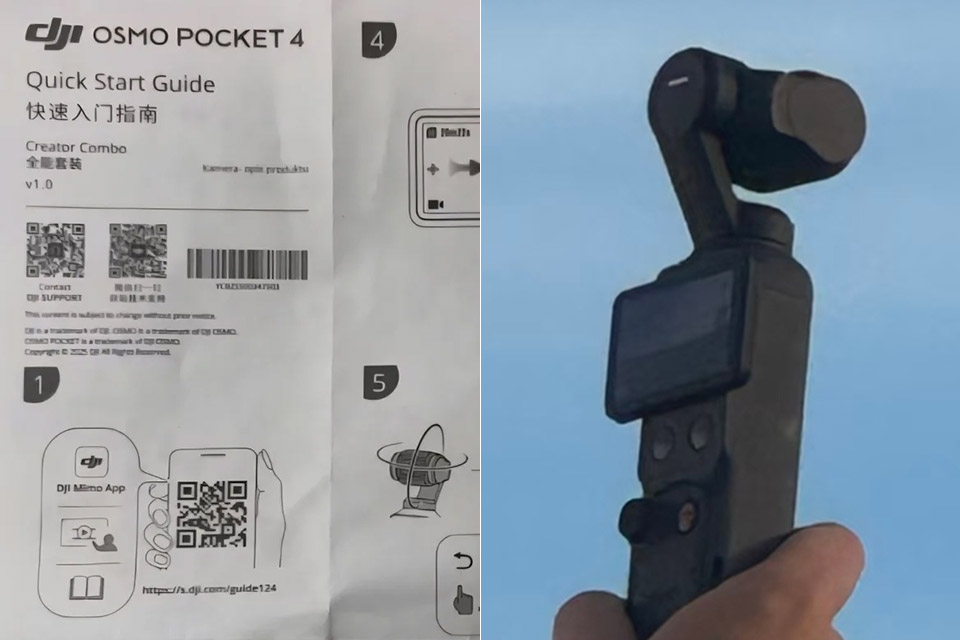
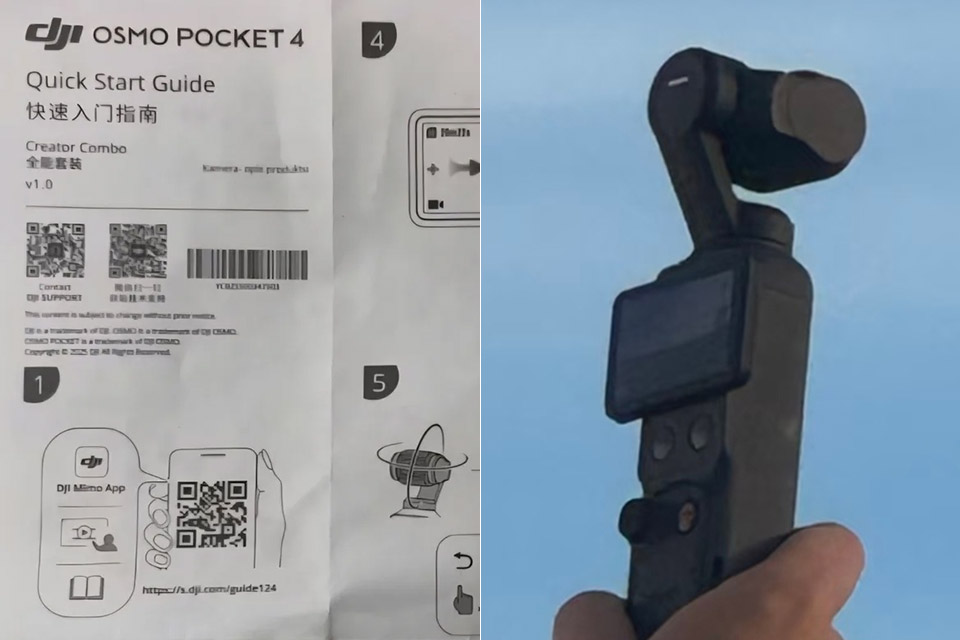
DJI Osmo Pocket 4 Leak Quick Start Guide
Photo credit: Igor Bogdanov
The leaked Quick Start Guide for the DJI Osmo Pocket 4 has finally been discovered, and every page reveals exactly what DJI plans to achieve next with its tiny handheld gimbal camera. At first sight, this update appears to be very similar, however there have been some significant changes. The body remains the same compact design that fits easily into a jacket pocket, but there are a few useful hardware buttons to replace the incessant screen swiping.


A zoom rocker has been added right next to the rotatable 2 inch OLED screen, along with a shutter button that also powers the device, a 5 way joystick for super-precise gimbal motions, some status LEDs, and a C button that you can customize to quickly access your favorite settings. There is a USB-C port for charging and data transfer, and the microSD card remains available in case you need it. These enhancements address widespread complaints from the previous model, in which touchscreen-only navigation simply wasn’t fast enough for rapid-paced photography.

Sale


DJI Osmo Pocket 3, Vlogging Cameras with 1” CMOS & 4K/120fps Vlog Camera, 3-Axis Stabilization, Fast…
  • Capture Stunning Footage – This vlogging camera features a 1-inch CMOS sensor and records in 4K resolution at an impressive 120fps. Capture…
  • Effortlessly Frame Your Shots – Get the ideal composition with Osmo Pocket 3’s expansive 2-inch touch screen that rotates for both horizontal and…
  • Ultra-Steady Footage – Say goodbye to shaky videos. Osmo Pocket 3’s advanced 3-axis mechanical stabilization delivers superb stability. Enjoy smooth…

Video-wise, this little camera actually takes a step forward, since it uses a 1 inch CMOS sensor, with some fairly apparent improvements in low-light handling and dynamic range. Compared to the Pocket 3’s 4K/60fps restriction, you can now record at 4K at 120 frames per second, enabling you to produce gorgeous slow-motion recordings that capture every detail in incredibly fluid motion. Even when your subjects are zooming around a lot, autofocus maintains a solid hold on faces and objects. You can now stroll or turn while still getting smooth footage thanks to stabilization, which is based on their proven three-axis mechanical gimbal, now tuned for steadier handheld results during walks or quick turns. The battery life is increased from 1300 mAh to 1545 mAh, which should allow you to record for more than 200 minutes on a single charge in a variety of situations—what I like to refer to as “all day shoots.”

Advertisement

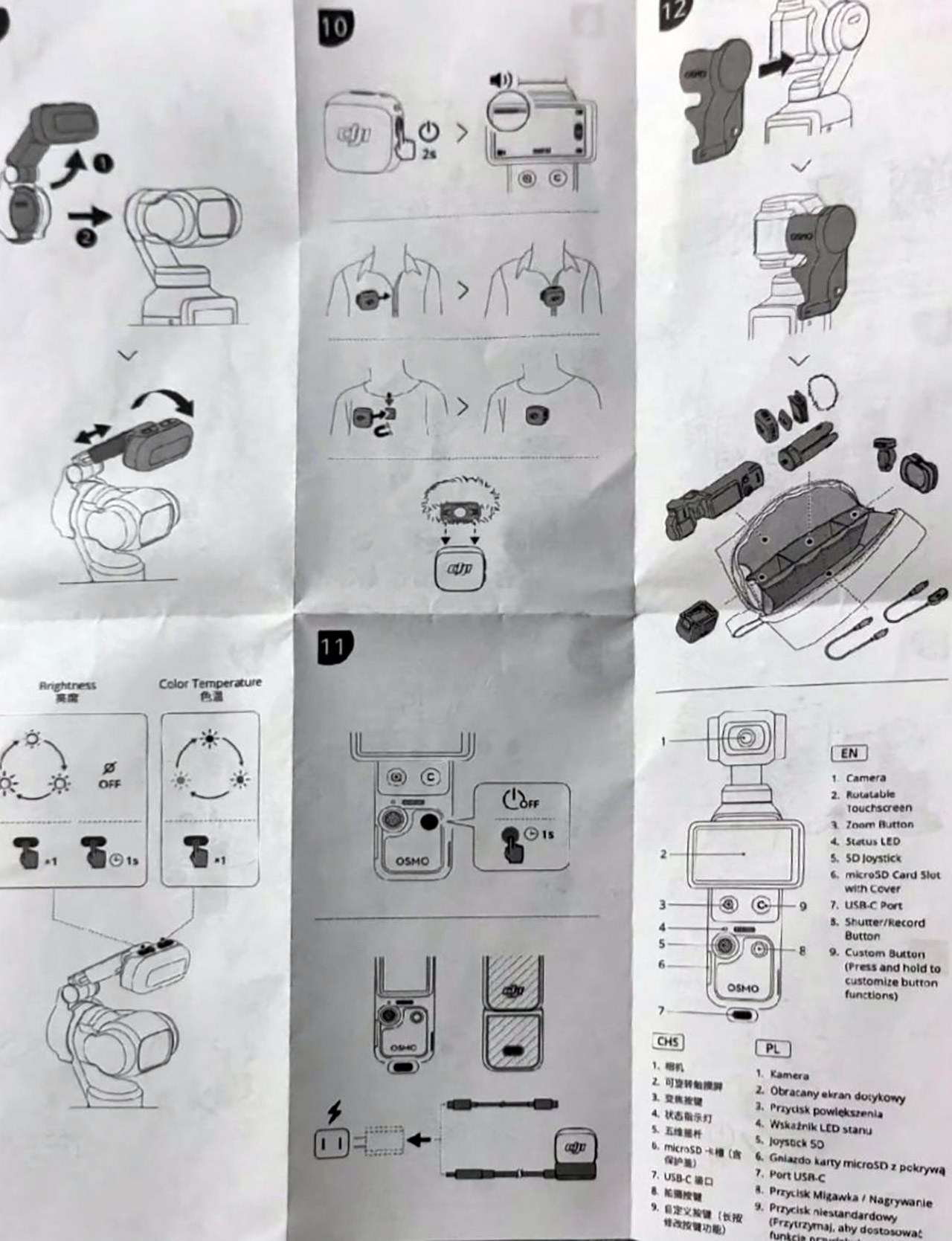
DJI Osmo Pocket 4 Leak Quick Start Guide
As Wi-Fi 6 replaces the previous standard, connectivity is evolving. With the DJI Mimo app, you can transfer all of your footage to your phone or tablet really quickly. You can now instantly post to YouTube and stream live using the same app, so your journey from capture to audience is complete.

DJI Osmo Pocket 4 Leak Quick Start Guide
The Creator Combo adds some useful extras, such as an extended battery handle for longer shots, a wide-angle lens attachment for capturing more of the scene, a mini tripod grip, a protective case, and possibly a magnetic fill light or wireless microphone depending on how the final kit looks. In terms of bundles, the standard version is essentially the essentials for the casual creator. Additionally, the cost of these items appears to be between $599 and $699 for the standard model and between $699 and $749 for the loaded Creator Combo. DJI appears poised to announce the standard Osmo Pocket 4 in China on March 26, 2026, with global availability following shortly after.
[Source]

Source link

Continue Reading

Tech

New Artemis Plan Returns To Apollo Playbook

Published

on

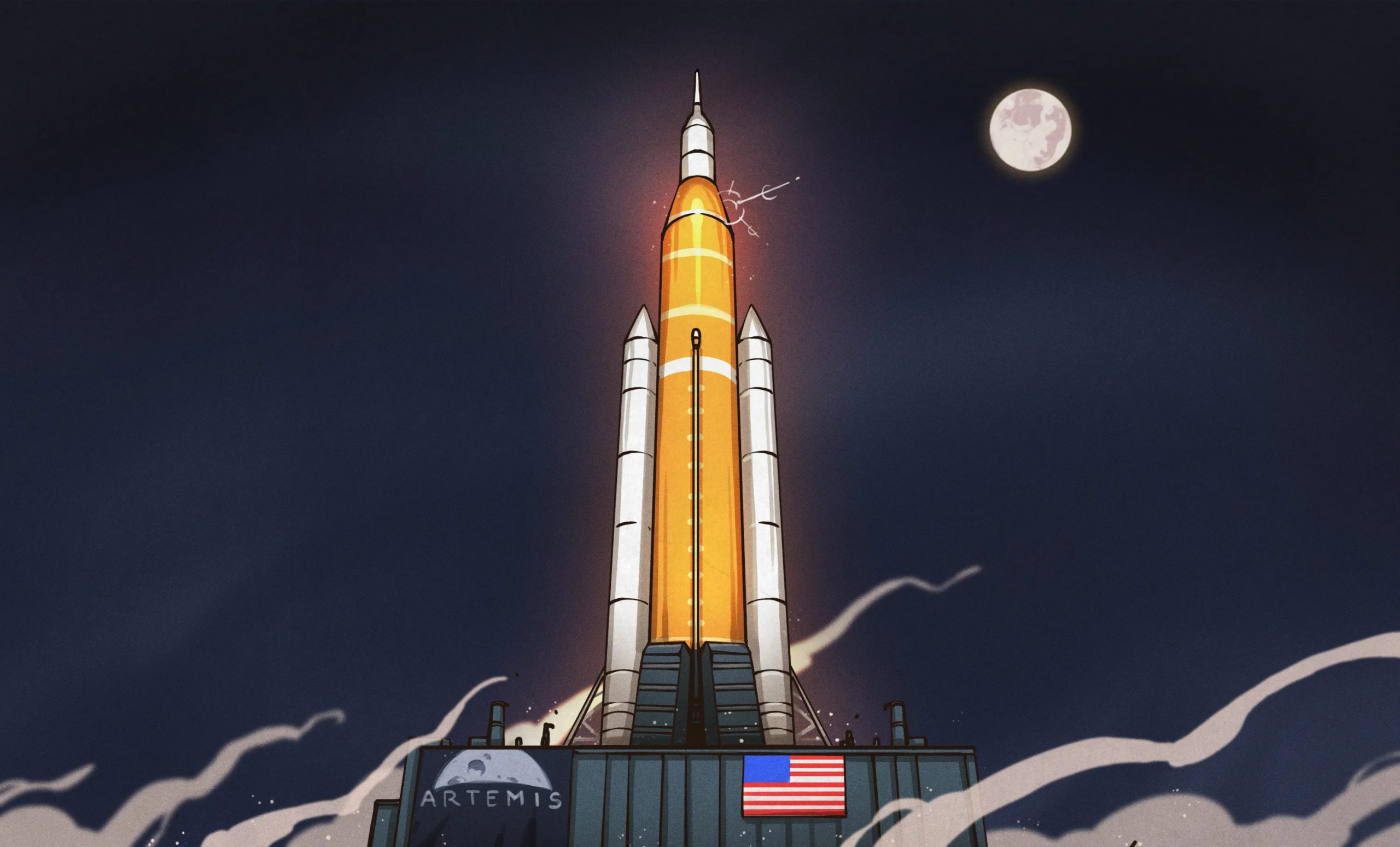
In their recent announcement, NASA has made official what pretty much anyone following the Artemis lunar program could have told you years ago — humans won’t be landing on the Moon in 2028.

It was always an ambitious timeline, especially given the scope of the mission. It wouldn’t be enough to revisit the Moon in a spidery lander that could only hold two crew members and a few hundred kilograms of gear like in the 60s. This time, NASA wants to return to the lunar surface with hardware capable of setting up a sustained human presence. That means a new breed of lander that dwarfs anything the agency, or humanity for that matter, has ever tried to place on another celestial body.

Unsurprisingly, developing such vehicles and making sure they’re safe for crewed missions takes time and requires extensive testing. The simple fact is that the landers, being built by SpaceX and Blue Origin, won’t be ready in time to support the original Artemis III landing in 2028. Additionally, development of the new lunar extravehicular activity (EVA) suits by Axiom Space has fallen behind schedule. So even if one of the landers would have been ready to fly in 2028, the crew wouldn’t have the suits they need to actually leave the vehicle and work on the surface.

But while the Artemis spacecraft and EVA suits might be state of the art, NASA’s revised timeline for the program is taking a clear step back in time, hewing closer to the phased approach used during Apollo. This not only provides their various commercial partners with more time to work on their respective contributions, but critically, provides an opportunity to test them in space before committing to a crewed landing.

Advertisement

Artemis II Remains Unchanged

Given its imminent launch, there are no changes planned for the upcoming Artemis II mission. In fact, had there not been delays in getting the Space Launch System (SLS) rocket ready for launch, the mission would have already flown by now. Given how slow the gears of government tend to turn, one wonders if the original plan was to announce these program revisions after the conclusion of the mission. The launch is currently slated for April, but could always slip again if more issues arise.

Artemis II Crew

At any rate, the goals for Artemis II have always been fairly well-aligned with its Apollo counterpart, Apollo 8. Just like the 1968 mission, this flight is designed to test the crew capsule and collect real-world experience while in the vicinity of the Moon, but without the added complexity of attempting a landing. Although now, as it was then, the decision to test the crew capsule without its lander wasn’t made purely out of an abundance of caution.

As originally envisioned, Apollo 8 would have seen both the command and service module (CSM) and the lunar module (LM) tested in low Earth orbit. But due to delays in LM production, it was decided to fly the completed CSM without a lander on a modified mission that would put it into orbit around the Moon. This would give NASA an opportunity to demonstrate the critical translunar injection (TLI) maneuver and gain experience operating the CSM in lunar orbit — tasks which were originally scheduled to be part of the later Apollo 10 mission.

In comparison, Artemis II was always intended to be flown with only the Orion crew capsule. NASA’s goal has been to keep the program relatively agnostic when it came to landers, with the hope being that private industry would furnish an array of vehicles from which the agency could chose depending on the mission parameters. The Orion capsule would simply ferry crews to the vicinity of the Moon, where they would transfer over to the lander — either via directly docking, or by using the Lunar Gateway station as a rallying point.

There’s no lander waiting at the Moon for Artemis II, and the fate of Lunar Gateway is still uncertain. But for now, that’s not important. On this mission, NASA just wants to demonstrate that the Orion capsule can take a crew of four to the Moon and bring them back home safely.

Advertisement

Artemis III Kicks the Tires

For Artemis III, the previous plan was to have the Orion capsule mate up with a modified version of SpaceX’s Starship — known in NASA parlance as the Human Landing System (HLS) — which would then take the crew down to the lunar surface. While the HLS contract did stipulate that SpaceX was to perform an autonomous demonstration landing before Artemis III, the aggressive nature of the overall timeline made no provision for testing the lander with a crew onboard ahead of the actual landing attempt — a risky plan even in the best of circumstances.
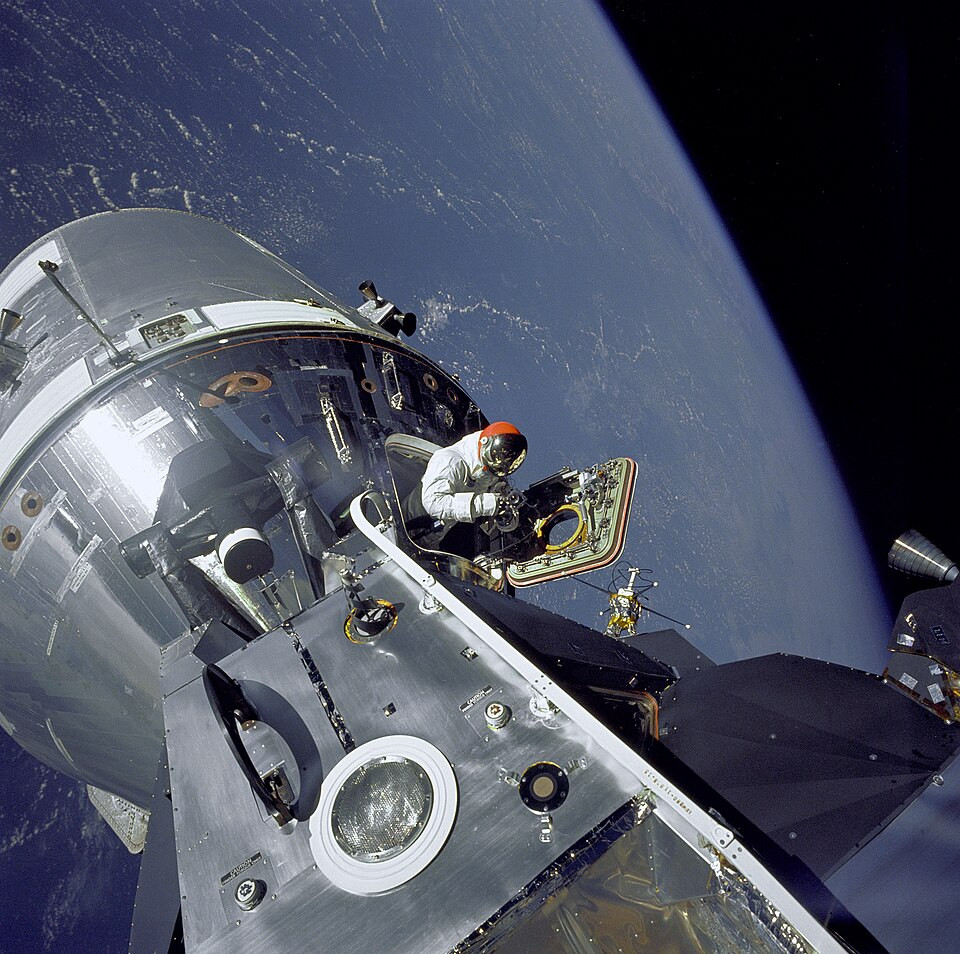
Docked CSM and LM during Apollo 9

The newly announced timeline resolves this issue by not only delaying the actual Moon landing until 2028, to take place during Artemis IV, but to change Artemis III into a test flight of the lander from the relative safety of low Earth orbit in 2027. The crew will liftoff from Kennedy Space Center and rendezvous with the lander in orbit. Once docked, the crews will practice maneuvering the mated vehicles and potentially perform an EVA to test Axiom’s space suits.

This new plan closely follows the example of Apollo 9, which saw the CSM and LM tested together in Earth orbit. At this point in the program, the CSM had already been thuroughly tested, but the LM had never flown in space or had a crew onboard. After the two craft docked, the crew performed several demonstrations, such as verifying that the mated craft could be maneuvered with both the CSM and LM propulsion systems.

The two craft then separated, and the LM was flown independently for several hours before once again docking with the CSM. The crew also performed a brief EVA to test the Portable Life Support System (PLSS) which would eventually be used on the lunar surface.
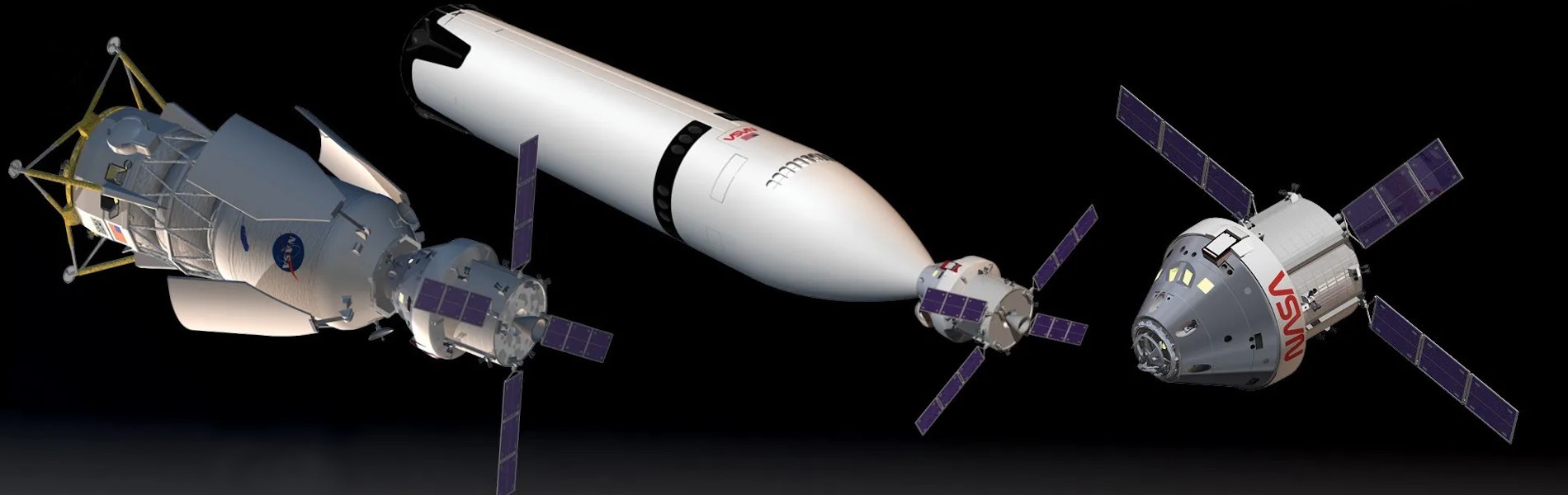
Orion docked to landers from SpaceX and Blue Origin

While the Artemis III and Apollo 9 missions have a lot in common, there’s at least one big difference. At this point, NASA isn’t committing to one particular lander. If Blue Origin gets their hardware flying before SpaceX, that’s what they’ll go with. There’s even a possibility, albeit remote, that they could test both landers during the mission.

Artemis IV Takes a Different Path

After the success of Apollo 9, there was consideration given to making the first landing attempt on the following mission. But key members of NASA such as Director of Flight Operations Christopher C. Kraft felt there was still more to learn about operating the spacecraft in lunar orbit, and it was ultimately decided to make Apollo 10 a dress rehearsal for the actual landing.

Advertisement

The CSM and LM would head to the Moon, separate, and go through the motions of preparing to land. The LM would begin its descent to the lunar surface, but stop at an altitude of 14.4 kilometers (9 miles). After taking pictures of the intended landing site, it would return to the CSM and the crew would prepare for the return trip to Earth. With these maneuvers demonstrated, NASA felt confident enough to schedule the history-making landing for the next mission, Apollo 11.

But this time around, NASA will take that first option. Rather than do a test run out to the Moon with the Orion capsule and attached lander, the plan is to make the first landing attempt on Artemis IV. This is partially because we now have a more complete understanding of orbital rendezvous and related maneuvers in lunar orbit. But also because by this point, SpaceX and Blue Origin should have already completed their autonomous demonstration missions to prove the capabilities of their respective landers.

Entering Uncharted Territory

At this point, the plans for anything beyond Artemis IV are at best speculative. NASA says they will work to increase mission cadence, which includes streamlining SLS operations so the megarocket can be launched at least once per year, and work towards establishing a permanent presence on the Moon. But of course none of that can happen until these early Artemis missions have been successfully executed. Until then it’s all just hypothetical.

While Apollo was an incredible success, one can only follow its example so far. Despite some grand plans, the program petered out once it was clear the Soviet Union was no longer in the game. It cemented NASA’s position as the preeminent space agency, but the dream of exploring the lunar surface and establishing an outpost remained unfulfilled. With China providing a modern space rival, and commercial partners rapidly innovating, perhaps Artemis may be able to succeed where Apollo fell short.

Advertisement

Source link

Continue Reading

Trending

Copyright © 2025