Connect with us
DAPA Banner

NewsBeat

How would the Iran crisis play out in a world powered by renewables not fossil fuels?

Published

on

How would the Iran crisis play out in a world powered by renewables not fossil fuels?

Imagine the escalating conflict between the US, Israel and Iran unfolding in a world powered mostly by wind, solar and batteries rather than oil and gas.

In today’s fossil-fuelled economy, markets react to Iran’s attacks on oil and gas facilities in the Gulf and the threat to close the strait of Hormuz. Oil prices jump. Governments brace for inflation. Around a fifth of the world’s traded oil passes through the narrow corridor, linking the Gulf states to the wider world. When tensions rise there, energy markets react instantly.

But in a world where most energy is generated domestically from renewables, would the same threat trigger the same global shock? Would instability in the Gulf still lead to more expensive food and fuel across the world? Or would the economic aftershocks look very different?

To understand what’s at stake, we need to first look at how today’s energy system is structured.

Advertisement

A system built on chokepoints

For about a century, the global economy has depended on fossil fuels produced by a few producers in the Middle East. Chokepoints like the strait of Hormuz carry enormous strategic weight.

That is why the current conflict between the US, Israel and Iran reverberates so quickly through global markets. Even before any sustained disruption to supply, oil and gas prices have surged on the possibility that a major proportion of global flows could be blocked. Because oil underpins transport, agriculture and manufacturing, price spikes ripple rapidly through commodity exchanges, supply chains and into household budgets. Regional conflict can magnify into global economic turmoil within days.

Now run the same crisis in a renewable world

Return to our thought experiment. Now, imagine the same crisis unfolding in a world where energy systems were powered by renewables and electricity rather than oil and gas.

It is the same week. Same military escalation. The same rhetoric about closing the strait of Hormuz. But this time the global energy system has already largely been decarbonised.

Advertisement

In this alternative world, most electricity globally would be produced within national borders from wind, solar and other low-carbon sources. Road transport would be predominantly electric. Heating would rely on locally available renewable sources, such as heat pumps, domestic biomass, geothermal systems or green hydrogen. These are all tried and tested solutions. They are not a thing of the future, and yet today our global economy still gets roughly 80% of its primary energy from fossil fuels.

In the alternative scenario, what changes?

The immediate macroeconomic shock would be weaker. A disruption at the strait would still matter. Oil would still be traded in some sectors, but it wouldn’t be as central to everyday energy use. Prices would be lower because demand was falling. The automatic link between Gulf instability and global inflation would loosen.

Electricity generation would continue, largely insulated from disruption of gas supply. People with electric cars would be less directly affected by a petrol price spike. Household bills would remain unchanged as energy price rates stay stable. Governments would be less exposed to sudden demands to subsidise fuels and an inflationary shock.

Advertisement

Energy security would become less about controlling distant shipping lanes, and more about building a distributed and resilient domestic electricity grid, more storage capacity and diversified supply chains.

Maritime chokepoints to mineral supply chains

This does not mean energy geopolitics would disappear. It would mutate.

Renewable systems depend on critical minerals such as lithium, cobalt and so-called rare earth elements, and involve advanced manufacturing supply chains to make solar panels, wind turbines and batteries. New chokepoints could emerge in mineral processing hubs or semiconductor plants. Already there is geopolitical competition over access to rare earths.

But there are important differences. Fossil fuel reserves are geographically concentrated, which is why global trade converges on a handful of maritime routes: Hormuz, Suez, Malacca (between the Indian and Pacific Oceans) and more. Markets for oil and gas are volatile.

Advertisement

Renewable resources such as sunlight and wind are more widely distributed. While mineral supply chains remain uneven, and still rely heavily on a handful of producers such as China for rare earths, the Democratic Republic of the Congo for cobalt and Indonesia for nickel, they do not converge on a single chokepoint. Price changes propagate through markets for technologies much more slowly. It is easier to built strategic reserves.

In our imagined Iran crisis, power would be more diffuse, with no single state able to threaten such disruption.

Minerals being more dispersed than oil and gas, and less concentrated in a few places, reduces the kind of centralisation and “resource capture” that has historically characterised the oil industry. Global standards on community consent, transparency and environmental protections are now much stronger in mineral supply chains than they ever were for fossil fuels.

This gives local actors more leverage in a renewable-powered world. Mineral-rich regions in Africa, Latin America and parts of Asia would gain new some power – not simply as resource suppliers, but through mechanisms of community consent social licence to operate and they are better able to influence whether projects proceed.

Advertisement

This marks a shift from the petroleum age, where power has largely been concentrated between states and multinational oil companies operating at a distance from affected communities.

The geopolitical dividend of decarbonisation

Decarbonisation is often framed as a climate necessity. It will also lead to a redistribution of geopolitical power, probably towards greater stability.

In today’s fossil fuelled system, the strait of Hormuz sits at the heart of a global economic system that ties global economic stability to the uninterrupted flow of oil – and to the military power that guards it. The current crisis exposes the fragility of that arrangement.

Running this thought experiment does not suggest that renewable energy dissolves geopolitics. In a post-oil world, the strait would still matter and resource conflicts would not vanish. But it does suggest that our fossil energy system is fragile and conflict can reverberate quickly around the world.

Advertisement

Source link

Continue Reading
Click to comment

You must be logged in to post a comment Login

Leave a Reply

NewsBeat

Tube strikes to go ahead next week with four days of major disruption | News UK

Published

on

Tube strikes to go ahead next week with four days of major disruption | News UK
London Underground will be out of action most of next week if the strike goes ahead (Picture: In Pictures/Getty Images)

London’s Underground network will grind to a halt next week with a Tube strike affecting all lines across four days.

The RMT union announced yesterday it had not reached an agreement with Transport for London in a dispute over Tube drivers’ hours.

Strikes will go ahead next week from Tuesday until Friday across the capital, and some days will have the double whammy of bus strikes too.

Further industrial action is in the pipeline for May and June.

Advertisement

Here is a roundup of what to expect next week – and how to work around the havoc.

When exactly is the Tube strike?

Although there are some gaps in how the strikes will run, in a nutshell, passengers should prepare for disruption throughout the dates.

London Underground Public Transport
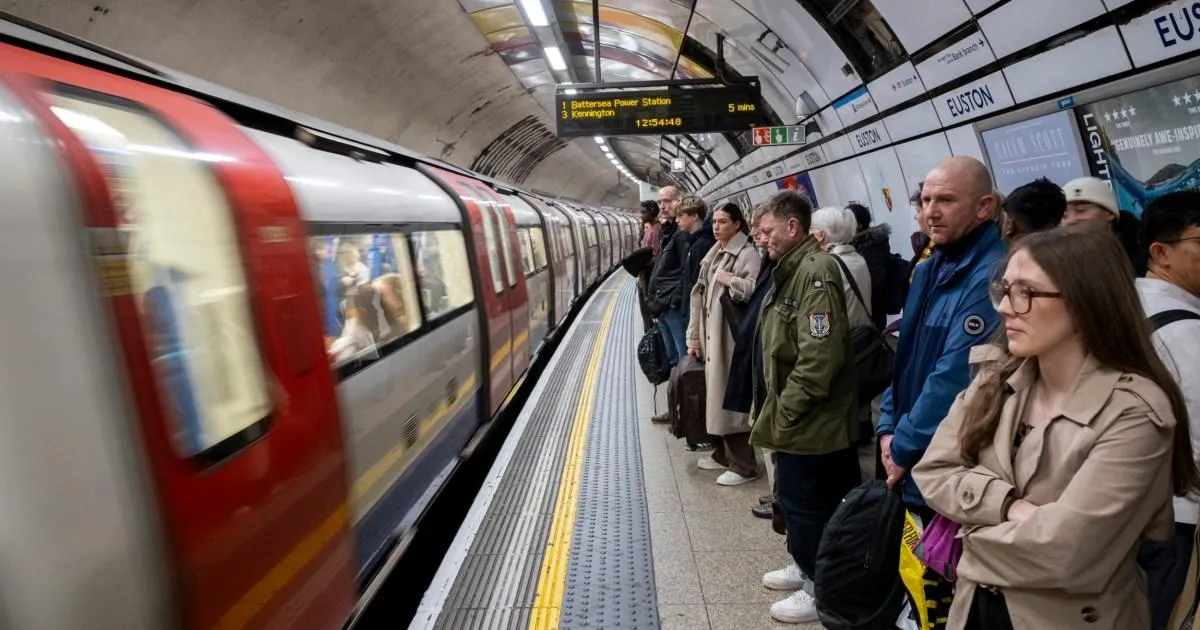
Major disruption is expected (Picture: Getty)

The first wave of strikes will start from mid-morning on Tuesday, April 21, and last until midday on Wednesday, April 22.

TfL says services are expected to recover throughout the afternoon, but some disruption is likely until the evening.

On Thursday, April 23, the London Underground will begin to close from later morning, with ‘significant’ disruption on all lines until midday, Friday, April 24, TfL warned.

Advertisement

While services are set to begin recovering on Friday afternoon and evening, if you can work from home, this is definitely the time to do so.

The Elizabeth line, Docklands Light Railway (DLR) and the Overground will run as normal, but they will be extremely busy.

Latest London news

To get the latest news from the capital, visit Metro’s London news hub.

Advertisement

Will the Tube strike affect your life?

Advertisement

Rental e-bikes on ‘standby’ for Tube strikes

Strikelists dominated the streets of London during the week-long strike last autumn, with emotions running high over riding etiquette and even snatched pedals.

And next week could see another rush for Santander, Lime and Forest bikes.

Lime has stepped up its operations to meet increased demand next week, including increased foot patrols and drivers on standby to boost batteries and balance out overcrowded bays, Metro understands.

Alex Berwin, head of policy at Forest, which runs a fleet of e-bikes in 18 London boroughs, told Metro that all hands are on deck to prepare for an expected spike in demand, especially at known hotspots like stations and commuter hubs.

Advertisement

Last year’s strike saw demand more than double during rush hour, and a similar trend is expected next week, he said.

To view this video please enable JavaScript, and consider upgrading to a web
browser that
supports HTML5
video

Advertisement

London bus strike dates confirmed

Some of the Tube strikes will coincide with industrial action taken by Stagecoach Unite members working for TfL.

It will affect seven routes – 8, 25, 205, 425, N8, N25 and N205 – and severe delays and cancellations are expected if the strike goes ahead.

Bus strike dates

Bus strikes are planned on routes 8, 25, 205, 425, N8, N25 and N205 on the following dates:

  • From 5am Friday, 17 April to 5am Saturday, 18 April
  • From 5am Friday, 24 April to 5am Saturday, 25 April
  • From 5am Friday, 15 May to 5am Saturday, 16 May

Why are there strikes on London Underground?

RMT members working as Tube drivers are in dispute with the London Underground management over a condensed four-day week.

Advertisement

Under the plan, which RMT says is being imposed, drivers would have to work full week’s hours in four days.

RMT’s general secretary Eddie Dempsey said the plan raises concerns around fatigue, safety and work-life balance.

TfL said previously it will continue to work constructively with the trade unions to avoid disruption and address concerns.

Metro approached TfL and RMT for an update, but neither can comment at this stage of the ongoing negotiations.

Advertisement

Are you concerned about the Tube strike and how you get around? Please email noora.mykkanen@metro.co.uk

Get in touch with our news team by emailing us at webnews@metro.co.uk.

For more stories like this, check our news page.

Advertisement

Source link

Advertisement
Continue Reading

NewsBeat

Everton vs Liverpool LIVE: Premier League match stream, latest team news, lineups, TV, prediction

Published

on

Everton vs Liverpool FC: Prediction, kick-off time, team news, TV, live stream, h2h results, odds today

Now, they take on their local rivals, who are also on the hunt for an unlikely European place. David Moyes has led his men to 10th in the table, and they are just one point off sixth-placed Chelsea. A win here would propel today’s hosts into Europa League contention above Liam Rosenior’s Blues, and have them just two points worse off than Liverpool. Stay tuned with all the latest from the Hill Dickinson Stadium with our live blog.

Source link

Continue Reading

NewsBeat

Runners v robots at China half marathon

Published

on

Runners v robots at China half marathon

Robots competed in a half marathon race in Beijing on Sunday, with the winning machine leaving its human rivals for dust.

The winning robot, Lightning, was developed by Chinese smartphone maker Honor and finished the race in 50 minutes and 26 seconds, according to race organisers.

Uganda’s Jacob Kiplimo holds the men’s half marathon world record, which he set in March in Lisbon with a time of 57 minutes and 20 seconds.

Around 40% of the robots raced autonomously, while the others were remotely controlled.

Advertisement

Source link

Continue Reading

NewsBeat

Starmer ‘would not have appointed Mandelson if he was aware of vetting failure’

Published

on

Starmer ‘would not have appointed Mandelson if he was aware of vetting failure’

He told Sky News: “The thing that I think Labour MPs should think about quite carefully now is their Government has been a bit of a failure, frankly, on the economy, on so much, and it’s in chaos, in the way that Conservatives were in chaos, in perpetual crisis, and I don’t think they can get out of that unless Keir Starmer moves aside.”

Source link

Continue Reading

NewsBeat

Tottenham report ‘vile, dehumanising’ racist posts about Kevin Danso to police after Brighton match

Published

on

Tottenham report ‘vile, dehumanising’ racist posts about Kevin Danso to police after Brighton match

Tottenham Hotspur has issued a strong condemnation of the “vile, dehumanising racism” aimed at defender Kevin Danso, which followed Saturday’s 2-2 draw with Brighton.

The abuse surfaced after Danso was implicated in the concession of Georginio Rutter’s stoppage-time equaliser, a result that left Spurs languishing in the Premier League relegation zone.

The club has confirmed that it has reported the racist abuse, received via social media, to the police.

In a statement, Tottenham said that the incidents occurred during the Premier League’s dedicated “No Room For Racism” weekend.

Advertisement

“Since yesterday’s fixture against Brighton… Kevin Danso has been, and continues to be, subject to significant and abhorrent racist abuse on social media,” the club said.

They labelled such behaviour as “without doubt a criminal offence” and said that it “will not be tolerated”.

Tottenham Hotspur’s Xavi Simons celebrates scoring their second goal with Kevin Danso during the Brighton match
Tottenham Hotspur’s Xavi Simons celebrates scoring their second goal with Kevin Danso during the Brighton match (Reuters)

Tottenham are pursuing “immediate action”, reporting all identified content to the Metropolitan Police, as well as to the appropriate authorities in the countries where perpetrators reside, and to the relevant social media platforms.

The club have pledged to “push for the strongest possible action against each and every person we identify”.

They also affirmed their “complete and unconditional support” for Danso, stating: “No one at this club will ever stand alone in the face of this.

Advertisement

“Nothing about form or league position can ever excuse or explain racist abuse. There is no connection between performance on the pitch and the right to target a player with discrimination. Criticism of performances is part of the game. Racism is not.”

In February, an “appalling weekend” rocked English football after four players were subjected to racist abuse on their social media accounts following recent matches.

Chelsea defender Wesley Fofana and Burnley midfielder Hannibal Mejbri both shared images of racist messages they privately received on Instagram after their teams’ 1-1 draw at Stamford Bridge.

Wolverhampton Wanderers striker Tolu Arokodare also displayed racially aggravated messages sent to him on Instagram following a 1-0 loss at Crystal Palace, a game in which he had a penalty saved.

Advertisement

And last week, Sunderland condemned racist abuse directed towards Brian Brobbey on social media and offered the striker their full support.

The club said Brobbey was targeted online after the Black Cats’ 1-0 win over Tottenham in the Premier League.

Source link

Advertisement
Continue Reading

NewsBeat

Brilliant spring flower displays as warm sunshine follows wet winter

Published

on

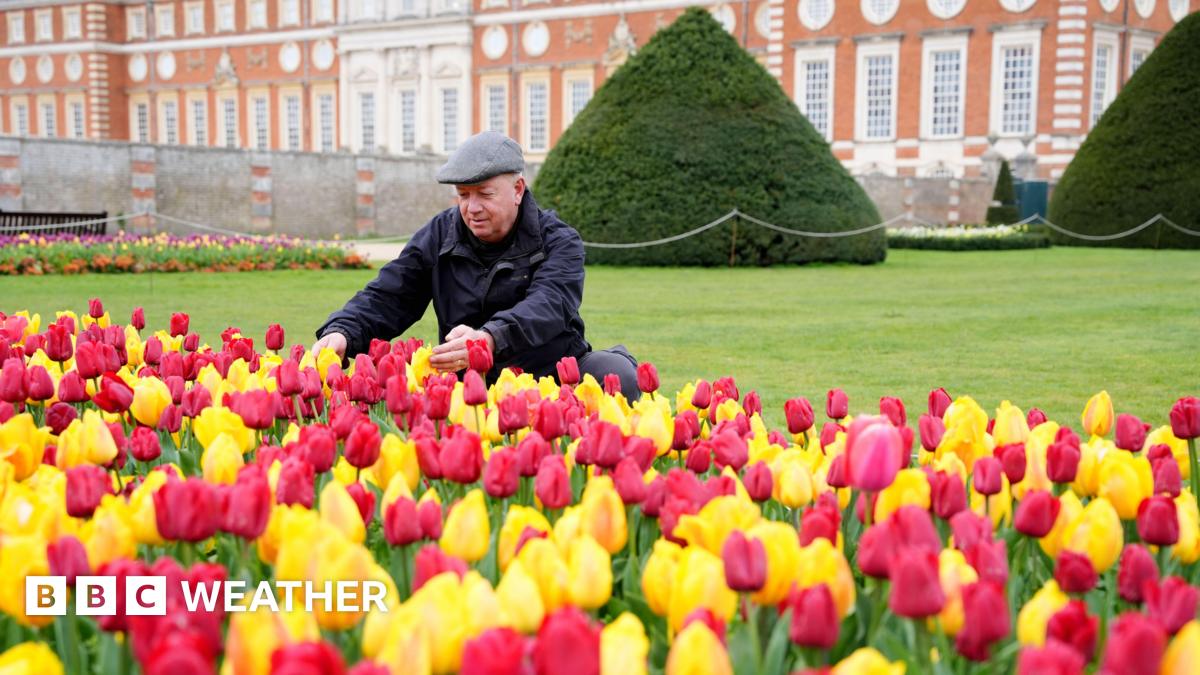
Man kneels to tend to a sea of yellow and red tulips in front of Hampton Court Palace

Spring is a season of transition, as lingering winter influences are gradually replaced by increasing warmth.

The days get longer, the sun is higher in the sky with plants responding to this increased sunlight and rise in temperatures.

Snowdrops and daffodils give way to tulips and bluebells, and the speed and intensity of spring’s blooms are highly influenced by the weather.

This year much of the UK started spring with plenty of moisture in the soil after a wetter than average winter. Met Office figures show that March delivered some notably warm weather for England and Wales in particular, alongside plenty of sunshine.

Advertisement

Source link

Continue Reading

NewsBeat

Has Steph Miligan left Emmerdale for good as Georgia Jay quits? | Soaps

Published

on

Has Steph Miligan left Emmerdale for good as Georgia Jay quits? | Soaps
No more Steph? (Picture: Mark Bruce)

Will we ever see Steph Miligan again in Emmerdale?

Maybe, but chances are she’ll have a different face, as Georgia Jay has reportedly left the ITV soap during her maternity leave and has no plans to return.

While her departure was initially believed to be temporary, it’s since become a permanent one, as Georgia has quit the show to focus on motherhood.

Fans had previously expressed their excitement when Georgia took to Instagram, sharing an image taken on the Emmerdale set, and those hoping for a Steph return were later sent into another tizzy when Georgia shared a picture of a trip to the hairdressers, with a blurred-out script set out in front of her.

Advertisement

Steph’s time in Emmerdale

Anthony stood behind Steph
Steph made a horrific discovery about her parentage (Picture: ITV/Mark Bruce/Shutterstock)

Steph’s tenure in the Yorkshire Dales was marked by two big plots: her relationship with Ross Barton (Mike Parr) and the discovery that that her beloved grandfather Anthony Fox (Nicholas Day) was actually her biological father and not Caleb Miligan (William Ash), after he abused her mum,

Ross and Steph had formed quite a bond after getting together initially through a combination of lust and Steph wanting to wind her parents up. The relationship evolved into one of genuine affection on both sides, but it was completely upended when she discovered the truth of her parentage.

In the aftermath of discovering Anthony’s abuse and that he’d been killed by her mum, Steph became fixated on her resemblance to him and was so desperate she even tried to have surgery to alter her appearance. Ross wanted to support her through this hard time, but she pushed him away, though she did begin going to therapy to try to help her move on. 

Editorial use only Mandatory Credit: Photo by ITV/Mark Bruce/Shutterstock (15395256a) Emmerdale - Ep 10353 & Ep 10354 Thursday 31st July 2025 Lewis Barton, as played by Bradley Riches, is intrigued by Steph's, as played by Georgia Jay, history with Ross Barton, as played by Michael Parr. After Steph admits she wishes things turned out differently with Ross, Lewis is determined to reunite the pair. 'Emmerdale' TV Show, Episodes 10339 - 10356 UK - Jul 2025 Emmerdale, is a British ITV long running soap opera, known as Emmerdale Farm until 1989, set in Emmerdale, a fictional village in the Yorkshire Dales. It was created by Kevin Laffan and was first broadcast on 16 October 1972. It was originally produced by ITV Yorkshire and is still filmed in their Leeds studios.
Lewis facilitated a reunion between Ross and Steph (Picture: ITV/Mark Bruce/Shutterstock)

Steph and Ross later reunited, with his brother, Lewis Barton (Bradley Riches), playing cupid for them, though their reunion hinged on Ross’ declaration that there hadn’t been anyone else in his life since he and Steph broke up.

The biggest problem being that their was, as he’d had a fling with Manpreet Sharma (Rebecca Sarker) who unknowingly revealed all to Lewis and Ruby, meaning it was only a matter of time before word got back to Steph.

Poor Steph, who had worked hard to tell herself that she could trust Ross again, was devastated shoved him straight in the bin. Reeling and wounded, Steph told her parents that she’d booked a yoga retreat in Rome, needing to get away from the village for a while. Though Ross tried to get her to change her mind, Steph made it clear she didn’t want to be anywhere near him.

Advertisement

Don’t miss a Soaps scoop! Add us as a Preferred Source

As a loyal Metro Soaps reader, we want to make sure you never miss our articles when searching for stories. We have all the latest soaps news, spoilers, videos, and interviews, with a vibrant community of highly engaged readers.

Click the button below and tick Metro.co.uk to ensure you see stories from us first in Google Search.

Add us as a Preferred Source

Soaps authors collage Fact box image only Picture: Metro
Now you can ensure you never miss a story from the Soaps team
Advertisement

Georgia takes maternity leave

Steph’s exit was written to facilitate Georgia Jay’s maternity leave, following the announcement she was expecting her first baby. Announcing her pregnancy on Instagram, Georgia wrote: ‘As you’ve probably guessed, I’ve got some news to share! I know some of you have been wondering if you’ve been seeing a little bump on screen lately… well, it’s not your imagination…I’m having a baby!’.

She added: ‘We’ve never been so excited and a little nervous all at once. Thank you for all the love and support.’

Would you be up for a Steph recast?

Advertisement

Georgia has no plans to return

Steph stood outside looking concerned in Emmerdale
Georgia is enjoying motherhood (Picture: ITV/Mark Bruce/Shutterstock)

A source told The Sun this week that: ‘Georgia loved her time at Emmerdale but she has no plans to return now. 

‘She’s loving being a mum, and that’s her focus for now. Obviously, she’s open to opportunities but returning to a full-on soap schedule full-time is just not something she can do at the moment.’

While this doesn’t mean the end of Steph, with Soapworld being one of frequent recasts, it does seem to draw a line under Georgia’s time with the show, and should Steph re-emerge in the Dales, she could look entirely different.

Advertisement

Source link

Continue Reading

NewsBeat

Wales star taken off in agony as Steve Tandy now has three big summer worries

Published

on

Wales Online

Wales head coach Steve Tandy is now sweating on a trio of players for this summer’s schedule

Wales fly-half Jarrod Evans was taken off the pitch in agony on Saturday during Harlequins’ defeat to Bath.

Advertisement

Just before the midway point of the second half the former Cardiff No10 suffered a painful shoulder injury which required immediate medical attention.

Evans sustained the injury while attempting a tackle on Bath’s Josh Bayliss, who ultimately went over to score. His arm was placed in a makeshift sling by club staff, using his shirt for support.

Evans was one of three players who were forced off the field during the match at The Rec, with Cadan Murley and Nick David also unable to continue.

JOIN OUR WALES RUGBY FACEBOOK PAGE Latest news, analysis and much more

Advertisement

“Poor Quins, poor Jarrod Evans, it’s horrible, this,” said David Flatman on TNT Sports commentary.

Quins came into this fixture with 27 players unavailable through injury and events in the West Country will only compound the issues for head coach Jason Gilmore.

He won’t be the only one concerned about Evans’ injury, with Wales head coach Steve Tandy likely to be keeping close tabs on his prognosis.

Tandy is already sweating on the fitness of fellow fly-half Sam Costelow, who has undergone surgery and faces a race to be fit for Wales’ Nations Championship campaign against Fiji, Argentina and South Africa this summer.

Advertisement

Tandy was in attendance to watch Cardiff pip Scarlets to the post in the Welsh derby at Parc y Scarlets on Saturday night and he saw Mason Grady leave the field with a grim injury, to give him a trio of concerns.

The Wales wing/centre was forced off with a bone sticking out of his hand to extend the powerful utility’s man run of bad luck when it comes to injuries.

“He’s picked up a fracture in his thumb,” said Cardiff head coach Corniel van Zyl.

“It’s not great.

Advertisement

“It’s a pity because I thought he was going to score that try but he had broken his hand.”

Source link

Continue Reading

NewsBeat

Greece drops EU entry and exit biometric rules for UK travellers to cut airport hassle

Published

on

Greece drops EU entry and exit biometric rules for UK travellers to cut airport hassle
Hoping to soak up the sun in Greece? You’re luck this year when it comes to customs (Picture: NurPhoto)

British passport holders heading to Greece this summer are now exempt from new EU biometric requirements.

All travellers from the UK and other non-EU countries are required to be photographed and fingerprinted at EU airports and border points under the new entry and exit system (EES), which was fully operational as of April 10.

Holidaymakers were warned of airport delays of up to four hours because of the EU’s new biometric entry and exit checks, but now, Greece is removing the requirement for UK citizens.

Eleni Skarveli, Director of the Greek National Tourism Organisation in the UK, said the move would ‘ensure a smoother and more efficient arrival experience in Greece’ and slash waiting times.

Advertisement

Given that thousands of UK travellers arrive daily on islands such as Corfu, Crete and Rhodes, the move has been welcomed, and some believe other Mediterranean countries could follow suit, to avoid chaos.

Automatic facial recognition system is used at entrances and exits
Non-EU travellers are required to give biometric data (Picture: Getty)

Best of Metro Deals

Get exclusive discounts with Metro Deals – save on getaways and spa days. Powered by Wowcher

Bannatyne Spa: Spa day for two with treatments, lunch & prosecco — save up to 57% off.

Get deal now

Mystery Escape: Hotel stay with return flights from as low as £92pp — save on worldwide holiday packages.

Advertisement

Get deal now

Beach Retreat (Lanzarote): 4* Lanzarote beach holiday with flights — save up to 58%.

Get deal now

Advertisement

Even as Greece drops the requirement, other countries could still see heavy delays for travellers.

Luke Petherbridge, director of public affairs at Abta, the travel agent and tour operator association, said: ‘What we have said to customers is that, because of the checks, you might need to prepare for delays with extra water and snacks.’

Travellers already reported queues of up to two hours at passport control since EES started rolling out in some European countries late last year.

Advertisement

But airline groups have warned that these waits could double to four hours as holiday traffic increases into the peak summer season.

There are also concerns over IT glitches (remember the Crowdstrike outage), strikes and staff shortages during holiday periods.

What is the entry and exit EES system?

The entry and exit system is a digital system that replaces physical passport stamps at border points across the European Union.

People with passports from non-EU countries, including the UK, are required to use the system once it launches.

Advertisement

Most travellers from outside the EU, known as third-country nationals, will be required to register their passport details and biometric data when crossing into an EU country for the first time.

Biometric data includes fingerprints and facial pictures. Borders are likely to be kitted with self-service kiosks where passengers can input this information.

This data, as well as the entry and exit details, will be stored for subsequent visits.

Future visits will only require a verification of the biometric data, which can speed up the process.

Advertisement

Get in touch with our news team by emailing us at webnews@metro.co.uk.

For more stories like this, check our news page.

Advertisement

Source link

Continue Reading

NewsBeat

Train nightmare at Manchester Piccadilly as Arsenal FC fans scramble to get to huge Man City clash

Published

on

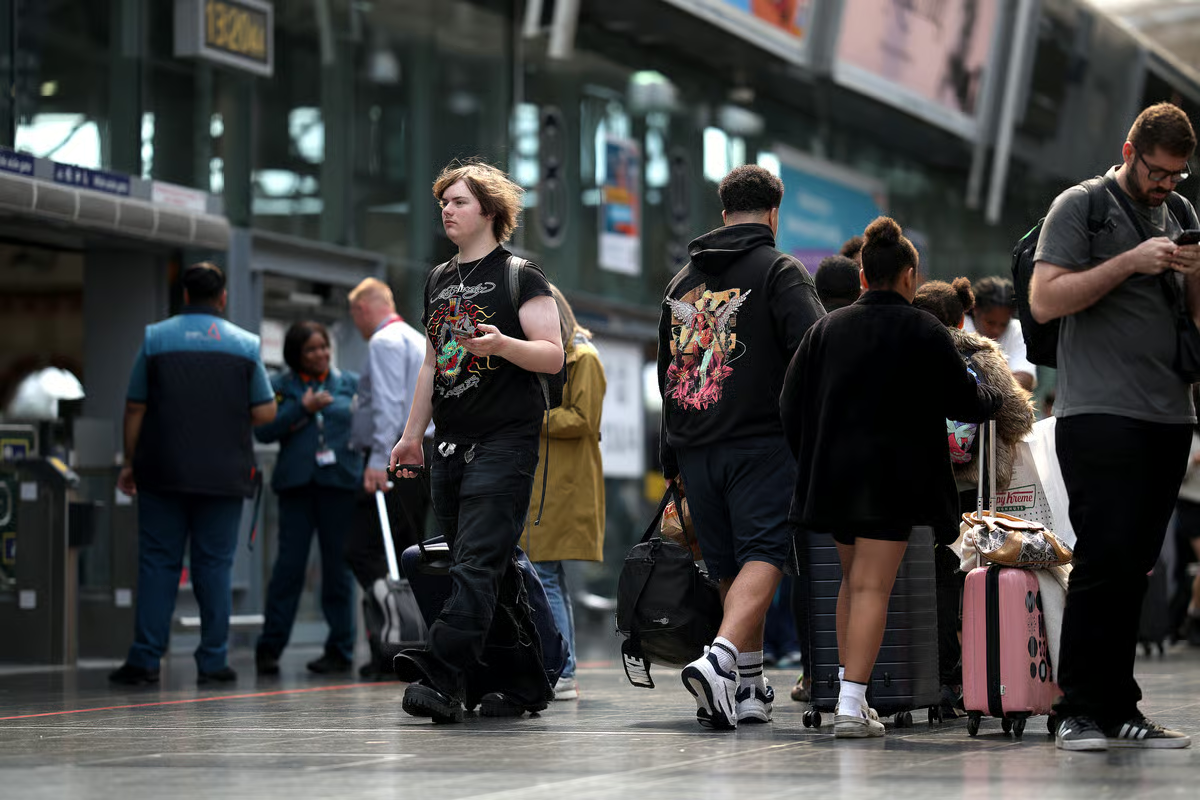
Train nightmare at Manchester Piccadilly as Arsenal FC fans scramble to get to huge Man City clash

The Gunners are set to face their rivals at 4.30pm BST at the Etihad Stadium, with Mikel Arteta’s men six points clear of Pep Guardiola’s side at the summit.

Source link

Advertisement
Continue Reading

Trending

Copyright © 2025