

Crypto World
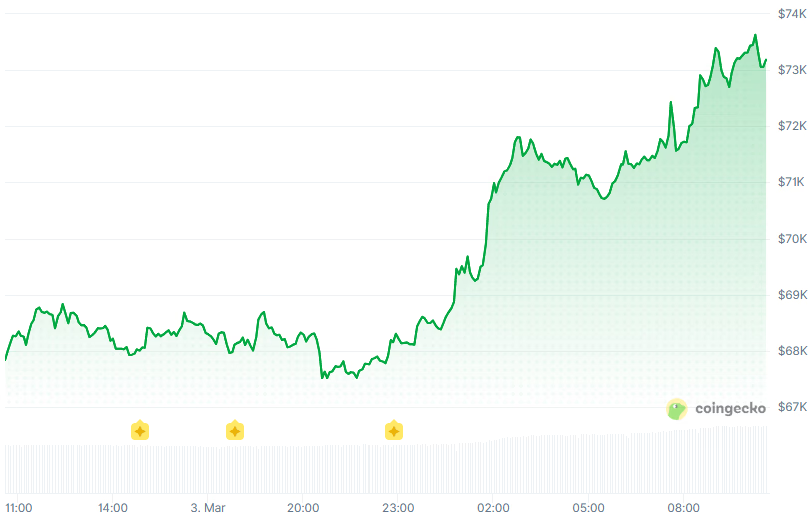
Bitcoin Surges Above $73,000 as Global Markets Rebound

Bitcoin ETFs have attracted nearly $1.5 billion in inflows since last week.
Crypto markets rallied sharply on Wednesday as global markets bounced back despite the ongoing conflict in the Middle East. Stocks and precious metals gained while oil and natural gas dipped slightly.
Bitcoin (BTC) is trading at around $73,500, up 8% over the past 24 hours and marking a four-week high for the world’s largest cryptocurrency. Meanwhile, ETH and SOL surged 9% to about $2,140 and $91, respectively, and BNB is up 4% on the day.

The overall crypto market capitalization climbed nearly 6% to $2.54 trillion, according to Coingecko.
Investor sentiment is being buoyed by upbeat U.S. economic data. Earlier today, ADP reported that the private sector added more jobs than expected in February. Additionally, the ISM services index rose to 56.1 in February, indicating that the non-manufacturing sector remains resilient. The S&P 500 and the Nasdaq gained around 1% and 1.8%, respectively, while gold and silver posted modest gains.
Almost all of the Top 100 digital assets posted gains over the last 24 hours.
Top gainers include Dogecoin (DOGE), SKY, and Ethereum (ETH), which rallied 14%, 10%, and 9%, respectively.
Near Protocol (NEAR) is today’s biggest loser, falling 5%.
Around 129,000 leveraged traders were liquidated for $530 million in the past 24 hours, according to CoinGlass. Bitcoin accounted for $293 million, while ETH positions made up $126 million. Notably, more than 80% of liquidations involved short positions.
Bitcoin exchange-traded funds (ETFs) recorded $225 million in inflows on Tuesday, marking a second day of gains. This brings inflows to nearly $1.5 billion since last week.



Network News
NEW SCALING PLANS FOR ETHEREUM: Ethereum co-founder Vitalik Buterin published a blog post on X outlining his latest vision for scaling the blockchain, arguing the network can boost capacity in the near term while laying the groundwork for a longer-term shift to advanced cryptography and data-heavy “blobs” that would change how Ethereum is validated. The post reflects Buterin’s renewed focus on scaling Ethereum’s base layer after several years in which much of the ecosystem’s scaling strategy centered on layer-2 rollups. The plan comes on the heels of the Ethereum Foundation publishing a ‘strawmap’ aimed at making the network more efficient in the long term. In the short term, Buterin says Ethereum can safely increase throughput by making blocks easier and faster to check. Upcoming upgrades will allow the computers that run Ethereum to review different parts of a block simultaneously, rather than processing everything step by step. At the same time, changes to how blocks are built will let the network use more of each 12-second processing window, rather than finishing early out of caution (known as ePBS, and will be implemented in the Glamsterdam upgrade). The result: Ethereum should be able to fit more transactions into each block without increasing the risk of errors or instability. Another major piece of the plan involves rethinking how transaction fees — known as “gas” — are calculated. Buterin argues that not all activity on Ethereum puts the same strain on the network. There’s a big difference between using computing power temporarily and permanently adding new data that every Ethereum computer, or node, must store forever. — Margaux Nijkerk Read more.
OKX DABBLES WITH AI AGENTS: OKX rolled out an AI-focused upgrade to OnchainOS, its developer platform, pitching it as infrastructure for autonomous crypto trading agents. The AI layer builds on familiar components such as wallet infrastructure, liquidity routing and onchain data feeds, combining them into a unified execution framework aimed at AI agents operating across chains. Rather than wiring price feeds, token approvals, gas estimation and swap routing manually, developers can connect an agent and issue a high-level instruction, such as swapping ETH for USDC below a certain price. OnchainOS handles the workflow behind the scenes, from monitoring markets to sourcing liquidity and confirming settlement. The intersection between crypto and AI has grown exponentially in the past 12 months — the blockchain AI market projected to rise from $6 billion in 2024 to $50 billion by 2030 — and traders are using the technology to their advantage. One recent example occurred when a group of retail traders used AI to find “glitches” on platforms like Polymarket before instructing AI to trade on its behalf. — Sam Reynolds Read more.
NEAR FOUNDER ON THE FUTURE USERS OF BLOCKCHAIN: For years, the crypto industry has searched for its next breakout moment — something on the scale of DeFi summer or the NFT boom. Meanwhile, artificial intelligence (AI) has quietly become embedded in daily life. Developers use ChatGPT as a co-pilot. Consumers rely on AI assistants to draft emails, plan travel and, increasingly, manage workflows. Crypto, by comparison, still feels infrastructural. Illia Polosukhin, a co-founder of NEAR, believes the divide is about to collapse, but not in the way many expect. “The users of blockchain will be AI agents,” Polosukhin said in an interview. “AI is going to be on the front end, and blockchain is going to be the back end.” His framing cuts against much of crypto’s recent experimentation with AI, which has centered on speculative tokens, memecoins and agent-themed trading bots. Instead, Polosukhin argues that AI will become the primary interface layer for everything online, including crypto, abstracting away wallets, explorers and transaction hashes. “The goal is to make your AI hide all the blockchain,” he said. “The fact that we have [blockchain] explorers is effectively a failure, because we don’t abstract the technology.” In this view, blockchain doesn’t disappear, it recedes. AI agents interact with protocols directly, executing payments, managing assets, coordinating services and even voting in governance systems. Humans, meanwhile, interact with the AI. — Margaux Nijkerk Read more.
BITCOIN LATEST GOVERNANCE CLASH: Bitcoin’s latest governance clash escalated as the first block signaling support for a temporary soft fork designed to restrict arbitrary, non-monetary data in the blockchain’s transactions was produced by mining pool Ocean. The proposal, formally assigned BIP-110 after evolving from earlier drafts, aims to reinstate strict limits on transaction output sizes and arbitrary data fields for about a year. The idea is to curb what proponents see as “spam” uses of block space for non-financial data. They argue that unchecked data, including large inscriptions and so-called OP_RETURN payloads, threaten the original blockchain’s role as sound monetary infrastructure and burden node operators. The community remains deeply divided. Prominent critics, including Blockstream CEO Adam Back, have warned that consensus-level intervention could harm Bitcoin’s credibility and lead to preferential treatment of some transactions in violation of the principle of neutral transaction capacity. He also questioned the level of support for the proposal, which, he said, increased the risk of the blockchain being split. — Jamie Crawley Read more.
In Other News
- Kraken secured a Federal Reserve “master account,” giving its banking arm direct access to the Fed’s core payment systems and making it the first crypto firm to operate on the same rails as traditional financial institutions. The company said its Kraken Financial unit received approval for a Federal Reserve “master account.” The account allows direct access to Fedwire, a major interbank payment network that processes trillions in transfers every day. Until now, Kraken had to rely on partner banks to send or receive U.S. dollars. Direct access changes that flow as the firm can now settle payments itself, which may speed up deposits and withdrawals for large traders and institutional clients. Kraken Financial operates under a Wyoming charter designed for crypto-focused banks. The Federal Reserve Bank of Kansas City oversaw the application. The approval is limited, however. Kraken will not receive the full set of services available to traditional banks as it won’t earn interest on reserves or be able to tap into the Fed’s emergency lending. — Francisco Rodrigues Read more.
- Tether, the firm behind the most popular stablecoin, USDT, invested $50 million in sleep technology startup Eight Sleep at a $1.5 billion valuation, according to a Wednesday press release and data from Crunchbase. With the funding, Eight Sleep plans to develop new AI health features using Tether’s QVAC architecture, a computing framework designed to process data at the device level rather than relying fully on cloud systems. Eight Sleep builds sensor-equipped sleep systems that track biometrics such as heart rate and temperature during the night. Its flagship “Pod” product adjusts mattress temperature and generates sleep insights based on real-time physiological data. “We believe advanced personalized AI is the perfect pathway to understand and expand human potential,” Paolo Ardoino, CEO of Tether, said in a statement. The investment is the latest example of Tether pushing beyond stablecoins and crypto infrastructure. The firm is best known for its $183 billion USDT stablecoin, which is popular as a savings and payments tool across emerging markets with limited access to U.S. dollars. Tether reported more than $10 billion in net income in 2025 and has increasingly channeled those earnings into venture investments across energy, payments, artificial intelligence and health technology. — Kristzian Sandor Read more.
Regulatory and Policy
- U.S. President Donald Trump said bankers are trying to undermine the Genius Act — the signature stablecoin legislation he signed into law last year — in a Truth Social post Tuesday, and he urged passage of Congress’ crypto market structure legislation without interference. “The U.S. needs to get Market Structure done, ASAP. Americans should earn more money on their money,” he said in the post. “The Banks are hitting record profits, and we are not going to allow them to undermine our powerful Crypto Agenda that will end up going to China, and other Countries if we don’t get The Clarity Act taken care of.” He warned banks against holding the Clarity Act “hostage,” saying the bill was necessary to keep the crypto industry in the U.S. “They need to make a good deal with the Crypto Industry because that’s what’s in best interest of the American People,” he said. The market structure bill has been in limbo since the Senate Banking Committee indefinitely postponed a markup hearing, in which lawmakers were set to debate and vote on amendments to the bill, in January. There are a number of issues still holding up passage of the bill, but the most public fight has been between the banking and crypto sectors over whether third parties can offer yield on stablecoin deposits to customers.— Nikhilesh De Read more.
- A federal judge has dismissed a proposed class action lawsuit against Uniswap Labs, CEO Hayden Adams and several venture capital backers, ruling they cannot be held liable for alleged “rug pull” tokens traded on the decentralized exchange’s protocol. In a ruling issued by the U.S. District Court for the Southern District of New York, Judge Katherine Polk Failla threw out the remaining state law claims in Risley v. Universal Navigation Inc., the Brooklyn-based firm that operates Uniswap. after previously dismissing the plaintiffs’ federal securities claims. The decision effectively ends the case at the district court level. The ruling is one of the first to specifically address whether developers and investors behind a decentralized protocol can be held liable under existing securities and state laws for tokens created and traded by third parties. “Due to the Protocol’s decentralized nature, the identities of the Scam Token issuers are basically unknown and unknowable, leaving Plaintiffs with an identifiable injury but no identifiable defendant,” Failla wrote. “Undaunted, they now sue the Uniswap Defendants and the VC Defendants, hoping that this Court might overlook the fact that the current state of cryptocurrency regulation leaves them without recourse, at least as to the specific claims alleged in this suit,” she added. — Olivier Acuna Read more.
Calendar
- Mar. 24-26, 2026: Digital Asset Summit, New York City
- Mar. 30-Apr. 2, 2026: EthCC, Cannes
- Apr.15-16, 2026: Paris Blockchain Week, Paris
- Apr. 29-30, 2026: Token2049, Dubai
- May 5-7, 2026: Consensus, Miami
- Sept. 29-Oct.1, 2026: Korea Blockchain Week, Seoul
- Oct. 7-8, 2026: Token2049, Singapore
- Nov. 3-6, 2026: Devcon, Mumbai
- Nov. 15-17, 2026: Solana Breakpoint, London


The White House will review new prediction market measures proposed by the CFTC.
Summary
- The CFTC has sent a new set of prediction market measures for review.
- The White House will examine the proposal before any implementation decisions are made.
- Crypto and traditional prediction markets may see changes in oversight, licensing, and product design depending on the outcome.
The White House is set to review a new package of prediction market measures submitted by the U.S. Commodity Futures Trading Commission, underscoring how on-chain and traditional prediction platforms are moving deeper into the regulatory spotlight.
The proposal, described in market reports as a fresh attempt to clarify the status of event-linked derivatives, would shape how platforms structure contracts tied to elections, economic indicators, and other real-world outcomes. While specific details of the measures have not yet been published, the fact that they require White House review signals that the framework could have implications beyond niche crypto products, touching broader derivatives policy and cross-border coordination. For prediction markets built on public blockchains, any shift in U.S. rules could influence which products are considered permissible and how they must be supervised.
The review process comes at a time when prediction markets on both centralized and decentralized platforms are gaining traction with traders looking for high-conviction, event-driven opportunities. On-chain protocols have experimented with a range of designs, from fully decentralized order books to more curated models that resemble traditional venues but settle in digital assets such as Bitcoin (BTC).
At the same time, regulators have grown more vocal about the need to ensure that certain contracts do not function as unregistered gambling or securities products. The CFTC’s latest measures appear designed to bring more consistency to how event-based contracts are treated, whether they are listed on regulated futures exchanges, offered by specialized platforms, or deployed via smart contracts accessible to global users.
Implications for on-chain prediction markets
For crypto-native prediction protocols, a White House-level review of CFTC measures raises both risks and opportunities. Clearer rules could make it easier for compliant platforms to operate in the U.S. and potentially integrate with more traditional financial infrastructure, including brokerages and exchanges that already list bitcoin-linked products through venues like Coinbase. At the same time, stricter definitions of what constitutes a permissible event contract might force some existing markets to shut down or relocate activity offshore, particularly in politically sensitive areas such as elections. Projects inspired by the growth of on-chain prediction markets will be watching to see whether the final framework leaves room for innovative product design or leans toward a narrow, highly restricted set of contracts.
The outcome will likely feed into a broader global conversation about how to regulate event-based markets alongside spot crypto, DeFi, and tokenized assets. As jurisdictions implementing frameworks similar to MiCA refine their own views on derivatives and prediction products, U.S. decisions could influence how other regulators calibrate their approaches. For now, market participants are left to trade under existing rules while anticipating that the White House’s review of the CFTC’s measures will set the tone for the next phase of growth—or retrenchment—in both centralized and on-chain prediction markets.

Monthly inflows into digital asset treasury (DAT) companies have slowed to roughly $555 million, the weakest pace since October 2024, according to DeFiLlama data. The latest figure underscores a quieter phase in crypto treasury activity even as the market shifts in response to political developments and regulatory signals. The data show a notable drop from the late-2024 surge that followed the US elections, when inflows climbed as investors anticipated a more crypto-friendly regulatory environment. The DeFiLlama dataset also tracks a dramatic rebound after the 2024 election results, but the momentum proved fragile in the following year, highlighting how treasury players pivot between accumulation and productive deployment of crypto reserves. The current trend appears to reflect a broader calibration in capital deployment as market participants reassess risk and yield opportunities across digital-asset strategies. Inflows to digital asset treasuries had previously spiked to more than $12.3 billion after the election-related shifts, according to DeFiLlama’s data, before retreating as price cycles and macro uncertainty reasserted themselves. For context, the election period acted as a catalyst for capital inflows into crypto treasury strategies, with observers tracking how regulatory expectations could influence corporate exposure to digital assets.
Digital asset treasury companies have faced a challenging environment over the past year, a headwind that intensified after the October crypto market crash, which kicked off a protracted bear phase and pressured asset prices back toward pre-election levels. The sector has since weathered heightened scrutiny and a cautious liquidity backdrop, compelling firms to rethink their business models beyond mere crypto custody. The conversation around how treasuries should operate has evolved from simple hodling to strategies that generate cash flow and add strategic value to corporate balance sheets.
Related: Crypto treasury companies likely to consolidate in 2026: Crypto exec
Treasury reinvention in a market reset
Tioneering executives argue that the era of “buy and hold” is giving way to more active treasury management. In an interview, Patrick Ngan, chief investment officer of Zeta Network Group, a technology company, emphasized the need for treasuries to demonstrate practical utility for the asset rather than merely warehousing it. “Corporate Bitcoin treasuries now need to show they can actually use the asset, not just warehouse it,” he said, underscoring a broader push toward deploying crypto holdings in revenue-generating activities.
The emphasis on utilization aligns with a broader industry view: crypto treasuries with operating cash flow can outperform those that simply accumulate crypto without an active business plan. The consensus is that the most durable treasury strategies tie digital assets to ongoing operations, whether through staking or validation services on proof-of-stake networks, mining on proof-of-work networks, or DeFi lending and other ancillary ventures. A competitive edge may belong to entities that blend crypto with traditional revenue streams, rather than treating digital assets as a standalone store of value.
The landscape includes a range of models, from dedicated crypto-focused ventures to hybrid strategies that diversify income sources. A notable theme is the exploration of real-world asset (RWA) synergies to support crypto reserves. Case studies and industry commentary point to hybrid structures that blend real estate or other cash-flow-producing assets with BTC exposure, aiming to capture appreciation while generating rental or operating income. Grant Cardone’s approach—integrating real estate with Bitcoin exposure into hybrid treasury vehicles—has been cited as a practical example of how a treasury can leverage tangible assets to support digital-asset growth. Cardone described the strategy as a way to balance property-backed income streams with crypto upside, suggesting that real estate can provide a sturdier foundation for treasury-driven investments than a pure crypto-only vehicle.
The 10 biggest crypto treasury companies, ranked by their crypto holdings. DeFiLlama’s data visually maps the scale of digital asset reserves across leading treasury players, illustrating how the sector concentrates assets among a handful of large holders while many others operate with smaller balance sheets.
Beyond real estate partnerships, treasuries are pursuing revenue streams through staking, validator services, and DeFi lending to sustain cash flow and fund ongoing operations. The broader objective remains clear: convert crypto holdings into sustainable income that can support ongoing operations, fund growth initiatives, and offset crypto-market volatility.
Grant Cardone’s real estate–Bitcoin hybrid approach has drawn attention for illustrating how a treasury strategy can combine tangible asset advantages with digital-asset exposure. In interviews and related reporting, Cardone argued that housing can provide non-discretionary demand dynamics, creating a counterweight to the discretionary nature of many digital-asset purchases. This perspective aligns with a growing willingness among treasury operators to diversify income sources and reduce reliance on pure price appreciation.
The momentum around reinvention is not just theoretical. Comparisons with other sectors suggest that diversified revenue models—whether through staking, lending, or rental income—may lead to more resilient treasury performance over time. Yet, the market remains mindful of macro and policy risks. The crypto sector’s trajectory has been closely linked to regulatory developments in the United States and abroad, as well as to shifts in investor sentiment shaped by macroeconomic trends and cross-asset correlations.
The evolution of crypto treasuries is a matter of both strategic and operational refinement. As firms experiment with combining real assets and digital holdings, the industry watches how these hybrid approaches perform in terms of yield, liquidity, and governance. The experience of 2025—when inflows stayed in the sub-$10 billion range for several months before another downturn—serves as a reminder that a successful treasury requires more than capital; it requires a clear plan for deploying assets into productive activities that align with corporate objectives. The ongoing conversation centers on how to balance risk, return, and liquidity in a landscape characterized by ongoing regulatory scrutiny and a dynamic market regime.
Note: The overarching trend remains that data providers, researchers, and industry stakeholders will continue to monitor whether treasury players can convert crypto holdings into stable, repeatable cash flows while maintaining exposure to upside from crypto markets.
What to watch next
- Regulatory developments in major markets that could influence corporate crypto exposure and treasury management strategies.
- Possible consolidation waves among crypto treasury firms, as suggested by industry debates about 2026 dynamics.
- New treasury vehicle structures that blend real assets with digital holdings, including hybrid real estate–BTC funds and similar models.
- Announced or anticipated ETF and product flow changes that could affect liquidity and investor demand for crypto-tied assets.
- Next-year milestones for major treasury players, including funding rounds, partnerships, or launches of revenue-generating services.
Sources & verification
- DeFiLlama data on digital asset treasuries and inflows (defillama.com/digital-asset-treasuries)
- DefiLlama status post referenced in coverage (https://x.com/DefiLlama/status/2028572552675938399)
- Crypto treasury consolidation discussion (https://cointelegraph.com/news/crypto-treasury-companies-consolidate-2026)
- Cardone Capital on hybrid real estate and Bitcoin strategy (https://cointelegraph.com/news/cardone-capital-dats-real-estate-bitcoin-fund)
- Bitcoin price discussions and related coverage (https://cointelegraph.com/bitcoin-price)
Crypto treasury inflows signal a market reset
In the broader market context, the trajectory of digital asset treasuries appears to reflect a recalibration after a period of outsized inflows tied to political catalysts and policy expectations. The rebound observed after the election results demonstrated the market’s sensitivity to regulatory signals, yet the subsequent slowdown suggests investors are reassessing the risk-reward equation for long-duration crypto exposure. The path forward may hinge on whether treasuries can operationalize their holdings into durable cash flows and whether new vehicle structures can attract capital without compromising risk control and governance.
Market context: The latest data sit within a cautious liquidity environment where macro forces and regulatory developments continue to shape risk sentiment and capital allocation across crypto strategies.
Why it matters
For investors, the evolving picture of digital asset treasuries matters because it highlights how corporate treasury management is shifting from passive asset accumulation to active deployment. The ability to translate crypto holdings into revenue—whether through staking, validation, lending, or real-world asset integration—can influence balance-sheet resilience and funding for strategic initiatives. For builders and operators, the trend signals a demand for more sophisticated treasury products and governance frameworks that can manage risk while enabling exposure to the upside of digital assets. And for the market at large, the shift toward productive use cases may influence liquidity cycles and pricing dynamics, potentially supporting more durable demand cycles beyond mere speculation.
As firms experiment with real-world links and diversified income streams, stakeholders will be watching whether these models deliver consistent returns aligned with risk tolerances. The ongoing dialogue around how to structure, regulate, and monitor crypto treasuries will likely shape industry standards and collaboration across traditional finance, real estate, and digital-asset ecosystems.
What to watch next
- Track regulatory updates and any policy changes that directly affect corporate crypto holdings and treasury strategies.
- Monitor proposed or enacted ETF and institutional product approvals that could impact liquidity and flows into crypto-related assets.
- Observe consolidation activity among treasury operators and the emergence of new revenue-generating platforms.


In a social media post, President Trump openly criticized banks for obstructing his crypto agenda, aligning himself with crypto firms in a dispute over stablecoin yields.
In a social media post, President Trump criticized the banking industry, accusing it of undermining his crypto agenda, and called for progress on the Clarity Act.
“The Genius Act is being threatened and undermined by the Banks, and that is unacceptable — We are not going to allow it. The U.S. needs to get Market Structure done, ASAP. Americans should earn more money on their money,” Trump wrote on Truth Social.
“The Banks should not be trying to undercut The Genius Act, or hold The Clarity Act hostage,” he added.
The GENIUS Act prohibits stablecoin issuers from paying interest directly to holders but permits third-party platforms to distribute yield to users, a measure designed to enhance transparency and regulatory compliance.
Despite hosting White House meetings between crypto firms and banks to negotiate stablecoin yields, banks have shown resistance. Trump’s efforts to mediate a compromise have yet to yield results, as reported by CNBC.
Stablecoin yields have become a focal point of regulatory scrutiny, with significant implications for traditional banking and financial stability.
The ongoing conflict between banks and crypto firms represents a broader debate over the future of financial regulation in the U.S. and could redefine America’s role in global crypto leadership.
This article was generated with the assistance of AI workflows.

TLDR
- Coinbase has launched U.S. stock trading directly within its existing platform.
- Users can access U.S. equities through the same interface used for cryptocurrency trading.
- Coinbase Capital Markets supports the stock trading service as a registered broker-dealer.
- The platform integrates Nasdaq last-sale data to provide real-time stock pricing.
- Nasdaq displayed a congratulatory message for Coinbase on its Times Square tower.
Coinbase has launched U.S. stock trading on its platform, expanding beyond digital assets. The company confirmed the rollout on social media and outlined key features. Users can now access U.S. equities directly within the Coinbase interface.
Coinbase Integrates Equities With Real-Time Nasdaq Data
Coinbase enabled stock trading through Coinbase Capital Markets, which supports the service infrastructure. The company also integrated Nasdaq’s last-sale data into the platform. This integration provides real-time stock pricing within the existing crypto interface.
The company stated that users can manage cryptocurrencies and equities from a single account. Coinbase said the rollout reflects ongoing product expansion efforts. It was written on social media, “Users can now trade U.S. equities directly in the Coinbase app.”
Nasdaq displayed a congratulatory message on its Times Square tower to mark the launch. The display recognized Coinbase for introducing U.S. stock trading. This public message highlighted cooperation between Coinbase and Nasdaq.
Coinbase confirmed that the platform delivers last-sale data sourced from Nasdaq. This feature mirrors real-time data services offered by brokerage firms. As a result, users receive live stock prices alongside crypto market data.
The company designed the feature to operate within its current trading system. Users do not need separate accounts for equities trading. Instead, they can switch between asset classes within one interface.
Hybrid Platform Expands Retail Trading Access
Coinbase historically focused on cryptocurrency trading and custody services. However, the company gradually expanded into services that resemble brokerage offerings. The stock trading launch marks its latest product addition.
The exchange aims to serve retail investors seeking multiple asset classes. By offering equities, Coinbase broadens its accessible markets. The company continues to operate under regulatory requirements for securities trading.
Coinbase Capital Markets supports order execution for stock transactions. This entity operates as a registered broker-dealer. Therefore, it handles the compliance framework for equities trading.
The platform now presents stocks and cryptocurrencies side by side. Users can monitor price charts and execute trades in one place. This structure streamlines account management across asset categories.
Coinbase stated that real-time Nasdaq data strengthens its market information tools. The integration ensures that displayed prices reflect official last-sale reports. As a result, users receive consistent pricing updates during market hours.


Crypto prices may be approaching a turning point after months of losses as several recent developments could mark the start of a new bull phase.
In a note on Wednesday, Clear Street analyst Owen Lau, said the roughly 44% drawdown in crypto markets between Oct. 10 and Feb. 28 may now represent the end of the latest downturn.
Lau’s comments came as bitcoin rose 8% over the past 24 hours, moving to just above $73,000.
He took note of U.S. President Donald Trump’s Tuesday intervention over the hard-fought, but currently stalled, CLARITY Act as raising the odds that the law wins Congressional passage by the end of the summer.
Infrastructure integration is also advancing after Kraken’s banking subsidiary received a Federal Reserve master account, allowing it direct access to the central bank’s payment system. Lau said the move represents a structural step toward integrating crypto-native institutions into the U.S. financial system.
Institutional participation is also expanding. Morgan Stanley recently amended a filing for a proposed spot bitcoin ETF to name Coinbase Custody as a co-custodian alongside Bank of New York Mellon, reinforcing Coinbase’s (COIN) role in the institutional crypto ecosystem.
At the same time, geopolitical tensions in the Middle East have highlighted the utility of blockchain networks as alternative payment rails during periods of financial disruption.
Taken together, Lau said the developments could signal a broader shift for the industry.
“The industry may just hit an inflection point, and we believe this run has legs,” he wrote.
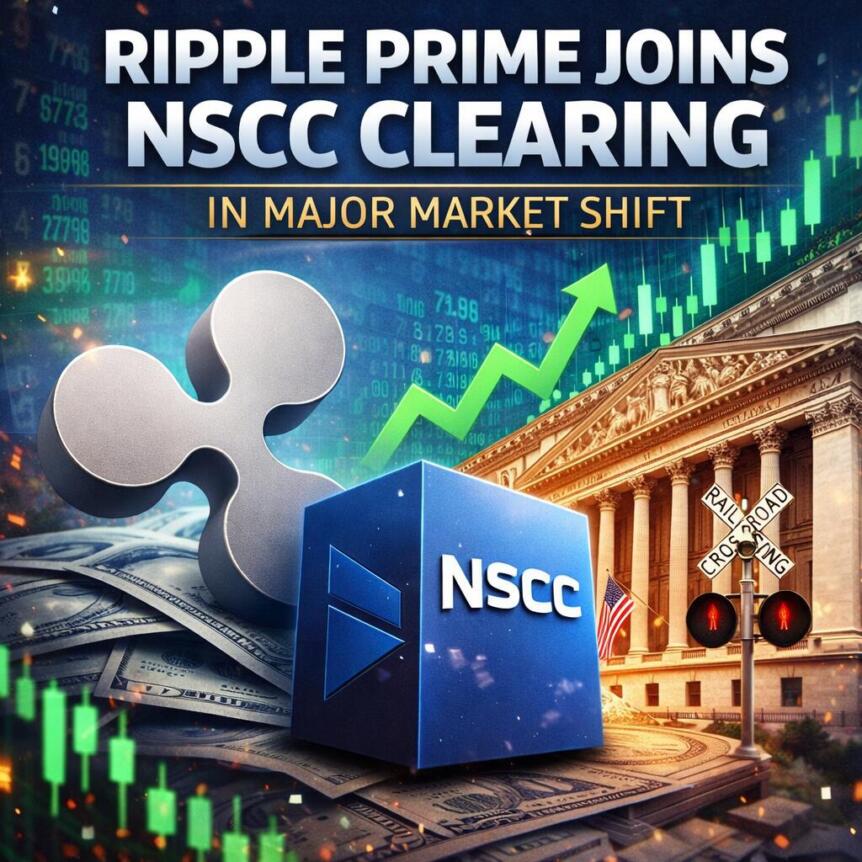
Ripple has advanced its institutional strategy after Ripple Prime went live on the National Securities Clearing Corporation clearing directory. The development embeds its nonbank prime brokerage within core U.S. post-trade infrastructure. Executives describe the listing as a structural step that strengthens its bridge between digital assets and traditional markets.
Ripple Prime Secures NSCC Directory Integration
Ripple Prime, formerly Hidden Road, now appears on the NSCC clearing directory. The update confirms its operational status within the clearing framework operated by the NSCC. Consequently, Ripple expands its footprint inside established capital market systems.
Important milestone for Ripple Prime. NSCC directory listing places us inside core clearing infrastructure to support more efficient, reliable capital markets at scale. Today, Ripple Prime is the largest global non-bank prime broker, integrated directly into digital asset and…
— Mike Higgins (@mikehiggins) March 4, 2026
Mike Higgins, chief executive of Ripple Prime, characterized the milestone as significant for the firm’s growth. He stated that the listing positions Ripple Prime inside essential clearing rails. He added that the move supports more efficient and reliable capital markets at scale.
The integration follows Ripple’s completed acquisition of Hidden Road in 2025. Through the deal, Ripple became the first crypto-native firm to own a global multi-asset prime broker. As a result, Ripple Prime now operates across digital and traditional trading venues worldwide.
XRP Ledger Positioned for Post-Trade Expansion
Ripple Prime supports digital assets, foreign exchange, fixed income, and derivatives under one brokerage structure. Therefore, clients can manage exposures across centralized and decentralized markets within a unified framework. The firm integrates directly with digital asset platforms and established financial venues.
Market participants expect the structure to drive additional post-trade activity onto the XRP Ledger. The brokerage model aligns clearing, collateral, and settlement functions with blockchain infrastructure. This approach links traditional workflows with distributed ledger systems.
Ripple has also integrated support for Hyperliquid to expand institutional access to on-chain liquidity. The integration enables clients to access decentralized derivatives while cross-margining exposures across other asset classes. Accordingly, Ripple Prime extends its reach into decentralized finance without separating risk pools.
Wrapped XRP Gains Institutional Backing
The stablecoin RLUSD now serves as collateral across selected prime brokerage products. This usage expands RLUSD’s role inside institutional trading environments. At the same time, the structure increases transactional utility across Ripple’s ecosystem.
In parallel, Doppler Finance has partnered with Hex Trust to advance institutional use of Wrapped XRP. The collaboration aims to enhance custody standards and operational resilience for tokenized XRP products. Hex Trust will provide regulated custody infrastructure to support compliant product development.
Wrapped XRP, or wXRP, extends XRP’s presence across multiple blockchains. Therefore, institutions can access XRP-based liquidity within broader decentralized ecosystems. The partnership strengthens the infrastructure needed for regulated participation in tokenized asset markets.
Ripple Prime’s NSCC directory listing reflects a broader push into regulated financial channels. The clearing integration supports standardized settlement processes while maintaining digital asset connectivity. This alignment signals Ripple’s intention to operate inside established market frameworks.
The acquisition of Hidden Road marked a turning point in Ripple’s institutional strategy. By securing a multi-asset prime broker, Ripple positioned itself within traditional trading flows. Consequently, the company now combines brokerage services with blockchain settlement capabilities.
Welcome to our institutional newsletter, Crypto Long & Short. This week:
- Martin Gaspar on how bitcoin looks to overcome quantum fears, echoing past climate backlash
- Top headlines institutions should pay attention to by Francisco Rodrigues
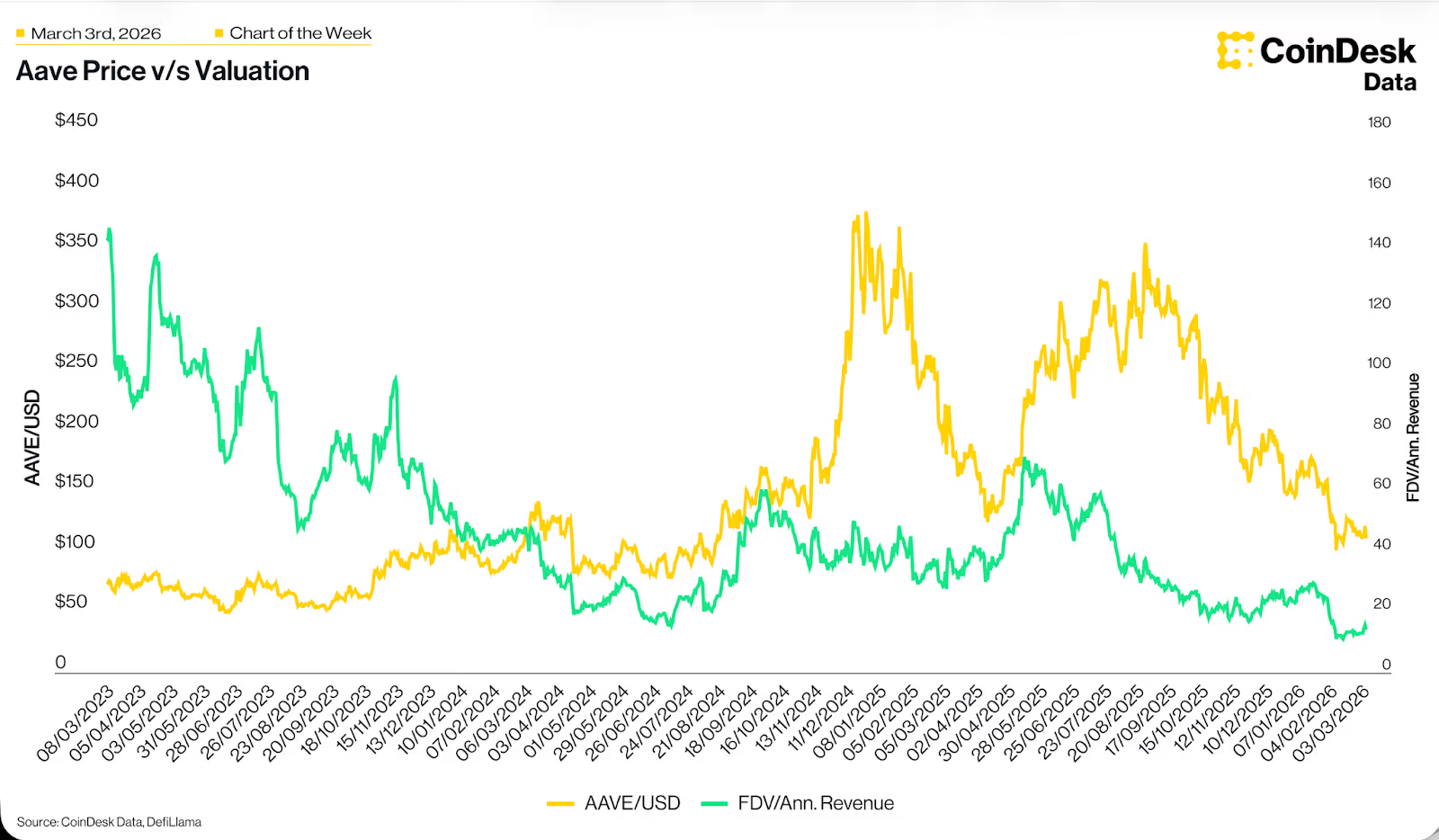
- Aave’s revenue multiples hit 2024 lows despite higher prices in Chart of the Week
Thanks for joining us!
Expert Insights
Why bitcoin’s quantum fears will pass just like the climate panic
By Martin Gaspar, senior crypto market strategist, FalconX
Quantum has become a major theme for crypto the past few months, in part because of technological developments in that space, but also as investors look for potential culprits of the stagnation in crypto prices post October. Quantum risk may come across as an existential threat to bitcoin given the potential for bad actors to crack legacy accounts such as Satoshi’s. However, a clearer understanding of the threat and increasing industry focus on solutions are driving toward a positive resolution.
There are striking parallels to the concerns over the energy use and climate impact of Bitcoin’s Proof of Work (PoW) mining that dominated headlines in 2021. Those felt existential too, as the headline risk made BTC socially unacceptable. Although industry insiders knew climate concerns were misguided (compared to other industries, such as tech’s data centers, BTC’s energy footprint is low), fears perpetuated, culminating with Tesla dropping BTC as a payment option because of climate risk. At the time, Elon Musk’s support for BTC was a large driver of sentiment, so this action startled the market. If forward-thinking Elon thought the issue was meaningful enough to pull his support of BTC, more conservative groups could seek to ban it or otherwise stifle BTC adoption. From an investor standpoint, why would you buy into an asset with such risk? This question resonates today and is especially pertinent as lower crypto prices weigh on sentiment.
The good news is that the industry can overcome this. In 2021, it took industry leader Strategy taking initiative to work with BTC miners to publish stats on the renewable mix of their energy consumption. While it was no secret to the crypto community that BTC miners naturally seek the lowest cost of energy, which is often renewables, compiling hard data helped convince naysayers. The industry was able to regain credibility to help dispel concerns.
We are seeing the same play out as industry stalwarts come together to publish facts around quantum risk. Coinbase recently established a quantum computing and blockchain working group, which will help issue recommendations for industry participants to protect against quantum risks and provide analysis on quantum breakthroughs. Furthermore, on February 5, as BTC was sharply selling off towards $60,000, Strategy announced a quantum security program during its earnings call, which may have helped stem further selling. It aims to coordinate with the “global cyber, crypto, and bitcoin security community” to help with Bitcoin’s quantum transition.
Concurrently, several startups are working on developing post-quantum technology for blockchains, such as Project Eleven and BTQ Technologies. These developments indicate that the crypto community is rapidly working towards solutions and should help alleviate near-term concerns.
BTC stands to turn the page through its proactive efforts to dispel quantum hysteria. Once the industry issues clear facts and a plausible plan, this issue will come to pass, just like the PoW climate overhang from years past.
Headlines of the Week
Geopolitical risks have shown again this week that liquidity in the cryptocurrency space means investors head for the exits as soon as they’re able to. The renewed Middle East conflict has led to major outflows from Iran, while in the U.S. investors have also been backing down. Still, builders appear to be unphased.
Chart of the Week
Aave’s revenue multiples hit 2024 lows despite higher prices
Aave is currently experiencing a fundamental valuation reset: while the token price remains higher than its 2024 lows, the FDV/annual revenue ratio has collapsed back to those levels (<20x), indicating the protocol is generating significantly more revenue relative to its market cap than it did during the speculative peaks of 2025. This decoupling suggests the market is heavily discounting Aave’s current earnings power, likely pricing in the execution risk following the narrow March 1 passage of the “Aave Will Win” proposal and the high-profile exit of core developer BGD Labs.

Listen. Read. Watch. Engage.
Looking for more? Receive the latest crypto news from coindesk.com and explore our robust Data & Indices offerings by visiting coindesk.com/institutions.
Note: The views expressed in this column are those of the author and do not necessarily reflect those of CoinDesk, Inc., CoinDesk Indices or its owners and affiliates.


The approval of Kraken’s access to the Federal Reserve’s core payments infrastructure has ignited a fierce response from the banking sector.
In a statement on Wednesday, the Independent Community Bankers of America (ICBA) and the Bank Policy Institute (BPI) strongly opposed the Fed’s decision, arguing it posed a risk to the financial system’s stability.
Banks Challenge Kraken’s Federal Approval
Hours after news surfaced that Kraken had become the first crypto company to secure a master account from the Federal Reserve, the ICBA issued a scathing statement in response.
“Granting nonbank entities and crypto institutions access to the master accounts traditionally limited to highly regulated insured depository institutions poses risks to the banking system,” said ICBA CEO Rebeca Romero, adding, “The Fed should continue limiting master account access to institutions that meet the financial services sector’s highest standards.”
On its part, the BPI expressed concern over the decision-making process.
“This action ignores public comment that the Federal Reserve sought on this framework, and it was issued with no transparency into the process for approval or the risk mitigants that have been imposed to address the very significant risks it raises.”
The statements subtly highlighted that Kraken now has direct access to the same payment rails used by thousands of US banks and credit unions. This access allows it to settle US dollar transactions directly through the Fed, effectively bypassing intermediary banks.
Kraken won’t receive all the benefits that traditional banks do with the Fed, such as earning interest on reserves. However, the approval represents a significant victory for the crypto industry.
This tension between banks and crypto extends beyond Kraken’s approval, highlighting ongoing concerns over crypto’s growing role in traditional finance.
The Ongoing Battle Over Stablecoin Interest
Before the passage of the GENIUS Act last July, banks lobbied heavily against the loose regulation of stablecoins. Their main argument centered on the danger that the bill could pose to traditional bank deposits.
The concern was reasonable. Last April, a Treasury Department report estimated that stablecoins could lead to as much as $6.6 trillion in deposit outflows.
A month after the GENIUS Act passed, five banking associations —including the ICBA and BPI— sent a letter to Congress urging them to close a loophole that allows stablecoin issuers to pay interest through exchanges.
They warned that such a gap could also lead to higher loan costs and less credit for businesses and families.
“Without an explicit prohibition applying to exchanges, which act as a distribution channel for stablecoin issuers or business affiliates, the requirements in the GENIUS Act can be easily evaded and undermined by allowing payment of interest indirectly to holders of stablecoins,” the letter read.
These tensions are now being carried over to discussions regarding the CLARITY Act. More specifically, the main concern is whether crypto exchanges can offer interest-like returns on stablecoins.
Unfortunately for the banking sector, US President Donald Trump recently sided with the crypto industry.
Trump Slams Banks for Stalling CLARITY Act
On Tuesday night, the president accused US banks of undermining the GENIUS Act and stalling the CLARITY Act.
“Americans should earn more money on their money. The Banks are hitting record profits, and we are not going to allow them to undermine our powerful Crypto Agenda that will end up going to China, and other Countries if we don’t get the Clarity Act taken care of,” Trump wrote on Truth Social.
The statement marked the sharpest presidential intervention yet in the legislative battle over stablecoin rewards.
Trump, whose family has interests in numerous crypto ventures, is urging Congress to pass the market structure bill before the November midterm elections. These elections could dismantle the current Republican grip on the House and the Senate.
Trump’s social media post came hours after a POLITICO report confirmed that the president had a private meeting with Coinbase CEO Brian Armstrong in the White House.


On-chain data reveals strong buying interest from whales just a day after the Chinese holidays ended.
Bitcoin’s price has finally shown strong signs of a solid breakout, skyrocketing to a new monthly peak of over $73,000 earlier today.
This is rather unexpected given the massive geopolitical tension, even referred to as war by some analysts, that broke out in the Middle East on Saturday.
At the time, BTC dumped to $63,000 after the US and Israel launched a military operation against Iran, which retaliated immediately against several nations in the region. Although Iran’s Supreme Leader was killed during the attacks, the country has doubled down on its strikes, while the US President indicated that the war could last up to four weeks.
Instead of charting new and painful losses, bitcoin reversed its trajectory by the end of Saturday and rocketed to $68,000. It was rejected and driven south to $66,000 in the following few days, but went hard on the offensive in the past 12 hours or so.
The cryptocurrency gained more than $5,000 within this timeframe, surging to its highest level in a month at over $73,000. This means that it’s up by more than $10,000 since its Saturday low when the attacks began.
Popular analyst CW suggested that the BTC CVD indicator “shows strong buying,” mostly from whales rather than retail.
The $BTC CVD indicator shows strong buying.
In addition, the buying is lager from whales than retail investors.
The current uptrend is being driven by whales. pic.twitter.com/HyAnB6XzOB
— CW (@CW8900) March 4, 2026
You may also like:
In another post, the analyst noted that today is the first day after the Chinese holidays, which lasted for over a week this time, and some of the most utilized exchanges on local soil – Binance and OKX, “are showing massive net buying of BTC.”
Fellow market commentator Daan Crypto Trades acknowledged bitcoin’s surge to a month peak, indicating that the current rally has been a “solid breakout so far.” He believes the bulls should not allow BTC to dip below $71,500 again; otherwise, it would be regarded as a clear sign of weakness.
$BTC Highest level since early February again.
Solid break out so far. From here on out it’s pretty straight forward. Bulls should not let this fall below that $71.5K-$72K area again. If it does, and price accepts back into the range, then this was just a big deviation & stop… https://t.co/SdjrYF1lmw pic.twitter.com/8ODkoKhtVa
— Daan Crypto Trades (@DaanCrypto) March 4, 2026
Binance Free $600 (CryptoPotato Exclusive): Use this link to register a new account and receive $600 exclusive welcome offer on Binance (full details).
LIMITED OFFER for CryptoPotato readers at Bybit: Use this link to register and open a $500 FREE position on any coin!

Coinbase Global Shares Surge 15% as Bitcoin Rally and Regulatory Optimism Fuel Crypto Stock Gains

Terence Crawford says one welterweight champion ‘beats everybody’ in his prime

Windows 10 KB5075039 update fixes broken Recovery Environment


-

 Politics6 days ago
ITV enters Gaza with IDF amid ongoing genocide
-

 Politics2 days ago
Alan Cumming Brands Baftas Ceremony A ‘Triggering S**tshow’
-

 Fashion5 days ago
Weekend Open Thread: Iris Top
-

 NewsBeat7 days ago
Cuba says its forces have killed four on US-registered speedboat | World News
-

 Tech4 days ago
Unihertz’s Titan 2 Elite Arrives Just as Physical Keyboards Refuse to Fade Away
-
Sports5 days ago
The Vikings Need a Duck
-
 NewsBeat4 days ago
Dubai flights cancelled as Brit told airspace closed ’10 minutes after boarding’
-
 NewsBeat7 days ago
Manchester Central Mosque issues statement as it imposes new measures ‘with immediate effect’ after armed men enter
-

 NewsBeat3 days ago
‘Significant’ damage to boarded-up Horden house after fire
-
 NewsBeat4 days ago
The empty pub on busy Cambridge road that has been boarded up for years
-

 NewsBeat4 days ago
Abusive parents will now be treated like sex offenders and placed on a ‘child cruelty register’ | News UK
-

 Entertainment3 days ago
Baby Gear Guide: Strollers, Car Seats
-

 Business7 days ago
Discord Pushes Implementation of Global Age Checks to Second Half of 2026
-

 Business6 days ago
Only 4% of women globally reside in countries that offer almost complete legal equality
-
 Tech5 days ago
NASA Reveals Identity of Astronaut Who Suffered Medical Incident Aboard ISS
-
Politics4 days ago
FIFA hypocrisy after Israel murder over 400 Palestinian footballers
-
 NewsBeat3 days ago
Emirates confirms when flights will resume amid Dubai airport chaos
-

 Crypto World6 days ago
From Crypto Treasury to RWA: ETHZilla Retreats and Relaunches as Forum Markets on Nasdaq
-

 NewsBeat2 days ago
Is it acceptable to comment on the appearance of strangers in public? Readers discuss
-

 Tech4 days ago
Viral ad shows aged Musk, Altman, and Bezos using jobless humans to power AI