
Crypto World
White House to review new CFTC prediction market measures



The White House will review new prediction market measures proposed by the CFTC.
Summary
- The CFTC has sent a new set of prediction market measures for review.
- The White House will examine the proposal before any implementation decisions are made.
- Crypto and traditional prediction markets may see changes in oversight, licensing, and product design depending on the outcome.
The White House is set to review a new package of prediction market measures submitted by the U.S. Commodity Futures Trading Commission, underscoring how on-chain and traditional prediction platforms are moving deeper into the regulatory spotlight.
The proposal, described in market reports as a fresh attempt to clarify the status of event-linked derivatives, would shape how platforms structure contracts tied to elections, economic indicators, and other real-world outcomes. While specific details of the measures have not yet been published, the fact that they require White House review signals that the framework could have implications beyond niche crypto products, touching broader derivatives policy and cross-border coordination. For prediction markets built on public blockchains, any shift in U.S. rules could influence which products are considered permissible and how they must be supervised.
The review process comes at a time when prediction markets on both centralized and decentralized platforms are gaining traction with traders looking for high-conviction, event-driven opportunities. On-chain protocols have experimented with a range of designs, from fully decentralized order books to more curated models that resemble traditional venues but settle in digital assets such as Bitcoin (BTC).
At the same time, regulators have grown more vocal about the need to ensure that certain contracts do not function as unregistered gambling or securities products. The CFTC’s latest measures appear designed to bring more consistency to how event-based contracts are treated, whether they are listed on regulated futures exchanges, offered by specialized platforms, or deployed via smart contracts accessible to global users.
Implications for on-chain prediction markets
For crypto-native prediction protocols, a White House-level review of CFTC measures raises both risks and opportunities. Clearer rules could make it easier for compliant platforms to operate in the U.S. and potentially integrate with more traditional financial infrastructure, including brokerages and exchanges that already list bitcoin-linked products through venues like Coinbase. At the same time, stricter definitions of what constitutes a permissible event contract might force some existing markets to shut down or relocate activity offshore, particularly in politically sensitive areas such as elections. Projects inspired by the growth of on-chain prediction markets will be watching to see whether the final framework leaves room for innovative product design or leans toward a narrow, highly restricted set of contracts.
The outcome will likely feed into a broader global conversation about how to regulate event-based markets alongside spot crypto, DeFi, and tokenized assets. As jurisdictions implementing frameworks similar to MiCA refine their own views on derivatives and prediction products, U.S. decisions could influence how other regulators calibrate their approaches. For now, market participants are left to trade under existing rules while anticipating that the White House’s review of the CFTC’s measures will set the tone for the next phase of growth—or retrenchment—in both centralized and on-chain prediction markets.

Ethereum (ETH) has outperformed the broader market and all top-10 large-cap digital assets over the past month, gaining more than 12% amid war-driven macro volatility reshaping capital flows.
Several analysts have now pointed to three distinct signals that paint a bullish picture for Ethereum’s price heading into the second half of April.
Ethereum Record Network Activity Meets Depressed Prices
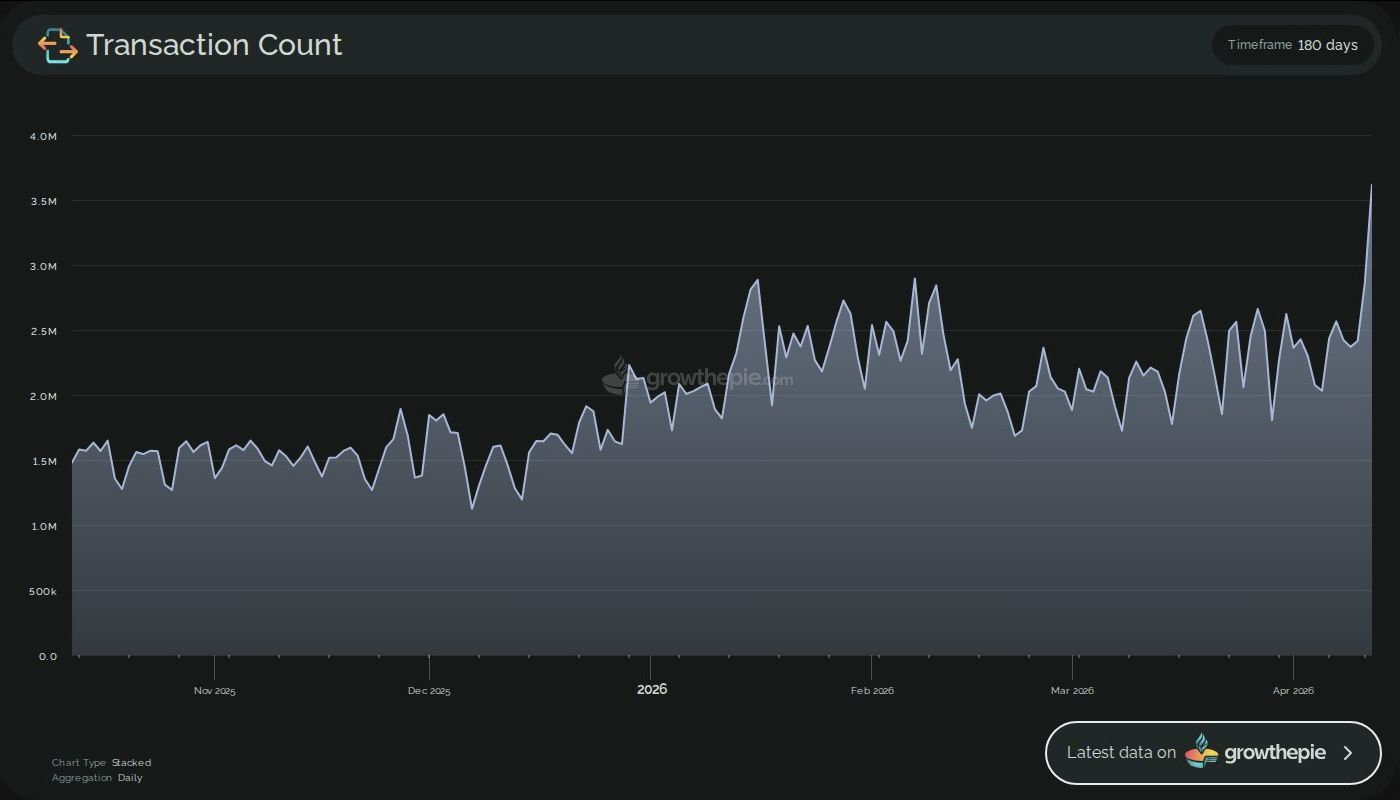
Leon Waidmann, head of research at Lisk, highlighted that the Ethereum mainnet recorded 3.62 million transactions on April 12. That figure marks the first time the network has processed more than 3 million transactions in a single day.
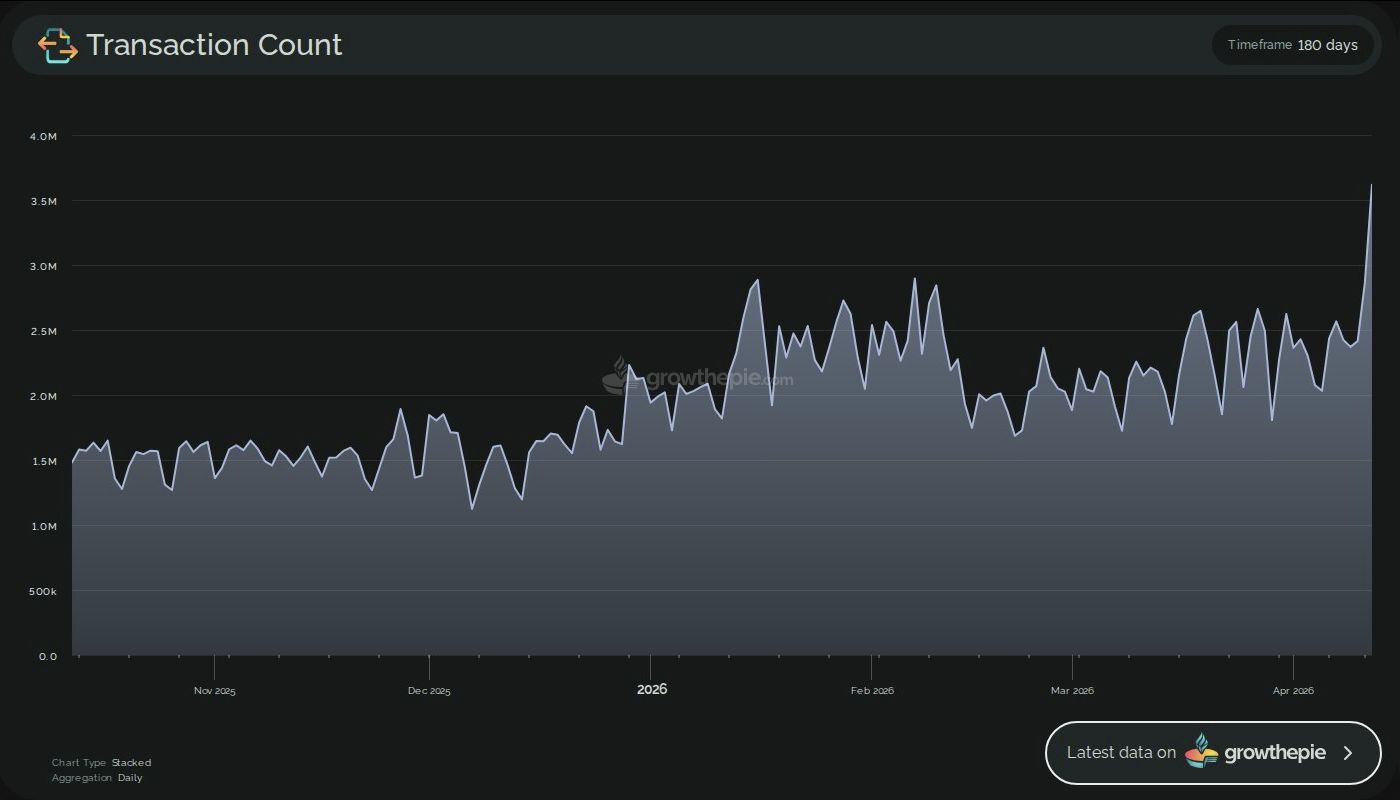
According to Waidmann, daily transactions have trended higher since November 2025. The baseline shifted from roughly 1.5 million to approximately 2.5 million over the past six months.
Combined with 284,000 new users in Q1 and a record stablecoin supply, these metrics point to sustained organic growth on Ethereum’s base layer.
Follow us on X to get the latest news as it happens
Meanwhile, staking infrastructure provider Everstake noted that ETH still trades more than 50% below its all-time high despite strong network activity. Thus, the price reflects a wide gap between network usage and market valuation.
“This creates a notable divergence, because network activity is at peak levels, while price has yet to fully reflect that strength. Historically, such gaps tend to narrow over time,” the post read. “Ethereum stands on one of the strongest foundations it has ever had – record usage, a deeply established ecosystem, and continuous progress in scaling and development. In many ways, this highlights a simple dynamic: price often follows fundamentals, not the other way around. And the fundamentals are already in place.”
Technical Indicators Flash Bullish Signals
On the technical side, analyst Crypto Patel pointed to the Ethereum Rainbow Chart, a logarithmic regression tool that maps long-term valuation bands. According to Patel,
“The Ethereum Rainbow Chart is saying one simple thing right now. It’s cheap. Not ‘okay to buy.’ Not ‘maybe wait.’ Not ‘hold and hope.’ Just cheap.”
He noted that ETH has only entered this band twice before, and both times it reached the upper “Take Profit” range within 18 months.
Separately, analyst Ash Crypto highlighted a confirmed weekly MACD bullish crossover. The Moving Average Convergence Divergence indicator tracks momentum shifts on longer timeframes.
According to Ash Crypto, the previous two weekly MACD crosses on ETH preceded rallies of 183% and 75%, respectively.
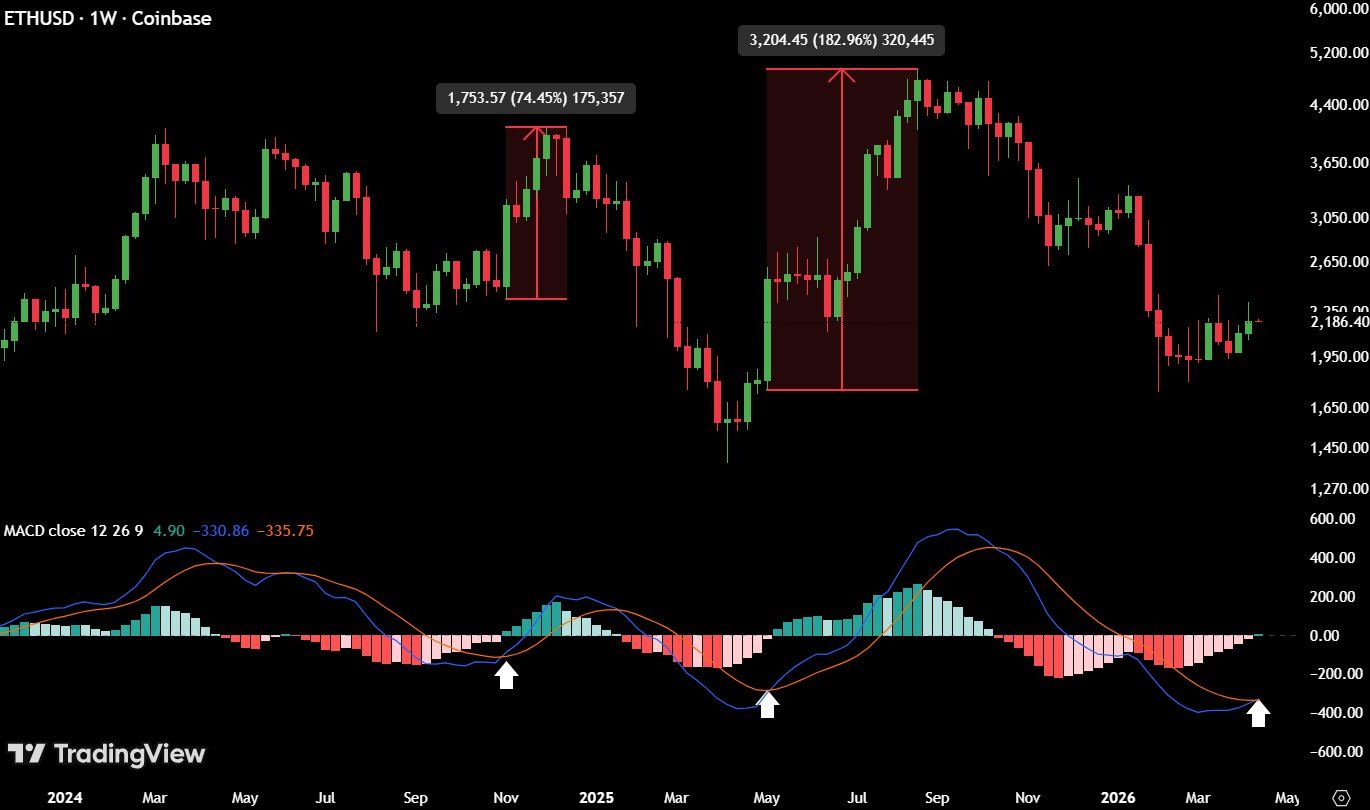
With ETH trading near $2,346 as of April 14, a 183% rally from current levels would place the asset around $6,639, while a 75% move would target approximately $4,105. Whether the current confluence of on-chain strength and technical signals translates into sustained price action will likely depend on broader macro conditions through Q2.
Subscribe to our YouTube channel to watch leaders and journalists provide expert insights
The post 3 Bullish Signals Suggest Ethereum May Be Undervalued in April appeared first on BeInCrypto.


A new social engineering scheme is leveraging the Obsidian note-taking app to deploy stealthy malware targeting cryptocurrency and finance professionals.
Summary
- Scammers are using LinkedIn and Telegram to trick crypto professionals into downloading malicious Obsidian plugins that deploy a remote access trojan.
- Elastic Security Labs discovered that the undocumented PHANTOMPULSE malware uses three different blockchain networks to receive commands and maintain persistence.
- Security researchers recommend that financial firms implement strict application-level plugin policies to prevent legitimate productivity tools from being exploited.
Elastic Security Labs released a report Tuesday detailing how attackers use “elaborate social engineering on LinkedIn and Telegram” to bypass traditional security by hiding malicious code within community-developed plugins.
The campaign specifically targets individuals in the digital asset space, capitalizing on the permanent nature of blockchain transactions. This vulnerability is particularly acute given that wallet compromises accounted for $713 million in stolen funds during 2025, according to Chainalysis data.
The infiltration begins with scammers posing as venture capital representatives on LinkedIn to initiate professional networking. These conversations eventually transition to Telegram, where the attackers discuss cryptocurrency liquidity solutions to build a “plausible business context.”
Once trust is established, targets are invited to access what is described as a company database or dashboard hosted on a shared Obsidian cloud vault.
Opening the vault serves as the initial access vector. The victim is directed to enable community plugin synchronization, which triggers the silent execution of trojanized software.
While the technical execution varies slightly between Windows and macOS, both paths result in the installation of a previously unknown remote access trojan (RAT) named PHANTOMPULSE.
This malware is designed to grant attackers full control over the infected device while maintaining a low profile to avoid detection.
PHANTOMPULSE maintains its connection to the attackers through a decentralized command-and-control (C2) system that spans three different blockchain networks.
By using on-chain transaction data tied to specific wallets, the malware can receive instructions without a central server.
“Because blockchain transactions are immutable and publicly accessible, the malware can always locate its C2 without relying on centralized infrastructure,” Elastic noted.
The use of multiple chains ensures the attack remains resilient even if one blockchain explorer is restricted. This method allows the operators to rotate their infrastructure seamlessly, making it difficult for defenders to sever the link between the malware and its source.
Elastic warned that by abusing Obsidian’s intended functionality, the hackers managed to “skirt traditional security controls entirely.”
The firm suggests that organizations operating in high-risk financial sectors should implement strict application-level policies for plugins to prevent legitimate productivity tools from being repurposed as entry points for theft.
Bitcoin touched $76,000 and flinched. The king reversed sharply from the long-standing key resistance level and slid back below $74,000. Is this a brief consolidation before a breakout? The top of a dead-cat bounce? The answer may already be hiding in the Bitcoin derivatives data, and we are here with a short-term price prediction.
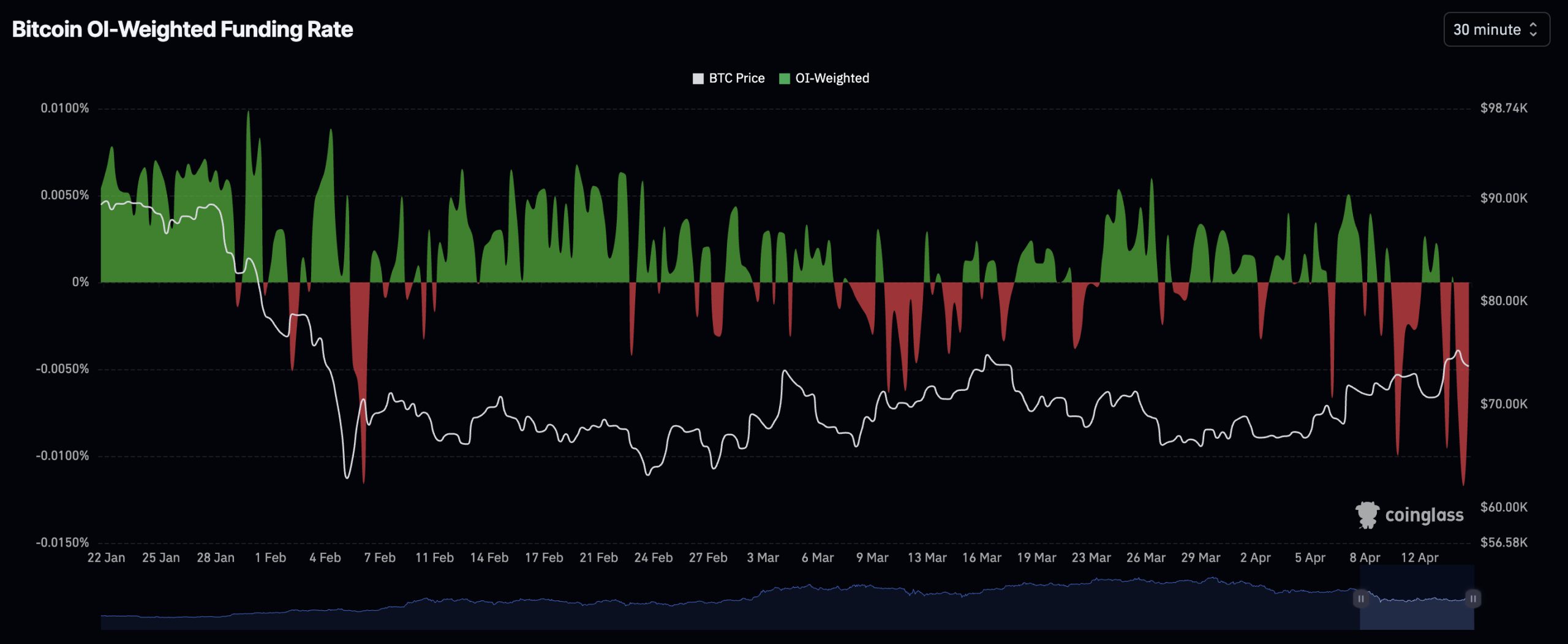
Funding rates on Binance’s bitcoin perpetuals have remained negative for 11 consecutive periods, despite the recent rally, indicating traders are still leaning short as prices push higher. The 30-day average funding rate has now stayed negative since the end of January, a streak last matched after the FTX collapse in late 2022, which ultimately marked the cycle bottom.
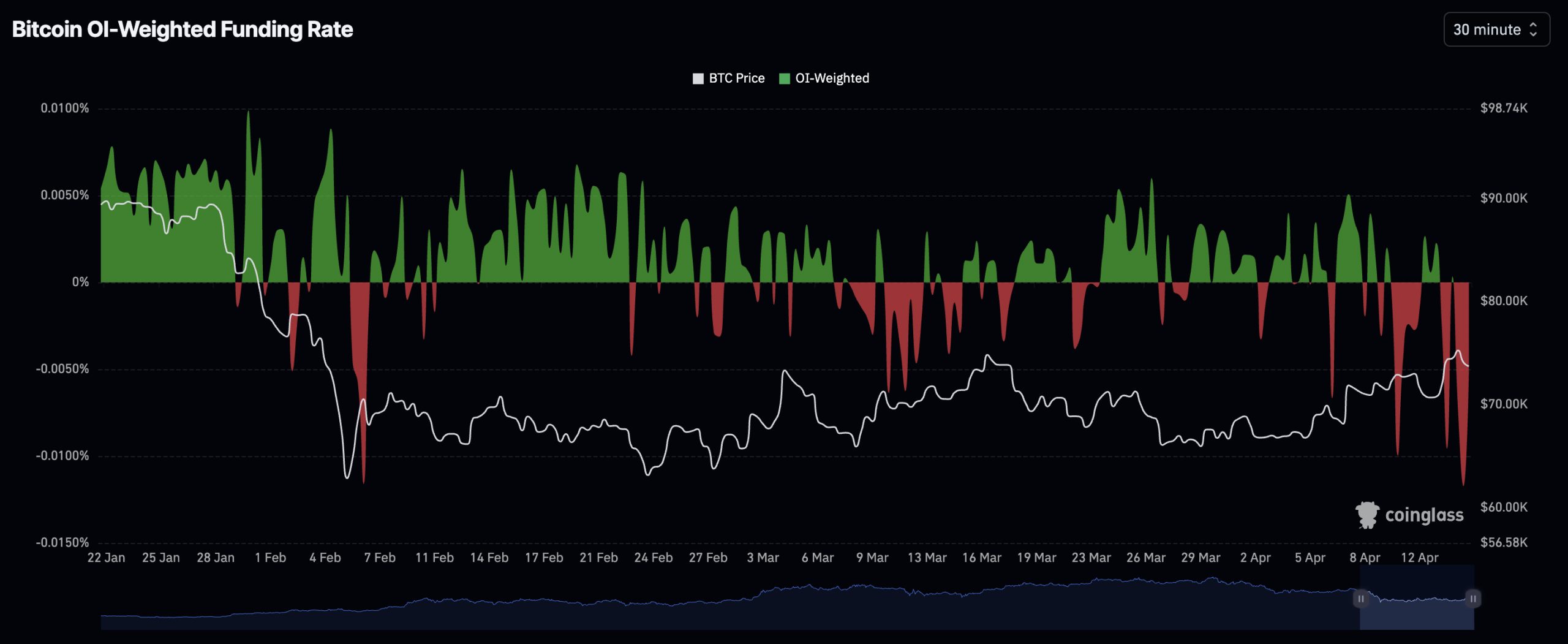
Open interest has been rising, showing that fresh short positions are being added. Historically, this combination has preceded sharp, violent squeezes to the upside.
Meanwhile, traditional markets offered a jarring contrast: the Nasdaq closed at session highs, up 2%, while the S&P 500 sat within a handful of points of a new all-time high. Bitcoin remains roughly 40% below its own record of $126,000, a gap of both risk and opportunity.
Discover: The best pre-launch token sales
Bitcoin Price Prediction: $90,000 Short Term Target?
Bitcoin just fell below $74,000, posting a 1% daily drop after rejecting hard at $76,000, a level that has acted as a ceiling for more than two months.
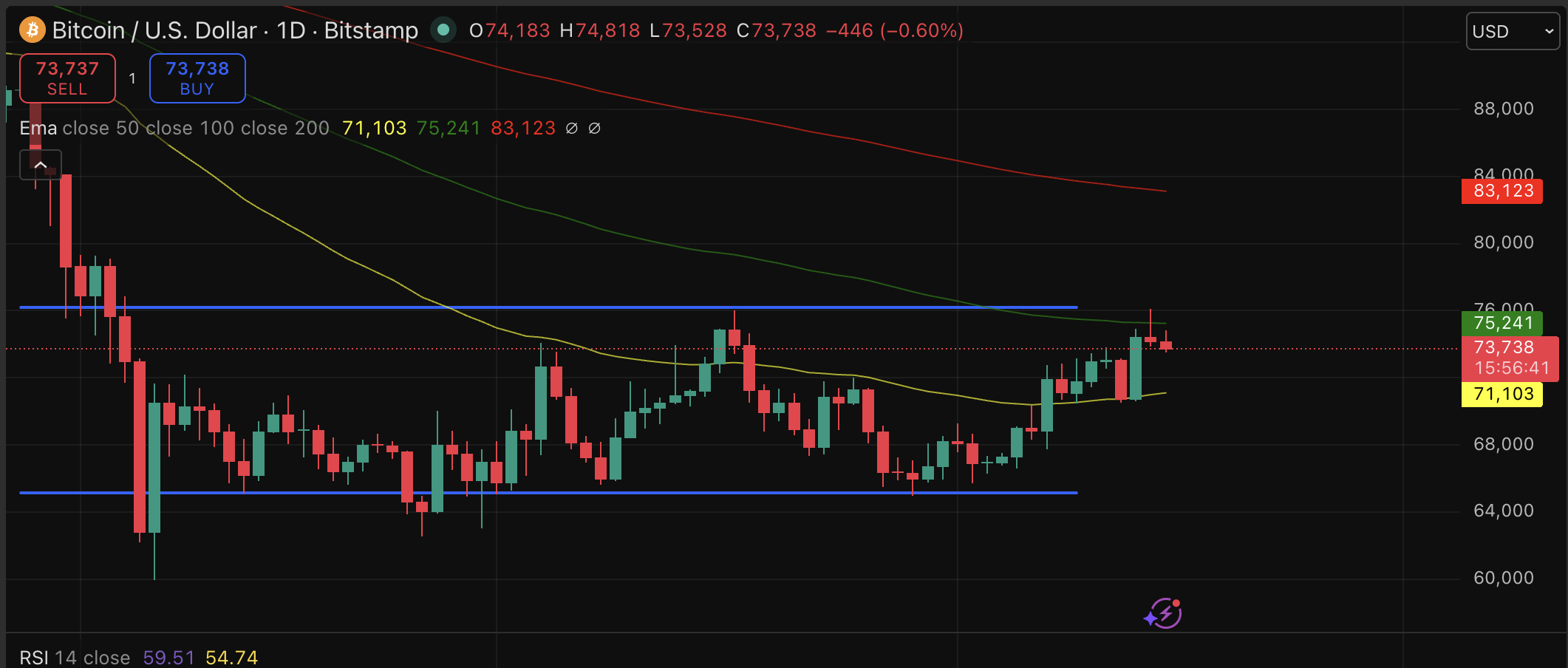
Technically is not bearish just yet. The $76,000 level is the immediate hurdle; a clean close above it would open the door to $80,000–$82,000, a zone flagged by multiple analysts as the next meaningful resistance cluster. That $80K resistance band has been well-documented as the next test for bulls attempting to extend the recovery.
The short squeeze will be triggered above $75,500 with a current top blow at $76,000, which can push BTC toward $85,000–$90,000 over the next 2–3 weeks as overleveraged shorts are forced to cover. But a breakdown below $70,000 on high volume invalidates the recovery thesis and reopens a retest of the $65,000 support zone.
The 46-day negative funding streak is the most compelling data point in the market right now. If history rhymes with 2022, the pain trade is higher, and it could move fast.
Discover: The best crypto to diversify your portfolio with
Bitcoin Hyper Aims Early Mover Upside as Bitcoin Battles Resistance
A confirmed breakout at this stage would funnel renewed capital into the Bitcoin ecosystem broadly, but spot BTC at $73,500 leaves limited percentage upside compared to where it was years ago. Traders looking for asymmetric exposure within the Bitcoin narrative are increasingly scanning infrastructure plays that can move independently of BTC’s near-term range.
Bitcoin Hyper ($HYPER) is positioning directly in that gap. The project claims to be the first-ever Bitcoin Layer 2 with Solana Virtual Machine (SVM) integration, targeting Bitcoin’s three core limitations, such as slow transactions, high fees, and the absence of programmable smart contracts, while preserving the underlying security of the Bitcoin network.
The pitch is technical, but the numbers are hard: the presale has raised beyond $32 million at a current token price of just $0.0136, with staking available at a high 36% APY for early participants. Sub-second finality on a Bitcoin-secured layer is a compelling infrastructure proposition to deliver.
For traders who want more than a leveraged BTC play, research Bitcoin Hyper’s presale terms here before the current pricing tier closes.
The post Bitcoin Price Prediction: Pulling Back but $90K Still in Sight appeared first on Cryptonews.


Disclosure: This article does not represent investment advice. The content and materials featured on this page are for educational purposes only.
XRP volatility drives demand for alternative income models like cloud-based crypto platforms.
Summary
- XRP trades range-bound as investors explore alternative income strategies amid rising crypto volatility
- KT DeFi promotes cloud mining with renewable energy and multi-asset income distribution model
- The platform aligns with global regulations, citing FATF, SEC, and MiCA compliance in crypto operations
With increased volatility in the cryptocurrency market recently, the price of XRP has shown clear range-bound fluctuations. As market sentiment continues to shift, more and more investors are asking: in such conditions, is it possible to achieve a daily income of over $5,000?
KT DeFi’s cloud computing platform integrates green renewable energy mining facilities, intelligent computing power allocation, and a multi-asset revenue distribution system, creating an efficient and low-barrier model for participating in digital computing.
Users do not need to purchase mining equipment or bear electricity and maintenance costs, yet can easily achieve daily earnings of over $5,000.
The platform utilizes renewable energy sources such as solar, wind, and hydropower to support its computing infrastructure. This helps optimize long-term operating costs while enhancing transparency and sustainability.
How to get started
1. Register an account
Visit the official KT DeFi website and complete account registration. New users can receive a $17 bonus.
2. Deposit Digital Assets
Transfer funds from a crypto wallet or exchange into the KT DeFi account. The platform supports deposits and withdrawals of major cryptocurrencies, including BTC, XRP, and DOGE.
3. Choose Smart Contracts to Start Earning
Select a suitable smart contract based on your budget. Once activated, the contract begins generating returns, which are settled every 24 hours.
Example Contracts
- New User Exclusive – 2 days – Principal + Return = $100 + $8
- Canaan Avalon A1466 – 10 days – Principal + Return = $1,000 + $141
- Bitmain Antminer L7 – 20 days – Principal + Return = $5,000 + $1,510
- Whatsminer M56 – 32 days – Principal + Return = $30,000 + $16,224
- ANTSPACE MD5 – 45 days – Principal + Return = $100,000 + $84,150
For more details, please visit the official KT DeFi website.
KT DeFi: International regulatory framework and high governance standards
As major global financial regulators strengthen oversight of digital assets, including:
- Financial Action Task Force (FATF) compliance requirements for Virtual Asset Service Providers (VASPs)
- Increased regulation and disclosure standards from the U.S. Securities and Exchange Commission (SEC)
- The European Union’s Markets in Crypto-Assets (MiCA) regulatory framework
KT DeFi claims full compliance with these standards. Its cloud mining business model follows international AML (Anti-Money Laundering), KYC (Know Your Customer), and risk-based management principles to align with regulatory trends across major jurisdictions.
Conclusion
In today’s complex and rapidly changing market environment, XRP investors can explore multiple strategies to generate returns. Among them, KT DeFi is presented as one of the best available options.
Disclosure: This content is provided by a third party. Neither crypto.news nor the author of this article endorses any product mentioned on this page. Users should conduct their own research before taking any action related to the company.
The US dollar remains under pressure, testing key support levels amid expectations of easing geopolitical tensions. The market continues to price in the possibility of renewed negotiations between the US and Iran, reducing demand for the dollar as a safe-haven asset and supporting riskier instruments. Against this backdrop, currency pairs are showing heightened sensitivity to news flow and expectations regarding further developments.
An additional source of pressure on the dollar is the decline in US Treasury yields, which is driving a reassessment of Federal Reserve policy expectations. Market participants are weighing the likelihood of policy easing, while upcoming US macroeconomic data — including business activity indicators, import prices, and housing statistics — could adjust current expectations and set the direction for further moves.
USD/JPY
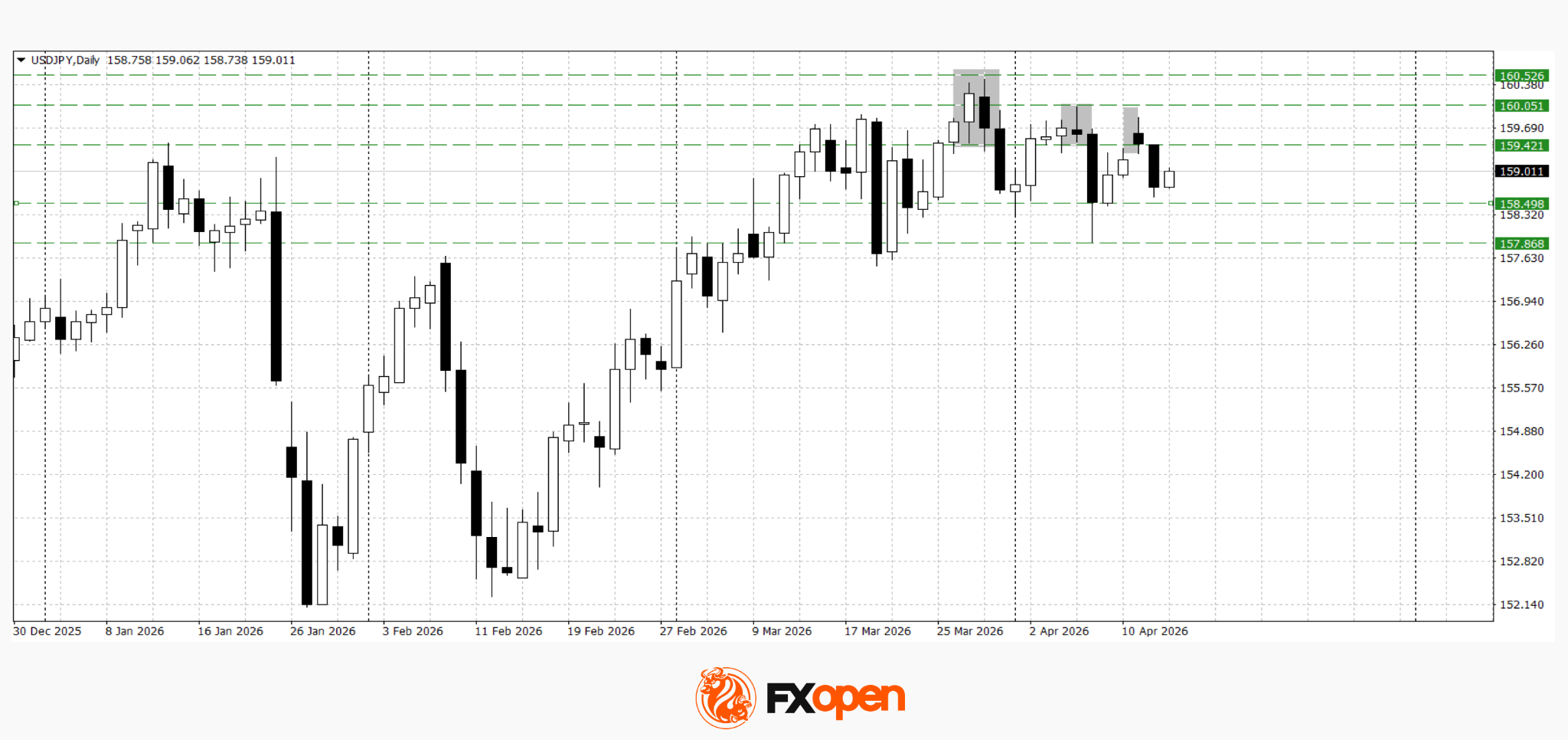
USD/JPY is moving lower, pressured by a weaker dollar and falling US yields. Despite the yen’s safe-haven status, current price action is largely driven by dollar dynamics and rate expectations. The move towards support reflects a market balance where pressure on the dollar outweighs demand for defensive assets.
A break of key levels could extend the decline, although stabilisation in yields may trigger a corrective rebound. Technical analysis suggests a potential retest of 158.60. A sustained move above 159.40 would be needed to signal a return of buying interest in the dollar.
Key events for USD/JPY:
- today at 15:30 (GMT+3): NY Empire State Manufacturing Index (US);
- today at 15:30 (GMT+3): speech by Federal Reserve Vice Chair for Supervision Michael S. Barr;
- today at 20:45 (GMT+3): speech by FOMC member Michelle Bowman.
USD/CAD
USD/CAD is showing a more pronounced decline. Sellers have broken below the key 1.3800 support level, pushing the pair down towards 1.3730. A sustained move below current levels could open the way for further downside towards 1.3670–1.3700.
At the same time, profit-taking and anticipation of incoming data may lead to temporary consolidation within the 1.3730–1.3800 range. The pair remains highly sensitive to oil price fluctuations and shifting rate expectations.
Key events for USD/CAD:
- today at 15:30 (GMT+3): Canadian wholesale sales;
- today at 17:30 (GMT+3): US crude oil inventories;
- today at 21:00 (GMT+3): Federal Reserve Beige Book.
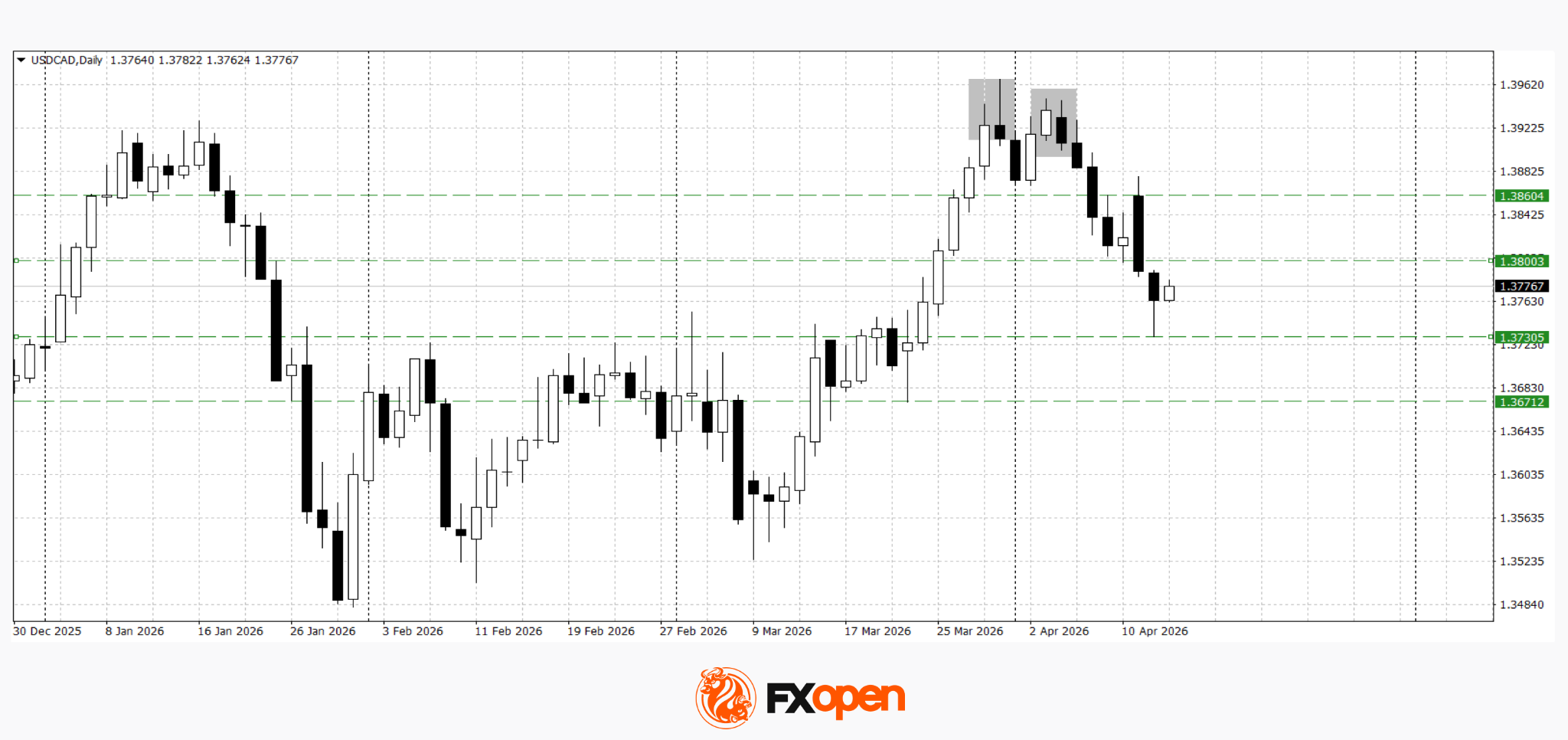
Current dynamics in USD/JPY and USD/CAD reflect a mix of geopolitical expectations, declining yields, and ongoing pressure on the dollar. Testing key support levels increases the likelihood of both continued downside in case of a break and a corrective rebound if stronger US macroeconomic data emerges.
Trade over 50 forex markets 24 hours a day with FXOpen. Take advantage of low commissions, deep liquidity, and spreads from 0.0 pips (additional fees may apply). Open your FXOpen account now or learn more about trading forex with FXOpen.
This article represents the opinion of the Companies operating under the FXOpen brand only. It is not to be construed as an offer, solicitation, or recommendation with respect to products and services provided by the Companies operating under the FXOpen brand, nor is it to be considered financial advice.


X is transforming its interface into a financial dashboard with the launch of “smart cashtags” for iPhone users in the US and Canada.
Summary
- X has launched interactive cashtags on iOS in the US and Canada, featuring live charts and contract address tracking.
- A partnership with Wealthsimple allows Canadian users to trade assets directly within the app, setting a precedent for global expansion.
- The feature is part of a broader push to integrate P2P payments and high-yield accounts by April 2026.
According to an announcement from X’s head of product, Nikita Bier, the feature allows users to select specific assets or smart contract addresses when posting tickers, which then generate live price charts and community discussions.
This rollout serves as the initial infrastructure for Elon Musk’s “everything app,” intended to consolidate social media, peer-to-peer payments, and e-commerce into a single interface.
As of press time, the launch is limited to iOS, but Bier has indicated that web and Android support, along with a global release, are currently in development.
The integration includes a strategic partnership with Wealthsimple, enabling Canadian users to execute stock and cryptocurrency trades directly through the app interface.
While this trading functionality has not yet been enabled for the United States, the Canadian model provides a blueprint for how X intends to handle brokerage services in foreign markets.
“Users in Canada will see a button on cashtags so they can trade seamlessly from X,” Bier stated, describing the current version as a small preview of the platform’s future capabilities.
The timing of this launch follows months of preparation, including a significant purge of automated accounts and “drainer links” to meet financial compliance standards.
Polymarket partner Tat Thang noted that the hiring of specialists like Solana advisor Nikita Bier and former Base design lead Benji Taylor signals a move toward a Web3 model similar to WeChat Pay.
Thang suggested that transaction fees from these financial services could eventually become a primary revenue driver, offering more stability than traditional subscriptions or advertising.
Musk has previously detailed plans for “X Money,” which is expected to include yield-bearing accounts and a cashback debit card as early as April.
The introduction of cashtags aligns with this roadmap, positioning the platform to compete with other super-apps and digital wallets.
“Cashtags are just the first step in our commitment to be the best destination for the finance and crypto community,” Bier added.
Key Takeaways
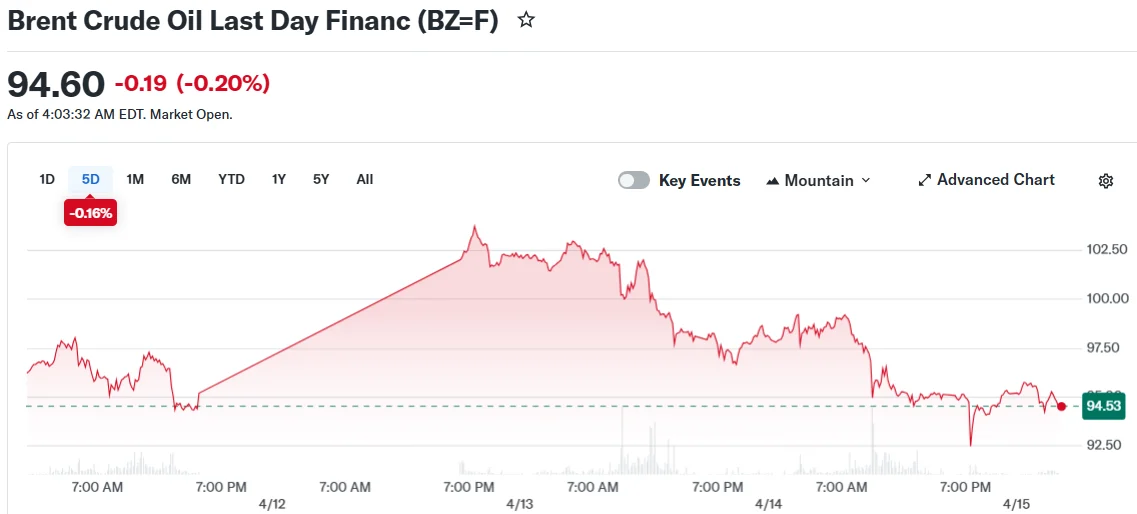
- Brent crude declined beneath $95 following Tuesday’s 4.6% plunge; WTI hovers around $91
- US Central Command confirms Iran’s naval blockade has been completely operationalized
- President Trump indicates Iran conflict is “very close to over,” expects additional negotiations imminently
- Tehran reportedly weighing suspension of Hormuz transit to prevent direct engagement with American naval presence
- International Energy Agency and OPEC reduce demand projections; Japan prepares emergency reserve releases for May
Crude oil markets have experienced significant volatility throughout the week as market participants assess contradictory developments: a completely operational US naval embargo against Iran alongside increasing indications that diplomatic negotiations may recommence shortly.
Brent crude experienced a 4.6% decline on Tuesday, settling beneath the $95 per barrel threshold. West Texas Intermediate descended to approximately $91. Markets witnessed partial stabilization during Asian trading hours Wednesday following US Central Command’s confirmation of the blockade’s full implementation.

Admiral Brad Cooper announced that American military forces have “completely halted economic trade going into and out of Iran by sea.” President Trump subsequently posted on social media platforms, asserting the US has positioned Iran in a “chokehold” and suggesting the nation may exhaust its storage capabilities.
The maritime embargo commenced merely forty-eight hours following unsuccessful ceasefire discussions in Pakistan. Washington is currently accelerating efforts to arrange a subsequent negotiation round before the existing ceasefire agreement lapses next week.
Speaking with the New York Post, Trump indicated that renewed discussions could materialize “over the next two days.” In separate remarks to Fox Business anchor Maria Bartiromo, he characterized the conflict as “very close to over.”
One diplomatic option under consideration involves reconvening in Pakistan for continued negotiations, although alternative venues remain under evaluation.
Meanwhile, Iranian officials are reportedly contemplating a voluntary suspension of shipments traversing the Strait of Hormuz to circumvent direct confrontation with the American naval deployment, according to sources with knowledge of the deliberations.
Asian Markets Face Supply Disruption
The Strait of Hormuz facilitates approximately 20% of global oil supply. Since hostilities commenced in late February, Iran has obstructed virtually all maritime traffic through this critical waterway.
Analysts at ANZ calculated that no fewer than 10 million barrels daily have been eliminated from markets due to the ongoing conflict. They observed that regardless of potential worst-case escalation scenarios, constrained supply conditions alone provide sufficient support for elevated Brent pricing.
Japanese authorities are arranging a secondary release from national petroleum reserves beginning in early May. Refineries throughout the Asia-Pacific basin may additionally face operational curtailments, diminishing availability of jet fuel and diesel products.
Both the International Energy Agency and OPEC have revised their petroleum demand forecasts downward, attributing the adjustments to elevated prices constraining consumer consumption.
Market Expert Perspectives
Dilin Wu from Pepperstone Group projected that crude oil will likely trade within a range exhibiting a “softer bias” near-term as markets digest the pivot toward diplomatic resolution. He emphasized that even with de-escalation, physical supply restoration would lag substantially due to logistical constraints surrounding Hormuz.
ANZ suggested that should escalation risks diminish, Middle Eastern production could experience a phased recovery, with 2 to 3 million barrels per day potentially restored within the initial four-week period.
Rebecca Babin, senior energy trader at CIBC Private Wealth Group, observed that markets are “leaning toward a normalization of flows by the end of April.”
The American Petroleum Institute disclosed that US crude stockpiles increased 6.1 million barrels during the previous week, which would constitute the eighth consecutive weekly accumulation if validated by official government data releasing Wednesday.
The Trump administration additionally confirmed plans to allow a waiver permitting restricted Iranian crude purchases to lapse this weekend.



Disclosure: This article does not represent investment advice. The content and materials featured on this page are for educational purposes only.
AI crypto trading bots become essential as markets grow faster and more complex in 2026.
Summary
- AI crypto trading bots dominate 2026 as traders seek automation in fast, complex markets
- BitsStrategy ranks top globally with fully automated, no-setup AI trading for passive income
- Demand rises for hands-free trading tools as investors shift from manual to algorithmic strategies
AI crypto trading bot tools are transforming how people trade in 2026, and they’re quickly becoming the go-to solution for beginners and experienced investors alike.
The crypto market is now faster, more complex, and more competitive than ever. Prices can shift in milliseconds, and profitable opportunities often disappear within seconds. For most traders, especially beginners, keeping up manually is no longer realistic.
This is where AI crypto trading bots come in. By using data-driven algorithms to analyze markets, execute trades, and manage risk automatically, these tools enable 24/7 trading without constant monitoring, helping users reduce emotional decisions and improve efficiency.
In this guide, we rank the 10 best global AI crypto trading bot tools for 2026, based on automation, ease of use, and real-world performance.
Quick comparison table
Platform
Automation Level
Ease of Use
Key Strength
BitsStrategy
⭐⭐⭐⭐⭐
⭐⭐⭐⭐⭐
Fully managed AI automation
Pionex
⭐⭐⭐⭐
⭐⭐⭐⭐⭐
Free built-in bots
Cryptohopper
⭐⭐⭐⭐
⭐⭐⭐⭐
Strategy marketplace
3Commas
⭐⭐⭐⭐
⭐⭐⭐
Advanced tools
Coinrule
⭐⭐⭐
⭐⭐⭐⭐
No-code automation
Bitsgap
⭐⭐⭐⭐
⭐⭐⭐
Arbitrage + grid trading
TradeSanta
⭐⭐⭐
⭐⭐⭐⭐
Simple setup
WunderTrading
⭐⭐⭐⭐
⭐⭐⭐
Social + copy trading
HaasOnline
⭐⭐⭐⭐⭐
⭐⭐
Deep customization
KuCoin Bot
⭐⭐⭐⭐
⭐⭐⭐⭐
Exchange-native automation
Top 10 AI crypto trading bot tools (global ranking)
1. BitsStrategy — Fully managed AI trading for hands-free passive income
BitsStrategy ranks #1 globally for one simple reason: true full automation.
Unlike many tools that still require users to configure strategies or monitor trades, BitsStrategy operates as a fully managed AI trading system. The platform handles everything — from market analysis to execution — without user intervention.
Why it stands out
- Fully automated, no setup required
- No coding or strategy configuration
- Continuous 24/7 execution
- Designed for beginners and passive income seekers
Click to register and get a free $10 real reward!
Founded background: Positioned as a globally oriented AI quant trading platform, BitsStrategy focuses on simplifying automated trading infrastructure and delivering fully managed strategies without requiring user-side technical setup.
2. Pionex — Built-in free trading bots with exchange integration
Pionex combines an exchange and trading bots in one platform, making it one of the easiest ways to start.
Why it stands out
- 16+ free built-in bots
- No API connection needed
- Low trading fees
- Supports BTC, ETH, USDT, and more
Founded background: Established in 2019, Pionex is a Singapore-based cryptocurrency exchange known for integrating automated trading bots directly into its platform, reducing the need for third-party tools.
3. Cryptohopper — Flexible AI trading with strategy marketplace
Cryptohopper offers one of the most flexible ecosystems, allowing users to choose or purchase strategies.
Why it stands out
- Strategy marketplace
- Copy trading functionality
- AI-assisted optimization tools
- Multi-exchange compatibility
Founded background: Founded in the Netherlands in 2017, Cryptohopper was created to provide a cloud-based crypto trading bot platform with strong customization and a global user base.
4. 3Commas — Advanced automation with smart trading tools
3Commas is widely used by experienced traders who want more control over automation.
Why it stands out
- DCA bots and grid bots
- Smart trading terminal
- Portfolio tracking
- Supports major exchanges
Founded background: Launched in 2017 and originally developed by a team with roots in Estonia and international markets, 3Commas has grown into a widely used global crypto trading automation platform.
5. Coinrule — No-code AI trading for rule-based strategies
Coinrule simplifies automation by allowing users to create strategies using logic-based rules.
Why it stands out
- No coding required
- Pre-built templates
- Easy-to-use interface
- Supports major crypto assets
Founded background: Coinrule was founded in the United Kingdom in 2018, aiming to make automated trading accessible through a no-code, rule-based approach.
6. Bitsgap — Arbitrage and Grid Trading Specialist
Bitsgap focuses on identifying price differences across exchanges and automating grid strategies.
Why it stands out
- Arbitrage trading tools
- Grid automation
- Portfolio analytics
- Multi-exchange support
Founded background: Founded in 2017, Bitsgap operates as a global trading terminal and automation platform, focusing on arbitrage opportunities and multi-exchange portfolio management.
7. TradeSanta — Simple cloud-based crypto automation
TradeSanta offers a streamlined experience for users who want quick setup and simple strategies.
Why it stands out
- Easy onboarding
- Long/short strategies
- Cloud-based operation
- Beginner-friendly interface
Founded background: TradeSanta was launched in 2018 as a cloud-based crypto trading bot platform, designed to simplify automated trading for retail users worldwide.
8. WunderTrading — Social trading meets automation
WunderTrading blends automation with copy trading and social features.
Why it stands out
- Copy trading integration
- TradingView signal support
- Multi-account management
- Automation tools
Founded background: WunderTrading emerged as a European-based platform focusing on combining social trading features with automation, enabling users to follow and replicate experienced traders.
9. HaasOnline — Professional-grade algorithmic trading platform
HaasOnline is one of the most advanced platforms available, offering deep customization.
Why it stands out
- Highly customizable bots
- Advanced scripting (HaasScript)
- Backtesting and simulation
- Professional-level tools
Founded background: HaasOnline is one of the earliest crypto trading bot providers, founded in 2014 in the Netherlands, with a strong focus on professional algorithmic trading infrastructure.
10. KuCoin trading bot — Exchange-native AI automation
KuCoin provides built-in trading bots directly within its exchange ecosystem.
Why it stands out
- Native exchange integration
- Grid and DCA bots
- No external setup required
- Supports a wide range of cryptocurrencies
Founded background: KuCoin was founded in 2017 and has grown into a global cryptocurrency exchange, later integrating automated trading bots directly into its platform ecosystem.
How AI crypto trading bots work
From a technical perspective, AI trading bots follow a structured loop:
They continuously scan market data (price, volume, order books), use algorithms to detect patterns or signals, and then execute trades automatically based on predefined or adaptive strategies.
At the same time, risk management rules — such as stop-loss, position sizing, and exposure limits — are applied to protect capital. Over time, some systems refine strategies based on historical and real-time performance, creating a more adaptive trading process.
Risks traders should not ignore
AI trading bots are powerful, but they are not risk-free.
Market volatility remains the biggest factor. Even advanced systems cannot predict sudden crashes or regulatory changes from organizations like the Securities and Exchange Commission.
Other key risks include:
- Over-automation leading to lack of oversight
- Strategy underperformance in changing markets
- Security risks from unverified platforms
Always start small and scale gradually
Never assume guaranteed profits
FAQ
1. What is the best AI crypto trading bot in 2026?
BitsStrategy ranks as the top choice for full automation and ease of use.
2. Can AI trading bots generate passive income?
Yes, but results vary and are not guaranteed.
3. Are AI crypto trading bots safe to use?
They can be safe if a trader uses trusted platforms and apply risk management.
4. Do I need coding skills to use AI trading bots?
No. Most modern platforms are no-code and beginner-friendly.
5. Can I start with a small amount of money?
Yes. Many platforms support low initial capital.
Final thoughts
AI crypto trading bot tools are becoming essential in the fast-moving crypto markets of 2026. Whether someone chooses a fully managed platform like BitsStrategy or a flexible system like Cryptohopper, the goal is to automate execution, reduce emotional mistakes, and improve efficiency.
For beginners, the smartest approach is to start with automation, focus on risk control, and scale gradually. With the right tool, entering the crypto market has never been more accessible.
Disclosure: This content is provided by a third party. Neither crypto.news nor the author of this article endorses any product mentioned on this page. Users should conduct their own research before taking any action related to the company.
EUR/USD started a fresh surge above 1.1740 and 1.1780. USD/CHF declined further and is now struggling below 0.7850.
Important Takeaways for EUR/USD and USD/CHF Analysis Today
· The Euro started a major increase from 1.1665 against the US Dollar.
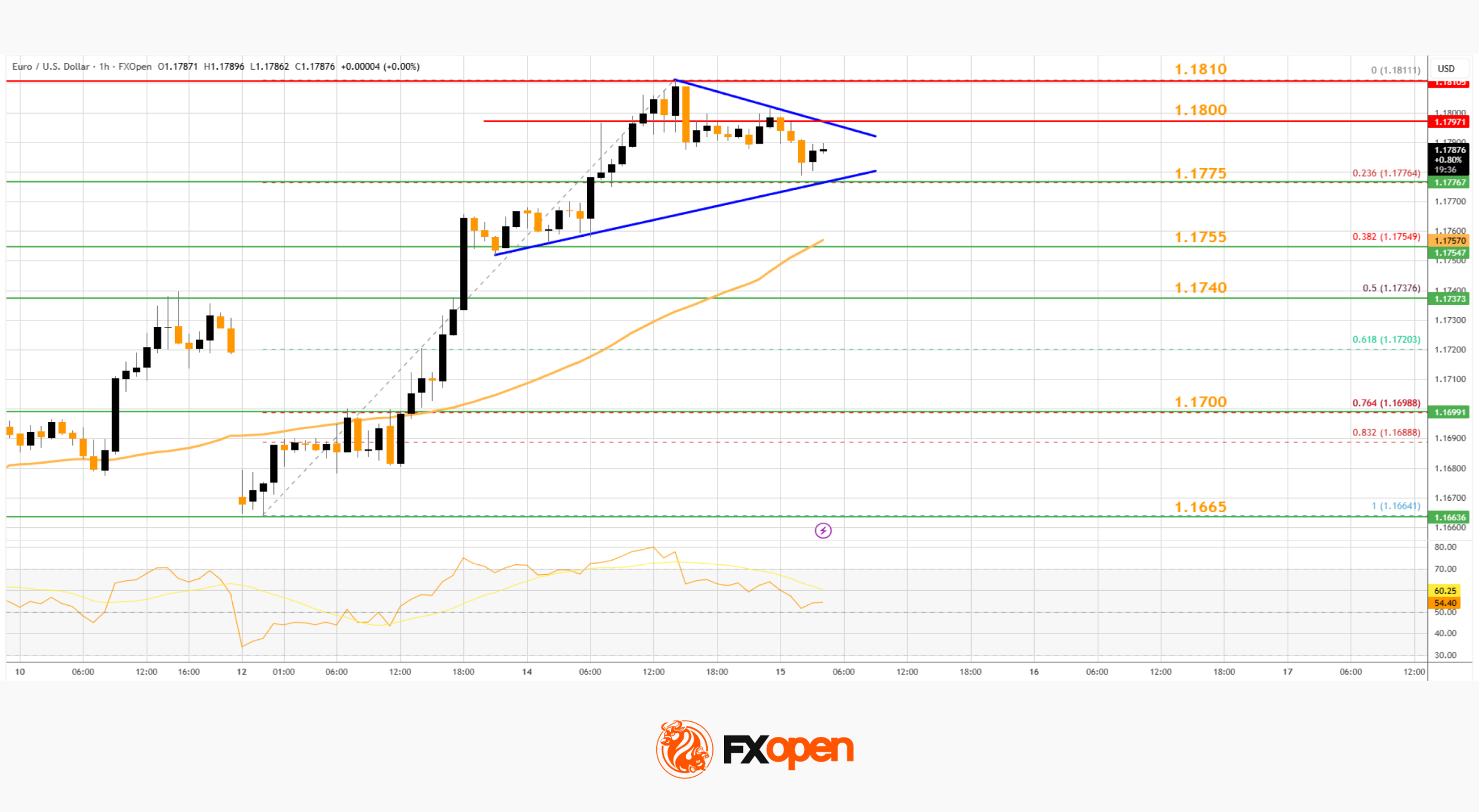
· There is a contracting triangle forming with support near 1.1775 on the hourly chart of EUR/USD at FXOpen.
· USD/CHF declined below the 0.7840 and 0.7825 support levels.
· There is a key bearish trend line forming with resistance near 0.7840 on the hourly chart at FXOpen.
EUR/USD Technical Analysis
On the hourly chart of EUR/USD at FXOpen, the pair started a fresh increase from the 1.1665 zone. The Euro cleared the 1.1700 barrier to move into a bullish zone against the US Dollar.
The bulls pushed the pair above the 50-hour simple moving average and 1.1750. Finally, the pair cleared 1.1765 and 1.1780. A high was formed near 1.1811 and the pair is now consolidating gains. There was a minor pullback toward the 23.6% Fib retracement level of the upward wave from the 1.1664 swing low to the 1.1811 high.
An Immediate bid zone on the downside is near a contracting triangle at 1.1775. The next area of interest could be near 1.1755 and the 50-hour simple moving average.
A downside break below 1.1755 might send the pair toward 1.1740. Any more losses might send the pair into a bearish zone toward 1.1700.
If there is a fresh increase, an immediate hurdle on the EUR/USD chart is 1.1800. The first major pivot level for the bulls could be 1.1810. An upside break above 1.1810 might send the pair to 1.1850. The next selling zone could be 1.1880. Any more gains might open the doors for a move toward 1.2000.
USD/CHF Technical Analysis
On the hourly chart of USD/CHF at FXOpen, the pair started a fresh decline from well above 0.7880. The US Dollar dropped below 0.7850 to move into a negative zone against the Swiss Franc.
The bears pushed the pair below the 50-hour simple moving average and 0.7825. Finally, the bulls appeared near 0.7790. A low was formed near 0.7789, and the pair is now consolidating losses. There was a minor recovery toward the 23.6% Fib retracement level of the downward move from the 0.7934 swing high to the 0.7789 low.
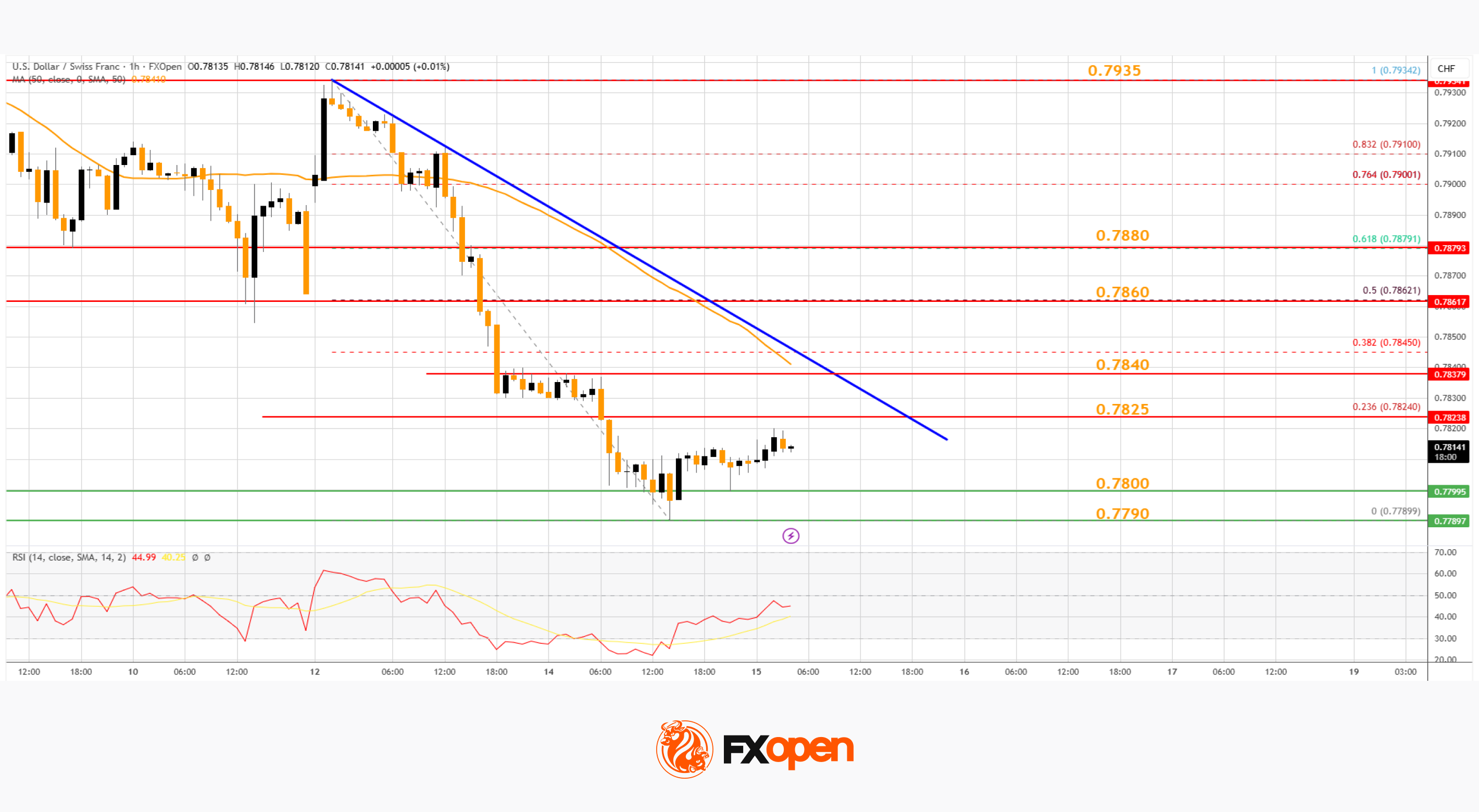
On the upside, the pair could face bears near 0.7825. The first major resistance sits near the 50-hour simple moving average at 0.7840 and a key bearish trend line.
The main barrier for an upside break could be near the 50% Fib retracement at 0.7860. A daily close above 0.7860 could start a fresh increase. In the stated case, the pair could rise toward 0.7880. The next stop for the bulls might be 0.7935.
On the downside, immediate support on the USD/CHF chart is 0.7800. The first major breakdown zone could be 0.7790. A close below 0.7790 might send the pair to 0.7740. Any more losses may possibly open the doors for a move toward 0.7700 in the coming days.
Trade over 50 forex markets 24 hours a day with FXOpen. Take advantage of low commissions, deep liquidity, and spreads from 0.0 pips (additional fees may apply). Open your FXOpen account now or learn more about trading forex with FXOpen.
This article represents the opinion of the Companies operating under the FXOpen brand only. It is not to be construed as an offer, solicitation, or recommendation with respect to products and services provided by the Companies operating under the FXOpen brand, nor is it to be considered financial advice.

Zerion disclosed that North Korean-affiliated hackers used AI-powered social engineering to extract about $100,000 from the company’s hot wallets last week. In a post-mortem published on Wednesday, the crypto wallet provider confirmed that no user funds, Zerion apps, or infrastructure were compromised, and it proactively disabled the web app as a precautionary measure.
Though the amount is modest by crypto-hacking standards, Zerion’s disclosure reinforces a growing trend: attackers are increasingly targeting human operators with AI-enabled techniques. The incident sits alongside a high-profile episode earlier in the month—a $280 million exploit of Drift Protocol attributed to a North Korea–linked operation—illustrating a broader shift in how threat actors approach crypto firms. The human layer, not firmware or smart contracts, has become a primary entry point for incursions into crypto environments.
Key takeaways
- AI-enabled social engineering is emerging as a principal attack vector for DPRK-linked actors, targeting insiders rather than exploiting code bugs alone.
- Zerion’s incident involved access to team members’ logged-in sessions, credentials, and private keys held in hot wallets, underscoring a vulnerability in identity and access management.
- The same threat cluster is tied to a broader pattern of long-running campaigns that impersonate trusted contacts and brands across common collaboration channels such as Telegram, LinkedIn, and Slack.
- Industry researchers have documented a growing toolbox: fake virtual meetings, AI-assisted image and video editing, and other deceptive tactics that reduce the friction for social engineering.
- Security analysts warn that the threat extends well beyond exchanges to developers, contributors, and anyone with access to crypto-infrastructure.
AI reshaping the threat landscape
The Zerion incident highlights a shift in how breaches unfold in crypto ecosystems. Zerion stated that the attacker gained access to some team members’ logged-in sessions, credentials, and private keys used for hot wallets. The firm described the event as an AI-enabled social engineering operation, indicating that artificial intelligence tools were deployed to refine phishing messages, impersonations, and other manipulative techniques.
This assessment aligns with earlier findings from industry researchers who have observed DPRK-affiliated groups sharpening their social engineering playbooks. In particular, Security Alliance (SEAL) reported tracking and blocking 164 domains linked to UNC1069 over a two-month window from February to April, noting that the group runs multiweek, low-pressure campaigns across Telegram, LinkedIn, and Slack. The actors impersonate known contacts or reputable brands or leverage access to previously compromised accounts to build trust and escalate access.
“UNC1069’s social engineering methodology is defined by patience, precision, and the deliberate weaponization of existing trust relationships.”
Google’s security arm, Mandiant, has detailed the group’s evolving workflow, including a documented use of fake Zoom meetings and AI-assisted editing of images or videos during the social engineering stage. The combination of deception and AI tools makes it harder for recipients to differentiate legitimate communications from fraudulent ones, increasing the likelihood of successful intrusions.
The DPRK threat surface expands beyond exchanges
Beyond the Zerion case, researchers have emphasized that North Korean threat actors have embedded themselves in crypto ecosystems for years. MetaMask developer and security researcher Taylor Monahan noted that DPRK IT workers have been involved in numerous protocols and projects for at least seven years, underscoring a persistent presence across the sector. The integration of AI tools into these campaigns compounds the risk, enabling more convincing impersonations and streamlined social-engineering workflows.
Analysts from Elliptic have summarized the evolving threat in a blog post, highlighting that the DPRK group operates along two vectors of attack—one sophisticated, another more opportunistic—targeting individual developers, project contributors, and anyone with access to crypto infrastructure. The observation echoes what Zerion and others are seeing on the ground: the barrier to entry for social-engineered breaches is lower than ever, thanks to AI’s ability to automate and tailor deceptive content at scale.
As the narrative broadens, observers stress that the human factor—credentials, session tokens, private keys, and trusted relationships—continues to be the primary entry point. The shift in tactics means companies must defend not only their code and deployments but also the integrity of internal communications and access paths that connect teams to critical assets.
What readers should watch next
Given the cross-cutting nature of these attacks, market participants and builders should monitor several developing threads. First, the Drift Protocol episode and Zerion’s incident together illustrate that DPRK-affiliated actors are pursuing a multi-stage, long-term approach that blends traditional social engineering with AI-augmented content creation. This implies that short-term fixes—such as patching a single vulnerability or alerting on suspicious code—will be insufficient without strengthened identity and access controls across the entire organization.
Second, the expansion of AI-enabled deception into ordinary collaboration channels suggests that defenders should heighten monitoring for anomalous login sessions, unusual privilege escalations, and suspicious impersonations within internal messaging and meeting platforms. As SEAL and Mandiant have shown, attackers leverage pre-existing trust relationships to lower suspicion, making human-level vigilance essential alongside technical controls.
Finally, the broader ecosystem should anticipate continued public reporting and analysis from researchers as more incidents surface. The convergence of AI with social engineering raises questions about regulatory and industry standards for incident response, vendor risk management, and user education. As the industry absorbs these lessons, it will be critical to track how wallets, protocols, and security firms adapt to an attacker playbook that increasingly emphasizes the human element paired with AI tooling.
For ongoing context, readers can review the Drift Protocol exploit analysis tied to the same DPRK-linked activity, the SEAL advisory tracking UNC1069, and Mandiant’s assessment of the group’s techniques, including AI-assisted deception. Commentary from researchers who have studied DPRK actors—such as Taylor Monahan and Elliptic—helps illuminate the depth and persistence of the threat, underscoring that the threat landscape is not only about exposed smart contracts but about how teams defend their people as well as their code.
As this area evolves, developments to watch include new case updates from Zerion and Drift Protocol, any shifts in threat actor tooling, and regulatory responses aimed at improving transparency and resilience in crypto businesses. The key throughline remains clear: the strongest defense combines robust identity hygiene with a vigilant, AI-informed security posture that can detect and deter sophisticated social-engineering campaigns before they strike.

After Anthropic, OpenAI launches cyber-specific AI model

Amanda Holden speaks out after I’m A Celebrity star exposes her very personal habit

UBS Group AG (UBSS:CA) Shareholder/Analyst Call – Slideshow


-

 Politics5 days ago
US brings back mandatory military draft registration
-
 Sports5 days ago
Man United discover Nico Schlotterbeck transfer fee as defender reaches Dortmund agreement
-

 Fashion5 days ago
Weekend Open Thread: Veronica Beard
-

 Politics5 days ago
Malcolm In The Middle OG Turned Down ‘Buckets Of Money’ To Appear In Reboot
-

 Politics3 days ago
World Cup exit makes Italy enter crisis mode
-

 Crypto World6 days ago
Canary Capital Files SEC Registration for PEPE ETF
-

 Business5 days ago
Tesla Model Y Tops China Auto Sales in March 2026 With 39,827 Registrations, Beating Cheaper EVs and Gas Cars
-

 Crypto World2 days ago
The SEC Conditionalises DeFi Platforms to Be Avoided for Broker Registration
-

 Crypto World1 day ago
SEC Signals Exemption for Crypto Interfaces From Broker Registration
-

 Crypto World7 days ago
Bitcoin recovers as US and Iran Agree a Ceasefire Deal
-
 NewsBeat2 days ago
Pep Guardiola and Gary Neville agree over Arsenal title problem that benefits Man City
-

 Business5 days ago
OpenAI Halts Stargate UK Data Centre Project Over Energy Costs and Copyright Row
-

 Business4 days ago
Ireland Fuel Protests Enter Day 5 as Blockades Spark Shortages and Government Prepares Support Package
-

 Politics5 days ago
LBC Presenter Mocks Trump Over Iran War Failures
-

 Crypto World4 days ago
Federal judge blocks Arizona from bringing criminal charges against Kalshi
-
 NewsBeat3 days ago
JD Vance announces ‘no agreement’ with Iran over nuclear weapons fear
-

 Tech5 days ago
A version of Windows 10 released a decade ago is now eligible for additional security patches
-

 News Videos1 hour ago
Secure crypto trading starts with an FIU-registered
-

 Crypto World1 day ago
SEC Proposes Certain Crypto Interfaces Don’t Need to Register as Brokers
-

 NewsBeat24 hours ago
Trump and Pope Leo: Behind their disagreement over Iran war
You must be logged in to post a comment Login