
Business
Heathrow third runway plans face ‘delusion or deception’ warning over costs and timeline

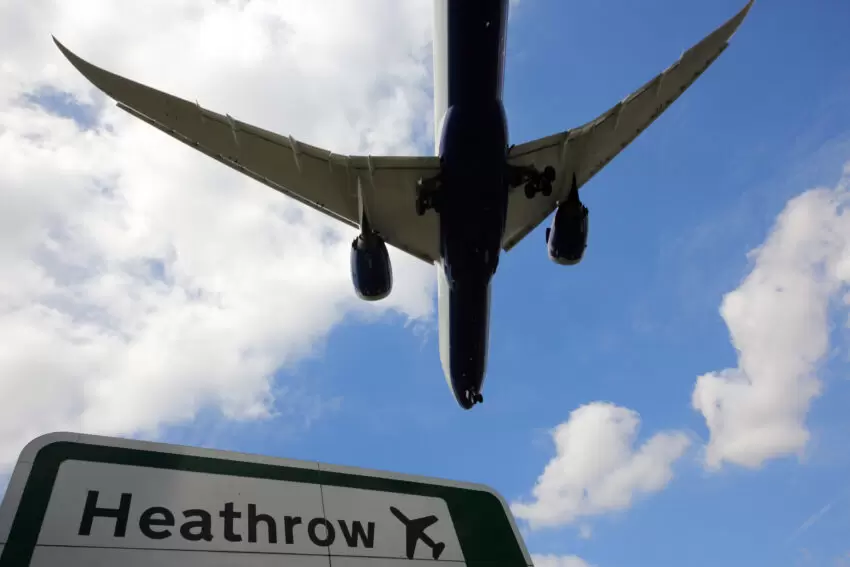
Plans to build a third runway at Heathrow Airport have come under renewed scrutiny after a report accused the airport of “misrepresentation” over its claims the project can be delivered within a decade without relying on taxpayer funding.
The report, authored by infrastructure adviser Paul Mansell, warns that the government-backed expansion could expose both the airport and airlines to major financial risks if the project suffers delays and cost overruns similar to those that have plagued the HS2 rail scheme.
Heathrow has estimated that a third runway, alongside major upgrades to terminals and infrastructure, could be delivered for around £49 billion, with the first flights operating by 2035. The airport has repeatedly stressed that the scheme would be privately financed, meaning it would not require direct taxpayer funding.
However, critics argue that the true cost of the expansion would ultimately be borne by airlines and passengers through significantly higher airport charges.
Airlines have already raised strong objections to Heathrow’s proposals, warning that the expansion could dramatically increase the cost of flying through Britain’s busiest airport.
Among the most vocal critics is International Airlines Group, which owns British Airways, as well as Virgin Atlantic and other carriers operating from Heathrow.
Airlines fear the project will be financed largely through higher landing charges, which are paid by airlines for using airport infrastructure and are often passed on to passengers through ticket prices.
Industry estimates suggest that costs per passenger could potentially double if Heathrow moves ahead with its proposed investment programme.
The airport has also outlined plans to increase its capital spending to £59 billion during its next regulatory period, known as H8. That figure includes approximately £10 billion required simply to maintain and operate the airport over the next five years.
According to Mansell’s report, the scale of spending represents a dramatic increase compared with Heathrow’s current investment levels.
“The scale of capital expenditure being proposed is staggering,” the report states, warning that consumers would ultimately carry the financial burden.
The report also questions whether Heathrow’s proposed timeline is realistic.
Even if the airport succeeds in securing planning permission by 2029, the schedule would require the new runway to be operational just six years later.
Mansell argued that such projections risk falling into what experts describe as “strategic misrepresentation”, a phenomenon where infrastructure promoters underestimate costs or timelines to increase the likelihood of political approval.
According to the report, experts consulted during the review described such forecasts bluntly as either “delusion or deception.”
Heathrow has said the timeline is contingent on external factors, including planning reform and regulatory approvals, and insists the schedule remains achievable under the right conditions.
The report also raises broader concerns about governance and transparency surrounding the expansion project.
It warns of a “breakdown in trust” between Heathrow and its airline partners, citing strained relations over previous infrastructure investments at the airport.
Airlines have pointed to examples of significant cost overruns and delays in recent Heathrow projects.
One example cited is the replacement of the baggage system at Terminal 2, which has seen costs rise to nearly £1 billion, up from an original budget of £645 million. Another major infrastructure upgrade involving a tunnel refurbishment has reportedly been delivered four times over its original budget and more than a decade late.
The report argues that such examples raise questions about Heathrow’s ability to deliver a much larger project on time and within budget.
“If a similar failure occurs at Heathrow,” the report states, “it will fundamentally undermine UK aviation, weaken confidence in UK infrastructure and construction sectors, and potentially hole Heathrow and its airlines below the waterline.”
The report was commissioned by Heathrow Reimagined, a coalition of airlines and aviation stakeholders campaigning for changes to the airport’s regulatory framework.
It comes ahead of a key ruling by the Civil Aviation Authority, which is currently assessing Heathrow’s proposed investment plans and the mechanisms that allow the airport to pass costs on to airlines.
Among the report’s recommendations are reforms to Heathrow’s governance structure and the introduction of stronger oversight mechanisms to ensure airlines and passengers are more directly involved in major investment decisions.
It also suggests that an independent body such as the Civil Aviation Authority should play a larger role in scrutinising Heathrow’s long-term spending plans.
Heathrow rejected the criticism, arguing that its track record shows it is capable of delivering large infrastructure projects successfully.
A spokesperson for the airport said the expansion plans had been developed with lessons from past megaprojects firmly in mind.
“We have seen the lessons of HS2 and we are confident in our plans, which build on our own successes of privately financed megaprojects like Terminals 5 and 2, both delivered on time and on budget,” the spokesperson said.
Heathrow also urged airlines to engage constructively in discussions about the expansion rather than commissioning what it described as “biased reports”.
Despite the criticism, the UK government remains broadly supportive of expanding Heathrow’s capacity as part of a wider strategy to boost international connectivity and economic growth.
A spokesperson for the Department for Transport said expanding Heathrow would strengthen Britain’s global trade links and attract investment.
“Expanding Heathrow will attract international investment and strengthen Britain’s connectivity, with the airport supporting hundreds of thousands of jobs across the country,” the spokesperson said.
The transport secretary has also launched a review of the Airports National Policy Statement, a key policy framework that underpins the approval process for major airport expansions.
The debate over Heathrow’s third runway has been ongoing for decades, balancing economic arguments for increased aviation capacity against environmental concerns and local opposition.
Supporters say the expansion is essential if the UK is to remain competitive as a global aviation hub.
Critics warn that the project risks becoming another costly infrastructure saga if costs spiral and timelines slip.
With regulatory decisions looming and tensions rising between Heathrow and its airline customers, the future of Britain’s most ambitious airport expansion project remains far from settled.

Jamie Young
Jamie is Senior Reporter at Business Matters, bringing over a decade of experience in UK SME business reporting.
Jamie holds a degree in Business Administration and regularly participates in industry conferences and workshops.
When not reporting on the latest business developments, Jamie is passionate about mentoring up-and-coming journalists and entrepreneurs to inspire the next generation of business leaders.


Check out what’s clicking on FoxBusiness.com.
A recall affecting more than 400,000 power banks has been reissued after federal regulators reported additional incidents, including a fatal fire and a separate onboard airplane fire.
About 429,000 Casely Power Banks 5000mAh portable MagSafe compatible wireless chargers are included in the recall announced last week due to fire and burn hazards, according to the U.S. Consumer Product Safety Commission (CPSC).
The recall was first announced in April 2025. At that time, Casely had received 51 consumer reports of the charger overheating, swelling or catching fire while being used to charge phones, causing six minor burn injuries.
MORE THAN 30K WIRELESS POWER BANKS RECALLED AFTER REPORTS OF FIRE, EXPLOSIONS

About 429,000 Casely Power Banks 5000mAh portable MagSafe wireless phone chargers are impacted by the reannounced recall. (U.S. Consumer Product Safety Commission / Unknown)
Since that recall was regulators say 28 additional incidents have been reported, including the death of a 75-year-old woman from New Jersey.
In August 2024, the elderly woman was charging her cell phone with the power bank on her lap when it caught on fire and exploded. She suffered second- and third-degree burns and later died from her burn injuries.
In another incident, a 47-year-old woman in February was charging her cell phone with the power bank on a plane when it caught on fire and exploded, causing first-degree burns to the woman.

The recall was first announced in April 2025. (U.S. Consumer Product Safety Commission / Unknown)
The power banks affected by the recall have the model number “E33A” printed on the back and “Casely” engraved on the front right side.
The chargers were sold on Casely’s website, Amazon and other online retailers from March 2022 through September 2024 for between $30 and $70.
Consumers are urged to stop using the power banks immediately and contact Casely for a free replacement.
OVER 1.1M POWER BANKS RECALLED AFTER REPORTS OF FIRES, EXPLOSIONS
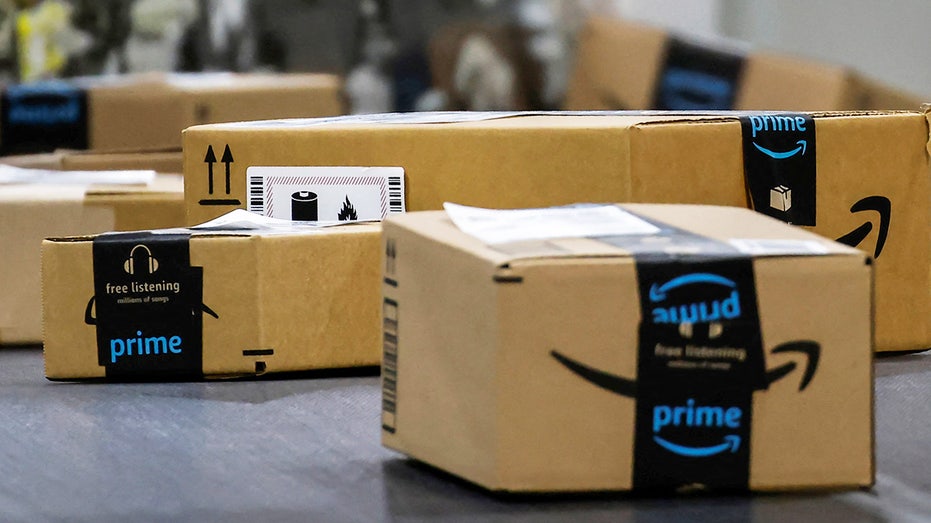
The chargers were sold at the Casely website, Amazon and other online retailers from March 2022 through September 2024. (REUTERS/Eduardo Munoz / Reuters)
GET FOX BUSINESS ON THE GO BY CLICKING HERE
The power banks should not be thrown away in the garbage since they pose a risk of fire, the commission warned. Consumers are instructed to contact local household hazardous waste collection centers for disposal guidance.
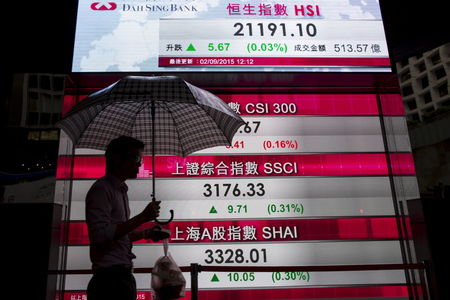
Asia stocks rise as tech gains offset US-Iran tensions; China keeps LPR steady

Southeast Asia faces a complex web of interconnected risks, from economic downturns and job scarcity to geopolitical rivalries and the disruptive force of AI. The region’s diverse economies, from wealthy Singapore to poorer Myanmar, experience these challenges unevenly, forcing nations to balance immediate stability with long-term strategic autonomy.
Key Details
- Economic growth is uneven: While Singapore thrives, countries like Myanmar, Laos, and Brunei struggle with debt, inflation, and joblessness; even wealthy Singapore faces cost-of-living pressures.
- Geopolitical tensions are acute: ASEAN nations, heavily reliant on China for trade, are squeezed by U.S. tariffs (e.g., 46% on Vietnamese exports) and legal uncertainty after the 2026 U.S. Supreme Court ruling, forcing ad-hoc bilateral deals.
- AI adoption is accelerating but unequal: Major investments in Indonesia, Malaysia, and Vietnam contrast with low SME adoption (15% in Singapore); energy-intensive data centers risk massive emissions spikes (e.g., 7x in Malaysia by 2030).
- Risks reinforce each other: Trade shocks fuel inflation and unemployment; AI gains may widen inequality; supply chain shifts expose cybersecurity gaps; domestic politics limit fiscal flexibility.
While AI adoption promises growth, uneven implementation, energy constraints, and workforce displacement could exacerbate inequalities. Governments and businesses must adopt integrated, adaptive strategies, acknowledging that economic, geopolitical, and technological pressures are converging, demanding a coordinated, forward-looking response to navigate this volatile landscape.
There is growth but it’s not reaching everyone
Economic growth is a case in point. In the survey, the top three perceived risks in the region are economic downturn, lack of jobs or economic opportunity and inflation, reflecting a shared anxiety about how individuals will experience growth. The signs of stress are already visible.
In Thailand, growth forecasts have been revised downward due to trade uncertainty and high household debt. Meanwhile, Brunei is still trying to reduce its reliance on oil and gas, and Lao PDR faces serious debt pressures that limit room to manoeuvre.
Meanwhile, ageing demographics in Malaysia and Viet Nam are outpacing economic development, a challenge requiring different investments in productivity and skills.
AI Surge in the Region Sparks Opportunities Amid Growing Divides
Southeast Asian executives rank the risks from artificial intelligence (AI) adversely at fourth regionally, compared to 10th globally. There is also relatively higher concern about online harms and the risks posed by frontier technologies more broadly.
AI-driven growth initiatives are gaining momentum across the region. For instance, Microsoft has unveiled significant cloud and AI investment programs in Indonesia and Malaysia.
Qualcomm has launched an AI research and development center in Viet Nam. Meanwhile, Singapore’s Green Data Centre Roadmap positions computing capacity as a strategic national infrastructure, akin to how previous generations prioritized highways and ports.
Other People are Reading

Factbox-From airlines to banks: Australian, New Zealand firms feel heat of Gulf crisis
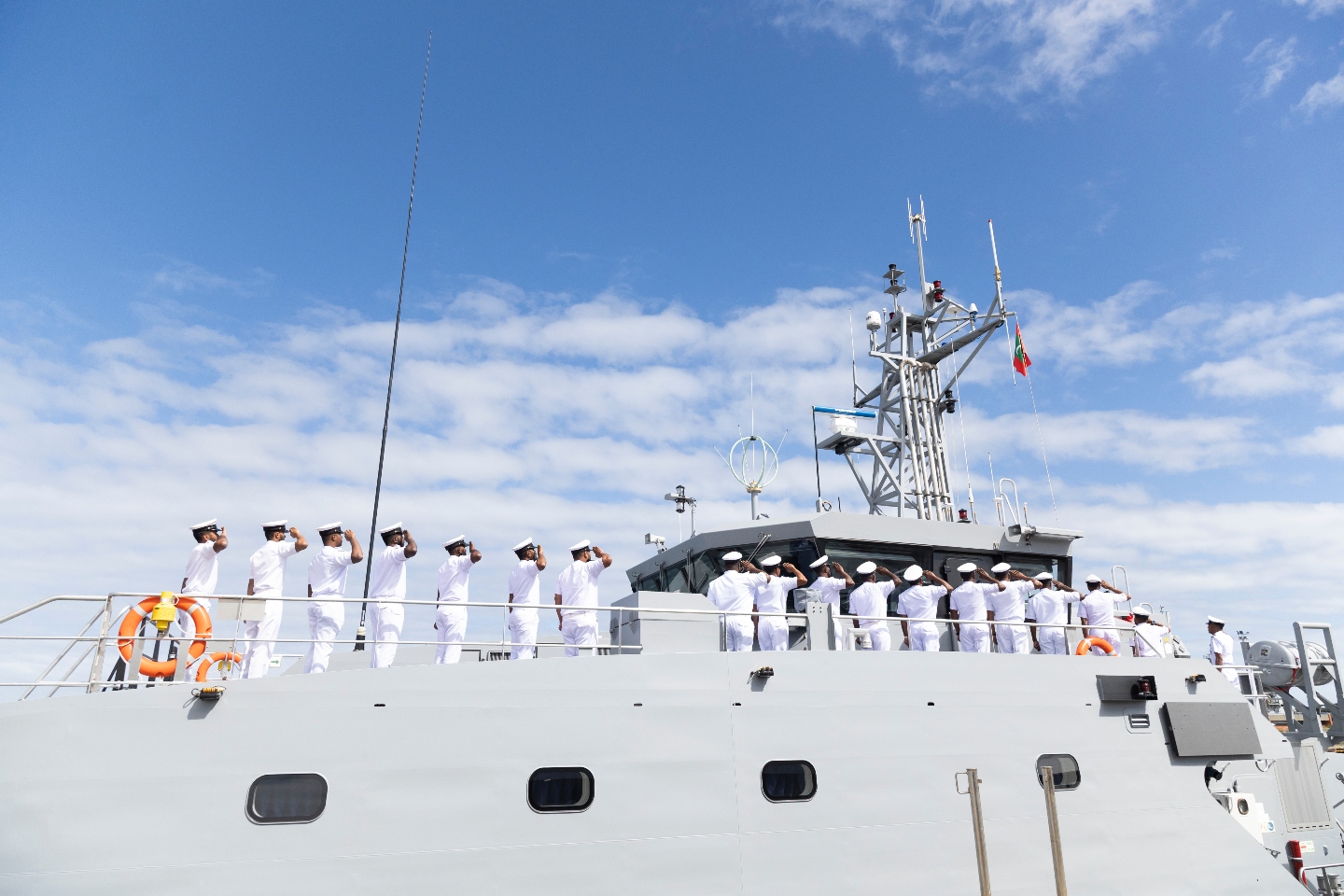
WA shipbuilding giant Austal has officially concluded one of the largest naval programs in the state’s history, delivering the final Guardian-class patrol boat.
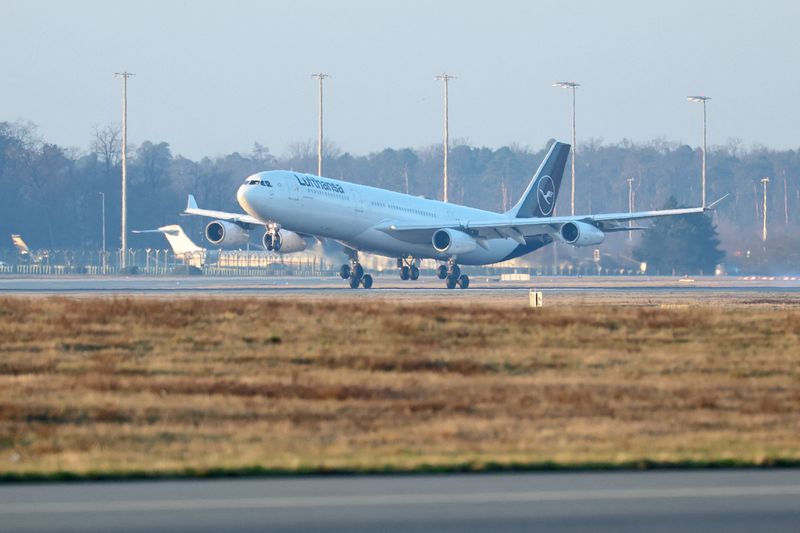

Exclusive-EU to push for jet fuel diversification as Iran war threatens supply


Some tickers are covered more than others on the site, so with The Undercovered Dozen our Editors highlight twelve actionable investment ideas on tickers with less coverage. These ideas can range from “boring” large caps to promising up-and-coming small caps. Specifically, the inclusion criteria for “undercovered” include: market cap greater than $100 million, more than 800 symbol page views in the last 90 days on Seeking Alpha, and fewer than two articles published in the past 30 days. Follow this account to receive a weekly review of twelve of these undercovered ideas from our valued analysts.
Analyst’s Disclosure: I/we have no stock, option or similar derivative position in any of the companies mentioned, and no plans to initiate any such positions within the next 72 hours. I wrote this article myself, and it expresses my own opinions. I am not receiving compensation for it. I have no business relationship with any company whose stock is mentioned in this article.
Seeking Alpha’s Disclosure: Past performance is no guarantee of future results. No recommendation or advice is being given that any particular security, portfolio, transaction or investment strategy is suitable for any specific person. The author is not advising you personally concerning the nature, potential, value or suitability of any particular security or other matter. You alone are solely responsible for determining whether any investment, security or strategy, or any product or service, is appropriate or suitable for you based on your investment objectives and personal and financial situation. The author is an employee of Seeking Alpha. Any views or opinions expressed herein may not reflect those of Seeking Alpha as a whole. Seeking Alpha is not a licensed securities dealer, broker or US investment adviser or investment bank.
Business
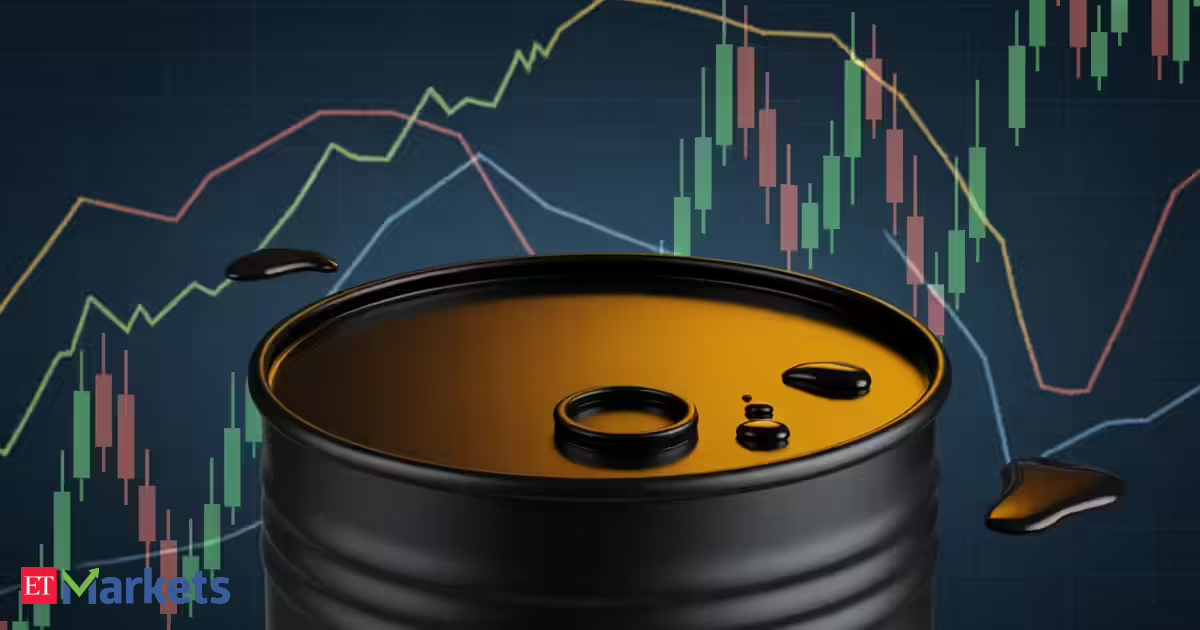
Oil Price Today (April 20): Crude oil jumps 6%, nears $100 again despite ceasefire hopes. What’s happening?
On the geopolitical front, U.S. President Donald Trump said on Sunday that American forces had seized an Iranian cargo ship attempting to breach its blockade. Iran, in response, said it would not take part in a second round of peace talks, despite Trump’s warning of renewed airstrikes.
Crude oil price on April 20
Brent crude futures climbed $6.11, or 6.76%, to $96.49 a barrel by 2327 GMT. U.S. West Texas Intermediate rose $6.53, or 7.79%, to $90.38 a barrel.Before the conflict, the strait accounted for roughly one-fifth of global oil supply. The war, now nearing two months, has severely disrupted these flows.

Market movements remain highly reactive to developments, with oil prices swinging on shifting signals from both sides rather than any clear improvement in supply conditions. The intermittent movement of vessels through the strait highlights the deep uncertainty surrounding the world’s most critical energy chokepoint. Even if tensions ease, a full recovery in oil flows is expected to take several months, experts warn.
On Saturday, Iran tightened its grip over the strait in response to the U.S. blockade, reportedly firing at several vessels and declaring the route closed. This came just hours after it had announced a temporary reopening during a 10-day ceasefire.
What are experts saying?
Brokerage firm Macquarie said that even if tensions cool, oil prices are likely to remain supported in the $85 to $90 range, with a gradual move towards $110 as supply through the Strait of Hormuz improves. It added that if disruptions persist through April, Brent crude could climb as high as $150 per barrel.
Analysts broadly believe crude may be entering a phase of structurally higher prices. With the ceasefire seen as temporary, a return to pre-war levels of $70 to $75 may take several months. In the near term, they expect prices to stay within a range of $80 to $85 on the downside and $95 to $100 on the upside.
Nuvama Institutional Equities cautioned that prolonged closure of the strait, which handles about 20 million barrels per day, could drive crude prices into the $110 to $150 range.
(Disclaimer: Recommendations, suggestions, views and opinions given by the experts are their own. These do not represent the views of The Economic Times)
US military says it killed three people in latest Caribbean boat strike

Gold prices dip as Iran tensions re-emerge, oil prices jump

‘No more excuses’ as EU launches free age verification app

Jio Finance Q4 Results 2026 | Jio Finance Results Today | Jio Financial Services Latest News

Roses will grow healthier blooms if you never miss out on 1 simple task in April

Why Israel is blocking foreign journalists from entering

Bitcoin: We’re Entering The Most Dangerous Phase

Alan Cumming Brands Baftas Ceremony A ‘Triggering S**tshow’
Jio Finance Q4 Results 2026 | Jio Finance Results Today | Jio Financial Services Latest News

Justice Thomas issues MAJOR REBUKE against Democrats as Mamdani makes FINANCIAL MISTAKE

Sam Smith – Money On My Mind (Official Music Video)
-

 Crypto World6 days ago
The SEC Conditionalises DeFi Platforms to Be Avoided for Broker Registration
-

 Fashion2 days ago
Weekend Open Thread: Theodora Dress
-

 NewsBeat6 days ago
Trump and Pope Leo: Behind their disagreement over Iran war
-

 Crypto World6 days ago
SEC Signals Exemption for Crypto Interfaces From Broker Registration
-

 News Videos5 days ago
Secure crypto trading starts with an FIU-registered
-

 Sports3 days ago
NWFL Suspends Two Players Over Post-Match Clash in Ado-Ekiti
-

 Crypto World6 days ago
SEC Proposes Certain Crypto Interfaces Don’t Need to Register as Brokers
-

 Business13 hours ago
Powerball Result April 18, 2026: No Jackpot Winner in Powerball Draw: $75 Million Rolls Over
-

 Politics2 days ago
Palestine barred from entering Canada for FIFA Congress
-

 Crypto World2 days ago
Russia Pushes Bill to Criminalize Unregistered Crypto Services
-

 Sports7 days ago
NWFL opens Pathway for new Clubs ahead of 2026 Season
-
 Business3 days ago
Creo Medical agree sale of its manufacturing operation
-
 Entertainment6 days ago
Brand New Day’ Footage Reveals the Devastating Impact of ‘Now Way Home’
-

 Politics18 hours ago
Zack Polanski demands ‘council homes not luxury flats for foreign investors’
-

 Crypto World7 days ago
Trump whales load up ahead of Mar-a-Lago luncheon.
-
Business7 days ago
Kering slides after Morgan Stanley downgrade, Gucci woes loom
-

 Tech7 days ago
Apple glasses won’t go brand shopping like Meta did with Ray-Ban and Oakley
-

 Tech7 days ago
Google adds E2E encryption to Gmail for iOS and Android enterprise users
-
 Entertainment6 days ago
Karol G’s ‘Ultra Raunchy’ Coachella Set Gave ‘Satanic Vibes’
-
Entertainment7 days ago
How Euphoria Season 3 Premiere Paid Tribute to Eric Dane After Death
You must be logged in to post a comment Login