

Crypto World
Trump Supports Crypto Industry in Stablecoin Yield Battle



In a social media post, President Trump openly criticized banks for obstructing his crypto agenda, aligning himself with crypto firms in a dispute over stablecoin yields.
In a social media post, President Trump criticized the banking industry, accusing it of undermining his crypto agenda, and called for progress on the Clarity Act.
“The Genius Act is being threatened and undermined by the Banks, and that is unacceptable — We are not going to allow it. The U.S. needs to get Market Structure done, ASAP. Americans should earn more money on their money,” Trump wrote on Truth Social.
“The Banks should not be trying to undercut The Genius Act, or hold The Clarity Act hostage,” he added.
The GENIUS Act prohibits stablecoin issuers from paying interest directly to holders but permits third-party platforms to distribute yield to users, a measure designed to enhance transparency and regulatory compliance.
Despite hosting White House meetings between crypto firms and banks to negotiate stablecoin yields, banks have shown resistance. Trump’s efforts to mediate a compromise have yet to yield results, as reported by CNBC.
Stablecoin yields have become a focal point of regulatory scrutiny, with significant implications for traditional banking and financial stability.
The ongoing conflict between banks and crypto firms represents a broader debate over the future of financial regulation in the U.S. and could redefine America’s role in global crypto leadership.
This article was generated with the assistance of AI workflows.

Crypto World
Eric Trump, World Liberty co-founder, calls banks ‘anti-American’ over stablecoin fight


Eric Trump, one of the sons of U.S. President Donald Trump and a co-founder of crypto firm World Liberty Financial, went after the banking industry Tuesday over their opposition to allowing stablecoin yield in crypto market structure legislation.
“Big Banks (think JPMorgan Chase, Bank of America, Wells Fargo, etc.) are lobbying overtime to block Americans from getting higher yields on their savings—while trying to block any rewards or perks from being given to customers,” he said in a post on X, the site formerly known as Twitter.
He said banks pay a marginal interest in comparison to the interest paid to them by the Federal Reserve, and keep the funds as profits.
“Today, the banks are desperately targeting crypto/stablecoins, where platforms plan to offer 4–5%+ yields or rewards,” he said.
“The ABA and other lobbyists are spending millions trying to ban or restrict those yields via bills like the Clarity Act, crying ‘fairness’ and using words like ‘stability’—when it’s really about protecting their low-rate monopoly and preventing deposit flight. This is anti-retail, anti-consumer, and straight-up anti-American,” he said.
World Liberty, the company he co-founded, issues its own stablecoin, USD1. The World Liberty umbrella is also in the process of seeking a charter through the Office of the Comptroller of the Currency.
Trump has shared his grievances with banks over the past year, saying at multiple conferences that they debanked him and his family.
His father, the U.S. president, posted about the Clarity Act on Tuesday, urging Congress to advance the bill and similarly attacking banks for being recalcitrant in negotiations over stablecoin yield in the bill. It’s so far unclear whether his post, or indeed Eric Trump’s, will significantly shift the needle in the negotiations.
Donald Trump posted shortly after meeting with Coinbase CEO Brian Armstrong, who publicly withdrew support from the bill in January over the stablecoin provisions and other sections the crypto executive deemed problematic.
Patrick Witt, the White House’s executive director for crypto issues, also pushed back on JP Morgan CEO Jamie Dimon earlier Wednesday, after Dimon said stablecoin issuers should be regulated like banks.


Disclosure: This article does not represent investment advice. The content and materials featured on this page are for educational purposes only.
As global commerce accelerates, more companies are adding crypto as a payment option to cut settlement delays, lower cross-border costs, and serve customers who already hold digital assets. In 2026, accepting crypto is becoming less of a bet and more of an operational upgrade.
Commerce in 2026 is always on, cross-border, without limits. Buyers expect checkout to work fast on a phone, in any time zone, and in more than one currency. However, cards and bank transfers still run most transactions. They often bring delays, extra fees, and payment failures in some markets.
That’s why many companies now treat crypto payments as a normal payment rail. The goal is simple. Offer a payment option that matches how customers already store value. Get faster access to funds, with fewer delays.
Faster settlement, fewer intermediaries
Card payments and bank transfers often pass through several parties. Each step adds processing time, extra checks, and the chance of a hold. A crypto transfer can move funds directly between wallets, 24/7, without waiting for banking hours.
Cost control across borders
Payment cost rarely comes from a single line item. Card acceptance can include a percentage fee, fixed charges, currency conversion, and extra risk costs such as rolling reserves. International bank transfers can add fees on both sides, plus intermediary charges that appear after the fact.
Crypto payments can cut parts of that stack. Network fees vary by chain. Many merchants use stablecoins or lower-fee networks for day-to-day payments. This can reduce payment overhead on smaller tickets and on international orders.
Reach customers who already hold crypto
Research estimates that more than 700 million people owned crypto by the middle of last year. The number keeps growing. It includes users who want to spend crypto online.
Accepting crypto can open demand in two groups. The first group is the “crypto-native” shopper who prefers paying from a wallet. The second group lives in markets where card coverage is weak or cross-border payments fail.
Test demand with a small rollout. Add crypto next to your current options. Track conversion. A checkout flow that lets customers accept crypto as payment can remove friction. Many buyers already plan to pay that way.
Fraud profile and transaction records
Card fraud and friendly fraud remain major pain points. A chargeback can reverse revenue weeks after the sale. It can add fees and support workload and raise risk scores with payment partners.
Most on-chain transfers are irreversible after confirmation. That changes the dispute profile. It does not remove risk, but shifts risk toward up-front screening and clear refund rules.
Blockchain records can help with reconciliation. A transaction has a timestamp, amount, and wallet addresses that do not change. Finance teams can link on-chain activity to invoices. They can export the data into existing reporting tools.
Wallet and treasury infrastructure
Storing funds in a personal wallet is not a business process. A company needs shared access with controls. It needs clear separation of duties between finance, ops, and security.
A crypto wallet for business can support these needs with features built for teams:
- Multiple users with role-based permissions
- Approval flows for outgoing transfers
- Real-time visibility for finance teams
- Security controls such as two-factor authentication and cold storage options
- Exports that support accounting and reconciliation
A simple rollout checklist
Crypto payments work best as a measured rollout, not a one-day switch. Many merchants start with a pilot. They expand after they see demand.
Key steps:
- Pick the assets and networks you will support
- Decide your settlement target: crypto, stablecoin, or fiat
- Set refund rules and train support teams on wallet basics
- Add reporting that links each payment to an order and invoice
- Monitor acceptance rate and settlement timing
Prepare for a wider mix of payment rails
Rules around digital assets keep developing, and payment infrastructure keeps improving. Stablecoin usage is rising in cross-border trade, and more mainstream payment firms are building rails that touch blockchain networks.
Businesses that add crypto now gain operational experience. They learn what customers use and what controls fit their risk model. That knowledge can matter once crypto becomes a standard option in more markets.
Scalability improvements are another reason crypto payments are becoming more practical for business use. Beyond Layer 1 and Layer 2 networks, Layer 3 blockchains aim to optimize transaction speed and cost for specific applications, including payments and enterprise use cases.
Disclosure: This content is provided by a third party. Neither crypto.news nor the author of this article endorses any product mentioned on this page. Users should conduct their own research before taking any action related to the company.
Crypto World
New Crypto Mutuum Finance (MUTM) Reports V1 Protocol Progress as Roadmap Enters Phase 3


Mutuum Finance (MUTM) has officially confirmed a major step in its roadmap with the activation of its V1 protocol on the Sepolia testnet. This development comes during a period of mixed market sentiment. Investors are increasingly looking for “proof of work” over theoretical promises.
By moving its core logic into a live testing environment, Mutuum Finance is demonstrating that its infrastructure is ready for public scrutiny. The project has raised over $20.6 million with strong community support..
Technical Infrastructure
Mutuum Finance is built on the Ethereum network and aims to provide a professional-grade liquidity market. Mutuum Finance has designed a dual-market mechanism. This allows the protocol to serve different types of users, from small retail participants to large institutional allocators.
P2C (Peer-to-Contract) Market: This model manages high-liquidity assets like ETH and USDT through automated pools. Interest rates are dynamic, adjusting in real-time based on pool utilization and market demand.
P2P (Peer-to-Peer) Marketplace: This marketplace supports “long-tail” or niche assets such as SHIB or DOGE. It allows lenders and borrowers to bypass automated formulas and negotiate custom interest rates and loan durations directly.
The primary goal of this design is to create a liquidity ecosystem that handles different risk profiles in one place. By separating the markets, Mutuum Finance aims to offer instant, algorithmically stable liquidity for major assets (P2C) while still providing a secure venue for the more volatile, speculative tokens (P2P) that traditional pooled protocols often exclude.
Key Features of the V1 Protocol
The activation of the V1 protocol on the Sepolia testnet is a full-scale demonstration of the protocol’s mechanics. In this environment, users can interact with the smart contracts using “test” tokens. This allows the community to verify the safety and efficiency of the system without risking real capital.
One of the core features being tested is the mtToken system. When a user deposits an asset, they receive an mtToken as a digital receipt. These are yield-bearing assets. As borrowers pay interest, the value of the mtToken increases. During the V1 testing phase, users can observe exactly how their test balances grow over time.
Additionally,the roadmap also introduces mechanisms to reward users who stake mtTokens in specialized modules designed to strengthen the platform’s security. the project’s roadmap highlights a buy-and-redistribute mechanism. Under this future system, users who stake their mtTokens in a specialized Safety Module will be rewarded with dividends paid out in MUTM tokens.
The V1 protocol includes live monitoring of Stability Factors. Every loan is assigned a score based on the value of the collateral compared to the borrowed amount. To keep the system safe, the protocol uses decentralized oracles to get accurate price data. If a user’s Stability Factor drops too low, the system’s liquidation bots are triggered to protect the lenders’ funds.
V1 Protocol Performance and Roadmap State
The activation of the V1 protocol on the Sepolia testnet has transitioned the project into a functional phase. As of March 2026, the protocol has successfully launched the V1 protocol on the Sepolia testnet, marking a significant milestone in its development. the protocol has reached a major milestone with testnet Total Value Locked (TVL) surpassing $190 million. This high volume of simulated liquidity allows the team to stress-test the system’s ability to handle large-scale lending and borrowing demand before the official mainnet launch.
Mutuum Finance’s roadmap recently transitioned into Phase 3, a stage focused on scaling the protocol’s architecture and hardening its security layer. While infrastructure optimization is a major pillar of this phase, it includes a wide array of technical and ecosystem developments designed to prepare the platform for global institutional use. Beyond the core protocol activation, the transition through these phases has introduced several critical upgrades:
- Risk Management Innovation: The protocol offers easy-to-use borrowing presets that help users navigate different risk profiles based on their preferences. This feature automatically sets the Stability Factor, helping users navigate market volatility without needing deep technical knowledge of LTV ratios.
- Protocol Security Layer: Building on a manual audit by Halborn Security and a 90/100 CertiK trust score, Phase 3 involves continuous “hardening” of the smart contracts. This includes refining the codebase using data from the Sepolia testnet to ensure the liquidation bots and interest rate models perform under extreme stress.
- Cross-Chain Research: Current development is also exploring the technical requirements for future cross-chain compatibility, ensuring that Mutuum Finance’s liquidity pools can eventually interact with networks beyond Ethereum.
The goal of these combined efforts is to transform Mutuum Finance from a tested V1 protocol into a fully realized decentralized ecosystem capable of handling diverse asset classes and complex liquidity structures.
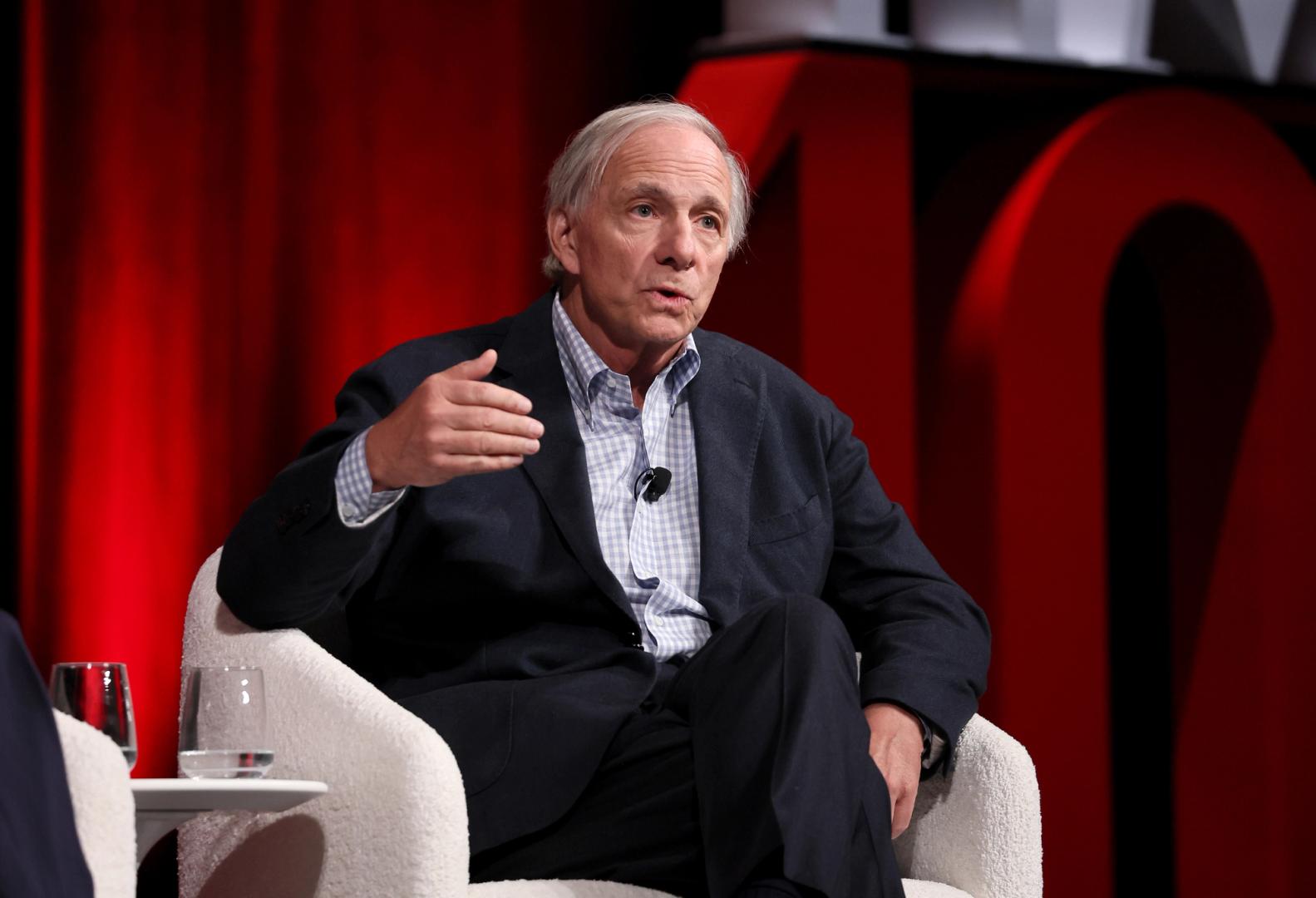
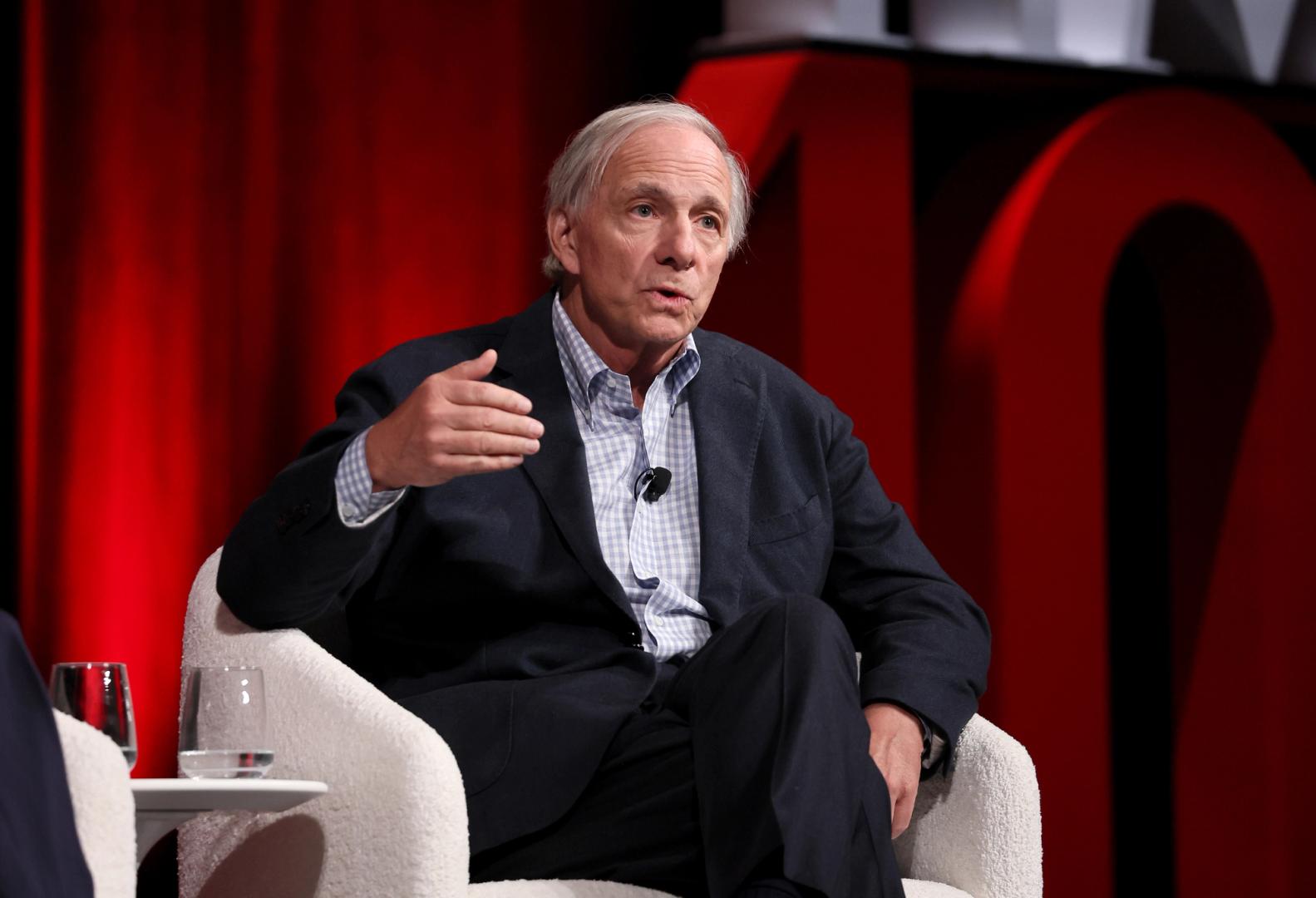
Crypto experts are pushing back after billionaire hedge fund manager Ray Dalio renewed his skepticism about bitcoin , arguing that the largest and oldest cryptocurrency lacks the qualities that make gold a reliable store of value.
Speaking on the All-In Podcast, the Bridgewater Associates founder said bitcoin should not be compared to gold because it lacks central bank backing, offers limited privacy and could face an existential threat from future advances in quantum computing. Dalio also pointed to the asset’s public ledger, suggesting transactions can be monitored and potentially controlled.
Dalio, who said last year that he has about a 1% allocation to bitcoin, isn’t new to the criticism of the digital asset. At the time, he said bitcoin faces challenges as a global reserve asset due to its traceability and potential vulnerabilities from quantum computing.
However, industry figures say those critiques reflect longstanding debates around bitcoin, and that the risks Dalio highlighted are already reflected in bitcoin’s much smaller market value compared to gold.
Bitcoin’s risks are also its upside
However, some analysts say those critiques are exactly why bitcoin is worth buying.
“Dalio’s not ‘wrong’ in an absolute sense,” Matt Hougan, chief investment officer at asset manager Bitwise, told CoinDesk. “There really is some risk with quantum and central banks really aren’t buying bitcoin yet.”
But Hougan said those concerns are precisely why bitcoin still trades far below, roughly 4%, of gold’s total market size. Bitcoin’s market cap currently stands at around $1.4 trillion, compared to gold’s estimated $35 trillion
“These criticisms are quite literally the opportunity,” he said. “We invest in bitcoin because we think these things will change over time; that developers will solve quantum risk and central banks will come around.”
“If these critiques did not exist, bitcoin would already be at $1 million a coin,” he added.
‘Tired’ old narratives
Alex Thorn, Galaxy’s head of research, said Dalio’s arguments echo older narratives from bitcoin’s early years.
“Ray Dalio’s Bitcoin critiques are reminiscent of tired narratives from the pre-2017 era,” Thorn said in an email, adding that quantum risks are already being addressed by developers.
Read more: Here’s why the quantum threat for bitcoin may be smaller than people fear
He also said that comparing bitcoin to gold is fair but overlooks how the two assets differ in practice. “Gold might function well stored in a bunker or at the New York Fed, but Bitcoin has actual real-world utility in ways that gold could never match,” he said, pointing to the asset’s growing adoption by both individuals and institutions over nearly two decades.
Monetary shift
Matthew Sigel, head of digital assets research at VanEck, said both gold and bitcoin “have a role” as they represent hard assets from different monetary eras.
“Ultimately, this is a debate between the monetary architecture of the last century and the one emerging in this one,” he said in an email.
Gold, in his view, solved the trust problem in an “analog” financial system built around reported reserves and custodians. Meanwhile, bitcoin addresses that in a digital environment through open-source development and verifiable transactions.
He added that central banks — like the Czech National Bank — are already beginning to experiment with digital asset exposure and that privacy improvements are emerging through better wallet practices and second-layer networks.
Sigel also pushed back on the quantum computing concern, saying the issue affects the entire financial system rather than bitcoin alone. “Quantum risk is a broader cryptography challenge facing the entire financial system, not a flaw unique to bitcoin,” he said.
Investor surveys, he said, also show that younger investors increasingly favor bitcoin, suggesting a gradual shift in “monetary center.”
Read more: ‘Big Short’ Micheal Burry spots 2022 vibes in bitcoin crash


Disclosure: This article does not represent investment advice. The content and materials featured on this page are for educational purposes only.
Hyperdrive launches Leverage Markets to address structural instability and cascading liquidations in crypto trading.
Summary
- Hyperdrive launches Leverage Markets to tackle crypto’s long-standing liquidation and volatility risks.
- The new model replaces real-time price feeds with redemption-based collateral values to prevent cascades.
- Built for tokenized treasuries and LSTs, Hyperdrive aims to make on-chain leverage more stable and usable.
Today, Hyperdrive announced the launch of its Leverage Markets, designed to combat the structural risks that make leverage on cryptoassets unstable.
Crypto leverage relies on real-time market pricing and continuous liquidity. That architecture creates extreme volatility, which may trigger forced and cascading liquidations. The fragile nature of on-chain leverage has resulted in the reluctance of traders to use credit, one of the fundamental drivers of economic expansion and growth.
Hyperdrive’s Leverage Markets protocol says it removes these vulnerabilities by designing leverage around known redemption prices rather than fluctuating market values. The goal is to create leverage that works more than structural credit than margin trading, with no crashes or no liquidations.
The protocol has emerged at a time when over $180 billion in tokenized treasuries and private credit are live, but can’t be used as collateral safely in existing lending protocols, more than $50 billion in LSTs (stETH, rETH, HYPED etc.) need better capital efficiency than current 70% LTVs allow, and TradFi players need leverage that doesn’t blow up during volatility
Traditional crypto leverage (Aave, Compound, Morpho) values collateral using real-time market prices. When prices drop, liquidators must sell collateral into thin markets, often triggering cascades that wipe out entire positions. Hyperdrive’s model operates differently. Instead of finding out what a token is worth on a DEX at a particular moment, it seeks to know what a particular token can be redeemed for contractually.
For instance, a tokenized treasury fund that’s redeemable for $1.05 USDC is worth $1.05 — even if secondary markets show $0.80 during a panic. According to Hyperdrive, its value is at the redemption rate, not the market price.
When a position needs to close, the protocol executes the actual redemption process (T+30, T+90, whatever the asset specifies) rather than dumping into a DEX. Liquidations become settlements, not emergencies.
According to Cain O’Sullivan, Co-founder of Hyperdrive, the issue isn’t leverage itself, but how the company has built it. When collateral has a contractual redemption path, traders don’t need oracles or DEX liquidity. Positions close deterministically, not by force.
Hyperdrive’s leverage model introduces three concepts that collectively address the fragility of conventional on-chain lending. Collateral is valued using its redemption rate (contractual NAV), not secondary market prices. This aims to eliminate oracle manipulation risk and NAV-market divergence.
When positions become unhealthy, the protocol initiates redemptions through the asset’s native redemption mechanism.
The self-liquidation concept allows borrowers to close positions atomically by paying a fixed fee, enabling deleveraging without relying on external liquidity. This could be a more cost-effective method than unwinding through DEX liquidity and much faster than manual deleveraging.
Hyperdrive’s leverage can be applied to a range of use cases, including Liquid Staking Tokens (LSTs), tokenized credit, and treasury products.
Hyperdrive’s initial markets are live in testnet, with mainnet launch following security audits. The production deployment is planned for Q2 2026 on Ethereum, with expansion to Avalanche and Hyperliquid expected to follow afterward.
Disclosure: This content is provided by a third party. Neither crypto.news nor the author of this article endorses any product mentioned on this page. Users should conduct their own research before taking any action related to the company.

Bitcoin Price Holds Above $71K Amid Rising Tensions
Rising geopolitical tensions and steady ETF inflows are shaping crypto markets this week. Bitcoin trades above $71,000 while analysts assess risks tied to US-Iran hostilities. Meanwhile, capital flows into spot exchange-traded funds signal sustained institutional demand.
everyone said war = crypto dump.$BTC just hit $72,000.
here’s what actually happened:
→ investors sold the rumor (Iran war fears)
→ $BTC held while stocks bled
→ institutions noticed
→ 5 straight days of ETF inflows
→ Binance buy/sell ratio: 1.18 (highest this year)
→… pic.twitter.com/gHp54vvBZ2— Onchain Daily (previously One Click Contracts) (@OnchainDaily_) March 4, 2026
BTC back above 71K.
✅ Weekly reclaimed EMA200 (68,343)
But don’t get drunk on green candles:
⚠️ CVD still -454K (move looks mechanical)
⚠️ OI ~89.8K + funding 0.0025 (leverage is back)
Levels: 72 → 74K, fail 70/69 → 66K. pic.twitter.com/2r1YlgLf38— Fred Velez (@Fredvelezcrypto) March 4, 2026
Bitcoin trades at $71,223 during early Wednesday sessions. The price has gained 7% over the past 24 hours. However, it still struggles to secure a firm break above $70,000 resistance.
The cryptocurrency remains within a narrow range between $65,000 support and $70,000 resistance. Buyers are pushing price action toward the upper boundary of consolidation. Momentum indicators show strength as MACD lines stay above the signal line.
The Relative Strength Index stands near 66, which reflects bullish pressure without overbought conditions. A confirmed breakout above $70,000 could drive price toward $72,000. Conversely, a rejection may pull Bitcoin back toward $67,000 or even $65,000.
Market sentiment also reflects broader geopolitical developments. Tensions between the United States and Iran intensified after military operations in early 2026. Energy markets reacted sharply as oil and gas prices recorded rapid swings.
A Beijing-based historian, Jiang Xueqin, had earlier predicted escalating conflict under a second Donald Trump administration. He argued that Washington could face a prolonged and costly confrontation with Tehran. His projection gained renewed attention after clashes including the 12-Day War of 2025.
The United States and Israel launched Operation Epic Fury in February 2026. Iran responded with missile attacks and expanded regional proxy engagement. As a result, global trade routes and shipping lanes faced renewed security threats.
Ethereum Price Steady Above $1,900 Despite ETF Outflows
Ethereum trades slightly above $1,900 in recent sessions. The asset shows modest gains while broader market capitalization increases. However, spot Ethereum ETFs recorded a net outflow of $10.75 million on March 3.
Despite the net outflow, BlackRock’s ETHA product posted a daily inflow of $41.92 million. This performance indicates selective demand within Ethereum-linked funds. Therefore, capital rotation remains visible across crypto investment products.
Ethereum has faced pressure during Bitcoin’s consolidation phase. Still, it maintains relative stability compared to previous corrections. The broader crypto market cap rose 0.53% to reach $2.34 trillion.
Regulatory developments have also supported digital asset valuations. Lawmakers in Washington continue discussions on clearer frameworks for crypto oversight. Consequently, market participants are weighing both policy direction and geopolitical risk.
US-Iran tensions add complexity to global financial conditions. Energy price volatility often influences inflation expectations and monetary policy outlooks. Such macro factors continue to shape demand for alternative assets including cryptocurrencies.
XRP Gains Modest ETF Inflows as Market Consolidates
XRP-related spot ETFs recorded $7.53 million in daily net inflows. Although smaller than Bitcoin flows, the figure signals steady product interest. XRP price action remains aligned with broader market consolidation.
Bitcoin spot ETFs registered a combined $225 million net inflow on March 3. BlackRock’s IBIT led the market with $322 million in inflows. These figures underscore continued capital allocation into Bitcoin-focused products.
ETF demand has become a significant driver of crypto liquidity. Since regulatory approval, spot products have attracted both institutional and retail capital. This structural shift continues to influence price stability during volatility.
Meanwhile, debate persists over US military strategy and global positioning. Jiang argues that reliance on airpower and precision strikes may not secure long-term dominance. Critics counter that American military capacity remains unmatched despite extended commitments.
Ethereum Price Steady Above $1,900 Despite ETF Outflows
Ethereum trades slightly above $1,900 in recent sessions. The asset shows modest gains while broader market capitalization increases. However, spot Ethereum ETFs recorded a net outflow of $10.75 million on March 3.
Despite the net outflow, BlackRock’s ETHA product posted a daily inflow of $41.92 million. This performance indicates selective demand within Ethereum-linked funds. Therefore, capital rotation remains visible across crypto investment products.
Ethereum has faced pressure during Bitcoin’s consolidation phase. Still, it maintains relative stability compared to previous corrections. The broader crypto market cap rose 0.53% to reach $2.34 trillion.
Regulatory developments have also supported digital asset valuations. Lawmakers in Washington continue discussions on clearer frameworks for crypto oversight. Consequently, market participants are weighing both policy direction and geopolitical risk.
US-Iran tensions add complexity to global financial conditions. Energy price volatility often influences inflation expectations and monetary policy outlooks. Such macro factors continue to shape demand for alternative assets including cryptocurrencies.
XRP Gains Modest ETF Inflows as Market Consolidates
XRP-related spot ETFs recorded $7.53 million in daily net inflows. Although smaller than Bitcoin flows, the figure signals steady product interest. XRP price action remains aligned with broader market consolidation.
Bitcoin spot ETFs registered a combined $225 million net inflow on March 3. BlackRock’s IBIT led the market with $322 million in inflows. These figures underscore continued capital allocation into Bitcoin-focused products.
ETF demand has become a significant driver of crypto liquidity. Since regulatory approval, spot products have attracted both institutional and retail capital. This structural shift continues to influence price stability during volatility.
Meanwhile, debate persists over US military strategy and global positioning. Jiang argues that reliance on airpower and precision strikes may not secure long-term dominance. Critics counter that American military capacity remains unmatched despite extended commitments.
The renewed conflict narrative intersects with financial markets through energy and trade channels. Oil price spikes increase transport and production costs worldwide. As a result, risk assets including cryptocurrencies reflect broader macro uncertainty.
Overall, Bitcoin holds key levels while ETF inflows provide support. Ethereum and XRP show mixed but stable capital flows. Geopolitical tensions, however, remain a defining variable for near-term crypto direction.
Key takeaways:
-
Derivatives and onchain data show a lack of bullish conviction, as 43% of Bitcoin holders remain at a loss despite recent price gains.
-
Surging AI energy demand is squeezing miner profits to record lows, forcing major listed firms to offload BTC and pivot to computing.
-
Traders face a psychological hurdle at $76,000, the average cost basis for major corporate holders like Strategy.
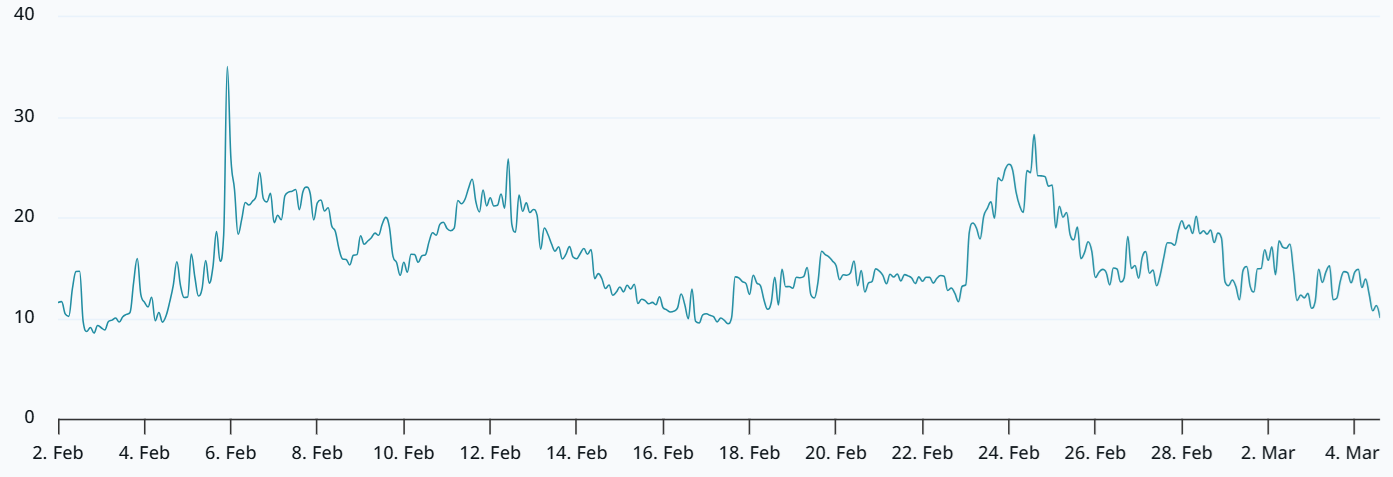
Bitcoin (BTC) surged to a four-week high on Wednesday, potentially clearing a path for a recovery toward the $78,700 monthly close recorded in January. Despite a 22% rally from the $60,000 local bottom on Feb. 6, several onchain and derivatives metrics suggest bears remain comfortable.
Demand for downside protection through Bitcoin options continues to dominate the market.

Put (sell) options recently traded at a 10% premium relative to equivalent call (buy) instruments. In neutral market conditions, this indicator typically ranges between -6% and 6%, a level last observed in mid-January when Bitcoin traded near $95,000.
Professional traders appear to fear further downside, while demand for bullish BTC futures remains stagnant; the annualized premium, or basis rate, currently sits below the neutral 5% threshold.
The weakness in Bitcoin derivatives reflects the month-long consolidation following the 32% crash during the first week of February. However, the lack of conviction from bulls even as prices move above $73,000 suggests a deeper hesitation. This cautious mood likely comes from the fact that a significant portion of holders are still stuck in the red.

Currently, 43% of the supply is held at a loss based on the price coins last moved, according to Glassnode data. This share of holders sustaining losses spiked from 30% when Bitcoin traded at $90,000 in late January. Traders fear that investors sitting on these losses will gradually exit their positions as the price recovers, creating persistent overhead sell pressure that could cap further gains.
Another source of concern stems from the Bitcoin mining sector, which has faced significant pressure due to the exponential growth in artificial intelligence demand. Rising energy costs and declining demand for the Bitcoin blockchain registry have pushed miner profitability toward all-time lows. Several major listed mining firms have pivoted toward AI computing, offloading their Bitcoin holdings in the process.

The Bitcoin Hashprice index, which measures the expected daily value of one terahash per second of hashing power, plummeted to $30 on Tuesday, down from $39 three months ago. Investors fear that miners may transition into net sellers after a prolonged period of accumulation.
Mining companies that previously maintained a Bitcoin strategic reserve are now reportedly eyeing more profitable opportunities in alternative high-performance computing sectors.
Related: MARA exec pushes back on Bitcoin treasury sell-off narrative
Strategy’s $76,000 cost basis could be the turning point for Bitcoin momentum
Strategy (MSTR US) remains the primary example of a Bitcoin-centered balance sheet strategy. After purchasing 720,737 BTC since its initial deployment in August 2020, the company faced scrutiny as Bitcoin dropped below its average acquisition price of approximately $76,000.
Other publicly traded entities, including Metaplanet (3350 JP) and Twenty One Capital (XXI US), have encountered similar valuation challenges during the current bear market conditions.

While Strategy does not face imminent liquidation risks or a lack of cash for interest payments on yield-bearing assets like STRC, bears recognize that prices above the Bitcoin cost basis incentivize stock issuance without diluting current holders.
Essentially, market participants looking to suppress the price have strong incentives to keep Bitcoin pegged below $76,000. Therefore, a recovery toward $78,700 may take longer than expected, though momentum could shift in favor of bulls once that key level is breached.
This article does not contain investment advice or recommendations. Every investment and trading move involves risk, and readers should conduct their own research when making a decision. While we strive to provide accurate and timely information, Cointelegraph does not guarantee the accuracy, completeness, or reliability of any information in this article. This article may contain forward-looking statements that are subject to risks and uncertainties. Cointelegraph will not be liable for any loss or damage arising from your reliance on this information.

error code: 524
This article was originally published as Bitcoin Bulls Rally as Momentum Surges, Still Tough to Top $78K on Crypto Breaking News – your trusted source for crypto news, Bitcoin news, and blockchain updates.

- PAC Fairshake secured early victories in the 2026 U.S. congressional primaries by backing several candidates in key states.
- Jessica Steinmann won nearly 70 percent of the vote in Texas’ 8th District with financial support from Fairshake.
- Fairshake spent 1.5 million dollars opposing Democratic Representative Al Green, forcing his race into a runoff.
- Republican candidates Chris Gober and Trever Nehls also won their Texas primaries with Fairshake support.
- The PAC reported 193 million dollars in cash on hand at the start of the 2026 campaign season.
Crypto-backed political spending shaped several early outcomes in the 2026 U.S. congressional primaries. Fairshake supported multiple candidates in Texas, Arkansas, and North Carolina. The results now position the group to expand its allies after November.
PAC Fairshake Backs Primary Winners in Texas and Beyond
PAC Fairshake supported Jessica Steinmann in Texas’s 8th District, and she won nearly 70% of the vote. State results confirmed her dominant finish in the Republican primary. Federal Election Commission filings show the PAC spent more than $750,000 on her race.
Steinmann previously worked as a Department of Justice lawyer, and President Donald Trump backed her candidacy. Her campaign website states she supports digital assets and blockchain innovation. Fairshake said voters responded to her economic message and focus on emerging technology.
In Texas’s 10th District, Fairshake supported Republican Chris Gober, and he secured more than 50% in a crowded field. Gober founded Lex Politica and focuses on political litigation and government investigations. In the 22nd District, Trever Nehls won 76% of the vote after receiving Fairshake support.
Nehls is an Army veteran and a Trump loyalist, and he seeks to replace his identical twin brother. Both Texas districts lean Republican, and general election prospects appear favorable. Fairshake also supported Representative French Hill in Arkansas, and he won 77% of his primary vote.
Hill chairs the House Financial Services Committee and leads crypto legislation efforts in the House. Fairshake spent more than $400,000 on advertising in his race. In North Carolina, Republican Representative Tim Moore won 83% of the vote with PAC backing.
Texas Runoff Shapes Key Test for Fairshake Strategy
Fairshake also targeted longtime Texas Democrat Al Green in a newly redrawn district. The PAC spent $1.5 million on ads opposing Green. Green trailed pro-blockchain Democrat Christian Menefee, yet neither candidate secured more than half the vote.
Both candidates will now compete in a runoff election. Green has voted against crypto legislation and holds an “F” rating from Stand With Crypto. Menefee supports blockchain policy, and he advanced alongside Green into the next round.
Fairshake stated that its advertisements focus on political messages rather than digital asset policy. The group does not coordinate directly with candidate campaigns. It reported $193 million in cash on hand at the start of the campaign season.
The PAC and its affiliates rank among the largest political spenders in the country. During the 2024 cycle, Fairshake supported 53 candidates who now serve in Congress. The latest primary victories add to that list as the 2026 general election approaches.


South Korea’s stock market suffered one of its fastest declines in history this week, with the Kospi falling about 20% in two trading days, as geopolitical tensions have, for the moment, shattered what might be termed a speculative bubble in popular AI-related names.
The rapid decline followed months of aggressive buying by retail investors that had sent the Kospi — dominated by Samsung and SK Hynix — higher by nearly 180% in about 10 months.
The timing has drawn attention to activity in Korea’s crypto markets, where trading volumes have begun to climb again.
South Korea is one of the few markets where retail traders play a major role in both equities and digital assets. Analysts have long observed that local traders often rotate between speculative markets, rather than exiting risk assets entirely.
In November, a CoinDesk analysis described what was dubbed the “Great Korean Pivot,” noting trading volumes on domestic crypto exchanges fell as retail traders moved into technology stocks tied to artificial intelligence.
That equity rally, however, has now stalled or reversed.
When one market cools, South Korean trader attention frequently shifts to another. That’s perhaps benefiting crypto, which has seen bitcoin climb 7% in the past 24 hours to above $73,000. Ether (ETH), solana (SOL) and XRP (XRP) are up similar amounts.
Retail signals remain moderate
While crypto trading volumes have moved higher, for the moment, at least, activity does not yet resemble the frenzied speculative surges seen in earlier Korean market cycles.
One key metric is the Kimchi premium, which measures the difference between bitcoin prices on Korean exchanges and global markets. When domestic demand surges, bitcoin often trades at a noticeable premium in Korean won markets.
That premium currently remains modest, with data from CryptoQuant showing the Korea Premium Index near 1%, well below levels seen during previous retail-driven rallies. There is, however, a modest uptick in retail sentiment as the Kimchi premium had dipped into negative territory in mid-January.

World Cup playoff plunged into doubt by Iran war as nation release worrying statement

Matthew V. Blackwell on Discipline, Family, and Long-Term Thinking

Eric Trump, World Liberty co-founder, calls banks ‘anti-American’ over stablecoin fight


-

 Politics6 days ago
ITV enters Gaza with IDF amid ongoing genocide
-

 Politics2 days ago
Alan Cumming Brands Baftas Ceremony A ‘Triggering S**tshow’
-

 Fashion5 days ago
Weekend Open Thread: Iris Top
-

 NewsBeat7 days ago
Cuba says its forces have killed four on US-registered speedboat | World News
-

 Tech4 days ago
Unihertz’s Titan 2 Elite Arrives Just as Physical Keyboards Refuse to Fade Away
-
Sports5 days ago
The Vikings Need a Duck
-
 NewsBeat4 days ago
Dubai flights cancelled as Brit told airspace closed ’10 minutes after boarding’
-

 NewsBeat3 days ago
‘Significant’ damage to boarded-up Horden house after fire
-
 NewsBeat4 days ago
The empty pub on busy Cambridge road that has been boarded up for years
-

 NewsBeat4 days ago
Abusive parents will now be treated like sex offenders and placed on a ‘child cruelty register’ | News UK
-

 Entertainment3 days ago
Baby Gear Guide: Strollers, Car Seats
-

 Business7 days ago
Discord Pushes Implementation of Global Age Checks to Second Half of 2026
-
 Tech5 days ago
NASA Reveals Identity of Astronaut Who Suffered Medical Incident Aboard ISS
-

 Business6 days ago
Only 4% of women globally reside in countries that offer almost complete legal equality
-
 NewsBeat4 days ago
Emirates confirms when flights will resume amid Dubai airport chaos
-
Politics4 days ago
FIFA hypocrisy after Israel murder over 400 Palestinian footballers
-

 Crypto World6 days ago
From Crypto Treasury to RWA: ETHZilla Retreats and Relaunches as Forum Markets on Nasdaq
-

 NewsBeat2 days ago
Is it acceptable to comment on the appearance of strangers in public? Readers discuss
-

 Tech4 days ago
Viral ad shows aged Musk, Altman, and Bezos using jobless humans to power AI
-

 Business6 days ago
World Economic Forum boss Borge Brende quits after review of Jeffrey Epstein links