








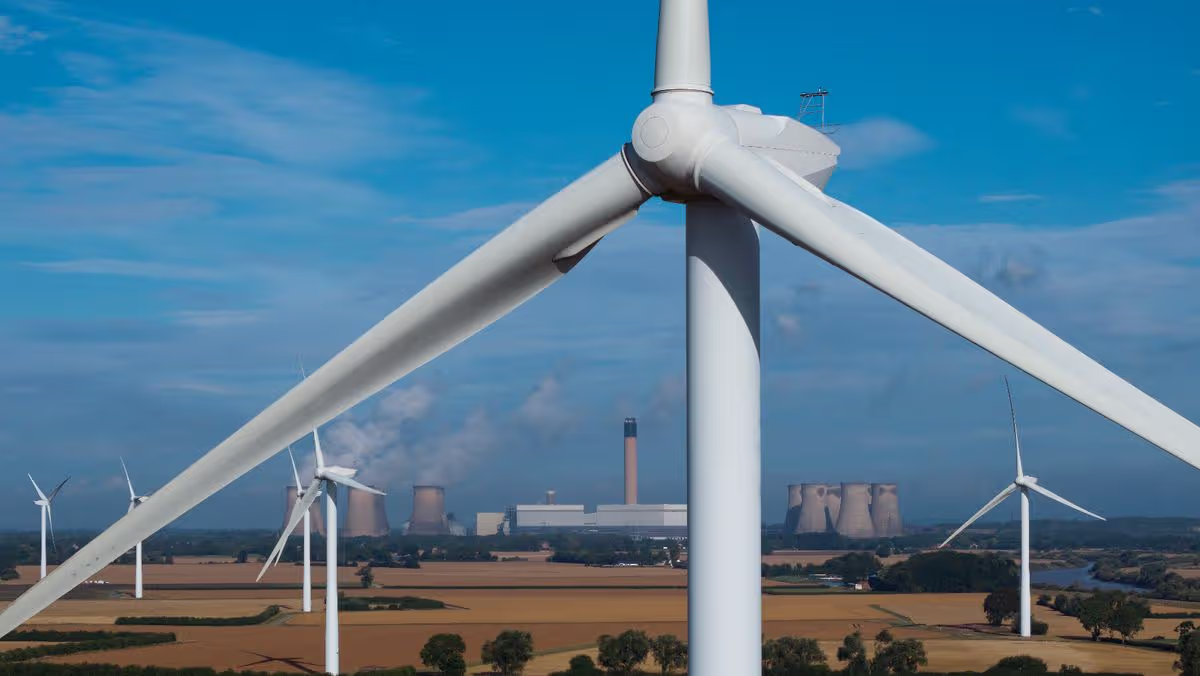
A new report from the Energy and Climate Intelligence Unit says Wales’ pipeline for renewables is less developed than in England and Scotland

Wales needs more renewable projects to ensure it is not depend on electricity from England says the ECIU(Image: Getty Images)
Wales is no longer a net exporter of electricity and unless it addresses a stalling in renewable projects is at risk of becoming more dependent on imported gas and electricity from England, a new analysis has found.
New research from the not-for-profit Energy and Climate Intelligence Unit (ECIU) comes as the conflict in the Middle East has sent gas prices soaring to a three-year high with independent analysts Cornwall Insight estimating that the average household energy bill could rise by nearly £300 when the energy price cap is revised in July.
The Welsh Government has set a target of meeting 100% of its electricity demand from renewable sources by 2035. The report shows that renewable generation has grown nearly eightfold since 2024 in Wales and now meets around a third of Welsh electricity demand.
READ MORE: Creo Medical agree sale of its manufacturing operationREAD MORE: The transformative impact of the South Wales Metro rail project
However, it highlights that growth has stalled since 2019 and experts have warned that Wales’s renewables planning pipeline, although still substantial, is smaller and less developed than in England and Scotland. Wales has lost its status as being a net electricity exporter – down from a peak of over 21 TWh (terawatt hour) in 2016 to near zero in 2024. Last year Wales was a net importer from England for the first time.
The ECUI report also shows that electricity generation has fallen by almost 50% from its 2016 peak, as growth in renewable capacity has not kept pace with the drop in generation from coal and nuclear. Gas now accounts for 58% of Welsh generation – a greater share than any other UK nation – leaving Welsh generators and their downstream customers across the UK heavily exposed to volatile international fossil fuel markets.
This recent slow progress in scaling up renewables capacity, coupled with a rising demand for electricity, which is forecast to double by 2050, means that renewables’ share of generation is currently forecast to fall, according to ECIU projections. This risks leaving Wales more dependent on gas generation, which already accounts for 58% of Wales’s power output – more than any other nation in the UK.
In the UK, the cost of gas dictates domestic electricity prices the vast majority (85%) of the time. As the price of gas is itself largely set by international markets, the ECIU said this leaves British consumers acutely vulnerable to global price shocks – with the IMF warning that the UK will be “especially exposed” to the fallout from the war in Iran as a result of its dependence on gas-powered generation.
The report says that accelerating the deployment of new renewables is essential to squeezing gas off the grid and shielding consumers from volatility in international markets – a position supported by organisations such as the International Energy Agency and Energy Crisis Commission.
Laura Dunn, senior associate at the ECIU, said: “The cost-of-living is voters’ number one priority heading into the Senedd elections, with growing fears of a repeat of the energy crisis which followed the Russian invasion of Ukraine. In an increasingly uncertain world, the best way to offer Welsh households and industry the long-term certainty they need is by untethering the cost of electricity from unstable international gas markets.
Wales has seen significant progress in rolling out new renewables and, across the UK, renewables are already helping to squeeze gas off the grid. With demand for electricity set to grow as homes and industry electrify, more action is urgently needed to speed up the pace at which new renewables are coming online if the Welsh government is to meet its clean energy targets and prevent Wales becoming more dependent on imported electricity”.
The crisis in oil and gas markets has accentuated concerns about the UK’s dependence on imported energy, with last year’s National Security Assessment stating that the UK needed to reduce its energy reliance on other nations. According to polling conducted by More in Common on behalf of the ECIU, seven in ten Welsh voters (70%) expressed concerned about Wales being dependent on energy imported from the United States and nearly as many (67%) about Wales being reliant on energy imported from the rest of the world.
In recent years, the United States has become the UK’s largest supplier of liquefied natural Gas, supplying 68% of UK imports. This has led experts to warn of the possibility of the Trump administration leveraging energy supplies to extract policy concessions from European governments.

















































You must be logged in to post a comment Login