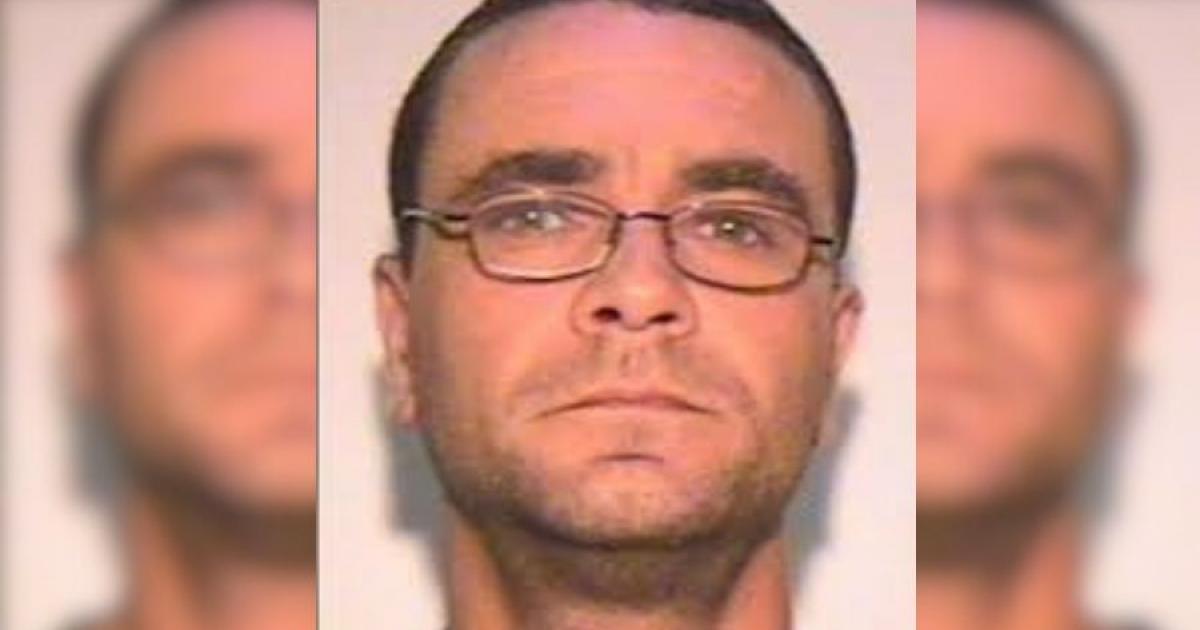
Paul Quinn, 51, is accused of raping the woman at a remote embankment near the M61 motorway bridge between Little Hulton and Farnworth back in 2003.
A trial at Manchester Crown Court was told Quinn had avoided justice, and that instead, security guard Andrew Malkinson went to prison for 17 years for a crime he had not committed.
John Price KC, prosecuting, said: “It is the prosecution’s case before you, as you may have realised, that Andrew Malkinson was the victim of a most terrible miscarriage of justice, one of the worst there has been.”
He told the jury of seven women and five men that DNA evidence showed that it was Quinn and not Mr Malkinson who raped the woman back in 2003.
![]() The trial opened at Manchester Crown Court (Image: Anthony Moss)
The trial opened at Manchester Crown Court (Image: Anthony Moss)
Quinn, who wore a black jumper and white shirt in the dock, listened in silence as Mr Price opened the case.
Mr Price said the real rapist was a stranger to the victim when he attacked on the morning of Saturday, July 19, 2003, by dragging her from Cleggs Lane down the embankment.
She was found around an hour afterwards by a witness from Farnworth who had been out walking his dog before work, with blood on her face and her clothing in a state of “disarray”.
Mr Price said testing showed the woman had been raped twice, after having been strangled until she was unconscious and beaten about the face.
The witness took the victim to his home in Farnworth and called the police straight away, and she was taken to Royal Bolton Hospital.
The jury was shown images of the injuries to the left side of the woman’s face, which the prosecution says Quinn had inflicted on her.
Mr Price said that her attacker appeared to have fractured the woman’s left cheekbone after she was already unconscious.
He told the jury they would later have to think for themselves about why he had done this.
Speaking to a police officer, PC Deborah Davidson, she described her attacker as a “Gypsy type, muscular, dark hair, off-white shirt, hanging off.”
In a formal statement, she described her attacker as “male, white, olive-skinned” with a “shiny, hairless chest” and dark brown to black, thick hair.
She said his accent was “local to Bolton with a slight trace of another accent”.
A later witness statement the woman gave to police said that the attacker had told her he had a gun
Her statement said: “As I got towards the end of the railings where the houses start, I heard a male voice coming from the wooded area. ‘I think you should come into the bushes, I have a gun pointed at your head’.
“The voice sounded very close and was a local accent.”
She said that as she walked away to the motorway bridge, she felt an “almighty force” behind her and remembered sliding down the grass embankment.
The jury was shown an e-fit image published back in July 2003 of a man based on the description the woman had given.
Mr Price said the now 51-year-old Quinn would have been 29 years old at the time of the attack and showed the jury a series of photographs taken of him between 1994 and 2006.
He said Quinn “strenuously” denied being the rapist when he was finally arrested and interviewed by the police in December 2022, and said he did not know the woman.
Mr Price said it was agreed by both the victim and defendant that “she was a stranger to him, and he was a stranger to her”.
But the prosecutor told the jury that back in 2003, Mr Malkinson, then a security guard at the Ellesmere Shopping Centre in Walkden, was the man arrested in connection with the crime.
This was after two police officers, who had seen Mr Malkinson earlier that summer, felt he matched a description of the attacker given to them by Detective Inspector Joanne Rawlinson.
Mr Malkinson was then 37 years old and was “white with very noticeable tan, olive skin”.
But the victim had previously told police she had managed to scratch the right side of her attacker’s face and believed he should have a mark showing this.
Despite Mr Malkinson appearing to “strikingly” match the description the victim gave when police officers spoke to him at the shopping centre, he had no such scratch mark.
At the time, Mr Malkinson had recently started staying at a flat with a fellow worker on Aspinall Grove, Little Hulton, not far from where the attack had happened.
Mr Price told the jury that all the indications showed the woman had been assaulted by a “local man, who knew the area”.
Mr Malkinson was found at a Salvation Army hostel in Grimsby after having told his flatmate he had “had enough” with troubles with people he used to live with and was moving to the Netherlands.
The jury heard how this “sudden departure” only added to the suspicion around him, and he was arrested and taken to Crescent Police Station in Salford.
Mr Price said both the victim herself and another witness provided very detailed descriptions of the attacker and the “conspicuous” way he was dressed with an open white shirt.
He said that the location where the victim was “swept down the embankment” just before she crossed over to Farnworth showed he was “not only a local man”.
Mr Price said: “He was also one who knew of this obscure location, a man with prior knowledge of its existence and accessibility, someone who, as he followed her, knew she was soon going to reach it and so timed his attack to coincide with her passing close to somewhere he knew he might easily, forcibly and swiftly take her out of sight and away from the road.”
The prosecutor told the jury how both the victim and two witnesses each picked out images of Mr Malkinson and identified him as the attacker when shown by the police.
Mr Malkinson was tried for rape at Manchester Crown Court in 2004, found guilty and ultimately spent more than 17 years in prison before his release in December 2020.
Mr Price said the identification of him made by the witnesses was “honestly made” but was mistaken.
He said the further evidence, including DNA evidence, “proves” that Quinn and not Mr Malkinson was the real rapist.
Mr Price said there was also further evidence to show how the attacker’s appearance more closely matched that of Quinn’s.
He told the jury that this evidence included “none of the intrinsic weaknesses which existed in the evidence used, wrongly, to convict the innocent Andrew Malkinson”.
Mr Price said the Quinn’s defence would invite the jury to consider whether Mr Malkinson was in fact the real rapist and that it was up to the prosecution to prove it was Quinn.
Quinn, of Whipton Barton Road, Exeter, denies two counts of rape, one count of attempt to strangle, and one count of assault, intending to cause grievous bodily harm.
The trial, before Mr Justice Robert Bright, continues.