

Business
Cheniere, Exxon, Chevron Stocks Rise Again. The Energy Shock Is Upending Markets.



Stockbrokers.com director of investor research Jessica Inskip discusses investor overthinking, Apple’s ChatGPT moment and CME’s prediction market play on ‘Making Money.’
Apple is expanding its product lineup with a lower-priced iPhone.
The California-based tech giant on Monday introduced the iPhone 17e, a more affordable addition to its iPhone 17 family, starting at $599. The device is available in black, white and soft pink.
The iPhone 17e starts with 256GB of storage, doubling the base capacity of the previous generation at the same starting price.
APPLE IMPLEMENTING AGE VERIFICATION TOOL TO ENSURE USERS ARE 18 AND UP FOR SOME APPS

A view of the new Apple iPhone 17e, which starts at $599. (Apple Inc.)
The device runs on Apple’s newest A19 chip and features the company’s new C1X modem, which Apple says improves battery life. Apple says the new 48MP Fusion camera also “has the capabilities of two advanced cameras in one.”
The announcement comes as the iPhone 17 performed strongly in the fiscal first quarter of 2026, with sales jumping nearly 25%. CEO Tim Cook described the results as “staggering” in an interview with FOX Business.
Apple pulled in $143.8 billion in revenue in its fiscal first quarter, up 16% from the prior year. Cook said it was a record sales quarter for North America and in China, where it has lost market share to local competitors in recent years.
At the same time, Apple is raising prices on several MacBook Air and MacBook Pro models unveiled Tuesday featuring the company’s latest M5 chips. The price hikes come amid a global memory chip shortage dubbed “RAMageddon,” led by the rise in demand for artificial intelligence.
APPLE EXPANDS US MANUFACTURING WITH TEXAS PUSH

An image of a MacBook Air with the M5 chip. (Apple Inc.)
The 13-inch MacBook Air now starts at $1,099, up from $999, while the 15-inch version begins at $1,299, up from $1,199. Apple is doubling base storage to 512GB on both models, according to Bloomberg.
Prices are also increasing across the MacBook Pro lineup. The 14-inch model with the M5 Pro chip now costs $2,199, up from $1,999, and the 16-inch version is rising to $2,699, up from $2,499.
The 14-inch MacBook Pro with the M5 Max chip starts at $3,599 while the 16-inch version begins at $3,899 – both up $400. The standard M5 MacBook Pro also saw a price hike, rising to $1,699, Bloomberg reported.
Apple also unveiled the MacBook Neo on Wednesday, calling it its most affordable laptop ever. The 13-inch device starts at $599 – or $499 for education customers.
APPLE SEES BIGGEST SALES JUMP IN 4 YEARS, POWERED BY ‘STAGGERING’ IPHONE DEMAND

Apple employees help customers at the Fifth Avenue Apple Store on new product launch day on Sept. 19, 2025, in New York City. (Michael M. Santiago/Getty Images)
Apple’s Mac division recorded revenue of $8.39 billion in sales during the first fiscal quarter, down nearly 7% from the same period a year earlier, and missing analysts’ estimate of $9 billion.
GET FOX BUSINESS ON THE GO BY CLICKING HERE
FOX Business’ Susan Li contributed to this report.

The escalation of conflict between the United States, Israel, and Iran has led to the closure of critical Middle Eastern aviation hubs, causing airfare between Asia and Europe to skyrocket. As travelers avoid traditional transit points like Dubai, airlines offering direct flights or alternative routes are experiencing a surge in demand and fully booked cabins. While some carriers are seeing short-term gains from this shift, the necessity of longer flight paths and rising fuel costs present significant challenges to long-term industry profitability and global connectivity.
Key Points
- Major Middle Eastern transit hubs, including Dubai International Airport, have remained closed for multiple days, severely disrupting capacity on routes between Asia, Australia, and Europe.
- Thai Airways and other carriers offering non-stop services to Europe report that flights are fully booked as passengers seek to bypass the conflict zone.
- Ticket prices have reached extreme levels, with one-way economy fares from Bangkok to London exceeding 71,000 baht ($2,265) and seats on many airlines remaining unavailable for immediate travel.
- Airlines are forced to utilize longer bypass routes through the Caucasus, Afghanistan, or North Africa, resulting in increased flight times and higher fuel consumption.
- Carriers such as Cathay Pacific, Singapore Airlines, and Eva Airways are seeing a temporary influx of passengers shifting away from Gulf-based airlines like Emirates and Qatar Airways.
Travel agencies report a massive spike in emergency assistance calls, with a 75% increase noted by Australia’s Flight Centre as travelers rebook through alternative hubs in China, Singapore, and North America. Flight prices between Bangkok and London have surged significantly due to the closure of major Middle Eastern airspace and hubs following the outbreak of war between the U.S., Israel, and Iran. This regional conflict has forced airlines to bypass traditional transit points like Dubai and Doha, leading to a massive capacity reduction on popular Asia-Europe routes.
The surge is particularly noticeable with Thai Airways, which reports fully booked flights to Europe for several days as travelers steer clear of Middle Eastern transit routes. On the Bangkok-to-London route, one-way economy tickets recently soared to 71,190 baht ($2,265) for mid-March travel, compared to the more typical fares of 27,045 baht later in the month. Adding to cost concerns, Airports of Thailand (AoT) has announced a 53% increase in the international passenger service charge, raising it to 1,120 baht effective June 2026—a move critics warn could further drive up airfares.
Industry experts warn that the combination of high oil prices and the loss of Middle Eastern airspace could undermine airline profitability and lead to permanently higher fares.
Degradation of Airline Profitability
High operational costs pose a direct threat to the financial stability of carriers. Subhas Menon, head of the Association of Asia Pacific Airlines, warns that if major regions like Europe can only be served at such high costs, airline profitability will be undermined. The necessity of avoiding the Middle East—described as being “out of bounds”—forces airlines to utilize more expensive, less efficient flight paths.
Sustained Increases in Airfares
The combination of extended flight times and increased fuel consumption is expected to lead to higher ticket prices over the longer term. Current data shows significant surges, such as:
- Thai Airways: Bangkok to London one-way economy fares reaching 71,190 baht ($2,265).
- Air China: Near-term departures from Beijing to London only offering business class seats for 50,490 yuan ($7,350), well above the typical return economy price of 10,000 yuan.
- Qantas: Sydney to London routes via traditional stops are largely unavailable, with remaining seats priced at A$3,129 (US$2,220).
As oil prices spike, these increased costs are likely to be passed on to passengers indefinitely if the restrictions remain.
Loss of Global Connectivity
The industry faces a significant risk to its infrastructure and network efficiency. Connectivity is described as the ultimate “price to pay” for prolonged instability. The closure of major hubs like Dubai—which normally manages over 1,000 flights per day—slashes capacity on high-market-share routes, such as those connecting Australia to Europe. If these transit points remain closed, the seamless movement of global traffic is compromised.
Increased Operational and Fuel Costs
To bypass restricted airspace, airlines must take longer routes either to the north (via the Caucasus and Afghanistan) or to the south (via Egypt, Saudi Arabia, and Oman). These detours significantly increase fuel usage. When paired with spiked oil prices, the cost of operating these essential routes becomes a heavy economic burden for carriers that cannot offer direct services.
Market Share Volatility
While the crisis creates “short-term gains” for specific carriers—such as Cathay Pacific, Singapore Airlines, and Turkish Airlines—as passengers shift toward non-stop services or alternative hubs, the broader industry remains unstable. Gulf-based carriers like Emirates and Qatar Airways face losing significant market share as travelers actively avoid transiting through the conflict zone.
Other People are Reading

Matthew V. Blackwell grew up in Connecticut as the oldest of four siblings in a close-knit family that believed in hard work and personal responsibility. From an early age, he saw what it meant to build something from the ground up. That mindset shaped the way he approaches life today.
He graduated from high school with honors and went on to earn a degree in Industrial Engineering from Union College. His career began in data analytics before he stepped into operations leadership within his family’s business. Later, he took a leap and launched his own electric bike company. It was a bold move filled with long days and real risk. When the market changed, he adjusted. He learned. He kept moving forward.
Today, Matthew leads Woodbridge Farms, a growing e-commerce company focused on steady growth and strong customer relationships. He also manages SeaSide Properties, overseeing a portfolio of real estate investments. His path has included both wins and setbacks, but he does not dwell on either for long.
At home, Matt is not the kind of dad who watches from a distance. He is in it. His weeks move from Scout meetings to dance recitals, from swim meets to MMA competitions, cheering just as hard at the end as he did at the start.
For Matt, success is not flashy. It is steady. It is family. And it is showing up every single day.
Q: When you think about inspiration, where does it start for you?
For me, it starts with family. I grew up in Connecticut as the oldest of four. Being the oldest meant I was always a few steps ahead—first to try things, first to mess up, first to figure it out. That sticks with you. I learned early that people are watching what you do more than what you say.
I also watched a business grow from the inside. When you see something built over time, you understand that success is not one big moment. It’s small decisions made daily.
Q: You’ve had both wins and setbacks in business. How have those shaped you?
I’ve seen both sides. I helped lead operations in a family business for years. Then I stepped out and started my own electric bike company, CyclElectric. We sold conversion kits and pre-built bikes. It was exciting at first. I believed in the product.
But competition from overseas ramped up. Margins shrank. Sales became inconsistent. Eventually, I had to shut it down.
That experience changed me. It taught me that passion is important, but so is timing and market reality. I learned to read numbers differently after that. I also learned that closing a company is not a failure. It’s data. It tells you what works and what doesn’t.
Q: You’ve had personal challenges as well. How did you move forward from those?
Like most people, I’ve had seasons that tested me. There were moments where I had to confront mistakes, accept responsibility, and decide what kind of future I wanted to build. Those experiences forced me to slow down and reflect in a way I hadn’t before.
Instead of seeing that time as defining me, I chose to treat it as a turning point. I read more. I studied business and leadership more seriously. I wrote out clear goals—not just financial ones, but personal standards for how I wanted to operate each day. I became more intentional.
Challenges can either harden you or refine you. I chose to let mine refine me. They gave me clarity about what matters most—my family, my integrity, and building something sustainable over time.
Q: What did rebuilding look like in practical terms?
It looked like structure. I returned to operations leadership roles. I focused on process improvement and cost controls. I paid attention to details I may have brushed past before.
When I started Woodbridge Farms in 2023, I approached it differently from CyclElectric. I didn’t chase hype. I focused on steady demand, supplier relationships, and cash flow discipline. Boring things. But boring builds stability.
At the same time, I began managing our family’s real estate portfolio through SeaSide Properties. Real estate forces patience. You think in decades, not quarters.
Q: How do you inspire confidence in your ideas now?
I don’t try to inspire with big speeches. I show numbers. I show consistency.
If I tell someone we can grow revenue 10%, I’ll explain exactly how. Here’s the supplier shift. Here’s the margin change. Here’s the marketing test. Confidence comes from preparation.
At home, it’s similar. When I built a tree fort for my kids, I didn’t just start hammering boards. I drew it out. Measured twice. Planned weight loads. That’s how I approach business now. Creativity backed by structure.
Q: You’re very hands-on at home. Does that connect to how you lead?
Absolutely. I’ve built a chicken coop. Installed solar panels and a battery system so parts of our house run off the grid. I manage raised garden beds and a small food forest.
Those projects remind me that results take time. You can’t rush a tomato plant. You can’t shortcut wiring without consequences. You do the work correctly, and you wait.
Leadership is similar. You set systems. You nurture people. You adjust when something isn’t producing.
Q: You also race cars. That seems different from gardening.
It’s different on the surface. But racing my older BMW M3 requires focus, discipline, and self-control. If you overcorrect, you spin out. Business can be the same. You don’t react emotionally. You respond strategically.
Racing also clears my head. It reminds me that calculated risk is healthy. Reckless risk is not.
Q: What would you tell someone who doubts themselves?
The world doesn’t pause because you feel insecure. I’ve learned that firsthand. There were days I didn’t feel ready to lead, to rebuild, to show up publicly again. But you move anyway.
Success isn’t one-dimensional. It rises and falls. For me, success is family first. A career is a tool to support that. When you define success clearly, decisions get easier.
You won’t avoid mistakes. I haven’t. But you can decide what you do next. And that decision, repeated over time, is what changes your life.
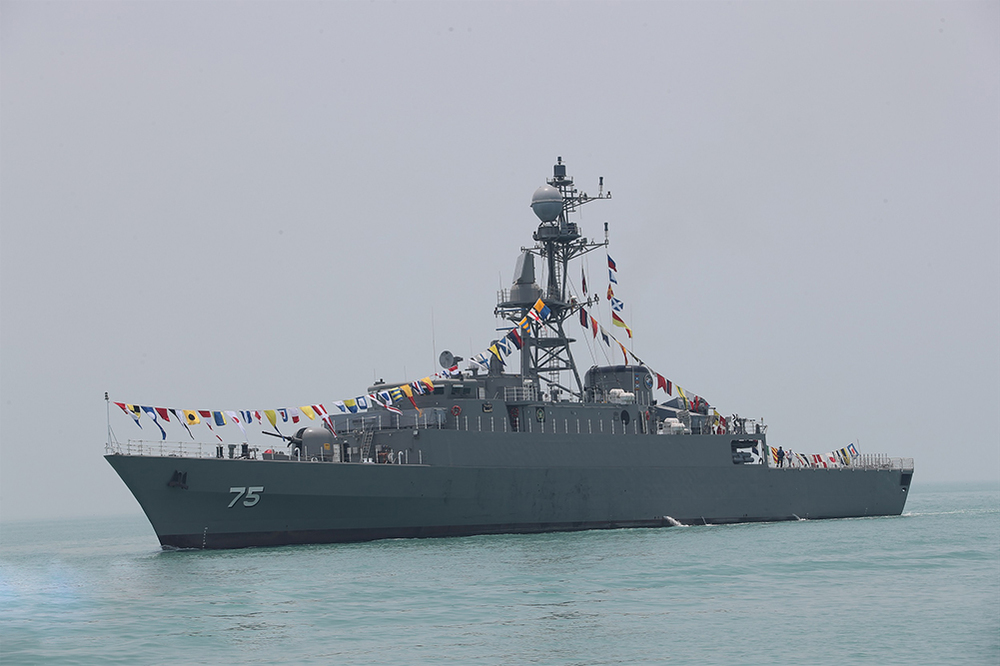
A U.S. Navy submarine fired a torpedo that sank an Iranian warship in the Indian Ocean on Tuesday night, Defense Secretary Pete Hegseth announced Wednesday, marking the first sinking of an enemy combatant vessel by an American submarine since World War II and dramatically widening the naval dimension of the ongoing U.S.-Israel campaign against Iran.

Hegseth, speaking at a Pentagon briefing, described the strike as targeting “an Iranian warship that thought it was safe in international waters.” He said the vessel was hit with a single torpedo, resulting in a “quiet death” for the ship. “Instead, it was sunk by a torpedo,” Hegseth stated, emphasizing the precision and reach of U.S. forces. The Pentagon released declassified footage showing the underwater explosion and the ship’s rapid sinking, though details on the specific submarine or torpedo model remained classified.
The targeted vessel was identified as the IRIS Dena, a Moudge-class frigate of the Iranian Navy’s Southern Fleet. The ship, with a crew of approximately 180, had been returning to Iran after participating in the MILAN 2026 multinational naval exercise in Visakhapatnam, India. Sri Lankan authorities reported the frigate issued a distress call early Wednesday off the southern coast near Galle. The Sri Lankan navy rescued 32 survivors, many seriously injured, and transported them to local hospitals. Reports varied on casualties: Sri Lankan officials cited around 140 missing, while Reuters and other sources reported at least 80 killed, with dozens wounded. Iranian state media has not yet confirmed the loss or casualty figures.
The incident occurred in international waters in the Indian Ocean, far from the Persian Gulf theater where most naval engagements have unfolded since the conflict began Feb. 28, 2026. U.S. officials framed the strike as part of broader efforts to neutralize Iran’s naval capabilities and prevent retaliatory attacks on international shipping or allied forces. Hegseth declared the Iranian navy “ineffective, decimated, destroyed,” adding that it “rests at the bottom of the Persian Gulf” after earlier U.S. strikes sank multiple vessels, including frigates like Jamaran-class ships and the drone carrier Shahid Bagheri.
The sinking represents a significant escalation. It is the first U.S. submarine torpedo kill against an enemy warship in 81 years, last occurring during World War II against Japanese and German vessels. The attack extends U.S. operations beyond the Middle East, targeting Iranian assets in distant waters amid Iran’s attempts to project power and disrupt global trade routes.
The conflict, now in its sixth day, has seen intense joint U.S.-Israeli airstrikes on Iranian military infrastructure, missile sites, command centers, and symbols of regime power in Tehran and elsewhere. Iran has responded with missile and drone barrages targeting U.S. bases in Qatar, Bahrain, Kuwait, and the UAE, as well as Israel and allies. Tehran has vowed to destroy regional military and economic infrastructure, while disrupting shipping through the Strait of Hormuz with threats, drone attacks, and unmanned surface vessels.
U.S. Central Command reported sinking 17 Iranian vessels overall, including corvettes, frigates, and support ships, in the Gulf of Oman and Persian Gulf since operations began. President Donald Trump announced “major combat operations” on Feb. 28, with more than 1,000 targets struck in the opening days. The campaign aims to degrade Iran’s retaliatory capabilities, including ballistic missiles and naval forces.
Sri Lanka’s foreign minister confirmed the rescue operation but provided no comment on responsibility for the sinking. Maritime security sources noted the area sees regular Iranian naval transits, but the strike’s location surprised analysts given its distance from primary conflict zones.
The incident has intensified global concerns over oil supply routes and shipping safety. Oil prices remained elevated Wednesday, with Brent crude near $84 per barrel amid fears of further disruptions. Markets reacted to the widening naval theater, though some analysts viewed the strike as targeted rather than a prelude to broader Indian Ocean operations.
Iran has not issued an official response to the sinking as of Wednesday afternoon, but state media focused on domestic resilience and vows of retaliation. The loss of the IRIS Dena, a relatively modern frigate equipped for anti-ship and air defense roles, further weakens Iran’s surface fleet, already battered by strikes on bases like Bandar Abbas.
Hegseth’s announcement underscored U.S. resolve. “The Iranian navy is no more,” he said, framing the action as evidence of America’s ability to project power globally. No U.S. casualties were reported in the operation.
As the war expands, focus remains on containing escalation while degrading Iran’s offensive tools. Diplomatic channels, including indirect contacts, continue amid calls for de-escalation, but both sides show no immediate signs of backing down.
The sinking of the IRIS Dena highlights the conflict’s naval reach and the risks to Iranian forces operating far from home waters. Rescue efforts by Sri Lanka continue, with hopes fading for additional survivors as search operations persist.

Q4: 2026-02-25 Earnings Summary
EPS of $2.33 beats by $0.47
| Revenue of $973.54M (17.32% Y/Y) beats by $75.81M

Seeking Alpha’s transcripts team is responsible for the development of all of our transcript-related projects. We currently publish thousands of quarterly earnings calls per quarter on our site and are continuing to grow and expand our coverage. The purpose of this profile is to allow us to share with our readers new transcript-related developments. Thanks, SA Transcripts Team


Financial Serenity is a financial analysis and quantitative research column with a particular focus on the asset management sector. It is actively managed by Tommaso Scarpellini, a seasoned financial researcher and data analyst with proven experience in banking and financial analytics platforms. This initiative aims to provide an in-depth analysis of the dynamics driving the asset management market. On Seeking Alpha, we combine insights from rigorous data analysis with actionable opinions and ratings on ETFs and other trending instruments in the asset management space. Our mission is to deliver valuable, data-driven perspectives to help investors make informed decisions in this ever-evolving market.
Analyst’s Disclosure: I/we have no stock, option or similar derivative position in any of the companies mentioned, and no plans to initiate any such positions within the next 72 hours. I wrote this article myself, and it expresses my own opinions. I am not receiving compensation for it (other than from Seeking Alpha). I have no business relationship with any company whose stock is mentioned in this article.
The author expresses only personal opinions and does not provide financial advice. The content is for informational purposes only and should not be considered as investment recommendations. The author assumes no responsibility for any investment decisions made based on this article. Always conduct your own research or consult with a financial advisor before making any investment choices. The author makes no guarantees regarding the data, and the user agrees that the author shall not be held liable for the user’s use of the data.
Seeking Alpha’s Disclosure: Past performance is no guarantee of future results. No recommendation or advice is being given as to whether any investment is suitable for a particular investor. Any views or opinions expressed above may not reflect those of Seeking Alpha as a whole. Seeking Alpha is not a licensed securities dealer, broker or US investment adviser or investment bank. Our analysts are third party authors that include both professional investors and individual investors who may not be licensed or certified by any institute or regulatory body.

After years of anticipation and multiple delays, Pearl Abyss has confirmed “Crimson Desert” will launch worldwide on March 19, 2026, across PlayStation 5, Xbox Series X|S, PC via Steam, and macOS — marking the South Korean studio’s ambitious entry into the single-player open-world action-adventure genre.

The game goes live at 22:00 UTC (10 p.m. UTC), translating to 6 p.m. ET / 3 p.m. PT in North America, 11 p.m. CET in Europe, and 7 a.m. KST March 20 in Asia — a simultaneous rollout designed to unite players in the vast lands of Pywel from day one. Pre-downloads begin March 17, with review embargo lifting March 18, allowing critics to weigh in just before gates open.
Pearl Abyss announced the firm date in September 2025 during Sony’s State of Play, following a January 2026 “gone gold” milestone that locked in production. Originally revealed at Korea’s G-Star 2019 as a prequel to the studio’s hit MMORPG “Black Desert Online,” the title evolved into a standalone narrative-driven experience, shedding multiplayer elements for a focused solo campaign.
Players step into the boots of Kliff, a battle-hardened mercenary of the Greymane faction, resurrected after a brutal ambush by rivals the Black Bears. Tasked with rebuilding his crew amid civil war and otherworldly threats from the Abyss — a mystical realm of floating islands and ancient tech — Kliff navigates Pywel’s unforgiving landscapes, forging alliances, managing resources, and unleashing visceral combat.
Recent hands-on previews paint a picture of a “maximalist” open world rivaling “The Witcher 3” and “Red Dead Redemption 2” in density. IGN’s final preview highlighted quirky side quests like chimney cleaning or sheep rescues, faction missions for loot, and a lived-in feel with interactive NPCs — greet or rob them at your peril. Combat shines as “brutal and intuitive,” blending swordplay, parries, grabs, and Abyss-fueled powers like force manipulation for puzzles and aerial takedowns.
PlayStation Blog’s four-hour session in starter region Hernand emphasized liberation mechanics: clear outlaw camps to unlock fishing, trading, and puzzles. Exploration rewards abound — climb ruins, glide with stamina-based tools, summon horses — across biomes from bustling towns to Abyss floating isles. DualSense haptics amplify clashes, adaptive triggers tense bowstrings, and PS5 Pro optimizations promise 4K ray-traced glory.
No rigid classes: learn skills by observation, even mid-boss, swapping weapons from swords to spears. Party members like tanky berserker Oongka add variety, while Abyss Artifacts grant temporary magic edges against overwhelming foes. Previews praise the scale — “enormous” yet seamless — but note menu complexity may overwhelm newcomers.
Three editions cater to fans: Standard (full game, ~$60-70) includes pre-order Khaled Shield; Deluxe adds SteelBook, map, pins, patches, and cosmetics like Balgran Shield, Kairos Plate Set, Exclaire Horse Tack (~$100+); Collector’s Edition bundles a 17x11x10 diorama, Ultimate Pack weapons (Tormented Soul Bow, etc.), and more — limited stock flying off shelves. PS5 pre-orders snag exclusive Grotevant Plate armor set. Black Desert players get crossover bonuses.
Pearl Abyss CEO D.J. Kim hailed the milestone: “The fight for Pywel begins.” Marketing director dismissed console performance jitters — “I’m sick of repeating myself, we’re not hiding anything” — as Digital Foundry preps launch analysis.
Social buzz peaks: X posts hype the “Skyrim successor” potential, though some eye optimization. Pre-orders surge on Steam, PlayStation Store; physical copies via retailers like Amazon.
From 2020 target to 2026 reality, “Crimson Desert” embodies Pearl Abyss’ evolution post-“Black Desert” success. With no microtransactions in sight, it bets on depth over live-service grind. As March 19 nears — two weeks away — analysts forecast strong sales in a crowded RPG field alongside “WWE 2K26,” “Life is Strange: Reunion.”
Will Pywel captivate? Previews suggest yes: a “grand-scale” epic blending western grit and eastern flair. Kliff’s saga awaits.

Shares of ImmunityBio Inc. (NASDAQ: IBRX) tumbled nearly 10% in heavy trading Wednesday, reflecting profit-taking after a strong run earlier in the week and broader market caution amid ongoing volatility in biotech stocks.

The stock closed at $9.02 on March 4, 2026, down $0.98 or 9.85% from Tuesday’s close of $10.00. Intraday trading saw the price range from a low of $8.93 to a high of $9.59, with volume exceeding 16.5 million shares — solid but below the 35 million-plus average seen in recent sessions. After-hours trading showed modest recovery attempts around $9.01-$9.10.
The pullback followed a volatile period: the shares surged to $10.44 on March 2 amid momentum from positive clinical updates, then eased to $10.00 on March 3 after the company’s full-year 2025 earnings release. Year-to-date in 2026, IBRX has more than quintupled from early lows around $1.83, driven by commercial traction for its flagship therapy ANKTIVA and advancing regulatory milestones.
ImmunityBio reported full-year 2025 results on March 3, highlighting a dramatic 700% year-over-year increase in net product revenue from ANKTIVA (nogapendekin alfa inbakicept-pmln), the IL-15 superagonist approved in April 2024 for BCG-unresponsive non-muscle invasive bladder cancer (NMIBC) with carcinoma in situ (CIS). The company expanded ANKTIVA approvals to additional indications, including lung cancer in select markets, and secured commercial partnerships in 33 countries with ongoing label expansion efforts globally.
Analysts responded positively, with Piper Sandler reiterating an Overweight rating and raising its price target to $15, citing strong sales momentum and regulatory progress. Consensus views lean toward “Strong Buy,” with an average 12-month target around $12.60 to $13.06, implying 30-40% upside from current levels. Some forecasts project highs up to $23-$25 if key milestones are met.
Key pipeline advances bolster the outlook. On Feb. 26, 2026, ImmunityBio announced completion of enrollment in the pivotal QUILT 2.005 randomized trial evaluating ANKTIVA plus BCG versus BCG alone in BCG-naïve NMIBC CIS patients. The study enrolled 366 patients ahead of schedule, with an interim analysis requested by the FDA showing statistically significant improvement in duration of complete response for the combination arm and no major safety issues. Full results are expected in Q4 2026, paving the way for a potential Biologics License Application (BLA) submission by year-end to expand ANKTIVA into the first-line setting.
The company also continues discussions with the FDA on a potential resubmission of its supplemental BLA for ANKTIVA in BCG-unresponsive papillary NMIBC. Following a January 2026 Type B End-of-Phase meeting, the agency requested additional supporting information but no new clinical trial. ImmunityBio compiled and planned to submit the data within 30 days, aiming to address prior refuse-to-file concerns without restarting studies.
An expanded access program for recombinant BCG remains active, with over 580 patients enrolled across the U.S., addressing supply shortages and supporting real-world evidence.
Despite the positive momentum, challenges persist. ImmunityBio reported ongoing net losses typical for a clinical-stage biotech, though revenue growth signals commercial viability. Cash position and burn rate remain focal points for investors, with the company emphasizing disciplined capital allocation toward pipeline advancement and global commercialization.
The stock’s 52-week range spans $1.83 to $12.43, with recent highs reflecting optimism around ANKTIVA’s potential to disrupt bladder cancer treatment landscapes — a market with significant unmet needs for durable responses beyond standard BCG therapy.
Market cap hovered near $9-10 billion following the dip, with about 1.03 billion shares outstanding. High short interest and retail investor interest have contributed to volatility, though recent trading has shown more stability tied to fundamentals.
As ImmunityBio eyes Q4 2026 data readouts and potential BLA filings, analysts watch for execution on manufacturing scale-up, partnership expansions, and additional indications. The biotech sector’s sensitivity to interest rates, regulatory timelines, and broader economic factors adds near-term uncertainty, but the company’s progress positions it as a notable player in immunotherapy.
Investors remain divided: bulls see multi-billion revenue potential if ANKTIVA secures broader approvals, while bears caution on competition and execution risks. For now, Wednesday’s decline appears more technical than fundamental, with many viewing the dip as a potential entry point amid the stock’s transformative trajectory.


The lineup includes four frozen entrees.

The billionaire is accused of misleading investors in the run-up to his 2022 Twitter purchase.

Bad Bunny’s Halftime Show Breaks New Record

The MacBook Neo Looks Like a Hit for Students. Should Anyone Else Choose It Over the Air?

BABY NO MONEY BABY YES MONEY // Rocky Rakoon Animation Meme #shorts #tiktok #viral #trending


-

 Politics6 days ago
ITV enters Gaza with IDF amid ongoing genocide
-

 Politics2 days ago
Alan Cumming Brands Baftas Ceremony A ‘Triggering S**tshow’
-

 Fashion5 days ago
Weekend Open Thread: Iris Top
-

 NewsBeat7 days ago
Cuba says its forces have killed four on US-registered speedboat | World News
-

 Tech4 days ago
Unihertz’s Titan 2 Elite Arrives Just as Physical Keyboards Refuse to Fade Away
-
Sports5 days ago
The Vikings Need a Duck
-
 NewsBeat4 days ago
Dubai flights cancelled as Brit told airspace closed ’10 minutes after boarding’
-

 NewsBeat3 days ago
‘Significant’ damage to boarded-up Horden house after fire
-
 NewsBeat4 days ago
The empty pub on busy Cambridge road that has been boarded up for years
-

 NewsBeat4 days ago
Abusive parents will now be treated like sex offenders and placed on a ‘child cruelty register’ | News UK
-

 Entertainment3 days ago
Baby Gear Guide: Strollers, Car Seats
-

 Business7 days ago
Discord Pushes Implementation of Global Age Checks to Second Half of 2026
-
 Tech6 days ago
NASA Reveals Identity of Astronaut Who Suffered Medical Incident Aboard ISS
-

 Business6 days ago
Only 4% of women globally reside in countries that offer almost complete legal equality
-
 NewsBeat4 days ago
Emirates confirms when flights will resume amid Dubai airport chaos
-
Politics4 days ago
FIFA hypocrisy after Israel murder over 400 Palestinian footballers
-

 Crypto World6 days ago
From Crypto Treasury to RWA: ETHZilla Retreats and Relaunches as Forum Markets on Nasdaq
-

 NewsBeat2 days ago
Is it acceptable to comment on the appearance of strangers in public? Readers discuss
-

 Tech4 days ago
Viral ad shows aged Musk, Altman, and Bezos using jobless humans to power AI
-

 Business6 days ago
World Economic Forum boss Borge Brende quits after review of Jeffrey Epstein links