
Politics
Tony Devenish: How can councils appeal to Gen Z?


Cllr Tony Devenish represents Knightsbridge and Belgravia Ward on Westminster City Council. He is a former member of the London Assembly.
I knocked on a front door ahead of the May 7th 2026, Council Elections. A 20-something Gen Z opened the door on a chain lock and shouted:
“I voted for Keir Starmer. I will never EVER bother voting again!“
Then she slammed it shut in my face.
The cost of living is hurting young people, and Starmer is looking increasingly tired and middle-aged.
So Councils and Mayors need to answer this urgent question:
How can we appeal to Gen Z?
How can we serve anyone who is under 30 years of age?
I am now in my 20th year as a Westminster City Councillor and a former London Assembly Member. This demographic isn’t my natural comfort zone.
Opinion polls report that two-thirds of young women are considering voting Green and similar numbers of young men may vote for Reform UK.
I recommend a carrot rather than a stick: offer a 100 per cent rebate on annual council tax for those under-30s who volunteer for community leadership roles. That might mean working a few hours a week as a volunteer in a community-run sports club, a library, a rough sleeper charity or perhaps even becoming a Police Special. With unemployment hitting young people worse than at any time since the 1990s, the more work experience on offer, the better.
And we definitely can afford the loss of council tax income. The Treasury can cap any steep loss in Council tax for Councils with disproportionately large numbers of Gen Z. Participating as community volunteers may save the taxpayer billions of pounds over the medium and long term. An example of joined up budgeting, that the public sector often talks about, but rarely achieves.
Cheaper energy for Gen Z and all of us : Councils must continually pressurise Ed Miliband to honour his manifesto promise to reduce energy bills and ensure that Whitehall passes on the funding to make Gen Z’s (mainly) landlord housing better insulated.
City living: 20 somethings still want to live in our cities. Despite that, at the recent excellent Conservatives Together inaugural graduation, I was concerned to hear that a 2024 Tory parliamentary candidate had moved to Hampshire, even though he worked in Central London. Councils have, with one or two exceptions, an appalling record on building new homes. Labour-run Westminster City Council all but eliminated intermediate housing for young professionals so that they could build more homes for those trapped on welfare. Shamefully, not one single new home has been initiated in the last three years by Westminster Council. So it’s no surprise that supply and demand rental costs continue to crush Gen Z aspiration.
Safe streets : younger people are disproportionately victims of crime. The solution is not the one proposed by Reform UK’s “Vigilante Mum”. The real solution is joined up enforcement between the police and Council local eyes. I-phones enable rapid real time reporting of crime. When the police want to, they are capable of assembling responsive teams to crack down on crime, including masked cyclists snatching phones, watches and handbags. Councils and Mayors must ensure that this is the norm.
On Con Home last year, I outlined how Councils can get young people working. I agree with New Labour’s Alan Milburn that Councils must be at the forefront of the fight to ensure no young person is a NEET (Not In Employment , Education or Training). Successive Governments since Covid: now five years’ ago, have negligently left hundreds of thousands of Gen Z to live their lives as NEETS.
Milburn recently described the existence of NEETS as:
“A moral, social and economic crisis.”
We Conservatives agree.
Councils and Mayors must stop waiting for Government to act. We need to come up with the practical solutions that embrace Gen Z, or else they will turn to the Greens or Reform UK or other radical alternatives.
Finally, a plea to all young people. Please get involved in the May 7th local elections and more widely in our democracy. Our politics is dominated by older generations because they are the ones who always vote. Crime, our Environment , Housing, Jobs and the NHS are all issues that matter, no matter how young you are.
Don’t let others decide your future.
Postscript : I have completed my three years’ as an elected member of the CCA Councillor Board (London rep). I wanted to thank Con Home, CCHQ, all Conservative Party members , especially our councillors for the honour to serve. Clr John Cope and I hope to see many of you at Harrogate Spring Conference on March 6th-8th.



Bayern Munich have clinched the German football league title for the 35th time in their history, with four matches remaining in the season, following a 4-2 home victory over Stuttgart on Sunday 19 April at the Allianz Arena in Matchday 30, thus rounding off a perfect week both domestically and in Europe.
Bayern Munich: winners again
The Bavarian side, who are still in contention for the domestic treble of the league, cup and Champions League, had previously reached the semi-finals of the continental competition after knocking out Real Madrid, thus continuing their strong season on all fronts, whilst also edging closer to the domestic cup final, where they will face Bayer Leverkusen.
With this triumph, Bayern continues its dominance of German football, as this title marks their 13th in the last 14 Bundesliga seasons, with Bayer Leverkusen having broken this run only in the 2023–2024 season.
The team have taken their tally to 79 points at the top of the table, 15 points clear of second-placed Borussia Dortmund, who stumbled to a 2-1 defeat against Hoffenheim in the same round.
Bayern now face a series of crucial fixtures, taking on Bayer Leverkusen in the Cup semi-final next Wednesday, then Mainz in the league on Saturday, before travelling to France to face Paris Saint-Germain in the first leg of the Champions League semi-final on 28 April, with the return leg scheduled for 6 May.
Featured image via the Canary
By Alaa Shamali

No one said relationships were easy ― even the strongest couples will inevitably hit a few bumps in the road. But your partner shouldn’t be a constant source of stress, hurt feelings or resentment.
So how do you know if your relationship has hit the point of no return? Automatic dealbreakers like abusive behaviour aside, many issues can be worked through with time, commitment and help from a therapist.
But if you’ve tried and tried and things still don’t improve, or if your partner is simply unwilling to do the work, it could be time to move on.

stock-eye via Getty Images
We asked experts to share the signs that a relationship may no longer be worth fighting for. (Note that the advice below is meant to serve as general suggestions. The circumstances of each relationship are different; there’s no one-size-fits-all approach.)
1. You’re being abused — physically or emotionally.
“If your spouse pushes, shoves, grabs or hits you for any reason, it’s not worth trying to change them. If this is happening on any level, get out NOW. Are they gaslighting you or being emotionally abusive? If your partner tells you that you are imagining any type of abusive behavior or that you are just ‘too sensitive,’ get out. You deserve to be treated with respect. It’s not worth fighting about.” ― Tammy Nelson, a sex therapist in New Haven, Connecticut, and author of The New Monogamy: Redefining Your Relationship After Infidelity
2. You feel like you’re the only one fighting for the relationship.
“I actually don’t think it’s a good idea to be in a relationship if you feel like you are always fighting to remain in it. However, sometimes it does make sense to try very hard for a period of time to get through a rough patch and move on. If you’re always the one putting in effort and your partner shows minimal effort, that is a sign that it’s not worth fighting for. If you are embarrassed to tell people about the amount of effort you have to put into the relationship to keep it going, that is a sign that you may have exceeded an appropriate amount of effort.” ― Marie Land, a psychologist in Washington, D.C.
3. Your partner refuses to seek help for personal issues or problems within the relationship.
“It takes much caring and courage to be vulnerable enough to reach out for help. We all need it sometimes. If you’re consistently feeling miserable in the relationship and your partner is unwilling to accept help, whether it’s couples counseling or addressing an addiction that is damaging the relationship, it may be time to consider leaving.” ― John Amodeo, marriage and family therapist in San Francisco and author of Dancing with Fire: A Mindful Way to Loving Relationships
4. You can’t stand kissing your partner.
“Yes, this feeling can come and go. Sometimes you like to kiss, other times you don’t even want your partner’s face anywhere near yours. But if your mouth is telling you that you really cannot stand to kiss your partner anymore and that feeling doesn’t change over time, it might be over.” ― Nelson
5. Your close friends have serious doubts about the relationship.
“Who is the person that sees your relationship most clearly? The research shows that your friends actually have more insight into the state of the relationship than you do, particularly female best friends. If they’re starting to express concerns, it can reveal underlying issues that you may not be aware of yourself.” ― Gary Lewandowski, professor of psychology at Monmouth University in New Jersey and co-creator of ScienceOfRelationships.com
6. Your partner isn’t reliable.
“I’ve been married 30 years, and here is why I have fought for my marriage during challenging times: My husband is trustworthy and reliable. A reason to leave is when the trust is irrevocably broken — by lies about money spent, adultery or repeated emotional and physical abuse. You deserve someone you can unfailingly count on. To me, reliability is the sexiest quality you can hope for — a quality that is essential in an intimate partnership, as we live in a shaky and inconsistent world.” ― Iris Krasnow, author of Surrendering to Marriage and The Secret Lives of Wives
7. You or your partner has had multiple affairs.
“Are you using infidelity as a ‘can opener’? Be fair. End your relationship now. Don’t make your partner responsible for your ambivalence.” ― Nelson
8. You’ve stopped making progress in other areas of your life because of the relationship.
“If your relationship has taken up so much emotional energy and attention that it has prevented you from moving forward with other goals such as a career, family and friendships, that’s a sign that your relationship may not be worth fighting for. Some sacrifice is fine but the cost should be minimal and not impact your progress in other areas for an extended period of time.” ― Land
9. Your partner routinely dismisses your concerns.
“It’s not an encouraging sign if your partner is unwilling or unable to hear your feelings, your hurt and pain and take it to heart. If your feelings and needs (for respect, kindness, communication) are coldly and consistently dismissed, if stonewalling and defensiveness are creating an impenetrable barrier, it may leave you feeling lonely, angry, or depressed, and maybe hopeless about the relationship.” ― Amodeo
The original version of this story was published on HuffPost at an earlier date.
Help and support:
If you, or someone you know, is in immediate danger, call 999 and ask for the police. If you are not in immediate danger, you can contact:
- The Freephone 24 hour National Domestic Abuse Helpline, run by Refuge: 0808 2000 247
- In Scotland, contact Scotland’s 24 hour Domestic Abuse and Forced Marriage Helpline: 0800 027 1234
- In Northern Ireland, contact the 24 hour Domestic & Sexual Violence Helpline: 0808 802 1414
- In Wales, contact the 24 hour Life Fear Free Helpline on 0808 80 10 800.
- National LGBT+ Domestic Abuse Helpline: 0800 999 5428
- Men’s Advice Line: 0808 801 0327
- Respect helpline (for anyone worried about their own behaviour): 0808 802 4040

Olivia Colman’s character in Heartstopper will be played by a different actor in the show’s upcoming film.
The Oscar winner received widespread praise for her portrayal of Nick’s mum, Sarah Nelson, in the first two seasons of the Netflix teen drama.
However, in its third iteration, Olivia was unable to appear, with Hayley Atwell instead appearing as Nick’s aunt, who served a maternal role in his life for these episodes.
Over the weekend, it was confirmed that in the forthcoming movie Heartstopper Forever, the character of Sarah has been completely recast due to Olivia’s unavailability.
In her absence, the role will now be played by Line Of Duty and Motherland star Anna Maxwell Martin.
Heartstopper creator Alice Oseman told Netflix’s Tudum: “When beginning to work on the Heartstopper Forever screenplay, I knew how important it was that Sarah, Nick’s mum, appeared in the story.
“Since season one, we have seen how close Nick is with his mum; she’s one of the few people he can turn to in moments of crisis. While in season three, we were able to tweak the story to avoid any appearance of Sarah, it felt nonsensical for her to be absent from this final chapter, given some of the emotional struggles Nick faces.”
They continued: “Sadly, Olivia Colman was not able to join us for the film, so we made the very difficult decision to recast the role, rather than exclude the character. We are deeply grateful for Olivia’s beautiful performance as Sarah in seasons one and two of Heartstopper, through such iconic moments as Nick coming out as bisexual, and we know that her performance will live on in the hearts of every Heartstopper fan.
“We are overjoyed to welcome the incredible Anna Maxwell Martin into the role of Sarah for Heartstopper Forever. Anna perfectly embodies Sarah’s gentle, down-to-earth energy, and it was magical to witness her scenes with Kit Connor during the film shoot. I can’t wait for Heartstopper fans to experience her interpretation of Sarah Nelson.”

Heartstopper Forever will premiere on Netflix later this year, and serve as the final outing for Nick and Charlie, played by Kit Connor and Joe Locke.
As well as the usual returning cast members, including Yasmin Finney and Will Gao, it’s been confirmed that Bafta winner Derek Jacobi will also be playing a new character in the film.
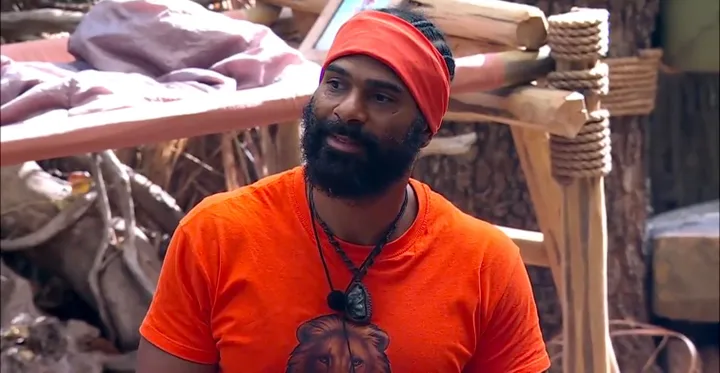
I’m A Celebrity campmate Adam Thomas has spoken out about feeling “pushed to my limits” by co-star David Haye during their stint on the reality show’s All Stars special.
Adam and David were among the famous faces who took part in the second season of I’m A Celebrity: South Africa, which was filmed last year and is currently airing on ITV1.
Over the course of the series, the retired pro boxer has generated a whole lot of controversy for his overzealous approach to the game, his treatment of his fellow contestants and his comments about his girlfriend, Sian Osborne.
In the most recent instalment on Friday night, viewers saw David lambasting Adam for sitting out a Bushtucker Trial on medical grounds, after a flare-up of his psoriatic arthritis.
During the episode, David branded Adam “useless”, claiming that as a “grown-arse man” he should have taken part in the challenge.
The pair then clashed again when Adam sneaking chocolate into the camp for the team to share resulted in them losing out on food later on, which David had earned during that day’s trial.
Adam then offered to have less of the rations than his campmates, which David branded a “hollow gesture”.
On Sunday, the Emmerdale star posted a picture of himself in the I’m A Celebrity: South Africa camp, admitting that the “picture breaks my heart, as I know on the inside what I was dealing with”.
“Truth be told, I thought it was all my fault,” he said. “I now know that’s not the reality…”

Adam wrote: “My time in I’m a Celebrity South Africa was one of the toughest things I’ve ever been through, physically, mentally, and emotionally. Watching it back hasn’t been easy at all.
“There were moments I felt pushed to my absolute limit, and if I’m honest, times I didn’t even recognise myself. Living with arthritis is something I don’t really talk about, as much as I should do… but in there it really took its toll.
“My biggest fight was pretending to put on a brave face and trying to hide the pain! That can be exhausting within itself. There were days my body just didn’t want to keep going, but I did. I won’t sit here and say I handled everything perfectly, because I didn’t.
“I wish I spoke up for myself sooner. I wish I stood my ground instead of trying to keep the peace, but I’ve learned that being kind doesn’t mean being weak, and sometimes it takes going through tough moments to find your voice.”
He continued: “Since coming out, I’ve taken time to process everything, and I’m in a much better place now. I let go of the anger, had the conversations I needed to have, and chose peace.
“What I’m most proud of, is at times like this I wanted to walk, I wanted to quit but I didn’t. Even when I wanted to walk away, even when it felt like too much, I never give up! and that means everything to me.”
Adam added: “He broke me in there, he pushed me to my limits, and I’ve told David this and he’s apologised and that’s that! I’ve moved on now, am not one to hold a grudge.
“But thank you for all your lovely messages and all the kind words. We all face people and situations that try to break us, but sometimes those moments are what rebuild you stronger than ever. Be kind.”
Even hosts Ant and Dec have spoken out about David’s conduct on the current series of I’m A Celebrity: South Africa, suggesting that his conduct has “crossed the line from banter”.
Because the All Star run was pre-recorded, I’m A Celebrity viewers won’t have any say in who stays and goes until the live final, when fans will be able to crown their champion via public vote.
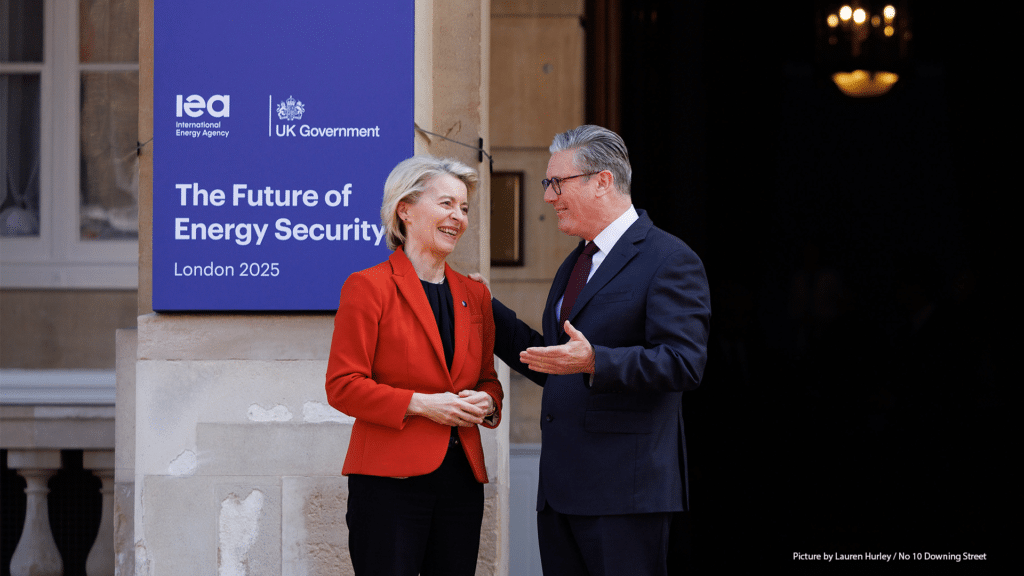
Jannike Wachowiak makes the case for a UK-EU resilience partnership as a way to both help the two sides be better prepared and able to respond to certain crises and to provide much needed impetus to the UK-EU reset.
The first post-Brexit UK-EU summit, held in 2025, provided a roadmap of measures intended to soften the edges of the Brexit deal negotiated by Boris Johnson. The second is pencilled in for the summer, and its primary function is clear: to get ongoing talks on agrifood-trade, emission trading and a youth experience scheme over the line. Yet a summit that merely deals with outstanding business is one that is not doing its job. As well as closing negotiations already underway, it is important, not least to maintain a sense of momentum about the UK-EU ‘reset’, to lock the two sides into a continuing process.
Absent new ideas, it will be hard to avoid the impression that the reset is beginning to run out of steam. Various ideas have been suggested – ranging from the UK joining Creative Europe to a UK-EU Industrial Cooperation Council – that would build on the Common Understanding without crossing red lines.
Another idea that would fit the bill, and which has received precious little attention, is the possibility of forming a UK-EU ‘resilience partnership’ to ensure both sides are better prepared and able to respond to certain crises.
Pandemics, wars and climate emergencies like floods, wildfires and severe storms are increasingly common, and cannot be contained in one country. These externalities create precisely the kind of rationale that underpins cooperation among neighbours. What is more, the effects of these crises are increasingly visible to citizens. In 2025, Portugal and Spain experienced the worst wildfires since records began, and across England 6.3 million properties are based in areas at risk of flooding. And most of us have first-hand experience of a global pandemic. This should make crisis preparedness and response an uncontroversial area for cooperation.
And there is a global dimension to this. The Trump administration is pulling the US out of the multilateral global health and climate security systems, with significant cuts to domestic and international crisis prevention programmes. On the day of his inauguration, President Trump ordered the US’ withdrawal from the World Health Organisation, and a year later he announced the US would withdraw from another 66 international organisations, treaties and agencies, many of which are climate-related. This creates a clear need for Europeans to fill the vacuum bilaterally and globally.
Part of the response could be a ‘Resilience Partnership’ to enhance collective resilience and preparedness. This could have several components. The two sides might want to set up a dedicated ‘Health and Climate Security Dialogue ‘to both share information and explore how to build on existing cooperation, including the UK’s association to the EU’s Critical Medicines Alliances and medical research and innovation under the Horizon Programme.
The UK-EU Security and Defence Partnership from May 2025 encourages closer cooperation in these areas, but without going into specifics. The EU and Canada are already a step ahead, with a dedicated ‘Health Dialogue’ set up in 2021, and the promise of a ‘Climate Security Dialogue’ to share climate data and analysis. Given the global dimension, there could be an incentive to create links between the EU’s various dialogues with like-minded partners.
A dedicated EU-UK dialogue could be a launching pad for more formalised ties. For instance to consider whether to include the UK in the activities of the European Climate and Health Observatory. The observatory was set up in 2021, is managed by the Commission and European Environment Agency, and supports 38 members and cooperating countries in preparing for and adapting to the impacts of climate change on human health.
Another possibility would be UK association to the EU Civil Protection Programme. This helps to mobilise resources (like response teams and equipment) and knowledge to support countries affected by war and natural disasters. The largest operation to date has been in support of Ukraine, and the mechanism has also recently been used to coordinate consular support for citizens stranded in the Middle East.
The UK used to be an active and reliable member of the Civil Protection Programme and contributed to 14 emergency operations between 2014 and 2020. Post-Brexit, it could seek association. The programme is open to non-EU member states and includes ten participating countries ranging from Moldova to Norway to Ukraine.
Exploring a ‘Resilience Partnership’ along those lines would an easy win. It would give renewed impetus to the bilateral relationship and make it clear that the reset is ongoing. For the UK, it fits into the government’s preference for incremental progress and does not cross its red lines. For the EU, ‘resilience’ is one of four areas which it wants to see strengthened in its relations vis-à-vis the UK (as outlined in the Commission’s 2024-2029 political guidelines).
For both sides, it would be a pragmatic step forward which could be easily sold to the public. Last but not least, it would further build trust and provide a sense of solidarity which could help pave the ground for other steps further down the line.
By Jannike Wachowiak, Research Associate, UK in a Changing Europe.
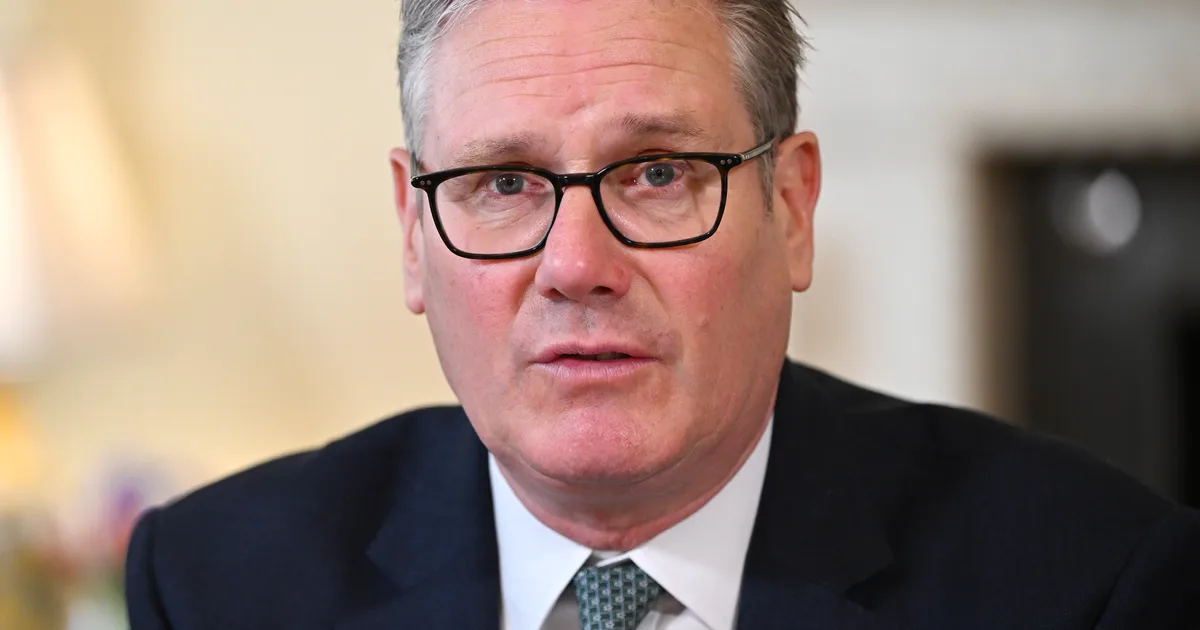
Keir Starmer will battle to save his job as he faces MPs amid calls for him to resign over the Peter Mandelson vetting scandal.
A Labour peer is among those demanding the prime minister quit after it was revealed the shamed former US ambassador failed security vetting before taking up the plumb diplomatic role.
Starmer said he was “furious” that he was not told that Olly Robbins, the top civil servant in the Foreign Office, had ultimately cleared Mandelson to carry out the job.
The PM only found out last Tuesday – and Robbins was sacked on Thursday night.
Starmer has been accused of lying to parliament and the public for previously stating that all of the appropriate vetting processes had been followed before Mandelson was appointed.
He will make a Commons statement on Monday before facing questions from MPs about what he knew and when.
Supporters of Olly Robbins have insisted he was legally precluded from telling the PM that Mandelson had failed the security vetting, but that has been denied by Downing Street.
“No law stops civil servants sensibly flagging UK Security Vetting recommendations, while rightly protecting detailed sensitive vetting information, to allow Ministers to make judgements on appointments or on explaining matters to Parliament,” the government said.
Scottish secretary Douglas Alexander told Sky News: “There are rightfully and reasonably important questions that need to be answered today. Keir Starmer’s going to set out all the facts. The right place for those questions to be answered are at the despatch box in the House of Commons.
“But we saw the leader of the opposition, as recently as Friday, claiming that the prime minister lied.
“That central contention that he wilfully and intentionally misled parliament and the public now relies, given what has emerged since then, relies on what would need to be a growing conspiracy, not just of every minister involved in this process, but of a growing list of civil servants.
“These judgments matter, and in that sense people need to reach a judgment in the round. The right place to do that’s in the House of Commons this afternoon, and the prime minister will set out his case.”
Subscribe to Commons People, the podcast that makes politics easy. Every week, Kevin Schofield and Kate Nicholson unpack the week’s biggest stories to keep you informed. Join us for straightforward analysis of what’s going on at Westminster.

Louis Tomlinson appears to have severed ties with his former One Direction bandmate Zayn Malik amid reports of a physical altercation between the two of them.
In October last year, it was reported that Louis and Zayn – whose tumultuous relationship is well-documented – were planning on putting their differences aside and filming a new three-part travelogue series for Netflix, which would see them travelling across America together while trying to mend their friendship.
However, over the weekend, The Sun reported that Netflix had “axed” the series after Zayn allegedly punched Louis during a heated row.

The tabloid claimed that the punch came after Zayn made a comment about Louis’ late mum, Johannah Deakin, who died of leukaemia in December 2016.
Louis previously disclosed that it had been among his mum’s dying wishes for him to reconcile with Zayn, with whom he’d been close during their time in One Direction, but fell out when the Pillowtalk singer quit the band at the height of their fame.
HuffPost UK has contacted reps for Louis, Zayn and Netflix for comment.
While neither party has commented publicly on the reports yet, fans have spotted that Louis has now unfollowed Zayn on Instagram, as have his sisters.
Director Nicola B Marsh also reshared a photo of The Sun’s front page about the alleged altercation on her Instagram story, commenting: “There goes the last year of work.”
An official press release for the documentary claimed that it would have seen Louis and Zayn taking part in a road trip of “reconnection, exploration and a lot of laughter”, with Variety reporting that it would feature “intimate conversations about life, love, loss and fatherhood”.
Louis and Zayn were bandmates for around five years, being put into a boyband with Harry Styles, Niall Horan and the late Liam Payne after auditioning for the talent show The X Factor as solo performers.
Zayn left 1D in 2015, after which the band remained together as a four-piece for one final album, before going their separate ways the following year.
Before filming got underway on their travel series, Louis and Zayn had last been seen together at the funeral of Liam Payne in 2024.
Politics
Politics Home | Wes Streeting made 63 promises. With 2,000 lives at stake each year, why is there still no plan?


Professor Neil Gittoes, Chair of the Board of Trustees
| Royal Osteoporosis Society
Ministers have committed 63 times to rolling out early diagnosis services for osteoporosis. Nearly two years on, there is still no delivery plan, no milestones and no sign of rollout, while 2,000 people die each year
Two years ago, the Health Secretary promised people with osteoporosis life-saving early diagnosis clinics. He has repeated that promise 63 times – yet nothing has changed. And for every year that ministers delay, another 2,000 people die needlessly.
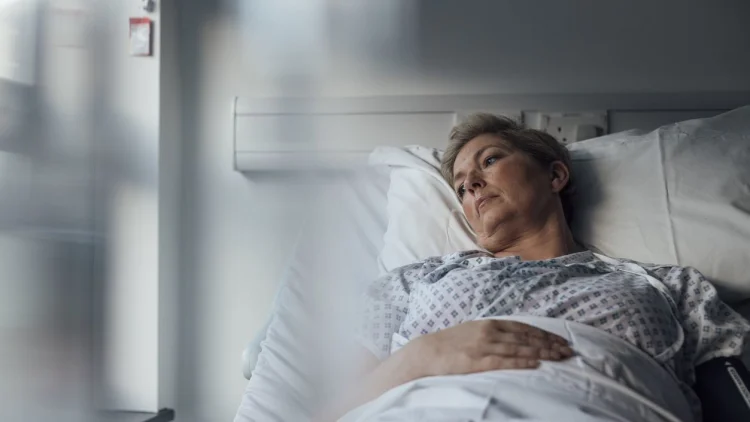
People with osteoporosis have been overlooked for decades, driven by the mistaken belief that broken bones are a normal part of ageing rather than a treatable medical condition. This cruel disease silently weakens bones until they can break from coughs, sneezes or even a hug. For someone with osteoporosis, a fall from standing height can be enough to break a hip. Half of women over 50 will experience fractures due to the condition, alongside one in five men.
I meet grandmothers terrified to lift a newborn baby for fear their bones could shatter, and women in early menopause who are told by GPs they have the bones of an 80-year-old.
Yet help exists. Safe, effective treatments costing as little as £1 a week can restore independence and save lives. So why are millions still missing out?
The answer is a brutal postcode lottery. Half of NHS Trusts still lack Fracture Liaison Services (FLS) – specialist clinics that identify patients and get them onto treatment before it’s too late. Without them, the consequences are devastating. A broken hip is often a death sentence – killing over a quarter of patients within a year.
During the 2024 general election campaign, this community was given hope for the first time. All three main parties proposed a national rollout of FLS clinics to every area by 2030. Since then, Reform and the Greens have added their support, too.
Wes Streeting went furthest: he promised that a plan for national rollout would be one of his first acts in government. But two years on, no plan has been delivered. And we’ve seen no new clinics at all.
Around 60 NHS Trusts in England still lack Fracture Liaison Services. A national rollout takes time and requires steady progress year by year. Ministers would have needed to deliver FLS to around 24 Trusts by now to stay on track for full rollout by 2030. Instead, delivery stands at zero.
In opposition, Wes Streeting described delays to these clinics as a “betrayal of patients.” With nearly two years now passed, we’ve had more delay under this government than the last.
And delay costs lives. Around 2,000 people die each year following hip fractures that these clinics prevent. In the time since this promise was made, 4,000 lives have been lost waiting for rollout.
Meanwhile, the NHS has spent £150m treating avoidable fractures since the election – far more than it would have cost to put these preventative clinics in place. This isn’t just a missed opportunity. It’s a failure that is harming patients right now.
We should be making progress. More than 60 countries already are. New Zealand has just rolled out these services to cover 99 per cent of its population, while Japan has quadrupled FLS in three years. In Wales, ministers made FLS a national priority and mandated that, within five years, each service should develop the bandwidth to treat every citizen aged over 50 in their area.
By 2030, therefore, it will be markedly safer to grow old in Wales than in England. There is no excuse for England falling so far behind.
Ministers point to a very small investment in bone scanners, made to honour a separate (very welcome) election promise. But a scan without treatment saves no one. Without assessment and follow-up through Fracture Liaison Services, patients remain at high risk of another fracture.
Worse still, uncertainty from Whitehall is pushing fracture prevention locally into reverse. Some areas have paused their own plans, expecting a national rollout that has yet to materialise.
Ultimately, the question is about political will. Ministers have made the commitment. They’ve repeated it 63 times. They know it will save lives and money. Why won’t they deliver it? People with osteoporosis have waited long enough. After decades of neglect, they were promised change.
If the promise is broken, it will deepen the sense that their lives simply don’t matter.
We stand ready to work with the government to achieve the outcome they promised. We won’t let the perfect be the enemy of the good. If a credible plan is published, we’ll get behind it and help ministers get those clinics set up.
But progress starts with a plan.
During the election, people with osteoporosis were promised change. Two years on, they’re still waiting. So I ask the Health Secretary Wes Streeting directly: will you now publish the plan for the life-saving bone clinics you promised?
For more information, visit theros.org.uk/StillNoPlan
Politics
Helen Whately: The Welfare bill is more than twice what we spend on our own defence – that can’t go on
Helen Whately is the Shadow Secretary of State for Work and Pensions.
“We cannot defend Britain with an ever-expanding welfare budget.”
That statement last week might have escaped notice — but for the fact that it was made by Lord George Robertson: former Labour Defence Secretary, Labour Peer, and Labour-appointed author of the Government’s Strategic Defence Review.
Lord Robertson is not someone you’d expect to cause trouble for our beleaguered Prime Minister. But like many of us, he has run out of patience. And as former Secretary General of NATO, he knows the consequences more than most.
Britain’s welfare spending is now undermining our ability to defend ourselves.
The state exists first and foremost to keep us safe, yet we spend only 2.4 per cent of GDP on defence. As NATO members we have pledged to reach 5% by 2035 — a level we have surpassed not on defence, but on working-age welfare. Annual working-age welfare spending is now £140bn and rising, against a mere £50bn on defence.
The comments below will say “it happened under your watch” — and indeed it did. Under Thatcher, Major, Blair, Brown, Cameron and May, because the decline in defence spending goes back to the end of the Cold War. Only when Russia invaded Ukraine did our defence spending – under Boris – seriously step up.
Meanwhile, welfare has kept growing. Working-age welfare went from 2–3 per cent of GDP in the early 1980s to 6 per cent after the 2008 crash. We brought it back to 4.5 per cent pre-Covid; it has since risen to 5.3 per cent.
The nature of welfare has also changed.
When the modern welfare state was built after WWII, support was limited and often short-term — unemployment cover for those who’d paid National Insurance, or temporary sickness relief. Old age benefits were drawn on by fewer people, for less time. Means-tested benefits were a last resort and stigmatised.
Now, the fastest-growing part of the welfare bill is health and disability. More people are assessed as unable to work and go onto benefits; few ever come off them. The welfare state is no longer a stopgap or safety net. For a growing number of people, it is a permanent alternative to work.
Part of the problem is structural. Most public spending is controlled through departmental budgets, with Ministers and Permanent Secretaries forced to balance priorities and operate within limits. Welfare is demand-led: eligibility is set, and anyone who qualifies gets it. As caseloads grow, spending rises automatically. There’s no pressure to keep to a budget, but infinite jeopardy for any Secretary of State who dares make savings.
Add shifting social attitudes. Claiming benefits used to carry a sense of shame. More common now is entitlement — ‘it’s my right’ — without any commensurate responsibility. Meanwhile, working families are going without holidays, deferring purchases, furnishing their homes from charity shops, all the while paying taxes to fund others to have things they cannot afford.
We’ve reached a tipping point. As one constituent wrote to me recently: “You work so hard — and for what?”
Unless something changes, the UK will spend £650 billion on working-age welfare by the end of the decade, against less than £300 billion on defence.
The war in the Middle East has left us exposed. “We are underprepared. We are underinsured. We are under attack. We are not safe” — Lord Robertson again.
We have to grip welfare spending so we can invest in defence. That’s clear to me. But to Labour?
Labour MPs have been celebrating the lifting of the two-child benefit cap at a cost of over £3 billion a year. The prospect of weaker-than-ever Starmer persuading his backbenchers to vote for welfare cuts in the months ahead is laughable.
Except this is no laughing matter. The security of our country is at stake.
Serious times need serious leadership. We cannot keep spending more on Welfare, funding millions to stay at home with anxiety and ADHD, while starving Defence.
As Kemi Badenoch has said, whether we like it or not, we are in this war. We must tell the truth. We live in a world that has become more dangerous- and we must change our priorities.
I have already identified £23 billion of welfare savings: restricting benefits to foreigners, stopping sickness benefits for anxiety and ADHD, reforming Motability, returning to face-to-face assessments. I am not stopping there.
A country where those who can work do work will be a stronger country. We have drifted from a culture of “I can because I must” to a culture of “I can’t” — stripping people of agency and turning them into victims. It is time to turn that around. To invest in the defence of the realm over the benefit state. We can, because we must.


On 18 April, in Khirbet Abu Falah, northeast of Ramallah in the occupied West Bank, up to 100 settlers gathered at an outpost just outside the village. This was a new outpost, only established a few days previously.
Illegal colonists and Israeli occupation forces coordinate to storm the villages of Khirbet Abu Falah and al Mughayyir
Some of the settlers tried to go down the hill from the outpost to attack houses in the village, but residents gathered to protect their properties.
Shortly after this, Israeli occupation forces (IOF) raided several homes in Abu Falah, assaulting and detaining several residents. The settlers then spread out around several areas of the village, and also went to al Mughayyir, although no attacks were reported.
On the evening of the same day, during one of the daily IOF raids on al Mughayyir, occupation soldiers assaulted two young Palestinian children.
Seven-year-old Abdallah Abu Alia, and eight-year-old Mohammed Abu Alia, were playing in the street near their home with a group of children. When they heard the military vehicle approaching, most of the children ran away, but Abdallah and Mohammed remained where they were.
IOF intimidate and assault seven and eight year old children
The military intimidated, threatened and pushed around the two children, and then told them to stay seated on the ground while they drove away.
Shortly after this incident, 33-year-old Ghaith Abu Naim was attacked in his car. He was in Marj Saya, on the road between Abu Falah and al Mughayyir. He was driving home from work when settlers on a quad bike — supplied by the “Israeli” government — drove alongside his car and started throwing stones. They then attacked him with an iron bar, injuring his shoulder and damaging his car. A relative of Abu Naim told us he used to leave for work at 9 am but, fearing the constant attacks from the settlers and the IOF, he now leaves home two hours earlier each morning.
On the night of 18 April, Turmus Ayya — which is also in northeast Ramallah and adjacent to the villages of Abu Falah and al Mughayyir, was also attacked by settlers. Dozens of these terrorists entered the village, from the direction of the nearby outpost, and set fire to the home of a Palestinian family.
They also torched a vehicle, before being confronted by unarmed residents and forced to leave.
Threatening graffiti left by settlers
Settlers also spray-painted the words “revenge” and “Regards from Abu Falah” in Hebrew, on the wall of a building in the village.

In the past two months, three outposts have been established in the Abu Falah and al Mughayyir area. All are in Area B, on privately owned Palestinian land. One of these outposts was set up on private land in the al Khaleel valley, close to al Mughayyir, when the Abu Najer family was forcibly displaced due to settler violence. Another outpost is in a Palestinian home in Abu Falah, which settlers took by force and established on 8 March. This was the day after three Palestinians were killed in the village, by the IOF and settlers. The third and most recent outpost, mentioned at the beginning of this article, is on a hill at the edge of Abu Falah.
The attacks, from both the illegal Jewish settlers and the IOF are relentless and Palestinians have no one they can turn to for protection. Every day, somewhere in the West Bank, Palestinians have their property destroyed or stolen, or are forcibly displaced, injured or killed.
At the time of writing, on 19 April, settlers stole more than 150 sheep belonging to al Mughayyir resident Anis Mahmoud Abu Alia. Although they were confronted by villagers, the IOF protected the settlers as they left the area. Several hours later, the village was again stormed by the IOF, who beat a child and fired tear gas at residents.
Featured image via the Canary
By Charlie Jaay

Should Every SME Have a PAT Testing Qualification on the Team in 2026?

MicroStrategy’s Saylor signals larger BTC buys amid dividend chatter

Bayern Munich continue their dominance of the Bundesliga, claiming their 35th title

Why Israel is blocking foreign journalists from entering

Bitcoin: We’re Entering The Most Dangerous Phase

Alan Cumming Brands Baftas Ceremony A ‘Triggering S**tshow’

Financial Advisor Warns: 7 Money Lies You Still Believe (That’s Keeping You Broke In 2026!)

GOLD AND CRYPTO LIVE TRADING || 18 APRIL || Bitcoin Live Trading | Crypto Market Analysis |

THE TWO MOST IMPORTANT BITCOIN TRADE SETUPS FOR THIS WEEK
-

 Crypto World7 days ago
The SEC Conditionalises DeFi Platforms to Be Avoided for Broker Registration
-

 NewsBeat6 days ago
Trump and Pope Leo: Behind their disagreement over Iran war
-

 Fashion3 days ago
Weekend Open Thread: Theodora Dress
-

 Crypto World6 days ago
SEC Signals Exemption for Crypto Interfaces From Broker Registration
-

 News Videos5 days ago
Secure crypto trading starts with an FIU-registered
-

 Sports3 days ago
NWFL Suspends Two Players Over Post-Match Clash in Ado-Ekiti
-

 Crypto World6 days ago
SEC Proposes Certain Crypto Interfaces Don’t Need to Register as Brokers
-

 Business18 hours ago
Powerball Result April 18, 2026: No Jackpot Winner in Powerball Draw: $75 Million Rolls Over
-

 Crypto World2 days ago
Russia Pushes Bill to Criminalize Unregistered Crypto Services
-

 Politics2 days ago
Palestine barred from entering Canada for FIFA Congress
-

 Sports7 days ago
NWFL opens Pathway for new Clubs ahead of 2026 Season
-
 Business3 days ago
Creo Medical agree sale of its manufacturing operation
-
 Entertainment6 days ago
Brand New Day’ Footage Reveals the Devastating Impact of ‘Now Way Home’
-

 Politics23 hours ago
Zack Polanski demands ‘council homes not luxury flats for foreign investors’
-

 Tech5 days ago
Microsoft adds Windows protections for malicious Remote Desktop files
-
 Entertainment6 days ago
Karol G’s ‘Ultra Raunchy’ Coachella Set Gave ‘Satanic Vibes’
-

 Sports7 days ago
Aaron Judge says Yankees need to ‘simplify’ approach amid offensive slump
-
 Entertainment7 days ago
Pete Davidson Reveals ‘Brutal’ Mom Moment That Got Him Sober
-
 Entertainment6 days ago
How Babylon 5 Turned Brief Side Story Into Emotional Masterpiece
-
 Tech6 days ago
What was the first ransomware attack to demand payment in Bitcoin?
You must be logged in to post a comment Login