Connect with us

Business

Pop-up restaurant planned for vacant Clifton Village site empty since 2021

Published

on

Business Live

Developers preparing permanent redevelopment plans for the Bristol location

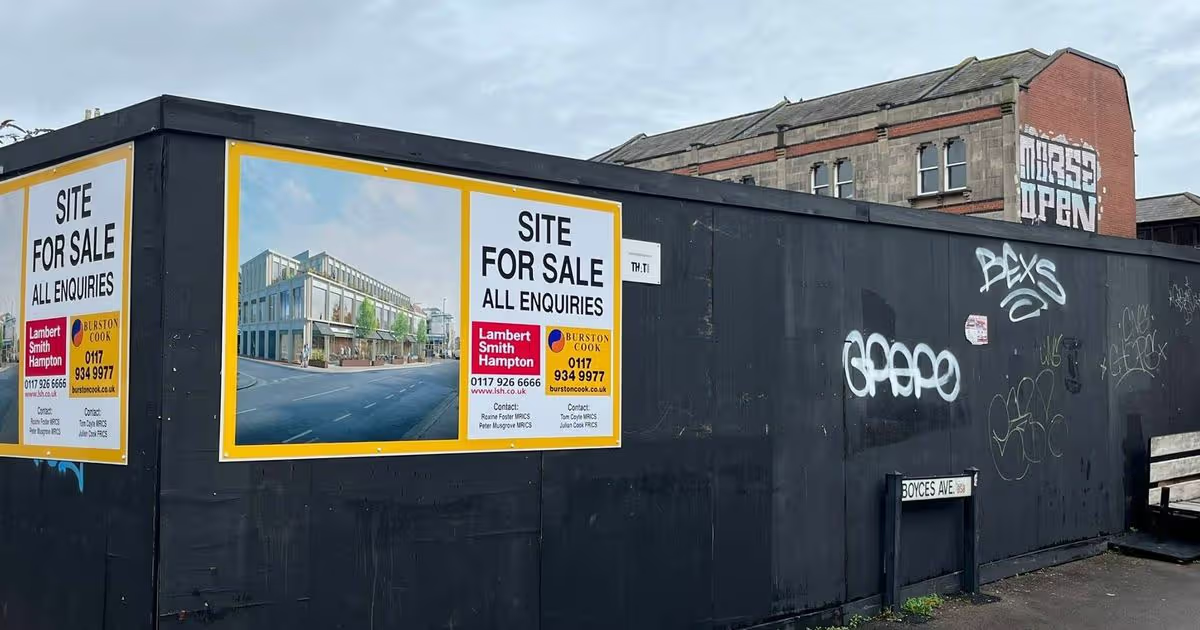
The vacant site in Clifton Village, Bristol

The vacant site in Clifton Village, Bristol(Image: Bristol Live)

A site in the middle of Clifton Village that has been unused for years could soon welcome a ‘temporary pop-up restaurant’ – with the developers who’ve acquired the site preparing proposals for a permanent structure there by year’s end.

The location was formerly a small parade of shops between Clifton Down Avenue and the Clifton Arcade, and subsequently housed an ice rink for several winters during the 2010s. In 2021, the structures there were knocked down and for the past five years it’s sat empty and cordoned off, despite a series of plans to construct offices, flats and retail units there.

Now, a fresh developer named Speare Developments says it has a new vision for its future which they aim to unveil later this year, but in the interim, it has lodged a planning application for a temporary ‘pop-up’ eatery to occupy the space.

Should this receive approval it’s anticipated to operate for a couple of years, whilst Speare attempts to secure planning consent for its long-term proposals, reports Bristol Live.

Advertisement

“This site has been derelict for too long,” a representative for Speare Developments said. “A pop-up restaurant presents an exciting opportunity to bring the site to life and improve its appearance whilst we develop permanent plans.

“We want the site to be open and active again, not fenced off and forgotten. There’s still a long way to go. As with any brownfield site, there are complex technical constraints that have the potential to affect the viability of a temporary scheme, but we are working through them.

“With that being said, we are serious about making this area better and we’re excited to explore Clifton’s strong identity as we prepare plans for the site’s long-term future.”

An artist's sketch of the planned temporary pop-up restaurant in the heart of Clifton Village

An artist’s sketch of the planned pop-up restaurant in the heart of Clifton Village(Image: Speare Developments)

Speare said the restaurant would be ‘designed to complement Clifton Village’s tapestry of independent traders’. “Speare Developments has been actively engaging with local businesses to understand how a new restaurant could work collaboratively with the existing community,” the representative said.

Advertisement

“Whilst the name and the operator are yet to be finalised, the pop-up restaurant is expected to operate for approximately two years while plans for the permanent development are formed and a planning application is decided.

“Long-term plans are expected to include a residential-led scheme with a mixture of ground floor commercial uses.”

Continue Reading
Click to comment

Leave a Reply

Your email address will not be published. Required fields are marked *

Business

Catalina to acquire BGM Metals

Published

on

Catalina to acquire BGM Metals

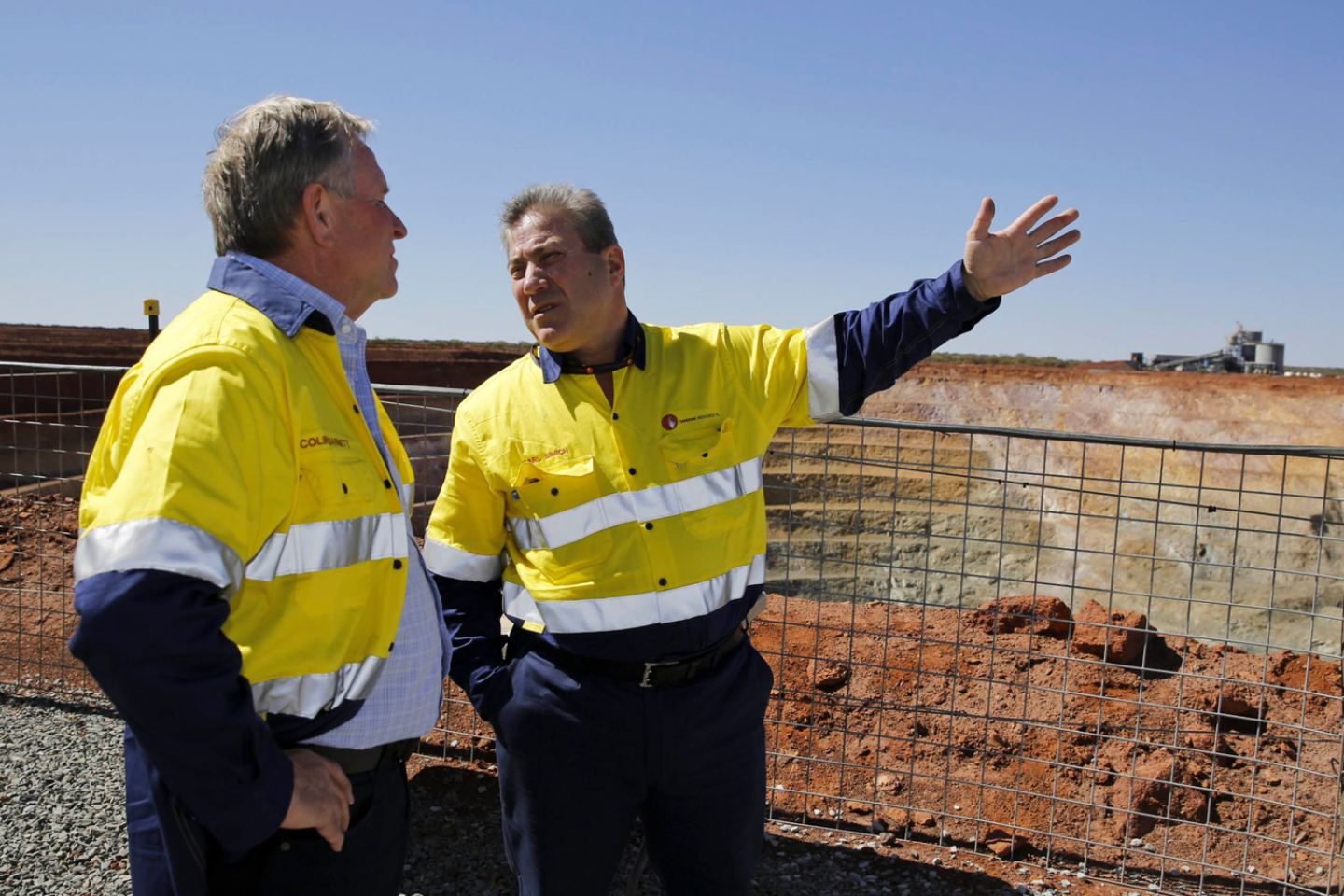
Karl Simich-chaired Catalina Resources has added another significant asset to its growing copper-gold portfolio in WA.

Continue Reading

Business

Strait and Narrow: Heard on the Street Recap

Published

on

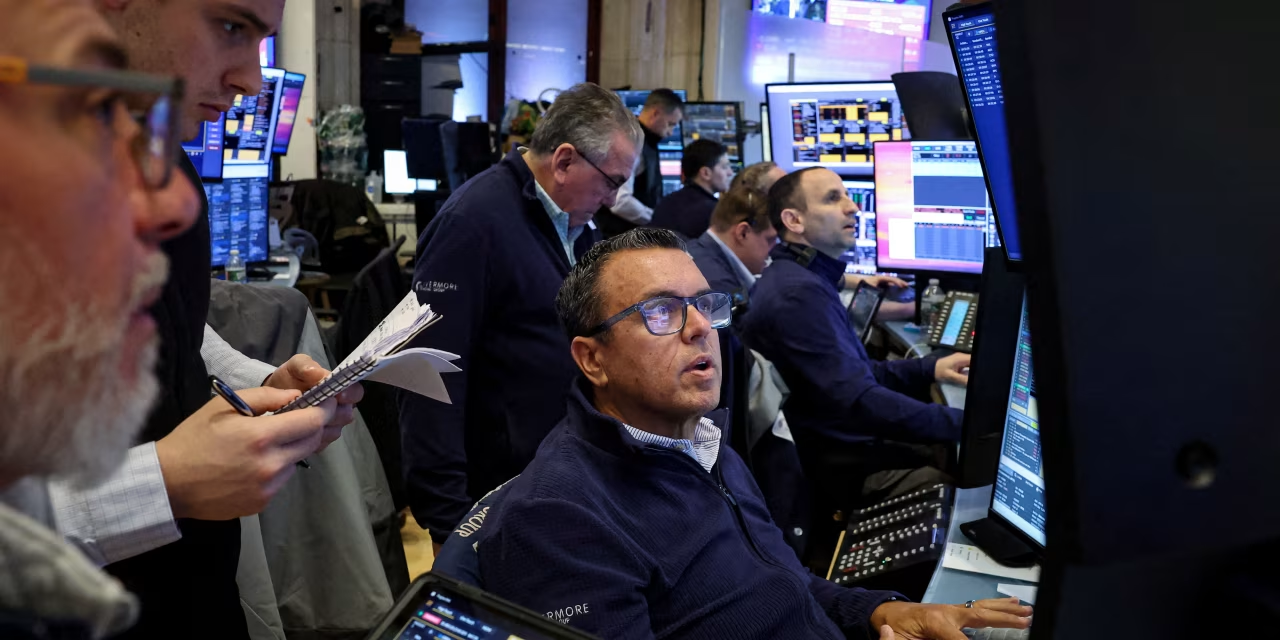
The Dow industrials suffered a third straight session of declines Tuesday.

Strait and Narrow: Heard on the Street Recap

Continue Reading

Business

Fish and chip shops face rising costs as Iran conflict drives oil price surge

Published

on

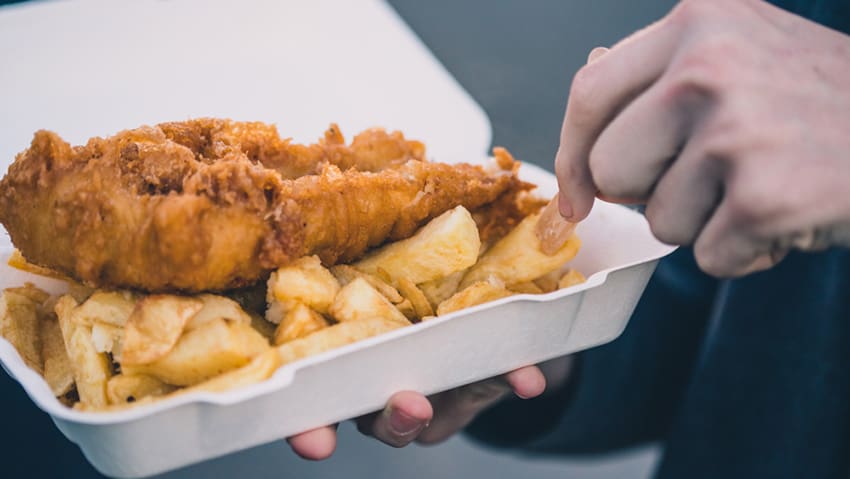
Fish and chip shops face rising costs as Iran conflict drives oil price surge

Britain’s iconic fish and chip shops are facing renewed financial pressure as rising oil prices linked to escalating tensions in the Middle East threaten to drive up operating costs across the sector.

Industry experts warn that the conflict involving Donald Trump, Iran and regional powers could have a direct impact on small food businesses across the UK, particularly energy-intensive takeaways such as traditional chippies.

The warning comes as global oil markets have grown increasingly volatile amid fears that the conflict could disrupt shipping routes through the Strait of Hormuz, a key corridor through which around a fifth of the world’s oil and gas supplies pass.

Any sustained increase in crude oil prices tends to ripple through the economy, affecting transport costs, energy bills and supply chains, all of which are critical to the day-to-day operations of independent food retailers.

Molly Monks, insolvency specialist at Parker Walsh, said small hospitality businesses often feel the effects of global economic shocks faster than larger corporate chains.

Advertisement

“Fish and chip shops typically operate on relatively tight margins, so even modest increases in fuel, oil or electricity costs can quickly start to bite,” she said.

One of the biggest vulnerabilities for fish and chip shops is their heavy reliance on energy. Fryers must operate continuously at high temperatures throughout trading hours, consuming significant amounts of gas or electricity.

Commercial frying requires oil to remain at consistently high temperatures for long periods, making energy costs a major part of daily overheads for takeaway businesses.

“Frying food commercially requires constant heat,” Monks explained. “That means businesses are directly exposed when energy prices begin to rise.”

Advertisement

This exposure makes fish and chip shops particularly sensitive to wider shifts in global energy markets. If oil prices remain elevated for an extended period, energy suppliers often pass higher wholesale costs through to businesses in the form of increased tariffs.

In recent years, energy costs have already been one of the biggest challenges for the hospitality sector following the spike in gas prices triggered by geopolitical tensions and supply disruptions.

Beyond energy costs, rising oil prices also affect the cost of transporting ingredients and supplies, another major expense for takeaway operators.

Fish, potatoes, cooking oil, packaging materials and other essential goods are transported across the country via road freight. As diesel and petrol prices climb, suppliers typically increase delivery charges to compensate.

Advertisement

“If fuel becomes more expensive, it costs more to move fish, potatoes and supplies across the country,” Monks said.

For independent takeaway owners, the result is often a compound effect where several key costs increase at once.

“It’s rarely just one bill increasing,” she added. “Higher energy prices can also push up refrigeration, packaging and supplier costs.”

Refrigeration systems used to store fresh fish and other ingredients are particularly energy intensive, meaning electricity price rises can quickly add to operational pressure.

Advertisement

Many fish and chip shops operate as small independent businesses rather than part of large chains. While that independence often gives them flexibility, it also means they typically have fewer financial reserves to absorb sudden cost increases.

Monks said that larger restaurant groups are generally better positioned to weather volatility.

“Bigger chains may have longer-term supplier contracts or more financial protection,” she said. “But small independent businesses often have to respond quickly when costs start rising.”

Unlike larger hospitality operators, many independent takeaway owners purchase ingredients and energy at market rates rather than under fixed long-term agreements. This means price increases can hit almost immediately.

Advertisement

The UK’s fish and chip industry has already faced several challenging years, including rising ingredient costs, labour shortages and higher energy bills following the pandemic and global supply chain disruptions.

If energy and supply chain costs continue to rise, businesses may have little choice but to pass some of those increases on to customers.

That could mean higher menu prices, smaller portions or fewer promotions as businesses attempt to protect already narrow margins.

“If costs continue to climb, businesses may have to increase menu prices or reduce portions,” Monks warned.

Advertisement

However, raising prices carries risks for small hospitality businesses, particularly during a cost-of-living squeeze when consumers are already tightening spending on takeaways and dining out.

The challenge for many operators will be balancing higher costs with maintaining customer demand.

The situation highlights how quickly international events can affect everyday businesses on Britain’s high streets.

Energy price spikes caused by geopolitical crises can ripple through supply chains within weeks, placing unexpected strain on small firms.

Advertisement

“International events can filter through to everyday businesses very quickly,” Monks said. “For firms already operating on narrow margins, even small cost increases can make a big difference.”

If tensions in the Middle East continue to escalate or shipping routes remain disrupted, analysts warn that oil and gas prices could stay elevated for months, potentially prolonging the pressure on hospitality businesses across the UK.

For fish and chip shop owners, the concern is that another global energy shock could arrive just as the sector was beginning to recover from previous crises.


Amy Ingham

Amy is a newly qualified journalist specialising in business journalism at Business Matters with responsibility for news content for what is now the UK’s largest print and online source of current business news.

Advertisement

Continue Reading

Business

Australian shares bounce on talk of Iran war slowdown

Published

on

Australian shares bounce on talk of Iran war slowdown

Australian shares have rebounded to snap two-session losing streak, as dip-buying investors sought bargains after more than $60 billion was wiped from the bourse during the previous day’s trading.

Continue Reading

Business

Seapines project in Cottesloe in $27m court dispute

Published

on

Seapines project in Cottesloe in $27m court dispute

The developer behind the abandoned $75 million plan to redevelop Seapines in Cottesloe has sued her financiers in the state’s Supreme Court.

Continue Reading

Business

Earnings call transcript: Reckitt Benckiser’s Q4 2025 results show robust growth amid market challenges

Published

on


Earnings call transcript: Reckitt Benckiser’s Q4 2025 results show robust growth amid market challenges

Continue Reading

Business

Car insurance to loans group Admiral post record profits

Published

on

Business Live

Admiral staff, which include more than 7,000 in South Wales, will receive £1,800 of free shares on the strong trading performance in 2025

Chief executive of Admiral Milena Mondini de Focatiis.(Image: Matthew Horwood)

Car insurance to loans group and Wales’ only FTSE business, Admiral, has reported a 16% surge in pre-tax profit to £957.9m. The record performance sees 13,000 staff being rewarded with £1,800 worth of free shares under the group’s employee share scheme.

The Cardiff headquartered business employs more than 7,000 in South Wales.

Advertisement

For its 2025 financial year group turnover came in at £5.9bn, down 1% on 2024. While it said the UK car insurance market remained softer than expected a strong focus drove what it described as “excellent results” in its core business, with profits exceeding £1bn for the first time. Its car insurance business in Europe performed well with strong growth and profitability in France and what it described as a rapid recovery in Italy. Admiral, whose other lines includes pet and home insurance, also operates in Spain.

Admiral Money saw a 24% rise in its gross loan balances to £1.46bn, while contributing £26m to overall group profit – double the amount in 2024 Over 13,000 employees will each receive free share awards worth up to £1,800 under the employee share schemes based on the full year 2025 results.

READ MORE: Admiral invests in fund backing growth of UK mid-market firmsREAD MORE: Admiral acquires commercial fleet insurer fintech Flock in an £80m deal

Admiral chief executive Milena Mondini de Focatiis, “2025 was an exceptional year for Admiral, reflecting the strength of our business model, our discipline and the quality of execution across the Group. We reported record profits, continued to grow our customer base and diversify our business, while maintaining momentum in how we invest and innovate.

Advertisement

“The group reported profit of £958m, up 16 per cent, supported by customer growth of 7%. UK Motor delivered an exceptional performance, surpassing £1bn of profit, while our other UK personal lines, Admiral Money and European Motor operations together generated nearly £100m of profit, with strong results in France and a rapid recovery in Italy.

“Our focus on customers remains central. Investment in our digital journeys, app functionality and product development continue to improve everyday experiences for customers, . This is reflected in consistently strong service outcomes.

“2025 was also a year of purposeful acceleration. We completed the integration of More Than, continued to enhance our product range and increased our investment in technology, data and artificial intelligence. We have established a GenAI Centre of Excellence to move from experimentation to scale, with early pilots showing encouraging signs of improved efficiency and enhanced customer outcomes.”

The results discount the impact of its US car insurance business, Elephant. Its acquisition by US private equity firm JC Flower was finalised last month. As part of its growth strategy Admiral last month acquired London-based digital fleet insurer Flock in a £80m deal

Advertisement

On the outlook the chief executive said: “As we refresh our strategy, our focus is on compounding Admiral’s strengths in data, technology, diversified products and operational excellence to drive greater efficiency, stronger customer retention and long‑term value creation, particularly through multi‑product relationships. Our strong financial position also provides flexibility to continue investing in the business and support future shareholder returns.

“At the start of 2026, we announced that Geraint Jones will retire as Group chief finance officer this summer. Geraint has made an outstanding contribution to Admiral and played a central role in shaping Admiral’s performance and culture. I am pleased he will continue to support the group in a part-time role, and I look forward to working with Rachel Lewis, who will become group CFO on July 1, bringing deep business knowledge, leadership and a proven track-record of delivery.

“Admiral enters the next phase of its strategy in a position of strength. Our culture, people and disciplined approach remain central to everything that we do and I would like to thank our colleagues across the Group for their continued commitment to our customers and to each other.”

Advertisement
Continue Reading

Business

Gas price cut for some Firmus Energy customers

Published

on

Gas price cut for some Firmus Energy customers

Gas prices in the Ten Towns area will fall by just over 10% in April.

Continue Reading

Business

Panel approves $30m lifestyle village and short stay in Capel

Published

on

Ocean Gardens to build $30m village in Capel

An over 55s lifestyle village and short stay accommodation project in the South West is closer to fruition after an assessment panel approved the $30 million proposal.

Continue Reading

Business

Ocean Gardens to build $30m village in Capel

Published

on

Ocean Gardens to build $30m village in Capel

Ocean Gardens has cleared a planning hurdle after an assessment panel approved its $30 million lifestyle village plan in the South West.

Continue Reading

Trending

Copyright © 2025