England and India meet in the semi-final of a T20 World Cup for the third time in a row. On the previous two occasions, the winner has gone on to lift the trophy. Neither side has looked like the complete package so far, although England have exceeded pre-tournament expectations.
One Harry Brook century aside, they’ve been all over the place with the bat. The opening stand of Phil Salt and Jos Buttler have averaged just 12, and their route through the World Cup has been punctuated by tight victories. All-rounder Will Jacks, however, has arguably been the player of the tournament.
India entered as enormous favorites but had to dig themselves out of a hole against USA before getting thrashed by South Africa. However, they’ve found their rhythm since with thumping victories over Zimbabwe and the West Indies.
Advertisement
Varun Chakravarthy is their leading wicket-taker but he’s taken punishment in some of the big games. Kuldeep Yadav, meanwhile, has an outstanding track record against England but has barely got a look-in at the tournament so far.
Eight of Jofra Archer’s 10 wickets have come in the powerplay, which is where India crumbled against both USA and South Africa, but the Men in Blue have hit a tournament-leading 57 boundaries in the last four overs.
India vs England, along with every game of the 2026 T20 World Cup, is being streamed live and for FREE on ICC.tv in multiple countries (find the full list right here) and on Tamasha in Pakistan.
ICC.tv isn’t available in England, South Africa, New Zealand, Australia or India, and Tamasha is Pakistan-only, but you can unlock both free streams in seconds with NordVPN.
How to watch India vs England streams using a VPN
A VPN is handy piece of software that can make your device appear as if it’s back in your home country, so you can unlock your usual service. The best VPN right now? We recommend NordVPN – it does everything and comes with a 74% discount and free Amazon Gift Card thrown in on some plans.
Advertisement
How to watch India vs England live streams in the US
How to watch India vs England live streams in the UK
How to watch India vs England live streams in South Africa
The India vs England semi-final is being shown live on SuperSport in South Africa.
To watch online, you’ll need to get a DStv Premium package to tune in, with prices starting at R699 a month for the full array of sports.
Advertisement
Overseas right now? Just use a VPN and tell your device that you’re back home and you’ll be good to go.
How to watch India vs England live streams in New Zealand
Sky Sport is the place to watch India vs England in New Zealand. Subscribers can tune in online using the Sky Go service.
If you don’t have Sky Sport already, you can also watch the T20 action with a Sky Sport Now pass, which costs, NZ$29.99 for a day, NZ$54.99 a month or NZ$549.99 a year.
Advertisement
How to watch India vs England live streams in India
India vs England is being televised on the Star Sports Network, with live streaming available via JioHotstar, in India.
Indian residents traveling overseas who want to watch their usual T20 World Cup coverage can just pick up a good VPN and live stream the action.
Advertisement
How to watch India vs England live streams in Pakistan
You can watch India vs England on free-to-air Tamasha in Pakistan.
How to watch India vs England live streams in Australia
Prime Video is streaming India vs England to cricket fans in Australia.
Advertisement
Following a 30-day FREE trial, a subscription costs $9.99 per month or $79 per year.
Away from Australia but don’t want to miss out? Use NordVPNto access your usual service.
India vs England T20 World Cup 2026 Q+A
When and where is the India vs England semi-final match?
This T20 World Cup 2026 semi-final between India and England will start at 7pm local time in India on Thursday, March 5. That’s 8.30am ET / 5.30am PT in the US and 1.30pm GMT in the UK.
Advertisement
It takes place at Wankhede Stadium in Mumbai, India.
England: Harry Brook (c), Rehan Ahmed, Jofra Archer, Tom Banton, Jacob Bethell, Jos Buttler, Sam Curran, Liam Dawson, Ben Duckett, Will Jacks, Jamie Overton, Adil Rashid, Phil Salt, Josh Tongue, Luke Wood
Advertisement
We test and review VPN services in the context of legal recreational uses. For example: 1. Accessing a service from another country (subject to the terms and conditions of that service). 2. Protecting your online security and strengthening your online privacy when abroad. We do not support or condone the illegal or malicious use of VPN services. Consuming pirated content that is paid-for is neither endorsed nor approved by Future Publishing.
Most loudspeaker designers don’t spend much time debating open versus closed the way headphone enthusiasts do. Cabinets are part of the equation for a reason, offering control, efficiency, and predictable performance. That’s the accepted playbook. But like any good rule in audio, someone is always trying to break it.
At AXPONA 2026, La Dolce Audio showed what happens when you ignore that playbook and lean into experimentation. Founder Terry Gesualdo isn’t approaching amplification or speaker design from a traditional standpoint, he’s part of a growing group of builders exploring open designs and current drive amplification as an alternative to the usual voltage driven norm.
I met Gesualdo on the shuttle ride over to the show, which feels about right. This isn’t a polished, corporate origin story, it’s the familiar path of someone who started by modifying gear, then building his own tube amps for himself, then for friends and family. The difference here is that he didn’t stop at tweaking circuits. He kept pushing until the results looked and sounded like something entirely his own.
Current Drive Tube Amplification: Why La Dolce Audio Isn’t Following the Script
Having built a few tube amps, I’m always curious to see what others are doing, and Terry Gesualdo is not following the usual path. Most of his designs are single ended pentode circuits, not triodes, and not push pull designs chasing more voltage swing. That choice alone puts him in a different lane than a lot of tube builders.
Advertisement
Where things really diverge is the move to current drive. Most amplifiers are voltage driven. That’s the standard approach across both solid state and tube designs. Current drive shows up more often inside DACs where signal levels are extremely small, and occasionally in headphone amplifiers, but rarely in loudspeaker systems where current demands are far higher.
The idea behind current drive is fairly straightforward. By controlling current instead of voltage, the amplifier reduces the impact of back EMF from the driver. That back EMF is the voice coil behaving like a generator as it moves through the magnetic field, feeding energy back into the amplifier. Reduce that interaction and, in theory, you reduce distortion and improve control over the driver.
It’s not a new concept, but it’s one that almost nobody is applying to loudspeakers in this way, especially with tube amplification. That’s what makes what La Dolce Audio is doing worth paying attention to.
Control Over Harmonics Instead of Chasing Purity
Circling back to that idea of ignoring the usual playbook, another aspect that reinforces how La Dolce Audio is taking a different path is the near exclusive use of pentode tubes instead of the more common triodes. Triodes are the simplest form of amplification with three active elements, anode, cathode, and grid. Fewer parts in the signal path is why many listeners and designers gravitate toward them. The assumption is less complexity means lower distortion and fewer unwanted artifacts.
But that’s only part of the story. Harmonic distortion doesn’t disappear just because the circuit is simpler. It just changes character. And not all harmonics are a problem. A lot of what people describe as tube warmth comes from second and third order harmonics, which many listeners actually prefer.
Advertisement
Terry Gesualdo leans into that reality rather than trying to avoid it. By using pentodes, which add additional control elements beyond what a triode offers, he can shape those harmonic structures instead of accepting whatever the circuit gives him. That includes adjusting the balance between second and third order harmonics and even their phase relationships.
It’s a different mindset. Instead of chasing the lowest possible distortion number, the goal is control over how that distortion presents itself, and giving the listener a way to fine tune the result.
Advertisement. Scroll to continue reading.
Some will find that approach a bit sacrilegious. There’s a large part of the hobby focused on removing as much of this behavior as possible, chasing lower distortion numbers and cleaner measurements. That’s not the goal here.
Advertisement
La Dolce Audio leans into a different philosophy. “If it sounds good, do it” is more than a slogan. It reflects the idea that listening is subjective and that not every system needs to be locked into a single interpretation of neutrality. By giving users control over harmonic structure, the design puts some of that decision making back in the listener’s hands.
UA2.5 and UA2.5M: Modular Power and User Tunability
La Dolce Audio UA2.5M monoblock
La Dolce Audio offers two amplifier paths built around the same core ideas but with different roles. The UA2.5 is a dual channel amplifier rated at roughly 3 to 5 watts depending on tube selection, and it’s where most of the flexibility lives. With 24 possible sound signatures, it gives the user direct control over how the amplifier presents harmonic content and overall character.
The UA2.5M monoblocks step things up in output, delivering around 9 watts per channel, but they take a more focused approach. They are designed to be paired with the UA2.5, which handles preamp duties and sound shaping. As a result, the monoblocks do not include the same tuning controls, focusing instead on providing additional power while maintaining the same underlying design philosophy.
HPA2.3 Headphone Adapter
La Dolce Audio UA2.5 Tube Amplifier (top) with HPA2.3 Headphone Adapter (bottom)
Alongside its amplifiers, La Dolce Audio offers the HPA2.3 headphone “amplifier,” although that label needs a bit of clarification. It’s not an amplifier in the traditional sense. The HPA2.3 is a passive device designed to work with the UA2.5, relying on it for signal processing and gain. In practice, it converts the UA2.5 into a headphone amplifier rather than operating as one on its own.
That means the HPA2.3 can drive a wide range of headphones depending on how the UA2.5 is configured, but it cannot function independently. No preamp, no sound.
Pricing reflects that modular approach. The UA2.5, which serves as the foundation of the system, runs between $1,799 and $2,499 depending on configuration and tube selection. The UA2.5M monoblocks are $1,999 each, and the HPA2.3 adds another $599. A full system lands in the $3,500 range, depending on how far you go down the rabbit hole.
Advertisement
The Bottom Line
La Dolce Audio isn’t trying to fit into the usual mold, and that’s the point. In a category where a lot of designs feel like small variations on the same theme, this is a reminder that there are still different ways to approach amplification and system building.
Beyond the amplifiers, the partnership with ABX Audiophiles on Discord to offer open baffle speaker kits adds another layer. It invites listeners to get involved, not just as buyers but as participants, with a community that shares ideas, solves problems, and pushes designs forward together. We’ll have more on that ABX side of things in a forthcoming article.
It won’t be for everyone. If you want plug and play simplicity, this isn’t it. But if you’re the type who likes to understand what your system is doing and shape it to your preferences, La Dolce offers something most companies don’t. A system you can actually interact with, not just listen to.
Unlike previous years in what TV nerds like me call the “brightness wars,” the U7SG doesn’t outblast its predecessor, but it’s not a problem. It gets around three times as bright as anything you can stream (which is naturally capped due to compression), and has enough firepower for all but the flashiest 4K HDR Blu-rays. Its color processing shows a little more restraint than in previous models. It’s not quite what I’d call “accurate to the director’s intent,” like the best TVs I test, but it does keep itself from blasting your eyeballs most of the time.
The high brightness is matched by deep black levels, without much of the “blooming” or “haloing” around bright objects that can dilute the contrast of many budget-friendly TVs. It’s not as striking as OLED TVs, which can control each of their millions of pixels on demand, but it’ll wow you in deep space scenes just the same. I was pleased that the TV’s odd local dimming issue didn’t crop up in real-world content, but the picture does tend to flatten shadows in dark scenes more than expected, even as the matte-like screen does a good job keeping reflections at bay.
Photograph: Ryan Waniata
There are some other notable flaws. Moving off to the TV’s side in my easy chair led to dimmer colors, washed-out contrast between the brightest and darkest images, and uneven backlighting, aka the “dirty-screen effect.” That stood out most in the green backdrop of the Masters on Sunday as Rory McIlroy held on for the win. It wasn’t an issue when viewing head-on, but even then, I noticed some dingy yellow lines along the screen’s left and right sides with light backgrounds. (I may not have noticed them much if I hadn’t been bombarding this TV with test content first.)
The U7SG still doesn’t feel quite like a premium model. But it’s a very clear, bright TV, and will feel more like it’s worth the money once RGB shows up on other Hisense models and the price on this one drops. If you want something brighter than a similarly priced OLED like the LG B5, the U7 is a great buy and has a few good upgrades over last year’s U75QG.
Advertisement
We’ll know more about the 2026 TV landscape once the new RGB TVs have landed, but if you need a powerful, classy-looking TV before then, the U7SG should be on your list.
Feroze Motafram is an operations consultant based in Sammamish, Wash., and founder of Avestan LLC. This piece is adapted from a LinkedIn post.
Someone asked me recently what made me think about writing this. The trigger, I told them, was simpler than you might expect.
I live in Sammamish, in the shadow of Microsoft’s looming presence. Microsoft employees are my neighbors, my social circle, the people I run into at weekend gatherings. Over time I noticed that conversations with them had a distinctive gravitational pull — always inward, toward reorgs, internal politics, who reports to whom now, who’s ascendant, who’s out. Customers were rarely part of the conversation. This usually means navigating the organization has become more consuming than building anything within it.
Microsoft’s stock decline and the softening of real estate in this corridor (both affecting me personally) were the prompts to write it down. The material was already sitting in front of me.
I should be clear about what I am and am not. My formal training is in electrical engineering. The primary instruments of my early career were set squares and slide rules, which will tell you something about both my vintage and my domain. I have spent the intervening decades as a senior executive at Fortune 100 companies and, more recently, as an operations and supply chain consultant. I build and fix things: supply chains, organizations that have lost their way. What I can offer is not insider knowledge. It is 30 years of pattern recognition, applied to what is visible from where I stand.
Advertisement
This is the lens I am bringing. Take it for what it is worth.
The market is asking a question
Microsoft stock declined roughly 25% in Q1 2026, representing its worst quarterly performance since the 2008 financial crisis despite blockbuster results. The market may overreact, but it is not stupid. When the stock of a company of this scale underperforms that of its peer group by double digits, the question worth asking is not “is this a buying opportunity.” The question is: what does the market understand about this organization that the headlines don’t capture?
Part of the answer is visible in the financials. A striking portion of Microsoft’s forward revenue backlog is tied to a single counterparty, OpenAI, an unprofitable startup that has since signed a landmark cloud agreement with Amazon, directly challenging the Azure exclusivity Microsoft had treated as a cornerstone of its AI strategy. Meanwhile, Microsoft is building its own internal AI model as a hedge, an expensive bet layered on top of an already expensive bet.
But the part that does not show up in an earnings report may be the more consequential story. That is what I want to offer here.
Advertisement
The monopoly dividend, and its hidden cost
For the better part of three decades, Microsoft enjoyed something very few companies in history have had: a captive market. Enterprise customers did not use Office because they loved it. They used it because leaving was more painful than staying. That distinction between loyalty and lock-in matters enormously, and it is one that organizations rarely make honestly about themselves.
When your customers cannot leave, the feedback loops that drive genuine innovation go silent. The tendency is to stop asking “what does the customer need?” and start asking “what can we get away with?” Processes multiply. Committees proliferate. Bureaucracy thrives. The organization optimizes for defending territory rather than creating it.
This is not a character failing. It occurs insidiously and unconsciously. It is an entirely rational organizational response to a monopolistic competitive environment. But it leaves a mark. And that mark does not disappear simply because the competitive environment changes.
Satya Nadella earned his laurels, but the work isn’t finished
The Azure pivot was a genuine strategic achievement, and Microsoft CEO Satya Nadella’s cultural reset from “know-it-all” to “learn-it-all,” as he framed it, was real and necessary. The stack-ranking era that preceded him did generational damage to Microsoft’s ability to collaborate, retain talent, and take meaningful risks. He arrested that decline and deserves full credit for it.
Advertisement
But here one must tread carefully. Stack ranking was formally abolished in the final months of Steve Ballmer’s tenure. The announcement was celebrated, the headlines were laudatory. What is rather more interesting is what one hears in conversations since. Ask Microsoft employees about the performance review system that replaced it, and the response is rarely enthusiastic. Whether the underlying mechanics genuinely changed, or whether the organization simply learned to dress the same instincts in more palatable language, is a question I cannot answer from the outside. What I can observe is that the people doing the work don’t appear to believe the answer is reassuring.
Cultural transformation in a 220,000-person organization moves at a glacial pace. You can change the language in a decade. Changing the instincts takes considerably longer. One has to wonder how many of the engineers and managers who learned to survive the Ballmer years by navigating politics rather than building products have since moved on, and how many remain, in leadership positions, still oriented by instinct toward self-protection over bold action.
What I can observe is the output. Copilot (inarguably Microsoft’s most strategically critical product) has converted just 15 million paid subscribers from a captive base of 450 million Microsoft 365 users. That is 3.3%. When your own customers will not buy what you are selling at scale, it is worth asking whether the product is genuinely solving a problem or simply a feature in search of a use case.
Microsoft’s internal preoccupations do not stay inside the building. I have observed versions of this dynamic before, most vividly when I lived in Brookfield, Wis., in the orbit of GE Healthcare’s then-headquarters. But what I observe in this corridor is of a different magnitude. It is not just politics that dominates the conversation. It is the organization itself — its structure, its hierarchies, its shifting priorities — that has become the primary subject of intellectual energy.
Advertisement
The campus, in a very real sense, has become the product. When navigating the organization becomes more consuming than building anything within it, that is not a criticism of the individuals. It is a diagnosis of the system they are operating inside.
The human capital story no one is writing
There is a dimension to this that the financial press has largely missed, and I raise it because I see it in my community every day… including, in ways I did not anticipate, in my own backyard.
A significant proportion of Microsoft’s engineering talent (and the engineering talent of the broader Seattle tech corridor) consists of H-1B visa holders. These are exceptional professionals: highly educated, deeply skilled, often carrying decade-long career investments in the United States. They have built lives here. Many have children born here. They have been, in many cases, the intellectual engine of the products Microsoft is depending on to compete in the AI era.
That population is operating under a level of personal anxiety that is, in my observation, without modern precedent. Travel advisories from their own employers. A $100,000 petition fee for new visa applications. Proposed rule changes touching birthright citizenship. A policy environment that sends a clear and unambiguous message: your presence here is conditional, negotiable, and subject to revision without notice.
Advertisement
The behavioral consequence of that anxiety is not visible in a quarterly earnings report. But it is real and consequential. People operating under existential personal uncertainty do not take professional risks. They do not champion the bold new initiative. They do not volunteer for the high-visibility project that could fail. They execute reliably on what already exists and protect their position. In an organization that already has a cultural predisposition toward risk aversion, this compounds the pathology in ways that will show up — perhaps not this quarter, but in the product decisions made over the next eighteen months.
The effects are visible beyond the campus walls. Conversations with real estate professionals in this corridor tell a consistent story: demand from this community, which has historically been among the most financially capable buyers in the region, has softened measurably. Not because the finances have changed, but because the horizon has. When you are uncertain whether your visa will be renewed, or whether your children’s citizenship status may be revisited, you do not buy a house.
The softening of demand is not merely an abstraction for those of us who live here. But the more significant consequence is not measured in property values. It is measured in the quality of risk-taking inside those campuses. And risk-taking is precisely what Microsoft needs most right now.
The case for optimism, and why it requires more than patience
None of this is to suggest Microsoft is broken beyond repair. Betting against Microsoft has historically been an enterprise for the foolhardy. The balance sheet remains stellar. The enterprise relationships are genuinely extraordinary. Ripping out Azure, Teams, and the M365 stack is not a decision any CIO makes lightly. The installed-base moat is real, and should not be underestimated by anyone, least of all an operations consultant from the suburbs.
Advertisement
What I would offer, more modestly, is this: the bull case requires more than a great balance sheet and sticky products. It requires an organization capable of genuine innovation at speed. Which in turn requires a culture that rewards risk, retains its most creative talent, and executes with urgency. Whether Microsoft can summon those qualities at this particular moment is a question I cannot answer with conviction.
What I can say is that the market, which is considerably more qualified than I am, appears to be asking the same question. The valuation has compressed to levels not seen in a decade, briefly falling below the S&P 500 for the first time in a generation. That is not the posture of a market betting with conviction that the answer is yes.
Perhaps it should be. I honestly don’t know. What I do know is that the signals visible from outside the building — from the neighborhood, from weekend gatherings, from the casual conversations — are worth paying attention to. They usually are.
A humanoid robot named Lightning completed the Beijing E-Town Half-Marathon today in 50 minutes and 26 seconds, beating the human world record by nearly seven minutes. The robot, built by Shenzhen Honor Smart Technology Development Co., navigated the 21-kilometre course autonomously, without remote control, using multi-sensor fusion and real-time decision-making algorithms. A second Lightning unit, this one remotely controlled, crossed the finish line even faster at 48 minutes and 19 seconds. The human half-marathon world record is 57 minutes and 20 seconds, set by Uganda’s Jacob Kiplimo in Lisbon on 8 March.
The robots and the roughly 12,000 human runners followed the same route but competed in separate lanes. The human race was won by Zhao Haijie of China in 1 hour, 7 minutes, and 47 seconds. The robot race was won by a machine that stands 169 centimetres tall, has an effective leg length of 95 centimetres designed to mimic elite human runners, generates 400 newton-metres of peak torque, and uses a proprietary liquid cooling system with a heat exchange flow rate exceeding four litres per minute, technology borrowed from Honor’s smartphone division.
The scale of the event
This was the second edition of the Robot World Humanoid Robot Games Half-Marathon, co-hosted by the Beijing Municipal People’s Government and China Media Group. The first, held on the same date last year, was riddled with mishaps. Only six of 21 robotic runners completed the course. Several stumbled, careened out of control, or simply lay down at the starting line. The winner, a Tiangong Ultra robot, finished in 2 hours, 40 minutes, and 42 seconds.
The 2026 edition was a different event in almost every respect. One hundred and twelve teams from 26 brands entered, fielding more than 300 individual robots, including five international teams from Germany, France, and Brazil. Roughly 40% of the teams competed in the autonomous navigation category, in which robots must navigate the course without human input. Remote-controlled teams had their net times multiplied by a 1.2 coefficient, a 20% penalty designed to encourage autonomous capability. All three podium finishers in the autonomous category were Honor robots, and all three posted times faster than the human world record.
The improvement from 2025 to 2026, from six finishers out of 21 to more than 100 teams competing with autonomous navigation, represents the kind of year-over-year progress that makes the event significant beyond spectacle. Lightning still collided with a barricade near the finish line and fell, requiring staff to help it back up before it completed the race. Another robot fell at the start line. But the failures were exceptions rather than the norm, a reversal from last year.
Advertisement
Who built the winner
Honor, the smartphone manufacturer spun off from Huawei in 2020, is the first major phone company to enter the humanoid robotics market. It unveiled its humanoid robot programme at Mobile World Congress on 1 March and committed $10 billion over five years to AI development. The company says Lightning’s running speed of four metres per second is 14% faster than Boston Dynamics’ Atlas. The entire development-to-marathon-entry process took one year.
Du Xiaodi, an Honor engineer on the winning team, said the competition’s value lies in technology transfer: “Looking ahead, some of these technologies might be transferred to other areas. For example, structural reliability and liquid-cooling technology could be applied in future industrial scenarios.” The race functions as a forcing function for locomotion, balance, navigation, and endurance, the same capabilities required for factory floors, construction sites, and eventually domestic environments.
China’s humanoid robot industry
The marathon is a showcase for an industry that China is building with the kind of coordinated state investment it previously applied to electric vehicles and solar panels. The 15th Five-Year Plan, covering 2026 to 2030, elevates robotics and “embodied intelligence” to one of the country’s top ten “new industry tracks.” The government has committed a one-trillion-yuan ($138 billion) state-backed fund to humanoid robots, industrial automation, and embodied AI. In February, the Ministry of Industry and Information Technology unveiled the “Humanoid Robot and Embodied Intelligence Standard System,” drafted by more than 120 research institutions and manufacturers, with a roadmap to push Chinese standards into ISO and IEC international adoption by 2028.
MIIT describes humanoid robots as “the next groundbreaking innovation following computers, smartphones, and new-energy vehicles.” The industry is projected to surpass 20 billion yuan ($2.8 billion) in scale by the end of this year.Chinese companiesalready dominate production. AGIBOT shipped more than 5,000 units in 2025. Unitree Robotics shipped 5,500. UBTech shipped more than 1,000 and plans to reach 5,000 this year and 10,000 in 2027. Chinese firms accounted for nearly 90% of global humanoid robot shipments last year. By comparison, Boston Dynamics, Figure AI, and Agility Robotics each shipped approximately 150 units.
Advertisement
The gap between running and usefulness
The question the marathon raises is whether speed on a road translates into capability in a factory or a home. Western humanoid robot companies, includingTesla with Optimus, Figure AI, andthose supplying BMW, have emphasised dexterity and manipulation: picking up objects, assembling components, navigating cluttered indoor environments. Chinese companies have invested heavily in bipedal locomotion and speed, which produces more dramatic demonstrations but addresses a narrower slice of the problem.
The global humanoid robot market is projected to reach somewhere between $6.5 billion and $15 billion by 2030, depending on the research firm, with Goldman Sachs estimating $38 billion by 2035. The spread in projections reflects genuine uncertainty about how quickly robots that can run a half marathon will learn to do things that people will pay for. Industrial deployment is advancing: Figure 02 completed an 11-month pilot at a BMW plant, moving more than 90,000 components. But the gap between a controlled factory deployment and the kind of general-purpose humanoid robot thatChina showcasedat its Spring Festival Gala remains wide.
Lightning’s 50-minute half-marathon is a genuine engineering achievement. A robot that navigates 21 kilometres autonomously, maintains balance at 25 kilometres per hour, manages thermal loads through liquid cooling, and recovers from a collision with a barricade has demonstrated capabilities that did not exist in any humanoid platform a year ago. The question is not whether the technology is impressive. It is whether the country investing $138 billion in it will find applications that justify the spending before the rest of the world catches up ona different approachto the same problem.
Photo credit: Autoblog Seres developed an in-car toilet design that allows the system to fit inside an electric vehicle without taking up additional room. Engineers put the entire assembly on a movable rail connecting to the seat frame. When it is not needed, the toilet simply disappears beneath the floor. All it takes is a simple nudge or a whispered order, and it appears like a drawer.
Voice commands activate the system with a simple phrase that initiates the toilet function. Once you get access to it, the rest of the interior remains largely unchanged. A built-in fan draws in air and expels foul air through an exhaust pipe. Pee and other waste enter a tank, which must be manually emptied when you get at your destination. They include a small heating element inside that helps to dry everything up, making cleanup easier.
EFFICIENT CHARGING: Use the adapter included in the package to charge the power station from 0 to 80% in 2hrs, and use the this power supply to charge…
COMPACT & PORTABLE DESIGN: Super slim size(6.5 x 4.6 x 3.1 inches), the portable power station is about the size of a basic DSLR; With the strong yet…
MULTI-OUTPUT: There are 8 output ports could be used at the same time, and the built-in BMS system ensures stability and safety. The car DC charger…
The beauty of it is that when it’s not in use, nothing sticks out, allowing you to use the space for seating or storage. The patent filing cites extended journeys, camping vacations, and any time spent living in your car as the primary reasons for this functionality. Traffic delays that used to force you to make painful decisions are no longer as inconvenient. Seres already manufactures automobiles with features meant to make your daily commute easier. They compete in a market where each new model strives to be unique. This invention fits nicely into that approach by figuring out how to transform something you use every day into another part of the car.
Advertisement
There are still several technicalities to be sorted out before anyone can install this system in a real car. There is concern that scents may remain if the fan or seals fail to function properly when the unit is frequently utilized. Emptying the tank is also a bother, whether at the gas station or at home. If you’re sharing a car with a group of people, you might be afraid to take turns in such a small place, and there’s also the question of how well it will withstand all of the road’s bumps.
Seres hasn’t said whether they intend to manufacture any automobiles with this system in them. Patents don’t always come to fruition, therefore there’s a high risk this idea will go unnoticed. Nonetheless, it’s a creative solution to a problem that almost every driver has encountered at some point. If it ever gets it out of the design phase, road vacations may not be such a burden. [Source]
Tesla is expanding its Robotaxi footprint across Texas by introducing availability in both Dallas and Houston. As announced in a post on X, the EV maker is rolling out its Robotaxis to small sections of the Texas cities, as detailed by two maps of its new service areas.
The first Robotaxi rides started in Austin, Texas where Tesla is headquartered, but the service’s launch was paired with a “Tesla Safety Monitor,” or a supervising human in the passenger seat. Earlier this year, Tesla began to transition away from including safety monitors, leaving its Robotaxis to operate unsupervised and fully autonomous. In the latest announcement on X, Tesla also showed off a 360-degree panning shot with no safety monitor, but the company hasn’t stated if its Dallas and Houston service will have in-car human supervision. It’s worth nothing that Tesla previously admitted that some of its Robotaxis are sometimes driven remotely by human operators.
With the Robotaxi expansion into Dallas and Houston, Tesla is encroaching on Waymo’s autonomous ride-hailing service that entered the same markets in February of this year. Looking ahead, Tesla is also targeting the Bay Area market in California for its Robotaxi expansion. While the company has received approvals to operate a ride-hailing service in California, it still doesn’t have authorization for autonomous taxis in the state yet.
Vacuuming is a chore, even if you use one of the best vacuums in Australia. If you want to make it as effortless as possible, investing in one of the best robot vacuums is the way to go.
The best robovacs available today are autonomous cleaners requiring minimal human intervention. They’re perfect for regular vacuuming and mopping, plus they can be scheduled for when you and the family will be away to minimise disrupting household activities.
Advertisement
There’s a wide variety of robot vacuums available today, from affordable options that cost a few hundred dollars to premium models that will set you back by up to AU$3,000. And while it’s tempting to opt for an affordable one, robovacs epitomise the old adage of you get what you pay for.
I’ve reviewed several robovacs in the last nine years from different brands, so I’m using my experience and knowledge to pick the top models for several use cases. Based on hours of testing and comparisons, I think the Ecovacs Deebot X8 Pro Omni is an excellent overall choice. I’ve used it myself in my own home and while I was annoyed with its voice prompts, I couldn’t fault its cleaning prowess. Importantly, it’s regularly discounted these days, making it a good-value option for a premium robovac.
There are other options, of course, each with their own pros and cons, useful for specific functions. I’ve even included an affordable option, although you won’t get all the bells and whistles from more premium models.
Advertisement
One thing to note is that you may need to supplement your robovac with a manual model if you have stairs or need deep cleaning – take a look at my guide of the best cordless stick vacuums in Australia for the top options.
Curated by
Curated by
Sharmishta Sarkar
Sharm is TechRadar’s APAC Managing Editor, with nine years of experience testing and reviewing vacuums of all shapes and sizes. She’s fascinated by how quickly robovac technology has evolved and is always keen to try the next new thing in floor care.
While the three robot vacuums listed above are my top picks across different price points, there are plenty of other models to consider. If you are a pet owner, I’d recommend a different Dreame model to the Aqua10 Ultra, but it too will do just as nicely for pet owners, even those who have carpets at home.
Advertisement
Alternatively, if you have cash to spare, the newly released Roborock Saros 20 is a pet-hair specialist, plus it’s got nifty features that allow it to scale steps and look after high-pile carpets. It’s the most expensive model on this page, but it can be argued it justifies it as the most powerful and full-featured model available today.
If none of my top 5 picks catch your fancy, I’ve listed 3 more alternatives further down the page to offer a few more choices – rest assured they’ve all been tested my either me or one of my colleagues.
The best robot vacuum for most people
Image 1 of 5
Advertisement
(Image credit: Sharmishta Sarkar / TechRadar)
(Image credit: Sharmishta Sarkar / TechRadar)
(Image credit: Sharmishta Sarkar / TechRadar)
(Image credit: Sharmishta Sarkar / TechRadar)
(Image credit: Sharmishta Sarkar / TechRadar)
The best robot vacuum for most people
Specifications
Max suction: 18,000Pa
Robot height: 9.8cm
Mop type: Extendable roller
Self-empty: Yes
Advertisement
Dock bin size: 3L dust bag
Max threshold clearance: 2cm
Reasons to buy
+
Excellent suction and mopping
Advertisement
+
Top-notch edge cleaning
+
Good obstacle avoidance
Advertisement
+
Easy to set up and use
Reasons to avoid
–
Noisy base station suction
Advertisement
–
Expensive at full price
–
Some superfluous features
Advertisement
These days there’s not a lot that differentiates robot vacuums – they all do the same things, including vacuuming, mopping and self-cleaning. The Ecovacs Deebot X8 Pro Omni stands out for one reason only: value for money.
That said, I wouldn’t recommend this at full price, but it’s so often discounted these days that it’s really hard for me to pass up as a top recommendation. I’ve tested it myself and I can vouch for its excellent performance, both when cleaning floors and cleaning itself. So if you’re after an all-in-one robovac and you see this going for under AU$1,400, I’d say pick it up.
Cleaning performance
For a robot vacuum that costs four figures, the expectation is that it will clean really well and this Deebot absolutely does. Not only did I conduct TechRadar’s standard tests of sprinkling tea and oats on different floor types, I also tested this bot’s ability to suck up hair without tangling and how it handles very fine dust. It passed all my tests with flying colours.
What impressed me the most was its ability to clean room edges really well. It was the first robot vacuum I’d personally tested that would move right along a wall or furniture, ensuring not even the smallest amount of floor space was left out, whether vacuuming or mopping.
Advertisement
It’s suction is good enough for mid-pile carpets with some hair (or fur), but if your carpets are exceptionally dirty, it will struggle – as I suspect most robovacs will. Mopping, however, is really where it shines and its roller leaves no streaks on the floor. It’s able to clean most caked-in stains, but if it’s a heavy spill that’s dried out, it will struggle. For a robot vacuum, though, I found hardly anything to complain about when it came to cleaning performance.
Coupled with reliable navigation and intelligent features like dirt and stain detection, this robot vacuum will clean a spot repeatedly if necessary, without you needing to send it back for another pass. It’s really very good.
Base station performance
Most premium robovacs require minimal human intervention and the Deebot X8 Pro Omni is no exception. Its base station suction is excellent and you’ll find only the barest of fine dust coating the inside of the onboard dustbin after a clean.
The base station can also take a 3L dust bag, so you may not need to empty it too often if you don’t have pets or if you’re running the machine once a week, but keep in mind that even the tiniest amount of moisture trapped inside the bag will generate nasty odours, so you may want to have spares ready.
Advertisement
Arguably, its best bast-station ability is its mop cleaning, which leaves the roller looking like new after every session. And that alone I think warrants its high asking price. Hot-air drying is better than what I’ve seen on even more expensive models, so Ecovacs is to be commended on its dock performance, something I’ve seen is quite steady across several Deebot models.
From a design perspective, this is one of the few robot vacuums on the market that doesn’t have a top navigation turret (or puck) on the bot – instead, all the sensors it needs is on the front and sides. That said, it is taller than some other robots on this page, and it may not necessarily squeeze under low-lying furniture. Both the side brush and the roller mop extend outward when an edge is detected and its obstacle avoidance is excellent.
There’s a plethora of features here, some which I think is superfluous, like Matter support, but there is a voice assistant (called Yiko) that you can interact with and give some basic commands to. It’s good at following several commands, but it has its limitations and I found I hardly ever used it, relying mostly on the app for all cleaning sessions.
There’s really nothing that stands out about the base station, although the brass-coloured clips on the water tanks add a touch of class. Inside the base station is also a detergent dispenser and that’s optional to use, as with nearly every robovac available today, and it fits a 3L dust bag. Keep in mind that even the tiniest amount of moisture trapped inside the onboard dustbin will enter the bag and odours can begin to build, so you may need to change the dust bag out more often than expected.
Ecovacs says the X8 Pro Omni’s 6.400mAh battery should last up to 228 minutes but, in real-world use, that’s not possible unless you’re running it at its lowest suction and waterflow levels. Still, battery use is quite good here and my tests showed that a Standard suction and medium water rater will clean about 60sqm to 70sqm (on a vacuum-and-mop setting), but that will vary depending on how much dirt it detects and if it’s mopped repeatedly at any one spot.
On Max suction, I got a no more than 78 minutes on a single charge on the Deep Clean (or best navigation) mode. That’s quite impressive to be honest, as other models I’ve tested have given me about 60-65 minutes on a similar setup.
Whether vacuuming or mopping floors, or even cleaning itself, the Dreame Aqua10 Ultra is absolutely fantastic and comes in as a runner up (rather than my #1 pick) only because of its price – even when discounted it’s expensive. But if money is no object and you want a reliable floor cleaner, this truly is excellent.
I use the Aqua10 Ultra at home and find I don’t reach for my cordless vacuum unless I need to a handheld cleaner. It’s even more feature-packed than the Deebot listed above, which does go some way in justifying its higher price tag, and it’s performance is extremely reliable.
Cleaning performance
Perhaps the standout spec for the Aqua10 Ultra is its listed suction power of 30,000Pa. Now, as impressive as that sounds, it doesn’t always translate in real-world use but this robot vacuum comes close.
Advertisement
The biggest test I could perform to test its vacuuming capabilities was seeing how well it sucked up entangled hair from within fibres of a mid-pile carpet and the Aqua10 Ultra handles that quite well. I will admit that if you have a pet that sheds a lot, the robot will struggle to clean up everything, but its pickup rate of 98% to 99% is better than anything I’ve experienced with other robovacs on its maximum suction setting. And if you only have hard floors, even lower suction is usually enough.
What I also like about this machine while its vacuuming is it automatically raises its small side brush when it detects certain kinds of debris, like rice or oats, to avoid scattering particles.
It even takes mopping to new heights, with the roller featuring its own slim cover that automatically triggers when the bot senses a carpet, so not even the tiniest amount of moisture transfers. And when it comes to cleaning up stains, the roller does use some pressure to mop and, like the Deebot above, it cleans a spot repeatedly if it senses more dirt. This may look like its navigation is unreliable, but that’s not the case at all – it’s highly reliable.
Base station performance
You’ll need to clean out the dirt water regularly and refill the clean, but like all other premium robovacs, the Aqua10 Ultra’s base station requires minimal intervention. Its standout feature is the hot-air drying of the dust bag as well, which means this is a rare robovac that can vacuum over a little moisture on the floor – I still wouldn’t send it (or any robot vacuum) to clean a wet spill in the vacuum-and-mop mode.
Advertisement
The detergent dispenser here has two compartments – one for detergent and one for pet odour neutraliser. In fact, a bottle of each is shipped in the box and you can buy more later, although use of either is optional.
I also appreciate that Dreame ships a long-handled brush in the box with this machine that is used to clean the wash tray once every month or so. In fact, I’ve even used it to clean out the scum from the dirty-water tank as well.
The one thing this Dreame doesn’t do as well as the Deebot X8 Pro Omni listed above is dry out the roller mop as well. I’ve occasionally found it still a little damp after hours of air drying, but I’ve never noticed any bad odours or mould growing on the mop. If you do find this is happening regularly, there are multiple drying options and you can set one that best suits your cleaning needs.
I am personally a big fan of the overall design aesthetic of the Dreame Aqua10 Ultra – there’s something Mid-Century about it and resembles Marshall speakers in some ways. In Australia, the only colour of this model is black, but its gold accents lend it some class. Clean lines and sharp corners mean it fits into any home’s decor too.
The robot has a moving LDS puck that descends when it detects low-lying furniture or when charging. A light ring around the circumference of the puck lights up when charging too. It’s a very neat design, robot and dock both.
Advertisement
It doesn’t skimp on features either, and I’ve already mentioned a few – high suction, air-drying for the dust bag, and cover for the mop, with the last two being unique to it. There’s also a voice assistant that you’ll hear often enough and responds well to some basic commands for cleaning functions.
The app is one of the better-looking ones where robot vacuums are concerned, but it sure can get a little complicated with some setting options hidden away. The app gives you access to all the features you need, but it requires a learning curve to master – I think the app could be better streamlined, but that’s a personal niggle.
The battery life here is quite standard for premium robovacs, promising over 200 minutes on a single charge but, again, this will vary depending on what suction and mop settings you use for cleaning.
However, the way the Dreame uses its battery isn’t the most efficient. As soon as you begin a clean, the vacuum suction kicks in as soon as it exits the base station. So by the time the bot gets to its starting point, it could have easily dropped 1% to 2%. This won’t affect use in smaller one- or two-bedroom homes, but this loss will affect larger spaces.
Topping up takes a few hours, but it’s intelligent enough to know just how much it needs to finish an incomplete job and will pick up where it left off efficiently enough.
Xiaomi may not be the most popular brand of robot vacuum in Australia, but this particular model did well in our review and is often discounted to below the AU$600 mark. Considering it’s a do-it-all bot, that’s good value.
Advertisement
Another reason it’s slightly cheaper now is because it’s a couple of years old now, and it’s not the most powerful cleaner on the market, but if you have hard floors, it proves you don’t need to spend top dollar to have a clean home.
Cleaning performance
Like many robovacs, the Xiaomi X20+ has four suction settings, but don’t expect it match the likes of the Dreame Aqua10 Ultra listed above. Still, its 6,000mAh of suction does very well on hard floors. Our reviewer conducted some of our standard tests and found its ‘Strong’ setting vacuumed wood floors very well.
On carpets, however, the X20+ needed a couple of passes to get it clean on the strongest setting. It will struggle if you are a pet owner with carpets and rugs, but it should still be able to clean fur and hair from hard floors easily. Keep in mind that for slightly larger debris, you will notice some scattering.
There are three waterflow levels when mopping and the traditional dual rotating mops do quite well. However, our reviewer found that the X20+ can’t always distinguish between hard floor and thin rug, so you may want to remove those from its path when it’s mopping as the pads won’t necessarily rise up.
Advertisement
While its navigation is fine, its obstacle avoidance isn’t as good as newer and more expensive models.
Base station performance
While our reviewer wasn’t enthused by the design of the base station, its performance was another matter – it was impressive. It’s a comparatively basic model, and yet it houses a 2.5L dust bag to automatically empty the onboard bin. It can also wash the mop after every session and dry the pads with warm air.
What’s not basic about the Xiaomi’s dock is the water-tank capacity – it’s 4L for both dirty and clean, which is one on the larger side for a budget model. There’s also a self-cleaning cycle to clean the base of the dock, but you will need to give it a little scrubbing with a brush to remove any gunk from the mop pads. The dirty water from this self-clean cycle gets automatically pumped into the dirty-water tank, a feature that’s usually found in higher-end models like the Dreame Aqua10 Ultra.
As I’ve already mentioned, the Xiaomi X20+ is a very basic robovac, so don’t expect a lot of bells and whistles here. In fact, other that its ability to vacuum, mop and clean itself, there’s not much else here in terms of features, but you can still schedule cleans and choose suction and waterflow rates.
Even from a design perspective, there’s not a whole lot to talk about, but our reviewer wasn’t a fan of the base station’s bulk. That comes from the 4L water tanks for the most part, but there aren’t any design elements to make it stand out in a crowded market.
Advertisement
So while there’s not a lot to talk about here, it has everything it needs to its job with minimal human intervention.
The X20+ houses a 5,200mAh battery that’s rated for a maximum 140 minutes runtime. That’s not bad for the price point, but again, I should iterate that, in real-world use, you’ll get a lot less than that.
I would recommend this machine for a smaller home because the battery also takes a very long time to top up – up to 6.5 hours.
A premium all-rounder, especially for pet households
Specifications
Max suction: 35,000Pa
Robot height: 7.98cm
Mop type: Dual rotating pads
Advertisement
Self-empty: Yes
Dock bin size: 2.5L
Max threshold clearance: Double layer thresholds up to 4.5 + 4cm
Reasons to buy
+
Advertisement
Scales some steps
+
Strong vacuuming, especially on pet hair
+
Advertisement
Reliable navigation
+
Slim robot with no LiDAR puck
Reasons to avoid
–
Advertisement
Occasional erratic behaviour
–
Overkill for some needs
–
Advertisement
Very premium pricing
–
Dust bag drying slightly noisy
If you have the cash to splash, and you’re a pet-friendly household, there’s nothing better than the Roborock Saros 20 right now. It’s arguably the most powerful robot vacuum on the market at present and adds features that can be handy.
Advertisement
Being best in class comes at a price and, being newly released as of April 2026, it’s likely not going get discounted for a while. If you can wait for a drop in price, this could be the only robovac you need.
Cleaning performance
If there’s one thing robot vacuums aren’t is consistent — there’ll be days when it does well and at other days you might find it’s missing spots. Not so with the Roborock Saros 20. Our reviewer found it to be very consistent day after day on both carpet and hard flooring. And even though it was cleaning copious amounts of pet hair, there was no clogging during self-empty.
While it needs a slightly higher suction setting to tackle finer particles, it handles larger debris easily with minimal scattering. And, if you don’t need it mop and opt for a vacuum-only run, it will drop its mop pads in the dock.
When you do need it to mop, it does a decent job, although I should note that dual spinning mops aren’t as effective at cleaning viscous, sticky messes compared to roller mops. Despite that, our reviewer says it “did a stellar job”, leaving tiles free of marks and streaks. The Saros 20 also reliably avoided mopping thin rugs, while reaching out to mop along room edges consistently.
Advertisement
Base station performance
Like many premium robovacs, the Saros 20’s dock is impressive, effectively washing the mop pads even after they’ve cleaned sticky messes, with our reviewer saying “they looked (and smelled) good as new”.
There’s a soap dispenser in the dock and you can set to automatically add detergent to the mop water and, like the Dreame Aqua10 Ultra listed above, it uses hot air to dry out the dust bag as well to prevent bacterial and fungal growth. This process, however, will emit a low hum that you will need to get used to.
I was a big fan of the Roborock Saros 10 series design and I’m glad the brand hasn’t changed things too much in the Saros 20. It’s still a smart-looking machine with a slim robot that doesn’t have the LiDAR puck, so it can roll under some furniture for cleaning. That’s because Roborock uses a proprietary navigation technology called StarSight rather than LiDAR.
The headline act here is the AdaptiLift Chassis that raises the bot up to traverse high thresholds. This also allows it to get the bot to lift itself out when it gets stuck, and helps it roll smoothly over thick carpets.
The robot can also assess the depth of the carpet or rug in front of it, and elevate itself to one of a selection of preset heights, where it will hover as it cleans. This theoretically means an efficient clean without the risk of getting bogged down in the fibres. It’s suitable for pile up to 3cm.
Advertisement
Object recognition has been improved for the Saros 20, with Roborock promising recognition of over 200 common object types, as small as 2cm in height or width.
A 6,400mAh battery is quite standard in premium models, and that’s what you’ll find here as well. While our reviewer neglected to mention how long the Saros 20 can run on a single charge, I can make some educated estimates based on the Saros 10 series and other bots using the same battery capacity.
Roborock says this should give you up to 180 minutes of use in Quiet mode but, in real-world use, that will around the 160-minute mark in the same mode, but it depends on how much clutter the bot will need to go around. On higher suction settings, you’re likely to get between 50 to 70 minutes, again depending on how much cleaning and navigation the robot has to perform.
The standout here is that Roborock says the machine has fast charging abilities, so you could see a fully drained battery top up in about 2.5 hours.
While most robot vacuum cleaners today are designed for homes with mostly hard floors as mopping is their headline act, an older model like the Roborock S8 MaxV Ultra would suit homes with mostly carpets, but you also get the advantage of a mop.
Admittedly the S8 MaxV Ultra doesn’t have the kind of suction power that most of the models on this page can boast, it puts its limited 10,000Pa to good use and can handle carpets quite well. However, I would note that it might struggle compared to more expensive models if you also have pets, but for smaller, non-pet households with wall-to-wall carpets, this is a good option.
Cleaning performance
There’s a very specific cleaning option in the app for this machine — called Deep Clean — which will vacuum your carpets twice. Moreover, like all other bots these days, the S8 MaxV Ultra automatically increases suction on carpets, so you know your home will get a good cleaning. I should note that you’ll get the best clean from this machine on low- to mid-pile carpets — excessive pet hair on high-pile carpets will be a challenge. And that should be fine as most Aussie homes have low- or mid-pile carpets — high-pile, plush carpets are rare in fully carpeted rooms.
Opting for a machine like the S8 MaxV Ultra means you’ll be able to mop any hard floors you might have as well. Our reviewer found that it’s not the best mopper but it will handle regularly cleaning jobs easily enough.
Advertisement
Base station performance
Considering it’s an older model, the S8 MaxV Ultra’s dock uses 60ºC water temperature to wash the mop, which is enough to remove grease and clean it effectively for the next task, but you should be aware that newer models use higher water temperatures that sterilise mops well. There is a spinning brush roller inside the dock to help scrub the mop pad though.
It’s also worth keeping in mind that unlike other models, there’s a version of the S8 MaxV Ultra available that can be plumbed into a water supply, so you don’t need to keep refilling the 4L clean-water tank, but the model we’ve tested is the manual option and works identically to all other models on this list.
There’s not a lot that’s standout here that other robovacs don’t offer, but what the S8 MaxV Ultra offers is enough to clean a smaller home regularly. While our reviewer found that its obstacle avoidance wasn’t the best, its mapping was quick and accurate.
The app is also quite intuitive and provides a few cleaning options to suit different needs. It gives you plenty of control, allowing you to choose auto cleaning or set up a manual routine if you wish.
The S8 MaxV Ultra uses a 5,200mAh battery capacity that is more than enough for smaller homes — it might clean a one- or two-bedroom home, but will need to pause its cleaning to recharge for any space that’s larger.
This does diminish its value a little as it still costs more than four of the robovacs on this page, but it could well be worthwhile if you appreciate a good clean.
If none of the robot vacuums above take your fancy, here are some other models worth considering. These robovacs all scored highly on test, but just didn’t quite make our main guide.
Advertisement
On test, we were wowed by this robovac’s mopping abilities. The mop pads assert downwards pressure as they rotate, leaving our tester’s floors shining and spotless. In contrast, the vacuuming was good but not outstanding.
The transparent dock aside, this robovac makes good use of DJI’s drone tech to avoid obstacles. It’s also features excellent navigation, strong suction, decent mopping and very good edge-cleaning.
Offering three different mop pad pairs in the dock to clean different areas — the change takes place automatically — you also get threshold clearance of up to 4cm, impressive obstacle recognition and excellent cleaning to boot.
For certain people and households, very much so. I only used manual vacuums before I started testing robot vacuums for TechRadar, and now I wouldn’t be without a robovac. They have revolutionized my cleaning – I live alone, so I’m not dealing with loads of dirt and dust buildup, but I send the robot out once or twice a week and it just takes care of the vacuuming for me. It’s realistically far more often than I would drag a manual vac out of the cupboard, so my apartment is cleaner than usual.
Advertisement
I have also kitted my partner’s larger house out with a hybrid robot vacuum and it has proved a massive win there too. The bot gets sent out almost nightly to clear dog hair from carpets and remove paw-prints from the kitchen floor. It’s not up to a deep clean, but it stops the hair from building up and keeps things looking neat between manual vacuum sessions.
A 2024 study from Roskilde University in Denmark explored how householders’ experiences with robot vacuum cleaners compared to their experience with manual vacuum, and found that “robotic vacuum cleaners are inferior in use, yet transform vacuuming”. That’s exactly in line with my personal experience – while I can see that my robot vacuum’s cleaning power is not as strong as a manual vac, the fact that it allows for regular, basically effort-free vacuuming means it has still had a massive positive impact on my cleaning routine.
Robot vacuums can be expensive, but you don’t have to shell out for a top-of-the-range model – for many people, even a basic, affordable option will make a big difference.
There are caveats, though. Robovacs can’t deal with stairs (although watch this space, that might be changing), so their usefulness in multi-floor homes is far more limited. They’re also not capable of proper deep cleans, so will typically supplement rather than replacing a manual vacuum.
Advertisement
Do robot vacuums work on pet hair?
Yes, but with caveats. Robot vacuums can’t match manual models for outright suction power, so they won’t clean built-up pet hair and dander as thoroughly as, say, a corded upright. That’s especially true if you’re dealing with carpet. Robot vacs are best suited to convenient, little-and-often cleans, so if you send yours out daily, it’ll help you stay on top of your pet’s hair and stop it from building up in the first place. You’ll likely still want to supplement this with the occasional deep clean with a manual vacuum, though.
If you have shedding pets and carpet, look for models with higher suction power (8,000Pa or ideally more), and a boost/extra suction mode option. Models with rubbery brushrolls are also typically good at gripping hair.
Can a robot vacuum replace a normal vacuum?
Realistically, probably not. For one, you can’t use them anywhere but on the floor, so you’ll need something to clean your stairs, furniture, mattress and so on. They also can’t really match manual vacuums for suction power, so while they can help you stay on top of dust build-up, most people will want to supplement their work with the occasional deep clean with a manual vacuum.
In the most basic terms, robot vacuums are compact machines that make their way around your home and vacuum up dust and dirt. Most modern robot vacuums can also mop floors for you. They’re paired with a dock where they return to charge. These docks can sometimes also take care of maintenance tasks for you, including emptying the small onboard dust bin. Navigation typically relies on lasers (LiDAR) supplemented by cameras.
The features included in today’s best robot vacuums are wide and varied. On the vacuuming front, it’s common to see a side sweeper that rotates to flick dust and dirt from the edges of rooms to the bot’s suction path. On more advanced robot vacuums, you might have two, and they might be able to extend out when the bot senses it’s near the edge of a room. Many modern bots also have anti-tangle features built into their rollers, to prevent hair wrap.
Mop types also vary. Common setups include a D-shaped pad (which sometimes vibrates or presses down) or two spinning discs, but roller mops are also starting to become popular. They’re dragged across the floor to wipe it down and – to some extent – scrub away dirt. Pricier bots will be able to lift their damp mop pads when they sense they’re moving onto carpet, and if you opt for an advanced dock it might be able to refill your onboard water tank, clean and dry the mop pads, and dispense floor cleaners too.
Advertisement
How to choose the best robot vacuum for you
New robot vacuums are being released at an alarming rate, and it can be difficult to tell one from another. Below is my quick guide to how to choose the right model for you – if you want more information, you’ll find it in our in-depth robot vacuum buying advice article.
Suction power
Why you can trust TechRadar
We spend hours testing every product or service we review, so you can be sure you’re buying the best. Find out more about how we test.
Up to the start of 2025, the highest suction level you’d see on a robot vacuum would be around 10,000Pa (which will be ample for most people’s need). However, today’s top-specced bots can generate upwards of 18,000Pa. In the mid-range price bracket today, expect 6,000-9,000Pa of suction. Lower than 6,000Pa is what I’d expect in a budget-friendly model.
Advertisement
Respected robovac brand Eufy says on its blog that 2,000-6,000Pa is “adequate for routine maintenance cleaning”. That figure is a little outdated, and you can expect more suction for your money nowadays. If you’re dealing with things like pet hair and/or carpets, I’d definitely be looking at a bot that has 6,000Pa plus.
Remember that in general robot vacuums are designed for regular, light cleaning rather than deep cleans.
Vac or mop-vac?
Many of today’s best robot vacuums are also able to mop floors. This can be useful if you have a mix of hard floors and carpet, but be aware that robovac mopping tends not to clean as well as good old manual mopping. Dual, rotating circular disc mop pads tend to deliver a more effective clean than semicircular mop pads, in my experience, and the new breed of roller mop is a step up again.
Advertisement
Dock type
The cheapest robovacs will only have a dock for charging. Pricier models incorporate self-emptying of the onboard dustbin, and draining/refilling of the onboard water tanks. The very fanciest models offer automatic mop pad cleaning, and detergent dispensing for the mopping fluid. Onboard dustbins tend to be small, so if you’re dealing with lots of dust or hair then I’d recommend prioritizing a self-empty dock. However, be aware that the more functions you add, the bigger the dock will be – the ones with water tanks can be pretty massive.
Cleaning features
Beyond suction power, there are lots of design aspects that will affect how well your robovac cleans, including edge cleaning features, pet-friendly features, and features geared towards tackling hair.
Advertisement
Historically, robovacs aren’t great at cleaning up to the edges of rooms, but today’s best robot vacuums add spinning side brushes designed to flick debris into the robot’s suction path. Combo models might also have mops that can kick out from the side of the vacuum to get closer to the sides of rooms.
Pet owners might want to look for a model that is able to recognize their pet and either avoid it (if it’s spooked by the addition of a sentient appliance to the household) or seek it out to check up on it while you’re out of the house. If your pet isn’t reliably house trained, beware: even bots with advanced object recognition can struggle with objects under, say, 2 inches in height. I’d never trust any robovac to avoid pet poop, even those with promises that specifically focus on pet mess.
If you have long hair, or live with someone who does, you might want to consider a robot vacuum with features geared towards ensuring it doesn’t end up tangled all around the brushrolls. Some brands will address this by tapering their brushrolls or breaking them in the middle, with the aim of quickly directing hair towards the bin inlet. Dreame even has an alternative brushroll attachment that has little blades to chop up hair so it can be more easily managed.
A new robot vacuum can be a significant investment, so to ensure you end up with the right one for you, each model here has been tested either by myself or one of my regular, experienced freelance reviewers.
Advertisement
We test out models from a wide range of brands, including the likes of iRobot Roomba, Dreame, Shark and Roborock, as well as Eufy, Ecovacs, Narwal and Proscenic. We cover options for different budgets, rather than only testing the latest-and-greatest models (which, after all, will be overkill for many shoppers).
Our reviews are underpinned by specific, standardized tests. Here’s a rundown of our review process.
Suction tests We test fine dirt pickup by sprinkling a mix of flour and cookie crumbs on the floor, and large debris pickup using oats. We look at whether there’s any remnants left after a single pass from the robot vacuum, and if it catches them on a second run. We repeat these tests for both hard floor and carpet.
We test pickup of large and fine debris on carpet, as well as hard floor (Image credit: Future)
Mopping tests If the robot vacuum has a mop function, we see how it copes with fresh liquid spillages as well as dried-on, sticky messes. To test this, we smear a tiny bit of ketchup on the floor and leave it to dry, and also spill a bit of soy sauce, then task the robot with a spot clean. We’ll also look at how the robot tackles the issue of switching between vacuuming and mopping – will it reliably detect floor type, and pick up its mop pad when moving from hard floor onto carpet, for example?
Advertisement
Mapping tests When we first get the robot set up, we’ll see how long it takes to create a map of the home, and how accurate that map is. For subsequent runs, we’ll keep an eye on how the robot navigates the space; if takes a logical route through the house, if it repeats already-clean areas, and so on.
Navigation tests To assess object avoidance, we lay out a charge cable, a sock that’s a similar color to the floor, and some fake pet poop, to see if it can reliably spot and avoid them. On the navigation front, we’ll also test the robot vacuum’s edge cleaning abilities – does it get right up to the edges of rooms, or leave a margin that needs manual cleaning.
General use tests As well as these standardised tests, my reviewers integrate these robovacs into their daily cleaning setup, to get a feel for how effective and user-friendly they are in general. This includes assessing noise levels (when cleaning and also when self-emptying), how long they last on a single charge, and how regularly they have to return to the dock to self-empty or charge.
We’ll dig into the app and gauge how well-designed, usable and intuitive it is, and how much control it offers. We’ll also test any specific performance claims made by the manufacturer, as well as checking out any special features like built-in voice assistants and camera surveillance.
After at least two weeks of testing, we consolidate our findings and use them to judge who (if anyone) we’d recommend the robot vacuum to. We also compare the features and build quality to the price, to assess if the robot vacuum is good value for money.
After 49 years of space travel, Voyager 1 “is running out of power,” reports NPR:
The spacecraft runs on a radioisotope thermoelectric generator — a device that converts heat from decaying plutonium into electricity. It carries no solar panels, no rechargeable batteries. Just the slow, steady release of nuclear warmth, which diminishes by about 4 watts each year. After nearly five decades, that decline has become critical.
During a routine maneuver in late February, Voyager 1’s power levels fell unexpectedly, bringing the probe dangerously close to triggering an automatic fault-protection shutdown — a self-preservation response that would have forced engineers into a lengthy and risky recovery process. The team needed to act first. On April 17, mission engineers sent a sequence of commands to deactivate the Low-energy Charged Particles experiment, known as the LECP, which is one of Voyager 1’s remaining science instruments. The LECP has measured ions, electrons, and cosmic rays originating from both our solar system and the galaxy beyond it, helping scientists map the structure of interstellar space in a way no other instrument could…
Voyager 1 now carries two operational science instruments: one that listens for plasma waves, and one that measures magnetic fields. Engineers believe the latest shutdown could buy the mission roughly another year of breathing room. The team is also developing a more sweeping power conservation plan they informally call “the Big Bang” — a coordinated swap of several powered components all at once, trading older systems for lower-power alternatives. If testing on Voyager 2, planned for May and June 2026, goes well, the same procedure will be attempted on Voyager 1 no sooner than July. If it works, there is even a slim chance the LECP could once more continue to work.
Advertisement
The engineers say they hope to keep at least one instrument operating on each spacecraft into the 2030s. It would leave both still reporting from places no machine has ever gone before.111 Voyager 1 is now 15 billion miles from Earth, the article points out. (Radio signals take 23 hours to arrive…)
Thanks to long-time Slashdot reader fahrbot-bot for sharing the article.
Dutch regional broadcaster Omroep Gelderland reported that one of its journalists tracked HNLMS Evertsen, a Dutch air-defense frigate, during an active deployment in the eastern Mediterranean. The ship was operating to help protect France’s aircraft carrier Charles de Gaulle against missile threats when the tracking occurred. Read Entire Article Source link
At AXPONA 2026, the EarGear section was filled with the usual heavyweight brands, but a smaller name managed to stand out. Audma may be a new company on paper, founded in 2024, but its story reaches back to 1978 when Cesare Mattoli began chasing a stubborn idea: getting headphones to sound more like speakers in a room.
For decades, that goal remained out of reach. Mattoli built and rebuilt designs that never quite delivered, held back more by the limits of available technology than a lack of vision. That changed in 2022 with the arrival of ELISA, the Electronic Loudspeaker Imaging Simulating Amplifier, which finally brought his concept into focus. The company later rebranded as Audma in 2024, keeping ELISA as the core technology behind its products. Since then, Audma has introduced two amplifiers, the Maestro HPA1 desktop model and the Brioso PHPA1 portable, both demonstrated at AXPONA as a different way to tackle soundstage without changing your headphones, just the signal path.
Audma Maestro HPA1
While most headphone manufacturers try to squeeze more space out of their designs by tweaking cup geometry, airflow, and damping materials, Audma takes a different route. Its approach centers on delay line processing at the amplification stage, shaping how the signal reaches each ear rather than altering the headphone itself. The idea is straightforward: keep your existing headphones and source, insert one of Audma’s amplifiers into the chain, and let the processing do the heavy lifting in creating a more speaker like presentation.
Audma Brioso PHPA1
How Audma ELISA Reworks Spatial Cues Inside Your Headphones
The ELISA circuitry uses delay line processing to create an image that more closely approximates what a listener hears with speakers or live music. One of the core issues it addresses is that headphones separate channels too well. In real world listening, the brain determines direction and distance based on the time delay between when a sound reaches each ear and the reduction in level at the farther ear.
Advertisement
With headphones, that mechanism is largely lost because each channel is delivered almost entirely to one ear. Some amplifiers and digital audio players attempt to compensate with crossfeed. Crossfeed mixes a portion of each channel into the other with reduced level and a slight delay so that both ears receive both signals, more like real listening conditions. Different implementations vary the amount of delay and level, which is why reactions to crossfeed tend to be mixed.
Audma builds on that same principle but with a more advanced approach. ELISA allows adjustment of both delay and perceived direction rather than just blending the channels. On both the desktop and portable amplifiers, listeners can control the apparent distance and angle of the sound, effectively expanding or narrowing the stage and shifting their position relative to it. In practice, that means you can move closer to the performance or further back by making a few adjustments, rather than changing headphones.
ELISA Enabled Products
Audma Maestro HPA1 rear
The Maestro was Audma’s original release and is designed to function as both a headphone amplifier and a preamp. Connectivity is extensive, with XLR, RCA, coaxial, optical, and USB inputs, along with both RCA and XLR outputs. The chassis follows a fairly standard full size footprint at 16 x 4.5 x 16 inches (W x H x D) and is available in either brushed metal or black, with weight ranging from roughly 20 to 25 pounds depending on configuration.
On the digital side, the Maestro incorporates an AKM 4499REQ DAC capable of up to 768 kHz/32-bit PCM and DSD256, making it a serious standalone DAC as well. As a headphone amplifier, it offers an output impedance of 6 ohms and six selectable gain levels at 0, +6, +12, +18, +24, and +30 dB, allowing it to accommodate a wide range of headphones. Output power is rated at 4 watts into 32 ohms and 8 watts into 300 ohms, and it had no issue driving 600 ohm headphones during the demo, including a borrowed Beyerdynamic headphones.
Audma Brioso PHPA1 (rear)
Along with the standard controls and ELISA stage and angle adjustments, the Maestro also includes phase control, giving the listener another layer of tuning to better match personal preference and system synergy.
Advertisement
The portable Brioso PHPA1 offers both headphone amplifier and DAC functionality but drops the preamp role in favor of battery operation. Its size and shape are roughly comparable to a Samsung Galaxy S25+, measuring about 3 inches wide, three quarters of an inch thick, and just under 6 inches tall. Weight comes in at around half a pound, making it easy enough to carry on a daily basis.
Internally, it uses the AKM 4499EXEQ DAC paired with the 4191EQ modulator, supporting up to 768 kHz PCM and DSD256. For those who prefer an external DAC, both 3.5 mm and 4.4 mm analog inputs are included. The amplifier section provides four gain settings at 0, +8, +16, and +24 dB, with output power rated at 4 watts into 32 ohms and 5.4 watts into 150 ohms, which is more than enough for the vast majority of headphones.
Advertisement. Scroll to continue reading.
Battery life is rated at up to 5 hours per charge, depending on listening levels, DAC usage, and headphone load.
Advertisement
Both Audma amplifiers are priced at approximately $5000 USD and are available directly from Audma or through select distribution partners.
The Bottom Line
Audma is chasing something most headphone brands only nibble at from the edges. By moving spatial processing into the amplification stage, ELISA offers a level of control over stage width, depth, and positioning that goes well beyond typical crossfeed. It’s clever, and in the right setup, it works.
The problem is the price of entry. At around $5000, you’re being asked to rethink your entire signal chain for an effect that some headphones, like the Grell OAE2, already attempt to deliver for well under $500. No, they don’t offer the same level of adjustability or precision, but the gap in cost is hard to ignore.
If ELISA delivers on its promise in a controlled environment, Audma might be onto something genuinely different. But at this level, different isn’t enough. It has to be indispensable.








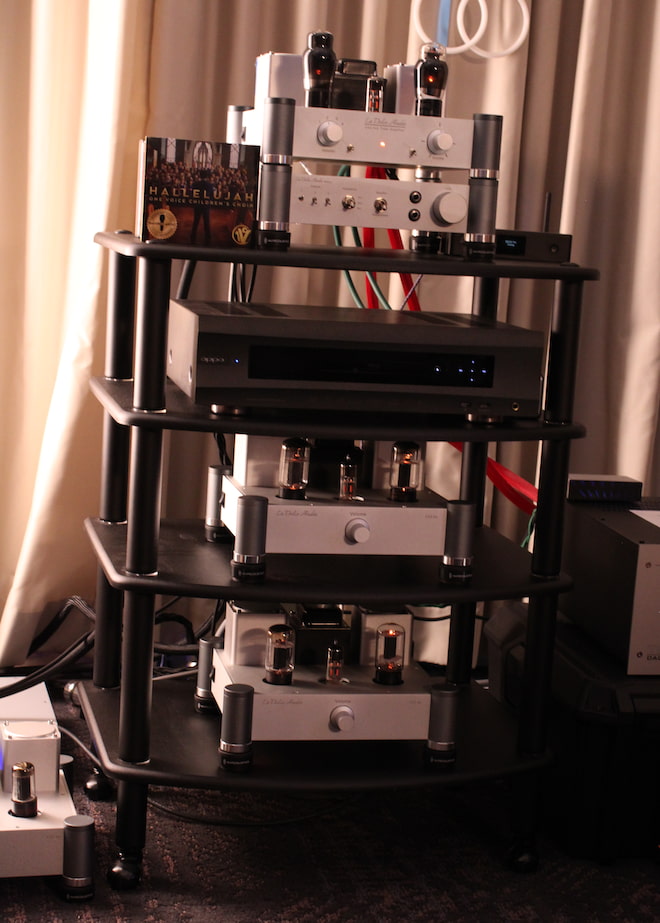
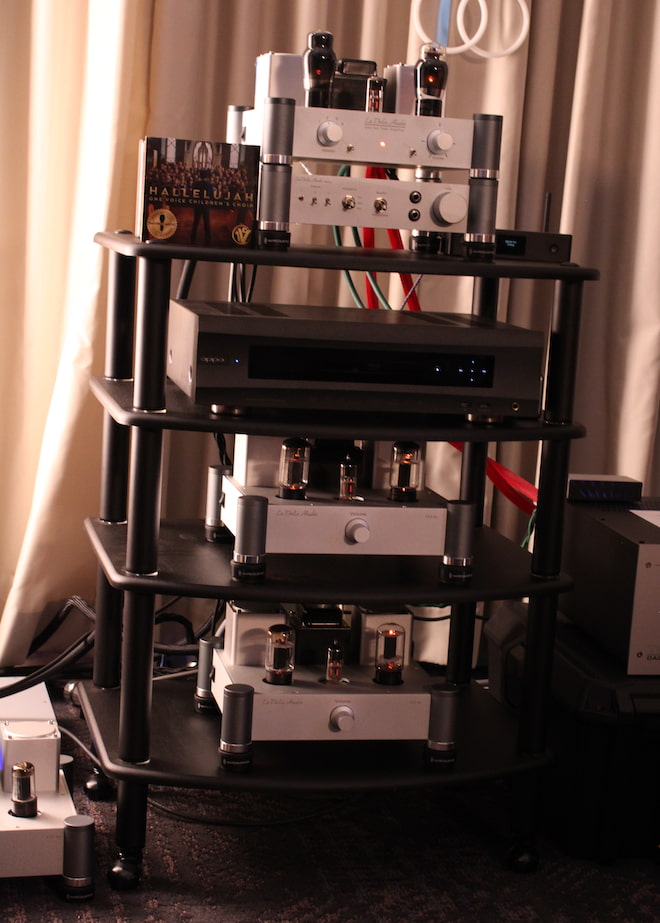
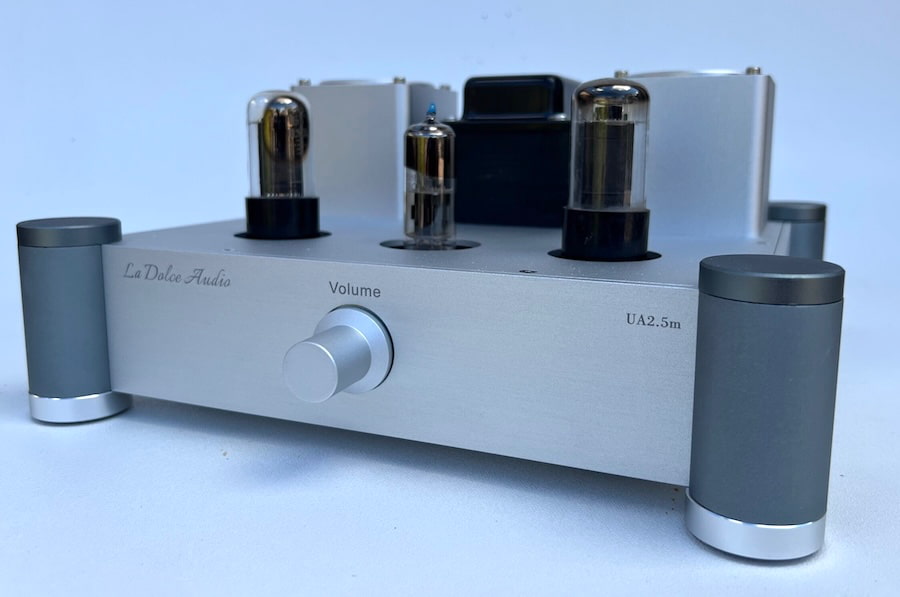
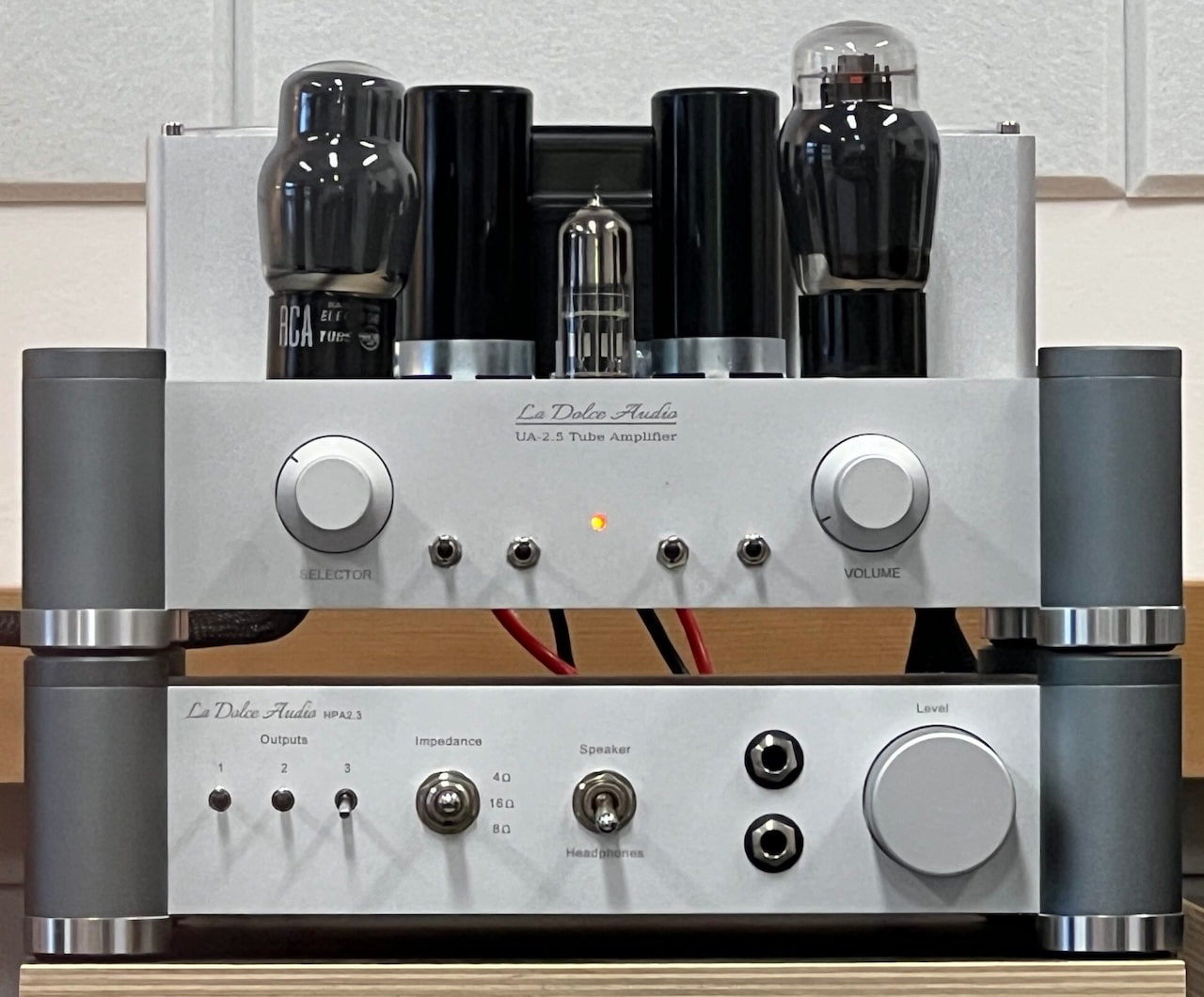






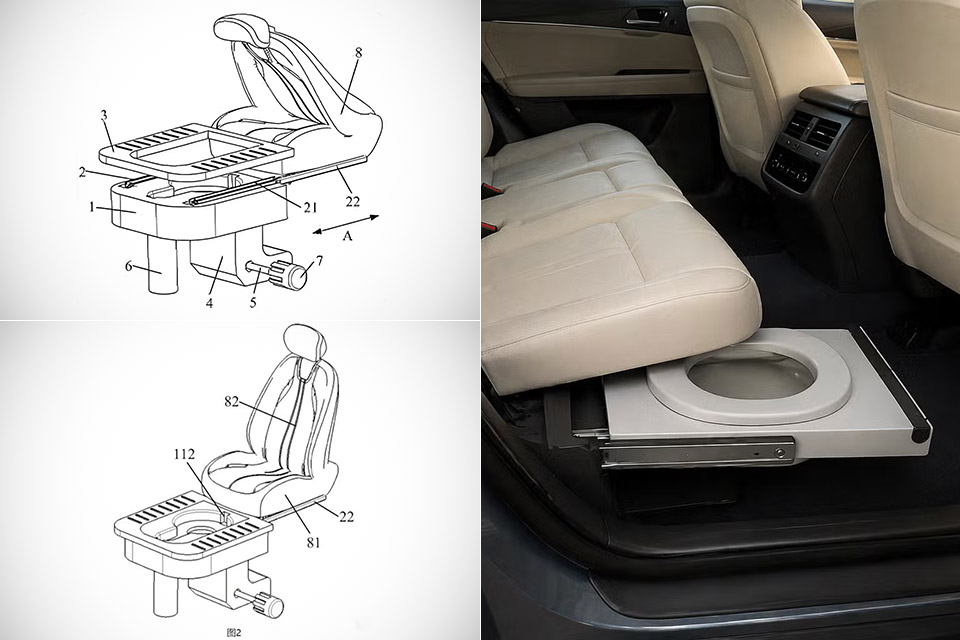
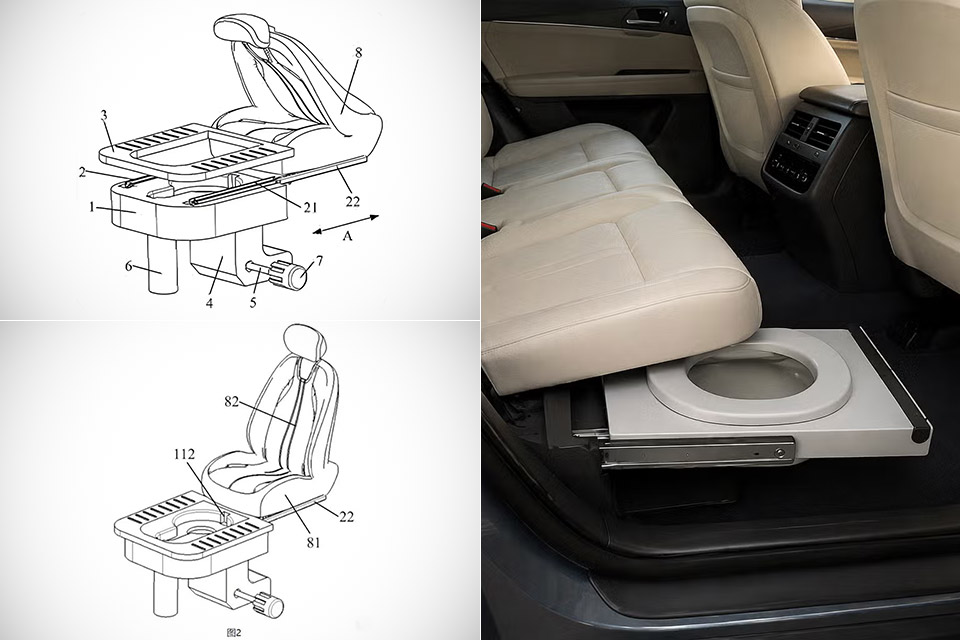
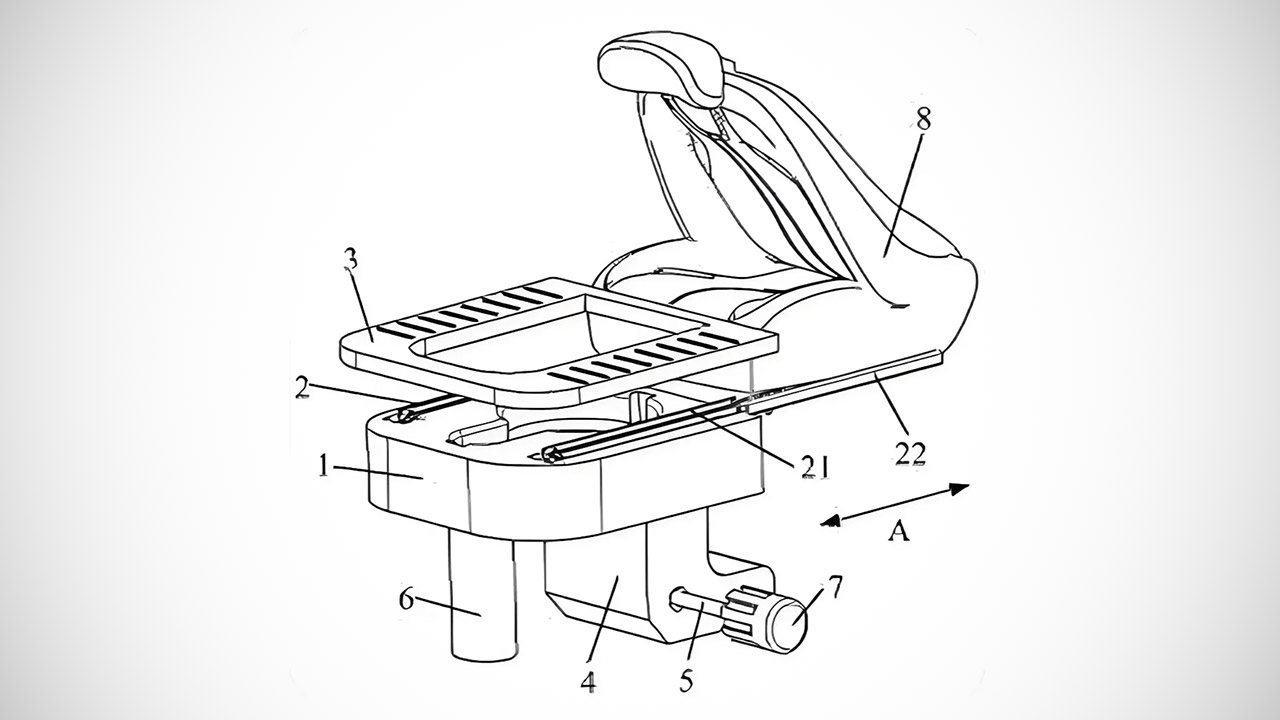

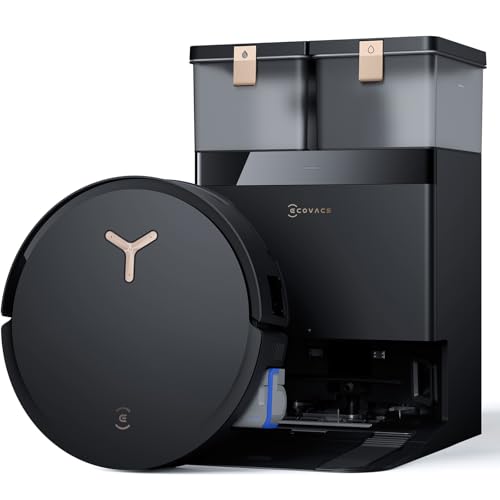


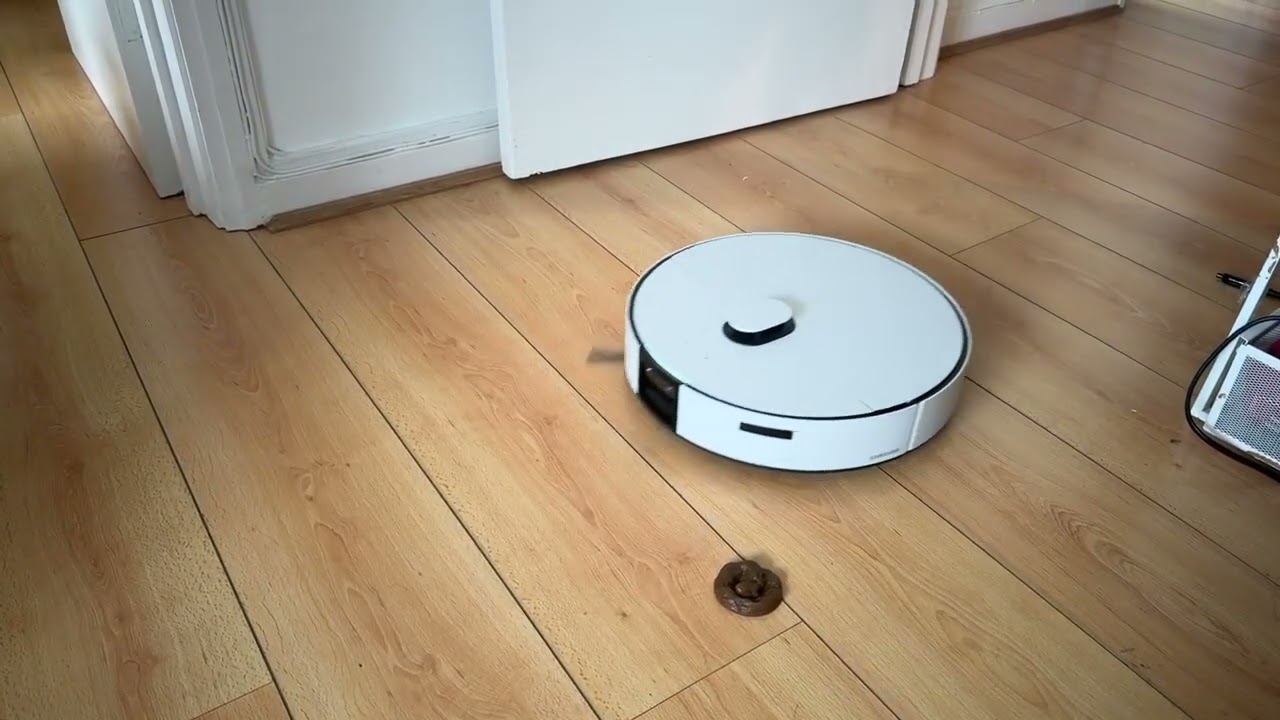



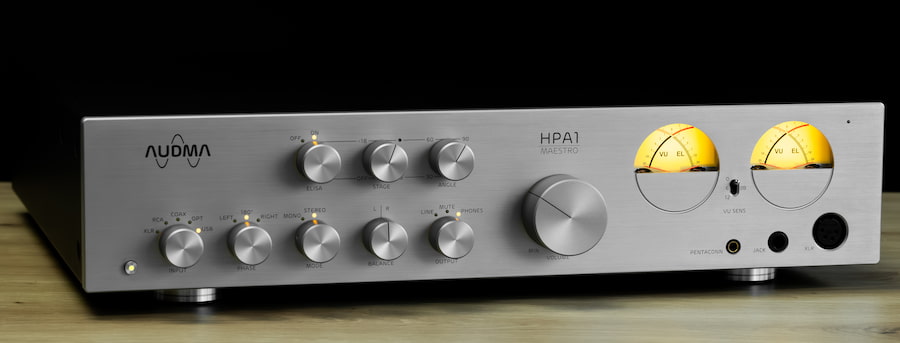
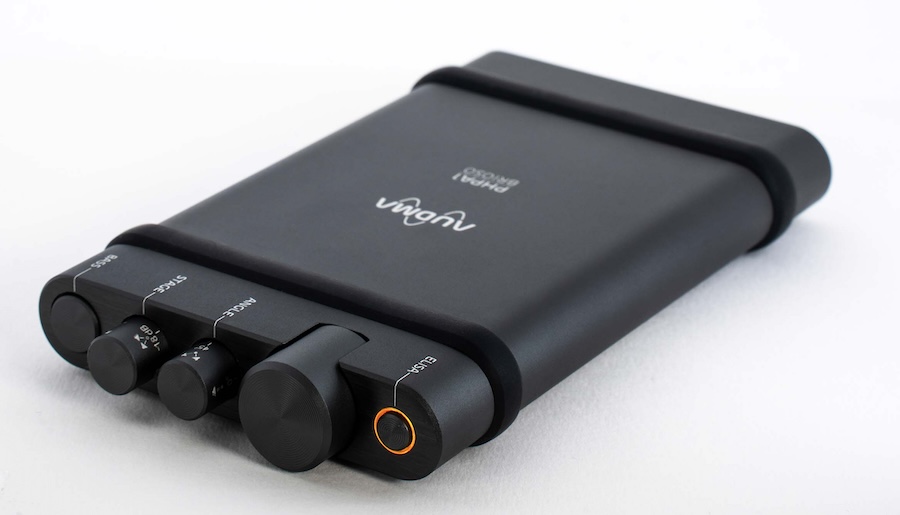
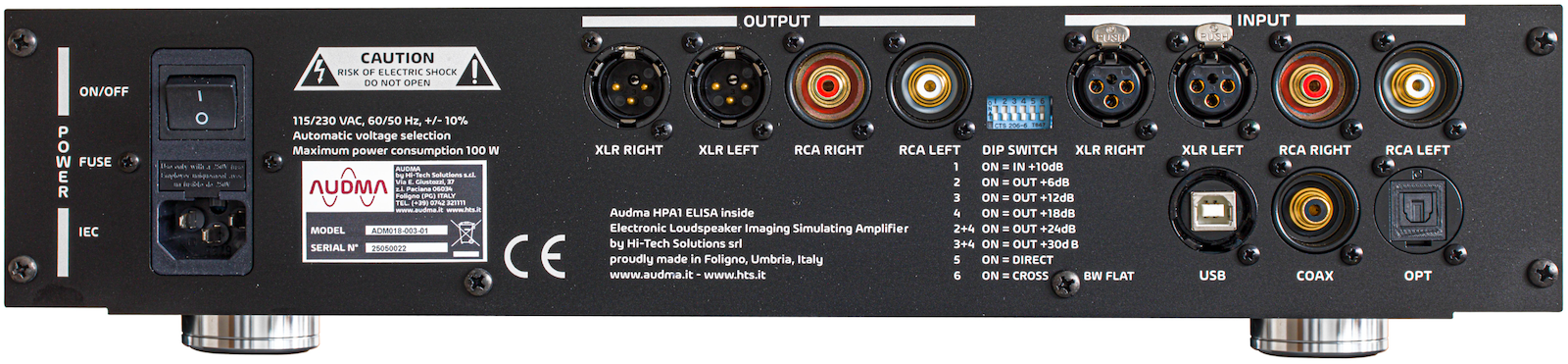
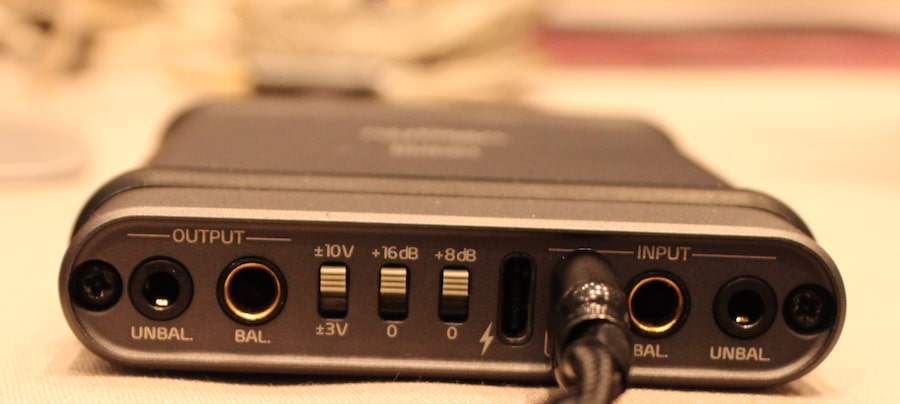



































You must be logged in to post a comment Login