




Connect with us

Tech

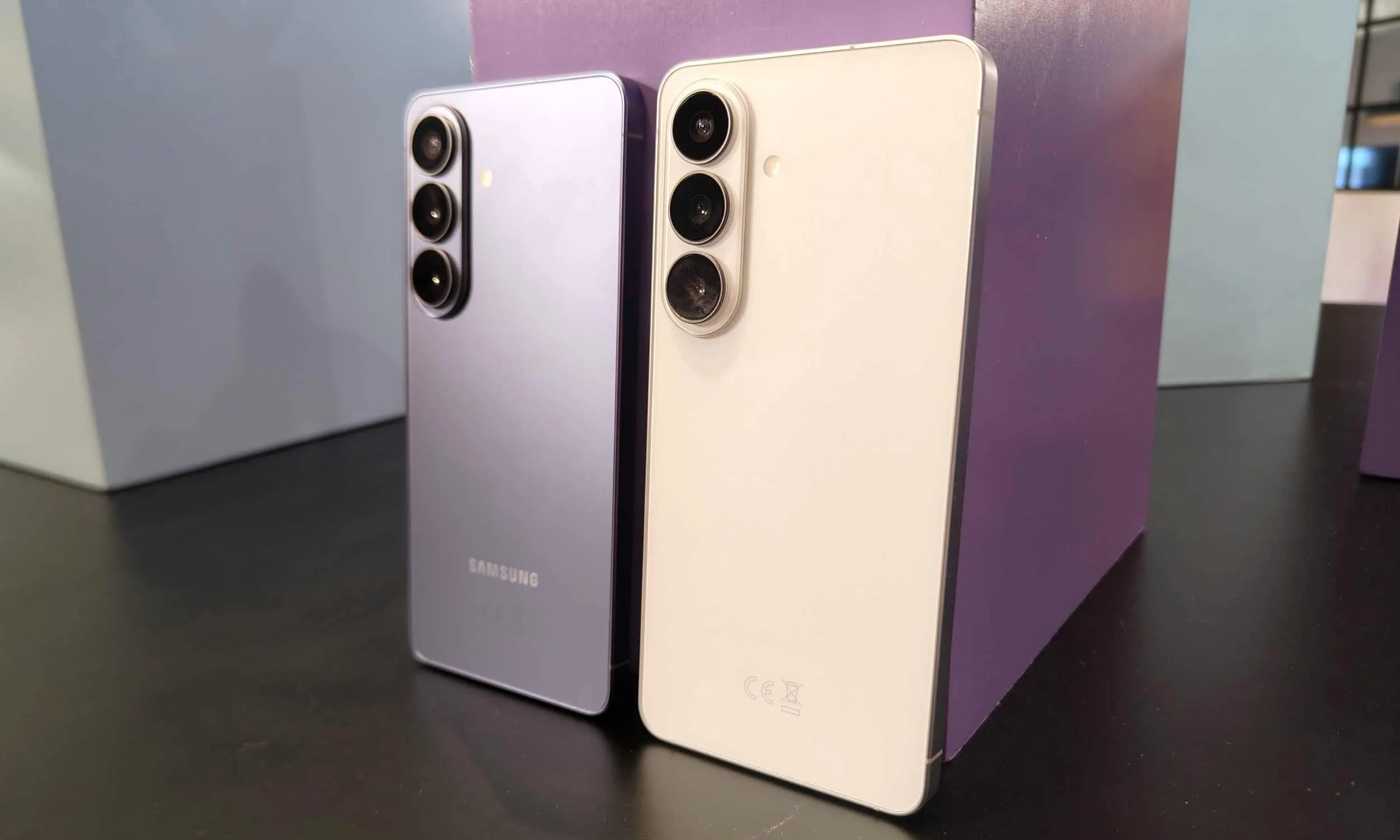
Galaxy S26 vs. Pixel 10 vs. OnePlus 15: Which Android flagship actually deserves your money?

Published

on

The Samsung Galaxy S26, OnePlus 15, and Google Pixel 10 all land within shouting distance of each other on price, run the same operating system, and target roughly the same buyer. But spend any real time with them and it becomes clear that each one is making a completely different argument for why you should hand over your money.

This piece breaks down where each phone genuinely earns its price tag — hardware, software, cameras, battery, and everything in between — so you don’t have to figure it out the hard way.

Price and availability

The Galaxy S26 and OnePlus 15 both start from $899 for the 256GB variants — OnePlus steps to $999 for the 512GB storage variant, the S26 goes higher to $1,099. Samsung launched February 25, with the phone actually in stores from March 11, 2026.

The Pixel 10 undercuts both at $799 for 128GB — and that’s the launch price. Google released it back in August 2025, which means it’s had months of discounts piled on top.

Advertisement

Galaxy S26 vs. OnePlus 15 vs. Pixel 10: Tech specs

Specifications Galaxy S26 OnePlus 15 Pixel 10
Dimensions 149.6 x 71.7 x 7.2 mm 161.4 x 76.7 x 8.1 mm 152.8 x 72 x 8.6 mm
Weight 167g 211g / 215g 204g
Build GG Victus 2 front & back, aluminum frame GG Victus 2 front, aluminum frame, glass/fiber back GG Victus 2 front & back, aluminum frame
IP Rating IP68 (1.5m, 30 min) IP68 / IP69K (2m, 30 min) IP68 (1.5m, 30 min)
Colors Cobalt Violet, Sky Blue, Black, White, Silver Shadow, Pink Gold Infinite Black, Ultra Violet, Sand Storm Indigo, Frost, Lemongrass, Obsidian
Display Type Dynamic LTPO AMOLED 2X LTPO AMOLED (BOE X3) OLED
Size 6.3 inches 6.78 inches 6.3 inches
Resolution 1080 x 2340 (411 ppi) 1272 x 2772 (450 ppi) 1080 x 2424 (422 ppi)
Refresh Rate 1–120Hz adaptive 1–165Hz adaptive 1–120Hz adaptive
Peak Brightness 2,600 nits 1,800 nits (HBM) 3,000 nits (peak)
HDR HDR10+ Dolby Vision, HDR10+, HDR Vivid HDR10+
Chipset (US) Snapdragon 8 Elite Gen 5 (3nm) Snapdragon 8 Elite Gen 5 (3nm) Google Tensor G5 (3nm)
CPU Octa-core (2 x 4.74 GHz + 6 x 3.62 GHz Oryon V3) Octa-core (2 x 4.6 GHz + 6 x 3.62 GHz Oryon V3) Octa-core (1 x 3.78 GHz X4 + 5 x 3.05 GHz + 2 x 2.25 GHz)
GPU Adreno 840 Adreno 840 PowerVR DXT-48-1536
RAM 12GB 12GB / 16GB 12GB
Storage 256GB / 512GB 256GB / 512GB / 1TB 128GB / 256GB
Storage Type UFS 4.x UFS 4.1 UFS 3.1 / UFS 4.0
OS Android 16, One UI 8.5 Android 16, OxygenOS 16 Android 16 (Stock)
Update Promise 7 major OS upgrades 4 years OS, 5 years security 7 major Android upgrades
Cameras – Main 50MP, f/1.8, 1/1.56″, OIS 50MP, f/1.8, 1/1.56″, OIS 48MP, f/1.7, 1/2.0″, OIS
Ultrawide 12MP, f/2.2 50MP, f/2.0 13MP, f/2.2
Telephoto 10MP, f/2.4, 3x optical 50MP, f/2.6, 3.5x optical 10.8MP, f/3.1, 5x optical
Video 8K@24/30fps, 4K@30/60fps 8K@30fps, 4K@120fps 4K@60fps
Selfie Camera 12MP, f/2.2, dual pixel PDAF 32MP, f/2.4, AF 10.5MP, f/2.2, PDAF
Selfie Video 4K@30/60fps 4K@60fps 4K@60fps
Speakers Stereo Stereo, Hi-Res 24-bit/192kHz Stereo
Wi-Fi Wi-Fi 7 (tri-band) Wi-Fi 7 (tri/dual-band) Wi-Fi 6E (dual-band)
Bluetooth 5.4 6.0 (aptX HD, aptX Adaptive, LHDC 5) 6.0 (aptX HD)
NFC Yes Yes Yes
USB USB-C 3.2, DisplayPort 1.2 USB-C 3.2, OTG USB-C 3.2
Satellite Yes No Yes (SOS)
Fingerprint Under-display, ultrasonic Under-display, ultrasonic Under-display, ultrasonic
Battery Capacity 4,300 mAh 7,300 mAh (Si/C) 4,970 mAh
Wired Charging 25W (55% in 30 min) 120W (50% in 15 min) 30W (55% in 30 min)
Wireless Charging 15W 50W (proprietary) 15W (Qi2)
Starting Price $899.99 (256GB) $899.99 (256GB/12GB) $799 (128GB)
Top Config $1,099.99 (512GB) $999.99 (512GB/16GB) $899 (256GB)

Samsung Galaxy S26: The most complete AI suite on a smartphone

At 7.2mm, the S26 is the slimmest phone in this comparison — noticeably so next to the OnePlus 15’s 8.1mm and the Pixel 10’s 8.6mm. Honestly, I usually prefer function over form, but the fact that S26 maintains the slimmest profile and yet provides flagship performance, is something that makes me want to change by beliefs.

The 6.3-inch 120Hz AMOLED is punchy and bright at 2,600 nits peak (I’ve used the display on the Galaxy S25, with no real-world issues or problems). What makes Samsung’s chip different is the “for Galaxy” customization — Samsung works directly with Qualcomm to tune the CPU, GPU, and NPU specifically for One UI.

Galaxy AI was already the most feature-complete AI suite of any Android phone before the S26 shipped. With One UI 8.5, Samsung widened that gap further — adding Now Nudge (context-aware screen suggestions), Now Brief (personalized daily digest), and text-prompt-based Photo Assist edits, while expanding existing tools like Audio Eraser to work inside third-party apps like Instagram and YouTube, and upgrading Smart Call screening to full live-transcription with text replies.

It goes without saying, but Galaxy AI actually offers more features than one can possibly remember and use on a day-to-day basis. But it is better to have it and not need it than to need it and realize that other brands are doing much better (I wasn’t talking about the iPhone 17 at all).

On top of that, DeX — a full windowed desktop when plugged into a monitor — has no equivalent on either the OnePlus 15 or Pixel 10. Seven years of operating system updates is probably more than you’d need, given that users change their phone every three to five years anyway.

OnePlus 15 clearly wins the hardware battle

The OnePlus 15 doesn’t win on software depth or AI features — it’s here because the hardware it ships with at $899 is genuinely difficult to argue against.

First things first, the phone comes with both IP68 and IP69K ratings — the second one means it can handle high-pressure water jets, something neither the S26 nor the Pixel 10 can claim. Neither I nor any other careful user would want to put that rating to test, but it’s there, just in case.

The OnePlus 15 runs a 6.78-inch FHD+ AMOLED at 165Hz — the highest refresh rate in this comparison, and the first display above 1080p to hit that number. Back that display up with a dedicated 3200Hz touch sampling chip and, ideal for fast-paced games.

Advertisement

Under the hood, it’s the Snapdragon 8 Elite Gen 5 — same silicon as the S26, minus Samsung’s custom prime core overclock. The camera system puts a 50MP sensor behind all three lenses — main at f/1.8, ultrawide, and a 3.5x periscope telephoto — a hardware consistency the other two don’t match.

OxygenOS 16, like the other Chinese skins atop Android 16, reminds me of Apple’s Liquid Glass interface on iOS 26. The standout is Mind Space (with Google Gemini integration) — a personal AI knowledge hub where a three-finger swipe saves anything on screen instantly: articles, photos, voice memos, screenshots. The physical Plus Key gives one-press access to it from anywhere on the phone.

Battery is where this phone just runs away from the other two — 7,300mAh against the S26’s 4,300mAh and the Pixel 10’s 4,970mAh — it’s not a close fight. Use it lightly and two days between charges is genuinely on the table. OnePlus also throws the 120W charger in the box, which neither competitor does.

Google Pixel 10: Cleanest Android and most consistent cameras

At 204g and 8.6mm, the Pixel 10 is the heaviest and thickest phone here — Google clearly isn’t chasing the slim phone crowd, and the 6.3-inch 120Hz OLED, IP68 rating, and Gorilla Glass Victus 2 are quite standard at this point.

The Tensor G5 is where things get interesting. Built on TSMC’s 3nm node — a deliberate departure from Samsung’s fabs that plagued earlier Tensors with heat issues — it still trails the Snapdragon 8 Elite Gen 5 in raw benchmarks. Google isn’t trying to win that fight. What they built instead is an NPU that’s 60% stronger than the G4’s, runs Gemini Nano 2.6x faster, and keeps 20-plus AI features running locally on the chip itself.

That software is the real argument. Pure Android, no manufacturer skin, updates arrive here first. Quarterly Pixel Feature Drops add new capabilities between OS releases — something Samsung and OnePlus don’t do.

The AI suite includes Magic Cue (cross-app contextual suggestions), Voice Translate (real-time on-device call translation in your own voice), Scam Detection (Gemini Nano-powered call screening), Call Notes (auto transcription with post-call task suggestions), and Pixel Screenshots (searchable, NotebookLM-connected screenshot library).

Speaking of which, the Pixel 10’s camera — 48MP main, 13MP ultrawide, telephoto — doesn’t impress on paper. Never has. But Google has spent three years building a reputation for the most natural, accurate shots of any Android phone without you touching a single setting, and that’s still true here.

Advertisement

It is the stock Android experience and the cameras that I’d buy the Pixel 10 for, not anything else. Battery is 4,970mAh on 30W wired charging — slowest in this comparison. However, it supports Pixelsnap wireless charging (Qi2-compatible).

Source link

Continue Reading
Click to comment

Leave a Reply

Your email address will not be published. Required fields are marked *

Tech

How to Survive Daylight Saving Time: Start Early (2026)

Published

on

Daylight saving time is coming, and it’s my least favorite version of the dreaded time change.

Losing an hour ruins the sleep of everyone in my household. It was one thing when it was just a pair of irritated adults, but now we have a 3-year-old who doesn’t understand what daylight saving is or why he should go to bed earlier than he did the night before. Sure, we’re all going to love the brighter evenings, but why did they have to go away in the first place?

The best method to survive this madness is to start early. Scientists and brands I spoke to all gave me the same advice: Start a few days early by setting your alarm 15 to 20 minutes earlier to make the time change a transition rather than a harsh loss of an hour come Sunday morning.

For both my child and me, it’s not just the audible alarm I’ll be changing but also our bedside sunrise alarm clocks. Light is one of the biggest things that can impact your circadian rhythm, and a noisy alarm has never cut it for me anyways. Here’s how a little extra light in the morning can hopefully make the entire transition easier for my family.

Advertisement

Starting Early

Waiting to deal with the time change is a recipe for serious discomfort. “Our bodies can’t shift a full hour in one day,” says Salk Institute scientist Emily Manoogian. “So if you can break it up over two to three days, it makes it a lot easier. This looks like shifting your food, light, and sleep times by a 20 to 30 minute advance for a couple of days before the DST shift.”

Manoogian says that both light and food synchronize your body clock, so these are good cues to change to help your body naturally adjust to the oncoming time change. She says that animal studies show that changing the time you eat breakfast and dinner in sync with the time change can help you to adjust much faster and return to normal life.

It will take a little more lifting to adjust your alarm each morning, but it’s better to do a little more work now than feel groggy and disoriented next week. Manoogian says that acute circadian disruptions like daylight savings shifts can result in several health issues, including insulin resistance, gut issues, anxiety, depression, and increased risky behaviors.

Just Add Light

Manoogian isn’t the only one who suggests starting earlier. Both Hatch and Lumie, makers of sunrise alarm clocks, gave me the same advice: Change your alarms a little earlier over a few days. They both also recommend using light to your advantage.

Advertisement

“Light is one of the most powerful signals for resetting your internal clock, which is why morning light exposure is especially helpful after the daylight saving transition,” says a Hatch representative.

While Lumie and Hatch both make great sunrise alarm clocks, they work differently. Hatch’s Restore 3 ($170) connects to Wi-Fi, so it can automatically update the time without you needing to change anything once daylight savings hits. You’ll also be able to easily adjust the time of your alarm in the Hatch app, letting you make quick adjustments as long as you’re within Bluetooth range of your Restore. The brand also introduced a Daylight Saving Assistant to use with kid devices like the Hatch Baby ($100), which can automatically shift a child’s schedule in small increments over several days.

Lumie, on the other hand, doesn’t connect to Wi-Fi or an app, so you need to manually change your alarms and the time on the clock. You’ll need to switch that each night yourself leading up to the time change, plus fully switching the time over Saturday night and bringing your alarm back to its original time. While it’s more work, Lumie’s alarm clocks like the Bodyclock Luxe 700FM ($259) and the Bodyclock Shine 300 ($169) are brighter than the Hatch, so it’s still a good investment.

The Models Worth Snagging

Looking for a new sunrise alarm ahead of Sunday? Here are the ones to get.

Advertisement

Lumie

Bodyclock Luxe 700FM

Source link

Advertisement
Continue Reading

Tech

MacBook Neo name chosen to reflect its 'fun, friendly, and fresh' look

Published

on

An interview reveals Apple’s approach with MacBook Neo was a complete rethink of a budget-friendly laptop, not simply rehashing old tech at a lower price.

Open yellow Apple laptop on a light desk, viewed from behind, with white keyboard, slim ports on the side, and people standing in the dim background
The MacBook Neo is a new budget-friendly product

The MacBook Neo is a brand new category in the lineup that has a new-to-Apple moniker to go with it. It’s not just a new laptop, but a new market for the premium product seller.
According to an interview with Director of Mac Product Marketing, Colleen Novielli conducted by Techradar, the MacBook Neo is meant to be competitive in the $599 price range. It brings Apple’s attention to detail and premium materials to a product nearly half the price of the MacBook Air.
Continue Reading on AppleInsider | Discuss on our Forums

Source link

Continue Reading

Tech

How to watch India vs England: Free Streams, TV Channels

Published

on

England and India meet in the semi-final of a T20 World Cup for the third time in a row. On the previous two occasions, the winner has gone on to lift the trophy. Neither side has looked like the complete package so far, although England have exceeded pre-tournament expectations.

Source link

Advertisement
Continue Reading

Tech

Microsoft, Europol take down global phishing as a service network which was able to bypass 2FA with ease

Published

on


  • Europol leads multinational operation against Tycoon 2FA
  • Platform enabled large-scale phishing with MFA bypass
  • Authorities dismantled core infrastructure and seized domains

Tycoon 2FA, one of the largest phishing-as-a-service (PhaaS) platforms in the world, has been taken down after a global coordinated law enforcement operation.

The operation was led by Europol, and included police forces from Latvia, Lithuania, Portugal, Poland, Spain, and the United Kingdom.

Source link

Continue Reading

Tech

BenQ ScreenBar Halo 2 review: ideal desk lighting for nearly any situation

Published

on

BenQ is back with the ScreenBar Halo 2 to light up your workspace with not just one but two highly customizable light sources.

Cozy dimly lit wooden desk with computer displaying misty forest, slim light bar above monitor, compact keyboard, white mouse, headphones, coffee mug, and small accessories nearby
BenQ ScreenBar Halo 2

I got my first BenQ ScreenBar all the way back in February of 2020. While I thought it was somewhat novel, I told myself, “Surely this isn’t going to be something I use regularly.”
I didn’t like the utilitarian aesthetic, and I’d spent years illuminated only by my monitor. Was there ever going to be a real reason that I’d need to have a light attached directly to my monitor?
Continue Reading on AppleInsider | Discuss on our Forums

Source link

Continue Reading

Tech

Anthropic CEO Dario Amodei calls OpenAI’s messaging around military deal ‘straight up lies,’ report says

Published

on

Anthropic co-founder and CEO Dario Amodei is not happy — perhaps predictably so — with OpenAI chief Sam Altman. In a memo to staff, reported by The Information, Amodei referred to OpenAI’s dealings with the Department of Defense as “safety theater.”

“The main reason [OpenAI] accepted [the DoD’s deal] and we did not is that they cared about placating employees, and we actually cared about preventing abuses,” Amodei wrote.

Last week, Anthropic and the U.S. Department of Defense (DoD) failed to come to an agreement over the military’s request for unrestricted access to the AI company’s technology. Anthropic, which already had a $200 million contract with the military, insisted the DoD affirm that it would not use the company’s AI to enable domestic mass surveillance or autonomous weaponry.

Instead, the DoD — known under the Trump administration as the Department of War — struck a deal with OpenAI. Altman stated that his company’s new defense contract would include protections against the same red lines that Anthropic had asserted.

Advertisement

In a letter to staff, Amodei refers to OpenAI’s messaging as “straight up lies,” stating that Altman is falsely “presenting himself as a peacemaker and dealmaker.”

Amodei might not be speaking solely from a position of bitterness, here. Anthropic specifically took issue with the DoD’s insistence on the company’s AI being available for “any lawful use.” OpenAI said in a blog post that its contract allows use of its AI systems for “all lawful purposes.”

“It was clear in our interaction that the DoW considers mass domestic surveillance illegal and was not planning to use it for this purpose,” OpenAI’s blog post stated. “We ensured that the fact that it is not covered under lawful use was made explicit in our contract.”

Techcrunch event

Advertisement

San Francisco, CA
|
October 13-15, 2026

Critics have pointed out that the law is subject to change, and what is considered illegal now might end up being allowed in the future.

Advertisement

And the public seems to be siding with Anthropic. ChatGPT uninstalls jumped 295% after OpenAI made its deal with the DoD.

“I think this attempted spin/gaslighting is not working very well on the general public or the media, where people mostly see OpenAI’s deal with the DoW as sketchy or suspicious, and see us as the heroes (we’re #2 in the App Store now!),” Amodei wrote to his staff. “It is working on some Twitter morons, which doesn’t matter, but my main worry is how to make sure it doesn’t work on OpenAI employees.”

Source link

Advertisement
Continue Reading

Tech

5 Viral ‘Do-It-All’ Tools Users Say Are Actually Useful

Published

on


It’s not hard to see the appeal of all-in-one tools. When it comes to getting things done, many of us prize efficiency nearly as much as quality and performance, if not more. Whether it’s an everyday carry product, where combining as many functions as possible is important for portability, or a more specialized multipurpose tool that saves the time and hassle of switching between devices, multi-tools have their place in our lives.

Some multi-tools will even go viral as users discover them and all that they can do. You can often find products getting buzz online, whether through various subreddits, price spikes, or a sudden glut of TikTok and YouTube videos showcasing and reviewing them. Not all viral all-in-one tools come from the best multi-tool brands on the market, though. They say there’s no such thing as bad press, but that applies to the people selling products with said bad press — not the ones using them.

Advertisement

Some tools may go viral because of their interesting look, as all-in-one designs often result in creative, if not downright funky, forms. Others do become popular specifically because they work well, justifying their utility, whether because they perform well or handle multiple functions simultaneously. Based on user feedback, online discussions, and expert reviews, here are five viral “do-it-all” tools that are actually useful. More information on how these products were evaluated can be found at the end of this list.

Advertisement

1. Wallet Ninja

Sometimes minimalist or otherwise unique wallet designs go viral, but the Wallet Ninja isn’t one such product. Instead, it’s an everyday-carry device that slips right into your wallet, making it an invaluable mini multitool perfect for daily use. That functionality — alongside its downright cool design — is a big reason it’s one of the viral multi-tools on TikTok, with excited users showing it off to their followers.

If you’re not into TikTok, you can also find the Wallet Ninja in action on YouTube. After testing it, Everyday Tactical Vids gave a measured, though not gushing, positive review of the apparatus. The reviewer finds that, like many multi-tools, its various functions can be performed more effectively with dedicated tools — if you need to unscrew something, a screwdriver would be faster and easier. However, they note that its compact size offers a benefit that multiple tools simply cannot, and specifically say that it can be very useful on the go, especially when flying, as it’s often allowed through security.

The Wallet Ninja’s TSA-friendly design is also cited by EricTheCarGuy in their video review, who confirms they’ve successfully taken it through security. They add that its utility and role as a “conversation starter” are other major points in its favor, and commend the tool’s strong steel construction, noting that it barely bends. There are actually a few different Wallet Ninja models available, including the Wallet Ninja 2.0, which comes in hot pink as well as black. The flagship tool boasts 19 functions — four types of openers, four screwdrivers, six hex wrenches in different sizes, and five other EDC implements.

Amazon sells the Wallet Ninja for about $15, though you can save money by buying two- and three-packs.

Advertisement

2. Gordon 20-in-1 Multi-Tool

Multi-tools built around a core set of pliers are a dime a dozen, so it’s notable when one goes viral. The Gordon 20-in-1 Multi-Tool from Harbor Freight earned lots of buzz last year, thanks in part to the tool effectively being a clone of — and cheaper alternative to — long-popular Leatherman Wave. Gordon’s multi-tool has a straightforward, gray, stainless-steel look and is packed with implements, including needle-nose pliers, scissors, drivers, a wire cutter, a knife, and more — all of which lock into place for added stability and protection. Despite all these functions, it weighs less than a pound and is just over four inches long.

Advertisement

Not only does it resemble and function like Leatherman’s multi-tool, but, according to The New York Times Wirecutter, Gordon’s device is superior as well. In addition to being much more affordable, Wirecutter’s reviewer praised Harbor Freight’s multi-tool for including features the Wave lacks, such as a gut hook and glass breaker. The ability to cut seat belts and break windows quickly makes it especially useful to keep in your car.

While many people who’ve operated the Gordon 20-in-1 Multi-Tool — 90% of surveyed Harbor Freight customers recommend it — confirm its usefulness, not everyone is so gung-ho about the product. A GearPatrol reviewer explicitly says they “won’t buy Harbor Freight’s viral Leatherman dupe” for multiple reasons, including that it’s unclear how well it’s built. The Leatherman Wave is constructed from durable 420HC steel, whereas Harbor Freight only describes Gordon’s makeup as stainless steel, which GearPatrol suspects is likely not as strong as Leatherman’s chosen alloys. Generally, though, users don’t seem to mind this possible downside.

Harbor Freight sells the Gordon 20-in-1 Multi-Tool for $39.99.

Advertisement

3. RAK Multi-tool Pen

Pliers and knives are common bases for multi-tools, but those built around a pen may be even more suited for everyday carry, since a pen often gets much more use. Not all cool multifunction pens with built-in gadgets are alike, though, and can differ greatly in quality. One brand that’s often mentioned when the topic comes up is RAK, whose multi-tool has a strong 4.6 out of 5 overall customer rating on Amazon, based on over 12,500 user reviews.

RAK says its Multi-tool Pen has a durable and heavy-duty build. Since it’s made of aluminum, the thin device stays very lightweight. In addition to being a fully functional ink pen, the multi-tool offers several other functions: a stylus tip, a bubble level, a Phillips screwdriver, a bottle opener, an LED light, and two rulers (one metric, one standard). It’s also priced affordably enough to make it a smart gift idea or stocking stuffer that’s a bit outside the box.

Advertisement

Its value as a gift is mentioned in several positive user reviews, and even more reviews applaud the quality and utility of RAK’s Multi-tool Pen, confirming that the product is sturdy and well-made. One reviewer notes it’s useful for quickly measuring small items, and another says the bottle opener is useful for prying. This owner adds that the pen works well as, well, a pen, reporting that it “writes very smooth with nice ink distribution and no smudge even on wood or drywall.” A small number of mixed-to-negative reviews say it could be more durable, and a few disappointed owners say the pen is too large or heavy for an EDC pen.

Amazon sells a 2-pack of the RAK Multi-tool Pen for $19.99, which includes two ink refills.

Advertisement

4. Hori-Hori Knife

Some “do-it-all” tools are more specialized than general-purpose EDC multi-tools. For example, one product that’s gone viral in gardening and landscaping circles is the hori-hori knife. While it is indeed a knife, it also gives users everything they need to plant or transplant in a single tool — “hori” comes from the Japanese onomatopoeia for “dig.” It can also be used for weeding and testing soil moisture. One side is a flat, sharp knife for cutting — whether it’s twigs, roots, or bags of topsoil — and the other is serrated for sawing thicker material. Crucially, both blades are part of its trowel-shaped base, which enables users to dig, and a scale is etched into the shovel so users can get the precise depth needed for planting.

The hori-hori knife is so useful in the yard that the entire tool type has gone viral — not just one specific product. For the most part, hori-hori knives are very similar no matter who makes them, though they may differ a bit in size, material, and additional features, like belt clip holes or included sheaths. Amazon’s top-rated hori-hori knife from Perwin features an aesthetically pleasing black blade and a walnut handle.

A more affordable option is the Akakd Hori Hori, one of the best Amazon tools for gardeners, which comes with a pair of non-slip gardening gloves. Showing what the Sensei Hori Hori Knife can do, Nature’s Always Right extols the pros of the tool while mentioning that it’s particularly useful for harder and/or more clay-based soil, as well as getting rid of infamously stubborn Bermuda grass. The review notes that a sharper tool would be better for harvesting, however.

Advertisement

Amazon sells the Perwin Hori Hori Garden Knife for $24.99.

Advertisement

5. Leatherman Skeletool

Leatherman offers several kinds of “do-it-all” multitools, but one of the most popular is its Skeletool, which you’ll often find users praising or recommending in subreddits like r/multitools and r/EDC. A post on r/BuyItForLife asks redditors for their favorite multitool, and the Skeletool is mentioned most often, with users highlighting its overall utility and its compact, lightweight design, which makes it easy to keep in your pocket all day. One user says they’ve used the tool around the globe for “rock climbing, caving, all my search and rescue missions,” and other applications, adding that they even keep a backup. Another appreciates that its knife function can be used without opening the pliers.

Another advantage for some users is that the Skeletool is made locally, as Leatherman is one of the many brands that still make tools in the U.S.A. Even those who use and praise the tool note certain drawbacks, though, such as its pliers being uncomfortable to use and too fragile for some applications. In an r/Leatherman post calling the Skeletool a “game-changer,” a commenter bemoans the lack of a scissors function.

The Leatherman Skeletool is pliers-based, equipped with both needlenose and standard options. The 7-in-1 tool includes five other implements: wire cutters, hard-wire cutters, a bottle opener/carabiner, a bit driver, and a 420 high-carbon combo knife. The tool comes in a stainless steel gray, but several other colorful styles are available, including sublime green, denim blue, and coyote tan.

Amazon sells the Leatherman Skeletool starting from $89.99.

Advertisement

How these do-it-all tools were evaluated

To determine which “do-it-all” tools users actually find useful, a variety of sources were consulted. These include professional reviews from reputable publications, such as GearPatrol and The New York Times Wirecutter, whose experts spend hands-on time testing products before critiquing them. Video breakdowns and reviews on social media, including YouTube, were also researched, where multi-use tools could be seen in action alongside expert feedback from reviewers with thousands of subscribers and strong reputations for their reviews.

Advertisement

User reviews from average owners were also sought on retail websites like Harbor Freight’s and Amazon, where both pros and cons from firsthand experience can be found, supplemented by details like how the tools are used and for how long. Similar firsthand information can be found in online forums such as Reddit, where many users not only share their two cents but also engage in back-and-forth conversations about the pros and cons of tools, which often add insight to isolated reviews.

It’s also often easy to find which products are currently going viral using such online forums, where “meme” tools often become hot topics. Other tools determined to be or have been viral were based on sales numbers, descriptions from professional publications, and aggregators and tags found on social media, like TikTok’s viral multi-tools page. All recommended tools included in this list are currently available for purchase.

Advertisement


Source link

Continue Reading

Tech

Today’s NYT Mini Crossword Answers for March 5

Published

on

Looking for the most recent Mini Crossword answer? Click here for today’s Mini Crossword hints, as well as our daily answers and hints for The New York Times Wordle, Strands, Connections and Connections: Sports Edition puzzles.


Today’s Mini Crossword was a bit tricky. I was thrown off by 1-Down, as it turns out there are multiple slow-moving creatures whose names would fit in a five-letter space. Read on for all the answers. And if you could use some hints and guidance for daily solving, check out our Mini Crossword tips.

If you’re looking for today’s Wordle, Connections, Connections: Sports Edition and Strands answers, you can visit CNET’s NYT puzzle hints page.

Advertisement

Read more: Tips and Tricks for Solving The New York Times Mini Crossword

Let’s get to those Mini Crossword clues and answers.

completed-nyt-mini-crossword-puzzle-for-march-5-2026.png

The completed NYT Mini Crossword puzzle for March 5, 2026.

Advertisement

NYT/Screenshot by CNET

Mini across clues and answers

1A clue: Poli ___ (college major)
Answer: SCI

4A clue: Person with a superior attitude
Answer: SNOB

5A clue: Word whose letters are appropriately found from left to right in … CHARISMA
Answer: CHARM

Advertisement

6A clue: … PRECIPITATION
Answer: RAIN

7A clue: … UNSIGHTLY
Answer: UGLY

Mini down clues and answers

1D clue: Slow-moving creature
Answer: SNAIL

2D clue: Like a groan-inducing joke
Answer: CORNY

Advertisement

3D clue: Co. that created the first floppy disk
Answer: IBM

4D clue: Furry variety of carpet
Answer: SHAG

5D clue: World Class Wreckin’ ___, music group in which Dr. Dre got his start
Answer: CRU

Advertisement

Source link

Continue Reading

Tech

Google will start shipping a new Chrome version every two weeks

Published

on


Google has announced a notable shift in how Chrome updates will roll out. Starting September 2026, the Chromium-based browser will move to a two-week release cycle. In practice, that means a new major Chrome version every 14 days, though Google notes that early-stage builds and experimental channels will follow slightly different rules.
Read Entire Article
Source link

Continue Reading

Tech

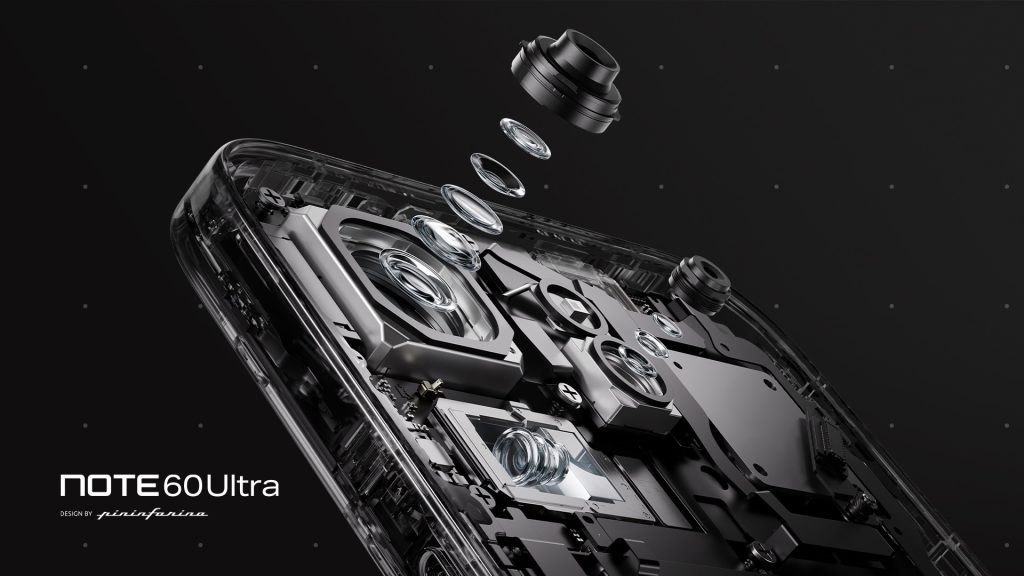
Designed By Pininfarina, Infinix NOTE 60 Ultra Debuts at MWC 2026

Published

on

Smartphone design is pretty much the same in 2026. You get a slab of metal and glass with a big, bulky camera module on the back, and there’s only so much you can do with it. Infinix seems to have looked at that trend and said, “Screw it.” That’s because, to design its new flagship phone, the Hong Kong-based smartphone maker called in the legendary Italian design firm Pininfarina. For the uninitiated, these guys were a coachbuilder responsible for designing some of the most iconic cars, including the Ferrari 250 GT and the Testarossa.

Pininfarina has employed some of that expertise to design the Infinix Note 60 Ultra. So, how is it different? Instead of a large camera bump, Infinix has opted for an aluminum unibody design with what it calls the world’s first Uni-Chassis camera module. The entire rear panel is formed from a single sheet of Corning Gorilla Glass Victus, creating a smooth, uninterrupted surface. The display is a 1.5K Ultra HDR panel with a 144Hz refresh rate and up to 4500 nits of peak brightness.

The design includes a “Floating Taillight” element on the back that lights up when the phone powers on. Like the new Xiaomi 17 series, there’s also a hidden Active Matrix display embedded in the rear panel that can display notifications, icons, or a pixel-style virtual companion. As expected, colors on the Note 60 Ultra are inspired by Italian racecars, including Torino Black, Monza Red, Amalfi Blue, and Roma Silver.

Pretty Outside, Powerful Inside

Infinix isn’t leaving any stone unturned with the Note 60 Ultra. It’s powered by the MediaTek Dimensity 8400 Ultimate chipset built on a 4nm process. For context, the processor houses one Cortex-A725 core running at 3250 MHz, three Cortex-A725 cores running at 3000 MHz, and four Cortex-A725 cores running at 2100 MHz. Coupled with 12GB of RAM and 256GB of storage, the performance should be good enough for an AnTuTu score of over 1.6 million.

XOS 16, based on Android 16, will run the show, and it introduces a redesigned interface called GlowSpace. The software also integrates several AI-driven tools, including an Advanced Health Monitor for tracking vitals, AI-powered file organization, and an adaptive knowledge base that evolves based on user behavior. The company has promised three years of major Android updates and five years of security patches.

Advertisement

Another neat feature of the Note 60 Ultra is support for two-way satellite calling and messaging. It allows users to stay connected even when they’re outside traditional cellular coverage. This could be particularly useful in remote locations or during network outages.

Battery life is handled by a massive 7,000mAh silicon-carbon battery, which Infinix says has self-healing capabilities that can restore up to 1% of battery health every 200 charging cycles. It’ll be very interesting to test that feature long-term. Charging is fast, too. The device supports 100W wired charging and 50W wireless charging.

Cameras

Despite the not-so-huge camera bump, the Note 60 Ultra packs a triple-camera setup headlined by a 200MP Samsung ISOCELL HPE sensor. It’s paired with a 50MP Samsung ISOCELL JN5 periscope telephoto camera and a 112-degree ultra-wide camera.

The telephoto system supports multiple zoom levels, including a 2x optical crop, 3.5x optical zoom, and up to 7x lossless digital zoom. Infinix says the system can reach up to 100x zoom for long-distance shots. The phone also supports Ultra HDR capture using Infinix’s XDR Image Engine, which should improve dynamic range and preserve details, though I’m yet to test its capabilities myself.

Source link

Advertisement
Continue Reading

Trending

Copyright © 2025