

Crypto World
Berkshire Hathaway begins repurchasing shares, CEO Greg Abel buys $15 million in stock

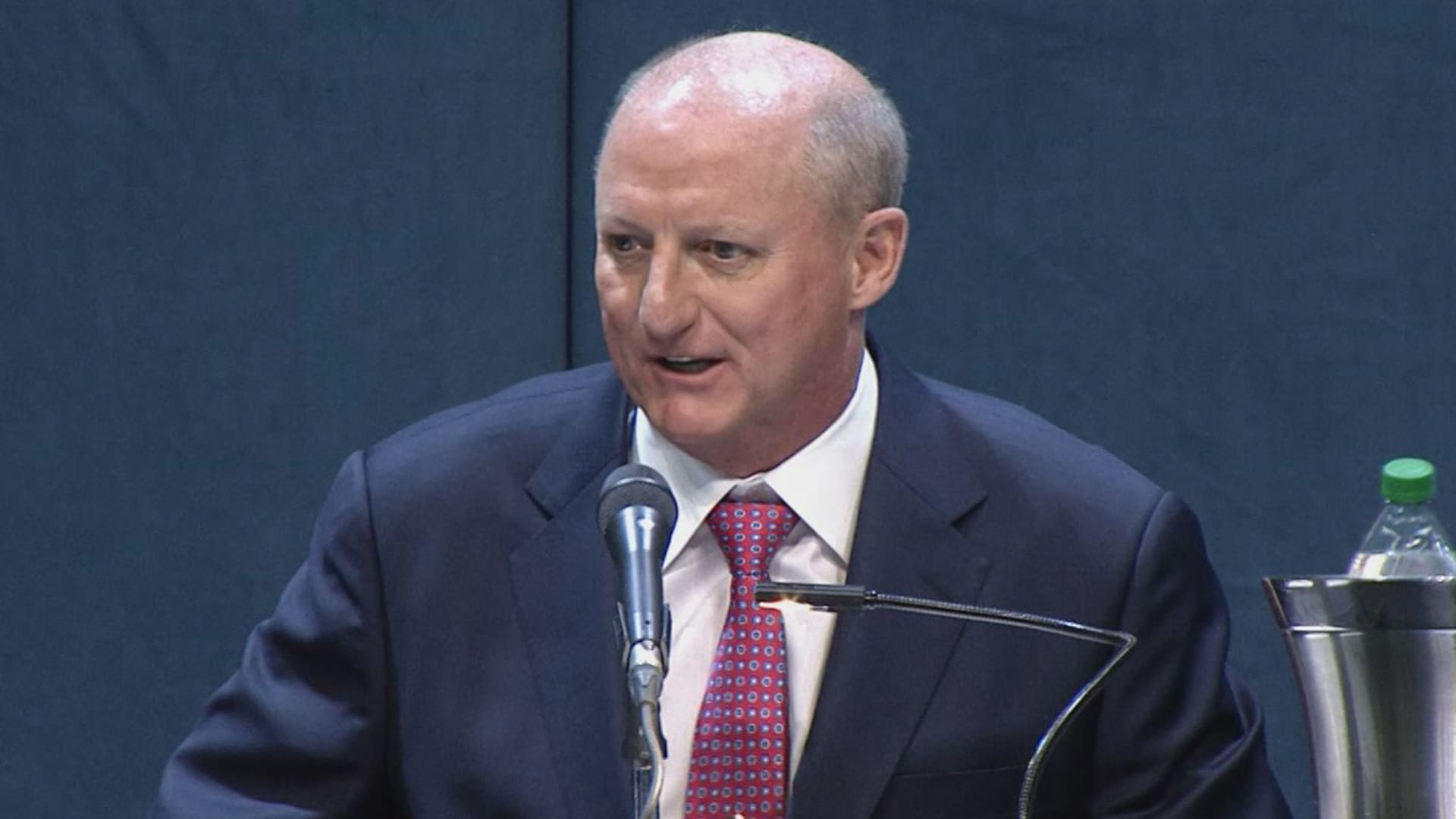
Greg Abel speaks during the Berkshire Hathaway Annual Shareholders Meeting in Omaha, Nebraska on May 3, 2025.
CNBC
Berkshire Hathaway said Thursday it has resumed repurchasing its own shares for the first time since 2024 and separately new CEO Greg Abel purchased $15 million worth of stock himself, an amount equal to his after-tax annual salary.
Abel told CNBC he will continue using his full salary amount to purchase Berkshire shares every year.
The Omaha-based conglomerate disclosed in a regulatory filing that it began buying back its Class A and Class B shares on Wednesday. Berkshire’s policy allows the company to repurchase stock whenever the chief executive, after consultation with the chairman of the board i.e. Warren Buffett, believes that the repurchase price is below Berkshire’s intrinsic value, according to its annual report released over the weekend.
“I absolutely talked to Warren. So how I approached it was, obviously looking at the value, having a view of intrinsic value, consulted with Warren relative to the value and the timing,” Abel told CNBC’s “Squawk Box” on Thursday.
Abel said normally the company wouldn’t disclose the start of the repurchases. “We felt it was important to communicate to our shareholders, our partners, our owners, with the transition of leadership,” he said.
Abel took over for Buffett, 95, in January. Shares of Berkshire have fallen 3% this year and 10% from their record high last May. The stock came under pressure earlier this week after the firm reported a near 30% decline in its operating earnings for the fourth quarter, due in large part to weakness in the insurance business.
The last time Berkshire repurchased shares was the second quarter of 2024. Berkshire B shares added 1% in early trading Thursday following the news.
Abel’s personal buying
In a separate filing, Abel disclosed that he personally purchased $15 million worth of the conglomerate’s stock. The 62-year-old executive’s purchase came a little more than two months into his tenure running the Omaha-based conglomerate.
The transaction increases his personal stake in Berkshire at a time when some investors have questioned whether Buffett’s successor has comparable “skin in the game.” Buffett owns about 37.5% of Berkshire’s Class A shares and has no intention of selling his stake aside from his charitable giving. He has previously said the conglomerate represents roughly 99.5% of his net worth.
“Absolute alignment with our shareholders, our partners, our owners, is critical,” Abel told CNBC. “I already have some shares, but the goal was to continue to demonstrate alignment with them… As the CEO, I absolutely, obviously, believe in Berkshire. with the transition from Warren, and I inherited a company that has an incredible foundation.”
Before the latest purchase, Abel, a longtime Berkshire executive who previously oversaw the company’s non-insurance operations, owned $164.4 million worth of Berkshire stock, according to FactSet.
The CEO said he was committed to doing this every year he is at the helm of Berkshire, which Abel said he hopes is “20 years.”
Abel has emphasized continuity with Buffett’s investment philosophy since taking the helm. He used his first annual shareholder letter over the weekend to reassure investors that the conglomerate’s culture of financial conservatism and disciplined investing will continue “into perpetuity.”

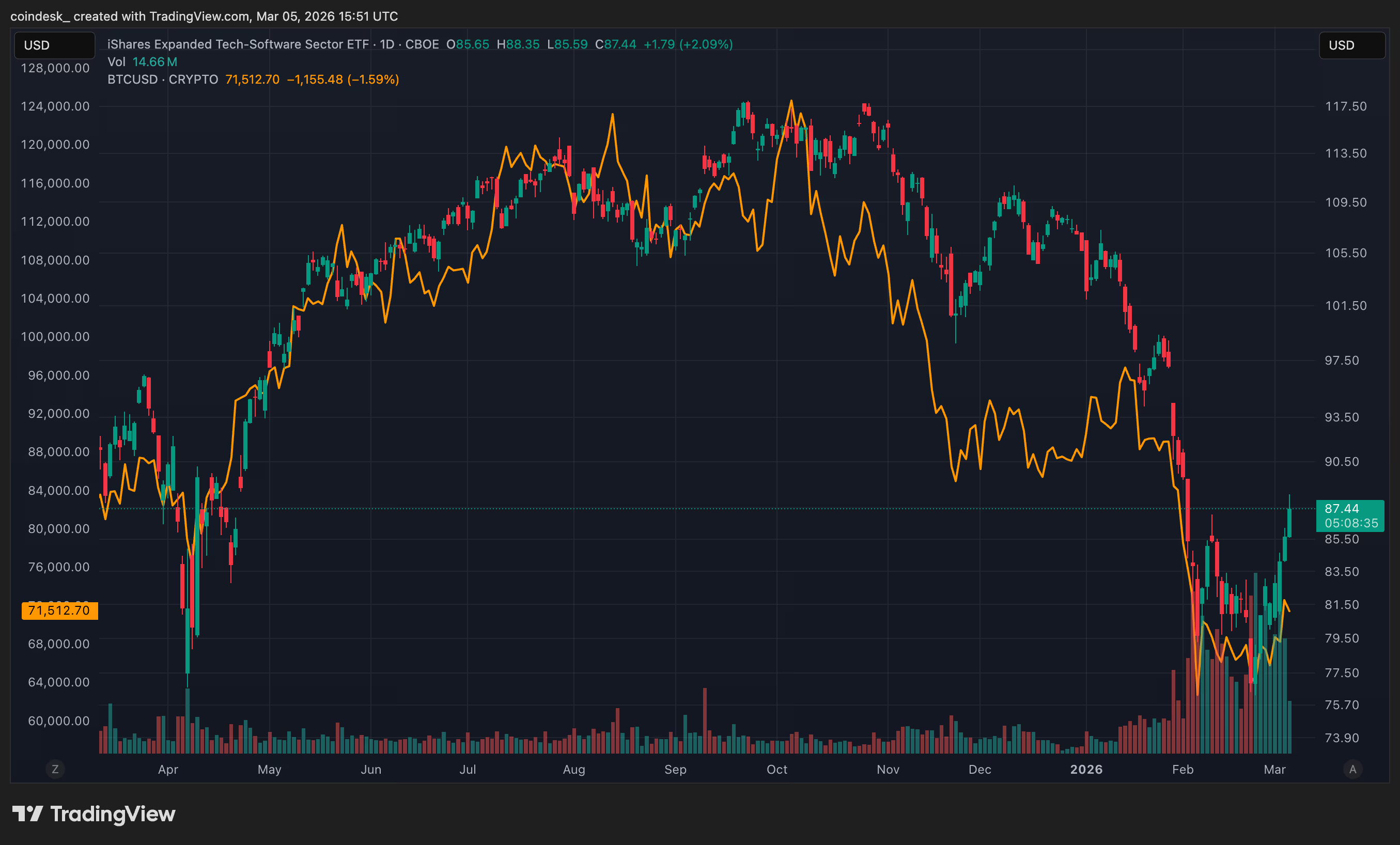
Bitcoin’s early-week rally began to fade after U.S. markets opened Thursday, sending the cryptocurrency by nearly 2% over the past 24 hours to $71,400.
The move comes alongside declines in broad equity markets as the Iran war shows little sign of moving to a quick conclusion, sending oil higher by 5.3% to $78.70 per barrel. The Dow Jones Industrial Average is down 1.4% and S&P 500 by 0.7%.
The Nasdaq, though, is down just 0.4% as the previously battered software sector catches a major bid. The iShares Expanded Tech-Software Sector ETF (IGV) is ahead 2% and now up by about 9% over the past five sessions.
That divergence is notable, as bitcoin has been closely linked to the software sector, both tumbling in concert since October amid investor concerns over AI disruption and each bouncing from their lows in tandem in recent days.

New bull or bear market bounce?
Bitcoin “isn’t in the clear yet,” said Arthur Hayes, CIO of Maelstrom, noting that despite the rally to $74,000, the correlation with the IGV ETF remained. Whether Thursday’s decoupling will last remains to be seen, but software names pushing higher while bitcoin retreating is not what crypto bulls wanted to see. “It could be a dead cat bounce,” Hayes continued.
Traders today might also be taking some chips off the table ahead of Friday’s key U.S. jobs report for February. The economic data of late has mostly surprised to the upside, pushing down odds for a restart of Federal Reserve rate cuts.
Interest rate traders at the Chicago Mercantile Exchange now see an 88% chance that the Fed will keep rates steady not only at this month’s meeting but in April as well. A month ago, those odds were at 59%.
“We’re cautiously constructive, but the geopolitical tail risk demands humility,” said Bryan Tan, trader at Wintermute. He said improving flows into spot bitcoin exchange-traded funds (ETFs), which have recorded nearly $2 billion in inflows in the past week alone, alongside stabilizing trading volumes, are supporting the market, while muted reaction to disruptions around the Strait of Hormuz could leave room for bitcoin to climb toward the $74,000-$75,000 range.
Bitfinex analysts said there’s been a “notable increase in spot market strength,” indicating the recent move higher was driven by market buyers rather than speculative leverage.
“We consider there to be a possibility of relief over the coming weeks and months should this trend follow through,” they added.
The publicly traded parent company of NYSE, Intercontinental Exchange (ICE), is establishing a strategic partnership with the global centralized exchange.
Intercontinental Exchange (ICE), the owner of the New York Stock Exchange, has announced a strategic investment in global cryptocurrency exchange OKX, valuing the platform at $25 billion.
According to an announcement from ICE on Thursday, March 5, the collaboration is set to bolster ICE’s on-chain capabilities, while enhancing OKX’s institutional and retail offerings.
While the exact terms of the investment weren’t disclosed in the announcement, the two firms have established a strategic partnership, with plans to expand offerings from both sides.
For its part, ICE said it plans to launch regulated futures in the U.S. tied to the spot prices of cryptocurrencies on OKX, which it will license. From its side, OKX plans to offer its global retail and institutional user base access to ICE’s U.S. futures and NYSE tokenized stocks — though the announcement notes this move is pending regulatory approval.
The partnership also aims to further develop digital asset infrastructure for institutional investors, including custody and wallet solutions, as well as risk management, per the release.
Additionally, the NYSE owner will have a seat on OKX’s board. Jeffrey C. Sprecher, ICE chair and CEO, was quoted in the release, saying:
“Our strategic relationship with OKX will expand global retail access to ICE’s pre-eminent regulated markets and accelerate our plans to offer on-chain infrastructure and tokenized assets to U.S. investors.”
OKX is one of the largest centralized exchanges globally by 24-hour trading volume. Processing $2.7 billion in trades in the past day, it’s currently ranked fourth among CEXs, after Binance, with $13.3 billion, followed by Gate and Coinbase.
OKX’s founder, Star Xu, originally launched crypto exchange Okcoin in 2013, making it one of the earliest crypto exchanges, while OKX (formerly OKEx) was launched later, in 2017.
While the founding teams for Okcoin and OKX are originally from China, the platforms, which operated as independent entities for several years, quickly expanded globally and were headquartered in different countries, with Okcoin focusing on U.S. traders.
The firms consolidated and rebranded under one entity, OKX, in 2023, with regulated offerings in multiple jurisdictions.
The partnership and investment mark a significant moment for OKX’s U.S. presence and its institutional-grade offerings globally. Meanwhile, the move is Intercontinental Exchange’s latest to expand its presence in digital assets. The publicly traded financial giant launched its own crypto platform, Bakkt, back in 2018, which marked its initial foray into facilitating institutional investment in cryptocurrencies.
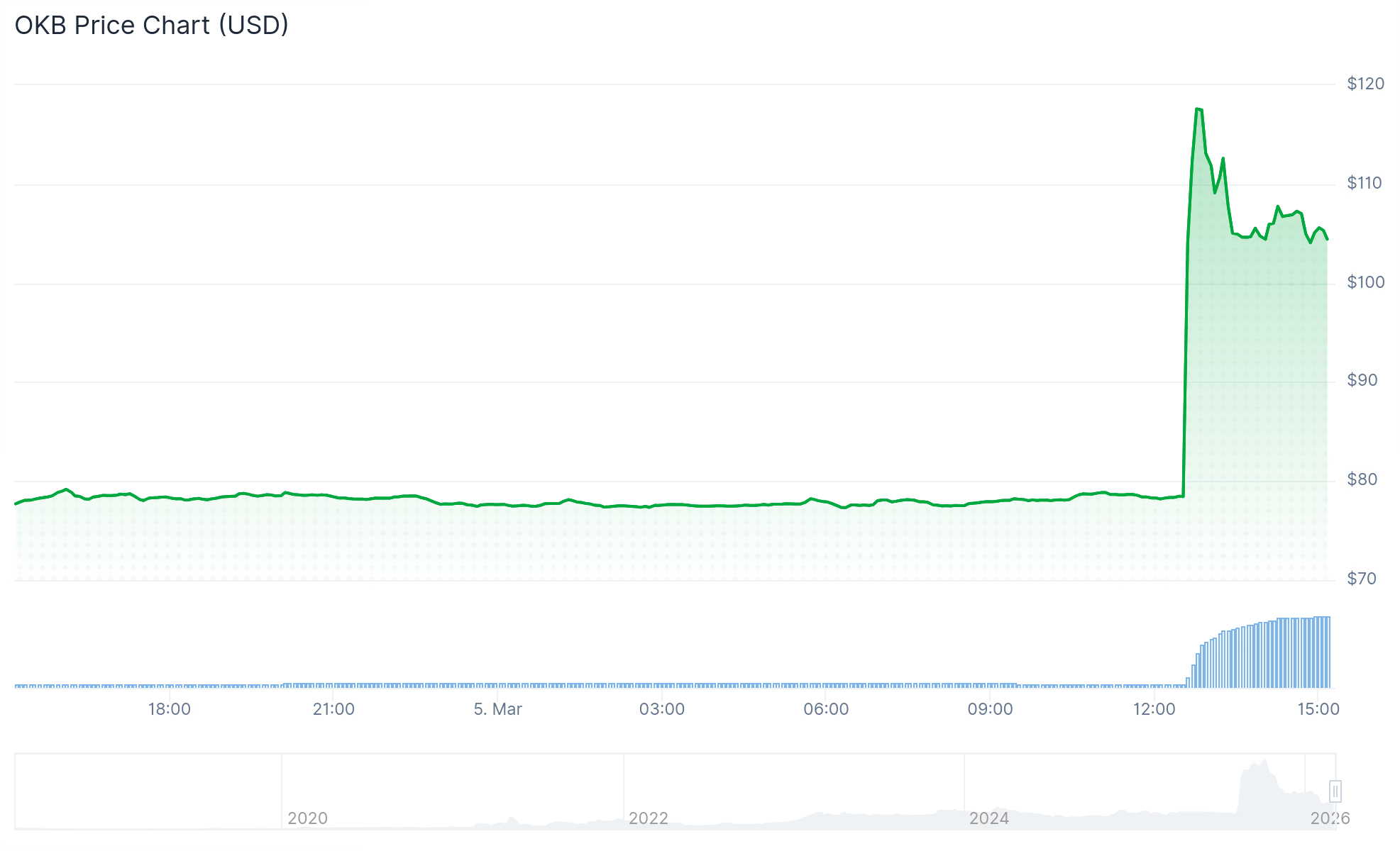
OKB, the OKX ecosystem’s native token, saw a sharp rally of over 30% today on the news and is currently trading around $104.

This article was generated with the assistance of AI workflows.
By now, most people involved in crypto are at least familiar with the concept of pig butchering, if not aware that it’s a growing problem with widespread consequences.
However, what most won’t know is that pig butchering is expanding so quickly and minting new millionaires so fast that it’s given rise to two entirely new industries: escrowing for pig butcherers and selling hostages onward from one pig butcher to another.
How does pig butchering work?
If you’re unfamiliar with what pig butchering is, it’s a diabolical and violent scam that works like this:
- An individual, usually from China, but occasionally from Eastern Europe or Southeast Asia, is lured to Southeast Asia (the biggest offenders reside in Cambodia, Laos, Thailand, and Myanmar) with promises of a job offer or modeling work.
- Once the person arrives in Southeast Asia, they’re hurriedly shuffled to a remote village or city where they’re taken hostage. Sometimes this even means they’re shackled and not allowed to go outside.
- Upon being taken hostage the individual is forced to bait Westerners into giving them crypto through romance scams, jobs offers, or other means.
- As this is happening, the hostage’s family is told that their loved one has been taken and a ransom is demanded for their freedom. The ransom is usually too large for the family to afford.
Read more: Project Brazen links KuCoin to billions in pig butchering scams
A new business is born
The pig butchering industry has grown rapidly over the past five years, with billions of dollars flowing into Southeast Asia via scam centers with thousands of hostages being held.
These massive buildings and industrial parks openly operate without threat of being shut down due to the government officials they’re able to bribe and the taxable revenue they bring in.
Most often, the leaders of these syndicates are Chinese nationals and/or members of the Triads (Chinese mafia).
However, as the industry has grown, so have its needs.
In a report from Bitrace, the ways in which pig butchering scammers have begun to rely on third parties for help in acquiring hostages is detailed along with a lucrative new side hustle of selling hostages to one another.
Guaranteed sales
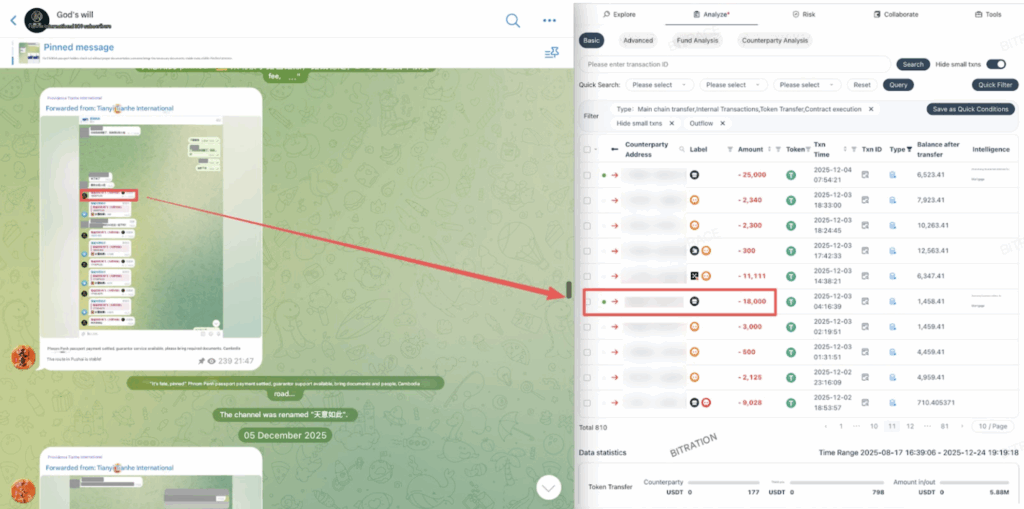
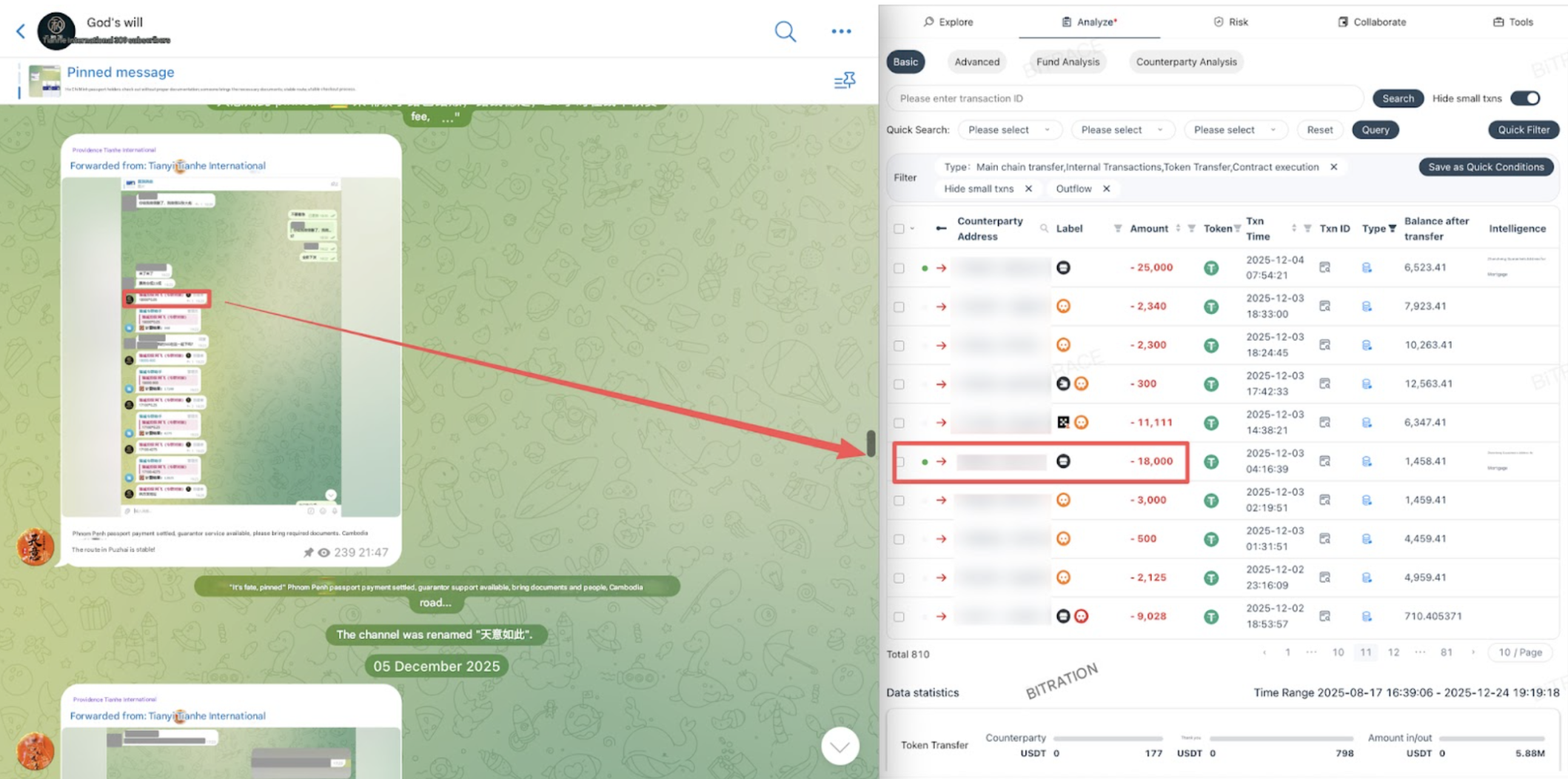
The report shows examples of “guaranteed sales,” where pig butchering scammers and those who lure in hostages use a third-party escrow service so they can be assured that neither criminal enterprise will rip the other one off.
Read more: China executes four more in pig butchering scam crackdown
In the image above, a pig butchering group by the name of Tianhe International puts 18,000 USDT into escrow with a company called Zhencheng Guarantee.
Once the hostage exchange is completed the escrow service is able to walk away with almost $1,000 simply for holding the money for the scammers until the transaction is completed.
It’s unknown how large the scammer escrow business is within the pig butchering economy, but no doubt it’s growing, with those providing the service having to do almost nothing but hold funds and wait for the green light.
This means it’s far less risky than for those conducting the actual pig butchering or those recruiting new hostages.
Secondary sales
Another — and far more disgusting — example of how pig butcherers earn extra cash is by selling hostages forward.
The reason for the secondary sales could range from wanting extra income that month, a new individual or company spinning up a pig butchering business, or a pig butcherer winding down their business to move into other lucrative, less illegal industries like gambling or harvesting jade and rare woods for export.
Regardless of why, there’s evidence of the secondary market having sales regularly. The below image shows evidence of Tianhe International purchasing hostages from another pig butcherer called Wanxiang Group.
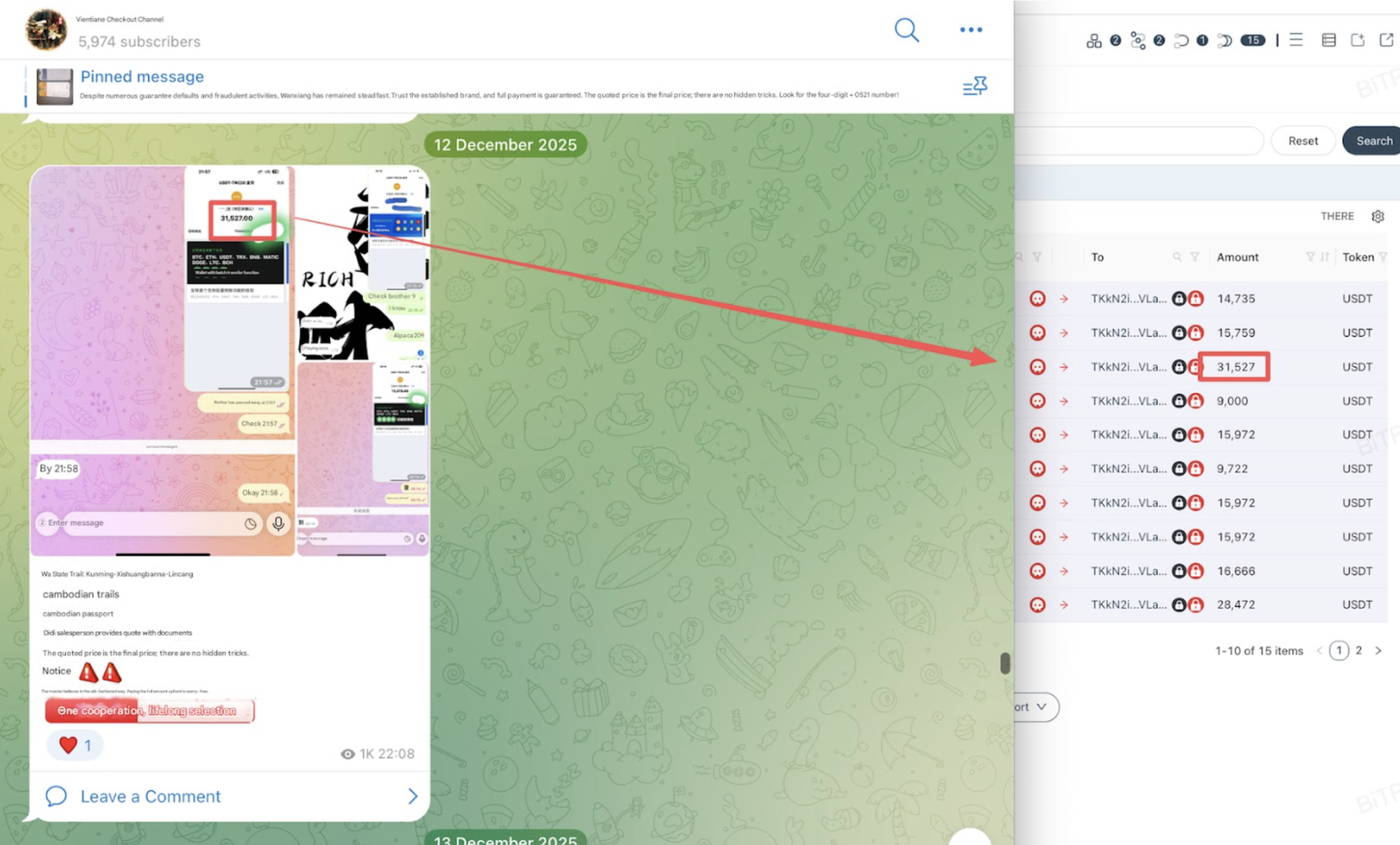
Despite Chinese law enforcement putting a stop to numerous pig butchering operations and executing dozens of leaders responsible for keeping thousands of people trapped in Cambodia and Laos, the criminal activity shows no sign of slowing down.
Bitrace was able to prove that Tianhe International was earning millions and millions of dollars in revenue every month before multiple wallet addresses were frozen.
Got a tip? Send us an email securely via Protos Leaks. For more informed news and investigations, follow us on X, Bluesky, and Google News, or subscribe to our YouTube channel.


A stash of crypto worth almost $5 million that was stolen after South Korean tax authorities mistakenly leaked its seed phrase has been stolen for a second time after the original thief handed it back.
The country’s National Tax Service accidentally shared a photo of the 24-word seed phrase in a press release last month. The corresponding wallet contained $4.8 million worth of a crypto called pre-retogeum (PRTG) which was stolen shortly afterwards.
This thief reportedly submitted a confession to the police on March 28 and was arrested two days later. The thief claimed they “stole the cryptocurrency out of curiosity but then returned it.”
However, officials at a police press briefing this week revealed that they’re now tracking a second thief who stole the crypto again after it was returned.
“We will investigate the additional theft as we continue to investigate the previous suspect who confessed,” police said.
According to local reports, the police haven’t identified the second thief and haven’t clarified if they’re the original owner of the cryptocurrency, who was under investigation for tax evasion.
The stolen PRTG is believed to be almost unsellable due to the token’s unpopularity.
South Korea busy dealing with crypto crime
In another odd turn of events in South Korea, a legally “dead” man apparently returned to repay victims who fell for a crypto investment scheme.
The man fled to Cambodia in 2019 after orchestrating a crypto fraud and was deported back to South Korea this January. When he fled, a “declaration of disappearance” was issued, which classified him as legally dead.
This was challenged in courts, and $60,000 worth of frozen funds have since been returned to victims.
Read more: Game developer Sillytuna reports losing $24M of crypto in UK ‘wrench’ attack
Elsewhere, a police officer in charge of crypto investigations has been jailed for six years after accepting $82,000 worth of bribes to cover up a coin consignment fraud investigation.
Another man was handed over to South Korea’s prosecution after he allegedly extorted $25,000 worth of crypto from women who wanted him to take down personal photos from his “Joo-club” Instagram account.
Got a tip? Send us an email securely via Protos Leaks. For more informed news and investigations, follow us on X, Bluesky, and Google News, or subscribe to our YouTube channel.
Key takeaways
-
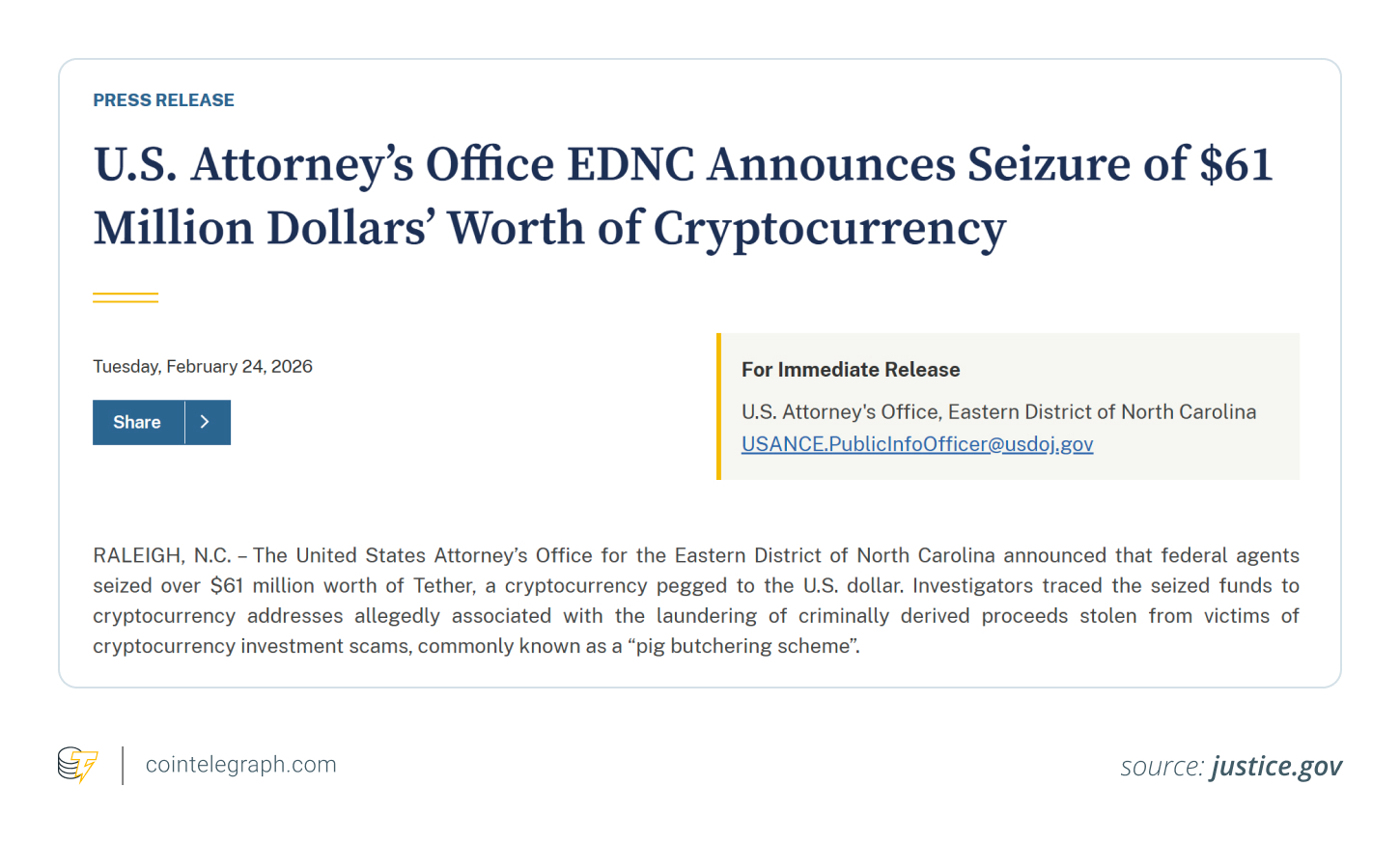
Federal authorities in North Carolina seized more than $61 million in USDT, revealing how pig-butchering schemes combine emotional manipulation with fraudulent crypto investment platforms to defraud victims at scale.
-
Investigators leveraged the public, immutable nature of blockchain records to trace victim deposits across multiple wallets. Despite attempts to obscure the trail, every transfer remained permanently visible and reconstructable.
-
Using blockchain analytics, authorities clustered related addresses based on transaction flows, timing patterns and consolidation points, allowing them to connect dispersed wallets back to the broader scam network.
-
Because the stolen funds were held in USDT, Tether’s ability to freeze tokens at specific addresses upon legal request played a decisive role in preventing the funds from disappearing permanently.
Federal authorities in North Carolina seized more than $61 million in Tether’s USDt (USDT) in February 2026, uncovering the inner workings of a massive cryptocurrency fraud.
The investigation targeted a romance-driven scam, also known as a pig-butchering scam, a deceptive practice in which criminals build romantic trust with victims to lure them into using fraudulent investment apps. While the amount of money recovered was significant, the case stands out for the technical skill investigators displayed. By tracking digital footprints across multiple accounts and decoding complex money laundering tactics, investigators successfully froze the funds before they could disappear.
This article explores how US federal investigators traced and seized funds linked to a romance-driven pig-butchering crypto scam. It details how blockchain forensics, wallet clustering and stablecoin cooperation helped unravel a complex laundering network.
The anatomy of a romance crypto scam
Romance crypto scams begin by grooming victims.
Scammers may pretend to be romantic partners or friendly contacts on social media, dating sites or messaging apps. They spend weeks or months cultivating trust with their victims. They then pitch a unique crypto investment opportunity, often touting insider knowledge or a proprietary trading platform.
Victims are guided to visually appealing but entirely fake crypto websites featuring bogus trading dashboards, phony inflated returns and real-time charts mimicking real exchanges.
Visible “gains” prompt victims to pour in more money. However, when they try to withdraw funds, new demands are made for taxes, fees or additional deposits. Eventually, the accounts are locked completely.
By that point, the money disappears.
Did you know? Blockchain analysis firms can map millions of wallet addresses into clusters using behavioral fingerprints even when criminals try to obscure ownership through rapid transfers.
The $61-million seizure in North Carolina
According to the US Attorney’s Office for the Eastern District of North Carolina, federal authorities seized more than $61 million in USDT connected to a romance-fueled crypto fraud ring.
Homeland Security Investigations (HSI) agents traced victim funds through an intricate network of digital wallets. Scammers had tried to hide the trail by shuffling assets across a number of addresses, a standard crypto laundering technique. However, blockchain’s public, immutable ledger records every transaction permanently.
That transparency ultimately enabled the breakthrough.

How investigators traced the funds
A systematic digital footprint recorded on the blockchain resulted in the $61-million seizure. Law enforcement reconstructed wallet transactions step-by-step, converting publicly available ledger information into solid proof.
Tracing transactions on the blockchain
When victims transferred money to fraudulent accounts, these transactions appeared transparently on the blockchain. Investigators could:
-
Pinpoint the addresses where victims made deposits
-
Monitor follow-up transfers between wallets
-
Map transfer patterns across clusters of interconnected addresses.
While the scammers quickly shifted funds across wallets, the full transaction record remained intact on the blockchain.
Blockchain analytics tools enabled investigators to group wallets based on behavioral patterns such as shared transaction flows, fund consolidation points and timing correlations.
Eventually, investigators were able to zero in on multiple addresses holding significant USDT amounts.
Wallet clustering and laundering patterns
Pig-butchering operations frequently employ multi-tiered transfers:
-
Dividing assets among various wallets
-
Channeling them through intermediary accounts
-
Merging funds into larger storage wallets.
Such tactics aim to create confusion and delay detection, yet they fail to erase the verifiable record.
Through reconstruction of the funds’ path, investigators linked several wallets to the broader fraudulent scheme.
With critical storage addresses confirmed, officials acted swiftly.
Did you know? The US Federal Bureau of Investigation’s Internet Crime Complaint Center (IC3) receives thousands of crypto-related fraud complaints annually, with romance-investment scams ranking among the fastest-growing categories.
Tether’s key role in freezing the assets
Since the stolen funds were held in USDT, a centralized stablecoin, active cooperation from the issuer became essential.
The Department of Justice (DOJ) publicly recognized Tether’s support in transferring and freezing the seized assets. Stablecoin issuers possess the technical capability to immobilize tokens at designated addresses when served with legitimate legal orders.
Tether’s CEO emphasized that the inherent transparency of blockchain allows law enforcement to respond swiftly and decisively to illicit activity.
This case highlights that although cryptocurrency transactions operate on decentralized networks, many stablecoins maintain centralized control features that authorities can invoke during investigations.
Cooperation by the issuer can play a major role in whether victims are able to recover their funds.
Did you know? Some pig-butchering operations are run from large overseas compounds where victims of human trafficking are forced to carry out online scams under coercion.
The escalating wave of crypto fraud
The $61-million seizure is far from an isolated incident.
Crypto scams have exploded in both volume and complexity. According to industry analyses, total losses from cryptocurrency fraud approached about $17 billion in 2025, with AI-enhanced impersonation schemes showing especially sharp year-on-year growth.
Pig-butchering operations stand out as particularly destructive due to their combination of:
-
Psychological manipulation and trust-building
-
Extended grooming periods
-
Aggressive, high-stakes investment pressure
-
Sophisticated, professionally designed fraudulent platforms.
In many instances, perpetrators have begun using AI-generated images and deepfake videos to bolster their credibility and deceive victims more effectively.

Judicial responses have grown markedly tougher. In early 2026, a central participant in a pig-butchering-related money laundering network tied to more than $73 million in illicit funds received a 20-year federal prison sentence. This signaled the heightened priority authorities now place on dismantling these schemes.
Why blockchain transparency is a game-changer
This investigation challenges a widespread myth that cryptocurrency transactions are impossible to trace.
While privacy-focused coins and mixing services do exist, the vast majority of widely used cryptocurrencies, including Bitcoin (BTC) and Ether (ETH), run on fully public blockchains. Every transaction is permanently recorded on an open, immutable ledger.
For law enforcement and investigators, this transparency delivers powerful advantages:
-
Complete, permanent visibility into historical transaction flows
-
Advanced wallet clustering to link related addresses
-
The ability to cross-reference blockchain data with Know Your Customer (KYC) records from regulated exchanges
-
Detection of behavioral patterns that span multiple networks.
The moment illicit funds interact with compliant exchanges, custodial services or other identifiable entities, the odds of connecting anonymous wallets to real individuals rise dramatically.
Why crypto price volatility doesn’t shield criminals
A related myth holds that perpetrators can simply “wait out” authorities by parking stolen funds in volatile assets until scrutiny fades.
In this seizure, however, the funds were held in a dollar-pegged stablecoin, USDT. That price stability protects the value of the stolen assets, but it also keeps them firmly within the traceable realm.
Because blockchain records are permanent and publicly queryable, investigators can patiently reconstruct cases over months or even years. The digital trail typically remains available indefinitely, allowing authorities to return and execute seizures long after the initial crime occurred.
What this means for scam victims
For individuals targeted by romance-driven crypto scams, recovering stolen money remains an uphill battle.
Once funds reach self-custodied wallets under the scammers’ control, successful recovery hinges on several critical factors:
-
Prompt reporting by victims as soon as the fraud is suspected
-
Strong coordination among law enforcement agencies across countries
-
Active participation from cryptocurrency exchanges
-
The ability of stablecoin issuers to freeze assets on short notice.
The $61-million seizure in North Carolina shows that significant recoveries are achievable. However, they demand tight collaboration between victims, federal investigators, blockchain forensic specialists and compliant crypto companies.
The shifting landscape of crypto enforcement
This high-profile seizure reflects a clear evolution in how authorities handle cryptocurrency crime:
-
Law enforcement teams are steadily improving their expertise in blockchain tracing techniques.
-
Major stablecoin issuers are showing greater willingness to assist in active criminal probes.
-
Judges and prosecutors are handing down substantially longer prison terms to participants in large-scale fraud and money laundering networks.
While pig-butchering schemes continue to grow more advanced and deceptive, investigative tools and international partnerships are advancing at a comparable pace.
The main question is no longer whether cryptocurrency transactions can be traced. The real challenge now is speed. The question is how fast authorities and their partners can freeze and seize assets before the funds are scattered across unreachable wallets or jurisdictions.


Revolut, the U.K. fintech giant that offers crypto trading, filed an application for a U.S. banking license with the Office of the Comptroller of the Currency (OCC), a key step in its push to expand in the American financial system.
If approved, the license would allow the London-based company to operate more like a traditional bank in the world’s largest economy. The company said it would gain direct access to payment networks such as Fedwire and the Automated Clearing House (ACH), systems that move trillions of dollars between banks each year.
A license could also open the door to lending products, including credit cards and personal loans. Today, Revolut offers banking services in the U.S. through Lead Bank, a Kansas City-based partner. That arrangement allows it to provide accounts and payments without holding its own charter.
The filing comes after Revolut dropped its plans to buy a U.S. bank in January to instead get a de novo banking license, which allows banks to start up from scratch.
It also comes a day after Kraken became the first cryptocurrency exchange to secure a Federal Reserve “master account,” which gives its banking arm direct access to the Fed’s core payment system.
Revolut, valued at about $75 billion, has said the U.S. market is central to its goal of building a global digital bank. Approval of a charter would mark one of the company’s biggest regulatory milestones outside Europe.
The crypto-friendly bank secured a restricted U.K. banking license in 2024 and holds banking licenses elsewhere. It isn’t a bank, however, in every region where it operates.
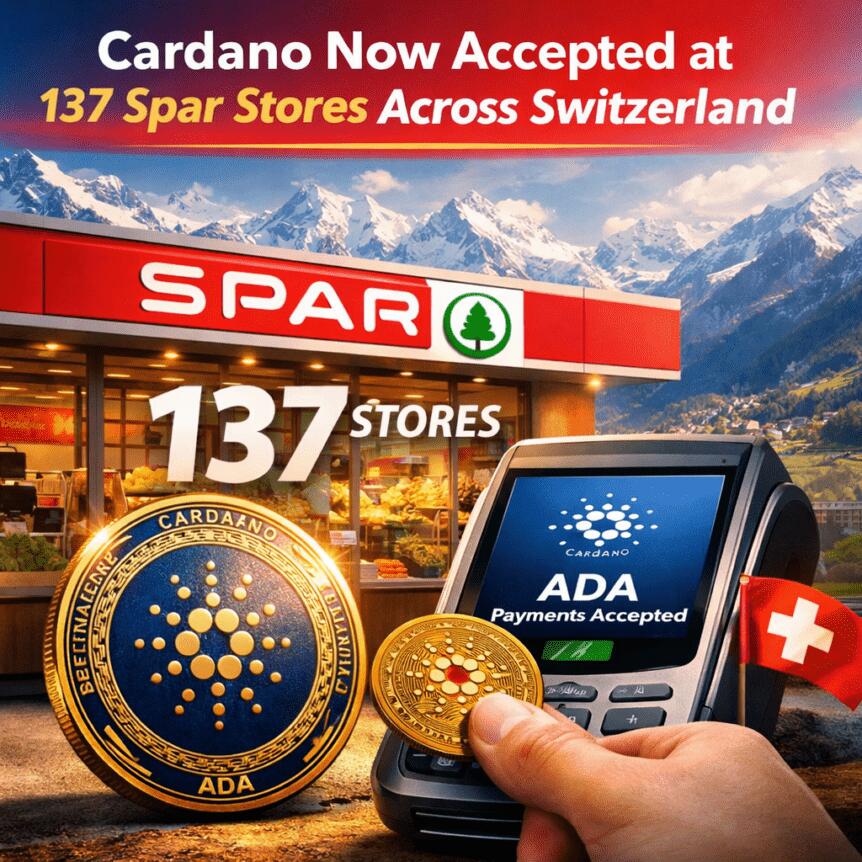
Cardano (CRYPTO: ADA) users can now pay for groceries at Spar stores in 137 locations across Switzerland, following a new Open Crypto Pay integration from Swiss fintech DFX.swiss, announced this Thursday by the Cardano Foundation. The arrangement allows real-time processing and direct wallet-to-wallet settlements for ADA payments, avoiding routing through centralized exchanges. For merchants, the system promises a significant reduction in processing costs—about two-thirds lower than traditional card networks—marking a practical step in Switzerland’s broader exploration of crypto-friendly retail infrastructure. The rollout adds to Spar’s evolving strategy to mix everyday shopping with digital asset conveniences as the country presses ahead with its hub ambitions.
In a broader sense, the move underscores Switzerland’s ambition to become a global hub for crypto and blockchain activity, moving beyond experimental trials toward widespread financial use cases. Open Crypto Pay’s architecture is designed to keep value transfers on-chain between ADA wallets, minimizing friction for consumers and merchants alike. The Cardano Foundation highlighted the initiative as a meaningful milestone in the ongoing maturation of the crypto sector, framing it as a shift in how value moves through society rather than a standalone pilot.
Executives at Spar have signaled that the integration builds on an earlier sweep of crypto payments. In August 2025, Spar rolled out nationwide crypto and stablecoin payments across 100 stores through partnerships with Binance Pay and DFX.swiss, with an objective to scale to about 300 stores. The latest expansion to 137 locations represents a continuation of that program, leveraging ADA and the broader Swiss crypto ecosystem to facilitate practical, everyday use of digital assets at the point of sale. Cardano’s presence in retail is not merely symbolic; it is designed to demonstrate real-time settlement and customer usability in a familiar shopping context.
Cardano Foundation Chief Executive Frederik Gregaard described the milestone as the “beginning of a fundamental shift in how value moves through society,” signaling a transition from experiments to genuine financial transformation. The aspirational framing reflects a broader narrative in which blockchain networks step out of early-stage pilots and into mainstream commerce, with merchants and customers sharing a common, largely seamless digital payment experience. The Cardano Foundation’s social post (via its official X account) underscored the collaboration as a proof point for real-world utility rather than a theoretical construct.
From a technical standpoint, the Open Crypto Pay integration is engineered to process transactions in real time and to enable payments directly from ADA wallets. That direct wallet-to-wallet flow helps avoid routing through centralized exchanges, which in turn can reduce liquidity constraints and settlement times for merchants. The cost advantage cited by Spar—roughly two-thirds lower transaction costs compared with traditional card schemes—could incentivize additional retailers to explore crypto rails as a cost-control measure while expanding consumer options for crypto payments in everyday shopping contexts.
Beyond Spar’s retail commitments, Switzerland’s crypto ambitions dovetail with broader regional momentum. Lugano, a city often cited as a pioneer in integrating digital assets into municipal life, is receiving new support from Tether. On Tuesday, Tether and the city announced a CHF 5 million ($6.4 million) commitment to a second phase of Lugano’s Plan B forum, set to run from 2026 through 2030. The aim is to position Lugano as a global hub for digital asset infrastructure, with ongoing projects focused on policy, infrastructure, and use-case deployments that blend fiat currency with digital assets in public services and commerce.
That momentum is complemented by Lugano’s existing experiments with asset-native payments. Residents can already pay certain municipal fees in Bitcoin (BTC) and USDt (USDT), an approach that integrates digital assets into local governance and services in a tangible way. The town’s efforts are part of a broader Swiss trend toward regulatory clarity and practical usage scenarios for crypto, which includes ongoing discussions about tax information sharing and compliance timelines in the country. The Swiss crypto tax landscape has evolved in recent years, and policy developments continue to influence how institutions and municipalities approach digital assets in everyday life.
Taken together, the Spar ADA rollout and Lugano’s Plan B initiative illustrate how Switzerland is attempting to bridge high-profile blockchain research with concrete commercial and civic applications. The Cardano Foundation’s involvement in Spar’s rollout signals a push to test not just the acceptance of ADA as a payments instrument but also the viability of a broader, open-pay ecosystem that prioritizes on-chain settlement, user control of funds, and cost efficiencies for merchants. If successful, this model could serve as a template for other retailers and municipalities seeking to blend digital assets with real-world value transfer in a regulated, consumer-friendly manner.
Why it matters
Retail adoption of crypto rails in Switzerland highlights a growing appetite among merchants to diversify payment methods beyond traditional card networks. By enabling ADA payments at Spar, the case demonstrates that digital assets can provide tangible benefits—faster settlements, lower fees, and greater control over funds—without sacrificing convenience for shoppers. The direct wallet-to-wallet approach reduces exposure to centralized custodians, potentially improving transparency and security in everyday transactions.
For the Cardano ecosystem, the Spar collaboration provides a real-world reference point for ADA’s utility beyond speculation. The emphasis on real-time processing and on-chain settlement aligns with Cardano’s broader mission of delivering scalable, sustainable blockchain solutions for mainstream use. As regulatory clarity improves and user experience grows more seamless, ADA and other digital assets could increasingly appear in ordinary retail environments, expanding the repertoire of payment choices available to consumers and businesses alike.
From a macro perspective, Switzerland’s ongoing crypto strategy—coupled with Lugano’s municipal experiments—suggests a broader trend toward integrating digital assets into public life. The Lugano funding, alongside ongoing tax and regulatory discussions, underscores a coordinated approach to creating ecosystems that can attract investment, talent, and technology providers while maintaining consumer protections and compliance. If such initiatives gain traction, they could influence how other European cities and regions design their own crypto-friendly frameworks, potentially shaping liquidity flows, user adoption curves, and the pace at which retailers are willing to experiment with digital payments.
What to watch next
- Spare expansion plans: Will Spar scale ADA acceptance from 137 stores toward the previously stated target of 300 locations?
- Regulatory developments in Switzerland: How will tax information-sharing timelines and disclosure rules evolve, and what impact might that have on crypto retail pilots?
- Lugano’s Plan B progress: What concrete milestones arise in Phase II (2026–2030), and how will they shape infrastructure for digital assets in public services?
- Additional retail partners: Which other Swiss retailers or European merchants might adopt Open Crypto Pay or similar wallets-first rails?
Sources & verification
- Official Cardano Foundation announcement and Cardano Foundation blog post detailing ADA acceptance at Spar Switzerland.
- DFX.swiss press materials describing the Open Crypto Pay integration and real-time wallet-to-wallet settlement.
- Spar’s August 2025 rollout of crypto and stablecoin payments across 100 stores via Binance Pay and DFX.swiss, with expansion plans to 300 stores.
- Tether and Lugano Plan B forum funding announcement for CHF 5 million to advance Lugano’s digital asset infrastructure program.
- Public statements on Lugano’s acceptance of BTC and USDT for municipal payments and related coverage of Switzerland’s crypto regulatory developments.
Key figures and next steps
Market reaction and key details
The Swiss initiative continues to attract attention as a testbed for mainstream crypto payments, with Cardano positioning itself as a practical vehicle for real-world value transfer. If the real-time, wallet-based payment model proves scalable and cost-effective, it may encourage broader merchant adoption across retailers and municipal services in Switzerland and beyond.
Why it matters
For users and investors, the expansion of ADA into everyday shopping environments underscores ADA’s potential as a usable digital asset rather than a speculative instrument. For builders and developers, the emphasis on on-chain settlement and merchant economics points to design principles that prioritize user experience and cost efficiency. For policymakers, the evolving landscape offers concrete data points on how digital assets can integrate with regulatory frameworks and public services while maintaining consumer protections.
Tickers mentioned: $ADA, $BTC, $USDT
Sentiment: Neutral
Market context: The push to embed crypto payments in retail and municipal services reflects a wider trend toward asset-native finance and on-chain settlement, compatible with regulatory progress and institutional interest in crypto infrastructure.
What to watch next
- Expansion milestones for Spar’s ADA payments and any new store openings or regional rollouts.
- Regulatory updates on Swiss tax information sharing and compliance requirements for crypto pilots.
- Progress on Lugano’s Plan B Phase II initiatives and how they influence regional crypto ecosystems.
Sources & verification
- Cardano Foundation announcement regarding ADA acceptance at Spar Switzerland.
- DFX.swiss Open Crypto Pay integration details and real-time settlement capabilities.
- Spar’s 2025 rollout news and store expansion plans.
- Tether and Lugano Plan B funding announcement for CHF 5 million.
- Reports on Lugano accepting BTC and USDT for municipal payments and Switzerland’s crypto tax discussions.
Retail rails for ADA in Swiss supermarkets signal broader crypto hub ambitions
Switzerland’s ongoing experimentation with crypto payments at the point of sale is moving beyond isolated pilots toward broader retail adoption. Spar’s 137-store ADA payments rollout, enabled by Open Crypto Pay and anchored by the Cardano Foundation, exemplifies a practical pathway for mainstreaming digital assets in everyday commerce. By delivering real-time settlement and wallet-to-wallet transactions, the initiative reduces dependence on centralized exchanges and cuts transaction costs for merchants—a meaningful consideration as retailers weigh new payment rails in a cost-conscious environment.
The collaboration also ties into Lugano’s broader strategy to become a global hub for digital asset infrastructure, reinforced by a CHF 5 million commitment from Tether to support the Plan B program through 2030. That funding, paired with Lugano’s existing acceptance of BTC and USDT for municipal duties, signals a coordinated effort to blend public governance with cutting-edge payment rails. If these pilots prove sustainable, they could catalyze similar initiatives across Switzerland and the broader European region, encouraging more retailers to pilot crypto-friendly checkout flows and more cities to explore asset-backed services in daily life.
Institutional capital is widening its net and causing a surge in altcoin ETF inflows.
On March 4, Crypto ETFs tracking alternative assets recorded significant activity, with Solana Inflows hitting $19.06 million and XRP products securing $4.19 million in net entries, according to SoSoValue.
While Bitcoin continues to command the lion’s share of volume, this $23.25 million combined allocation signals that active managers are beginning to diversify aggressively beyond the market leader. No retail hype cycle. Just size moving in.
- Solana Leads Alts: Solana (SOL) ETFs recorded $19.06 million in net inflows on March 4, establishing dominance among non-ETH altcoin products.
- XRP Accumulation: XRP funds attracted $4.19 million, confirming steady XRP Institutional demand despite broader market volatility.
- Diversification Signal: The simultaneous inflows into SOL and XRP suggest institutional portfolios are increasingly rotating into high-utility Layer 1 assets.
Discover: The best meme coins on Solana
Solana ETFs: Does $19.06M Inflow Signal Future Stablecoin and Tokenization Demand?
Solana (SOL) is seeing a specific type of bid. The $19.06 million net inflow recorded on March 4 represents one of the strongest daily sessions for the asset since approvals normalized.
This isn’t just speculative rotation; it aligns with the growing narrative of Solana as the preferred infrastructure for institutional tokenization, backed by heavyweights like Franklin Templeton and BlackRock.
The flow data suggests that institutions are pricing in value beyond simple store-of-wealth mechanics.
Unlike the Bitcoin ETFs and MicroStrategy demand surge that focuses on scarcity, Solana Inflows are chasing yield and transaction velocity.
The network’s multibillion-dollar Total Value Locked (TVL) and record stablecoin volume continue to challenge Ethereum’s dominance, providing a fundamental floor for these investment products.
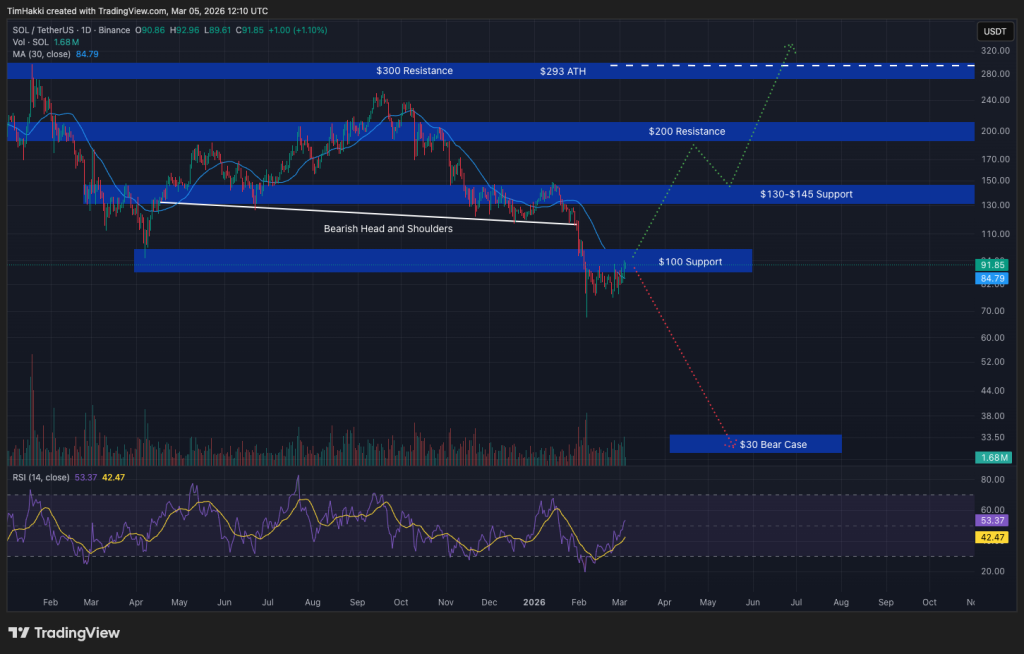
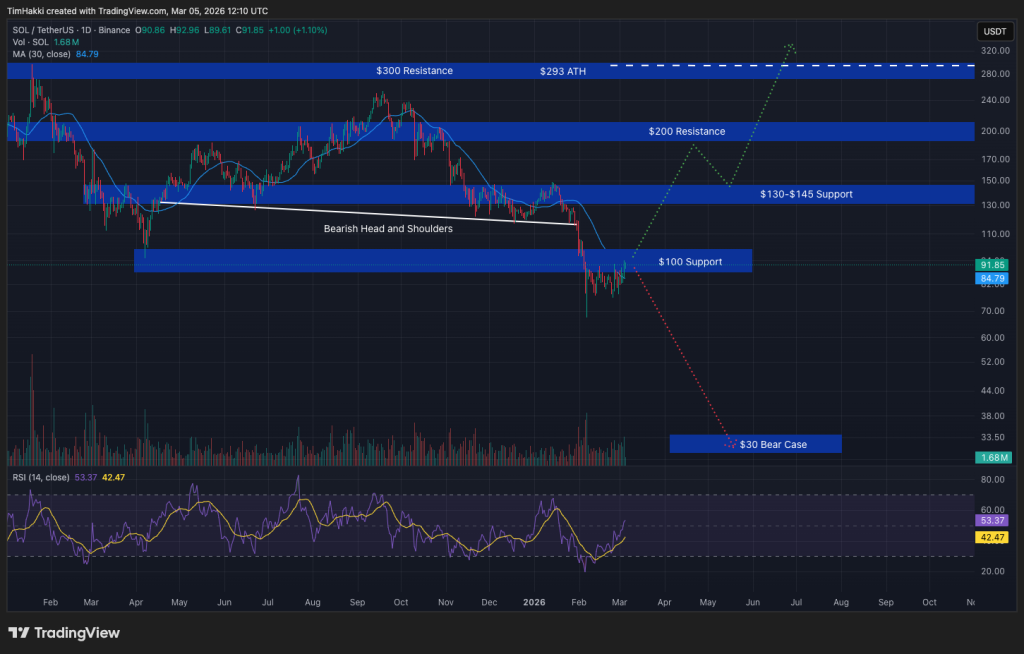
Technicals are responding to the flow. Solana is approaching another important level that could point to an explosive price prediction if these inflows sustain.
Watch the $158 level closely. If ETF buyers continue to soak up daily issuance and push the price above this resistance, a run toward $185 becomes the high-probability scenario. If flows dry up and price rejects, support at $138 must hold to preserve the bullish structure.
XRP Inflows: $4.19M Hints at Growing Support for Ripple’s Institutional-Grade Payments Infrastructure
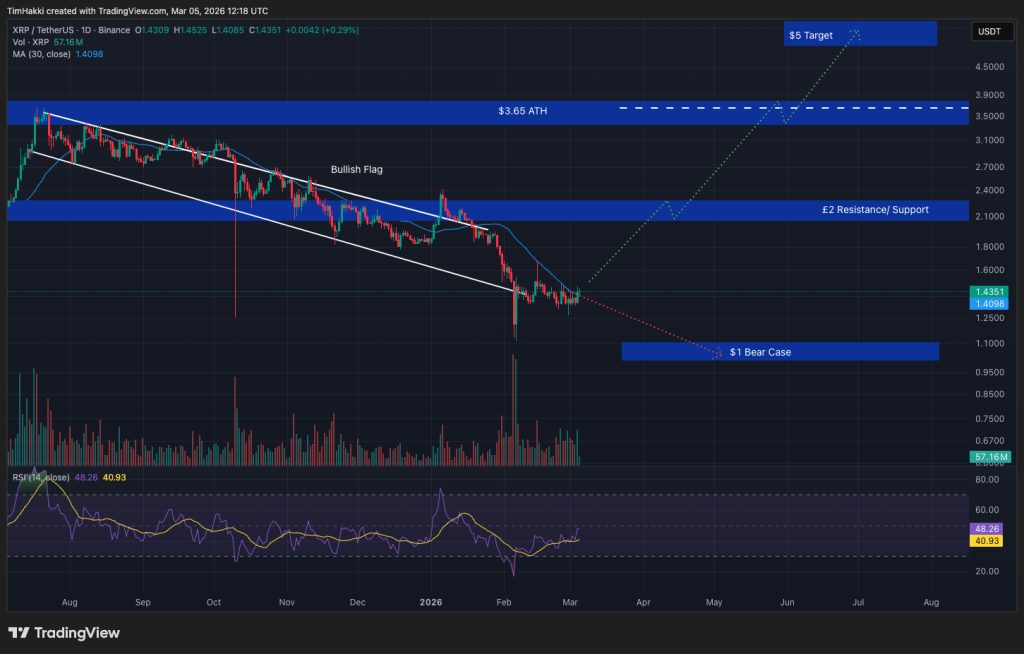
XRP (XRP) is carving out its own lane. The $4.19 million inflow on March 4 might look small compared to Bitcoin’s billions, but for an altcoin asset class, it represents sustained conviction.
Following the approval of spot XRP exchange-traded funds in the U.S., the asset has transitioned from a retail-heavy volatility play to a component of diversified institutional portfolios.
The thesis here is utility. Investors are positioning for Ripple’s RLUSD stablecoin integration and the broader adoption of the XRP Ledger (XRPL) in cross-border settlements.
XRP Institutional interest is less about quick flips and more about long-term infrastructure bets. The capital entering these funds is sticky; it doesn’t tend to panic sell on minor dips.
Altcoin ETF Institutional Adoption: The Diversification Thesis
The March 4 data paints a clear picture: the “Bitcoin-only” era of institutional crypto is ending.
While Bitcoin remains the primary allocation, the simultaneous bid for SOL, XRP, and the massive $169.4 million into the Ethereum ETF sector indicates a maturing strategy. Institutions are effectively building a crypto-native index, weighting assets by sector dominance rather than just market cap.
— HodlFM (@Hodl_fm) March 5, 2026
 Spot ETF Flows: BTC, ETH, SOL and XRP spot ETFs saw net inflows on Mar. 4.$BTC (+$461.9M)$ETH (+$169.4M)$XRP (+$4.2M)$SOL (+$19.1M)@Coinbase US appstore rank: 338 pic.twitter.com/q2ZrkPnRmY
This mimics movements seen in traditional finance. Just as Harvard picks ETH and trims Bitcoin ETF exposure, other large allocators are rebalancing to capture the upside of technological utility.
Institutional Adoption is moving down the risk curve. They aren’t gambling on memecoins; they are buying the protocols that run the new financial internet.
Watch the flow ratios next week. If the ratio of Altcoin ETF inflows to Bitcoin ETF inflows continues to rise, we are officially in a structural rotation. If Bitcoin dominance reasserts itself heavily, this was just a brief pause in the king’s rally.
Discover: The best crypto to buy today
The post Altcoin ETF Surge: SOL and XRP Pull $23M as Institutions Diversify appeared first on Cryptonews.
The first phase of bitcoin’s recent drawdown has not triggered panic among institutional investors, according to crypto asset management firm CoinShares.
Professional allocators reduced exposure modestly but largely maintained their positions compared with last year. Advisors trimmed holdings while hedge funds scaled back alongside the broader leverage unwind and shifting opportunities in other markets, the crypto investment manager said in a Tuesday report.
Longer-duration investors kept accumulating. “Endowments, pensions, and sovereigns continued to build quietly,” wrote analyst Matt Kimmell.
Bitcoin has struggled to regain momentum since hitting a record high near $125,000 in early October. The world’s largest cryptocurrency was trading around $72,370 at publication time.
Crypto markets have delivered muted performance in recent months as a mix of macro and market-specific pressures weighed on prices. Higher interest rates and a stronger dollar have dampened appetite for risk assets, while leveraged positions built earlier in the rally have been unwound. At the same time, profit-taking from long-term bitcoin holders and uneven flows into spot exchange-traded funds (ETFs) have limited momentum, leaving the sector struggling to regain a sustained upward trend.
Despite bitcoin falling about 23% during the period, global bitcoin ETF flows remained positive, suggesting the sell-off in the fourth quarter was driven more by long-time holders taking profits than by new institutional money exiting the market, Kimmell said.
Historically, crypto bear markets have redistributed supply from short-term traders to long-term holders. According to Kimmell, the emergence of ETFs now offers a new way to observe whether institutional capital follows the same pattern.
So far, the data points in that direction. A roughly 25% quarterly drawdown did not trigger broad institutional capitulation, the report said, with most declines in assets under management reflecting price moves rather than large investor outflows.
Still, CoinShares cautioned that the sample size remains small. The firm said the real test may appear in upcoming regulatory filings, which will capture institutional behavior during sharper moves, including bitcoin’s slide toward $60,000 and a single-day 17% drop.
Bitcoin and the broader crypto market moved higher this week, rebounding after weeks of choppy trading. The rally was driven in part by renewed risk appetite across markets and steady demand for bitcoin ETFs, helping the largest cryptocurrency regain momentum and lift major altcoins alongside it. Traders also pointed to short covering and positioning resets following the recent sell-off as factors behind the move.
Read more: CEO of crypto investment firm Keyrock says bitcoin is undervalued, entering ‘transition year’
Crypto World
Revolut Files for US Bank Charter and Names Former Visa Executive Cetin Duransoy as New US CEO

TLDR:
- Revolut has filed for a US bank charter with the OCC and FDIC to offer full banking services in America.
- Former Visa executive Cetin Duransoy has been named Revolut’s new CEO for United States operations.
- Revolut plans to invest $500 million in the US over three to five years covering capital, marketing, and hiring.
- Revolut’s global valuation reached $75 billion following a secondary share sale completed in November 2024.
Revolut has officially filed for a U.S. bank charter, marking a major move into the American financial market. The British fintech giant also named former Visa executive Cetin Duransoy as its new United States CEO.
With around 70 million clients across 40 markets, Revolut is targeting the U.S. as a core part of its global expansion.
The applications have been submitted to the Office of the Comptroller of the Currency and the Federal Deposit Insurance Corporation for review.
Revolut Eyes US Banking Approval to Expand Financial Services
If regulators approve the applications, Revolut plans to gather deposits and issue loans in the U.S. The company also intends to offer credit cards and facilitate payments for American customers.
This would represent a full-scale banking operation, moving beyond its current limited U.S. presence. Revolut currently serves American users primarily through payment and foreign exchange services.
Revolut founder and CEO Nik Storonsky made the company’s intentions clear in a recent statement. “The United States is a key pillar of our global growth strategy,” Storonsky said.
He added that a stronger U.S. presence is necessary to reach 100 million global customers. The company is expected to invest $500 million in the U.S. over the next three to five years.
That $500 million figure covers bank capital, marketing, and new hiring across the country. Outgoing U.S. CEO Sid Jajodia confirmed the investment scope in a recent interview.
Jajodia will transition into a global chief banking officer role as Duransoy steps in. Duransoy’s background at Visa brings strong financial industry experience to Revolut’s U.S. operations.
Revolut’s strategy involves attracting users first as a secondary bank account. Services like payments and foreign exchange act as entry points for new customers.
Over time, the company woos users with perks and subscription-based offerings. This model has already proven effective across Europe and other international markets.
Revolut’s US Push Comes Amid Growing Neobank Competition
Revolut is not alone in pursuing a U.S. banking license among global neobanks. Brazil’s Nubank is currently awaiting full approval for its own U.S. banking license.
Spain’s Santander launched a digital bank in the U.S. in 2024 and recently announced an acquisition. These moves show that international digital banks are actively competing for U.S. customers.
To raise brand awareness in the U.S., Revolut plans to pursue sponsorship opportunities. The company already sponsors the Audi Formula 1 team, soccer clubs, and music festivals globally.
Similar partnerships in the U.S. could help boost its visibility among American consumers. Marketing investment is built into the $500 million U.S. spending plan.
On the topic of a potential IPO, Jajodia declined to comment on any timeline. He noted that private market capital remains available and accessible for the company.
Revolut completed a secondary share sale in November, valuing the company at $75 billion. That valuation places Revolut among the most valuable private fintech companies in the world.
Revolut’s U.K. bank continues to operate under some restrictions during a mobilization phase. The restrictions are tied to the bank’s size as it scales its operations.
However, the company appears focused on moving forward with its international growth plans. The U.S. charter application is the clearest sign yet of that ambition.

Big Meech Says He And Lil Meech Are “Best Duo,” Fans React

How do banks actually create money? We explain

‘Blood rain’ phenomenon explained – Saharan dust cloud to engulf Brits TODAY


-

 Politics7 days ago
ITV enters Gaza with IDF amid ongoing genocide
-

 Politics2 days ago
Alan Cumming Brands Baftas Ceremony A ‘Triggering S**tshow’
-

 Fashion6 days ago
Weekend Open Thread: Iris Top
-

 Tech4 days ago
Unihertz’s Titan 2 Elite Arrives Just as Physical Keyboards Refuse to Fade Away
-
Sports5 days ago
The Vikings Need a Duck
-
 NewsBeat5 days ago
Dubai flights cancelled as Brit told airspace closed ’10 minutes after boarding’
-

 NewsBeat5 days ago
Abusive parents will now be treated like sex offenders and placed on a ‘child cruelty register’ | News UK
-

 NewsBeat4 days ago
‘Significant’ damage to boarded-up Horden house after fire
-
 NewsBeat5 days ago
The empty pub on busy Cambridge road that has been boarded up for years
-

 Tech9 hours ago
Bitwarden adds support for passkey login on Windows 11
-

 Entertainment3 days ago
Baby Gear Guide: Strollers, Car Seats
-
 Tech6 days ago
NASA Reveals Identity of Astronaut Who Suffered Medical Incident Aboard ISS
-

 Business7 days ago
Only 4% of women globally reside in countries that offer almost complete legal equality
-
Politics5 days ago
FIFA hypocrisy after Israel murder over 400 Palestinian footballers
-
 NewsBeat4 days ago
Emirates confirms when flights will resume amid Dubai airport chaos
-

 NewsBeat3 days ago
Is it acceptable to comment on the appearance of strangers in public? Readers discuss
-

 Crypto World7 days ago
From Crypto Treasury to RWA: ETHZilla Retreats and Relaunches as Forum Markets on Nasdaq
-

 Tech4 days ago
Viral ad shows aged Musk, Altman, and Bezos using jobless humans to power AI
-

 Video3 days ago
How to Build Finance Dashboards With AI in Minutes
-

 Business2 days ago
Guthrie Disappearance Enters Fifth Week as Family Visits Memorial