If you follow women’s health, these kinds of stories will be, sadly, all too familiar. The process of getting help for heavy period or endometriosis symptoms is – often literally – painfully slow. Being diagnosed can take over a decade. There is no known cure. Doctors still aren’t even sure why endometriosis occurs, and scientific research suffers due to historic under-funding. This March is Endometriosis Awareness Month, but the condition is still widely characterised and dismissed as ‘just a bad period’.
“My periods were always really painful,” Dr Raj Arora, who is a GP and has endometriosis herself, told me on The Independent’s Well Enough podcast. “Every month, I’d be in bed with extreme pain. When I talk about it on social media, I’m always alarmed at how many women write back resonating with what I’ve experienced, with no idea that it could be endometriosis.”
Advertisement
“Pain relief wouldn’t even touch it”
For Dr Raj, it took 11 years to get a diagnosis. She believes that her upbringing in a South Asian family, where her mother and grandmother would tell her period pain was normal, meant she didn’t even consider that something might be wrong for years. The expectation to just ‘get on with it’, paired with cultural stigma around discussing intimate health, pushed Dr Raj to ignore the distress signals screaming out from her body. She thought what she was experiencing was normal; she didn’t want to make a scene. The instinct to suppress her discomfort followed her into adulthood, too.
When she reminisces on her early career, the positive memories are clouded by consistent physical pain. “When I was a junior doctor doing surgical placement, I’d be in the theatre at 6am, scrubbing in with my seniors and sweating from the cramps. I’d worry that I was going to be sick. Pain relief wouldn’t even touch it. Every time, I’d think: how am I going to get through this surgery?”
What is endometriosis?
Advertisement
One misconception Dr Raj is passionate about fighting is that endometriosis is a gynaecological issue. Endometriosis is caused by the endometrium – the cells which line the uterus, thickening and shedding over the menstrual cycle – developing on other organs, like the ovaries or the bowel. When endometrial tissue spreads in these areas, it can’t shed as it is meant to and, instead, remains inside the body. This can cause chronic inflammation, leading to scar tissue on the organs which can cause them to ‘stick’ together.
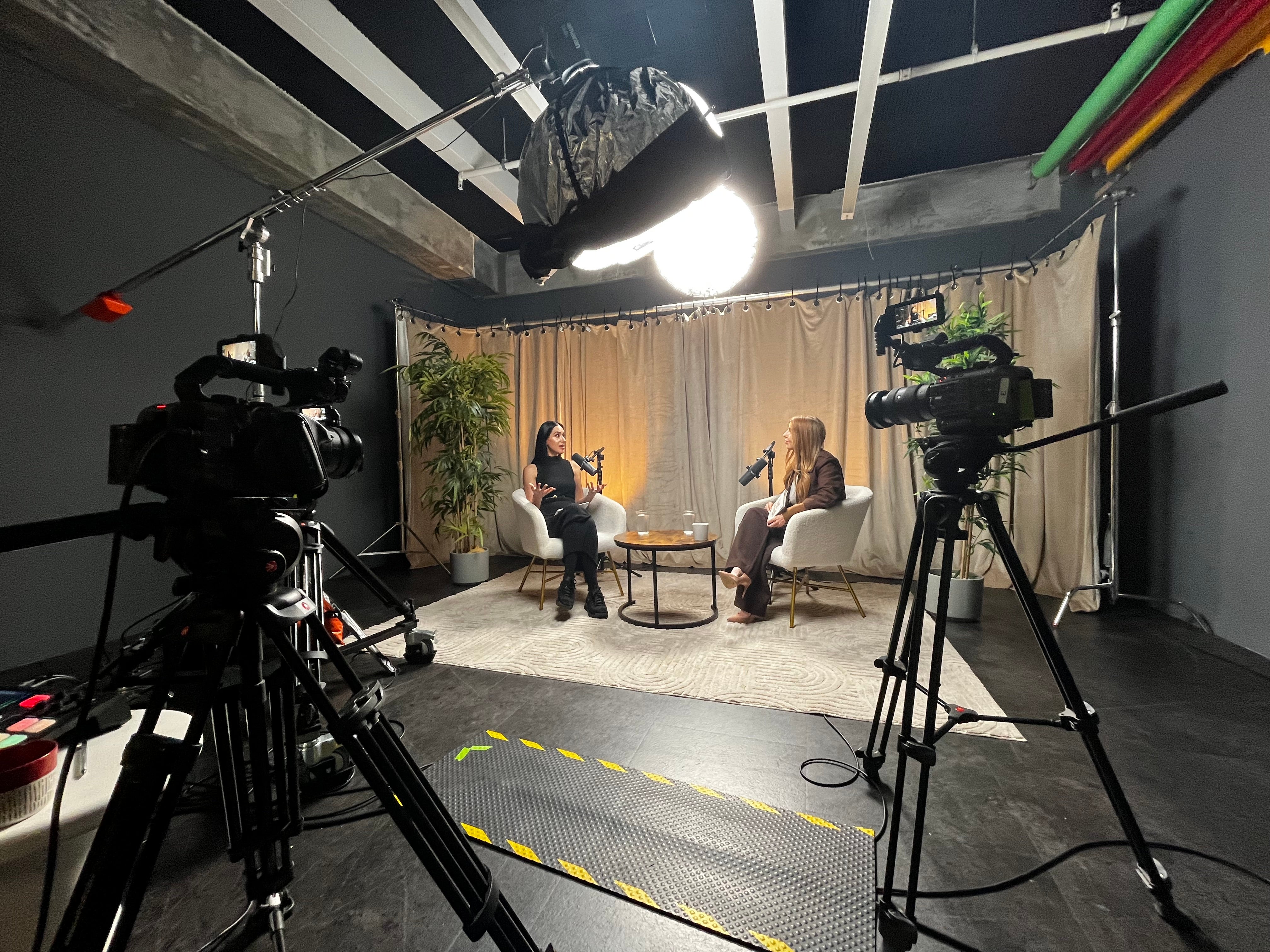
Dr Raj Arora on the Well Enough podcast with Emilie Lavinia (The Independent)
What are the symptoms of endometriosis?
The most common symptoms of endometriosis are:
• heavy periods (which the NHS defines as ‘when you need to change your pads or tampons every 1 to 2 hours, or bleed through your clothes,’)
• severe period pain
Advertisement
• pelvic (lower stomach and back) pain
• bowel and bladder pain or dysfunction
• fatigue
For Dr Raj, the penny finally dropped when she decided to try for a baby. After having some trouble concieving, she and her husband went for tests, which revealed endometrioma, or a ‘chocolate cyst’ (a benign, blood-filled cyst) on Dr Raj’s ovary. She also learned that her left ovary was stuck down. Fortunately, she was able to have children despite her endometriosis – but many aren’t so lucky. Endometriosis often causes issues with fertility, but exactly why or how this happens is still not known.
Advertisement
How to tell the difference between endometriosis and a bad period
The main indicator of a potential case of endometriosis is symptom severity. “Painful periods are key,” Dr Raj explains. “Now, periods can be uncomfortable, and that’s normal. You might have some cramping, some fatigue, some back pain. But with those symptoms, you can get on with day-to-day life.”
The moment to start paying closer attention is when ‘normal’ symptoms become overwhelming and disruptive. “With endometriosis, the pain is severe. The cramps are so strong that you can’t get out of bed, or they make you nauseous, or you’re sweating a lot.
“If you’re losing a lot of blood, that’s also important to note. If you’re bleeding through heavy-duty pads, or you’re seeing clots bigger than a 50 pence piece, those are things that could be signs of something abnormal.”
Advertisement
What to do if you have symptoms
Going to speak to a GP about any health concerns is always the first step to take if something is becoming a concern. And once you get there, “if you ever feel that you’re not being listened to, please push and ask for a second opinion,” Dr Raj says emphatically. “Even if it’s in the same GP surgery. Still, go and see a different GP.”
But whenever possible, Dr Raj recommends arming yourself with relevant, valuable information before that first meeting with a doctor. A symptom diary not only provides more information to you about what’s happening with your body, but also lays out the patterns, triggers, symptoms and issues in a way that a GP can quickly assess.
“Make notes about: this is what’s happening every single month, this is how long my periods last, this is how much pain I’m having, this is how many pads I’m using. Having all that information at hand is really helpful, especially if you’re waiting for an appointment for a while.”
Advertisement
The doctor also recommends making the most of the resources at hand. Dr Raj is an ambassador for Endometriosis UK, and highly recommends their menstrual helpline and symptom checker.
Endometriosis cure and treatment
There is no cure for endometriosis, but surgery or medications can help to treat symptoms. Surgery is typically performed with a keyhole surgery called a laparoscopy, in which a small incision is made in the stomach under general anaesthesia. Medications like the combined pill can also be used to help reduce the hormonal burden, which might be causing or adding to the condition. Heat therapy – like using a TEMS machine – is also recommended for pain management.
Dr Raj recommends these treatments for endometriosis, but also stresses the importance of lifestyle changes. “Diet and graded exercise were the biggest changes which helped me. I was never an athlete, and I’m always busy, but things like mindfulness, Pilates, Yoga, meditation, and breathing techniques really help to ground you and reduce pain perception. I take less pain relief now, as a result.”
It comes as the Prime Minister assured the nation ‘we can keep our people safe’
The Foreign Office (FCDO) has issued an important update for British citizens struggling to return home from destinations across the Middle East because of the continuing conflict between the US, Israel and Iran.
Advertisement
In a social media post published shortly after 2pm on Thursday (March 5), the FCDO announced that the first government charter flight had taken off from Oman bringing British nationals back home. The flight contained a number of vulnerable people, who were prioritised as part of the repatriation mission.
The FCDO also revealed that further flights are planned in the coming days and that British citizens in Oman will be contacted as they become available.
Get MEN Premium now for just £1 HERE – or get involved in our WhatsApp group by clicking HERE. And don’t miss out on our brilliant selection of newsletters HERE.
On Wednesday, over 4,000 people landed back in the UK on flights from the Middle East. Many of these people were due to return last weekend, but the breakout of war left them stuck in dangerous locations.
Advertisement
Any British nationals still seeking a way home from the affected countries have been told to register their presence so they can receive important information on the situation. This applies to anyone in Bahrain, Israel, Kuwait, Palestine, Qatar and United Arab Emirates.
Content cannot be displayed without consent
FCDO Rapid Deployment Teams are in Oman and Saudi Arabia to assist British nationals on the ground. Thousands are expected to be making their way to the city on the southeastern Arabian Peninsula in a desperate bid to get a flight back to the UK.
Speaking from Downing Street on Thursday afternoon, Sir Keir Starmer said: “I know that people are worried sick about their family and friends who are caught up in this, about the impact on our lives and our economy, and about the potential for even greater escalation.
“They can hardly believe that, yet again, we are seeing missiles and drones falling and civilians in the firing line across the region.”
Advertisement
He continued: “So, I want to reassure the British public about the action that we are taking while the region has been plunged into chaos. My focus is providing calm, level-headed leadership in the national interest.
“That means deploying our military and diplomatic strength to protect our people, and it means having the strength to stand firm by our values and our principles, no matter the pressure to do otherwise.”
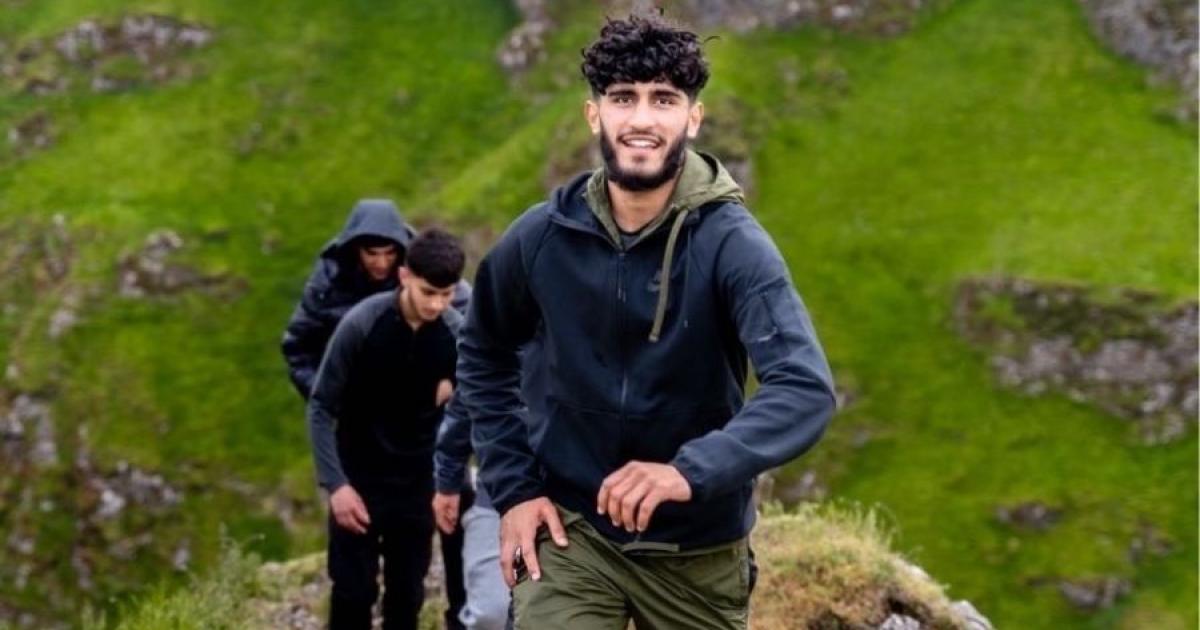
Mohammed Afzal, known to his loved ones as Isa, died after a violent incident outside Power League on Market Street, Bury on August 1 last year.
A trial at Manchester Crown Court this week found Abbas Hussain, 19, Mohammed Rayhan, also 19, and Biryan Ak, 20 all not guilty of murdering Mr Afzal.
But Hussain, formerly of Bolton and now of Prestwich, was convicted of manslaughter for his part in Mr Afzal’s death.
The trial took place at Manchester Crown Court (Image: Anthony Moss)
During the trial opening, Jamie Hamilton KC, prosecuting, said: “The law and common sense say that people are entitled to defend themselves.
Advertisement
“We make it clear that Isa Afzal would have found himself in the dock of a criminal court for his conduct up to the point that he ran away.
“But both law and common sense say that defending yourself or others is not an excuse for any and all violence.”
During the trial, the three men had argued that they were defending themselves from Mr Afzal after he and another man in balaclavas emerged from a car.
When interviewed by police after his arrest, Hussein gave no comment but gave a prepared statement.
Advertisement
His statement said that Mr Afzal had launched a violent attack on him, but accepted he had stabbed the 19-year-old several times.
At the opening of the trial, Mr Hamilton said that Mr Afzal and his friends had followed a grey Corsa to the Power League complex and that he said he would “smash the guy’s car up.”
Mr Hamilton said that on arriving at the Power League, Mr Afzal then got out of his car and approached it with a baseball bat in his hand and opened the door.
This then started the incident that ended with Mr Afzal being fatally stabbed.
Advertisement
Hussain, formerly of Bolton, now of Windsor Crescent, Prestwich, was found not guilty of murder but convicted of manslaughter and of possession of a bladed article.
Mr Ak, of Norman Grove, Longsight, was found not guilty of murder, while Mr Rayhan, of Chauncy Road, Failsworth, was acquitted of murder and possession of an offensive weapon.
The court will set a date for Hussein to be sentenced at a later date.
Mum-of-three Fiona Millroy launched Little’n, a unisex infantwear label, in October after spotting a lack of stylish, practical options for boys that weren’t “bland, boring, mini-man” designs or heavily gendered.
Fiona Millroy, 43, said: “I’ve always loved clothes and fashion, but with three young boys I soon realised the options weren’t great.
LaunchingLittle’n, a unisex infantwear label (Image: Helen Russell Photography)
“In the infantwear world, girls get all the fun and I wanted something better for my boys.”
The concept was set aside for years until a turning point in 2024, when Ms Millroy and her colleague Max Bengtteson left their roles as senior executives following a company restructure.
Advertisement
While meeting in Copenhagen, the pair revisited the idea, and with Mr Bengtteson’s support, Ms Millroy realised they could create a fresh alternative in children’s clothing.
Wanting to avoid gender stereotypes, she soon found the designs worked just as well for girls, resulting in a truly unisex range.
Some of the new designs (Image: Helen Russell Photography)
After a year of development, Little’n launched in October 2025.
Three core values shape the brand: design, practicality, and environmental responsibility.
Advertisement
Ms Millroy said: “There were three key boxes to tick for me: looking good, being functional and not costing the planet.
“We all know fast fashion has a huge impact – and infantwear isn’t immune.”
The entire range is made with GOTS-certified organic cotton and Little’n was highlighted as a sustainable brand during Index Kidswear in February.
Clothing is designed with “room to grow” features, such as foldable cuffs, so pieces last longer between sizes.
Advertisement
Drawing on her own parenting experience, Ms Millroy shaped the designs around everyday convenience.
She said: “We have a strict popper-free policy.
“Anyone who has done a night change knows what a nightmare it is trying to line them back up.
“Instead, we have our Notty style, which can be tied at the bottom, or two-way zips for easy access on our Grow styles.”
Advertisement
Currently available online, Little’n has secured its first retail partner and is planning further retail expansion in 2026.
The range includes four prints: Stars, Leopard, Sleepy Eye, and Classic White.
Prices start at £22.99 for individual pieces, with discounted rates found on three-packs.
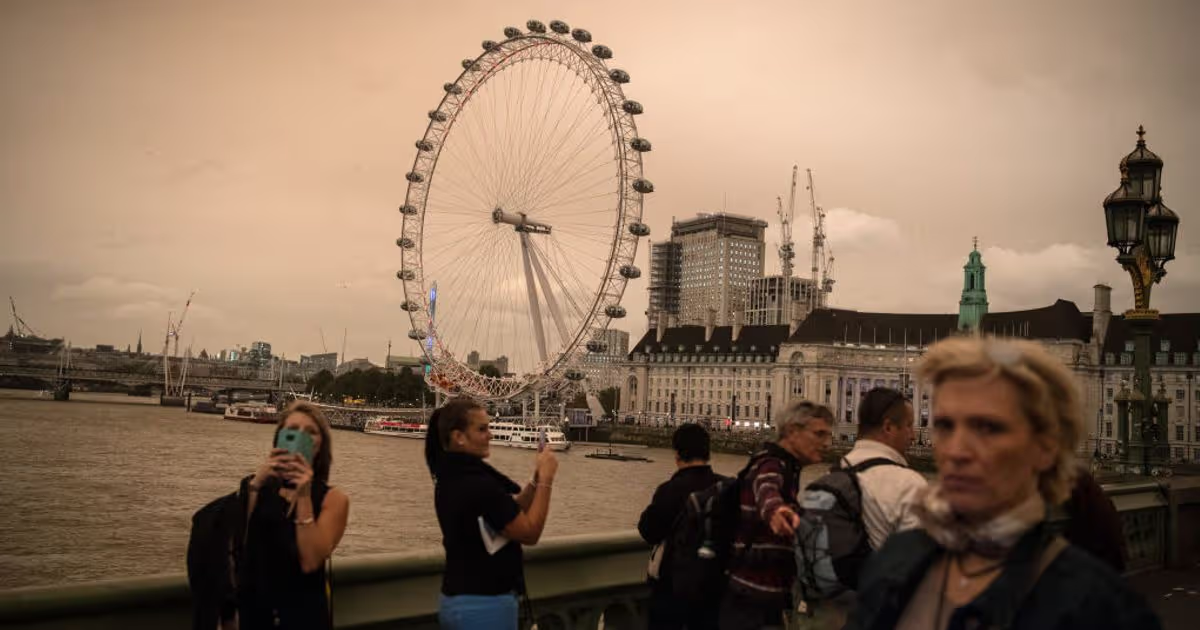
So-called “blood rain” could fall across the UK as dust picked up from the Sahara Desert spread across Europe and tint the skies into many bright colours from gold to deep orange
Brits are set to be lashed with “blood rain” as a Saharan dust cloud sweeps over the country – but how does it form?
Another phenomenon that is also expected is so-called “blood rain.” The phenomenon occurs when dust mixes with rain that, in turn, gives water a reddish colour and is particularly visible when it falls on windows, garden furniture and other outdoor items.
While “blood rain” evokes a sinister phenomenon, the Met Office said it is not a scientific phrase, nor does it describe a clearly defined meteorological event. It added: “For rain to appear red, relatively high concentrations of red‑coloured particles must mix with the water droplets in the cloud.
“Typically, these particles are sand or dust rich in iron oxides, giving them their characteristic colour. When rainfall occurs while these particles are suspended in the atmosphere, the droplets can take on that tint.”
The Met Office noted genuine red rain is “extremely rare.” While dust rain is not uncommon, the concentration of the particles are typically seen when it leaves behind dust after it dries.
In its forecast, the Met Office said today the combination of a moist south-westerly airflow and a broad dust plume could lead to some dust settling out with the rain.
It added: “At this stage, concentrations are expected to remain relatively low, meaning rainfall itself is unlikely to appear noticeably red. Instead, where dust mixes in, the impact is more likely to be seen after showers have passed, with a light film of yellowish or brownish residue on surfaces.
“For those in the southwest, the timing of the rainfall will be a key factor. Overnight showers or early‑morning rain on Thursday could leave dust deposits by dawn. Elsewhere across the UK, dust levels are currently forecast to remain even lower, with largely unremarkable rainfall expected.”
Thankfully, there is no concern from a health perspective for the levels in the UK. Those with respiratory sensitivity might notice a slight increase in airborne particles before rainfall clears the atmosphere.
The journey of Lewis Hamilton was highlighted during Scottish Apprenticeship Week.
Network Rail has been helping a rising railway engineer power through an apprenticeship at its training centre in East Kilbride.
Advertisement
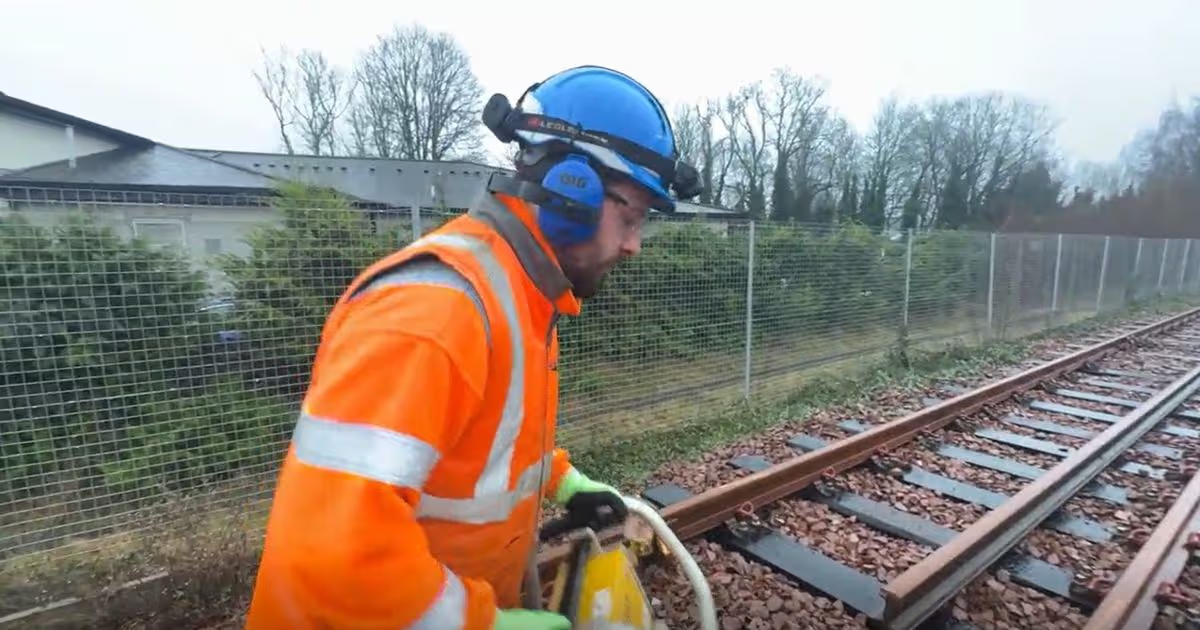
The journey of Lewis Hamilton and the success of the programme were highlighted during Scottish Apprenticeship Week.
After joining the programme in 2025, Lewis began his career gaining hands‑on experience at the training centre in East Kilbride. This includes changing rails, changing sleepers as well as patrolling and inspecting for damage.
He joined the apprentice programme at the age of 29 after deciding his previous career wasn’t going the way he wanted.
One year on, the apprentice is racing through the programme and gearing up for an exciting career as a valued railway engineer.
Advertisement
Now in his second year of training, he said: “I didn’t see myself in the railway and sometimes thought it was a wee bit late for me to start retraining but it has been really good and it’s a role I’m happy to be in.”
And he added: “Since last year, I’m a lot more comfortable and confident. I know what’s expected of me day to day.
“Being trusted with tasks has been one of my proudest moments so far. If we’re on a big job it gets split up into tasks, and the person supervising will be there to support me but let me know that I’m running the show and trusting me to get the job done safely. It feels good.
“If you’re willing to learn, put the effort in and work safely, I think it’s one of the best opportunities you can have. You get great experience and training, and you get a career for life that you can continue to build on.”
Advertisement
Lewis’s journey is just one of many from people who’ve chosen to begin their career with Scotland’s Railway.
Network Rail is currently searching for Scotland’s next generation of railway engineers with 26 opportunities available on the 2026 SCQF Level 7 Engineering Apprenticeship.
This Scottish Apprenticeship Week, the organisation is inviting people of all ages and backgrounds to discover how an apprenticeship could be the start of their journey too.
Ross McNab, early careers manager at Network Rail, said: “Our apprenticeship programme provides a strong, structured pathway into engineering while giving people the chance to contribute to the safe and reliable running of Scotland’s Railway.
“We take great pride in supporting apprentices as they develop their skills, build their confidence and take on meaningful responsibility across our network.”
Successful candidates will help look after nearly 3000 miles of track, over 14,000 bridges, and keep around 2500 trains moving through the country every day.
*Don’t miss the latest headlines from around Lanarkshire. Sign up to our newsletters here.
And did you know Lanarkshire Live had its own app? Download yours for free here.
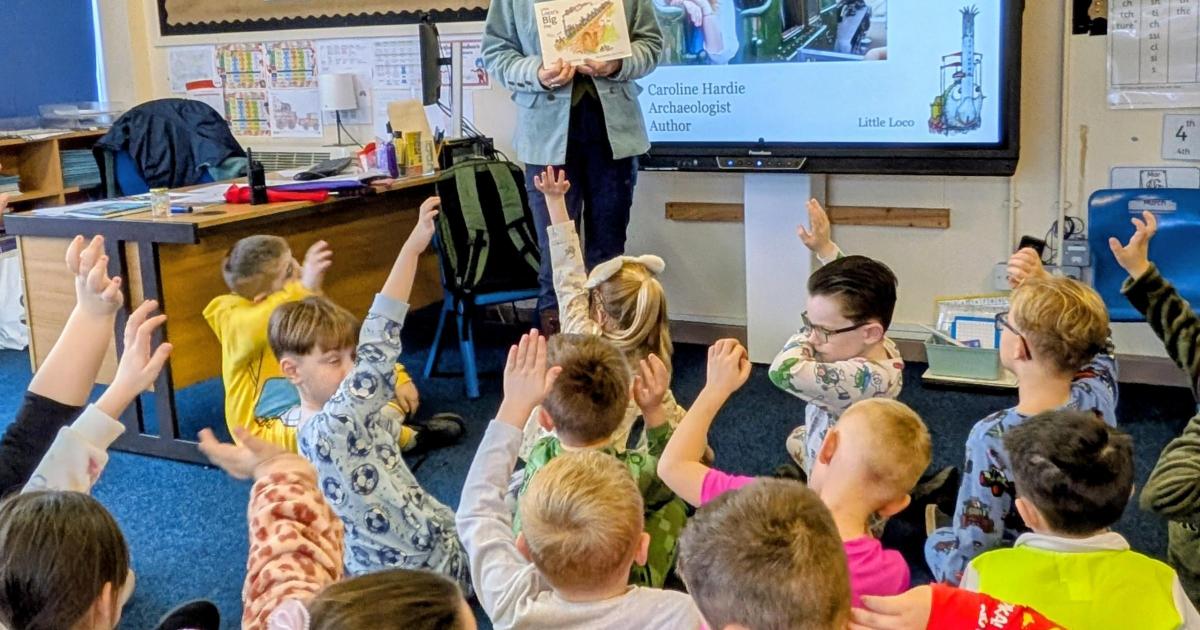
Caroline Hardie’s visit was the highlight of imaginative World Book Day activities at Woodhouse Primary Academy, in Bishop Auckland.
Caroline led interactive workshops for Years 2 and 3, based on her book Little Loco’s BIG Day, which was inspired by the opening of the Stockton & Darlington Railway in 1825.
Author Caroline Hardie and headteacher Alex Lawrance with pupils on World Book Day (Image: Woodhouse Primary Academy)
It was part of the school celebrating World Book Day with a bedtime story theme, engaging pupils in a range of creative activities designed to foster a love of reading.
The day included decorating classroom doors, crafting favourite character spoons, buddy bedtime reading sessions, story-time with the Tonie Box, and a thrilling masked reader challenge.
Advertisement
The children were enthralled as Caroline, an archaeologist based near Barnard Castle and Trustee of the Friends of the Stockton & Darlington Railway, told the tale of Little Loco’s BIG Day.
The story about Locomotion No.1 – the world’s first steam-powered locomotive –beautifully explores themes of friendship and perseverance.
The visit was arranged by Rob Yorke, Trustee of the Auckland Project and a former pupil of Woodhouse Primary, who generously gifted a personal copy of Little Loco’s Big Day to every child in the school.
Pupils enjoying reading at Woodhouse Primary Academy (Image: Woodhouse Primary Academy)
Headteacher Alex Lawrance said: “It’s been a wonderful World Book Day here at Woodhouse Primary Academy packed with so many engaging activities to celebrate the joy of reading.
Advertisement
“We have been delighted to welcome Caroline to school; the children have loved learning all about Little Loco and the importance of friendship, confidence and resilience – three of our key school values.
“We are so grateful to Rob for funding the workshops and the books for the children and we know families will enjoy reading the story together at home.”
Caroline Hardie said: ‘It was an absolute joy to share the tale of Little Loco’s BIG Day with the children at Woodhouse Primary Academy – the story of how this area introduced the world to modern railway travel. I hope Little Loco and her friends will be an inspiration to the children. Afterall, we changed the world from here before. We can do it again.’
Rob Yorke added: ‘I have many fond memories of my time at the school and of the wonderful teachers who inspired me. It is fantastic to be able to support Alex, along with the teachers and governors, who do a tremendous job in equipping our children with the skills they need for today and the future.”
Advertisement
Woodhouse Primary Academy is committed to nurturing a love of learning and reading among its pupils and plans to continue hosting author visits and creative reading activities.
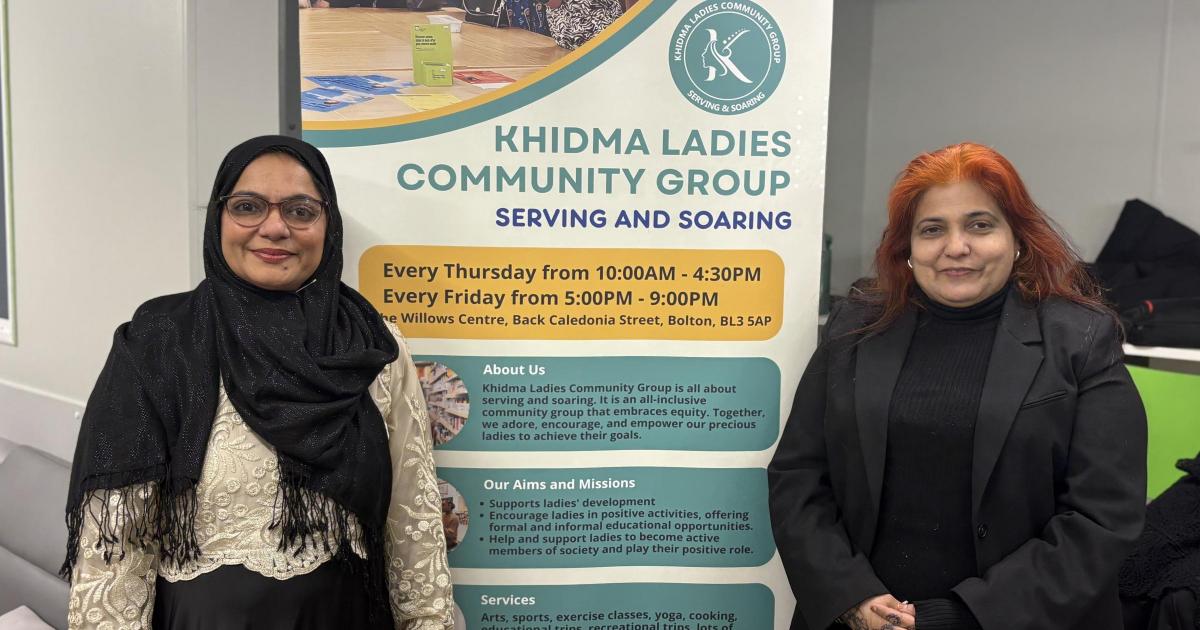
The Khidma Ladies Community Group is inviting residents to enjoy iftar on Friday, March 6, at the Willows Centre from 5.30pm.
Chair and founder of Khidma, Yasmin Oskoei, said the gathering aims to bring together women and children to break their fast collectively during Ramadan.
It is open to all women in the community, including revert Muslims and those who may otherwise spend iftar alone.
Advertisement
Free food will be provided for everyone attending. However, registration is required to help the group to plan catering.
Those wishing to attend are asked to text or ring 07706 804658 with the number of people in their group.
Yasmin encourages people to share the invitation widely to ensure “no one spends Ramadan alone”.
TORREY, Utah (AP) — Three women have been found dead in a southeastern Utah county and the suspect was still at large on Thursday, officials said. Area residents were asked to remain vigilant and schools were closed Thursday and Friday as officials asked for help finding a vehicle.
Two women were found dead on a hiking trail on Wednesday afternoon and during the investigation, a third woman was found dead in a home in Wayne County, the Utah Department of Public Safety said in a news release on Thursday.
The department said the State Bureau of Investigation and Crime Lab were supporting the homicide investigation and multiple scenes were being processed in Torrey and the surrounding area. Officials did not identify the women but said one was in her 30s, one was in her 60s and one was in her 80s.
The suspect remains at large, the department said. Officials asked for help finding a white Subaru Outback with license plate U560YF, but warned people not to approach it.
Advertisement
On Wednesday night, the Wayne County Sheriff’s Office asked residents to keep their lights on and doors locked and to remain home or with others. County officials announced that counselors would in place to support students when schools reopen next week.
The American people are bitterly divided over the conflict in Iran. The US president, Donald Trump, won office in 2024 after campaigning on a message of “no new wars”. So the conflict that began with airstrikes conducted with the Israeli military in the early hours of February 28, and which has quickly spread into the rest of the region, has polarised opinion across the country.
An Economist/YouGov poll completed on March 2 provides early information about what Americans think of the war so far. The poll asked the following question: “Would you support or oppose the US using military force to overthrow the government of Iran?”
There is a great deal of confusion about what the objectives of the war are, since the messaging from Trump, and his senior officials, has veered from preventing Iran from developing nuclear weapons, to destroying the country’s ballistic missile capability, to regime change.
But, from the point of view of polling, this is as good a question as any for finding out what Americans think. Altogether 32% of them support the war and 45% oppose it.
Advertisement
A divided society
The responses to this question analysed by gender, race, age and education appear in the graph. Those who were uncertain are not included in the totals.
The graph shows that large variations exist among the different groups in relation to their attitudes to the war.
The relationship between attitudes to the war and the
social backgrounds of respondents YouGov/Economist, Author provided (no reuse)
The largest differences are in relation to race. Some 37% of white respondents support the war and 44% oppose it. In contrast 7% of black people support it and 60% oppose. Hispanics were in between these two, but rather closer to whites than to blacks.
Advertisement
The was a large gender difference in the responses as well with 37% of men in support but only 26% of women. A marked age difference existed too with only 21% of 18-to-29 year olds supporting and 50% opposed. At the same time some 40% of those over the age of 65 supported the war with 49% opposed. Finally, 34% of those without a college degree were in support compared with 27% with a college degree. Overall, young black women with a college degree were most likely to oppose the war, whereas older white men without a college degree were most in support.
A question of politics
The social backgrounds and attitudes to the war of respondents are interesting, but they are overshadowed by the polarisation of opinion among supporters of the political parties and ideological factions. These appear in the second chart.
The relationship between attitudes to the war and the
political affiliations of respondents
The striking feature of this chart is the difference between respondents who identify with the Democrats and those who identify with the Republicans. Only 8% of Democrats support the war compared with 64% of Republicans. The highest level of support comes from respondents who are Maga (Make American Great Again) supporters. No less that 75% of them support the war and only 10% oppose it.
There is similar polarisation among liberals, which refers to anyone on the left of the ideological spectrum in the US, and conservatives. Only 8% of liberals support the war compared with 66% of conservatives. Moderates are in between the two with 25% of them supporting and 50% opposing the war.
What it could mean for November’s mid-term elections
One theory of elections argues that individuals have a set of well-defined preferences over policies and so they support the party which is closest to them in relation to these policies. In this analysis, policy preferences are summarised by the left-right ideological dimension, or alternatively by the liberal-conservative dimension in politics.
In fact, it appears that in reality the reverse is true with voters choosing a party or leader and then changing their views to fit in with those of their newly adopted party. The 47th US president is an extreme case of this, because he constantly changes his mind. Before he was elected, he promised that the US would not get involved in any more wars in the middle east. It appears that most Republicans and nearly all the Maga supporters are quite willing to go along with the U-turn and agree with anything he does.
This is a big advantage for a president who is so polarising, since it means that he can rely on a body of loyal supporters even when they don’t know the latest policy changes. However, it is a weakness when it comes to elections because the Democrats and Independents together easily outnumber the Republicans and Maga supporters in the electorate.
Advertisement
The Cooperative Election Study, a large-scale survey conducted at the time of the presidential election in 2024 showed that 32% of respondents in their national survey identified with the Democrats, 27% with the Independents and 30% with the Republicans. In short, the Republicans are up against a coalition of Democrats and Independents who make up just under 60% of the voters. Add the factor that many Americans are outraged by the president’s behaviour and you have a winning coalition for the opposition in the mid-term elections.
Whatever happens in the war, Trump is unlikely to recover his popularity for the Republicans not to lose control of the House of Representatives – and possibly the Senate – in the mid-term elections in November.