Connect with us
DAPA Banner

Business

US Treasury signals global tariff hike to 15% as Trump trade policy returns

Published

on

US Treasury signals global tariff hike to 15% as Trump trade policy returns

The United States is expected to raise its global tariff rate to 15 per cent in the coming days as the Trump administration moves to restore its controversial trade policies following a Supreme Court ruling that struck down last year’s sweeping import duties.

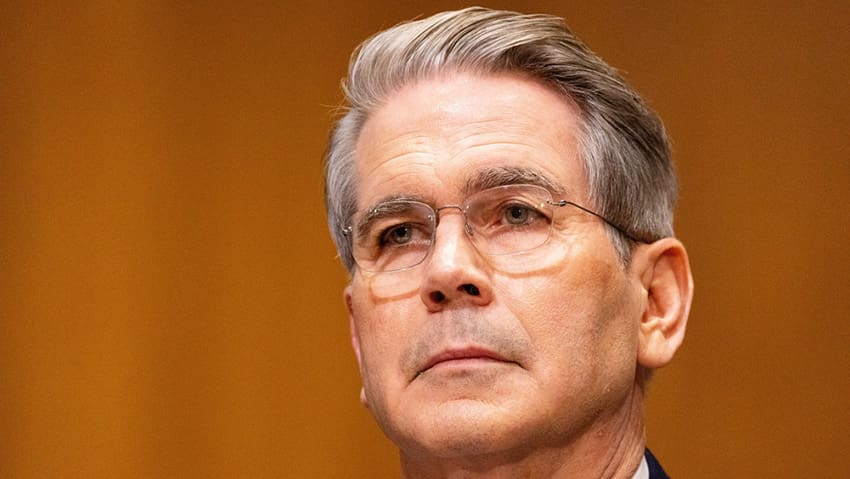
US Treasury Secretary Scott Bessent said the higher tariff level was “likely” to be implemented this week, suggesting the White House intends to push ahead with a tougher global trade regime despite the legal challenges that forced officials to rethink their approach.

The new tariff would replace the blanket import duties announced by Donald Trump last year, which had imposed levies on goods from dozens of countries. Those measures were struck down by the Supreme Court of the United States after judges ruled that the administration had exceeded its authority by using emergency powers to justify the tariffs.

The decision triggered a rapid response from the White House, which introduced a new global levy of 10 per cent using a different legal mechanism. However, confusion quickly followed after Trump stated on social media that the rate would instead be set at 15 per cent.

In practice, the tariff came into force at the lower level, leaving businesses and governments around the world uncertain about the direction of US trade policy.

Advertisement

Bessent’s latest comments suggest the administration now intends to align policy with Trump’s earlier statements by raising the tariff to the maximum level allowed under the temporary legal authority being used.

Speaking to CNBC, Bessent said he believed tariffs would ultimately return to their previous levels within a matter of months. He argued that the court ruling would not undermine the administration’s broader trade strategy or the revenue the US expects to collect from import duties.

“It’s my strong belief that the tariff rates will be back to their old rate within five months,” he said.

The White House has repeatedly dismissed the significance of the court decision, insisting it has several alternative legal tools available to maintain the tariff regime.

Advertisement

Officials say the policy is central to the administration’s economic strategy, which aims to reduce the US trade deficit, encourage domestic manufacturing and generate revenue to help tackle the country’s growing national debt.

To implement the current tariff, the administration invoked Section 122 of the US Trade Act, a rarely used provision that allows the president to impose tariffs of up to 15 per cent for a period of up to 150 days without approval from Congress.

The authority is designed to address sudden balance-of-payments crises or major trade imbalances. Because it has rarely been used in modern trade disputes, many legal experts consider the White House’s interpretation of the law to be largely untested.

Section 122 provides the administration with a temporary mechanism to maintain tariffs while it develops a longer-term legal framework for its trade policies.

Advertisement

The White House has indicated that once the 150-day window expires, it intends to rely on other statutes to introduce more permanent tariffs.

These include Section 301 of the Trade Act, which allows the US government to impose duties on countries accused of unfair trade practices, and Section 232 of the Trade Expansion Act, which permits tariffs on imports deemed to threaten national security.

Both provisions have been used by Trump previously. During his first term in office, the administration imposed tariffs on steel and aluminium imports under Section 232 and used Section 301 to introduce duties on hundreds of billions of dollars’ worth of goods from China.

Officials have also explored applying these powers to a wider range of sectors, including digital services taxes, pharmaceutical imports and automotive manufacturing.

Advertisement

Unlike the emergency powers struck down by the Supreme Court, these legal tools require the government to follow formal procedures before imposing tariffs.

This typically includes conducting investigations into the industries concerned, presenting evidence to justify the duties and providing businesses with a consultation period to submit feedback before new levies are introduced.

Many businesses say this more structured process would be preferable to the abrupt policy shifts that have characterised recent trade decisions.

Companies involved in international supply chains have repeatedly called for greater clarity and predictability, arguing that sudden tariff announcements make it difficult to plan investments, adjust pricing strategies or secure long-term contracts.

Advertisement

The legal battle over tariffs has also created significant financial uncertainty for the US government.

Companies that paid the original tariffs before they were struck down have begun filing claims seeking reimbursement. Analysts estimate the administration could face refund claims worth as much as $130 billion.

A study by the Cato Institute calculated that the government could also incur substantial interest costs if those refunds are delayed.

According to the institute’s estimates, US taxpayers could be liable for roughly $23 million in interest for every day refunds remain unpaid, potentially reaching around $700 million per month.

Advertisement

The dispute stems from the tariff regime introduced during what Trump described as “Liberation Day” in April last year.

At that time, the administration imposed tariffs ranging from 10 per cent to as high as 50 per cent on imports from dozens of countries. The move sparked a wave of diplomatic negotiations as governments attempted to secure exemptions or reduced tariff rates by offering investment commitments and other concessions.

The sweeping nature of the tariffs triggered a legal challenge that eventually reached the Supreme Court, which ruled that the president’s use of emergency powers to justify the duties was unconstitutional during peacetime.

That judgment forced the administration to redesign its trade policy using alternative legal authorities.

Advertisement

The shift to a universal tariff of 10 per cent temporarily placed imports from all countries on equal footing, removing the advantages some trading partners had negotiated after the original “Liberation Day” tariffs were announced.

Countries such as the United Kingdom had previously secured lower tariff rates as part of bilateral negotiations, and the introduction of a flat global tariff effectively erased those concessions.

The potential increase to 15 per cent would mark another escalation in the administration’s trade policy, potentially affecting thousands of exporters and supply chains worldwide.

Economists say the move could have wide-ranging consequences for global trade flows, particularly if the tariffs are extended or made permanent under other legal authorities.

Advertisement

For now, businesses and foreign governments are watching closely as Washington prepares its next steps in reshaping the US tariff regime and redefining its approach to international trade.


Jamie Young

Jamie Young

Jamie is Senior Reporter at Business Matters, bringing over a decade of experience in UK SME business reporting.
Jamie holds a degree in Business Administration and regularly participates in industry conferences and workshops.

When not reporting on the latest business developments, Jamie is passionate about mentoring up-and-coming journalists and entrepreneurs to inspire the next generation of business leaders.

Advertisement
Continue Reading
Click to comment

You must be logged in to post a comment Login

Leave a Reply

Business

Schools to get $2.1b in pre-budget splash

Published

on

Schools to get $2.1b in pre-budget splash

More than $2.1 billion has been committed to state school infrastructure funding ahead of the May budget.

Continue Reading

Business

WA govt splashes $3.8m to keep food relief services running

Published

on

WA govt splashes $3.8m to keep food relief services running

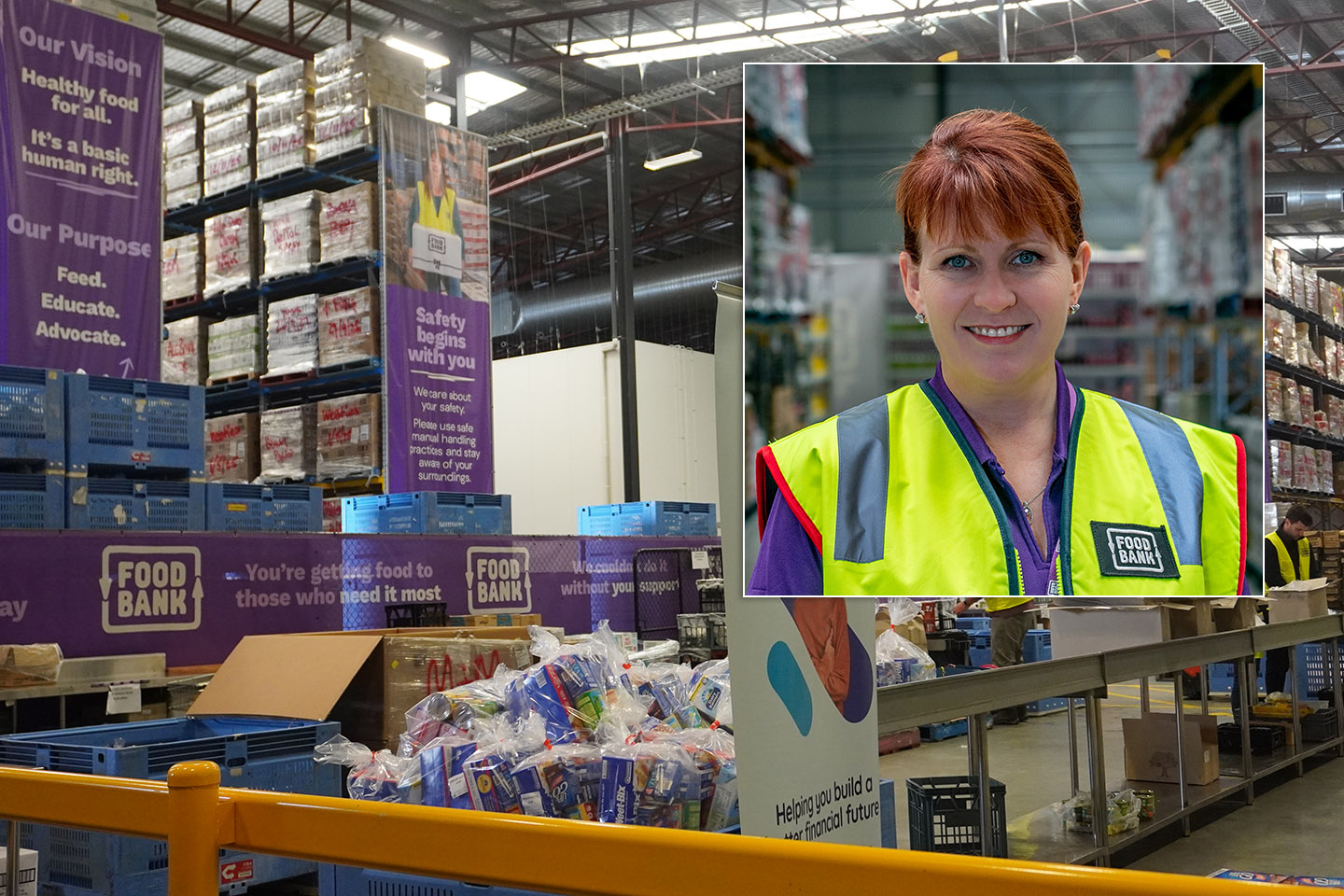
A WA government cash injection will keep vital food relief delivery trucks on the road as demand for their services ramps up due to rising fuel bills.

Continue Reading

Business

Concurrent Technologies Plc (COTGF) Discusses Full Year Results and Leadership Transition with Strategic Business Updates Transcript

Published

on

OneWater Marine Inc. (ONEW) Q1 2026 Earnings Call Transcript

Concurrent Technologies Plc (COTGF) Discusses Full Year Results and Leadership Transition with Strategic Business Updates April 17, 2026 6:30 AM EDT

Company Participants

Miles Adcock – CEO & Executive Director
Kim Maria Garrod – CFO & Executive Director

Presentation

Advertisement

Operator

Good morning, and welcome to the Concurrent Technologies Plc Final Results Investor Presentation. [Operator Instructions]

Before we begin, I would like to submit the following poll. And I would now like to hand you over to CEO, Miles Adcock. Good morning to you.

Advertisement

Miles Adcock
CEO & Executive Director

Good morning, and welcome to our full year results for 2025.

Next slide, please. So my name is Miles. I’m the CEO. This is my fourth set of annual results, and I’m joined by Kim, our CFO. And I should note that at the same time as we issued our full year results, we also announced that Kim has decided to retire at the end of this year. My good friend and colleague, Kim, do you want to say a few words?

Advertisement

Kim Maria Garrod
CFO & Executive Director

Yes. So I achieved a milestone birthday this year, and that made me rethink what I was going to do. So I have decided to retire, but I’m in the business until the end of the year. I’m very excited about the business, and I will be watching it very closely after I’ve gone, and I’ll be regularly calling Miles for updates. But I’m fully committed to the business. And as I say, I’ll be taking out for most of this financial year.

Miles Adcock
CEO & Executive Director

Advertisement

Thank you, Kim. And just to note, Kim has generously given us until the end of the year to seek a replacement, and I’ve engaged Korn Ferry this week, and we’re working hard at finding a worthy successor.

Advertisement
Continue Reading

Business

World weighs fate of Mideast ceasefire after US seizes Iranian cargo ship

Published

on

World weighs fate of Mideast ceasefire after US seizes Iranian cargo ship


World weighs fate of Mideast ceasefire after US seizes Iranian cargo ship

Continue Reading

Business

MPLX: A Sound Growth Story Irrespective Of Iran Headlines

Published

on

Atmos Energy: A Stable Income Growth Stock In Uncertain Times (NYSE:ATO)

MPLX: A Sound Growth Story Irrespective Of Iran Headlines

Continue Reading

Business

Budget won't be bonanza for cutting red tape: minister

Published

on

Budget won't be bonanza for cutting red tape: minister

Business groups have urged the government to cut a raft of regulations ahead of the federal budget, but the finance minister says changes have to make sense.

Continue Reading

Business

China leaves lending benchmarks unchanged for 11th month in April

Published

on

China leaves lending benchmarks unchanged for 11th month in April


China leaves lending benchmarks unchanged for 11th month in April

Continue Reading

Business

IPOs could raise up to $25 billion in 2026, too, despite D-St caution

Published

on

IPOs could raise up to $25 billion in 2026, too, despite D-St caution
Mumbai: A clutch of large IPOs is expected to prop up India’s primary market in 2026 even as market uncertainty slows down broader activity compared to the previous two robust years, said Ranvir Davda, co-head of investment banking at HSBC India.

“The number of deals may come down, but the size and aggregate value may still be similar (to the previous years),” said Davda in an interview.

Reliance Industries’ telecom arm Jio Platforms, National Stock Exchange, Zepto, PhonePe, Manipal Hospitals and and SBI Funds Management are among the large issuances expected to hit the market in 2026. Together, these issues could raise ₹1 lakh crore (about $10.8-10.9 billion).

So far this year, 20 companies have raised $2.5 billion, according to Prime Database and ETIG Database. That comes after two record years that saw 94 and 115 mainboard IPOs in 2024 and 2025, raising nearly $21-23 billion.

Advertisement

This year’s IPO fundraise could be between $21 billion and $25 billion.


“This year, a larger percentage of companies are mid to large-sized,” said Davda. “Many of these are backed by large groups or private equity investors and, therefore, have the flexibility to wait, ride volatility, and avoid pressing forward if valuations are not aligned.”
The early part of this year has been slower for the IPO market, with the West Asia conflict weighing on secondary markets, IPO subscriptions and listing gains, prompting several companies to defer offerings. “This year will be volatile. Windows to complete trades will be shorter, so readiness is critical,” Davda said.

At the same time, companies that need capital are showing more willingness to negotiate.

Issuers are increasingly tapping AIFs, family offices and special situations funds alongside traditional investors, while using pre-IPO placements as a bridge to raise capital with visibility to a listing over the next 6-18 months, he said. According to Davda, technology faces sharper scrutiny amid AI disruption, global uncertainty and profitability concerns, though large consumer-tech and fintech offerings are still likely to proceed as “must-own” India exposures.

Advertisement
Continue Reading

Business

Janus Living: Valuation Seems To Have Priced In Near-Term Upsides (NYSE:JAN)

Published

on

Brookdale: Operational Leverage Signals A Major Pivot

This article was written by

I focus on long-term investments while incorporating short-term shorts to uncover alpha opportunities. My investment approach revolves around bottom-up analysis, delving into the fundamental strengths and weaknesses of individual companies. My investment duration is the medium to long-term. Ultimately, I aim to identify companies with solid fundamentals, sustainable competitive advantages, and growth potential.

Analyst’s Disclosure: I/we have no stock, option or similar derivative position in any of the companies mentioned, and no plans to initiate any such positions within the next 72 hours. I wrote this article myself, and it expresses my own opinions. I am not receiving compensation for it (other than from Seeking Alpha). I have no business relationship with any company whose stock is mentioned in this article.


Seeking Alpha’s Disclosure: Past performance is no guarantee of future results. No recommendation or advice is being given as to whether any investment is suitable for a particular investor. Any views or opinions expressed above may not reflect those of Seeking Alpha as a whole. Seeking Alpha is not a licensed securities dealer, broker or US investment adviser or investment bank. Our analysts are third party authors that include both professional investors and individual investors who may not be licensed or certified by any institute or regulatory body.

Advertisement
Continue Reading

Business

FMCG sector set for steady Q4 on rural demand and volume growth

Published

on

FMCG sector set for steady Q4 on rural demand and volume growth
ET Intelligence Group: The FMCG sector is expected to post a steady March-quarter performance, supported by stable rural demand, gradual urban recovery and volume growth even as pricing remains subdued in several segments. While steady raw material costs during most of the quarter are margin supportive, the recent rise in costs of crude-linked inputs such as packaging materials could weigh on margins. Companies with stronger execution, premium portfolios and better distribution reach are expected to outperform, while category-specific challenges and international headwinds may keep performance uneven across the pack.

Hindustan Unilever is expected to report mid-single digit revenue growth led by 4-5% volume growth. Growth is expected to be broad-based, with beauty and wellbeing growing in double-digits, while home care, personal care and foods & beverages are likely to grow in mid-single digits. The demerger of low-margin ice cream business may support operating margin before depreciation and amortisation (Ebitda margin).

ITC may show pressure in the cigarettes segment amid flat volume and higher taxes while displaying resilience in non-cigarette segments. The FMCG and agriculture related business is expected to remain robust, while paperboards business may grow in single digit. The margin for the cigarettes business is likely to contract amid rising leaf tobacco costs and limited pricing hikes.

FMCG Pack Heads for Steady Q4 Despite Patchy Category TrendsAgencies

Books & MARKS HUL, Nestlé and Britannia set for volume-led growth; high tax on cigarettes may weigh on ITC; Dabur may report modest int’l revenue

Nestle India’s consolidated revenue growth is expected to be in double-digits, led largely by volumes in the domestic market while exports may show recovery on a weak base. Normalisation is expected after GST-related disruptions in the previous quarter. However, margin is likely to contract on account of high inflation in the coffee segment.
Asian Paints is likely to report better volume growth for the domestic decorative paints segment on a weak base. Upcoming price increase may boost channel restocking thereby aiding primary sales. International business may be subdued due to the Middle East disruption. Margins are likely to improve on stable raw material prices during the quarter, with the impact of recent crude inflation expected to be limited for the March quarter.

Advertisement


Varun Beverages is expected to report high-single digit revenue growth in the March quarter, with international markets likely to drive momentum through high double-digit volume growth. Ebitda margin is likely to contract, partly due to upsizing in India and ramp-up of snacks in Africa.
Britannia Industries may report double-digit revenue growth led by high-single digit volume expansion due to higher grammage in low-unit packs, which account for about two-third portion of sales. Margins are likely to improve supported by stable raw materials prices, especially in January and February. Dabur India is expected to post modest revenue growth, driven by mid-single digit volume growth in the domestic business. However, its international operations, particularly the Middle East and North Africa (MENA) region, which contributes around 8% of revenue may remain weak amid geopolitical tensions. Within domestic categories, home and personal care is expected to deliver double-digit growth, while healthcare and foods may see low single-digit expansion.

Colgate-Palmolive India is expected to report low single-digit volume growth on a weak base, after three consecutive quarters of declines. The margin could contract due to higher promotions and advertisement spends.

Continue Reading

Trending

Copyright © 2025