

Business
Nifty’s primary trend still bearish, 24,300 key level to watch: Vinay Rajani


Market participants had briefly taken comfort from the rebound seen earlier, but the reversal in sentiment has reinforced the view that the broader trend remains fragile. According to technical analysts, the current setup suggests that the market is still navigating a challenging phase where selective opportunities may exist, even as the broader indices struggle to sustain momentum.
Speaking to ET Now, Vinay Rajani from HDFC Securities explained that despite the recent bounce, the broader trend for the Nifty continues to remain weak from a technical perspective.
“Yesterday’s recovery was convincing but still the primary trend on the Nifty is bearish because Nifty is placed below 5, 10, 20, 50, 100, and 200 days moving average. So positional trend is clearly on the bearish side. It is only that we are trying to protect the level of 24,300 which happens to be the recent swing low and the previous swing lows was also seen around 24,300-24,350 odd range, so that becomes the strong support. There is a chance of recovery if we do not break this level. But yes, right now the Nifty is currently moving in the yesterday’s entire move. So, consolidation is going on.”
Rajani noted that while the benchmark index is struggling to establish a firm uptrend, the selling pressure is not uniform across sectors. Certain pockets of the market are still showing resilience and even touching fresh highs.

“Some sectors are still doing well like defence, power stocks, capital good stocks are performing very well. In fact, they are hitting their 52-week high, that is also a good sign. So, it is not across the board selling in the market. Some stocks are still performing despite getting into this overall primary downtrend. So, yes, in trading you have to be very stock specific and sector specific.”
He added that public sector undertakings, particularly in the power and defence segments, continue to exhibit strength on the charts.”And PSUs are looking very strong to us be it a PSU power stocks or be a PSU defence stocks. They are looking strong to us and we think stocks specific market will remain bullish. But yes, as far as Nifty is concerned, strict stop loss of 24,300 we are recommending to our clients.”
From a technical standpoint, Rajani believes the key level to watch on the upside remains significantly higher, which could signal a meaningful shift in the market trend.
“On the upside, Nifty has to close above 25,000 to confirm the bullish trend reversal, otherwise, it will remain into overall downtrend and consolidation you can say till the 24,300 is getting breached again. So, we are into a consolidation phase we can say. So, we need to see primary trend is still down. So, there is upper hand of bears in the market right now. So, we have to protect our long trades with the strict stop loss and for Nifty it should be 24,300.”
When asked about specific trading ideas in the current environment, Rajani highlighted select PSU stocks that are displaying favourable technical setups.
“So, as I said, we are bullish on the PSU. So, one stock we like in the defence space is Bharat Electronics, around 471 one can go long, stop loss 464, on the upside target should be 485. The second pick from the PSU power space, NTPC is looking good, 385 should be the entry, 378 should be the stop loss, on the upside 395 should be the target.”
With the market lacking a clear directional trend, analysts suggest that traders may need to stay disciplined with risk management and focus on stock-specific opportunities rather than broad index bets. In a market that is swinging between optimism and caution, technical levels such as Nifty’s 24,300 support and the 25,000 resistance could play a crucial role in determining the next decisive move.


The logo for the Food and Drug Administration is seen ahead of a news conference at the Health and Human Services Headquarters in Washington, DC on April 22, 2025.
Nathan Posner | Anadolu | Getty Images
A key U.S. Food and Drug Administration official who oversees vaccines and biotech treatments will step down from the agency following multiple decisions that raised concerns within the industry.
Vinay Prasad, director of the Center for Biologics Evaluation and Research, will leave the FDA at the end of April, an agency spokesperson confirmed on Friday. It is his second departure from the position: he briefly left the post in July following backlash over his regulatory decisions, and returned only two weeks later in August.
In a post on X, FDA Commissioner Marty Makary said the FDA will appoint a successor before Prasad returns next month to the University of California San Francisco, where he taught before taking the FDA position last year. Makary said Prasad “got a tremendous amount accomplished” during his tenure at the agency.
Prasad’s decision to step down comes after criticism of the FDA mounted within the biotech and pharmaceutical industry and among former health officials. In the past year, the agency has denied or discouraged the approval applications of at least eight drugs, according to RTW Investments, after taking issue with data the companies used to support their applications. The FDA also refused to review Moderna’s flu shot before it reversed course.
All of those companies accused the FDA of reversing previous guidance about the evidence they could use to back their applications, sparking criticism within the industry that an unreliable regulatory process could stifle development of drugs for hard-to-treat diseases.

A former FDA official who spoke to CNBC on the condition of anonymity to speak freely on the issue called the reversals the worst kind of regulatory uncertainty because companies say they are being told one thing and then experience another.
In a statement earlier Friday, an FDA spokesperson said there was “no regulatory uncertainty,” adding the agency “makes decisions based on the evidence, but does not make assurances about outcomes.” The spokesperson said the FDA is “conducting rigorous, independent reviews and not rubber-stamping approvals.”
The most recent controversy came after the FDA discouraged UniQure from applying for expedited approval of its experimental treatment for Huntington’s disease.
The agency, which underwent staff cuts and an overhaul under Health and Human Services Secretary Robert F. Kennedy Jr., has faced broader backlash for its drug and vaccine approvals process. Critics have worried the agency could stifle the development of new treatments and risk the safety of patients.
The Wall Street Journal earlier reported Prasad’s departure.

What does it take to turn big ideas into real impact?
For Frederic Levesque of Taos, New Mexico, the answer is simple. Stay curious. Build with care. And never stop learning.
Today, Frederic serves as Head of Product for Emerging Business and Partnerships at AURA, a cybersecurity company. But his path to product leadership started long before boardrooms and strategy sessions. It began in Montreal, Canada, where he grew up writing stories and playing hockey.
“Writing taught me how to think,” Frederic says. “Hockey taught me how to work with a team. I still use both skills every day.”
Those early lessons shaped how he approaches business. He blends creativity with discipline. He values teamwork as much as individual drive. And he believes big ideas only matter if you can bring them to life.
Early Life in Montreal: Creativity Meets Competition
Frederic was born in 1989 and raised in Montreal. As a kid, he balanced two passions. He wrote often. And he played hockey.
Writing gave him space to explore ideas. Hockey gave him structure and accountability.
“On the ice, you learn fast that no one wins alone,” he says. “That mindset stuck with me.”
That balance between creative thinking and team performance would later define his leadership style. Even now, he still writes and has been published in poetry. For him, writing is not just a hobby. It is a way to process complex ideas and sharpen his thinking.
Education at UGA: Building a Strategic Foundation
After high school, Frederic attended the University of Georgia. He graduated with honors, earning a cum laude distinction.
College strengthened his ability to connect ideas across fields. He learned how strategy, technology, and user needs intersect. That skill became central to his career in product management.
“At UGA, I learned how to ask better questions,” he says. “Product work is really about asking the right questions before you build anything.”
This mindset helped him move beyond theory. He became focused on execution. Ideas were important. But execution mattered more.
What Does Frederic Levesque Do at AURA?
Today, Frederic leads product strategy for Emerging Business and Partnerships at AURA, a company in the cybersecurity space.
His role centers on growth. He works on partner-driven initiatives and new business verticals. That means identifying opportunities, aligning teams, and building solutions that solve real problems.
“My job is to take something that might look like a small opportunity and ask, ‘Can this scale?’” he says. “Then we build the structure to support it.”
Cybersecurity is a fast-moving field. Threats change quickly. Customer needs evolve. Partnerships become critical. Frederic operates at the intersection of these forces.
He spends much of his time working across teams. Engineering. Marketing. Business development. External partners.
“You have to translate,” he explains. “You’re translating vision into roadmaps. Roadmaps into features. Features into outcomes.”
That ability to translate big ideas into action has defined his career.
How Big Ideas Become Real Products
Frederic believes product leadership is not about hype. It is about clarity.
“A big idea is just the starting point,” he says. “The real work is in the details.”
In emerging business lines, there is often no clear path. Teams are testing new models. Partnerships may be evolving. The market may not fully exist yet.
Frederic thrives in that space.
“I like building where there isn’t a playbook,” he says. “It forces you to think long term.”
He focuses on alignment. He asks how a new initiative fits the company’s broader mission. He looks at how partner needs match product capabilities. Then he builds systems that allow the idea to grow.
This steady, structured approach has helped shape new verticals within AURA’s business.
Life in Taos: Creativity Beyond the Office
Frederic now lives in Taos, New Mexico. The landscape is different from Montreal. But the rhythm of creativity remains.
Outside of work, he writes. He rides his bike. He builds things out of wood. He cooks. He travels.
“Woodworking reminds me of product work,” he says. “You measure carefully. You adjust. And you respect the craft.”
These hobbies are not distractions. They reinforce his belief in craftsmanship. Whether shaping a piece of wood or shaping a product roadmap, the principles are similar.
Take your time. Pay attention to detail. Build something that lasts.
Community Work and Long-Term Impact
Frederic is also involved locally. In Taos, he supports Amigos Bravos, an organization that protects and restores the Rio Grande watershed. He also volunteers at the Equine Spirit Sanctuary, helping care for horses in need.
“Impact doesn’t have to be loud,” he says. “It just has to be consistent.”
That philosophy shows up in his career as well. He is not focused on short-term wins. He is focused on sustainable growth.
Lessons from a Career in Product Leadership
Looking back, Frederic sees a clear thread running through his life.
Writing. Hockey. University. Cybersecurity. Community work.
“All of it is about building,” he says. “Building teams. Building products. Building ideas that matter.”
His career is not built on noise. It is built on steady execution. On asking hard questions. On bringing structure to vision.
For anyone curious about how big ideas turn into real business impact, Frederic Levesque’s story offers a simple takeaway:
Start with curiosity. Stay disciplined. And build with purpose.
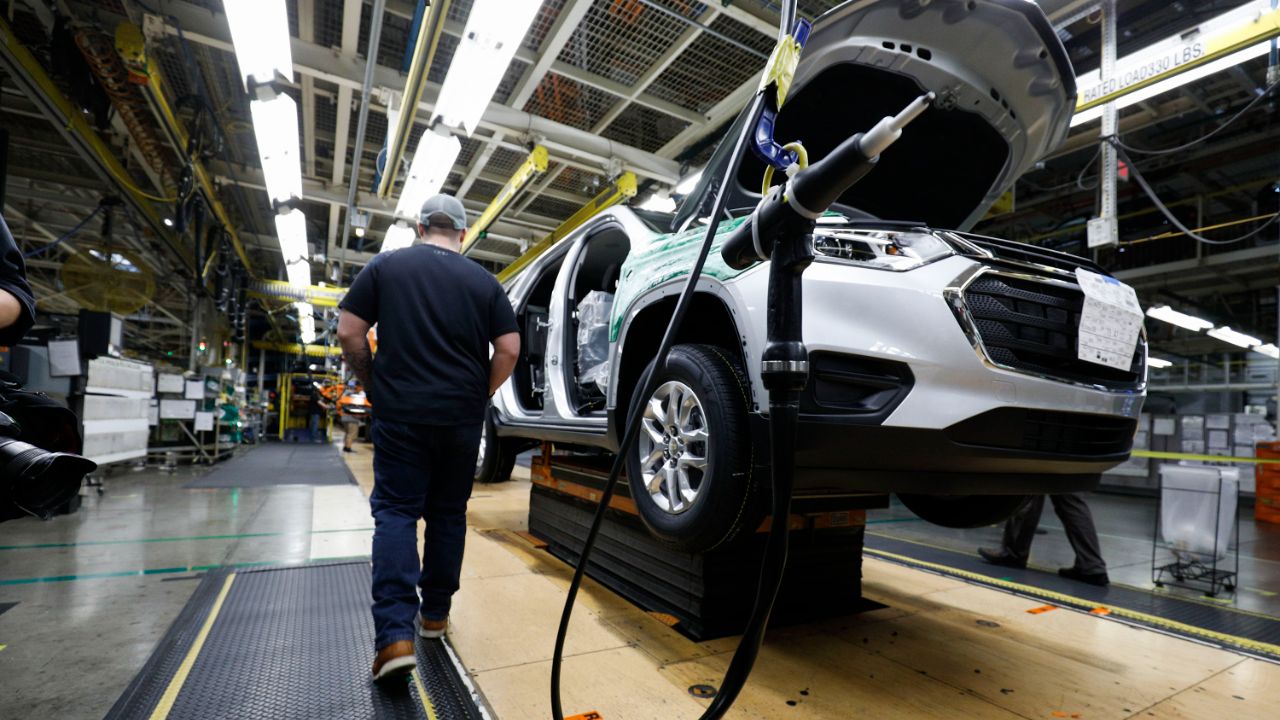
National Economic Council Director Kevin Hassett lauds President Donald Trump’s State of the Union address on ‘Kudlow.’
The Labor Department’s latest jobs report showed that American workers’ wage gains are continuing to outpace stubbornly high inflation.
The Bureau of Labor Statistics released its jobs report for February Friday, which showed that workers’ average hourly earnings rose faster than expected last month.
Employees on private nonfarm payrolls saw their average hourly earnings rise by 15 cents, or 0.4%, on a monthly basis to $37.32 an hour. That outpaced the expected increase of 0.3% that was projected by LSEG economists.
Average earnings rose 3.8% in February compared with a year ago, up from 3.7% in January. LSEG economists estimated that the annual increase in earnings would be unchanged at 3.7% in February.
US ECONOMY SHED 92K JOBS IN FEBRUARY, WELL BELOW EXPECTATIONS
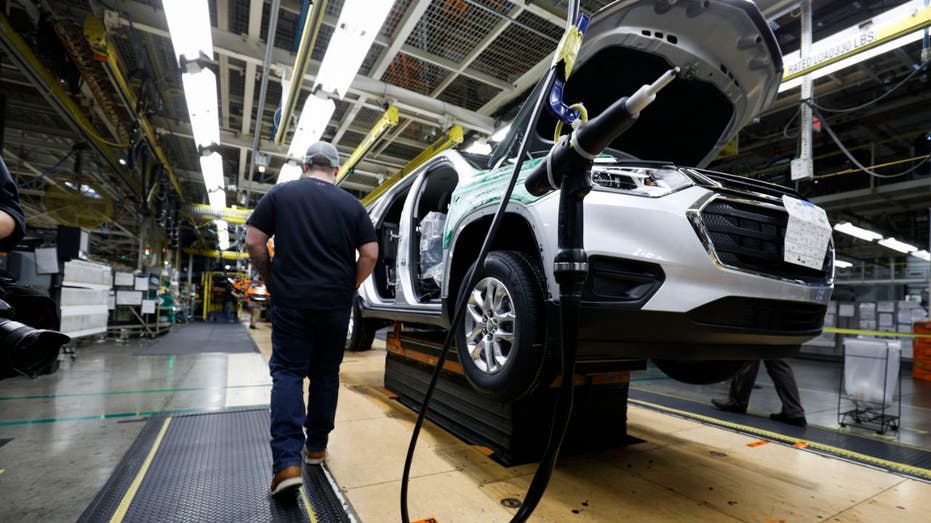
Wages rose 3.8% on an annual basis in February, beating economists’ expectations of a 3.7% rise. (Bill Pugliano/Getty Images)
The BLS data also showed that the average workweek was unchanged at 34.3 hours, in line with the estimate of LSEG economists and unchanged from January. Among workers in the manufacturing sector, the average workweek declined slightly by 0.1 hour to 40.1 hours, while overtime was unchanged at three hours.
The rising wages and relatively steady workweeks come as stubborn inflation has persisted above the Federal Reserve’s long-run target of 2%. The Fed’s preferred inflation gauge, the personal consumption expenditures (PCE) index, rose to 2.9% on an annual basis in December. Core PCE, which excludes volatile food and energy prices, was up 3% from a year ago in December.
A separate inflation gauge, the consumer price index (CPI), was up just 2.4% on a year-over-year basis in January and trended down after a 2.7% reading in December. Core CPI was up 2.5% from a year ago in January.
Inflation creates severe financial pressures for households, particularly those with lower incomes that are forced to pay relatively more for essentials.
FED’S FAVORED INFLATION GAUGE SHOWED CONSUMER PRICE GROWTH REMAINED ELEVATED IN DECEMBER
Wage gains rising faster than inflation helps protect earners’ purchasing power by reducing the amount that’s eroded by inflation-induced price hikes, though that dynamic is limited by elevated inflation.
They can also signal competition among employers for qualified workers. The unemployment rate was little changed in February, rising from 4.3% to 4.4% from the prior month.
“Jobs in the private sector, along with ongoing reductions in federal government staffing, led to lower payroll employment in February. But the unemployment rate remains low because of the southern border shutdown. That is why wage growth remains healthy with a 3.8% rise,” said Lawrence Yun, chief economist at the National Association of Realtors.
FED DISSENT GROWS AS SOME OFFICIALS WEIGH RETURN TO INTEREST RATE HIKES AMID STUBBORN INFLATION

Pressure in the labor market has contributed to the higher wage growth. (Joe Raedle/Getty Images)
Andy Bregenzer, head of U.S. regional and small business banking and co-head of commercial bank at TD, said it was “disappointing to see January’s hiring momentum come into question with February’s slowdown” and emphasized that small businesses need to stay disciplined in this economic environment.
“What we continue to hear from small business owners is that while hiring pressure may ease modestly if jobs growth slows, wages and competition for skilled workers remain elevated. This is the environment where small business owners need to stay disciplined and balance growth plans with careful cost management.”
Gregory Daco, chief economist at EY-Parthenon, noted that wage dynamics were “firmer than expected” and said the 3.8% annual wage growth underscored that “labor cost pressures remain sticky even as job growth falters.”
GET FOX BUSINESS ON THE GO BY CLICKING HERE
He cautioned that “forward-looking indicators point to continued moderation in wage growth going forward, with the private sector quits rate remaining near its lowest level since early 2016 outside of a recession, and business surveys continue to signal restraint in compensation plans.”
Daco said that given the expectation of subdued labor demand, his firm’s outlook sees wage growth easing toward 3.5% in the second half of 2026.

The February Jobs Drop: Outlier Or New Trend

More traffic sounds like the right move. It feels like progress. More clicks should mean more sales. Many founders learn the hard way. Traffic is not the problem. The buying path is the problem. Fixing conversion first often unlocks growth with the same budget.
This topic matters more now. Ad costs rise. Competition is tighter. Buyers also have less patience. A store can attract the right visitors and still lose them. The leak usually sits on product pages, cart, and checkout.
The right question is simple. Should the next effort go into traffic or conversion? The answer depends on where money is lost today.
The Fast Test That Shows the Real Bottleneck
Start with a basic check. Look at sessions and orders. If traffic is rising but sales are flat, conversion is the bottleneck. If conversion is strong but traffic is low, traffic is the bottleneck. Many stores sit in the first case.
A quick way to confirm this is a funnel review. Check the add to cart rate. Check the checkout start rate. Check purchase rate. One step is usually weak, and Baymard’s cart abandonment rate research highlights how often checkout friction drives drop-offs.
Do not guess. Do not change five things at once. Find the step with the biggest drop. Fix that step first.
Traffic Can Hide Problems and Make Them Worse
More traffic can hide broken pages. It can also hide weak offers. A store can still get orders. The store still loses profit. The ad account then gets blamed. The real issue stays in place.
Traffic also creates noisy data. Low conversion means fewer purchases. Fewer purchases mean weaker learning. That slows ad improvement. It also slows product decisions.
Traffic should scale after the basics work. Otherwise, the store pays for visitors who never had a chance.
Fix the Leak Before Buying More Clicks
Conversion work starts with friction. Friction is anything that makes buying feel hard. It can be slow pages. It can be unclear shipping. It can be weak trust. It can be a messy checkout.
Start with a founder style audit. Open the store on mobile. Add a product to the cart. Start checkout. Count the steps. Watch for surprises. Note every moment that feels annoying.
Checkout and upsell structure also affects conversion. Some stores improve this by using funnel-style pages. Funnel pages reduce distractions and keep focus on one offer. For context, Funnelish is positioned as an all-in-one platform for fast funnels, optimized checkouts, and one-click upsells. The aim is higher conversion and higher average order value.
The Conversion Basics That Pay Off First
Page speed is a conversion lever, and Google explains why mobile site speed matters for growth in retail. Slow pages reduce trust fast. Mobile makes this worse. Heavy themes and stacked apps often cause it. Speed work should target product pages and checkout first.
Clarity is the next lever. Buyers need answers fast. What is included? How long does delivery take? What do returns look like? If these details are hidden, buyers pause. Pauses turn into exits.
Trust is the third lever. Add real signals near the buy action. Show support contact. Show returns window. Show payment icons early. Avoid a wall of badges. Keep it clean and believable.
Raise AOV Before Raising Budget
Conversion is not only about more orders. It is also about more profit per order. Average order value protects margins. It also makes ads easier to scale.
AOV improves with relevant add-ons. It improves with bundles. It improves with post-purchase offers. It drops when offers feel pushy. It also drops when checkout feels noisy.
A simple rule helps. Offer one clear add-on. Make it match the product. Make the value easy to understand. Keep it optional.
For a practical view of funnel steps and offer timing, check out this blogpost: eCommerce funnel and checkout flows. It explains order bumps, upsells, and testing in one system. That supports higher-order value without more traffic.
When Traffic Should Come First
Sometimes, traffic is the real issue. This happens when conversion is already healthy. It also happens when the offer is proven. The store has reviews. The store has strong repeat buyers. The store has a stable checkout.
In that case, traffic work can be smart. The goal is still controlled growth. Add one traffic channel at a time. Track blended return. Watch for margin drop.
Traffic should also match intent. A cold audience needs a clear promise. A warm audience can handle more product depth. Bad targeting creates low-quality clicks. Those clicks will never convert.
A Practical Decision Framework for Founders
A simple framework keeps focus. Use it every month. It prevents random work.
If conversion is low, fix conversion first. If conversion is solid, test new traffic. If both are weak, start with offer clarity and page flow.
This table helps decide fast:
| Signal | What it means | What to fix first |
| High sessions, low orders | Leak in product, cart, or checkout | Conversion |
| High add to cart, low purchase | Checkout friction or surprise costs | Conversion |
| Healthy purchase rate, low sessions | Not enough reach | Traffic |
| Strong conversion, weak profit | AOV too low | AOV and upsells |
The Metrics That Matter More Than Vanity Numbers
Traffic numbers feel good. Sessions can still lie. The store needs metrics tied to money.
Track purchase rate by device. Track checkout drop by step. Track page load time on mobile. Track refund rate. Track average order value. Track contribution margin.
Also, track repeat purchase rate. A store with strong repeat buyers can pay more for traffic. A store with weak retention must protect its margin.
Growth gets easier when these numbers improve. Ads become simpler. Inventory planning becomes safer. Cash flow becomes calmer.
Conclusion
Traffic and conversion are not rivals. They are a sequence. Conversion comes first for most stores. Fix the buying path. Fix clarity. Fix trust. Fix speed. Then scale traffic with confidence.
A founder does not need more noise. A founder needs fewer leaks. Fewer leaks create better profit. Better profit creates more options. That is the real win.


The Value Investor has a Master of Science with specialization in financial markets and a decade of experience tracking companies via catalytic company events.
As the leader of the investing group Value In Corporate Events they provide members with opportunities to capitalize on IPOs, mergers & acquisitions, earnings reports and changes in corporate capital allocation. Coverage includes 10 major events a month with an eye towards finding the best opportunities. Learn more.
Analyst’s Disclosure: I/we have no stock, option or similar derivative position in any of the companies mentioned, and no plans to initiate any such positions within the next 72 hours. I wrote this article myself, and it expresses my own opinions. I am not receiving compensation for it (other than from Seeking Alpha). I have no business relationship with any company whose stock is mentioned in this article.
Seeking Alpha’s Disclosure: Past performance is no guarantee of future results. No recommendation or advice is being given as to whether any investment is suitable for a particular investor. Any views or opinions expressed above may not reflect those of Seeking Alpha as a whole. Seeking Alpha is not a licensed securities dealer, broker or US investment adviser or investment bank. Our analysts are third party authors that include both professional investors and individual investors who may not be licensed or certified by any institute or regulatory body.

Form 8K Neonc Technologies Holdings Inc For: 6 March

The 2026 NHL Trade Deadline was defined by high-stakes movement, but few deals carried as much sentimental and strategic weight as the homecoming of Bobby Brink. On Friday, March 6, 2026, the Philadelphia Flyers traded the 24-year-old forward to his hometown team, the Minnesota Wild, in a one-for-one swap for defenseman prospect David Jiříček.

As Brink swaps the orange and black for the forest green and wheat, here are the 10 things you must know about the dynamic winger as he enters this new chapter of his career.
1. He’s Finally Coming Home
Born in Minnetonka, Minnesota, Brink grew up in the heart of “State of Hockey” territory. Before becoming a pro, he was a local legend for the Minnetonka Skippers, leading them to an MSHSL State Championship in 2018. Returning to Minnesota isn’t just a business move; it’s a full-circle moment for a player who spent his childhood dreaming of playing at the Xcel Energy Center.
2. The “David Jiříček” Swap
The trade that brought Brink to Minnesota was a rare “hockey trade” between two young assets. The Flyers, facing a logjam at right wing with the emergence of Matvei Michkov and Travis Konecny, traded Brink to address their need for a high-end blueliner. In return, they received David Jiříček, a 22-year-old former No. 6 overall pick with a massive slapshot. For Minnesota, the deal adds immediate scoring depth to their middle-six forward group.
3. A Hobey Baker Pedigree
Brink isn’t just another prospect; he was arguably the best player in college hockey during his tenure at the University of Denver. In 2022, he led the entire NCAA in scoring with 57 points in 41 games and was a “Hat Trick” finalist for the Hobey Baker Award. He capped that season by leading the Pioneers to a National Championship before turning pro.
4. He Survived the “Tortorella School of Coaching”
Perhaps the most impressive part of Brink’s development was his relationship with former Flyers head coach John Tortorella. Known for being notoriously hard on offensive-minded “small” players, Tortorella famously challenged Brink’s defensive game, once even quipping that Brink probably didn’t know how to spell “checking.” However, by early 2025, Brink had won him over, becoming a staple on what was nicknamed the “Most Tortorella Line” alongside Noah Cates and Tyson Foerster.
5. Elite Skating Speed (The 94th Percentile)
While Brink stands at a modest 5-foot-8, his speed is elite. According to NHL EDGE data for the 2025-26 season, Brink’s top skating speed reached 23.30 MPH, placing him in the 94th percentile of the entire league. This explosive burst allows him to win puck battles and create odd-man rushes despite being smaller than most defenders.
6. Current 2025-26 Season Stats
Before being traded on Friday, Brink was having a solid, consistent year in Philadelphia. In 55 games this season, he recorded 26 points (13 goals, 13 assists). His shooting percentage of 14.4% remains well above the league average, proving his efficiency when he gets into high-danger scoring areas.
7. Contract Status: RFA Imminent
Brink is currently in the final year of a two-year, $3 million contract ($1.5M AAV) he signed in July 2024. He is set to become a Restricted Free Agent (RFA) with arbitration rights on July 1, 2026. This gives the Minnesota Wild team control over his rights, but they will likely need to negotiate a multi-year extension this summer if he performs well in the upcoming playoff push.
8. A World Junior Gold Medalist
Brink has a history of winning on the international stage. He was a key member of the Team USA squad that won the Gold Medal at the 2021 IIHF World Junior Championships. His experience in high-pressure, short-tournament formats makes him a valuable asset for a Wild team looking to make noise in the 2026 Stanley Cup Playoffs.
9. He Overcame Major Injury Setbacks
Brink’s path to the NHL wasn’t seamless. Shortly after signing his entry-level contract in 2022, he underwent hip surgery that sidelined him for a significant portion of his first full professional season. His ability to regain his elite skating speed and lateral agility after such a procedure is a testament to his work ethic and the modern sports medicine available to NHL athletes.
10. Versatility in the Lineup
One of Brink’s greatest strengths is his ability to play anywhere in the top nine. In Philadelphia, he spent time on the top-line power play but was also trusted in defensive “grind” situations. Minnesota Wild fans can expect to see him slot in on the right wing, likely alongside a playmaker like Marco Rossi or as a creative spark for the second power-play unit.
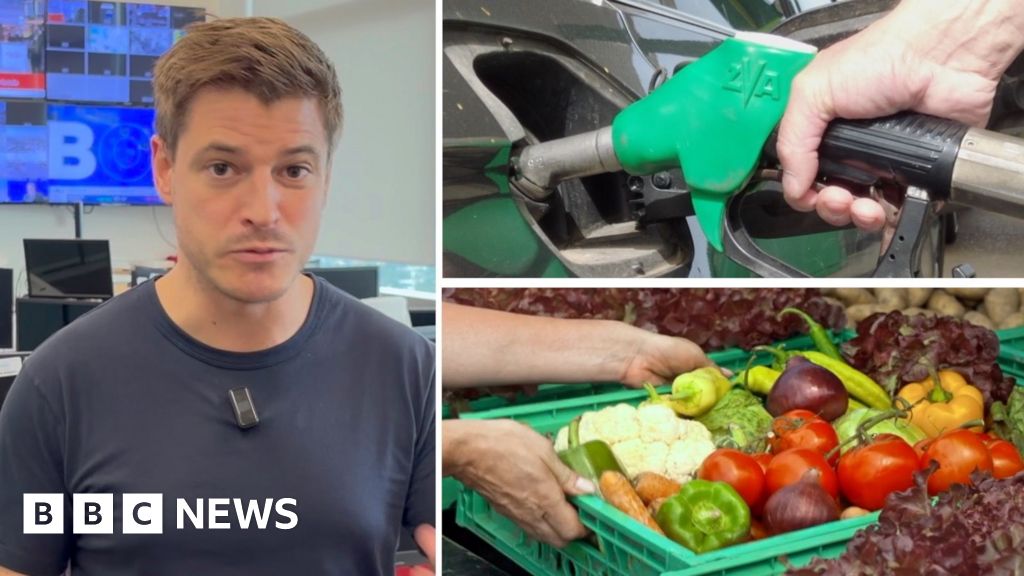
As the US and Israel continue strikes on Iran, and with retaliatory strikes hitting nearby Middle East states, key shipping routes are being disrupted. Oil and gas production in the region is also being affected.
The BBC’s Nick Marsh examines how the war could cause a rise in living costs around the world.
European Commission approves Zynyz for anal cancer treatment

Harry Styles One Night Only setlist – every song performed in Manchester

FDA vaccine head will step down in April after string of controversial decisions

Pep Guardiola drops Man City future hint amid Arsenal chase and contract speculation

Smart energy pays enters the US market, targeting scalable financial infrastructure

Why Israel is blocking foreign journalists from entering

Bitcoin: We’re Entering The Most Dangerous Phase

Financial advice to all married Mens #husbandwife #shorts #funnyshorts #marriage #india #funny

The Government has again ruled out any financial measures to address rising fuel costs

XRP: Surprising New XRP Data Indicates IT’S ABOUT TO GET WILD
-

 Politics4 days ago
Alan Cumming Brands Baftas Ceremony A ‘Triggering S**tshow’
-

 Tech6 days ago
Unihertz’s Titan 2 Elite Arrives Just as Physical Keyboards Refuse to Fade Away
-

 NewsBeat6 days ago
Abusive parents will now be treated like sex offenders and placed on a ‘child cruelty register’ | News UK
-
Business8 hours ago
Form 8K Entergy Mississippi LLC For: 6 March
-
 NewsBeat6 days ago
Dubai flights cancelled as Brit told airspace closed ’10 minutes after boarding’
-
Sports7 days ago
The Vikings Need a Duck
-
 NewsBeat6 days ago
The empty pub on busy Cambridge road that has been boarded up for years
-

 NewsBeat5 days ago
‘Significant’ damage to boarded-up Horden house after fire
-

 Tech2 days ago
Bitwarden adds support for passkey login on Windows 11
-

 Entertainment5 days ago
Baby Gear Guide: Strollers, Car Seats
-
 Sports1 day ago
499 runs and 34 sixes later, India beat England to enter T20 World Cup final | Cricket News
-
Politics6 days ago
FIFA hypocrisy after Israel murder over 400 Palestinian footballers
-
 NewsBeat6 days ago
Emirates confirms when flights will resume amid Dubai airport chaos
-

 NewsBeat4 days ago
Is it acceptable to comment on the appearance of strangers in public? Readers discuss
-

 Tech6 days ago
Viral ad shows aged Musk, Altman, and Bezos using jobless humans to power AI
-

 Fashion4 hours ago
Weekend Open Thread: Ann Taylor
-

 Video5 days ago
How to Build Finance Dashboards With AI in Minutes
-

 Fashion5 days ago
On the Scene at the 57th Annual NAACP Image Awards: Teyana Taylor in Black Ashi Studio, Colman Domingo in Yellow Sergio Hudson, Chloe Bailey in Christian Siriano, and More!
-

 Business3 days ago
Guthrie Disappearance Enters Fifth Week as Family Visits Memorial
-
 Crypto World6 days ago
US Judge Lets Binance Unregistered Token Class Action Proceed