
Business
FDA vaccine head will step down in April after string of controversial decisions


The logo for the Food and Drug Administration is seen ahead of a news conference at the Health and Human Services Headquarters in Washington, DC on April 22, 2025.
Nathan Posner | Anadolu | Getty Images
A key U.S. Food and Drug Administration official who oversees vaccines and biotech treatments will step down from the agency following multiple decisions that raised concerns within the industry.
Vinay Prasad, director of the Center for Biologics Evaluation and Research, will leave the FDA at the end of April, an agency spokesperson confirmed on Friday. It is his second departure from the position: he briefly left the post in July following backlash over his regulatory decisions, and returned only two weeks later in August.
In a post on X, FDA Commissioner Marty Makary said the FDA will appoint a successor before Prasad returns next month to the University of California San Francisco, where he taught before taking the FDA position last year. Makary said Prasad “got a tremendous amount accomplished” during his tenure at the agency.
Prasad’s decision to step down comes after criticism of the FDA mounted within the biotech and pharmaceutical industry and among former health officials. In the past year, the agency has denied or discouraged the approval applications of at least eight drugs, according to RTW Investments, after taking issue with data the companies used to support their applications. The FDA also refused to review Moderna’s flu shot before it reversed course.
All of those companies accused the FDA of reversing previous guidance about the evidence they could use to back their applications, sparking criticism within the industry that an unreliable regulatory process could stifle development of drugs for hard-to-treat diseases.

A former FDA official who spoke to CNBC on the condition of anonymity to speak freely on the issue called the reversals the worst kind of regulatory uncertainty because companies say they are being told one thing and then experience another.
In a statement earlier Friday, an FDA spokesperson said there was “no regulatory uncertainty,” adding the agency “makes decisions based on the evidence, but does not make assurances about outcomes.” The spokesperson said the FDA is “conducting rigorous, independent reviews and not rubber-stamping approvals.”
The most recent controversy came after the FDA discouraged UniQure from applying for expedited approval of its experimental treatment for Huntington’s disease.
The agency, which underwent staff cuts and an overhaul under Health and Human Services Secretary Robert F. Kennedy Jr., has faced broader backlash for its drug and vaccine approvals process. Critics have worried the agency could stifle the development of new treatments and risk the safety of patients.
The Wall Street Journal earlier reported Prasad’s departure.



Companies sign five-year agreement.

Institutional investors increased stakes across major NSE large-cap stocks in March 2026, signaling confidence in fundamentals and future growth. Companies like Adani Power, Axis Bank, NTPC, and Coal India saw modest rises, supporting improved governance, liquidity, and price stability trends.

UBS raises J.B. Hunt stock price target on strong volume growth

Flights could soon be cancelled if supplies from the Gulf remain blocked, says the International Energy Agency.

FREMONT, Calif. — Aehr Test Systems shares surged more than 16 percent Thursday as the semiconductor test equipment maker announced a record $41 million follow-on production order from its lead hyperscale customer for package-level burn-in of custom artificial intelligence processor ASICs.

The stock was quoted at $85.64, up 16.96 percent or $12.42, in morning trading on April 16. Volume was heavy as investors cheered the latest evidence of booming demand tied to the AI infrastructure buildout. The move pushed shares well above the previous session’s close near $73 and toward fresh highs after the company has already skyrocketed more than 200 percent year to date in 2026.
Aehr Test Systems, a specialist in test and burn-in solutions for semiconductors used in AI, data centers, automotive and industrial applications, said the new order underscores confidence from one of the world’s largest cloud and AI operators. Deliveries are scheduled to begin in fiscal 2027, starting June 27, 2026. The announcement pushed second-half fiscal 2026 bookings above $92 million with six weeks still left in the fourth quarter and a robust pipeline of additional orders anticipated.
“This $41 million follow-on order from our lead hyperscale package-level burn-in customer brings our bookings in the second half of our fiscal year to more than $92 million to date,” said Gayn Erickson, president and chief executive officer of Aehr Test Systems. “We continue to see strong demand for our solutions across both wafer-level and package-level burn-in applications driven by AI and data center infrastructure needs.”
The news caps a remarkable run for the small-cap company. Shares began 2026 trading near $20, climbed steadily through March, then accelerated sharply after a series of positive developments including strong quarterly bookings and new customer wins in silicon photonics. By early April the stock had more than doubled from late March levels, briefly touching above $74 before pulling back slightly and now exploding higher again on today’s order.
Just last week, following fiscal third-quarter results for the period ended Feb. 27, 2026, shares jumped more than 25 percent in a single session despite mixed financial numbers. Revenue came in at $10.3 million, down 44 percent from the year-ago quarter, and the company posted an adjusted loss of 5 cents per share. However, bookings reached a robust $37.2 million, producing a book-to-bill ratio above 3.5 times and lifting the effective backlog to a record $50.9 million.
Management used the April 7 earnings release to raise expectations, targeting the high end of its prior fiscal 2026 revenue guidance of $45 million to $50 million. The company also signaled a return to adjusted profitability in the current quarter and maintained optimism for the second half, which is now heavily backloaded with the latest hyperscale order.
Aehr’s technology plays a critical role in ensuring the reliability of advanced semiconductors before they reach data centers or AI training clusters. Its FOX family of systems supports wafer-level burn-in, while package-level solutions handle high-power AI processors that generate significant heat and require rigorous testing to meet stringent quality standards demanded by hyperscalers.
Demand for such equipment has intensified as major tech companies pour billions into AI infrastructure. Custom ASICs designed specifically for AI workloads require specialized burn-in processes that Aehr’s platforms are well-positioned to deliver at scale. The latest order represents the largest single production commitment in the company’s history for package-level burn-in systems.
Analysts have taken notice of the momentum. Several firms have raised price targets in recent weeks, though consensus figures still trail the current share price after the explosive rally. One recent adjustment lifted a target to $61, citing strong bookings and long-term AI tailwinds. Broader Wall Street coverage remains generally positive, with many highlighting Aehr’s niche leadership in high-power test solutions even as some caution about valuation after the rapid run-up.
The company has also expanded its addressable market through silicon photonics applications. In March, Aehr announced a major new customer win for its high-power FOX-XP wafer-level burn-in system. The client, described as a global leader in networking products and a key supplier to the data center optical transceiver market, is developing next-generation optical interconnects essential for efficient AI cluster scaling. That deal, along with follow-on orders for similar technology, has further fueled investor enthusiasm.
Aehr’s shift toward AI-related revenue has transformed its growth profile. While automotive and industrial segments remain part of the business, the hyperscale AI and data center opportunities now dominate the narrative. Executives have highlighted that burn-in requirements for AI processors are more demanding than traditional chips, creating a structural tailwind for specialized test equipment providers.
Challenges persist, however. Quarterly revenue has been lumpy as large orders shift between periods, and the company reported a year-over-year sales decline in the fiscal third quarter amid a transitional period. Operating expenses remain elevated as Aehr invests in scaling production capacity to meet anticipated demand. The firm also maintains an at-the-market equity program that could provide additional capital but carries potential dilution risk for shareholders.
Looking ahead, investors will watch for updates on the conversion of backlog into shipments and any incremental order announcements. The company expects significant follow-on production activity from its lead hyperscale customer and continues to engage with other potential clients in the AI ecosystem. Second-half fiscal 2026, ending May 29, now appears poised for substantial revenue recognition from the accumulated bookings.
Broader market context has also supported the rally. Optimism around AI spending has lifted many semiconductor and infrastructure-related stocks, even as macroeconomic uncertainties linger. Aehr’s performance stands out, however, placing it among the top performers in the Russell 3000 Index for 2026 with gains exceeding 200 percent through mid-April.
For customers, Aehr’s solutions help reduce failure rates in high-value AI hardware, where even small defect rates can prove costly at scale. The company’s proprietary systems allow parallel testing of thousands of devices under controlled thermal and electrical stress, accelerating time-to-market while improving long-term reliability.
Aehr Test Systems traces its roots to providing test equipment for the memory and logic semiconductor markets but has successfully pivoted toward emerging high-growth segments. Its Fremont, California headquarters supports engineering, manufacturing and customer collaboration for global deployments.
Thursday’s surge extends a multi-week winning streak punctuated by sharp daily moves on positive news flow. Options activity has reflected heightened interest, with implied volatility rising as traders position for continued momentum or potential pullbacks after such steep gains.
Analysts caution that sustaining the current valuation will require flawless execution on the growing backlog and continued order wins. Some models still see fair value significantly below current levels, citing risks of order delays or shifts in customer capital spending. Others argue the AI opportunity is large enough to justify premium multiples for a company with proven technology and expanding relationships with tier-one hyperscalers.
As the trading day progressed, Aehr shares extended gains, briefly approaching session highs above 20 percent before settling around the 17 percent mark. The move came on significantly elevated volume, signaling broad market participation in the rally.
Company leadership has expressed confidence in the long-term outlook. Erickson has repeatedly pointed to the structural demand drivers in AI, noting that as models grow more complex and clusters expand, the need for reliable, high-performance semiconductors—and the testing infrastructure to support them—will only increase.
With fiscal 2026 drawing to a close in May, attention will soon turn to guidance for fiscal 2027. The $41 million order provides an early anchor, but investors will seek visibility into the full pipeline, including potential wafer-level burn-in expansions and additional silicon photonics wins.
Aehr’s story remains closely tied to the AI megatrend. While competitors exist in the broader semiconductor test space, the company’s focus on high-power, high-volume burn-in for cutting-edge applications has carved out a defensible position. Whether this momentum translates into sustained profitability and cash flow growth in the coming quarters will determine if the stock can hold its lofty gains or faces a correction.
For now, shareholders are celebrating another breakout moment driven by concrete evidence of AI demand translating into major orders. The small Fremont-based firm has emerged as one of the more compelling pure-play beneficiaries of the hyperscale buildout, even as larger semiconductor equipment names also ride the wave.
As markets digest the news, Aehr Test Systems finds itself at the center of the artificial intelligence equipment supply chain narrative. With a record backlog, expanding customer relationships and a technology platform aligned with industry needs, the company appears well-positioned to capitalize on what many view as a multi-year investment cycle in AI infrastructure.

Bitcoin has no headquarters, no board of directors, and no founder willing to take credit. In the eighteen years since the white paper appeared under the name Satoshi Nakamoto, the question of who actually wrote it has attracted reporters, cryptographers, amateur sleuths, and seasoned investigators, all of whom have come up empty or close enough to it. That streak may be over.
Finding Satoshi is a feature documentary built around a four-year forensic investigation into Bitcoin’s origins and the identity of its creator. The documentary is directed by Matthew Miele and Tucker Tooley while the investigative reporting is led by William D. Cohan and Tyler Maroney. Cohan is a New York Times bestselling author and longtime Wall Street Journal contributor and Maroney is a private investigator at Quest Research & Investigations whose background spans some of the most complex cases in recent American legal history.
The film draws on original reporting, forensic analysis, and previously unseen evidence. More than twenty subjects spoke on record. The biggest differentiator, the investigation reaches a conclusion and the film confidently presents it.
Prior investigations into Satoshi’s identity have simply missed the mark. Finding Satoshi operates on different terms, framing the question not as lore or legend, but as a serious unanswered question with global cultural and financial consequences. As such, it demands a rigorous, evidence-based approach, which the film delivers on.
The stakes underlying that question are worth understanding. Bitcoin’s market capitalization has, at times, surpassed a trillion dollars, reshaping global conversations about money, power, and trust. The wallets widely attributed to Satoshi Nakamoto are estimated to hold over a million Bitcoin, placing whoever controls them among the wealthiest individuals in the world. Those early holdings have remained inactive, and Satoshi has not communicated publicly since 2011. The person behind it built something that transformed the financial landscape, then disappeared.
Understanding that person requires understanding what they built and why. Finding Satoshi traces Bitcoin not as a technology event, but as an intellectual and philosophical one. The film follows the full lineage of ideas that produced the Bitcoin white paper: the cypherpunk movement, the early development of digital privacy cryptography, the work of Phil Zimmermann on PGP encryption, and the predecessor technologies, including Hashcash and Bit Gold, that laid the conceptual groundwork. Bitcoin emerged from this specific tradition of belief, holding that individuals should be able to transact without interference, without surveillance, without an institution standing between them. That belief guided every choice Satoshi ever made, even the choice to vanish.
Through rare access to early builders, architects, and influential voices across the crypto ecosystem, Finding Satoshi emphasizes the human ideals behind the code as much as the history and science of it all. Simply put, Bitcoin is, rightfully, presented as an expression of philosophy and conviction rather than merely a technical artifact.
The range of voices interviewed reflects the film’s ambition and scope. Interviewees include Michael Saylor, chairman and co-founder of MicroStrategy, Fred Ehrsam, co-founder of Coinbase, Joseph Lubin, co-founder of Ethereum, Bill Gates, Gary Gensler, former chair of the Securities and Exchange Commission, Kara Swisher, Gillian Tett of the Financial Times, Kathleen Puckett, the former FBI behavioral analyst who helped identify the Unabomber, and Bjarne Stroustrup, creator of C++.
Finding Satoshi does not leave the question open. At the end of the investigation, the film answers the question, identifying the person behind Bitcoin while respecting the gravity and implications of that claim. The resolution is treated as the culmination of evidence, earned through four years of sustained work rather than provocation or spectacle. Watch the film to find out.
Brian Armstrong, CEO of Coinbase, called it the most thoughtful treatment of the subject he had encountered and said he believed the film had reached the right answer. Jameson Lopp, a professional cypherpunk and Bitcoin security engineer, described it as the most expertly produced Bitcoin documentary to date. Nic Carter said most investigations into Satoshi’s identity had been careless or dismissive of the subject matter. This one, he said, is not.
The film is not only told by real investigative journalists, it is produced by real filmmakers: Tucker Tooley for Tucker Tooley Entertainment and Jordan Fried for Fried Films and Happy Walters. Tucker Tooley Entertainment’s projects have collectively earned more than $2.61 billion at the worldwide box office, spanning prestige dramas, major studio franchises, and global streaming hits. Recent productions include Lee Daniels’ The Deliverance, which debuted at number one on Netflix, and Den of Thieves 2: Pantera, which opened at number one at the U.S. box office in January 2025.
Finding Satoshi releases exclusively at FindingSatoshi.com. Coinbase users receive 24-hour early access beginning April 21, 2026. General release follows on April 22. There is no streaming platform, no theatrical window, and no alternative distribution point. The release model mirrors Bitcoin’s own architecture: direct from creator to audience, with no intermediaries standing between them.

Britain’s economy was firing on more cylinders than the City had dared hope in the weeks before Israel and Iran went to war, but small and mid-sized businesses should brace themselves for a sharp turning of the tide.
Figures from the Office for National Statistics released this morning show gross domestic product expanded by 0.5 per cent in February, trouncing the consensus forecast of 0.1 per cent pencilled in by economists polled ahead of the release. January’s reading was also nudged higher, from flat to 0.1 per cent growth, lending weight to the argument that the economy had genuine momentum heading into the spring.
Taken together, the three months to February produced growth of 0.5 per cent, up from 0.3 per cent in the preceding quarter — a respectable clip by the standards of a British economy that has spent much of the past two years trudging along the margins of recession.
Grant Fitzner, chief economist at the ONS, pointed to a broad-based services recovery as the principal driver, noting that car production had also bounced back after last autumn’s cyber attack knocked output sideways. The construction sector, long the weak link in the chain, managed a 1.0 per cent rebound.
For owner-managed firms across retail, hospitality and professional services, the ecosystem that accounts for the lion’s share of the 80 per cent of GDP represented by services, the February numbers will feel like vindication after a bruising winter of weak consumer demand and punishing borrowing costs.
The trouble is that the figures are already yesterday’s news. The Iranian conflict, which erupted on 28 February, has rewritten the economic script in a matter of weeks.
Brent crude has climbed 30 per cent since hostilities began, feeding straight through to forecourts and utility bills. The effective closure of the Strait of Hormuz, through which roughly a fifth of global seaborne oil and liquefied natural gas passes, has rattled supply chains from Felixstowe to Southampton and left importers scrambling to renegotiate contracts.
Yael Selfin, chief economist at KPMG, warned that February’s bounce would prove “short lived”, with elevated energy costs and shipping disruption likely to act as a drag on output for much of the second quarter. Even as hopes grow of a diplomatic off-ramp, she cautioned that normalising freight flows and energy production takes time, time that cash-strapped SMEs working on thin margins can ill afford.
The inflation picture has deteriorated accordingly. With the headline rate already sitting at 3 per cent, the Bank of England now expects CPI to climb as high as 3.5 per cent over the coming six months; the International Monetary Fund has gone further, pencilling in a peak of 4 per cent. Only weeks ago, Threadneedle Street had been guiding towards a return to the 2 per cent target from April.
Against that backdrop, the Bank’s Monetary Policy Committee voted in March to hold Bank Rate at 3.75 per cent, pausing the easing cycle to see how the oil shock feeds through. For smaller businesses hoping for cheaper debt to refinance Covid-era loans or invest in growth, the reprieve they had been banking on is now firmly on ice.
Most City economists expect the March GDP print to come in flat or negative, marking the beginning of what some are already calling a period of heightened fragility — or, in the worst case, outright stagflation, that toxic combination of stagnant output and rising prices that policymakers spend their careers trying to avoid.
“The February GDP print marks the calm before the storm,” said Sanjay Raja, chief UK economist at Deutsche Bank.
The IMF has confirmed as much. This week the fund downgraded its UK growth forecast for the year to 0.8 per cent, down from the 1.3 per cent it projected in January, and warned that Britain faces the biggest hit of any G7 economy from the Middle East conflict, a function of the country’s heavy reliance on imported energy and its exposure to global services demand.
Rachel Reeves, the chancellor, has already conceded that the war will “come at a cost” to households and businesses, language that suggests the Treasury is laying the ground for a difficult summer.
James Murray, chief secretary to the Treasury, struck a more defiant tone, insisting that “growth only happens when the economy is on solid ground” and that the government’s plan to “restore stability, boost investment and deliver reform” was the right course for a “stronger, more resilient Britain”.
For the millions of SME owners who drive the bulk of private sector employment, the message from the data is uncomfortably clear. The foundations laid in February were encouraging, but the storm that followed has changed the weather entirely, and the businesses best placed to weather it will be those that move quickly to hedge energy exposure, shore up working capital and pressure-test their supply chains before the second-quarter numbers lay bare just how much damage has been done.

Jamie Young
Jamie is Senior Reporter at Business Matters, bringing over a decade of experience in UK SME business reporting.
Jamie holds a degree in Business Administration and regularly participates in industry conferences and workshops.
When not reporting on the latest business developments, Jamie is passionate about mentoring up-and-coming journalists and entrepreneurs to inspire the next generation of business leaders.

A JetBlue aircraft lands under the DC skyline featuring the U.S. Capitol building, near United Airlines, American Airlines and Delta Airlines aircraft on the tarmac at Ronald Reagan Washington National Airport in Arlington, Virginia, U.S. January 25, 2025.
Jim Urquhart | Reuters
A U.S. lawmaker is urging the CEOs of the country’s largest airlines to lower prices if and when the cost of jet fuel declines after a massive run-up this year prompted carriers to raise surcharges, bag fees and fares.
“If airline pricing is truly tied to global fuel costs, then it must be truly responsive when those costs decline,” U.S. Rep Ritchie Torres, D-N.Y., wrote to the CEOs of Delta Air Lines, United Airlines, JetBlue Airways and Southwest Airlines, according to a letter that was seen by CNBC. “I call on you to publicly commit to lowering costs associated with air travel should jet fuel prices decline. The American people deserve fairness and pricing models that do not only reflect market conditions, but also economic justice.”
Fuel is airlines’ biggest expense after labor. Jet fuel reached an average of $4.88 a gallon in New York, Houston, Chicago and Los Angeles on April 2, according to Argus, up about 95% since the Feb. 28 attacks by the U.S. and Israel on Iran started. The climb was steeper in other regions that don’t produce as much oil or jet fuel as the U.S.
United declined to comment. The other carriers didn’t immediately respond for requests for comment.
Delta reported a $2 billion headwind from fuel this quarter and said it would “meaningfully” scale back its capacity plans, something other carriers are likely to discuss when they report results next week.
Lower capacity can drive up fares, especially if demand remains robust. A drop in fuel prices, meanwhile, can encourage airlines to expand capacity, doing the opposite to pricing.
When asked what will happen if fuel prices decline from recent highs, Delta CEO Ed Bastian last week said that “fuel recapture is going to be important. No matter what we do, and the degree in which we can retain any of the pricing strength that we talked about from industry rationalization, that will certainly help us boost our margins this year and clearly into next year as well.”
Delta, United, Southwest, JetBlue, American Airlines and Alaska Airlines have all raised bag fees since the attacks began, while airlines around the world have posted higher airfare and surcharges.
Consumers willing to shell out more to travel have been driving the airline industry. Bastian last week told analysts that demand has held up.
“I think the higher-end consumer, the premium consumer is candidly immune or becoming more immune to the headlines and not delaying their investment in the experience economy, waiting to see what the next headline is going to be, on the margin,” he said.

European aviation is staring down the barrel of a fuel crisis that could ground flights across the continent by June, the International Energy Agency has warned, with reserves thinning at an alarming pace and replacement supplies proving stubbornly difficult to secure.
In its latest monthly oil market report, the Paris-based watchdog, which counsels 32 member states on energy security, said Europe was sitting on roughly six weeks’ worth of jet fuel. Unless the bloc can source at least half of the volumes it would ordinarily draw from the Middle East, stocks will hit a critical threshold within weeks.
The warning comes as the Strait of Hormuz, the artery through which the bulk of Gulf jet fuel flows to international markets, remains effectively shut. Iran moved to close the waterway more than six weeks ago in retaliation for joint American and Israeli military strikes, and the blockade has sent kerosene prices soaring and rattled airline finance directors from Luton to Lisbon.
Speaking to the Associated Press, IEA executive director Fatih Birol did not mince his words: flight cancellations, he cautioned, could be weeks away if the taps remain shut.
Historically, Europe has leaned on the Gulf for around three-quarters of its imported jet fuel. The IEA noted that refineries in other major exporting nations, South Korea, India and China chief among them, are themselves heavily reliant on Middle Eastern crude, meaning the disruption has, in its own phrasing, jammed the gears of the global aviation fuel market.
European buyers are now scrambling to plug the gap. American refiners have sharply accelerated jet fuel exports in recent weeks, but the IEA reckons that even if every barrel leaving US shores were routed to European airports, it would cover only a little over half the shortfall.
Under the agency’s modelling, a replacement rate below 50 per cent would trigger physical shortages at selected airports, forcing cancellations and what analysts politely term “demand destruction”. Even if three-quarters of the missing volumes can be replaced, the same squeeze is expected to bite by August. The upshot, the IEA concluded, is that European markets will need to hustle considerably harder to attract cargoes from alternative sources if inventories are to hold through the summer peak.
The financial strain on carriers is already acute. Fuel typically accounts for between 20 and 40 per cent of an airline’s operating costs, and the benchmark European jet fuel price touched a record $1,838 (£1,387) per tonne at the start of April, more than double the $831 recorded before hostilities erupted.
Brussels, for its part, is treading carefully. The European Commission said this week there was no evidence of shortages within the EU but conceded that supply issues could surface in the near future. A spokesperson confirmed that crude flows to European refineries remained stable with no immediate need to tap strategic reserves, adding that oil and gas coordination groups were now meeting weekly. Commission president Ursula von der Leyen is expected to unveil a package of energy measures next week.
The mood at Europe’s airports is less sanguine. Airports Council International, the continent’s airport trade body, wrote to the Commission last week warning that fuel shortages could materialise unless the Strait of Hormuz reopens within three weeks.
The pressure is already showing on airline balance sheets. In a trading update on Thursday, EasyJet said it had absorbed £25m of additional fuel costs in March alone as a direct consequence of the Middle East conflict, and that was despite the Luton-based low-cost carrier having hedged more than three-quarters of its jet fuel requirement at pre-war prices. The airline flagged near-term uncertainty over both fuel costs and passenger demand, a combination that rarely bodes well for earnings.
For SME operators in the aviation supply chain, ground handlers, charter firms, regional carriers and the small logistics businesses that depend on dependable air freight, the coming weeks will be a test of cash reserves and commercial nerve. With prices at record highs and supply far from guaranteed, the summer schedule is shaping up to be the most precarious Europe’s aviation sector has faced in a generation.

Amy Ingham
Amy is a newly qualified journalist specialising in business journalism at Business Matters with responsibility for news content for what is now the UK’s largest print and online source of current business news.
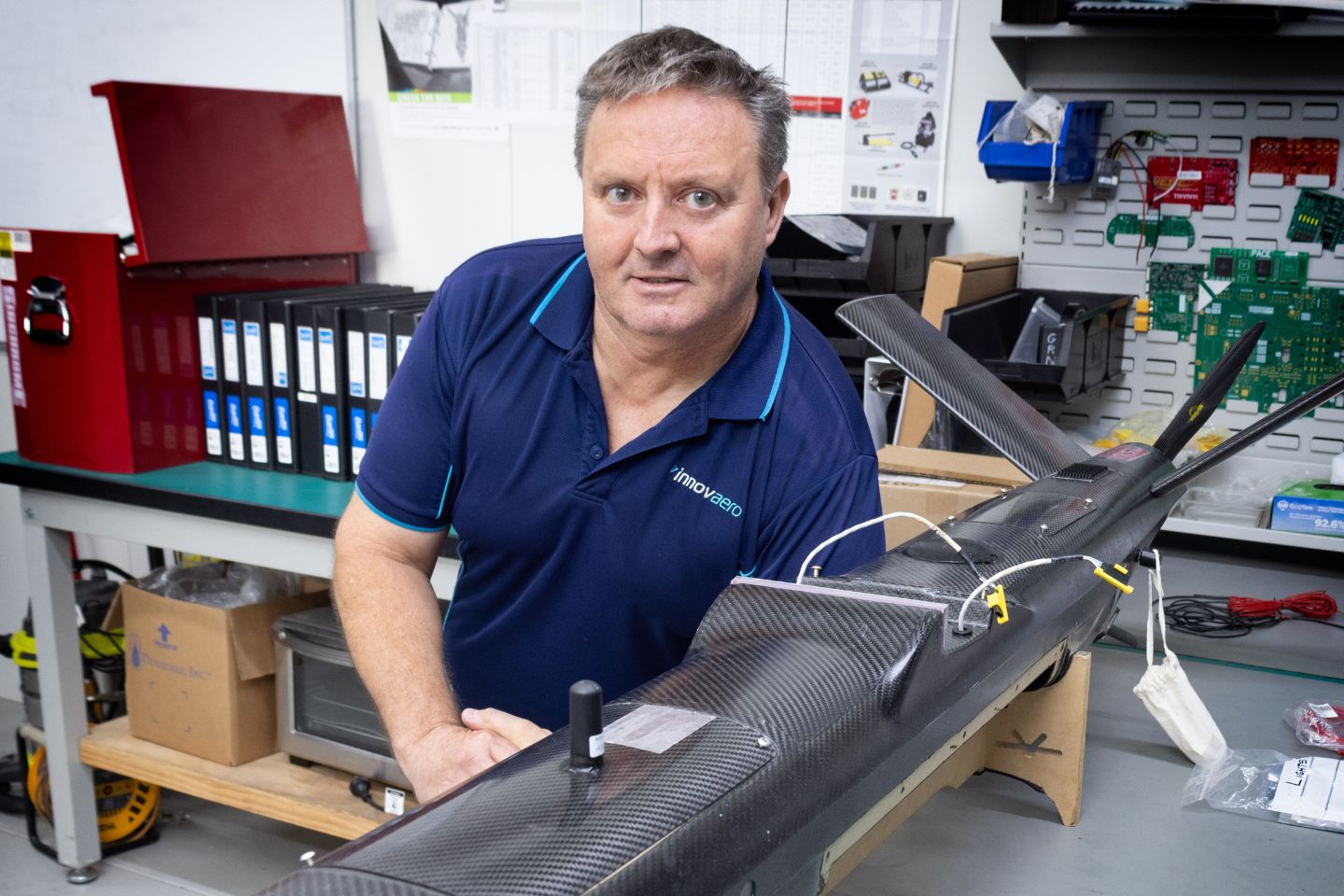
Perth-based drone manufacturer Innovaero will collaborate with Australian munitions company NIOA to develop a range of modular warheads and launch systems for loitering munitions.

3000BC Mein Bitcoin ? #bitcoin #stonehenge #cryptocurrency #nft

Former Arsenal and Liverpool goalkeeper dies aged 48 in train crash

Mars, ofi to advance regenerative ag practices in Ecuador


-

 Politics6 days ago
US brings back mandatory military draft registration
-
 Sports6 days ago
Man United discover Nico Schlotterbeck transfer fee as defender reaches Dortmund agreement
-

 Fashion6 days ago
Weekend Open Thread: Veronica Beard
-

 Politics6 days ago
Malcolm In The Middle OG Turned Down ‘Buckets Of Money’ To Appear In Reboot
-

 Politics4 days ago
World Cup exit makes Italy enter crisis mode
-

 Business6 days ago
Tesla Model Y Tops China Auto Sales in March 2026 With 39,827 Registrations, Beating Cheaper EVs and Gas Cars
-

 Crypto World3 days ago
The SEC Conditionalises DeFi Platforms to Be Avoided for Broker Registration
-

 Crypto World3 days ago
SEC Signals Exemption for Crypto Interfaces From Broker Registration
-

 News Videos1 day ago
Secure crypto trading starts with an FIU-registered
-
 NewsBeat4 days ago
Pep Guardiola and Gary Neville agree over Arsenal title problem that benefits Man City
-

 Business5 days ago
Ireland Fuel Protests Enter Day 5 as Blockades Spark Shortages and Government Prepares Support Package
-

 Business6 days ago
OpenAI Halts Stargate UK Data Centre Project Over Energy Costs and Copyright Row
-

 Politics6 days ago
LBC Presenter Mocks Trump Over Iran War Failures
-

 Crypto World6 days ago
Federal judge blocks Arizona from bringing criminal charges against Kalshi
-

 NewsBeat2 days ago
Trump and Pope Leo: Behind their disagreement over Iran war
-

 Crypto World2 days ago
SEC Proposes Certain Crypto Interfaces Don’t Need to Register as Brokers
-
 NewsBeat4 days ago
JD Vance announces ‘no agreement’ with Iran over nuclear weapons fear
-

 Tech7 days ago
A version of Windows 10 released a decade ago is now eligible for additional security patches
-

 Business6 days ago
IMF retains floor for precautionary balances at SDR 20 billion
-

 Business6 days ago
Former Liverpool CEO eviscerates FIFA for World Cup ticket pricing
You must be logged in to post a comment Login