

Business
Nithin Kamath suggests how to curb offshore betting apps mushrooming after real money gaming ban


Citing an ET Tech report in a post on X, Kamath said many of these platforms operate from overseas and often target Indian users through aggressive online promotions. He suggested that one way to curb their spread is by restricting their ability to move money through domestic payment systems.
“After the real-money gaming ban, these offshore money-gaming apps (many of them scammy) are mushrooming,” Kamath wrote. “The best way to stop them is to make money transfers difficult by ensuring these offshore apps cannot use UPI, and that banks actively block such accounts.”
After the real-money gaming ban, these offshore money-gaming apps (many of them scammy) are mushrooming. I think the best way to stop them is to make money transfers difficult by ensuring these offshore apps cannot use UPI, and that banks actively block such accounts. pic.twitter.com/zAuctYPHrR
— Nithin Kamath (@Nithin0dha) March 6, 2026
His comments come months after the Indian government introduced sweeping restrictions on online gaming involving monetary stakes.

Also Read: Banned in India, but it’s business as usual for offshore real money gaming firms
India’s Parliament passed the Promotion and Regulation of Online Gaming Act, 2025, which effectively prohibits all real-money online games and betting platforms. The law bans the offering, promotion or facilitation of games where users deposit money to participate, while also restricting advertising and financial transactions linked to such services.
The move marked one of the biggest regulatory interventions in India’s digital gaming sector. Real-money gaming had grown into a multi-billion-dollar industry in the country, with fantasy sports, rummy and poker apps attracting millions of users and billions in venture capital funding.
Before the ban, the segment formed the backbone of India’s gaming ecosystem. Industry estimates suggested the real-money gaming market generated more than Rs 27,000 crore in revenue annually and supported hundreds of startups and thousands of jobs across the country.
However, the government argued that such platforms posed significant risks. Policymakers cited concerns ranging from financial losses and addiction among young users to potential links with money laundering and tax evasion. As a result, the new law eliminated the earlier distinction between games of skill and games of chance, banning all forms of online gaming that involve real-money participation.
The policy shift forced several major platforms to halt their paid gaming operations almost immediately. Companies such as Dream11, Mobile Premier League, PokerBaazi and Zupee suspended their real-money formats to comply with the legislation.
The offshore apps typically operate outside Indian jurisdiction and may not follow consumer protection or anti-money laundering rules. Law enforcement agencies have already reported cases of illegal betting networks using multiple bank accounts and digital payment channels to move funds linked to such platforms.
(Disclaimer: Recommendations, suggestions, views and opinions given by the experts are their own. These do not represent the views of Economic Times)


The Dow was the clear laggard among the major indexes on Thursday.
The blue-chip index fell 1,000 points, or 2.1%, while the S&P 500 was down 1.3%. The Nasdaq Composite was down 1.2%.
The Dow is on pace for its worst day since April of last year. With its latest drop, it’s also down 0.7% on the year. The index hasn’t finished a day negative on a year-to-date basis so far in 2026, according to Dow Jones Market Data.
Business
Mark Zuckerberg Says Criminal Behavior on Facebook ‘Inevitable’ in Child Safety Trial Deposition
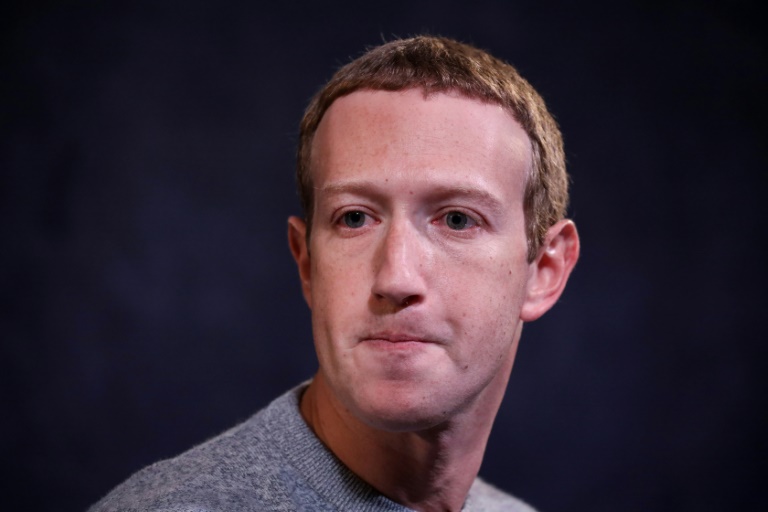
Meta CEO Mark Zuckerberg acknowledged in a taped deposition played during a high-stakes child safety trial that criminal activity, including harms to children, is an unavoidable reality on platforms serving billions of users like Facebook and Instagram.

The comments, revealed March 4-5, 2026, in a New Mexico courtroom, came as prosecutors played excerpts from Zuckerberg’s pretrial deposition to support allegations that Meta violated state consumer protection laws by failing to adequately disclose or mitigate risks of child sexual exploitation and mental health damage on its services.
“I just think if you’re serving billions of people, the unfortunate reality is that some very small percent of them are going to be criminals, and we should work as hard as we can to stop that activity from happening,” Zuckerberg said in the deposition. “I don’t think that the standard for our platforms would be that you should assume that it will ever be perfect.”
The statement drew sharp reactions from critics and child safety advocates, who argue Meta prioritizes engagement and profits over robust protections. Zuckerberg’s words were part of broader testimony addressing Meta’s efforts — or perceived shortcomings — in combating predatory behavior, underage access and harmful content.
The ongoing bellwether trial, brought by New Mexico Attorney General Raúl Torrez, accuses Meta of knowingly allowing dangerous conditions to persist on Facebook, Instagram and related apps. Prosecutors presented internal documents and executive statements claiming the company downplayed known risks to maintain user growth and advertising revenue.
Instagram head Adam Mosseri echoed similar sentiments in his own deposition, played alongside Zuckerberg’s, noting the inevitability of some bad actors in vast online communities. Both emphasized Meta’s investments in safety tools, including AI detection, content moderation teams and billions spent annually on enforcement.
Zuckerberg defended the company’s approach, highlighting thousands of employees dedicated to trust and safety, proactive removals of violating content and partnerships with law enforcement. He stressed the challenge of balancing privacy features like end-to-end encryption — which limits direct message scanning — with safety needs. “Our job is to build products that balance these things in appropriate ways,” he said. “Safety is obviously extremely important. People also care a lot about privacy and security, too.”
The trial builds on years of scrutiny over Meta’s handling of youth safety. It follows Zuckerberg’s February 2026 testimony in a separate Los Angeles addiction lawsuit, where he faced questions on algorithmic design and underage verification. In that case, he admitted improvements in detecting children under 13 but wished the company had acted sooner.
New Mexico’s suit focuses on consumer protection violations, alleging Meta misrepresented platform safety to users and parents. Prosecutors pointed to cases of sexual exploitation facilitated through the apps, including grooming and sextortion schemes targeting minors. They argue Meta’s scale amplifies these issues, with harms like depression, anxiety and suicide linked to exposure.
Meta counters that it discloses risks, removes harmful content aggressively and cannot eliminate every violation in open platforms. Company lawyers note adversarial actors constantly evade systems, but Meta continually upgrades defenses.
The case has spotlighted broader industry challenges. Social media giants face mounting lawsuits and regulatory pressure over youth mental health and exploitation. Section 230 protections shield platforms from liability for user content, but states like New Mexico seek to hold companies accountable for design choices and disclosures.
Public reaction to Zuckerberg’s remarks has been swift and critical. Advocacy groups called the statement an admission of defeat on child protection, urging stronger federal legislation. On social media, users debated whether billions of users inherently doom platforms to host crime or if better tools could minimize it further.
Zuckerberg has long maintained that perfection is unattainable but progress is ongoing. In past congressional hearings, he apologized to families affected by platform harms and pledged reforms.
As the New Mexico trial continues, depositions from other executives like former policy head Nick Clegg reinforced that harmful content damages business interests — bad for ads and brand trust. Clegg noted advertisers avoid proximity to toxic material.
The outcome could influence hundreds of similar suits nationwide, potentially reshaping how platforms approach safety, moderation and transparency. For Meta, the case tests the limits of scale: serving billions inevitably includes risks, but critics say Zuckerberg’s words underscore insufficient urgency in addressing them.
With testimony ongoing and more internal records expected, the trial highlights enduring tensions between innovation, privacy, safety and corporate responsibility in the social media era.
Business
Nektar Therapeutics (NKTR) Presents at TD Cowen 46th Annual Health Care Conference – Slideshow

Nektar Therapeutics (NKTR) Presents at TD Cowen 46th Annual Health Care Conference – Slideshow

Form 4 Columbia Sportswear Company For: 6 March
Shares of Airbnb Inc. (NASDAQ: ABNB) declined about 2% in midday trading Friday, March 6, 2026, falling to around $132.93-$133 from Thursday’s close near $135.85, reflecting a modest pullback after recent gains tied to robust fourth-quarter results and upbeat guidance for accelerated growth in 2026.

The San Francisco-based home-sharing platform opened near $133.89 and traded in a range from lows around $130.98 to highs of $133.90-$134.52, with volume approaching 1-5 million shares by mid-morning. The dip comes amid broader market caution from geopolitical tensions and rising energy costs, though Airbnb’s fundamentals remain solid following its February earnings report.
Airbnb released fourth-quarter and full-year 2025 results on February 12, 2026, posting revenue of $2.78 billion — up 12% year-over-year and beating analyst expectations by about 2.3%. Gross booking value surged 16% to $20.4 billion, while nights and experiences booked grew 10%, marking the strongest quarterly growth in over two years despite tough comparisons.
Adjusted EBITDA reached $786 million, delivering a 28% margin, and the company achieved positive net income. Earnings per share came in at $0.56 (adjusted figures varied), slightly missing some estimates of $0.65-$0.67, but the top-line beat and strong bookings overshadowed the miss.
CEO Brian Chesky highlighted momentum from product innovations like flexible payment options, eco-tourism focus and expansions into new markets such as Japan and India. “Healthy demand” across regions drove the acceleration, with gross bookings showing particular strength.
Guidance fueled optimism: First-quarter 2026 revenue is projected at $2.59 billion to $2.63 billion (14-16% growth), topping Wall Street’s $2.54 billion consensus. For the full year, Airbnb anticipates at least low double-digit revenue growth — aligning with or exceeding analyst views of around 10%. Management emphasized scalable profitability, with forecasts pointing to operating income nearing $3 billion in 2026.
The results sparked a rally, with shares rising as much as 17.5% in the weeks following the report before recent softening. Analysts responded positively: Mizuho raised its price target to $175 from $156 in early March, citing sustained demand and innovation. Consensus targets hover around $144-$149, implying 8-12% upside from current levels, with highs up to $200 and lows near $107. Ratings lean Buy, with 34-50 analysts tracking the stock.
Airbnb’s market capitalization stands around $80-82 billion. The stock trades at a forward P/E in the mid-20s, reasonable for a growth-oriented travel tech name with expanding margins. Year-to-date in 2026, performance has been mixed but positive overall, with shares up roughly 10-15% from January lows near $100, though down from February highs near $144.
The company continues investing in AI for personalized recommendations, dynamic pricing and host tools, alongside expansions like Airbnb Experiences and co-hosting features. Challenges include regulatory pressures in some cities, competition from hotels and short-term rental platforms, and macro sensitivity to consumer spending amid inflation.
Despite headwinds, Airbnb’s asset-light model — no property ownership — supports high margins and cash flow. Free cash flow remains strong, funding share repurchases and growth initiatives without debt reliance.
Analysts see 2026 as pivotal for Airbnb, with gross bookings momentum, user growth and profitability scaling key watchpoints. Expansion into emerging markets and AI-driven efficiencies could drive faster-than-expected gains.
As trading continues, the modest decline appears technical rather than fundamental. With earnings next expected in late April 2026, investors eye sustained demand signals amid travel recovery and economic uncertainty.
Airbnb’s blend of network effects, brand strength and innovation positions it well in the evolving travel landscape, though near-term volatility persists.


Financial analyst by day and a seasoned investor by passion, I’ve been involved in the world of investing for over 15 years and honed my skills in analyzing lucrative opportunities within the market.I specialize in uncovering high quality dividend stocks and other assets that offer potential for long term-growth that pack a serious punch for bill-paying potential. I use myself as an example that with a solid base of classic dividend growth stocks, sprinkling in some Business Development Companies, REITs, and Closed End Funds can be a highly efficient way to boost your investment income while still capturing a total return that follows traditional index funds. I created a hybrid system between growth and income and manage to still capture a total return that is on par with the S&P.
Analyst’s Disclosure: I/we have a beneficial long position in the shares of DGRO either through stock ownership, options, or other derivatives. I wrote this article myself, and it expresses my own opinions. I am not receiving compensation for it (other than from Seeking Alpha). I have no business relationship with any company whose stock is mentioned in this article.
Seeking Alpha’s Disclosure: Past performance is no guarantee of future results. No recommendation or advice is being given as to whether any investment is suitable for a particular investor. Any views or opinions expressed above may not reflect those of Seeking Alpha as a whole. Seeking Alpha is not a licensed securities dealer, broker or US investment adviser or investment bank. Our analysts are third party authors that include both professional investors and individual investors who may not be licensed or certified by any institute or regulatory body.
SlateStone Wealth chief market strategist Kenny Polcari discusses Wall Street’s oil dilemma on ‘Varney & Co.’
Gas prices moved higher Friday as the conflict with Iran continued to roil global energy markets, pushing crude oil sharply upward and raising concerns about fuel supplies.
The national average price for regular gasoline rose to $3.32 per gallon on Friday, up from $3.25 on Thursday and $2.98 a week ago, according to AAA. Analysts say the increase reflects a surge in crude oil prices as geopolitical tensions intensify in the Middle East.
U.S. crude settled at $90.90 per barrel on Friday, a 12.2% jump on the day.
“Gasoline prices have been following crude prices higher as the closure of the Strait of Hormuz impacts supplies,” Andy Lipow, president of Lipow Oil Associates, told FOX Business in an email.
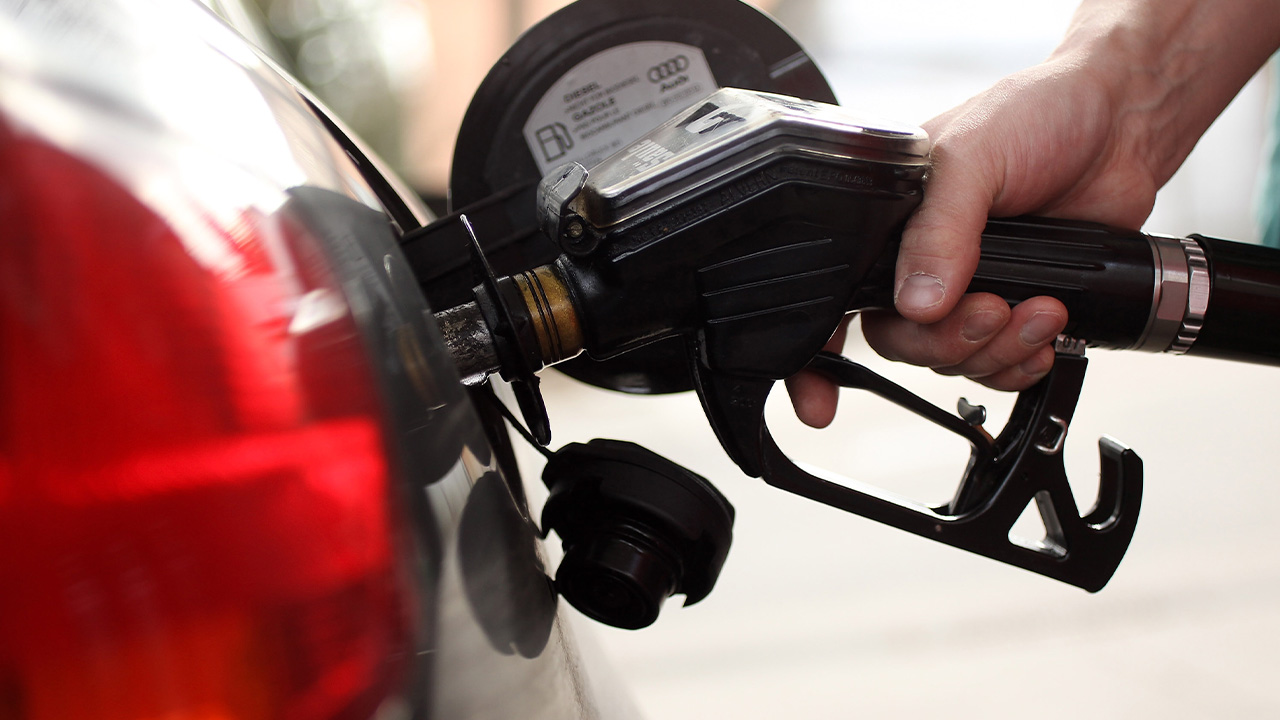
A gas station attendant pumps diesel into a car at a filling station (Sean Gallup/Getty Images / Getty Images)
Oil markets have been on edge since the U.S. and Israel launched strikes on Iran last Saturday. Iran has since moved to block tanker traffic in the Strait of Hormuz — a critical shipping lane that handles roughly 20% of global oil flows, according to Reuters.
Lipow said the disruption has prevented tankers from loading in Iraq, Kuwait and Saudi Arabia, forcing some production shut-ins.
Missile strikes have also hampered refinery operations in Israel, Bahrain and Saudi Arabia, tightening global gasoline and diesel supplies. Additional pressure is coming from China, which is limiting exports of refined petroleum products, according to Lipow.
“All this is leading to higher gasoline prices and the national average is likely to hit $3.50 per gallon [very] soon,” Lipow said.

Cars are pictured driving on the highway. (Jonas Walzberg/picture alliance via Getty Images / Getty Images)
FOX Business contributor Phil Flynn said futures markets suggest pump prices could continue rising in the near term, depending on how events unfold.
“We’re going to probably see some increases right now,” Flynn told FOX Business. “That may slow if we get good news out of Iran.”
Flynn noted that while prices have climbed quickly, the spike has not yet reached the levels seen during past geopolitical crises.
“I’m hopeful that we see the peak of gasoline next week,” Flynn said. “The reason why I say that is I have a lot of confidence in the US military and Israel, and I really think Iran is on its last legs right now.”
MAJOR TECH COMPANIES BACK TRUMP PLEDGE TO PAY MORE FOR DATA CENTER ELECTRICITY AHEAD OF SIGNING

A navy vessel is seen sailing in the Strait of Hormuz, a vital waterway through which much of the world’s oil and gas passes on March 1, 2026. (Sahar AL ATTAR / AFP via Getty Images / Getty Images)
GET FOX BUSINESS ON THE GO BY CLICKING HERE
President Donald Trump told Reuters on Thursday he was not concerned about the rise in prices.
“I don’t have any concern about it,” Trump told Reuters. “They’ll drop very rapidly when this is over, and if they rise, they rise, but this is far more important than having gasoline prices go up a little bit.”
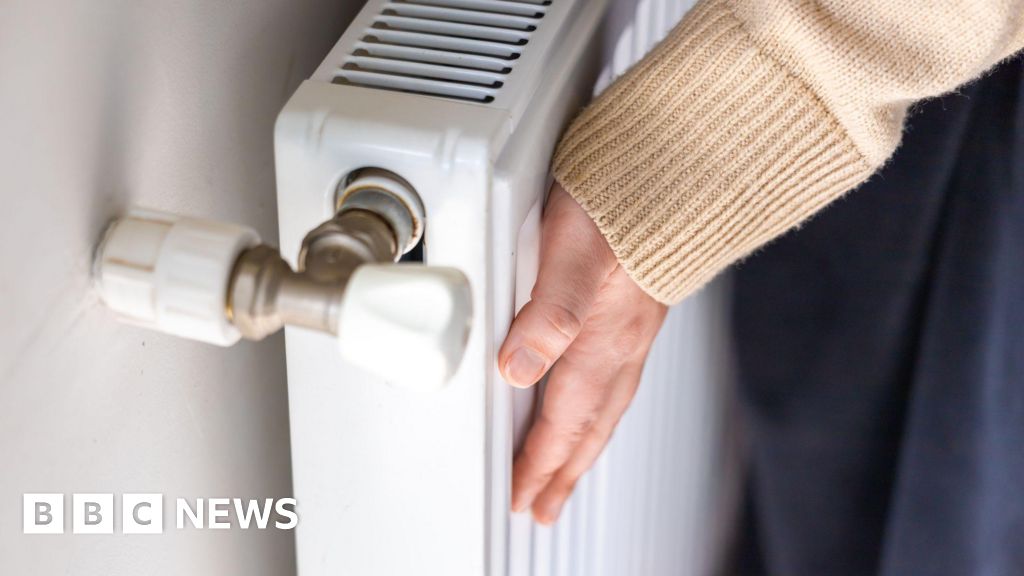
Rising heating oil prices are hitting Northern Ireland harder than the rest of the UK – here’s everything you need to know.

Sionna Therapeutics chief legal officer sells shares for $347,018

Unum Group board approves amendments to corporate bylaws

Messi gets absolutely dragged for applauding Trump’s war boasting

Patrice Evra fires back at Paul Scholes and Gary Neville over Man United criticisms

Most Britons want to leave a legacy, but less than half have drafted a will


-

 Politics4 days ago
Alan Cumming Brands Baftas Ceremony A ‘Triggering S**tshow’
-

 Tech6 days ago
Unihertz’s Titan 2 Elite Arrives Just as Physical Keyboards Refuse to Fade Away
-

 NewsBeat6 days ago
Abusive parents will now be treated like sex offenders and placed on a ‘child cruelty register’ | News UK
-
Business10 hours ago
Form 8K Entergy Mississippi LLC For: 6 March
-
 NewsBeat6 days ago
Dubai flights cancelled as Brit told airspace closed ’10 minutes after boarding’
-
Sports7 days ago
The Vikings Need a Duck
-
 NewsBeat7 days ago
The empty pub on busy Cambridge road that has been boarded up for years
-

 NewsBeat5 days ago
‘Significant’ damage to boarded-up Horden house after fire
-

 Fashion7 hours ago
Weekend Open Thread: Ann Taylor
-

 Tech2 days ago
Bitwarden adds support for passkey login on Windows 11
-

 Entertainment5 days ago
Baby Gear Guide: Strollers, Car Seats
-
 Sports1 day ago
499 runs and 34 sixes later, India beat England to enter T20 World Cup final | Cricket News
-
Politics6 days ago
FIFA hypocrisy after Israel murder over 400 Palestinian footballers
-
 NewsBeat6 days ago
Emirates confirms when flights will resume amid Dubai airport chaos
-

 NewsBeat4 days ago
Is it acceptable to comment on the appearance of strangers in public? Readers discuss
-

 Tech6 days ago
Viral ad shows aged Musk, Altman, and Bezos using jobless humans to power AI
-

 Video5 days ago
How to Build Finance Dashboards With AI in Minutes
-

 Fashion5 days ago
On the Scene at the 57th Annual NAACP Image Awards: Teyana Taylor in Black Ashi Studio, Colman Domingo in Yellow Sergio Hudson, Chloe Bailey in Christian Siriano, and More!
-

 Business3 days ago
Guthrie Disappearance Enters Fifth Week as Family Visits Memorial
-
 NewsBeat5 days ago
Ukraine-Russia war latest: Belgium releases video showing forces boarding Russian shadow fleet oil tanker