“The deal is tied up with so much debt that it virtually guarantees layoffs the likes of which Hollywood hasn’t seen before. That’s going to mean far less output from the suite of properties under Paramount and Warner’s control. And it will mean that the production apocalypse which has been brewing since the pandemic, the end of Peak TV, and the contraction of runaway green lights for streaming networks will grow still more apocalyptic.”
The real world costs of this kind of pointless consolidation is always borne by consumers and labor. Executives get disproportionate compensation, tax breaks, and a brief stock bump. Workers get shitcanned and consumers get higher prices and shittier overall product in a bid to pay doubt debt. We have seen this happen over and over and over again in U.S. media. It’s not subtle or up for debate.
Keep in mind Warner Brothers has seen nothing but this kind of operational chaos over the last two decades as it bounced between pointless mergers with AOL, AT&T, and Discovery, all of which promised vast synergies and new innovation, but instead resulted in oceans of layoffs, higher prices, and consistently shittier product.
Now comes the granddaddy deal of them all to try and cement Larry Ellison’s obvious desire to try and dominate what’s left of U.S. media. Run by his son David, whose operational judgement (if Bari Weiss’ start at CBS is any indication) is arguably worse than all the terrible, fail upward, trust-fund brunchlord types that preceded him.
Advertisement
All of the debt from past deals just keeps piling up and being kicked down the road in a lazy, pseudo-innovative shell game (and this doesn’t; include CBS!):
“In its initial $30-a-share bid for Warner Bros., Paramount was financing the purchase with up to $84 billion in pro forma debt. That has now risen to $31 a share, tacking on roughly another $2.5 billion, plus a “ticking fee” of 25 cents per share per quarter for every quarter the deal doesn’t close after September 30 of this year. Paramount is also paying Netflix’s breakup fee of $2.8 billion. Paramount has not released the financing details for the new deal, but it’s likely to be an even higher debt load.”
Ellison is pretty broadly also leveraged in the AI investment hype cycle, and if that bubble pops (or pops worse, as the case may be), this entire gambit could go wrong very, very quickly. Even the ongoing Saudi cash infusions may not be enough to save them. Larry Ellison’s nepobaby son will of course be fine; the employees, consumers, and broader U.S. media market, not so much.
An early print of the linoleum block that Kristina started carving during the podcast. (It’s the original Cherry MX patent drawing, re-imagined for block printing.)
This week, Hackaday’s Elliot Williams and Kristina Panos met up over assorted beverages to bring you the latest news, mystery sound results show, and of course, a big bunch of hacks from the previous seven days or so.
In the news, we’ve launched a brand-new contest! Yes, the Green-Powered Challenge is underway, and we need your entry to truly make it a contest. You have until April 24th to enter, so show us what you can do with power you scrounge up from the environment around you!
On What’s That Sound, Kristina was leaning toward some kind of distant typing sounds, but [Konrad] knew it was our own Tom Nardi’s steam heat radiator pinging away.
After that, it’s on to the hacks and such, beginning with an exploration of all the gross security vulnerabilities in a cheap WiFi extender, and we take a look inside a little black and white pay television like you’d find in a Greyhound station in the 80s and 90s.
We also discuss the idea of mixing custom spray paint colors on the fly, a pen clip that never bends out of shape, and running video through a guitar effects pedal. Finally, we discuss climate engineering with disintegrating satellites, and the curse of everything device.
Advertisement
Check out the links below if you want to follow along, and as always, tell us what you think about this episode in the comments!
Download in DRM-free MP3 and savor at your leisure.
Episode 360 Show Notes:
News:
What’s that Sound?
Congrats to [Konrad] who knew this was Tom Nardi’s radiator!
It’s been roughly half a year since Apple released the AirPods Pro 3 to the world, and I’m revisiting them to see how they’ve held up after months of near-daily use.
AirPods Pro 3 long-term review: Holding the newest AirPods Pro
In my original review of Apple’s latest earbuds, I largely praised them for improving audio quality, ANC, as well as adding new features. Now that the initial excitement has subsided, let’s examine the changes that have stood out. I went from the AirPods Pro 2 to the AirPods Pro 3. This wasn’t a major jump by any means, but I felt it was worth it, especially since the battery life on my years-old pair had deteriorated, and I was able to pass them down to my partner. Continue Reading on AppleInsider | Discuss on our Forums
The device comes with a 400mm telephoto lens accessory
But the leaked Oppo Find X9 Ultra could soon be a strong rival
When people talk about the best camera phones, they usually have something like Apple’s iPhone 17 Pro Max or Samsung’s Galaxy S25 Ultra in mind — you know, a normal-looking phone with an advanced-yet-unobtrusive camera system on the back. Well, the Vivo X300 Ultra is about to blow all of those expectations away.
Revealed at MWC 2026, Vivo says this device is equipped with a 200-megapixel lens, matching that of last year’s X200 Ultra. But what really catches the eye is the optional 400mm-equivalent Telephoto Extender Gen2 Ultra. This is a clip-on lens made by Zeiss that adds serious zoom capabilities to the phone.
That should give you some pretty incredible power when it comes to long-range photography, especially for a smartphone. With a little digital cropping, it can even apparently act as 1600mm super-telephoto lens (albeit with some image quality compromises).
The obvious compromise is portability — it’s not exactly like you’ll be able to safely fit the phone in your pocket when the lens is attached. And the image processing is something we’ll be keen to see in action before passing judgement — this really is pushing the limits of smartphone photography.
Vivo has been reticent with the X300 Ultra’s specs, leaving us guessing at what else it might come with. But if you’re a smartphone photography buff and want high-end zoom power without resorting to one of the best DSLRs, Vivo is gunning for your attention.
As well as the Telephoto Extender Gen2 Ultra, Vivo also revealed a “pro-grade” Camera Cage to hold its new phone. This is designed to complement video recording and puts “an array of cold shoe mounts and quick-release ports” at your fingertips, Vivo says. There are two hand grips for added stability, physical buttons for shutter and zoom adjustment, and even an active cooling fan to keep your device performing optimally. The Camera Cage is compatible with Vivo’s lens extender, too.
These releases suggest that Vivo is aiming to appeal to the professional market — or is at least targeting ‘pro-adjacent’ users with lofty ambitions. This kind of setup is beyond what most casual consumers will need but could be just the ticket for photographers and videographers.
Advertisement
Sign up for breaking news, reviews, opinion, top tech deals, and more.
An unreleased accessory
(Image credit: Vivo)
While these MWC teasers are out in the open, a leak from Weibo suggests that Vivo might have something else up its sleeve.
According to leaker Digital Chat Station on the Chinese social media site (via Gizmochina), Vivo’s X300 Ultra will come with a 6.82-inch display equipped with a 2K resolution and a dynamic 120Hz refresh rate. This screen will feature very slim bezels and rounded corners, while the Ultra’s battery will be slightly larger than the one found in the X300 Pro.
Advertisement
As well as that, Digital Chat Station alluded to an unreleased “teleconverter” that hasn’t yet been revealed. Interestingly, they then followed that up with the phrase, “It’s more suitable for general photography enthusiasts.” That suggests that this accessory will have broader use cases than the Telephoto Extender Gen2 Ultra addon, which is very niche. We’ll have to wait for more information on that, though.
In the meantime, new rivals are popping up almost by the day, it seems. The Xiaomi 17 Ultra recently landed with an impressive camera setup, and now the Oppo Find X9 Ultra has entered the arena with a surprise global release and a 200MP periscope telephoto sensor that could combine a large 1/1.28-inch sensor size and f/2.2 aperture. That would be a quite a combo, and could give it strong safari credentials — if not quite on the level of Vivo’s 400mm-equivalent telephoto accessory.
Vivo says the X300 Ultra will launch later this year and will be its first Ultra phone available on a global scale outside of China. Given Vivo’s past releases, though, it’s unlikely to be sold in the US, while European availability is uncertain too. There’s also no word yet on the price or exact release date, so stay tuned for more information on that front.
The funding will be used to expand Evervault’s encryption infrastructure, invest in product development, and grow its engineering and product teams.
Evervault, a data encryption start-up founded by Irishman Shane Curran, has raised $25m in Series B funding.
The round was led by Ribbit Capital, with participation from Sequoia Capital, Index Ventures, Kleiner Perkins, Next Play Ventures and new investors including Operator Partners. The new round brings the start-up’s total funding to date to $46m.
Evervault builds developer infrastructure to collect, process and share sensitive data.
Advertisement
The New York and Dublin-based company helps businesses to encrypt and orchestrate sensitive data without ever handling it in plaintext.
“Most compliance frameworks assume sensitive data will exist in plaintext somewhere, but with automated, high-velocity data exchange, that’s a liability,” said Curran, who is also CEO of the company.
“At Evervault, we believe sensitive data should be treated like hazardous material. Systems must be designed so it isn’t touched in the first place.”
Evervault has initially focused on card payments security with a solution that combines encryption with 3D-Secure authentication, network tokens and card data enrichment in a single integration, along with streamlining payment card industry (PCI) compliance.
Advertisement
The company claimed that on average, its solution helps customers cut PCI data security standard compliance costs by $100,000, achieve compliance 95pc faster and ship secure payment systems “in days rather than weeks”.
The start-up said that since its establishment, it has processed more than $5bn in transaction volume and secured more than four times year-over-year revenue growth.
“Our mission isn’t just about payments,” said Curran in a blogpost announcing the raise yesterday (5 March). “We’re building the trust layer for the internet: a global clearinghouse for sensitive data. A place where companies can share, enrich and route information without taking custody of it. We’re replacing contractual trust with cryptographic guarantees.”
The new funding will be used to expand Evervault’s encryption infrastructure, invest in product development, and grow its engineering and product teams, according to the start-up.
Advertisement
Founded in Dublin in 2019, Evervault’s roots can be traced back to the 2017 BT Young Scientist & Technology Exhibition where Curran took home the top prize for his project qCrypt, which was a quantum-secure, encrypted data storage solution with multi-jurisdictional quorum sharing.
Curran previously spoke to SiliconRepublic.com’s Ann O’Dea at a Future Human pop-up event in 2020, where he discussed his experience as a young entrepreneur and the Irish business contingent in Silicon Valley.
Don’t miss out on the knowledge you need to succeed. Sign up for the Daily Brief, Silicon Republic’s digest of need-to-know sci-tech news.
Netflix’s library of streamable party games is expanding today with a custom version of Overcooked! All You Can Eat. Netflix launched its cloud gaming program with games like Lego Party and Tetris Time Warp, but Overcooked feels a bit unique because it features a roster of Netflix-affiliated characters from KPop Demon Hunters and Stranger Things.
For the uninitiated, Overcooked plays like a more manic version of Diner Dash, where teams attempt to prepare food together in increasingly elaborate kitchens filled with obstacles. The original version of Overcooked! All You Can Eat was released in 2020, and includes DLC and stages from previous versions of the game. Netflix’s version bundles in the same content, and “10 Netflix celebrity chefs” including “Dustin, Eleven, Lucas, and the Demogorgon from Stranger Things,” and “half-dozen faces from KPop Demon Hunters,” like “Mira, Rumi, Zoey, Jinu, Derpy and Sussie.” Like Netflix’s other streaming games, playing Overcooked also requires you to use a connected smartphone as a controller.
As part of a Year in Review blog detailing changes Valve made to Steam in 2025, the company shared a minor update on its hardware plans that doesn’t sound good for anyone hoping to buy a Steam Machine, Steam Controller or Steam Frame in 2026. Specifically, the company is now opening up the possibility its new hardware won’t ship this year at all.
In February, when Valve acknowledged the ongoing memory and storage shortage had delayed the launch of its hardware and could lead to higher prices, the company was still committing to a (fairly wide) window of when its hardware would ship:
“Our goal of shipping all three products in the first half of the year has not changed. But we have work to do to land on concrete pricing and launch dates that we can confidently announce, being mindful of how quickly the circumstances around both of those things can change.”
As of the company’s latest post, however, things somehow sound even less certain. “We hope to ship in 2026, but as we shared recently, memory and storage shortages have created challenges for us,” Valve wrote in its Year in Review post. “We’ll share updates publicly when we finalize our plans!”
While Valve’s air of secrecy can make it easy to read too much into the limited information the company does share, moving from “the first half of the year” to “[hoping] to ship in 2026” certainly gives it wiggle room to not release new hardware this year. And considering the difficulties other companies are facing sourcing memory and storage, it wouldn’t be all that surprising.
Advertisement
HP said in February that RAM accounts for a third of its PC costs, and industry analysts expect the RAM shortage could radically alter the PC landscape as companies are forced to raise prices. Valve’s already struggling to keep the Steam Deck in stock due to its issues securing RAM, it stands to reason sourcing components for even more devices wouldn’t make that process any easier. Then again, the company hasn’t updated its launch timing FAQ, so there’s still reason to hope the Steam Machine ships in 2026.
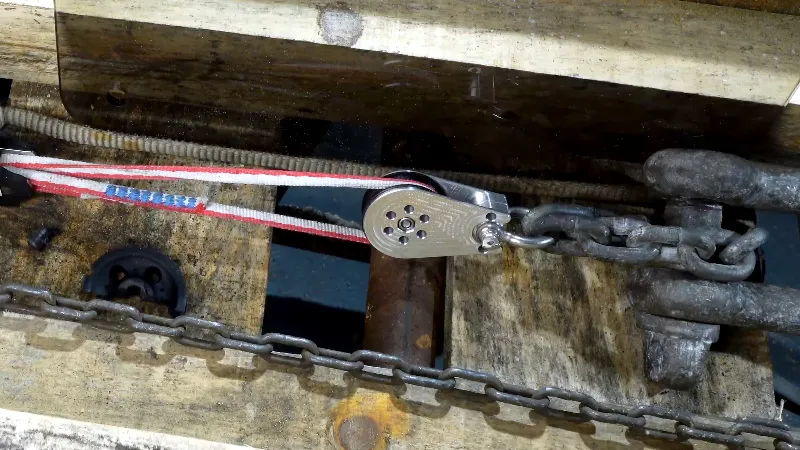
When thinking of humanity’s ability to harness wind energy, many people will conjure images of windmills from places like The Netherlands or Persia. But people have been using wind energy for far longer than that in the form of sailing ships. Using the wind for transportation goes back another four thousand years or so, but despite our vast experience navigating the seas with wind alone there is still some room for improvement. Many modern sailboats use a number of different pulleys to manage all of the rigging, but this new, open-source pulley can replace many of them.
The pulley, or “block” as they are sometimes called, is built with a polymer roller made out of a type of nylon, which has the benefit of being extremely durable and self-lubricating but is a bit expensive. Durability and lack of squeakiness is important in sailing applications, though. The body is made from CNC-machined aluminum and is composed of two parts, which pivot around the pulley’s axis to allow various ropes (or “lines”) to be inserted without freeing one end of the rope. In testing, this design outperformed some proprietary stainless steel pulleys of similar size.
Another perk of this design is that it can be set up to work in many different applications on a sailboat, whether that’s for hoisting a mainsail or pulling in a jib or any other task a pulley could be used for. It can also be stacked with others in many different configurations to build custom pulleys of almost any type, and can support up to 14 mm lines. For a sailor this could be extremely valuable, because as it stands each pulley on a ship tends to be used in only certain applications, and might also be proprietary from a specific company. This pulley is being released into the open-source world, allowing anyone to create them who wants one.
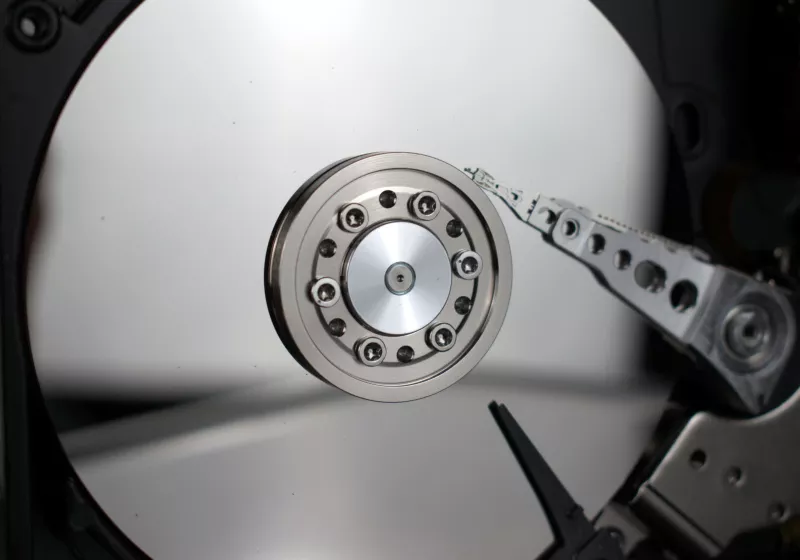
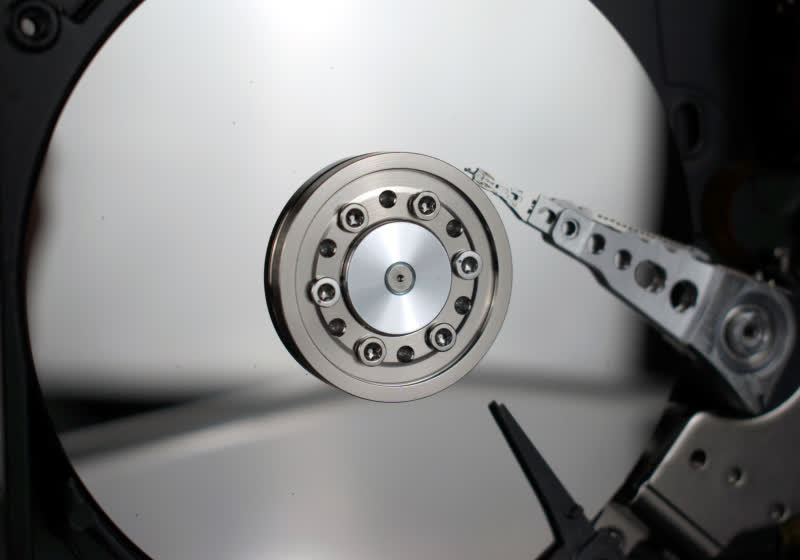
Seagate introduced the Mozaic 3+ platform in 2024, turning the heat-assisted magnetic recording (HAMR) dream into a real product for customers in need of massive storage capacities. The HDD maker is now introducing the next-generation Mozaic 4+ drives, which offer capacities up to 44TB. Read Entire Article Source link
Apple has made it pretty clear that it wants to siphon off Android and Windows users, and it’s doing it by adopting an aggressive, “budget-friendlier” model across nearly its entire ecosystem.
Apple is using $599 devices to grow its ecosystem
When I first entered the Apple ecosystem, it was when I bought an iPhone 4 in 2011 — I got it right after the 4s made its debut. I don’t remember exactly what I paid, but I know it was less than the initial $199 price tag. And back then, I thought that was a completely asinine amount of money to pay for a phone. Fortunately, or maybe unfortunately, I had more money in my pocket than brains in my head, so I bought it just the same. Continue Reading on AppleInsider | Discuss on our Forums
Anthropic confirmed it has been designated a ‘supply chain risk’ by the US administration, and said it has no choice but to challenge in the courts.
Despite ongoing talks between Anthropic and the US Department of Defense, Anthropic confirmed last night it had received a letter from defense secretary Pete Hegseth confirming the ‘supply chain risk’ designation that had been threatened.
“Yesterday (March 4) Anthropic received a letter from the Department of [Defense] confirming that we have been designated as a supply chain risk to America’s national security,” wrote co-founder and CEO Dario Amodei last night in an official statement. “We do not believe this action is legally sound, and we see no choice but to challenge it in court.”
Amodei was quick to point out that “even supposing it was legally sound”, the limited application of the designation means the “vast majority” of its customers will be unaffected by the move. He said the restriction clearly only applied to the use of Claude by customers as a direct part of contracts with the US defense department, “not all use of Claude by customers who have such contracts”.
Advertisement
“The Department’s letter has a narrow scope, and this is because the relevant statute is narrow, too,” wrote Amodei. “It exists to protect the government rather than to punish a supplier.”
As with previous statements, Amodei strikes a conciliatory tone, saying Anthropic is committed to US national security and will offer continuing support from its engineers to ensure a smooth transition from Claude “for as long as we are permitted to do so”.
Anthropic drew the ire of the US administration after a standoff with the Pentagon, where Anthropic refused to change its safeguards related to using its AI for fully autonomous weapons, or for mass surveillance of US citizens.
With many in Silicon Valley supporting its relatively principled stand, and general users sending it to the top of the US Apple charts in recent days for free downloads – beating OpenAI’s ChatGPT for the first time – its flagship Claude.ai and Claude Code apps went down for around three hours on 2 March due to “unprecedented demand”.
Advertisement
Claude Cowork in particular was already becoming the darling of AI enthusiasts in the professional world, and Bloomberg reported on Tuesday that Anthropic was on track to generate annual revenue of almost $20bn, more than double its run rate from late 2025, signalling the rapid growth at the AI company which is today valued at around $380bn.
Don’t miss out on the knowledge you need to succeed. Sign up for the Daily Brief, Silicon Republic’s digest of need-to-know sci-tech news.