

Business
Why Physical Office Strategy is the New Competitive Edge


In the digital age, we spend a massive amount of time talking about the “cloud,” remote workflows, and virtual collaboration. We obsess over the software that keeps our teams connected.
However, for those of us who still maintain physical headquarters, retail spaces, or industrial hubs, there’s a physical reality that often goes unaddressed. The environment we build around our people is a silent partner in our success or failure.
But have you ever walked into an office and felt your energy drain before you even sat down? Honestly, we’ve all been there. It’s that subtle, heavy feeling of a space that just wasn’t designed for humans.
As we move through 2026, the traditional cubicle farm feels like a relic of a distant past. Business leaders are beginning to understand that the “vibe” of an office isn’t just about aesthetic preference. It’s about biological and psychological needs. When a space feels cramped, dark, or disjointed, the people inside it reflect that energy. Conversely, a space designed with flow and human comfort in mind can act as a catalyst for innovation.
So, how much of your team’s output is being stifled by the very walls around them?
The Psychology of Transitions
Most of us don’t think about the physical transitions in our workday. We move from the car to the lobby, the desk to the breakroom, and the meeting room to the private booth. Each of these movements is a mental transition. If the path is cluttered or the environment is harsh, that transition is jarring.
Smart business management is about reducing friction. In a physical sense, this means creating intuitive layouts. It means ensuring that when someone moves from a high-energy collaborative session to a moment of private reflection, the architecture supports that shift. This is where the details matter. From the height of the ceilings to the durability of the materials used in the most high-traffic areas, every choice is a message to your team about how much you value their daily experience.
And that’s the point. It’s about respecting the workday.
Investing in Infrastructure That Lasts
When a business grows, the temptation is often to find the fastest, cheapest way to fill a space. We saw this in the “fast furniture” trend that dominated the last decade. But we’re seeing a correction now. Leaders are looking for longevity. They want materials that can withstand the rigors of a busy workforce while maintaining professional dignity.
This focus on quality is particularly important in the areas of a building that are most used. Whether you’re looking at modular office walls or specialized facility components, the source of your materials defines the lifespan of your renovation. Many project managers find that working with specialists like onepointpartitions.com allows them to maintain a high standard of durability without sacrificing the modern look that today’s talent expects. It’s about finding that balance between rugged utility and high-end design.
But what happens when you prioritize the upfront cost over the long-term culture? Usually, you end up paying for it in turnover.
The Impact of Private Spaces in a Collaborative World
The “open office” experiment had some wins but also major losses. We learned the hard way that humans need walls. We need boundaries. While collaboration is the lifeblood of a creative company, deep work requires silence and a lack of visual distraction.
The future of office design is hybrid. This doesn’t just mean working from home; it means having a hybrid physical space. It means having areas where the energy is palpable and areas where the world is shut out. Designing these “quiet zones” requires a deep understanding of acoustics and spatial psychology.
If you give a team member a place where they can truly focus without feeling like they’re on display, their output changes. It becomes more thoughtful and less reactive. We all need a little room to breathe.
Sustainability as a Business Asset
In 2026, sustainability is no longer a “nice to have” feature. It is a core metric of business health. Clients, employees, and investors are all looking at the physical footprint of the companies they support. A building that’s energy-efficient and built with sustainable materials is future-proof.
This extends to the way we renovate. Instead of tearing everything down and starting over, we’re seeing a rise in modularity. Being able to reconfigure a space without sending tons of drywall to a landfill is a massive advantage. It allows a business to stay agile. As the team grows or the business model shifts, the walls can literally move with the vision.
It’s the hum of the laptop at midnight in a building that breathes with you.
The ROI of Employee Wellness
At the end of the day, a business is its people. If those people are stressed, tired, and frustrated by their physical surroundings, no amount of high-tech software will save the culture. Investing in the physical environment is an investment in retention.
When a team member walks into a facility that feels clean, intentional, and well-maintained, they feel respected. They feel like the company’s invested in their day-to-day comfort. You know, it’s those small things—the quality of the lighting, the privacy of the facilities—that tell the real story of a company’s values. This leads to higher engagement and a more positive brand reputation.
Final Thoughts on Spatial Strategy
Rethinking your physical space is a daunting task, but it’s one of the most rewarding moves a business leader can make. It forces you to look at how your team actually works rather than how you think they should. It requires a blend of practical logistics and creative vision.
When you prioritize the human element of your architecture, everything else falls into place. Space becomes a tool rather than a hurdle. As we look toward the future of work, the winners will be the companies that treat their physical headquarters as a living, breathing part of their strategy.
Let’s make it happen.


Cathie Wood’s ARK sells Roku stock, buys Joby Aviation and Robinhood on March 6th
Business
Bill Gates Faces House Testimony Request in Epstein Probe While TerraPower Nuclear Project Advances in Wyoming
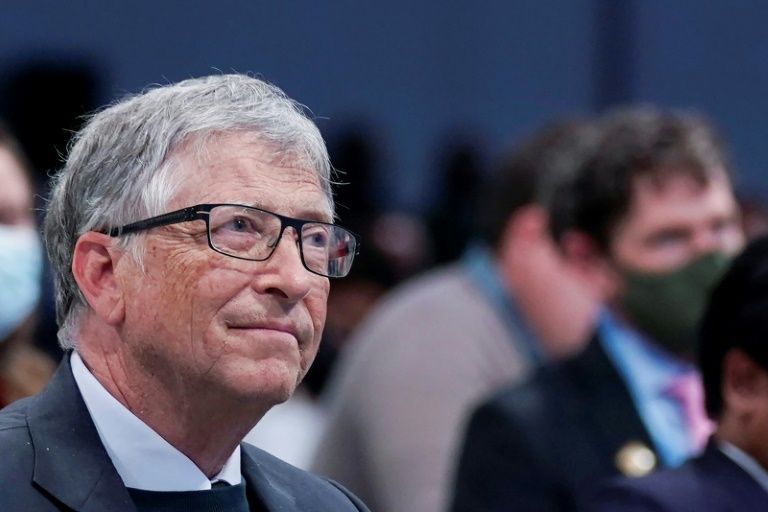
Microsoft co-founder Bill Gates finds himself at the intersection of philanthropy, energy innovation and renewed scrutiny in early March 2026, as a House committee seeks his testimony on ties to Jeffrey Epstein and federal regulators approve construction for his TerraPower nuclear reactor in Wyoming.
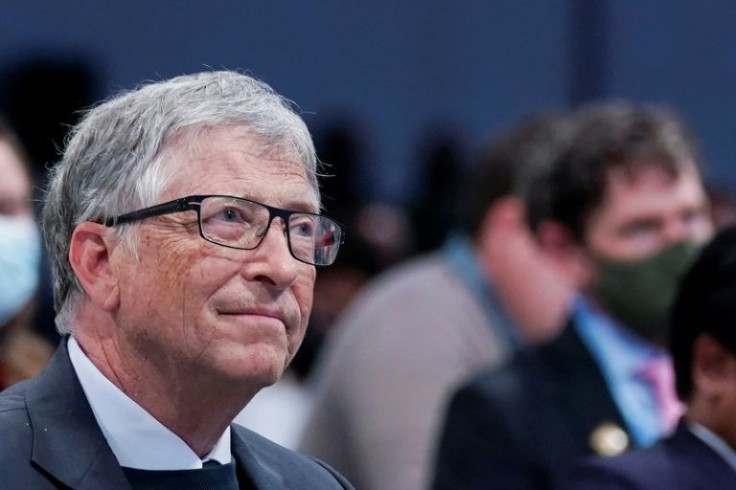
The House Oversight and Government Reform Committee, led by Chairman James Comer (R-Ky.), sent a letter March 3 requesting Gates appear for a transcribed interview on May 19 regarding the federal investigation into Epstein and Ghislaine Maxwell, Epstein’s death and sex-trafficking networks. The panel cited public reporting, Justice Department documents and committee-obtained materials suggesting Gates has relevant information.
Gates’ spokesperson indicated he plans to cooperate. “Gates welcomes the opportunity to appear before the Committee,” the statement said. Gates has repeatedly denied involvement in Epstein’s crimes, expressing regret over their association in past interviews and a foundation town hall.
The request names Gates alongside six others — including Goldman Sachs’ Kathryn Ruemmler, Apollo’s Leon Black and others — for interviews between April and June. The probe examines alleged mismanagement in Epstein-related investigations and broader trafficking issues. Gates’ name surfaced in Epstein correspondence released by the DOJ in recent years, though no criminal allegations have been made against him.
Amid this, Gates’ energy ventures advanced significantly. On March 4, the U.S. Nuclear Regulatory Commission issued its first commercial reactor construction permit in nearly a decade to TerraPower, the company Gates founded and primarily funds. The sodium-cooled Natrium reactor in Kemmerer, Wyoming, targets 345 megawatts and aims for operation in the early 2030s, with construction starting soon and an operating license application planned for late 2027 or early 2028.
TerraPower touts the plant — estimated at up to $4 billion — as a breakthrough using high-assay low-enriched uranium fuel for safer, more efficient power. Gates has positioned nuclear as essential for AI data centers’ massive energy needs and climate goals. “This will revolutionize how power is generated,” he has said, emphasizing next-generation designs to support clean, reliable baseload energy.
The approval marks progress in Gates’ Breakthrough Energy efforts, launched a decade ago to scale clean tech. In his January 2026 annual letter “Optimism with Footnotes,” Gates warned global progress risks stalling without sustained innovation and aid, urging investments despite setbacks like foreign aid cuts.
The Gates Foundation’s 2026 agenda accelerates toward a 2045 closure, committing $200 billion total over the next 20 years — including a record $9 billion payout this year — to eradicate diseases like polio, malaria and tuberculosis while advancing AI in health and climate adaptation. CEO Mark Suzman highlighted three goals: saving lives, reducing inequities and building resilient systems.
Gates expressed cautious optimism in the letter, noting reversals in global health but predicting a “new era of unprecedented progress” within a decade if innovation pipelines hold. He stressed AI’s role in education, agriculture and healthcare, including partnerships like Horizon 1000 with OpenAI for African clinics.
Philanthropically, Gates continues divesting personal wealth to the foundation, focusing on high-impact areas. His portfolio through the foundation trust includes major stakes in Waste Management, Berkshire Hathaway and others, though specific March updates remain limited.
The dual headlines — congressional summons and nuclear milestone — underscore Gates’ enduring influence and controversies. At 70, he balances climate advocacy, health philanthropy and public accountability.
As TerraPower breaks ground and the Oversight probe unfolds, Gates’ actions in 2026 could shape energy transitions and public trust in billionaire philanthropists.

Treasury Secretary Scott Bessent discusses the United States’ new $20 billion maritime reinsurance plan, conflict in Iran and more on ‘Kudlow.’
Treasury Secretary Scott Bessent said Iranians are fighting on two fronts while warning when the nation will endure its next intense military operation from U.S. forces on “Kudlow” Friday.
“Tonight will be our biggest bombing campaign, and we’ll do the most damage to the Iranian missile launchers, the factories that build the missiles, and we are substantially degrading them,” Bessent told FOX Business host Larry Kudlow Friday.
After failing on the military front after what Bessent described as the United States’ “overwhelming” strike campaign, Iran has been forced to play another card, the economy.
US WEIGHS ASKING CHINA TO CURB RUSSIAN, IRANIAN OIL PURCHASES

Smoke rises over the city center after the Israeli army launched a second wave of airstrikes on Iran Feb. 28, 2026. (Fatemeh Bahrami/Anadolu via Getty Images / Getty Images)
“Having not been able to succeed there [militarily], they’re trying to create economic chaos, and I don’t think they’re going to be able to do it,” he added.
This comes as the Trump administration bolsters insurance for U.S. vessels traveling through the Strait of Hormuz, a vital oil transit choke point primarily controlled by Iran.
About 20% of the world’s crude oil and natural gas passes through the critical waterway, and Bessent said its closure could roil energy markets.
“When the conflict began, [insurers] dropped all the insurance for any vessels going in and out of the Strait of Hormuz or generally around the Gulf,” Bessent explained.
In an effort to restore confidence in maritime trade during the conflict in Iran, the International Development Finance Corporation (DFC) announced Wednesday it will provide up to $20 billion in insurance to vessels traveling through the strait.

A navy vessel sails in the Strait of Hormuz, a vital waterway through which much of the world’s oil and gas passes, March 1, 2026. (Sahar Al Attar/AFP via Getty Images / Getty Images)
PREDICTION MARKET KALSHI SUED OVER $54M IRAN LEADER BETS AFTER ‘DEATH CARVEOUT’ INVOKED
“What this program will do is give shippers insurance, whether they are hauling oil, products, fertilizer,” Bessent shared.
Iran asserts that the Strait of Hormuz is open but says it will not allow ships through that are linked to Israeli or U.S. interests, the Treasury secretary explained.
Bessent went on to discuss whether U.S. vessels will need protection when crossing through the Iranian-controlled waterway as tensions intensify between the nations.

Oil tanker at a port in the Strait of Hormuz (Giuseppe Cacace/AFP via Getty Images / Getty Images)
CLICK HERE TO DOWNLOAD THE FOX NEWS APP
“There is the willingness to go through the strait if we also provide a naval escort if needed,” he told FOX Business.
Bessent noted that Iranian and Chinese vessels have been seen successfully passing through during the conflict and vowed to solve the issue.
“We will await to hear from CENTCOM in terms of when they think safe passage is possible,” he said. “I don’t know whether it’s a week or two weeks, but we are on track to get this solved.”

The Dow was the clear laggard among the major indexes on Thursday.
The blue-chip index fell 1,000 points, or 2.1%, while the S&P 500 was down 1.3%. The Nasdaq Composite was down 1.2%.
The Dow is on pace for its worst day since April of last year. With its latest drop, it’s also down 0.7% on the year. The index hasn’t finished a day negative on a year-to-date basis so far in 2026, according to Dow Jones Market Data.
Business
Mark Zuckerberg Says Criminal Behavior on Facebook ‘Inevitable’ in Child Safety Trial Deposition
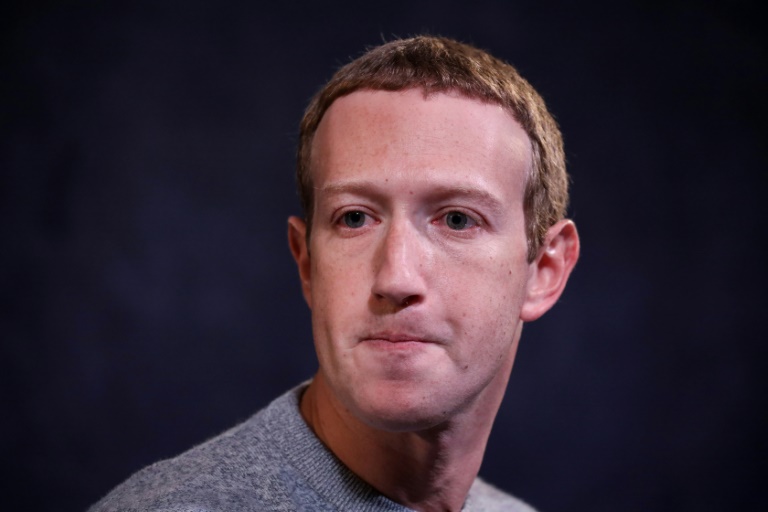
Meta CEO Mark Zuckerberg acknowledged in a taped deposition played during a high-stakes child safety trial that criminal activity, including harms to children, is an unavoidable reality on platforms serving billions of users like Facebook and Instagram.

The comments, revealed March 4-5, 2026, in a New Mexico courtroom, came as prosecutors played excerpts from Zuckerberg’s pretrial deposition to support allegations that Meta violated state consumer protection laws by failing to adequately disclose or mitigate risks of child sexual exploitation and mental health damage on its services.
“I just think if you’re serving billions of people, the unfortunate reality is that some very small percent of them are going to be criminals, and we should work as hard as we can to stop that activity from happening,” Zuckerberg said in the deposition. “I don’t think that the standard for our platforms would be that you should assume that it will ever be perfect.”
The statement drew sharp reactions from critics and child safety advocates, who argue Meta prioritizes engagement and profits over robust protections. Zuckerberg’s words were part of broader testimony addressing Meta’s efforts — or perceived shortcomings — in combating predatory behavior, underage access and harmful content.
The ongoing bellwether trial, brought by New Mexico Attorney General Raúl Torrez, accuses Meta of knowingly allowing dangerous conditions to persist on Facebook, Instagram and related apps. Prosecutors presented internal documents and executive statements claiming the company downplayed known risks to maintain user growth and advertising revenue.
Instagram head Adam Mosseri echoed similar sentiments in his own deposition, played alongside Zuckerberg’s, noting the inevitability of some bad actors in vast online communities. Both emphasized Meta’s investments in safety tools, including AI detection, content moderation teams and billions spent annually on enforcement.
Zuckerberg defended the company’s approach, highlighting thousands of employees dedicated to trust and safety, proactive removals of violating content and partnerships with law enforcement. He stressed the challenge of balancing privacy features like end-to-end encryption — which limits direct message scanning — with safety needs. “Our job is to build products that balance these things in appropriate ways,” he said. “Safety is obviously extremely important. People also care a lot about privacy and security, too.”
The trial builds on years of scrutiny over Meta’s handling of youth safety. It follows Zuckerberg’s February 2026 testimony in a separate Los Angeles addiction lawsuit, where he faced questions on algorithmic design and underage verification. In that case, he admitted improvements in detecting children under 13 but wished the company had acted sooner.
New Mexico’s suit focuses on consumer protection violations, alleging Meta misrepresented platform safety to users and parents. Prosecutors pointed to cases of sexual exploitation facilitated through the apps, including grooming and sextortion schemes targeting minors. They argue Meta’s scale amplifies these issues, with harms like depression, anxiety and suicide linked to exposure.
Meta counters that it discloses risks, removes harmful content aggressively and cannot eliminate every violation in open platforms. Company lawyers note adversarial actors constantly evade systems, but Meta continually upgrades defenses.
The case has spotlighted broader industry challenges. Social media giants face mounting lawsuits and regulatory pressure over youth mental health and exploitation. Section 230 protections shield platforms from liability for user content, but states like New Mexico seek to hold companies accountable for design choices and disclosures.
Public reaction to Zuckerberg’s remarks has been swift and critical. Advocacy groups called the statement an admission of defeat on child protection, urging stronger federal legislation. On social media, users debated whether billions of users inherently doom platforms to host crime or if better tools could minimize it further.
Zuckerberg has long maintained that perfection is unattainable but progress is ongoing. In past congressional hearings, he apologized to families affected by platform harms and pledged reforms.
As the New Mexico trial continues, depositions from other executives like former policy head Nick Clegg reinforced that harmful content damages business interests — bad for ads and brand trust. Clegg noted advertisers avoid proximity to toxic material.
The outcome could influence hundreds of similar suits nationwide, potentially reshaping how platforms approach safety, moderation and transparency. For Meta, the case tests the limits of scale: serving billions inevitably includes risks, but critics say Zuckerberg’s words underscore insufficient urgency in addressing them.
With testimony ongoing and more internal records expected, the trial highlights enduring tensions between innovation, privacy, safety and corporate responsibility in the social media era.
Business
Nektar Therapeutics (NKTR) Presents at TD Cowen 46th Annual Health Care Conference – Slideshow

Nektar Therapeutics (NKTR) Presents at TD Cowen 46th Annual Health Care Conference – Slideshow

Form 4 Columbia Sportswear Company For: 6 March

Shares of Airbnb Inc. (NASDAQ: ABNB) declined about 2% in midday trading Friday, March 6, 2026, falling to around $132.93-$133 from Thursday’s close near $135.85, reflecting a modest pullback after recent gains tied to robust fourth-quarter results and upbeat guidance for accelerated growth in 2026.

The San Francisco-based home-sharing platform opened near $133.89 and traded in a range from lows around $130.98 to highs of $133.90-$134.52, with volume approaching 1-5 million shares by mid-morning. The dip comes amid broader market caution from geopolitical tensions and rising energy costs, though Airbnb’s fundamentals remain solid following its February earnings report.
Airbnb released fourth-quarter and full-year 2025 results on February 12, 2026, posting revenue of $2.78 billion — up 12% year-over-year and beating analyst expectations by about 2.3%. Gross booking value surged 16% to $20.4 billion, while nights and experiences booked grew 10%, marking the strongest quarterly growth in over two years despite tough comparisons.
Adjusted EBITDA reached $786 million, delivering a 28% margin, and the company achieved positive net income. Earnings per share came in at $0.56 (adjusted figures varied), slightly missing some estimates of $0.65-$0.67, but the top-line beat and strong bookings overshadowed the miss.
CEO Brian Chesky highlighted momentum from product innovations like flexible payment options, eco-tourism focus and expansions into new markets such as Japan and India. “Healthy demand” across regions drove the acceleration, with gross bookings showing particular strength.
Guidance fueled optimism: First-quarter 2026 revenue is projected at $2.59 billion to $2.63 billion (14-16% growth), topping Wall Street’s $2.54 billion consensus. For the full year, Airbnb anticipates at least low double-digit revenue growth — aligning with or exceeding analyst views of around 10%. Management emphasized scalable profitability, with forecasts pointing to operating income nearing $3 billion in 2026.
The results sparked a rally, with shares rising as much as 17.5% in the weeks following the report before recent softening. Analysts responded positively: Mizuho raised its price target to $175 from $156 in early March, citing sustained demand and innovation. Consensus targets hover around $144-$149, implying 8-12% upside from current levels, with highs up to $200 and lows near $107. Ratings lean Buy, with 34-50 analysts tracking the stock.
Airbnb’s market capitalization stands around $80-82 billion. The stock trades at a forward P/E in the mid-20s, reasonable for a growth-oriented travel tech name with expanding margins. Year-to-date in 2026, performance has been mixed but positive overall, with shares up roughly 10-15% from January lows near $100, though down from February highs near $144.
The company continues investing in AI for personalized recommendations, dynamic pricing and host tools, alongside expansions like Airbnb Experiences and co-hosting features. Challenges include regulatory pressures in some cities, competition from hotels and short-term rental platforms, and macro sensitivity to consumer spending amid inflation.
Despite headwinds, Airbnb’s asset-light model — no property ownership — supports high margins and cash flow. Free cash flow remains strong, funding share repurchases and growth initiatives without debt reliance.
Analysts see 2026 as pivotal for Airbnb, with gross bookings momentum, user growth and profitability scaling key watchpoints. Expansion into emerging markets and AI-driven efficiencies could drive faster-than-expected gains.
As trading continues, the modest decline appears technical rather than fundamental. With earnings next expected in late April 2026, investors eye sustained demand signals amid travel recovery and economic uncertainty.
Airbnb’s blend of network effects, brand strength and innovation positions it well in the evolving travel landscape, though near-term volatility persists.


Financial analyst by day and a seasoned investor by passion, I’ve been involved in the world of investing for over 15 years and honed my skills in analyzing lucrative opportunities within the market.I specialize in uncovering high quality dividend stocks and other assets that offer potential for long term-growth that pack a serious punch for bill-paying potential. I use myself as an example that with a solid base of classic dividend growth stocks, sprinkling in some Business Development Companies, REITs, and Closed End Funds can be a highly efficient way to boost your investment income while still capturing a total return that follows traditional index funds. I created a hybrid system between growth and income and manage to still capture a total return that is on par with the S&P.
Analyst’s Disclosure: I/we have a beneficial long position in the shares of DGRO either through stock ownership, options, or other derivatives. I wrote this article myself, and it expresses my own opinions. I am not receiving compensation for it (other than from Seeking Alpha). I have no business relationship with any company whose stock is mentioned in this article.
Seeking Alpha’s Disclosure: Past performance is no guarantee of future results. No recommendation or advice is being given as to whether any investment is suitable for a particular investor. Any views or opinions expressed above may not reflect those of Seeking Alpha as a whole. Seeking Alpha is not a licensed securities dealer, broker or US investment adviser or investment bank. Our analysts are third party authors that include both professional investors and individual investors who may not be licensed or certified by any institute or regulatory body.

SlateStone Wealth chief market strategist Kenny Polcari discusses Wall Street’s oil dilemma on ‘Varney & Co.’
Gas prices moved higher Friday as the conflict with Iran continued to roil global energy markets, pushing crude oil sharply upward and raising concerns about fuel supplies.
The national average price for regular gasoline rose to $3.32 per gallon on Friday, up from $3.25 on Thursday and $2.98 a week ago, according to AAA. Analysts say the increase reflects a surge in crude oil prices as geopolitical tensions intensify in the Middle East.
U.S. crude settled at $90.90 per barrel on Friday, a 12.2% jump on the day.
“Gasoline prices have been following crude prices higher as the closure of the Strait of Hormuz impacts supplies,” Andy Lipow, president of Lipow Oil Associates, told FOX Business in an email.

A gas station attendant pumps diesel into a car at a filling station (Sean Gallup/Getty Images / Getty Images)
Oil markets have been on edge since the U.S. and Israel launched strikes on Iran last Saturday. Iran has since moved to block tanker traffic in the Strait of Hormuz — a critical shipping lane that handles roughly 20% of global oil flows, according to Reuters.
Lipow said the disruption has prevented tankers from loading in Iraq, Kuwait and Saudi Arabia, forcing some production shut-ins.
Missile strikes have also hampered refinery operations in Israel, Bahrain and Saudi Arabia, tightening global gasoline and diesel supplies. Additional pressure is coming from China, which is limiting exports of refined petroleum products, according to Lipow.
“All this is leading to higher gasoline prices and the national average is likely to hit $3.50 per gallon [very] soon,” Lipow said.

Cars are pictured driving on the highway. (Jonas Walzberg/picture alliance via Getty Images / Getty Images)
FOX Business contributor Phil Flynn said futures markets suggest pump prices could continue rising in the near term, depending on how events unfold.
“We’re going to probably see some increases right now,” Flynn told FOX Business. “That may slow if we get good news out of Iran.”
Flynn noted that while prices have climbed quickly, the spike has not yet reached the levels seen during past geopolitical crises.
“I’m hopeful that we see the peak of gasoline next week,” Flynn said. “The reason why I say that is I have a lot of confidence in the US military and Israel, and I really think Iran is on its last legs right now.”
MAJOR TECH COMPANIES BACK TRUMP PLEDGE TO PAY MORE FOR DATA CENTER ELECTRICITY AHEAD OF SIGNING
A navy vessel is seen sailing in the Strait of Hormuz, a vital waterway through which much of the world’s oil and gas passes on March 1, 2026. (Sahar AL ATTAR / AFP via Getty Images / Getty Images)
GET FOX BUSINESS ON THE GO BY CLICKING HERE
President Donald Trump told Reuters on Thursday he was not concerned about the rise in prices.
“I don’t have any concern about it,” Trump told Reuters. “They’ll drop very rapidly when this is over, and if they rise, they rise, but this is far more important than having gasoline prices go up a little bit.”

love of money

Wales player ratings as star puts in best display in red shirt and high-class Test player emerges
Cathie Wood’s ARK sells Roku stock, buys Joby Aviation and Robinhood on March 6th


-

 Politics4 days ago
Alan Cumming Brands Baftas Ceremony A ‘Triggering S**tshow’
-

 Tech6 days ago
Unihertz’s Titan 2 Elite Arrives Just as Physical Keyboards Refuse to Fade Away
-

 NewsBeat6 days ago
Abusive parents will now be treated like sex offenders and placed on a ‘child cruelty register’ | News UK
-
Business11 hours ago
Form 8K Entergy Mississippi LLC For: 6 March
-
 NewsBeat6 days ago
Dubai flights cancelled as Brit told airspace closed ’10 minutes after boarding’
-
Sports7 days ago
The Vikings Need a Duck
-

 Fashion7 hours ago
Weekend Open Thread: Ann Taylor
-
 NewsBeat7 days ago
The empty pub on busy Cambridge road that has been boarded up for years
-

 NewsBeat5 days ago
‘Significant’ damage to boarded-up Horden house after fire
-

 Tech2 days ago
Bitwarden adds support for passkey login on Windows 11
-

 Entertainment5 days ago
Baby Gear Guide: Strollers, Car Seats
-
 Sports1 day ago
499 runs and 34 sixes later, India beat England to enter T20 World Cup final | Cricket News
-
Politics6 days ago
FIFA hypocrisy after Israel murder over 400 Palestinian footballers
-
 NewsBeat6 days ago
Emirates confirms when flights will resume amid Dubai airport chaos
-

 NewsBeat4 days ago
Is it acceptable to comment on the appearance of strangers in public? Readers discuss
-

 Tech6 days ago
Viral ad shows aged Musk, Altman, and Bezos using jobless humans to power AI
-

 Video5 days ago
How to Build Finance Dashboards With AI in Minutes
-

 Fashion5 days ago
On the Scene at the 57th Annual NAACP Image Awards: Teyana Taylor in Black Ashi Studio, Colman Domingo in Yellow Sergio Hudson, Chloe Bailey in Christian Siriano, and More!
-

 Business3 days ago
Guthrie Disappearance Enters Fifth Week as Family Visits Memorial
-
 NewsBeat5 days ago
Ukraine-Russia war latest: Belgium releases video showing forces boarding Russian shadow fleet oil tanker