




Connect with us
DAPA Banner

NewsBeat

‘We’ve taught toddlers to take cover’: Living in Dubai as Iran attacks | World News

Published

on

The site of an explosion at the Fairmont The Palm Hotel in Dubai on Saturday. Pic: AP

There are three types of people in Dubai right now: those off to play padel, those rushing to the Omani border, and those waiting for house prices to drop.

It’s a joke doing the rounds here, and it neatly captures the mood.

Day seven of this war started with the familiar humdrum of daily life – people out jogging, children off to the park, the malls filling with shoppers.

But the mid-morning air was pierced by the screech of another emergency alarm on mobile phones.

Advertisement
Image:
A missile alert sent to mobile phones in Dubai

Iran war latest: Trump demands ‘unconditional surrender’

This one warning of incoming missiles, telling people to seek shelter and stay away from windows.

We’ve now had to teach toddlers and childminders to take cover when they hear the warnings or blasts from air defence. I’ve met children in Ukraine who are so familiar with the sounds of war they can tell if it’s incoming or outgoing fire. I never expected to see children enduring this in Dubai.

This is the dual reality the UAE is now living.

Advertisement

Normal life continues while the country is attacked every day.

Smoke billows from Dubai's Jebel Ali port on Sunday after an Iranian attack. Pic: Reuters
Image:
Smoke billows from Dubai’s Jebel Ali port on Sunday after an Iranian attack. Pic: Reuters

The UAE is now having to defend its territory, residents and way of life – in a way it never imagined.

It’s understood Iran has fired more drones and missiles at the UAE than anywhere else – even Israel – in these last seven days of war.

If you want to get people’s attention, aim for a global city and its five-star hotels. Create shock, havoc, and headlines.

But no one expected this – not the government, the military, or the millions of people who live here.

Advertisement
The site of an explosion at the Fairmont The Palm Hotel in Dubai on Saturday. Pic: AP
Image:
The site of an explosion at the Fairmont The Palm Hotel in Dubai on Saturday. Pic: AP

The US military base in Abu Dhabi was always known to be a possible target, but fairly low down the list given the far larger American military assets in the region. The UAE also made it clear in a public statement several weeks ago that no attacks on Iran were to come from its territory, airspace or waters. It was thought this would add a layer of protection to Iran’s Gulf neighbour.

We couldn’t have been more wrong.

More than 200 ballistic missiles and nearly 2,000 drones have been fired at the UAE in seven days.

Two missiles and 74 drones have got through. Three people have been killed and dozens injured.

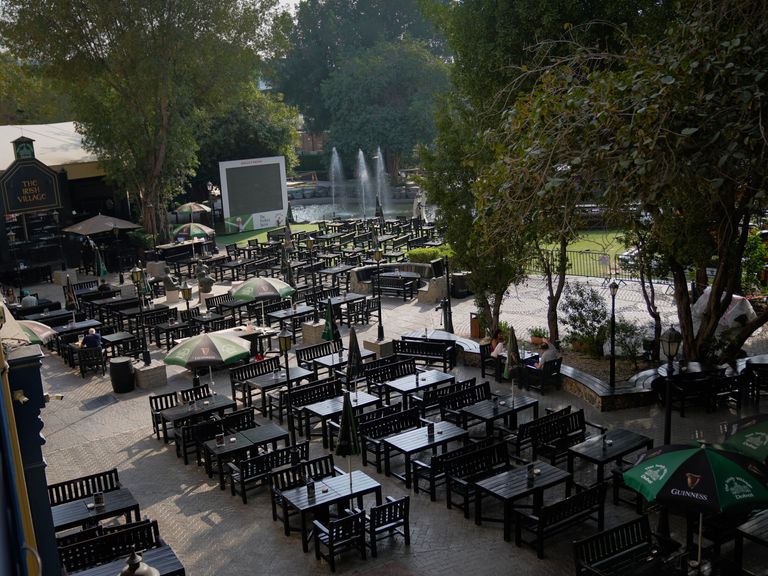
A Dubai beer garden sitting almost empty amid ongoing hostilities with Iran. Pic: AP
Image:
A Dubai beer garden sitting almost empty amid ongoing hostilities with Iran. Pic: AP

For some residents, it’s been too much, and community WhatsApp groups are in meltdown with people sharing flight information and tips on the journey to Muscat airport.

I’ve heard from many who have crossed into Oman to catch a flight, others who’ve driven to Saudi Arabia to get out.

Advertisement

I’ve also heard from others making the reverse journey – separated from their children and desperate to get back.

For many stranded tourists, it’s been a nightmare holiday. The initial shock of finding themselves caught up in a war has been replaced by a sense of abandonment.

The UK government took nearly a week to organise its first evacuation flight, and there are tens of thousands of British holidaymakers still trying to get home.

We’ve received hundreds of messages from people at a loss as to what to do. One traveller who did get a flight, called on the way to the airport to say they could see incoming fire.

Advertisement
The US consulate in Dubai on fire
Image:
The US consulate in Dubai on fire


It’s been a surreal and scary week on many levels. The psychological impact has been even greater than any physical harm.

Will this hurt the city? Will this impact the country? For sure. At least for a time. I’ve already spoken to residents who’ve left and don’t want to come back.

Will it impact the sky-high property prices and rents? Probably.

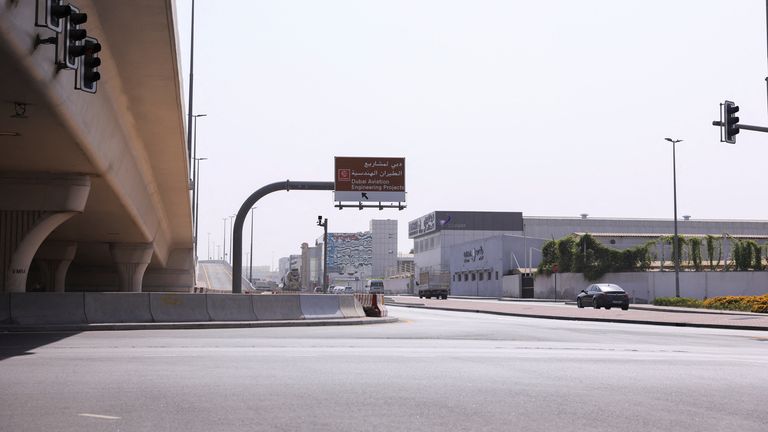
Empty road near Dubai International Airport. Pic: Reuters
Image:
Empty road near Dubai International Airport. Pic: Reuters

Much depends on how long this war lasts – how long Iran is willing to sabotage its relationship with its neighbours.

But what I do know is that seven days on, a country not used to war has shown it can defend itself.

Advertisement

And a population that chose this city for its lifestyle and security – never expecting to confront war on their doorstep – has shown a quiet resilience they can take pride in.

Source link

Advertisement
Continue Reading
Click to comment

You must be logged in to post a comment Login

Leave a Reply

NewsBeat

research shows it fluctuates and may be an unreliable predictor of future success

Published

on

research shows it fluctuates and may be an unreliable predictor of future success

Wolfgang Amadeus Mozart is arguably the most celebrated child prodigy in history, composing his first pieces of music aged five, his first symphony at eight and his first opera at 11. After a study in 1993 found that listening to Mozart could improve spatial IQ – prompting headlines such as “Mozart makes your brain hum” – he became a symbol for intelligence and brain training.

The study was no doubt interesting. The scientists found that performance on spatial ability tests was improved when their study participants had listened to a Mozart sonata, compared with a relaxation tape or silence. The increase in performance translated to an astounding difference of up to nine spatial IQ points.

Although the effects were temporary, lasting less than 15 minutes, the idea exploded in popular culture. The “Mozart Effect” ignited a lucrative empire of parenting books, self-help manuals and CDs promising to harness the power of Mozart’s music to foster children’s cognitive development. That was despite the fact that the study had been carried out in adults and the evidence for the effect was later overtuned.

The hard fall for the Mozart Effect ultimately highlights the value that society places on intelligence as measured by cognitive tests (like the IQ test). The global market for cognitive assessment and training was valued at about $6.87 billion in 2024 (£5.18bn) but is projected to rise to $35.30 billion by 2032.

Advertisement

Mozart went on to compose over 600 outstanding works in his brief lifetime. But can we reliably predict future success from a child’s performance? Today, IQ tests are often used to spot early academic talent. But are they a good measure? A growing number of scientific studies suggest that IQ measured in childhood might tell us less than we think. Scientists are discovering that children’s IQ scores aren’t as stable as adults’ – they fluctuate substantially.

So why are schools using cognitive assessments? And what other factors can help predict children’s future success?

The rise of cognitive tests to identify potential

Fostering talent is central to human progress. Exceptionally talented individuals drive scientific and cultural innovation and push the boundaries of human knowledge. For over a century, scientists have therefore sought to understand and measure intelligence. This has been partly driven by countries gradually shifting away from mass production and towards becoming knowledge economies.


Advertisement

The Insights section is committed to high-quality longform journalism. Our editors work with academics from many different backgrounds who are tackling a wide range of societal and scientific challenges.


One of the largest and longest running studies of giftedness, the Study of Mathematically Precocious Youth, has followed the lives of intellectually gifted people for over half a century. Over 1,600 talented 13-year-olds were invited to take part in the study if they had scored in the top 1% of ability on a standardised test, the SAT, widely used for US college admission. And indeed, four decades later, many of these young talents had achieved outstanding accomplishments. Some 4.1% had achieved tenure at a major university and 2.3% were top executives at Fortune 500 companies. They had published 85 books and secured 681 patents.

However, it is worth noting that these children were fairly old, already teenagers – and at the absolute top end of achievement. Cognitive tests, however, are taken by a much wider range of children today. Since the 1980s, cognitive ability tests have gradually replaced traditional academic subject exams as school entrance screeners. This was motivated by the idea that a cognitive test could be a more objective assessment of aptitude and potential than a child’s knowledge of the curriculum. Performance on cognitive tests is viewed by many as independent of external influences, such as a more resourceful school or a nurturing home environment.

Schools worldwide, from the US and the UK to Singapore and Vietnam now use standardised tests of cognitive abilities to select students at intake. Admission to many prestigious independent and selective high schools in the UK is often at least partly based on a cognitive ability test, such as the infamous CAT4, that hopeful ten-year-olds sit in the autumn term of their last year of primary school. The CAT4 test is also used in many state secondary schools to help determine sets, predict grades and allocate support and provisions.
Advertisement
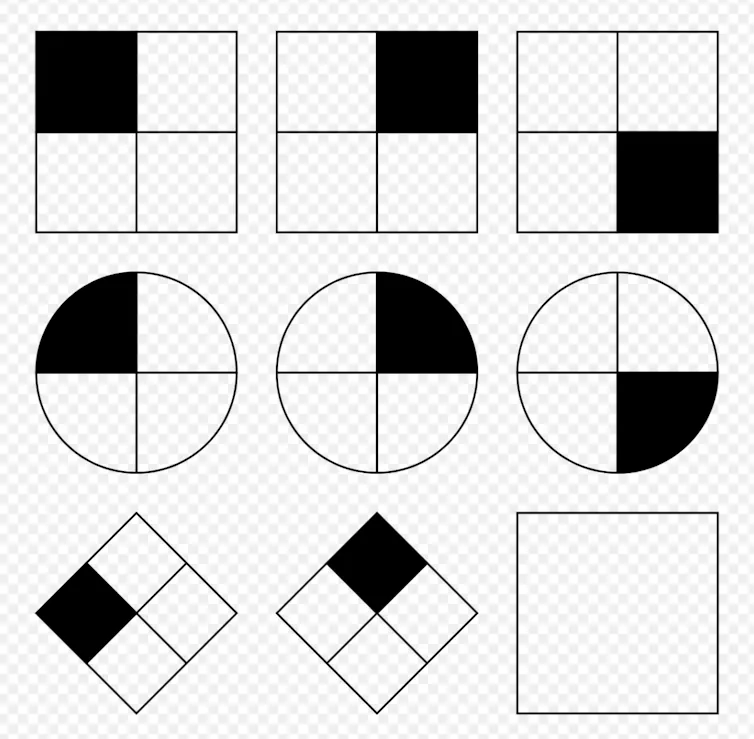
One kind of IQ test item, modelled after items in the Raven's Progressive Matrices test.
One kind of IQ test item, modelled after items in the Raven’s Progressive Matrices test.
wikipedia, CC BY-SA

The CAT4 takes around 2.5 hours to complete and is divided into four sections. There is verbal reasoning (thinking with words), non-verbal reasoning (thinking with shapes), quantitative reasoning (thinking with numbers) and spatial ability (thinking with shapes and space). Children who score exactly as expected for their age group would be given a score of 100. Scoring between 89 and 111 is considered to reflect “average” performance, while scores of 112 and above or 88 and below indicate above and below average performance, respectively.

Child IQ fluctuates

We know that the human brain is plastic, or changeable, particularly in childhood. It is the only organ in our body that isn’t fully developed when we are born. A newborn’s brain is about a quarter of the size of an adult brain, doubling in the first year of life. By age seven, it reaches 90% of its adult size. Beyond physical growth, our brains refine and consolidate the network of connections between neurons during this time.

Refining and whittling these connections is key to supporting cognitive and behavioural developmental milestones. Recent research shows that it’s possible to identify key “eras” of brain structural change over the life course. The first milestone – the transition from childhood to adolescence – happens at around age nine. From a brain perspective, adolescence lasts for a little over two decades and is defined by greater efficiency of connections across regions. This coincides with a steady increase in cognitive functions, including vocabulary, complex reasoning and learning.

We’ve known for some time that there is a link between intelligence, as measured by cognitive tests, and school achievement. Research from 2015 that combined data from over 100,000 students across 240 different studies did find a substantial association between intelligence and school grades. However, the magnitude of the link differed depending on children’s age. Intelligence was a much better predictor of school performance in secondary school than it was in primary school. This suggests that cognitive abilities might not be stable during the first decades of life, but vary significantly.

A 2024 analysis that combined data from 205 different studies including over 85,000 participants across 29 countries supports this view. The researchers set out to investigate how stable cognitive abilities are (whether they fluctuate) across the human lifespan and whether stability changes with age.

Advertisement

They discovered that the stability of cognitive abilities increased exponentially with age – and was low in the first decade of life. This means that each child’s positioning compared to their peers changes significantly in childhood. So a child’s IQ score might indeed change substantially during this time. The stability, however, increased throughout childhood and adolescence, plateauing around age 20 and remaining high throughout adulthood and old age.

But even when IQ starts stabilising, in adolescence, it can still fluctuate by up to 20 points. Somebody increasing their IQ score from 100 to 120 would move from the 50th percentile to about the 91st percentile – a 41% improvement. Indeed, one study, albeit with a small sample of students, could link such fluctuations to physical changes in the brain over time.

This means that it can be tricky to infer long-term consequences, such as later grades, from cognitive tests. Basing school intake, or more broadly selection into educational programmes on a single, unstable metric is likely to lead to systematic errors and unreliable decisions.

Worryingly, it may also result in attempts to manipulate the metric, potentially perpetuating systemic inequalities. This may be true of other tests too, but IQ tests are often seen as an exception. But research shows that you can actually train yourself to boost your IQ test score by roughly eight IQ points, for example by retaking the test. Parents with a lot of resources might be better placed to help prepare their children.

Advertisement

The myth of the child prodigy

Recent research has backed all this up by questioning the widely accepted myth of the child prodigy as someone destined for greatness, like Mozart. One 2025 study, which combined data from over 34,000 elite performers, from Nobel laureates and chess players to music composers and athletes, found that exceptional performance in childhood was a limited predictor of elite performance in adulthood.

In fact, about 90% of those who achieved elite performance in youth did not achieve equivalent adult status. Similarly, 90% of top performing secondary school students were no longer top performers at university. And even more strikingly, several Nobel laureates and elite athletes actually had lower childhood performance than their peers.

Warm sunset over Mozart monument in front of Palmenhaus, near Neue Burg and Hofburg Palaces garden, in historical downtown of Vienna.

Mozart might have gone from strength to strength, but research shows that is unusual.
neurobit/Shutterstock

The routes leading children and adults, respectively, to world-class performance also differed. Exceptional talent early in development was associated with intensive, discipline-specific progress at a young age. But adult world-class performance was more often achieved through extensive multi-faceted practice and gradual advancements.

This means that educational and talent programmes that prioritise early identification of intelligence may overlook a large proportion of future world-class innovators.

Advertisement

Environmental exposure

The idea behind identifying talent as early as possible so that it can be nurtured is founded on the belief that exposure to an enriched environment can impact ability and vice versa. Half a century of scientific discovery supports this proposition. Perhaps the most famous example is a study published in 1979 by paediatrician Herbert Needleman and his colleagues. This study provided the first robust evidence that exposure to the metal lead, even at levels previously considered negligible, could significantly impair a child’s cognitive performance.

By comparing children with high and low lead levels in baby teeth, while controlling for potentially confounding factors – such as the mother’s IQ and socio-economic status – the study showed that children with higher lead levels scored roughly four points lower on IQ tests. The evidence presented influenced major public health policies, including the removal of lead from gasoline and interior paint in the US.

A large number of other environmental exposures have been positively linked with cognitive development, from walking in nature to exercise and nutrition, albeit with mixed results. However, arguably the most successful environmental intervention to improve cognitive ability is administered every year to more than 85% of children worldwide: education.

Advertisement

By combining data collected across multiple studies from over 600,000 individuals, researchers found that education has a direct effect on the development of cognitive abilities. The study found that each year of education results in a gain of about one to five IQ points. These effects were remarkably robust, appearing across different cognitive domains and persisting throughout the lifespan. In fact, significant benefits were still measurable into people’s 80s and 90s. While a few IQ points per year may seem small, their cumulative impact at a societal level has been shown to be of great consequence.

Environmental factors that shift population IQ even modestly — like lead exposure, nutrition or education — carry enormous economic consequences. Economists have calculated that each gained IQ point is associated with roughly a 2% increase in lifetime earnings.

In the year 2000, a single IQ point gained or lost across the US population translated to between $110 and $319 billion in aggregate economic output. More recent analysis of the global economic impact of lead exposure on childhood IQ estimated the total cost of IQ loss at US$1.4 trillion globally in 2019, mainly affecting low and middle-income countries.

The role of parents

From the moment a child is born, parents invest vast amounts of energy, time and resources to promote their children’s physical and cognitive development. Not all parenting practices are supported by scientific evidence, nor is the Mozart Effect the sole parenting myth that has been busted. However, research has shown that parenting can nevertheless have profound effects on children’s early cognitive development.

Advertisement

Studies have found that the environment that parents provide for their children by reading to them, engaging them in stimulating activities and conversation, and maintaining a warm and organised household, has a significant positive effect on early cognitive development. This is particularly the case for the first five years of life. What makes early investment especially powerful seems to be that the benefits compound. Fostering a child’s early cognitive competence makes it easier for children to acquire new skills down the line.

However, the pathways to parental investment are complex. Reflecting on my own childhood illustrates this point. I was born in the mid-80s to parents in their early twenties. At the time, my mother was in medical school and my father designed and produced bespoke furniture. As a child, I had several ear infections which meant that I had to have regular checks with a specialist. One warm, sunny morning in early April, my mum and I set off for my otolaryngologist appointment, just the two of us. As the eldest of four children, this was a rare and special occasion.

After my check-up, we took a tram to Milan’s State University, where we attended a conference on HIV infections in vulnerable populations – the topic of my mother’s thesis. I remember sitting in the beautiful auditorium, admiring the frescos on the ceiling, and slowly adjusting a pair of disposable headphones to listen to the real-time translation of the talks. The panel of female scientists discussed the topic so eloquently and clearly that even a ten-year-old girl could grasp their main message.

I was hooked. It must be the best job in the world, I thought. It was only a quiet thought then, one that I never had the courage to privately contemplate or publicly share. That came much later, when I found the confidence to admit that a career in scientific research was for me. But this specific episode in my childhood was not an isolated peak. It was the pinnacle of many simpler, everyday moments when my parents invested time and effort to provide us with a nurturing and stimulating environment.

Advertisement

However, seeing these as merely environmental exposures would only provide part of the picture. Perhaps, the science-enriched environment that my mother created for us depended, at least in part, on her own, partly genetically driven, scientific aptitude.

The nature of nurture

Scientists have named this amalgamation of nature and nurture gene-environment correlation, or more intuitively, the nature of nurture. Parents who provide their children with intellectually stimulating environments may also pass on a greater disposition to doing well in school or performing well in cognitive tasks. Research has shown that accounting for genetic effects shared between mothers and children resulted in a reduction in the effect of parenting on educational attainment.

However, cognitively stimulating parenting remained a significant predictor of children’s educational outcomes beyond direct genetic inheritance and socio-economic status. It ultimately contributes to channelling children’s dispositions and translating them into academic outcomes.

The important role of the family environment is also highlighted by decades of twin studies. These show that environmental exposures that are common to siblings, including growing up in a more resourceful home, school and neighbourhood, explain about a third of differences between children in cognitive ability.

Advertisement

Randomised control trials have demonstrated that early interventions are likely to lead to the greatest returns. Investing in children early — through parenting, stimulating environments and good nutrition — pays back far more than trying to catch up later. Every year of delay makes it harder to close the gap.

Child expressing awe and curiosity at a lake.
Curiosity can also affect children’s educational attainment.
explorewithinfo/Shutterstock

Interventions created to bridge this gap in groups of disadvantaged children through high-quality preschool education, such as the Perry Preschool Project, can lead to meaningful gains in cognitive performance. Interestingly, while the benefits on children’s cognitive performance faded over time, their long-term educational, economic and social benefits were remarkably far-reaching. So a high quality school education could indeed lead to better job prospects and higher salaries, regardless of IQ.

It follows that boosting cognitive ability may not be the only way to lasting educational, economic and health benefits. Non-cognitive skills — such as motivation, curiosity, self-regulation and social skills — are equally important.

What IQ tests fail to capture

Cognitive tests have never been viewed as instruments to capture the entire set of skills necessary for succeeding in school and life. In 1916, Alfred Binet and Theodore Simon, the inventors of the first IQ test, wrote that things other than intelligence also mattered to academic success, arguing “one must have qualities which depend especially on attention, will and character”.

Decades of research have shown that children who are emotionally stable, motivated and capable of regulating their attention and impulses do better at school, regardless of their level of cognitive ability. These important characteristics have been broadly described as “non-cognitive skills”.

Advertisement

Recent research by my own team shows that the importance of non-cognitive skills for learning also changes over the school years. We analysed data collected from over 10,000 children born in England and Wales who were followed throughout compulsory education, from age seven to 16. Non-cognitive skills not only predicted academic achievement at every developmental stage, but their role increased as the children got older. Still, at all ages, skills such as curiosity, creativity, motivation and self-efficacy predicted success in school in addition to what was predicted by cognitive abilities.

Similar to cognitive ability and learning, differences in non-cognitive skills are a complex product of nature and nurture. Partly based on their genetic dispositions, children encounter and select environmental experiences that contribute to the development of their motivation and curiosity. This in turn leads to differences in school achievement.

Ultimately, cognitive tests are thought to offer an objective measure of a child’s natural ability, one that is largely unaffected by upbringing or circumstances. But research shows that a range of factors, from environmental exposures to toxic agents, nutrition, differences in parenting and educational interventions, can change cognitive performance, particularly as the brain develops.

During childhood, when the brain is rapidly growing, cognitive test scores can fluctuate considerably from one year to the next. This means that a single test taken on a single day in primary school is not a reliable enough indicator for decisions as consequential as which school a child attends or which academic track they are placed on. These are decisions that can shape the entire course of their education.

Advertisement

Even later on, cognitive tests only capture part of what it takes to do well in school and in life. Curiosity, motivation and the belief that you can improve with effort are crucial to educational success, yet most education systems pay them little attention. Rather than treating a test score as a fixed marker of a child’s future, mounting evidence invites us to treat it as one factor among many. The best approach would be to invest in all children’s cognitive and non-cognitive development alike.

So don’t read too much into Mozart’s journey. He may have been a child prodigy destined for greatness, but chances are he was an exception rather than the rule.


For you: more from our Insights series:

To hear about new Insights articles, join the hundreds of thousands of people who value The Conversation’s evidence-based news. Subscribe to our newsletter.

Advertisement

Source link

Continue Reading

NewsBeat

Horses to join protest march against Atherton development

Published

on

Horses to join protest march against Atherton development

Members of Gibfield Preservation Group will be joining the national day of action for nature to highlight what they claim could be lost if a planning proposal is approved.

Still in the pre-planning application stage, Gibfield Park, between Daisy Hill and the Wigan Road area of Atherton, would see 500 homes and an industrial park built.

Peel Land said the area in question had long been earmarked for development and that if the community had any queries or concerns, they would be ‘addressed through the consultation process’.

Part of the land has been used by dozens of horses for decades.

Advertisement

The horses on the Gibfield Park land earmarked for development (Pic: Caroline Wilson – Gibfield Park Protest Group) (Image: LDR)

Horses from a livery yard at Hindley’s Farm, off Wigan Road in Atherton, have delighted passers by and walkers over the years and can often be seen from nearby main roads.

Today, Saturday 18 April the group, along with horses and ponies, will be calling for protection of the Gibfield Park space.

They will meet at 10am on Gibfield Park Way before walking into Atherton town centre to raise awareness of what they claim is ‘the potential devastation of local nature’.

Chair of Gibfield Preservation Group, Amanda Coleman, said: “This is one of the last remaining green spaces in what is becoming a rapidly over-developed area. We want to make sure it is here for years to come.

Advertisement

“We are not just protecting land — we are protecting the air we breathe, the wildlife that depends on it, and what makes this community our home.”

The day of action is organised by the Community Planning Alliance (CPA) with more than 170 groups taking part.

Rosie Pearson, chair of the Community Planning Alliance (CPA). “There is overwhelming evidence about the value of nature and green space to people’s physical and mental wellbeing, as well as to a thriving economy. Yet time and time again we see politicians of all parties deride its importance to our communities.

“This day of action is an opportunity to bring people together in activities to celebrate and protect what we have and demonstrate to decision-makers why we look to them to protect and improve it.”

Advertisement

A Peel Land spokesperson said: “Hindley Farm has a licence to use some of the land owned by the Peel Land Group for horse grazing.

“This land has been identified for future development in the Greater Manchester Places for Everyone Plan, which was approved by Wigan Council in 2024.

“The development of this land will not be immediate as we are currently consulting on a masterplan, which is at an early stage, and a planning application has not yet been submitted.

“Future plans will be subject to further engagement with the local community and any queries or concerns, will, of course, be addressed through the consultation process.”

Advertisement

Source link

Continue Reading

NewsBeat

Brits with low iron levels could be at higher risk of dementia

Published

on

Daily Mirror

Iron deficiency anaemia has previously been linked with a string of serious health issues like heart disease and kidney failure

Being low in iron could increase your risk of dementia and accelerate symptoms, research suggests.

Advertisement

Anaemia has previously been linked to serious health problems including heart disease and kidney failure. But now researchers have discovered a link between the two conditions. They found low iron reserves may not only increase the risk of getting the disease but also reduce the brain’s resilience to it. It is particularly pronounced in men, according to the findings.

Some eight per cent of women and three per cent of men in the UK have anaemia, which is caused by a lack of resources in the blood used to carry enough oxygen around the body. Symptoms typically include tiredness, shortness of breath and heart palpitations. Iron deficiency anaemia can be the result of a lack of iron in the diet, but heavy periods and pregnancy are also common factors.

READ MORE: Wes Streeting is ‘betraying’ patients suffering painful fractures, campaigners say

Author avatarMartin Bagot

The study, conducted by researches at Stockholm University and published in the journal JAMA Neurology, followed 2,300 over-60s who did not have dementia for nine years, tracking how changes in iron levels influenced Alzheimer’s risk. Blood was collected at the start of the study and analysed for levels of tau, a protein which gathers and tangles in the brain, thought to be behind Alzheimer’s symptoms.

Advertisement

Levels of haemoglobin, a protein in red blood cells that carries oxygen around the body and which iron helps to make, were also recorded. Anaemia was defined as blood haemoglobin levels of 120g per litre or less for women and 130g per litre or less for men.

Those with anaemia were 66 per cent more likely to develop Alzheimer’s than those with normal haemoglobin levels. Low haemoglobin was also associated with higher levels of the tau protein p-tau217 – believed to be the most specific blood marker for Alzheimer’s.

Anaemia was associated with higher dementia risk in men than women, despite more women being affected by the deficiency. Researchers said: “While females tend to have lower haemoglobin levels and higher anaemia prevalence in early life due to reproductive factors, anaemia in males is less common, frequently driven by disease, inflammation or deficiencies. Females’ lower baseline haemoglobin levels might confer greater tolerance to anaemia, buffering its impact on brain health. Our findings suggest anaemia is a factor in dementia risk and is possibly a modifiable target in dementia prevention strategies.”

Advertisement

Source link

Continue Reading

NewsBeat

Driver caught speeding at over 135mph told police they ‘were going for Chinese takeaway’

Published

on

Belfast Live

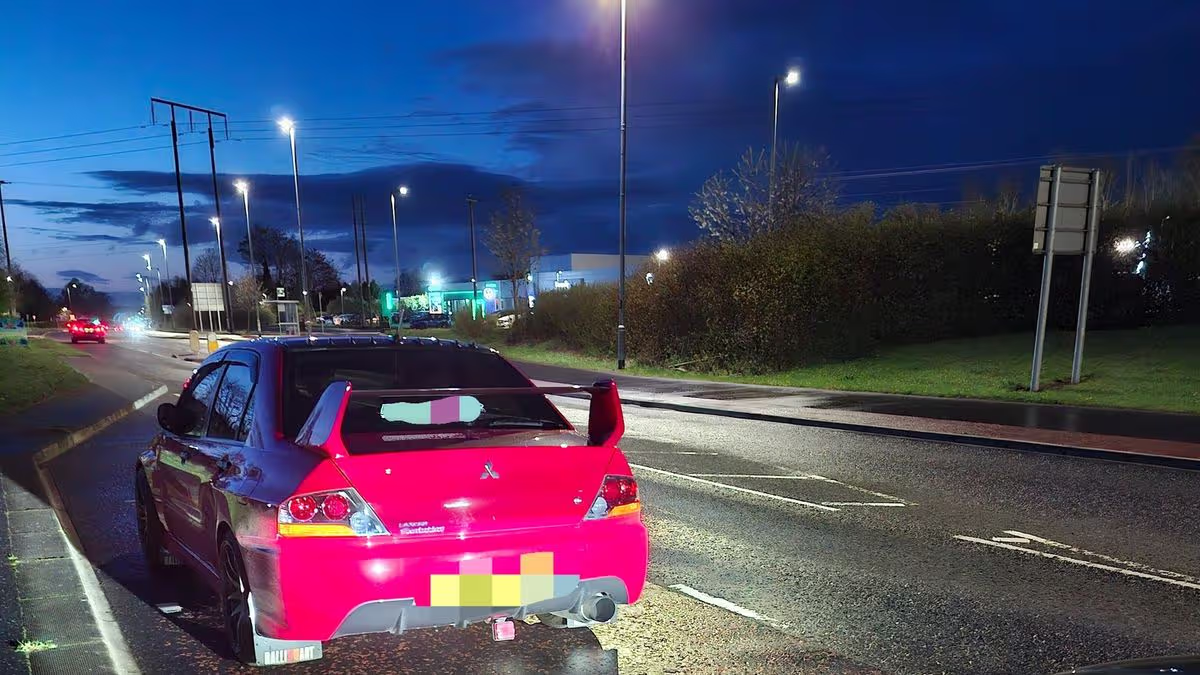
Police stopped a red Mitsubishi Evo that had been travelling at nearly double the speed limit for the road

A driver caught travelling over 135mph reportedly told officers they were “heading for a Chinese takeaway” and will soon have to explain their actions in court.

Advertisement

Police stopped a red Mitsubishi Evo after they were recording driving at speeds of over 135mph on the A26 Lisnevenagh Road and have said they were told the explanation for this was that the driver was going to a takeaway restaurant. Officers warned that the driver could face losing their licence when they later appear in court.

The incident took place as officers from the PSNI Road Policing Interceptors team were heading to the Kilrea area for a patrol on Friday, April 17, where they seized two other vehicles, a BMW and a Seat.

READ MORE: Police warning after multiple drink driving arrests in North DownREAD MORE: 8 cases before the courts in Northern Ireland this past week

The blue BMW was seized after police systems showed it had no insurance and later discovered the driver was currently banned from driving.

Advertisement

The black Seat Leon was seized close to the BMW after it was shown not to have valid insurance with the driver later telling officers they only had a provisional driving licence.

A PSNI spokesperson said: “Tonight officers from Road Policing Interceptors (Sprucefield) on patrol in the Kilrea area stopped the Blue BMW (pictured) as there were no policies of insurance showing on Police systems, on speaking with the driver it became apparent they were currently serving 2 periods of disqualification as well as driving without insurance. The driver will now have their day in Court to explain their actions. Their BMW was seized.

“Whilst waiting on recovery for the seized vehicle the Black Seat Leon was stopped in the same area as it also had no valid Insurance policies shown on our systems, in this instance the driver admitted no insurance and they also admitted only holding a Provisional driving licence, they’d also neglected to display any L plates on the car.

Advertisement

“They’ll also have a day in Court to explain their actions. This vehicle was also seized.

“Whilst travelling up to the Kilrea area earlier in the evening, one of our crews was passed by the pictured Red Mitsubishi Evo, the Evo’s speed was measured along the A26 Lisnevenagh Rd and at times the vehicle was travelling in excess of 135 mph, this is nearly double the permitted speed for the A26 dual carriageway – the drivers explanation . . . . they were heading for Chinese takeaway!!

“This driver will also have their day in Court and could possibly face disqualification.”

For all the latest news, visit the Belfast Live homepage here and sign up to our daily newsletter

Advertisement

Source link

Continue Reading

NewsBeat

WWE WrestleMania 42: UK start time, live stream, confirmed match card and results today

Published

on

WWE WrestleMania 42: UK start time, live stream, confirmed match card and results today

WrestleMania weekend is here as the two-night event begins in Las Vegas tonight.

The most anticipated WWE Premium Live Event (PLE) of the year is shaping up to be an unforgettable one.

Debuting on March 31 1985, WrestleMania is WWE’s annual flagship event and since 2020, the event has grown into a two night spectacle.

Source link

Continue Reading

NewsBeat

One dead and another person fighting for life after car ‘rams onto pavement’ | News World

Published

on

One dead and another person fighting for life after car 'rams onto pavement' | News World
Two pedestrians were hit, with one declared dead at the scene and the other suffering life-threatening injuries (Picture: Nine News)

One person has died and another is fighting for their life after a car swerved in Comic Con fans in Melbourne.

Fans standing outside the Supanova Comic Con at Melbourne Showgrounds were hit by a grey Toyota after it mounted the pavement at 5pm.

Two pedestrians were hit, with one declared dead at the scene and the other suffering life-threatening injuries.

A witness, Tom, told The Age: ‘I heard a screech and a guy (allegedly) mounted the kerb at an erratic speed, hit a couple people.’

Advertisement

The car reportedly did a U-turn and drove back down the street, stalled and a group of witnesses tried to apprehend them.

Tom said: ‘He was erratic. ‘I said, “you’re not going anywhere mate”.’

Sign up for all of the latest stories

Start your day informed with Metro’s News Updates newsletter or get Breaking News alerts the moment it happens.

Advertisement

Tom’s wife is a paramedic who worked on one of the victims for 20 minutes before ambulances arrived.

Melbourne Police said: ‘Major Collision Investigation Unit detectives are investigating a fatal collision in Ascot Vale this afternoon.

‘Police have arrested a man who will be interviewed by police. The circumstances surrounding the collision are yet to be established and the investigation remains ongoing.’

Advertisement

Get in touch with our news team by emailing us at webnews@metro.co.uk.

For more stories like this, check our news page.

Advertisement

Source link

Continue Reading

NewsBeat

When is WrestleMania 2026? Start time for WWE’s showpiece event tonight

Published

on

When is WrestleMania 2026? Start time for WWE’s showpiece event tonight

WrestleMania season is in full swing, with WWE’s showpiece event arriving at last.

This weekend, for the 42nd edition of WrestleMania, the professional-wrestling company is making the rare move of returning to the city that hosted last year’s event. That means WrestleMania 42 will take place at Allegiant Stadium in Las Vegas, with two nights of action scheduled in Sin City once more.

Many key names will compete, from Roman Reigns and CM Punk to Cody Rhodes and Randy Orton.

Former WWE champion Roman Reigns
Former WWE champion Roman Reigns (WWE)

There will be significant celebrity involvement, too, with wrestler-turned-actor John Cena hosting proceedings and IShowSpeed among several famous faces to feature.

Here’s all you need to know.

Advertisement

When is WrestleMania 42?

WrestleMania became a two-night event in 2020, and this year it will take place on Saturday 18 and Sunday 19 April at Allegiant Stadium in Las Vegas. In the US, each evening of action will begin at 4pm PT / 5pm CT / 6pm ET. In the UK, that works out to 11pm BST.

How can I watch it?

WrestleMania 42 will stream live on Netflix in the UK and most territories worldwide, as part of subscribers’ existing plans (at no additional cost, in other words). In the US, however, the event will air live on ESPN.

Advertisement

Confirmed matches

Night 1

Jey Uso, Jimmy Uso and LA Knight vs Logan Paul, Austin Theory and IShowSpeed

Drew McIntyre vs Jacob Fatu (Unsanctioned Match)

Advertisement

Lash Legend and Nia Jax (Women’s World Tag-Team Champions) vs Charlotte Flair and Alexa Bliss vs Bayley and Lyra Valkyria vs Nikki Bella and Brie Bella

AJ Lee (Women’s Intercontinental Champion) vs Becky Lee

Seth Rollins vs Gunther

Stephanie Vaquer (Women’s World Champion) vs Liv Morgan

Advertisement

Cody Rhodes (Undisputed WWE Champion) vs Randy Orton

Cody Rhodes (centre) lost last year’s Night 2 main event to John Cena
Cody Rhodes (centre) lost last year’s Night 2 main event to John Cena (Getty Images)

Night 2

Penta (Intercontinental Champion) vs Rey Mysterio vs JD McDonagh vs Rusev vs Je’Von Evans vs Dragon Lee (Ladder Match)

Brock Lesnar vs Oba Femi

Sami Zayn (United States Champion) vs Trick Williams

Advertisement

Jade Cargill (Women’s WWE Champion) vs Rhea Ripley

Finn Balor vs Dominik Mysterio

CM Punk (World Heavyweight Champion) vs Roman Reigns

Which celebrities will be involved?

Advertisement

YouTubers Logan Paul and IShowSpeed will compete, even teaming up together, while music star Jelly Roll will also feature in some capacity. The same applies to rapper Lil Yachty, while wrestler-turned-actor John Cena will act as the host of WrestleMania. NFL kicker-turned-sports analyst Pat McAfee is also expected to feature.

Cena will host this year’s ‘Mania, having retired from wrestling in December
Cena will host this year’s ‘Mania, having retired from wrestling in December (Getty Images)

How much do WWE stars earn at WrestleMania?

The specifics of WWE contracts have long been hard to ascertain. However, WWE star-turned-executive Triple H (real name Paul Levesque) told The Athletic in 2022 that $250,000 is the minimum base salary for wrestlers in the company. That figure might have risen since, of course, and it reportedly only applied to members of the Smackdown and Raw rosters – not wrestlers on NXT, which is WWE’s developmental show.

However, wrestlers’ wages are boosted by merchandise sales and, it is believed, by cuts of pay-per-view sales as well. Of course, merchandise sales are likely to be significant on a WrestleMania weekend, as well as pay-per-view sales, so 18 and 19 April could be the most lucrative days of the year for most WWE wrestlers.

In 2023, The Mirror reported some of the highest WWE wages as these: Roman Reigns $5m per year; Randy Orton $5m per year; Seth Rollins $3.5m per year; Cody Rhodes $3m per year; Logan Paul $2m per year. These figures reportedly don’t include bonuses.

Advertisement

Source link

Continue Reading

NewsBeat

Iran closes Strait of Hormuz again, issuing warning to Trump

Published

on

Manchester Evening News

Tehran has reimposed restrictions on ships travelling through the Strait of Hormuz claiming US ‘violation’

Tehran has rapidly reversed its decision to reopen the Strait of Hormuz, reimposing restrictions on the vital waterway after the US indicated that the reopening would not bring an end to its blockade of Iran-linked shipping.

Tehran’s joint military command announced on Saturday that its “control of the Strait of Hormuz has returned to its previous state… under strict management and control of the armed forces”.

It warned that it would continue to obstruct passage through the strait for as long as the US blockade of Iranian ports remained in place.

Advertisement

Click here for the latest on Greater Manchester’s politics in our newsletter

The statement came the morning after President Donald Trump declared that the American blockade “will remain in full force” until Tehran reaches a deal with the US, including on its nuclear programme.

The dispute over the crucial chokepoint threatened to worsen the energy crisis already weighing on the global economy, after oil prices began to slip again on Friday amid hopes that the US and Iran were edging closer to an agreement.

About a fifth of the world’s oil passes through the strait and further limits would squeeze already constrained supply, driving prices higher again.

Advertisement

Control over the strait has proven to be one Iran’s main points of leverage and prompted the US to deploy forces and initiate a blockade on Iranian ports as part of an effort to force Tehran to accept a Pakistan-brokered ceasefire to end almost seven weeks of war between Israel, the US and Iran.

Iran said it fully reopened the Strait of Hormuz to commercial vessels after a 10-day truce was announced between Israel and the Iranian-backed Hezbollah militant group in Lebanon, but after Mr Trump announced the blockade would continue, senior Iranian officials said his announcement violated last week’s ceasefire agreement between Iran and the US and warned the strait would not stay open if the US blockade remained.

Data firm Kpler said movement through the strait remained confined to corridors requiring Iran’s approval.

US forces have sent 21 ships back to Iran since the blockade began on Monday, US Central Command said.

Advertisement

Despite the escalation in the Strait of Hormuz, Pakistani officials say the US and Iran are still moving closer to a deal ahead of the April 22 ceasefire deadline.

Foreign minister Ishaq Dar said the ceasefire in Lebanon was a positive sign, noting that fighting between Israel and Hezbollah had been a key sticking point before talks in Islamabad ended “very close” to an agreement last weekend.

Pakistan’s army chief Field Marshal Asim Munir visited Tehran, while Prime Minister Shehbaz Sharif met Turkish President Recep Tayyip Erdogan and Qatar’s Emir Tamim bin Hamad Al Thani in Antalya, the military and Mr Sharif’s office said. Pakistan is expected to host a second round of talks between Iran and the US early next week.

Advertisement

The ceasefire in Lebanon could clear one major obstacle to an agreement, but it is unclear to what extent Hezbollah would abide by a deal it did not play a role in negotiating and which will leave Israeli troops occupying a stretch of southern Lebanon.

Mr Trump said in another post that Israel is “prohibited” by the US from further strikes on Lebanon and that “enough is enough” in the Israel-Hezbollah war.

The State Department said the prohibition applies only to offensive attacks and not to actions taken in self-defence.

Shortly before Mr Trump’s post, Israeli Prime Minister Benjamin Netanyahu said Israel agreed to the ceasefire in Lebanon “at the request of my friend President Trump”, but added that the campaign against Hezbollah is not complete.

Advertisement

He claimed Israel had destroyed about 90% of Hezbollah’s missile and rocket stockpiles and that Israeli forces “have not finished” with the dismantling of the group.

In Beirut, displaced families began moving towards southern Lebanon and Beirut’s southern suburbs despite warnings by officials not to return to their homes until it became clear whether the ceasefire would hold.

The Lebanese army and UN peacekeepers in southern Lebanon reported sporadic artillery shelling in some parts of southern Lebanon in the hours after the ceasefire took effect.

An end to Israel’s war with Hezbollah was a key demand of Iranian negotiators, who previously accused Israel of breaking last week’s ceasefire with strikes on Lebanon. Israel had said that deal did not cover Lebanon.

Advertisement

The fighting has killed at least 3,000 people in Iran, more than 2,290 in Lebanon, 23 in Israel and more than a dozen in Gulf Arab states. Thirteen US service members have also been killed.

Source link

Continue Reading

NewsBeat

Emergency services descend as boy hit by car on Oldham road

Published

on

Manchester Evening News

No arrests have been made

Police and paramedics descended after a young boy was hit by a car on a busy Oldham road. Emergency services attended Lees New Road on Friday evening (April 17).

Advertisement

Images showed multiple ambulances and Greater Manchester Police vehicles at the scene, before 9pm. GMP confirmed it was called out to the scene after an eight-year-old boy was hit by a vehicle.

His injuries are not thought to be serious, according to GMP. No arrests have been in connection with the incident.

Click here to get the biggest stories straight to your inbox in our Daily Newsletter

The incident came hours after emergency services had also attended a crash elsewhere in Oldham. Police and paramedics attended Oak Road, in Limeside, where a grey Renault Clio was severely damaged.

Advertisement

A 17-year-old boy was arrested on suspicion of dangerous driving. The victim was taken to hospital for treatment and later discharged, GMP said.

Source link

Continue Reading

NewsBeat

Cook crispy chips with ‘best flavour’ each time with one key ingredient

Published

on

Wales Online

A professional chef has explained how he used to make triple-cooked chips on an “industrial scale” — and explained that one ingredient would “give them the best flavour”

Adding a single ingredient to chips while cooking them will “give them the best flavour you could possibly get”, according to a professional chef. Will Murray, who co-runs Fallow, Roe and FOWL restaurants in London alongside fellow chef Jack Croft, recently took viewers through his method for making the “perfect” triple-cooked chips — a dish he maintains has its origins in Britain.

He revealed that he used to prepare them “a lot” during his time at Dinner by Heston Blumenthal, the celebrity chef’s namesake restaurant, though a “few things have changed” since those days.

Advertisement

Will shared his step-by-step guide on how to cook the beloved side dish in a video for the Fallow YouTube channel, explaining how he once produced them on an “industrial scale” — and revealing the one ingredient that would “give them the best flavour”.

He said: “We had to do it on an industrial scale, and a few things have changed since then. We actually found out a better potato to use than the one we used to use.

“Crucially, I’m going to use beef fat or beef dripping to give them the best flavour you could possibly get. If you wanted to do these at home: patience, a bit of fridge space, you could.”

He stressed that you “can’t make good chips” using a potato with an excessively high starch or sugar content, noting that he was using the Agria potato. While peeling them, he highlighted that this step was essential in achieving those desirable “ruffled edges”.

Will said: “You need to allow for at least 15 per cent of the potato to come away, and you’ll pretty much lose 15 per cent of the spud. That’s going to allow for these beautiful little sort of fissures all over your potato.”

As he rinsed the slices, Will observed that the starch had begun to come away. Agria potatoes, however, contain high levels of the enzyme amylase, which he noted “contributes to crispiness”, helping them to remain fluffy on the inside while developing a crisp exterior.

He cautioned that an excess of starch can be a “bad thing”, making it essential to strike the right balance — ensuring sufficient starch for crispiness, while avoiding too much, which can cause the chips to “brown” too quickly.

Advertisement

Will drained the water, then rinsed the chips until it ran clear. He then added salt to a pot of simmering water before placing the chips in, advising viewers to leave enough room in the pan so they could be moved around.

After around six or seven minutes, the ruffled edges should become visible, at which point the key is to continue stirring them gently “over and over again”.

Once 18 minutes had passed, Will switched off the hob and left the chips to sit and finish cooking through, carefully turning them with a wooden spoon.

Advertisement

He then carefully lifted the chips out using a ladle and arranged them on a tray, acknowledging that some may begin to break apart, though he noted the smaller fragments would be the “nice, crispiest bits”.

Will popped the chips into the freezer while he readied a pan for frying, choosing vegetable oil for the cook. Regarding temperature, he stated he would fry them at 120 to 140 degrees for approximately eight minutes.

At this stage, Will showed viewers the beef fat to be used for the final fry. He mentioned that most delis and butchers stock beef fat which you can render yourself, or alternatively dripping or lard.

He then retrieved the chips from the freezer for the first fry, observing that he’d “chilled them down” until cold, though he clarified that people at home could simply use their fridge for this step.

Advertisement

His oil sat at around 140 degrees, emphasising the need for a “gentle heat” and warning against overcrowding the pan. Will advised checking the chips don’t stick to the pan’s bottom, while cautioning that they’re “delicate”.

Fry the chips for eight to 10 minutes before lifting them from the pan (though he acknowledged his took 12 minutes owing to the pan’s size), noting they shouldn’t have “lots of colour” at this stage.

Will returned the chips to the freezer to cool while he prepared for the subsequent fry. He then incorporated beef fat into the oil (using a one-to-four ratio of beef fat to oil) and heated it to 180 degrees.

He placed the cooled chips into the pan, remarking that the final fry would take between four and five minutes. Finally, Will removed the chips and seasoned them with fine salt, explaining it’s best done while they’re hot.

Advertisement

Source link

Continue Reading

Trending

Copyright © 2025