



Connect with us

Tech

Three Modern Cafe Bikes Made Me Question My Yamaha XSR900, But One Thing Held Me Back

Published

on


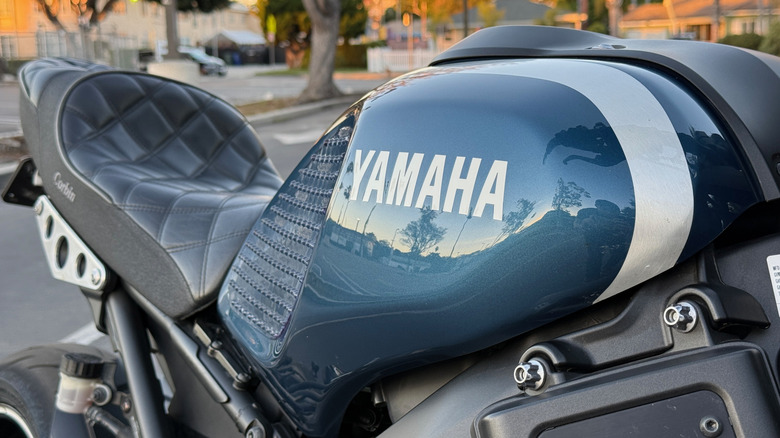
My Yamaha XSR900 is a real hoot. It’s powerful, it sounds amazing, and it’s properly fast. But it’s getting old. I bought my 2017 XSR from the first owner a few years ago, and it’s got over 20,000 miles on the odometer. In the next few years I’ll likely see some serious value drop out of the bike if I continue to tack on the miles and maintenance costs will continue to rise. 

So, it’s time to commit to one of two ideas: Buy a new bike, or keep riding the old one for the foreseeable future. And with so many excellent café-styled bikes on the market now, there’s a lot to choose from. In the last few years, there’s been a pretty significant expansion of the café bike trend. Many manufacturers have leaned into the idea that people like classic, round-headlight styling, but they want it paired with legit performance and modern features.

Advertisement

How I tested these four bikes

To see what was out there, and what stood a chance of replacing my XSR, I hit up a few motorcycle manufacturers and asked what they had in the fleet that fit my needs: Café motorcycle looks, but with modern tech. Fun to ride, but reasonably priced. 

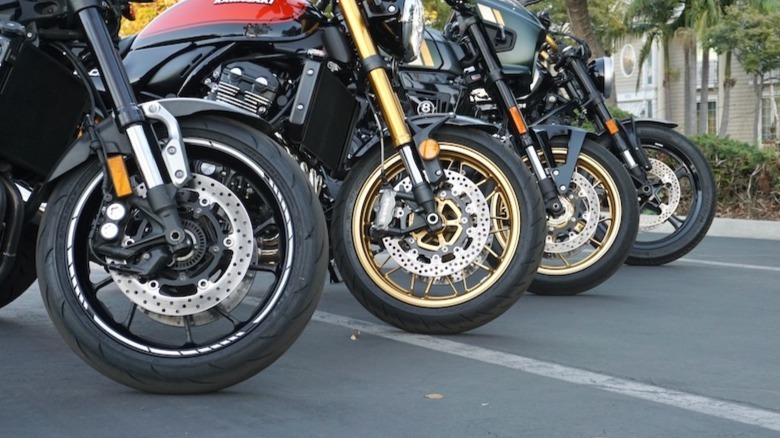
The bikes that fit my needs (and were available for testing) are as follows: BMW R 12, Suzuki GSX-8TT, and Kawasaki Z900RS. So, it was a four-bike test to see what could potentially replace a bike I love. 

Back-to-back-to-back-to-back. I rode the BMW, Kawasaki, Suzuki, and Yamaha bikes you see here for a few weeks, rotating between each model and familiarizing myself with the controls, quirks, and features. Then, I spent a weekend riding them all on the same canyon routes, about 100 miles at a time, to see how they stacked up on my local roads. I wanted to see what they were like to live with and what sort of fun I could have on each bike — and what it would cost me to upgrade.

Advertisement

Pricing out the rivals

I bought my XSR used, so the price I paid for it isn’t really a fair yardstick by which to judge the other bikes. The current XSR900 is a better starting point, coming in at $11,299 (including $700 destination fee). The modern but classically-styled Kawasaki Z900RS SE has an MSRP of $15,439, while the base trim non-SE model will set you back $13,739. 

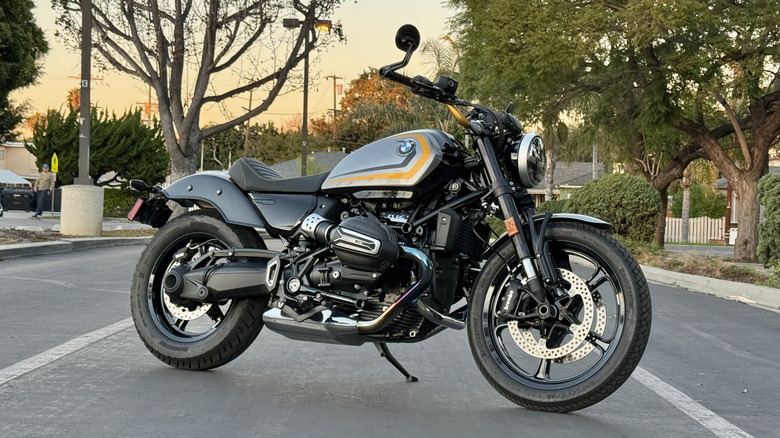
The BMW R 12 has some serious heritage, and it has a base MSRP of $13,640, but the options on the model you see here brought it up to $17,359. That doesn’t put it completely out of range as a rival of the XSR, but it makes it a reach — still, it was definitely on my list of potential replacements. 

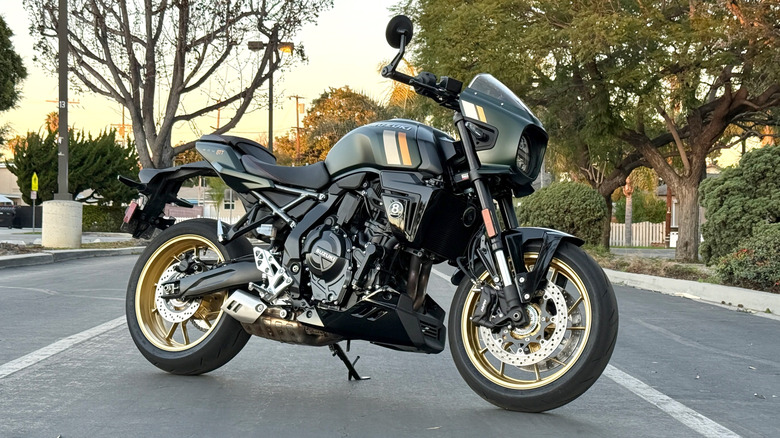
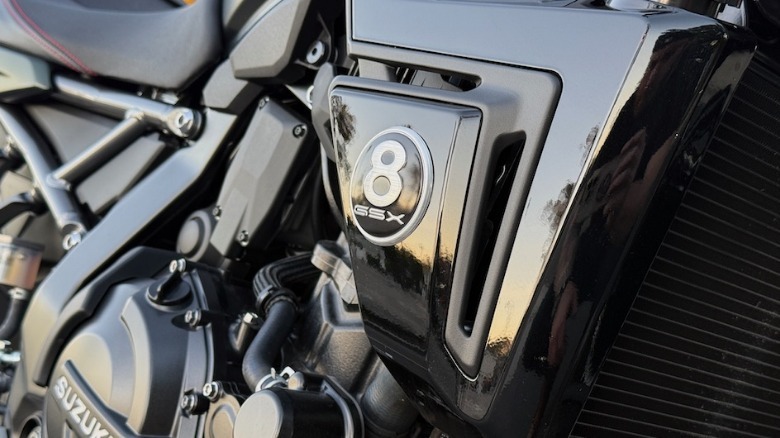
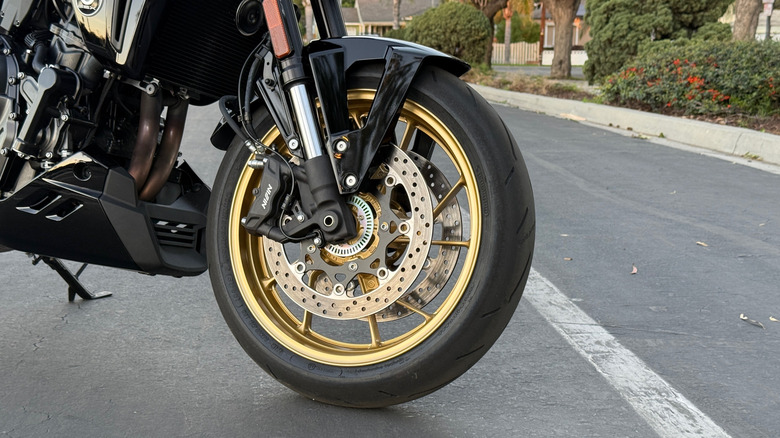
The Suzuki GSX-8TT has an MSRP of $11,849, though there is a version called the GSX-8T that’s slightly lower at $11,349, but it’s missing the headlight cowl and the gold wheels.

Advertisement

What I liked about the BMW R 12

The BMW felt extremely well built, using excellent materials everywhere. Every time I swung my leg over the seat, I felt like I was riding an ultra-premium product. Up close, it’s one of the best-looking bikes on the road today. The upfront pricing might scare some people off, but it’s worth the extra cash. 

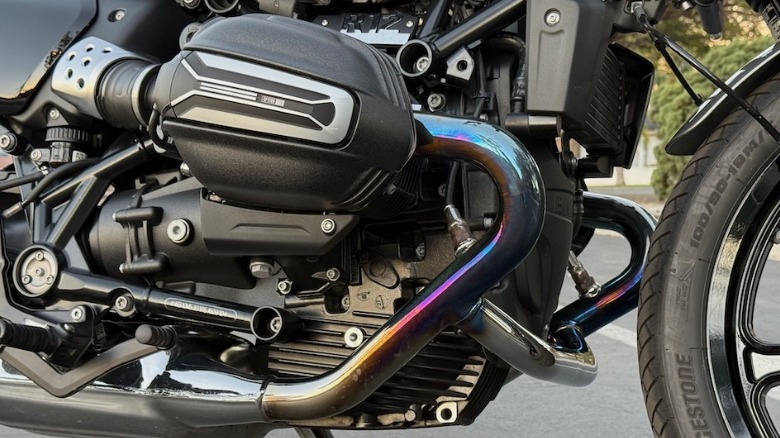
The R 12 is powered by a two-cylinder 1,170cc boxer engine that makes 95 horsepower and 81 lb-ft of torque. The back-and-forth rumble provided by the flat twin boxer engine is utterly unique. At stoplights, the bike felt like it was rocking back and forth, idling like a child on a swing that rocks to build momentum before jumping off.

Advertisement

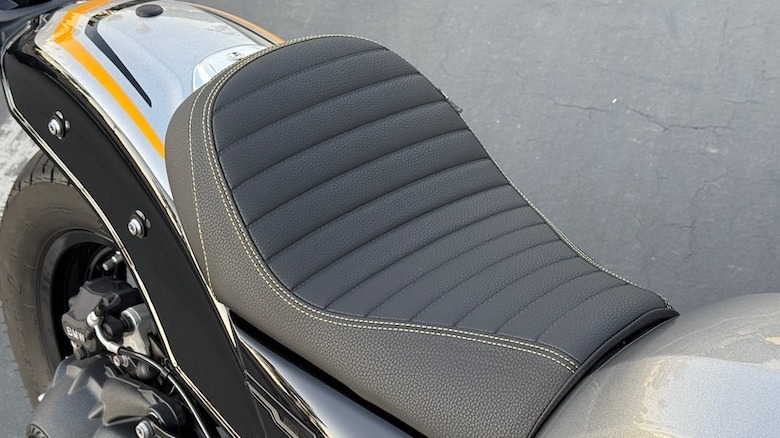
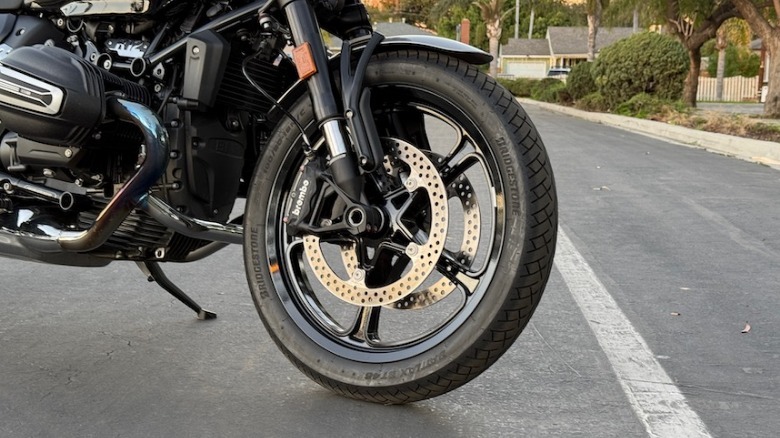
The thick-sidewall tires gave the BMW some small-pothole-absorption capabilities, but the ride was rough over larger road imperfections. Thankfully, the seat is made of thick and forgiving materials, so a long ride doesn’t wear you down much. The Brembo brakes felt excellent — quick to respond, even if the BMW’s weight added some stopping distance.

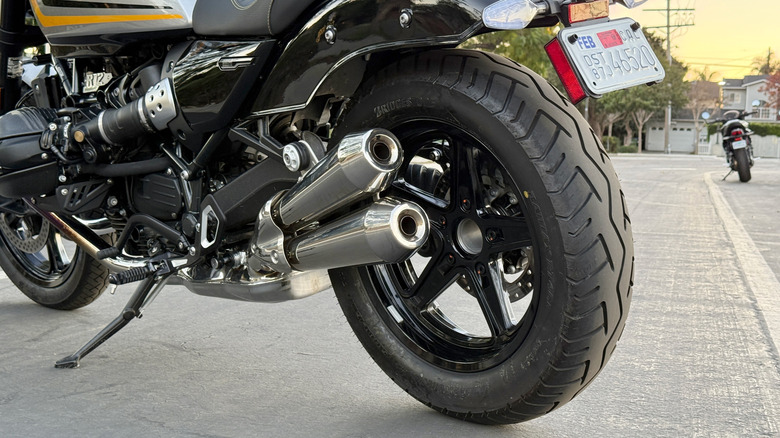
Stable at speed, and maneuverable for its size, the BMW felt good stitching a few corners together. It’s also plenty low enough that I can flat-foot it while stopped (the seat height is just 29.7 inches), but the low ride height meant it was the only bike of the bunch to scrape during my test.

Things about the R 12 that weren’t so impressive

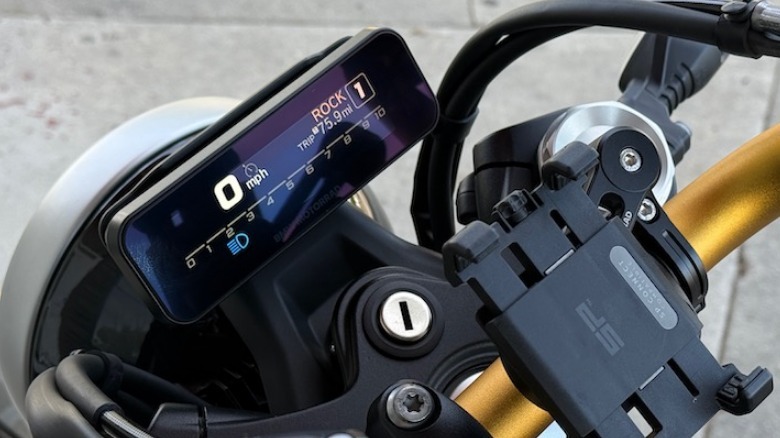
The R 12’s engine felt so wide that I had to double-check to make sure it didn’t outsize the handlebars. Splitting lanes and fitting into tight spaces felt particularly precarious, based solely on the engine’s large footprint. The BMW is also missing a temp gauge and a fuel gauge, both of which could easily be displayed on the digital readout, but they simply aren’t. Really, there isn’t much in the way of information on the small display, other than RPMs and riding mode.

The single-sided swingarm is an excellent aesthetic, and the paralever brace is a unique suspension setup, but with just 3.5 inches of suspension travel, those large imperfections mentioned earlier can bounce you around a bit. The BMW is also the heaviest of the bunch, with a 500-pound curb weight to throw around. 

The BMW’s quick shifter is a bit delayed sometimes, too. From the time my foot performed a shift request at the foot lever to the time I felt the bike make the physical shift in the transmission, there was often a one-Mississippi count to fill the time delay.

Advertisement

The Kawasaki Z900RS makes a strong case for itself

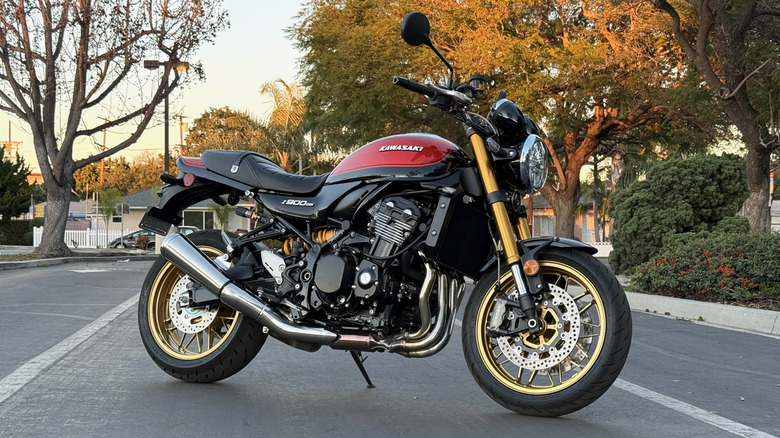
With four-cylinder power, the Kawasaki has the smoothest powerband of all the bikes assembled here. Power comes on in a linear and predictable fashion when you twist the throttle. The 948cc inline four-cylinder makes 115 horsepower and 73 lb-ft of torque, which is a match for my XSR, but no matter what scenario I was in, it never felt snappy or scary. The resonance of the Kawasaki’s four-cylinder engine is excellent, too. Aside from my modified Yamaha, the Kawi is the best-sounding bike of the bunch.

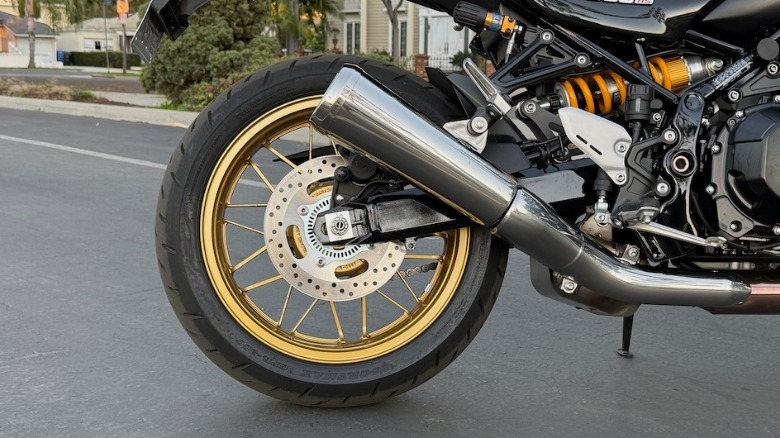
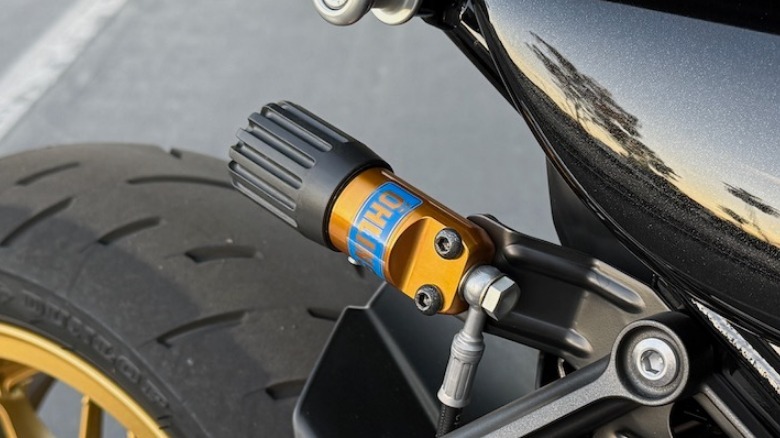
The Z900RS’ highly-adjustable Öhlins suspension was also a highlight of the test. The bike turned in with ease, tracked well through corners, and absorbed mid-corner bumps without any detectable disturbance from the seat. The seat was excellent too — perfectly shaped and well-padded for long rides. 

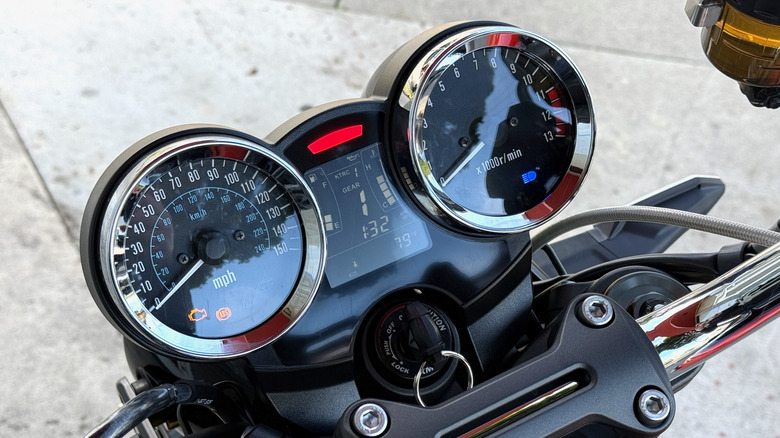
Styled after the classic Z1, the Z900RS really looks the part of a café bike. Of the three new bikes in this test, it’s the only one without a proper TFT screen. Instead, it gets a pair of gauges with a small digital readout between them, so it feels a bit more nostalgic, but that does introduce a small issue.

Advertisement

The Z900RS has very few drawbacks

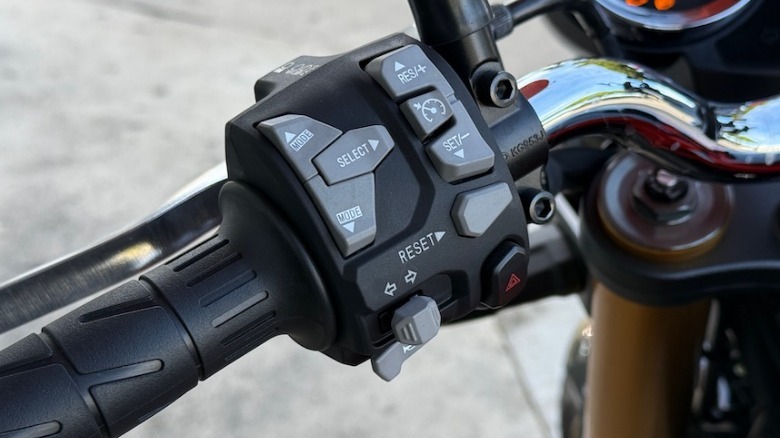
There’s not a lot to complain about with the Z900RS. It’s mostly competent in the areas where it isn’t masterful. The tall mirrors look a bit silly, but that’s an easy fix on the aftermarket. The biggest gripe I have is with the mismatched look and feel of some of the controls. The cruise control buttons and various other handlebar controls feel out of place on such a classic-looking bike.

The small digital readout between the two analog gauges feels squeezed in, with a completely different style than the rest of the bike. The big cruise-control buttons feel the same way. I get it – Kawi has to put some modern tech on this bike, but I’d almost prefer a stripped-down version without those features to make the view forward a bit better. That said, the cruise control did work well during my test, taking away some riding fatigue on open stretches of highway.

Advertisement

A strong entry from the Suzuki GSX-8TT

At just 445 lbs, the GSX-8TT is nimble and light on its feet. It moves extremely well through corners, though some of that is likely attributed to the aftermarket tires fitted to the test bike Suzuki let me ride. The 776cc parallel-twin engine puts out just 82 hp and 57 lb-ft, but it’s an excellent fit for this bike, providing torque low in the rev range, and enough top-end power for faster maneuvers on the highway. On the highway and between lanes, the GSX-8TT feels narrow. It’s thin enough to slice-and-dice traffic with no issues.

On the highway and over rougher city streets, the Suzuki was unbothered by bumps and cracks in the pavement. The seat, while basic, is comfortable enough for long rides. Even with mid-corner bumps, the GSX-8TT felt stable.

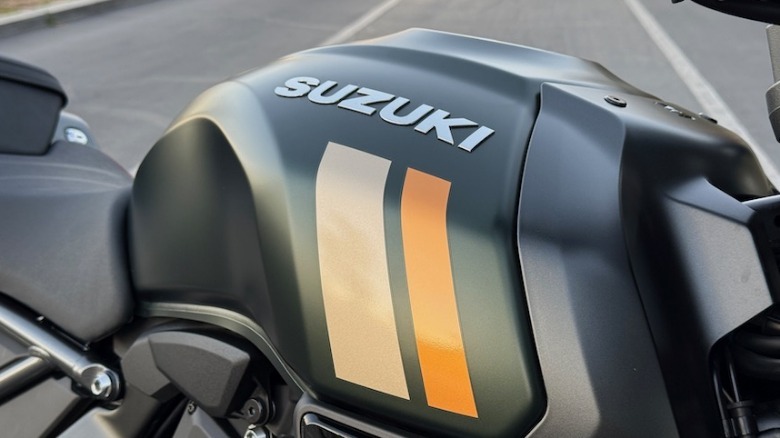
Aesthetically, Suzuki nailed it with the GSX-8TT. The Pearl Matte Shadow Green paint contrasted with the gold wheels is a timeless combination. The small stripes give it a bit of extra flare without looking gaudy, and the lower cowl rounds out the look of a bike that feels modded directly from the factory. For less than $12k, this is one hell of a bike.

The Suzuki GSX-8TT is good, but not perfect

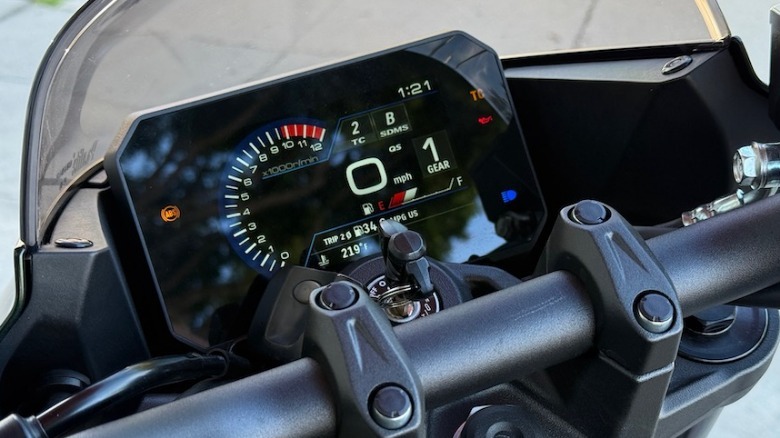
The GSX-8TT was probably my favorite of the three competitors I lined up to potentially replace my Yamaha. Like the XSR, the GSX felt playful and eager to perform. It had a nice combination of modern and classic vibes, without feeling like it was faking its aesthetic. The 5-inch TFT screen was the best of the bunch, with high contrast graphics and a display that didn’t wash out in heavy sunlight (helped by the headlight cowl, no doubt).

Unfortunately, the brakes on the GSX-8TT were the least confidence-inspiring of the bunch. Both the front and rear levers felt a bit spongy, with poor feedback for a bike that felt so impressive otherwise. The bike required much more brake pressure than any of the other three to bring it to a similar stop. It’s possible that this was an issue of boiled brake fluid from a previous rider (these media-loan bikes see some serious abuse), but if that’s the way the bike rides from the factory, it’s something I’d need to address right away.

Advertisement

The joys of a modified bike

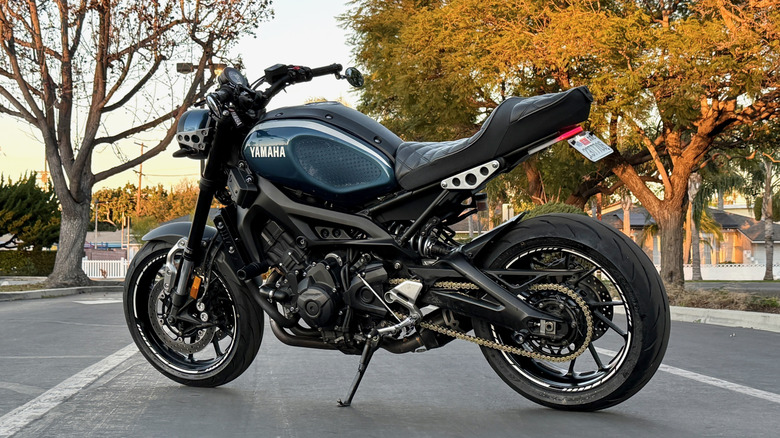
It’s always hard to let go of a vehicle you’ve modified, so I figured listing what I like about my bike would help me be a bit more objective. Even before I started messing with it, this Yamaha XSR900 had a rowdy character. The 847cc three-cylinder engine feels like it wants you to wheelie every time you set off. The most aggressive ride modes are twitchy.

Yamaha doesn’t list horsepower numbers for the XSR, but according to most sources, it’s around 115 hp: still enough to keep up with all the modern bikes on this list (and the new version is only up to 117 hp, according to UK specs). And even before I started doing things like removing the passenger pegs, the XSR900 was light for its class, with a weight of just 430 lbs when stock (the 2026 model weighs just 425 lbs). It makes its way between corners with an urgency that none of the other bikes quite matched. Turn in is light and immediate with the XSR, which is part of what makes it such a versatile bike.

Advertisement

My XSR could use some updates

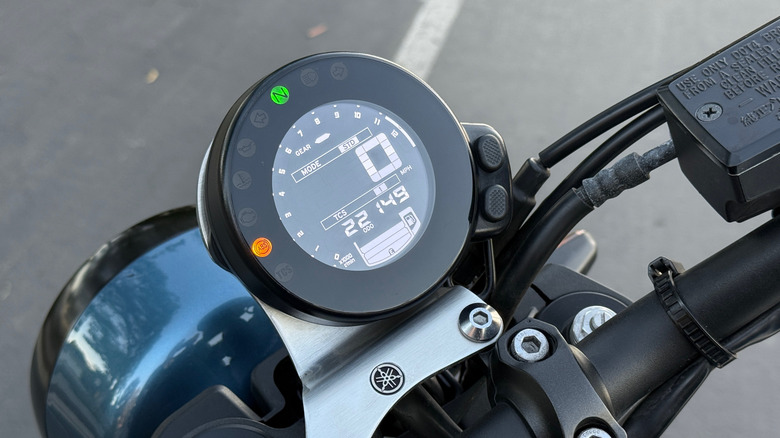
Being an older version of the XSR, my bike is missing some modern features. It doesn’t have the modern bike’s TFT screen (it’s just a simple digital readout), nor does it have the larger-displacement version of the CP3 engine, so it’s down on power a bit. Plus, my older XSR is missing a quick shifter. I might eventually install one, but the newest Yamaha has a quick shifter as part of the package.

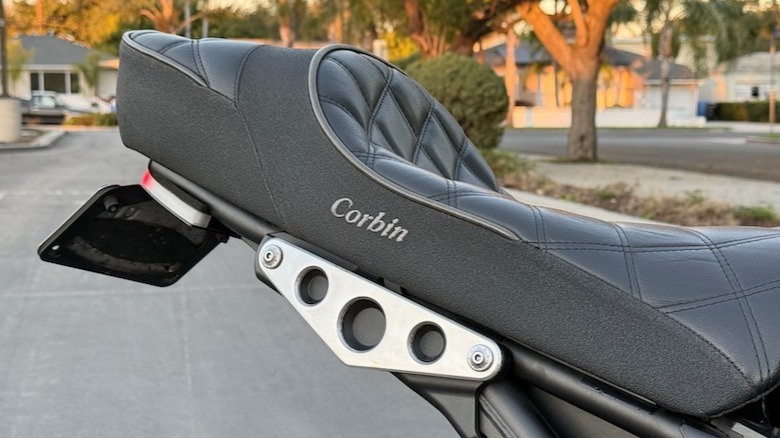
Having sat on a new XSR, it also has a better seat. I love the comfort that the Corbin seat provides on long rides, but it’s a bit too wide. Even though it’s set at a proper height, the width of the seat makes it harder for me to place my feet flat at a stoplight. 

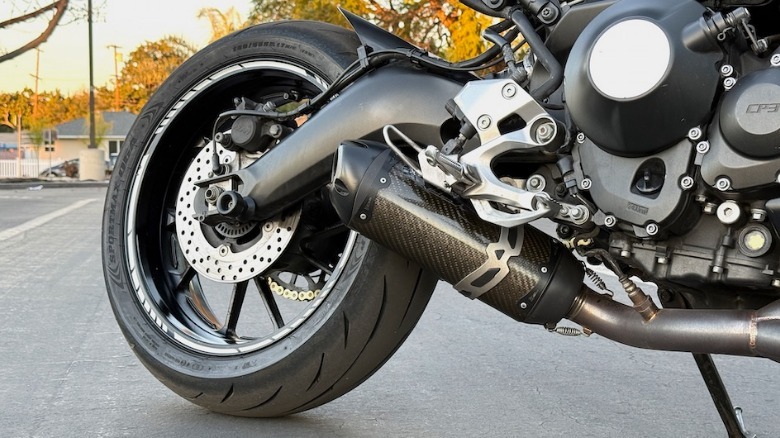
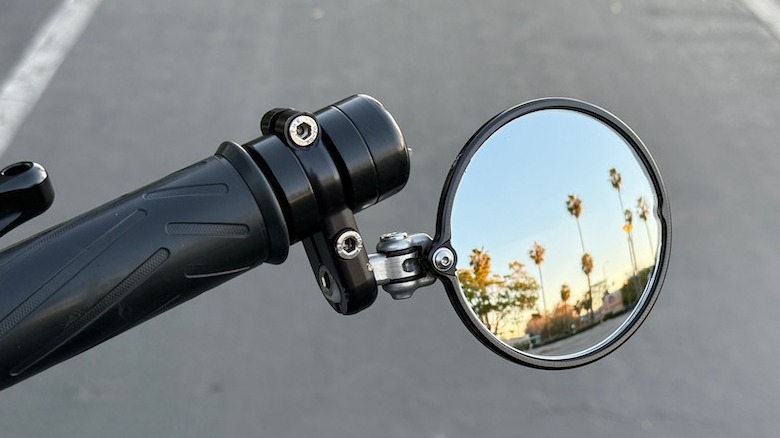
The aftermarket mirrors are great for splitting lanes. I can quickly fold them in, making the bike instantly a few inches narrower for fitting in tight spaces, but they’re small and sometimes hard to see — ah, the trade-offs we make for aesthetics.

Advertisement

The verdict: Best big café bike

Every bike here was extremely good in its own unique way, and all three of the rival bikes gave me inspiration for modification of my own Yamaha. I’ll probably be powder coating my wheels gold and adding some suspension upgrades very soon. But none of the other bikes were so earth-shatteringly good that I wanted to get rid of mine, which probably means that the latest XSR 900 would win this test too. Of the four, the Kawasaki was the most enjoyable to ride, and the Suzuki presented the best value for money; the BMW felt special, but the riding experience didn’t justify its big price tag.

These aren’t the only bikes in the class, though. There are all sorts of café-styled bikes available from Triumph, Royal Enfield, and even a few Hondas, potentially landing in the U.S. in the near future. Maybe it’s worth repeating this test with a few of those British bikes in the near future (my DM’s are open to Triumph and Royal Enfield loans). Did somebody say annual café bike round-up?


Advertisement

Source link

Continue Reading
Click to comment

Leave a Reply

Your email address will not be published. Required fields are marked *

Tech

Vivo teases the most powerful camera phone ever with a 400mm telephoto lens accessory, but it is just a gimmick?

Published

on


  • Vivo revealed its new X300 Ultra phone at MWC
  • The device comes with a 400mm telephoto lens accessory
  • But the leaked Oppo Find X9 Ultra could soon be a strong rival

When people talk about the best camera phones, they usually have something like Apple’s iPhone 17 Pro Max or Samsung’s Galaxy S25 Ultra in mind — you know, a normal-looking phone with an advanced-yet-unobtrusive camera system on the back. Well, the Vivo X300 Ultra is about to blow all of those expectations away.

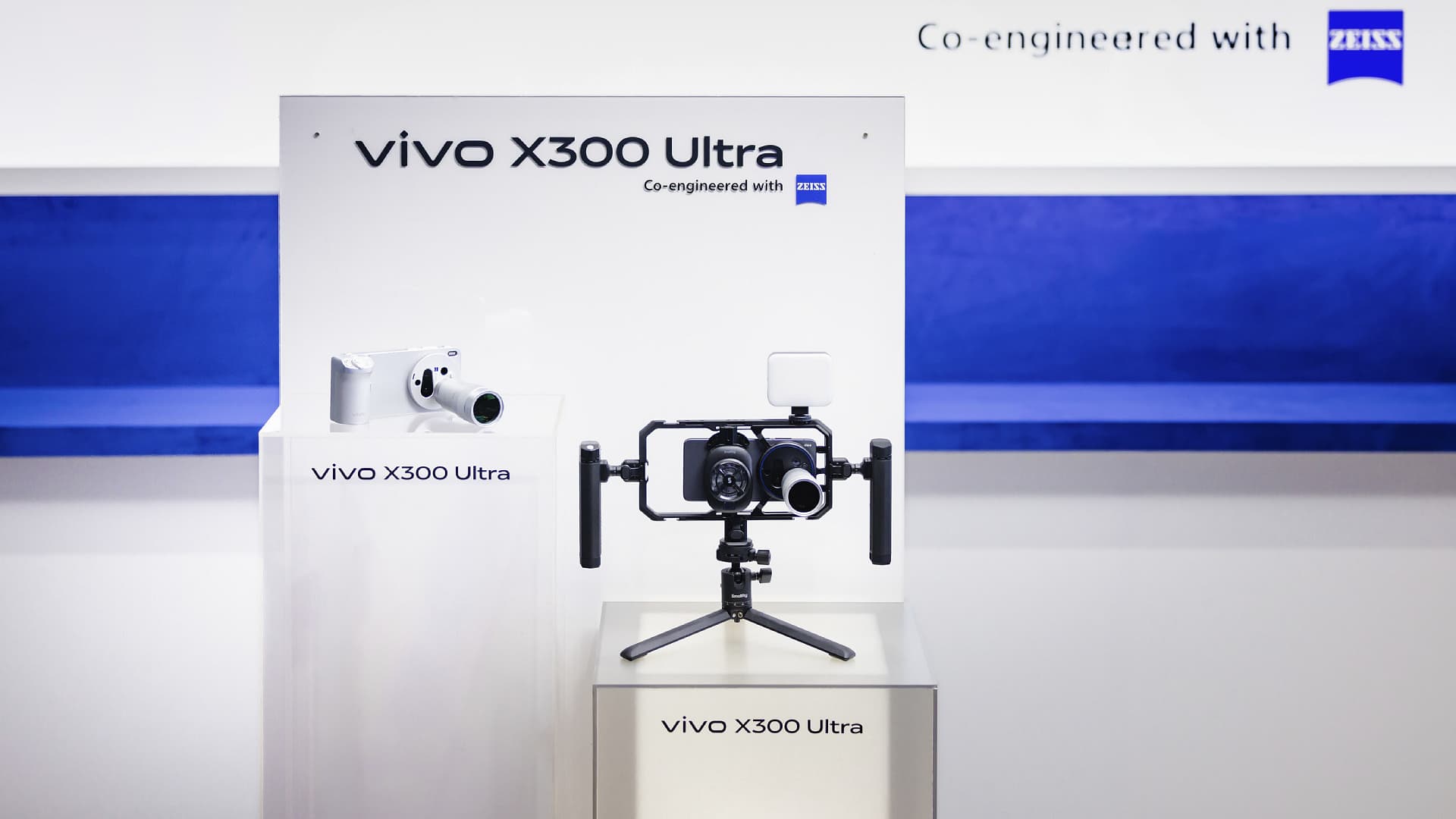
Revealed at MWC 2026, Vivo says this device is equipped with a 200-megapixel lens, matching that of last year’s X200 Ultra. But what really catches the eye is the optional 400mm-equivalent Telephoto Extender Gen2 Ultra. This is a clip-on lens made by Zeiss that adds serious zoom capabilities to the phone.

Source link

Continue Reading

Tech

Irish data security start-up Evervault raises $25m

Published

on

The funding will be used to expand Evervault’s encryption infrastructure, invest in product development, and grow its engineering and product teams.

Evervault, a data encryption start-up founded by Irishman Shane Curran, has raised $25m in Series B funding.

The round was led by Ribbit Capital, with participation from Sequoia Capital, Index Ventures, Kleiner Perkins, Next Play Ventures and new investors including Operator Partners. The new round brings the start-up’s total funding to date to $46m.

Evervault builds developer infrastructure to collect, process and share sensitive data.

Advertisement

The New York and Dublin-based company helps businesses to encrypt and orchestrate sensitive data without ever handling it in plaintext.

“Most compliance frameworks assume sensitive data will exist in plaintext somewhere, but with automated, high-velocity data exchange, that’s a liability,” said Curran, who is also CEO of the company.

“At Evervault, we believe sensitive data should be treated like hazardous material. Systems must be designed so it isn’t touched in the first place.”

Evervault has initially focused on card payments security with a solution that combines encryption with 3D-Secure authentication, network tokens and card data enrichment in a single integration, along with streamlining payment card industry (PCI) compliance.

Advertisement

The company claimed that on average, its solution helps customers cut PCI data security standard compliance costs by $100,000, achieve compliance 95pc faster and ship secure payment systems “in days rather than weeks”.

The start-up said that since its establishment, it has processed more than $5bn in transaction volume and secured more than four times year-over-year revenue growth.

“Our mission isn’t just about payments,” said Curran in a blogpost announcing the raise yesterday (5 March). “We’re building the trust layer for the internet: a global clearinghouse for sensitive data. A place where companies can share, enrich and route information without taking custody of it. We’re replacing contractual trust with cryptographic guarantees.”

The new funding will be used to expand Evervault’s encryption infrastructure, invest in product development, and grow its engineering and product teams, according to the start-up.

Advertisement

Founded in Dublin in 2019, Evervault’s roots can be traced back to the 2017 BT Young Scientist & Technology Exhibition where Curran took home the top prize for his project qCrypt, which was a quantum-secure, encrypted data storage solution with multi-jurisdictional quorum sharing.

Two years later, Evervault secured $3.2m in seed funding, before going on to raise $16m in Series A funding.

Curran previously spoke to SiliconRepublic.com’s Ann O’Dea at a Future Human pop-up event in 2020, where he discussed his experience as a young entrepreneur and the Irish business contingent in Silicon Valley.

Don’t miss out on the knowledge you need to succeed. Sign up for the Daily Brief, Silicon Republic’s digest of need-to-know sci-tech news.

Advertisement

Source link

Continue Reading

Tech

Netflix’s version of Overcooked lets you play as Huntr/x

Published

on

Netflix’s library of streamable party games is expanding today with a custom version of Overcooked! All You Can Eat. Netflix launched its cloud gaming program with games like Lego Party and Tetris Time Warp, but Overcooked feels a bit unique because it features a roster of Netflix-affiliated characters from KPop Demon Hunters and Stranger Things.

For the uninitiated, Overcooked plays like a more manic version of Diner Dash, where teams attempt to prepare food together in increasingly elaborate kitchens filled with obstacles. The original version of Overcooked! All You Can Eat was released in 2020, and includes DLC and stages from previous versions of the game. Netflix’s version bundles in the same content, and “10 Netflix celebrity chefs” including “Dustin, Eleven, Lucas, and the Demogorgon from Stranger Things,” and “half-dozen faces from KPop Demon Hunters,” like “Mira, Rumi, Zoey, Jinu, Derpy and Sussie.” Like Netflix’s other streaming games, playing Overcooked also requires you to use a connected smartphone as a controller.

Offering a growing library of streaming games is part of Netflix’s new strategy under Alan Tascan, a former executive from Epic Games. Tascan took over as Netflix’s President of Games in 2024, and appeared to start revamping the company’s plans not long after, cancelling the release of several mobile games and reportedly shutting down its AAA game studio. Netflix is also continuing to adapt video games into content for its platform. For example, A24 is reportedly developing a game show based on Overcooked for the streaming service.

Source link

Advertisement
Continue Reading

Tech

Valve doesn’t sound confident the Steam Machine will ship in 2026

Published

on

As part of a Year in Review blog detailing changes Valve made to Steam in 2025, the company shared a minor update on its hardware plans that doesn’t sound good for anyone hoping to buy a Steam Machine, Steam Controller or Steam Frame in 2026. Specifically, the company is now opening up the possibility its new hardware won’t ship this year at all.

In February, when Valve acknowledged the ongoing memory and storage shortage had delayed the launch of its hardware and could lead to higher prices, the company was still committing to a (fairly wide) window of when its hardware would ship:

“Our goal of shipping all three products in the first half of the year has not changed. But we have work to do to land on concrete pricing and launch dates that we can confidently announce, being mindful of how quickly the circumstances around both of those things can change.”

As of the company’s latest post, however, things somehow sound even less certain. “We hope to ship in 2026, but as we shared recently, memory and storage shortages have created challenges for us,” Valve wrote in its Year in Review post. “We’ll share updates publicly when we finalize our plans!”

While Valve’s air of secrecy can make it easy to read too much into the limited information the company does share, moving from “the first half of the year” to “[hoping] to ship in 2026” certainly gives it wiggle room to not release new hardware this year. And considering the difficulties other companies are facing sourcing memory and storage, it wouldn’t be all that surprising.

Advertisement

HP said in February that RAM accounts for a third of its PC costs, and industry analysts expect the RAM shortage could radically alter the PC landscape as companies are forced to raise prices. Valve’s already struggling to keep the Steam Deck in stock due to its issues securing RAM, it stands to reason sourcing components for even more devices wouldn’t make that process any easier. Then again, the company hasn’t updated its launch timing FAQ, so there’s still reason to hope the Steam Machine ships in 2026.

Source link

Continue Reading

Tech

One Sailing Pulley To Rule Them All

Published

on

When thinking of humanity’s ability to harness wind energy, many people will conjure images of windmills from places like The Netherlands or Persia. But people have been using wind energy for far longer than that in the form of sailing ships. Using the wind for transportation goes back another four thousand years or so, but despite our vast experience navigating the seas with wind alone there is still some room for improvement. Many modern sailboats use a number of different pulleys to manage all of the rigging, but this new, open-source pulley can replace many of them.

The pulley, or “block” as they are sometimes called, is built with a polymer roller made out of a type of nylon, which has the benefit of being extremely durable and self-lubricating but is a bit expensive. Durability and lack of squeakiness is important in sailing applications, though. The body is made from CNC-machined aluminum and is composed of two parts, which pivot around the pulley’s axis to allow various ropes (or “lines”) to be inserted without freeing one end of the rope. In testing, this design outperformed some proprietary stainless steel pulleys of similar size.

Another perk of this design is that it can be set up to work in many different applications on a sailboat, whether that’s for hoisting a mainsail or pulling in a jib or any other task a pulley could be used for. It can also be stacked with others in many different configurations to build custom pulleys of almost any type, and can support up to 14 mm lines. For a sailor this could be extremely valuable, because as it stands each pulley on a ship tends to be used in only certain applications, and might also be proprietary from a specific company. This pulley is being released into the open-source world, allowing anyone to create them who wants one.

Advertisement

Thanks to [Keith] for the tip!

Advertisement

Source link

Continue Reading

Tech

Seagate is now shipping HAMR disk drives holding up to 44TB of data

Published

on


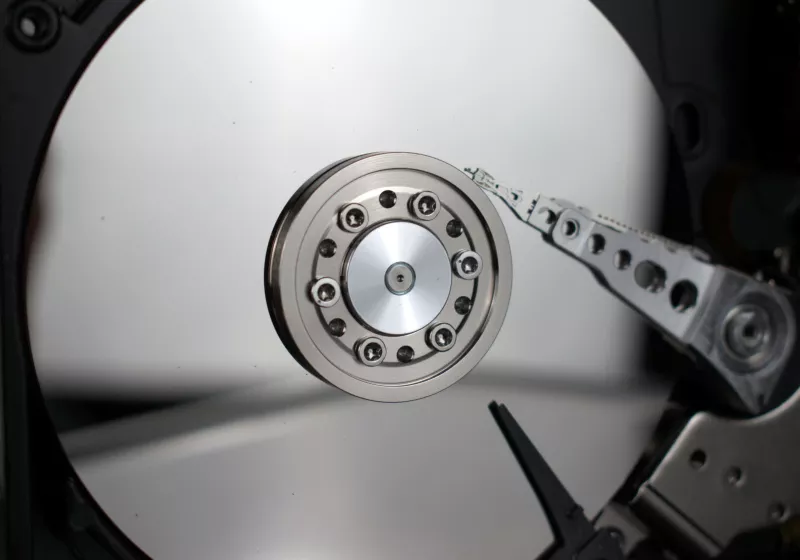
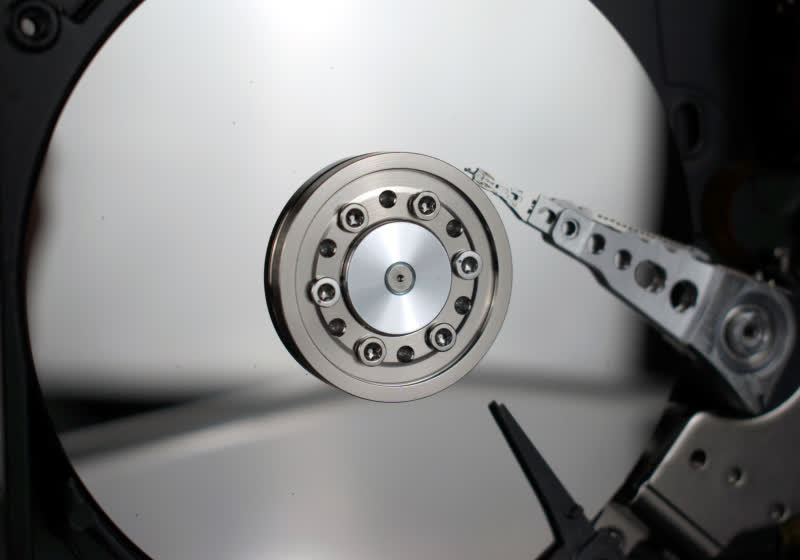
Seagate introduced the Mozaic 3+ platform in 2024, turning the heat-assisted magnetic recording (HAMR) dream into a real product for customers in need of massive storage capacities. The HDD maker is now introducing the next-generation Mozaic 4+ drives, which offer capacities up to 44TB.
Read Entire Article
Source link

Continue Reading

Tech

Apple thinks it can lure in the 'Apple curious' for $599

Published

on

Apple has made it pretty clear that it wants to siphon off Android and Windows users, and it’s doing it by adopting an aggressive, “budget-friendlier” model across nearly its entire ecosystem.

Large bold blue price text reading $599 with layered rainbow-colored shadows on a solid black background
Apple is using $599 devices to grow its ecosystem

When I first entered the Apple ecosystem, it was when I bought an iPhone 4 in 2011 — I got it right after the 4s made its debut. I don’t remember exactly what I paid, but I know it was less than the initial $199 price tag.
And back then, I thought that was a completely asinine amount of money to pay for a phone. Fortunately, or maybe unfortunately, I had more money in my pocket than brains in my head, so I bought it just the same.
Continue Reading on AppleInsider | Discuss on our Forums

Source link

Continue Reading

Tech

Anthropic will fight US ‘supply chain risk’ designation in court

Published

on

Anthropic confirmed it has been designated a ‘supply chain risk’ by the US administration, and said it has no choice but to challenge in the courts.

Despite ongoing talks between Anthropic and the US Department of Defense, Anthropic confirmed last night it had received a letter from defense secretary Pete Hegseth confirming the ‘supply chain risk’ designation that had been threatened.

“Yesterday (March 4) Anthropic received a letter from the Department of [Defense] confirming that we have been designated as a supply chain risk to America’s national security,” wrote co-founder and CEO Dario Amodei last night in an official statement. “We do not believe this action is legally sound, and we see no choice but to challenge it in court.”

Amodei was quick to point out that “even supposing it was legally sound”, the limited application of the designation means the “vast majority” of its customers will be unaffected by the move. He said the restriction clearly only applied to the use of Claude by customers as a direct part of contracts with the US defense department, “not all use of Claude by customers who have such contracts”.

Advertisement

“The Department’s letter has a narrow scope, and this is because the relevant statute is narrow, too,” wrote Amodei. “It exists to protect the government rather than to punish a supplier.”

As with previous statements, Amodei strikes a conciliatory tone, saying Anthropic is committed to US national security and will offer continuing support from its engineers to ensure a smooth transition from Claude “for as long as we are permitted to do so”.

Anthropic drew the ire of the US administration after a standoff with the Pentagon, where Anthropic refused to change its safeguards related to using its AI for fully autonomous weapons, or for mass surveillance of US citizens.

With many in Silicon Valley supporting its relatively principled stand, and general users sending it to the top of the US Apple charts in recent days for free downloads – beating OpenAI’s ChatGPT for the first time – its flagship Claude.ai and Claude Code apps went down for around three hours on 2 March due to “unprecedented demand”.

Advertisement

Claude Cowork in particular was already becoming the darling of AI enthusiasts in the professional world, and Bloomberg reported on Tuesday that Anthropic was on track to generate annual revenue of almost $20bn, more than double its run rate from late 2025, signalling the rapid growth at the AI company which is today valued at around $380bn.

Don’t miss out on the knowledge you need to succeed. Sign up for the Daily Brief, Silicon Republic’s digest of need-to-know sci-tech news.

Source link

Advertisement
Continue Reading

Tech

Tinder settles age discrimination lawsuit for $60 million, see if you qualify for a payout

Published

on


According to the plaintiff, Tinder charged users aged 29 and older more for premium subscriptions such as Tinder Plus and Tinder Gold, while offering cheaper rates for the same services to users in their teens and 20s. The lawsuit claimed the tiered pricing model violated multiple California laws, including the…
Read Entire Article
Source link

Continue Reading

Tech

Cognizant TriZetto breach exposes health data of 3.4 million patients

Published

on

Cognizant TriZetto breach exposes health data of 3.4 million patients

TriZetto Provider Solutions, a healthcare IT company that develops software and services used by health insurers and healthcare providers, has suffered a data breach that exposed the sensitive information of over 3.4 million people.

The firm, which has been operating under the Cognizant umbrella since 2014, disclosed that it detected suspicious activity on a web portal on October 2, 2025, and launched an investigation with the help of external cybersecurity experts.

The investigation revealed that unauthorized access began nearly a year before, on November 19, 2024.

During the exposure period, the threat actors accessed records relating to insurance eligibility verification transactions, which are part of the process providers use to confirm a patient’s insurance coverage before treatment.

Advertisement

The types of data that have been exposed vary per individual, and may include one or more of the following:

  • Full names
  • Physical address
  • Date of birth
  • Social Security number
  • Health insurance member number
  • Medicare beneficiary identifier
  • Provider name
  • Health insurer name
  • Demographic, health, and insurance information

Affected providers were alerted on December 9, 2025, but customer notification started in early February 2026. According to a filing Maine’s Attorney General submitted today, the number of exposed individuals is 3,433,965.

TriZetto says that payment card, bank account, or other financial information was not exposed in this incident.

Also, the company is not aware of any cases where cybercriminals have attempted to misuse this information.

TriZetto says it has taken steps to strengthen cybersecurity on its systems and informed law enforcement authorities of the incident.

Advertisement

Notification recipients are offered free 12-month coverage of credit monitoring and identity protection services from Kroll to help mitigate risks arising from compromised data.

BleepingComputer has contacted TriZetto to learn more about the nature of the security breach and why the firm delayed notifications to consumers for several months, but we have not received a response by publication time.

No ransomware groups have taken responsibility for the attack yet, and no data leaks linked to TriZetto have appeared on underground forums.

Cognizant itself was rumored to have suffered a Maze ransomware breach in 2020. In June 2025, Clorox sued the IT firm for gross negligence after it allegedly let Scattered Spider operatives into its network following a social engineering attack in September 2023.

Advertisement

Malware is getting smarter. The Red Report 2026 reveals how new threats use math to detect sandboxes and hide in plain sight.

Download our analysis of 1.1 million malicious samples to uncover the top 10 techniques and see if your security stack is blinded.

Source link

Continue Reading

Trending

Copyright © 2025