Genesco Inc. (GCO) Q4 2026 Earnings Call March 6, 2026 8:30 AM EST
Company Participants
Jason Ware Mimi Vaughn – Chairman, President & CEO Cassandra Harris – Consultant & Principal Accounting Officer
Conference Call Participants
Advertisement
Mitchel Kummetz – Seaport Research Partners Joseph Civello – Truist Securities, Inc., Research Division Samuel Poser – Williams Trading, LLC, Research Division Mantero Moreno-Cheek – Jefferies LLC, Research Division
Presentation
Operator
Advertisement
Good day, everyone, and welcome to the Genesco Fourth Quarter Fiscal 2026 Conference Call. Just a reminder, today’s call is being recorded. I’ll now turn the call over to Jason Ware, Vice President of FP&A and Investor Relations. Please go ahead, sir.
Jason Ware
Good morning, everyone and thank you for joining us to discuss our fourth quarter fiscal 2026 results. Participants on the call expect to make forward-looking statements reflecting our expectations as of today, but actual results could be different. Genesco refers you to this morning’s earnings release and the company’s SEC filings including its most recent 10-K and 10-Q filings for some of the factors that could cause differences from the expectations reflected in the forward-looking statements made today.
Advertisement
Participants also expected to refer to certain adjusted financial measures during the call. All non-GAAP financial measures are reconciled to their GAAP counterparts in the attachments to this morning’s press release and in schedules available on the company’s website in the Quarterly Results section. We have also posted a presentation summarizing our results here as well.
With me on the call today is Mimi Vaughn, Board Chair, President and Chief Executive Officer; and Sandra Harris, Senior Vice President of Finance and Chief Financial Officer.
Now I’d like to turn the call over to Mimi.
Advertisement
Mimi Vaughn Chairman, President & CEO
Good morning, everyone, and thank you for joining our fourth quarter earnings call. Let me begin by
The Dow Industrials slid 1.6%, nearly 800 points, while U.S. crude jumped 8.5% to $81.01 a barrel, its highest price since July 2024 and its biggest one-day jump since 2020. Brent crude, the global benchmark, climbed above $85.
The Dow dropped 785 points, or 1.6%. A late rebound lifted the index from an 1,100-point hole. The S&P 500 fell 0.6%. The Nasdaq Composite dropped 0.3%.
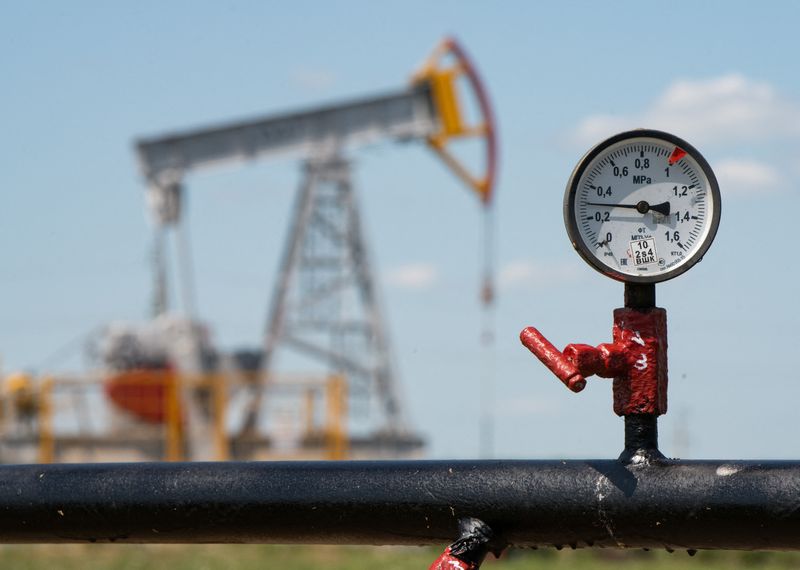
West Texas Intermediate crude oil futures spiked 8.5% to $81.01 a barrel, which is its biggest one-day percentage gain since May 14, 2020, and its highest settlement since July 18, 2024, according to Dow Jones Market Data. Brent crude oil futures, the international benchmark, rose 4.9% to $85.41 a barrel.
Mumbai: The Indian rupee could trade firmly below ’92 per dollar if the US-Israel war on Iran is prolonged. Rising oil prices and its impact on the fiscal deficit could also have a 0.2% to 0.4% impact on inflation, Bank of Baroda economists said in a webinar. Economists expect a 0.5% impact on India’s GDP due to higher crude prices assuming that there is a 10% rise in the commodity’s prices.
“It all depends on how long this war will last. If it is long drawn, there will be an impact on growth because of issues linked to supply, then there will also be an impact on the external trade and exports,” said Madan Sabnavis, chief economist at Bank of Baroda.
The bank still expects the rupee to trade in the Rs 91 per dollar to Rs 92 per dollar band. On Friday, the rupee ended at 91.74/$1, down 14 paise from its previous close of 91.60/$1, despite strong intervention by the Reserve Bank of India in both the spot market as well as the offshore non deliverable forwards market. It had sunk to a record low of 92.30/$1 on Wednesday due to heightened pressures from geopolitical crisis. For India, which imports more than 89% of its crude, the supply disruption could impact the financial markets and real economy, as 60% of India’s crude passes through the Gulf of Hormuz.
Crude futures rise to their highest settle level since July 2024 as the armed conflict in the Persian Gulf disrupts supply and raises concerns it will lead to production shut-ins as regional storage facilities fill up.
WTI settles up 8.5% at $81.01 a barrel, its sharpest single-day gain in almost six years. Brent rises 4.9% to $85.41 a barrel.
“With an end to the conflict not in sight, additional crude price strength would appear to lie ahead and should this conflict extend through next week, a WTI advance in the $95 area is certainly within realm of possibility,” Ritterbusch and Associates says in a note.
“While significant uncertainty remains about the path forward, from a markets perspective, we believe developments in the Middle East remain in an escalation phase and warrant ongoing caution,” said Morgan Stanley’s strategists, including Jonathan Garner, in a note to clients.
The brokerage said India’s improved macroeconomic stability position leaves it less exposed to higher oil prices than historically, but concerns around the fallout of the AI-related disruptions remain. “With uncertainty also still swirling around AI disruption and absolute valuations still expensive, we expect it will take some time – and potentially a peak in the tech cycle for Korea and Taiwan -before international investors reposition towards India,” said Morgan Stanley.
The brokerage said India, Thailand, Korea and Taiwan would be more exposed to growth risks on account of their wider oil and gas balances, while the Philippines, Indonesia and India may face some pressures from wider current account deficits.
Advertisement
“Asia/ EM equities stand at a crucial juncture here, with a baseline of multi-week shipping disruption and uncertainty, and risks of an escalation scenario featuring disruptions more acute than 2022 (which were more concentrated in European energy markets),” said Morgan Stanley. The brokerage said MSCI Asia Pacific fell by 16% between March and July 2022 in the wake of the Russia-Ukraine conflict and energy market impacts, before stabilising briefly, and then falling further amid a global equity correction and tech down-cycle.
Frito-Lay is pulling select bags of potato chips from store shelves after discovering they may contain an undeclared allergen.
The recall covers certain 8-ounce bags of Miss Vickie’s Spicy Dill Pickle Potato Chips that may have mistakenly included jalapeno-flavored chips containing milk, according to a notice Wednesday from the U.S. Food and Drug Administration (FDA).
Advertisement
“Those with an allergy or severe sensitivity to milk run the risk of a serious or life-threatening allergic reaction if they consume the recalled product,” the notice said.
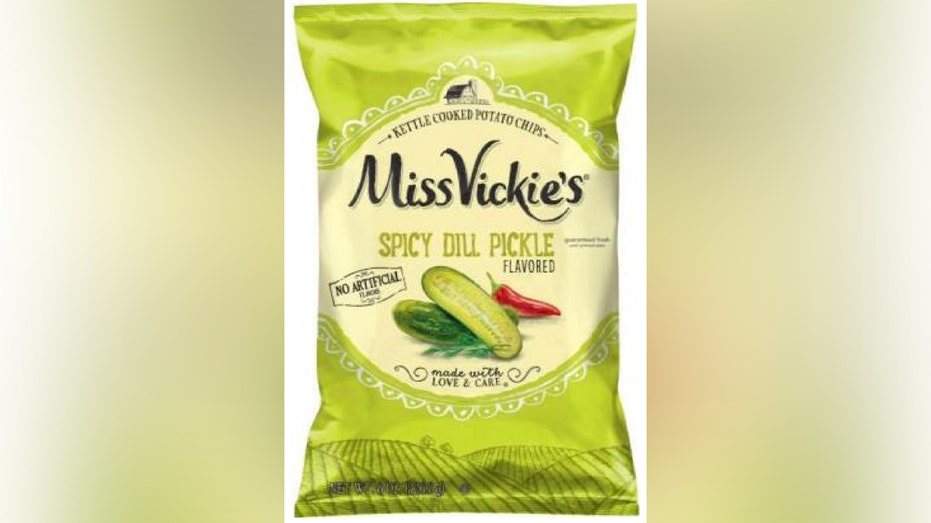
Frito-Lay is pulling select bags of Miss Vickie’s Spicy Dill Pickle Potato Chips from store shelves after discovering some may contain an undeclared allergen. (U.S. Food and Drug Administration)
The affected bags were distributed as early as Jan. 15 to grocery, convenience and drug stores — as well as online retailers — in Arkansas, Louisiana, Mississippi, New Mexico, Oklahoma and Texas.
No other Miss Vickie’s flavors, sizes or variety packs are included in the recall.
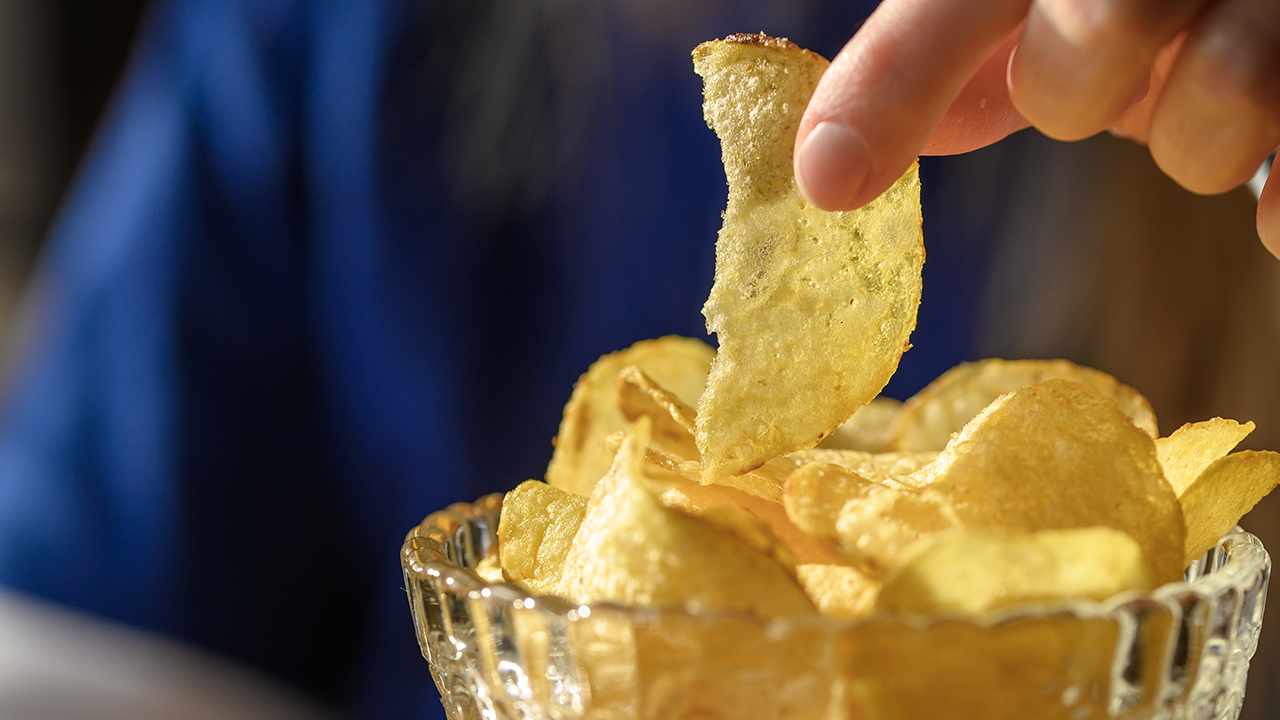
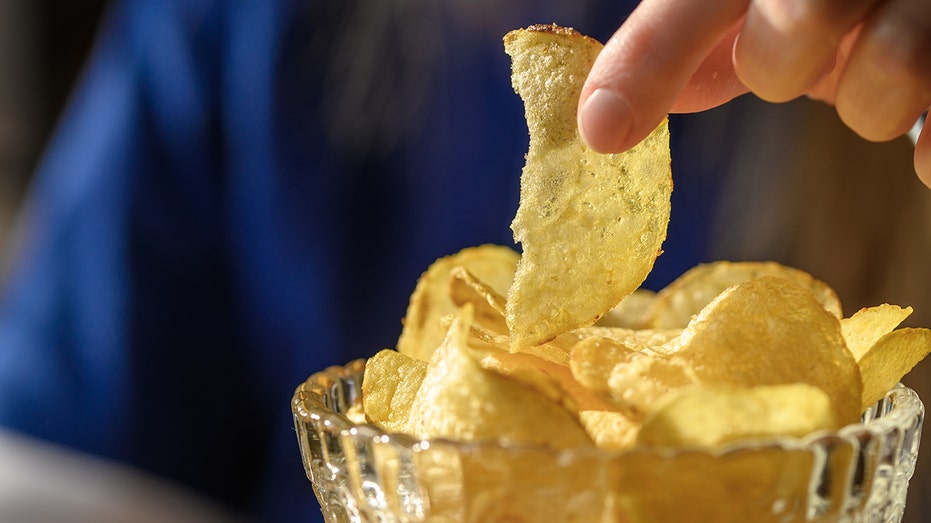
Affected bags were distributed as early as Jan. 15 to stores in Arkansas, Louisiana, Mississippi, New Mexico, Oklahoma and Texas. (iStock / iStock)
Consumers should check for 8-ounce bags of Miss Vickie’s Spicy Dill Pickle chips with a UPC of 0 28400 761772, a “Guaranteed Fresh” date of April 21, 2026 and one of two manufacturing codes — 38U301414 or 48U101514.
The codes appear on the front of the bag along the right side.
“If consumers have an allergy or sensitivity to milk, they should not consume the product and discard it immediately,” the notice said.
Shares of The Coca-Cola Company (NYSE: KO) declined modestly Friday, March 6, 2026, trading around $76.75 to $77.03 midday, down approximately 0.3% to 1.4% from Thursday’s close of $77.03 to $78.10 in recent sessions, reflecting a broader pullback from February’s all-time highs near $82 amid ongoing consumer budget pressures and geopolitical volatility.
Coca-Cola
The Atlanta-based beverage giant opened near $76.80 to $77.68, with intraday ranges from lows around $76.35-$76.50 to highs of $76.90-$77.72. Volume remained elevated at over 3-23 million shares in early trading, consistent with recent activity. The stock has now retreated about 6% from its February 27 peak of $81.56-$82.00, its highest close in recent history, but remains up roughly 10% year-to-date in 2026 and about 10-12% over the past year.
The dip follows a strong but volatile start to the year, with KO hitting record territory in late February before softening. Analysts attribute the recent weakness to macro headwinds, including higher energy costs from Middle East tensions and cautious consumer spending in key markets like North America and Asia. Despite these pressures, Coca-Cola’s defensive profile — bolstered by pricing power, brand strength and consistent dividends — continues to attract income-focused investors.
The company reported fourth-quarter and full-year 2025 results on February 10, 2026, showing resilience amid softer soda demand in developed markets. Net revenues grew 2% to $11.82 billion in Q4, missing some estimates of over $12 billion, while organic revenues (non-GAAP) rose 5%, driven by 4% price/mix growth and 1% volume increase. Comparable EPS grew 6% to $0.58, with full-year comparable EPS up 4% to $3.00 and reported EPS surging 23% to $3.04 due to one-time factors.
For 2026, management guided organic revenue growth of 4%-5%, in line with or slightly below 2025’s 5% pace, alongside expected EPS growth of 7%-8%. The outlook reflects confidence in pricing strategies to offset input costs, though executives noted challenges from inflation-squeezed budgets pushing consumers toward cheaper alternatives. Rival PepsiCo’s recent price cuts on snacks highlighted competitive dynamics in the broader consumer packaged goods space.
Advertisement
Coca-Cola’s dividend remains a cornerstone appeal. The company announced its 64th consecutive annual increase in early 2026, with the forward yield around 2.67% at current levels (quarterly dividend $0.515, annualized $2.06). The ex-dividend date is March 13, 2026, drawing income investors amid market uncertainty. The low payout ratio provides room for future hikes, supporting its Dividend King status.
Analyst sentiment stays positive, with a consensus Buy rating from 13-16 firms. Average 12-month price targets range from $80.58 to $84.33, implying 4-10% upside from current levels, with highs up to $87. Firms like Citi maintain Buy calls, citing durable brand equity and digital transformation efforts. Some models suggest potential for $95 in optimistic scenarios, driven by sustained mid-single-digit growth.
Market capitalization hovers around $330-335 billion. The stock trades at a forward P/E in the mid-20s, reasonable for a stable consumer staple with predictable cash flows. Year-to-date performance of about 10% outpaces the S&P 500’s modest gains, underscoring KO’s defensive appeal in volatile times.
Broader influences include participation in the Citi 2026 Global Consumer & Retail Conference on March 9, where CFO John Murphy is scheduled to present, potentially offering fresh insights on strategy. The company continues emphasizing innovation in low- and no-sugar options, ready-to-drink teas and sustainability initiatives to adapt to shifting preferences.
Advertisement
Despite the pullback, Coca-Cola’s fundamentals remain solid: global reach, pricing discipline and a fortress balance sheet position it well for economic uncertainty. With earnings due April 28, 2026, investors will watch for signs of volume stabilization and margin resilience.
As trading continues, the stock’s modest decline reflects short-term caution rather than fundamental concerns. Long-term holders value its reliability, while new buyers may see the dip as an entry point for a blue-chip dividend play.