Trump previously claimed the “big wave hasn’t even happened”
Carrington Walker and Eliana Nunes News Reporter
18:42, 06 Mar 2026
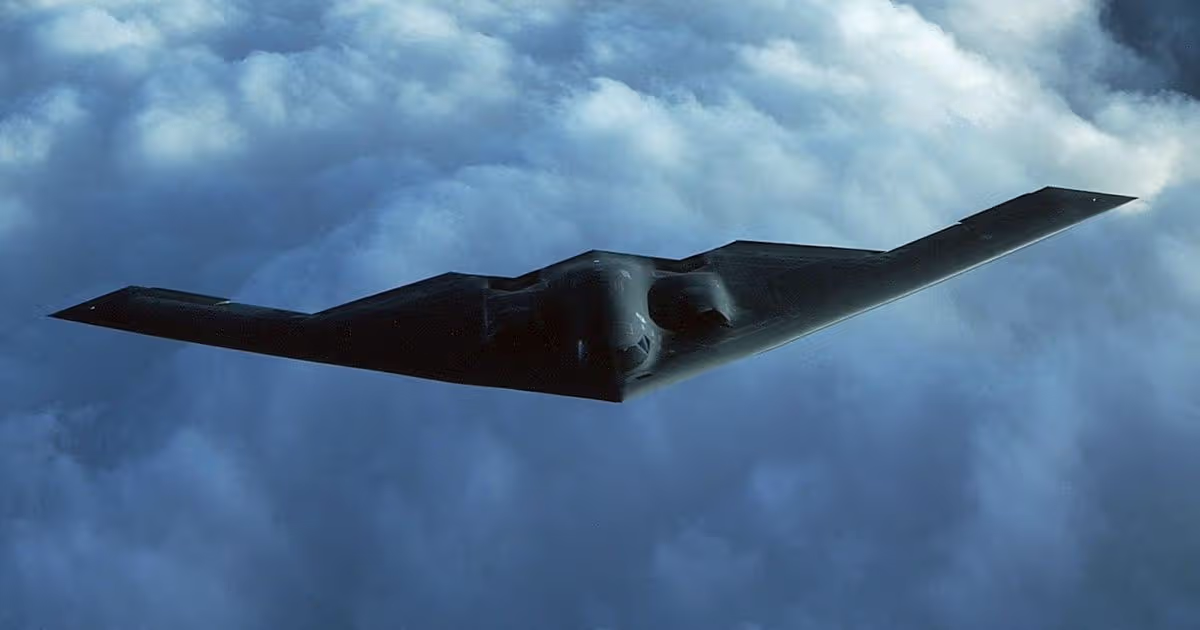
Donald Trump has reportedly dispatched B-2 stealth bombers, the world’s most expensive warplanes, to UK bases for use in Iran.
The heavy strategic bombers will arrive at Diego Garcia, in the Chagos Islands, which has sparked a rift between Trump and Prime Minister Sir Keir Starmer over the latter’s deal to transfer sovereignty of the archipelago to Mauritius while securing a 99-year lease to operate the military base.
Advertisement
RAF Fairford, in Gloucestershire, will also see the B-2 stealth bombers this week, The Telegraph reports.
The move follows Trump’s words that Iran will soon be hit with a devastating wave of strikes. “We haven’t even started hitting them hard. The big wave hasn’t even happened. The big one is coming soon,” Trump said on Monday (March 2).
B-2 stealth bombers cost about $2 billion each, making them the world’s most expensive aircraft, according to Fox News.
Advertisement
Ensure our latest stories always appear at the top of your Google Search by making us a Preferred Source. Click here to activate or add us as your Preferred Source in your Google search settings.
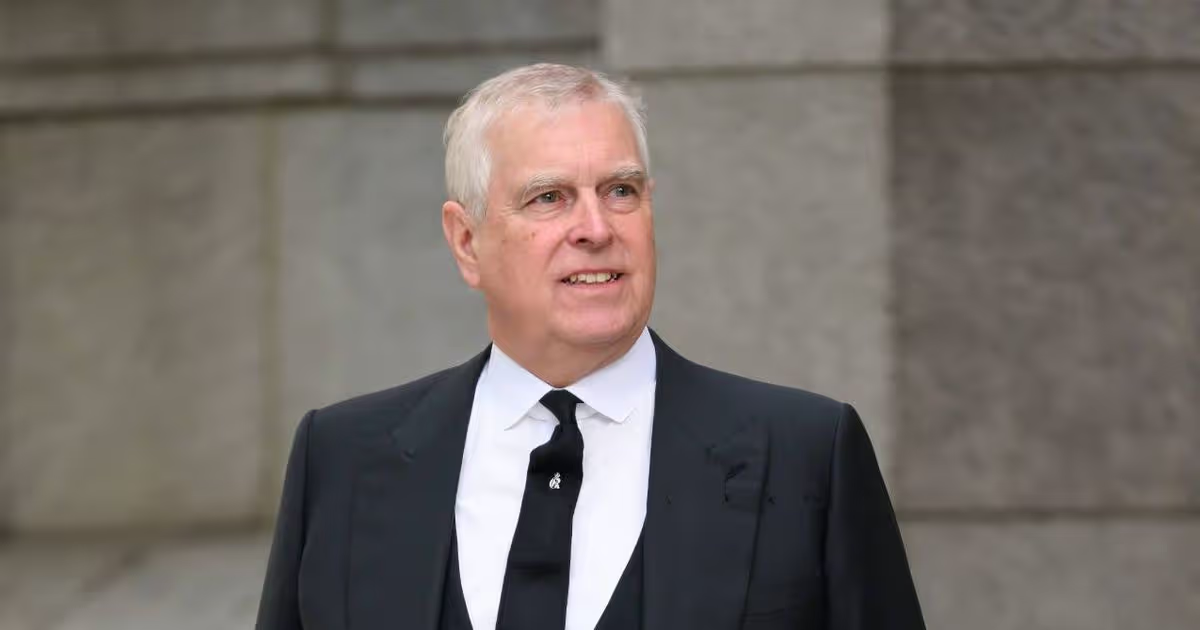
Andrew Mountbatten-Windsor was reportedly preparing to travel to Bahrain or Abu Dhabi when arrested in February following a tip-off to a senior courtier. He has been released under investigation and denies any wrongdoing.
Bradley Jolly Overnight News Editor and Peter Hennessy
02:56, 07 Mar 2026
Disgraced Andrew Mountbatten-Windsor was reportedly “getting his passport ready” to flee Britain for the Middle East when he was arrested, reports suggest.
The 66 year old has since been released under investigation but, with bombs and missiles raining down across the region daily, any remaining hopes of reinventing himself amongst the Arab elite appear scuppered. Now, Donald Trump is believed to be primed for his “big one” offensive on Iran as the conflict there escalates.
Ensure our latest stories always appear at the top of your Google Search by making us a Preferred Source. Click here to activate or add us as your Preferred Source in your Google search settings.
Andrew’s ex-wife Sarah Ferguson maintains her own connections in the Middle East and she, alongside Andrew, was evicted from the Royal Lodge last year. A source revealed: “There is no way any of them are going to go to the Gulf and Middle East region for a long time to come. It is far too dangerous for them, just as it is for everybody else.”
The development marks another setback for the father-of-two, who this week reportedly feels it is “deeply unfair that people have turned on him” following the Jeffrey Epstein files controversy. The ex-duke, a former helicopter pilot with the Royal Navy, categorically refutes all allegations of misconduct.
Advertisement
Speaking to the Daily Mail, a British diplomatic source with previous connections to the Yorks in the Gulf region observed: “It’s inconceivable that they’ll be visiting the region now, certainly not while the war is going on and it could, of course, be an indefinite war.”
Andrew had consistently identified the Middle East – home to billionaire sheikhs and emirs – as a potentially profitable avenue for generating income, both personally and for his wider network.
His relationship with Abu Dhabi’s ruling dynasty stretches back to his days at Gordonstoun, the prestigious Scottish boarding school, where he befriended Sheikh Mohamed bin Zayed Al Nahyan, currently the UAE president and referred to by Andrew as MBZ. His dynasty ranks amongst the wealthiest globally, commanding an estimated £225 billion fortune.
Advertisement
Their assets include substantial London real estate holdings and majority ownership of Manchester City Football Club.
These associations became especially advantageous in 2001 when, following his departure from the Royal Navy, he secured the position of UK Special Representative for International Trade and Investment – a post detractors suggest he subsequently exploited for personal financial gain. Andrew refutes any impropriety.
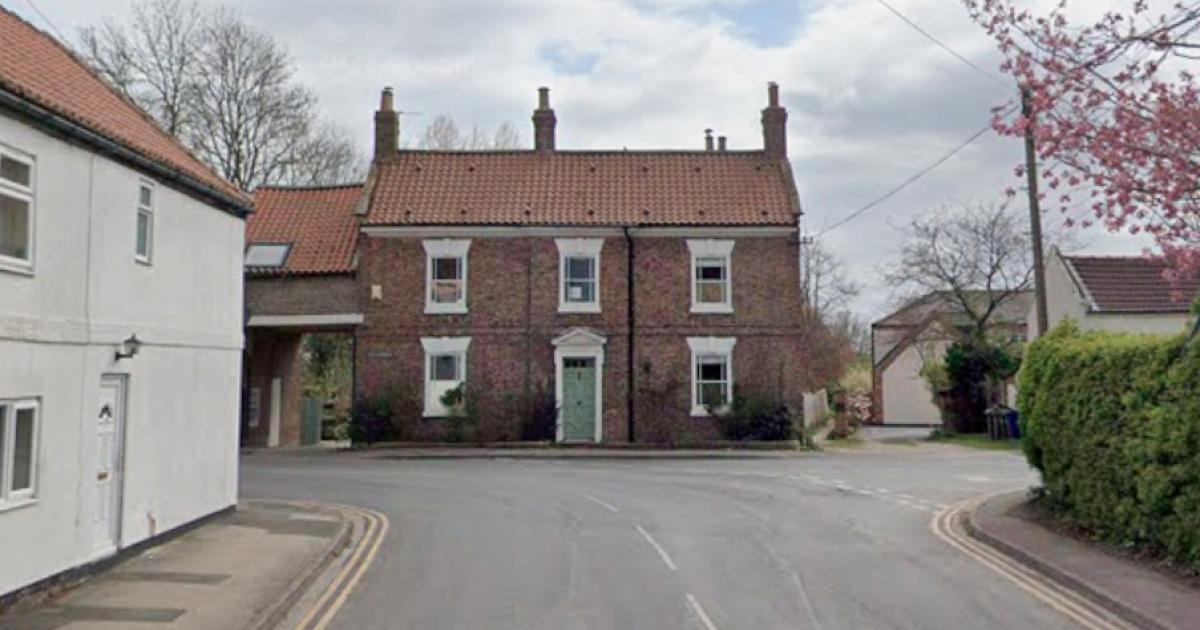
Officers are appealing for information following the attempted robbery in Cliffe, east of Selby, on Monday (March 2).
North Yorkshire Police said five men in two silver vehicles – a pick-up truck and a van – attempted to steal a Revvi e-bike from the children at about 6.15pm at the junction between Main Street, Hull Road and Turnham Lane.
“The victims were unharmed, but understandably very frightened,” a force spokesperson said.
Advertisement
North Yorkshire Police said its suspects are described as white men aged in their 20s to 30s.
The force said police are carrying out door-to-door and CCTV inquiries, urging anyone with information to report it.
“We’re particularly appealing for information about any person who may have seen the two vehicles, or witnessed the incident itself,” the police spokesperson said.
Latest cabin bag rules for airlines including Jet2, easyJet, TUI, and British Airways after Ryanair made a change to its policy earlier this year
This article contains affiliate links, we will receive a commission on any sales we generate from it. Learn more
Advertisement
Budget airlines are an excellent way to see the world for less, but one thing that can catch you out when boarding is cabin baggage allowances. At peak times, it’s common to see the dreaded bag sizer coming out as you board, and just a couple of extra centimetres can end up seeing you slapped with a hefty fee.
Annoyingly, cabin bag size allowances vary a lot between airlines and seemingly change all the time too, so even frequent fliers can get caught out. That’s why it’s important to check the airline’s official website before you fly to ensure you aren’t caught out at the boarding gate.
It’s much cheaper to buy extra baggage in advance when you’re booking your ticket, rather than paying for excess weight at the airport, so make sure you’re realistic about what you’ll be packing.
We take a look at airlines’ individual policies below…
Advertisement
Ryanair
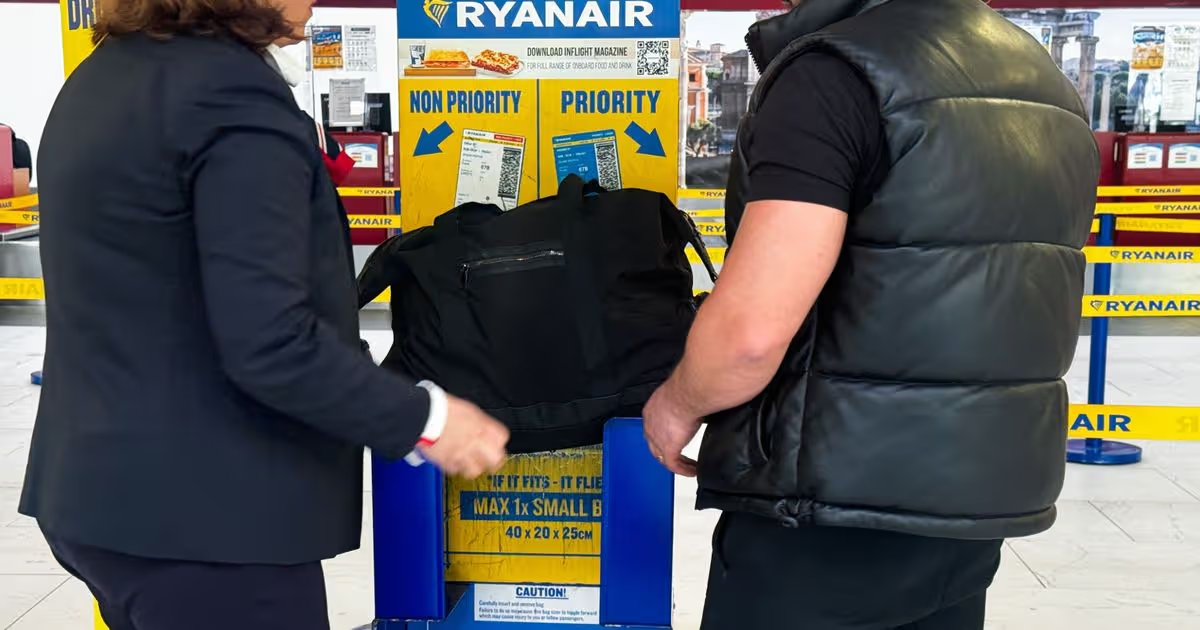
Anyone flying on the budget airline should make sure they measure their luggage before they head to the airport.
Recently, Ryanair offered some good news for passengers; the free underseat bag that is included in its most basic fare level is now allowed to be slightly larger. Previously, it had to be 40 x 25 x 20 cm, but since summer 2025 Ryanair now allows bags of up to 40 x 30 x 20 cm. This item can be a handbag, backpack, laptop bag, or other item as long as it fits within the dimensions as it goes under the seat in front of you.
While these small bags don’t technically have a weight limit, passengers will need to be able to carry and handle them, and excessively heavy items might be noticed by the flight crew.
For an additional fee, passengers can also bring a second cabin bag of up to 55 x 40 x 20cm onboard with them of up to 10KG in weight. This will need to be lifted into the overhead locker. Checked bags can also be added of 10, 20, or 23KG, with prices varying depending on route and availability. Checked baggage needs to be under 80 X 120 X 120cm in size per item.
Advertisement
EasyJet
EasyJet also tends to strictly monitor onboard bag sizes, and places orange bag sizers around the airport so you can check your luggage will fit. However, it’s still important to measure at home in case you need to repack. Ticket prices on easyJet include one small underseat cabin bag of up to 45 x 36 x 20 cm in size and 15KG in weight.
Customers can also add a second cabin bag of 56 x 45 x 25 cm maximum, including handles and wheels for a fee, although this cost does also include speedy boarding. Passengers can also pay for up to three checked bags of 15, 23, or 32KG, and these must have a maximum total size under 275cm when you add the length, width, and height. Some easyJet flights offer twilight drop-offs so you can check your luggage the night before an early flight.
Jet2
Jet2 offers the same cabin baggage allowance for package holiday and flight only customers: a small bag of 40 x 30 x 20cm, which must fit under the seat, and a 10KG piece of hand luggage of up to 56cm x 45cm x 25cm. Package holiday customers with Jet2 also get 22KG of checked baggage included in the flight, while flight-only customers can add this option for an additional fee. Passengers can buy up to three checked bags of up to 22KG if they don’t like to pack light.
Advertisement
British Airways
British Airways (BA) is a little more complicated as it has many different ticket types. You can use its baggage calculator to find your precise allowance. Those flying on a basic economy fare usually get a small bag and a cabin bag included in the price. The smaller bag can be up to 40 x 30 x 15cm and its guaranteed this will be allowed onboard with you. The cabin bag can be up to 56 x 45 x 25cm, but if overhead locker space runs out, it may need to go into the hold. Make sure your essentials for the flight and passport are in your smaller bag.
Checked bags also vary depending on route and class. Economy with checked bag fares include a 23KG piece of hold luggage up to 90 x 75 x 43cm, and business and first class passengers get much bigger allowances.
TUI
Flight-only passengers with TUI get a 10KG piece of hand luggage included in the price of up to 55 x 40 x 20 cm, plus a small personal item like a laptop bag or handbag of up to 40 x 30 x 20cm TUI emphasises that passengers must be able to lift their hand luggage into overhead storage compartments themselves.
Advertisement
Checked bags can be bought while booking the flight, and those booking package holidays with TUI that fly with its airline get 20KG of checked baggage included. TUI BLUE and cruise customers can get 25KG allowances, so its worth checking your booking confirmation to see if you get this perk.
Have a story you want to share? Email us at webtravel@reachplc.com
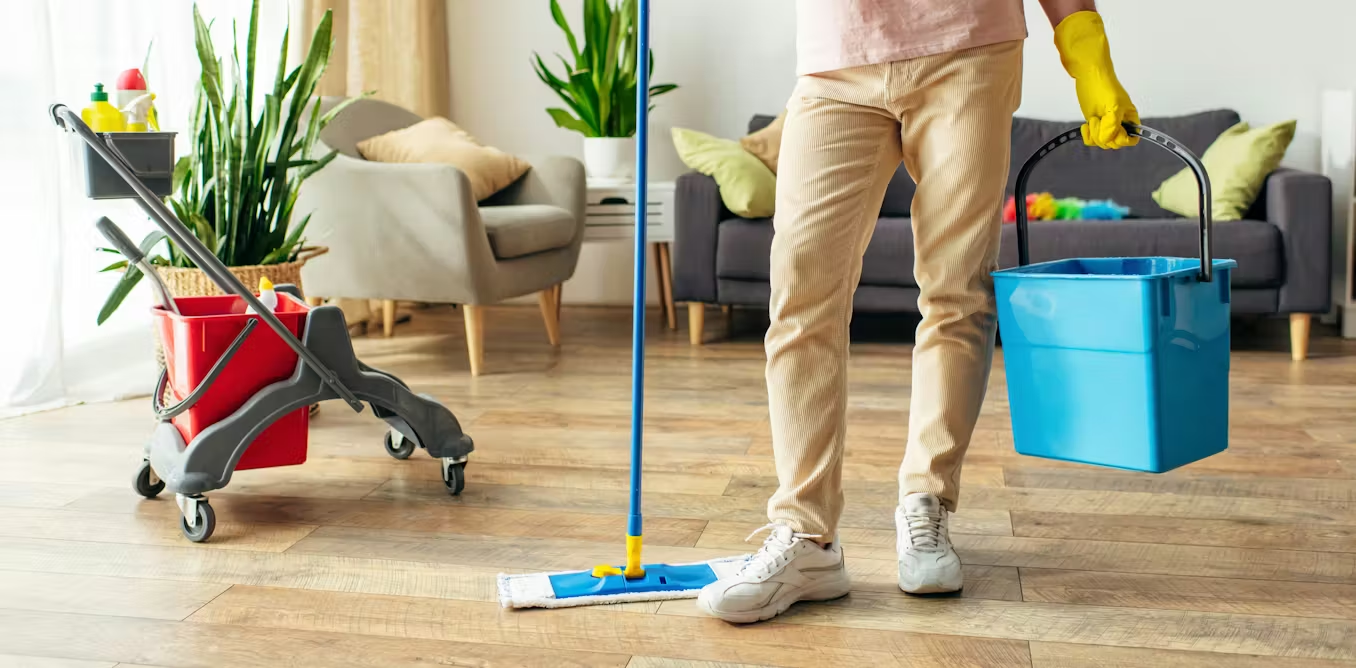
Couples often disagree about who does more housework. Part of that disagreement reflects real differences in behaviour. But part of it is perception: what each person notices, remembers and counts as “work”.
That same problem turns out to influence the research that feeds headlines about gender equality at home. Many household surveys ask just one person to report how much housework both partners do. My research shows that this seemingly minor design choice – whether the husband or the wife in a heterosexual couple answers – can fundamentally change what the data appears to say about money, gender and chores.
For decades, researchers have tried to understand how couples divide housework when both partners earn money. Two broad explanations dominate the debate.
One focuses on economics. Exchange and bargaining theories predict that the higher earner does less unpaid work at home, because their time has a higher opportunity cost and more negotiating power. From this perspective, as women’s earnings rise, their share of housework should fall, while men’s should rise.
Advertisement
The other explanation emphasises gender norms. Sociologists have argued that when couples depart from the traditional male-breadwinner model – especially when wives earn more than their husbands – they may “do gender” at home to compensate. In this view, women may end up doing more housework, and men less, to symbolically reassert traditional roles.
The evidence has been mixed. Some studies support bargaining. Others find patterns consistent with “doing gender”. One reason for this discrepancy may lie not in how couples behave, but in how their behaviour is measured.
To explore this, I analysed 24 years of data (1999-2023) from the US Panel Study of Income Dynamics – a nationally representative longitudinal survey of US families run by the University of Michigan and funded primarily by the National Science Foundation and the National Institutes of Health.
I focused on married, dual-earner heterosexual couples, the group most often studied in research on housework and income. The survey repeatedly interviews households and asks how many hours per week each spouse spends cooking, cleaning and doing other work around the house.
Advertisement
In each wave, one person answers on behalf of the household. Sometimes it is the wife, sometimes the husband. This creates a valuable opportunity. Because the survey follows the same couples for years, we can compare households to themselves and ask a simple question: what changes when the respondent changes?
Who answers changes the story
Previous research has long shown that husbands and wives report housework differently, and the same pattern appears in my research. When husbands answer surveys, they tend to report a more equal division of labour than wives do, crediting themselves with a larger share of household work and reporting slightly fewer hours for their partners. Even before income enters the picture, who answers the survey shapes what “sharing the load” appears to look like.
The more revealing differences emerge once income is taken into account. When wives are the respondents, the relationship between earnings and housework looks like economic bargaining: as wives’ share of household income rises, they report doing less housework and their husbands doing more, in a largely linear way.
When husbands are the respondents, the same households tell a different story. Their reports show a non-linear pattern: husbands report increasing their own housework as their wives’ earnings approach parity. They then report doing less once wives earn more than they do, while reporting higher housework hours for their wives. This pattern is consistent with what sociologists call gender deviance neutralisation, where departures from the male-breadwinner norm are symbolically offset at home.
Advertisement
The crucial point is not that one theory is right and the other wrong. It is that the same couples can appear to support competing explanations depending on who answers the survey.
Sharing the load. Drazen Zigic/Shutterstock
The results do not reveal the “true” number of hours someone spent cleaning in a given week. Instead, they reveal something more fundamental about the evidence base: reported housework is filtered through gendered perceptions and self-presentation, especially in situations that challenge traditional expectations, such as near equal or reversed earnings.
Housework is not just a set of tasks. It is a socially loaded activity tied to ideas about fairness, competence and identity. When people report on it, they are likely not just simply recalling time, they are also telling a story about how their household works.
Housework statistics are widely used to judge whether societies are becoming more equal, and to evaluate policies affecting dual-earner families. If researchers pool responses without treating respondent identity as central, they risk averaging away meaningful differences and drawing muted – or misleading – conclusions.
Advertisement
In the end, the question is not only who does the chores. It is also who gets to describe them – and how much our conclusions depend on that storyteller.
WASHINGTON (AP) — American employers unexpectedly cut 92,000 jobs last month, a sign that the labor market remains under strain. The unemployment rate blipped up to 4.4%.
Hiring deteriorated from January, when companies, nonprofits and government agencies added a healthy 126,000 jobs, the Labor Department reported Friday. Economists had expected 60,000 new jobs in February.
Revisions also cut 69,000 jobs from December and January payrolls.
The surprisingly weak employment picture in February adds to the economic uncertainty over the war with Iran, which has caused oil prices to surge and saddled business and consumers with unforeseen costs.
Advertisement
“The job market is struggling in the face of so many headwinds,” said Heather Long, chief economist at Navy Federal Credit Union. “Companies are going to be even more reluctant to hire this spring until the war ends and they can see consumers still spending. It’s a tense time for the U.S. economy.”
The job market had been expected to rebound this year from a lackluster 2025 when it was buffeted by President Donald Trump’s erratic tariff policies, his purge of the federal workforce and the lingering effects of high interest rates. In 2025, employers added just 15,000 jobs a month. Hopes for a 2026 rebound rose after January hiring came in above expectations.
“Just when it looked like the labor market was stabilizing, this report delivers a knock-down blow to that view,’’ said Olu Sonola, head of U.S. economics at Fitch Ratings. ”It’s bad news whichever way you look at it.’’
The job losses were widespread.
Advertisement
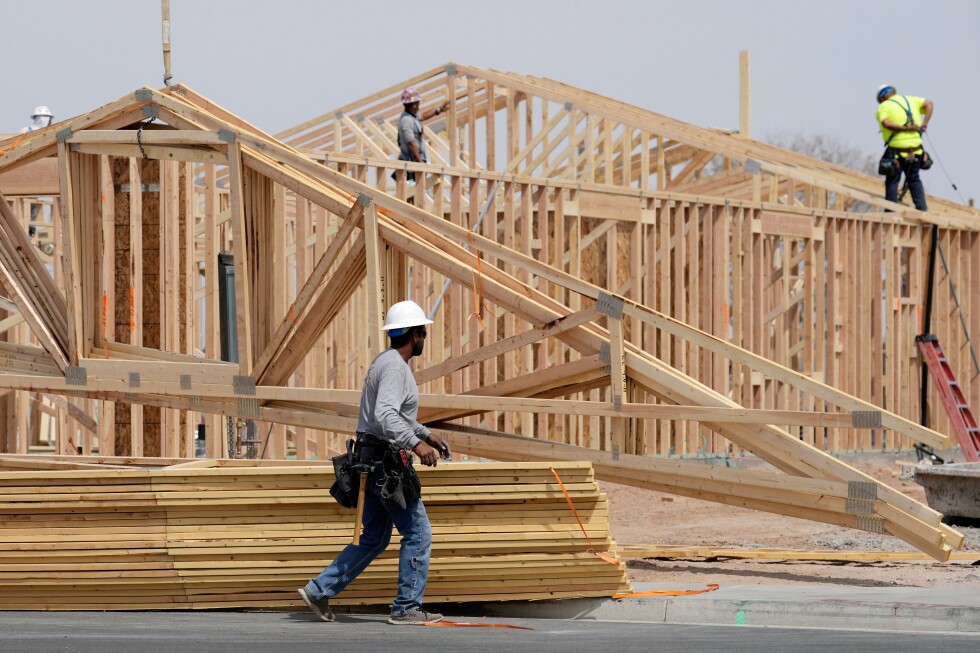
Construction companies cut 11,000 jobs last month, which likely reflects frigid weather. And healthcare firms shed 28,000 jobs after a four-week strike by more than 30,000 nurses and other front-line workers at Kaiser Permanente in California and Hawaii. Health care has been one of the job market’s strong points.
Factories cut 12,000 jobs and have now lost jobs for 14 of the last 15 months. Restaurants and bars lost nearly 30,000 jobs. Administrative and support services firms cut nearly 19,000 jobs and courier and messenger services almost 17,000.
Financial firms added 10,000 jobs, though job cuts continue to hit that sector as well this year.
Average hourly wages rose 0.4% from January and 3.8% from a year earlier.
Advertisement
The outlook for the job market – and the entire economy – is clouded by the war with Iran.
The combination of weak hiring and increasing inflationary pressures arising from the war creates a nightmare for the Federal Reserve, which must decide whether to cut interest rates to help the job market or hold off to help keep a lid on prices. “This is probably the worst scenario for monetary policy,″ said Eugenio Aleman, chief economist at Raymond James.
Employers were reluctant to hire last year because of uncertainty over Trump’s tariffs – and the unpredictable way he rolled them out.
The impact of Trump’s aggressive trade policies may recede in 2026. His import taxes became smaller and less erratic after he reached a trade truce last year with China and deals with leading U.S. trade partners such as Japan and the European Union. A lot of businesses have also learned how to offset the costs of the tariffs, often by passing them along to customers via higher prices.
Advertisement
Brian Bethune, an economist at Boston College, said that Trump’s 2025 tariffs were a shock to companies’ business plans. Now, just as they’ve adjusted to them, “Guess what! All of a sudden their 2026 business plans are upended by an increase in fuel costs’’ caused by the war with Iran.
Jay Foreman, CEO of the toy company Basic Fun, expects to get some relief from Trump’s tariffs after the Supreme Court last month struck down the biggest ones and potentially created a path for importers to get refunds for the levies they paid. The refunds would allow Foreman to invest more in his Boca Raton, Florida, company, which makes Lincoln Logs and Care Bears. He can also hand out more generous raises to employees and hire new people.
“We are expecting a record year,’’ he said.
Yet under new tariffs sought by Trump, Foreman estimates that Basic Fun’s tariff bill will more than double this year to $15 million. That is partly because the firm will be paying for a full year of Trump tariffs in 2026. Tariffs last year were not rolled out until spring or later.
Advertisement
_____
AP Economics Writer Christopher Rugaber contributed to this report.
A woman has sued author and venture capitalist Amy Griffin over her bestselling 2025 memoir “The Tell,” saying that Griffin’s descriptions of childhood sexual abuse in the book were stolen from her experience.
The plaintiff identifies herself only as Jane Doe in the lawsuit filed Wednesday in Los Angeles Superior Court. An attorney for Griffin called the suit “absurd” and “meritless.”
In “The Tell,” published a year ago, Griffin writes that undergoing therapy using the psychedelic drug MDMA uncovered previously buried childhood memories of being sexually abused by a teacher at her middle school in Amarillo, Texas, in the 1980s.
“I knew that these memories were real,” Griffin writes in the book. “My body knew what had happened to me.”
In the lawsuit, the plaintiff says the descriptions match her own sexual assaults by a different teacher at a school dance and in a school bathroom. The lawsuit says Griffin had reason to know about the abuse.
“’The Tell’ constitutes neither a genuine nor harmless memoir,” the lawsuit says, alleging Griffin engaged in intrusion, invasion of privacy, publication of private facts, negligence and infliction of emotional distress. It seeks damages to be determined at trial.
The lawsuit also names Griffin’s publishers and a ghostwriter as defendants.
Advertisement
The New York Times published a story in September raising questions about the book. It included people who expressed doubts about the reliability of the memories. The story also pointed out financial ties between Griffin and the prominent people who helped promote the book.
The plaintiff first learned of the existence of the memoir when the Times reached out to her during its reporting.
“She immediately recognized that the character of Claudia appeared to be based on herself,” the lawsuit says. “She further recognized that a number of stories attributed to the memories of Defendant GRIFFIN that supposedly resurfaced during MDMA therapy were actually her own real life past experiences.”
Griffin’s attorney, Thomas A. Clare, said in an email: “We look forward to exposing these meritless claims in court, as well as the deeply flawed New York Times reporting that is at the center of it.”
Advertisement
“Just like the New York Times manufactured a false narrative about Amy Griffin and ‘The Tell,’ it also engineered the premise for this absurd lawsuit,” Clare said. “After two New York Times reporters instigated this whole situation by bringing the book to her attention, the Plaintiff made her own choice to publicize her narrative to a global audience.” He added, “For its part, the Times took full advantage, publicizing this inaccurate narrative despite receiving many red-flag warnings.”
Danielle Rhoades Ha, a Times spokeswoman, said in response, “We’re confident in the accuracy of our reporting.”
The lawsuit says that when the plaintiff was assaulted at the school dance, she was wearing a dress she had borrowed from Griffin. The lawsuit says the abuse would have been apparent to some people at the dance because of how she left and how she returned. It also says the dress was returned to Griffin with bodily fluids from the assault. The plaintiff also said she asked Jesus for forgiveness for the assault at a church youth group meeting that Griffin attended.
The lawsuit says she met with Griffin for the first time in decades at a California coffee shop in 2019, a meeting that is recounted in the book. But the woman said she did not discuss her sexual assaults during the meeting.
Advertisement
The plaintiff says she did describe the abuse in detail to a talent agent who called her later about her life story. According to the lawsuit, the agent told the plaintiff he learned about her and her stories through an unidentified third party. The lawsuit says the agent stopped contact when she began asking him too many probing questions about him, and that details from the conversations “found their way into ‘The Tell.’ ”
A sneak peek clip ahead of the episode shows the judges’ jaws dropping as they take in the quartet’s acrobatic act.
The hopefuls, from Tanzania, stripped down to their jeans to show off their skills on the Britain’s Got Talent stage, with the panel gripped as they pulled off intricate balancing feats.
At one point, The Rafikiz arranged themselves into a human tower, with the performer at the top on his head, balancing on his teammate’s head.
Advertisement
“That is some serious strength!” said Alesha as the audience cheered and both Amanda and KSI cried: “Oh my God!”
“What?” asked presenter Dec, who looked gobsmacked as he stood in the wings watching with presenting partner Ant.
Advertisement
“Wow!” exclaimed Ant, as the performers moved to a one-handed lift. “It’s like the Avengers or something!”
There was more to come, as one of the men clutched a stand in his mouth and lifted one of the other Rafikiz members into the air, using his teeth to hold him up.
The act received a huge cheer as they finished, with all the judges rising to their feet for a standing ovation.
Advertisement
“I am impressed!” KSI told them, as Amanda agreed: “It was so thrilling and so dangerous. I literally could not take my eyes off you.
“At the end I was covered in goosebumps. It was just amazing.”
Alesha said she “loved it”, as Simon told them: “It’s a huge yes for me. We saw an act before from Canada. Literally, he was just jumping around on the trampoline. They blamed the size of the trampoline because we said no.
Advertisement
“And you don’t have a particularly big staircase, but it doesn’t matter. Because you put on a show.”
For the latest showbiz, TV, movie and streaming news, go to the new **Everything Gossip** website
Britain’s Got Talent airs Saturday 7pm on ITV1 and ITVX
Netflix has added the acclaimed thriller series to its collection, eleven years after the TV show finished up, with all seven seasons now available to binge
Netflix has welcomed a gripping thriller to its library, more than a decade after the television series wrapped up. The streaming giant revealed to subscribers that every season of The Mentalist, headlined by Simon Baker, would be landing on the platform.
Advertisement
Having arrived on Netflix on Sunday, March 1, long-time devotees of the programme can now devour all episodes at their leisure. For enthusiasts of police procedurals searching for their next marathon-worthy series, there are seven full seasons to explore.
Should you be new to the programme, viewers follow the journey of independent consultant for the California Bureau of Investigation, Patrick Jane (Baker). Jane has built a name for himself through unorthodox and unusual investigative techniques, combined with a disregard for standard procedure. Oh, and he also claimed to be a psychic.
Whilst the “psychic” element may be bogus, Jane possesses razor-sharp observational abilities and an exceptional understanding of human psychology to crack cases, reports the Express.
Beyond collaborating on investigations with law enforcement, he exploits his connections within the CBI to track down the mysterious serial killer Red John, who brutally killed his wife and daughter – a storyline forming the backbone of much of the series. Yet his quest for justice isn’t always straightforward.
Advertisement
The debut season appeared to split critics, though it’s lauded for featuring “all of the key components of the perfect crime investigation series,” according to the Pittsburgh Post-Gazette.
The final series, which broadcast in 2015, achieved an 83 per cent overall score on Rotten Tomatoes. Jeff Jensen wrote for Entertainment Weekly about the concluding season: “That hard-working bunch earned their party. I think the show honored the fans who stuck with it and by it. On a personal note:
“My late wife-who loved The Mentalist, who turned me onto the show, who found the show easy to forgive and enjoy after the disappointment of the Red John denouement-would have been very pleased.
Advertisement
“I enjoyed it on her behalf and chose to take the story’s conclusions, as easy and sentimental as they may have been, as a challenge to hope and optimism for a better tomorrow. Jane and Lisbon, thank you for that gift.”
Darragh McManus wrote for The Guardian: “Funny, thoughtful and intricately plotted, The Mentalist is one of the best things to appear on TV in a long time.”
Ensure our latest headlines always appear at the top of your Google Search by making us a Preferred Source. Click here to activate or add us as your Preferred Source in your Google search settings.
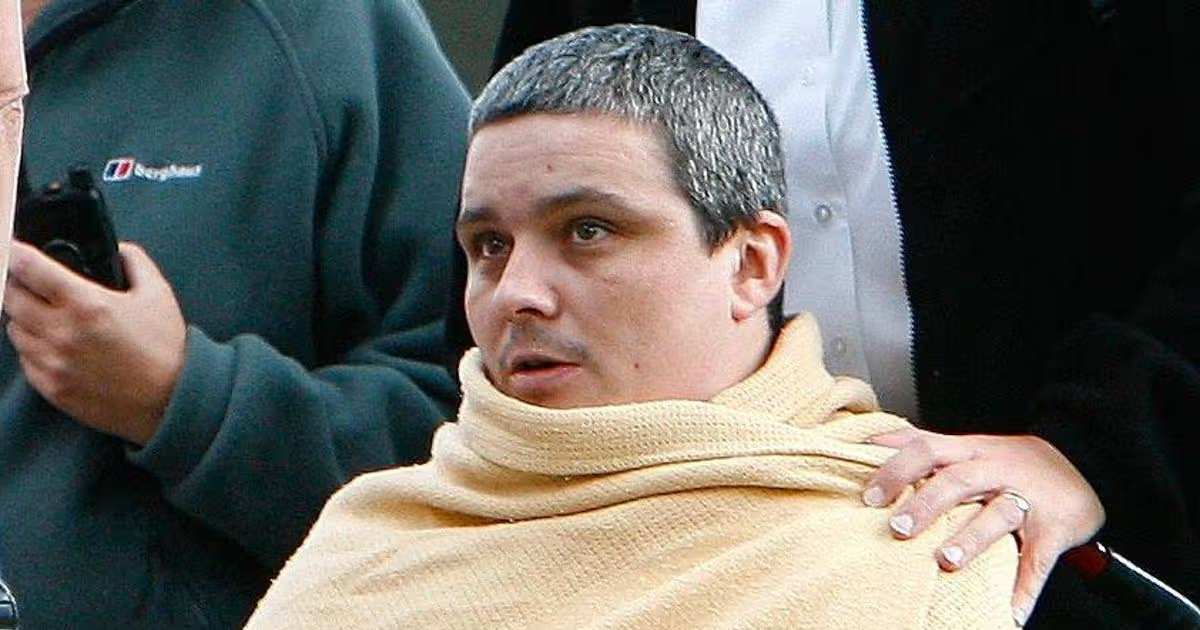
Soham murderer Ian Huntley had his life support switched off today and is hours away from dying after he was brutally attacked in HMP Frankland, it is claimed
21:47, 06 Mar 2026Updated 22:46, 06 Mar 2026
Ian Huntley had his life support switched off today and is just hours from death, new reports claim.
It comes after it was reported that the Soham murderer had been declared blind following an attack in HMP Frankland in County Durham last week.
Huntley, 52, was rushed to hospital last Thursday following the assault at HMP Frankland in County Durham. Sources told how medics “worked miracles” to save him, and how prison staff assumed he was dead when they found him in a pool of blood.
Advertisement
Earlier this week the Mirror revealed that Huntley will not be sent back to the jail known as Monster Mansion if he recovers. His injuries are so horrific that he will instead be sent to Ashworth Hospital on Merseyside.
According to The Sun, medics have now withdrawn the ventilator that was keeping him alive following consultations with his mother Lynda Richards.
Sources told the publication that the decision was taken at around lunchtime after brain tests showed he was in a vegetative state. They also claimed his mum was by his bedside.
A source told the publication: “This is it, this is the end of Huntley. He is effectively dead and, at the best, is drawing his last breaths.
Advertisement
“No one who has dealt with him is shedding a tear. Even his mother has accepted that this is for the best, having seen him and knowing what a state he is in.
“He never really recovered from the beating he took, and never stood much of a chance of doing so. Huntley had been attacked loads of times in prison so the day he was killed was always likely to arrive.” The Ministry of Justice declined to comment.
Previously, Huntley was given just a 5% chance of survival after he was struck multiple times with a metal pole and left with severe head injuries, reports claimed. Emergency services raced to the Category A prison at around 9am on February 26.
In an update on his condition yesterday, a spokesman for Durham Constabulary said: “There has been no change in the 52-year-old man’s condition overnight – he remains in hospital in a serious condition.”
Advertisement
After the vicious assault, the double murderer was rushed to hospital in an ambulance, with armed police forming an escort in front and behind. Two prison guards and an armed officer were inside the ambulance during the high-security operation.
A source said: “He was placed in an induced coma because he was so close to death. The team from the helicopter travelled with him but he could not be evacuated by air in case of any complications. He was transported by road because he was in a coma; this helps to keep him stable.
“The helicopter then travels to the hospital to collect the medics. Two armed officers are guarding Huntley around the clock at the hospital.”
Huntley is serving a life sentence after he was convicted of murdering schoolgirls Holly Wells and Jessica Chapman in August 2002. He will not be eligible for parole until at least 2042.
A migrant worker who was killed in an aerial attack on the United Arab Emirates on the first day of the Iran war would not have been outside if he had known the conflict had started, his son says.
Saleh Ahmed, 55, from Bangladesh, was delivering drinking water in the emirate of Ajman when he was struck by debris after an Iranian missile attack.
Speaking from Bangladesh, his son Abdul Haque told Sky News that Saleh was a hard-working man and the family’s sole breadwinner, who would have not risked his life had he known the US-Israeli war with Iran had started.
“My father went to deliver water,” Abdul said in tears. “That’s when an Iranian missile landed on him and his car.”
Advertisement
Ten minutes later, Saleh died at the scene, his son said.
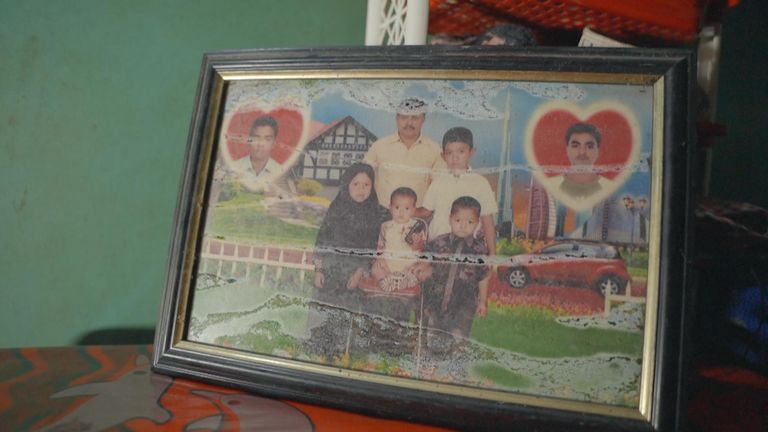
Image: Saleh Ahmed was unaware the war had started when he was killed, his family believe
Saleh lived in the UAE as an expat for 25 years, sending under £500 per month in earnings to Bangladesh for his wife and four children.
His family says the attack took them all by surprise.
“No way, he wouldn’t have known,” Abdul said, when asked if his father was aware of the war.
Advertisement
“If he knew he wouldn’t go out like that. We are hungry people, we have nothing and our family is very big. For sure my father didn’t know about the war, or else he wouldn’t have gone outside.
“If I had known, God willing, I would not have let him go outside.”
Image: Abdul wiped away tears as he described his father’s ordeal
Image: Saleh was described by his family as a hard-working man
‘You don’t get friends like my dad’
Five years ago, Abdul joined his father in Ajman to work alongside him at the water company.
“As a child, I’d only spend a month or two here and there with him. But for the last five-and-a-half years we were more like friends. Eating together and everything, we did it all together like friends,” he said.
Advertisement
“You don’t get friends like my dad anywhere in the world.”
Saleh’s life mirrors that of millions of South Asian migrant workers who live and work in the Middle East. Many have roles in construction, hospitality, transport and as domestic help.
Image: Saleh sent money to Bangladesh for his wife and four children
With roots in the 1960s oil boom, today the migrant workforce is made up of workers from countries like India, Pakistan and Bangladesh, and constitutes a large percentage of the overall population. Their remittances support generations of family back home.
“At the beginning my father really struggled and did a lot of different work. He worked at hotels, he washed cars, cut grass, he did everything,” Abdul said.
“And for the last seven or eight years he had a good position at the water company. He did a good job, it was in the service of people, delivering drinking water to people.
Saleh’s family live in a remote village in Sylhet, in northeastern Bangladesh. With the money he sent to them, they had begun building a house. The site remains incomplete, with a concrete foundation lying bare.
Advertisement
Abdul explains how his father did everything he could for the family to have their own home, right up until he died.
Image: Abdul and his family are mourning Saleh
Saleh was not only supporting his family, but Abdul explains his father would gift meat parcels at Eid to friends and neighbours, give money to charity, and donate funds to the local mosques. He last visited his family four months ago.
Airspace closures over the UAE mean Saleh’s body cannot be flown home for burial until commercial flights resume. Abdul says the delay in being next to his father and laying him to rest only prolongs the family’s sadness.
Advertisement
Advertisement
What happens to Gulf if immigrants want to leave?
Bangladesh’s foreign ministry confirmed Saleh’s death on Monday. It said ensuring the safety and security of more than six million Bangladeshis living in the Middle East remains the government’s top priority.
Meanwhile, there are no plans to evacuate Bangladeshi migrant workers. The government has urged its citizens in the Middle East to “remain vigilant and strictly follow guidance issued by respective host governments”.
“I pray for everyone to come quickly to a resolution,” Abdul said, speaking about the US, Israel and Iran.
Advertisement
“I’m seeing videos of many people dying, and I don’t want someone else to die like my father died. I don’t want any other people to lose their parents like we lost our dad.”