
Business
Lionsgate Studios Corp. (LION) Surges to Two-Year High Amid Strong Franchise Momentum and Library Growth

Lionsgate Studios Corp. (NYSE: LION) shares climbed sharply this week, reaching a two-year high as investors cheered renewed franchise strength and record library performance from the independent film and television powerhouse.

The stock closed at $10.66 on March 6, up 6.71% from the previous day’s close of $9.99, with intraday trading pushing it to a high of $11.02 — marking its strongest level since early 2024. Volume surged to over 6.7 million shares, well above the average daily trading of around 2.7 million. The rally capped a volatile but upward-trending period for the newly independent studio, which began trading separately in mid-2025 following its spin-off from the broader Lionsgate entertainment group.
Lionsgate Studios, known for blockbuster franchises such as “John Wick,” “The Hunger Games,” “Twilight” and “Saw,” has leveraged its intellectual property (IP) portfolio to drive momentum. Recent announcements, including a high-profile licensing deal tied to the “Twilight Saga,” fueled the latest spike. Market watchers noted the stock hit its peak amid speculation around expanded franchise extensions, including consumer products tie-ins like a new fragrance collection with Scentbird inspired by “Twilight” and “John Wick.”
“The investment in our IP portfolio is achieving its intended results,” Lionsgate CEO Jon Feltheimer said in the company’s third-quarter fiscal 2026 earnings release on Feb. 5. “Our film and television pipelines are strong, our library continues to grow, and our extension of franchise properties across multiple platforms continues to increase.”
The company’s trailing 12-month library revenue reached a record $1.05 billion for the period ending Dec. 31, 2025, up 10% year-over-year and marking the fifth consecutive quarter of record highs. This recurring revenue stream from catalog titles has provided a buffer against fluctuations in new production releases.
For the fiscal third quarter ended Dec. 31, 2025, Lionsgate Studios reported revenue of $724.3 million, with operating income at $36.0 million and adjusted OIBDA (operating income before depreciation and amortization) of $85.3 million. While the company posted a net loss of $46.2 million — largely due to ongoing investments in content and debt servicing — executives emphasized progress toward fiscal 2026 targets and anticipated acceleration in fiscal 2027.
The results highlighted success in franchise launches and library monetization, even as some segments faced headwinds. Analysts have maintained largely positive outlooks, with average price targets around $11.06, implying roughly 4% upside from recent levels. Firms including Wells Fargo, Baird and Morgan Stanley have reiterated overweight or outperform ratings in recent months, citing targets between $11 and $12.
Lionsgate Studios emerged as a standalone public company in May 2025 through a complex separation from its parent entity, which retained the Starz premium streaming platform. The spin-off involved a merger with Screaming Eagle Acquisition Corp., a special purpose acquisition company, and positioned Lionsgate Studios to focus exclusively on motion picture and television production. The new structure aimed to unlock value by allowing sharper focus on content creation and IP exploitation without the drag of linear and streaming distribution assets.
Since listing under the ticker LION on the New York Stock Exchange, the stock has experienced significant swings. It dipped to a 52-week low of $5.55 in July 2025 amid broader media sector pressures, including softening advertising markets and competition from streaming giants. However, shares have more than doubled from that trough, reflecting renewed confidence in the company’s core strengths: high-grossing theatrical releases, television production and an enviable library of evergreen content.
Challenges persist. The company carries substantial debt related to content financing, with some observers pointing to leverage ratios that remain elevated. A Seeking Alpha analysis in January 2026 downgraded the stock to sell, citing revenue contraction in prior quarters and stretched valuations. Yet recent performance has countered those concerns, with the stock up significantly since late 2025 on the back of earnings beats and franchise news.
Industry context adds tailwinds. Hollywood continues navigating post-pandemic recovery, with theatrical windows evolving and streaming deals providing alternative revenue. Lionsgate’s strategy of building around proven IPs — including upcoming projects in its “John Wick” universe and potential “Hunger Games” extensions — positions it well in a market favoring recognizable brands over original high-risk bets.
Consumer products and licensing deals further bolster the outlook. Partnerships like the Scentbird collaborations demonstrate how Lionsgate monetizes its brands beyond screens, creating diversified income streams.
Looking ahead, investors will watch for updates on the film slate, including major releases planned for 2026 and 2027, as well as any M&A speculation in the consolidating media landscape. While no major deals have materialized recently, Lionsgate’s valuable IP makes it a perennial name in sector discussions.
As of early March 2026, Lionsgate Studios maintains a market capitalization of approximately $3.1 billion. With analysts forecasting growth as new content cycles ramp up, the company appears poised for continued momentum — provided it delivers on its pipeline and manages balance sheet pressures.


BULLISH BETS
TITAN COMPANY
Change in Open Interest in April Series: 0.8% Change in price in April Series: 3.7% RATIONALE: Strong rollover into the April series, along with a lower roll cost of 0.31% (from 0.68%), shows traders are willing to pay to stay bullish, said Rajesh Palviya, head of technical and derivatives research at Axis Securities.

“As the Akshaya Tritiya festival nears, the market is bullish that the upcoming Q4 earnings will validate Titan’s ability to turn elevated gold prices into superior margins and footfalls,” he said. Palviya suggests buying on dips for a target of Rs 4,270-4,300, with a stop loss in futures at Rs 4,020-4,030.
ADANI POWER
Change in Open Interest in April Series: 98.95% (newly inducted in the futures segment) Change in price in April Series: 1.67% RATIONALE: The stock has witnessed a bullish breakout from a congestion zone of more than fi ve months with a signifi cant rise in volumes, said Vipin Kumar, AVP – derivatives and technical research at Globe Capital Market.
“The breakout is well supported by long buildup in the fi rst two trading sessions after its induction in the derivatives segment,” he said. Kumar said traders can buy its April Futures in the Rs 159-156 range for a target of Rs 170-175, with a stop loss at Rs 147.
NATIONAL ALUMINIUM
Change in Open Interest in April Series: -14.55% Change in price in April Series: 4%
RATIONALE: The stock has witnessed a close at the highest level on a weekly basis, said Sudeep Shah, head – technical and derivative research, SBI Securities. The fall in open interest and rise in share price point to short-covering. The stock is expected to move towards Rs 419-427 and can be bought with a stop loss at Rs 388, said Shah.
ABB INDIA
Change in Open Interest in April Series: 0.3% Change in price in April Series: 3.4%
RATIONALE: ABB’s higher-than-average rollover confi rms structural bullishness, said Palviya of Axis. “This transition from a high cost to a ‘discount’ during a price upswing suggests that long positions are being rolled with high conviction and effi ciency,” he said. “Investors are clearly looking past minor regulatory hurdles, positioning aggressively for a Q4 print expected to showcase scalable margins from massive greenfield infrastructure orders,” Palviya suggests buying on dips for a target of Rs 6,550-6,600, with a stop loss at Rs 5,950 (Futures rates).
JINDAL STEEL
Change in Open Interest in April Series: 0.67% Change in price in April Series: -1%
RATIONALE: Profit-taking in Jindal Steel from its all-time highs has halted near its previous breakout levels, which also coincide with the six-month exponential moving average, said Globe’s Kumar. “Considering its current chart positioning, we expect it to continue its prevailing uptrend, potentially reaching Rs 1220 in the immediate near term,” he said. Kumar advises buying its April Futures in the Rs 1,125-1,105 range, for a target of Rs 1,220, and stop loss at Rs 1,070
HINDALCO INDUSTRIES
Change in Open Interest in April Series: -1.8% Change in price in April Series: 3.6%
RATIONALE: The share surge, along with a decrease in open interest, suggests short covering. Fundamentally, the rally is underpinned by global supply shocks at EGA and Alba, which have bolstered LME aluminium benchmarks, said Palviya of Axis.
“Market focus now shifts to the Q4 earnings print, where these elevated benchmark realisations are expected to translate into sustainable margin expansion for both domestic operations and Novelis,” he said. Palviya suggests buying the stock on any dips for a target of Rs 980- Rs 1,000, and stop loss at Rs 875
BEARISH BET
PG ELECTROPLAST
Change in Open Interest in April Series: 17.8% Change in price in April Series: -3.3%
RATIONALE: The stock hit a fresh 52-week low of Rs 443.05 on Thursday. It has broken down from a consolidation, forming a lower high–lower low pattern on weekly charts, said SBI’s Shah. “It is trading below its short- and long-term moving averages, and we expect the stock to test lower levels,” he said. Shah recommends selling PGEL between Rs 438-443 with a stop loss at Rs 452 for a target of Rs 417.


Samsung Elec likely to report stupendous surge in quarterly profit to record level

A Market Driven by Noise, Not Always Value
Global equities today are influenced as much by sentiment as by fundamentals. Short-term movements are often erratic, driven by interest rate expectations, geopolitical tensions, and capital flows. As Joel Greenblatt highlighted in his bestselling book “The Little Book That Beats the Market.”, stock prices can fluctuate wildly in the short run without a corresponding change in the underlying business value .
This disconnect is particularly visible in current global markets:
US markets remain sensitive to monetary policy shifts and inflation data.
European equities face energy price volatility and growth concerns.
Emerging markets, including India, are navigating capital inflows alongside currency pressures.
Such conditions reinforce the idea that markets behave irrationally in the short term but tend toward efficiency over the long term.
The Rise of Factor-Based and Value Investing
In an environment where macro signals dominate headlines, investors are increasingly turning toward systematic strategies. Greenblatt’s Magic Formula, built on earnings yield (value) and return on capital (quality), offers a disciplined approach to stock selection.This framework aligns well with the current global scenario:
Earnings yield helps identify stocks that are undervalued relative to their earnings potential.
As global markets oscillate between growth and value cycles, such factor-based investing has gained traction among institutional and retail investors alike.
Mispricing Opportunities in a Fragmented Market
One of the defining characteristics of today’s global market is dispersion, while some sectors are richly valued, others remain overlooked. Greenblatt’s philosophy is rooted in identifying these inefficiencies.
Markets often misprice stocks due to emotional reactions and short-term narratives. This creates opportunities to buy good businesses at bargain prices, a principle also echoed by Warren Buffett.
In the current cycle:
Technology and AI-driven stocks may appear expensive but continue to command premium valuations.
Cyclical sectors like metals, energy, and financials often swing between undervaluation and sharp rallies.
Mid- and small-cap stocks globally present pockets of mispricing due to liquidity constraints and risk aversion.
Patience and Time Horizon: The Missing Edge
A key takeaway from Greenblatt’s approach is that even the best strategies can underperform in the short term. He emphasizes that lack of patience is one of the primary reasons investors fail to benefit from sound investment frameworks .
This insight is particularly relevant today:
Markets are reacting quickly to news, leading to frequent corrections and rallies.
Investors often chase momentum, abandoning long-term strategies prematurely.
In contrast, disciplined investors who stay invested across cycles are better positioned to capture long-term alpha.
Diversification and Risk Management in a Global Context
Global investing today demands diversification, not just across stocks, but across geographies and sectors. Greenblatt underscores diversification as essential to withstand adverse periods and allow a sound process to deliver results over time .
Given current uncertainties:
A diversified portfolio can balance developed and emerging market exposure.
Sectoral diversification helps mitigate risks from commodity cycles or policy changes.
India in the Global Equation
India continues to stand out as a relatively resilient market, supported by domestic demand, structural reforms, and earnings visibility. However, it is not immune to global shocks:
Foreign institutional flows remain sensitive to global liquidity.
Valuations in certain segments appear stretched, increasing the importance of selective investing.
Applying a disciplined approach can help Indian investors navigate this environment by focusing on quality businesses available at reasonable valuations.
Back to Basics in a Complex World
The global stock market may be entering a phase where macro uncertainties persist, but the core principles of investing remain unchanged. Greenblatt’s Magic Formula reinforces a simple yet powerful idea:
Successful investing lies in systematically identifying strong businesses trading at attractive prices, and having the patience to stay invested.
In a world dominated by noise, algorithms, and rapid capital flows, returning to such fundamental, value-driven frameworks may well be the most effective way to generate consistent long-term returns.

Data from the Clearing Corporation of India showed CSB Bank offered the highest rate at 8.32% for 91 days, followed by Ujjivan Small Finance Bank and Equitas Small Finance Bank, which raised funds at 8.25% for 366 days and 356 days, respectively. Other lenders such as HDFC Bank and IDBI Bank paid 7.6% for 33-day funds.
“While some firming is typical at year-end as banks shore up their balance sheets, this spike goes beyond seasonality,” said VRC Reddy of Karur Vysya Bank. “CD rates have moved to elevated levels, signalling deeper funding pressures rather than just a year-end phenomenon.”

HDFC Bank, the country’s most valuable lender, which has been under investor scrutiny following the sudden exit of chairman Atanu Chakraborty, raised funds at 7.6% for 33 days on March 27, mobilising ₹4,300 crore. Punjab National Bank raised ₹1,175 crore at 7.5% for the same tenor. These rates are well above the 3.25% banks typically pay retail depositors for 30- to 45-day deposits. Most banks pay around 6.25% to 7% for one-year deposits.
“The CD rates do appear high when compared with retail deposit rates or the card rates published by banks, largely because deposit growth has lagged credit growth,” said Anil Gupta, co-group head for financial sector ratings at ICRA.
Overall, HDFC Bank raised ₹23,090 crore during the last fortnight across tenors ranging from 33 to 327 days, paying interest rates between 7.3% and 7.6%. Data showed Axis Bank raised ₹3,500 crore at 7.6% for 92 days, IndusInd Bank raised ₹2,075 crore at around 7.5% for tenors ranging from 91 to 94 days, while Bandhan Bank paid 7.85% for 186 days on a ₹125 crore CD.During the fortnight ended March 31, banks issued ₹1.07 lakh crore of CDs, broadly in line with issuance in the corresponding fortnight last year.
CD rates had earlier climbed sharply during periods of tight liquidity, peaking at about 8.15% between February and March 2024, according to historical data.
Reddy said elevated CD rates reflect a combination of tight systemic liquidity, pressures linked to liquidity coverage ratio requirements, and tactical balance-sheet management amid weak deposit mobilisation.
“In this backdrop, banks have prioritised certainty over cost, relying on CDs and other bulk funding to secure immediate and assured resources,” he said.
ICRA’s Gupta said while CD rates are high, such issuances are typically used to plug short-term mismatches in asset-liability flows. “Certificates of deposit account for only 2.6% of overall bank deposits and do not materially increase the overall cost of deposits,” he said.
Union Bank of India raised ₹24,060 crore, while Punjab National Bank mobilised ₹12,450 crore in the last fortnight of March, offering rates ranging between 6.9% and 7.5%, the data showed.
Banks paid higher rates for shorter-tenor CDs than for longer maturities.
Reddy said CD rates may ease from the March-end spike but are unlikely to soften meaningfully in FY27. “The underlying drivers – tight liquidity conditions, a persistent credit-deposit mismatch and pressure on deposit mobilisation – are structural rather than transient,” he said.


Three Gulf funds agree to back Paramount’s $81 billion takeover of Warner, WSJ reports
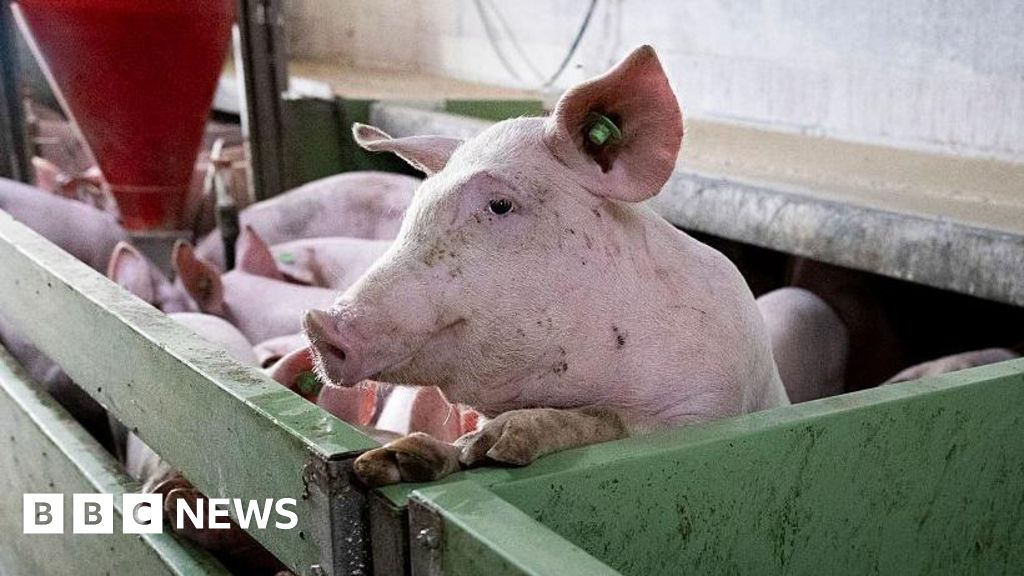
Brazil, Japan, Mexico, South Africa and the US have stopped importing Spanish pork. Other countries, such as EU members, China and the UK, have taken a more localised approach, only banning pork that originates in the affected area of north-eastern Spain.


Trump invokes religious rhetoric in praise of Iran rescue, drawing criticism

Families on some benefits with three or more children will get an average rise of £4,100 a year.

Russia says it downed 148 Ukrainian drones in three hours


Oil prices open higher as US-Israeli war with Iran continues to disrupt supply

Victoria Woods Throws Shade At Photo Of Her Dad & GloRilla

Child benefit, DWP Universal Credit, state pension – every single UK money change from April 6
Oversold market spurs selective buying as analysts eye breakout stocks


-

 NewsBeat3 days ago
Steven Gerrard disagrees with Gary Neville over ‘shock’ Chelsea and Arsenal claim | Football
-

 Business3 days ago
No Jackpot Winner and $194 Million Prize Rolls Over
-

 Fashion2 days ago
Weekend Open Thread: Spanx – Corporette.com
-
Entertainment6 days ago
Fans slam 'heartbreaking' Barbie Dream Fest convention debacle with 'cardboard cutout' experience
-

 Crypto World4 days ago
Gold Price Prediction: Worst Month in 17 Years fo Save Haven Rock
-

 Tech7 days ago
The Pixel 10a doesn’t have a camera bump, and it’s great
-

 Tech7 days ago
Avatar Legends: The Fighting Game comes out in July and it looks pretty slick
-
Crypto World6 days ago
Dems press CFTC, ethics board on prediction-market insider trades
-

 Sports1 day ago
India men’s 4x400m and mixed 4x100m relay teams register big progress | Other Sports News
-

 Business4 days ago
Login and Checkout Issues Spark Merchant Frustration
-

 Tech6 days ago
Apple will hide your email address from apps and websites, but not cops
-

 Tech6 days ago
EE TV is using AI to help you find something to watch
-

 Sports5 days ago
Tallest college basketball player ever, standing at 7-foot-9, entering transfer portal
-

 Politics6 days ago
Should Trump Be Scared Strait?
-

 Tech6 days ago
Flipsnack and the shift toward motion-first business content with living visuals
-
Tech6 days ago
Daily Deal: StackSkills Premium Annual Pass
-

 Fashion7 days ago
The Best Spring Trends of 2026
-

 Sports6 days ago
Women’s hockey camp eyes fitness boost, tactics ahead of WC 2026 campaign | Other Sports News
-

 Crypto World6 days ago
U.S. rule change may open trillions in 401(k) funds to crypto
-

 Tech6 days ago
How to back up your iPhone & iPad to your Mac before something goes wrong
You must be logged in to post a comment Login