


Connect with us

Business & Hussles

Novo obesity strategy as Eli Lilly extends lead

Published

on

Eli Lilly gaining in GLP-1 market over Novo Nordisk, earnings show

The Eli Lilly and Novo Nordisk logos.

Mike Blake | Tom Little | Reuters

Every time Novo urges investors to look ahead, Eli Lilly gives them another reason to look back at its widening lead over the Danish drugmaker. 

Novo this week laid out an ambitious strategy to reignite growth beyond its top-selling Wegovy and Ozempic injections, which face patent expirations in key markets in the early 2030s. At its Capital Markets Day on Monday, the company promised a pipeline of potential blockbuster products, including drugs that would diversify from its core area of obesity and diabetes. 

Advertisement

But Wall Street so far isn’t convinced by Novo’s road map. Investors pummeled the drugmaker’s stock, underwhelmed by growth targets that matched industry averages rather than outpacing them. They were also skeptical of the lack of clarity around a near-term turnaround plan.

At the same time, Lilly continues to chip away at its rival’s market share — including in the burgeoning obesity pill space. 

Novo hopes to keep its early lead in the oral weight loss market after the successful launch of the Wegovy pill, months ahead of Lilly’s rival pill, Foundayo. Novo CEO Mike Doustdar told CNBC on Tuesday that early adoption suggests patients may have been waiting for an alternative to injections.

“If that continues to the extent that we have seen, then yes, mathematically, by the end of the decade, there is going to be a larger portion on the pill than injectable,” he said.

Advertisement

But Lilly is hot on its heels, backed by its commercial firepower.

In an exclusive interview with CNBC on Monday, Lilly CEO Dave Ricks said the drugmaker’s new obesity pill, Foundayo, is slowly gaining ground in the U.S. One-third of new GLP-1 pill patients are taking Lilly’s drug, and its share of that oral market is growing “week by week,” Ricks told CNBC in Houston, Texas. 

Lilly is also claiming an early lead in the newly established Medicare market for obesity drugs, after the federal program started covering those treatments in July. Ricks said 700,000 seniors have started GLP-1s in Medicare following the start of coverage, and 70% of those patients are on Lilly’s drugs. 

He added that Medicare patients have shown a particular preference for Lilly’s obesity injection Zepbound, which has helped the company become the dominant player in the broader market. Lilly said in August that it held about a 61% share in the U.S. GLP-1 space in the second quarter, while Novo held roughly 39%. 

Advertisement

While investors appeared to want more detail on Novo’s plans for post-Wegovy and Ozempic growth at Monday’s investor event, the drugmaker is betting that there could be more than one successor to the mega-blockbuster franchise. 

For Novo, the challenge is not solely replacing revenue from Wegovy and Ozempic when they lose exclusivity and face more generic competition. It is convincing investors that the company can regain momentum in a GLP-1 market it helped establish years before Lilly came into the picture, even as its rival continues to build its lead. 

Lilly likely to keep its upper hand

Eli Lilly CEO Dave Ricks: One-third of new GLP-1 pill patients are taking Foundayo

Even as Novo works to turn itself around after two bruising years marked by multiple setbacks, analysts say Lilly has several advantages that could help it maintain its spot at the top of the obesity drug market. 

“Lilly is in the leadership position, and we think that they will remain in this strong leadership position, given their substantial commercial advantage, their global initiative to globalize their products further, and then their advanced pipeline of novel candidates as well,” Leerink Partners analyst David Risinger said in an interview. 

Risinger expects Foundayo’s share of the oral GLP-1 market to continue growing, pointing to Lilly’s “tremendous commercial firepower” and greater spending capacity to promote the drug. But Risinger expects Foundayo to eventually dominate the pill market globally, in part because it should be less costly to manufacture at scale than the Wegovy pill.

Advertisement

Foundayo is a small-molecule drug, which can be manufactured differently and more easily at scale than peptide drugs such as Novo’s Wegovy pill and existing injectable GLP-1s. While Foundayo leads to less weight loss on average than the Wegovy pill, it doesn’t carry any food and water restrictions, which could be a selling point for some patients. 

Novo executives this week did not directly answer questions about whether Foundayo is easier to manufacture and scale. Novo is investing billions in manufacturing facilities and, executives said this week, the company aims to be able to increase the number of patients on its GLP-1 drugs tenfold by 2030. Executives have repeatedly said supply is not an issue and that Novo will not face the same shortages it did with injectable versions in the earlier days of Ozempic and Wegovy. 

For Lilly, Zepbound’s higher efficacy than the original doses of Wegovy has also been key to securing its market share lead over Novo in the injectable space. Novo has sought to narrow that efficacy gap with a higher-dose version of Wegovy launched this year, which leads to roughly similar weight loss as Zepbound. 

But Lilly is not standing still. 

Advertisement

The company has a pipeline of next-generation obesity drugs that could extend its lead beyond Zepbound and Foundayo, Risinger said. That includes retatrutide, a triple-agonist that targets three gut hormones and has produced greater weight loss than existing obesity drugs in clinical trials. Lilly plans to seek approval for the drug in the first quarter of 2027. 

Lilly is also developing a weekly injection that targets the amylin receptor, a pathway involved in appetite and satiety that differs from those targeted by existing treatments. Risinger said the drug has “much greater potential than the Street currently realizes,” particularly because a large population of patients does not tolerate or respond adequately to GLP-1 drugs.

“We’re quite enthusiastic about the company’s pipeline for follow-on agents beyond Zepbound and Foundayo,” Risinger said.

While investors have been laser-focused on the headline weight loss number of Novo and Lilly’s next-generation drugs, Novo sees a fragmented market ahead. 

Advertisement

Chief Scientific Officer Martin Holst Lange told CNBC this week that the breadth of Novo’s future pipeline would give physicians and patients more options and increase uptake. The company is studying the effect of new drugs on factors like tolerability, muscle preservation, their effect on obesity-linked conditions, convenience and more.

 “We can’t do that with one single drug,” Lange said. 

Novo bets on its next generation 

Mike Doustdar, left, CEO of Novo Nordisk, and David Ricks, CEO of Eli Lilly, listen as President Donald Trump speaks in the Oval Office during an event about weight loss drugs on Nov. 6, 2025.

Andrew Caballero-Reynolds | Afp | Getty Images

Advertisement

For Novo, the answer to Lilly’s dominance is a sweeping bet on what comes next.

Novo is targeting the launch of more than five potential multi-blockbuster drugs by 2030 and more than 150 billion Danish kroner, or about $23 billion, in pipeline sales by 2035. It also plans to have at least five Phase 3 programs in obesity and diabetes and another five across other therapeutic areas, as it tries to diversify its pipeline. 

The scale of that plan highlights the problem Novo is trying to solve. It has patent protection on semaglutide, the active ingredient in Wegovy and Ozempic, until 2032. Those two drugs account for roughly two-thirds of Novo’s sales, racking up combined sales of $31 billion in 2025.

Novo needs to convince investors that its pipeline of new drugs can fill the hole when generic competitors enter the market. So far, it hasn’t been able to shake off a multiyear stock selloff after a series of setbacks. 

Advertisement

The new lineup the company is banking on includes CagriSema, Novo’s combination of semaglutide and a drug called cagrilintide that targets amylin, which is expected to launch early next year. That will be followed by standalone cagrilintide and a higher-dose version of CagriSema in 2028, among other new obesity products. Wall Street isn’t particularly excited about CagriSema, whose previous late-stage clinical trials disappointed investors because the drug showed weight loss efficacy below expectations. 

Novo, however, maintains CagriSema is effective and differentiated enough to be commercially viable. Lange told CNBC individualized doses may be the way forward for the company’s next big bet and highlighted new late-stage data released this week. It showed CagriSema produced greater weight loss than tirzepatide — the active ingredient in Zepbound and Lilly’s Mounjaro — in a head-to-head trial among people with Type 2 diabetes. 

But those results came with caveats: The study used lower doses of the two drugs, and tirzepatide previously outperformed CagriSema in a separate head-to-head Phase 3 trial using higher doses of both treatments. 

Novo CEO on M&A: Let’s see where the gaps are

Meanwhile, Novo is still betting on the growth of the obesity pill market. 

Novo believes market share isn’t the only measure of success investors should look at going forward. The sheer volume matters too, Doustdar told CNBC, highlighting that the obesity market can still grow significantly.

Advertisement

Novo plans to scale manufacturing capacity enough to serve 15 million people taking oral obesity treatments by 2030, and has said pills could ultimately account for as much as half of the global obesity drug market. The company says its Wegovy pill has already reached 7 million U.S. prescriptions, with 90% of those sales coming through cash-pay channels. 

The problem is that investors appear to be demanding more than a promising pipeline. 

Analysts on Monday pressed Novo executives on their pricing assumptions, questioning whether the company’s next pipeline of drugs can sustain premium price points once Wegovy and Ozempic lose exclusivity. 

Novo’s 2026 to 2030 revenue outlook also targets growth in line with its pharmaceutical peers, rather than a return to the outsized growth from when Wegovy and Ozempic first boomed.

Advertisement

That leaves Novo with a difficult balancing act. It has to defend its existing obesity franchise against Lilly while simultaneously investing in the drugs that are supposed to replace it. 

Continue Reading
Click to comment

You must be logged in to post a comment Login

Leave a Reply

Business & Hussles

Perpetua Resources at Mining Forum Americas 2026: shift to construction

Published

on


Perpetua Resources at Mining Forum Americas 2026: shift to construction

Continue Reading

Business & Hussles

What Trump’s potential US diesel export ban could mean for you

Published

on

A driver returns a fuel nozzle after refueling a tractor trailer with diesel fuel at a Chevron truck stop in Tracy, California.

For the US economy, a ban could deliver short-term relief at the pump by flooding the domestic market with excess supply.

However, energy analysts warn it could backfire.

David Fyfe, chief economist at Argus Media, notes that cutting off American supply would likely cause international prices to skyrocket.

That would push up global freight, food, and industrial costs, ultimately “feeding inflation back into the global economy”.

Advertisement

“At a stroke, the US’s reputation as a reliable supplier of energy to the world would be shot,” Fyfe added.

Removing more than a million barrels of daily American supply would trigger a fierce bidding war among importing nations in Latin America and Europe.

Sarah Raffoul, analytics manager at Argus Media, noted that while higher international prices would eventually curb demand, the immediate gap would severely strain trade relationships and accelerate global inflation.

Advertisement
Continue Reading

Business & Hussles

Greatland Resources at Mining Forum Americas 2026: cash-rich growth push

Published

on


Greatland Resources at Mining Forum Americas 2026: cash-rich growth push

Continue Reading

Business & Hussles

Canadian defence creating 250 jobs in Merthyr in new research alliance

Published

on

Business Live

Its new research alliance is with two Welsh universities and one in Canada

Marshall Land Systems

Marshall Land Systems

A Canadian-owned defence firm which is relocating its UK production from Cambridge to South Wales has forged a new research alliance with universities on both sides of the Atlantic.

Marshall Land Systems, whose new factory site in Merthyr will reach production capacity at the end of the year with 160 staff, has set up the Marshall Land Research Alliance alongside the universities of Cardiff, South Wales, and New Brunswick in Canada.

Advertisement

The firm’s deployable infrastructure ranges CT scanners and medical facilities to mechanical maintenance and command centres. Its new assembly plant was chosen after a UK-wide search, and will produce deployable infrastructure that will protect NATO personnel on operations, humanitarian missions, and on bases.

The alliance together leading academics and technology experts to explore new technologies in the field of deployable infrastructure for military and humanitarian use.

A signed memorandum of understanding will unable technology transfer, staff exchanges and joint research and development work.

Over the next five years, based on its current order book alone, Marshall is confident of growing its workforce in Merthyr to 250. However, with the UK Government and other countries committing more of their budgets to defence and security, Marshall is well positioned to win additional contracts that could see even more jobs created at its Merthyr site.

Advertisement

The firm’s deployable infrastructure ranges CT scanners and medical facilities to mechanical maintenance and command centres.

Its new assembly plant was chosen after a UK-wide search, and will produce deployable infrastructure that will protect NATO personnel on operations, humanitarian missions, and on bases.

The average salary at the factory will be around £32,000, while Marshall is also looking to take on around 15 apprentices.

The firm has entered into a 15-year lease with the owner of the building, Figsand, with an option to acquire it. The Merthyr site extends to 191,600 sq ft and occupies 8.2 acres at Merthyr Industrial Park.

Advertisement

Marshall Land Systems chief executive, Gareth Williams, said: “In an increasingly volatile world, the long-standing and fundamental alliance between Canada and the UK is becoming ever more important. As NATO allies invest to protect our way of life, this transatlantic research alliance will bring together the smartest brains in support of the effort to keep us safe and the world stable.

“We’re proud to be convening this vital joint work between Wales and New Brunswick under the Marshall Land Research Alliance.”

Professor Louise Bright, pro vice chancellor for enterprise, engagement, and partnerships at the University of South Wales, said:“We are proud to be a founding partner in the Marshall Land Research Alliance, a bold collaboration that will help shape the future of innovation, skills and advanced manufacturing in South Wales.

” USW’s strengths in research, advanced manufacturing and skills development position us to connect industry, talent and innovation in ways that deliver real impact.

Advertisement

“This partnership will create valuable opportunities for our students and staff to work alongside leading industry partners on real-world challenges, while helping businesses develop the skills and expertise they need to grow.

“With Marshall Land Systems establishing a major new facility in South Wales, this Alliance comes at a pivotal moment for the region. Together, we can support innovation, expand opportunities for graduates and help drive long-term economic growth across Wales.”

Professor Roger Whitaker, Cardiff University’s pro vice-chancellor for research, innovation and enterprise, said: “Cardiff University is pleased to be a founding partner in the Marshall Land Research Alliance, bringing together academic and industry expertise to support research, innovation and skills development in areas including advanced manufacturing, engineering and defence.

The alliance provides opportunities for our staff to work with partners on research, innovation and workforce development. It also comes at an important time for South Wales, with the potential to support new collaborations between universities, industry and government.

Advertisement

Through research, knowledge exchange and skills development, we hope to contribute to opportunities for students, graduate employment, businesses and communities, while supporting the long-term strength and resilience of the Welsh economy through research and innovation.”

Dr David MaGee, vice president research at the University of New Brunswick said: “We take great pride in fostering strong, mutually beneficial partnerships that help us make a meaningful impact in Canada and around the world. I look forward to working with Marshall Land Systems, Cardiff University, and the University of South Wales to advance innovative technologies and contribute to Canada’s NATO commitments.

“By leveraging our academic expertise and learning from our collaborators, we will address common challenges and create lasting benefits for our institutions, our industries, and our countries.”

As well as its Canadian and UK operations, Marshall Land Systems has a factory in the Netherlands. It currently has a global workforce of 600.


Advertisement
Continue Reading

Business & Hussles

Andreessen Horowitz backs AI-era college alternative with $42M

Published

on

Andreessen Horowitz backs AI-era college alternative with $42M

Andreessen Horowitz is putting $42 million behind a new education venture aimed at young tech builders who might otherwise head to college, betting that the artificial intelligence boom is creating demand for a different path into Silicon Valley.

The Horowitz Andreessen Academy, a for-profit company incubated by the venture capital firm known as a16z, plans to bring its first class of roughly 50 students to San Francisco in September 2027 for a tuition-free, one-year fellowship.

Advertisement

Instead of relying heavily on traditional academic credentials, the academy says admissions will focus on what applicants have already built, shipped or earned. Students will spend much of the program working on projects and learning from technology executives and entrepreneurs rather than taking traditional tests and completing homework.

EMPLOYEES AT AI COMPANIES BACK BERNIE SANDERS BILL CRACKING DOWN ON DEVELOPMENT

Gagan Biyani speaks onstage at TechCrunch Disrupt SF 2015 in San Francisco in 2015

Gagan Biyani speaks at TechCrunch Disrupt SF 2015 in San Francisco on Sept. 23, 2015. (Steve Jennings/Getty Images for TechCrunch)

The approach represents a Silicon Valley experiment in how education could change as AI reshapes the skills companies seek from workers and founders.

“In our estimation, the AI revolution is going to be as transformational to jobs as the Industrial Revolution was to the agricultural society that came before it,” said Ben Horowitz, co-founder and general partner at a16z. “The training that worked for the Industrial Revolution isn’t going to map perfectly onto the AI revolution, so somebody has to pioneer how you train a person for this new world. That’s what we built the Academy to do. This isn’t just an investment idea for us. It’s an investment in the future of the country.”

Advertisement

A16z is joined in the $42 million investment by technology executives and investors including Shopify CEO Tobi Lütke, DoorDash CEO Tony Xu, Quora co-founder Adam D’Angelo, Y Combinator CEO Garry Tan and Palantir Chief Technology Officer Shyam Sankar.

NEW YORK OVERTAKES SAN FRANCISCO BAY AREA AS LARGEST US TECH TALENT MARKET BY WORKFORCE SIZE

Ben Horowitz walks outside in Sun Valley, Idaho.

Co-founder of Andreessen Horowitz, Ben Horowitz walks to a morning session at the Allen & Company Sun Valley Conference on July 9, 2021 in Sun Valley, Idaho. (Kevin Dietsch/Getty Images)

The venture has also lined up Google, Meta, Nvidia, OpenAI, Anthropic, Coinbase, Palantir, Stripe, Anduril and Replit as founding partners. The companies will provide resources and expertise, including software, hardware and computing power, according to the academy.

Ticker Security Last Change Change %
GOOGL ALPHABET INC. 343.92 +1.56 +0.46%
META META PLATFORMS INC. 723.05 -28.61 -3.81%
NVDA NVIDIA CORP. 231.55 +6.48 +2.88%

Each student is expected to receive more than $50,000 in computing credits and other technology resources, along with a $5,000 travel and exploration budget. Courses will cover areas including AI systems, sales, fundraising, finance and startup formation.

Advertisement

Gagan Biyani, who co-founded online learning company Udemy and later founded Maven, is leading the academy as founder and CEO. Marc Andreessen and a16z general partner Erik Torenberg will join him on its board.

College students sit in a lecture hall as a student takes notes during class.

College students attend a lecture in a classroom. (iStock)

CLICK HERE TO GET FOX BUSINESS ON THE GO

The fellowship is designed primarily for high school graduates and can serve as a gap year or college deferral. The academy plans to seek regulatory approval for a two-year program that could begin in fall 2028, with tuition expected to be comparable to elite private universities.

The company is separate from Andreessen Horowitz despite its close ties to the venture capital firm.

Advertisement
Continue Reading

Business & Hussles

Bob Chapek on Disney Bob Iger power battle: Raised concerns weekly

Published

on

Bob Chapek on Disney Bob Iger power battle: Raised concerns weekly

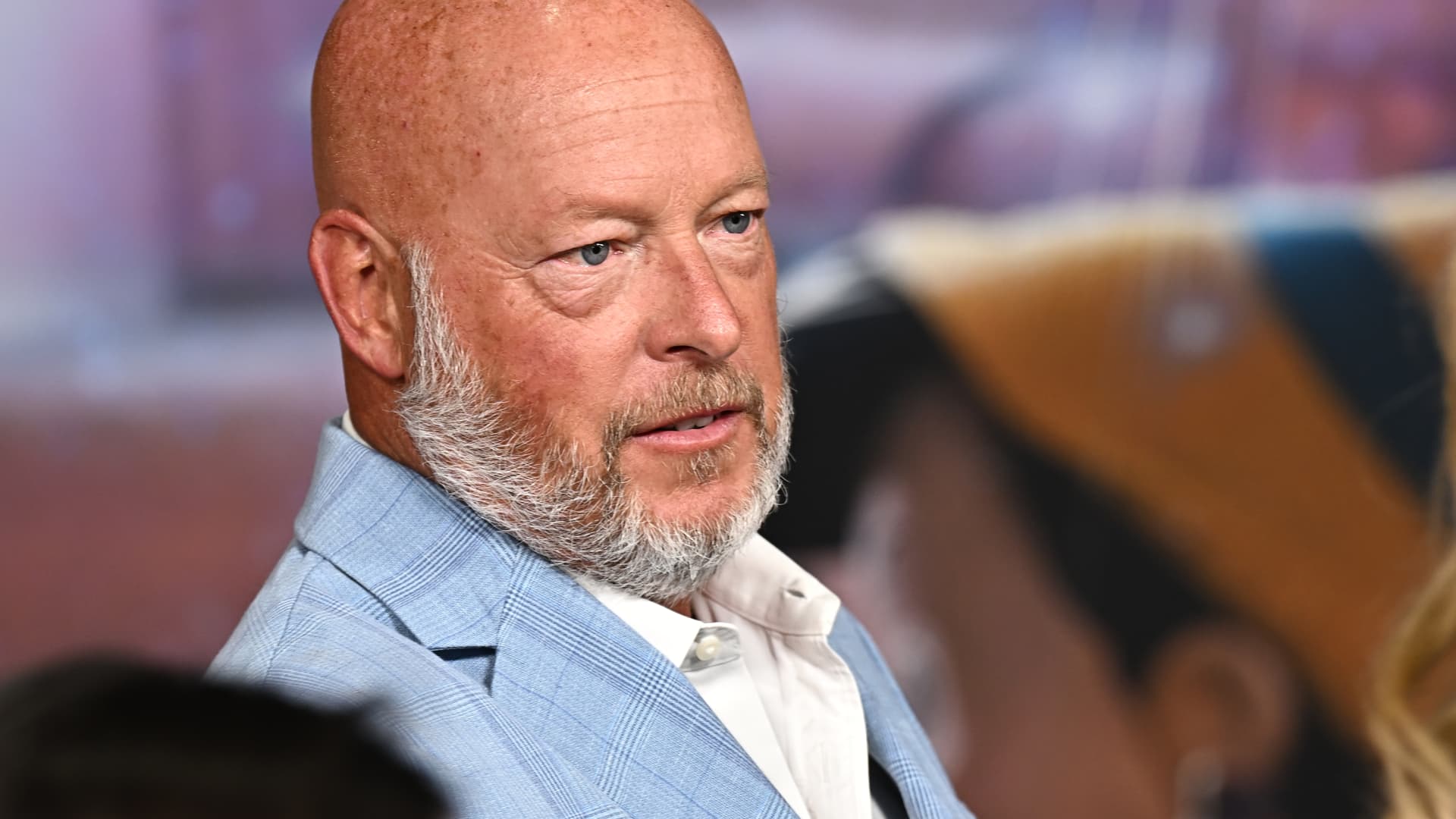
Former Disney CEO Bob Chapek said Monday he voiced concerns about then-Executive Chairman Bob Iger to the company’s board “weekly” during his brief tenure as head of the House of Mouse.

Chapek has remained tight-lipped about his firing from the media giant nearly four years ago, but opened up about his experience in a new tell-all memoir, “Behind the Castle Walls: My Thirty Years at the Happiest Place on Earth,” and in an interview with CNBC’s “Squawk Box.”

Once head of Disney’s theme park and experiences division, Chapek was tapped to take the helm of the company just weeks before the Covid pandemic shuttered movie theaters and amusement parks around the globe in 2020. As Chapek worked to navigate these challenges, Iger remained with the company to handle Disney’s content initiatives like Disney+.

However, Iger slowly began to reassert control, Chapek says. The ensuing power struggle was detailed in a CNBC report in 2023.

Advertisement

“When I started hearing about lunches that he had and dinners that he had where he was absolutely trashing me, and I’d hear it two, three times in the same week, the same bullet points, the same talking points, I was like, ‘I’ve got a problem,’” Chapek told CNBC.

He noted that when he brought concerns to the Disney board about Iger, he was told, “‘He’ll be gone in two years. It’s OK. That’s Bob being Bob.’”

But almost three years after being named CEO, Chapek was ousted and replaced by Iger, who returned to the post until March 2026.

“It would have been great if, like other CEOs, he acted as a steward of my new role,” Chapek said. “It would have been one thing if he was neutral, but to be actually working against me, actively, I thought was just unbelievable.”

Advertisement
Continue Reading

Business & Hussles

Romania, Georgia and Latvia Lead Latest WHO-Based Ranking

Published

on

Representation. Beer cans.

Romania drinks more alcohol per person than any other country, followed by Georgia and Latvia, according to the most recent internationally comparable data, which draws on World Health Organization figures. The sources reviewed contain no country-by-country count of alcohol consumed in 2026 so far; the newest full dataset is a three-year average labeled 2022 that was retrieved from the WHO’s Global Health Observatory this year.

The ranking, published by The Facts Institute and updated on August 31, measures average annual recorded consumption per person aged 15 and older in liters of pure alcohol. On that measure, the ten heaviest-drinking countries are:

  1. Romania, 17.1 liters
  2. Georgia, 15.5 liters
  3. Latvia, 14.7 liters
  4. Moldova, 14.1 liters
  5. Czechia, 13.7 liters
  6. Lithuania, 12.2 liters
  7. Namibia, 12.0 liters
  8. Poland, 11.9 liters
  9. Austria, 11.8 liters
  10. Bulgaria, 11.5 liters

Belarus, Saint Lucia and Seychelles follow, tied at 11.4 liters each, according to the WHO figures in the Facts Institute table. World Population Review, which also treats 2022 as the most recent data available as of 2026, reports the same leaders: Romania at 17.1 liters, then Georgia at 15.5, Latvia at 14.7, Moldova at 14.1 and Czechia at 13.7. It says Lithuania, Poland, Bulgaria, Belarus, Hungary and Slovakia all reported annual consumption above 11 liters per person.

The gap between Romania and the global picture is wide. The Facts Institute noted that consumption above 14 liters of pure alcohol per person per year is roughly equivalent to about three standard bottles of wine per person each week. Because drinks vary in strength, the WHO measures pure alcohol rather than volumes of beer, wine or spirits. The site explained that a liter of wine, at about 12% alcohol by volume, contains roughly 0.12 liters of pure alcohol, so a person consuming 6 liters of pure alcohol a year would drink the equivalent of about 50 liters of wine, or about a liter a week.

Europe dominates the list. Central and Eastern European countries lead the rankings, and 22 of the top 30 countries are in Europe, according to the Facts Institute. Namibia, in seventh place with 12 liters, is the highest-ranked country outside Europe, and Seychelles and Saint Lucia also record some of the world’s highest levels, making them exceptions to the largely European pattern. World Population Review said beer, wine and spirits all play major cultural roles across much of Eastern and Central Europe, and that higher-income countries generally report higher consumption because alcohol is more affordable and widely available, though wealth alone does not determine drinking habits.

Advertisement

Several large economies sit just outside the top ten. According to the WHO table, Germany, France, Australia and Portugal each recorded 11.2 liters, the United Kingdom 10.9 liters, Russia 10.5 liters and the United States 9.8 liters. Russia, long associated with heavy drinking, has fallen well down the list, WorldRankd noted in a separate ranking. Canada recorded 10.0 liters, and Spain and Slovakia 11.0 liters each.

At the other end of the scale, consumption is close to zero in parts of North Africa and the Middle East, where religious and cultural norms discourage or prohibit drinking, the Facts Institute said. Yemen, Somalia, Bangladesh, Sudan, Mauritania, Libya, Afghanistan, Syria, Pakistan and Kuwait are among the countries with the lowest recorded consumption, and Iran, Indonesia and Egypt also round to near zero.

The numbers are estimates, and the WHO publishes confidence intervals. Romania’s figure of 17.1 liters, for example, carries a range of 14.6 to 19.8 liters, and Georgia’s 15.5 liters ranges from 12.9 to 17.9. Those ranges overlap with countries lower on the list, which means the ordering among places with similar totals is not exact. That is why some countries share a rounded figure and why the Facts Institute listed 13 countries in its top group.

Different sources produce slightly different results. StatsPanda, which uses a World Bank series compiled from WHO data and includes estimated unrecorded consumption, puts Romania at 16.8 liters, Georgia at 14.4 liters and Latvia at 12.9 liters, using the latest available year from 2015 onward. Another ranking of 2025 data listed Latvia in fourth place at about 13.1 liters, followed by Uganda at 12.2 and Germany at 12.2, and it named Lithuania as tenth at 11.8 liters. Such differences reflect vintage, methodology and whether unrecorded, homemade or informal alcohol is counted.

Advertisement

The global context is lower. Worldwide annual consumption in 2019 was equal to 5.5 liters of pure alcohol per person aged 15 and older, down from 5.7 liters in 2010, according to the WHO figures summarized on Wikipedia. The WHO European Region had the highest regional average at 9.2 liters, followed by the Region of the Americas at 7.5 liters. About 44% of the population aged 15 and older were current drinkers in 2019. Alcohol use is estimated to cause about 2.6 million deaths a year worldwide, according to the WHO’s 2024 global report as cited by Statsipedia and the Facts Institute. The Facts Institute added that the countries that drink the most can suffer more alcohol-related health and social problems.

None of the sources reviewed included statements from health officials or the countries ranked, and the WHO’s own data has a lag of several years, so the list does not capture changes in drinking habits since 2022.

Readers looking for a 2026 tally will not find one in the sources reviewed. Until the WHO updates its indicator, the Romania-led list remains the most recent international snapshot of who drinks the most.

Advertisement
Continue Reading

Business & Hussles

Energy bills: What is happening to gas and electricity prices?

Published

on

A woman with shoulder-length blonde hair talks into a microphone

Although the price cap sets the unit prices for gas and electricity, your household’s actual bill depends on the overall amount of energy you use, and how you pay for it.

Where you live, the type of property you have, how energy efficient it is, how many people live there, and the weather all make a difference.

The Ofgem cap is based on “typical” household energy use in a year with a single bill for gas and electricity settled by direct debit.

The vast majority of people pay their bill this way to help spread payments across the year.

Advertisement

In July, Ofgem reduced what it believes to be a “typical” level of energy use, because many homes have cut back due to high prices in recent years while energy efficiency has improved.

Its new estimate is 9,500 kWh of gas and 2,500 kWh of electricity a year.

Continue Reading

Business & Hussles

Trump approves new fuel economy standards, reversing Biden’s EV push

Published

on

Trump approves new fuel economy standards, reversing Biden's EV push
Executive Edge: Trump says he approved new fuel economy standards, rolling back Biden-era rules

President Donald Trump on Saturday said he approved new fuel economy standards, reversing former President Joe Biden’s stricter policies meant to fuel electric vehicle adoption.

Since the Corporate Average Fuel Economy, or CAFE, standards were established in 1975, they have been periodically updated, typically to make vehicles more efficient. Under former President Joe Biden’s standards, automakers would have had to increase the fuel efficiency of their passenger cars and light trucks to roughly 50 miles per gallon by 2031. The stricter standards were designed to incentivize electric vehicle production and sales in the U.S.

Trump presented the policy change as a boon for both automakers and consumers, though the final standards have not yet been publicly detailed.

“These new Standards will take the waste out of building cars in America. That means LOWER PRICES, saving families thousands on a new, beautiful, and safe car — Far better than the Environmental Monsters that we were building heretofore,” he wrote in the Truth Social post. “Every Manufacturer, from General Motors to Ford to Stellantis, has called me wanting to build here, and now they can!”

The regulatory change would fulfill a campaign promise from Trump to rescind policies that encouraged or incentivized electric vehicles.

Advertisement

It is unclear what the final fuel economy standards will be, although Transportation Secretary Sean Duffy previously said that they would be sharply lower than the Biden-era policies.

Weaker fuel economy standards mean that automakers can produce more pickup trucks and SUVs, which are much more profitable than smaller cars but have worse gas mileage. Electric vehicles also become much less attractive to automakers, although some companies, like General Motors, have said that they will still make them.

Continue Reading

Business & Hussles

What is the Budget and what could be in it?

Published

on

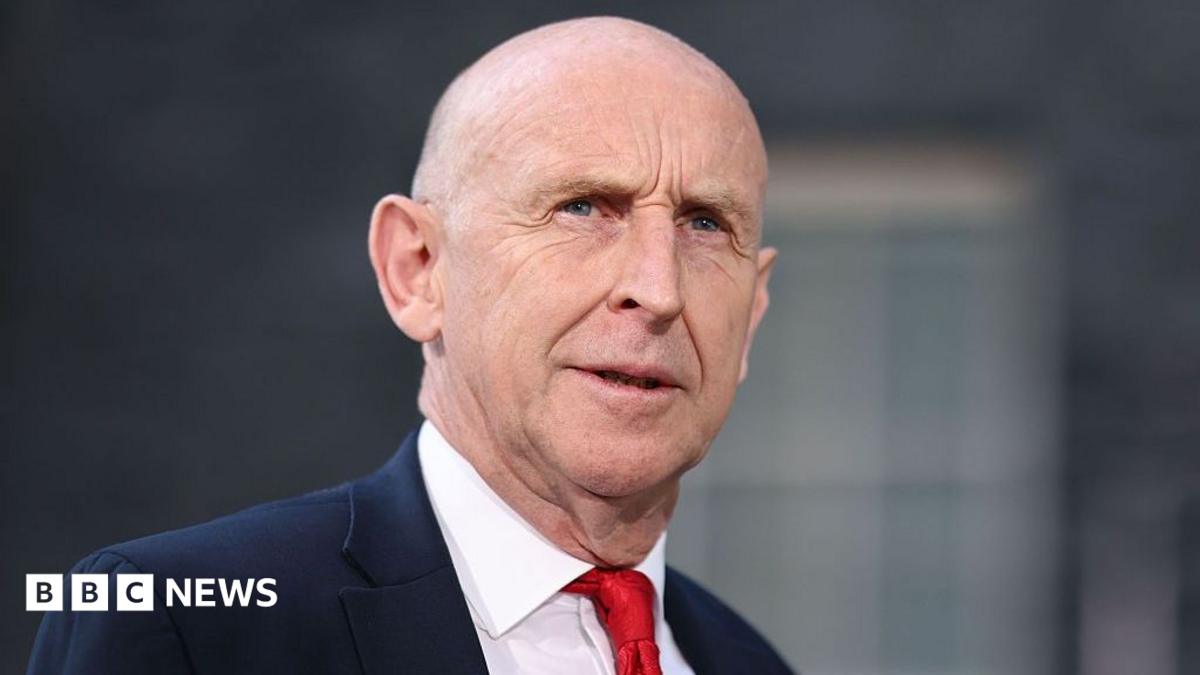
John Healey stands looking into the middle distance wearing a red tie, white shirt and navy blue suit. There is a blurred window behind him.

The run-up to the Budget typically sees speculation about what might be in it, which the government is trying to keep to a minimum this year.

Healey and Prime Minister Andy Burnham face a difficult balancing act, trying to offer more support to households and meet commitments on defence spending, while also sticking to Labour’s manifesto commitments on tax and the government’s self-imposed fiscal rules.

The previous chancellor, Rachel Reeves, set out two main rules, which the new leadership has vowed to follow. These are:

In March, the OBR calculated that the first rule would be met with a gap – or headroom – of £23.6bn. However, this headroom is expected to have shrunk.

Advertisement

Analysts at KPMG believe it could have fallen to £12bn, mainly due to the rise in government borrowing costs this year.

However, one option that has been floated is Healey potentially accepting a smaller buffer, reducing the need to increase taxes in the Budget.

Your First Home scheme

Further details on the “Your First Home” scheme, aimed at helping first-time buyers in England to purchase a property, are expected to be announced in the Budget.

Advertisement

The scheme will allow people to buy a new-build home with a deposit of 2.5%. It would provide them with a loan worth 20% of their property’s value to help pay for the purchase.

Capital Gains Tax

There has been speculation that Capital Gains Tax – which is imposed on the profit people make when they sell an asset that has increased in value – could be changed, through either higher rates or by removing or amending exemptions.

Mansion Tax

Advertisement

The High Value Council Tax Surcharge – dubbed the Mansion Tax – was announced in last year’s Budget and will apply to properties in England valued above £2m from April 2028. However, reports have suggested the government is considering extending it to properties worth more than £1.5m.

Taxes on banks

Banks have been reporting bumper profits, leading to calls from unions to increase taxes on the sector. But banks have pushed back, suggesting heavier levies would undermine the government’s aim to boost growth and make the UK less competitive.

Advertisement
Continue Reading

Trending

Copyright © 2025